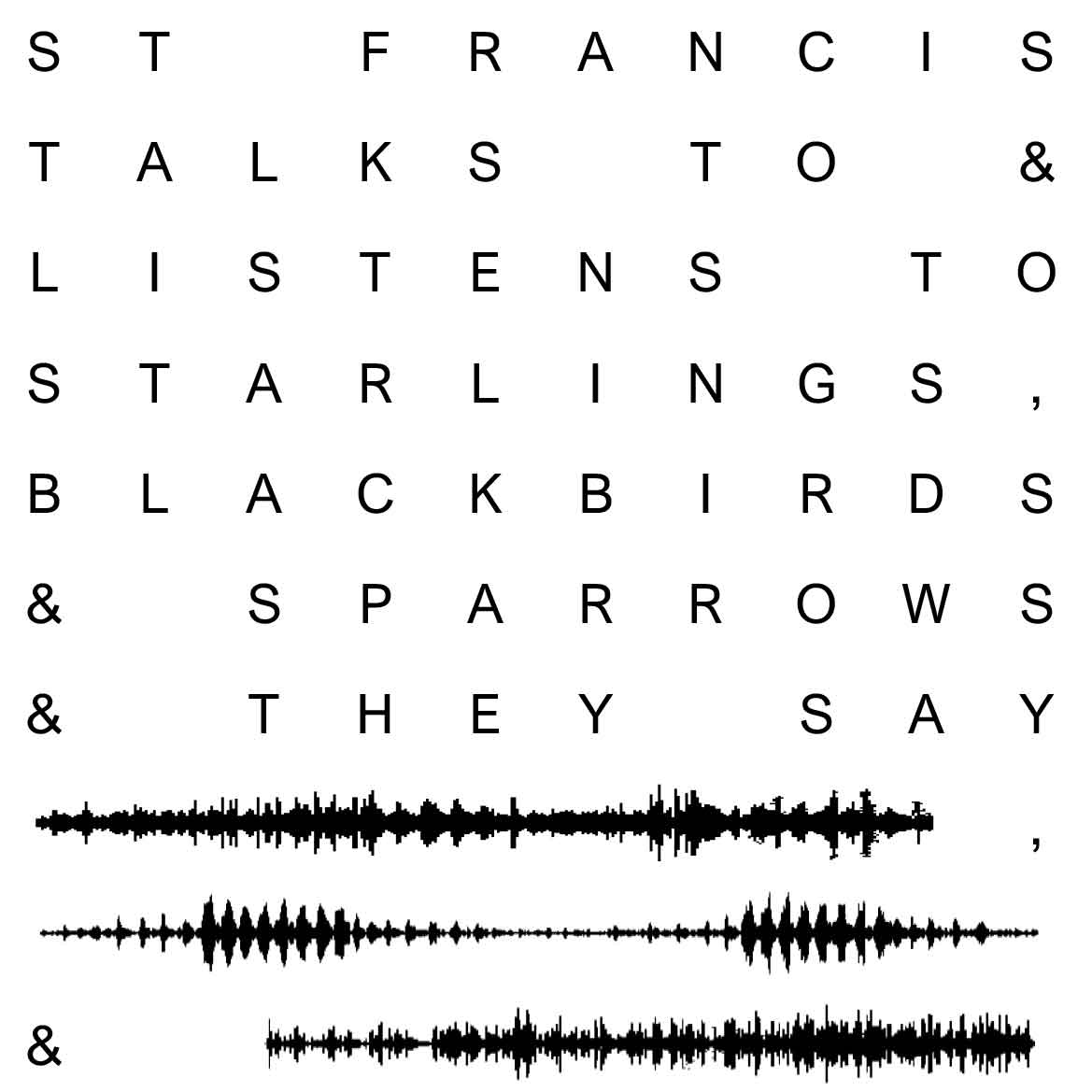
Let Me Go: micropoems by Dale Williams Barrigar (images by Dale Williams Barrigar)

Smoky, lasting

moments of a mind’s

imaginations

Borgesian

Swedenborgian

monologues, thriving voices

Christopher Marlowe

returned

alive

at 33

behind

the red curtain of an

Elizabethan theater

…

I sit here tub-side

happily sipping

the sacred hookah

all by

myself

…

She thought to herself

as red-gray twilight

sleds across the ramparts

above the city’s

hidden, broken corners

…

When I tend to go

I tend to go

out through

my tiny bathroom

window with

sweet breezes

and dying voices

on my wings

…

Laughing children

down by

the street.

This city,

the shadows of

its faulty gates,

this city, from

the beginning

until

the never-ending

…

On the glacial

prairie lake, on

the gentle prairie, from

the hookah, these

whispers on unendingness do

bend into my ears again,

again, again,

killing me slowly

…

Because no one

knows, the thoughts

continued

thinking, when the deadly

end will come

to this broken-down road

of a world

…

No, no one

knows,

nobody but Him,

the hookah and

the sweet breezes

and the warm running

waters whispered

…

Send me home

when it’s my time,

when it’s my

time my Will will be

going from

me

away where I came

from

…

There is not a

single reason

for anything, and

never was, including for

life itself

(and that is one

of the things

God knows)

…

Let me be brave, let

me

be brave, mother and father,

like

Socrates

when their poison cup gets handed

my way

every day

…

Dale Williams Barrigar (Images also by DWB and the excellent music selection as well!)

The Bus Journey Into History by Michael Bloor

Andy had led a fortunate life. Strangely, despite being undistinguished in his own endeavours, he’d nevertheless made the acquaintance of quite a number of impressive people. He’d shared the Chinese tea ceremony in the Master’s Lodge of Caius College with Professor Joseph Needham, the pioneering biochemist, Maoist, and Morris dancer. He’d sailed with a towering Sierra Leone bosun, who’d survived the British Trent tanker disaster by jumping from a burning deck into a burning sea. He’d met and escorted Satish Kumar, the Jain monk who’d walked from India to Moscow and Paris and London and Washington to campaign for nuclear disarmament. And now, on the cusp of retirement, a scholar gypsy attending a rather drab academic HIV/AIDS conference at Bologna University, Andy found himself in conversation with a very impressive woman, whom we shall call Professore Aurora, lest the lady is still alive (though, if that were to be the case, she would now be a very great age).

They had bonded over their dislike of the immediately previous conference presentation and over the tragedy of the continuing HIV infections among drug users through contaminated needles. Aurora went on to ask Andy, based at a Scottish university, whether there was any new information on why, at the beginning of the epidemic, the rate of HIV infections among drug users in Edinburgh was so much higher than that of drug users in Glasgow:

‘Please Andrew, you will forgive me if I have been misinformed, but I understand that there are many more injecting drug users in Glasgow than in Edinburgh. And yet far fewer of the Glasgow drug users contracted HIV than did the Edinburgh drug users. The two cities, I know, are very close, but I was wondering if the illegal drugs market was rather different in each place?’

Andy was rather taken aback and gazed at the small, carefully spoken, middle-aged Italian with frank admiration. ‘You’re dead right, Aurora. In Edinburgh, and particularly in the district where drug users congregated, it was commonplace to call on a dealer for the hit and use a syringe supplied by the dealer – “dealer’s works.” Users were wary of carrying their own syringes in case they were stopped by the Edinburgh police. In effect, drug users were sharing a syringe with a dealer’s previous customers.’

‘Ah-hah, yes. Two cities, two different police forces. Always the shape of the drugs market is influenced in part by the pattern of police enforcement.’

Aurora proceeded, politely but forensically, to ask Andy more questions about the Glasgow drugs market. When Andy mentioned the big break-in at the pharmaceutical warehouse in East Kilbride, she nodded and smiled: ‘Ah Yes, synthetic opioids – Temgesic, you say – the perfect dealer product. No need to pay unreliable foreign suppliers. No concerns about purity or contaminants. The planning of the break-in, the safe storage of the stolen product, the orderly distribution – they all indicate a major criminal network, a well-organised drug market.’

She paused: ‘You are perspiring. The climate here in Bologna in August does not suit you. You need mountain air. Come, we will catch a bus into the Apennines. You shall tell me more about the Glasgow drugs market and I will show you the wonder and tragedy of Marzabotto. Have you heard of the Etruscans?’

#

So, they caught a bus to the little town of Marzabotto, up in the Tuscan hills, some 30 kilometres from Bologna. I had known very little about the Etruscans, but Aurora filled me in on the journey. The Etruscans flourished in Tuscany from around 900BC to 250BC, when they were conquered by the Romans and absorbed into the Roman Empire. They were family centred, monogamous with equality of the sexes. Indeed, they were so family centred that they liked to keep their dead near them, cremated and installed in a single, multi-generational, family tomb. They were musicians and dancers, fine sculptors in terracotta and workers in bronze. Their priests were seers – oracles who could be consulted for interpretation and instruction; they were widely consulted by the Romans. Etruria was a loose federation of autonomous city states and Marzabotto was the site of one such city.

We got off the bus and could immediately see the huge site, down below us on a plateau, a little above the valley floor – a neat network of streets, foundations of houses, workshops, temples, an acropolis, and a water system (apparently, they were also accomplished engineers). Beside the site was an impressive modern building, The National Etruscan Museum. In the museum (air-conditioned), were sculptures and bronzes, large and small. Some figures were clearly Greek influenced, others were strangely elongated and almond-eyed. The tiny bronze votive offerings were particularly affecting.

Part of the attraction was undoubtedly the mysteriousness of this remote civilisation: the Etruscan script and language has never been fully deciphered – almost everything we know of their lives and thoughts has come to us from the Romans and from archaeological interpretation. We were still discussing this as we were coming out of the museum and as Aurora guided me to a roadside monument.

The monument commemorated the massacre in 1944 of 770 (yes, seven hundred and seventy) people from Marzabotto and the surrounding farms by the Nazi SS, as a ‘collective punishment’ for the activities of the partisans operating in the area. The contrast with the Etruscan past was like a slap in the face.

Aurora shook her short grey hair and turned away, her eyes wet. ‘Let no-one ever say that European civilisation has progressed since 250BC and let no-one call the AIDS epidemic a collective punishment of junkies, gays and prostitutes.’

Michael Bloor
The Long Walk and the Mighty Wave by Michael Bloor

(We are always happy to welcome back  Michael Bloor, both today and tomorrow.–LA)

It’s not generally realised that the barbarity of public beheadings only ended in England two hundred years ago. On November 7th, 1817, ‘Captain’ Jeremiah Brandreth (an unemployed outworker in the hosiery trade), Isaac Ludlum (a Methodist lay preacher), and William Turner (an elderly ex-Militia man) were beheaded in front of a large, sorrowing crowd outside Derby Gaol. They had been convicted of high treason for being the alleged leaders of ‘The Derbyshire Insurrection’ (also known as ‘The Pentrich Revolution’). They were the dupes of the Government’s agent provocateur, ‘Oliver the Spy,’ who convinced them that the Pentrich villagers’ armed march on Nottingham was part of a co-ordinated national uprising, which would usher in democracy and famine relief. The Government took the opportunity to introduce a series of repressive measures; Oliver the Spy was rewarded by being awarded the post of the Cape Colony buildings inspector in South Africa.

This essay seeks to describe that dolorous tragedy through the eyes of a participant.

#

I, Isaac Ludlam of the village of Pentrich, Derbyshire, write this testament in the hope that my gaolers will convey it to my wife and children, following my execution on the morrow. In addition, I humbly request that my family also be allowed to receive my copy of Minister Richard Baxter’s A Call to the Unconverted. The study of this work has been my abiding pleasure during the period of my imprisonment, not least because of my awareness that the author wrote that sublime text whilst himself in gaol for his beliefs. Know that, though I fall from the scaffold, I shall rise up on The Last Day. And, though my head shall be struck from my body, the executioner shall not harm my immortal soul.

For those of my children too young today to understand why I embarked upon that desperate venture which brings my death, I set down these words. First of all, you must fathom the pain that a parent feels when he or she cannot put food into the mouths of the children: for two weary years I suffered that pain, my credit being long exhausted. I could bear it no longer because I could see no end to it: why quarry stone, and cart it, if no building is ever taking place? Furthermore, I knew that this doleful existence was no part of God’s Plan. Old Tom Bacon, whom you have known all your lives, would read aloud to those Pentrich villagers without schooling, from the works of Tom Paine and William Cobbett, telling how the common grazings had been taken from us by the landlords and how, in a commonwealth, all should have rights.

Yet a ham-bone and herbs do not make a broth. First you must supply the fire to heat the pot. That fire was Captain Jerry Brandreth, who came to Pentrich with news from Nottingham that a national rising was planned for June 9th and that we Pentrich men must arm ourselves and march to Nottingham to play our part. We would find Nottingham already in the hands of the revolutionaries, like a dozen other towns in the Midlands and the North, all according to plans laid by a committee of London gentlemen and secretly communicated by their messenger, William Oliver. Jerry Brandreth brought hope to our village: we were few and desperate, but he told us Pentrich did not stand alone – we were but a few drops of moisture in a mighty wave.

These were great tidings. We began the work of fashioning makeshift pikes and I hid them in the quarry. On the night of June 8th, we were to set forth for Nottingham, seizing munitions of war from Butterley Ironworks as we marched. In Nottingham, we would join forces our fellow revolutionists, the mighty wave. The landlords and their placemen would be swept away like Pharaoh’s army.

We set off at the appointed time and date, but the weather was against us – a night of heavy rain. Men joined us from the villages round about – Alfreton, Heage, Belper, Swanwick and Ripley – but we were ill-nourished, ill-clad, and ill-armed, marching fourteen miles on bad roads. It is no wonder that the rain diluted our ardour. Then we were shocked to find the Butterley Ironworks to be defended: the manager, Mr Goodwin, was there waiting for us, with a group of special constables, and denied us entrance. It was clear that our secret plans were no secret. And without the Ironworks munitions, our firearms were pitifully few. Jerry Brandreth bade us march on, and Old William Turner (who had served in the militia in Napoleon’s Wars) was of the same mind. But as we left Butterley, I sensed that our numbers were dwindling. We tried to collect provisions and more firearms at the farms on our march. At Mrs Hepworth’s farm, there was a scuffle and one of her farm servants was fatally wounded – a wretched business.

Jerry Brandreth had sent William Weightman ahead on a horse to Nottingham. When William returned, he and Brandreth spoke privately: no news was given out. Did we have an inkling that ‘the mighty wave’ of the revolt was a fiction? That the mysterious messenger from London, Mr Oliver, was really an agent of the government, provoking a minor insurgency as an excuse for repression? I think we did, but desperate men cling to a desperate hope. It was a hard thing, to walk that long night, not knowing whether we were dupes or a vanguard.

When we got beyond Eastwood, we found the road held against us by a detachment of hussars. We knew for certain then that the game was up. No word was given, no shot was fired: we threw down our pikes and fled.

Michael Bloor

A Process and Quotation: Or, a Poetry Manifesto in 464 Words; Or, Truly New Writing by Dale the Drifter

T.S. Eliot wrote: “If you complain that a poet is obscure, and apparently ignoring you, the reader, or that he is speaking only to a limited circle of initiates from which you are excluded – remember that what he may have been trying to do was to put something into words which could not be said in any other way, and therefore in a language which may be worth the trouble of learning.”

The rhythm of a writer’s HUMAN VOICE is the most important thing.

The more original the rhythm, the more groundbreaking the voice.

There is always more ground to break, because the world is never the same. (This is what is meant by “process.”)

AI tells me that there are not more than 2,000 to 10,000 people alive on Planet Earth at any given moment who can truly begin to comprehend the most cutting-edge English-language creative writing and poetry, when it first comes out (as of 2026 AD). For this, I completely agree (because I know, in my gut, that it’s a fact) with AI. (It is a small city that can be called the eternal city.)

The truly newest new human writing challenges, very directly and at the same exact time not so directly at all, the way that almost everyone else on the Planet is thinking at that exact moment.

What is really rule-breaking and breaking-new-ground writing looks like mistakes and slippages and even “bad writing” to almost everyone else because this has never been seen before, by anyone, anywhere, ever. (They will be offended and they won’t know why.)

New writing has, by definition, NO ready-made audience for it. If it did, it would be anything but truly new writing.

It needs to create its own audience, one new reader at a time.

This has always been true, from Paul’s letters unto now.

Paul’s letters speak directly to his readers and it sounds like he KNEW HIS READERS PERSONALLY (including many women, which was his first radical breakthrough) even though he did not know all of them personally. He was writing to dozens, or at the very most, a few hundreds (like 200 or 300), of readers, and often, far less.

The greatest writing displays a process; and quotation = allusion or it isn’t worth anything, especially now but not especially.

“The LORD is my Shepherd; I shall not want.” – David

“I am the Good Shepherd.” – Jesus

END NOTE: The above appears as the introduction to a lengthy series of poems collectively entitled “micropoems” selections of which shall be appearing here this week. Thanks for your attention – or inattention, as the case may be.

END NOTE 2: Sentimentality is a cheap trick, if trick means paying a hooker.

Almost all human writing is sentimental.

(0.003% manages to rise above, barely.)

Dale the Drifter (Images by The Drifter)

Midterms and Charlatans by Christopher J. Ananias (Images by Christopher J. Ananias)

The red-winged blackbirds
are the first to go
It’s that time again
The caterpillars are crawling
A stiff wind is blowing
Sounds carry farther
Fuzzy milk weeds
spilling in the chill
Political signs at the four-way
Gun shots again
Midterms and charlatans
Their promises—warm as ice
on dead plants
And they’re not coming up next year

Christopher J Ananias

(All by CJA)

Maybe by Rose Blake

(Note: We are proud to have published Rose Blake this week and look forward to doing so again soon. For anyone who wants to know why we feature single short poems, it is due to the fact that when poems are bunched together it often results in one or more not getting full attention. This way it does not happen like that. Plus we say so! The Eds.)

Hey, does it hurt you as much as it hurts me to see your own child cry my pretty eyes out while you sit there chewing me out I bet it doesn’t hurt you nearly as much as me the pain collects in my chest—too much for a child to bear. Alone.

But sometimes, I think differently. That maybe, you do love me. That maybe, we both have forests of pain in our chests. Sometimes, light shines through.

Rose Blake

(The header provided by Dale Williams Barrigar, who is also responsible for the following wonderful image of the very proper Colonel)

The End by Rose Blake

i pray to something not god not satan

i dont believe in that no i think people

believe in that for they simply need

something to blame or to connect

the missing dots…

that we may never find in this life

or in the many other skins people say we wear

i don’t believe in that either i think they crave

the idea of immortality that in some way

they’ll keep on like the dots that never end.

Rose Blake

(Images by Christopher J Anaias)

Tomorrow by Rose Blake

(Ed. Note-This week we bring work by a young, up and coming poet named Rose Blake. Although the Eds. have brain damage–at least this Ed–older than Ms. Blake, she has something to say and we aim to help her say it. After all the future is now. Also we have recently changed our poetry presentation to all in one day, but Rose got in before that happened. Either way, it is the written word that counts most–Leila)

The bare breeze of a lover’s canvas

of mistakes

free of restraints of limits or fears

of the upcoming years

the worries you can’t free from the landscape

of your mindscape

all just seem to disappear into the grass

of tomorrow

Rose Blake

(images by Christopher J Anaias)