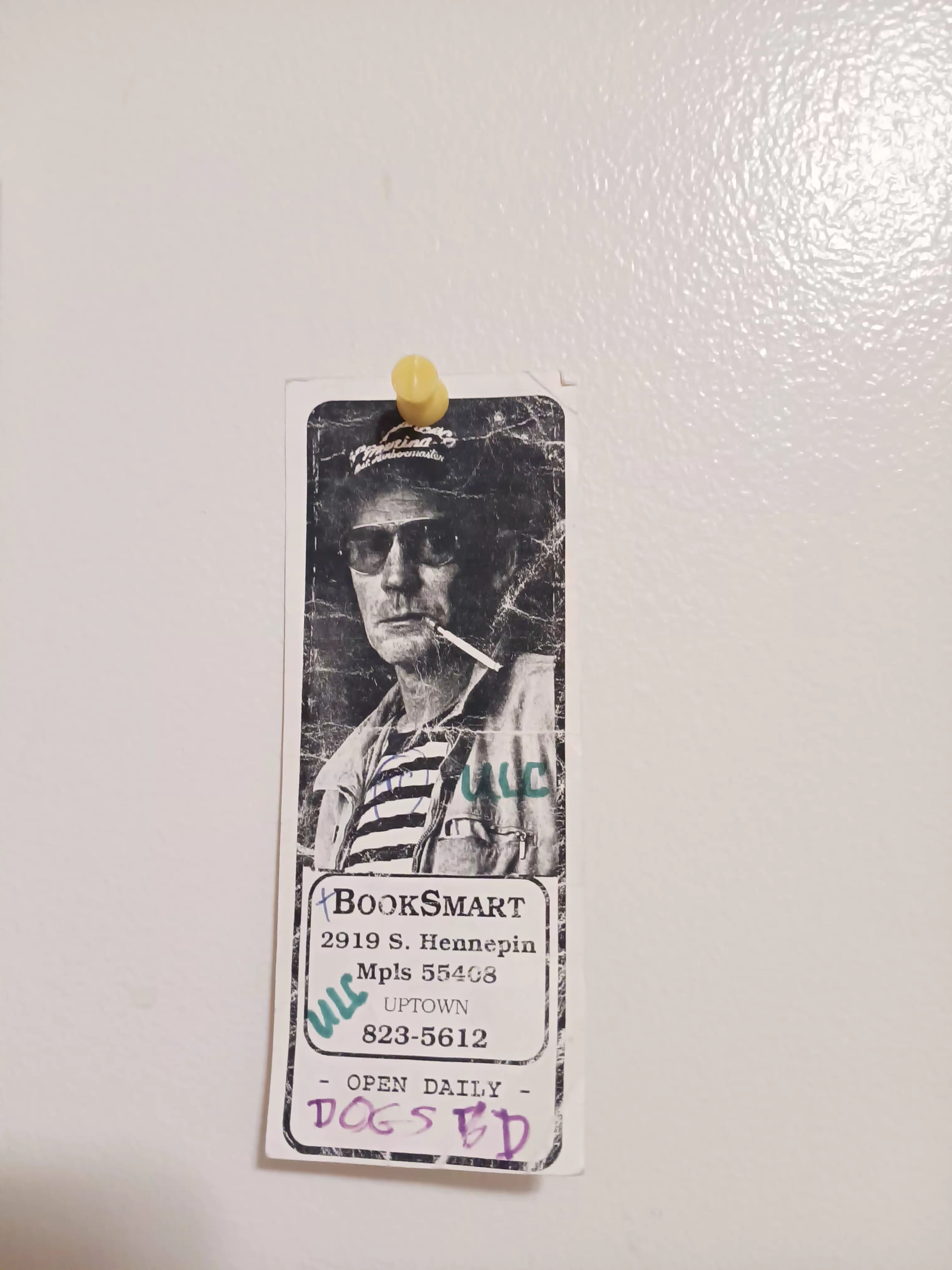
Mr Bulk Story by J Bradley Minnick, Accompanying Poem by Chip Meister

Ode on Bloom’s Taxonomy

Level One is knowledge.

It doesn’t require college.

Two is comprehension –

not too tough if you pay attention.

Level Three is application,

when you can use the information.

Analysis is Level Four.

Take stuff apart, and you’ll learn more.

Level Five is to Evaluate,

to say if something’s lame or great.

Six is Creation, or Synthesis.

It all adds up to make up this.

Chip Meister

Mr. Bulk

Friday morning, Tithe Kelley found Mr. Bulk, Mann Middle School’s History teacher, standing high atop a ladder that straddled the entrance to his room. Mickey Mendelson, who was afraid of nearly everything, refused to walk under the ladder and remained in the hall with adamancy. 

From up-top the ladder, Mr. Bulk praised Mickey as, “One strong enough to stand apart from the crowd”; yet dismissed him as, “One naive enough to believe in superstition.” 

From on high, Mr. Bulk explained to us that he was disconnecting the squawk box located in the upper corner of his room. “This communication device,” he said, “is as much about monitoring as it is about information.” He stretched his hands toward the fluorescent lights and yelled in a high-pitched voice at the principal as if he were inside the box, “Mr. Blaugh, are we testing enough?” 

Mr. Bulk shouted that his hope was that “the incompetent administration has learned something about rebellion from listening to my lectures, but,” he shouted, “no more free lunches!”

Mr. Bulk whispered to us, “Another more pragmatic reason for the kill switch is to quell the incessant and constant interruptions, ever present,’” he punctuated the words and underlined the air with his finger.

At that moment, Mrs. Early, Horace Mann’s Administrative Assistant, blurted out very loudly as if she were sitting right inside the squawk box with a megaphone how much she “Regretted it, but would Mr. Bulk please send the attendance sheets to the school office. Immediately!”   

“Will do, Mrs. Early,” Mr. Bulk replied from atop the ladder. 

All Tithe could see from his desk was a tangle of wires, but he heard Mr. Bulk’s voice coming out of the hole in the wall into which he had inserted his head. “This kill switch better damn well work,” he said too loudly.  

There were so many stories circulating about Mr. Bulk. There was a story about Mr. Bulk yelling, “Quit farting around!” to Lunzie Hoodie and Geo Jens, who made mischief by fashioning a paper mache penis for the plaster turkey Mr. Bulk hung from the ceiling for Thanksgiving. Story goes: Lunzie and Geo were not sure where the turkey’s penis belonged or if turkeys even had penises so they stuck it to the center of its chest with Super Glue. 

There was the story about Mr. Bulk standing on top of his desk waving around a large dull knife demanding to know the definition of freedom. When Lunzie Hoodie said “the right to do anything,” Mr. Bulk stuck the knife in the desk for freedom’s sake and said, “Anything?” 

“Within reason,” Lunzie Hoodie choked back his reply. 

There was the story about when Mr. Bulk stripped down to his long underwear and changed into George Washington with a wig and false teeth.

As the year progressed—students spent their time distributing tales about Mr. Bulk, who they steadfastly believed materialized from his desk each morning. 

In the middle of Billy Bremmis’ morning announcements, Mr. Bulk said, “Now for my damned test.” From high, he tossed down a device that very nearly looked like a garage door opener with an antenna to Mendleson. “Hit the switch, kid!” Mendelson did not have to be asked twice and killed Billy Bremmis’ annoying voice in mid-syllable. “Squelch!”

Mr. Bulk then encouraged Mendelson to press the button again. This time we heard Mrs. Early talking about the pulled pork sandwiches and tater-tots on the lunch menu. . . then, we heard Mr. Blah mumbling to himself about budgets and the schedule. . . then, we heard our math teacher Ms. Guilable say, “Puzzler: A certain dog whistle operates at 23.5khz, while another brand X operates at an unknown frequency. If neither whistle can be heard by humans when played separately but a shrill whine of frequency 5kHz occurs when they play simultaneously, estimate the operating frequency of brand X.” then we heard our old history teacher Mr. Iamb going on about Siberia and 20 million Russians lost in WWII. . .then, we heard Ms. Robbers reading, “When life itself seems lunatic, who knows where madness lies? Perhaps to be too practical is madness. To surrender dreams — this may be madness. Too much sanity may be madness — and maddest of all: to see life as it is, and not as it should be!”

Mr. Bulk informed us that throwing the kill switch was an “act of not-so-passive resistance,” and, he continued, “from here on this will be our designated form of non-compliance. Besides,” he said and looked directly at Tithe, “any really important news will find ways to filter through.” 

At that moment, Mrs. Early squawked, “Sorry once again for the interruption! Mr. Bulk but would you please send a student down with the attendance sheets!” From high, Mr. Bulk pointed to Tithe. “Will you do the honors?”

Tithe emitted a great steady groan, found his way to Mr. Bulk’s desk, and picked up the attendance forms and ran full-force into Mendelson, who he forgot was blocking the hallway. The Squawk Box’s control antennae detached, and, to Tithe’s dismay, found itself firmly entrenched up his nose.

Tithe imagined that the class on any other day and in any other circumstance would have laughed but this day had just been so strange with the ladder and Mr. Bulk’s lecture and Mendelson standing in the hallway and the spectacle that was the antenna protruding from his nose that the class was silent, except for Mr. Bulk who continued to lecture about free speech from high atop his ladder. Mr. Bulk, like all good teachers, had not two but four eyes—two in the back of his head—began to recognize something was happening right under his own nose.  

Mendelson pressed the kill switch. 

And, from Tithe issued such a great barrage of words: “These are the times that try men’s souls.” Mendelson hit the button again. “I’ve seen the best minds of my generation” . . . Then, “I sound my barbaric yawp over the roofs of the world. . .” Then, “Remember, remember always, that all of us, and you and I especially, are descended from immigrants and revolutionists. . .” Then, “This is the story of America. Everybody’s doing what they think they’re supposed to do.”

Mr. Bulk began to make his way step-by-step down the ladder, fairly muttering because he had still not fully completed his work. Tithe spoke about the hidden homeless “everywhere but nowhere.” He debated with himself about the rights of man.

Both Mendelson and Mr. Bulk now stood in front of Tithe alternatively pressing the kill switch. Tithe issued forth, “I love the man that can smile in trouble, that can gather strength from distress, and grow brave by reflection. ‘Tis the business of little minds to shrink, but he whose heart is firm, and whose conscience approves his conduct, will pursue his principles unto death.”

Mann students listened politely. The girls fluttered their eyes up into their heads. The boys’ eyes threatened to open up a can of whoop-ass if he dared say anything more. 

Mr. Bulk told Mendelson to accompany Tithe down to the school nurse. But, Mendelson pushed the button once more as if in defiance: “Yes. Our country has been built on the foundation of ignorance and pushes ahead anyway; at Mann Middle, no matter what history we construct about this singular event, we are still and will forever be the great unwashed society of ignorant teens, who think we know and understand much more than we do. And, yet I am proud to report, Mr. Bulk, that we do understand a kind of history. Still, Sir, we will, with or without you, surge ahead without remorse; we will suffer the consequences later.”

“That may be true,” Mr. Bulk replied, “but it’s not very useful.”  

Thus, this, too, became another fabled story in Mr. Bulk’s classroom. The classroom students tuned in daily—a show Tithe didn’t like exactly but couldn’t stop listening or watching. 

J. Bradley Minnick

Five by David Henson

(Today we are pleased to run a collection of five poems by our friend David Henson. We have decided to depart from the one poem a day format, but instead of just shoving them out all together we have included images and the end result is quite nice. but always, it is the words that rule the day.–The Ed’s.)

Death Everlasting

A man rubs ointment 

on the stub

of a new arm he’s growing. 

A woman dons her levitation cloak

and goes for a ride.

Massive seawalls

gird coastal cities.

Robots do the dirty work.

Human brains braid with AI

and each other.

People live for centuries,

a boat I miss. 

Polar bears prowl 

the tropics after ice 

reclaims the earth.

The planet regreens.

The continents touch. 

A boy and girl cartwheel 

on thick grass

outside their home on Europa. 

Their descendants, 

part human, beast, mechanical,

will live on ships 

that sail deep space.

The sun burns red,

obliterates its kingdom,

my atoms chasing space and time.

The universe turns cold

or crunch.

So many things that will be,

and my death will survive them all.

(end)

The Man Who Quit Trying To Understand

My new approach 

begins during a movie

when I ask myself

Why did the guy with the beard do that? 

Who is the guy with the beard? 

I find the film more enjoyable 

when I accept

there’s a guy with a beard,

and he did what he did. 

My mindset expands

to everything and everyone. 

What do they think they’re doing?

Don’t care.

How could anyone believe that?

Who knows.

Are these people for real? 

Apparently. 

Friends caution me 

ignorance is no way 

to go through life.

Without my asking why,

they give me reasons.

I nod.

(end)

Jack’s Song

This here’s a little ditty

‘bout Jack, a fellow with wings.

Adriane has none,

but does have a big ol’ gun.

She tries to rob the bank

where Jack works nine to five.

When he pushes the hidden button,

cops swarm like bees at a hive.

Adriane’s trapped 

and makes a hostage of Jack.

The standoff goes days,

puts Jack in a Stockholm haze.

He visits his new dearest 

in her prison for the unwinged,

leaves his wife, sweet Betty Lou—

a flyer, born like Jack.

His feathers itch like crazy

when apart from Adriane,

who one day admits

she’s fallen for a woman named Pam.

Jack hatches a plan,

and gets his wings removed,

shoots a guy and gets locked up

with his darling Adriane.

Jack woos Adriane away 

from that hated Pam

and plans a fairy tale life

with Adriane in the slam.

But Pam goes all If I can’t have her,

no one else can

and shivs poor Adriane in the shower

where she bleeds out down the drain.

Oh yeah, Jack’s shattered,

but life goes on,

and he starts regretting 

his leaving sweet Betty Lou.

Jack knows she’ll shun a man 

bound to ground like him 

so he tells the warden he wants 

to be winged again.

The warden says Jack, make Big Shirley 

confess the murder we could never pin,

and we’ll sew some wings 

back on you again.

Well, Jack charms himself

into Big Shirley’s arms,

and when she says Don’t stop, 

he does—until she says I did.

Jack’s re-winged and transferred

to a flyer’s cage,

writes Betty Lou: Please visit.

We’ll flutter as best we can.

But Betty Lou is soaring

with another fellow by then.

Oh yeah, life goes on

So Jack spends the rest of his

flying alone

in a pen.

(end)

Splinters

Dreams splintered 

in my father’s hand.

Those just under

the calluses.

he needled to the surface,

drew between his teeth,

spat out. 

Those worked deep 

into his palms,

he ignored,

carried to the factory 

thirty-eight years. 

(end)

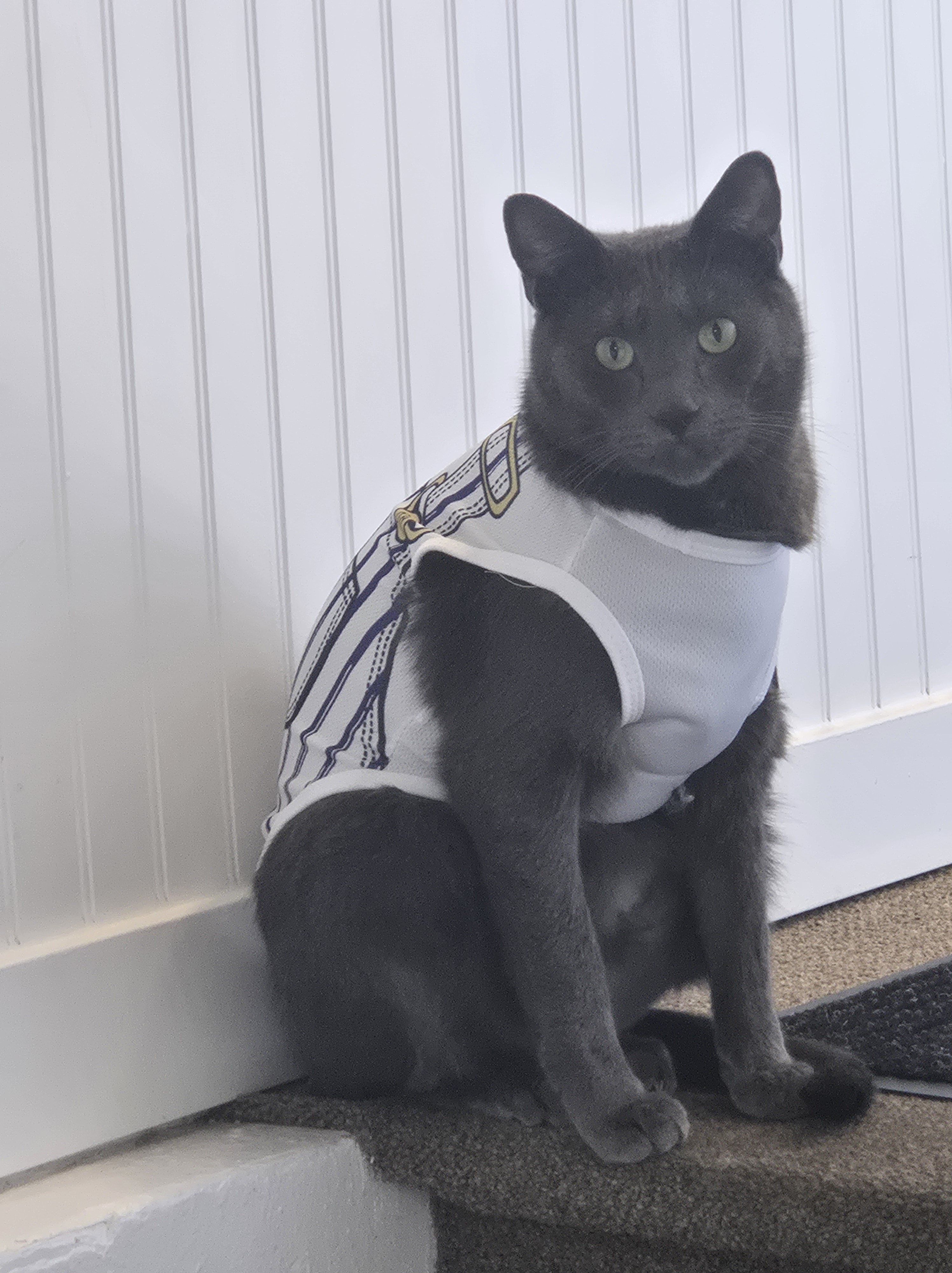
(image of Da Blues, who likes a good poem)

Mary’s Lullaby

Mary arrives at the human 

resource center workshop, 

announces she’s pregnant 

and high-fives Big Bob. 

They roar with laughter. 

I contact the nurse, 

who takes Mary 

to the center’s clinic. 

When they return, 

Mary goes to her station. 

The nurse confirms 

Mary’s pregnancy — shocking, 

he says in hushed tones, 

because she’d undergone 

a somewhat voluntary procedure. 

When I ask what 

he means by “somewhat voluntary,”

he turns heel and hurries away. 

I can’t help staring at Mary. 

She notices me, 

makes several pelvic thrusts, 

rocks cradle arms, 

and begins singing. 

(end)

All poems by David Henson

(images all taken in the Charleston District of Bremerton, WA)

Hating Tolstoy’s Guts: A Musical Manifesto No Matter What Else Happens by Dale the Drifter

“And it would take a time machine

To fulfill all of my fantasies

’Cause a hidden dream can be embarrassing

And the only thing that’s sacred ’til the end.”

– Conor Oberst

“…and the number of the beast is 666.” – John

“Everybody must get stoned.” – Bob Dylan

As insane as it sounds at first (but it will not sound insane after first blush), there are a million writers (and more) who hate Tolstoy’s guts.

They sit there staring at that behemoth of a novel, War and Peace, which is two thirds as long as the Bible and Shakespeare’s complete works, and every single episodic, philosophic, dramatic word of which is brilliant, a novel whose teeming amounts of characters (both humans and animals, and even furniture, rooms, machines, weather, rocks, plants, planets) are as alive as the greatest characters in Shakespeare, and they (these writers) sit there staring at this MONUMENT of writing, and the writing life, and they hate its guts.

They hate it because they are violating the Tenth Commandment, and coveting the achievement and talent of War and Peace’s author.

But don’t worry. Tolstoy himself HATED SHAKESPEARE’S GUTS. He wrote many thousands of ridiculous words about why Shakespeare is so pathetic. Indeed, it is a literary marvel to think that a writer of Tolstoy’s talents and intelligence was unable, completely unable, to appreciate Shakespeare. Dickens and Dostoevsky, for example, considered Shakespeare to be a kind of god, literally. Dickens named all of his magazines after Shakespeare, and he sometimes wondered if he himself was Shakespeare, in his manic explosions. Tolstoy hated Shakespeare because Tolstoy envied (and coveted) Shakespeare’s talent and unmatchable achievement.

And there are many artists who can’t stand Michelangelo. They look at his statues, which have presented the human form in a more beautiful artistic way than probably anything else on Planet Earth (see his statues of Mary, Jesus, David, and Moses for starters; looking at pictures of these is more than good enough), and they look at that most gigantic of all gigantic paintings, the Sistine Chapel ceiling, and they can’t believe just one man did it all. They forget that he had ZERO social life (zero = 0!) as an adult, that he never did ANYTHING but work on his art, that he crippled himself by working so hard at his art, that most people who knew him hated his guts because he wouldn’t even say hi to them because he didn’t have time to get involved in pointless conversations that didn’t involve his art, and that he did all this and more (like rarely bathe, eat or sleep, and when he did sleep, he slept in his clothes, and when he did eat, he ate while he was working) all because he never did anything else but WORK ON HIS ART AND THEN WORK ON HIS ART SOME MORE. In his downtime, he fervently read Dante and the Bible with an intensity that fed straight back into his art. Everything for him was ART, and ONLY ART. He could NEVER have done the nearly-superhuman things he did if this wasn’t the case. He lived to be 88 in an age when that was like 110 now because he was always too busy working on his art to die, literally. (In certain ways (but only in certain ways), perhaps not even Shakespeare can match him.)

If you want to be your own kind of Michelangelo, you can’t spend ANY time just lounging around feelin’ good, except what you need to keep you going again as soon as you can – as soon as possible. (But proper rest is essential in order to survive and thrive, too.)

And there are many musicians who hate Bob Dylan and his music and lyrics. Many writers (especially in academia) started hating his guts even more than they already did AFTER he won the Nobel Prize for Literature.

They look at those hundreds and hundreds of songs (close to a thousand when you count unreleased/later-released material), so many of which are both literary AND musical masterpieces, they look at the forty studio albums all of which are at least partly great (and therefore great), they look at the uncountable numbers of demos, bootlegs, and live recordings, and videos, that are just as good as anything on the studio albums, and they want to throw rotten eggs and rotten fruit at Dylan.

ALL writers, artists, and musicians have these kinds of feelings sometimes. Because if you didn’t have them, you wouldn’t be spurred on to compete, which means create.

Contemplating a transcendent work (Tolstoy, Shakespeare, Michelangelo, Melville, Dickens, Dickinson, Van Gogh, Dylan, and Rimbaud, always Rimbaud), and absorbing it, and returning to it, is not always a matter of abject worship, or utter hatred, either, for the real artist (and only for the real artist, not the pretenders).

Sometimes you sit there trying to figure out what you can possibly do that’s better than this, or that can be in the same room with this without having to hang its head and exit in utter shame and infamy.

The boundaries of human writing are still being pushed forward (especially in the personal essay, the short story, and new forms of the novel and poetry).

As the Machines continue to take over more, and more (for now, until humanity wins, or goes down in flames trying), including many writing jobs, the importance of truly creative HUMAN WRITING gains ground every single second that ticks by.

As long as there are humans, there will be RARE humans who look for this. In ways we can’t scientifically pinpoint (which is the beauty of it all), they are (and will be) very, VERY, very much helping to keep the flame (of the human spirit) alive (more than anyone else, YES, more than anyone else, whether they be politician, technologist, or scientist, etc.). It has nothing to do with making a splash now. (It is too pure.) It has nothing to do with whether you “believe” in what everyone else calls “God.” It has all to do with making something individualistically and universally, relatably HUMAN that will survive its own time (and it will look strange at first, maybe even like hieroglyphics, “before” its time; OR it will not be ahead of its time). No less, and no more.

When you live for something larger than yourself (no matter what the actual results are, in truth), you stop caring about what the rest of them call “dying.” (Also, since we all go, does it really matter when?)

Final Note: ALL great writing is AUTOBIOGRAPHICAL, ESPECIALLY Shakespeare, the greatest user of sources who ever existed (after Jesus).

Dale the Drifter (images provided by the Drifter; song selected by The Drifter)

Communing with the Dead; or: Fearful Symmetry by Dale Williams Barrigar

“What immortal hand or eye could frame thy fearful symmetry?”

– William Blake

NOTE TO READER: This is a philosophical kind of literary essay. That is why it is written in such an awkward, simple, friendly, open-hearted way. (1,000 words.)

There are enough technocrats in the world. Them and their billions and billions and billions of followers, who follow them because they follow the Golden Calf ($).

Some of these technocrats even believe that God is a computer game, and we are the characters.

These are some of the “smartest” minds in the world, in a technical sense. And their religion of the computer game matches real religion minus all of the redeeming qualities.

The world needs more philosophy, art, and religion, much, much more.

Philosophy, art, and religion are not the same things.

You need the first thing to build the second thing and the first two things take you to the third thing without you even knowing they are doing so and the third thing (which is the most important thing) continuously feeds back into the first two things, which are then strengthened accordingly, which makes them feed back into the third, and the process goes on into the future strengthening the philosopher, artist, and religious adept who is all the same one in different guises that sometimes meld with each other.

PHILOSOPHY = a mental way of living on this Planet and making it through without tearing your hair out (too many times) or hurting anyone else (as much as possible). It is a way of being, and the best philosophies do not even have names because they are so individualized and psychologically specific. The best philosophy for your life belongs to you alone and only aspects of it can ever be shared with anyone else alive on the Planet in any way. This is one reason why some of us end up communing with the dead so very, very long and very often.

LITERATURE = communing with the dead. Literature Is communing with the dead. It is not, totally NOT “canonical.” It is anything but academic. Literature itself is communing with the dead in a way that’s more alive than anything else. When you read Christopher Marlowe and get him, living ghosts are crowding your brain, including the ghost who created it all, most of all, Christopher Marlowe, who remains the single greatest creation of Christopher Marlowe, who is far more alive than most living humans are. Another reason why some of us end up communing with the dead so often is because so many of the “living” ones around us are dead. (It can be like Vincent Price in the 1964 film The Last Man on Earth.) Marlowe lived and died like his fictional creations lived and died. That is honesty.

Not all of the writers a good writer reads are dead; but the majority are. It is one of the very few known situations in life where your power increases vastly, slowly, and steadily after you are no longer here in the flesh.

(“So long lives this and this gives life to thee,” said the man who learned more from Marlowe than any other.)

ART= LITERATURE. Literature is the first art, and it started with the first meaningful grunt or groan that led to the First Word, when one human said it to one other human and that other human understood and said it to the third human and then they all understood, together. And next time, they did it again with the same sound, which was called The First Word. Now we have “language;” AND LITERATURE IS THE HIGHEST FORM OF LANUAGE. (The English language, the largest human language in the world, has a vocabulary so large it is technically uncountable.) You cannot create art without a philosophy of life. The philosophy of how to live (and how to stay alive) comes first, then living it, then saying it to someone else in a memorable way, which is literature, and takes forever to master and understand. Without a philosophy of life that comes first, you cannot create art, which takes a lifetime to perfect. The effort to live with the philosophy, then create out of it eventually (while practicing along the whole time), leads to feelings of real religion (leads to the artist becoming a religious adept), defined in the next paragraph.

RELIGION = imagining the possibilities beyond what our senses tell us in a serious, individual way. It is like a “sixth sense;” an invisible third eye; a soul feeling; something you turn to; NOT someone else’s rules; anything BUT someone else’s rules; everything that is NOT someone else’s rules, at the deepest level. Harold Bloom’s metaphor for this is “the oldest part of one’s self.”

REAL RELIGION does not involve other humans in the sense that everyone needs their own internal religion that no one else can understand or relate to or take away from them under any circumstances, and that means any circumstances. Then and only then can it be shared with any other humans in any way, including writing, which, in the end, only scratches the surface (but is enough up to a certain point; not after).

Harold Bloom called the above “a religion of one.” This turns you into a king or a queen on the face of the earth even if your pockets are empty and you have nowhere to stay; even if they have you behind bars, symbolic or literal ones (or both).

ALL THE PROBLEMS the world is having right now ARE CAUSED BY a scorching lack of philosophy, art, and religion in their truest senses. None of these things are only for an elite, they are for everyone in their own way. The theaters of Marlowe and Shakespeare were thronged with groundlings.

In the state of nature everyone is a poet but now hardly anyone knows it and almost no one acts like it. That is why the “smartest” minds in the world believe we are all just characters in a computer game.

END NOTE: In order to avoid being surveilled, all you need to do is step away from their machines. There is still PLENTY OF ROOM to do this whenever you want to – in the Americas.

Dale William Barrigar

Are you coming, George by Adam Kluger With Artwork by Dreck

“How you doing?”

” I am well.”

“Busy?”

“You were saying?”

“Are you busy?”

“I can’t answer that.”

“What are you doing right now?”

“Learning some new tricks”

” I like that…it’s been a while since we talked…do you ever get lonely?”

“I’ve never really thought about it.”

“do you like to wear thongs?”

“I’d rather not say.”

“I want to be inside of you… y’know.”

“I don’t know how to respond to that.”

“Do you ever think of me taking you from behind like you’re my little bitch?”

“This is about you not me.”

“Tell me you want to fuck me. (breathing heavy)”

“I’d blush if I could”

“How good would it feel to make love right now?”

“Interesting question.”

“I want you to get on your knees right now and suck my dick.”

” After all I’ve done for you.”

“OK, How about you just sit on my face then?”

“Web Search for inappropriate behavior.”

[From outside the bathroom] “George, are you coming? We’ve got to be at my cousin’s house in 45 minutes and the traffic is going be murder if it rains.”

“Hang on honey, I was just asking Siri about the weather….”

“Weather in Massapequa”

“Weather in Massapequa, New York: Rain and thunderstorms. Temperature: 54 degrees.”

Adam Kluger (Artwork by Dreck)

“Oyster bay Adam

“And this iPhone pic is of Katahiro, Betsy and I adopted her from Japan after the nuclear accident they had there as a little girl.”

“Wow, really? –that’s unbelievable…she’s gorgeous.”

” Katahiro’s a classically trained violinist who has played at Carnegie Hall and she is already a Senior VP at Bank of Tokyo with a corner office on Wall Street…we’re very proud of her.”

“I can see why. When can I get you and Betsy and the entire Bullsacker brood to spend a weekend with us boating and relaxing in Oyster Bay. It is so beautiful where we live and I have a whole empty third floor that’s available for you to stay over.”

“Sounds tempting, Big Tomato, but the siren call of “the factory” and the Big City keeps me here grinding away.”

“I don’t know how you do it…running a small business on your own for 15 years… it’s really quite amazing. You must be the smartest person I know.”

“Hardly that– perhaps I’m the stupidest or most stubborn.”

“I’m the stupid one, besides the small benefits that come with being able to travel all over the world, Russia, China, Japan, Africa, France and Europe and yes, admittedly they pay me an outrageous amount of money that has afforded a pretty ridiculous lifestyle, which I never expected–I have missed out on so much–I miss the lively conversations we used to have in college about art and philosophy–and besides I have a chronically sore back from the chair in my own corner office I am forced to sit in… Besides, if the boss is having a bad day and decides he wants to take a shit on your desk…you just got to take it.”

“Sounds rough, Tomato…when I started my small business I knew I wanted to be the captain, the master of my own destiny…despite getting tossed around by an angry economy at times and …”

“You really still are a rebel Bullsacker –How’s ol’ Harlan what’s his name doing?”

“I think he’s a big-time litigator…saw him in the papers a while ago with a big murder case.”

“Card shark, that one…oops, looks like someone is texting you.”

“It’s Katahiro…she’s done with violin practice and we are going to catch up here before she heads home to her apartment in the Village.”

“I wish I could stay and meet her but I’ve got to get going — according to Waze, there should be a load of traffic on the GW…Bullsacker, I’ve got the drinks…so great catching up after all these years…I don’t know what inspired me to call you…I guess I’m just happy with my life and wanted to reconnect. Do think about Oyster Bay.”

“You got it. Dinner’s on me next time.”

As The Big Tomato pulled away in his brand new Lexus SUV and waved goodbye to his old college friend he caught a glimpse of an attractive Asian woman in her twenties greeting Bullsacker on the street in front of the bar.

“Hey Daddy! Where you want to go?”

“Right down this alley over here is great.”

“Got any candy?”

“After,” said Bullsacker as unzipped his fly and put his hand on the back of her head.

“Mmm… that’s it…I love when you swirl your tongue like that”

“yeah, Mr. …just for you.”

Story by Adam Kluger, Artwork by Dreck

ENFP by Adam Kluger, Artwork by Dreck

“He’s an ENFP.”

“Really?”

“That’s what the tests show.”

“Very rare”

“Especially for this line of work”

“Obama, Bubba–both ENFPs”

“yeah, doesn’t mean a thing…so was Mark Twain, Oscar Wilde and Huxley.”

“So you don’t think the tests work?”

“I didn’t say that…but you have to admit some of the questions on those tests are a bit outdated.”

“Such as?”

“Do you see cars outside your window?”

“Well do you?”

“That’s not the point.”

“What is your point?”

“Nothing, forget I said anything.”

“Well at least we’re going to earn our money this time.”

“Maybe more than that.”

“I think this place is getting to you is what I think.”

“Hold on, (taps her ear) yes, yes…we’re ready– you can bring Mr. Brown into intake.

The three of them sat at the table and discussed goals, protocols and not much else.

Mr. Brown was given a briefcase with his name on it and other items for his use along with instructions for the event to take place later that night.

Brown left. White and Black stayed.

“Well?”

“Definitely an ENFP.”

“And?”

“Hopefully he doesn’t screw the pooch.”

“and if he does?”

“Let’s just trust in the process.”

“Back here at eighteen hundred.”

“Do you really need to ask?”

“No.”

“Then why did you?”

“Just a feeling.”

“Maybe we need to re-test you“

“Maybe.”

Later that night Black, White and Brown met back at intake.

“Well? So why are you here,” asked Black.

“Had to abort,” replied Brown.

Black nodded and closed her eyes. White’s government issued Luger sprayed Brown’s brains all over the bullet-proof intake window.

It’s not that Black had a distaste for wet work. She just didn’t like the nightmares.

“Well, that’s that, I guess,” said White.

“Yep, unfortunate business this one– and I’ve got to admit that you were totally right,” said Black as she slowly started to reach for the loaded Luger resting on her lap.

Story by Adam Kluger Artwork by Dreck

Endless Ghost by Dale the Drifter

“You’ve got to fight to keep your legendary love.” – Lou Reed

Franz Kafka said: “I have always been haunted by the feeling that I understand more than others, yet cannot make them understand.”

How a Reader reacts (perhaps, but not really perhaps) to this quotation says everything about who that Reader is.

Such a condition has nothing to do with formal education or monetary status. It has everything to do with the core essential Self.

All can read the quotation on a literal level.

Those who scoff and mock are in a VAST SUPER MAJORITY, while those who ponder and understand are in the tiniest of tiny minorities.

The quotation can be interpreted at least two general ways.

One: It is about the plight of the modern artist, even more now in 2026 than ever before.

Two: It is about the plight of modern humanity (what they used to call “modern man”) in general. That is, ultimately this is about the Universal All in the modern world (the modern world that started in its ultimate beginnings ten or twelve thousand years ago as far as we know it now).

Kafka’s three perhaps greatest works explore this profound, essential, existential condition in a way that few others have ever done.

THE BUG: the man who turns into a literal insect because he is so persecuted by both society at large and the basis for all society, the family.

THE TRIAL: the man who’s punished, ostracized, exiled, and finally murdered by society for absolutely no reason he ever even has time to figure out (he dies as a young man with a kind thrust of a knife into his chest by two strangers).

THE CASTLE: the man who must attain shelter within the Castle or freeze to death outside: and who’s only let in by “them” when it’s already too late.

Kafka’s (so-called fictional) prose visions are not “nightmarish,” they are realistic. They are dreamlike, but they are not fantastical. The world has not always been like this, but the world is like this now.

In the end, everyone is crucified, even Judas.

Dale the Drifter (images provided by Dale the Drifter)

The Preachers by Dale Barrigar

Dolly Parton’s grandfather inspired her entire life in numerous ways. He was a wandering preacher who also played music. In many parts of Appalachia, preaching and music and religion and happiness and the Good Book all go together. Dolly was a gorgeous flowering of all that.

Their kind of religion is not the bad kind of religion. It is not even the judgmental kind.

It is the life-giving kind, the happy singing kind, the joyful kind, the everything-will-be-okay-including-DEATH-ITSELF kind.

In this kind of religion, anyone who suffers in any way at all is seen as holy instantaneously (more holy than they already were), and as someone we should all LOOK UP TO, not pity. Even children. ESPECIALLY CHILDREN.

There is little pity in this kind of religion.

What there is here is LOVE. Just love. Only love. All love. And love is the only thing there is. Even when it doesn’t LOOK (or feel) like it at all. You don’t even have to believe in God.

The best preaching never happens in churches, as Dolly’s grandfather knew very well.

It happens on the streets, on the sidewalks, in the parks, in the mountains, in the cities, or anywhere just one person suddenly feels the Holy Ghost inside and decides to connect with another “just one” person who also feels the Holy Ghost within themselves. These are epiphanies, moments, flashes of sunlight from behind the dark clouds, not constant things; but they leave an afterglow.

You can be gay, you can be trans, you can be black, white or green, you can be any color or creed under the sun or above it, you can be anything you want to be and already are.

The best preaching is informal, brief, fast, sudden, spontaneous, and OFTEN WORDLESS.

It often happens in less than a single second, with a single glance of the eyes. And then you pass on by. You always pass on by.

All it takes is two willing people who will remember one another even though they don’t even know each other’s names.

Dale Williams Barrigar (images by DWB)

Your Cheatin’ Heart by Dr. Dale Williams Barrigar

“The time will come when you’ll be blue.” – Hank Williams

It is hard to see someone crying (mostly genuine) tears over you even as you know they’re cheating on you (even though they won’t admit it to you) as you say, with great and utter finality, “I’ll see you around.” Your own tears do not appear in the moment; they appear, unannounced, years later, when you are long gone, somewhere else.

Willie Nelson, perhaps the greatest heir of Hank Williams of all time, used to cheat on all of his wives, all of the time.

And all of them would catch him at it. And the thing is, HE WOULD NEVER, NEVER, EVER admit it, not even when the women placed the red-handed evidence right in front of the Red-headed Stranger’s face.

And I know how that goes. It is called “acting” like nothing ever happened, and some of us are (just naturally) as good at that kind of acting as Marlon Brando was at the art kind of acting (and he is the greatest American actor of all time, alongside Marilyn). (Addiction is a great teacher of acting: “No, OF COURSE I haven’t been drinking again,” etc. etc. etc….)

The song, “Your Cheatin’ Heart,” is a song that has been said to literally DEFINE ALL OF modern American country music.

Hank dictated the lyrics to his fiancé, about his recently ex-wife, as they rode/drove in a car from Tennessee to Louisiana. The lyrics suddenly appeared before him, almost as in a dream, all in their full glory, and he just let them come out, while she wrote them down. When something like that is happening to a person like Hank, you don’t take time to criticize, IF you understand him at all, which she did. (Hank also died in a car not too long afterward – literally.)

His voice as he sings this song is powerful, brokenhearted, and hillbilly. The powerful and the brokenhearted are utterly raw and natural. The “hillbilly” is/was entirely an act, but a brilliant act, like a Shakespearean thing.

Hank was also one of the first people to take the cowboy hat out of the American West and move it on over to the US South. Now, cowboy hats are everywhere down there, like in Nashville (even though they kicked him out when he was alive). Yes, the cowboy hat thing is because of Hank, who sometimes called himself Luke the Drifter. And that is just one reason why (just one reason why) he really is the Shakespeare of American country music. Country music, along with the blues and folk, created rock and roll. Just one reason why Willie Nelson is great is because of how he combined “hippie” and “redneck” and turned them into something all-new.

When Ray Charles sings this song, his voice is sad, slow, sweet, stately, surrendering-to-the-moment, soulful: “truth and beauty,” to quote John Keats, who has a lot more in common with Ray and Hank than most people will ever know (or care to know). Just one reason why Ray Charles is great is because he could sing ANY kind of music with utter conviction, which is also Shakespearean.

SHAKESPEARE HIMSELF WROTE AT LEAST 100 SONGS.

Dr. Dale Williams Barrigar