Lower and Lower Manhattan by William Doreski

As I cross the river on foot

a tower disgorges a cataract

of sun streaming down its windows.

This elaboration suggests hands

of a bronze clock striking noon,

but it’s only a skyscraper full

of dogged suits and ties straining

against tottering stocks and bonds

while looking forward to lunch.

I used to work on an upper floor

but grounded myself deliberately.

You stuck with the program and earned

a retirement in comforting pastels.

All day you shop for the perfect

handbag to tote the shrunken heads

of your lifetime of small enemies.

All night you listen to jazz greats

lilting saxophones into the sky.

I street-walk the city and sigh

the sighs of seismic old age while

you brush past in taxis, grinning

as they consume their fossil fuel.

I suspect from your silent pallor

that you’re thinking about the art

in museums that your patronage

props against the dissolution

that will announce itself like cymbals

striking a lone but fatal note.

William Doreski

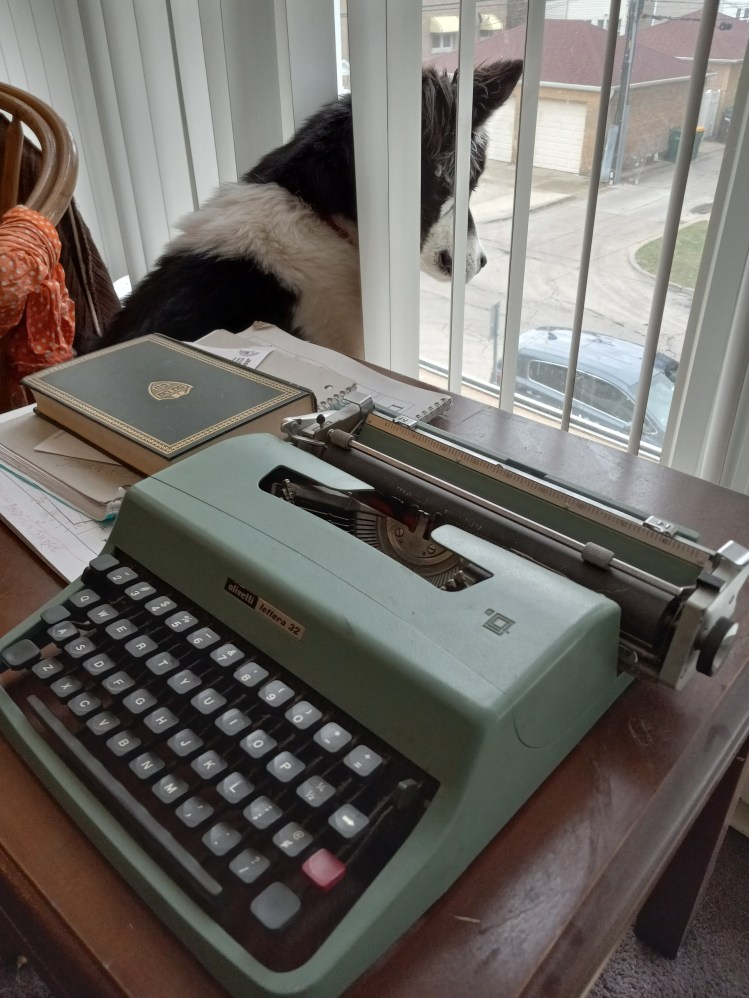
(Image plucked from the files of The Drifter)

The Box by John Grey

no use

saying don’t

she climbs

the chair wobbles

but it is hers

the kitchen hers

the cabinet

also hers

as she reaches

for the dust-covered box –

getting down requires

all of her coordination

is a slow shake of bones

but none of my help –

on the table

she opens that box

with deliberation

reveals postcards creased letters

a photograph a medal or two –

no use saying

the past is past

it is hers not mine

and she is 83 still reaching –

and her base may tremble

but it also holds

John Grey

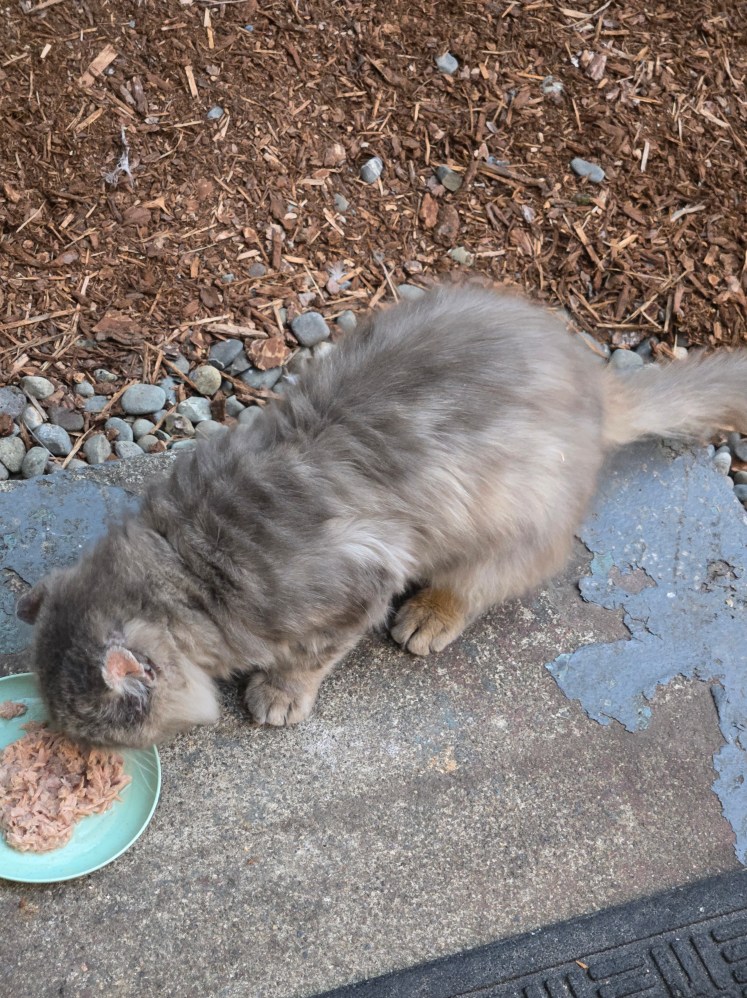
(Image of a future box if local slumlord gets its way)

Bukowski Blvd On The Eve Of Mid-Term Elections by Gerard Sarnat

— thanks to Joan Jobe Smith’s Moonglow Á Go-Go

Past tomorrow’s polling station and chili dog stand, this piss-poor perky protagonist, once a Sistine good girl Dorothy from next door made shitty living laboring over manual typewriters, flees her mean ex-old man who owes allegiance to Long Beach Hells Angels.

After dude broke both of my eardrums with chain-linked fists, passing stevedoreson the wharf, I wink at a Kansas sailor holding white linen crotch with humungous right hand while his other jabs an abscessed left thigh with a syringe size of Michelangelo’s javelin.

Thereafter slinking into some random transgressive but transformative titty bar named David’s, beneath banks of brilliant blacklight beacons, I try to metamorph into one belly-button sequined raw sixteen-year-old sexpot wearing soon to be beer-rotted ruby red shoes.

Gerard Sarnat

(Image is of “Puck”–a Hank fan in Bremerton, WA)

My Daughter’s Face; or, The Visitation by The Drifter

In the silence

in the nothingness

of the road

I could suddenly feel

the holiness

of my daughter’s face

of her spirit

and of her whole self

and I suddenly knew

while I was driving the car

in Illinois

down the road

with her sitting

silently

next to me

that I was sitting

next to an angel

a human angel

imperfect and stressed like the rest of us, yes,

and yet

angelic

nevertheless;

and it was only later

in a far field

when I was alone

that I allowed

the tears of gratitude

to fall

which are still tears.

And I can still

conjure up that feeling

at will

whenever I want to

wherever I am

and it’s worth

more

than all the empty

bank accounts

I ever owned.

And Someone

maybe the Stranger

is always hovering right

behind it all

in my mind.

– The Drifter, aka Dale Williams Barrigar, 12/31/2025

A New Photo Gallery by Christopher J Ananias

Editors’ note: Christopher (or as I like to call him “CJA”) has provided us with another fine collection of pictures. We believe that the beholders will agree to the excellence in and of CJA’s eye.

(On some services the header image is not included–for those of you who are unfortunate that way, I include the train a second time because it should not be missed–Leila)

Studio–London, 2014 by DS Maolalai

after he gave me the key

and had shaken my hand

he had run through the way

the electricity worked, the few

kitchen fittings. apparently he’d had

another offer from a young

polish couple. this was really,

he told me, a room for a man on his own.

I closed the door, locked it

and pushed the bed into the corner.

the place it had been

was distinct on the carpet

as a barrier and an open

manhole hatch. the table was plywood

and wood-effect plastic

and smelled strongly of antiseptic dusters.

the kitchenette was more

or less clean with some frost

in the fridge. I took time

to gather filters, flaking

like pills of asbestos,

from the previous tenant’s cigarettes

which the landlord had missed.

they had crawled between the carpet

and the tile of the bathroom.

into the divots where the castors

of the bed took his weight.

DS Maolalai

(Image provided by Dale Williams Barrigar)

Learning About Birds by Patricia Russo

In the new textbook, it read:

The males sing more loudly,

but the songs of the females are more complex

which made the girls in the class giggle

Infuriated, the teacher

slammed his hand on the desk

silencing everyone

and embarrassing the boys

then one boy in the back

began to laugh

deliberately, mockingly

and though the teacher bellowed so loud

his eyes nearly popped out of his face

more boys started laughing

and all the girls were grinning

and maybe

that is how

things change

Patricia Russo

(Image of a Box Pigeon flock in the Charleston district of Bremerton, WA. This “team” has been intact for over fifty generations; which is a whole lot of Box Pigeons)

In That One Dream by Bruce Gunther

In That One Dream

Even pigeons could read my mind

as I walked without destination along

the sidewalk of the big city; the hot dog

vendor looked like Jack Nicholson.

The mystical canyon of skyscrapers

loomed, and Plato passed out copies

of his writings, anxious to share

his life’s work with anyone interested.

No one in their right mind wants what you’re selling,

someone said as he passed, so convinced

of man’s fallibility that nearby faith healers

and positive thinkers grew silent and anxious.

And the dark clouds hung full and heavy,

threatening to rain for the next 40 days.

A cleansing would do us all good, someone

else said as we formed a line behind Noah’s animals.

Bruce Gunther

(Image provided by Christopher J Ananias)

The Rime of the Globalised Mariner. In Six Parts (with bonus tracks from a chorus of Greek shippers) by Michael Bloor

(Today we officially open the site, which has been open for ages, with something quite different and particularly well done by Michael Bloor)

First Published in Sociology, 47(1): 30-50, 2013 doi: 10.1177/00380385112448568

PART I

It is a global Mariner,

And he stoppeth one of three.

‘By thy long grey beard and glittering eye,

Now wherefore stopp’st thou me?

‘The centre’s doors are opened wide,

And Bourdieu got it right:

Consumption lends distinction.

So get you out my sight.’

He holds him with his glittering eye –

No Big Issue1 sale is sought,

But fifty yards from B&Q

The would-be Consumer’s caught.

So spake the doleful mariner,

Transfixing with his e’e,

In fluent, graphic English –

The language of the sea.

‘I had no wish to work on ships –

Filipinos know it’s hard –

Mouths were many, jobs were scarce,

From birth my life was marr’d.

‘From green island homes we travel,

As mariner, nurse, or maid,

And remit3 to our loved ones

The pittance we get paid.

‘Father scraped up money

For training college fees –

A scam of the local senator,

Whose throat I’d gladly seize.

‘The college had no equipment,

Just endless, pointless drill,

No qualifications either –

The news made my father ill.

‘Course passes gained no certificates,

Without some time at sea.

There was no ship to serve on,

But the senator had his fee.

‘Father paid a crewing agent:

Yet another fee required,

But at least I’d get a berth,

And that’s what we desired.

‘The agent sent me to train then

At a dismal-looking place

More fees and little learned,

Sad repetition of my case.

‘A lifeboat stood on davits,

By a creek filled-up with mud.

“For audit purposes only”,

That pristine lifeboat stood.

‘There’s so many schools for training –

Why’d the agent send me there?

The training was quite useless –

Why didn’t that agent care?

‘It seemed he got a “rebate”

(kickback to you and me)

For every trainee sent there,

A percentage of their fee.

‘They issued my certificates,

But their paper had a price:

My father’s hard-earned money,

Stolen once, then twice.

‘Ever since it’s been the same:

When I come home from sea,

The agent wants another course,

And I must pay the fee’.

[Enter Chorus of Greek Shippers]

‘O woe to us, and to our ships,

But what are we to do?

The wages they are paying now,

Won’t draw a young Greek crew.

‘So we take these global mariners,

Who’re really up for it,

But they can’t begin to work a ship:

Their training’s frankly s**t!

‘Someone, somewhere, should sort it out,

We’ve really had enough:

Inspect and close the colleges,

It’s time for getting tough!’

A globalised Mariner meeteth three gallants outside a shopping centre and detaineth one.

The Consumer protesteth against detention outside the shopping mall.

The Consumer is spell-bound by the mariner and constrained to hear his tale.

Proficiency in English is a requirement of a seafaring career.

The Mariner telleth of early hardships and how he and his parents were cheated by the maritime colleges and the crewing agents.

Filipino maritime training institutions are often controlled by persons with powerful political connections.

The academic training often follows a military model and is of poor quality. And it does not qualify cadets for certificates of seafarer competency without additional practical experience – ‘sea time’. Most colleges fail to arrange ‘sea time’ for their cadets.

Many ship operators out-source crew recruitment and employment to specialist crewing agencies with offices in the major labour supply countries. Cadets graduating from maritime colleges must pass a basic safety training course before they can go to sea. The courses are usually conducted at specialist training institutions with requisite equipment such as lifeboats. State regulatory agencies inspect the training institutions to ensure the requisite equipment is present, but not that it is used.

Corrupt crewing agents distort the seafarer training market

Specialist short courses must be taken to allow employment in particular trades, such as tankers. Usually, the seafarer must pay the course fee.

Ship operators moan that international standards of seafarer training are not being properly enforced.

PART II

Consumer groaned to Mariner:

‘So you each believe the same!

But if all think your training’s s**t

Then, truly, who’s to blame?’

‘Our union said, there is a law –

A real law, no invention –

That lays down training standards,

An international convention.

‘Government should enforce it,

End the bribing and the feigning,

Close-down the useless paper-mills

And give us decent training’.

‘Yes, yes’, the Chorus chorused,

‘Our ships need well-trained crew.’

‘So what went wrong?’ Consumer asked,

But the Mariner hardly knew.

‘There are no simple answers,’

Voice grated, knife on rock,

‘The true path’s no open highway,

Good governance no wind-up clock.’

A gaunt figure stepped among them:

He gave each a piercing look.

His boots were worn, his cloak was stained,

And he bore a calf-bound book.

‘Who art thou?’ they cried in wonder,

‘And what thing’s your burden there?’

‘I’m the Inspector,’ spake the stranger,

‘And the Law’s my burden fair.’

The Chorus shrank and muttered,

The Mariner downed his e’e.

‘I’ve heard tell of you,’ he whispered,

‘As have all who sail the sea.

‘You come aboard, unheralded,

You seek out the rusting hulks:

You cow the cruel masters,

Ships’ agents get the sulks.’

Consumer viewed Inspector,

Eyes lit with wild surmise:

‘It’s up to you to punish,

Right wrongs, and nail their lies?’

‘In truth, that is my duty –

The goal for all my kind –

But the journey is a long one,

And the road’s not paved, nor signed.

‘Those who inspect the colleges

In each poor country of the Earth:

They’re government employees

And are not paid their worth.

‘The owner is a man of power,

The inspector – he is not,

The one dines in his castle,

The other in his cot.

‘The inspector has a check-list,

To work through, line by line.

If a lifeboat’s at the college,

Then it gets a tick – that’s fine.

‘We know it can’t be launched:

It’s to be ticked, naught more.

Poor men must heed the letter,

Not the substance, of the law.’

The mariner had silent stood,

Hands clenched and visage pale,

Eyeing the Inspector,

As he ground out his tale.

‘I thank you’, cried the mariner,

‘Now I know the bitter worst:

No remedy in law books –

My mates and I are cursed.’

The Greeks had been quite nervous

While yet the Inspector spoke,

But confidently dealt with

The Mariner and such-like folk:

‘Don’t blame the law, nor malice,

Nor trade that’s getting slack,

Global economic forces

Strapped these burdens to your back.

‘Colleges could train you better –

With lifeboats working too –

But higher costs would close ‘em down,

Then where’d we find a crew?’

The Inspector laughed most harshly,

And turned to face the Greeks:

‘He who looks for truth

Must beware of that he seeks.

‘Good training’s too expensive:

The poor can’t pay the fee.

You state the matter clearly,

And I cannot but agree.

‘Yet I can well remember

When companies paid the fees,

Time-Past – they paid for training,

Invested in their employees.

‘You complain of training standards,

Cackling like geese

You want action to be taken,

But you don’t pay a penny piece.

‘It seems to me, hypocrisy,

When the poor turn-out their pockets,

To criticize their training,

While adding up your profits.’

The Mariner relateth that there are international standards on seafarer training.

But these international standards rely on national enforcement.

An Inspector calls.

The Inspector concurreth with the mere lip-service maritime colleges pay to international training regulations, but believeth that the local inspectors are powerless to obtain fuller compliance.

The ship operators see poor-quality training as an economic consequence of the seafarers’ need for cheap training.

The Inspector recalleth that 40 years ago, it was commonplace for ship operators to pay for seafarer training through cadetships and apprenticeships.

Part III

The Chorus blushed and shuffled,

But still they stood their ground.

They’d got their MBAs,

They knew their case was sound:

‘You’re talking of the past,

Dim, distant days of yore,

We don’t train our seafarers –

We don’t employ ‘em any more!’

Consumer quizzed the Chorus:

‘You don’t employ your crew??’ –

‘Our labour’s all outsourced,

‘The late-modern thing to do.

‘If a shipper paid for training,

He’d have an extra cost,

He’d be under-cut by others –

His business would be lost.

‘Pay for training? Better wages??

Remember shipping’s quite anarchic:

We’d love to be more generous

But you cannot buck the market.’

The Inspector gave a mirthless smile:

‘The market’s always cited

As a sovereign power and reason

Why wrongs cannot be righted.

‘But the remedy is simple here:

The flag-State of every nation

Shall charge a levy on each ship,

Paid at each ship’s registration.

‘The levy would pay all training costs,

A burden shared without distortion.

It would pay for good inspections too –

No need for doubts or caution.’

The Mariner did slowly nod:

‘The scheme would work – I see –

My last ship flew Mongolia’s flag,

For a three-thousand-dollar fee.’

‘Mongolia?’ quizzed our Consumer,

‘That’s surely rather queer?’

‘Not really’, saith the Inspector,

‘Some think a proper flag too dear.

‘Each ship is like a piece

Of far-off, sovereign soil –

Its flag denotes allegiance,

Republican or royal.

‘The flag-State has a duty,

Be the country rich or poor,

To check each ship is ship-shape –

As laid down in the law.

‘But flags can be commodities,

And flags can be for rent,

To businessmen and lawyers,

Who’re out on profit bent.

‘When ships are policed badly,

Their seafarers should beware.

Policing ships for profit

Is a mighty strange affair.

‘Some run their business well,

Some run it as a racket,

With only one objective:

To make themselves a packet.

‘Now, compliance is expensive,

So compliance is a sham

When the flag a shipper flies

Really doesn’t give a damn.

‘A shipper heeds his costs,

A shipper looks to save,

But if he flies a cut-price flag,

Consequences can be grave.

‘Ships that fly a proper flag,

And meet their obligations,

Incur much extra cost

To comply with regulations.

‘They’re under-cut, bankrupted, bust,

When complying as they should.

There’s an iron law all must obey:

Bad ships drive out the good.’

The Chorus sighed and scuffed their feet:

‘What the Inspector says is true,

But the fault is not all ours –

Ship charterers are guilty too.

‘If they wanted well-found ships,

And skilled, contented crews,

They should have thought to ask us,

Or given us some clues.

‘Truth is: they don’t want “good,”

Or freight rates getting steep.

We skimp, they save –

Truth is: they’re wanting “cheap.”

The Inspector sighed in turn,

‘Some charterers do care,

Oil majors first and foremost,

Others – rather rare.

‘Inspectors board all tankers –

For days, they sniff around –

Ensuring chartered ships

Are those that pass as sound

‘Oil majors don’t like bad headlines

When tankers hit the rocks

And oil pollutes the beaches

Because the ships are crocks.

‘The public doesn’t like to see

Seabirds black with oil;

Alas, for all the tanker crews,

The public doesn’t care at all.

‘So the tankers get inspected

With much resource and care,

But the crews of all the rest

Make do with me…and prayer.’

The Chorus confirmeth the Mariner’s tale that crewing agencies, not ship operators, employ seafarers. Agencies then contract with operators to supply crews with the requisite qualifications.

The Inspector proposeth a training levy to be paid when each ship is registered by the flag-State. See Afterword.

Although Mongolia is 850 miles from the sea, the Mongolian People’s Revolutionary Party granted a license in 2003, to a Mr Chong Kov Sen, a Singaporean businessman, to operate the Mongolian Ship Registry. Mr Chong previously operated the Cambodia Registry under license until 2002, when the license was withdrawn following international protests at Cambodia’s failure to police its ships. In 2008, 73 ships were flying the Mongolian flag.

An OECD report states that ‘a significant percentage of total vessel operating costs could be saved by sub-standard operations’ (OECD 1996: 27).

Thomas Gresham, a sixteenth-century Chancellor of the Exchequer, found it was impossible to improve the quality of the English coinage, by simply issuing good quality coins. People hoarded the good coinage. So it was necessary to also withdraw the clipped and debased coins from circulation. Hence Gresham’s Law: ‘Bad money drives out good’.

The Oil Companies International Marine Forum (OCIMF) has set up and funded its own private inspectorate, SIRE, to ensure the seaworthiness of tankers under charter. Those tankers deemed satisfactory on inspection can expect more business and better terms from the oil majors, eager to avoid the bad publicity of marine pollution incidents.

PART IV

The Mariner then spoke up:

‘Christian, Buddhist, Hindu, Turk,

Many pray who sail the seas,

But their prayers concern their work.

‘We do not fear a foundering –

Hull pierced, stove in, or rent.

Such a thing may happen,

But it’s a very rare event.

‘Pirates may seize the ship,

And hold us on foreign soil,

But what we fear most is different:

It’s the endless, grinding toil.

‘Each and every ship we join,

Seems there’s fewer crew,

An officer gone, a rating gone,

But there’s still their jobs to do.

‘The master now must take a watch,

Though there’s paperwork aplenty.

So many crew have disappeared,

The vessel’s almost empty.

‘The master’s nodding on the bridge,

His tired eyes are red.

He’s still to call Head Office,

Before he gets to bed.

‘The mate then takes a watch,

Though it’s two days since he slept –

Problems with the cargo –

But his watch must still be kept.

‘Turnabout, the two must watch,

There is no other way,

Six hours on, six off,

Twelve hours in every day.

‘In sickness and in health,

Each watch they duly take,

Dog-tired, red-eyed, grey-faced,

Four months, four months, without a break.

‘No gentle couch our cabin:

The ship is pitching in the waves,

There’s engine noise, vibration,

Yet we sleep the sleep of babes.

‘Too soon, too soon we’re wakened,

We scarcely catch our breath.

An ignoble thing, this tiredness –

As if we slowly bleed to death.’

Increasingly, ship operators have been seeking to save crewing costs by reducing the number of watch-keeping officers. Where second officers have been dispensed with, then watches must alternate between the master and the first officer (mate), although each of them has many other duties to perform. An OECD (2001a) report instances a saving of $37,000 pa by under-manning a 20-year-old 30,000 dwt bulk carrier by two crew.

PART V

As ever when the Mariner spoke,

The Greeks did swell with pride:

‘There is no law that’s broken there,

There’s nothing for us to hide.’

‘You surely lie,’ Consumer cried,

‘I know little of the sea,

But to have a master standing watch –

That’s folly, plain to me.’

The grim inspector then did speak:

‘In truth, they break no law.

The law itself is here at fault –

Therein we find the flaw.

‘The law on Minimum Manning

Lays down for every ship

The crew that must be carried

On each and every trip.

‘What is the minimum manning?

This is what we’re taught:

It’s the smallest competent crew

To bring a stricken vessel safe to port.

‘To make that stricken vessel safe,

Huge effort they’ll expend,

Yet must they slave thus daily?

Til their contract’s at an end?’

Consumer scratched his head:

‘If some members of the crew

Exceed twelve hours each day,

Surely that’s illegal too?’

‘We falsify our working hours’,

Replied the old seadog,

‘To keep the owners happy,

Each day, we flog the log.’

‘Then change the minimum manning law –

No more idle chatter –

Require crews to be larger,

It seems a simple matter.’

The mariner sighed and shrugged.

The Inspector took-up the tale:

‘Flag-States must vote the change,

Or else the measure fails.

‘Flag-States that exist for profit,

And take the operators’ gold,

They can’t increase the crewing costs –

They’ve reputations to uphold.

‘The flag with the greatest tonnage

Flies o’er the Panama Isthmus,

When Panama votes for change,

Then turkeys’ll vote for Christmas.’

In fact the maximum number of daily hours of work for watch-keepers is specified by the IMO as 14 hours, and the maximum number of weekly hours is 91.

Falsification of working hours is so widespread in the industry that it has entered everyday slang as ‘flogging the log.’

Consumer doth not understand why the flag-States at IMO do not change the international legislation to provide adequate crewing numbers, allowing shorter hours.

Part VI

[All in chorus: …]

‘So come all you kind consumers,

Who the honey’d wine have sipped,

Take pity on the mariner,

Beware how your goods are shipped.

‘The crews are outsourced workers,

A study in dejection –

Casualised, long hours, poor training –

And the law is no protection.

‘If charterers thought the public cared

How seafarers are mistreated,

They’d pass the message down the line:

“Our consumers are quite heated.

“It’s bad for our public image,

Like seabirds and pollution,

So get your act together,

And find a true solution.

“We’ll pay your higher freight rates,

If you’ll deploy more crew.

Or we’ll contract your opposition –

See if they know what to do.”

‘So the shippers get the higher rates,

Increase the crews and cut the hours,

Strike the flag of Panama,

And so, at last, they smell of flowers.

‘One day it really just might happen,

A fairy tale come true,

It’s even very possible,

They’d employ and train the crew!’

It is suggested that public concern for seafarers’ welfare might act in the same way as public concern about marine pollution and be transmitted down the supply chain from charterers to ship operators. Operators who could ‘brand’ their vessels as well crewed could then command premium freight rates.

For an ‘Afterword’ describing in detail the political economy of the global shipping industry, issues of seafarer training, industry regulation and enforcement, please refer to the original publication in the journal ‘Sociology’.

Michael Boor (he of the image)