That Girl, Sadie by Bill Tope

i

“Well, what do you want me to do with her?” asked Mike, growing exasperated with his friend and housemate.

“Just take her off my hands for the evening,” implored Ed earnestly.

“I don’t know,” replied Mike, staring uncertainly into the living room, where teenage Sadie was lingering near the table containing all the bottles of alcohol for the Christmas party later that night. She was clad in faded jeans and a blood-red sweater.

Continue reading

from Icicles…by A.J. Huffman

(Ed note–We are pleased to present the site debut of A.J. Huffman, with five looks at the mysteries of icicles–The Eds.)

from Icicles this Anticipation

The point is: creation takes

more than seven days. A lifetime

of would-be Sundays disappear

one drip at a time. Liquid tears race

down suicidal slide. Will they beat

the wind, land on chilled cushion

of accumulated drift? Never

count out Southeasterlies,

their decimating gusts hold the most

aggressive drops in stasis till nearly invisible

dagger welcomes them to blade.

from Icicles this Ephemerality

Solid is circumstantial,

hanging in the four corners of any home.

External forces alternate retention,

dissolution. Air and sun

are keys, constant pressures

to be endured. Foundations

are fragile. Cracks

quickly turn into shattering falls.

from Icicles this Fragility

Metal may be monumental,

but its grip is tenuous

turmoil of balance. Temperatures

rise. Reactions hold

no depth. Eyes can see

through every attempted defiance.

Angry breath releases frigid finger.

All that is left is silence,

absence, the answer

to gravity’s call.

from Icicles this Reflection

Nature holds certain

affinities for symmetry, inherent

need for balance. Clouds

contain liquid, precipitate solids

that accumulate, generate heat, melt

back to liquid, fall

into the wind, freeze solid, form

a point. Everything disappears

inside itself. Eventually.

from Icicles this Refraction

Solid is sometimes temporary,

lacking visual

purpose, transparent.

Such reflective moments echo with potential.

The seemingly invisible see

the world with unshadowed eyes.

A.J. Huffman

(Image is of the poet)

The Wild Turkey Family by Christopher J Ananias

(Editors’ note. We are collectively gobsmacked by this collection of photos snapped by Christopher J Ananias, and we are equally pleased with the text. Enjoy–the Eds.)

They came running. Maybe this will never happen again? Giant, once they were upon us. Their size was intimidating, but something made me want to pet them on top of the head. I feared for their tameness.

The Light Bringer was amazed. I asked the Light Bringer what she thought, and she said, “They’re huge… Kinda scary.”

“Yeah, I wish we had some food, Light Bringer.” A sadness gripped me. I so wanted to make the magnificent birds happy.

The Light Bringer looked around inside the car, but the cupboard was bare. They surrounded our vehicle. The Light Bringer said, “Move now, c’mon now, Honey. Please move.”

By Christopher J Ananias and The Light Bringer

ALF by John Grey

Today, you’re looking at your hands.

You’re thinking time has made a mistake

and those palms are far too rough and course

for someone your age.

Yet you remember the uncle

who fell and never got back up.

That’s not you.

At least, not yet.

You’re always fending off an attack, you say.

Or are in need of hammer and nails.

There’s work to be done –

on a bookcase

and maybe even on your frontal lobes.

You do your share of pacing.

You’ve had it with people who are

always threatening to shoot.

You’re concerned by all the books you’re not reading.

And your job – what you call shoveling shit.

Yesterday, a friend took sick.

He’ll be in hospital for a month.

You don’t care much for your neighbors

but you respect their differences.

You miss your wife.

And your sanity is not fully engaged

with what’s happening in your head.

You prefer your dark room of sleep

to most company.

And you see the Earth as an ark,

floating through space,

constantly ditching the ones

who can no longer pay their way.

You stand in the doorway,

feel the draft of the world’s grief.

And yet there’s still

this small persistent heat.

John Grey

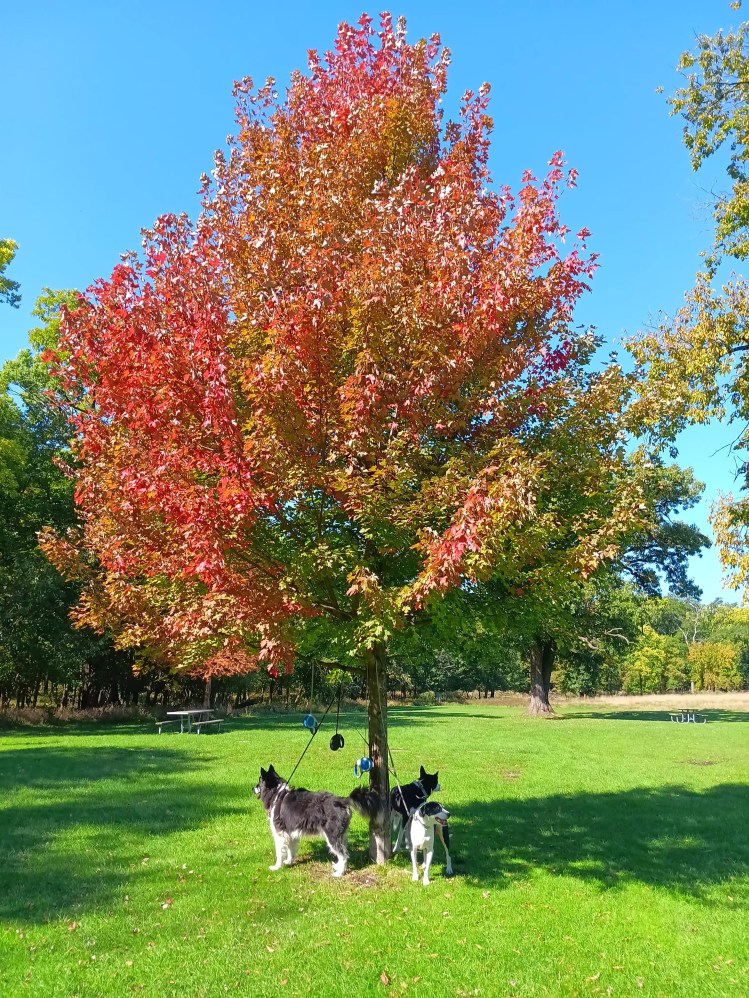
(Image by CJA)

Self-Educating by John Grey

The boy is learning

what to do

with his own tiny steps.

Beyond diapers

and breast-feeding,

he’s onto the good stuff,

knocking a glass

from the coffee table,

getting his fingers caught

in doors of cabinets,

toppling and

landing on his jelly bones.

He’s putting stuff

in his mouth.

He’s touching

what is there to feel.

He’s embracing a teddy.

He’s tossing it

out of the crib.

He’s trying out

his knees, his elbows,

his arms, his legs.

He even bleeds a little

now and then.

Or runs into a wall.

And he cries –

why not-

his voice must be there

for some reason –

hungry, thirsty,

hot, cold,

or simply bored –

they’re all an excuse

for sound.

And so it’s

push, pull, reach, fall, rise –

it’s choreography for little people.

John Grey

Being Me by John Grey

The fault, if there is one, lies in the way

my days keep shedding parts of speech.

Loose nouns roll under the furniture.

Verbs are still warm from use.

Adjectives get up my nostrils

whether they’re sweet perfumes

or rotting stench.

Even the adverbs cling like burrs.

Punctuation is all over the place.

I bump into quotation marks

and those oddball semi-colons.

I trip over commas on the floor.

Cut me. Please do.

You’ll see that what emerges

is not blood but a clause, a syntax.

Dig further and you’ll come up with a handful

of half‑formed paragraphs.

With any luck, they’ll still be breathing.

I didn’t know, back when I first

slipped into a book, that it was an IV line,

a drip-feed of people talking on buses,

or quarreling in kitchens,

or riding to the rescue

or wrapped up in the satin sheets of romance.

Every gesture they made left a bruise

in the shape of a sentence.

Call it a birthmark. My mother, carrying me,

startled by a sponge, or an encyclopedia,

or a poet declaiming to no one in particular

on a park bench. Something lodged early.

So who’s to blame when language

flutters around my skull

like moths drawn to a porch light.

My head can only hold so much.

If I don’t empty it onto a page,

there’s the real risk.

My brain could bust.

Imagine the mess.

You’d either have to

clean up the spill or read it.

John Grey

(Image by DWB)

Homeless in Winter by John Grey

(Today we welcome back poet John Grey. Get used to seeing him over the next four days!–The Eds.)

From a gray and restless sky,

the snow comes down like a verdict.

Guilty, it says.

And the cold is ten degrees below mercy.

A leaf is torn apart, as is my face.

The wind makes no distinction

between what belongs and what’s been cast out.

Swirling drifts erase birds from the sky’s memory.

Shards of ice collide.

They pull me into their quarrel.

Am I, like them, a fragment blown off course.

A stray cat wails from the pain of exposure.

A rabbit disappears into the earth before night can claim it.

A mouse finds entry in wall

sealed tight against the likes of us.

Somewhere, I tell myself, a fire still burns for me.

And a woman waits with an embrace warm enough to unmake winter.

But that is a country I can no longer reach.

For now I walk the frozen floorboards of this weather,

unable to think of anyone else’s suffering,

not with all this needling, this stabbing,

this piercing reminder of where I cannot ever be.

Tonight, it’s my turn.

I’m the one

who needs dragging in from the streets.

John Grey

Age Concerns by Paul Kimm

(We are pleased to debut Paul Kimm on the site today. It won’t be his last! Leila and DWB)

In the 1980s, I had a job working for Age Concern providing decorating services for the elderly. As long as they bought the materials, Age Concern sent me to paint or wallpaper however many rooms they wanted redecorating. Whilst a few of the people whose houses I went to barely spoke to me, the majority welcomed my company. Here are some of the stories they told me during my breaks. All of the below is true, and some of it is factual.

Mrs Goodson’s house

Mrs Goodson, 76, lived on the Easthill Estate. I was there to paint her kitchen and living room; white ceilings, magnolia walls, and all woodwork in white gloss. I did the living room first. After the first day, she insisted I didn’t bring a packed lunch as she’d feed me, and if I came earlier, would cook me a small breakfast too. So, from the second day I arrived at eight-thirty each morning, and for rest of the week, enjoyed a breakfast of two slices of white bread toast, buttered heavily, with two eggs. To show off her culinary prowess the eggs went from fried, to poached, to scrambled. They remain the tastiest I’ve ever had. For each breakfast she also insisted that I had a small 330ml bottle of Guinness with my breakfast.

It’s good for you. It’s the iron in it. Good for bones, blood, the lot. A little bottle like that, and some eggs, sets you up for the day. It’s what I’ve had for decades and I’m fit as a fiddle. It was my John who started us on it. He was seven years older than me, and only gone just last year. So, did him no harm, did him good. I get crates delivered, twenty-four in a pack lasts me for a month, at weekends I don’t bother, but during the week it’s just right. Keeps you fit. Here, let me show you.

She took me to her under stairs cupboard and opened it to show me the crate, half empty, with rows of bottles in it. Then we went back to the kitchen, and I sat down at the round table, with three chairs tucked under it. She cracked two eggs into a frying pan, and they sizzled and popped immediately, before sliding two slices of bread into the grill above the hobs.

I get them delivered. I can’t carry a box like that, but my John could, still driving he was, and could carry them up from the car. Like he never really got old, that Guinness kept him going. I never learned to drive mind you, so our Rob sold the car after, only for a few hundred pounds, as we’d had it years. John was good at looking after the car as well, had all the tools and that, he’d learned mechanics in the forces. He did that in the war too, fixing vehicles, always strong. He always said it was the Guinness, the iron in it, giving you strong bones, keeping you fit. He never was sick until the end. Never saw him once have a day off, and right until his last week he was carrying in those cases, bending over, and slotting them under the stairs. I can still bend down to get a bottle or two out myself, but it’s years since I could carry twenty-four of them like that. Tell the truth, don’t know if I ever could. Anyway, like my John, a bottle a morning keeps me fit. It’s good for you, and our Rob sometimes brings me another crate when he visits too. If you’re still here on Friday, you’ll probably meet him.

I thanked her for the breakfast, telling her how tasty the eggs were, and for the Guinness. I remember feeling very satisfied and full each morning so did some of the lighter decorating work first whilst the breakfast and drink settled. From the Tuesday to the Friday it took to finish the job she told me more about her John, his strength, and numerous skills, never becoming emotional in anyway other than a bright happiness reminiscing about him. On the last day I met her son, Rob, who was more than twice the age I was then.

You’ve done a smashing job here. Much appreciated mate. Kitchen and living room both look way smarter. It’s a good scheme they’ve got going with Age Concern. Might have to get you back to do more, if we can get me mam some more paint in. That’d be alright, wouldn’t it? The upstairs hasn’t been done for over a decade I reckon. Not since my dad got sick and couldn’t come down for years.

I assume he saw the confusion on my face, as he then told me more.

Ah, I bet me mam said nothing. She’s never spoken about it. Likes to remember him before he got ill, when he could still help around the house. I’ll say no more on it. She doesn’t want those years being the memory of him, and that’s fair enough. It’s best for her she lies to herself, and we go along with it. I’ll say nowt more on it. Thanks again mate, cracking job and may see you again.

When I left Mrs Goodson said thank you and gave me two bottles of Guinness to take with me. I don’t know if she ever got more paint. Possibly one of the other decorators got put on the job next time, but none of them ever mentioned it to me in the yard.

Mr Mason’s house

Mr Mason also lived on Easthill Estate, it being the biggest in town, and was having his living room, hallway and landing painted, a longer job because of the banister and higher ceiling in the stairwell. He would keep drinks and biscuits coming and watch me work, occasionally telling me stories of his younger life, whilst I was painting.

I’ll tell you the best story I’ve got lad. It was 1963, remember it clear as day, even though it was at night. Got arrested, didn’t I? Out of the blue it was. I was still in the army, had been for years, cos I stayed in after the war. I was in London, was driving a Land Rover. That was mostly what I did, drove about on errands for officers and that. A bunch of coppers pulled me over, and took me in. Arrested me for the bloody Great Train Robbery! Can you believe it? Remember it? Ronnie Biggs and them? They thought I was one of them because they’d escaped in Land Rovers, and there’s me in mine trawling round London, odd jobs for my gaffers, and they reckoned I was one of the robbers. Asked me questions for ages they did. Hours.

I finished a section of banister, put my brush and paint pot down, sat on a stair, and asked him what questions they had.

All sorts. It was like they’d decided. You know, like I was definitely one of the robbers. Was in my uniform and they said that was to throw them off the scent. I said to them to check the Land Rover, there was nowt in it, and they said it was probably a decoy. Bear in mind, I didn’t actually know anything about the Great Train Robbery. It wasn’t called that yet, and they weren’t telling me what had gone on, just asking me where the others were, where the money was, where I’d got the military uniform from. I didn’t know until they finally let me go, and saw the papers the next day. Eventually, they called my barracks to check. Someone came in, explained who I was, and they let me go. No apologies or nowt, like I’d wasted their time.

I bent down to get my paint and carry on with my work, but he asked me to wait a minute, so I sat down again.

Thing was, I remember it like it was last night. Never said this to my wife, but that was the most exciting night of my life. Got married, lived through the war, spent two decades in the army, but being arrested as a Great Train Robber is my greatest memory. I remember it more than anything. Every now and then it’s all I constantly think about. That’s the thing with being old, maybe the only good thing, lots of memories, so many of them, even if some of them visit you more than others.

I recall Mr Mason being quieter for the rest of the week. He was excited to tell me his story about being arrested as one of the Great Train Robbers but it was like it had exhausted him. He didn’t mention it again for the rest of the job, or share any other major memories, and by the last day he’d stopped watching me work.

Mrs Smith’s flat

Mrs Smith had a one-bedroom flat near the beach. You couldn’t see the sea from her window, but you could from the small, shared garden at the front. Mrs Smith had saved part of her pension for nine months to afford the paint for every room to be done. She was a soft voiced, but chatty lady who made me tea with milk, a drink I’ve never liked, several times a day, insisting I take a break with her, and I hadn’t the heart to tell her I didn’t like it. The twenty or so cups of tea I had in the week I was there being the most I ever drank.

I moved here after my Albert passed. I didn’t want to stay in a big house, like we had, bigger than we ever needed, so I sold it off, paid the rest of the mortgage and got this place. More than twenty years ago now. Maybe even close to thirty now. I wanted to be near the beach, and have a view of the sea if possible, but when everything was paid off there wasn’t enough for that. This place suits me though. I like it enough. Enough for me. Do I keep saying ‘enough’? Ooh, it’s a miserable word, isn’t it? Enough. Make do. Get by. That’s life though, isn’t it? Life is enough. Anyway, I’m getting all maudlin, and I’m not maudlin at all. I’m a happy person. Quite happy. Happy enough. That’s me, Paul.

Mrs Smith laughed at herself, telling me not mind her rambling, and I went back to continue the decorating. The next milky tea came just over an hour later.

Sorry about before. I don’t mean it like that. All that daft talk about ‘enough’. We had it good, me and my Albert. No kids. That wasn’t for us it turned out, so we had a nice house. No kids, and a big house. Too big for us really, but we had the money for it with no kids. We used to go on holidays abroad before others did, before it became all that popular. Cities and seasides. Seville and Marbella in Spain. Very nice. Rome and Almalfi in Italy. Very nice too. Then my favourites, Athens and the islands in Greece. Definitely the nicest. Anyway, listen to me twittering on. Am I saying ‘nice’ too much now? Deary me, I’m all ‘enoughs’ and ‘nices’ today. Those holidays were very nice though. We’d always send ourselves a postcard, addressed to our own house, with a little note about our trip, like we were writing to another Mr and Mrs Smith, so we had a memory and Albert quite liked collecting the stamps. Often they were waiting for us when we got back or arrived a little later on. I’ve still got them in an old biscuit tin somewhere. I’ll have to dig them out. I can’t remember what we wrote on them. It was a long time ago now.

The next day Mrs Smith searched the cabinets and cupboards in the room I was working in. She apologised for being in my way, even though she wasn’t. Shortly after returning to the kitchen she called me through for another tea.

I’ve found the tin of postcards. I haven’t looked at these in years. Could be ten or more, twenty even, since I’ve had a look. I thought we could look together if you like, while you have your tea.

She opened up the old square tin, the picture on its lid showing a photo of the biscuits it once contained. Inside, there was a stack of brightly coloured postcards, the paper on them looking soft to the touch. Mrs Smith took the top one, a photo of an old church with an orange tree in the foreground, and the word ‘Sevilla’ in the bottom right corner.

There you go. I mentioned we went to Seville didn’t I? Lovely orange trees everywhere. All over the city. Let’s have a look what silly message we wrote to ourselves.

She turned over the postcard, and on the back the right side had the address below the names ‘Mr and Mrs Smith’, but the left side was blank.

Oh, let me look at some more. We must have forgotten to write on this one. Ooh, one from Turin. We went to Italy more than once. Oh, no message on this one either.

Mrs Smith took out a pile in one go, turned them over, and started dealing them out on the table, each one with their address and a stamp on the right, but all the left-hand sides blank.

Well, I never! I told you yesterday we used to send ourselves a postcard, with a message. I was sure we did. Looks like I’ve gone and imagined it. So silly. It must have been to his brother Geoff, and his wife Gladys. They were Mr and Mrs Smith as well. That must be it. Silly me. I would have liked to read those messages, but Geoff and Gladys are long gone now too. I’ve no idea if they kept them. I’ve still got Albert’s writing though, on those addresses. Just not the messages. So silly of me. I was so sure about it when I told you about our little, silly postcard tradition. Now I can’t stop saying silly, can I? Oh well, it was a long time ago now, but so is yesterday nowadays for me. Everyday feels like a long time ago. Just so silly.

After that day I wasn’t invited into the kitchen as much. Mrs Smith mostly brought the mugs of tea to me. When I was painting the kitchen and the bathroom, if she wasn’t looking, I’d tip some of the tea down the sink. When the job finished, she said goodbye and asked if I might pop round sometimes for a tea and a chat. I said I would, but I never did.

Paul Kimm

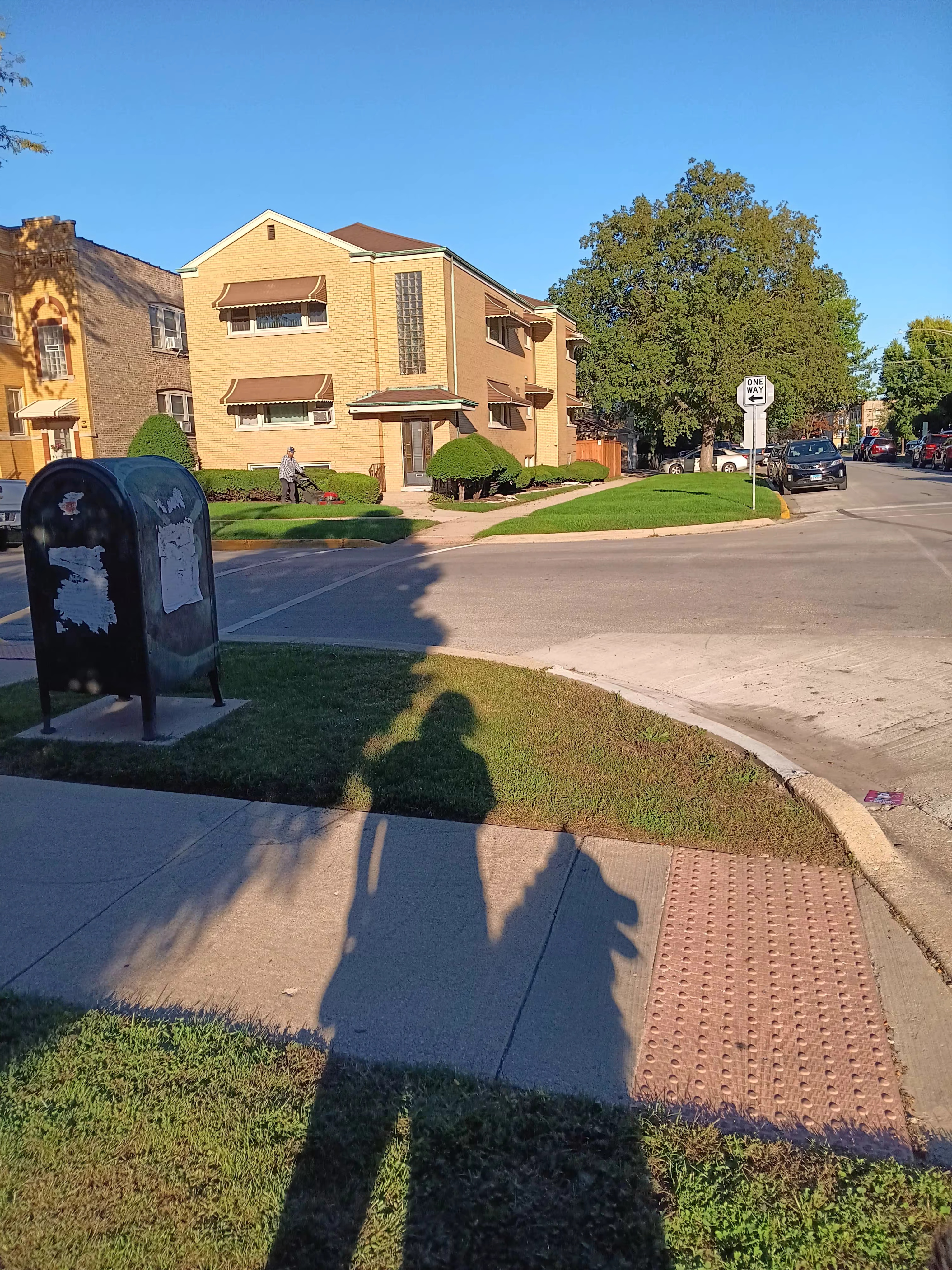
(Image by CJA)

Funeral Strains: A One Act Play By Gary Beck

Scene 1

(Pre-show. Offstage. Blaring sounds of anti-gay, anti-military protest, by a radical church group, attempting to disrupt the burial service of a gay Marine, Tom Richardson, killed in combat in Afghanistan. ‘God hates fags’. ‘Thank God for dead soldiers’.  ‘America is doomed’. ‘Thank God for IED’s’. ‘God hates you’. ‘Mourn for your sins’. ‘Fags doom nations’. ‘God hates America’. ‘God is your enemy’. The protest is heard distantly at different times during the play. Enter John Richardson, Tom’s father, and Tom’s younger brother, Cal. As they enter the sounds of protest fade.)

John: I never thought I’d be glad to see bikers. When they asked my permission to shield the ceremony from that hate group I was really embarrassed at the public attention of you know what. But when they chased those church fanatics further away I felt like getting a motorcycle jacket, catching up to them, ( He mimes gripping the handlebars and makes  sounds revving the motor) and buying them a beer.

Cal: I don’t know about them, Dad. Most bikers are violent criminals and some are drug dealers. I’m not sure what they did was legal.

John: The hell with legal. They helped us, didn’t they? Those guys are vets, sticking up for their own. The sheriff wouldn’t do anything. Said: (Mimicking) “Those church people have a constitutional right to protest.” You’d think a church would respect the rights of a family burying their 

son. I shouldn’t have to listen to them yelling all that filth, but it got to me. I was so mad I was going to get my rifle from the truck and run them off, if the vets hadn’t shown up.

Cal: What if the protesters wouldn’t go? Would you have shot them?

John: I don’t know, Cal…. But we have a right to bury Tom without their

blaring away like that. It’s bad enough the town knew about our shame. With the media here, they’re broadcasting it to the whole world…. Maybe if I popped a few of them, they’d find another way to spread their twisted message of god. At least they’d go away.

Cal: Then you’d go to jail. That wouldn’t solve anything.

John: I’d feel a lot better.

Cal: Maybe…. But they’re not much different than you, Dad.

John: The hell they are.

Cal: You were pretty violent when you found out Tom was gay. You said 

worse things about him then they did.

John: Yeah. But I was never anti-military.   I served my country proudly,

Cal: Well, so did Tom. But you drove him to enlist when he needed your help.

John: That was his choice…. I almost died of shame when they caught him making out with a guy, and him the captain of the football team. What else could I do? (Sounds of protest, ‘God hates fags’. ‘Thank God for dead soldiers’. They fade away).

Cal: You could have stood by him…. He’d still be alive if you hadn’t kicked 

him out of the house.

John: The hell you say. So now you’re blaming me for his death?

Cal: He’d be alive and safe in college, if you supported him when he needed you.

John: I wouldn’t have a faggot for a son. There’s no way I could live with that.

Cal: That’s an ugly word, especially now that he’s dead.

John: Does the truth hurt?

Cal: That’s not what Tom was.

John: He was a dirty pervert.

Cal: Don’t say that. He was my brother and I loved him.

John: That’s your choice, but I can’t go to that gravesite and face the Marine honor guard.

Cal: Why not?

John: Because they know what he was.

Cal: How do you know they’re not gay?

John: Are you nuts? Whoever heard of gay Marines?

Cal: (Stares at John until reality sinks in.) As long as someone’s willing to

fight and die for his country, what do you care what his sexual preferences

are?

John: (Looks at him strangely) It should matter. We never had gays when I was

in the Corps.

Cal: I’m sure you would have noticed.

John: What do you mean by that?… Maybe you’re a homo. Is that why you’re defending him?

Cal: Say that again and I’ll kick your teeth in.

John: (Laughs derisively.) That’ll be the day. You better get your girlie-man friends to help you. (Cal starts towards John, but stops when his mother, Ellen Richardson, and his younger sister, Norma, enter.)

Scene 2

Ellen: Are you two fighting about Tom again? This is my son’s funeral, John. It’s

bad enough I have to listen to those hate mongers screaming those awful things about Tom, without hearing my own husband echoing them.

John: Ellen. That’s no way to talk to me.

Ellen: It’s true, isn’t it? You call him nastier things then they do.

Norma: Mom’s right. My brother died a hero. You shouldn’t insult his memory.

John: So all of you are against me…. Well I’m used to that…. How do we know he was really a hero?

Ellen: His captain wrote that letter telling us how he died saving his buddies during a Taliban attack. I know my Tom. That’s what he would do.

John: (To Norma) I seem to remember that you and your friends were tweetering, or whatever you call it, not too long ago, saying the war was unjust. Now all of a sudden it’s alright because your brother died?

Norma: I don’t care about the war right now. I miss my brother and I don’t want

you saying mean things about him now that he’s dead. I stuck up for him

when everybody turned on him, and I don’t want you insulting Cal for

defending the brother he loved and admired.

John: What’s wrong with you people? Tom almost destroyed this family. They 

came close to firing me from my security job at the mall.  Your Mom’s good friends stopped talking to her. Cal’s buddies ignore him and your girlfriends call you insulting names. (Sounds of protest. ‘Thank God for IED’s’. ‘Mourn for your sins’. ‘Fags doom nations’. They fade away.)

Ellen: None of that matters now. I don’t care about anything else but saying

goodbye to the son I loved and lost. (To John.) I know I didn’t always speak up when I should have. Maybe if I did he’d still be alive. Now it’s time to put your bad feelings behind you. I want you to behave like the man I thought you were when we first got married.

John: (Sullenly) Doesn’t it matter what I feel?

Ellen: I should hope you feel the same loss as the rest of us. (John shrugs.) What’s the problem now?

Cal: (Cuts in before John can answer) Dad says he’s not going to the grave.

Ellen: Don’t worry. He’s going. (To John) And you’ll behave respectfully. 

This is the time for our family to mourn Tom and set an example for those who condemned him. Now no more arguing. Come with me. (Exit Ellen and John. Cal and Norma remain.

Scene 3

Norma: It’s about time she spoke up.

Cal: That’s a shocker.

Norma: At least she did it…. What were you and Dad fighting about?

Cal: The usual. He still blames Tom for everything. Then he called him a 

faggot.

Norma: (She looks around, then steps closer.) There is another side to it.  I 

understand why he’s so upset.  He’s not the kind of man who can deal

with that kind of thing.

Cal: (Angrily) Are you taking Dad’s part?

Norma: No, silly. I feel the same way you do about Tom. But just think how it

affected our big, macho Dad. His golden boy son caught in the locker room doing whatever men do to each other. It ripped his world apart.

It was beyond his ability to deal with it reasonably.

Cal: I know that. Believe me. It shocked me too, when I found out. But I never forgot that he was my brother.

Norma: If Tom only told Dad that he was gay before anything happened….

Cal: Yeah. Right. You must be thinking of some other father. Dad would have

reacted the same way and thrown him out of the house even sooner.

Norma: It might have been different if Tom had confided in Dad privately. He 

might have stood by him.

Cal: Don’t make me laugh. Have you ever been able to confide in him?

(She shakes her head no.) I sure haven’t. He’d never accept that a son of his was gay. I’ve been waiting for him to call me a faggot, because I like books. Just before you and Mom got here he asked me if I was a homo.

Norma: (Teasingly) Did you confess?

Cal: Smart ass…. I told him I’d kick his teeth in.

Norma: That’s the kind of talk he understands. I tell you what. I’ll buy you a set of weights for your birthday. You can work out and build some muscles. That should reassure him you’re not gay.(He laughs despite himself and she joins in.) I’m glad you can still laugh.

Cal: There’s not much else I can do. It hurts too much to cry…. I miss Tom all

the time.

Norma: So do I…. I keep asking myself if I could have done anything to prevent him from leaving home like that.

Cal: I didn’t know what to do…. I didn’t want him to go, but I knew he couldn’t live here anymore…. Sometimes I feel like there’s a curse on us.

Norma: Don’t talk like that…. We’ll get through this somehow…. Let’s go to the grave site and not let anyone stop us from saying goodbye to the brother 

we loved. (Exit Cal and Norma. The distant sounds of protest. ‘God hates fags’. ‘Thank God for dead soldiers’. ‘America is doomed’. ‘Fags destroy nations’. ‘Thank God for IED’s’. ‘God hates you’.)