Flying Socks by Paul Kimm

The flight back home left mid-morning from the major city airport they always chose, in order for it to be direct, as Paul preferred to not have any changes, but because of recent political sanctions from many countries, and the need to avoid flying over a large amount of land mass, the flight time had increased from the normal eleven hours, to a total of fourteen, and so, whilst it was still direct, neither of them relished that much time in the air, Paul because of his fear of flying, and his wife because of that too, knowing that every bump, any minor shake, dip, or little wobble, would have him clenching his wrists, gripping the armrests and unable to speak or open his eyes for at least fifteen minutes after even the gentlest of turbulence had passed.

For her part, Zoe loved flying, the opportunity to sit in a comfy enough chair for a period of time, no guilt to feel about not being more active, no gym to go to, no yoga classes on board obviously, and so relaxing in front of a screen packed with dozens of movies, TV series, a few daft on-board games, and the delivery of three meals, and the free-flow wine to the seat was a perfect way to spend fourteen hours, as long as her husband managed to contain his nerves, these nerves impervious to the number of times he’d flown before, or the statistical knowledge he had about flight safety, the multitude of empirical data, all meaning nothing as soon as the first bit of mild mid-air shaking came.

The flight was at 9am and because of the time difference with the UK would arrive in London at 5pm at Heathrow, which was 11pm in the time zone they were in, so they would be able to get to the hotel and sleep off the flight as soon as they got there, ready to move on to their friends the next day, who they hadn’t seen since their previous diplomatic posting on the other side of the world, where they’d worked together for five years, and loved it, until almost two years ago when they came to the posting they were in now in a much colder part of the world, and so meeting up with Sandy and Malcolm would be a great reminder of life in warmer climes, and they knew they’d have a wonderful, albeit different from how it used to be, first weekend back home, catching up with their old pals.

As usual check in and security was efficient and within half an hour of arriving at the airport they were through and at the departure gate areas with their carry-on bags in tow and closer to three hours than two remaining before take-off, so they decided to find a place for breakfast, and if time after to browse the shops and perhaps get an additional gift for Sandy and Mal, some single malt for him, perhaps a Japanese brand, that obviously couldn’t be opened that weekend, and a fancy style accessory for Sandy, ideally something purple, this being her favourite colour, but first a bite to eat, and then a quick walkaround the airport retail offerings.

They went to the usual place they ate, the breakfast options being the best, much as the lunch and dinner options were when they took flights at other times of day, and after a couple of minutes looking through the menu Zoe ordered avocado toast, making sure there was no butter and that they removed the poached egg, and Paul, allowing the airport meal to be a treat before the long flight, broke their recently agreed commitment to veganism and ordered an omelette, asking for them to just keep the vegetables in, not include the listed cheese, as some form of concession to their plant-based eating resolution, allowing one ingredient to break the rule rather than two, mumbling something about a couple of eggs not really being a health issue anyway, and murmuring the words ‘free range’.

As they waited for their staple freshly squeezed orange juices to arrive, they didn’t speak, but looked out into the airport, watching people walk towards their gates, some rushing, overtaking other passengers, with their wheeled small cases whizzing behind them, whilst others, also clearly with ample time, meandered around, stopped to look at the same menu where Paul and Zoe were dining, but made faces about the prices, and moved on, perhaps in search of an over-priced, but still much cheaper fast food alternative elsewhere in the airport, which made Paul smirk slightly when these never really potential customers scurried off.

‘Come on, Paul. It is expensive here to be fair.’

‘Not for us it’s not.’

‘That’s a little mean though. When we first met the best we could have done is share a box of fries from one of those places, and then get on our budget airline. And, we’re not quite as well off nowadays anyway.’

‘I know, I know. Sorry, you’re right, of course. The good old days when we’d have some fries and a beer to share.’

‘Yes, I suppose so, or perhaps it was the bad old days! I think we agree a fresh juice is preferable.’

‘Of course. Anyway, did you pack my flying socks?’

‘No, you know where you keep them. Are they in your carry-on or check-in bags?’

‘Wait, I thought you mentioned you packed them.’

‘I didn’t mention them once. I packed my stuff, then we did the usual run through what we might have forgotten. You didn’t mention your flying socks once. I assumed you’d packed them.’

‘No, I didn’t! Good grief, this is nightmare. You know I can’t fly without them.’

‘Paul, check your carry-on then. For crying out loud, it’s a bloody pair of old socks.’

Despite the thirty years of regular flying, the hundreds of flights he’d taken, Paul had never got used to it, never managed to allow all the knowledge he had accumulated about flight safety enter his mind enough to calm his nerves, and even meeting pilots, and other aviation experts, who’d emphatically promoted the extreme unlikelihood of serious accidents, the data such as a aircraft using 85% of its mechanisms on take-off, no extra ones during cruising, and 15% on landing, meaning any technical issues would likely occur in the first ten minutes of flight, just meant nothing to Paul, as did the reams of statistics ensuring the absence of crashes, and the fact that they chose the most reputable airlines with the highest safety records, often at extra cost, all meant nothing as soon as there was a the merest of mid-air movement during a flight.

Instead Paul, ironically, given his diplomatic role was in the science field, though not as senior as it had been in previous postings, had turned to superstition to assuage his nerves, his flying socks, which he’d owned for close to two decades, being the necessary accoutrement for all his flights, those pair of socks, navy blue, with a white airplane motif repeated all over them, long since riddled with holes, making them unwearable, continued to be a travel essential for him, no longer putting them on due to their age and disrepair, but rolled into a tight ball they’d been in, unused on his feet, not requiring a wash for over twelve years, but a vital, needed, indispensable item of packed luggage, as somehow their presence on all his flights, in Paul’s psyche, protected him from any actual danger.

Their breakfasts arrived, but rather than tuck into his omelette he told Zoe to eat her toast, whilst he rifled through the contents of his carry-on, fully opened out on the banquette seating, removing each item, his spare underwear, laptop, removed from its slipcase, the couple of books he took on board, always unlikely to read due his need to close his eyes during any inclement weather, a couple of t-shirts, spare trousers, one smart pair of shoes, and a few small toiletry items, and two pairs of fresh socks, new, hole-less, clean, and not with planes on them, and therefore not his flying socks.

‘I don’t know what I’m going to do.’

‘Paul, I get it, but you know the socks don’t make a difference, don’t you?’

‘Yes, of course I know that, but you also know how I am. I don’t know what do.’

‘Look, eat your breakfast first, before it goes completely cold, and perhaps we can look around the shops. Who knows? Maybe somewhere sells socks with planes on. Would a new pair do the trick?’

‘There’s no harm in looking I suppose. I don’t know for sure they’re not in my check-in luggage anyway, but I’d feel much better knowing there were at least some socks with planes on in our bags for sure, if possible.’

‘Okay, eat your omelette and let’s go and see what we can find.’

Ordinarily Paul was the first to finish eating any meals they had, Zoe being a much more delicate eater, carefully slicing her food, enjoying each morsel, whilst Paul wolfed his food, generally using his fork to break up his meals, only using a knife when the fork couldn’t manage it, and each subsequent bite entering his mouth whilst his previous bite was yet unswallowed, meaning he consumed most meals in a third of the time Zoe did, but this morning he barely touched his omelette, his worry overtaking his appetite Zoe could tell, even though he attempted to brush off his unwillingness to finish it as some nonsense about feeling bad he wasn’t sticking to their new dietary regime, turning her usual mild disgust at his eating to restrained impatience at his mendacity and reluctance to eat.

‘Are you going to finish your omelette?’

‘No, you’re right. I shouldn’t really be eating eggs.’

‘It’s an airport treat, right? Are you not hungry?’

‘You know, look, I’m just, well it’s my nerves to be honest. I feel a little sick.’

‘Okay, let’s go and browse the shops to try and find you some replacement socks?’

They went through a few of the stores, the first three, with their small selection of socks, selling, at best, some diamond patterned, striped, or dotted socks, but nothing with any kind of images on, and certainly not approaching anything related to flying whatsoever, but then they came across a new shop, selling only socks, a purely sock shop, with shelves, and revolving stands full of themed socks, which they decided to divide between them, being sure there must be something that would appease Paul’s fear, and could be taken on board with him.

Each rack and shelf was themed for the most part, from selected animals, foods, Paul being unamused when Zoe asked if he wanted the pair with fried eggs on, her hope at humour calming him wasted, then through to musical instruments ranging from guitars, to drums, to what looked like saxophones, then types of weather, an assortment of random household items including television socks, dartboard socks, and even coffee maker socks, which brought them to the section on transportation themed socks, which as they looked through the different shaped and coloured car;, yellow Volkswagen beetles, red Ferraris, green Minis, and also motorbikes, bicycles, ships, even helicopters, but seemingly none with planes, at which point Zoe went to ask at the counter.

‘Excuse me, do you have any socks with planes on?’

‘Ah, no, we’ve none left, I think. We do usually have a couple of designs, but out of stock at the moment. Sorry. We do have the ones with helicopters on.’

‘Paul, they’re out of stock, but there are the helicopter ones.’

‘Sorry, no. It has to be planes.’

‘Yes, sorry about that, he has a, well, he likes to have what he calls ‘flying socks’ with him on his flights.’

‘Zoe, there’s no need to bloody explain!’

‘We do have lots with different types of birds on if that helps, sir.’

‘No, socks with fucking birds on won’t fucking help!’

‘Paul!’

Paul stormed out of the shop, Zoe following him after apologising to the shop assistant, but he left at a pace she couldn’t match, and couldn’t see him, deciding perhaps he’d gone to other shops, searching for more possible sock replacements, thinking she could try to persuade him a t-shirt, a tie, any item with a plane embellished on it would do, even a small plane model, ubiquitous in airport shops, would be suitable enough, and so she trawled from one shop to the next, yet Paul wasn’t in any of them, and their time for boarding was approaching, he was nowhere in sight, so in the last shop she looked in she purchased the smallest sized toy plane they had, a small keyring with a biplane flown by a vintage aviator styled dog, and a chocolate bar with a Boeing jumbo jet emblazoned on its wrapper, then left, to head to the gate, hoping to see him there at least.

As she bolted towards their gate she glanced in each shop, café, and restaurant, quickly sweeping her eyes through the customers to see if Paul was amongst them, but no sign of him until she glanced into the airport’s only pub, an Irish bar named Mulligans they’d never stepped foot into, and saw his back, sitting at a bar, something he hadn’t done for over two years, and as she reached him putting her hand on his left shoulder, the barman placed a large whiskey in front of Paul, next to an already empty glass with barely melted ice inside it, and Paul beeped his card on the contactless pad without even acknowledging his wife’s presence, and before Zoe could speak, he’d taken his first sip, of his second drink, and let out an overly loud, satisfying gasp.

‘Paul!’

‘What? Exactly what?’

‘You can’t be serious. What are you doing?’

‘What does it look like I’m doing, Zoe? I’m having a fucking drink.’

‘Paul, please, the flight will be okay, please put the drink down. Come on.’

‘The flight. I’m not getting on the flight without my socks. You go. I’m fine.’

‘I’ve got some possible alternatives, please have a look.’

‘There are no alternatives! I don’t want to see any fucking alternatives. This drink is the alternative, alright?’

‘Paul, honestly, you can’t do this, you know you can’t. You’ve been doing so well. Please.’

Paul put down his drink, turned on his stool to look directly into Zoe’s eyes, and that fierceness she’d seen in his eyes many times before, but not in the last couple of dormant years, made her want to step back, but he took her hand that wasn’t holding the plastic bag, and gripped her wrist, not speaking, not blinking, his face showing he was preparing what to say, but she knew whatever he said would be definitive, unnegotiable, inflexible, he would be staying in the bar, not flying, and rather than waiting to hear one of his old diatribes, his rambling tirades, the kind of nonsense speeches that ultimately got them where they were now. Instead, she directed her thoughts to being on the plane, the comfort of the premium economy seat, the choice of wines she might have herself, the selection of films she might get though, what the booked vegan meals might be like, how his absence and the empty seat next to her would be an additional luxury, and when his mumbling had finished, and he released her, she said goodbye, and went to the gate, smiling at the memory from a few hours ago of popping a pair of old socks, with planes on them, in the bin.

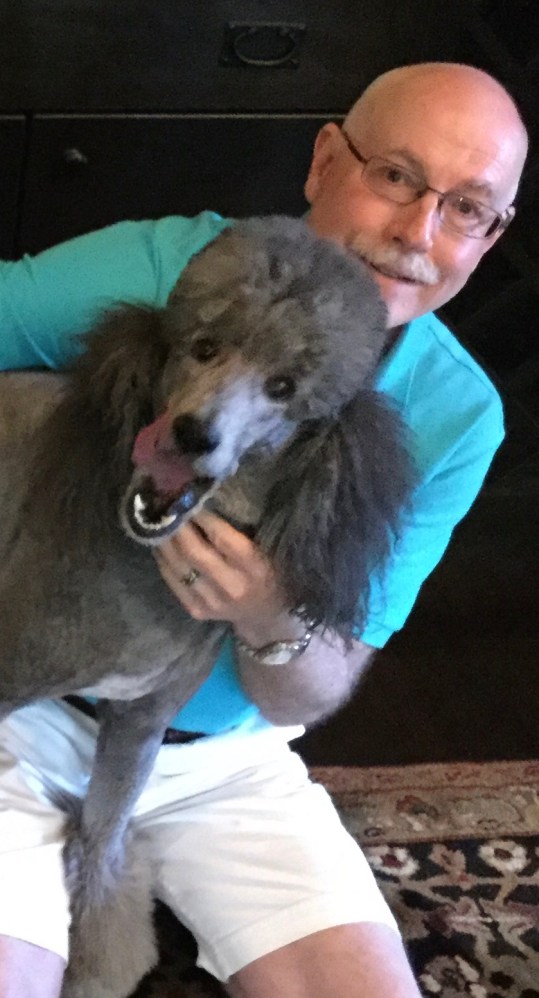
Paul Kimm

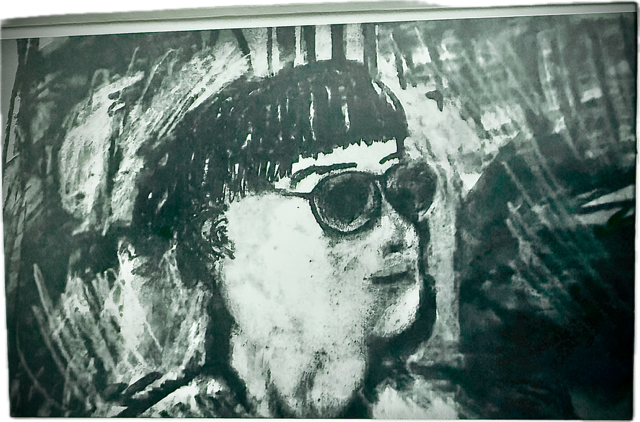
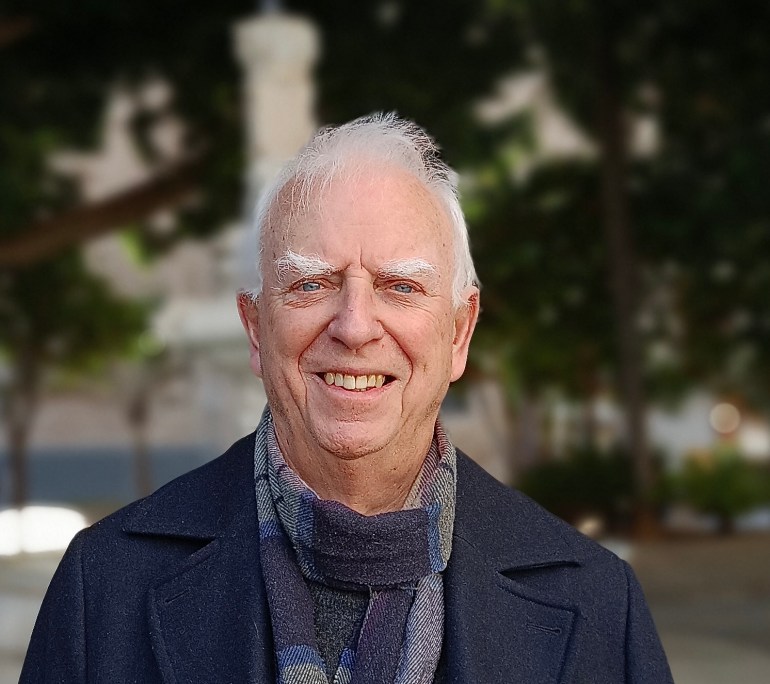
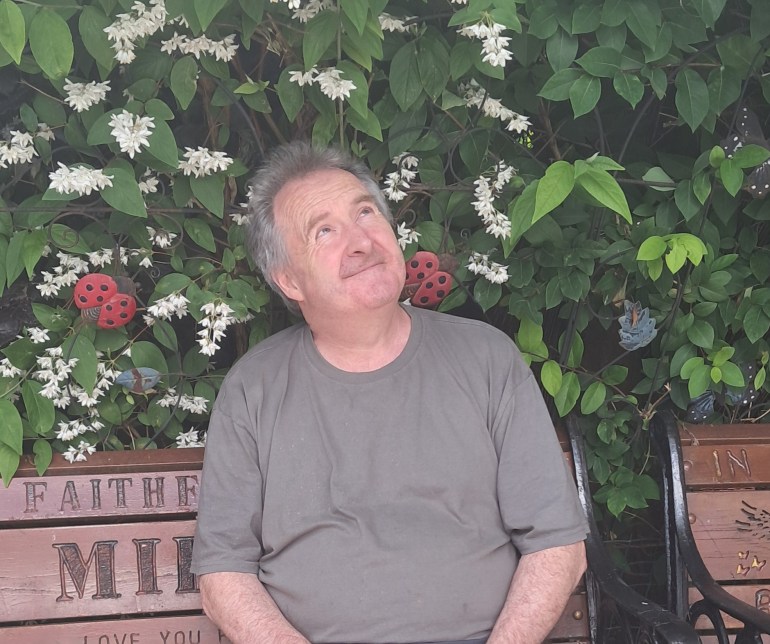
(Image is of Mr. Kimm)

Bound and Gagged by David Henson

Evelyn sprays the dining room table. As she starts to polish the oak, she hears a footfall behind her and whirls around. “Oh…Jack, please don’t sneak up on me.”

“Sorry, Evie. A beautiful Saturday is calling. Go for a walk?”

Walk. The word jars Evelyn back to that night, waiting in front of her building.

Jack, if U can’t pick me up will walk to station, take train

Hold tight, Evie, won’t be much longer

Evelyn squeezes the cloth. “This morning? Outside? You should’ve given me a little more notice, Jack.”

Her husband’s shoulders slump. “Okay, I just thought…maybe break the ice, and you could see Dr. Philips in person this week. I think it’s time.” He puts his arms around his wife. “Pwease?”

Evelyn freezes. “Not yet.” She twists away. “Need to get this done.” She turns back to the table.

“I’ll scramble some eggs.”

As Evelyn continues polishing, she notices what appears to be a smudge and gives the area an extra spritz.

“Can you come make toast?”

A few minutes later, Evelyn is in the breakfast nook. “Bon appétit,” Jack says, setting down two plates of scrambled eggs and toast.

Evelyn forces a smile and stares at her food.

“Please, you have to eat.” He taps her plate with his fork. “It’s over, Evie. He’s behind bars.”

She begins picking at her food.

“Have you heard from Ms. Walsh lately?” Jack says.

“She called yesterday. Said they all miss me and not to worry about my job. The other accountants are covering and…” The image of the man forcing Evelyn into his van flashes through her mind. “Let’s not talk about it, okay?”

Jack presses his napkin to his lips. “You’ll feel better when you get back to work.”

where R U, Jack?

important meeting almost over

forget it walking to train

Evelyn squeezes her fork until her knuckles whiten.

#

The next morning, after Jack leaves for work, Evelyn notices an area she missed when cleaning the dining room table. She polishes the area until she can see her reflection. Again her mouth seems blurred. When she leans closer, an image comes into view. It’s her seated at a dining room table, bound and gagged. Evelyn jumps back, inches forward, and sees the image again. She gasps and charges out the front door. When she notices the cool concrete under her bare feet, she begins to hyperventilate, hurries back inside, and up to the bedroom.

Lying in bed, she tells herself to get a grip. After a few minutes, she wedges the bedroom door with the chair from her makeup stand. She thinks about calling Jack, but decides against it.

Evelyn spends the day in the bedroom, pacing, staring out the window, reading…When it’s about time for Jack to get home, she listens for the garage door. Upon hearing it, she opens the bedroom door, and lies back down with an open book on her stomach.

“There you are.”

“What…oh, Jack. Is it that time already? Guess I fell asleep. More important meetings today?”

Jack frowns. “Let me change clothes. Then I’ll make spaghetti.”

“No, you’ve done enough.” Evelyn starts for the bedroom door, then stops. “I’ll wait for you.”

#

The next morning before the alarm sounds, Evelyn creeps downstairs and approaches the dining room table as if it were a monster she’s trying to not awaken. She holds her breath, leans close, sees the horrifying image of herself, and screams.

Evelyn and Jack nearly collide on the stairs. He leads her back upstairs and retrieves a baseball bat from under the bed. When Evelyn calms herself enough to tell him what she saw, he puts the bat away and insists that the two of them go check the table.

“See?” she says, standing behind her husband.

“I see you’ve done a good job polishing.”

Evelyn describes to Jack what to look for.

“Sorry, Honey. I just don’t see it.” His eyes well with tears. “Oh, Evie. If you’d only waited for me.”

Evelyn hurries back upstairs.

#

Evelyn lies prone on the bed. Jack stops massaging her shoulders. “Let’s do a little experiment. Go into the living room,” he says. “I’ll be right there.”

A moment later, Jack joins his wife in the living room; he has the furniture spray and a cloth. He goes to the coffee table, removes a porcelain goose and a Canals of Amsterdam picture book then polishes the tabletop. “If I’m right, you won’t see that image.”

Evelyn looks into the shiny surface, sees herself bound and gagged, and screams.

Jack steps back. “I don’t understand. Was there a coffee table where he…kept you?”

Evelyn shudders. “I’d rather not…I don’t…I just remember that big table…and…his breath. He was always chewing lemon rinds, and his breath reeked of them and…” She sinks to the floor.

Jack helps his wife to her feet. “I think I’ve got it. That table where you were—did it smell like this?” His hands trembling, Jack puts the bottle of furniture polish to Evelyn’s nose.

“What? I don’t know. I—”

“Think, Evie. I’m on to something here.” He spritzes polish on his wife’s wrist and pushes it toward her face. “Smell that and—”

“Get away from me.” Evelyn pushes Jack away, runs outside, closes her eyes, and breathes in the scent of fresh cut grass. and breathes in fresh cut grass until the lemon polish thins out, until her lungs feel like they belong to her again.

David Henson

Age Concerns by Paul Kimm

(We are pleased to debut Paul Kimm on the site today. It won’t be his last! Leila and DWB)

In the 1980s, I had a job working for Age Concern providing decorating services for the elderly. As long as they bought the materials, Age Concern sent me to paint or wallpaper however many rooms they wanted redecorating. Whilst a few of the people whose houses I went to barely spoke to me, the majority welcomed my company. Here are some of the stories they told me during my breaks. All of the below is true, and some of it is factual.

Mrs Goodson’s house

Mrs Goodson, 76, lived on the Easthill Estate. I was there to paint her kitchen and living room; white ceilings, magnolia walls, and all woodwork in white gloss. I did the living room first. After the first day, she insisted I didn’t bring a packed lunch as she’d feed me, and if I came earlier, would cook me a small breakfast too. So, from the second day I arrived at eight-thirty each morning, and for rest of the week, enjoyed a breakfast of two slices of white bread toast, buttered heavily, with two eggs. To show off her culinary prowess the eggs went from fried, to poached, to scrambled. They remain the tastiest I’ve ever had. For each breakfast she also insisted that I had a small 330ml bottle of Guinness with my breakfast.

It’s good for you. It’s the iron in it. Good for bones, blood, the lot. A little bottle like that, and some eggs, sets you up for the day. It’s what I’ve had for decades and I’m fit as a fiddle. It was my John who started us on it. He was seven years older than me, and only gone just last year. So, did him no harm, did him good. I get crates delivered, twenty-four in a pack lasts me for a month, at weekends I don’t bother, but during the week it’s just right. Keeps you fit. Here, let me show you.

She took me to her under stairs cupboard and opened it to show me the crate, half empty, with rows of bottles in it. Then we went back to the kitchen, and I sat down at the round table, with three chairs tucked under it. She cracked two eggs into a frying pan, and they sizzled and popped immediately, before sliding two slices of bread into the grill above the hobs.

I get them delivered. I can’t carry a box like that, but my John could, still driving he was, and could carry them up from the car. Like he never really got old, that Guinness kept him going. I never learned to drive mind you, so our Rob sold the car after, only for a few hundred pounds, as we’d had it years. John was good at looking after the car as well, had all the tools and that, he’d learned mechanics in the forces. He did that in the war too, fixing vehicles, always strong. He always said it was the Guinness, the iron in it, giving you strong bones, keeping you fit. He never was sick until the end. Never saw him once have a day off, and right until his last week he was carrying in those cases, bending over, and slotting them under the stairs. I can still bend down to get a bottle or two out myself, but it’s years since I could carry twenty-four of them like that. Tell the truth, don’t know if I ever could. Anyway, like my John, a bottle a morning keeps me fit. It’s good for you, and our Rob sometimes brings me another crate when he visits too. If you’re still here on Friday, you’ll probably meet him.

I thanked her for the breakfast, telling her how tasty the eggs were, and for the Guinness. I remember feeling very satisfied and full each morning so did some of the lighter decorating work first whilst the breakfast and drink settled. From the Tuesday to the Friday it took to finish the job she told me more about her John, his strength, and numerous skills, never becoming emotional in anyway other than a bright happiness reminiscing about him. On the last day I met her son, Rob, who was more than twice the age I was then.

You’ve done a smashing job here. Much appreciated mate. Kitchen and living room both look way smarter. It’s a good scheme they’ve got going with Age Concern. Might have to get you back to do more, if we can get me mam some more paint in. That’d be alright, wouldn’t it? The upstairs hasn’t been done for over a decade I reckon. Not since my dad got sick and couldn’t come down for years.

I assume he saw the confusion on my face, as he then told me more.

Ah, I bet me mam said nothing. She’s never spoken about it. Likes to remember him before he got ill, when he could still help around the house. I’ll say no more on it. She doesn’t want those years being the memory of him, and that’s fair enough. It’s best for her she lies to herself, and we go along with it. I’ll say nowt more on it. Thanks again mate, cracking job and may see you again.

When I left Mrs Goodson said thank you and gave me two bottles of Guinness to take with me. I don’t know if she ever got more paint. Possibly one of the other decorators got put on the job next time, but none of them ever mentioned it to me in the yard.

Mr Mason’s house

Mr Mason also lived on Easthill Estate, it being the biggest in town, and was having his living room, hallway and landing painted, a longer job because of the banister and higher ceiling in the stairwell. He would keep drinks and biscuits coming and watch me work, occasionally telling me stories of his younger life, whilst I was painting.

I’ll tell you the best story I’ve got lad. It was 1963, remember it clear as day, even though it was at night. Got arrested, didn’t I? Out of the blue it was. I was still in the army, had been for years, cos I stayed in after the war. I was in London, was driving a Land Rover. That was mostly what I did, drove about on errands for officers and that. A bunch of coppers pulled me over, and took me in. Arrested me for the bloody Great Train Robbery! Can you believe it? Remember it? Ronnie Biggs and them? They thought I was one of them because they’d escaped in Land Rovers, and there’s me in mine trawling round London, odd jobs for my gaffers, and they reckoned I was one of the robbers. Asked me questions for ages they did. Hours.

I finished a section of banister, put my brush and paint pot down, sat on a stair, and asked him what questions they had.

All sorts. It was like they’d decided. You know, like I was definitely one of the robbers. Was in my uniform and they said that was to throw them off the scent. I said to them to check the Land Rover, there was nowt in it, and they said it was probably a decoy. Bear in mind, I didn’t actually know anything about the Great Train Robbery. It wasn’t called that yet, and they weren’t telling me what had gone on, just asking me where the others were, where the money was, where I’d got the military uniform from. I didn’t know until they finally let me go, and saw the papers the next day. Eventually, they called my barracks to check. Someone came in, explained who I was, and they let me go. No apologies or nowt, like I’d wasted their time.

I bent down to get my paint and carry on with my work, but he asked me to wait a minute, so I sat down again.

Thing was, I remember it like it was last night. Never said this to my wife, but that was the most exciting night of my life. Got married, lived through the war, spent two decades in the army, but being arrested as a Great Train Robber is my greatest memory. I remember it more than anything. Every now and then it’s all I constantly think about. That’s the thing with being old, maybe the only good thing, lots of memories, so many of them, even if some of them visit you more than others.

I recall Mr Mason being quieter for the rest of the week. He was excited to tell me his story about being arrested as one of the Great Train Robbers but it was like it had exhausted him. He didn’t mention it again for the rest of the job, or share any other major memories, and by the last day he’d stopped watching me work.

Mrs Smith’s flat

Mrs Smith had a one-bedroom flat near the beach. You couldn’t see the sea from her window, but you could from the small, shared garden at the front. Mrs Smith had saved part of her pension for nine months to afford the paint for every room to be done. She was a soft voiced, but chatty lady who made me tea with milk, a drink I’ve never liked, several times a day, insisting I take a break with her, and I hadn’t the heart to tell her I didn’t like it. The twenty or so cups of tea I had in the week I was there being the most I ever drank.

I moved here after my Albert passed. I didn’t want to stay in a big house, like we had, bigger than we ever needed, so I sold it off, paid the rest of the mortgage and got this place. More than twenty years ago now. Maybe even close to thirty now. I wanted to be near the beach, and have a view of the sea if possible, but when everything was paid off there wasn’t enough for that. This place suits me though. I like it enough. Enough for me. Do I keep saying ‘enough’? Ooh, it’s a miserable word, isn’t it? Enough. Make do. Get by. That’s life though, isn’t it? Life is enough. Anyway, I’m getting all maudlin, and I’m not maudlin at all. I’m a happy person. Quite happy. Happy enough. That’s me, Paul.

Mrs Smith laughed at herself, telling me not mind her rambling, and I went back to continue the decorating. The next milky tea came just over an hour later.

Sorry about before. I don’t mean it like that. All that daft talk about ‘enough’. We had it good, me and my Albert. No kids. That wasn’t for us it turned out, so we had a nice house. No kids, and a big house. Too big for us really, but we had the money for it with no kids. We used to go on holidays abroad before others did, before it became all that popular. Cities and seasides. Seville and Marbella in Spain. Very nice. Rome and Almalfi in Italy. Very nice too. Then my favourites, Athens and the islands in Greece. Definitely the nicest. Anyway, listen to me twittering on. Am I saying ‘nice’ too much now? Deary me, I’m all ‘enoughs’ and ‘nices’ today. Those holidays were very nice though. We’d always send ourselves a postcard, addressed to our own house, with a little note about our trip, like we were writing to another Mr and Mrs Smith, so we had a memory and Albert quite liked collecting the stamps. Often they were waiting for us when we got back or arrived a little later on. I’ve still got them in an old biscuit tin somewhere. I’ll have to dig them out. I can’t remember what we wrote on them. It was a long time ago now.

The next day Mrs Smith searched the cabinets and cupboards in the room I was working in. She apologised for being in my way, even though she wasn’t. Shortly after returning to the kitchen she called me through for another tea.

I’ve found the tin of postcards. I haven’t looked at these in years. Could be ten or more, twenty even, since I’ve had a look. I thought we could look together if you like, while you have your tea.

She opened up the old square tin, the picture on its lid showing a photo of the biscuits it once contained. Inside, there was a stack of brightly coloured postcards, the paper on them looking soft to the touch. Mrs Smith took the top one, a photo of an old church with an orange tree in the foreground, and the word ‘Sevilla’ in the bottom right corner.

There you go. I mentioned we went to Seville didn’t I? Lovely orange trees everywhere. All over the city. Let’s have a look what silly message we wrote to ourselves.

She turned over the postcard, and on the back the right side had the address below the names ‘Mr and Mrs Smith’, but the left side was blank.

Oh, let me look at some more. We must have forgotten to write on this one. Ooh, one from Turin. We went to Italy more than once. Oh, no message on this one either.

Mrs Smith took out a pile in one go, turned them over, and started dealing them out on the table, each one with their address and a stamp on the right, but all the left-hand sides blank.

Well, I never! I told you yesterday we used to send ourselves a postcard, with a message. I was sure we did. Looks like I’ve gone and imagined it. So silly. It must have been to his brother Geoff, and his wife Gladys. They were Mr and Mrs Smith as well. That must be it. Silly me. I would have liked to read those messages, but Geoff and Gladys are long gone now too. I’ve no idea if they kept them. I’ve still got Albert’s writing though, on those addresses. Just not the messages. So silly of me. I was so sure about it when I told you about our little, silly postcard tradition. Now I can’t stop saying silly, can I? Oh well, it was a long time ago now, but so is yesterday nowadays for me. Everyday feels like a long time ago. Just so silly.

After that day I wasn’t invited into the kitchen as much. Mrs Smith mostly brought the mugs of tea to me. When I was painting the kitchen and the bathroom, if she wasn’t looking, I’d tip some of the tea down the sink. When the job finished, she said goodbye and asked if I might pop round sometimes for a tea and a chat. I said I would, but I never did.

Paul Kimm

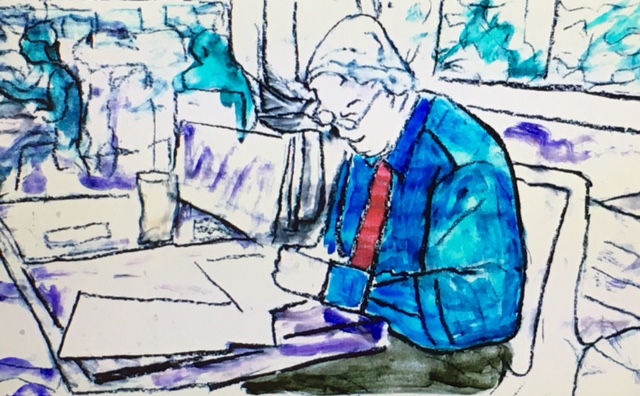
(Image by CJA)

Tommy Twinkle Toes and the Parrot by Michael Bloor

My wife Dorothy’s Uncle Derek reckons that he, in effect, bought the parrot off his crooked father-in-law, the veteran jewel-thief Tommy Twinkle Toes (that really was what the Sunday paper had called him, back in the day: ‘Tommy Twinkle Toes’). Derek took in the parrot when Tommy was arrested and also lent Tommy quite a bit of money towards the costs of his defence lawyer. After Tommy was found (very) guilty, Derek visited him in the jail and asked him what he was to do with the parrot. Tommy begged him to keep it, saying it that would be a consolation to him, in his lonely cell, to know that the bird was in a good home.

Continue reading

Wild Bill’s Thursday Afternoon Show by Michael Bloor

‘Hi there and welcome to The Thursday Afternoon Show on Radio Sherwood, with me your humble host and Turntable Operator, Wild Bill Hilcock…

[a burst of Wild Bill’s personal jingle]

‘Not content with simply playing you The Very Best of The Seventies, we also have the latest instalment of our weekly feature: our “Meet the Muse” live interview. This week we’ll be talking to Jeanette Brailsford, who as a sweet seventeen year-old, became the immortal muse of Dogsbreath Donovan, the onlie begetter of that great seventies hit, “Jeanie Baby”…

Continue reading

I Grind My Teeth: Oral Poetry by Jordan Eve Morral

It was kindergarten.

The creepy guy on lunch duty

pulled my teeth out with a wrench.

They fell out in a clump

of enamel and gum.

Still, I felt convinced

they wouldn’t notice.

I lost my teeth again –

the four front ones on top.

They remained in my mouth

with Scotch tape, held down.

My teeth are so loose

they protrude at all angles;

My lips have parted,

forever alone.

It’s weird. In dreams

I’ll be endlessly falling,

my throat slit,

a child’s voice calling,

but I only wake up scared–

delirious and delusional–

when my fangs are not bared

and able to reflect the moon.

*Dreams of lost teeth commonly symbolize feelings of insecurity, loss, or transformation.

I have always been interested in the concept of dream interpretation, yet I am always going

back and forth between believing and not believing the accuracy of a real-life translation.

However, I have been dreaming about losing my teeth for as long as I can remember. Starting

in elementary school and continuing into the present day, I have had the lingering fear that I will

one day soon be without my teeth.

The hard thing about this constant worry is that I am afraid I will never be able to rid my mind of

it. Teeth are so often the focus of my dreams that I spend my waking hours thinking of them too.

Unfortunately, this leads to more of the same dreams. I cannot stop the cycle.

It is for no other reason than my recurring dreams that I wrote this poem. On some level, I think I

expected it to be a form of catharsis. In this aspect, I believe I have failed. I have simply

confirmed how much time I spend thinking about my teeth. I am perpetuating the cycle.

Jordan Eve Morral

(Image is of the author)

Oxymorons by Jordan Eve Morral

We know clouds are water vapor,

but we’re still amazed they float.

We know trees are turned to paper,

but how, we’ll never know.

So many little things,

make so little sense.

But since they are ordinary,

questions make us sound dense.

We may be too easily transfixed–

insane and dull and dumb–

but we see the world with wonder,

seeking all of its wisdom.

We are wise fools.

The “wise fool”:

An oxymoron that, like the rest,

is contradictory but makes perfect sense.

Jordan Eve Morral

(Image is of the author)

The Rime of the Globalised Mariner. In Six Parts (with bonus track from a chorus of Greek Shippers) by Michael Bloor

First Published in Sociology, 47(1): 30-50, 2013 doi: 10.1177/00380385112448568

(Editor Note: Due to some slop dished out by WP, we have decided to show a better looking version of this fine article, which first appeared on New Years Day–LS)

Part One

(Another Edit note: The parenthetical material in darker font corresponds with the material above it; “call and response” is the theatrical term.)

It is a global Mariner,

And he stoppeth one of three.

‘By thy long grey beard and glittering eye,

Now wherefore stopp’st thou me?

(A globalised Mariner

meeteth three gallants

outside a shopping centre

and detaineth one.)

‘The centre’s doors are opened wide,

And Bourdieu got it right:

Consumption lends distinction.

So get you out my sight.’

(The Consumer protesteth

against detention outside

the shopping mall.)

He holds him with his glittering eye –

No Big Issue 1 sale is sought,

But fifty yards from B&Q

The would-be Consumer’s caught.

(The Consumer is spell-

bound by the mariner and

constrained to hear his tale.)

So spake the doleful mariner,

Transfixing with his e’e,

In fluent, graphic English –

The language of the sea.

(Proficiency in English is a

requirement of a seafaring

career.)

‘I had no wish to work on ships –

Filipinos know it’s hard –

Mouths were many, jobs were scarce,

From birth my life was marr’d.

(The Mariner telleth of early

hardships and how he and

his parents were cheated by

the maritime colleges and

the crewing agents.)

‘From green island homes we travel,

As mariner, nurse, or maid,

And remit 3 to our loved ones

The pittance we get paid.

‘Father scraped up money

For training college fees –

A scam of the local senator,

Whose throat I’d gladly seize.

(Filipino maritime training

institutions are often

controlled by persons with

powerful political

connections.)

‘The college had no equipment,

Just endless, pointless drill,

No qualifications either –

The news made my father ill.

(The academic training

often follows a military

model and is of poor

quality. And it does not

qualify cadets for

certificates of seafarer

competency without

additional practical

experience – ‘sea time’.

Most colleges fail to

arrange ‘sea time’ for their

cadets.)

‘Course passes gained no certificates,

Without some time at sea.

There was no ship to serve on,

But the senator had his fee.

‘Father paid a crewing agent:

Yet another fee required,

But at least I’d get a berth,

And that’s what we desired.

(Many ship operators out-

source crew recruitment

and employment to

specialist crewing agencies

with offices in the major

labour supply countries.

Cadets graduating from

maritime colleges must

pass a basic safety training

course before they can go

to sea. The courses are

usually conducted at

specialist training

institutions with requisite

equipment such as

lifeboats. State regulatory

agencies inspect the

training institutions to

ensure the requisite

equipment is present, but

not that it is used.)

‘The agent sent me to train then

At a dismal-looking place

More fees and little learned,

Sad repetition of my case.

‘A lifeboat stood on davits,

By a creek filled-up with mud.

“For audit purposes only”,

That pristine lifeboat stood.

‘There’s so many schools for training –

Why’d the agent send me there?

The training was quite useless –

Why didn’t that agent care?

‘It seemed he got a “rebate”

(kickback to you and me)

For every trainee sent there,

A percentage of their fee.

(Corrupt crewing agents NOTE WORK FROM PRINT TO FINISH

distort the seafarer training market)

‘They issued my certificates,

But their paper had a price:

My father’s hard-earned money,

Stolen once, then twice.

‘Ever since it’s been the same:

When I come home from sea,

The agent wants another course,

And I must pay the fee’.

Specialist short courses

must be taken to allow

employment in particular

trades, such as tankers.

Usually, the seafarer must

pay the course fee.

[Enter Chorus of Greek Shippers]

‘O woe to us, and to our ships,

But what are we to do?

The wages they are paying now,

Won’t draw a young Greek crew.

‘So we take these global mariners,

Who’re really up for it,

But they can’t begin to work a ship:

Their training’s frankly s**t!

(Ship operators moan that

international standards of

seafarer training are not

being properly enforced.)

‘Someone, somewhere, should sort it out,

We’ve really had enough:

Inspect and close the colleges,

It’s time for getting tough!’

PART II

Consumer groaned to Mariner:

‘So you each believe the same!

But if all think your training’s s**t

Then, truly, who’s to blame?’

‘Our union said, there is a law –

A real law, no invention –

That lays down training standards,

An international convention.

(The Mariner relateth that

there are international

standards on seafarer

training.)

‘Government should enforce it,

End the bribing and the feigning,

Close-down the useless paper-mills

And give us decent training’.

(But these international

standards rely on national

enforcement.)

‘Yes, yes’, the Chorus chorused,

‘Our ships need well-trained crew.’

‘So what went wrong?’ Consumer asked,

But the Mariner hardly knew.

‘There are no simple answers,’

Voice grated, knife on rock,

‘The true path’s no open highway,

Good governance no wind-up clock.’

A gaunt figure stepped among them:

He gave each a piercing look.

His boots were worn, his cloak was stained,

And he bore a calf-bound book.

‘Who art thou?’ they cried in wonder,

‘And what thing’s your burden there?’

‘I’m the Inspector,’ spake the stranger,

‘And the Law’s my burden fair.’

(An Inspector calls.)

The Chorus shrank and muttered,

The Mariner downed his e’e.

‘I’ve heard tell of you,’ he whispered,

‘As have all who sail the sea.

‘You come aboard, unheralded,

You seek out the rusting hulks:

You cow the cruel masters,

Ships’ agents get the sulks.’

Consumer viewed Inspector,

Eyes lit with wild surmise:

‘It’s up to you to punish,

Right wrongs, and nail their lies?’

‘In truth, that is my duty –

The goal for all my kind –

But the journey is a long one,

And the road’s not paved, nor signed.

‘Those who inspect the colleges

In each poor country of the Earth:

They’re government employees

And are not paid their worth.

‘The owner is a man of power,

The inspector – he is not,

The one dines in his castle,

The other in his cot.

‘The inspector has a check-list,

To work through, line by line.

If a lifeboat’s at the college,

Then it gets a tick – that’s fine.

‘We know it can’t be launched:

It’s to be ticked, naught more.

Poor men must heed the letter,

Not the substance, of the law.’

(The Inspector concurreth

with the mere lip-service

maritime colleges pay to

international training

regulations, but believeth

that the local inspectors are

powerless to obtain fuller

compliance.)

The mariner had silent stood,

Hands clenched and visage pale,

Eyeing the Inspector,

As he ground out his tale.

‘I thank you’, cried the mariner,

‘Now I know the bitter worst:

No remedy in law books –

My mates and I are cursed.’

The Greeks had been quite nervous

While yet the Inspector spoke,

But confidently dealt with

The Mariner and such-like folk:

‘Don’t blame the law, nor malice,

Nor trade that’s getting slack,

Global economic forces

Stapped these burdens to your back

‘Colleges could train you better –

With lifeboats working too –

But higher costs would close ‘em down,

Then where’d we find a crew?’

(The ship operators see

poor-quality training as an

economic consequence of

the seafarers’ need for

cheap training.)

The Inspector laughed most harshly,

And turned to face the Greeks:

‘He who looks for truth

Must beware of that he seeks.

‘Good training’s too expensive:

The poor can’t pay the fee.

You state the matter clearly,

And I cannot but agree.

‘Yet I can well remember

When companies paid the fees,

Time-Past – they paid for training,

Invested in their employees.

(The Inspector recalleth that

40 years ago, it was

commonplace for ship

operators to pay for

seafarer training through

cadetships and

apprenticeships.)

‘You complain of training standards,

Cackling like geese

You want action to be taken,

But you don’t pay a penny piece.

‘It seems to me, hypocrisy,

When the poor turn-out their pockets,

To criticize their training,

While adding up your profits.’

PART III

The Chorus blushed and shuffled,

But still they stood their ground.

They’d got their MBAs,

They knew their case was sound:

‘You’re talking of the past,

Dim, distant days of yore,

We don’t train our seafarers –

We don’t employ ‘em any more!’

Consumer quizzed the Chorus:

‘You don’t employ your crew??’ –

‘Our labour’s all outsourced,

‘The late-modern thing to do.

(The Chorus confirmeth the

Mariner’s tale that crewing

agencies, not ship

operators, employ

seafarers. Agencies then

contract with operators to

supply crews with the

requisite qualifications.)

‘If a shipper paid for training,

He’d have an extra cost,

He’d be under-cut by others –

His business would be lost.

‘Pay for training? Better wages??

Remember shipping’s quite anarchic:

We’d love to be more generous

But you cannot buck the market.’

The Inspector gave a mirthless smile:

‘The market’s always cited

As a sovereign power and reason

Why wrongs cannot be righted.

‘But the remedy is simple here:

The flag-State of every nation

Shall charge a levy on each ship,

Paid at each ship’s registration.

(The Inspector proposeth a

training levy to be paid

when each ship is

registered by the flag-State.

See Afterword.)

‘The levy would pay all training costs,

A burden shared without distortion.

It would pay for good inspections too –

No need for doubts or caution.’

The Mariner did slowly nod:

‘The scheme would work – I see –

My last ship flew Mongolia’s flag,

For a three-thousand-dollar fee.’

Although Mongolia is 850

miles from the sea, the

Mongolian People’s

Revolutionary Party

granted a license in 2003,

to a Mr Chong Kov Sen, a

Singaporean businessman,

to operate the Mongolian

Ship Registry. Mr Chong

previously operated the

Cambodia Registry under

license until 2002, when

the license was withdrawn

following international

protests at Cambodia’s

failure to police its ships. In

2008, 73 ships were flying

the Mongolian flag.

‘Mongolia?’ quizzed our Consumer,

‘That’s surely rather queer?’

‘Not really’, saith the Inspector,

‘Some think a proper flag too dear.

‘Each ship is like a piece

Of far-off, sovereign soil –

Its flag denotes allegiance,

Republican or royal.

‘The flag-State has a duty,

Be the country rich or poor,

To check each ship is ship-shape –

As laid down in the law.

‘But flags can be commodities,

And flags can be for rent,

To businessmen and lawyers,

Who’re out on profit bent.

‘When ships are policed badly,

Their seafarers should beware.

Policing ships for profit

Is a mighty strange affair.

‘Some run their business well,

Some run it as a racket,

With only one objective:

To make themselves a packet.

An OECD report states that

‘a significant percentage of

total vessel operating costs

could be saved by sub-

standard operations’

(OECD 1996: 27).

‘Now, compliance is expensive,

So compliance is a sham

When the flag a shipper flies

Really doesn’t give a damn.

‘A shipper heeds his costs,

A shipper looks to save,

But if he flies a cut-price flag,

Consequences can be grave.

‘Ships that fly a proper flag,

And meet their obligations,

Incur much extra cost

To comply with regulations.

(Thomas Gresham, a

sixteenth-century

Chancellor of the

Exchequer, found it was

impossible to improve the

quality of the English

coinage, by simply issuing

good quality coins. People

hoarded the good coinage.

So it was necessary to also

withdraw the clipped and

debased coins from

circulation. Hence

Gresham’s Law: ‘Bad

money drives out good’.)

‘If they wanted well-found ships,

And skilled, contented crews,

They should have thought to ask us,

Or given us some clues.

‘Truth is: they don’t want “good,”

Or freight rates getting steep.

We skimp, they save –

Truth is: they’re wanting “cheap.”

The Inspector sighed in turn,

‘Some charterers do care,

Oil majors first and foremost,

Others – rather rare.

The Oil Companies

International Marine Forum

(OCIMF) has set up and

funded its own private

inspectorate, SIRE, to

ensure the seaworthiness of

tankers under charter.

Those tankers deemed

satisfactory on inspection

can expect more business

and better terms from the

oil majors, eager to avoid

the bad publicity of marine

pollution incidents.)

‘Oil majors don’t like bad headlines

When tankers hit the rocks

And oil pollutes the beaches

Because the ships are crocks.

‘The public doesn’t like to see

Seabirds black with oil;

Alas, for all the tanker crews,

The public doesn’t care at all.

‘So the tankers get inspected

With much resource and care,

But the crews of all the rest

Make do with me…and prayer.’

PART IV

The Mariner then spoke up:

‘Christian, Buddhist, Hindu, Turk,

Many pray who sail the seas,

But their prayers concern their work.

‘We do not fear a foundering –

Hull pierced, stove in, or rent.

Such a thing may happen,

But it’s a very rare event.

‘Pirates may seize the ship,

And hold us on foreign soil,

But what we fear most is different:

It’s the endless, grinding toil.

‘Each and every ship we join,

Seems there’s fewer crew,

An officer gone, a rating gone,

But there’s still their jobs to do.

(Increasingly, ship operators

have been seeking to save

crewing costs by reducing

the number of watch-

keeping officers. Where

second officers have been

dispensed with, then

watches must alternate

between the master and the

first officer (mate),

although each of them has

many other duties to

perform. An OECD

(2001a) report instances a

saving of $37,000 pa by

under-manning a 20-year-

old 30,000 dwt bulk carrier

by two crew.)

‘The master now must take a watch,

Though there’s paperwork aplenty.

So many crew have disappeared,

The vessel’s almost empty.

‘The master’s nodding on the bridge,

His tired eyes are red.

He’s still to call Head Office,

Before he gets to bed.

‘The mate then takes a watch,

Though it’s two days since he slept –

Problems with the cargo –

But his watch must still be kept

‘The master’s nodding on the bridge,

His tired eyes are red.

He’s still to call Head Office,

Before he gets to bed.

‘The mate then takes a watch,

Though it’s two days since he slept –

Problems with the cargo –

But his watch must be kept

‘Turnabout, the two must watch,

There is no other way,

Six hours on, six off,

Twelve hours in every day.

‘In sickness and in health,

Each watch they duly take,

Dog-tired, red-eyed, grey-faced,

Four months, four months, without a break.

‘No gentle couch our cabin:

The ship is pitching in the waves,

There’s engine noise, vibration,

Yet we sleep the sleep of babes.

‘Too soon, too soon we’re wakened,

We scarcely catch our breath.

An ignoble thing, this tiredness –

As if we slowly bleed to death.’

Part V

As ever when the Mariner spoke,

The Greeks did swell with pride:

‘There is no law that’s broken there,

There’s nothing for us to hide.’

‘You surely lie,’ Consumer cried,

‘I know little of the sea,

But to have a master standing watch –

That’s folly, plain to me.’

The grim inspector then did speak:

‘In truth, they break no law.

The law itself is here at fault –

Therein we find the flaw.

‘The law on Minimum Manning

Lays down for every ship

The crew that must be carried

On each and every trip.

‘What is the minimum manning?

This is what we’re taught:

It’s the smallest competent crew

To bring a stricken vessel safe to port.

(In fact the maximum

number of daily hours of

work for watch-keepers is

specified by the IMO as 14

hours, and the maximum

number of weekly hours is

91.)

‘To make that stricken vessel safe,

Huge effort they’ll expend,

Yet must they slave thus daily?

Til their contract’s at an end?’

Consumer scratched his head:

‘If some members of the crew

Exceed twelve hours each day,

Surely that’s illegal too?’

‘We falsify our working hours’,

Replied the old seadog,

‘To keep the owners happy,

Each day, we flog the log.’

(Falsification of working

hours is so widespread in

the industry that it has

entered everyday slang as

‘flogging the log.’)

‘Then change the minimum manning law –

No more idle chatter –

Require crews to be larger,

It seems a simple matter.’

(Consumer doth not

understand why the flag-

States at IMO do not

change the international

legislation to provide

adequate crewing numbers,

allowing shorter hours.)

The mariner sighed and shrugged.

The Inspector took-up the tale:

‘Flag-States must vote the change,

Or else the measure fails.

‘Flag-States that exist for profit,

And take the operators’ gold,

They can’t increase the crewing costs –

They’ve reputations to uphold.

‘The flag with the greatest tonnage

Flies o’er the Panama Isthmus,

When Panama votes for change,

Then turkeys’ll vote for Christmas.’

Part VI

[All in chorus: …]

‘So come all you kind consumers,

Who the honey’d wine have sipped,

Take pity on the mariner,

Beware how your goods are shipped.

(It is suggested that public

concern for seafarers’

welfare might act in the

same way as public concern

about marine pollution and

be transmitted down the

supply chain from

charterers to ship operators.

Operators who could

‘brand’ their vessels as well

crewed could then

command premium freight

rates.)

‘The crews are outsourced workers,

A study in dejection –

Casualised, long hours, poor training –

And the law is no protection.

‘If charterers thought the public cared

How seafarers are mistreated,

They’d pass the message down the line:

“Our consumers are quite heated.

“It’s bad for our public image,

Like seabirds and pollution,

So get your act together,

And find a true solution.

“We’ll pay your higher freight rates,

If you’ll deploy more crew.

Or we’ll contract your opposition –

See if they know what to do.”

‘So the shippers get the higher rates,

Increase the crews and cut the hours,

Strike the flag of Panama,

And so, at last, they smell of flowers.

‘One day it really just might happen,

A fairy tale come true,

It’s even very possible,

They’d employ and train the crew!’

For an ‘Afterword’ describing in detail the political economy of the global shipping industry, issues of seafarer training, industry regulation and enforcement, please refer to the original publication in the journal ‘Sociology’.

Michael Bloor

These Wood Entities by Jordan Eve Morral

It’s the trees that make me cry

more than anything.

The hemlock stands strong

with its twigs of green and cones

until the last moment

when snow hides the earth

and deer eat the branches bare.

The red cedar stands alone

in fields long abandoned.

Slow but steady it grows

Only to be chopped for chests and posts.

The blue spruce lives long,

valued for its beauty,

but outgrows its friends

well after they are gone.

The red pine feeds mice and birds of song,

but, in eating the seeds,

these creatures devour descendents.

The catalpa with its beans

would seem exempt from my sorrow,

but it too has flowers that quickly fade.

The syrup maple is kind with abundance,

and thus has its sweet sap stolen

before it ever has a taste of itself.

The reason, my friend, these wood entities

bring such strife and pain

is because of the human struggle they endure.

Mankind inflicts the destruction,

and suffers the denouement.

Jordan Eve Morral

(Image is of the author)

Happening (A Minologue) by Geraint Jonathan

If I hear you say ‘what happens, happens’ just one more time, I’ll be responsible for my actions and it won’t be pretty. What happens happens, what the fuck am I supposed to do with that? What doesn’t happen doesn’t happen, what do you say to that? No don’t, please, don’t answer that, I’m sure there’s a perfectly unreasonable explanation. Things happen, don’t happen, might happen, have happened, will happen, may never happen: I get it. We all just happen along, as you say. But at this precise moment, I happen to be what’s known in the trade as mightily pissed off. Unnervingly so, if I say it myself. That what happens just happens to happen because it happens to happen is no good to me. As to what’s actually happened, it could’ve done with not happening, trust me, its having happened at all being the very thing that shouldn’t have happened. And even though it has happened, I can’t, like you, shrug it off saying ‘these things happen.’ That these things of course do happen is of no consolation at all. They’re not supposed to happen, that’s the whole point. But it’s happened and I’m the one it’s happened to. There’s no getting away from it. Or perhaps there is. Maybe you happen to know what no one else happens to know. Any chance of that? Happening, I mean.

Geraint Jonathan

(Image by CJA)