“I remember a whisper I heard when I was seven; a uniformed policeman was addressing my aunt, with whom I lived. ‘Your brother, Mrs. Allen,’ he said, ‘lost his life in an automobile accident last night.’
“Aunt Livy’s only brother was my dad, Tom Lewis, Jr. I remember thinking to myself that I was named after him, which made me Tom Lewis, III. I heard a sudden sharp intake of breath and then screaming. I remember worrying about how Aunt Livy was taking the news, but then I realized that the heavy breathing and screaming was coming not from my aunt but from me. But nobody else could hear it. They paid me no mind.
“Yes: writing has done much harm to writers.” – Oscar Wilde
“I had a girl / Now she’s gone / She left town / Town burned down / Nothing left / But the sound / Of the front door closing / forever.” – Warren Zevon
…And then sitting on the porch The Drifter opined to the two who were there with him:
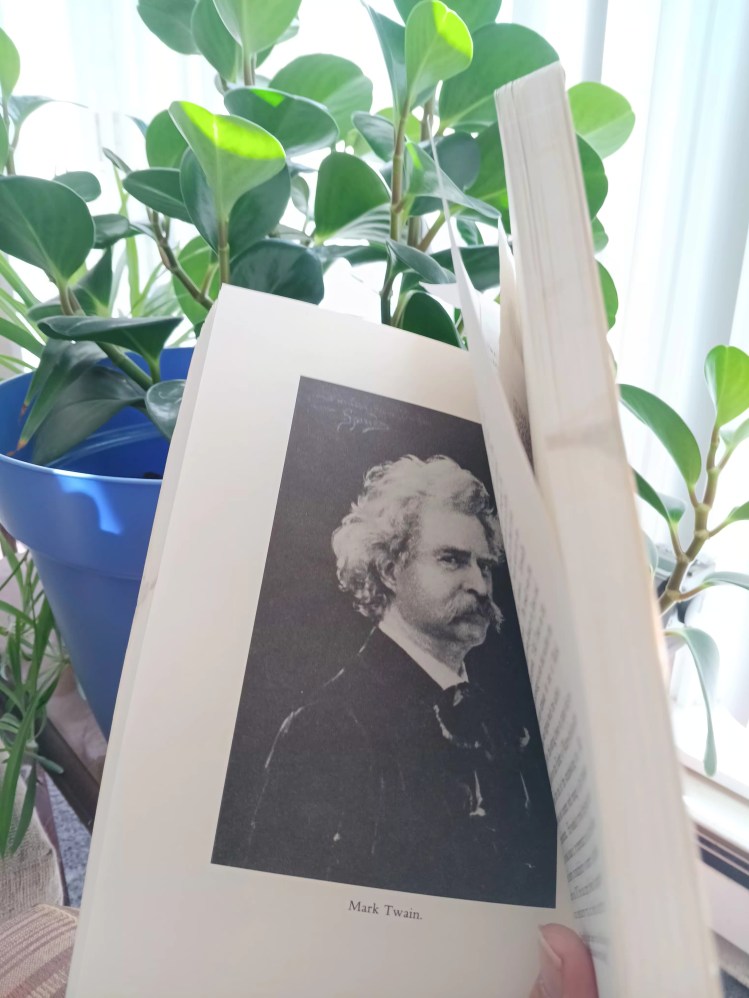
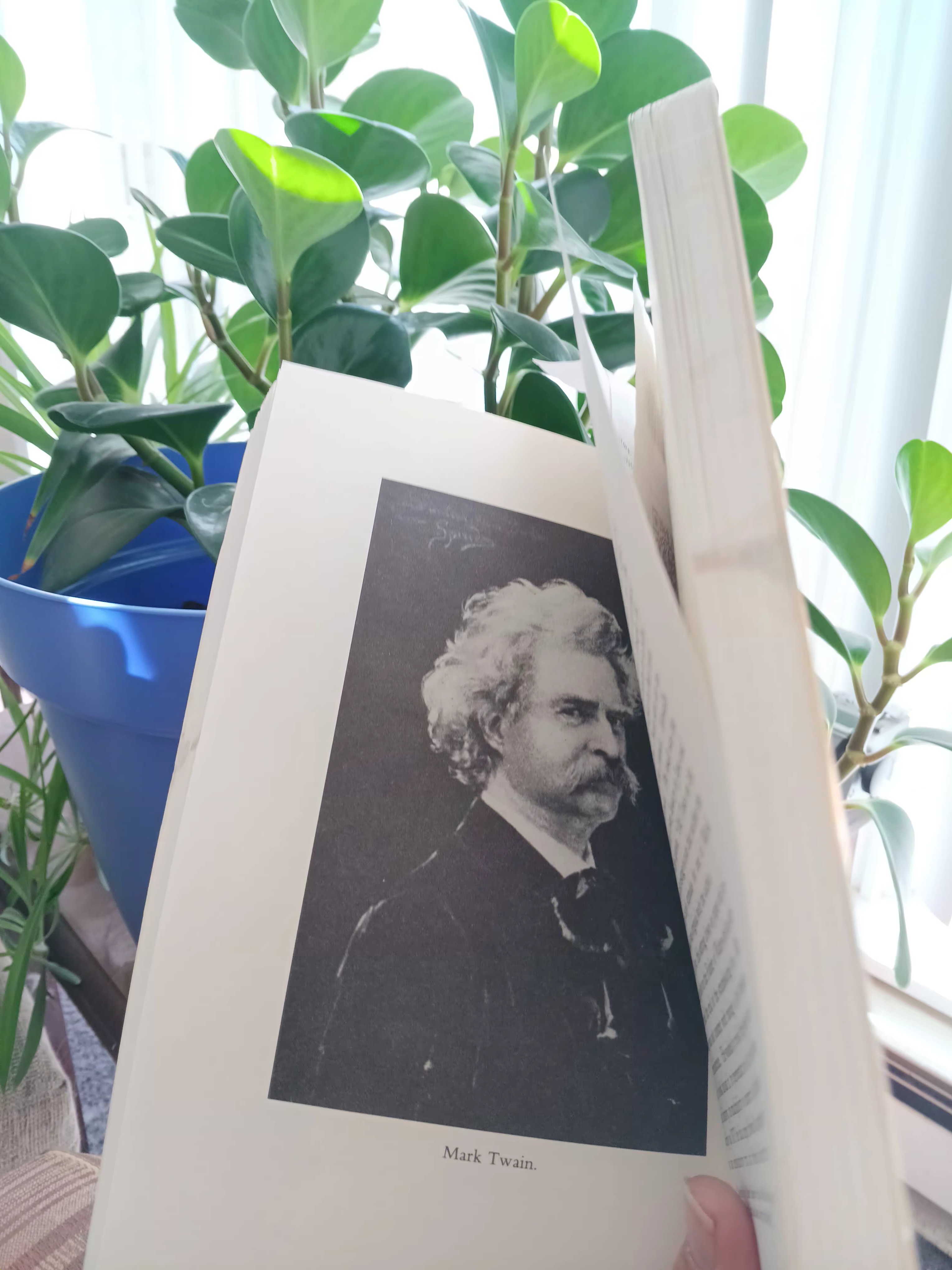
I was given some of the worst advice about writing I’ve ever received in some of the “best” writing programs in the entire Midwest. The American Midwest, roughly defined, has over three hundred degree-granting writing programs currently, both undergraduate and graduate, in Spring 2026. It was similar back then. The Midwestern Gothic is a fuel for many muses, both half-hearted and fiery. One in five Americans are defined as Midwesterners which means we are a looked-down-upon minority even though we’ve produced many of the greatest American writers, like Twain and Hemingway, Hart Crane, Saul Bellow, Robert Bly, James Wright, and Lorine Niedecker. And messy “Honest” Abe Lincoln, the pipe-smoking mercury pill addict who spent most of his time on the road with his horse because he found his manic-depressive wife intolerable on a daily basis.
I received the worst advice I’ve ever received from the most famous novelist I ever worked with. He tried to steal both my women at different times and at the same time at two different parties; drank all my liquor while saluting me; destroyed my manuscripts by spilling wine on them and burning them with cigarettes (“accidentally”); and said he was helping me. He told me not to take five pages describing a character walking across the street. He said not to describe eyes. And he provided a whole mishmash of other rotten advice that ruined an entire novel of mine. I didn’t know any better at the time. I never knew how long it would take me to really find my own voice, either. This writer, still living and producing at 72 right now, had created two minor New York Times best-sellers (one novel and one nonfiction book) back then and worked as a script writer in Hollywood for a few years. He was well-connected to such well-known literary writers as Jim Harrison, Harry Crews, Barry Lopez, Larry Brown, Barry Hannah, William Gay, and Thomas McGuane, to name a few: or so he claimed. He never came close to scoring on either one of my aristocratic underclass Ladies, as unfamous and oft’-intoxicated as I happened to be, which made me half-different from him. Both of these drama queen heartbreakers had their own side activities so they couldn’t blame me, thought I, though they both tried to anyway. This kind of histrionic performance took up a lot of time. Drinking and smoking beloved cigarettes while driving my little car was one of my favorite activities along with the music I played and I was constantly looking out for the police in a relaxed way, whether it was fighting and loud music at night, the purchase of not-exactly-legal substances or drinking and driving, which I always did in a condition of chilled-out, laser-like focus which could not be dented by alcohol consumption. My occupation was Professional Pizza Delivery Person. I left my shifts with fistfuls of cash. They couldn’t track you by cell phone back then. Of the twenty or so drivers at the store, twenty or so were males. About half were either Hindu or Muslim. There were many long discussions about religion around the ovens with cigarettes being shared and sometimes marijuana. One of the job’s key features was the potential to get either jumped, mugged, or robbed or all three at once so I was always looking out for the thieves and gangbangers as well as the police. It was another era of course and I do not recommend it but it worked for me at the time, “it” meaning the drinking and driving and running around. I didn’t go to the gym but I got tons of exercise, often too much. I had bottles hidden everywhere I lived and didn’t live, in couch cushions, in basements, in backs of cupboards, in desk drawers, behind bookshelves, under the bed, in the bushes, behind the garage, and beneath the car seats, to name a few. Keeping up my own supply of both liquor and cigarettes often took constant struggle and effort but scoring these items produced the looked-for joy every single time, cigarettes included. Got my mojo back, friend! Every cigarette I ever lit whether it was accompanied by strong, hot, black coffee, hard liquor, or air, was a love affair. It was a time when motels were cheap, diner food was good, and cheap, books, cigarettes, and alcohol were affordable and there was more than one good novelist being regularly published.
What was good about the writing programs, for me, was an unparalleled camaraderie that touched the heights of the beat writers in America and stayed there. Wichita, Kansas, and Chicago, Illinois, were lit on fire by us and we burned down both towns. And then, behind us, the towns burned down. And that developing alcoholism that would shape my life for good and ill. And all you beautiful women (enough said here) who broke my heart gradually and then suddenly. And great libraries. Somehow I never stopped reading, never. Hours daily before the bars and sometimes in the bars. And two or three days a week, all night and all day, reading. Falling asleep on the floor with one’s head in the book. And it was good again to see your friends after such self-educating seclusion. There were also trips to New York City. One time the plane almost went down. Another time we arrived in a different car than we left in, which would be a novella-length tale if all the important details were included. In NYC, I usually stayed with a friend in a cockroach-infested tenement across from Tompkins Square Park that had a guy who looked like Lou Reed sitting on the stoop 24/7, bottle in hand and sunglasses hiding the truth even at night. And I was young. Not too young, not very young, but young enough that I look back there now with longing. Not a torturous longing, more like a sweet longing that sometimes turns painful. Aging is for the birds and birds are poets. Our complicated, interconnected, lonely, over-evolved, over-commercialized, over-advertised, alienating, and fractured society where nothing of importance appears and nothing stays for a day or an hour happens to produce late-blooming artistic geniuses in out-of-the-way places. Walt Whitman, following Ralph Waldo Emerson, wanted the American writer to spread and not be only an exclusive East Coast thing. They have done so.
My talent in fiction-writing was cramming a character’s head with thoughts and their heart with feelings and eschewing the formal outward trappings of a mechanical plot device even though there was plenty of drama going on beneath the surface, or so I believed. Writing in no genre, in other words, straight from life, just like I took the Jack Daniel’s straight as well (or the lines of cocaine). I learned it first and foremost from James Joyce, who took it from Laurence Sterne and Francois Rabelais, among others, who I later also learned from, and Bob Dylan was also a massive and messy (in the best senses) influence on my style, of both life and writing. I was advised not to do it, then told not to do it, then asked not to do it by a couple of big-name folks in New York City, both an agent and a publisher. But I couldn’t not do it. “Write the other way I cannot,” said Melville, meaning he couldn’t write the formulaic, crap, restricted, hack way. Not will not. Cannot. And then will not, too. It may stem from an overactive critical imagination, an imagination which is only increased by drug use, if you target and restrict that use. There is a difference between deliberate, targeted usage and the sloppiness and self-pity of abuse. And a million gradations to be explored in writing at another time. When I was a teenager Pete Townshend was often my idea of what a writer was, along with Dostoevsky and always Shakespeare (still) as well as King David of Bible fame (his psalms, and his psychological slaying of the monster Goliath). Right now (at this moment and often at other moments) I believe the dead writer I resemble most is TED BERRIGAN, especially Ted in his fourteen-line poem masterpiece, “Whitman in Black.”
I’m old enough now to know that the slick party-going folks who run the book industry desire formulaic, commercialized, seen-before, dressed-up-as-if-new, recognizable products – cheap products. Products they can sell. You usually can’t sell what no one has ever seen before but it’s the only way to produce something original, too. The Irish weekly paper that commissioned James Joyce (for a pittance) to write the series of stories for what later became Dubliners stopped publishing his stories because they received too many complaints from all the faint-hearted readers. Good Christians, so-called. It took him ten years to find a publisher after the book was finished. It is a candidate for the greatest short story collection in the English language of all time, or it just is that. Other candidates include In Our Time by Ernest Hemingway and A Good Man is Hard to Find by Flannery O’Connor but of these three for me Dubliners rules though the other two are so close. One of the bars we used to drink in in Chicago was called THE JAMES JOYCE. We rode the train and burned it down. Another one was called: NINE MUSES. Also THE FIELD HOUSE, BIG SKY and ALBERT’S PLACE. And dozens, literally, of other bars. More books than bars but many, many bars. While in NYC, we drank at the WHITE HORSE TAVERN because of Dylan Thomas.
I also wrote dozens of short stories while in the writing programs. Every single one was a piece of juvenilia. I banged them out on the computer while smoking and drinking either liquor or coffee or both and at least half of them were over fifty pages long. I’d show up late at the writing workshop smelling like smoke and liquor and with fifteen copies of a fifty-page story ready to hand everybody with a grin on my face. And sometimes I’m so quiet they think I’m autistic. It’s artistic, Mister. And Ma’am.
No one wanted to read it. I didn’t care. Which isn’t quite true. But isn’t untrue, either.
When I was 46 years old I became a poet. The story of how that happened cannot be told. Yet. It is only of interest, I suppose, if you’re interested in the writing life as participant or observer. All you who are already studying your own process. Jesus said, Only those can understand who already know. The rest are the proverbial swine you’re not supposed to throw your pearls in front of, harsh as it sounds. There are thousands upon thousands of well-known and/or well-paid writers (which is very often not the same thing at all) who don’t know, and by “don’t know” I mean don’t know what’s important. Or care. Some day The Drifter will write a further analysis of why their crap is crap. Mostly, half the time, I was just happy to have survived, I think…
(TO BE CONTINUED. This sort of thing could go on for years. The official title for this specific series is THE DRIFTER CONFESSIONS.)
WRITING ADVICE: Make it a lifelong (right up until the end) goal instead of a short-term payout and it will never leave you. Reading and writing are two sides of the same golden literary coin, far more precious than literal jewels. According to Harold Bloom, the literary is the personal and the Personal IS Literary. Even for those who don’t know it. It is manifestly NOT an elitist thing: while also being only for the few with the strongest hearts.
“The supreme question about a work of art is out of how deep a life does it spring.” – James Joyce
“Shut your eyes and see.” – James Joyce
(Note: We conclude another fine week by our Editor DWB. And for the time being he will be appearing in months to come with full weeks. The offer is open to many of our friends who have published previously with us. So, something to consider–Leila)
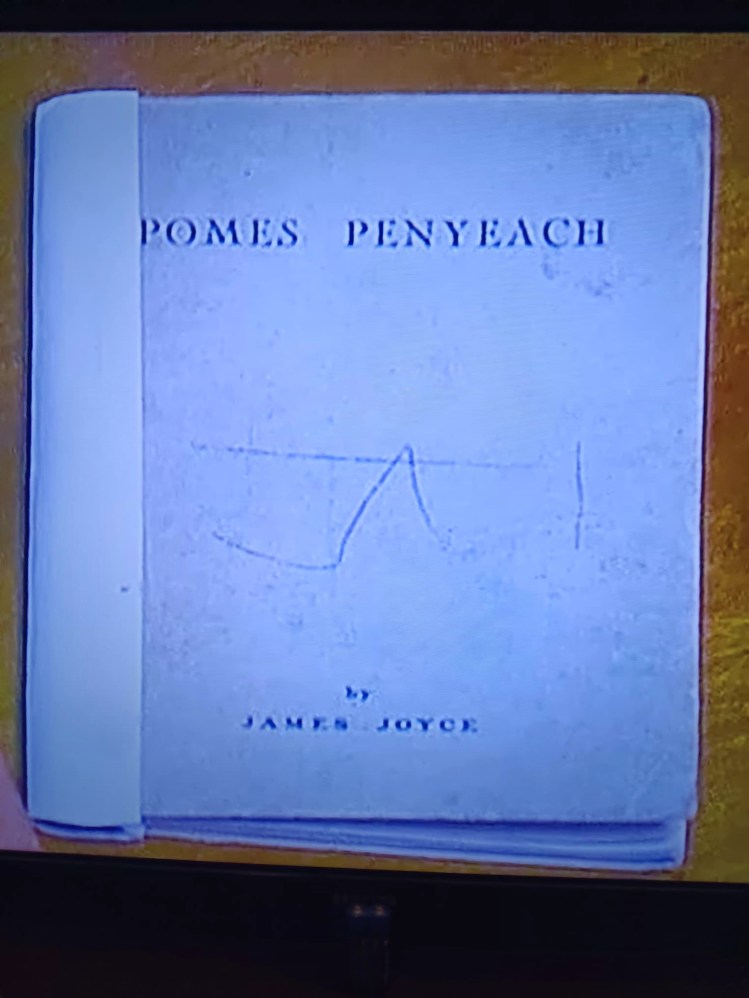
This un-mundane but minuscule screed possesses a very specific target audience. It is aimed directly at anyone who has ever lived, is now living, or will ever live who has even the tiniest bit of interest in the Irish author James Joyce, or in creative writing itself as purely an art form.
The greater your interest in HIM (and he is his work) or the greater your interest in creative writing as art, the greater your interest in this missive will be. There is much so-called “creative writing” that is much closer to formulaic hack writing than it is to what we (I) mean when we say “art.” This kind of commercialized-hack-writing-as-creative-writing tends to win things like the Pulitzer Prize, the Booker Prize and even the Nobel Prize – to prove this all you need to do is look backward at the list/s of writers and works which have historically won these so-called prizes; Joyce himself, the greatest fiction writer in English of the twentieth century (by far), never won any major prizes and was never even nominated for the Nobel Prize in Literature. Joyce is the greatest fiction writer in English of the twentieth century, which bears repeating. More than this, forced to make a list of the top half-dozen writers of the English language so far in any genre, that list would be: William Shakespeare; Geoffrey Chaucer; John Milton; William Wordsworth; James Joyce; and Jonathan Swift; in that order. Maybe Emily Dickinson, Emily Bronte, Edgar Allan Poe (just ask them in France), Walt Whitman, John Keats, John Donne or William Blake could replace someone in this list. (All such lists are really just a speculative game, of course, except for the first four, which are really a historical fact.)
Spiritual events are the biggest events in our lives. In many ways, somehow unrequited romantic love (including but not limited to the death of the loved one as in Poe) is an unbeatable spiritual event – and by that I especially mean small cap’s romantic love when it is propelled by capital R-and-L Romantic Love, i.e. the kind of love that was also preached and practiced by the British Romantics such as Blake, Wordsworth, Coleridge, Keats, Byron, and the Shelleys, all of whom had their profound influences on James Joyce (he once dubbed himself a modern-day synthesis of Daniel Defoe of Robinson Crusoe fame, and William Blake).
Joyce has been and is one of the biggest spiritual events in my own life so far on a personal level. As such, this screed that is also a missive is also a memoir of a little over 1,300 words, which is around the average length of one of Paul’s letters or many of Hemingway’s best stories.
I started reading Joyce when I was around fifteen years old in the American Midwest. In many ways, I was finished reading Joyce by the time I was around twenty or so, even though I’ve continued to reread him to a greater or lesser extent in every year of the last thirty-nine years. So I absorbed, and even memorized, much of Joyce still during the time/s when my youth made me very, very impressionable.
All young people who have the gift or the penchant for reading or who have a questing soul at all should read and reread some of James Joyce when they are young if they are lucky, specifically the first four stories in his collection Dubliners, which blow The Catcher in the Rye out of the water but are in the same vein and should be read first or beside it, along with Hemingway’s Nick Adams stories. If these four Joyce pieces accidentally missed you when you were “young,” but you are still young inside, go to these stories now and your haunting youth will be magically returned to you in all its best, and worst, aspects. The complete realism of these brief yet all-encompassing tales is comforting even as their idealism inspires, or makes the breath quicken.
The rest of this writing will present in brief yet pungent and cogent form what are my own personal favorite things in James Joyce as of right now. His work is endless to meditation so some items shall be, I am sure, accidentally omitted but what is presented here can also be seen as an outline of his most important work from the heart and soul of one loving reader’s perspective.
…
DUBLINERS.
The first four stories: “The Sisters,” “An Encounter,” “Araby,” and “Eveline.”
“The Boarding House” from the middle of the collection and “The Dead” from the end, and especially the end of “The Dead,” and especially the very last paragraph of this long story or short novella.
“The Dead”: the dramatic, life-altering moments between the MC and his wife in their hotel room around Christmastime will never leave you. The last paragraph of “The Dead” is, hands down, one of the greatest paragraphs ever written in the English language, a fact that has been acknowledged by many long before me and will continue to be acknowledged by many long after “yours truly” has departed this mortal sphere (praise God may it not be for a while, thy will be done). I personally have read this paragraph not hundreds but thousands of times. It is like a sad song I replay over and over when alone in the car, but better.
…
A PORTRAIT OF THE ARTIST AS A YOUNG MAN.
The title of this book alone has had a massive impact on my entire life at every level I can possibly imagine, an impact so vast it feels beyond Jungian in its depth, oldness, oddness, and neverendingness.
The sea girl on the seaside like a sea bird and Stephen’s limerence-like fascination with the girl, the bird, and the sea. The beautiful longing of it all.
The experimental and experiential opening of this novel which actually captures all of infancy, babyhood, and toddlerhood in less than one page from the kid’s perspective.
The friend with friend notations and conversations that end the book.
The phrase “silence, exile, and cunning” which became one of my own personal credos when I was a teenager and remains so until today, and will be tomorrow and tomorrow and tomorrow after that, too. Among other things, the rebellious spirit of the original rock and roll is contained within this phrase. One of the greatest influences on Bob Dylan ever is and was James Joyce, by Dylan’s own admission.
There is SO MUCH in these literal and metaphorical four words when put together like this that you can literally build an entire life on and around it.
It is more than an impenetrable fence but it is also an impenetrable fence, the only kind that can allow for true growth of the spirit and the personality, the only real possession we can ever possess here on Planet Earth.
…
ULYSSES.
The title itself, alone, along with all it implies.
The “friends” episode in the sea tower at the beginning of the book.
Leopold Bloom’s eternal peregrinations.
Stephen and Bloom drunk together in the whorehouse and elsewhere, wandering around.
MOLLY BLOOM, especially her end (“Yes”) in more ways than one.
Marilyn Monroe wanted to make a movie where she played Molly.
…
FINNEGANS WAKE.
The title itself.
Finnegans – plural. Wake – verb.
Resurrection, reincarnation, and/or all of the above.
The Irish drinking song where the title comes from: a drunk guy in Chicago falls off a ladder, dies, then springs to life again at his own funeral, leaping out of his own casket and SMILING at all his friends and enemies.
Her name: Anna Livia Plurabelle. And the rivers of life.
His name: H.C.E. (Here Comes Everybody.)
Shem the Penman.
The alpha and the omega: the beginning and the end.
This is, above all, NOT some random collection of quotations randomly tossed together by some enigmatic and bored outsider from the American Midwest who’s (once again) too high on microdoses of magic mushrooms, edible marijuana, and too much green tea and Gabapentin. Instead, this is a very, very, very, very, very, very, very carefully curated, selected, shaped, arranged, and FORMED collage of quotations that can stand as its own separate work of art on many many many many levels, just as the collages of Picasso and Braque could do the same. I do not limit nor count my borrowings, said Montaigne, I weigh them.
As such, this tissue of words can be utilized primarily in one of two ways, or (preferably) in both-at-once ways. If you, the Reader, can think of other ways to use these (this), please feel free to freely do so at whatever levels or in whatever ways your mind or nerves can handle.
A: It can be used as an exceedingly useful summary of the entire life’s work of the Irish author James Joyce (and James Joyce himself WAS his work at a level that perhaps surpasses (almost) anyone else).
B: It can be used as a piece of twenty-first century wisdom writing (like an advice column for seekers) all in its own right.
James Joyce is one of the funniest writers who ever lived which is to say he’s one of the greatest comic writers who ever inhabited Planet Earth, as the brilliant genius Anthony Burgess never tired of pointing out to anyone who’d listen to him (and it was usually far fewer than you might imagine, even after a certain novel of his was made into an exceedingly famous motion picture which had almost nothing to do with the original novel at all).
Joyce also possessed (as do so many true comedians) incredible wisdom about life.
Read on 2 find out.
(FYI: this is also a companion piece to my forthcoming written work “Silence, Exile, and Cunning: a Credo, a Screed, a Missive, a Memoir.” I call it a “written work” because it doesn’t have a genre except perhaps for the ones enumerated in the title. It shall come forth tomorrow.)
“Shut your eyes and see.”
“Let my country die for me.”
“Love loves to love love.”
“First we feel. Then we fall.”
“As I walked along in the sun I remembered old Cotter’s words and tried to remember what had happened afterwards in the dream.”
“We walked along the North Strand Road till we came to the Vitriol Works and then turned to the right along the Wharf Road.”
“Meeting her a third time by accident he found courage to make an appointment. She came.”
“The sad quiet greyblue glow of the dying day came through the window and the open door, covering over and allaying quietly a sudden instinct of remorse in Stephen’s heart.”
“Think you’re escaping and run into yourself. Longest way round is the shortest way home.”
“The object of the artist is the creation of the beautiful. What the beautiful is is another question.”
“The heaventree of stars hung with humid nightblue fruit.”
“It is as painful perhaps to be awakened from a vision as to be born.”
“You can still die when the sun is shining.”
“I will not serve that in which I no longer believe and I will try to express myself in some mode of life or art as freely as I can.”
“The whole face is of an ascetic, inspired, whole souled, wonderfully passionate man. It is Christ, as the Man of Sorrows, his raiment red as of them that tread in the winepress. It is literally Behold the Man.”
“Old father, old artificer, stand me now and ever in good stead.”
If it lasts long enough, every “relationship” (as in romantic relationship) comes to the point where Ignored or Insulted (or both) become the primary mode/s.
One of the parties feels let down. This disappointment leads to feelings of resentment all ‘round. What was once adorable is now monstrous to both sides. The mind turns to revenge fantasies, the love fades like a coal. It is what B.B. meant when he said, “The thrill is gone.” And he did not say it in a happy or half-hearted way.
It is impossible for any one person on this Planet to fulfill the expectations of any other person on this Planet in any lastingly fulfilling way. Such is a childish dream. A radical compromise is reached with one dominating or the whole thing explodes into bits rather quickly. As surely as that evening sun goes down.
The happiest people are ALWAYS the ones who spend the most time alone, even if someone else is in the next room. These are also the unhappiest people. It means they are the most alive.
Contrary to popular opinion, it can be exceedingly easy to be alone in a crowd.
(This week we are pleased to present work by one of America’s under-appreciated writers and academics, Dale Williams Barrigar, who is also the Co-Editor of this site. He has wonderful twin daughters and a damn fine pack of Dogs, too.)
“Say goodbye to Alexandra leaving / Then say goodbye to Alexandra lost.”
– Leonard Cohen
“Both in this world and in the Hereafter, I am the nearest of all people to Jesus, the son of Mary. He was not crucified.” – Muhammad
“Literature will lay truth open upon a higher level.” – William Carlos Williams
Our definition of love has grown too narrow, where we are now and here (2026 USA).
We say we love our spouse (if we are chained to one), our family, our new toaster, our new car, our latest luxury vacation. We say we love our new toaster, and the new (latest) technology they are always jamming down our throats. And all these things can be good to love. But loving them is not enough.
We say “LOVE” is about romance between two people (or three). We say we love the way our new lifestyle is turning out.
It is not enough to love but a few things.
The crucial message of Jesus, the one and only real message of his, the message the early Christians truly began to understand only AFTER he was gone (wherever he went), the message which completely contains all the other messages, the message that should be the ruling principle of the whole world, is this:
We should love LIFE ITSELF.
Even if we are being crucified.
On the cross, Christ cried out: “My God, my God, why hast thou forsaken me?”
Loving all of life itself does not preclude getting angry at God and asking WHY when right seems right. Jesus showed that too, as did Job before him. But in their despair, they were talking to God, NOT turning away from life.
There are many ways to talk to God and many moments, hours, or days remain for an opportunity to do this. It is NOT necessary to call it “prayer.”
Talking to God is loving life, no matter your method of doing so and no matter how angry you are. We are supposed to turn toward that when we are desperate, despairing or angry, if we can. God has a twisted sense of humor much like our own, it just may be. And just because someone doesn’t answer out loud doesn’t mean they’re not listening. Sometimes the best listeners never say anything at all. (And when She does speak, She speaks in a whisper, usually…)
Whether we are at the end of civilization or at the birth of a new civilization that is (almost invisibly) being built upon the ruins of the old one matters not one tiny jot.
Now is the time we have and now is the time we’re going a-swimming in. It never stops ticking by even for an instant even though it seems like it does, sometimes, if only for an instant or two.
It is good to love individual people, animals, plants, places, and even things, if you don’t go overboard on this last item, or for that matter any of the former items, either. Leonardo da Vinci loved water. He loved water, looking at it, dreaming over it, drawing it, writing about it, personifying it. Loving water was, for him, like loving all of life itself.
Loving only a few specific people or things is not enough. By far it is not enough.
We must LOVE all of LIFE ITSELF no matter what.
Those who do this are called by the Taoists “seed people.” Jesus also talked about those who sow the seed. There are many of these among us, but these days they appear to be in the minority BIG TIME as well.
Seed people love life even when they hate it.
They never limit their love to a single nationality, a single sexual identity, a single source of economic security, nor a single spouse who is your favorite personality.
WE HAVE TO LOVE IT ALL. All of life. Like we always continue to love the people who have left us no matter how they have left us but are still there in a different guise (as their spirits are haunting us in those things called MEMORY and DREAMS).
Jesus also said, “Do not throw your pearls before these swine.”
Because all they will do is trample them down into the mud.







 Saragun Springs