Hamlet’s Dilemma by Dale the Drifter

“This is the scars of last year’s storm, pressed like maggots on my arm.”

– Bonnie “Prince” Billy

Intro Note Regarding a Crucial Definition:

When this riveting soliloquy says “smart people,” it does NOT mean technocrats, billionaires, or politicians, nor some combination of all the above.

For the purposes of this essay (this attempt) (when you write in no genre you have to call it more than one thing), those above-named folks are very deliberately tossed into the bin marked “NOT SMART.” Because, as Hegel pointed out, worldly wisdom is not wise.

Socrates consistently pointed out (to all who would listen – and it wasn’t everybody) that the first thing that the smartest of smart people know is what they don’t know.

In other words, really smart people are marked, first and foremost, by a deep knowledge of their own ignorance.

They tend not to pretend they know things they don’t know (although there are always exceptions to all things).

If they don’t know what a word means, they usually aren’t embarrassed to blatantly say, “I don’t know what that word means.”

If they have to make a decision, they are hyper-aware of all the factors that might affect that decision which they have no idea about, which makes their knowledge of their own ignorance even deeper than it already was.

And they are unlikely to become swept up in mass delusions quite as readily as all the average people of average intelligence are, not because they are more moral or better people (necessarily) than everyone else, but simply because they don’t easily fall prey to the lies they’re being told by someone else, whether that “someone else” be an individual human being or a system devised by many human beings together (consciously or unconsciously).

They know they don’t know when they don’t know.

This extends to everything, from philosophy to art to politics and religion, to what they know and don’t know about their neighbor/s, to what they do and don’t know about what will happen in the future (because there is at least one thing in the future that will definitely happen to all of us, almost for sure, even if we don’t know it at the time), to what they remember and don’t remember, to what the blurry lines between imagination and reality really are.

Hamlet is a great example of this.

He knew what he thought he knew about his father, his uncle, and his mother; and he also knew that he didn’t necessarily know, for sure, the things he thought he knew for sure.

He was pretty sure he was being F-ed over, somehow. On the other hand, he knew he couldn’t be sure because he knew he lived in a world (which is also our world) that never tells you everything. And far from it, in most cases.

Even the smartest human who ever lived mostly didn’t know everything, and knew a lot more about what he didn’t know than he knew about what he did know. At one point when his friends asked him, in front of the bonfires on the lakeshore, when the end of the world would come, he said, “Only the Father knows.”

And either “they” (his enemies) caught him in the end, or he let himself be caught.

And he cried out from the cross, not long before the very end, “My God, my God, WHY have you forsaken me?”

This condition of not-knowing can cause you to become bad, like Hamlet did. If he did become bad, that is. (He killed people, and that was bad. But I’m still not sure he himself was bad.)

On the other hand, if you know you don’t know and you’re okay with admitting it, both to yourself and others, but mostly to yourself, it can be the most freeing thing you could ever possibly imagine (or know). Only then can the Tao, the free Tao, begin to begin (within you, even though it’s already there, for everybody).

There are many people who are also not considered “intelligent” by the world at large who also know that they know they don’t know what they know they don’t. You can see it in their eyes – they know they don’t know, and they’re not afraid of it. Or – they are afraid of what they don’t know (to an extent), but they are not afraid of not knowing what they also know they don’t know. They are holding their cards very close to their chest/s, these wise “average” people; but in this game called life, that’s totally okay.

Life is an illusion, and freedom is always just one step around the next corner, but never quite here. That movement toward rounding the corner is all. Never stop, because you can’t anyway.

You can know what you know but also know what you don’t know at the same time.

You can know what you don’t know so deeply that you then start to not know you don’t know it. And that is a kind of knowing – without knowing, of course.

If you die by stepping off the curb and getting hit by a bus and instantly killed so that you never saw what hit you even and didn’t even know you were going to die (right then at least) so that you don’t even (again) KNOW YOU DIED, can it really be said that you died, at least to yourself – since you didn’t even know it? And if you don’t know you died, should the rest of us really feel too sorry for you (although maybe for ourselves)? And if we are feeling sorry for ourselves, is that good or bad, or some unearthly combination of the two?

Under these impossible conditions there is nothing more to say!

(But “The Drifter” will keep on saying it anyway; until the cows come home; and probably long after…)

Dale the Drifter (images and music selection by Dale the Drifter)
My Philosophy: Step One

“I love you because you do not know how to live in this world.”

– Zarathustra, by Nietzsche

This has zilch to do with formal, systematic academic philosophy, which I don’t understand, or care about, at all. It has to do with living life.

And if someone were to ask me right now what my philosophy of life is, I would say a combination of stoicism with a small s and the very earliest Christianity. There is a reason why some early Christians got thrown to the lions, and why Nero had Paul beheaded.

The earliest Christians, of whom there were around 150 in Rome, were rebels. Among other things, they granted women and slaves a status that was almost unheard of back then, and they refused to honor the traditional gods or worship the emperor as if he were holy.

They were following a man who said, “Where two or three are gathered together in my name, there am I in the middle of them.” What he meant by that was, after I die my spirit will still guide you, but you must be the artist of your own life. Riches or fame or power are not the things you should seek (like the emperor does), because they are only the empty things of this temporary world. It is yourselves you should seek, because you have selves and they are your eternal gifts and possessions which no one can take away from you, ever – not even the emperor. This philosophy can only be more crucial now (2026 AD) than ever before.

The Jesus of the masses is a false Jesus.

The Prosperity Gospel was written by Satan, that great snake oil salesman.

The stoicism part has to do with being what might be called a “badass.” Marcus Aurelius, one of the greatest stoic philosophers, said that even if you’re being devoured by a wild animal, you should keep your cool, because it will all be over soon and you may as well not look like a fool screaming your head off on the way out. It is akin to what the Native Americans meant when they said, “Today is a good day to die,” and then acted like it, like Sitting Bull sitting down amid whizzing bullets aimed at his head and smoking his pipe. All the bullets but one missed (until the end), no one knows why.

It is not about looking for death, it is about not fearing death, even when it knocks on the door. Too many people fear death and dissolution and don’t even know they fear it. This condition makes them angry, cramped, greedy, grasping, cowardly, pinched, bitter, resentful, uptight and mean (and then they take it out on the rest of us). Marcus said that the first thing you must do is understand, that is seek, yourself. In this he was much like Jesus, Buddha, Socrates, Plato, Nietzsche, Freud and Jung. Marcus, who was an opium user like Nietzsche, the emperor of Rome, and a general who witnessed gory war over and over again, and almost all of whose children died before he did, did not believe in tragedy.

Bukowski said, “Find what you love and let it kill you.” Neil Young said, “It’s better to burn out than it is to rust.” Someone once said that real rock stars do not die, they collapse.

Sinead O’Connor was found in her house, already dead from emphysema at 56. She was a lifelong chain cigarette smoker and heavy marijuana smoker who said the sacred Ganja helped her creativity. (I believe her, truly.) Her version of Prince’s song, “Nothing Compares 2 U,” permanently redefined what pop music is, and what it should be, forever (even though it isn’t any more). It was a case, in 1990, of real and true, solid and great art becoming wildly popular. Such things (the convergence of real art and the popular taste) almost never happen today. If you want to find great new art now, you must look outside the mainstream, first and foremost. THE MACHINE has taken over the mainstream and the Machine does not understand the human soul, which is the first criteria for both great art and great philosophy.

Chris Cornell was found on the bathroom floor of a fancy hotel room in Detroit, Michigan, at 52. He had benzos and other prescription downers in his system. The hanging rope (so-called) was around his neck, just like in the music video he’d recently made. Almost all suicide is an accident. If someone had gotten to him just a little bit sooner, things may have turned out differently. But he had found what he loved and let it kill him.

Prince checked himself out of a hospital after an opioid overdose, even though his doctors and assistants begged him not to. Very soon afterward, he was found alone in his own elevator in the Minneapolis, Minnesota, suburbs. He was 57. He, too, had found what he loved and let it kill him.

Johann Wolfgang von Goethe, universally acknowledged as the greatest German of all time, said we should live like this. Every day, we should let one song, one picture, and one poem or piece of writing take us away to somewhere else and then bring us back to ourselves. Every day. And we should work at it – harder, much harder, than we ever work at anything else, even though we also need to work very hard at everything else. “It” is never easy. And it is not supposed to be easy. Easy things are worth nothing. There are too many easy things and too many easy people in the world right now.

All three songs attached to this essay bring tears to the eyes behind the shades within seconds of being heard, for the writer of this essay. It is not because the writer of this essay is sad, although he is sad.

It is because the music is so beautiful.

END NOTE: They say AI is gonna get us, permanently. But not if you have a superhuman spirit of mind, or a mind of spirit, that can outmatch it. “Artificial Super Intelligence” will be able to do everything better than us. But not with the things of the spirit. And the spirit flies, it rises, far above all – even artificial super intelligence (no contest in the end).

CODA:

Bukowski’s T Shirt

Late in life

he wore a t shirt

with his own, old face

upon it.

(See the cover of

You Get So Alone at Times That It

Just Makes Sense, 1986.)

This was a way

of saying

fuck you!

to all those who

had tried to kill him

off.

Now

here

it’s gotten

worse

than it already was.

Don’t let them

or It

take over,

that is,

destroy

(devour),

your soul.

By Dale the Drifter, including photos and music selections!

Poe’s Bloody Initials: An End of October Essay by Dale the Drifter

“Detachment is greater than love.” – Meister Eckhart

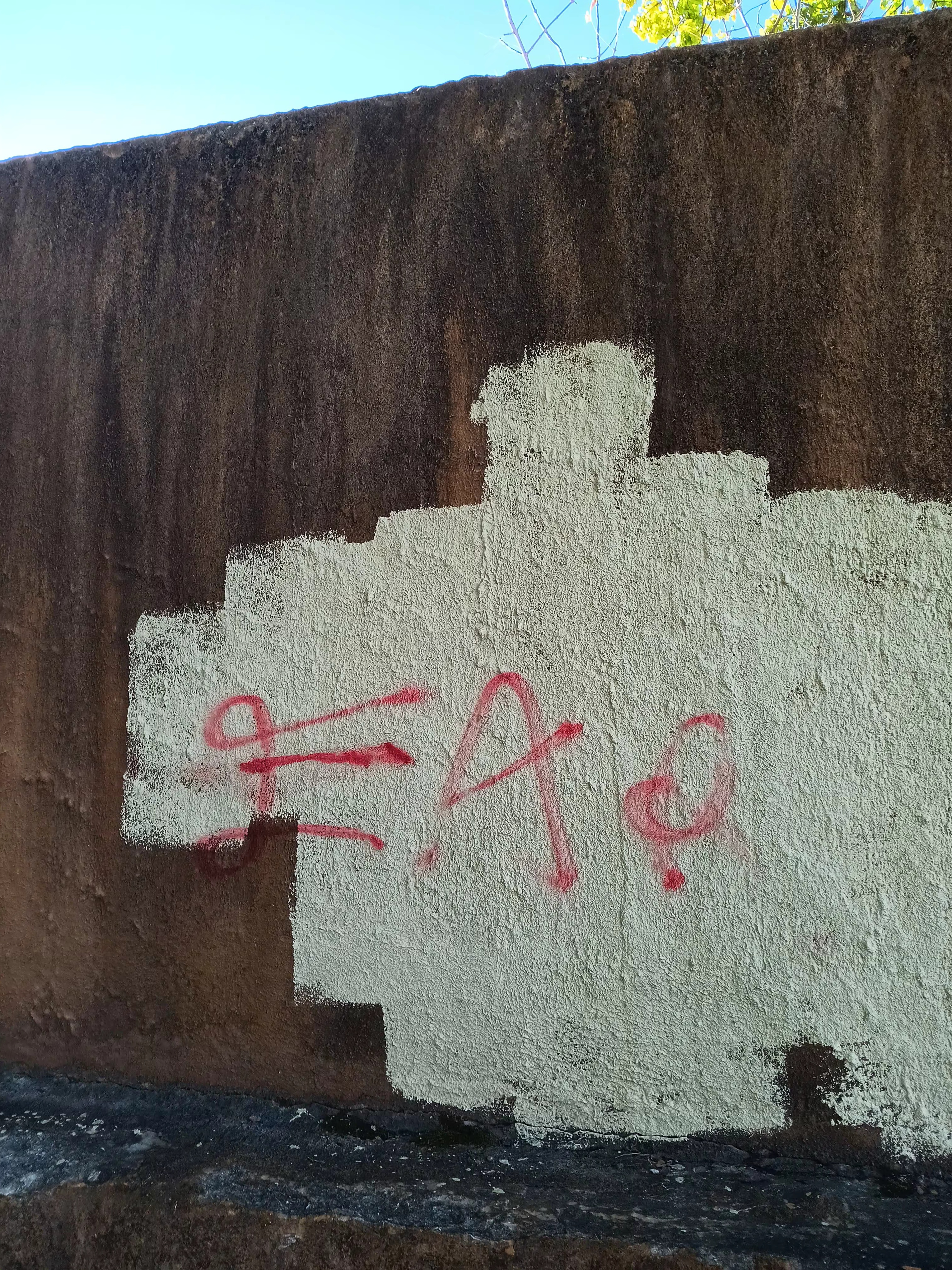
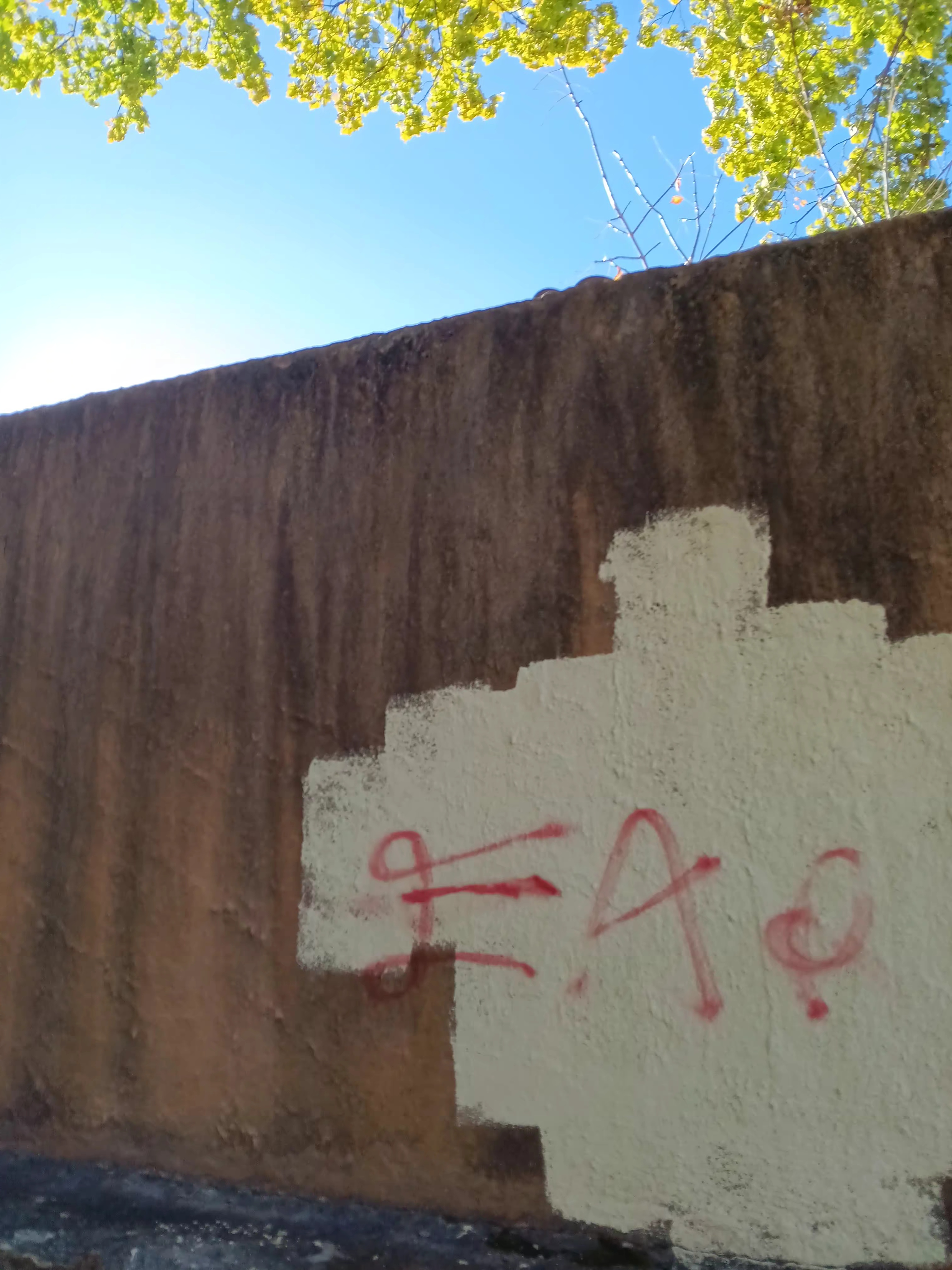
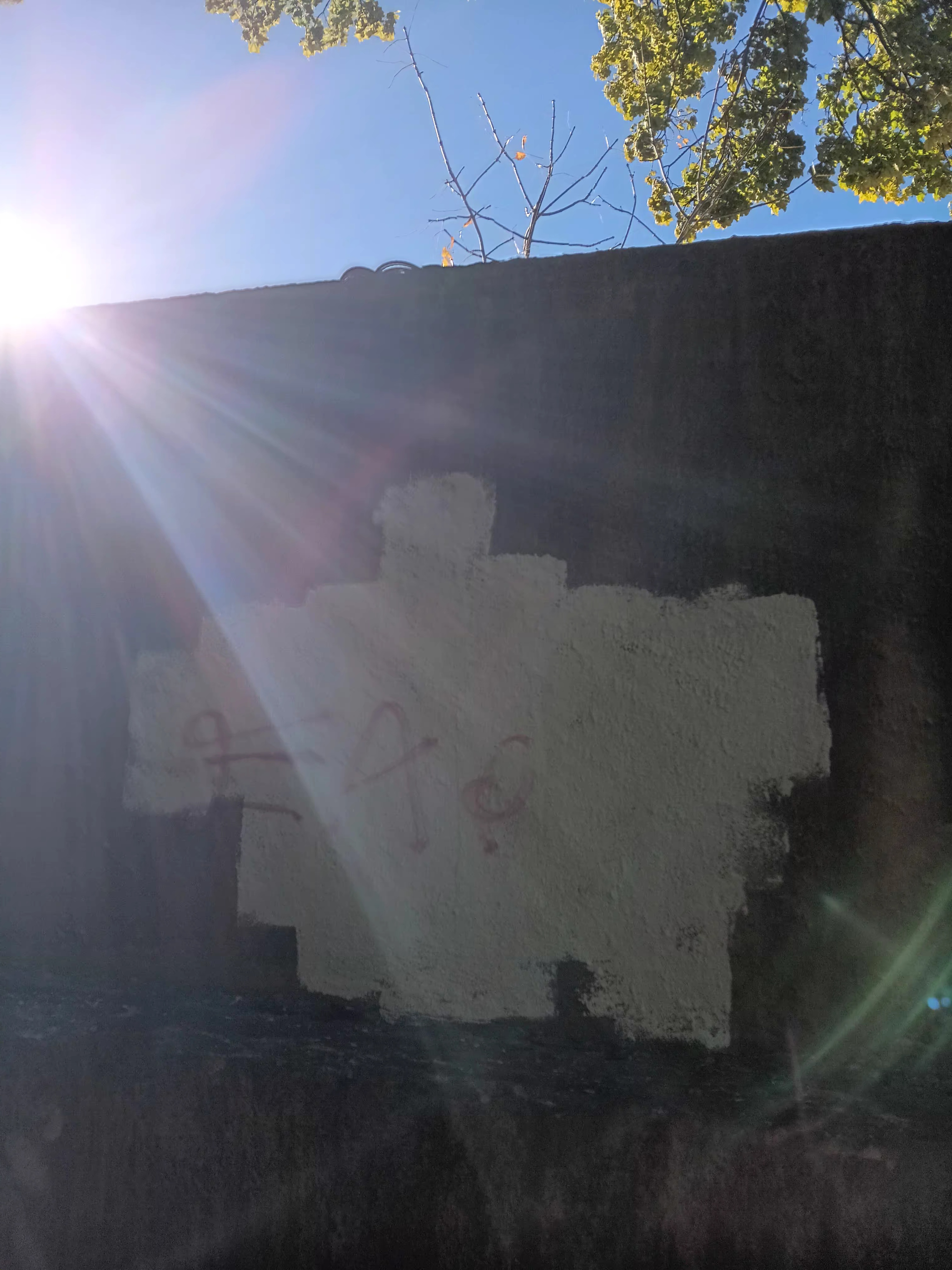
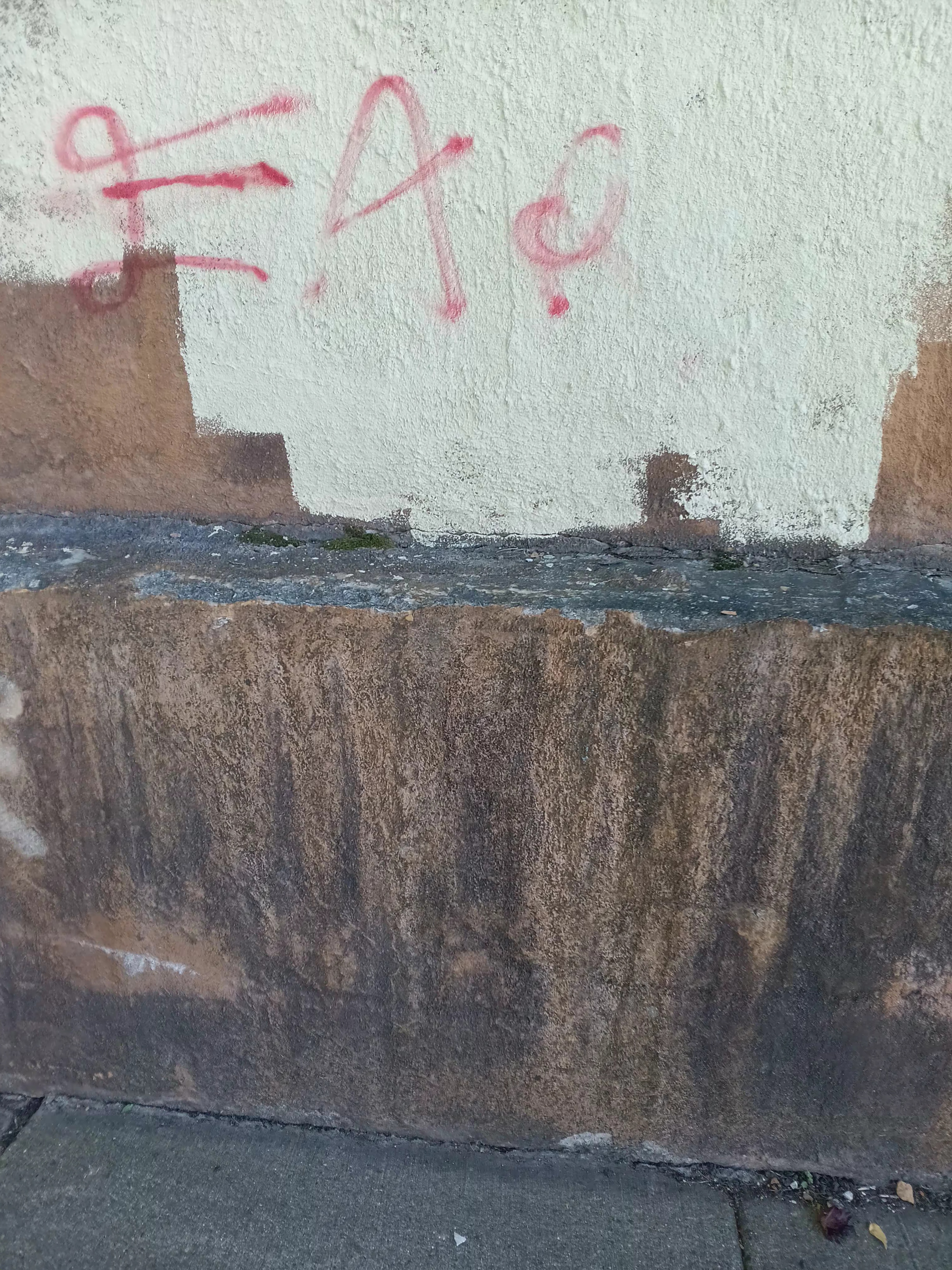
For a moment I imagined that Edgar Allan Poe himself, or one of his desperate characters, had scrawled the initials I saw in human blood across the worn-out concrete wall of the abandoned factory on Harlem Avenue in Oak Park, Illinois, USA, in late October 2026.

And to me, this abandoned factory looks as if it really is haunted.

A kid climbed to the top of the highest metal tower, slipped, fell down all the way, and died on the spot. Others, too, have gone into the Great Beyond here.

The imagined mental scene about Poe desperately writing his own initials in blood on a concrete wall had the force of a personal vision and was not planned by me at all, which is of the essence of a “vision” (a fancy name for sudden daydreaming); it (the vision) came on its own, overtly spontaneous, and was gone almost faster than it appeared.

But it had caused enough of a shock wave that it left a resonance, or a ripple, behind. The mind, in the contemplation of imagination, held onto the scene and the image of the vision for a little bit even as the brain readily moved on to wonder who really had written it there, what it really meant, and decided it was time to move on down the road, etc.

This is what Oscar Wilde intended when he said that ALL ART is “perfectly useless” (he was looking at it from the practical commercial English side of things). And this is what William Carlos Williams called “contact” with the world.

It is also what James Joyce called an epiphany; and what Wordsworth called “a spot of time.”

It is an internal happening virtually unseen by the outside world, the kind of thing that is remembered for a while (sometimes a long while) and then repeated with (seemingly infinite and possibly eternal) variations.

And this is what life, at its core, IS, for some of us more than others.

Everyone has the same potential. (The Universe is a great leveler.) What you choose to make of yours is always up to you.

A free (a very free) imagination is the very first thing that keeps us sane, and human.

Without it, all is lost.

And you have to fight to keep it free.

Dale the Drifter

(Images provided by Dale the Drifter, who also made another fine music selection!)

A Process and Quotation: Or, a Poetry Manifesto in 464 Words; Or, Truly New Writing by Dale the Drifter

T.S. Eliot wrote: “If you complain that a poet is obscure, and apparently ignoring you, the reader, or that he is speaking only to a limited circle of initiates from which you are excluded – remember that what he may have been trying to do was to put something into words which could not be said in any other way, and therefore in a language which may be worth the trouble of learning.”

The rhythm of a writer’s HUMAN VOICE is the most important thing.

The more original the rhythm, the more groundbreaking the voice.

There is always more ground to break, because the world is never the same. (This is what is meant by “process.”)

AI tells me that there are not more than 2,000 to 10,000 people alive on Planet Earth at any given moment who can truly begin to comprehend the most cutting-edge English-language creative writing and poetry, when it first comes out (as of 2026 AD). For this, I completely agree (because I know, in my gut, that it’s a fact) with AI. (It is a small city that can be called the eternal city.)

The truly newest new human writing challenges, very directly and at the same exact time not so directly at all, the way that almost everyone else on the Planet is thinking at that exact moment.

What is really rule-breaking and breaking-new-ground writing looks like mistakes and slippages and even “bad writing” to almost everyone else because this has never been seen before, by anyone, anywhere, ever. (They will be offended and they won’t know why.)

New writing has, by definition, NO ready-made audience for it. If it did, it would be anything but truly new writing.

It needs to create its own audience, one new reader at a time.

This has always been true, from Paul’s letters unto now.

Paul’s letters speak directly to his readers and it sounds like he KNEW HIS READERS PERSONALLY (including many women, which was his first radical breakthrough) even though he did not know all of them personally. He was writing to dozens, or at the very most, a few hundreds (like 200 or 300), of readers, and often, far less.

The greatest writing displays a process; and quotation = allusion or it isn’t worth anything, especially now but not especially.

“The LORD is my Shepherd; I shall not want.” – David

“I am the Good Shepherd.” – Jesus

END NOTE: The above appears as the introduction to a lengthy series of poems collectively entitled “micropoems” selections of which shall be appearing here this week. Thanks for your attention – or inattention, as the case may be.

END NOTE 2: Sentimentality is a cheap trick, if trick means paying a hooker.

Almost all human writing is sentimental.

(0.003% manages to rise above, barely.)

Dale the Drifter (Images by The Drifter)

Harold Bloom by Dale the Drifter

“I write for children and angels.” – William Blake

The posthumous book THE MAN WHO READ EVERYTHING: THE LITERARY LETTERS OF HAROLD BLOOM was recently published (in 2026) by Yale University Press. It is a small, thin book, and there is no doubt that many of the literary letters Bloom wrote over his 89-year-life are not included. But this book is a representative sample, condensed and where every example has its relevance; as such, this book is like part of the gospel for anyone who loves creative literature in the twenty-first century and beyond.

Creative HUMAN literature, that is. In a world of lies and delusions, both mass and personal, one thing (at least) is for sure: the half dozen or so technical “wizards” right now who are building AI do not understand human artistic creativity, or its importance for our species, at all.

They are purely technical minds, so divorced from an understanding of real and true human, artistic creativity that they themselves are almost inhuman. THIS is why they have no problem trying to turn everyone who is now (still) human into a dollar-making (for them) robot.

THE MAN WHO READ EVERYTHING was published by Yale University Press with a grant. That means this is not a commercial book. The number of people who purchase this book will not be enough to make back the money it took to publish it. Whoever was behind this project understands that some things in the world are more important than money.

I said it was gospel. The letters of Paul (including the ones written in his name after his style that are included in the canonical Gospels) are some of the greatest creative writing that has been written on Planet Earth, any place, any time. THAT is why they’ve had such a profound impact for both (mostly) good, and ILL (just barely behind the good they have done). The surviving letters of Paul amount to a double handful; they were written for free and have changed the world more than any other human writing, ever. That is because they are WRITTEN SO WELL. (Paul’s letters survive all translations, and become new things that have grown from the old and so are part of the original source with consistent ties going back two thousand years, more relevant now than they were then.)

Bloom spent his life channeling the fact that HOW WELL something is written is the first criteria that should be considered when considering creative Literature with a capital L. Political considerations are also commercial considerations, one way or another. Any political agenda the good and true reader of classic imaginative literature brings to the material will be a highly imaginative, extremely fluid one, and it will be secondary. Rigidity of thought and purpose are not part of the highest (human) creative arts. Bending the mind and breaking the rules is what creative writing is for. Therefore, it will always be trampled into the dust by THE MACHINE, but it will never die there. It will rise from the mud like the most beautiful flowers that have ever been born on Planet Earth. This is because imaginative literature in its highest forms contains the very wisdom of humanity itself, not less and not more. So many of the greatest writers are essentially comedians in the end because this viewpoint finally transcends the tragic viewpoint. It sometimes seems heartless to make the mind rise above it all but this is what the greatest writing actually does, which is one reason (but just one reason) why it is often called “transcendent.” It strips away the delusions and shows humans what they are, what they were, and what they might become. The comic viewpoint in the highest levels of writing transcends all tragedies. After taking very deep account of them first.

In one of these letters, Bloom writes about himself: “Lord knows what I am. Not a poet, critic, scholar, historian, psychoanalyst, philosopher, or theosophist – but a worthless mélange of the gang of it.”

All creative writers worth anything in 2026 need to be all of the above, and even more, somehow. That is just one reason why it takes almost all the best of the best writers so long to find their voices, starting now, or yesterday. The complexity of the world has blown itself way out of proportion. The writer who ignores this is not doing their (or his or her) job.

There are at least 200 separate academic disciplines in the world today. In most of them, the number of experts in the world who can truly understand the real and true cutting edge of that discipline amounts to a few dozen at most.

This is probably also true for the most cutting-edge imaginative human literature right now, which is the most cutting-edge discipline there is (by far).

As such, it is a dark time.

As the world plunges down toward more darkness now, in the end the light will grow – or it will be extinguished.

“Theosophist” means imagining somewhere else (without abandoning the here and now).

Dale the Drifter (images by Dale the Drifter)
Hating Tolstoy’s Guts: A Musical Manifesto No Matter What Else Happens by Dale the Drifter

“And it would take a time machine

To fulfill all of my fantasies

’Cause a hidden dream can be embarrassing

And the only thing that’s sacred ’til the end.”

– Conor Oberst

“…and the number of the beast is 666.” – John

“Everybody must get stoned.” – Bob Dylan

As insane as it sounds at first (but it will not sound insane after first blush), there are a million writers (and more) who hate Tolstoy’s guts.

They sit there staring at that behemoth of a novel, War and Peace, which is two thirds as long as the Bible and Shakespeare’s complete works, and every single episodic, philosophic, dramatic word of which is brilliant, a novel whose teeming amounts of characters (both humans and animals, and even furniture, rooms, machines, weather, rocks, plants, planets) are as alive as the greatest characters in Shakespeare, and they (these writers) sit there staring at this MONUMENT of writing, and the writing life, and they hate its guts.

They hate it because they are violating the Tenth Commandment, and coveting the achievement and talent of War and Peace’s author.

But don’t worry. Tolstoy himself HATED SHAKESPEARE’S GUTS. He wrote many thousands of ridiculous words about why Shakespeare is so pathetic. Indeed, it is a literary marvel to think that a writer of Tolstoy’s talents and intelligence was unable, completely unable, to appreciate Shakespeare. Dickens and Dostoevsky, for example, considered Shakespeare to be a kind of god, literally. Dickens named all of his magazines after Shakespeare, and he sometimes wondered if he himself was Shakespeare, in his manic explosions. Tolstoy hated Shakespeare because Tolstoy envied (and coveted) Shakespeare’s talent and unmatchable achievement.

And there are many artists who can’t stand Michelangelo. They look at his statues, which have presented the human form in a more beautiful artistic way than probably anything else on Planet Earth (see his statues of Mary, Jesus, David, and Moses for starters; looking at pictures of these is more than good enough), and they look at that most gigantic of all gigantic paintings, the Sistine Chapel ceiling, and they can’t believe just one man did it all. They forget that he had ZERO social life (zero = 0!) as an adult, that he never did ANYTHING but work on his art, that he crippled himself by working so hard at his art, that most people who knew him hated his guts because he wouldn’t even say hi to them because he didn’t have time to get involved in pointless conversations that didn’t involve his art, and that he did all this and more (like rarely bathe, eat or sleep, and when he did sleep, he slept in his clothes, and when he did eat, he ate while he was working) all because he never did anything else but WORK ON HIS ART AND THEN WORK ON HIS ART SOME MORE. In his downtime, he fervently read Dante and the Bible with an intensity that fed straight back into his art. Everything for him was ART, and ONLY ART. He could NEVER have done the nearly-superhuman things he did if this wasn’t the case. He lived to be 88 in an age when that was like 110 now because he was always too busy working on his art to die, literally. (In certain ways (but only in certain ways), perhaps not even Shakespeare can match him.)

If you want to be your own kind of Michelangelo, you can’t spend ANY time just lounging around feelin’ good, except what you need to keep you going again as soon as you can – as soon as possible. (But proper rest is essential in order to survive and thrive, too.)

And there are many musicians who hate Bob Dylan and his music and lyrics. Many writers (especially in academia) started hating his guts even more than they already did AFTER he won the Nobel Prize for Literature.

They look at those hundreds and hundreds of songs (close to a thousand when you count unreleased/later-released material), so many of which are both literary AND musical masterpieces, they look at the forty studio albums all of which are at least partly great (and therefore great), they look at the uncountable numbers of demos, bootlegs, and live recordings, and videos, that are just as good as anything on the studio albums, and they want to throw rotten eggs and rotten fruit at Dylan.

ALL writers, artists, and musicians have these kinds of feelings sometimes. Because if you didn’t have them, you wouldn’t be spurred on to compete, which means create.

Contemplating a transcendent work (Tolstoy, Shakespeare, Michelangelo, Melville, Dickens, Dickinson, Van Gogh, Dylan, and Rimbaud, always Rimbaud), and absorbing it, and returning to it, is not always a matter of abject worship, or utter hatred, either, for the real artist (and only for the real artist, not the pretenders).

Sometimes you sit there trying to figure out what you can possibly do that’s better than this, or that can be in the same room with this without having to hang its head and exit in utter shame and infamy.

The boundaries of human writing are still being pushed forward (especially in the personal essay, the short story, and new forms of the novel and poetry).

As the Machines continue to take over more, and more (for now, until humanity wins, or goes down in flames trying), including many writing jobs, the importance of truly creative HUMAN WRITING gains ground every single second that ticks by.

As long as there are humans, there will be RARE humans who look for this. In ways we can’t scientifically pinpoint (which is the beauty of it all), they are (and will be) very, VERY, very much helping to keep the flame (of the human spirit) alive (more than anyone else, YES, more than anyone else, whether they be politician, technologist, or scientist, etc.). It has nothing to do with making a splash now. (It is too pure.) It has nothing to do with whether you “believe” in what everyone else calls “God.” It has all to do with making something individualistically and universally, relatably HUMAN that will survive its own time (and it will look strange at first, maybe even like hieroglyphics, “before” its time; OR it will not be ahead of its time). No less, and no more.

When you live for something larger than yourself (no matter what the actual results are, in truth), you stop caring about what the rest of them call “dying.” (Also, since we all go, does it really matter when?)

Final Note: ALL great writing is AUTOBIOGRAPHICAL, ESPECIALLY Shakespeare, the greatest user of sources who ever existed (after Jesus).

Dale the Drifter (images provided by the Drifter; song selected by The Drifter)
Endless Ghost by Dale the Drifter

“You’ve got to fight to keep your legendary love.” – Lou Reed

Franz Kafka said: “I have always been haunted by the feeling that I understand more than others, yet cannot make them understand.”

How a Reader reacts (perhaps, but not really perhaps) to this quotation says everything about who that Reader is.

Such a condition has nothing to do with formal education or monetary status. It has everything to do with the core essential Self.

All can read the quotation on a literal level.

Those who scoff and mock are in a VAST SUPER MAJORITY, while those who ponder and understand are in the tiniest of tiny minorities.

The quotation can be interpreted at least two general ways.

One: It is about the plight of the modern artist, even more now in 2026 than ever before.

Two: It is about the plight of modern humanity (what they used to call “modern man”) in general. That is, ultimately this is about the Universal All in the modern world (the modern world that started in its ultimate beginnings ten or twelve thousand years ago as far as we know it now).

Kafka’s three perhaps greatest works explore this profound, essential, existential condition in a way that few others have ever done.

THE BUG: the man who turns into a literal insect because he is so persecuted by both society at large and the basis for all society, the family.

THE TRIAL: the man who’s punished, ostracized, exiled, and finally murdered by society for absolutely no reason he ever even has time to figure out (he dies as a young man with a kind thrust of a knife into his chest by two strangers).

THE CASTLE: the man who must attain shelter within the Castle or freeze to death outside: and who’s only let in by “them” when it’s already too late.

Kafka’s (so-called fictional) prose visions are not “nightmarish,” they are realistic. They are dreamlike, but they are not fantastical. The world has not always been like this, but the world is like this now.

In the end, everyone is crucified, even Judas.

Dale the Drifter (images provided by Dale the Drifter)