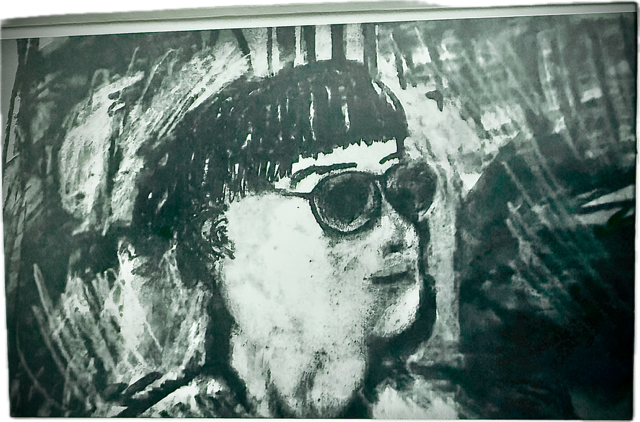
Nothing Lasts For Ever by Michael Bloor

(Today we are pleased to welcome back Mick Bloor)

In the next seat to Alan on the plane, his fellow-passenger sighed as he replaced his plastic knife and fork in the cardboard food box, he turned to Alan and said, ‘That meal was the worst thing I’ve ever tasted.’ Four hours into the flight, they were the first words he’d spoken.

Alan felt obliged to reply. He thought about it and said, ‘I reckon that meal was only the second-worst thing I’ve ever tasted. The very worst taste was when I accidentally brushed my teeth with a tube of my wife’s hair removal cream.’

His fellow-passenger stared at Alan for a moment and let out a great belly laugh. He turned out to be a guy called Niels, a Dane who worked for Maersk, the shipping company. In turn, Alan explained that he was retired and on the Vancouver flight to visit his sister there, who hadn’t been well. Niels, like a lot of big guys, was tactful in his enquiries: he didn’t ask about the sister’s diagnosis or prognosis, merely observing that it would be a treat for her to spend some time with her brother again. Instead, Niels mentioned that he himself was planning to retire soon: how was Alan enjoying his retirement?

Alan talked about his allotment and also about some family genealogical research he’d been doing. He mentioned that he’d been fascinated by one of his mother’s ancestors, Thomas Bridges, a nineteenth-century missionary to one of the native tribes in the island of Tierra del Fuego, at the southernmost tip of South America. Rev. Bridges had laboured long and hard there to produce a dictionary* of the Yamana language, containing more than 30,000 Yamana words…

Niels was shocked: ‘Wow, that’s a big achievement.’ He smiled: ‘That’s some relative you’ve turned up.’

Alan was playing, distractedly, with the airline plastic fork. ‘Well, the thing is: I’m not so sure about the achievement. You see, over the years Thomas Bridges was there, the native population was decimated, almost entirely wiped out – a smallpox epidemic, a land war with incoming settlers, the local seals that the tribe depended on for food were almost all slaughtered by visiting whaler crews. The last native Yamana speaker died in 2022. The site of his old mission station is now the main departure port for Antarctic cruise ships.’

Niels nodded his understanding. But Alan wasn’t finished: ‘Did you know that in a single day, January 15th, 1965, Bob Dylan recorded the final versions of Maggie’s Farm, On the Road Again, It’s Alright Ma, Gates of Eden, Mr Tambourine Man, and It’s All Over Now Baby Blue? In a single day.’

It was a telling comparison. Niels intuited that his fellow passenger was distressed that his ancestor’s huge labours over the decades may have been utterly futile. Niels was a compassionate guy, and they still had a long way to travel together before they reached Vancouver. He spoke hesitantly:

‘Dylan’s music, like all art, is a form of play – yeah? It involves so many aspects of living – novelty, risk-taking, beauty. But your ancestor’s dictionary wasn’t art, it was a scientific endeavour. It involved concentration, judgement, rigour. Maybe it’s a mistake to compare Mr Tambourine Man and the dictionary? They were both very worthy achievements, very different aspects of living. We should celebrate them both.’

He caught the stewardess’s eye and ordered a couple of whiskies. They toasted each other and looked out the window. The plane was flying up the west coast of Greenland, and something out there was attracting other passengers – something utterly divorced from human endeavour. A Greenland glacier was calving as it edged into the ocean. Several new-launched icebergs were lying offshore. Things of strange beauty, tinged with pink from the low sun as they started their journeys of flotation and slow dissolution.

*Yahgan Dictionary Language of the Yawane people of Tierra del Fuego ms. of Rev. Thomas Bridges (later annotations by Rev. John Williams) dated 1865, text published on line by Patagonia Bookshelf 2004-2013.

Sun Beams and Alchemy (and Photo Gallery) by Christopher J Ananias

When the world is a dark pit, and you find yourself locked up with lunatics. Sometimes, a person needs a slice of sunshine. So that’s what this series of photos will try to capture, but alas, it’s hard to catch a sunbeam.

Then again, I don’t need my baseball glove or butterfly net. Not when I have this magical weight around my neck. It’s left the dark room behind, this is true, but I have my own just in case.

I try to explain this alchemy, as if to a five-year-old or my giant German shepherd dog, to these folks on the ward, but they just cock their heads. I talk about apertures, f-stops, and blinking eyeballs.

No respondo, Ernesto just gazes away from me and talks to people who aren’t there. All of their heads turn, and I finally have an audience.

I’m free again, on Antabuse, so I’m back with the camera therapy of nature and sunshine. The technology that I couldn’t explain to them—resting in my hands. Like a thousand picture books.

The shutter is eager to slide over its mechanical eye, snapping pictures of the sun and everything under it, but you have to be careful taking so many pictures of God.

The Ghost and I by Simon Collinson

(One more by Mr. Collinson.  We look forward to his next visit–LA)

How long do you mourn a ghost?

Is a year or two too long?

Try three, for it was three years ago,

she left me and disappeared,

and now she’s become a ghost that fills the silence,

they say I should move on, forget the past,

and let go of the ghost,

that’s easier said than done, when you’re clinging to a ghost,

it’s like I’m going out with a ghost,

a ghost that’s with me every day,

any where I go I see her, waving and smiling,

she’s present in the laughter and scent of every room i enter,

always there in my memory, the past is real and alive,

the present is an illusion, like a dream of the dead,

they say I need to focus on the present,

but the ghost, you see, she won’t let me,

I won’t let me,

the ghost and I won’t let go of one another,

she’s my shadow,

becoming inseparable,

always the ghost and I,

wherever I go, the ghost goes as well,

together walking through the past,

I hesitate to walk on without her,

I won’t let go of the ghost,

can’t move on, like I’m trapped,

a million times they say it cannot be, it cannot be,

yet the ghost is still here with me,

like I’m shackled to a ghost,

blocking everything, but the past and the ghost,

today I’m here, still with the ghost,

you see there are some ghosts,

you can’t simply shake off and send away,

like the ghost that I haunt everyday.

Simon Collinson

Uneasy Evening by Simon Collinson

On nights like this, when your head’s hounded by bells and hissing howls, watch out, watch out, be on your guard. Tonight it’s out and about, they say something malicious and vicious slithers your way. Is there something wrong with the lights? You’d better make sure all the doors are locked and secure, for there’s something lurking nearby, as close as scissor legs, closer than you dare to think, near enough to nick the hairs quivering upon your neck.

What was that? Have you counted all the knives? Make sure you count them again.

There’s a shadow curling up from the floor, waiting for you to take forty winks as you listen to that muffled scream, it’ll be with you soon. So it’s nighty night, please don’t let the ravenous rats bite, many unpleasant dreams will herald the hour of your doom.

Simon Collinson

Decadence by Simon Collinson

(Ed Note-For the next four days we will be pleased to debut Simon Collinson. We would have sooner but the first five poems he submitted to us were swooped by other publishers before we got a look at them. Poetry can be a cut throat business on occasion!-But we are glad to have four to present. And although they are short, we feel that even the tiniest work–even that shorter than the preceding Ed. Note- deserves its own day, provided such has been earned,. We feel such is the case, and more than once,with Simon–Leila)

Near the year’s ending

like walking past

moss ridden, rotten walls,

that’s withered,

weathered and worn,

so weary, tired,

tottering and teetering,

just waiting to fall.

Simon Collinson

My Best Friend by Bill Tope

Dr. Arnold Schopp, DVM, glanced at the caller ID; he didn’t recognize the number. The time was 5am. Picking up his landline, he said, “Hello?”

“Oh! Hi! My name’s Livy. You don’t know me, but I got your number from the men’s washroom at The Stagger Inn, the tavern in the Central West End?”

Arnold blinked. He’d never heard of the place. Was this a crank call? he wondered.

“Can I help you?” he asked cautiously.

“Well, I’m a porter at the tavern during the mornings, before they open. I’m working my way through nursing school, Arnie; Class of ’96! Yay! Is it alright if I call you Arnie?”

Arnold shrugged, but his caller couldn’t see it, so he said, “Okay.”

“I’m having some trouble with my hand,” Livy went on. “And I thought maybe you could help.”

Arnold shook his head. “I don’t understand.”

“Well, where I found your name and number, underneath it said, “For a Good Hand Job, call Arnie, at…” and she read off his phone number. “Are you a doctor or something, Arnie?”

“Well, no,” he said. “I am a veterinarian, however.” He was almost sure he wasn’t being pranked. “What happened to your hand?” he asked.

“I stuck it in the wringer on the mop bucket when I was mopping the floor and then wrung it out. It hurts,” she added.

Arnold went on to tell his new friend how to treat the injury, with ice and later with heat and so on.

“Thanks so much, Arnie,” said Livy with a little squeal.

“How are you doing in nursing school?” he asked.

“I’m just ending my first year,” she replied. “I’m doin’ real good. Thanks for asking.”

It occurred to Arnold that Livy hadn’t many places to turn when she encountered the vicissitudes of life, so he told her, “It’s the very least I can do, Livy. I’ve got to go for now, but you’ve got my number. Don’t be a stranger.”

“Okay,” she said with a gulp.

They disconnected.

_____

Arnold lifted the receiver of the landline in his all-night animal clinic and said, “Hello?”

“Arnie?” asked a young, shrill female voice. “It’s Livy.”

“Hi, Livy,” said Arnold, smiling. “What’s going on?”

“Ooh, I smashed my head,” she lamented, her voice revealing a tremor of angst. “I was taking the laundry out of my washing machine and the lid closed on my little peanut head!”

“Are you alright?” asked Arnold with concern.

“No!” she said loudly. “It hurts. I think I might have a concussion.”

Arnold frowned into the phone. He knew it was unlikely that the light-weight lid of a washing machine would do much damage. He told Livy so.

“You don’t care if I die!” she shrieked. “I have a drop of blood on my forehead and I think I might’ve fractured my skull, Arnie.”

Arnold rolled his eyes. “Unlikely,” he suggested.

“I’m thinking of going to urgent care or to the hospital or to Minnesota…” began Livy.

“Minnesota?”

“The Mayo Clinic,” Livy explained. “That have an excellent trauma unit for head injuries, Arnie.” Livy, Arnold remembered, was a student nurse, now in her second year.

“How much blood did you lose?” asked Arnold.

“One or two drops.”

“Do you have a knot or your head or anything?” he asked next. “Do you feel sleepy or dizzy or…”

“No,” said Livy, “but I almost for sure fractured my skull. “The parietal bone, or the zygomatic arch or the…”

“Livy, put some ice on it,” counseled Arnold. “Do you have any insurance yet?” he asked.

“No. And I need a CAT scan and an MRI and a cognitive assessment…”

“Well, if you feel that you must get medical treatment, hospitals can’t turn away anyone who’s deathly ill. Go to St. Elizabeth’s, here in town, and see what they say. Okay?”

“Okay, Arnie,” replied Livy. “Thanks.”

“You bet, Livy. Let me know what they tell you.”

“You’re interested?” she asked with surprise.

“I am,” said Arnold.

“Goody,” she said.

“Okay, bye.”

“Bye.”

They disconnected.

_____

Arnold glanced at his watch and lifted the receiver.

“Arnie,” said Livy, her voice staticky over the line. “I had an accident.”

“What kind of an accident?” asked Arnold.

“I was painting my flower boxes and I got a splinter.”

Arnold envisioned Livy, bringing her middle finger to her lips and sucking on it.

“How big?” he inquired.

” ‘Bout a quarter of an inch. It hurts!” she wailed, holding the finger up in Arnold’s mind’s eye for his inspection. He shook his head, thought about the spaying and neutering operations he had pending at the clinic. “Do you think I need a tetanus shot?” she asked.

“When did you have your last one?” Arnold asked her.

“Six months ago, remember, when I dropped the can of peas on my foot and thought I might’ve broken the third metatarsal or the calcaneus? At the ER they didn’t want to do a full-body scan because I didn’t have any insurance and I wouldn’t leave until they did something. So they gave me a shot.”

Arnold sighed. His young friend was a bit of an alarmist. “I think you only need a tetanus shot every ten years or so…”

“Oh!” said Livy. “That’s right, I remember it from class.”

“I’d just wash the wound with hydrogen peroxide, dress it with merthiolate or iodine and wrap it up. You’ll be fine, Livy,” said Arnold.

“Thanks, Arnie,” said Livy gratefully. “You’re the best!”

The dial tone popped back on.

_____

Arnold, on duty as usual at his animal clinic, picked up the telephone on the second ring. He knew it would be Livy, his irrepressible friend from the college. She called every day at the same time: 5am.

“Hi, Livy, how’s tricks?” he asked, pleased to talk with a friendly voice.

“Hiya, Arnie,” she fairly burst through the line. “I’ve got a problem.”

“What is it?” he asked, barely avoiding appending “this time” to the query.

“I’ve been picking weeds out of my garden,” Livy explained. “And my fingers are cramped. I think I might have myasthenia gravis or something. Maybe Parkinson’s.”

Arnold rolled his eyes. “Not a chance,” he said.

“Well, I’ve sure got weeds,” she asserted. “What do you think I…”

“Livy,” said Arnold with what patience he could pull together, “you need to start making some decisions on your own. You’re an adult, and you’re old enough,” he said, perhaps more harshly that he’d intended.

“Arnie, did I catch you at a bad time?” Livy asked him.

“Well, kind of. I don’t mind…I like talking to you every day, but sometimes you need to just stand on your own two feet and decide. Do you know what I mean?” he asked, hoping he hadn’t hurt his sensitive young friend’s feelings. She was so easily hurt…

_____

“I met a guy, Arnie,” said Livy one day.

“Where did you meet him?” asked Arnold.

“At a party thrown by one of my friends from school,” she said.

“Is he a nursing student too?” he asked.

“No, he’s a medical student, Arnie. We partied and I got a little bit drunk and later we kissed and made out.”

“Be careful,” cautioned Arnold. “You’ve got your whole life in front of you, Livy.”

He could almost see her nod. “Gotcha. We didn’t do anything I might regret,” she said. “Robert–that’s his name, Robert–asked me out on a regular date tonight.”

“That sounds fine,” said Arnold approvingly. “Is he known among your friends; I mean, does he have a good reputation?”

“Yes,” she said. “All my friends say he has a lot of girlfriends, and none of them turned up dead or anything. He graduates next year,” she said.

“Well, have a good time, Livy.”

“Thanks, Arnie. I’ll talk to you later.”

_____

Arnold didn’t hear from Livy as usual the next morning and he wondered how she was. She usually called every day from work, when she was cleaning the tavern to pay her way through school; she had done so since they met over the telephone more than a year before. Finally, he checked his phone directory and found the last number she’d used. He dialed it up.

It rang and rang but the call went unanswered. Arnold called again several times, until, on the fourth try, after the phone rang endlessly at the other end, she picked up.

“Hello?” said Livy in a whisper.

Arnold frowned into his receiver; Livy sounded so down.

“Livy?” he said.

After a moment, she said, “Hi, Arnie. How are you?”

“I’m fine,” Arnold said. “How are you? Are you alright?”

“Yes.”

“Livy,” he said, “what have you been doing? Why haven’t you called me?”

“I was only doing what you told me I should do,” replied Livy. “You know, take responsibility for my actions, make decisions, and…” Her voice drifted off.

“Livy, does this have anything to do with Robert?” Arnold asked.

“I went out with Robert,” she said dully. “I trusted him, like you said.”

“Livy,” said Arnold, gripping the receiver fiercely, “what happened.”

“Robert took me out, like he said he would,” she replied. Before he could inquire further, Livy whispered, “Robert raped me, Arnie.”

Arnold’s blood ran cold. He listened intently, but Livy said no more, until finally, she murmured, “He hurt me, Arnie.”

“Livy,” said Arnold, “I am so sorry.”

“I know, Arnie. Because you’re my friend. I know you don’t always have time for me and I need to stand on my own two feet and…”

Arnold listened and thought he could hear Livy softly weeping.

“…it was my own fault anyway,” she continued. “I should’ve known better than to go back to the home of someone I only just met. I…I’d never made love before, and I didn’t know what to do when he told me to take off my clothes…”

“Livy, it is not your fault,” said Arnold firmly.

“If I’d just done what he said, then he wouldn’t have hurt me,” she said.

“A woman makes decisions her whole life, Livy, and she doesn’t always make the right ones. But, whether you said yes or not, it was rape. He made the decision for you, Livy. Rape is not about a man’s needs or even what he says he wants. It’s about domination and control and inflicting humiliation on his weaker victim. Do you understand me, dear?”

“Yes, Arnie,” replied Livy. She sounded to Arnold as though she were regaining some of her composure. Which gave him heart.

“So,” she said, “it wasn’t my fault…?”

“That’s right, Livy. Where are you now? Are you at home?”

“I’m in a little diner in the Central West End, near the tavern I clean,” said Livy.

“Why didn’t you call earlier?” he asked.

“I was…ashamed,” she admitted.

“Livy, have you received medical attention? Have you seen a professional?”

“No, Arnie.”

“Give me the address,” he told her. She did. “I’ll be there in 15 minutes, Livy, and we’ll get you the help that you need.”

“You mean you’re coming for me now?”she asked in a small voice.

“Right now,” he said.

“Then we’ll finally get to meet face to face, Arnie. Goody.”

Minutes later, Arnold pulled his animal hospital vehicle into the parking lot of the small diner described by Livy over the phone. He glanced at his watch: it was a quarter past 6am. He’d never met his friend, but knew she was 20 years old. The place was half-filled, but he discerned Libby almost by instinct.

A smallish, thin woman with light brown hair, she occupied a booth near the end of the cafe. She looked up at him as he took a seat opposite her. They sat and looked at one another for an impossibly long moment, before Livy said, in a voice that Arnold recognized instantly, “You came.”

A waitress materialized as if by magic and Arnold asked Livy if she wanted anything. There was a half-drunk cup of coffee before her, with fully a half dozen opened Splenda packages lying in disarray in her saucer. She shook her head no.

Arnold insisted she have something to eat, so she ordered French toast. He ordered a coffee. They spoke in low, confidential voices until their order arrived. Livy’s appetite appeared to be piqued by the aromatic French toast and she dug in, smothering the dish with butter and warmed maple syrup.

As she ate, Arnold told her what would happen next.

“I’ll take you to the emergency room,” he said, “and they’ll check you out. They have a rape crisis unit on duty there, 24/7.”

“What will they do?” Livy asked. He told her.

“They are associated with law enforcement, Livy,” he said. At her stricken look, he assured her that she was not in trouble, but rather Robert. “Forcible rape is a felony, Livy,” he told her gently but firmly. “No one can make you cooperate with them, but think of all the other young women and girls that Robert might inflict himself on in the years to come.”

That sealed it. She agreed to talk to the rape counselor and the cops.

“I feel like I failed you, Livy,” said Arnold contritely, reaching across the table and touching his friend for the very first time. It was warm where they touched.

“You’ve done so much for me, Arnie,” said Livy in a stronger voice. “And you’re still doing it. No one has ever been my friend before. Not like you.”

Arnold felt his heart break. “I love you, Livy. You are my very good friend.”

“You’ve done so much, Arnie,” said Livy again. “Could I ask you to do me one more thing?”

“Of course.”

“Come around to my side and give me a hug, alright?”

Without another word, Arnold rose from his seat, came around and sat next to Livy and gave her a tremendous hug.

For the first time that morning, Livy smiled.

“Goody,” she said.

Bill Tope

Saragun Headquarters, Washington State

Light on His Feet by Bill Tope

“Are you really going to start dating him, Meg?’ asked Kris, standing in the doorway to her housemate’s bedroom.

“I’m going out with him on one date,” Meg corrected her. “After that, I’ll play it by ear.” She pulled on clean jeans.

“What’re you gonna do, go dancing?” asked Kris acidly. “Or hiking in the woods? I know, you can do your five-mile run with him.” She exploded with harsh laughter.

“I don’t think you’re funny, Kris,” said Meg. “Jonah may not be the starring halfback on the school’s football team the way your boyfriend is…”

“He can barely walk, Meg,” Kris interrupted. “I’ve seen him in action at the bookstore at the mall. What do you see in him anyway? Is he loaded or something?”

“I don’t run a credit check on my dates,” said Meg pointedly.

This quieted Kris, who had been known to do that very thing.

“I did that one time…” protested Kris.

“Twice!” snapped Meg.

“…alright, twice then,” admitted Kris. “You have to enter a relationship with your eyes wide open, ‘hon,” she said.

Meg sighed. “I know you’ve had some issues there, Kris. But you come from money, and I don’t. I don’t need to worry about a golddigger, ya’ know?”

“He probably only wants to get in your pants,” said Kris peevishly.

“I forgot,” said Meg. “You never fool around with your boyfriends…”

“See, you’re thinking of him as a boyfriend already,” charged Kris. “Well, make him use protection. You don’t want to get knocked up and have a baby that has what he’s got, whatever that is.”

“Don’t worry,” said Meg dryly. “I can always consult Planned Parenthood.”

Kris threw up her hands in defeat. “Don’t say I didn’t warn you.”

“I won’t.

_____

Meg stood before the bathroom mirror, toweling off after her shower. She thought back to how she’d met Jonah Fenster at the bookstore and then gone out on a date with him tonight.

“Can I help you find anything?” he’d asked.

Meg regarded him. He was an average-looking boy, around her age, 2o, and dressed casually in denim and flannel.

“Do you work here?” she asked. Meg had never seen him before.

“No,” he said in all earnestness, “I just wander in and out of all the stores in this mall and try to strike up a conversation with the prettiest girls I can find.”

Meg blinked at him and he grinned winningly.

“Yes, I work here,” he admitted. “Are you looking for texts for your classes? You go to the university, don’t you? I know I’ve seen you on campus.”

“Yes,” she said. “I’m taking college algebra and second-year zoology.”

“I know just what you need,” he said. Then he stepped away, and Meg found herself staring. He walked with a pronounced limp and moved with the aid of a cane. “C’mon,” he told her, and she filed behind him. Walking three aisles over, he knelt and snatched a book from the shelves and handed it to her.

“College algebra,” he announced. “C’mon,” he said, leading the way across the shop. “Don’t dawdle, follow me. What’s the matter,” he cracked, “you’re not crippled, are you?”

Meg gasped in horror. Had she been staring at him? she wondered. “I…” she began.

“Hey, lighten up,” the young man told her. “It’s my own little joke. Okay?” He grinned again.

Meg felt immediately at ease. “Okay,” she said.

Later, at check out, she struck up a conversation with the young man, who told her his name was Jonah.” He was growing on her, she found.

“Jonah’s an unusual name,” she observed, revealing her own identity.

“It’s Jewish,” he told her, as if to clear the air.

“Oh,” she said, unsure what he expected her to say.

“You don’t mind purchasing your merchandise from a Christ killer, do you?” he asked straight-faced.

“I don’t think that’s at all amusing, Jonah!” Meg scolded.

Jonah’s face turned crimson. “Sorry, Meg,” he said. “It’s just that I get that sort of nonsense from the unwashed masses of this town…this state…this country.”

“Please don’t lump me in with them,” she said. “I wash regularly.”

“Point taken,” he said humbly. He handed her her change. As she turned to go, he said impulsively, “Meg, would you go out with me–on a date?”

Just then, several more customers came up to the checkout. and because she was still a little sore at him for what he’d said, he considered pretending she hadn’t heard him. But no. She twirled back to face him and said, “Alright.”

When Jonah picked up Meg at her on-campus apartment, Kris, thankfully, was not there. Meg let him in.

“Nice digs,” he said, looking about.

“Do you live on campus too, Jonah?” she asked.

He shook his head. “No, I live with my mother, in the city.”

“Oh.”

“She’s very stern,” Jonah went on, without preamble. “Lots of hand-holding and pressure to succeed. Nothing but As on the report card,” he said. “And no dating on Shabbat–from sunset on Friday through sunset on Saturday.”

“Oh!” said Meg. “Do you want to do this tomorrow night then?”

Jonah smiled and shook his head no. “I’d love for you to meet my mother,” he said.

“I think that would be nice,” said Meg, who wasn’t sure.

She’ll want to introduce you to the Shadchan for the shidduch.”

“Pardon me?”

“The matchmaking,” said Jonah. “Naturally the Shadchan, or matchmaker, will want to research your family, your resouces, the caliber of your estate. Then there will be the nedunya, or bride’s dowry,” he translated for her.

Meg finally began to catch on she was being ribbed. “Sorry, Jonah, you’re out of luck. My family doesn’t have money.”

“Doesn’t have to be cash,” he said. “Do you have any herds, property, slaves…?”

“Jonah,” she said, placing her hand on his arm, “do you ever manage to get a second date?”

“Not yet,” he admitted. “You’re the first girl who ever agreed to go out with me.”

Meg furrowed her brow a little. She was unsure when he was kidding.

“We better scoot if we’re gonna make that movie,” Jonah said.

They quitted the apartment and walked to Jonah’s car. Meg was instantly impressed. It was a brand new 1993 Mustang convertible, blood-red.

“Ooh, nice wheels, Jonah,” cooed Meg, touching the door of the car.

“Jews have to display their wealth ostentaciously…” began Jonah, but Meg cut him off.

“Give it a rest, okay, Jonah.” She peered into his blue eyes.

Jonah nodded. “Lemme get the door,” he said, and held it for his date.

After the movie, they sat in the rapidly-emptying theater and Jonah asked, “Was the film too much in character for me, Meg?”

“Schindler’s List,” said Meg. “I would’ve expected nothing less–Jew boy!”

Jonah opened his mouth, closed it again and leaned in and kissed Meg’s lips. After a moment, she kissed him back.

“Umm” they both murmured.

_____

Sitting in a small diner following the movie, they discussed the film they’d just seen. Jonah mentioned an obscure detail that Meg had completely missed. She said so.

“I did too, the first couple of times I saw the movie,” Jonah said.

“How many times have you seen it?” Meg asked him.

“Tonight makes eight,” he replied. “When she didn’t say anything, Jonah added, “It’s more than just a film, Meg. It’s a historical event, a remarkable cinematic achievement.”

“I thought it was good,” Meg admitted.

“I guess it means more to me because I’m Jewish,” admitted Jonah. “You see, most of my mother’s relatives perished in circumstances depicted in the film. They were worked to death or taken by train to death camps–Todeslager. The Nazis had six such camps during the Second World War.” He began naming them: “Chelmno, Treblinka, Sobibor, Belzec…”

“What, you have them memorized?” asked Meg, surprised.

“Of course.”

“But why?” She didn’t get it.

“You look at your photo albums or old 8mm movies or VHS videos of your family, right?” asked Jonah.

“Yes.”

“Well, for many Ashkenazic Jews–those from Poland–this is all we have. Old newsreels and still pictures from the era. When I look at the old footage I wonder, is that my great grandfather or uncle or…” He trailed off.

“I think I understand, Jonah,” Meg told him.

When she returned to her apartment, Meg found Kris there in the company of her boyfriend, Troy.

“How did your date go?” asked Kris, seemingly with sincerity.

“Fine,” replied Meg. “We saw Schindler’s List.”

“Woo hoo,” said Troy in a loud voice. “More of that Holocaust crap.”

“What do you mean?” asked Meg.

“That’s just Jew bullshit, Meg,” said Troy boisterously. “Ooh,” he said, effecting a high-pitched voice. “The poor Jews, six million of us gassed. If I ate kosher, I’d have gas too!” He laughed, joined in his mirth, much to Meg’s chagrin, by Kris.

Meg looked closer and realized that the couple were wasted. Empty wine bottles sat upon the coffee table and the effluvium of pot had gathered in a cloud of blue vapor near the ceiling. Screw it, she thought, I’ll just go to bed.

“I know Jonah Fenster,” said Troy out of nowhere. “He’s manager of the track team. Ha-ha, can you imagine?”

“He’s a hard worker,” said Meg defensively, remembering Jonah’s boundless energy at the bookstore. She watched Troy run his ham-like hand up the back of Kris’s sweater. She seemed to accept it, but she didn’t look happy about it. Meg began to walk toward her bedroom.

“Hey, girl,” said Troy, who had his hand between his girlfriend’s knees now. “You’re not goin’ to bed, are you? It’ ain’t even one yet.”

“See you in the morning,” she said, hanging up her jacket on a hook.

“I thought we could have us a Troy sandwich,” said the jock.

Meg stared at him, uncomfortably.

“Kris, you tol’ me she’d go for it,” Troy said. “That’s why I stayed aroun’ tonight. C’mon, darlin’,” he told Meg, “that hebe didn’t wear you out, did he?”

Meg rolled her eyes and took off for her room.

“Do you prefer sucking a circumcized cock, or the real thing?” he shouted after her, then laughed like a braying jackass.

Meg slammed and locked her door.

_____

When Jonah showed up at Meg’s apartment for their second date, a week later, Kris was present this time.

“Come in,” she told him cooly, and he followed her inside. “Where are you kids going on your date?” she asked.

“Brazier’s,” replied Jonah, naming a popular music venue.

This stopped Kris in her tracks. “The dance club?” she asked, staring at his cane.

Seeing her look, Jonah said, ‘Uh huh. I can’t wait to get out there on the dance floor and cut a rug. You think Meg will be able to keep up?”

Kris stared at him.

“She’s a little gimpy,” he added, “but cute.”

Suddenly Meg appeared in the living room and said, “Hi! Ready to go?”

“Could I carry you, honey?” asked Jonah in an old man’s voice.

“No,” Meg said, playing along. “I’ll try to keep up. Just don’t start running, like last time.”

Kris mutely watched them depart.

At the night spot, Meg and Jonah sat nodding in sync to the contemporary beat of the band.

“I like them,” said Meg. “Who are they?”

“They’re called Nirvana,” replied Jonah. “They’ve been around for about a year.

“You think you can get them to record your tune for the film?” she asked. It had been Jonah’s idea to scope out the new talent. He produced movies for his film classes.

“Uh huh. Provided they don’t explode off the stage and become famous before we’re ready to produce the spot. They sound like they’re primed to just take off.”

“Hey, gorgeous,” said a buff 20-something, inserting himself at the table between Meg and Jonah. “Could I have this dance? I’m Mike,” he said.

Meg glanced uncertainly at her date.

“Okay with you, dude?” the man asked Jonah.

“Go ahead, Meg,” Jonah invited.

With a smile, Mike pulled out Meg’s chair and she joined the man on the dance floor. Jonah watched them with quiet bemusement. But his eyes were steely.

Suddenly there was a sexy, willowy female at Jonah’s elbow and he turned her way. She wore a red dress with black sleeves. Her scent was electrifying.

“Wanna dance?” she asked in a voice which brooked few refusals.

“Sorry,” said Jonah.

She turned up her nose, sniffed and stalked other prey. In seconds she was on the dance floor with someone else. The song ended and another started up and Meg and Mike remained on the dance floor. Following the conclusion of the second tune, Mike deposited Meg back at her table.

“Thanks, dude,” said Mike, and he hastily corralled black sleeves and began dancing with her without missing a step.

“I’m hot,” said Meg, fanning herself with a hand.

“You’re right about that,” Jonah said with a grin.

Meg placed her hand on Jonah’s arm. “You didn’t mind, did you?” she asked.

“Well, I’d prefer if you’d devote waking every moment to me. It’d help if you got your own cane,” he said.

Meg rolled her eyes and punched his arm.

“Seriously, though, Meg,” said Jonah. “I can’t dance. But, everyone’s got limitations. I mean, you probably couldn’t knock off 1,000 situps.”

“Can you?” she asked, her eyes wide with awe.

“Hell no!” He scoffed.

The evening concluded in Jonah’s car, with what Meg’s older sister had always called “heavy petting.” Meg considered inviting him in, but then demurred. This was only their second date, and she didn’t want to come off as easy. They sat back, catching their breath, with Meg waiting for Jonah to ask her out again. Suddenly she had a brainstorm.

“You wanna come to dinner next week?” she asked.

Jonah looked at her in all seriousness. “Do you keep kosher?” he asked.

Meg’ mind spun. Kosher? she thought. She wasn’t sure what that even meant. “Uh…sure.” she said.

“I’m only teasing, Meg,” he said, his face breaking into a grin. “We aren’t observant Jews, except for Jewish Holidays. Anything you prepare will be fine.”

Meg relaxed and Jonah moved in for a goodnight kiss.

_____

After they’d finished Meg’s home-cooked dinner, and the dishes had been cleared, the couple sat on the sofa in the living room, drinking the second of two bottles of wine that Jonah had bought. Meg leaned her head on Jonah’s shoulder, his arm wrapped tightly around her shoulders. Meg was suddenly concerned about the rest of the evening. She had had only two lovers in her 20 years, and could count on just two hands the number of sexual experiences he’d had. Would Jonah be a more experienced lover? she wondered. She heard a soft humming in her head; she was comfortably buzzed on the wine.

Jonah leaned in and kissed Meg’s neck, her face, then her lips.

“Umm,” she purred. “You’re a good kisser,” she whispered.

“You ain’t seen nothing yet,” he said

6 months later

“Jonah,” said Meg pensively, “am I ever going to meet your mother?”

Jonah sighed. They had had this discussion many times in the past several months. Meg had visited Jonah’s home many times in the interim and had even spent the night there with him, but Meryl Fenster had never been in residence. The first several times Meg passed it off to mere chance, but lately it had been eating at her. Was it a concerted effort on the part of Jonah and/or his mother to avoid what might prove to be a confrontation with the son’s non-Jewish lover?.

Lover, thought Meg. She’d never possessed that identity before Jonah. It took some getting used to, she decided. Today found the couple once again at Jonah’s. He had stepped out to the newsstand to buy the Times. When he returned she asked him, “Why is your freezer locked?”

Jonah did a double take. “What?” he asked.

“The freezer in the basement, Jonah. It’s locked.”

“You’ve been down in the basement?” he asked with a little smile.

“You weren’t here,” Meg explained, “so I went exploring. When I got to the basement, I found this enormous chest freezer and when I tried to lift the lid, it was locked.”

“I didn’t even know it had a lock,” said Jonah.

“Why should it be locked?” she asked again.

Jonah shrugged. “I dunno. Maybe Mom does’t trust the housekeeper not to steal the beef brisket.”

“Jonah…”

“I don’t know. Really. I’ll ask her when she gets back.”

“Where did she go again?” inquired Meg.

Jonah appeared to turn the question over in his mind for a moment, before he replied, “Albany.” When Meg stared at him, unconvinced, he added, “We have some real estate–apartment buildings–in the capital. She goes up there, or I do, a couple of times a year.”

Meg nodded. “Is your mother avoiding me, Jonah?” she asked.

“Of course not, honey,” Jonah assured her.

“It’s been almost exactly a year since we met,” she pointed out, “and I have yet to even see her.”

Jonah stepped to an armoire and snatched a framed photo of an older woman off the top. “This is her. I thought I showed you before.”

Meg frowned. “That’s not the same. I want to see her–in the flesh, Jonah.”

“After the new year,” he promised, raising his palm.

That night, in bed, Meg had an awful dream. She jarred awake and stumbled down the stairs to the cellar, where she saw the vast deep freeze, as long as an outsized coffin. Its hum was a loud drone. She attempted to raise the lid, but it wouldn’t give. Desperate for answers, she turned to a workbench, found a pry bar and inserted it under the lid. She strained with effort, until at last something popped and the lid moved.

Pulling the cover up, an inner light flashed on and Meg fell back in horror. There in the depths of the freezer lay Mrs. Fenster, wrapped in a large transparent bag, unmoving. She looked exactly as she had in her photo. Meg gasped and cried out. the lid slammed back into place, catching Meg’s thumb. She screamed in pain. She heard footsteps on the stairs behind her and then everything went black.

When she awoke, Meg sensed a metallic, medicinal taste in her mouth. She felt lethargic.

“Hey, sleepy head,” whispered Jonah, touching her shoulder. She flinched. Her boyfriend was a murderer, she thought with terror. “You alright, Meg?” he asked softly. “Did you have a bad dream, babe?” Jonah asked. Meg nodded mutely. “Tell me about it.” Meg did.

To his credit, Jonah didn’t laugh outright, but he did tell her patiently that she had imagined it all.

“Show me,” she said, still unnerved by the dream. With a nod, Jonah got out of bed, followed by Meg, and they went to the basement. There Meg saw the huge old freezer. It looked exactly as she remembered it.

“Open it,” she said. He did. And there it was: hundreds of pounds of beef brisket, prawns, lobster, black salmon and other comestibles of a higher order.

“Where was she?” he asked.

Meg frowned. “Right here,” she said, indicating the far wall of the compartment. Hurriedly Meg checked the lid, saw no telltale scratches.

“You had a dream, honey,” Jonah said again. “Come here,” he said, enveloping her in his arms. Meg took a deep breath and let it out again. Then she winced at the pain in her thumb.

_____

Meg never did get to meet Meryl Fenster. Jonah’s mother perished in an aviation disaster over the Atlantic Ocean just three months later. It was all over the media. A flight from LaGuardia, bound for Israel, exploded in mid-air. Reading a transcript of the manifest printed in the newspaper, Meg saw the name of the woman who would have become her mother in law in just six months time, just following graduation. Jonah seemed strangely unaffected.

While Meg and her sister had been consigned to an orphanage and then a series of Foster Homes following the passing of their parents at an early age, Jonah had lived the entirety of his life with his mother. So Meg passed his dull reaction off as his leanings toward fatalism, that brooding belief that everyone dear to him was destined to abandon him. She wondered if he felt that way about her too.

There were no remains to account for following the tragedy, so the families held symbolic farewells to their loved ones. Meg stood with Jonah at the graveside of Mrs. Fenster, looking askance at the large white casket. It reminded her eerily of the freezer in Jonah’s basement. She shivered.

After the service, back at the house, Jonah said wistfully, “Mother would’ve loved you, Meg. She did love you. Although you never met in person, she knew what you had done for me, what you mean to my life. We talked about you all the time.”

“I loved her too, Jonah,” she said.

_____

Following graduation, the wedding was put on hold. Getting married had once seemed important to Jonah, for his mother’s sake. But he seemed not to care anymore. Meryl, like her son, had few friends. In fact, at the funeral, Meg was struck at how few people had known her personally. The only people who paid their respects were business acquaintances of long standing and most of them sent their regards by way of cards or floral arrangements or surrogates: paralegals or junior business associates. Hadn’t anybody really known Meryl Fenster? wondered Meg. She began to have an eerie feeling that the woman had never really existed.

“Who do you want me to invite to the wedding, Jonah?” Meg asked one night. Following graduation, Meg had moved into the brownstone. It was a three-storey structure and had many rooms; Jonah, because of his lameness, used only the first floor, and Meg found she had little interest. It sort of creeped her out a little.

Jonah shrugged. “Whoever you want,” he replied.

Meg, an orphan with no relatives she knew about, aside from a sister, had cultivated few friends. Jonah was the only serious boyfriend she’d had and he seemed to be growing more distant each day.

“Do you even still want to get married?” she found herself asking him.

Jonah was a long time in answering, and when he did, his response was an unconvincing, “Of course.”

Meg felt herself shiver.

“You’re everything to me,” he said dully.

_____

Rather than get a job in her major–teaching biology–Meg decided to continue her studies. She enrolled in graduate school. Jonah encouraged her to continue her education, rationalizing that they didn’t need the money from her potential income. Jonah was likewise enrolled in the school’s graduate film school. For once Meg didn’t have to scrimp; she found she rather enjoyed the easy life. And, in the year following his mother’s death, Jonah began to loosen up some and was almost his old fun self.

April, Meg’s sister, older by one year, finally paid the couple a visit. The sisters regularly conversed by telephone, but this was April’s introduction to her sister’s husband.

“Ooh, Ril’,” cooed Meg. “It is so good to see you!” The women embraced. “How do you like teaching?” she asked. April was on summer vacation.

“Eighth grade English is the lowest rung on the ladder, Meggie,” answered April. “But sometimes, you find wheat among the chaff and you can help them along, nurture them, ya know?”

“Are you still writing your novel?” asked Meg.

“Yes!” April laughed. “It’s 800 pages, with no end in sight!”

“You’ll be with us for two weeks,” said Meg. “You can use our computer and work on your bestseller.”

“Thanks, Meggie.”

Jonah stood in the background, brooding, observing but not participating in the exchange.

_____

“Meggie,” said April over breakfast three days later, “are you and Jonah alright?”

“Sure,” replied Meg. “Why, what do you mean?”

April shrugged. “I don’t know, he’s so quiet. We haven’t exchanged ten words since I got in. Does he hate me?”

“Of course not, Ril’,” said Meg. “Jonah is just quiet and it takes him a while to get to know people. It’s nothing to do with you. Really.”

April looked uncertain. “Alright. I thought maybe I did or said something wrong.” She shrugged.

“No, hon’. I told you about Jonah’s mother dying…”

“But that was nearly two years ago, Meggie.”

“They were very close,” confided Meg.

“What was she like?” asked April. “You don’t think Jonah holds it against me that I didn’t show for the funeral, do you?”

“He knows you were teaching and couldn’t get away. We had to hold the service straight away, Jewish custom and all that.”

April nodded. “I’d like to get to know Jonah better, Meg. You two are the only family I’ve got.”

“I know, hon’,” said Megan, laying her hand on April’s arm.

But things got no better between the two most important people in Meg’s life; they got much worse.

A couple of days later, April surprised everyone by ordering in a pizza for dinner. As they sat eating, Jonah grew very still, uneating.

“Not hungry, babe?” Meg asked Jonah.

Jonah suddenly slammed his closed fist down hard upon the pie. “Pork!” he shouted loudly. “It’s not fucking kosher!”

April’s eyes grew wide. “I’m sorry, Meg told me you don’t keep kosher, Jonah. Is today a Jewish Holiday?”

“Ignorant slut!” stormed Jonah, flinging the pizza off the table and then stalking off.

Meg and April stared at one another in confusion.

“I don’t understand what his problem is with me, Meg,” April complained later. “I’ve tried to meet Jonah halfway, no, more than halfway, and he won’t cut me a break. It’s either the silent treatment or episodes of unbridled rage. Last night he flung his wine glass against the wall!”

Meg shook her head. There was nothing she could say. Lately Jonah was becoming obsessive, almost refusing to let Meg out of his sight.

“Meg,” said April in a serious voice, “come with me, to Rochester. You’ve got your teaching certificate and could resume you studies and get your Master’s at the university there. I can get you on at the high school as a science teacher.”

“Meg, I don’t know…”

“The cost of living, the climate, the community; it’s one of the best places to live in the state of New York, in all the country. You’re not happy here. Come back with me during next semester break and check it out, at least. Pretty please?”

Meg finally smiled. “Well, when you say ‘pretty please’…”

From the landing leading into the basement, Jonah quietly listened.

_____

“When you get your new PC, email me,” said Meg as she said goodbye to her sister. “Everyone’s using one now,” she said.

April said she would, and slipped out the front door of the brownstone.

As the door clicked closed, Meg said to Jonah, lurking in the shadows, “She’s gone now, Jonah. You can quit hiding.” There was weariness in her voice. The past two weeks had been very trying for Meg.

“Are you going to Rochester, Meg?” asked Jonah in a hollow voice. She looked up. “I heard you and your sister talking about it. She wants to take you away; well, I won’t have it, goddamnit.”

“You were evesdropping?” asked Meg, picking up on a queer vibe.

“I lost my father when I was only six,” he said, “and my mom left me too, five years ago. I won’t let you go, Meg. You belong to me.”

“Jonah,” said Meg slowly, “Meryl died only two years ago.”

Jonah shook his head nervously. “She died when I was 19,” he said. “She wanted to leave me to. Wanted to get married to a haberdasher, Mr. Braunweiss. He only wanted her money,” he said bitterly, raising his voice.”

“Jonah,” scolded Meg cautiously, “you’re scaring me.”

“You should be scared,” he said, taking a faltering step in her direction. Meg backpedaled.

“Your sister can’t have you, Meg,” said Jonah. “I fixed her brake line and she’ll never make it back to Rochester.”

Meg’s mind spun wildly. April! She had to reach her. Chris had one of those new cell phones; she had to call her! She moved to the land line.

“No!” shouted Jonah, interpreting her intent. “No calls.”

A terrifying thought struck Meg. “Jonah,” she whispered. “That boy who asked me to dance at the club all that time ago. He died that same night when his brakes failed on the freeway. Did…did you do something to his car too?”

Jonah’s grin was a skeletal ricktus. He began closing the distance between them.

Meg’s breath caught. Jonah had a huge transparent bag in his hands. Desperately, Meg took flight, evading her crazed husband, and coming upon the stairs to the second floor. She flew up.

Jonah, because he was physically compromised, plodded up the stairs one difficult step at a time. Meg turned on the landing and ran up the stairs to the third storey.

“You won’t get away, Meg,” Jonah called after her in a sing song voice. He was mad, she thought.

Meg halted at the door to one of the building’s many bedrooms and twisted the knob; it was locked! She ran to four other rooms, but each of the doors was also locked.

“You’re really starting to piss me off, Meg,” said Jonah after scaling the final flight of stairs. Meg hid herself in a small alcove, holding her breath. She could hear Jonah’s stertorous footsteps as he grew nearer.

_____

The middleaged man limped with the aid of a cane and refilled Karen’s wine glass. She smiled, all blue eyes and white teeth. “So,” she said conversationally, “have you ever been married?”

“Once,” said Jonah. “But it didn’t work out. She wasn’t of our faith,” he explained, “and she wouldn’t keep kosher.” He grinned winningly.

Hidden Valley Road by Heather Sager

I once rode a horse

in the woods

off Hidden Valley Road.

I was maybe sixteen.

There was a gray stable

in the woods,

the trees wore green and yellow leaves,

birdsong echoed in clammy air.

My horse stood tall and brown.

I settled my hands around her neck

and she led me

with quiet confidence.

There was a sway

as she took me

along earthen trails.

It felt like we could go anywhere

in this lonely world.

Why do I hold onto this

memory

of Hidden Valley road?

I’m still trying,

it’s teaching me something.

Heather Sager