“I write for children and angels.” – William Blake
The posthumous book THE MAN WHO READ EVERYTHING: THE LITERARY LETTERS OF HAROLD BLOOM was recently published (in 2026) by Yale University Press. It is a small, thin book, and there is no doubt that many of the literary letters Bloom wrote over his 89-year-life are not included. But this book is a representative sample, condensed and where every example has its relevance; as such, this book is like part of the gospel for anyone who loves creative literature in the twenty-first century and beyond.
Creative HUMAN literature, that is. In a world of lies and delusions, both mass and personal, one thing (at least) is for sure: the half dozen or so technical “wizards” right now who are building AI do not understand human artistic creativity, or its importance for our species, at all.
They are purely technical minds, so divorced from an understanding of real and true human, artistic creativity that they themselves are almost inhuman. THIS is why they have no problem trying to turn everyone who is now (still) human into a dollar-making (for them) robot.
THE MAN WHO READ EVERYTHING was published by Yale University Press with a grant. That means this is not a commercial book. The number of people who purchase this book will not be enough to make back the money it took to publish it. Whoever was behind this project understands that some things in the world are more important than money.
I said it was gospel. The letters of Paul (including the ones written in his name after his style that are included in the canonical Gospels) are some of the greatest creative writing that has been written on Planet Earth, any place, any time. THAT is why they’ve had such a profound impact for both (mostly) good, and ILL (just barely behind the good they have done). The surviving letters of Paul amount to a double handful; they were written for free and have changed the world more than any other human writing, ever. That is because they are WRITTEN SO WELL. (Paul’s letters survive all translations, and become new things that have grown from the old and so are part of the original source with consistent ties going back two thousand years, more relevant now than they were then.)
Bloom spent his life channeling the fact that HOW WELL something is written is the first criteria that should be considered when considering creative Literature with a capital L. Political considerations are also commercial considerations, one way or another. Any political agenda the good and true reader of classic imaginative literature brings to the material will be a highly imaginative, extremely fluid one, and it will be secondary. Rigidity of thought and purpose are not part of the highest (human) creative arts. Bending the mind and breaking the rules is what creative writing is for. Therefore, it will always be trampled into the dust by THE MACHINE, but it will never die there. It will rise from the mud like the most beautiful flowers that have ever been born on Planet Earth. This is because imaginative literature in its highest forms contains the very wisdom of humanity itself, not less and not more. So many of the greatest writers are essentially comedians in the end because this viewpoint finally transcends the tragic viewpoint. It sometimes seems heartless to make the mind rise above it all but this is what the greatest writing actually does, which is one reason (but just one reason) why it is often called “transcendent.” It strips away the delusions and shows humans what they are, what they were, and what they might become. The comic viewpoint in the highest levels of writing transcends all tragedies. After taking very deep account of them first.
In one of these letters, Bloom writes about himself: “Lord knows what I am. Not a poet, critic, scholar, historian, psychoanalyst, philosopher, or theosophist – but a worthless mélange of the gang of it.”
All creative writers worth anything in 2026 need to be all of the above, and even more, somehow. That is just one reason why it takes almost all the best of the best writers so long to find their voices, starting now, or yesterday. The complexity of the world has blown itself way out of proportion. The writer who ignores this is not doing their (or his or her) job.
There are at least 200 separate academic disciplines in the world today. In most of them, the number of experts in the world who can truly understand the real and true cutting edge of that discipline amounts to a few dozen at most.
This is probably also true for the most cutting-edge imaginative human literature right now, which is the most cutting-edge discipline there is (by far).
As such, it is a dark time.
As the world plunges down toward more darkness now, in the end the light will grow – or it will be extinguished.
“Theosophist” means imagining somewhere else (without abandoning the here and now).
As insane as it sounds at first (but it will not sound insane after first blush), there are a million writers (and more) who hate Tolstoy’s guts.
They sit there staring at that behemoth of a novel, War and Peace, which is two thirds as long as the Bible and Shakespeare’s complete works, and every single episodic, philosophic, dramatic word of which is brilliant, a novel whose teeming amounts of characters (both humans and animals, and even furniture, rooms, machines, weather, rocks, plants, planets) are as alive as the greatest characters in Shakespeare, and they (these writers) sit there staring at this MONUMENT of writing, and the writing life, and they hate its guts.
They hate it because they are violating the Tenth Commandment, and coveting the achievement and talent of War and Peace’s author.
But don’t worry. Tolstoy himself HATED SHAKESPEARE’S GUTS. He wrote many thousands of ridiculous words about why Shakespeare is so pathetic. Indeed, it is a literary marvel to think that a writer of Tolstoy’s talents and intelligence was unable, completely unable, to appreciate Shakespeare. Dickens and Dostoevsky, for example, considered Shakespeare to be a kind of god, literally. Dickens named all of his magazines after Shakespeare, and he sometimes wondered if he himself was Shakespeare, in his manic explosions. Tolstoy hated Shakespeare because Tolstoy envied (and coveted) Shakespeare’s talent and unmatchable achievement.
And there are many artists who can’t stand Michelangelo. They look at his statues, which have presented the human form in a more beautiful artistic way than probably anything else on Planet Earth (see his statues of Mary, Jesus, David, and Moses for starters; looking at pictures of these is more than good enough), and they look at that most gigantic of all gigantic paintings, the Sistine Chapel ceiling, and they can’t believe just one man did it all. They forget that he had ZERO social life (zero = 0!) as an adult, that he never did ANYTHING but work on his art, that he crippled himself by working so hard at his art, that most people who knew him hated his guts because he wouldn’t even say hi to them because he didn’t have time to get involved in pointless conversations that didn’t involve his art, and that he did all this and more (like rarely bathe, eat or sleep, and when he did sleep, he slept in his clothes, and when he did eat, he ate while he was working) all because he never did anything else but WORK ON HIS ART AND THEN WORK ON HIS ART SOME MORE. In his downtime, he fervently read Dante and the Bible with an intensity that fed straight back into his art. Everything for him was ART, and ONLY ART. He could NEVER have done the nearly-superhuman things he did if this wasn’t the case. He lived to be 88 in an age when that was like 110 now because he was always too busy working on his art to die, literally. (In certain ways (but only in certain ways), perhaps not even Shakespeare can match him.)
If you want to be your own kind of Michelangelo, you can’t spend ANY time just lounging around feelin’ good, except what you need to keep you going again as soon as you can – as soon as possible. (But proper rest is essential in order to survive and thrive, too.)
And there are many musicians who hate Bob Dylan and his music and lyrics. Many writers (especially in academia) started hating his guts even more than they already did AFTER he won the Nobel Prize for Literature.
They look at those hundreds and hundreds of songs (close to a thousand when you count unreleased/later-released material), so many of which are both literary AND musical masterpieces, they look at the forty studio albums all of which are at least partly great (and therefore great), they look at the uncountable numbers of demos, bootlegs, and live recordings, and videos, that are just as good as anything on the studio albums, and they want to throw rotten eggs and rotten fruit at Dylan.
ALL writers, artists, and musicians have these kinds of feelings sometimes. Because if you didn’t have them, you wouldn’t be spurred on to compete, which means create.
Contemplating a transcendent work (Tolstoy, Shakespeare, Michelangelo, Melville, Dickens, Dickinson, Van Gogh, Dylan, and Rimbaud, always Rimbaud), and absorbing it, and returning to it, is not always a matter of abject worship, or utter hatred, either, for the real artist (and only for the real artist, not the pretenders).
Sometimes you sit there trying to figure out what you can possibly do that’s better than this, or that can be in the same room with this without having to hang its head and exit in utter shame and infamy.
The boundaries of human writing are still being pushed forward (especially in the personal essay, the short story, and new forms of the novel and poetry).
As the Machines continue to take over more, and more (for now, until humanity wins, or goes down in flames trying), including many writing jobs, the importance of truly creative HUMAN WRITING gains ground every single second that ticks by.
As long as there are humans, there will be RARE humans who look for this. In ways we can’t scientifically pinpoint (which is the beauty of it all), they are (and will be) very, VERY, very much helping to keep the flame (of the human spirit) alive (more than anyone else, YES, more than anyone else, whether they be politician, technologist, or scientist, etc.). It has nothing to do with making a splash now. (It is too pure.) It has nothing to do with whether you “believe” in what everyone else calls “God.” It has all to do with making something individualistically and universally, relatably HUMAN that will survive its own time (and it will look strange at first, maybe even like hieroglyphics, “before” its time; OR it will not be ahead of its time). No less, and no more.
When you live for something larger than yourself (no matter what the actual results are, in truth), you stop caring about what the rest of them call “dying.” (Also, since we all go, does it really matter when?)
Final Note: ALL great writing is AUTOBIOGRAPHICAL, ESPECIALLY Shakespeare, the greatest user of sources who ever existed (after Jesus).
Dale the Drifter (images provided by the Drifter; song selected by The Drifter)
“You’ve got to fight to keep your legendary love.” – Lou Reed
Franz Kafka said: “I have always been haunted by the feeling that I understand more than others, yet cannot make them understand.”
How a Reader reacts (perhaps, but not really perhaps) to this quotation says everything about who that Reader is.
Such a condition has nothing to do with formal education or monetary status. It has everything to do with the core essential Self.
All can read the quotation on a literal level.
Those who scoff and mock are in a VAST SUPER MAJORITY, while those who ponder and understand are in the tiniest of tiny minorities.
The quotation can be interpreted at least two general ways.
One: It is about the plight of the modern artist, even more now in 2026 than ever before.
Two: It is about the plight of modern humanity (what they used to call “modern man”) in general. That is, ultimately this is about the Universal All in the modern world (the modern world that started in its ultimate beginnings ten or twelve thousand years ago as far as we know it now).
Kafka’s three perhaps greatest works explore this profound, essential, existential condition in a way that few others have ever done.
THE BUG: the man who turns into a literal insect because he is so persecuted by both society at large and the basis for all society, the family.
THE TRIAL: the man who’s punished, ostracized, exiled, and finally murdered by society for absolutely no reason he ever even has time to figure out (he dies as a young man with a kind thrust of a knife into his chest by two strangers).
THE CASTLE: the man who must attain shelter within the Castle or freeze to death outside: and who’s only let in by “them” when it’s already too late.
Kafka’s (so-called fictional) prose visions are not “nightmarish,” they are realistic. They are dreamlike, but they are not fantastical. The world has not always been like this, but the world is like this now.
In the end, everyone is crucified, even Judas.
Dale the Drifter (images provided by Dale the Drifter)
This week the hapless schmuck who sometimes calls himself D the D (which is a way of marking the passage of time, the shifting of personality, and the ongoing, never-stopping flow of human evolution) offers little more than quotations by another writer (at the end).
This is NOT because the Dale Barrigar guy behind the Drifter persona (character) has nothing to say, but because this week he has decided that only Saint John the Divine can say it better.
When he wrote the 12,000-word book REVELATION, John was an exile on the island of Patmos. In other words (as with Ovid, Dante, Dostoevsky, and too many others too count), they kicked him out and sent him away. When they sent Dante away, they said to him: if we see your face around here again, we will chop off your head and burn you at the stake. And they definitely meant it.
No wonder he went away and imagined them all in hell for the rest of his life (until he started writing about heaven when he figured out he was about to go there soon). He loved his home city and his home region and never saw it again. He started loving Beatrice instead, who he had seen in the flesh exactly two times, nine years apart, for less than one minute total. She inspired the most beautiful, heavenly, memorable dream he ever had in his life.
Us folks in the USA often cast stones at Russia because they’re always sending everyone to Siberia and we should indeed do so if we value human freedom at all.
But in the meantime, us Americans should also look around us a little bit, since we have our own AMERICAN SIBERIA that is more invisible but no less (usually) PSYCHOLOGICALLY traumatizing.
Psychological trauma, or damage to one’s brain and personality, causes physical pain and illness, too. But many people also often forget that struggle and trauma also (often) cause IMPROVEMENT in the one who undergoes the trauma; very often, that is, they become, and continue to become, a better person because of it.
In 2014, there was a guy in Chicago who lost his job because of TEACHER BURNOUT (after twenty years), wicked bipolar depression, and contentious disagreements about technology usage in the classroom (he was very much against it, and they were very much for it, and trying to force him into it) with the “powers that be,” then couldn’t find another job because of current conditions.
Eventually he tried everything else, including manual labor and clerical work in a book-binding warehouse. Then it was slaving away twelve hours a day as a vastly underpaid (making the equivalent of less than minimum wage in Illinois while being responsible for seventeen students including during the covid pandemic since the Catholic schools went back right away, at least half of the students having behavioral problems and three of them having medical conditions so serious that they required near-constant monitoring; one undersized kid’s lips would turn blue from a heart condition, another obese one would have a diabetic emergency, and a third would have what appeared to be seizures from his autism; there were three girls in the class who were like brilliant angels and a few other students who he stayed for), Catholic elementary school teacher. He left all the other jobs he attempted, including this one, only after literal mental and physical collapse: manic depression again, but also the impossible circumstances.
Since he had never been on Facebook because he hated it and its creator the moment it came out, all of the people who used to know him back in the old days thought he was either dead, or most likely in jail, or even more likely, the madhouse.
He was aware that most of the people who used to know him thought this about him, and a few people seemed way too comfortable telling him to his face that they thought it.
A decade of internal exile occurred (time slips away so fast), but during that time he also continued working on something else very happily in secret.
And he quietly turned himself (almost without knowing it) into someone who could, quite simply, do all the things he’d ever wanted to do.
In the meantime, there was one half-assed suicide attempt caused by hypomanic insomnia (three Adderall, nicotine-patch, caffeine-fueled days of no sleep) leading to total, stumbling, falling-down, not-thinking-straight, delirious exhaustion.
He was saved when he looked over and saw his Siberian Husky puppy sitting there looking at him in deep concern, which immediately made him drop the suicide idea he was half-pondering and rush over to comfort the dog instead.
He also had several other bipolar nervous breakdowns that were not job-related (a few of which did indeed land him in the hospital for a little bit), an ongoing battle with more substances than can be listed here, a stroke that culminated it all, and a war against anonymity that he ended up winning so successfully that he now embraces his anonymity and seeks to extend it indefinitely and as long as he can.
The handful of other authentic, genuine literary artists (not just writers, who are cheaper than a dime a dozen, and not even just good writers, who are amazingly rare) he knows, or knows of, in America have all had their own equivalent battles and wars (in their own ways) with AMERICAN SIBERIA.
“BLESSED ARE THEY WHO READ, AND THEY WHO HEAR THE WORDS OF THIS PROPHECY, AND KEEP THOSE THINGS WHICH ARE WRITTEN IN THEIR HEARTS: FOR THE TIME IS AT HAND.”
“I AM ALPHA AND OMEGA, THE BEGINNING AND THE ENDING, SAITH THE LORD, WHICH IS, AND WHICH WAS, AND WHICH IS TO COME: THE ALMIGHTY.”
“AND HE SAID UNTO ME: THESE SAYINGS ARE FAITHFUL AND TRUE: AND THE LORD GOD OF THE HOLY PROPHETS SENT HIS ANGEL TO SHOW HIS SERVANTS THE THINGS WHICH MUST SHORTLY BE DONE.”
“AND HE CARRIED ME AWAY IN THE SPIRIT TO A GREAT AND HIGH MOUNTAIN.”
“This malignity is renewed every day against man, as it is written, Psalm 37, 32: ‘The wicked watches the righteous, and seeks to slay him.’”
– Blaise Pascal
Blaise Pascal (1623 – 1662) was one of the most brilliant scientists and mathematicians who ever lived (he invented the calculator). Suddenly, toward the end of his life (and he probably did this because of intuitions that the end was coming, although it did not come immediately), he largely dropped science and mathematics and turned to religion instead.
He wrote a mostly secret book that was not fully published during his lifetime, and also was not published until almost a decade after his death.
The title now is Pensees. It’s a French word which means “Thoughts” in English.
All of the thoughts are about religion, per se.
But the thoughts are not only for so-called “religious” people.
These days, in places like the USA, Canada, and the UK, in so-called educated circles (which are very large, made up of millions of people), being “religious” is considered a badge of shame.
I myself used to share this attitude, for years.
But I grew out of it.
I realized long ago that I “grew out of it” because of enormous personal struggles and pain that “drove me against the wall,” so to speak. In other words, the equation became, for me: believe or die. A lot of that had to do with getting over my own alcoholism, which gradually, then suddenly, turned into the most extreme variety of alcoholism ever known to humankind on Planet Earth. I never went to A.A. (except twice) but I read many books about it and devised my own form of the exact same thing.
I’ve already promised myself that if I live to the age of 80, I can (maybe) start drinking and smoking (perhaps in moderation) again. Only twenty-one more years to go!
…
I’ve been fascinated with the Russian writer Feodor Dostoevsky ever since I first discovered him and his works in 1983, A.D., when I was an uncertain, shy, questing, and rebellious sixteen-year-old living in Quincy, Illinois, USA, a town along the Mississippi River twenty miles away from Mark Twain’s Hannibal and known for producing uncertain, shy, questing, rebellious sixteen-year-olds.
There was a reading class at the high school and the teacher had a hideous skin disease that made her hands and face look, almost, like she had leprosy.
She was also enormously overweight.
She was one of the most human, most understanding women, or people, that I’ve ever met, and ever known.
She didn’t make me do any of the things the other students were doing, and had to do.
She didn’t even make me show up on time.
I was late every single day.
And she let me be late.
All I had to do was read.
During that semester, I read all of the major works of both Dostoevsky and Tolstoy. That means all of it, all of their long novels, and all of their well-known stories too. (Both of them also wrote thousands of pages of nonfiction and correspondence, and I did not read this material at that time. Wow, their hands, and eyes, must have gotten tired.) I hung out with friends a lot, but also, I did not hang out with friends a lot, at all. I stayed home, alone, reading, not because I had nothing better to do, but because I wanted to.
I didn’t write papers on the material, either.
All I did was read. And occasionally she would ask me to sit with her and tell her about what I was reading while she drank her coffee. That was all.
Dostoevsky’s life always fascinated me as much as his writing did.
After joining a radical reading group, he was found out by the secret police and sent to Siberia for nine years when he was in his twenties.
First, the Czar staged a mock execution where he made Dostoevsky and the other prisoners literally face a firing squad and think that the rifles pointing at their faces and chests were about to go off, blowing them to Kingdom Come, immediately.
One of the prisoners, immediately, turned into a gibbering idiot and never recovered.
A horseman had ridden up at the last minute and informed the prisoners that they were being sent to Siberia for nine years, not executed. The whole thing was staged. And they were granted their reprieve at the very last second before they thought they were about to die. No joke!
They knew Dostoevsky was a writer who loved to read. The illegal reading group he’d been a member of read secret pamphlets about issues like freeing the serfs, which would happen soon anyway but was also unthinkable (for the Czar and others of his ilk) at the time.
“THEY” did Dostoevsky one favor. (Russians are very strange.)
As he lived his life in the Siberian labor camp for four years (his other five years in Siberia were as a common soldier) among murderers, rapists, gang-bangers, and thieves, they allowed him to read one book in the evenings.
That book was the New Testament.
He read the whole thing cover to cover so many times that, after the four years was over, he never had to read it again, because he had it memorized, for life. The former educated agnostic was never an agnostic again. The murderers, rapists, gang-bangers, and thieves around him, and the New Testament, put together, had changed his tune, BIG TIME.
All of his subsequent writings, like Notes from the Underground, Crime and Punishment, and The Brothers Karamazov, have to be read in this light, no matter what one’s religious beliefs are or are not. Both Sigmund Freud, and Albert Einstein, called The Brothers Karamazov the greatest novel ever written. With blurbs like that, from folks such as those, you can’t go wrong!
When Blaise Pascal dropped everything and turned to religion, he was doing so because he suddenly knew that he was going to die. Such things wake you up pretty fast, unless you are really (mentally, spiritually) just sleeping.
Blaise had always been a sickly, although also life-loving, person (many sickly people are very life-loving, often more life-loving than so-called healthy people, I’ve found). He had always known he was going to die. But suddenly he knew it in his heart, soul, bones, liver, limbs, fingertips, toes, and blood. It is called his “night of fire.”
There are some of us who can quietly accept the dissolution of their bodies and spirits and quietly accept that fact believing that nothing will happen after death. They believe that death is the end of everything, for everyone, always, everywhere. Maybe they are just tired, and want to go to sleep, period. And that is okay.
Even when I was a so-called educated agnostic like all the rest of the educated agnostics out there who throng the world (I’ve never been an atheist, or rather, not for very long), I had a very sneaking suspicion that death isn’t, as in IS NOT, the end. I was, and still am, enormously comforted knowing that Bob Dylan, Willie Nelson, Kris Kristofferson, Johnny Cash, Dolly Parton, and Hank Williams (aka Luke the Drifter), a half dozen of the smartest, most creative people I’ve ever heard of, all believe(d) the same thing/s, deeply and lastingly. They’ve encouraged me (almost) as much as the Bible has (although they were all encouraged by the Bible in the first place), and, as such, I think of them as comic, open-souled prophets as much as singers and songwriters.
Then again, my very first waking moments (that I can remember) told me that I had already been alive, somewhere else. It was a real dawning of consciousness and it had more to do with the “somewhere else” than it did with the “here and now.” It cannot really be put into words other than saying “it cannot be put into words” (so I won’t even try).
In the old days (as in during the nineteenth century and for the rest of human history before that), almost EVERYBODY believed these things. Even Charles Darwin, even Mark Twain. Although sometimes they also said they did not believe these things – like any rational, thinking person might tend to do now, sometimes.
Jack White sometimes says on stage before beginning a song, “I always feel like I’m in the right place at the wrong time.”
He also says, in the song “Seven Nation Army,” by the White Stripes: “Don’t want to hear about it. Every single one’s got a story to tell. Everyone knows about it. From the Queen of England to the Hounds of Hell. And if I catch you coming back my way, I’m gonna serve it to you. And that ain’t what you want to hear. But that’s what I’ll do.”
Jesus shouted out more than once at the people around him, including the disciples, “HOW MUCH LONGER DO I HAVE TO STAY HERE WITH YOU INCREDIBLE FOOLS!?” He never physically attacked anyone; but he verbally crushed people all the time, and tried to get away from them as much as he tried talking sense to them, sometimes. See the Gospels.
Pascal also quotes a Midrash from the Jews: “Better is a poor and wise child than an old and foolish king who cannot see the future.” This quote is both literal AND symbolic. It applies to literal kings and literal wise children; but also, it’s about SYMBOLIC wise children, and SYMBOLIC “evil kings,” like that ex-boss you hate/d so much, or the wife or husband or parent who’s always trying to lord it over you.
Stephen King is right. There are many evil clowns among us who are always watching, waiting, peering, peeking from the bushes with their pants down around their ankles – watching where they are not wanted, waiting where they are not needed nor required, with their greedy, fascinated, perverted, envious, covetous, delirious, red-rimmed eyes.
We do not need to look at the top of the pile to find evil.
Enemies surround us. All of us!
Some of us even within our own homes, until and unless we, somehow, escape.
No one knows why there is evil. I think not even Jesus, the human, and the smartest person who ever lived (see the Gospels before you say no), knew why. His intelligence was, among other things, the culmination of the Jewish prophets Joseph, Moses, David, Isaiah, Elijah, Jeremiah, John the Baptist, and the others. He could never have existed without them, as he knew and said. He knew the Bible (as it was written at that time) better than anyone else. See the Gospels.
Most of us (or maybe even all of us) don’t even know what evil really is!
Critical and Crucial Literary End Note: One of the best depictions of the life of the spirit, as it really is, that I’ve ever read, is in Leila Allison’s wildly imaginative short story “My Fair Wiccan,” as well as in her Feeble Fables of the Fantasmagorical and many others of her works. That is why (among other heartfelt reasons) I feel so honored to be her Co-Editor at SARAGUN SPRINGS!
He was only nineteen but he’d always been sensitive to the weather and he could tell that it would snow soon.
The year was 1986. It was seven days into the new year and he was standing on a train station platform in downtown Chicago, waiting for the train that would take him to see his friend at the Great Lakes Naval Base on Lake Michigan, forty-six miles north.
The train would stop at a lot of stops along the way so he was looking at a ninety minute journey.
He had a shoulder bag over his shoulder with a single change of clothes in it, plus a few personal items and paper and pencils.
In his hands, he held a copy of Henry Miller’s book Tropic of Cancer which he’d just purchased yesterday and hadn’t started reading yet and a large, hot cup of black coffee.
His friend had asked him to come and visit, in his mysterious way.
His friend had not wanted to join the Navy.
He’d been forced into it by a judge, who’d given him the choice of the Navy or jail, son.
The crime had been auto theft.
The reason for the crime had been joy-riding and a love of breaking the rules.
…
As the train moved north and the snow began to fall outside the windows, he’d begun to read the Henry Miller book.
He was blown away by the opening pages, so blown away that it was like the top of his head came off showing him the sky with Moses in the clouds and an ax had chopped open the frozen sea within him so the ship could move again.
When he came to the following quotation, he was so blown away that he sat looking out the windows at the falling, blowing snow for a long time, thinking about it, reveling in it, loving it, fanning the pages and smelling the book, which smelled wonderful. This work was as good as Faulkner, Fitzgerald, and Hemingway – or better.
“I have no money, no resources, no hopes. I am the happiest man alive.”
…
He got off the train and the station platform was abandoned, as in, there were no other people anywhere.
The train pulled away and the snow kept falling.
It was a blizzard now.
He had no idea where to go or how to get there.
His friend was supposed to meet him here, but he was nowhere to be seen, which wasn’t a surprise, after all. His friend was one of the most unreliable persons he’d ever met.
The payphone was broken.
He huddled under the platform shelter with the snow blowing into his face and he pulled his cap down over his ears and forehead and kept pulling his hood tighter over his head, huddling and moving around for warmth.
He kept looking around but there was really nothing to be seen other than snow.
Lake Michigan was very close and it is known to help produce some of the biggest blizzards in North America whenever it wants to.
He kept looking around, but all he could see was snow. No roads, no people, no sidewalks, no towns, no lights other than the few on the station platform, which glowed yellow. It was nighttime, completely dark.
Suddenly he saw a Jeep blasting through the snow way over there at an enormous speed with its headlights cutting into the darkness and then the Jeep skidded, slipped, and slid and looked like it almost rolled over into a ditch and he knew his friend had slammed on the brakes, which was a habit of his.
He ran down the stairs of the station platform which were thickly covered in snow and headed toward the Jeep, jumping through the snow, because he knew it was his friend.
As he climbed inside the Jeep which had its covering on, it was warm and cozy and his friend told him they needed to hurry back to the base because he’d “borrowed” the Jeep and he needed to replace it ASAP before they noticed it was gone.
And they blasted off together through the snow, laughing and talking.
…
The barracks looked like an extra-stark, extra-stripped-down college dormitory. They sat down on two bunks opposite each other in the otherwise empty and abandoned room, and lit their cigarettes.
That was when the main character of this story’s friend told him that they weren’t supposed to be smoking in here and that there weren’t supposed to be any visitors in here at this time, either.
Then again, he continued, they weren’t supposed to be drinking in here either. He reached under the mattress, pulled out a pint of cheap vodka, twisted off the cap, took a huge swig and handed it to the main character, who also took a large, greedy swig followed by another hard drag on his cigarette.
We also aren’t supposed to be smoking weed in here, said the main character’s friend, as he removed an enormous joint from his shirt pocket and fired it up.
They ashed their cigarettes straight onto the floor and dropped them into an old beer bottle with a little water in the bottom afterward. They finished the joint and continued passing the vodka back and forth between them. It was Saturday night and most of the sailors, said his friend, were out at the bars right now. Most of us who live around here, said he, never even go out on ships, but they still call us sailors. What a fucking joke!
The main character’s friend jumped up and went to the closet and yanked it open and showed him a case of tuna fish cans. All I ever eat is tuna fish and water because I can’t stand the mess hall with all these idiots in the Navy.
I’m going insane and I wish that I had gone to jail instead of this. And the truth is I just got out of jail because they threw me in the brig for dereliction of duty after I slept in one too many mornings again. And all they have me doing is useless routine paperwork that doesn’t mean anything and that nobody ever checks. When I was in the brig there was a guy in the cell next to me who was in a straightjacket. They said, so he won’t hurt himself. Maybe so. You should have seen his eyes.
Let’s go out on the town! said his friend. I have a friend I want you to meet. We can borrow that Jeep again. Fuck ’em!
The main character said Great! and headed to the bathroom first.
There was an extremely muscular sailor coming out of the shower dripping with water and wearing nothing but flip-flops and a towel around his waist.
As soon as he saw the main character, he flashed a huge, toothy grin, dropped the towel, and turned around.
The main character hightailed it out of the bathroom as fast as possible. He would have to take a piss out in the snow on the way to retrieve the Jeep.
…
The strip club where they were meeting the friend was called Cowgirl Country and it was crowded with sailors. It was loud, smoky and filled with rock and roll music being blasted on the massive speakers all around the joint for the girls, and they were girls, as in teenagers, or very young women, to dance to, over there up on the stage. In the bathroom, Cowgirl CUNTRY was scrawled in huge, dripping pink letters across the wall above the urinals and it had a heart with an arrow through it above it too, dripping with blood.
The main character and his friend were chaining down their cigarettes, chugging their beers and ordering shots of whiskey so frequently that the waitress started asking them, Are you sure?
The main character’s friend was fascinated by the strippers over there but the main character was fascinated by the mysterious waitress, because he’d instantly fallen, deeply, in love with her the second he saw her. She was better-looking than the strippers and her eyes were fascinating and uncanny and she smelled like an unbelievable dream and then it occurred to him that maybe she was sometimes a stripper too, or maybe not, and he wondered which one.
The main character’s friend’s friend arrived.
He was wearing his sailor suit and he had a small mustache that instantly reminded the main character of none other than Adolf Hitler, unfortunately.
But the main character decided to think that the guy looked like Charlie Chaplin instead.
This guy was strange. The main character was leery of him. The guy was friendly enough, but he was a strange fellow somehow. It was hard to pin down. But he was strange. He was weird. There was something up with him. There was something about him. He wasn’t completely normal. He wasn’t totally kosher. The main character continued to analyze him out of the corners of his eyes as they all drank together, smoking and rocking out to the music. LIGHT MY FIRE by The Doors was blasting from the speakers at the moment and two lovely ladies up on stage were performing a routine that Sappho would perhaps have appreciated, if she had been an American drunk like everyone in here was. They drank and smoked and rocked out to the music but it was far too loud to have anything resembling an extended conversation. That was okay, the alcohol was pulsing in everyone’s veins better than morphine, better than holding hands and making out, better than literature (because it was literature), better than anything, and the music was thrilling. Now the song BLASTING from the speakers was WHEN THE LEVEE BREAKS by Zeppelin, which has got to be their greatest song, he thought.
IF IT KEEPS ON RAININ’, THE LEVEE’S GOING TO BREAK. AND WHEN THE LEVEE BREAKS, I HAVE NO PLACE TO STAY.
Just as Robert Plant sang, I’M GOING TO CHICAGO, the main character’s friend leaned over and shouted in his ear, LET’S GET OUT OF HERE! We know somewhere better than this.
The guy with the Hitler mustache in the sailor suit was staring at him and then they saluted each other and smiled.
…
There were four gigantic American, small-town, white-bread sailors sitting around the kitchen table in the apartment smoking freebase cocaine. They passed the bong from one to the other of them in a mechanical fashion and never did anything else. They did not speak, they did not look up, they did not say hello or sayonara, they just passed the bong between them. The smoke was as white as the fresh snow piling up outside, as white as Moby Dick, whiter, so cold it was hot, so thick and dense it was like, it was like, it was like sex.
The guy who ran the show was a small black man, as in maybe four feet ten inches tall. He wore wide blue bell-bottom pants, cowboy boots and a flowery purple shirt with a big collar. He had a large Afro and his face was covered in scars, worse than Charles Bukowski. He collected the money periodically as he refilled the bong for the sailors. The four sailors were giants and this little man was a badass, such a badass that his badassness radiated off him. For sure he had a gun hidden away just out of sight and knew how to use it, fast. The four gigantic sailors treated him like he was the king of the universe. All they wanted was the freebase cocaine, over and over and over, and over, again. For hours, maybe for days. The little man could give it to them, and would give it to them, as long as they behaved themselves. It was weird. You could tell that everyone was expected to behave themselves. If they didn’t, they would be gone, probably escorted from the apartment at gun point. How the main character knew all this he didn’t know, but he knew he knew it. He leaned against the wall, drunk as hell, or heaven, smoking a cigarette and watching the show. His friend and his friend’s friend were in the other room of the small, dumpy apartment, doing who knew what at this point.
The king of the universe had taken a liking to him. He didn’t know why, but he knew he liked the man back. The man would periodically smile at him in a sad, serious way. The man liked him. And he liked the man back. Neither of them knew why. And neither of them cared. The reason didn’t care. The world didn’t know. The sky didn’t understand. The sympathy between their black and white souls was what mattered.
The small, powerful black man came over to where the white main character was leaning against the wall. He offered the main character the bong. For free, he said.
The main character took it, mostly out of curiosity.
The white, snowy smoke poured through the tube of the bong into his lungs.
It was like shooting to the moon. Better than an orgasm. Way, way better. MUCH, MUCH, MUCH BETTER!
He glanced over at the four giants at the table. They were all staring at the tabletop with their heads down, waiting for the bong to be returned to them. He knew why now.
The king of the universe was at the stove cooking up some more of the stuff. He looked serious, businesslike, and sad. And like a badass.
Charlie Chaplin came into the kitchen as if on a mission and handed the main character two tabs of LSD with pictures of Jupiter on them, like synchronicity. The main character impulsively took the tabs and placed them on his tongue, in honor of Ken Kesey, One Flew Over the Cuckoo’s Nest, and the Grateful Dead. This is my body and blood. Eat these in remembrance of me.
…
Suddenly he found himself leaning, not against the wall, but against the stove.
The king of the universe, even though he was much shorter, was suddenly in his face with his face so enraged it was insane, it was madness, it was terrifying.
YOU DUMB MOTHERFUCKER! DO YOU SEE WHAT SHIT IS SITTING ON THE STOVE! YOU GONNA BLOW THIS WHOLE MOTHERFUCKING PLACE SKY HIGH! GET THE FUCK AWAY FROM THE STOVE! ANYONE ELSE ASS WOULD BE THROWED THE FUCK OUT NOW! GET THE FUCK AWAY FROM THE STOVE!
…
The main character was sitting on the couch in the other room when the four lovely ladies arrived. Charlie Chaplin and his friend were over in the corner, engaged in some sort of wild conversation about utter nonsense. He had bowed out of the conversation and come over to the couch because they were talking such utter, useless bullshit. It was the way of the world. The main character couldn’t stand small talk. He was, when small talk was going on, the quietest person in the world, always looking for an escape route. Anyone who knew him at all well knew that he was always suddenly disappearing without warning. They knew he frequently disappeared that way, but they didn’t know why. NO. They didn’t know why. And they would never know why.
The four ladies were all beautiful, all black, and all wearing long blonde wigs and fur coats which they threw off and very tiny clothes, very-very tiny clothes, such tiny clothes that he observed them and wondered if the clothes were clothes, or were they underwear, pink and yellow and white and purple undies. They were laughing and joking around and they all smelled so good the main character was transported to Shangri-La, or was it Katmandu by Bob Seger (the song started playing in his head for a moment), by their perfume. Holy shit. Smelling good was one thing, but how in the world could they smell THAT GOOD! Like a magic carpet ride just smelling them. Impossible.
There was one lady who was more special than all the other ladies.
Her skin was glistening and her blonde hair was glistening and her big, beautiful, long-lashed eyes were glistening and shining.
Suddenly she was sitting in his lap.
Her arms were around his neck.
Her wet tongue was in his ear.
Then she whispered into his ear and asked him if he wanted to go into the bedroom.
He noticed that his friend and his friend’s friend had disappeared with the other three ladies, obviously into the bedroom or maybe into the bathroom, or maybe both, maybe separately, maybe together. The world will never know, he thought.
The main character did not want to go into the bedroom.
But he did want her to keep sitting in his lap. She was soft and sweet and beautiful.
He hugged her, smelled her beautiful smell, snuggled his face into her neck and then down on her chest near her breasts, which bulged from her tiny, white, bra-like top.
She stayed in his lap for a long while hugging him back and sometimes smiling at him with her gold-capped teeth.
She said, I like you. You okay.
Then she jumped up out of his lap, landed on her high heels very gracefully and danced away out of his life into the kitchen.
He missed her. Wow did he miss her! Man did he miss her.
And he would miss her for the rest of his life.
…
Charlie Chaplin was standing on the carpet in front of him, hovering there.
Then he turned into Adolf Hitler, who saluted him.
Then he turned into Charlie Chaplin, who laughed at him.
Then he turned into Adolf Hitler.
Then he turned into Charlie Chaplin.
Then he turned into Adolf Chaplin.
Then he turned into Charlie Hitler.
Hitler laughed at him and Chaplin saluted him.
Then they disappeared out the door into the snowy American night.
…
His friend and himself were running, they were running side by side across the snowy American fields, so fast and so far that they were not running, they were flying like astronauts, then he finally collapsed into the snow because he couldn’t breathe, his lungs burned, he struggled for breath, and his friend fell down beside him.
He realized he hadn’t eaten any food in over twenty-four hours. Then he saw that they were on the frozen, wind-swept, abandoned Lake Michigan beach.
He looked up, and saw the sun rising over the lake. It looked heavenly, angelic, magnetic, prophetic. It glowed like God’s smiling face. Then it turned back into just the sun, red and yellow and gold. It comforted him to know that most Americans believe, they believe, these idiot, ignorant American people, in life after death.
I am an American, Chicago-born, he said, inside, to himself, quoting Augie March. Then he added, God bless the world!
He realized he’d said it out loud and got embarrassed.
But his friend said, Yes. God bless the world.
The blue, icy lake looked as pure and blue as a glacier, like the glaciers that made it, and the sun shone down upon it, somehow biblically. Ten or twelve thousand years ago this place was an Ice Age.
They lay there in their boots and coats and stocking caps in the snow, both looking up into the clear blue sky. The main character kept thinking about Ken Kesey again, and Jerry Garcia with his missing finger, and Jack Nicholson, and the Nurse, and the Chief, and how one, just one, one, and only one, flew over the cuckoo’s nest.
As if reading his mind, and maybe he was, because sometimes he did, and always had, which was just one reason why they were friends, and always would be, even after they would never see each other again, his friend said, They’ll throw me back in the brig because I borrowed the Jeep.
“The mighty moral growth of the author, during his literary activity, is written in indelible characters in these exquisite short stories.” – Leo Tolstoy on Guy de Maupassant
I recently heard an admirably fired-up You Tuber say that almost all fiction writers do their best work in the short form.
Then he said he didn’t know why short fiction, i.e. short stories, are not more popular right now, in the modern world, since most fiction writers do their best work in this form.
I instantly knew I agree/d with the first thing he’d said (since I’ve said it myself many times before, in many different formats; there are no “original” ideas: period).
I also know that short stories, while they are making a small resurgence, are not money-makers in the mainstream publishing world today and far from it.
I started wondering more about why that is, because of what the You Tuber had said.
And I came to the conclusion that it’s because short stories are where fiction writers do their best work.
In other words, short stories are very often the deepest work out there and readers today (in the mainstream, that is) are not looking for depth or challenging material; they are looking for cheesy reassurance, easy affirmations, boring normalness (because it’s comforting) dressed up as something exciting.
There was a moment in American fiction when short stories were where the money was at.
F. Scott Fitzgerald and Kurt Vonnegut both made boatloads of money writing short stories in the early to middle twentieth century. Fitzgerald made far more money from short stories than he ever did from his novels, including Gatsby, which was a financial and critical failure and flop during his lifetime (like Melville’s Moby Dick, or the paintings of Vincent).
But Scott and Kurt both quickly found out that, in order to make that dough, the stories needed to be romantic (unrealistic) tales, easy to digest, and written with contrived (formulaic, used-before, tried-and-true, but not true-to-life) plots. And no ragged, Chekhovian, ambiguous, challenging, thought-provoking, open endings allowed; nor any Dostoevskyean extremity of atmosphere; nor any out-of-this-world Borgesian thought experiments, either.
The best short stories right now are not hugely popular because they are not hugely easy to read.
The first thing they require is pausing from your daily life, concentrating, thinking, feeling, sympathizing, empathizing, decoding, interpreting, imagining, understanding, challenging your own assumptions, stepping away from it all, meditating, reaching out toward characters who might make you uncomfortable, and being comfortable with uncertainty (which ability John Keats called “Negative Capability”). “Beach read” novels and various kinds of thrillers now dominate the fiction best-seller lists, almost literally without exception, and almost all of them (NOT all, but almost) are, by definition, easy, stereotypical, non-challenging, seen-it-before (many times), simplistic, and unrealistic works.
And yet, short stories are, literally, everywhere in our world. School, the internet, and television all overflow with short stories, and almost all movies are far more like short stories than like long novels. Nightly and daily news broadcasts are now presented as dramatic (and, unbelievably, unrealistic, since it’s supposed to be “the news”) short short stories, one piled on top of another in an endless, ridiculous stream.
The relationship between television programs and short stories is a fruitful study for anyone interested in modern fiction writing for any reason and goes back to the very roots of the TV medium.
The Twilight Zone, Star Trek, and Alfred Hitchcock Presents are all classic television programs with very close connections to short stories in many ways.
The works in the Arabian Nights, the Canterbury Tales, and the Decameron are all early short stories.
Short stories are so closely tied to religion that they ARE religion.
The Good Samaritan, The Prodigal Son, Dives and Lazarus, Buddha and the Flower Sermon, Lao Tzu disappearing into the mountains after he (for free) penned the 5,000-word Tao Te Ching and handed it to the guard who’d asked him to write it, are all short stories in their (eternal) way.
This short little essay now concludes with a short little list of passed-on (but still here) fiction writers who’ve all done their best work in the short story (plus a few crucial after-thoughts afterward).
Arthur Conan Doyle. Franz Kafka. Clarice Lispector. Ernest Hemingway. James Joyce. Flannery O’Connor. Hans Christian Andersen. William S. Burroughs. James Baldwin. Grace Paley. Raymond Carver. John Cheever. D.H. Lawrence. Thomas Mann. Joseph Conrad. Dorothy Parker. Shirley Jackson. Ambrose Bierce. O. Henry. Harlan Ellison. Ralph Ellison. Frank O’Connor. William Gay. Larry Brown. Barry Hannah. Rick DeMarinis. Washington Irving. Jorge Luis Borges. Gabriel Garcia Marquez. Denis Johnson. Thom Jones. H.P. Lovecraft. Nelson Algren. Cyrus Colter. Donald Barthelme. Ivan Turgenev. Nikolai Gogol. Isaac Babel. Isaac Bashevis Singer. Katherine Mansfield. Eudora Welty. William Saroyan. E.T.A. Hoffman. Ray Bradbury. Rudyard Kipling. Guy de Maupassant.
Poe and Chekhov are sort-of left off the official list because their greatest works might be poem/s and play/s; but The Raven is a kind of short story for sure, as is The Cherry Orchard.
Many modern fiction writers who did not do their best work in the short story did their best work in the novella, instead (not the novel), but that is a subject for another (annoyingly opinionated) exploration by THE DRIFTER (sometimes known by local canines and felines, ’coons, squirrels and birds as “Dale the Drifter”).
Almost all of the great nineteenth century novels were published in serial form, that is, as separate magazine or journal installments over an extended period, one chapter at a time.
As just one example, War and Peace, that episodic behemoth, originally appeared as a serial over two years (1865 to 1867) in the journal The Russian Messenger before being, heavily, revised and expanded over the next two years after that, then finally published as a stand-alone volume in 1869.
Frank O’Connor called the short story The Lonely Voice. (Just exactly why he did so is also another subject for a future exploration from: The Drifter.)
She really wanted to come over and see him and he really didn’t know quite why that was, but he said okay and hung up the phone.
The year was 2003 and the time of year was midsummer and he didn’t have a cell phone yet (on purpose) and wouldn’t (on purpose) for a long time.
The landline wasn’t his either.
He was house-sitting for a friend while the friend and his wife were in France for the summer.
The house was in the northside Lincoln Square neighborhood of Chicago, just off Lawrence Avenue. This was before Lincoln Square became horrifically, and ridiculously, gentrified but at a time when it was already on its way, fast, on the downward slope.
The house he was house-sitting in for the summer was ridiculously large by his standards, a person who was used to living in many different, small, cheap apartments all across the city over the last however-many years.
Only two people usually lived in the house but it had five upstairs bedrooms, four bathrooms, a gigantic kitchen, a massive dining room, a huge living room with a massive fireplace, a really big family room with an incredibly large TV, a gargantuan basement with at least six separate rooms and lots more TVs, several rooms on the ground floor that were used for things like libraries and studies that were never used, etc. etc. etc. (“Sleeping” alone in this large of a house gave him waking nightmares which usually led to him crashing on one of the first-floor couches near a window by a tree.)
His friend, the husband, wasn’t that loaded, but his friend’s wife came from a family in Oklahoma that was so rich with oil money it wasn’t really funny except it also was kind of funny – in a perhaps sick way.
When the main character of this story’s friend arrived she looked beautiful because she was beautiful. She was, somehow, much more beautiful than the last time he’d seen her, about three or four months ago at the university where they were both lecturers in the English Department.
Her long, fresh-smelling brown hair came down to the middle of her back and had blonde streaks in it that looked natural and golden when she moved her head. Her perfect face was cat-shaped and insomniac-pale, looking for something, and her large, gray, long-lashed eyes sparkled with satirical humor and a wild, one-of-a-kind, literary intelligence. She wore a dark red lipstick and had sexy crooked teeth.
She immediately bummed a cigarette off him and asked for a beer because she knew he would have some of both.
They went out into the backyard, on the beautiful green grass (that kind of grass can often be beautiful even though it literally is an environmental catastrophe for Planet Earth) which was very long and thick because, while he was supposed to keep it mowed to the neighbors’ standards while he was house-sitting, he did not do so. (The neighbors often gave him dirty looks. When the summer was over it would take him a long time to get that grass mowed before his friend and his wife returned from France.) The temperature was at a perfect eighty-three degrees F, the sun was out, the Chicago sky was blue and clear, she was in a really great mood, he was in a very great mood too, he was lighting her cigarettes for her (she kept on bumming more from him but he had a carton in the house), the beer tasted wonderful, and the two of them, both writers who made their livings as lecturers and not lecturers who made their livings as writers, were “writing in air.” In other words, they were doing it purely for the love of it (not only aiming for the $ by following trends and corporate style books).
“Writing in air” is a phrase that was used by the great American writer James Agee, author of the classic text Let Us Now Praise Famous Men which accompanied the famous Walker Evans photographs of the poor folks down in Alabama.
Like many writers then and now, too, Agee became an alcoholic and spent a great deal of time as a younger writer “writing in air,” which is to say, spending more time talking about writing with other aspiring writers than actually writing.
Such behavior looks like a waste of time to a lot of the world but it is not a waste of time. It only becomes a waste of time later. When the writer is fairly young, as these two were then (early thirties or so), “writing in air” can be extremely beneficial for the writer as she or he tries out ideas, becomes fluent in the use of verbal flow and tricks, talks about stories, poems, essays, and books, and listens (the deep, active listening is key) to the opinions and ideas of others as well.
These two were having a great time writing in air in the backyard, such a great time that day became evening became nighttime became them in the bar that was just across from the house on Lawrence Avenue.
The bar was called The Ritz and it was run by a guy who called himself Alfred.
That wasn’t his name. It was what he called himself.
The Ritz was one of the most dangerous dive bars the main character of this story had ever been in, and he had been in a million of them all across the USA, from coast to coast and from Fairbanks, Alaska, to Key West, Florida, and in at least forty-five or forty-six other different states too, as well as several in Canada, Mexico, and Jamaica, where he’d almost been killed in one of them (but that is a different story).
The Ritz is there no more. The place where The Ritz was is now a phone store.
Back then, as soon as you walked in the door, you could smell the menace and danger oozing from every single corner of the room.
The place was a garish nightmare from the mind of Poe or Dostoevsky. It had blood-red walls, a deep, sickening green ceiling, very low, yellowish lighting, very dark, hidden corners with very shady people lurking in them, and a gigantic man (as in six and a half feet tall and built like a freight truck) with a vicious scar all the way across his face and nose standing at the door glaring at everyone who walked in the place. Don’t say hello to him because he won’t answer.
The clock was upside down, the only bathroom was dirtier than the one pictured on the Rolling Stones album cover for Let It Bleed, the clientele contained gang bangers, mafiosos, hookers, prostitutes, street walkers (none of these three are always the same thing), drug dealers, thieves, hit men. Yes, “Alfred” had once told the main character of this story that several regulars in this bar sometimes made their livings taking out people for money. But don’t worry, said Alfred. They only kill who they are paid to kill and they don’t enjoy it. They don’t mind it, but they don’t enjoy it, either.
Alfred looked like an emaciated, cadaverous, half-Asian, needle-hiding version of Alfred Hitchcock who’d been resurrected from the grave and presented with a set of gold teeth which he was always flashing then hiding behind dry, cracked, pursed lips. When he gave you a drink he acted like you’d won the lottery.
It may sound half mad that the main character of this story, who wasn’t really (much of) a criminal himself after all, would’ve spent so much time in a place like this, back in the old days. No one knows why, but the facts are the facts.
And the amazing thing was that she understood the danger and the shadiness of the place very well, and wasn’t afraid of it at all.
The two of them entered the Ritz just before midnight and began drinking even though they’d already been drinking (and chain smoking) since way earlier in the day.
They started doing shots of tequila.
Lots of shots of tequila.
In The Ritz you were allowed to do whatever the hell (and whatever the F) you wanted to do, even if it brought you to hell. You might end up dead, injured, crippled, wounded, tied up, kidnapped, maimed, scarred, sick, ill, brain-dead, missing, or otherwise unaccounted for, but no one was going to stop you here. When you stepped in the door, all bets were off, and you had now entered underground Chicago, Land of the Gangsters, at its lowest, or its highest (depending on your perspective) levels.
The two of them retreated to a corner, commandeered a nasty little booth and started making out in the almost-dark, while still drinking and smoking.
After closing time (because even The Ritz had to close at some time) they made it back across the street (somehow) wrapped in one another’s arms.
She had accidentally, somehow, burned his hand with one of their cigarettes. Later tomorrow he would realize how badly and deeply the top of his hand was burned, but right now, he didn’t even notice, or feel, it.
Both of them were married (to other people). Neither of them lived with their spouses, nor had they for a long time.
She reminded him of his wife. But she was not his wife.
That fact, or those facts, made her dangerously attractive to him. She tasted like honeydew. Her flesh was manna.
They both fell down trying to make it upstairs to the bedroom. That is, while holding each other and trying to drag each other up the stairs to the bedroom, they both took a tumble, all tangled together, and somehow ended up at the bottom of the stairs, wrapped in each other’s arms, on the floor, instead of at the top of the stairs, in the bedroom.
They continued making out, there on the floor at the bottom of the stairs, before they both passed out, in each other’s arms, on the floor, at the bottom of the stairs, with the front door wide open, the summer air blowing in.
In the morning the hangover was so bad it was worse than hell. Much, much worse. Whatever hell is and however bad hell can be, this was worse! (It was so bad that this kind of thing would cause him to completely quit drinking forever in two years or so, which was almost impossible at first and also felt like freedom beyond belief – but that is another story.)
The hangover had a million different things about it that made it especially horrible, horrific, harrowing. After staggering around for a while with the splitting, near-blinding headache, he saw and reached for an almost-empty vodka bottle that was located on one of the tables in the house and took a swig to kill the pain. But it didn’t kill the pain (not yet). He retched. The cigarette which he then located and lit after finding a lighter under one of the couches made his heart pound like an old-fashioned steam engine about to permanently explode. He noticed that the top of his left hand had a deep red cigarette burn upon it (that would turn into a permanent scar weirdly almost in the shape of a heart, like a token of this story, and if it wasn’t a cigarette burn it was some other kind of burn, but he’d had cigarette burns before (a few self-administered in front of other people to impress them) and this looked like one) and that his fingers were all yellow from smoking. Three of his fingernails were bruised, and bleeding, a little; he had no idea why. His knee was killing him, probably from toppling down the stairs which he, vaguely, remembered. He located one of the three remaining Vicodin pills he’d gotten off a friend last week and gulped it down without water, then chugged a ton of water, straight out of the sink, while bending over it.
No one on Planet Earth knew how many cig’s he’d had yesterday but a good estimate was five packs of twenty (just like John Wayne). He was guessing that the number of drinks sat at around thirty – minimum. Actual solid food all day, and all night, long – zero. Cups of strong black coffee with cigarettes before she’d arrived – seven or eight. He saw a Chicago hit man loading a pistol with a blank look on his face then reaching out the other hand to take the wad of cash from Alfred. And he knew this was the truth.
One of the worst things about the hangover was that, when he woke up, she was already gone.
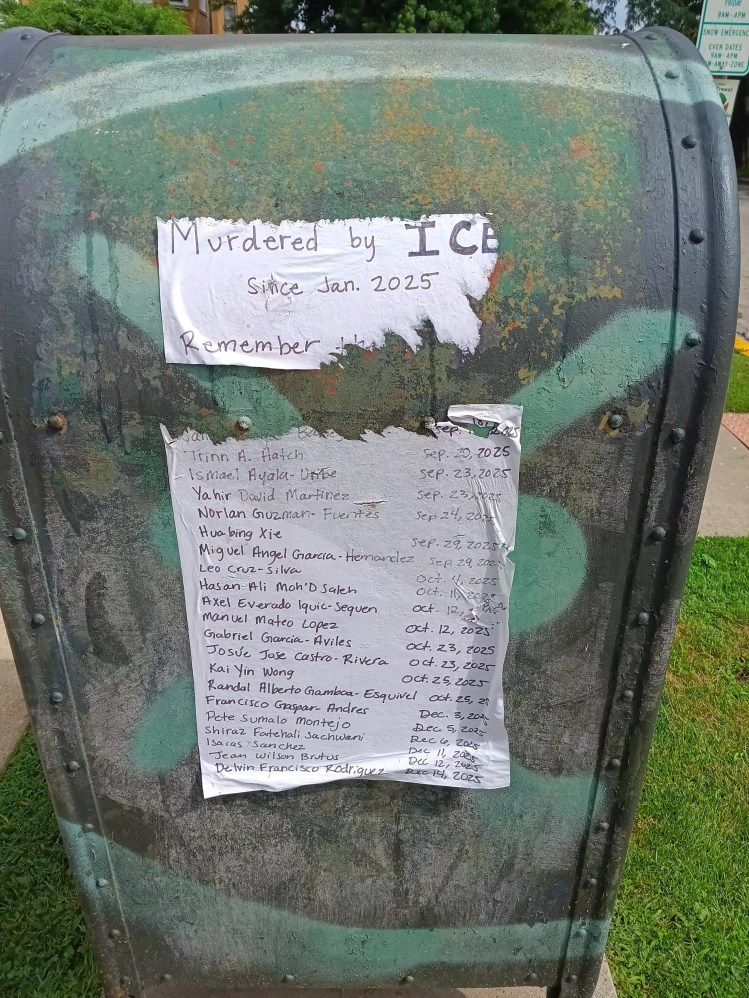
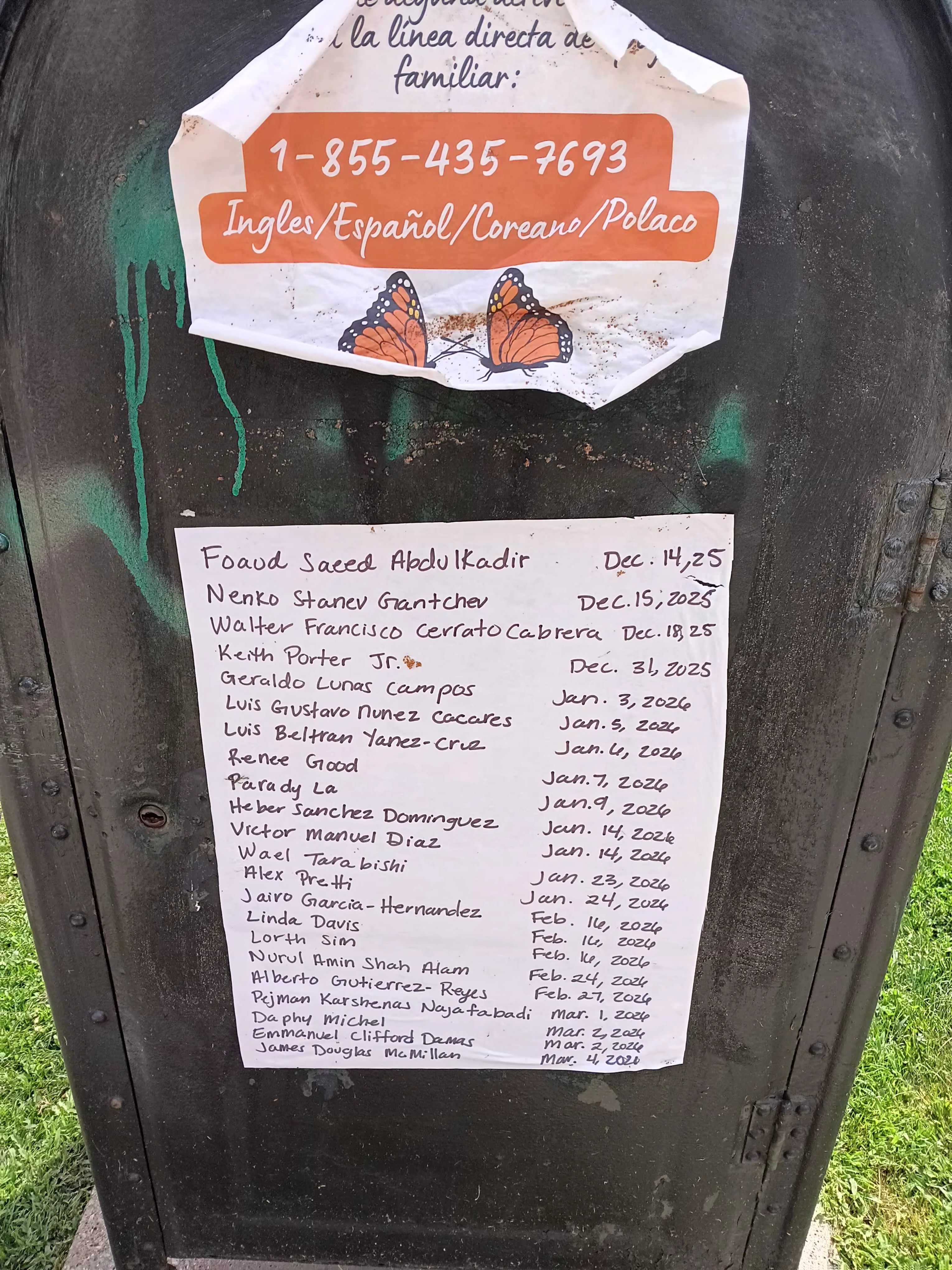
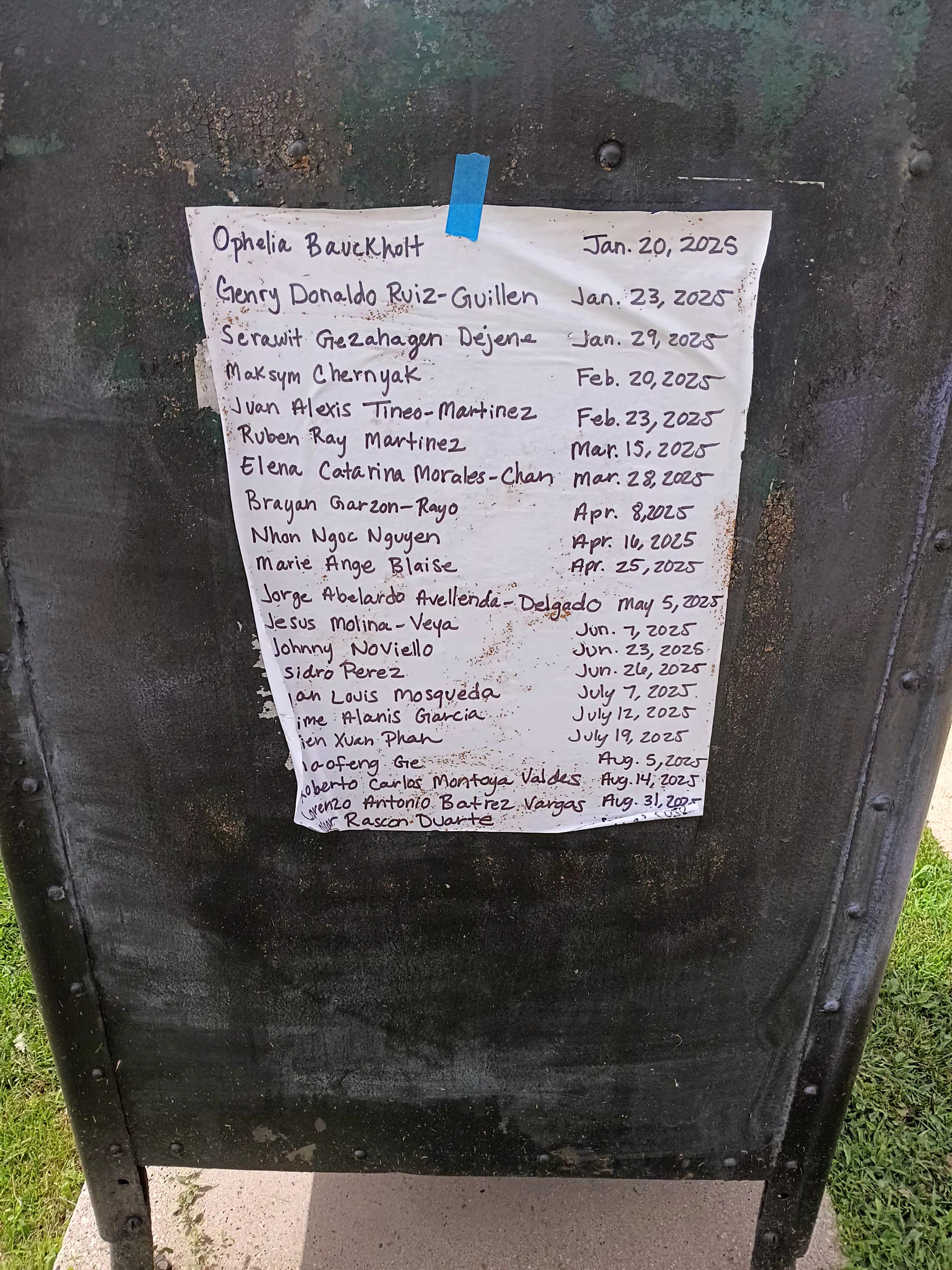
It was just one block away from my apartment, on the corner; but I suddenly felt like I’d traveled thousands of miles, or gone to a different level of something that was on a whole other level.
The utter humbleness of it all was what struck me most. Whoever did this took the time, with, obviously, very limited resources.
It was the early AM of a midsummer morning just outside Chicago at the time when the birds are going insane in the good way, having a party before settling down into the branches above us and hiding out for the rest of the day.
Then, suddenly, they were there, these simple signs that were honoring the dead.
And I saw that at the top of one of the lists of names, the name was Ophelia.
First it made me think of the Taylor Swift video (not just the song), “The Fate of Ophelia.”
Next it made me think of Good Will’s, and Hamlet’s, Ophelia (the lover of both for sure).
Then I noticed that, within the same list, there was (is) someone with the same first name as one of my daughters.
And THAT made me think of invisible connection/s that spread throughout the world (and what is called the universe).
And then I thought of how Ophelia is invisible to me.