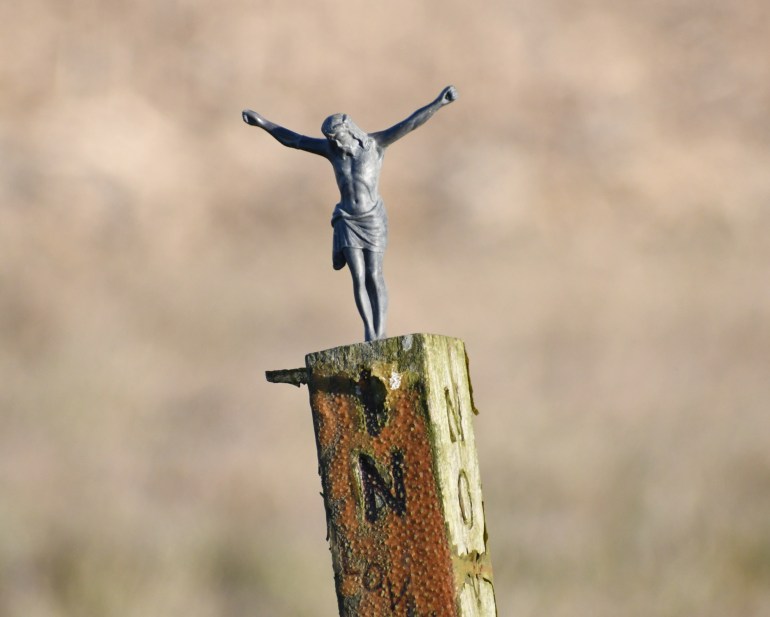
Forest Voices by John Davis

No reason the crescent moon

can’t scrape off pond scum

and see its face put on make-up

for its date with coyote,

wander hillsides before howling begins.

No reason at all.

No reason silence can’t

stand on its toes, sing

love songs to the cove that’s

so deep so alone by the shore

so ready for love.

No reason at all.

No reason that wind can’t

find a lover when daylight

has held its breath all night

waiting in a white dress

for a gentleman caller.

No reason at all.

No reason rain can’t explain

its sobriety to the river

that drinks all night never

leaves the party or stops dancing

but craves touch.

No reason at all.

No reason tree can’t lean

against the cold, stretch its limbs

around the ground that wants

to be held when stars

bend their light like violins.

No reason at all.

John Davis

(Image by DWB)

Blonde Noir by DC Diamondopolous

Kit Covington sat on the sofa in her Pacific Palisades mansion with a cigarette lodged in the side of her mouth. A cloud of smoke floated around her head. She adjusted the oxygen tube in her nose, then brushed ash from her dog Muffin’s champagne-colored curls. The miniature poodle dozing in Kit’s lap startled when the camera crew from The Great Morning Talk Show banged equipment into Kit’s antique furniture.

Continue reading

Sandra Again by Corey Mesler

Sandra never said she

loved me, not even the

night she sat on my lap

and we kissed so long

the room grew warm,

nor the night we lay

together and watched

an old western on TV.

When she died she was

my first death. I turned

out to be someone she

might have loved. This

is what I tell myself any

time her ghost appears,

wearing the daisy chain

Sandra forged in life.

Corey Mesler

(Image of a pretty tree in Silverdale, Washington)

Snow at Twilight by Nick Young

He tried to move as little as possible, shifting only enough to wrench free his right hand which the fall had left partially pinned underneath his backside. The pain in his left leg was excruciating, sending blinding white light pulsing behind his tightly closed eyes. The leg was grotesquely twisted and broken. He knew without looking that the fracture was compound and he could feel he was losing blood.

Opening his eyes and turning his head slowly he saw the sky above, darkening, the angle of the sun slanting very near to the horizon. There was perhaps an hour of light remaining. He wondered if that much life was left to him.

It began to snow, a sifting of fat listless flakes. Through the haze of pain his memory flashed on a snow globe his mother had long prized—tiny Currier and Ives Christmas carolers gathered beneath a street lamp, silent mouths open wide amid the swirling blizzard. He winced and let out a low moan, one that carried as much despair as agony.

The unyielding granite wall of the fissure pressed hard against the left side of his face. It was a cold reminder that in a heartbeat his life had pivoted irrevocably. Such an event was no longer either an abstraction or a fiction’s plot device  It was an errant step on a mountain trail he had traversed before, a small patch of friable rock. His footing lost, down he plunged, thirty feet  until trapped by the narrowing vee of the crack. And as he struggled to raise his right hand—almost surely broken—to brush the falling snowflakes away, he silently cursed his folly.

It was to have been a late-afternoon hike, just above the tree line for twilight pictures of the rising late-October moon, then down and home. He was no back country tenderfoot: he had made the trek before, more than once; but this time he allowed his judgment to be clouded by hubris. He would forego anything he did not deem vital. For such a short trip, this time he would take only a bottle of water, a handful of trail mix and a camera. Nothing more. The cell phone that could have been his salvation he had locked in the glove compartment of his Jeep a mile down the mountainside. There would be no rescue—there could be no rescue. His wife would not grow worried until well after sunset and it would be hours more before a search party found him. By then he would be gone, bled out or frozen.

So now, with each throbbing stab from his shattered leg, he could see before him with great clarity what most men are not privy to—the imminent coda of his life. In the crepuscular light he marked the snow’s quickening descent. He thought of his parents, relieved that neither of them was alive. His mother, especially, would have had her heart broken to know her son had died so young and in such circumstances, mortally injured and alone on a mountainside.

He was her first-born and she had idolized him as the pride of the family—from his glory days as a star athlete and student in high school through law school at Yale, marriage to a beautiful, intelligent woman, two great kids embarking on their own lives in the world, partner in a fine law firm, the respect of his peers. At the age of fifty, he’d had the world knocked.

All thrown away.

As his life ebbed with the light of the day he was brought through the pain to take stock of himself. Yes, there were his many successes, what the righteous among his parents’ church-going friends would term “blessings,” but he knew there was deep within him a singular, poisonous moment that he could neither erase nor atone for, a sin that ate at his core during his darkest hours of self-doubt and loathing. And he knew that he would soon leave this world with the stain still on his soul.

It was a beautiful, mild day in early September, one that brought a respite from the summer’s oppressiveness. He always remembered that clearly—the sunshine, the gentle breeze stirring through the branches of the big willows that flanked the family farmhouse. He was eleven years old, just home from school and ready to ride his bike up the road to the next farm to play baseball with the neighbor boys. His father was in the fields, his mother at the kitchen sink preparing the evening meal when he spotted the dog slowly trotting up the long gravel lane leading to the house. He’d never seen the animal before. It appeared to him to be a border collie, with mangy dark-brown fur, its head hung down and tongue out. As it angled off the driveway and up toward the front of the house, he leaned his bicycle against the wall of the garage and quickly followed.

His mother had also seen the dog and by the time he reached the porch, she was at front door trying to shoo it away.

But it wouldn’t go. It backed up a step or two with each wave and shout, then moved closer again. He could see by the dog’s matted, dusty coat that it was not someone’s indoor pet. His mother had brought with her a broom, opening the door enough to try to push the dog back and send it on its way. But it would not leave, instead sitting back on its skinny haunches and looking at his mother with pleading eyes. It was clear it was hungry—for a bit of food and a small measure of human kindness.

He called out to his mother to give him the broom, and when she handed it to him, he began to swat at the dog in an attempt to force it off the porch. Still, it would not go, bearing up under his swings, by circling around and beginning to whimper. For a reason he never fathomed, his mother found this amusing, chiding him to stop harassing the poor animal while snickering at the same time. This caused to well up within him a delight and he renewed his blows, turning the broom and using the handle to beat the dog. The poor creature’s distress, its pitiful yelps, only fueled his mother’s mirth and his inchoate fury. At length, after landing several hard blows, the dog retreated, ran off the porch and back down the driveway.

He handed the broom to his mother, who made a small show of her displeasure with him, but her insincerity was thinly veiled and he quietly reveled in the satisfaction his act—and her response—had given him.

The dog did not return,and through his youth he gave the episode no thought. But as he grew into manhood, it returned, shadowing his dark days, rising up to haunt his dreams.

Now, as cold and pain gripped him, he saw the creature again—hungry and tired and lonely, asking so little yet receiving only brutishness.

Why had he succumbed so readily to cruelty? Why?

Clouds had drifted over the moon as it edged past the lip of the crevice, casting down a dull ivory glow. The snow was falling heavily. No longer did he bother to brush it from his face but closed his eyes and wept.

Nick Young

(Image by Leila)

Domestickery by Geraint Jonathan

I did not, of course, get round to building the table, any more than I got round to fixing the faucet on the kitchen tap. The wood was ordered, paid for, but remained in a heap in the corner of what Libby laughingly called my “workshop”. The faucet, on the other hand, proved resistant to every effort I made, and there was no lack of effort. But drip on is what the tap did, and continued to do for the duration. A dishrag or sponge sufficed to cushion the sound but this in itself proved remedy enough to acquire the trappings of parable. So Libby saw it. The table, after all, would have been just that, another table, one to replace the table we already had; or an extra table. Not so the tap. The tap was something else entirely. A leaking faucet, no matter how silenced by dishrag or sponge the drip of water, tells a story all its own, a fathomable one, muted, terrifying in its lack of promise. There was every getting away from it; two ways about everything. That Libby laughed on saying a word like “workshop” is testament to her endurance, and much else besides.

Geraint Jonathan

Alice in the Undyrwold by Geraint Jonathan

(Editor’s note: Geraint is one of the truly intelligent and productively enigmatic writers at work today. Further proof of that statement comes your way now–Leila)

According to Alice there are more things in Leavenworth than are dreamt of in your winsome motley of osophies and ologies, not to mention the sundry little isms such ologies and osophies spawn. Saying which, Alice departed, leaving me to deal with what was known in the circles I was going round and round in as “everything”. The everything in this instance comprised all that remained of Alice’s recent descent into the Undyrwold – from which she had emerged not only unscathed but triumphant. Her unfurrowed brow was a wonder to behold. Indeed she radiated the rare calm of one who has seen the very dregs of h.sap up close and lived to half-smile at the memory. She had conversed with some of the world’s worst criminals – let alone worst conversationalists. She had gazed on Dead Persons’ Tree in Slabtown’s Crowbar district and spoken with those whose names were on said Tree. Persons or persons unknown were known to her personally. Indeed the roll-call of miscreants encountered might suggest that a Very Large Rock had been moved, leaving all that lived under it free to crawl out into what passed for light.

Geraint Jonathan

(Image is of Miss Izzy who divides her time being lovely and driving me out of my mind with annoyances; such being definitive of the Feline species–Leila)

Menopausal Male Bombshell by Michael Bloor

Alan had won second prize in a writers’ magazine poetry competition for his ‘Ballad of the Menopausal Male.’ The postman had just delivered the prize, a copy of The Chambers Thesaurus (5th edition).

As Alan hefted the thesaurus in his hand, he recalled that, in what used to be termed The Dark Ages, poets were feted and richly cosseted in the courts of Kings and Great Lords. When Gunnlaug the Worm-Tongue* (‘worm’ as in snake), the great Icelandic skald (= poet) was presented to the English king, Ethelred the Unready, Gunnlaug chanted four lines in praise of the king and was rewarded with a gold-thread-embroided, fur-lined cloak and was invited to spend the entire winter at the royal court.

Continue reading

A One Act Play: Culture Clash by Gary Beck

(The image is of Mr. Beck)

(Editor’s note–Gary is the first playwright to submit to us and his high caliber work is certainly a welcome change of pace. We are open to all arts that can be transferred into this slightly less than perfect yet still appreciated forum. If any errors are made–or, actually, when such occurs, please do not hesitate to let us know. Really it is all about the work, but the little vexations, those irksome thisses and thats will always subjected to correction whenever possible–Leila)

Scene: The outdoor dining area of an East Village, New York City restaurant.

Enter three men in their late 20’s. They sit at a table.

Characters: Greg – White,

Reggie – Black

Edgardo – Hispanic

Jennifer – White

Nina – Hispanic

Greg: I don’t mind losing. I just can’t stand the way they knock me around.

Edgardo: Aw. Stop complaining, Greg. If you tried a little harder, we wouldn’t

get beat so bad.

Reggie: That’s easy for you to say. You were an athlete in college. Greg and I 

are techno-wizards. We shouldn’t even be playing basketball.

Greg: That’s for sure. I don’t know why we let you talk us into this.

Edgardo: You know why.  It gets us out of the IT department twice a week, with

a nice dinner paid for by the company, and a week’s paid

vacation at the end of the tournament.

Greg: Alright. We know that.  But why basketball? You should have 

picked a company sports league where at least we’d have a chance. We

 go home with aches and bruises every time.

Edgardo: Mira. They don’t have badminton or lawn croquet, my feeble friends.

All you gotta do is learn to get out of their way when they have the ball.

When you have the ball, just run past them and shoot as quick as you can.

Reggie: You better tell it to them. That asshole from legal kept hitting me with

his elbow whenever he was near me. Even when the play was over. I 

think I have a cracked rib.

Edgardo: Don’t be such a wuss, Reggie.

Greg: Is he a wuss because he doesn’t like being hurt?

Edgardo: They hurt me too.

Reggie: It doesn’t seem to bother you as much as it does us.

Edgardo: It hurts me. I just don’t make as much of a fuss about it.

Greg: Why can’t we have a video game league?

Reggie: Yeah. We could really kick ass.

Edgardo: That’s exactly why nobody else wants it. They know they wouldn’t

stand a chance.

Reggie: We don’t have a chance in basketball. Is that fair?

Edgardo: We entered for a reason. You seem to be forgetting that. Listen. I’m a

reasonable guy. You know what’s at stake. If you want to stop it’s okay with me. (Reggie and Greg reluctantly shake their heads no.)

Greg: We’ll finish, Edgardo. We’re just tired of all their name-calling. That fat,

hairy slob of a lawyer kept elbowing me and calling me a faggot. I keep

trying to trip him, but he always avoids it, then elbows me hard.

Reggie: He did that to me too, except he called me a black faggot. He doesn’t wear

a shirt and got his sweat all over me. We shouldn’t have to take that shit.

Edgardo: Hey, guys. There are only two games left. Let’s be cool and get through

them. If you don’t want to do it next year, we won’t.

Greg: I don’t know if I can take two more games.

Edgardo: Don’t be a girlie-man, Greg. We don’t have to play against the Neanderthal

lawyer again. The last two games are with accounting and sales. The 

accountants won’t be too physical. You guys can handle them.

Greg: Maybe. But those salesmen are animals. They must smoke crack, or take

something that makes them so aggressive.

Edgardo: Enough for tonight. Let’s relax and change the subject.

Greg: Hey.  Look at those two girls coming this way.

Reggie: They’re great looking chicks.

Edgardo: Don’t get your hopes up. They’re probably N.Y.U. dykes.

Greg: You’re crazy.  They’re beautiful.

Edgardo: That doesn’t mean anything these days. They could be lipstick lezzies.

Greg: What’s that?

Edgardo: That’s when both girls are feminine.

Reggie: What are N.Y.U. dykes?

Edgardo: The school has a reputation because so many lesbians go there lately.

Reggie: How do you know all that?

Edgardo: If you take your head out of your Blackberry once in a while you’d know

what was going on…. I’m going to talk to them. (Enter Jennifer and Nina.)

Hey, girls. What’s happening? (They ignore him and start to walk by. He

leans over and stops them.) What’s the matter? Are you too good to talk to us?

Jennifer: We’re not interested.

Edgardo: We just want to talk. Don’t you like men?

Nina: As a matter of fact, we don’t. Now fuck off.

Edgardo: No need to cop an attitude. I was just being friendly.

Nina: Save it for your asshole buddies.

Edgardo: You got some mouth on you. Didn’t your momma ever teach you any

manners?

Nina: Not as far as pigs are concerned.

Edgardo: There’s no need to be so insulting.

Jennifer: Then next time don’t stop us, asshole.

Edgardo: You’re beginning to piss me off.

Reggie: Take it easy, Edgardo. Let them go.

Nina: That’s right, Edgardo. Listen to your sissy friend.

Reggie: Why are you insulting me? I didn’t say anything to you. I just tried to 

cool things.

Nina: You’re with him, aren’t you? Pigs always hang together.

Greg: (To Nina.) Don’t you think you’re over reacting? We’re not looking for

trouble. We just wanted to talk to a couple of good looking girls.

Jennifer: Well we are a couple, but we don’t like low-life male come-ons.

Reggie: How are we supposed to know? It’s not as if you’re wearing a sign that

says women only.

Jennifer: Then you should keep your mouth where you keep your brains, right 

between your legs.

Edgardo: It’s a waste of time trying to be polite to them. Keep moving, bitches.

Nina: Who the fuck do you think you’re talking to?

Edgardo: A couple of dumb dykes. The same way they talked to us.

Jennifer: Forget it, Nina. It’s not worth hassling with them. Let’s go.

Nina: And just take their shit?

Edgardo: (To Nina) Listen to your wife.

Nina: (To Jennifer) I should kick his ass. (Edgardo laughs)

Reggie: (To Nina.) Your friend is right. Let’s forget it.

Nina: The dominant black man isn’t so tough now.

Greg: He’s trying to apologize before things get out of hand.

Nina: (Pointing to Edgardo.) Let him apologize.

Edgardo: For what? Trying to talk to a girl who turned out to be a guy in drag?

Nina: One more insult and I’ll punch you in the mouth.

Edgardo: Beat it, butch, before you get hurt.

Jennifer: (She tries to lead Nina away.) Come on, Nina. We don’t need this.

Nina: The fuck we don’t. (She throws a punch at Edgardo, who ducks,

then mocks her.)

Edgardo: Is that all you got, little boy? Try again.

Jennifer: (She grabs Nina’s arm, who shrugs her off.) Don’t, Nina. Let’s go. (Nina moves closer to Edgardo and swings again. This time he blocks the punch, spins her around and boots her in the ass.)

Edgardo: Now take off. Next time I won’t be such a gentleman. (Jennifer tries to pull her away, but Nina yanks free and lunges toward Edgardo. She picks up a butter knife from the table and tries to stab him. He moves aside and she hits Reggie, who yells loudly.)

Reggie: Ow! My arm! She stabbed me. Yow. That hurts.

Jennifer: Let’s get out of here! (The girls run off. Reggie is moaning and holding

his arm.)

Edgardo: Should I chase them?

Greg: What for? To make a citizen’s arrest for assault?  Let’s help Reggie.  (Edgardo and Greg inspect the injury.)

Edgardo: It didn’t even break the skin. She was right to call you a sissy.

Reggie: Well it hurts. And I didn’t even do anything. It’s all your fault.

Edgardo: All I did was say hello How was I to know they’d be vicious, fighting

dykes?

Greg: Maybe if you didn’t call them offensive names nothing would have  

happened.

Edgardo: That nasty little bitch started it.

Reggie: And I got hurt…. I don’t think I have to go to the emergency room, but

I’ll probably miss the next game.

Edgardo: Don’t use this as an excuse. You’ll be alright by then.

Reggie: Maybe. But promise me no more confrontations when we go out. This

could have become a nightmare.

Greg: Yeah. What if she really cut Reggie?

Edgardo: I get it. Don’t worry. I’ll be cool.

Reggie: I hope so. We were lucky today. Another time things could spin out of control and someone might get killed. It’s happening all over these days.

Greg: Yeah. People are getting shot for just looking at someone. And it’s not as 

if they’re giving them the evil eye, or something. It’s just sick violence.

Edgardo: Alright. I get the message. That’s enough. Let’s call it a day. (Exit.)

Gary Beck

Christmas To-Do List, Nick Botkin Edition by Yashar Seyedbagheri

(Editor note–We like to welcome Yash to the Springs. He holds the record for most stories published in one year at what I like to think of as , if not sister, but our cousin publication of Literally Stories UK. One read will tell you why he is so successful–Leila)

The to-do list stares at me, letters running across the page, like railroad tracks of responsibility.

Pick up sisters’ favorite wines. Nan likes Sauvignon Blanc. Colette worships Merlot; Nan is not drinking any fucking Merlot (sorry, Paul Giamatti, I know I plagiarized Sideways, but original words are stuck in my throat).

Continue reading

The Rime of the Globalised Mariner. In Six Parts (with bonus tracks from a chorus of Greek shippers) by Michael Bloor

(Today we officially open the site, which has been open for ages, with something quite different and particularly well done by Michael Bloor)

First Published in Sociology, 47(1): 30-50, 2013 doi: 10.1177/00380385112448568

PART I

It is a global Mariner,

And he stoppeth one of three.

‘By thy long grey beard and glittering eye,

Now wherefore stopp’st thou me?

‘The centre’s doors are opened wide,

And Bourdieu got it right:

Consumption lends distinction.

So get you out my sight.’

He holds him with his glittering eye –

No Big Issue1 sale is sought,

But fifty yards from B&Q

The would-be Consumer’s caught.

So spake the doleful mariner,

Transfixing with his e’e,

In fluent, graphic English –

The language of the sea.

‘I had no wish to work on ships –

Filipinos know it’s hard –

Mouths were many, jobs were scarce,

From birth my life was marr’d.

‘From green island homes we travel,

As mariner, nurse, or maid,

And remit3 to our loved ones

The pittance we get paid.

‘Father scraped up money

For training college fees –

A scam of the local senator,

Whose throat I’d gladly seize.

‘The college had no equipment,

Just endless, pointless drill,

No qualifications either –

The news made my father ill.

‘Course passes gained no certificates,

Without some time at sea.

There was no ship to serve on,

But the senator had his fee.

‘Father paid a crewing agent:

Yet another fee required,

But at least I’d get a berth,

And that’s what we desired.

‘The agent sent me to train then

At a dismal-looking place

More fees and little learned,

Sad repetition of my case.

‘A lifeboat stood on davits,

By a creek filled-up with mud.

“For audit purposes only”,

That pristine lifeboat stood.

‘There’s so many schools for training –

Why’d the agent send me there?

The training was quite useless –

Why didn’t that agent care?

‘It seemed he got a “rebate”

(kickback to you and me)

For every trainee sent there,

A percentage of their fee.

‘They issued my certificates,

But their paper had a price:

My father’s hard-earned money,

Stolen once, then twice.

‘Ever since it’s been the same:

When I come home from sea,

The agent wants another course,

And I must pay the fee’.

[Enter Chorus of Greek Shippers]

‘O woe to us, and to our ships,

But what are we to do?

The wages they are paying now,

Won’t draw a young Greek crew.

‘So we take these global mariners,

Who’re really up for it,

But they can’t begin to work a ship:

Their training’s frankly s**t!

‘Someone, somewhere, should sort it out,

We’ve really had enough:

Inspect and close the colleges,

It’s time for getting tough!’

A globalised Mariner meeteth three gallants outside a shopping centre and detaineth one.

The Consumer protesteth against detention outside the shopping mall.

The Consumer is spell-bound by the mariner and constrained to hear his tale.

Proficiency in English is a requirement of a seafaring career.

The Mariner telleth of early hardships and how he and his parents were cheated by the maritime colleges and the crewing agents.

Filipino maritime training institutions are often controlled by persons with powerful political connections.

The academic training often follows a military model and is of poor quality. And it does not qualify cadets for certificates of seafarer competency without additional practical experience – ‘sea time’. Most colleges fail to arrange ‘sea time’ for their cadets.

Many ship operators out-source crew recruitment and employment to specialist crewing agencies with offices in the major labour supply countries. Cadets graduating from maritime colleges must pass a basic safety training course before they can go to sea. The courses are usually conducted at specialist training institutions with requisite equipment such as lifeboats. State regulatory agencies inspect the training institutions to ensure the requisite equipment is present, but not that it is used.

Corrupt crewing agents distort the seafarer training market

Specialist short courses must be taken to allow employment in particular trades, such as tankers. Usually, the seafarer must pay the course fee.

Ship operators moan that international standards of seafarer training are not being properly enforced.

PART II

Consumer groaned to Mariner:

‘So you each believe the same!

But if all think your training’s s**t

Then, truly, who’s to blame?’

‘Our union said, there is a law –

A real law, no invention –

That lays down training standards,

An international convention.

‘Government should enforce it,

End the bribing and the feigning,

Close-down the useless paper-mills

And give us decent training’.

‘Yes, yes’, the Chorus chorused,

‘Our ships need well-trained crew.’

‘So what went wrong?’ Consumer asked,

But the Mariner hardly knew.

‘There are no simple answers,’

Voice grated, knife on rock,

‘The true path’s no open highway,

Good governance no wind-up clock.’

A gaunt figure stepped among them:

He gave each a piercing look.

His boots were worn, his cloak was stained,

And he bore a calf-bound book.

‘Who art thou?’ they cried in wonder,

‘And what thing’s your burden there?’

‘I’m the Inspector,’ spake the stranger,

‘And the Law’s my burden fair.’

The Chorus shrank and muttered,

The Mariner downed his e’e.

‘I’ve heard tell of you,’ he whispered,

‘As have all who sail the sea.

‘You come aboard, unheralded,

You seek out the rusting hulks:

You cow the cruel masters,

Ships’ agents get the sulks.’

Consumer viewed Inspector,

Eyes lit with wild surmise:

‘It’s up to you to punish,

Right wrongs, and nail their lies?’

‘In truth, that is my duty –

The goal for all my kind –

But the journey is a long one,

And the road’s not paved, nor signed.

‘Those who inspect the colleges

In each poor country of the Earth:

They’re government employees

And are not paid their worth.

‘The owner is a man of power,

The inspector – he is not,

The one dines in his castle,

The other in his cot.

‘The inspector has a check-list,

To work through, line by line.

If a lifeboat’s at the college,

Then it gets a tick – that’s fine.

‘We know it can’t be launched:

It’s to be ticked, naught more.

Poor men must heed the letter,

Not the substance, of the law.’

The mariner had silent stood,

Hands clenched and visage pale,

Eyeing the Inspector,

As he ground out his tale.

‘I thank you’, cried the mariner,

‘Now I know the bitter worst:

No remedy in law books –

My mates and I are cursed.’

The Greeks had been quite nervous

While yet the Inspector spoke,

But confidently dealt with

The Mariner and such-like folk:

‘Don’t blame the law, nor malice,

Nor trade that’s getting slack,

Global economic forces

Strapped these burdens to your back.

‘Colleges could train you better –

With lifeboats working too –

But higher costs would close ‘em down,

Then where’d we find a crew?’

The Inspector laughed most harshly,

And turned to face the Greeks:

‘He who looks for truth

Must beware of that he seeks.

‘Good training’s too expensive:

The poor can’t pay the fee.

You state the matter clearly,

And I cannot but agree.

‘Yet I can well remember

When companies paid the fees,

Time-Past – they paid for training,

Invested in their employees.

‘You complain of training standards,

Cackling like geese

You want action to be taken,

But you don’t pay a penny piece.

‘It seems to me, hypocrisy,

When the poor turn-out their pockets,

To criticize their training,

While adding up your profits.’

The Mariner relateth that there are international standards on seafarer training.

But these international standards rely on national enforcement.

An Inspector calls.

The Inspector concurreth with the mere lip-service maritime colleges pay to international training regulations, but believeth that the local inspectors are powerless to obtain fuller compliance.

The ship operators see poor-quality training as an economic consequence of the seafarers’ need for cheap training.

The Inspector recalleth that 40 years ago, it was commonplace for ship operators to pay for seafarer training through cadetships and apprenticeships.

Part III

The Chorus blushed and shuffled,

But still they stood their ground.

They’d got their MBAs,

They knew their case was sound:

‘You’re talking of the past,

Dim, distant days of yore,

We don’t train our seafarers –

We don’t employ ‘em any more!’

Consumer quizzed the Chorus:

‘You don’t employ your crew??’ –

‘Our labour’s all outsourced,

‘The late-modern thing to do.

‘If a shipper paid for training,

He’d have an extra cost,

He’d be under-cut by others –

His business would be lost.

‘Pay for training? Better wages??

Remember shipping’s quite anarchic:

We’d love to be more generous

But you cannot buck the market.’

The Inspector gave a mirthless smile:

‘The market’s always cited

As a sovereign power and reason

Why wrongs cannot be righted.

‘But the remedy is simple here:

The flag-State of every nation

Shall charge a levy on each ship,

Paid at each ship’s registration.

‘The levy would pay all training costs,

A burden shared without distortion.

It would pay for good inspections too –

No need for doubts or caution.’

The Mariner did slowly nod:

‘The scheme would work – I see –

My last ship flew Mongolia’s flag,

For a three-thousand-dollar fee.’

‘Mongolia?’ quizzed our Consumer,

‘That’s surely rather queer?’

‘Not really’, saith the Inspector,

‘Some think a proper flag too dear.

‘Each ship is like a piece

Of far-off, sovereign soil –

Its flag denotes allegiance,

Republican or royal.

‘The flag-State has a duty,

Be the country rich or poor,

To check each ship is ship-shape –

As laid down in the law.

‘But flags can be commodities,

And flags can be for rent,

To businessmen and lawyers,

Who’re out on profit bent.

‘When ships are policed badly,

Their seafarers should beware.

Policing ships for profit

Is a mighty strange affair.

‘Some run their business well,

Some run it as a racket,

With only one objective:

To make themselves a packet.

‘Now, compliance is expensive,

So compliance is a sham

When the flag a shipper flies

Really doesn’t give a damn.

‘A shipper heeds his costs,

A shipper looks to save,

But if he flies a cut-price flag,

Consequences can be grave.

‘Ships that fly a proper flag,

And meet their obligations,

Incur much extra cost

To comply with regulations.

‘They’re under-cut, bankrupted, bust,

When complying as they should.

There’s an iron law all must obey:

Bad ships drive out the good.’

The Chorus sighed and scuffed their feet:

‘What the Inspector says is true,

But the fault is not all ours –

Ship charterers are guilty too.

‘If they wanted well-found ships,

And skilled, contented crews,

They should have thought to ask us,

Or given us some clues.

‘Truth is: they don’t want “good,”

Or freight rates getting steep.

We skimp, they save –

Truth is: they’re wanting “cheap.”

The Inspector sighed in turn,

‘Some charterers do care,

Oil majors first and foremost,

Others – rather rare.

‘Inspectors board all tankers –

For days, they sniff around –

Ensuring chartered ships

Are those that pass as sound

‘Oil majors don’t like bad headlines

When tankers hit the rocks

And oil pollutes the beaches

Because the ships are crocks.

‘The public doesn’t like to see

Seabirds black with oil;

Alas, for all the tanker crews,

The public doesn’t care at all.

‘So the tankers get inspected

With much resource and care,

But the crews of all the rest

Make do with me…and prayer.’

The Chorus confirmeth the Mariner’s tale that crewing agencies, not ship operators, employ seafarers. Agencies then contract with operators to supply crews with the requisite qualifications.

The Inspector proposeth a training levy to be paid when each ship is registered by the flag-State. See Afterword.

Although Mongolia is 850 miles from the sea, the Mongolian People’s Revolutionary Party granted a license in 2003, to a Mr Chong Kov Sen, a Singaporean businessman, to operate the Mongolian Ship Registry. Mr Chong previously operated the Cambodia Registry under license until 2002, when the license was withdrawn following international protests at Cambodia’s failure to police its ships. In 2008, 73 ships were flying the Mongolian flag.

An OECD report states that ‘a significant percentage of total vessel operating costs could be saved by sub-standard operations’ (OECD 1996: 27).

Thomas Gresham, a sixteenth-century Chancellor of the Exchequer, found it was impossible to improve the quality of the English coinage, by simply issuing good quality coins. People hoarded the good coinage. So it was necessary to also withdraw the clipped and debased coins from circulation. Hence Gresham’s Law: ‘Bad money drives out good’.

The Oil Companies International Marine Forum (OCIMF) has set up and funded its own private inspectorate, SIRE, to ensure the seaworthiness of tankers under charter. Those tankers deemed satisfactory on inspection can expect more business and better terms from the oil majors, eager to avoid the bad publicity of marine pollution incidents.

PART IV

The Mariner then spoke up:

‘Christian, Buddhist, Hindu, Turk,

Many pray who sail the seas,

But their prayers concern their work.

‘We do not fear a foundering –

Hull pierced, stove in, or rent.

Such a thing may happen,

But it’s a very rare event.

‘Pirates may seize the ship,

And hold us on foreign soil,

But what we fear most is different:

It’s the endless, grinding toil.

‘Each and every ship we join,

Seems there’s fewer crew,

An officer gone, a rating gone,

But there’s still their jobs to do.

‘The master now must take a watch,

Though there’s paperwork aplenty.

So many crew have disappeared,

The vessel’s almost empty.

‘The master’s nodding on the bridge,

His tired eyes are red.

He’s still to call Head Office,

Before he gets to bed.

‘The mate then takes a watch,

Though it’s two days since he slept –

Problems with the cargo –

But his watch must still be kept.

‘Turnabout, the two must watch,

There is no other way,

Six hours on, six off,

Twelve hours in every day.

‘In sickness and in health,

Each watch they duly take,

Dog-tired, red-eyed, grey-faced,

Four months, four months, without a break.

‘No gentle couch our cabin:

The ship is pitching in the waves,

There’s engine noise, vibration,

Yet we sleep the sleep of babes.

‘Too soon, too soon we’re wakened,

We scarcely catch our breath.

An ignoble thing, this tiredness –

As if we slowly bleed to death.’

Increasingly, ship operators have been seeking to save crewing costs by reducing the number of watch-keeping officers. Where second officers have been dispensed with, then watches must alternate between the master and the first officer (mate), although each of them has many other duties to perform. An OECD (2001a) report instances a saving of $37,000 pa by under-manning a 20-year-old 30,000 dwt bulk carrier by two crew.

PART V

As ever when the Mariner spoke,

The Greeks did swell with pride:

‘There is no law that’s broken there,

There’s nothing for us to hide.’

‘You surely lie,’ Consumer cried,

‘I know little of the sea,

But to have a master standing watch –

That’s folly, plain to me.’

The grim inspector then did speak:

‘In truth, they break no law.

The law itself is here at fault –

Therein we find the flaw.

‘The law on Minimum Manning

Lays down for every ship

The crew that must be carried

On each and every trip.

‘What is the minimum manning?

This is what we’re taught:

It’s the smallest competent crew

To bring a stricken vessel safe to port.

‘To make that stricken vessel safe,

Huge effort they’ll expend,

Yet must they slave thus daily?

Til their contract’s at an end?’

Consumer scratched his head:

‘If some members of the crew

Exceed twelve hours each day,

Surely that’s illegal too?’

‘We falsify our working hours’,

Replied the old seadog,

‘To keep the owners happy,

Each day, we flog the log.’

‘Then change the minimum manning law –

No more idle chatter –

Require crews to be larger,

It seems a simple matter.’

The mariner sighed and shrugged.

The Inspector took-up the tale:

‘Flag-States must vote the change,

Or else the measure fails.

‘Flag-States that exist for profit,

And take the operators’ gold,

They can’t increase the crewing costs –

They’ve reputations to uphold.

‘The flag with the greatest tonnage

Flies o’er the Panama Isthmus,

When Panama votes for change,

Then turkeys’ll vote for Christmas.’

In fact the maximum number of daily hours of work for watch-keepers is specified by the IMO as 14 hours, and the maximum number of weekly hours is 91.

Falsification of working hours is so widespread in the industry that it has entered everyday slang as ‘flogging the log.’

Consumer doth not understand why the flag-States at IMO do not change the international legislation to provide adequate crewing numbers, allowing shorter hours.

Part VI

[All in chorus: …]

‘So come all you kind consumers,

Who the honey’d wine have sipped,

Take pity on the mariner,

Beware how your goods are shipped.

‘The crews are outsourced workers,

A study in dejection –

Casualised, long hours, poor training –

And the law is no protection.

‘If charterers thought the public cared

How seafarers are mistreated,

They’d pass the message down the line:

“Our consumers are quite heated.

“It’s bad for our public image,

Like seabirds and pollution,

So get your act together,

And find a true solution.

“We’ll pay your higher freight rates,

If you’ll deploy more crew.

Or we’ll contract your opposition –

See if they know what to do.”

‘So the shippers get the higher rates,

Increase the crews and cut the hours,

Strike the flag of Panama,

And so, at last, they smell of flowers.

‘One day it really just might happen,

A fairy tale come true,

It’s even very possible,

They’d employ and train the crew!’

It is suggested that public concern for seafarers’ welfare might act in the same way as public concern about marine pollution and be transmitted down the supply chain from charterers to ship operators. Operators who could ‘brand’ their vessels as well crewed could then command premium freight rates.

For an ‘Afterword’ describing in detail the political economy of the global shipping industry, issues of seafarer training, industry regulation and enforcement, please refer to the original publication in the journal ‘Sociology’.

Michael Boor (he of the image)