Miami sunshine put Big Al’s garb to shame. It blazed yellow, much like Al, but, unlike Al, it was the source of life on the planet. Al was human, as he himself would have been the first to admit. “There’s many things I am,” he said, “but a seething ball of molten fucking gasses ain’t one of them!” Miami’s finest laughed. Al was known for the size of his heart, and often spoke about it. It sometimes made for confused but lively exchanges with those more fortunate than himself. In ‘matters of the heart’ there was, after all, Al’s deep love of opera and there was also that which lay in the middle of the chest cavity between two lungs. Monogrammed silk might be said to cover both in Al’s case. As was his wont, Al made much of the confusion, hoping thereby to lighten matters that might otherwise furrow the brows of the young. If nothing else, the yellow of Al’s Miami experience would be a crucial factor in forming much of what he later came to call his “disposition”. For whatever his foibles, this much is certain: Al sought to shine on all, whether they wanted shining on or not. He would be the man dressed as the sun: a vision in yellow serge, with matching hat, silk tie and shirt, just the kind of solar presence a windy city on earth might require. That was Al all over. It was the opera in him.
Guest Writer
Symmetry by David Henson
His fractured kaleidoscope
of a childhood obsessed him
with symmetry. He’s transfixed
with how it glistens
in snowflakes, sparkles
in diamonds, graces
the wings of butterflies
he pins to savor
up close. He forces
snips for his girlfriend’s
lazy eye, insists his wife
arrange the furniture
just so, and requires symmetry
during sex. He balances
his desire with an equal
measure of deceit.
When he overhears
his wife’s phone whisperings,
she laughs
How do you like your fucking symmetry now?
For the first time he knows how it tastes.
(end)
Finis Gloriae Mundi by Tony Dawson
Juan de Valdés Leal has shrouded
his canvas in deepest darkness.
Two open coffins lie side by side:
a bishop and a knight of Calatrava,
each a worldly exemplar of vanitas,
two souls awaiting the Last Judgement.
The prelate is in an advanced stage
of putrefaction, the flesh of his skull
consumed by worms and beetles,
his crozier clutched by scrawny fingers.
An angel’s hand suspends the scales
of the Last Judgement above them both.
One plate, sustaining a dog and horned goat,
each animal representing mortal sins,
is ominously labelled NIMAS (NOMORE).
The other plate, NIMENOS (NOLESS),
with the Sacred Heart of Jesus, IHS
and the Bible, contains the virtues
that must outweigh the sins of men
if they are to receive eternal rest.
Many other corpses are hinted at,
sprawled in the background gloom.
A messenger to the underworld,
an owl, surveys this scene of doom.
Tony Dawson

Castles in the Air by Bill Tope
(Today we welcome back Bill Tope,–who appeared earlier in a collaboration with Doug Hawley–for his first solo appearance on the Springs. The image is by our friend CJA)
Tommy’s voice was low-pitched and urgent as he murmured beseechingly to his wife. She didn’t respond. He gazed at her, strewn across their bed, her auburn tresses spilling over the pillow. She looked beautiful to him, despite the way she’d let herself go since the baby died. Tommy remembered that it had been only weeks, but the heartbreak seemed to stretch back as far as he could recall, years almost, owing to Rachel’s mental history.
The child they had waited for five years for had been stillborn and it still took his breath away to remember. Rachel had taken it especially hard. She felt as though she had let him down. He was forever telling her she hadn’t failed him. That sometimes, things just happened. She worried that it was because she had smoked occasionally during her pregnancy and had maybe one or two glasses of wine, late in her term. He told her she was mistaken.
“Baby,” he said, “you need to get up and take a shower. Brush your teeth and wash your hair.” It had been so long since she first became immersed in her grief.
“I can’t,” she said simply.
Tommy nodded. He understood that he would just have to be patient. What was it the priest had said? Time heals all wounds or some nonsense like that. But maybe it was true.
“Can I get you some fresh clothes, Rach?” he asked.
She sniffed her bed clothes and nodded. “I’m sorry I let myself go, Tommy,” she said in a small voice.
“It’s alright,” he told her. “You heal. Take whatever time you need I’ll be here for you.” Tommy slipped from the room and closed the door behind him. Thank goodness people had stopped dropping by to offer condolences. They meant well, he knew, but each time they tore the wound wider. It would just take time, he told himself again.
All their lives was wrapped up in just the two of them. Diagnosed years before with avoidant personality disorder, Rachel was inordinately shy, withdrawn and non-assertive. She had drifted from one unchallenging job to the next since her marriage to Tommy, four years before, at age 21.
“I quit my job today, Tommy,” she said one day.
“But why, Babe?” he’d asked. “You loved that job.”
Rachel had been employed at a nursery, caring for and selling plants. She adored all living things.
“Mrs. Dickinson,” she said, “told me I wasn’t doing a good job.”
When Tommy called her boss, she told Tommy that she had merely made suggestions to Rachel, regarding how she could make more sales.
“Rachel got very upset, Mr. Johnson,” said Dickinson. “It wasn’t even criticism, and she went all to pieces.”
Tommy explained about his wife’s diagnosed personality disorder and intense shyness and her boss seemed sympathetic. “Tell her to come back,” she said. “I’ll hire her again. She’s very good with the plants, but she gets her feelings hurt easily.”
But Rachel wouldn’t return to Plants R Us, saying she felt inadequate.
The first year of their marriage, at Tommy insistence, Rachel had seen a therapist, but the results were a mixed bag. Dr. Fuller explained Rachel’s condition to Tommy, who attended the last session with her. The doctor said that based on his private talks with Rachel, he concluded that emotional abuse during her formative years and sexual trauma at 17 had led to her condition.
“She never told me about emotional abuse,” Tommy had said. “But, she almost never talks about her family.” She had told him about her rape as a teen. Intimacy between them had been touch and go.
Because of her associated depression, the therapist had prescribed some antidepressants, but they seemed to have little effect.
One day Rachel approached Tommy and placed her arms around his neck. She didn’t often show overt affection, thought Tommy.
“Tommy, I want a baby,” she’d said.
This was wonderful news, thought Tommy. “Are you sure, Rach?” He had begun to despair of ever starting a family.
“Of course,” she said, leaning in for a kiss. “It would make my life complete.”
Rachel’s therapist had retired, so Tommy consulted Rachel’s personal physician and asked what he thought.
“Could be the best thing for her,” declared the elderly doctor. “Might straighten her out.”
The pregnancy had gone well. Rachel seemed to have found a purpose for her existence. She stopped smoking for the most part, and drinking and getting high. She was attentive to her diet and got plenty of rest.
Then she lost the baby. In her seventh month, things went all wrong. Rachel felt sharp pains in her abdomen and began bleeding. Tommy called an ambulance and rode in the back of the vehicle on the way to the hospital.
“I’m with you, Babe,” he told her. “You’ll be alright.” But she wasn’t.
When Tommy asked her OB-GYN what had gone wrong, she said, “Mr. Johnson, there was no way to foresee what happened to Rachel. Sometimes there is no reason. Shit happens,” she said bluntly.
“I can’t wait till the baby’s born,” said Rachel dreamily from their bed several days later. She ran her hands over her belly.
Tommy stared at his wife. He had been warned by the doctor that he contacted over the web that Rachel’s reaction to her grief might be fantasy-prone personality or FPP, which she likened to maladaptive dreaming disorder, which she’d had as a teen, but with a difference.
“Your wife may not recognize what reality is and be able to tell it apart from the fantasy world that she creates. You really should seek professional help for your wife, Mr. Johnson, outside online resources.” Tommy agreed that he would.
But when Tommy brought the subject up with Rachel, she was resistent. “I’m getting better,” she claimed. “I’ll tell you what,” she said, “I’ll get out of bed and take a shower and wash my hair and get dressed in clean clothes and you’ll see, I’ll be all better.”
Reluctantly, he agreed. And for a short while, Rachel was vastly improved, if not quite her old self. She fluttered around the house, busying herself dusting and mopping and so on. Tommy had to tell her to rest up, which she did.
Next day, she was again languishing in the bedroom, listless. She practically stopped eating. Tommy began to worry when she started losing weight. He entered the bedroom bearing a tray on which he brought her a toasted cheese sandwich and a bowl of tomato soup, long her favorite. She promised she’d eat it, but when he returned an hour later, the meal sat untouched.
Tommy glanced at his cell phone and noted the date: Oct. 30. Today was the three-month anniversary of the loss of their child. He sighed. In all that time, almost nothing had changed. He had managed to get Rachel to bathe every few days, but otherwise she seemed little improved. She stayed in bed all day.
Tommy was replacing the vacuum sweeper in the hall closet when he heard a thump from behind the bedroom door. What had happened? he wondered wildly. Had Rachel fallen? He slammed the closet door and rushed to the bedroom, threw the door open.
“Rach?” he cried. She was nude and lying upon the floor, between the bed and the door. She had fallen out of bed. He knelt and lifted her back onto the mattress. She seemed weightless. What he saw horrified him: she was stick-thin. She had lost so much weight. She lay limply where he laid her on the surface of the bed. Tommy cradled her shoulders and held her close.
“God, Rachel, I’m so sorry. I didn’t know it had gone this far.” She murmured into his shoulder and he jumped. “I’ll get help, Baby,” he promised, and gingerly laid her flat upon the mattress. Taking out his cell, he called 911 and got the operator, told her his name, address, what he could about his wife’s condition. The operator promised the EMTs would come straight out.
15 minutes later a loud knock sounded on the front door and Tommy rushed into the living room, swept open the door.
“Thank you, thank you,” he stammered, and led the first responders to the bedroom, answering their questions on the way.
“Wait here, Mr. Johnson,” said one of the men. “We’ll take it from here. Tommy waited outside the door. After a few seconds, the man who appeared to be in charge reemerged and asked Tommy, “where is she?”
Tommy’s eyes widened and he rushed into the bedroom and found the room empty.
“Could she have moved from this room?” asked the man.
Tommy collapsed on the neatly-made bed and stared vacantly around the room. The EMT was on his radio. After a moment’s conversation, he turned to the other emergenccy worker and explained, “Rachel Johnson died during childbirth three months ago.” He turned to Tommy. “That’s right, isn’t it, Mr.Johnson?”
Finally Tommy found his voice. “Yes, I guess it is.”
Meanwhile, the other first responder had fetched a collapsible gurney.
“Lie down, Mr. Johnson,” suggested the man. “We’ll take you to the hospital, get you some help.”
“Okay,” said Tommy, as he stretched out on the gurney, felt himself being strapped in. As the EMTs wheeled the gurney through the front door, Tommy felt the cool breeze of Autumn on his skin. “I need to leave a note for my wife,” he told the men.
“We’ll do it, Mr. Johnson,” said one of them.
“Okay,” said Tommy. “Thanks.”

Happening (A Minologue) by Geraint Jonathan
If I hear you say ‘what happens, happens’ just one more time, I’ll be responsible for my actions and it won’t be pretty. What happens happens, what the fuck am I supposed to do with that? What doesn’t happen doesn’t happen, what do you say to that? No don’t, please, don’t answer that, I’m sure there’s a perfectly unreasonable explanation. Things happen, don’t happen, might happen, have happened, will happen, may never happen: I get it. We all just happen along, as you say. But at this precise moment, I happen to be what’s known in the trade as mightily pissed off. Unnervingly so, if I say it myself. That what happens just happens to happen because it happens to happen is no good to me. As to what’s actually happened, it could’ve done with not happening, trust me, its having happened at all being the very thing that shouldn’t have happened. And even though it has happened, I can’t, like you, shrug it off saying ‘these things happen.’ That these things of course do happen is of no consolation at all. They’re not supposed to happen, that’s the whole point. But it’s happened and I’m the one it’s happened to. There’s no getting away from it. Or perhaps there is. Maybe you happen to know what no one else happens to know. Any chance of that? Happening, I mean.
(Image by CJA)
The Girl Who Tilted the Earth by David Henson
A waitress finds her
wailing and convulsing
‘midst porcelain and tile.
A fighter, she held on
‘til methadone prevailed.
Her history scares
couples wanting to adopt.
She grows up wandering
in a forest of fosters.
When she’s thirteen,
a man sneaks into her room,
puts his hand over her mouth.
She takes to the streets,
her body her coin.
Robbed of innocence
too soon, the child
leaves her own behind
at a storefront.
Tempting fate once
too often,
she imagines floating
high above rooftops
and rickety fire escapes.
She crashes so hard,
the earth’s axis tilts,
imperceptible but real.
Like her life.
(end)
(Image provided by DWB)
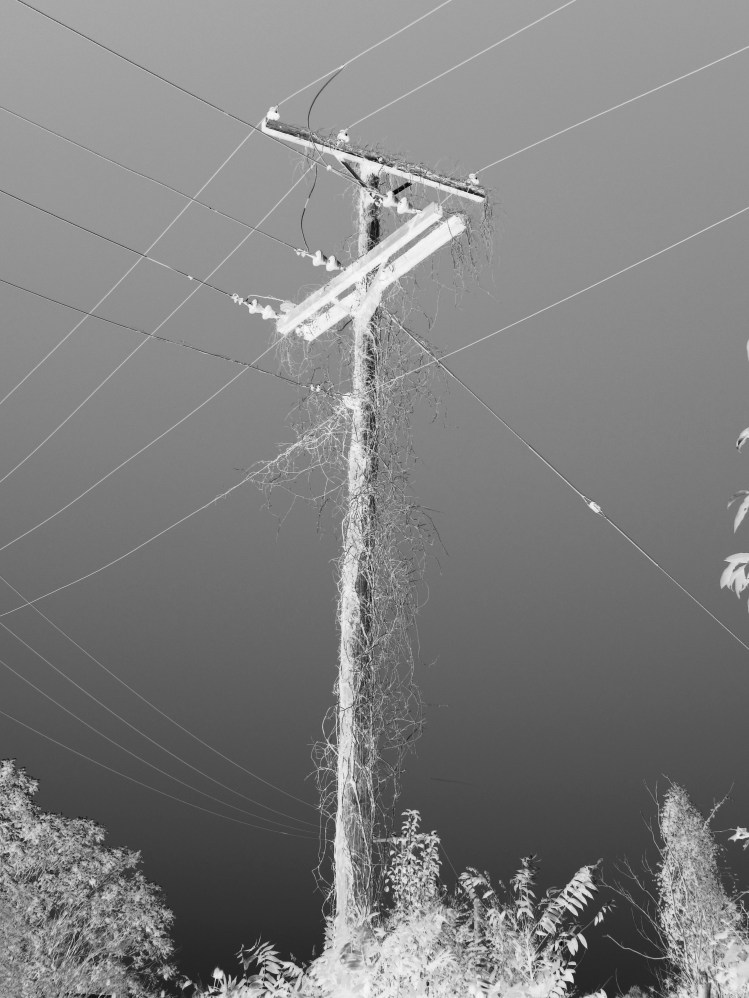
The Picture on the Phone Pole by Christopher J Ananias
The streets of Marion were one way, even the alleys. If I went past the address, it would be a hassle. My GPS led me with its robotic commands like I was its mindless servant. That’s about the way I felt driving the Medicaid Taxi van, old No. 4, that smelled like a dirty laundry hamper. The so-called clients, “The Riders,” gave me a hard time if I showed up late for their free ride.
“They’re a bunch of deadbeats, Cal.” I said on our daily bullshit call.
Cal, who was always ranting about them, suddenly said, like a big company man, “Hey, don’t talk about our riders like that.” He was a fanatical Trumper too, hounding me to vote for the orange man. I almost did, thinking Trump was for Christian values, what a crock. Now I’m wondering about Biden and his senility.
Continue reading
Why Are We On This Little Rock by Jordan Eve Morral
My thoughts aren’t original or groundbreaking. I know that. But maybe I’m here to remind you to think more deeply about the mundane stuff. Or that which we consider to be mundane. Like sleep. Isn’t it crazy that, for eight hours a day, everyday, humans enter into a state that (basically) makes them dead to the world? Eight ritual hours of nonexistence. Or television consumption. Eyes glued to a screen, watching other people live their lives but doing nothing themselves. And the various needs of the body that a person must obey, or else. If they don’t, the result could be death. No exaggeration. Hunger and dehydration–and a million other things–are real, people. Or the mere fact that humans live in houses and drive cars and hold fancy jobs and arrange the arugula and chicken on their sandwich to look pretty. Is there no such thing as a feral person anymore? Why has everything become so structured? That can’t be human nature, can it? And now most of a person’s life is stored on the internet for the world and all eternity to see. It must seem hypocritical of me, typing this from the comfort of my heated home, but I can’t change how things are, how the world functions in this day and age. The biggest difference my lonely, little self can make is challenging the masses’ way of thinking. Probably nothing noticeable will take place, but maybe, just maybe, people will begin valuing themselves for different reasons. They won’t see their worth in the lofty education they have received or all the connections they have made. They’ll find their meaning in the fact that they exist in a wide world with a consciousness so vast, a person’s whole life could be spent watching a river flow and thinking of all the beauty that has come before. It seems so surreal to think of all that has happened and will happen on this one tiny rock floating through space. We are so tiny, the universe so vast. The most we should expect of ourselves is equal appreciation of divine and earthly pleasures. We aren’t made to follow rules or conform to norms that should exist in the first place. We are made to simply be.
Jane Day (A Minologue) by Geraint Jonathan
Asked whether since last Friday she had heard voices she said yes a myriad. Asked whether when she heard said voices she was able to converse with them she replied yes always. Asked if the voices had faces she answered yes sometimes. Asked if said faces had forms discernible to her bodily eyes she replied yes sometimes. Asked what appearance they had she said words failed her or she failed them. Asked if she’d care to elaborate she said no not really. Asked if she knew what day it was she replied Wednesday. Asked whether she believed she suffered from a mental disorder she replied no she quite enjoyed it. Asked if she thought such levity appropriate in a matter so grave she declined to answer and merely smiled in a manner best described as ‘enigmatic’. Asked if she always did as her voices commanded she said her voices did not command. Asked whether when they spoke to her she grew frightened she said no never. Asked whether she understood the reason for her being here she again declined to answer but this time did not smile neither enigmatically nor in any way discernible to bodily eyes.
Continue reading
Mime by David Henson
The mime motions for a volunteer.
A young man emerges from the crowd.
The mime tips an imaginary hat.
The young man likewise.
Chuckles mingle among the onlookers.
The mime holds his pretend hat
to his head, leans
against an imaginary wind.
The young man does his best.
The mime nods.
The mime presses his hands
against the walls
of an invisible box,
crouches and pushes
his chin to his chest.
The box is shrinking.
When it appears the mime
is about to be squashed,
he strains his hands above him
and, arms trembling,
struggles to his feet.
The young man tries
to imitate the maneuver,
but the invisible box
continues contracting.
The young man’s mouth opens
in a silent scream until
he disappears.
Someone holds up a phone,
shouts Viral video!
The mime sweeps a bow,
motions for another volunteer.
Twenty hands shoot up.
(end)

