“Such if there be, who loves so long, so well; / Let him our
sad, our tender story tell; / The well-sung woes will soothe
my pensive ghost.” – Alexander Pope, Eloisa to Abelard
Continue reading
“Such if there be, who loves so long, so well; / Let him our
sad, our tender story tell; / The well-sung woes will soothe
my pensive ghost.” – Alexander Pope, Eloisa to Abelard
Continue reading
Plan A
i
I used to be of the night
Never ate, drunk at dawn
Gods be damned, laughter so bright
Not knowing only slaves write songs
ii
Ahab’s lovely light landed on me
On summer staircases, tenement eaves
Below winter stars in wrong skies crossing
Greedy time knew nothing of me
iii
The devil clock chimed one morn’ at three
The deathnight spoke the mind of the Boar
‘Stupid girl, the master marked the cards before you were born,
Innocence is over, come now, find an oar.’
iv
No more nights of putting the wrong key in the lock
Nor philosophies over blasphemy and cigarettes
Nor scorning those who have children as a form or revenge
A strange method of payback for having been born
v
Then comes nothing, and nothing echoing more
‘T is nothing that makes only more
Of its stern self perpetual, redundant, sane
The ugly thing that happens when time remembers your name
Plan B
Re-read Plan A over a good snort of Methadone
Then snarl snarl at the dying of the light
Give your deepest weakness the finger and rise like Lazarus
People were made because the beasts won’t laugh at us

Asked whether since last Friday she had heard voices she said yes a myriad. Asked whether when she heard said voices she was able to converse with them she replied yes always. Asked if the voices had faces she answered yes sometimes. Asked if said faces had forms discernible to her bodily eyes she replied yes sometimes. Asked what appearance they had she said words failed her or she failed them. Asked if she’d care to elaborate she said no not really. Asked if she knew what day it was she replied Wednesday. Asked whether she believed she suffered from a mental disorder she replied no she quite enjoyed it. Asked if she thought such levity appropriate in a matter so grave she declined to answer and merely smiled in a manner best described as ‘enigmatic’. Asked if she always did as her voices commanded she said her voices did not command. Asked whether when they spoke to her she grew frightened she said no never. Asked whether she understood the reason for her being here she again declined to answer but this time did not smile neither enigmatically nor in any way discernible to bodily eyes.
Continue reading
The mime motions for a volunteer.
A young man emerges from the crowd.
The mime tips an imaginary hat.
The young man likewise.
Chuckles mingle among the onlookers.
The mime holds his pretend hat
to his head, leans
against an imaginary wind.
The young man does his best.
The mime nods.
The mime presses his hands
against the walls
of an invisible box,
crouches and pushes
his chin to his chest.
The box is shrinking.
When it appears the mime
is about to be squashed,
he strains his hands above him
and, arms trembling,
struggles to his feet.
The young man tries
to imitate the maneuver,
but the invisible box
continues contracting.
The young man’s mouth opens
in a silent scream until
he disappears.
Someone holds up a phone,
shouts Viral video!
The mime sweeps a bow,
motions for another volunteer.
Twenty hands shoot up.
(end)
For a long time, I’ve been telling myself that “everyone is living life for the first time.”
To me, the thought justifies my uncertainty, deepens my understanding of others, and reminds me that I should not fear the future or the decisions I must make for myself, by myself.
Remembering that the majority of the world’s population is well under 50 years of age–and still living for the first time despite their accumulated experiences–awakens my own confidence and feelings of abundance. It helps me recognize the potential that is left unused by nearly every person that has ever lived. It is a recollection that shows me that I should have no fear of judgement or fear of pursuing something that is not seen as acceptable or a societal norm. Like, literally, no one knows what they’re doing. They may pretend to have their life under control, or they may think they know the key to existence, but really, they’re just going through life in a way that has been dictated to them since childhood. But, they, like you and me, can unlearn their childhood conditioning and pursue LITERALLY ANYTHING because no one has the right to tell them not to. It’s their first and only life, and they must live it the way they want.
And the same goes for you. So, please, for the sake of everything fleeting and beautiful, read this blog post, and then do something wonderfully unconventional for yourself.
Even if people had a valid reason for judging your actions, choices, behaviors–which they never will, by the way–they can never truly judge you in relation to your experiences, upbringing, current situation, etc., so you must not let their opinions bother you. A lot easier said than done, I know, trust me. But there is also the fact that they are likely dissatisfied with their own lives and will die never having pursued anything that truly brought them feelings of joy or freedom. So really, you can’t feel bad for yourself and any negative things being said about you. You can only feel bad for the unhappy human who comforts themself by speaking poorly of another person.
Okay, another scenario. Maybe no one is even noticing what you are doing in your little corner of the world. While this is probable, you likely feel self-conscious and begin to convince yourself that your every move is being watched anyways. Completely untrue; people have their own things going on and do not spend their every moment analyzing you. However, if this were the case, why should that bother you? All it means is that you are brave enough to do something different than the masses. They watch you because they are intrigued and maybe even jealous of your open individuality.
If you are doing something that has never been done before–or something that comes with a negative stigma–it is helpful to think of yourself as a pioneer in whatever domain you are pursuing. There have been pioneers in every major religion, for example, and now those religions have millions of followers. But to get that point of popularity, there had to be some people who were mocked, outcasted, and even martyred before the others could see, accept, and then openly welcome these new ideas. Fortunately for us, most of society has advanced in such a way that we won’t be sacrificing our lives when we chase unconventionality.
In case you haven’t noticed, every single person around you is pretending they know what they are doing. They try to make it seem like they have figured out how to fulfill their life’s purpose and that they have no doubts whatsoever about the process of getting there. But, really, they have not the faintest clue what’s going on… And that’s okay.
Everyone has uncertainties, even on a day-to-day basis. Should I quit my job? Am I with the right person? Is this how I want to spend the rest of my youth? The rest of my life? You get the gist. The future spans in so many directions, but the average person plays it safe and follows in the footsteps of their parents. If not that, they watch their peers and get in line. No choices are their own. It’s sad, really, that no one knows how to think for themselves any more. These days,“free-thinkers” refers to a minority, and that just isn’t right.
And, when we do have inspirations and epiphanies and messages from the divine, it’s embarrassing how few of us act on them. We waste so much time doubting ourselves and not taking advantage of our health and capabilities that we end up doing nothing at all. In instances like these, we need to remember that there is no right way of doing anything. We must tell ourselves to get up, stop rotting, and take action. Explore our passions, show our unconventionalities, and make progress towards something substantial that is not rooted in tradition.
There are too many ways to answer this question, but, ultimately, the average human is a coward. And I don’t mean this as an insult. Simply put, we all have a fight-or-flight instinct. And, naturally, most of us choose to flee from the unfamiliar. In moments of stress, fighting seems to be the less safe option and no risk ever worth it.
So, if all we ever do is run back to our comfort zones, of course little progress is made in the way of discovering new territories. We revert back to the ways of our ancestors. Or more commonly, the approval of our family and friends. Yes, the people closest to us may be the ones keeping us stagnant. It’s nothing they do or say, exactly. Rather, it is what we are afraid of them doing or saying if we choose to pursue something outside of the realm of ordinary and acceptable. However, once we recognize this truth, it becomes easier to fight this mindset and break free of the voices holding us back. You are not here to be understood but to understand yourself.
So, this is the part where you have all these grand ideas in your head. You visualize yourself emerging from the safety of an underground bunker and into the light of every glorious thing you have ever wanted. Good for you. Now, you must chase these things, show yourself as a new person, and break free of every convention you have ever believed or hid behind. It will be hard, at first, but once you truly understand that there is not a single human who is better than you and there is not a single person in your life who has the right to judge you, you will be free.
We have endless possibilities to break the rules, challenge stigma, and enter into our highest states of being. But, with this, we must never forget where we’ve come from. While there is no one who will ever be better than, you will also never be better than them. They may be further behind you in figuring out they have the freedom to decide their own lives without outside influences, but they are human too. Ground yourself in cloud watching and tree talking. All of us are made up of the same soil we stand on. For that very reason, we must develop understanding for others but also live our brief lives on our own terms.
Juan de Valdés Leal was a Catholic,
a devout believer in the four
last things: Death, Judgement,
Heaven and Hell, as illustrated
by his paintings, the postrimerías.
Acutely aware of the brevity of life,
and that Man’s faith and works
would be weighed in the balance
to determine whether he entered
Heaven or was condemned to Hell,
he also adhered to the idea that
Ars longa compensated for Vita Brevis,
so, his canvas entitled In ictu oculi
shows a skeletal, hollow-eyed Death
standing on the right gazing at us.
The fingers of its right hand
are touching the adage In ictu oculi
to snuff out the flame of life.
A coffin is tucked under its left arm,
while its left hand clutches a scythe
that has raked over the baubles
of earthly glory: a tiara, a crown,
books of science, rich vestments,
the accoutrements of high office.
Death’s sinister foot presses on a globe:
mortality is the great leveller.
Life is over in the blink of an eye,
but the art of Valdés Leal lives on.
On June 17th 1896, a bizarre encounter occurred in Franz Josef Land, in the Arctic wastes. Fridtjof Nansen (1861-1930), the Norwegian scientist and arctic explorer, met Major Frederick Jackson (1860-1938), the leader of a British arctic expedition. Their meeting was an incredible piece of luck: Nansen and his companion, Johansen, had left their ship, the Fram, more than a year previously to try and reach the pole, and were presumed – by Major Jackson and the general public – to have died. They had, in fact, survived an arctic winter on walrus blubber and polar bear meat, but would surely have perished eventually had it not been for that chance meeting. Nansen later wrote that both gentlemen raised their hats and said ‘How do you do?’ Nansen and Jackson each went on to lead extraordinary lives.
Continue reading
(All images by The Drifter)

“Hey! Mr. Tambourine Man, play a song for me / I’m not sleepy and there is
no place I’m going to.” – Bobby D.
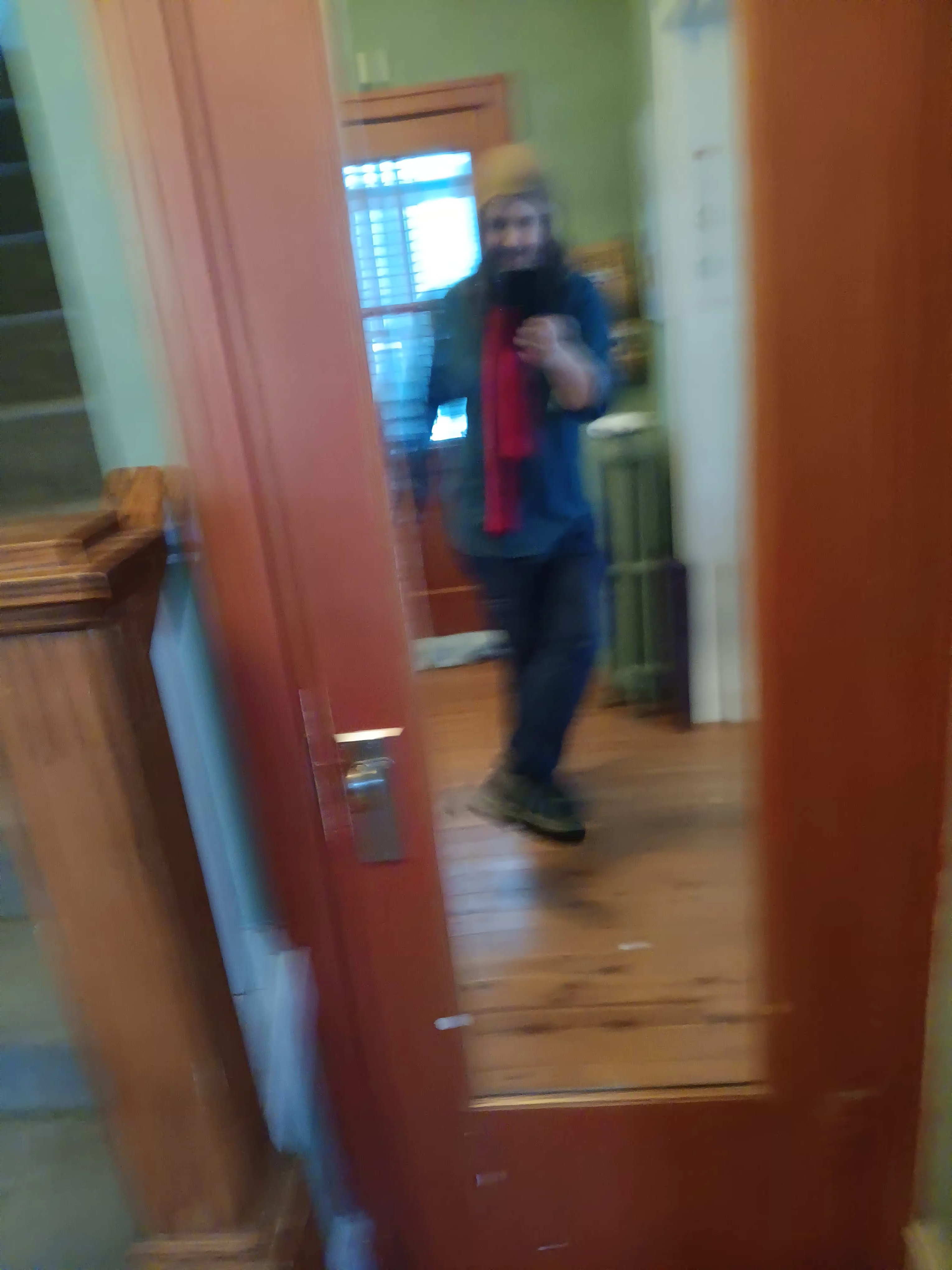
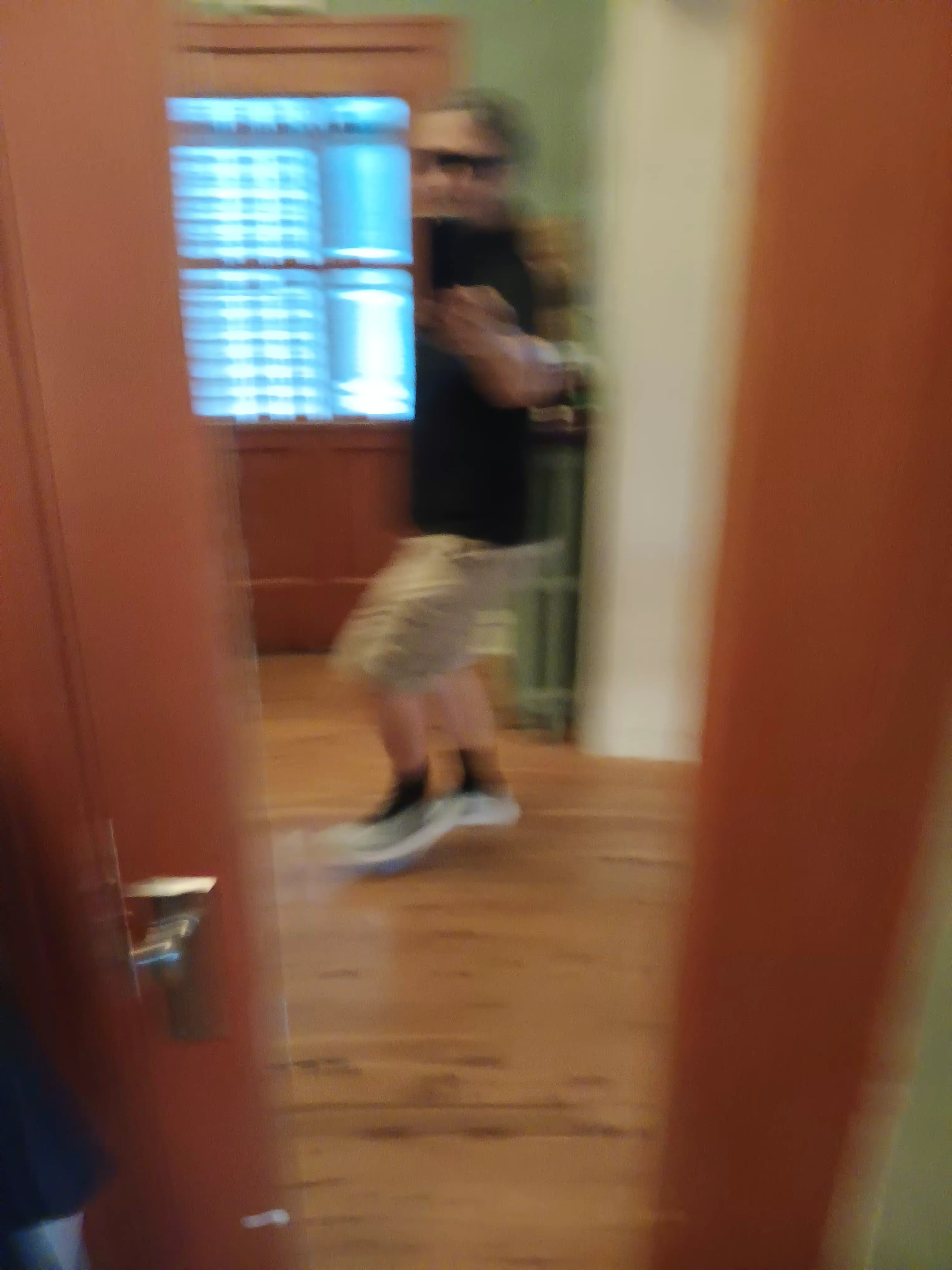
Since the enigmatic being who sometimes calls himself “The Drifter” shall turn 59 years of age in two days from today, and has already had a stroke (FULLY recovered at every level), he wishes to prove that he can still levitate.
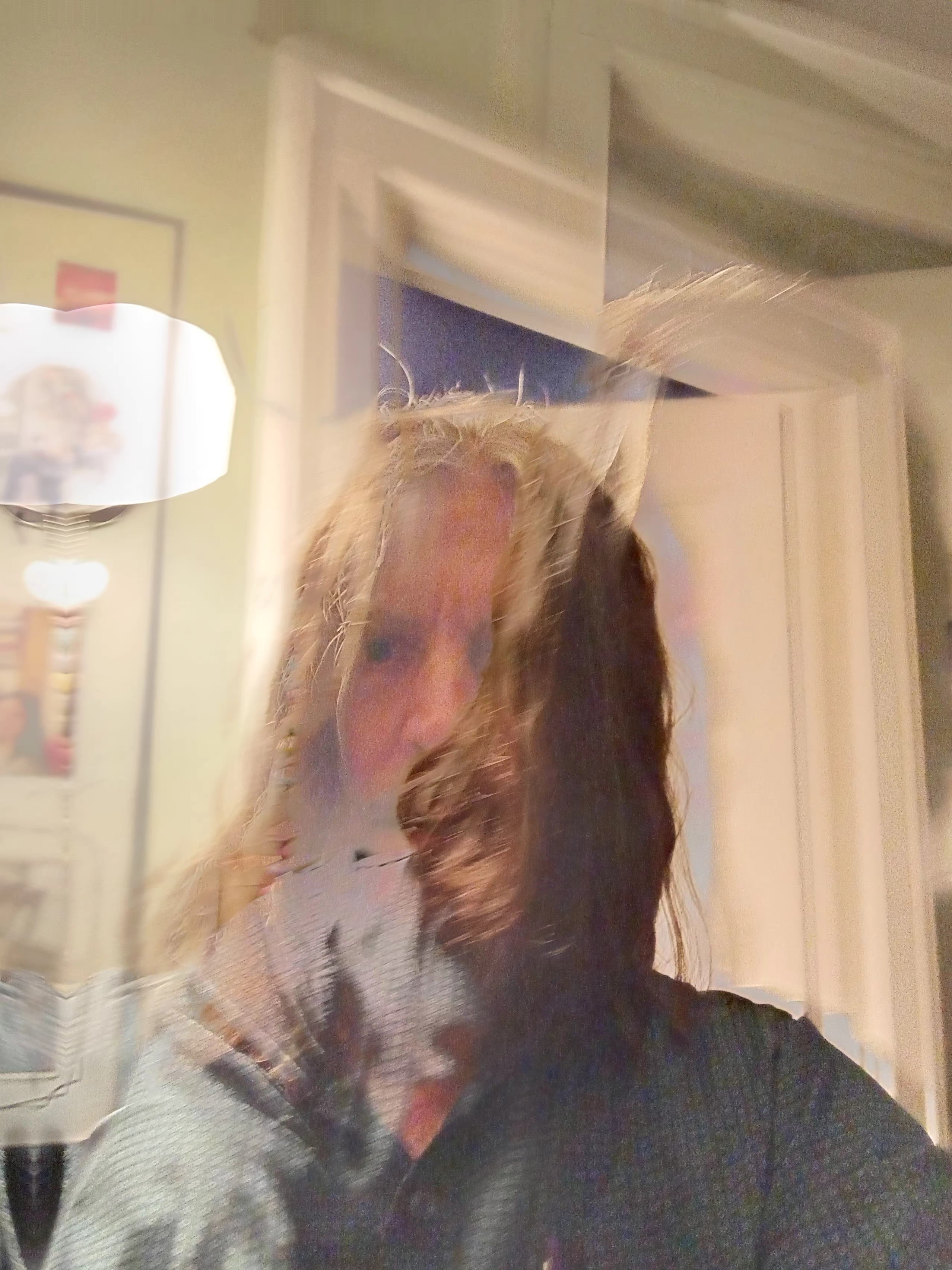
The evidence for this amazing fact is included in the photos which come with this column.
If anyone tries to sue him over the reliability of this, the Drifter is prepared to act as his own attorney, call himself as a witness, and testify with his hand upon a stack of Bibles that no AI nor anything like AI was used in the creation of these pictures nor have they been messed with in any way whatsoever.
Many have said that Rembrandt, Vincent, and Frida painted themselves so often because they couldn’t afford models etc. etc. etc.
The Drifter does not believe that for a moment. (Not everything can be explained by money or the lack of it.)
The Drifter believes these great artists painted themselves so often because they believed Jesus when Jesus said: “The kingdom is within you.” And also when he said (joyfully): “Take up your cross and follow me!”
The good life is not waiting somewhere up around the bend; it is not on a billionaire’s yacht; it cannot be found on the “dream coasts” exclusively; and it does not involve material possessions, of any kind, at all.
Jesus really meant what he said.
“The KINGDOM is WITHIN YOU.”
Or: “THE kingdom IS within you.”
You too (if you try to) can (of course) levitate.
In your very own way.
The Drifter

William Carlos Williams, famous
local doctor, spark plug
of his landscape, set of wheels
for his community, delivering
babies among sexy
poor people who couldn’t,
or wouldn’t,
always pay, and some of them
I loved a little too well, and one of them
I loved,
much too well.
Herman Melville, harpooneer
of Moby Dick, became an Inspector of Things
with no visible promotions
for nineteen years.
But I was working
by the seashore, near the sailor
who broke my heart, which usually
made me feel better, because,
by now, I was
the mystical mariner, and the sea
was in my eyes
wherever I was.
Miguel de Cervantes, who wrote
and was windmill-tilting
Don Quixote, Sancho Panza, Dapple, Rocinante, and
Dulcinea, gorgeous, beautiful Dulcinea,
the most perfect love,
romantic angel,
with such a long pen,
was a tax collector on horseback
for too many years.
People would throw things at
us.
And I wondered
how I had become
this.
I said to myself,
“How have I become
this
weary, sad-eyed, wine-soaked,
broken-hearted old soldier
with a bad hand from that long-forgotten
sea battle no one seems to remember
but me.
Next, I was a slave,
captured by pirates.
Later writing many
chapters of my only, endless
book while locked up
in their jail.
For something I probably didn’t do
and don’t remember
if I did do it.
Because someone stuck up
was down
on my energy.
As a noble Roman said somewhere, in jail
being where
more than one good book has been
penned.
For love.
In blood.”
Two teens talking
around the turn table
in 1983
A.D.:
“Maybe they were just unseen,
trouble-making vehicles
for bringing new, pure and cool,
lasting, low, good, flute-like hill tunes of old
to the people’s plains.”
“The trenchant word that well stings the eyes
of the soft heart from the eternal, hidden streams
at earth’s core.”
“Sometimes…”
“So soothing to a needy few…”
“Law man, doctor, debtor or fake, banker,
horse-back tax collector or user nurse, draftsman
or driver, musician, druggist, jailed, and jailor,
sailor, librarian, book thief, art thief, drunkard
delivery dude, public urinator…”
“Traveling teachers of all kinds blood humming
the Underground Railroad songs of another America
across a Missouri of the modern musical mind…”
“All the black and white rappers, sax, trumpet,
Charlie Parker, guitar player,
and she, she, she.”
“Was a Wichita piano player who landed in East St. Louis
on the dime
and somehow she died
on the morphine line.”
“My Christian Science
Fiction
Kiowa
Cowgirl who always pushed it
just a little too far!”
“On purpose!”
“Rise from the provinces, be normal enough
most of the time but always
further along.”
“And she seemed too young.”
“And that was the end of her one,
good song.”

