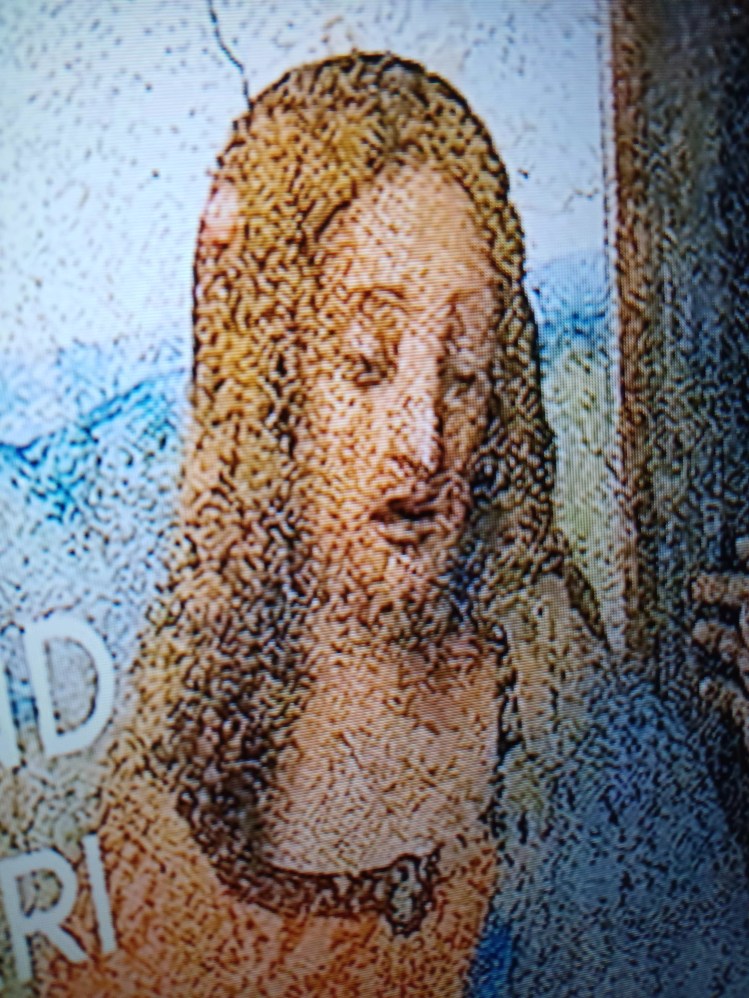
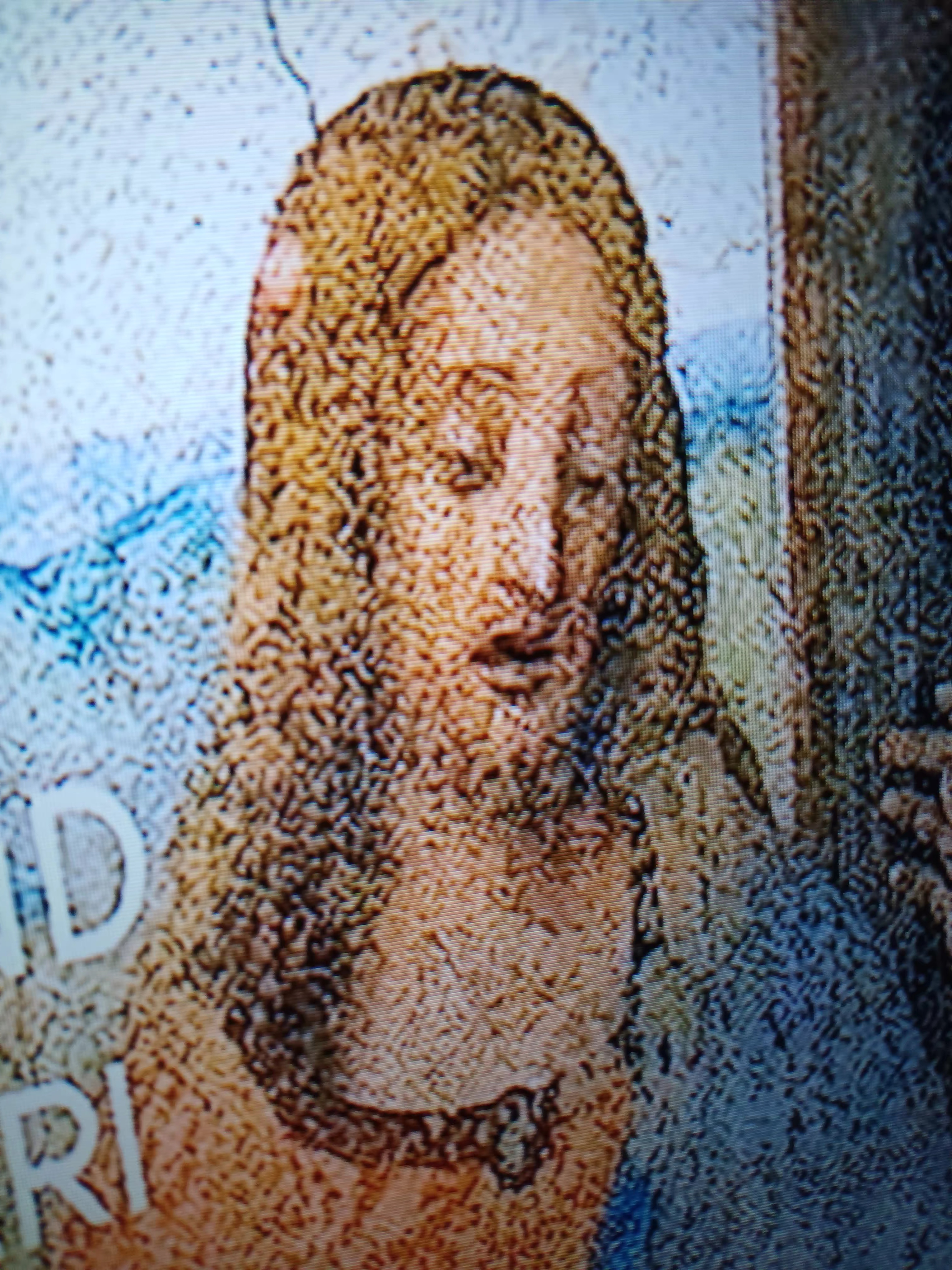
(Note: Whether he be DWB, Dale Williams Barrigar, Dr. Dale Williams Barrigar or never seen at the same time as the Drifter, we are pleased to show work by Dale Barrigar!)
Hello! The Tao Te Ching says this:
“Greatness entails transcendence. /
Transcendence entails going-far. /
Going-far entails return.”
“Greatness” here is a you-choose type of situation.
Whether it be in dispensing the milk of human kindness, creating art that will outlive your own time, becoming the most passionate football or Taylor Swift fan who ever looked out over fields or stage, or any other area of endeavor, greatness is up to the one who wishes to become great, entirely. When the definition of “great” is in the right ballpark, then the wishing-to-become-great becomes already-in-itself an aspect of greatness. Not all of us, and probably not even most of us, will truly be able to reach our so-called goal/s here in this life. That is as it has been, as it should be, and as it ever shall be, too.
The important thing is to have a goal that is NOT an end-point destination. The important thing is to want greatness, and to live like it. And to not let them tell you otherwise. Or if they do tell you otherwise (and they will), not to believe them. Giving someone a silent stare and then turning around and walking away is the greatest rebuff I can ever imagine.
“Transcendence” here means to rise above your worst self here in this world (and all that entails). If you’re looking to get to heaven in the afterlife, it should console you to know that all the major religions say (in one way or another) that the way to get to heaven in the afterlife is to transcend your worst self here, in this life. It’s akin to what the great psychologist Carl Jung meant in a mostly secular sense when he talked about confronting, and mastering, your own dark side. And for Jung, such behavior also led to modern spiritual enlightenment.
“Going-far” can be seen in the phrase “going the distance,” which means finishing the fight, finishing the journey, NOT BEING A QUITTER. No Quitters Allowed. And there is nothing to quit from when you realize that your goal is the way you live your life every day, NOT a specific destination like winning a prize, making a million bucks, becoming “famous,” or any of the other ephemeral and illusory trappings that are pushed so hard by our Consumer/ist Society, where the Almighty Dollar is the one and only real religion. It simply isn’t true, at all, that only the rich and famous are worth anything.
What it means to “return” is up to you to decide. And the decision, once made, should never be final.
The word entail = that it has to be there, that it cannot not be there, and that if it is not there, the whole thing falls apart. And at that point, mere anarchy is loosed upon the world – your world, that is. Your own private world, which is where it all begins, and ends, now, yesterday, tomorrow, and forever. Never let The Algorithm tell you otherwise!
END NOTE: Thank you to Charles Muller for his wonderful translation of the Tao Te Ching (2005).
“So shall I live, supposing thou art true…” – William Shakespeare
Himself (or he) and a few of his drunken writer friends left the bars and ventured out in the daytime, over to the sprawling apartment complex on the edge of town known as The Woodpile.
It was known as The Woodpile because it looked like a gigantic, sprawling, castle-sized, small-medieval-city-sized pile of wood with corridors, stairs, doorways, windows, alleyways everywhere and it housed a wide assortment of souls, from the folks who used to be known as Welfare Mothers to poor struggling students from the university to Welfare Mothers who were poor struggling students at the university to shady guys who sold many kinds of drugs, including ganja, aka weed, which was the reason himself and his few drunken writer friends had decided to venture over there and visit The Woodpile. Later they would branch out into more hardcore pharmaceuticals which is also part of this story but at this point they limited themselves to marijuana and the ever-present cigarettes and alcohol, which were always and forever the main attraction. The drugs were always a side avenue, a mode of further exploration, but never the center of the rodeo, at least back then. None of it was ever about escaping, and all of it was always about seeking; or, it was only about escaping if the escape entailed seeking. If you were only going to leave him a single thing out on the trail it would’ve been the cigarettes he would’ve chosen (and coffee) because of the way he believed they affected the writing mind, that is, enhanced it. Eventually he would quit because he didn’t want to go out gasping for breath if he could help it and he got sick and tired of emptying ashtrays and chasing down the supply – but that day would be a long time in coming and nothing in this world is ever permanent.
The Woodpile also had a pool and she was there at the pool and one of his friends knew her because she was the girlfriend of another friend. They found themselves then at the pool and she laid there all calm in her chair in her bikini with her sunglasses on, her toenails and fingernails painted bright red, and looked up at all four of the men.
The other three were standing there trying to talk to her but it was him, the only one of the group who was ignoring her, that she focused on. He could tell she was staring at him from behind her sunglasses. At one point, she silenced the rest of them with a wave of her hand with the cigarette in her fingers and her drink in the other hand, and said, “What, doesn’t he have anything to say?”
He didn’t, and they got their weed and left The Woodpile and he didn’t see her again until a few weeks later at a Vietnamese restaurant. It was the same group of drunken-writer-friend people with a few new folks thrown in and she was there with her boyfriend, sitting right beside her boyfriend at the large table, and ignoring her boyfriend and focusing on him (the main character of this story) again. This time, she was also wearing her sunglasses, even though they were inside the low-light restaurant. And she wore her sunglasses throughout the entire meal which also included (of course, of course) a ton of drinking, unto the point of sloppiness, spillage, and even someone/s falling down.
And then the third time he saw her was a few weeks later on the steps of the university library. Once again she had the sunglasses on, but this time it was just the two of them.
“Do you have anything to say for yourself now?” she asked him.
He didn’t but he gave her a look that told her he was interested in who she was and right after he gave her that confirming look he realized she already knew he was interested, and then he realized that he’d already known she knew it a long time ago.
He was a graduate student in the creative writing program, twenty-seven years old, but he didn’t really see himself as an official student in the program (even though he was one); instead he saw himself more as someone who was there to overturn, and/or upset, everyone’s apple cart (if he could). (And because he didn’t know where else to go perhaps.)
She was a twenty-two-year-old graduate student in psychology who would later tell him that her main goal was to sell out, write a book, and make it onto the Oprah show. And he never knew whether she’d been joking about that or whether she’d been serious. Probably both, which is why I don’t ask her, it often occurred to him, although he was never sure about that as he was never sure about many, many myriads of things with her.
The year was 1997 which means, among other things, that it was a time when people still went to bars to talk to each other and swap stories, not just scroll on the phone and stare at generic, advertising-laden, too-colorful, corporate sports being loudly broadcast on massive screens covering every single wall in the place.
He was at that point in his young marriage where he knew it was over and his wife knew it was over and it was SO over that he wasn’t even sure his wife wasn’t cheating on him, and some of him didn’t even care too much. In the not-so-distant future he would discover that she was indeed cheating on him but by that time it didn’t matter quite so much either since he, by that time, was now cheating on her as well.
The fourth time he “ran into” the girl in the sunglasses (he always thought of her as a girl somehow, even though he knew very well she was a woman too) was at the bar called Harry’s Uptown which was a place where university drunks hung out, along with other assorted riffraff and ne’er-do-wells of the I-love-the-booze-too-much-and-I-love-it-more-than-a-comfortable-homelife-with-the-wife-and-kids-or-husband-and-kids variety.
He had become restless lately, very restless, and he spent most of his time at night driving around shady areas of the town and out into the Great Plains that surrounded the town drinking and driving.
He did most of his drinking in that fashion lately, and it was rare for him to go into a bar in the last few weeks, very rare. Then he walked into the dark bar and she was sitting there at the bar, by herself, wearing the sunglasses.
As he walked in, she looked up at him and stared straight at him with the sunglasses on, even though it was past ten o’clock at night, and even though the bar was a dark one.
Despite himself, he was terrified, which is not to say freaked out, and his impulse was to turn around, walk out, run for his car and get the hell away.
But his stronger impulse was not to leave and he walked in, went around to the opposite side of the bar, sat down, ordered a beer and a shot, and lit up a cig’, pulling the ashtray over toward himself.
She was sitting directly across from him on the other side of the bar, a half-empty beer and an all-the-way empty shot glass in front of her, a burning cigarette between her fingers. And she was wearing the sunglasses and she was staring at him.
Then she gathered her things together, and with a burning cigarette and a half-full beer bottle in one hand and her purse and some other items in her other hand, she came around the side of the bar and sat down right next to him.
She smelled so good he almost fell off his bar stool. The combination of whatever it was that made her smell so good swept over him like something only a powerful goddess could conjure. And he thought of her as some sort of powerful goddess starting right then.
That was the exact moment when she took off the sunglasses.
Her eyes amazed him even more than her powerful, positive odor like a wind from across foreign seas.
Deeply dark and brown, and almost black, with long lashes, and myriad lights and shades in them, he suddenly saw that she was a seer, she was a seer who could read the souls of humans in the sense that it would be very hard to pull the wool over her eyes in any kind of meaningful way, at least for most people, that is.
Her hair was long, dark brown, sometimes black.
Her skin was an odd combination of olive-colored and exceedingly pale. It was like her skin color was two colors at once, light olive-colored and pale, deeply pale, so pale that you wondered why it was so pale while also feeling as if it bowled you over in its smooth, perfect olive paleness.
She had a way of holding the burning cigarette between her fingers that was unlike the way he’d ever seen anyone else do it. And she never stopped smoking, not even while in the shower. There was an ashtray on the bathroom sink next to the shower.
Looking at her eyes from behind the shades for the first time, there was an utterly uncanny Already-Know-You feeling that he’d never felt with anyone before, although he would feel it a few times again with other people in the future he didn’t know about yet.
Before very long, it became necessary for them to hide from the world, for a very wide assortment of reasons.
One of them was his wife, whose boyfriend was also looking for them so he could tell his girlfriend (the main character’s wife) that he’d seen them together.
Another reason was her boyfriend, who she wanted to cut it off with and had mostly done so except she hadn’t quite been able to bring him the news yet in a way that was fully convincing for him and so we better avoid it at all costs.
Another reason was a famous writer who was a visiting lecturer at the university this semester and who’d seen the two of them together, and also gotten drunk together with the two of them and several other writers more than once. This famous writer was a slime ball con artist who wanted her and he (the main character of this story) did not trust him one iota and was able to imagine all kinds of horrible things he might do.
A fourth reason was the girlfriend of one of the drunken-writer friends who knew he (the main character) was married and who also had a crush on him. In a drunken phone call one night when his wife was out again and with Bob Dylan’s Desire on the tape deck in the background, she threatened to tell his wife the whole story (and his wife did not know the whole story, at least not yet and, it would turn out in the long run, ever. The main character remains as wily as Huck Finn – because he has had to).
Another reason was the entire Psychology Department and the entire English Department at the university. It was a big small town or a small big town and a lot of people knew people who knew other people who knew people who said things about things that had absolutely nothing to do with them at all. Both of them, meaning him and her, were paranoid to begin with and this situation that had gotten completely out of control made both of them super-uneasy. It had gotten out of control because they’d fallen in love, genuinely, deeply, and for real.
And so it became necessary to hide out in a shady motel on the edge of town much of the time.
The year, as stated previously, was 1997 so shady motels were affordable, as were diner restaurants, cigarettes, and alcohol, four key, and indeed essential (at the time) items.
The shadiness of hiding out in a shady motel somehow led directly to other forms of shadiness, the shadiest of all being Sigmund Freud’s favorite drug of all time (except nicotine): COCAINE. (At one point SF almost believed it could almost be a cure-all for everything; and he took it for many years as a cure-all for all of his own things.)
One of their all-time favorite pastimes together in the shady motel was to read the works of Sigmund Freud out loud to each other and then discuss (while smoking and drinking, of course). Later they graduated to Carl Jung. And sometimes threw in philosophers like Nietzsche (Zarathustra) and Kierkegaard (Fear and Trembling). And sometimes pulled out the Gideon Bible from the nightstand. They did not consider cocaine and the Bible to be mutually exclusive. Rather they were seen as sublime enhancers of one another. The coke made the book glow and the book gave everything a reason. And this synchronicity matched their exalted relationship.
She knew a guy and so it was always her who went and got the coke. Also, that was the way things often got done in his world, he told himself. He was a helpless passive observer and it took other people of more competence and perspicuity to do the things he couldn’t manage on his own. He barely knew what a bank account was and he didn’t remember where the coke dealer lived. He handed her a handful of money, took a hit of his cig’ and she took care of it while taking a hit off her own.
So she was the coke-getting person. But one night, after she went out to get more, she didn’t come back.
He’d saved a few snorts wrapped in a little piece of paper and he had the typed pages of a story he was working on to hang out with so he wasn’t jonesing much but after an hour had passed and she still hadn’t returned, he started to get nervous, folded up the pages of the story, and put them away. He always had a pen in his pocket, shirt or pants.
The year was 1997 and so, of course, ordinary people did not carry phones upon their persons at all times.
Back then, when someone disappeared, they disappeared plain and simple, and then they either resurfaced of their own accord (the usual mode) or they did not.
And after two hours now, she had not.
He walked out into the parking lot of the motel and then across a vast ditch in the night. The smell of the night air was so fresh all it did was remind him of her. The motel was literally on the edge of the town and he walked up a rise in the dark night and over a small hill and then he stopped on top of another hill and looked out over the utterly vast, oceanic spaces of the Great Plains in one direction and the Flint Hills in the other as they plunged on under the black sun forever or as long as the Planet lasts. At one point this place was a gigantic sea with sharks as large as whales chilling their bones. Now there were antelope, deer, hawks, golden eagles, rattlesnakes, coyotes, cattle out there in abundance and he felt almost as if he could feel the spirits of the animals everywhere flowing through him. The town only existed in the robust form it did because of Boeing Aircraft and oil and Wyatt Earp had once been the sheriff here, before he switched sides and became a gangster again. If she didn’t come back soon he didn’t know what he would do but he was starting to feel very, very, very, very, very desperate, and uneasy, now. He had continued to wear his wedding ring through this whole thing and while she never said a word about it, he sometimes caught her glaring in that direction.
She came back about an hour later. She was so wasted, so high and drunk, and wearing the sunglasses, that he was at a total loss, especially when it turned out she didn’t have the drugs, either, and couldn’t exactly explain why, despite all her trying. She was literally mumbling-incoherent now and before too long her babbling about nothing turned into less than nothing and she passed out in the motel bed, so crashed out that he kept checking her breathing just to make sure. She was breathing all right. And he could also smell it on her. If she hadn’t had sex with someone else while she was gone, he wasn’t standing in a motel room with her right now staring down at her sleeping while chugging another beer and opening his fourth pack of Marlboro Lights for that day (they always bought them by the carton on the Indian reservation before they hit the motel).
But in the morning with her smiling at him, he wasn’t so sure about the sex-and-cheating thing. And he kept telling himself that it wasn’t really cheating when you weren’t even officially together anyway. And he kept rehearsing Percy Bysshe Shelley’s two-hundred-year-old ideas about Free Love within his own mind. Even if she’d been with someone else, what did he really care? But he did care. He didn’t want to care, but despite himself, or his self, he very much did care. Yet: don’t be such a square, he lectured himself, borrowing the worn-out terminology.
Seven or so years later he met up with their old drunken-writer friend Von Achenbach on Halsted Street in Greektown, Chicago in order to catch up, swap tales, relive old times, drink beers (and whisky) and chain down cigarettes.
Von had always known her pretty well and he now claimed with confidence that he had known the coke dealer too.
And he said that he had inside information. Which he was only imparting because he cared about the truth.
Because, Von said, she had been having an affair, or “a thing,” with the coke dealer both before and during, and also after, the thing she and he (the main character of this story) had had between them.
By that time he (the main character of this story) lived in Chicago and she (the girl in the dark glasses) lived in Miami. He was a poverty-stricken, “unknown” writer struggling to get by and she was already the acting director of the psych department at a well-known hospital down there, even though she herself was at least half crazy much of the time, like anyone in this civilization who is sane. And we must know that these few sane ones are few but do endure among us, even if we never see them.
He never asked her what the truth was and he never decided whether he really did or did not want to know the truth.
“They sat together in the park / As the evening sky grew dark…”
– Bob Dylan
…When they met for the first time in a bar in Chicago she pulled out a switchblade knife, flicked it open, and rammed the tip of the blade down into the wooden table between them, right down between his fingers that were resting on the table, just like they do in the movies.
He stared into her eyes and she stared into his eyes and he realized at that moment that she hadn’t completely missed with the knife as he looked down and saw the bright red blood puddling on the wood before he felt the liquid warmth oozing around his drunk fingers.
But that was okay, he was just recently turned thirty years old and she was twenty-three, and such things would never have stopped either of them back in those days. Stopped them from drinking and staying out all night, that is. He grabbed a bunch of tissue from the bathroom and wrapped it around the nicked finger and they kept on drinking and talking in the bars until the bars shut down and then they went to the lakeshore where they huddled in their coats under a tree on a bench sharing a pint of Jack and another pack of cigarettes and watching the sun come up over the gigantic, steaming water. I didn’t know (and I also knew) I was looking for her and now I’ve gone and found my soul mate, he thought. Things will never be the same.
She looked like Morticia Addams (from the television show) at twenty-three. Her long, black, dark, smooth, silky, wavy, beautiful, gorgeous, stunning, amazing, curling, sweet-smelling, living, breathing, shining, flowing, glowing hair fell well below her shoulders and down her back and her big, bright, wild, long-lashed, unusual green eyes were so big and green they almost looked unnatural somehow, like some ancient visionary witch who could see through walls and around corners and into the innards of the workings of trees and people and so forth. Her green eyes made him feel like life itself is simply supernatural. She was a goth girl in 1999, pierced and tattooed (and shaved, he would later find out) in all the right places but not too much, either. Not too much, and not too little.
She spent most of that first night telling him about all the crimes she’d been involved in. Date rapes and gang rapes (most of those had happened to her, but not all), thefts, drug deals, assaults on authority, insults to authority, pranks and law-breaking practical jokes of all sorts. Whether she was displaying herself as the victim or showing herself to be the creator of victims (who deserved it, she said), the tales she told him about herself that first night were both totally outlandish and utterly convincing. He knew instinctively that there was something fishy going on with all of this but it was only a few months later that he would suddenly realize that 99% of this stuff was what Hemingway called “total bullshit.” She knew that he was more than a bit of a criminal at heart himself and she knew that he’d feel sorry for her about the gang rapes and the date rapes, so it never occurred to her that she should stop herself and confine herself to the straight facts, he later realized. She was busy creating a character for him, that first night; she might as well have been on stage (but a very intimate stage, like the most intense closet drama ever invented, where much of the talking was done in inimitable whispers in the hidden corners of dark bars, just the two of us), and just like an audience member is highly unlikely to jump up onto the stage and interrupt the performance of an actress, no matter how convincing or unconvincing her performance is, he was unlikely to call any of her wild tales into question that first night. Although he did say things like, “No shit?” and “You’re kidding me,” and “That is hard to believe” over and over again.
When he showed a little bit of doubt, all it did was spur her on to fresh versions of new crazy tales meant to convince him that she was not the person she really was, or rather that she was a person who enjoyed breaking the rules much more than she had ever actually enjoyed breaking the rules or would in the future.
And so they fell in love and spent every single minute together (almost, or it felt like it) for about three weeks in between Thanksgiving and Christmas, 1999.
The end came, or rather the end of the first stage in their relationship came, one night a few days before Christmas when they were in an Irish Bar in Lincoln Park right across from the park and the lake. Snow was falling outside and when he came back from the bathroom she was sitting right next to (too close to, much too close to) a gigantic goon who she’d earlier told him was a former boyfriend. The guy was probably twenty-five years old, built like a heavyweight boxer and with a very mean look in his eye whenever anyone else got near her. The alcohol took over for everyone and the three of them started drinking together, knocking back shots of Jack one after another as if it were some sort of contest, and even though she was much smaller physically than both of the men, she kept up with them for a while until she suddenly disappeared, into the bathroom it turned out. When she returned, she was pale, very pale, even paler than usual, as in ghostly white, and even deathly white, and she had a small, apologetic smile on her lips (and almost like she already knew what was going to happen soon). Then it was his turn to disappear into the bathroom although he wasn’t throwing up because he almost never did no matter how much he drank. When he turned around, there was a guy he’d never seen before standing there holding her switchblade knife out at him, the exact same knife or at least the same kind of knife with the blade pointed right at his lower stomach about three or four feet away from him.
This stranger then informed him that she was with the other guy again now, that they had gotten back together now and the best thing for him (the main character in this story) to do now would be to get the hell out of here as fast as he could before six or seven of them ganged up on him, dragged him into the back alley, and all used their switchblades on him at once.
The main character of this story went back out into the bar looking for her but she was gone and he soon realized that the guy with the knife in the bathroom hadn’t been joking, or not much. There were at least three or four other gang members ranged around the bar and they were all quietly drinking and waiting for the signal to do the deed, and the deed was this: drag him into the alley and go to work on him with their knives, four or five against one, just like he’d been warned was the case. He could tell, he could very much feel, by their presence who these people were and that none of this was a joke, at all; they were gang members in a gang town that had been a gang town since day one and still was. (See the End Note at the end of this very true story.) If he didn’t leave, and leave now, he would get himself killed or at the very least sent straight to the hospital, left for dead or half-dead in a Lincoln Park alley near the dumpsters behind a dive bar.
Later that night, or earlier that day, anyway it was around six in the morning, as he was lying in his tiny apartment on the futon finally about to drift off to sleep after a very tormented and drunken few hours lying there thinking about her, his telephone rang. It was in the days of the fabled answering machine. He refused to answer the phone; but he did listen to what she said into the answering machine.
She accused him of abandoning her and she informed him that she had become the victim of an unwanted act of sodomy which had been perpetrated upon her in her apartment by the ex-boyfriend who she’d disappeared with and taken back to her apartment. There was something about the way she said it all that told him that this time she wasn’t lying about any of it. And she told him it was his fault and he realized that she was right, as absurd as it all sounded, she was definitely correct: it was his fault. It was his fault! It was all his fault. And this was like The Wall of Pink Floyd.
She said, “It’s all your fault because…because…because you disappointed me.”
End Note: Of Chicago’s 200-plus neighborhoods, 100 of them (or more) are run by gangs; the rest are run gang-style by people who wear conventional business suits and parade around as if they aren’t in a gang. Because there are many ways to stab someone in the back, and not all of them involve knives. Someone is doing it to you this very second, you can be sure (if you are good) (one way or another).
The Drifter and All Images by The Drifter
And…
Hail to the Drifter
Last year, during the run of normal conversation about the upcoming opening of this site, it was decided that the Drifter should hold court every Sunday. He has quickly become a tradition to the degree that I was gobsmacked catatonic to learn that he has been shaking the dust off his boots for an entire year.
In the world of writing, getting creative things done in an orderly manner is as likely as the Wildebeest outwitting the Lionesses. Some things cannot happen because they run contrary to the governing Will of the universe. In the U.S.A. this was compared to the likelihood of the Chicago Cubs winning a World Series, but when that happened ten years ago, those who turned to St. Jude for succor gained an extra kick in their steps and shone less sadness in their smiles. But since it has been ten years, some of the old lachrymose expressions have slowly returned to faces that look more natural that way. But such a fate will never befall the Drifter (said to be of or near Chicago), who, frankly, tells it like it is and does not need a well pitched game or left handed hitting to get himself across.
Hail to the Drifter, may he find solace on the long and dusty road as another year begins.
“The prettiest girl / in all the world / is in a little Spanish town / but I left her / for a Bonnie lass / and I told her / I’d see her around / but that Bonnie lass / and her heart of glass / could not hold a candle / to bumming around…”
– Tom Waits
…His eyes popped open and his brain popped awake and he realized she wasn’t in the bed beside him which was the reason his eyes had popped open. He knew what time it was even though he didn’t know how he knew that but when he looked at the digital clock on her bedside table he saw he was correct: 4:37 AM. And we went to bed past 1:30 AM. His impulse now was to gather his things together as quickly as possible and leave as fast as possible, out the window if necessary.
But he hauled himself out of bed and walked around the corner into the small kitchen of her studio apartment where he knew she was. He looked out the window at the brown rooftops of Chicago where they spread outward to the blue lake stretching away into the distance in the growing light and then he noticed that she had Sherwood Anderson’s short story collection Winesburg, Ohio beside her on the table. She’d already told him more than once the book was disturbing to her and now here she was reading it again.
When he asked her what was wrong, she said, “I can’t stop thinking about those things you told me.”
He knew what things she meant, but he also knew the things he’d said had now been completely twisted around in her mind so that they no longer bore any resemblance to the things he’d actually told her.
The tension in the room was now so high he felt like the ice he was walking on might break through at any second and he was just trying to keep his balance as best he could so the ice wouldn’t break.
As he walked back into the other room she followed him and asked him what he thought about it all.
He was five feet eleven inches tall and weighed one hundred and ninety pounds, most of it muscle. In the worst of circumstances, Mike Tyson himself would not have scared him at all (think about David and Goliath) and he knew his own hands were lethal weapons if he wasn’t careful, which was one reason he was always watching himself.
She was five feet two inches tall and weighed a hundred and ten pounds. But she had a right hook on her that could take down a heavyweight prize fighter when aimed right, and especially when it was a sucker punch like the one she reached up and gave him right now.
He realized she’d hit him in the ear when the lights popped on again with his ear ringing like a dinner bell and he found himself staring down at her who then reached up again and grabbed him by the long brown hair on both sides of his head.
She then yanked back with all her might and sent both of them flying across the small room toward the couch, her flying beneath him while yanking his hair and him flying above her trying to not fall down on top of her but somehow they made it to the couch via flying through the air, she fell into the cushions and pulled him down on top of her by the hair like she wanted him to kiss her, which she did. Instead, she spit in his face, but not full on, only more like a gesture.
And in that moment her face was as beautiful, fresh, youthful (they were both forty-six but right now she looked sixteen) and lively as he’d ever seen it before (except one time) and even though her eyes were also truly murderous right now and he knew that she would really have killed him in that instant if she’d somehow been able to. He sometimes wondered whether she’d ever actually murdered anyone back in the dark depths of her mysterious past and he was never absolutely sure that the answer was no. It would be like her to do it and to get away with it, too.
He wanted to throttle her, that is, choke her to death – but only for an instant.
Before he knew what hit him he had his clothes on and he was down in the street heading on two feet for his automobile at high speed with the key in his hand like the pacifist he was. She was hanging out the window shouting at him, “And don’t come back this time either you son of a bitch!”
When he turned around and looked at her hanging half-way out of the window with her beautiful long red hair dangling down like a grown-up Rapunzel confined to her tower, she looked at him, their eyes met, she relented, and then she smiled at him sadly, then waved goodbye at him sadly before she turned away inside (heartbreakingly) and closed the window.
“Now Lord God let my poor voice be heard.” – Bob Dylan
You get burned, or nailed down, when you’re being good.
Jesus on the cross has many messages for the human race and that is one of them.
There are many people among us who once had the ability to see things differently (more truly) but now, through repetition and conditioning, that ability they once had has been destroyed.
And they are unhappy, very unhappy, because of their false belief in a false dream. (The American Dream.) (I speak here of America only and I think I don’t know if this has yet become a globally universal condition. I critique the American Dream and offer my opinions upon it because I love America. America made me (for good and ill, sometimes very ill) and to hate it would be to hate myself (which sometimes happens). The American Dream is either dead or dying depending upon who you ask these days but probably not to the majority. Whether it can be resuscitated in a more realistic and positive fashion in the future by new generations remains to be seen. S/he who abandons all hope becomes dead inside, and often a selfish raving dark-hearted half-lunatic as well.)
It was a dream they swallowed, so to speak (to revitalize the fishing metaphor in a new context), hook, line, and sinker.
There are many here among us who have forgotten their youth.
And having forgotten their own youth/s, they see nothing but horribleness when they look at the youth of those around them – everyone here who is now young.
The generation gap is a human problem which AI, instant communication, the selfie, and listing your pronouns has done nothing to solve.
Too many people among us think there will still come a day when everything will be perfectly perfect, and that makes them wonder (very much) why the present moment isn’t already perfect.
(Because according to “The Dream,” it’s supposed to be perfect. Reference: all the melodrama in television, movies, books, articles, advertising, and other mediums which reinforce this notion daily, hourly, and sometimes minutely or every-single-second-ly.)
This tension, between the expectation and the reality, creates the so-called bitter taste in the mouth (another reinvented metaphor because of the context and the awareness that I’m using what you’ve heard before; Shakespeare and Dylan do this stuff all the time so who can blame me? I can’t think of anything else that says it better and I’m not gonna spend all day trying).
Sarcasm and passive aggression often become the norm when someone feels that their (false) dreams have been dumped on (defecated upon, in other words).
(And sometimes the passive aggression lurches into just plain aggression without warning.)
No amount of mowing the lawn, scrubbing the floors, cleaning the windows, dusting the doodads, having a date night, ordering from Amazon, or going on vacation can fix this. (“Fulfillment Centers,” indeed.)
There are too many expectations but there should be no expectations, kind of like in the Stones’ great song “No Expectations:” because there is nothing to expect.
If something good happens something else bad will happen to weigh it in the balance and when the bad comes, brighter days are ahead, almost for sure, IF you can hang on that long. Hang on, hang on!
Rumi was born in what was once the Persian Empire (present-day Afghanistan) 818 years ago.
He said, “Goodbyes are only for those who love with their eyes. Because for those who love with their heart and soul, there is no such thing as separation.”
And that’s how you can love someone you’ve never met.
And once you can believe that, everything else becomes golden.
(Separately, there is the problem of physical pain, for which the “grin-and-bear-it” method is the best medicine. Marcus Aurelius said that even if you’re being torn to pieces by a wild animal you should keep your composure, because it will inevitably be over soon, among other reasons; don’t sweat it! (or try not to). Prayer also helps; and cursing God or asking why is talking to God which makes it prayer (see the Book of Job including THE WHIRLWIND) and He has a sense of humor (I’m sure of it) and understands; just remember to say you’re sorry afterward; when we finally see his face we ain’t gonna be able to believe it!)
HAPPY BIRTHDAY WALT WHITMAN!
Walt Whitman is a brother, and even a twin, to Rumi if anyone ever was.
Old Walt was born 207 years ago today in a little village on Long Island, USA.
This essay into the unknown is in honor of him, since much of what it says was taught to me (The Drifter) by him (and the other American Transcendentalists).
“Old father, old artificer, hold me now and ever in good stead,” as Stephen Dedalus said.
“If you want me again look for me under your boot soles.”
– Walt Whitman
“I am the man. I suffered. I was there.” – Walt Whitman
“A splendid old soul.” – Mark Twain on Walt Whitman
“Whitman is my daddy…Opulence is the end.” – Lana Del Rey
These are the words of Walt’s that first chilled my bones (when I was seventeen years old) (from “Crossing Brooklyn Ferry”):
“Closer yet I approach you, / What thought you have of me now, I had as much of you – I laid in my stores in advance, / I considered long and seriously of you before you were born. / Who was to know what should come home to me? / Who knows but I am enjoying this? / Who knows, for all the distance, but I am as good as looking at you now, for all you cannot see me?”
And these are some of the words I read aloud from the pulpit at my mother’s funeral twenty-seven years later (from “Song of Myself”):
“This grass is very dark to be from the white heads of old mothers, / Darker than the colorless beards of old men, / Dark to come from under the faint red roofs of mouths. /
“O I perceive after all so many uttering tongues, / And I perceive they do not come from the roofs of mouths for nothing. /
“I wish I could translate the hints about the dead young men and women, / And the hints about old men and mothers, / And the offspring taken soon out of their laps. / What do you think has become of the young and old men? / And what do you think has become of the women and children? /
“They are alive and well somewhere, / The smallest sprout shows there is really no death, / And if ever there was it led forward life, and does not wait at the end to arrest it, / And ceased the moment life appeared. /
“All goes onward and outward, nothing collapses, / And to die is different from what anyone supposed, and luckier.”
….
PERSONAL DECLARATION:
Today on this day that is the day that is one day before the 207th birthday of Walt Whitman, I hereby formally declare myself to be a BLOOMIAN critic, which means I follow Harold Bloom, although not in all things, which would have made perfect sense to Harold, who, like Ralph Waldo Emerson, never wanted anyone to follow him in all things. Bloom has done more to boost Walt Whitman’s reputation than any other critic in the late twentieth and early twenty-first centuries, by far.
The title of Walt Whitman’s book was/is so great that it matches Tolstoy’s WAR AND PEACE: LEAVES OF GRASS. His book itself is so great that it too matches Tolstoy, although in a different mode, the mode of poetry. (There is also a reason why they both had long white hair and long white beards.)
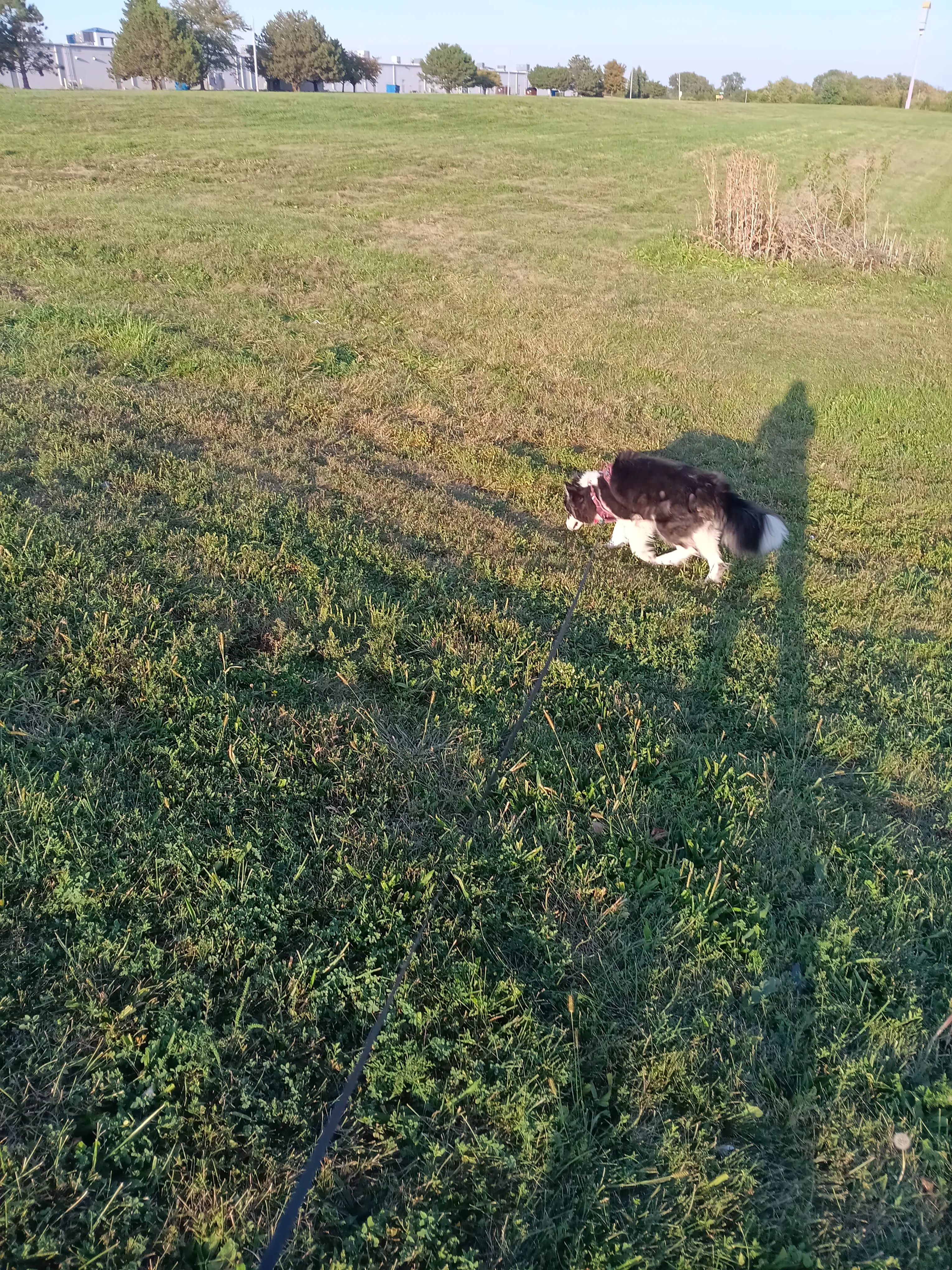
The other day I was observing my Siberian Husky mix, Boo, and I realized that he was individually sniffing every single blade of grass in the area in which he was standing in a field in northern Illinois outside Chicago. Let me repeat that: individually sniffing every single blade of grass. It was like Horton discovering a WHO! inside a clover, it was that mind-blowing.
Walt Whitman used to watch Abraham Lincoln walking around Washington during the Civil War. Lincoln knew who Walt was, and would nod to him, although they never spoke. But Whitman was studying Lincoln. Whitman was working, for free, as a volunteer nurse for both Northern and Southern soldiers in the hospitals of D.C. He saw the worst of the worst of the worst of the worst of the horrors of war (many, many times), and did things like write letters home for the incapacitated soldiers, hold them while they died, and write to their families (beautifully) after they expired. During this time, he was also working as a humble and lowly government clerk. He had numerous nervous breakdowns during this time, small and then large, and eventually a stroke at the age of 54.
Walt Whitman was very concerned with the way his beloved America would turn out. He lost much of his faith in the USA during the Gilded Age (named by Mark Twain). But he never lost all of his faith.
So let me say this:
There are many, and I mean many millions, of physically living human beings walking around among us now who have zero, and I mean zero (no), human emotion/s at all. They feel nothing but nothing (unless it’s a smoldering rage), and the occasional sneer (or a chuckle at someone else’s pain) is all they can muster. (See the President of the United States as well for this, as well as all of his henchmen and henchwomen.) (No wonder zombie and vampire movies are so popular.)
WATCH OUT!
There are also people walking around among us now who act like (or are) angels.
“Say one more stupid thing to me before the last nail is driven in.”
– Bob Dylan
“Your best friends are my worst enemies – Angelina.” – Bob Dylan
Happy Birthday, Bob!
May you live as long as Willie Nelson is now and on and beyond (and same to you too, Willie; you two are kindred spirits).
But when Bob Dylan ever does pass on (not die), I will instantaneously think of what Bob himself said about himself after Elvis moved on: “After Elvis died, I didn’t talk for a week.”
I will not (probably) be silent that long, but my heart will break (in a certain way). And I will know (deep down) that times have changed.
I’ve seen Bob play live an uncountable number of times across five decades: in the ’80s, the ’90s, the ‘00s, the ’10s, the ‘20s.
I’ve seen him drunk (I mean me, although it was obvious that he was too at least a few times), I’ve seen him sober, I’ve seen him on drugs, I’ve seen him not on drugs, and I’ve seen him with my (now ex-) wife when she was preggo with the twins.
After the show she said: “It looked like you were studying him the whole time.”
That’s because I was studying him the whole time.
I’ve been studying the man (on and off) since I was thirteen years old.
I’ve seen him in Iowa, I’ve seen him in Missouri, I’ve seen him in Wisconsin, I’ve seen him in Kansas, and I’ve seen him in Illinois, many times, both in Chicago and at other locations.
(Side note: many folks don’t know that Iowa is our (the USA’s) Number One Agricultural State, which is true; it isn’t California. Reminder: Robert Zimmerman was born and bred in Minnesota.)
I’ve seen him with Tom Petty, I’ve seen him with the Grateful Dead, I’ve seen him with his own bands, I’ve seen him at the first Farm Aid in 1985, and I’ve seen him (and heard him) in my mind all the time, especially when all you beautiful ladies said goodbye.
(I never say “hi” and I never say “bye” to the beautiful ladies. They say hi and they say bye when the time comes: I’m still here; just don’t get too close any more; I don’t know why!)
(True beauty emanates from the inside outward and resides mostly in the eyes. Plastic beauty can be beautiful on the outside, but when you peer into the dead or predatory eyes, it chills the effect more than a little.)
The last time I saw Bob live he was with Willie and Mellencamp on the Outlaw tour, here in Illinois, two years ago.
He hid behind his piano wearing a hoodie the whole time and really pissed off a lot of the audience because he’d turned all his well-known songs into some sort of seemingly incoherent (but only seemingly) jazz.
Boos even started to go up here and there in the crowd.
I almost went over and told one guy to shut his fucking mouth.
I was ready to tear his head off if he didn’t listen to me.
But I restrained myself.
It was like some puny little fool in a football jersey standing there hurling rotten eggs at Mount Rushmore (even tho’ the dude was six feet three).
Because that’s what Dylan is: he’s as big as Mount Rushmore.
And maybe bigger. (Even tho’ he’s only five feet seven – or less.)
They say that when Dylan and Cash used to hang out together, they didn’t even talk.
As the great American fiction writer Barry Hannah (RIP Barry; your two greatest works are the short story “Water Liars” and the short novel Ray) once said: “I don’t need to meet Bob Dyan. He’s already shaken my hand.”
END NOTE:
For an answer to a full-scale nuclear war (which is becoming more likely by the hour, however unlikely that sounds), listen to “Let Me Die in My Footsteps” by Dylan, 1962. (And read the Bible and the Tao Te Ching.)
(Faulkner rightly said: “All it can do is kill us.”)
ONGOING NOTE: For a great song about public heroes dying, see and hear Waylon and Willie’s song “Heroes” (2:46) off their 1982 album WWII. Not to be confused with “My Heroes Have Always Been Cowboys” – which is also true.
(Note–Bob Dylan’s 85th (!) is tomorrow. A Great many words have been written about him, but I feel that this essay by Dale, which first appeared in Literally Stories UK, is as fine as anything you will find in print!-Leila)
Bob Dylan is a bard of the old school, and also of the school that never gets old. Long after every single Hollywood movie ever made will be penned by androids, computers, zombies, vampires, and “AI,” scattered humans everywhere will still be searching out the work of Bob Dylan, whether to read or listen to it. When Dylan released “Murder Most Foul,” his longest song, in the middle of the Covid Pandemic, he proved every critic who’d ever said he didn’t deserve the Nobel Prize in Literature wrong.
With a terrifying title from Shakespeare, this long song and short fiction is a mini-novel about the Kennedy assassination. And all assassinations, and all murders ever committed, now and in the future. Almost as if to prove that he’s a poet and story-teller more than a musician, Dylan doesn’t even sing this song. He speaks it. He tells the tale like an ancient bard, maybe even going as far back as Homer.
Dylan is often compared to Shakespeare, and for good reason. It could be that a more apt comparison is with the older writer. Homer, like Bob, spent his life traveling from town to town and speak-singing his story-songs to the accompaniment of a stringed instrument. This image of Homer has been accepted for so long that it’s become a fact of fiction that tells the truth, as real as any other Greek mythology, from Zeus to Athena.
Dylan has always cited literary writers as some of his most important, if not his most important, influences. He claimed that “Blood on the Tracks” was inspired by Anton Chekhov’s short stories. He listed his two favorite writers as Emily Dickinson and Arthur Rimbaud. He read T.S. Eliot and James Joyce in high school. He resurrected Charles Baudelaire in “Idiot Wind.” He said that all writers and artists should read John Keats and Herman Melville.
He acknowledged Walt Whitman’s genius. He went to the grave of Jack Kerouac and read Kerouac’s poetry aloud with Allen Ginsberg. He wrote his songs on a typewriter. He created an absurdist book of prose poems, and he composed a memoir that isn’t his best work but is highly readable, filled with signs of the times, then and now.
Someone once compared Bob Dylan to Ernest Hemingway, another writer for whom Dylan has expressed his approval. Both writers diagnosed their times, and fought the wars of their times. While Hemingway went to Italy as an ambulance driver, Dylan went to Mississippi as a liberal Jew who stood out in an open field and sang Civil Rights protest anthems, surely as dangerous as Hemingway heading to the front as a non-combatant who wanted to help injured soldiers.
Dylan has already entered the canon of great American authors. When we look back at history, we see that there are many authors who did not deserve the Nobel Prize, and many authors who did deserve it who didn’t receive it (James Joyce, Leo Tolstoy, and Jorge Luis Borges are a famous three of these). A hundred years from now, Dylan will be seen as a writer who deserved this prize, and then some. His humanity, and his ways of expressing it in English story-language, will last a very, very long time, even, or especially, as the rest of the mainstream world continues to become more and more robotic, tyrannical and inhuman.
The forewarned Bonus Material
Happy Birthday Bob D a Prose Poem
I believe that the first two dorky looking guys to make being dorky looking guys cool were you and Buddy Holly. Can’t imagine Steve Reeves singing Peggy Sue on AM or Dash Riprock getting all Positively Fourth Street on the weird radio. Thank Zimmerman you have traveling angels on your side. Seems an obscenity that all that time flew by. But if I could play God and select people to have it all to do again, far off, in distant years, to clean up the future, amongst such I’d have you and Buddy headlining a cold winter night concert in Clearlake, Iowa. And I would replace the airstrip with a seven star hotel, a temporary home til just spring, inhabited by goatfooted balloonmen and bellboys, fey and wee.
“It was just like a song being played on the radio in my mind.”
– Richard Brautigan
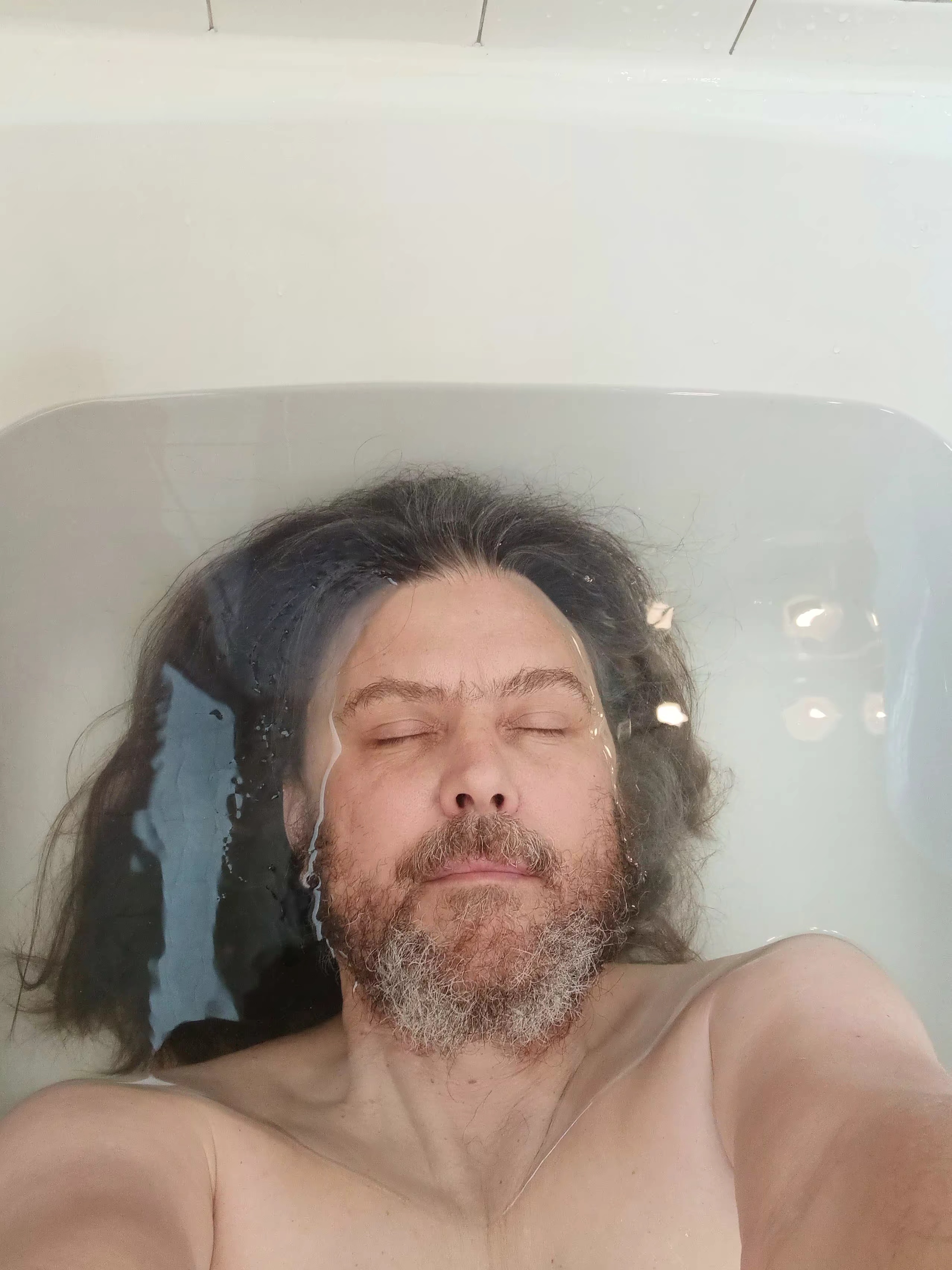
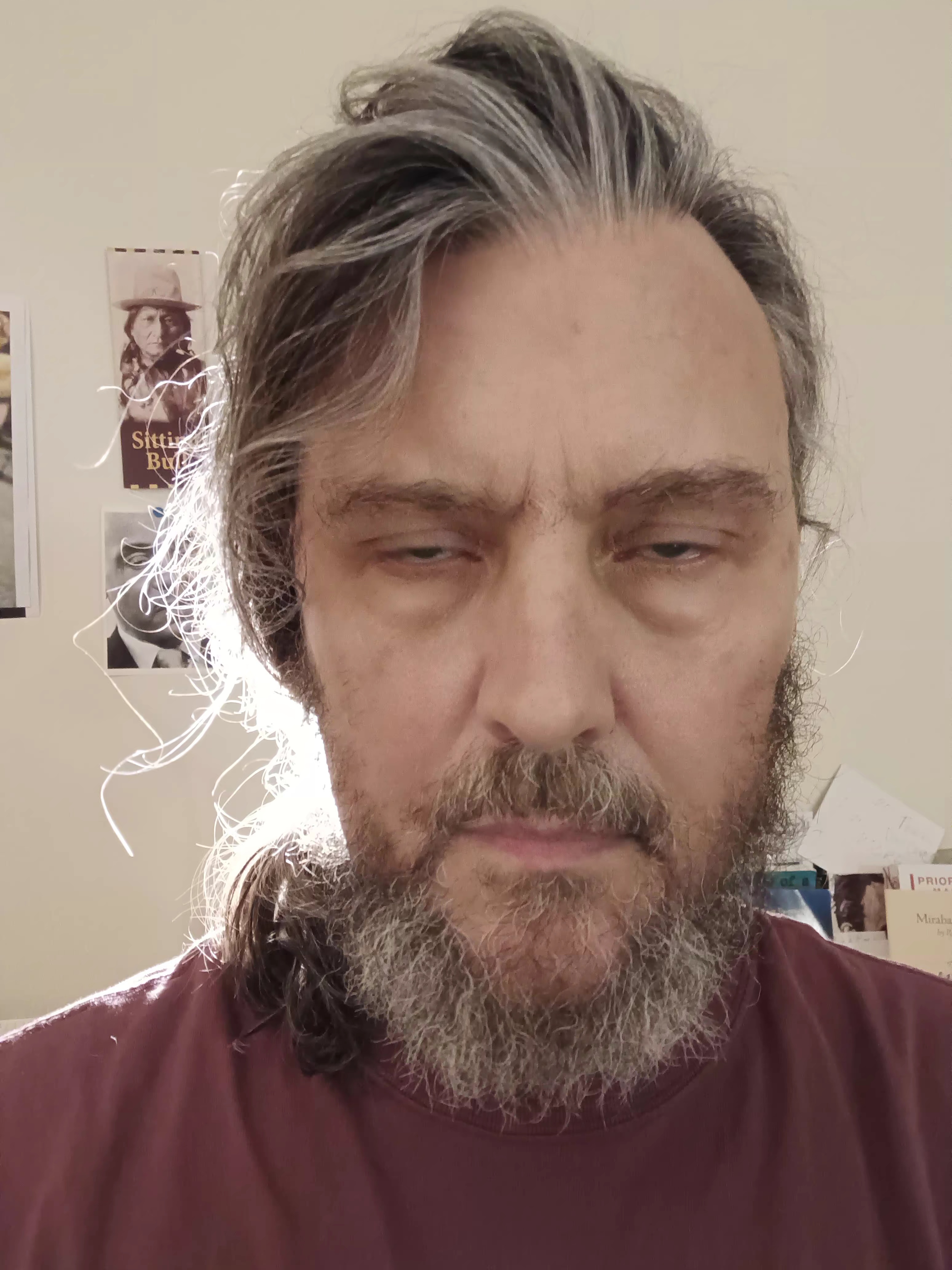
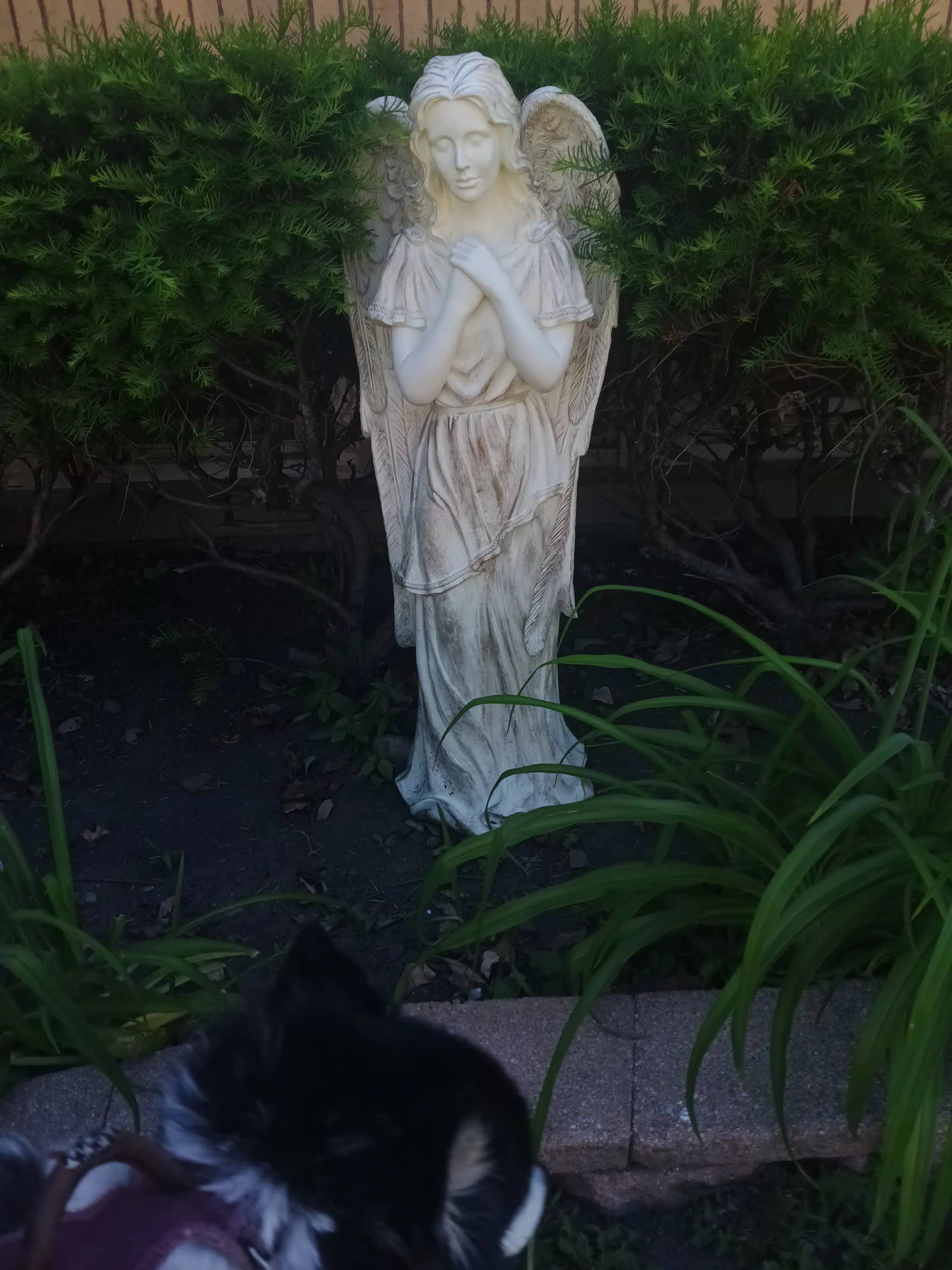
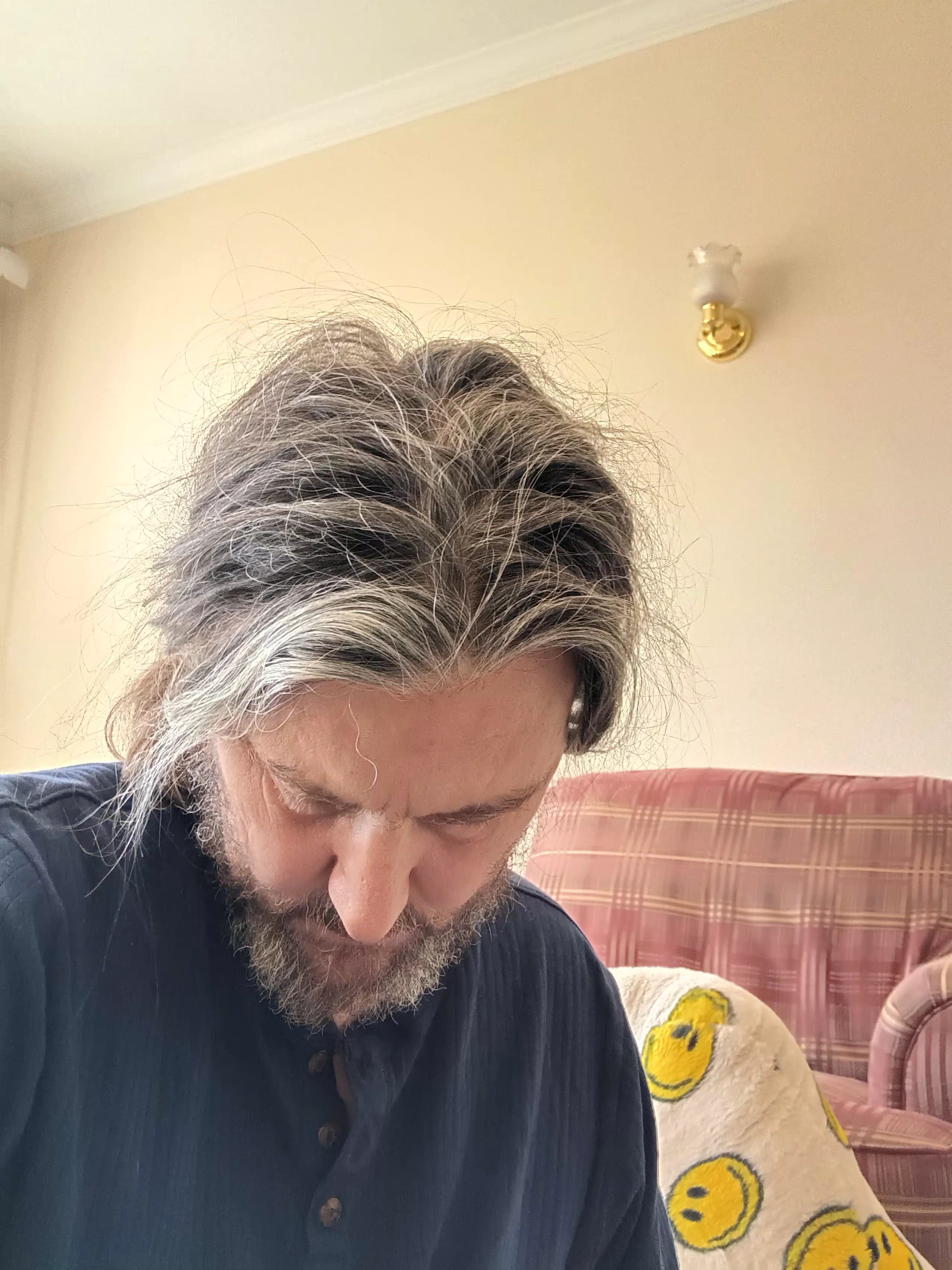
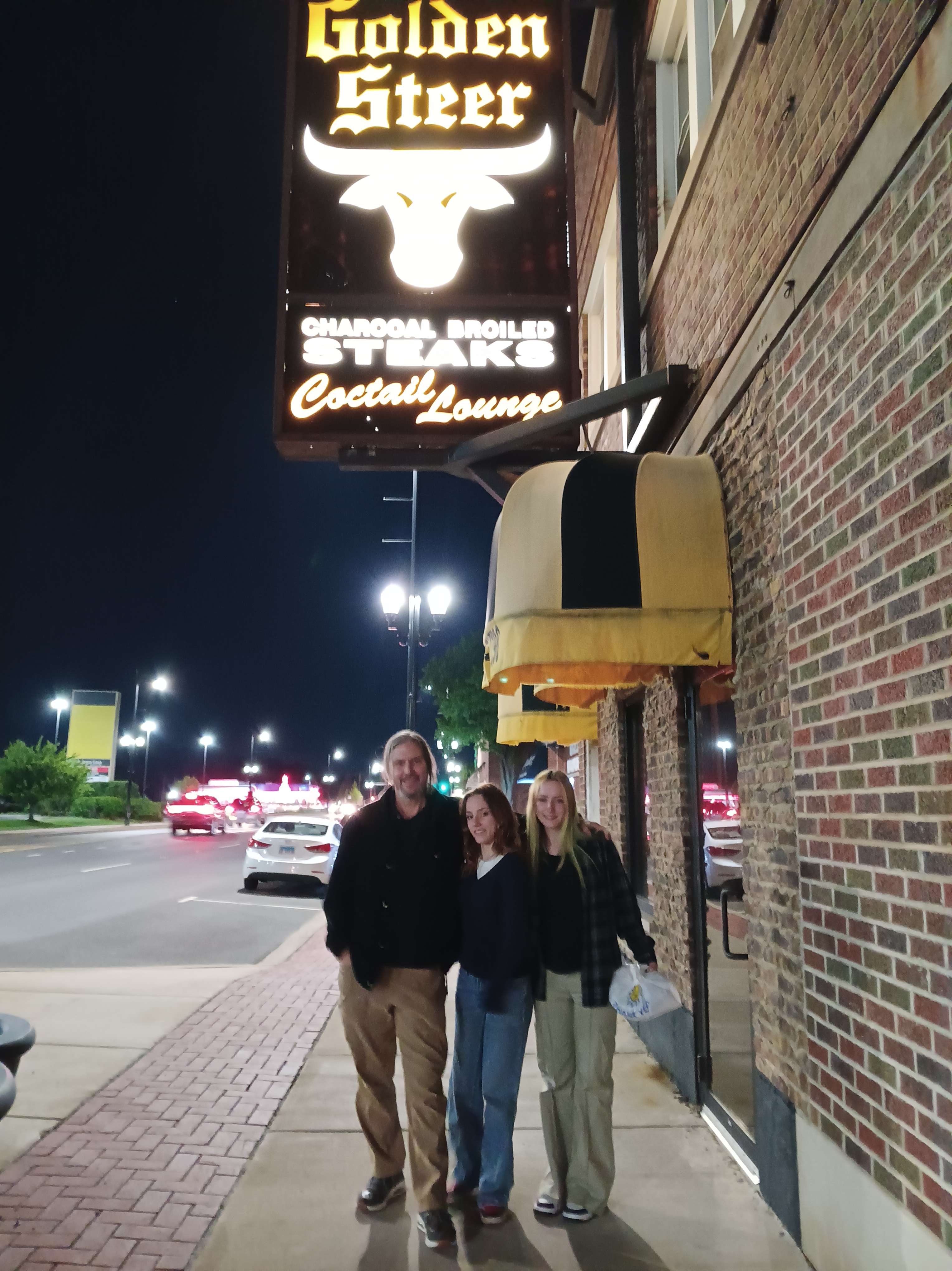
One of these pictures is the countdown: less than sixty minutes until STROKE time two years ago.
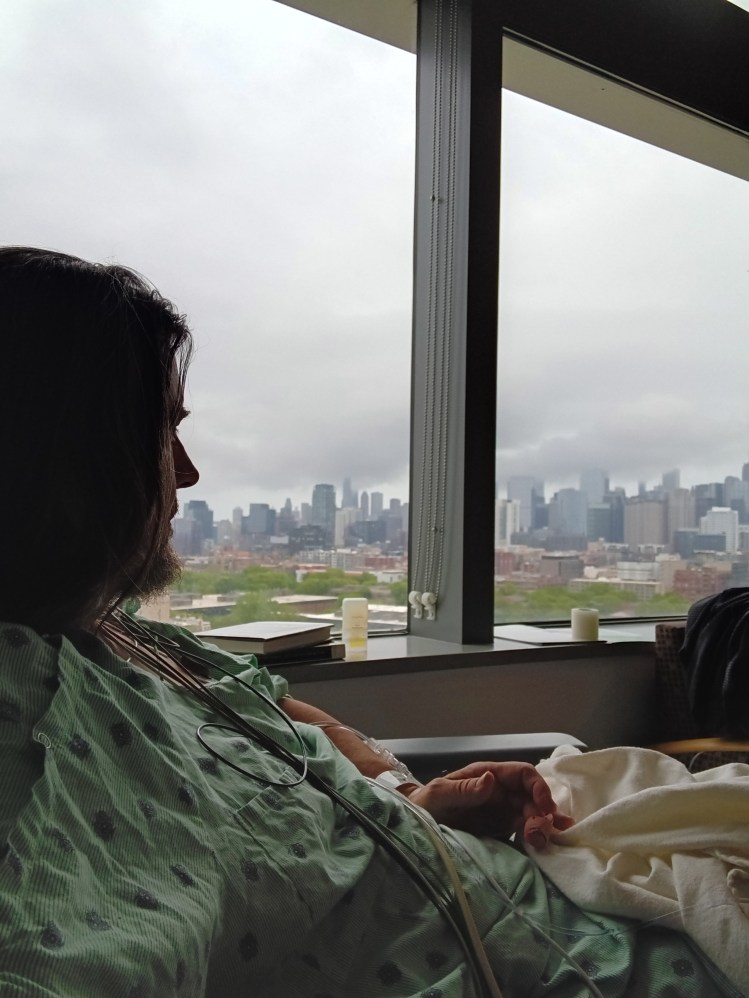
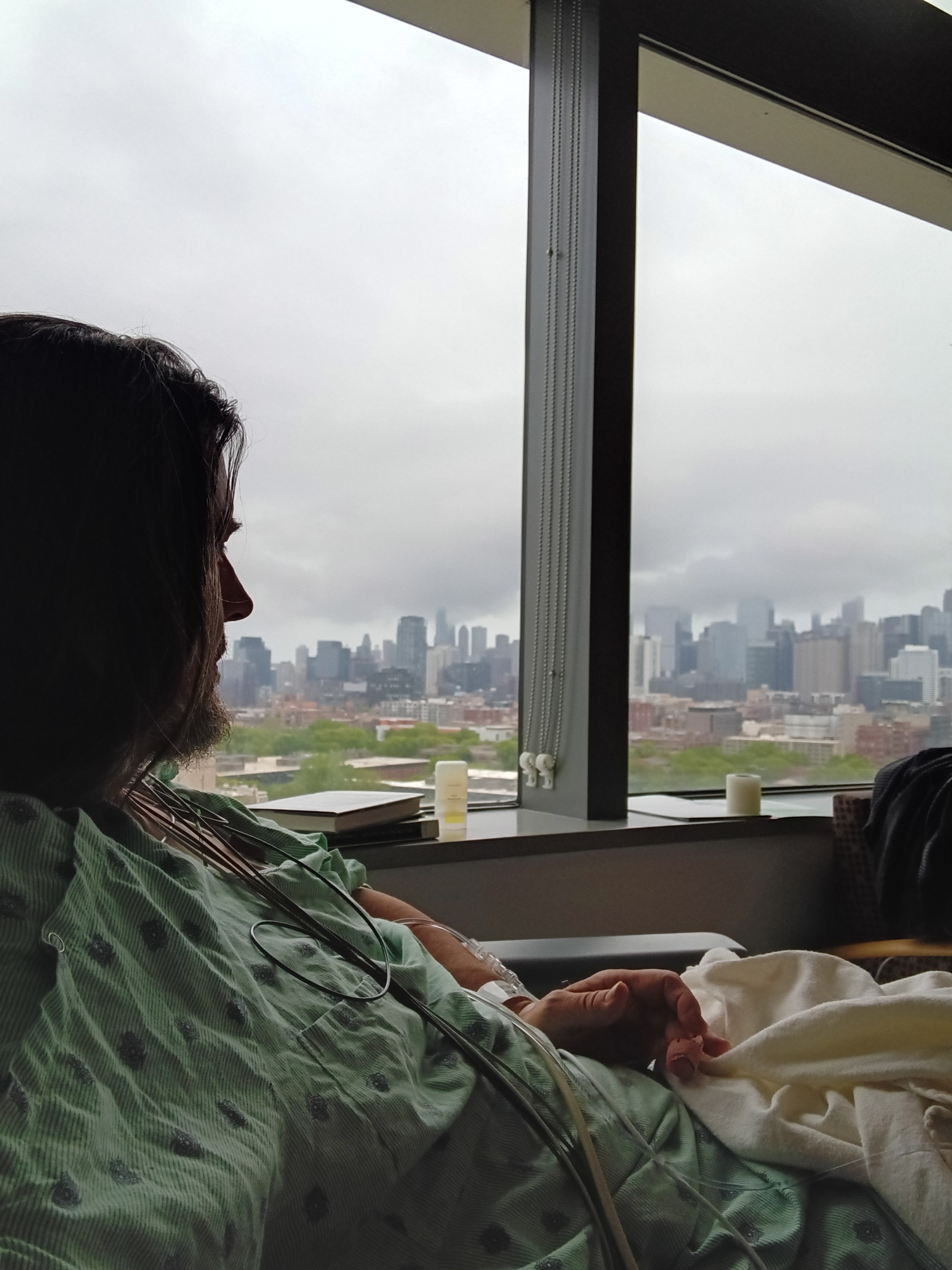
Another picture is a view from my hospital room in Chicago. Without access to the futuristically good health care services of the Second City, I would probably have ended up quite a bit worse off than I was and am.
Another pic’ is me contemplating my situation and reliving many memories, since I can see the University of Illinois Chicago from my window, the place where I taught for fifteen years and completed my PhD in English and Creative Writing. And I’m realizing again that I possess a certain fearlessness, and have always possessed a certain fearlessness.
Another pic’ is one of the verses that helps reinforce my so-called certain fearlessness, a fearlessness that is not without its failings and is not always as evident (to myself and even others) as I might want it 2 B.
But many people are afraid of me, especially on the street when they see me and the wolf I walk around with (and sometimes a second wolf and a pit bull).
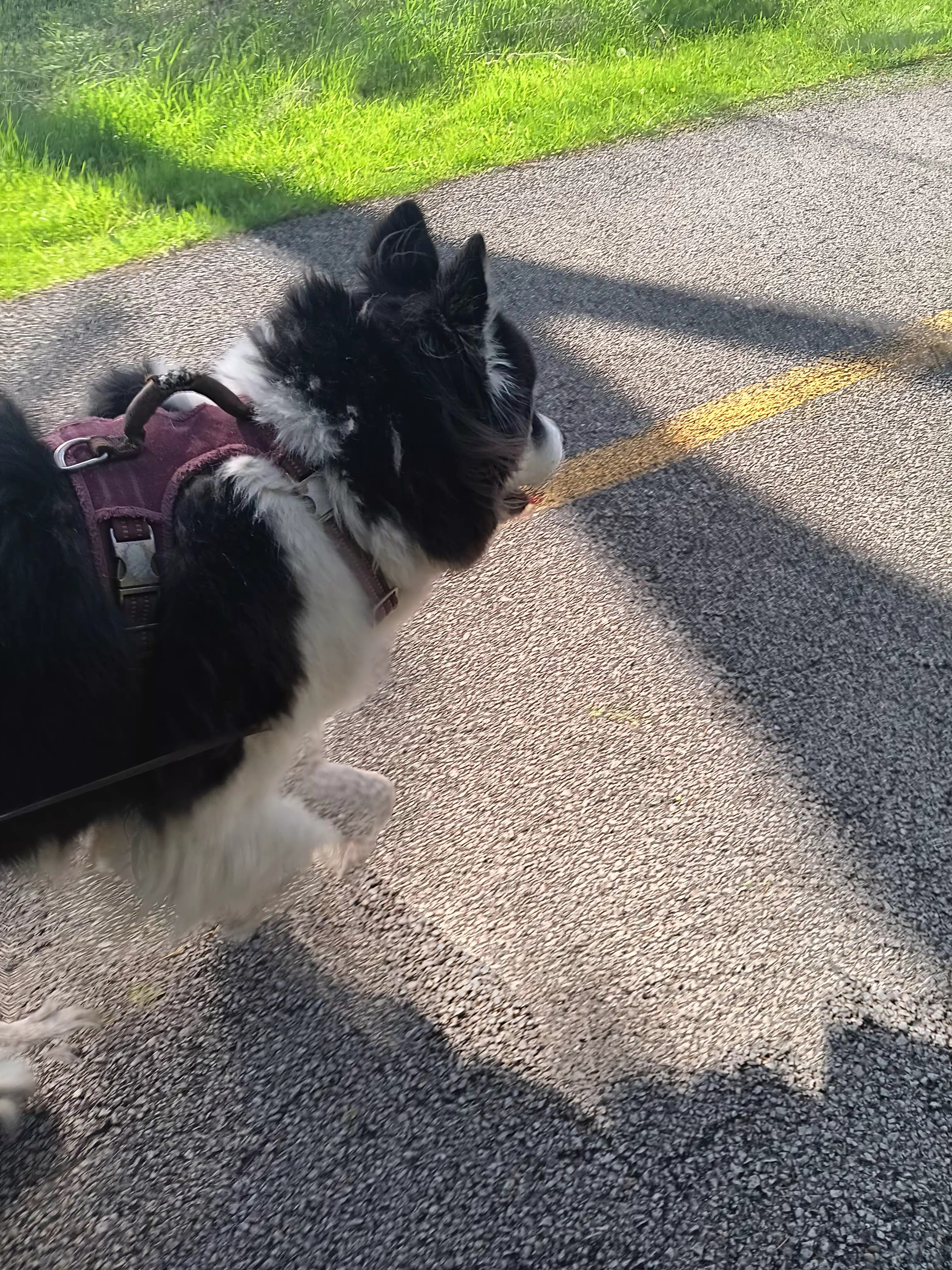
Picture five is the REUNION: I had an incredibly vivid nightmare while in the hospital that he would forget me while I was gone. I was wrong.
At one point I said to/asked one of my doctors, “I had a MINOR stroke, right?”
His answer was (and I quote it directly): “There are no minor strokes.”
I was in the hospital for one week; one neck surgery; a million tests, pokings, and proddings; and tons of gratitude about being alive with zero paralysis or facial drooping or any of the other horrors that often come with a stroke.
(I also have Stage One Emphysema, which I can sometimes feel burning a little bit at the tops of my lungs. Quite an accomplishment for 59.)
The nurses and various attendants (and some of the doctors) who took care of me were like human angels.
One wonders why the ones seemingly working the hardest were also the ones being paid the least (or at least too little in comparison).
The same was true the last time I was in the hospital for a week twelve years ago (same hospital, different issue, what they sometimes euphemistically refer to as a “mental breakdown”). (I recovered quickly then too and ended up smarter than when I went in, both times.)
But this pay issue $, or lack of good pay issue, it’s like the so-called leader of the free world at the moment, who spends (obviously) the vast majority of his time golfing and re-posting total crap on the internet; or re-posting total crap on the internet while golfing; or telling endless lies about how he won the 2020 election and didn’t start an insurrection; or consuming vast quantities of Mickey D’s and diet Coke while viewing propaganda TV featuring none other than himself.
Hey people who like this guy! The free world really needs a president who’s willing to do a little real work around here once in a while.
The best you can say for him is that he both does, and does not, back down.
He makes Dick Nixon (Nixon the dick) look like Abraham Lincoln.
His actual presence in a room is overwhelming, especially to weak-minded sycophants.
He isn’t a racist in the sense that he values absolute loyalty over skin tone every time.
He hires some really good-looking women.
He’s married to one who appears to want to have zero to do with him (can’t say as I blame her).
He falls asleep in the meetings all day long because he stays up all night long posting crap on the internet and talking on the phone if he can find anyone who will answer.
He NEVER shuts up.
Him and his pals are the ravenous nihilists Dostoevsky predicted.
Sometimes he’s kinda funny and almost likable for some reason!
The uniform (or costume) he’s concocted for himself is hilarious.
I just wish all these other fools wouldn’t keep wearing the same thing.
If he invited me to the White House I would probably go and try to talk some sense into him, not that I would hold my breath about the results.
But I would never travel the country singing his praises like Kid Rock, who I used to think was a kind of genius. Same with Snoop Dog. Come to your senses y’all!
A hundred and forty-six years ago, the great Russian saint-and-sinner Dostoevsky wrote: “Above all, don’t lie to yourself. The man who lies to himself and listens to his own lie comes to a point that he cannot distinguish the truth within him, or around him, and so loses all respect for himself, and others. And having no respect, he ceases to love.”
Kierkegaard, the great Danish philosopher, Christian Existentialist before there was such a thing, and wild-hearted comedian bachelor, said: “Above all, do not lose your desire to walk. Every day I walk myself into a state of well-being and walk away from every illness; I have walked myself into my best thoughts; and I do not know of any thought so burdensome that one cannot walk away from it.”
The fact that he also, quite literally, collapsed into the gutter and died while walking at the age of 42 in 1855 has nothing to do with it. He died while he was out doing what he loved. What better way can there be to expire!?
He was writing to his sick sister-in-law who was having trouble getting out of bed because of clinical depression. He was throwing down the gauntlet in an effort to try and get her to do something to save herself.
His most famous quote comes from a private letter.
Because that’s the kind of writer he was.
All dogs in all times and all places and of all sizes and all kinds, obviously agree very heartily with these sentiments, at all levels.
Dogs literally possess the wisdom of philosophers (maybe without knowing it but don’t be so sure).
It is said (and I have seen it) that they can also accept their own bodily deaths with perfect equanimity; because they know that this too is only part of the world; and they love the world – but not too much.
End Note: Thanks to the great Michigan poet Jim Harrison from whom I first heard this quote some time in the 1990s.
And, of course, co-starring, the one and only Boo!