Age Concerns by Paul Kimm

(We are pleased to debut Paul Kimm on the site today. It won’t be his last! Leila and DWB)

In the 1980s, I had a job working for Age Concern providing decorating services for the elderly. As long as they bought the materials, Age Concern sent me to paint or wallpaper however many rooms they wanted redecorating. Whilst a few of the people whose houses I went to barely spoke to me, the majority welcomed my company. Here are some of the stories they told me during my breaks. All of the below is true, and some of it is factual.

Mrs Goodson’s house

Mrs Goodson, 76, lived on the Easthill Estate. I was there to paint her kitchen and living room; white ceilings, magnolia walls, and all woodwork in white gloss. I did the living room first. After the first day, she insisted I didn’t bring a packed lunch as she’d feed me, and if I came earlier, would cook me a small breakfast too. So, from the second day I arrived at eight-thirty each morning, and for rest of the week, enjoyed a breakfast of two slices of white bread toast, buttered heavily, with two eggs. To show off her culinary prowess the eggs went from fried, to poached, to scrambled. They remain the tastiest I’ve ever had. For each breakfast she also insisted that I had a small 330ml bottle of Guinness with my breakfast.

It’s good for you. It’s the iron in it. Good for bones, blood, the lot. A little bottle like that, and some eggs, sets you up for the day. It’s what I’ve had for decades and I’m fit as a fiddle. It was my John who started us on it. He was seven years older than me, and only gone just last year. So, did him no harm, did him good. I get crates delivered, twenty-four in a pack lasts me for a month, at weekends I don’t bother, but during the week it’s just right. Keeps you fit. Here, let me show you.

She took me to her under stairs cupboard and opened it to show me the crate, half empty, with rows of bottles in it. Then we went back to the kitchen, and I sat down at the round table, with three chairs tucked under it. She cracked two eggs into a frying pan, and they sizzled and popped immediately, before sliding two slices of bread into the grill above the hobs.

I get them delivered. I can’t carry a box like that, but my John could, still driving he was, and could carry them up from the car. Like he never really got old, that Guinness kept him going. I never learned to drive mind you, so our Rob sold the car after, only for a few hundred pounds, as we’d had it years. John was good at looking after the car as well, had all the tools and that, he’d learned mechanics in the forces. He did that in the war too, fixing vehicles, always strong. He always said it was the Guinness, the iron in it, giving you strong bones, keeping you fit. He never was sick until the end. Never saw him once have a day off, and right until his last week he was carrying in those cases, bending over, and slotting them under the stairs. I can still bend down to get a bottle or two out myself, but it’s years since I could carry twenty-four of them like that. Tell the truth, don’t know if I ever could. Anyway, like my John, a bottle a morning keeps me fit. It’s good for you, and our Rob sometimes brings me another crate when he visits too. If you’re still here on Friday, you’ll probably meet him.

I thanked her for the breakfast, telling her how tasty the eggs were, and for the Guinness. I remember feeling very satisfied and full each morning so did some of the lighter decorating work first whilst the breakfast and drink settled. From the Tuesday to the Friday it took to finish the job she told me more about her John, his strength, and numerous skills, never becoming emotional in anyway other than a bright happiness reminiscing about him. On the last day I met her son, Rob, who was more than twice the age I was then.

You’ve done a smashing job here. Much appreciated mate. Kitchen and living room both look way smarter. It’s a good scheme they’ve got going with Age Concern. Might have to get you back to do more, if we can get me mam some more paint in. That’d be alright, wouldn’t it? The upstairs hasn’t been done for over a decade I reckon. Not since my dad got sick and couldn’t come down for years.

I assume he saw the confusion on my face, as he then told me more.

Ah, I bet me mam said nothing. She’s never spoken about it. Likes to remember him before he got ill, when he could still help around the house. I’ll say no more on it. She doesn’t want those years being the memory of him, and that’s fair enough. It’s best for her she lies to herself, and we go along with it. I’ll say nowt more on it. Thanks again mate, cracking job and may see you again.

When I left Mrs Goodson said thank you and gave me two bottles of Guinness to take with me. I don’t know if she ever got more paint. Possibly one of the other decorators got put on the job next time, but none of them ever mentioned it to me in the yard.

Mr Mason’s house

Mr Mason also lived on Easthill Estate, it being the biggest in town, and was having his living room, hallway and landing painted, a longer job because of the banister and higher ceiling in the stairwell. He would keep drinks and biscuits coming and watch me work, occasionally telling me stories of his younger life, whilst I was painting.

I’ll tell you the best story I’ve got lad. It was 1963, remember it clear as day, even though it was at night. Got arrested, didn’t I? Out of the blue it was. I was still in the army, had been for years, cos I stayed in after the war. I was in London, was driving a Land Rover. That was mostly what I did, drove about on errands for officers and that. A bunch of coppers pulled me over, and took me in. Arrested me for the bloody Great Train Robbery! Can you believe it? Remember it? Ronnie Biggs and them? They thought I was one of them because they’d escaped in Land Rovers, and there’s me in mine trawling round London, odd jobs for my gaffers, and they reckoned I was one of the robbers. Asked me questions for ages they did. Hours.

I finished a section of banister, put my brush and paint pot down, sat on a stair, and asked him what questions they had.

All sorts. It was like they’d decided. You know, like I was definitely one of the robbers. Was in my uniform and they said that was to throw them off the scent. I said to them to check the Land Rover, there was nowt in it, and they said it was probably a decoy. Bear in mind, I didn’t actually know anything about the Great Train Robbery. It wasn’t called that yet, and they weren’t telling me what had gone on, just asking me where the others were, where the money was, where I’d got the military uniform from. I didn’t know until they finally let me go, and saw the papers the next day. Eventually, they called my barracks to check. Someone came in, explained who I was, and they let me go. No apologies or nowt, like I’d wasted their time.

I bent down to get my paint and carry on with my work, but he asked me to wait a minute, so I sat down again.

Thing was, I remember it like it was last night. Never said this to my wife, but that was the most exciting night of my life. Got married, lived through the war, spent two decades in the army, but being arrested as a Great Train Robber is my greatest memory. I remember it more than anything. Every now and then it’s all I constantly think about. That’s the thing with being old, maybe the only good thing, lots of memories, so many of them, even if some of them visit you more than others.

I recall Mr Mason being quieter for the rest of the week. He was excited to tell me his story about being arrested as one of the Great Train Robbers but it was like it had exhausted him. He didn’t mention it again for the rest of the job, or share any other major memories, and by the last day he’d stopped watching me work.

Mrs Smith’s flat

Mrs Smith had a one-bedroom flat near the beach. You couldn’t see the sea from her window, but you could from the small, shared garden at the front. Mrs Smith had saved part of her pension for nine months to afford the paint for every room to be done. She was a soft voiced, but chatty lady who made me tea with milk, a drink I’ve never liked, several times a day, insisting I take a break with her, and I hadn’t the heart to tell her I didn’t like it. The twenty or so cups of tea I had in the week I was there being the most I ever drank.

I moved here after my Albert passed. I didn’t want to stay in a big house, like we had, bigger than we ever needed, so I sold it off, paid the rest of the mortgage and got this place. More than twenty years ago now. Maybe even close to thirty now. I wanted to be near the beach, and have a view of the sea if possible, but when everything was paid off there wasn’t enough for that. This place suits me though. I like it enough. Enough for me. Do I keep saying ‘enough’? Ooh, it’s a miserable word, isn’t it? Enough. Make do. Get by. That’s life though, isn’t it? Life is enough. Anyway, I’m getting all maudlin, and I’m not maudlin at all. I’m a happy person. Quite happy. Happy enough. That’s me, Paul.

Mrs Smith laughed at herself, telling me not mind her rambling, and I went back to continue the decorating. The next milky tea came just over an hour later.

Sorry about before. I don’t mean it like that. All that daft talk about ‘enough’. We had it good, me and my Albert. No kids. That wasn’t for us it turned out, so we had a nice house. No kids, and a big house. Too big for us really, but we had the money for it with no kids. We used to go on holidays abroad before others did, before it became all that popular. Cities and seasides. Seville and Marbella in Spain. Very nice. Rome and Almalfi in Italy. Very nice too. Then my favourites, Athens and the islands in Greece. Definitely the nicest. Anyway, listen to me twittering on. Am I saying ‘nice’ too much now? Deary me, I’m all ‘enoughs’ and ‘nices’ today. Those holidays were very nice though. We’d always send ourselves a postcard, addressed to our own house, with a little note about our trip, like we were writing to another Mr and Mrs Smith, so we had a memory and Albert quite liked collecting the stamps. Often they were waiting for us when we got back or arrived a little later on. I’ve still got them in an old biscuit tin somewhere. I’ll have to dig them out. I can’t remember what we wrote on them. It was a long time ago now.

The next day Mrs Smith searched the cabinets and cupboards in the room I was working in. She apologised for being in my way, even though she wasn’t. Shortly after returning to the kitchen she called me through for another tea.

I’ve found the tin of postcards. I haven’t looked at these in years. Could be ten or more, twenty even, since I’ve had a look. I thought we could look together if you like, while you have your tea.

She opened up the old square tin, the picture on its lid showing a photo of the biscuits it once contained. Inside, there was a stack of brightly coloured postcards, the paper on them looking soft to the touch. Mrs Smith took the top one, a photo of an old church with an orange tree in the foreground, and the word ‘Sevilla’ in the bottom right corner.

There you go. I mentioned we went to Seville didn’t I? Lovely orange trees everywhere. All over the city. Let’s have a look what silly message we wrote to ourselves.

She turned over the postcard, and on the back the right side had the address below the names ‘Mr and Mrs Smith’, but the left side was blank.

Oh, let me look at some more. We must have forgotten to write on this one. Ooh, one from Turin. We went to Italy more than once. Oh, no message on this one either.

Mrs Smith took out a pile in one go, turned them over, and started dealing them out on the table, each one with their address and a stamp on the right, but all the left-hand sides blank.

Well, I never! I told you yesterday we used to send ourselves a postcard, with a message. I was sure we did. Looks like I’ve gone and imagined it. So silly. It must have been to his brother Geoff, and his wife Gladys. They were Mr and Mrs Smith as well. That must be it. Silly me. I would have liked to read those messages, but Geoff and Gladys are long gone now too. I’ve no idea if they kept them. I’ve still got Albert’s writing though, on those addresses. Just not the messages. So silly of me. I was so sure about it when I told you about our little, silly postcard tradition. Now I can’t stop saying silly, can I? Oh well, it was a long time ago now, but so is yesterday nowadays for me. Everyday feels like a long time ago. Just so silly.

After that day I wasn’t invited into the kitchen as much. Mrs Smith mostly brought the mugs of tea to me. When I was painting the kitchen and the bathroom, if she wasn’t looking, I’d tip some of the tea down the sink. When the job finished, she said goodbye and asked if I might pop round sometimes for a tea and a chat. I said I would, but I never did.

Paul Kimm

(Image by CJA)

Tommy Twinkle Toes and the Parrot by Michael Bloor

My wife Dorothy’s Uncle Derek reckons that he, in effect, bought the parrot off his crooked father-in-law, the veteran jewel-thief Tommy Twinkle Toes (that really was what the Sunday paper had called him, back in the day: ‘Tommy Twinkle Toes’). Derek took in the parrot when Tommy was arrested and also lent Tommy quite a bit of money towards the costs of his defence lawyer. After Tommy was found (very) guilty, Derek visited him in the jail and asked him what he was to do with the parrot. Tommy begged him to keep it, saying it that would be a consolation to him, in his lonely cell, to know that the bird was in a good home.

Continue reading

I Thought I Heard by Bill Tope

“I remember a whisper I heard when I was seven; a uniformed policeman was addressing my aunt, with whom I lived. ‘Your brother, Mrs. Allen,’ he said, ‘lost his life in an automobile accident last night.’

“Aunt Livy’s only brother was my dad, Tom Lewis, Jr. I remember thinking to myself that I was named after him, which made me Tom Lewis, III. I heard a sudden sharp intake of breath and then screaming. I remember worrying about how Aunt Livy was taking the news, but then I realized that the heavy breathing and screaming was coming not from my aunt but from me. But nobody else could hear it. They paid me no mind.

Continue reading

Wild Bill’s Thursday Afternoon Show by Michael Bloor

‘Hi there and welcome to The Thursday Afternoon Show on Radio Sherwood, with me your humble host and Turntable Operator, Wild Bill Hilcock…

[a burst of Wild Bill’s personal jingle]

‘Not content with simply playing you The Very Best of The Seventies, we also have the latest instalment of our weekly feature: our “Meet the Muse” live interview. This week we’ll be talking to Jeanette Brailsford, who as a sweet seventeen year-old, became the immortal muse of Dogsbreath Donovan, the onlie begetter of that great seventies hit, “Jeanie Baby”…

Continue reading

Castles in the Air by Bill Tope

(Today we welcome back Bill Tope,–who appeared earlier in a collaboration with Doug Hawley–for his first solo appearance on the Springs. The image is by our friend CJA)

Tommy’s voice was low-pitched and urgent as he murmured beseechingly to his wife. She didn’t respond. He gazed at her, strewn across their bed, her auburn tresses spilling over the pillow. She looked beautiful to him, despite the way she’d let herself go since the baby died. Tommy remembered that it had been only weeks, but the heartbreak seemed to stretch back as far as he could recall, years almost, owing to Rachel’s mental history.

The child they had waited for five years for had been stillborn and it still took his breath away to remember. Rachel had taken it especially hard. She felt as though she had let him down. He was forever telling her she hadn’t failed him. That sometimes, things just happened. She worried that it was because she had smoked occasionally during her pregnancy and had maybe one or two glasses of wine, late in her term. He told her she was mistaken.

“Baby,” he said, “you need to get up and take a shower. Brush your teeth and wash your hair.” It had been so long since she first became immersed in her grief.

“I can’t,” she said simply.

Tommy nodded. He understood that he would just have to be patient. What was it the priest had said? Time heals all wounds or some nonsense like that. But maybe it was true.

“Can I get you some fresh clothes, Rach?” he asked.

She sniffed her bed clothes and nodded. “I’m sorry I let myself go, Tommy,” she said in a small voice.

“It’s alright,” he told her. “You heal. Take whatever time you need I’ll be here for you.” Tommy slipped from the room and closed the door behind him. Thank goodness people had stopped dropping by to offer condolences. They meant well, he knew, but each time they tore the wound wider. It would just take time, he told himself again.

All their lives was wrapped up in just the two of them. Diagnosed years before with avoidant personality disorder, Rachel was inordinately shy, withdrawn and non-assertive. She had drifted from one unchallenging job to the next since her marriage to Tommy, four years before, at age 21.

“I quit my job today, Tommy,” she said one day.

“But why, Babe?” he’d asked. “You loved that job.”

Rachel had been employed at a nursery, caring for and selling plants. She adored all living things.

“Mrs. Dickinson,” she said, “told me I wasn’t doing a good job.”

When Tommy called her boss, she told Tommy that she had merely made suggestions to Rachel, regarding how she could make more sales.

“Rachel got very upset, Mr. Johnson,” said Dickinson. “It wasn’t even criticism, and she went all to pieces.”

Tommy explained about his wife’s diagnosed personality disorder and intense shyness and her boss seemed sympathetic. “Tell her to come back,” she said. “I’ll hire her again. She’s very good with the plants, but she gets her feelings hurt easily.”

But Rachel wouldn’t return to Plants R Us, saying she felt inadequate.

The first year of their marriage, at Tommy insistence, Rachel had seen a therapist, but the results were a mixed bag. Dr. Fuller explained Rachel’s condition to Tommy, who attended the last session with her. The doctor said that based on his private talks with Rachel, he concluded that emotional abuse during her formative years and sexual trauma at 17 had led to her condition.

“She never told me about emotional abuse,” Tommy had said. “But, she almost never talks about her family.” She had told him about her rape as a teen. Intimacy between them had been touch and go.

Because of her associated depression, the therapist had prescribed some antidepressants, but they seemed to have little effect.

One day Rachel approached Tommy and placed her arms around his neck. She didn’t often show overt affection, thought Tommy.

“Tommy, I want a baby,” she’d said.

This was wonderful news, thought Tommy. “Are you sure, Rach?” He had begun to despair of ever starting a family.

“Of course,” she said, leaning in for a kiss. “It would make my life complete.”

Rachel’s therapist had retired, so Tommy consulted Rachel’s personal physician and asked what he thought.

“Could be the best thing for her,” declared the elderly doctor. “Might straighten her out.”

The pregnancy had gone well. Rachel seemed to have found a purpose for her existence. She stopped smoking for the most part, and drinking and getting high. She was attentive to her diet and got plenty of rest.

Then she lost the baby. In her seventh month, things went all wrong. Rachel felt sharp pains in her abdomen and began bleeding. Tommy called an ambulance and rode in the back of the vehicle on the way to the hospital.

“I’m with you, Babe,” he told her. “You’ll be alright.” But she wasn’t.

When Tommy asked her OB-GYN what had gone wrong, she said, “Mr. Johnson, there was no way to foresee what happened to Rachel. Sometimes there is no reason. Shit happens,” she said bluntly.

“I can’t wait till the baby’s born,” said Rachel dreamily from their bed several days later. She ran her hands over her belly.

Tommy stared at his wife. He had been warned by the doctor that he contacted over the web that Rachel’s reaction to her grief might be fantasy-prone personality or FPP, which she likened to maladaptive dreaming disorder, which she’d had as a teen, but with a difference.

“Your wife may not recognize what reality is and be able to tell it apart from the fantasy world that she creates. You really should seek professional help for your wife, Mr. Johnson, outside online resources.” Tommy agreed that he would.

But when Tommy brought the subject up with Rachel, she was resistent. “I’m getting better,” she claimed. “I’ll tell you what,” she said, “I’ll get out of bed and take a shower and wash my hair and get dressed in clean clothes and you’ll see, I’ll be all better.”

Reluctantly, he agreed. And for a short while, Rachel was vastly improved, if not quite her old self. She fluttered around the house, busying herself dusting and mopping and so on. Tommy had to tell her to rest up, which she did.

Next day, she was again languishing in the bedroom, listless. She practically stopped eating. Tommy began to worry when she started losing weight. He entered the bedroom bearing a tray on which he brought her a toasted cheese sandwich and a bowl of tomato soup, long her favorite. She promised she’d eat it, but when he returned an hour later, the meal sat untouched.

Tommy glanced at his cell phone and noted the date: Oct. 30. Today was the three-month anniversary of the loss of their child. He sighed. In all that time, almost nothing had changed. He had managed to get Rachel to bathe every few days, but otherwise she seemed little improved. She stayed in bed all day.

Tommy was replacing the vacuum sweeper in the hall closet when he heard a thump from behind the bedroom door. What had happened? he wondered wildly. Had Rachel fallen? He slammed the closet door and rushed to the bedroom, threw the door open.

“Rach?” he cried. She was nude and lying upon the floor, between the bed and the door. She had fallen out of bed. He knelt and lifted her back onto the mattress. She seemed weightless. What he saw horrified him: she was stick-thin. She had lost so much weight. She lay limply where he laid her on the surface of the bed. Tommy cradled her shoulders and held her close.

“God, Rachel, I’m so sorry. I didn’t know it had gone this far.” She murmured into his shoulder and he jumped. “I’ll get help, Baby,” he promised, and gingerly laid her flat upon the mattress. Taking out his cell, he called 911 and got the operator, told her his name, address, what he could about his wife’s condition. The operator promised the EMTs would come straight out.

15 minutes later a loud knock sounded on the front door and Tommy rushed into the living room, swept open the door.

“Thank you, thank you,” he stammered, and led the first responders to the bedroom, answering their questions on the way.

“Wait here, Mr. Johnson,” said one of the men. “We’ll take it from here. Tommy waited outside the door. After a few seconds, the man who appeared to be in charge reemerged and asked Tommy, “where is she?”

Tommy’s eyes widened and he rushed into the bedroom and found the room empty.

“Could she have moved from this room?” asked the man.

Tommy collapsed on the neatly-made bed and stared vacantly around the room. The EMT was on his radio. After a moment’s conversation, he turned to the other emergenccy worker and explained, “Rachel Johnson died during childbirth three months ago.” He turned to Tommy. “That’s right, isn’t it, Mr.Johnson?”

Finally Tommy found his voice. “Yes, I guess it is.”

Meanwhile, the other first responder had fetched a collapsible gurney.

“Lie down, Mr. Johnson,” suggested the man. “We’ll take you to the hospital, get you some help.”

“Okay,” said Tommy, as he stretched out on the gurney, felt himself being strapped in. As the EMTs wheeled the gurney through the front door, Tommy felt the cool breeze of Autumn on his skin. “I need to leave a note for my wife,” he told the men.

“We’ll do it, Mr. Johnson,” said one of them.

“Okay,” said Tommy. “Thanks.”

Bill Tope

Happening (A Minologue) by Geraint Jonathan

If I hear you say ‘what happens, happens’ just one more time, I’ll be responsible for my actions and it won’t be pretty. What happens happens, what the fuck am I supposed to do with that? What doesn’t happen doesn’t happen, what do you say to that? No don’t, please, don’t answer that, I’m sure there’s a perfectly unreasonable explanation. Things happen, don’t happen, might happen, have happened, will happen, may never happen: I get it. We all just happen along, as you say. But at this precise moment, I happen to be what’s known in the trade as mightily pissed off. Unnervingly so, if I say it myself. That what happens just happens to happen because it happens to happen is no good to me. As to what’s actually happened, it could’ve done with not happening, trust me, its having happened at all being the very thing that shouldn’t have happened. And even though it has happened, I can’t, like you, shrug it off saying ‘these things happen.’ That these things of course do happen is of no consolation at all. They’re not supposed to happen, that’s the whole point. But it’s happened and I’m the one it’s happened to. There’s no getting away from it. Or perhaps there is. Maybe you happen to know what no one else happens to know. Any chance of that? Happening, I mean.

Geraint Jonathan

(Image by CJA)

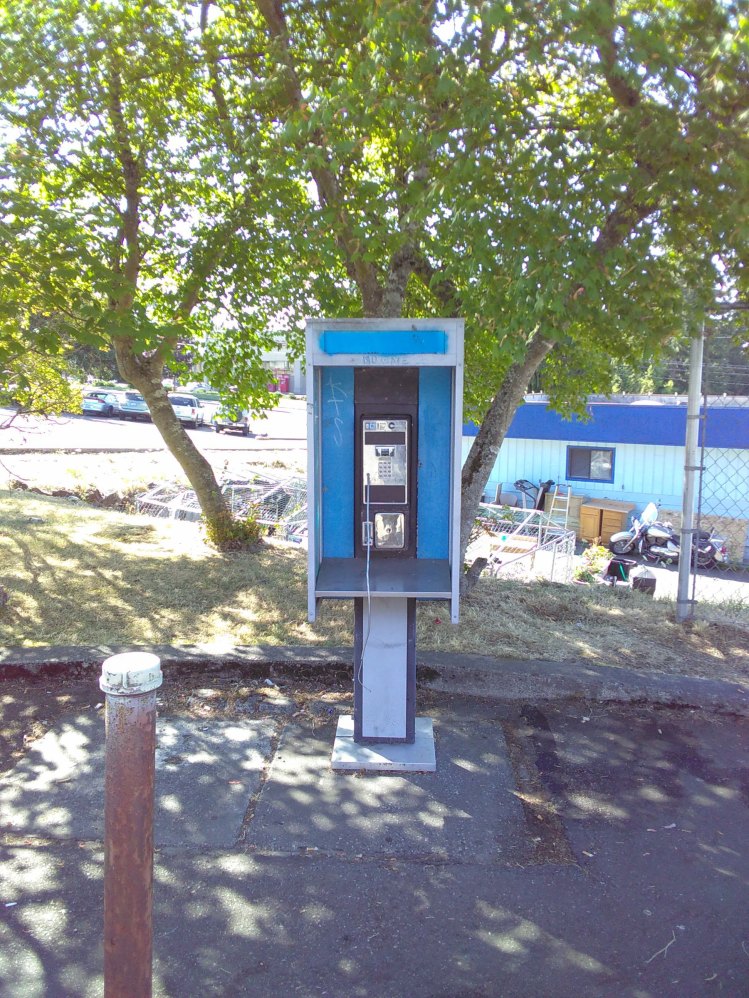
The Picture on the Phone Pole by Christopher J Ananias

The streets of Marion were one way, even the alleys. If I went past the address, it would be a hassle. My GPS led me with its robotic commands like I was its mindless servant. That’s about the way I felt driving the Medicaid Taxi van, old No. 4, that smelled like a dirty laundry hamper. The so-called clients, “The Riders,” gave me a hard time if I showed up late for their free ride.

“They’re a bunch of deadbeats, Cal.” I said on our daily bullshit call.

Cal, who was always ranting about them, suddenly said, like a big company man, “Hey, don’t talk about our riders like that.” He was a fanatical Trumper too, hounding me to vote for the orange man. I almost did, thinking Trump was for Christian values, what a crock. Now I’m wondering about Biden and his senility.

Continue reading

Snow at Twilight by Nick Young

He tried to move as little as possible, shifting only enough to wrench free his right hand which the fall had left partially pinned underneath his backside. The pain in his left leg was excruciating, sending blinding white light pulsing behind his tightly closed eyes. The leg was grotesquely twisted and broken. He knew without looking that the fracture was compound and he could feel he was losing blood.

Opening his eyes and turning his head slowly he saw the sky above, darkening, the angle of the sun slanting very near to the horizon. There was perhaps an hour of light remaining. He wondered if that much life was left to him.

It began to snow, a sifting of fat listless flakes. Through the haze of pain his memory flashed on a snow globe his mother had long prized—tiny Currier and Ives Christmas carolers gathered beneath a street lamp, silent mouths open wide amid the swirling blizzard. He winced and let out a low moan, one that carried as much despair as agony.

The unyielding granite wall of the fissure pressed hard against the left side of his face. It was a cold reminder that in a heartbeat his life had pivoted irrevocably. Such an event was no longer either an abstraction or a fiction’s plot device  It was an errant step on a mountain trail he had traversed before, a small patch of friable rock. His footing lost, down he plunged, thirty feet  until trapped by the narrowing vee of the crack. And as he struggled to raise his right hand—almost surely broken—to brush the falling snowflakes away, he silently cursed his folly.

It was to have been a late-afternoon hike, just above the tree line for twilight pictures of the rising late-October moon, then down and home. He was no back country tenderfoot: he had made the trek before, more than once; but this time he allowed his judgment to be clouded by hubris. He would forego anything he did not deem vital. For such a short trip, this time he would take only a bottle of water, a handful of trail mix and a camera. Nothing more. The cell phone that could have been his salvation he had locked in the glove compartment of his Jeep a mile down the mountainside. There would be no rescue—there could be no rescue. His wife would not grow worried until well after sunset and it would be hours more before a search party found him. By then he would be gone, bled out or frozen.

So now, with each throbbing stab from his shattered leg, he could see before him with great clarity what most men are not privy to—the imminent coda of his life. In the crepuscular light he marked the snow’s quickening descent. He thought of his parents, relieved that neither of them was alive. His mother, especially, would have had her heart broken to know her son had died so young and in such circumstances, mortally injured and alone on a mountainside.

He was her first-born and she had idolized him as the pride of the family—from his glory days as a star athlete and student in high school through law school at Yale, marriage to a beautiful, intelligent woman, two great kids embarking on their own lives in the world, partner in a fine law firm, the respect of his peers. At the age of fifty, he’d had the world knocked.

All thrown away.

As his life ebbed with the light of the day he was brought through the pain to take stock of himself. Yes, there were his many successes, what the righteous among his parents’ church-going friends would term “blessings,” but he knew there was deep within him a singular, poisonous moment that he could neither erase nor atone for, a sin that ate at his core during his darkest hours of self-doubt and loathing. And he knew that he would soon leave this world with the stain still on his soul.

It was a beautiful, mild day in early September, one that brought a respite from the summer’s oppressiveness. He always remembered that clearly—the sunshine, the gentle breeze stirring through the branches of the big willows that flanked the family farmhouse. He was eleven years old, just home from school and ready to ride his bike up the road to the next farm to play baseball with the neighbor boys. His father was in the fields, his mother at the kitchen sink preparing the evening meal when he spotted the dog slowly trotting up the long gravel lane leading to the house. He’d never seen the animal before. It appeared to him to be a border collie, with mangy dark-brown fur, its head hung down and tongue out. As it angled off the driveway and up toward the front of the house, he leaned his bicycle against the wall of the garage and quickly followed.

His mother had also seen the dog and by the time he reached the porch, she was at front door trying to shoo it away.

But it wouldn’t go. It backed up a step or two with each wave and shout, then moved closer again. He could see by the dog’s matted, dusty coat that it was not someone’s indoor pet. His mother had brought with her a broom, opening the door enough to try to push the dog back and send it on its way. But it would not leave, instead sitting back on its skinny haunches and looking at his mother with pleading eyes. It was clear it was hungry—for a bit of food and a small measure of human kindness.

He called out to his mother to give him the broom, and when she handed it to him, he began to swat at the dog in an attempt to force it off the porch. Still, it would not go, bearing up under his swings, by circling around and beginning to whimper. For a reason he never fathomed, his mother found this amusing, chiding him to stop harassing the poor animal while snickering at the same time. This caused to well up within him a delight and he renewed his blows, turning the broom and using the handle to beat the dog. The poor creature’s distress, its pitiful yelps, only fueled his mother’s mirth and his inchoate fury. At length, after landing several hard blows, the dog retreated, ran off the porch and back down the driveway.

He handed the broom to his mother, who made a small show of her displeasure with him, but her insincerity was thinly veiled and he quietly reveled in the satisfaction his act—and her response—had given him.

The dog did not return,and through his youth he gave the episode no thought. But as he grew into manhood, it returned, shadowing his dark days, rising up to haunt his dreams.

Now, as cold and pain gripped him, he saw the creature again—hungry and tired and lonely, asking so little yet receiving only brutishness.

Why had he succumbed so readily to cruelty? Why?

Clouds had drifted over the moon as it edged past the lip of the crevice, casting down a dull ivory glow. The snow was falling heavily. No longer did he bother to brush it from his face but closed his eyes and wept.

Nick Young

(Image by Leila)

Domestickery by Geraint Jonathan

I did not, of course, get round to building the table, any more than I got round to fixing the faucet on the kitchen tap. The wood was ordered, paid for, but remained in a heap in the corner of what Libby laughingly called my “workshop”. The faucet, on the other hand, proved resistant to every effort I made, and there was no lack of effort. But drip on is what the tap did, and continued to do for the duration. A dishrag or sponge sufficed to cushion the sound but this in itself proved remedy enough to acquire the trappings of parable. So Libby saw it. The table, after all, would have been just that, another table, one to replace the table we already had; or an extra table. Not so the tap. The tap was something else entirely. A leaking faucet, no matter how silenced by dishrag or sponge the drip of water, tells a story all its own, a fathomable one, muted, terrifying in its lack of promise. There was every getting away from it; two ways about everything. That Libby laughed on saying a word like “workshop” is testament to her endurance, and much else besides.

Geraint Jonathan