Miami sunshine put Big Al’s garb to shame. It blazed yellow, much like Al, but, unlike Al, it was the source of life on the planet. Al was human, as he himself would have been the first to admit. “There’s many things I am,” he said, “but a seething ball of molten fucking gasses ain’t one of them!” Miami’s finest laughed. Al was known for the size of his heart, and often spoke about it. It sometimes made for confused but lively exchanges with those more fortunate than himself. In ‘matters of the heart’ there was, after all, Al’s deep love of opera and there was also that which lay in the middle of the chest cavity between two lungs. Monogrammed silk might be said to cover both in Al’s case. As was his wont, Al made much of the confusion, hoping thereby to lighten matters that might otherwise furrow the brows of the young. If nothing else, the yellow of Al’s Miami experience would be a crucial factor in forming much of what he later came to call his “disposition”. For whatever his foibles, this much is certain: Al sought to shine on all, whether they wanted shining on or not. He would be the man dressed as the sun: a vision in yellow serge, with matching hat, silk tie and shirt, just the kind of solar presence a windy city on earth might require. That was Al all over. It was the opera in him.
Essay

Two Quotations that Can Save the Day The Drifter
(All images by The Drifter)
“Happy are you when men insult you, and persecute you, and tell all kinds of evil lies against you because you are my followers. Be glad and happy, because a great reward is kept for you in heaven. This is how men persecuted the prophets who lived before you.”
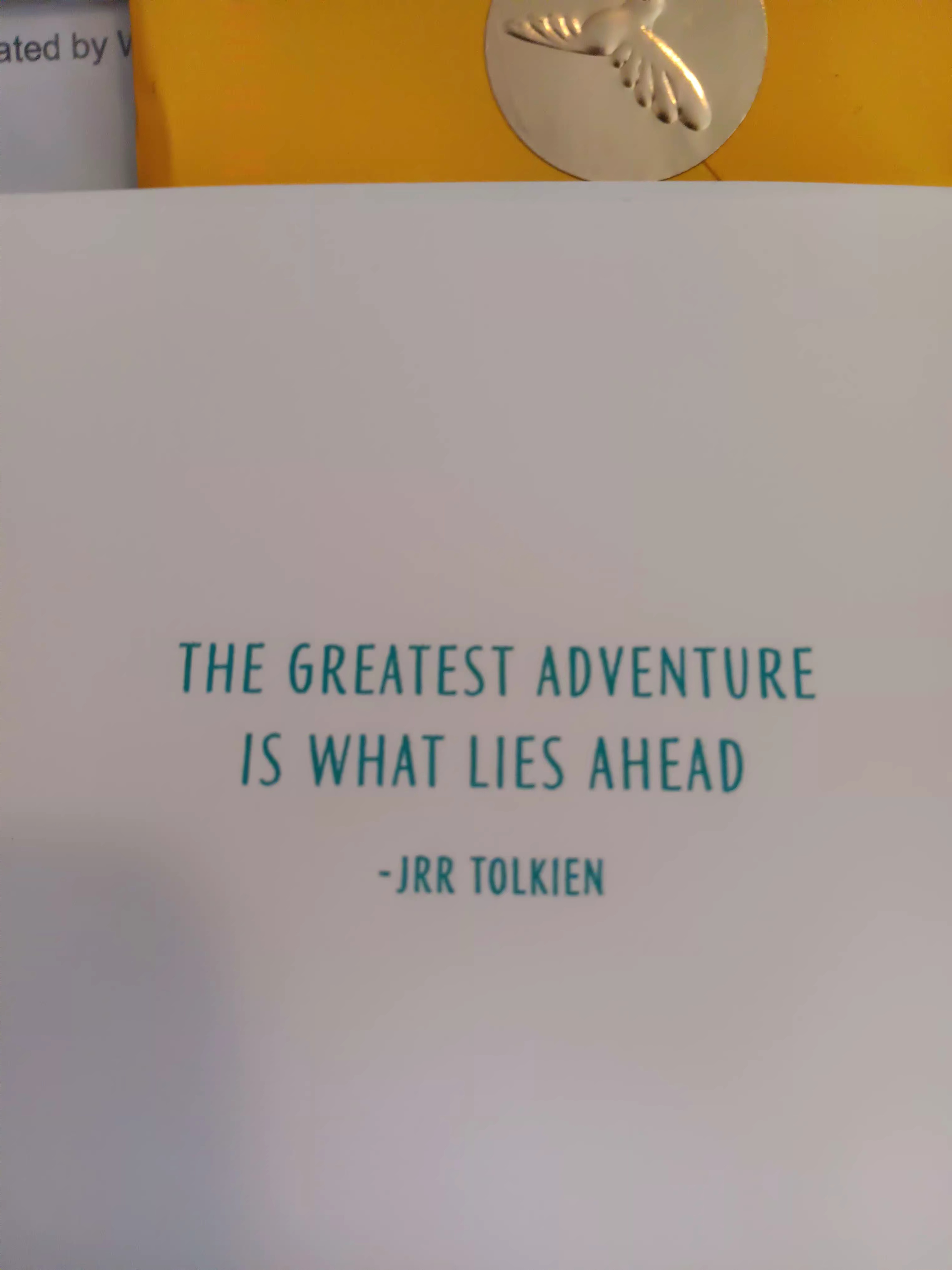
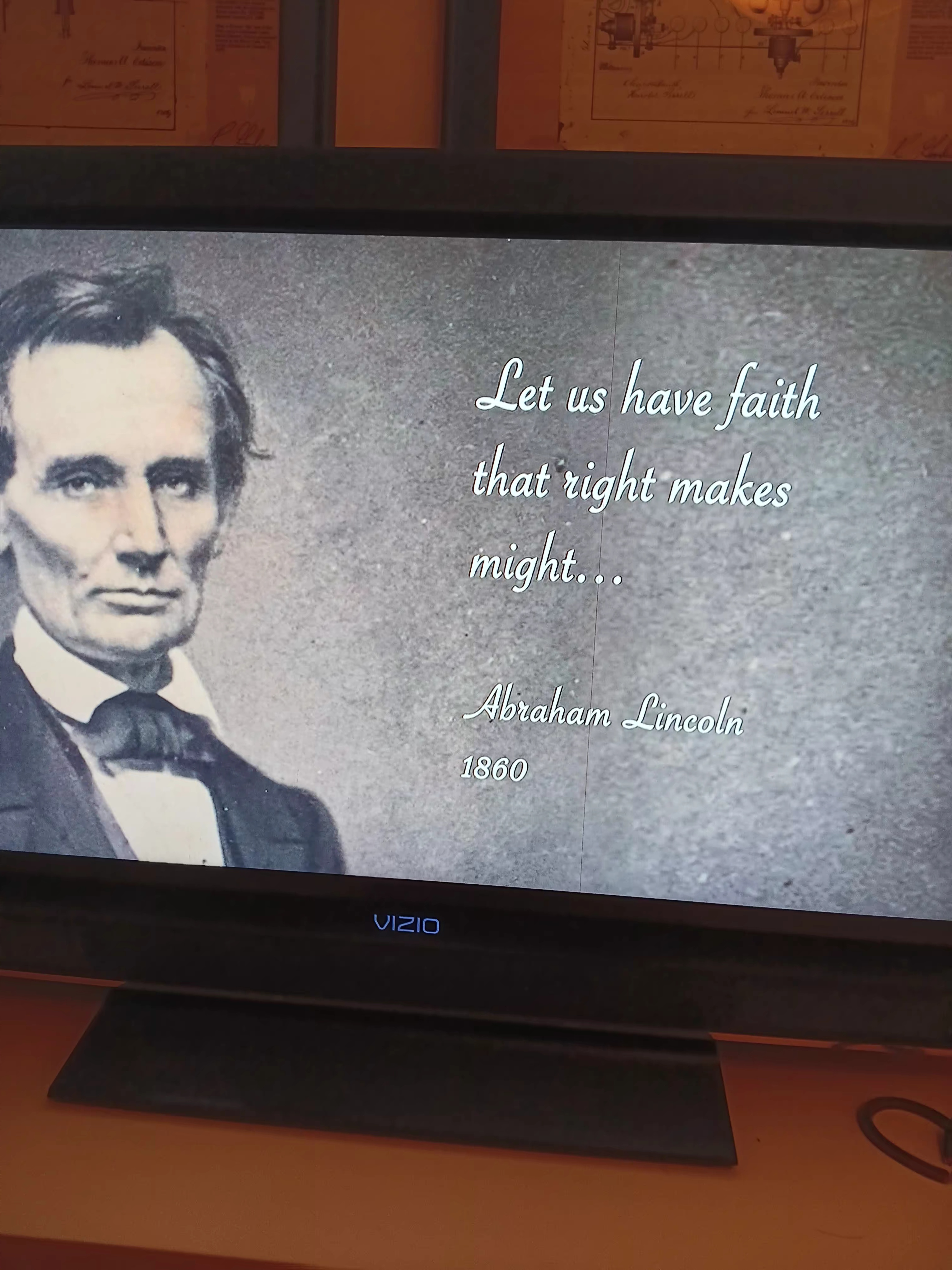
This week The Drifter will write little in order to let two quotations carry the day (four if you count the photos but the D will only write directly about the two quotations included in the text, one above, one below.)
When outrage and despair at the state of the world begin to get you down, to gnaw at, or devour, your mind, heart, and/or soul, these two quotations can bring tranquility and peace in their wake.
But that’s only if you let them work on you. And by work on you, I mean that you have to let these quotations hit you hard. And in order for that to happen, requirement number one is that you must have an open mind, and heart. Secondly, you must be willing to work at it. You have to let the quotations find you where you really are. It used to be called studying. Now when we say “studying” we usually only mean rote learning, i.e. going to “school” and memorizing the dubious “facts” they attempt to jam down your throat. I have two twins who graduated from high school last year, and I myself have taught for a total of at least twenty-three years at many different kinds of colleges and universities all across the rough-and-tumble Midwest, also including a three-year stint at a Catholic elementary school called Saint Leonard Parish School in Berwyn, Illinois, USA, with a ninety-nine percent Mexican student population (Leonard is the patron saint of prisoners, addicts, horses, and depressed people, which is perfect for me, and I also used to listen to Leonard Cohen on my way to and from work every day) (Leonard is also the patron saint of a woman with child or children, i.e. preggo), and I can say with an utter certainty that institutionalized education in the USA no longer encourages critical thinking and imaginative exploration in the way it once did (if it ever did). SELF EDUCATION is just as utterly crucial as it ever was, y’all. Everything is available; now you gotta use it.
The first quote is from Jesus’ Sermon on the Mount, as recorded by Matthew, the Evangelist. “Evangelist” means someone who brings good news to those who desperately need it. Good news that is not easy to swallow, or follow, either, but is also NOT AN ILLUSION. As Jim Morrison said, you need to break on through to the other side before this News will make you leap out of your seat and begin dancing (metaphorically at least).
The second quotation is an entire sonnet by the English radical poet, Percy Bysshe Shelley, who was a kind of Jim Morrison before Jim Morrison (although much less famous than his friend Lord Byron while they lived). Shelley was born into a cush life and he could have stayed there forever had he wanted to, or had he been born that way. Instead, he threw sand in the face of his whole society almost immediately upon opening his eyes and he fought tooth and nail for the downtrodden and the outcast his entire life, and against hypocrisy (he could smell hypocrisy while still in the cradle) – and he died young (29) because he was worn out young in the struggle. Shelley called for and helped invent the modern form of nonviolent resistance. He inspired Henry David Thoreau, who inspired Leo Tolstoy, who inspired Mahatma Gandhi, who inspired Martin Luther King, Jr., who inspired the recently deceased Reverend Jesse Jackson.
The sonnet is printed here in paragraph form in order to defamiliarize it. It works just as well as a prose paragraph as it does in verse.
It was written just a little over two hundred years ago.
The Drifter will draw out what he believes to be the deepest message for our age after this sonnet which sounds so completely familiar and close to what’s going on in our world now that it should (rightly) give you the chills, or at least goosebumps:
“An old, mad, blind, despised, and dying King; / Princes, the dregs of their dull race, who flow / Through public scorn – mud from a muddy spring; / Rulers who neither see nor feel nor know, / But leechlike to their fainting country cling / Till they drop, blind in blood, without a blow. / A people starved and stabbed in the untilled field; / An army, whom liberticide and prey / Makes as a two-edged sword to all who wield; / Golden and sanguine laws which tempt and slay; / Religion Christless, Godless – a book sealed; / A senate, Time’s worst Statute, unrepealed; / Are graves from which a glorious Phantom may / Burst, to illumine our tempestuous day.”
The age of waiting for someone else to do it for you is over. Make yourself be the Glorious Phantom bursting into the True Light, like Shelley did, however persecuted and unfamous he was (and he was both of those things). Everyone has a daimon, or form of genius, inside them. Some choose to cultivate it and will die first before not cultivating it. These are the ones who know the best advice is: DO NOT LET “THEM” GET YOU DOWN (it’s exactly what “they” want). The world has always been this way, and it always will be this way, too (more or less, and more, and less). Even nuclear war or environmental catastrophe, which might wipe out an entire (now global) civilization, is nothing new, since entire civilizations have been wiped out virtually overnight thousands, and maybe even millions, of times – and there has always been the ever-present threat of a dinosaur-destroying-like meteor peeking its head over the horizon at any time, like the worst uninvited guest you could ever imagine (the Native Americans knew this.) “AI”?!? The ancient Egyptians both predicted, and simulated, it, and the cave people in their caves waving their torches around on the cave painting walls while intoning messages to the gods and cutting themselves so they bled profusely while devouring mouthfuls of magic mushrooms had a virtual reality that would knock your socks off if you were wearing any, which they weren’t. Yes, the world has always been this way.
And that means there are always better days waiting somewhere up around the bend. But not in the usual nausea-inducing, Hallmark Greeting Card kind of way.
We always live life for our Future Self (somehow), but we MAKE our future self today. Never stop striving forward with calmness – never (not even when on the threshold of death, or maybe especially not then; Martin Luther, the greatest radical of all time in the modern Western world, believed that everything could change in an instant in that moment).
((Maybe creating is so important to us because the God who made us is also a Creator.))
The Drifter

Why Are We On This Little Rock by Jordan Eve Morral
My thoughts aren’t original or groundbreaking. I know that. But maybe I’m here to remind you to think more deeply about the mundane stuff. Or that which we consider to be mundane. Like sleep. Isn’t it crazy that, for eight hours a day, everyday, humans enter into a state that (basically) makes them dead to the world? Eight ritual hours of nonexistence. Or television consumption. Eyes glued to a screen, watching other people live their lives but doing nothing themselves. And the various needs of the body that a person must obey, or else. If they don’t, the result could be death. No exaggeration. Hunger and dehydration–and a million other things–are real, people. Or the mere fact that humans live in houses and drive cars and hold fancy jobs and arrange the arugula and chicken on their sandwich to look pretty. Is there no such thing as a feral person anymore? Why has everything become so structured? That can’t be human nature, can it? And now most of a person’s life is stored on the internet for the world and all eternity to see. It must seem hypocritical of me, typing this from the comfort of my heated home, but I can’t change how things are, how the world functions in this day and age. The biggest difference my lonely, little self can make is challenging the masses’ way of thinking. Probably nothing noticeable will take place, but maybe, just maybe, people will begin valuing themselves for different reasons. They won’t see their worth in the lofty education they have received or all the connections they have made. They’ll find their meaning in the fact that they exist in a wide world with a consciousness so vast, a person’s whole life could be spent watching a river flow and thinking of all the beauty that has come before. It seems so surreal to think of all that has happened and will happen on this one tiny rock floating through space. We are so tiny, the universe so vast. The most we should expect of ourselves is equal appreciation of divine and earthly pleasures. We aren’t made to follow rules or conform to norms that should exist in the first place. We are made to simply be.
The Drifter Presents: WUTHERING HEIGHTS by Emerald Fennell
“Such if there be, who loves so long, so well; / Let him our
sad, our tender story tell; / The well-sung woes will soothe
my pensive ghost.” – Alexander Pope, Eloisa to Abelard
Continue reading
Everyone is Living Life For the First Time by Jordan Eve Morral
For a long time, I’ve been telling myself that “everyone is living life for the first time.”
To me, the thought justifies my uncertainty, deepens my understanding of others, and reminds me that I should not fear the future or the decisions I must make for myself, by myself.
Remembering that the majority of the world’s population is well under 50 years of age–and still living for the first time despite their accumulated experiences–awakens my own confidence and feelings of abundance. It helps me recognize the potential that is left unused by nearly every person that has ever lived. It is a recollection that shows me that I should have no fear of judgement or fear of pursuing something that is not seen as acceptable or a societal norm. Like, literally, no one knows what they’re doing. They may pretend to have their life under control, or they may think they know the key to existence, but really, they’re just going through life in a way that has been dictated to them since childhood. But, they, like you and me, can unlearn their childhood conditioning and pursue LITERALLY ANYTHING because no one has the right to tell them not to. It’s their first and only life, and they must live it the way they want.
And the same goes for you. So, please, for the sake of everything fleeting and beautiful, read this blog post, and then do something wonderfully unconventional for yourself.
Why fear judgement? It is pointless and holding you back.
Even if people had a valid reason for judging your actions, choices, behaviors–which they never will, by the way–they can never truly judge you in relation to your experiences, upbringing, current situation, etc., so you must not let their opinions bother you. A lot easier said than done, I know, trust me. But there is also the fact that they are likely dissatisfied with their own lives and will die never having pursued anything that truly brought them feelings of joy or freedom. So really, you can’t feel bad for yourself and any negative things being said about you. You can only feel bad for the unhappy human who comforts themself by speaking poorly of another person.
Okay, another scenario. Maybe no one is even noticing what you are doing in your little corner of the world. While this is probable, you likely feel self-conscious and begin to convince yourself that your every move is being watched anyways. Completely untrue; people have their own things going on and do not spend their every moment analyzing you. However, if this were the case, why should that bother you? All it means is that you are brave enough to do something different than the masses. They watch you because they are intrigued and maybe even jealous of your open individuality.
If you are doing something that has never been done before–or something that comes with a negative stigma–it is helpful to think of yourself as a pioneer in whatever domain you are pursuing. There have been pioneers in every major religion, for example, and now those religions have millions of followers. But to get that point of popularity, there had to be some people who were mocked, outcasted, and even martyred before the others could see, accept, and then openly welcome these new ideas. Fortunately for us, most of society has advanced in such a way that we won’t be sacrificing our lives when we chase unconventionality.
No one really knows what they’re doing.
In case you haven’t noticed, every single person around you is pretending they know what they are doing. They try to make it seem like they have figured out how to fulfill their life’s purpose and that they have no doubts whatsoever about the process of getting there. But, really, they have not the faintest clue what’s going on… And that’s okay.
Everyone has uncertainties, even on a day-to-day basis. Should I quit my job? Am I with the right person? Is this how I want to spend the rest of my youth? The rest of my life? You get the gist. The future spans in so many directions, but the average person plays it safe and follows in the footsteps of their parents. If not that, they watch their peers and get in line. No choices are their own. It’s sad, really, that no one knows how to think for themselves any more. These days,“free-thinkers” refers to a minority, and that just isn’t right.
And, when we do have inspirations and epiphanies and messages from the divine, it’s embarrassing how few of us act on them. We waste so much time doubting ourselves and not taking advantage of our health and capabilities that we end up doing nothing at all. In instances like these, we need to remember that there is no right way of doing anything. We must tell ourselves to get up, stop rotting, and take action. Explore our passions, show our unconventionalities, and make progress towards something substantial that is not rooted in tradition.
What even are societal norms and why do people follow them?
There are too many ways to answer this question, but, ultimately, the average human is a coward. And I don’t mean this as an insult. Simply put, we all have a fight-or-flight instinct. And, naturally, most of us choose to flee from the unfamiliar. In moments of stress, fighting seems to be the less safe option and no risk ever worth it.
So, if all we ever do is run back to our comfort zones, of course little progress is made in the way of discovering new territories. We revert back to the ways of our ancestors. Or more commonly, the approval of our family and friends. Yes, the people closest to us may be the ones keeping us stagnant. It’s nothing they do or say, exactly. Rather, it is what we are afraid of them doing or saying if we choose to pursue something outside of the realm of ordinary and acceptable. However, once we recognize this truth, it becomes easier to fight this mindset and break free of the voices holding us back. You are not here to be understood but to understand yourself.
Don’t forget to watch the clouds and talk to the trees.
So, this is the part where you have all these grand ideas in your head. You visualize yourself emerging from the safety of an underground bunker and into the light of every glorious thing you have ever wanted. Good for you. Now, you must chase these things, show yourself as a new person, and break free of every convention you have ever believed or hid behind. It will be hard, at first, but once you truly understand that there is not a single human who is better than you and there is not a single person in your life who has the right to judge you, you will be free.
We have endless possibilities to break the rules, challenge stigma, and enter into our highest states of being. But, with this, we must never forget where we’ve come from. While there is no one who will ever be better than, you will also never be better than them. They may be further behind you in figuring out they have the freedom to decide their own lives without outside influences, but they are human too. Ground yourself in cloud watching and tree talking. All of us are made up of the same soil we stand on. For that very reason, we must develop understanding for others but also live our brief lives on our own terms.

An Imagined Final Conversation at Polhoegda, near Oslo, 1930 by Michael Bloor
On June 17th 1896, a bizarre encounter occurred in Franz Josef Land, in the Arctic wastes. Fridtjof Nansen (1861-1930), the Norwegian scientist and arctic explorer, met Major Frederick Jackson (1860-1938), the leader of a British arctic expedition. Their meeting was an incredible piece of luck: Nansen and his companion, Johansen, had left their ship, the Fram, more than a year previously to try and reach the pole, and were presumed – by Major Jackson and the general public – to have died. They had, in fact, survived an arctic winter on walrus blubber and polar bear meat, but would surely have perished eventually had it not been for that chance meeting. Nansen later wrote that both gentlemen raised their hats and said ‘How do you do?’ Nansen and Jackson each went on to lead extraordinary lives.
Continue reading
What Does It Mean to Tell the Truth by the Drifter
“The great enemy of clear language is insincerity.” – George Orwell
“All bad poetry is sincere.” – Oscar Wilde
“During times of universal deceit, telling the truth is a revolutionary act.”
– George Orwell

What is art? asked Leo Tolstoy of himself and his readers in the late nineteenth century.
He had many answers – because he was possibly the most comprehensive writer since Shakespeare (or one of them) and there are many answers.
One of the answers which Vladimir Nabokov, author of Lolita, provided was this: “divine play.”
Vlad said art equals “divine play” because nowhere else and at no other time does the human subject get closer to the divine than when creating art.
And the second part of the equation is equally crucial.
If it were real, we wouldn’t be able to digest it and allow our imaginations to work upon it in the same way (thereby helping us create our own identities among many other practical tasks, like helping us decide what to do when we realize that “the mass of men lead lives of quiet desperation” and soon it might be you, too).
If we were really watching Hamlet slaughter everybody and be slaughtered in turn, our reactions would be quite a bit different at almost every level to say the least, starting with physiology.
The Danish philosopher Soren Kierkegaard thought art was “indirect communication.”
If you just stand there spewing out (or hurling out) all your preconceived and received (and stale) opinions, this is propaganda and obnoxious behavior, but it isn’t art.
Jesus said, “It isn’t what goes into your mouth but what comes out of it that makes you sinful,” and how I wish this quotation were read aloud from endless pulpits every single Sunday in the USA, from Maine to Timbuktu.
It seems pretty clear that there are three categories of art.
The gigantic bottom.
The vast middle.
And the higher realm/s (and levels of the high/er, from the bottom of the higher to its very top).
The bottom revels in sensationalism, titillation, distraction, the same old same-old yet again (and again). (“Entertainment” and art are not the same thing.)
The higher kind lasts much longer, sometimes many, many centuries, because it goes deeper as well as higher – the mind, the heart, the body, the soul of the human are there in higher kinds of art in ways that they simply are not in the gigantic bottom or even the vast middle.
The gigantic bottom is more popular in the moment, just as the higher kinds of art are far, far more lasting and durable, and therefore much more popular, in the long term.
Shakespeare said, “So long lives this and this gives life to thee,” while one of Shakespeare’s American heirs said, “There are many here among us who feel that life is but a joke.” (During Shakespeare’s day, the population of London, largest city in the world, was around 200,000. The population of Des Moines, Iowa, USA, today, in 2026, is around 200,000. The world has changed.)
Bob Marley, the Jamaican Shakespeare, said, “How long shall they kill our prophets, while we stand aside and look? / Some say it’s just a part of it – we’ve got to fulfill the Book.”
I was almost shocked one time when I heard a Catholic priest say quite clearly to a church full of restless elementary school children, “The story of Jonah and the whale isn’t a real story. No one has ever been swallowed whole by a whale then vomited out upon the shore fully intact three days later. It isn’t a real story. But the truth it tells is real.” (He then went on to use the word symbolic and explain what it meant.)
The anonymous Jewish author who wrote the thousand-word story of Jonah and the Whale also didn’t think the story was “real.” He, or she, too, knew that the story’s truths were internal, representative, real only in the sense that they tell it like it is, so to speak (the outward facts are not what the issue is when it comes to art).
…
The book of Genesis in the Bible contains not one, but two, creation stories, almost completely contradictory in many of their aspects, just as the gospels of Matthew and Luke contain two different accounts of where Jesus came from.
Neither of these facts either prove nor disprove anything having to do with the existence or non-existence of a Supreme Being, a Creator God, an Unseen Power that lives well beyond, or inside, us, or both.
I have heard many people who claim to be agnostics give fevered atheistic (and veiled capitalistic, materialistic) explanations for why they are agnostic, apparently not understanding the difference between agnosticism and atheism, especially in American academia, where such arguments are the dominant mode of thought and have become utterly stale and unoriginal. People parrot these kinds of things because they think not doing so will make them look bad.
Some of us turn to God when we can no longer stand the pain (or the meaninglessness).
Art is the thing that helps put us in deeper touch with the mystery or reminds us when we forget.
The mystical branches of Islam believe people need to be reminded, not converted.
ART, not organized religion, is my religion because the first religion was art and art was the first religion.
People and people-like creatures were being nailed to crosses (symbolically) for millions of years before Jesus came along.
No wonder they called him “The Word.”
GRIPPING END NOTE: Art is also amazing because of its dual nature: alone while not alone or with others while solitary amounts to the best of both worlds combined and makes Art relevant forever!
ANOTHER GRIPPING END NOTE from The Drifter on Genre, AI, and a few other issues: The Drifter considers this piece of writing to be a comic philosophical essay on the meaning of, or reason/s for, human art. It contains elements of the personal essay through the lens of Gonzo journalism.
Since it contains personal HUMAN thoughts, feelings, actions, and reactions, AI could neither write nor read and understand this.
The comic philosophical essay is nothing new under the sun, also practiced by Kierkegaard, Nietzsche, Plato, Henry David Thoreau, and Philip K. Dick among many others.
The Drifter is thoroughly versed in the lives and writings of all five philosophers named. So much so that they appear as living beings in his dreams. This little treatise could not have been penned (and most of the rough draft was penned before it was typed, a practice I recommend to all beginning or aspiring writers, since if you aren’t willing to make the effort it won’t be worth anything) without them. In other words, it builds upon them.
I have made crucial, life-altering decisions based on the info I thought these five philosophers were giving me. Art is about tutelary spirits, connections through time, both past and future; AND your own original voice interacting with all of the above in the present.
As Thomas Paine wrote pamphlets and William Blake was an engraver and Bukowski and the Samizdat writers in Russia made mimeos, so do we all use the tools we find at hand. Nothing less; and nothing more.
It isn’t supposed to be easy.
FINAL THOUGHT (For Now): Instead of mechanical plot devices, stock characters, and unchallenging themes, Shakespeare and Cervantes, those mysterious twins, gave the world natural plots, realistic characters, and challenging themes.
(all images by The Drifter)
The Drifter

Farewell January, Hello February: Or, Meet the New Boss, yadda yadda yadda. And Happy Birthday Klaus Nomi, You Are Missed
(The image is a wish for an early spring taken by Leila. It is a Pacific Madrone tree, they lean and reach and do all sorts of odd things)
Greetings one and all. Today marks the end of the first complete month of Saragun Springs as a public site. Although there can be month anniversaries for public toilets, if so desired, I prefer thinking we are way above such a pay grade and are not a place for deviants to cottage at.
We are increasing our presence in listings but such things require patience and time. One thing is for certain, there will be no stress during times when submissions are low. I have over two hundred files I can present and Dale is also well stocked. I would rather not write day to day, but I will if I must.
Why? You may ask. Good question. No real answer except for the arrogant Murican standby “That’s how I roll.” The only guarantee I can give the reader is the promise that something will zap into this site the same time every night and day in this round time machine we inhabit.
But mainly I am still naive enough to believe that hard work aimed at helping is rewarded. So I guess that’s as good a why I can offer.
I also want to make every post interesting in some way. Of course the weight falls on the guest writer of the day or my esteemed Co-Editor Dr. Dale Williams Barrigar (who already deftly commands Sundays) for that on most days–yet today it is my turn to entertain.
‘T is not sin to raid YouTube for memorable entertainment. And today I believe I am about to present a person who has never been completely in the limelight, yet deserves much better than what he got.
I have chosen the aid of a great artist who almost broke through and would have if AIDS hadn’t murdered him in 1983. A fellow who would have turned 83 earlier this month, but was, tragically an early victim of the AIDS.
His name was Klaus Nomi, an operatic/punk/pop singer who had a great streak of art and absurdity, which he delivered with world class talent. I first saw him in a music documentary that came out shortly before his death at the age of thirty-nine. I was twenty-three and not yet mature enough to recognize his wit and reacted in a “What the hell is that?” way that I regret–but also am pleased to understand that I grew out of that ugsome “phase” if not a tad later than I should have.
Before I present Mr Nomi, who will sing two songs, I encourage one and all to submit to us. And I also encourage one and all to remember that their names will be attached to it in big black letters. A cautionary thing just in case anyone feels that Saragun Springs will absorb any more than our fair share of heat.
And, now, The Great Klaus Nomi
Leila
And….

Is There a Hell by The Drifter
(All images provided by the Drifter)
Is there a hell?
I generally don’t believe in hell until I think of someone like J. Edgar Hoover and what he did to Dr. Martin Luther King, Jr.
Perhaps one of the most egregious things he did was send King a letter right before Martin was scheduled to leave for Norway to accept his Nobel Peace Prize.
It was an anonymous letter.
It started by stating that the letter-writer would not address King by the titles of Mr., Dr., Reverend, or any other honorary title because Dr. King didn’t deserve the respect.
J. Edgar pretended to be a black man who was writing the letter.
And in the letter he projected on Dr. King a whole host of perversions and sexual excesses that are clearly the fantasies of none other than J. Edgar Hoover himself, having absolutely nothing to do with what King himself had ever done.
The letter repeatedly calls King “a beast,” which is not a term a black man would likely have used to describe another black man, even if he hated him.
Hoover also sent the letter to King’s wife.
When Coretta opened the letter (which was of course accusing Martin of adultery of various kinds) in front of Martin then handed it to him, Martin looked at it and immediately said, “This is from Hoover.”
The letter also threatened to expose Dr. King to the world for being a sexual pervert even though King hadn’t done any of the things he was accused of doing in the letter.
Martin outsmarted Hoover at almost every turn, which was probably one of the many reasons Hoover hated King so much.
But the pressure got to Martin.
Being followed around, being wiretapped all the time, and now being sent this hideous composition from the madman could not have helped but make Martin feel paranoid, pursued, unjustly accused (of course), hated (for no reason), hounded by the devil. By the devil himself.
Hoover was a repressed, hateful and hate-filled man who also worked hard to kick Charlie Chaplin out of the USA, and finally succeeded in getting Charlie kicked out of the country.
Hoover justified all these horrors to himself by claiming that he was protecting the United States from ne’er-do-wells, radicals, revolutionaries.
He was not protecting the United States. He was helping to damage and ruin it in some ways like no one had ever done before.
He clung to power for 48 years.
Once Martin started to try to end the war and bring all poor people together in solidarity no matter the color of their skin, Hoover and all the others like him had had enough.
Last time I checked, the King family did not believe that James Earl Ray acted alone.
I do not believe it either.
(Neither did James Earl Ray himself, who repeatedly stated that he did not act alone.)
If there is a hell (and I’m not necessarily saying there is one), J. Edgar Hoover is in it.
…
John Meacham, the brilliant historian and biographer, recently told Charlie Rose in an interview that the reason Abraham Lincoln was great was because, at the critical moments, old Honest Abe always chose to do the right thing. Even when it was at great cost to himself.
Martin Luther King, Jr., did not choose greatness. He had it thrust upon him at the young age of 25. No one else could do what he did, because no one else had his talents to do it.
He had greatness thrust upon him.
But he always answered the call.
…
In his Nobel Peace Prize lecture in Oslo on December 11, 1964, Dr. King said: “Violence is impractical because it is a descending spiral ending in destruction for all. It is immoral because it seeks to humiliate the opponent rather than win his understanding. It seeks to annihilate rather than convert. Violence is immoral because it thrives on hatred rather than love. It destroys community and makes brotherhood impossible. It leaves society in monologue rather than dialogue. Violence ends up defeating itself. It creates bitterness in the survivors, and brutality in the destroyers.”
He also said, at another time, “We must accept finite disappointment, but never lose infinite hope.”
He also said, “If a man hasn’t discovered something that he will die for, he isn’t fit to live.”
…
I guess I don’t believe in hell, or definitely not the kind of hell where God officially sentences you to be burned alive forever, tortured in flames for the rest of all eternity. If I believed that kind of thing, I would probably spend even more time than I already do having various kinds of panic attacks.
But I’m not so sure there isn’t a hell where He makes you SEE, finally see, really see, just what it was you did and were doing during your tenure here on Planet Earth.
Maybe He makes you see and finally care.


(A Rather Demonic Drifter!)
The Drifter
Menopausal Male Bombshell by Michael Bloor
Alan had won second prize in a writers’ magazine poetry competition for his ‘Ballad of the Menopausal Male.’ The postman had just delivered the prize, a copy of The Chambers Thesaurus (5th edition).
As Alan hefted the thesaurus in his hand, he recalled that, in what used to be termed The Dark Ages, poets were feted and richly cosseted in the courts of Kings and Great Lords. When Gunnlaug the Worm-Tongue* (‘worm’ as in snake), the great Icelandic skald (= poet) was presented to the English king, Ethelred the Unready, Gunnlaug chanted four lines in praise of the king and was rewarded with a gold-thread-embroided, fur-lined cloak and was invited to spend the entire winter at the royal court.
Continue reading
