
How It Ends: An Attempt by Dr. Dale Williams Barrigar

“The thrill is gone away from me.” – B.B. King

If it lasts long enough, every “relationship” (as in romantic relationship) comes to the point where Ignored or Insulted (or both) become the primary mode/s.

One of the parties feels let down. This disappointment leads to feelings of resentment all ‘round. What was once adorable is now monstrous to both sides. The mind turns to revenge fantasies, the love fades like a coal. It is what B.B. meant when he said, “The thrill is gone.” And he did not say it in a happy or half-hearted way.

It is impossible for any one person on this Planet to fulfill the expectations of any other person on this Planet in any lastingly fulfilling way. Such is a childish dream. A radical compromise is reached with one dominating or the whole thing explodes into bits rather quickly. As surely as that evening sun goes down.

The happiest people are ALWAYS the ones who spend the most time alone, even if someone else is in the next room. These are also the unhappiest people. It means they are the most alive.

Contrary to popular opinion, it can be exceedingly easy to be alone in a crowd.

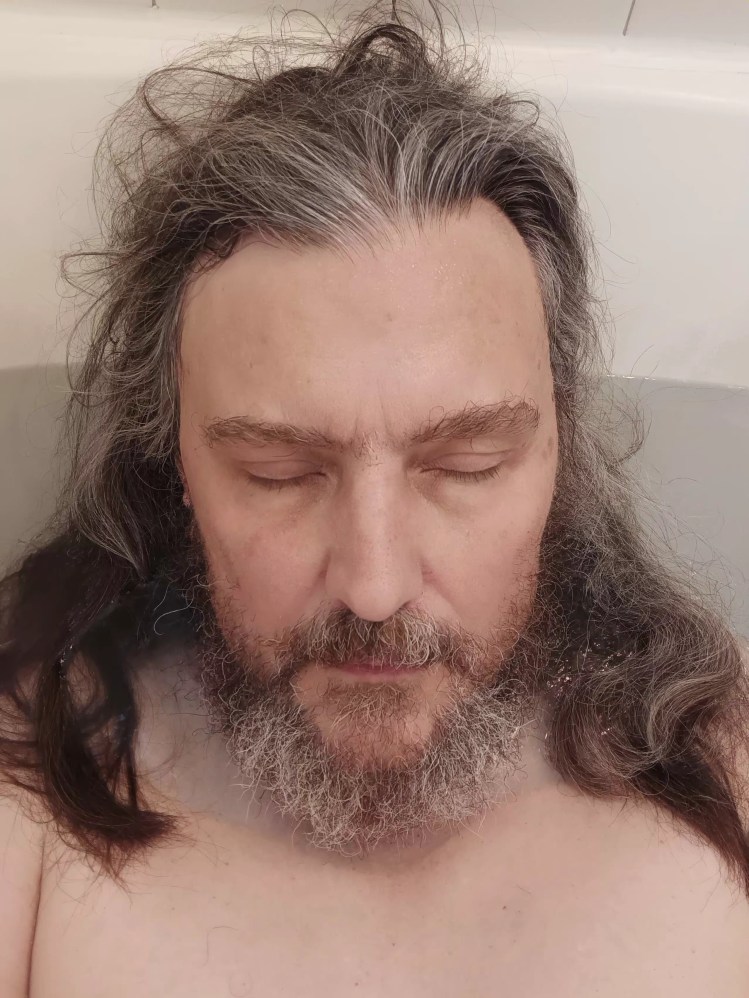
Dr. Dale Williams Barrigar

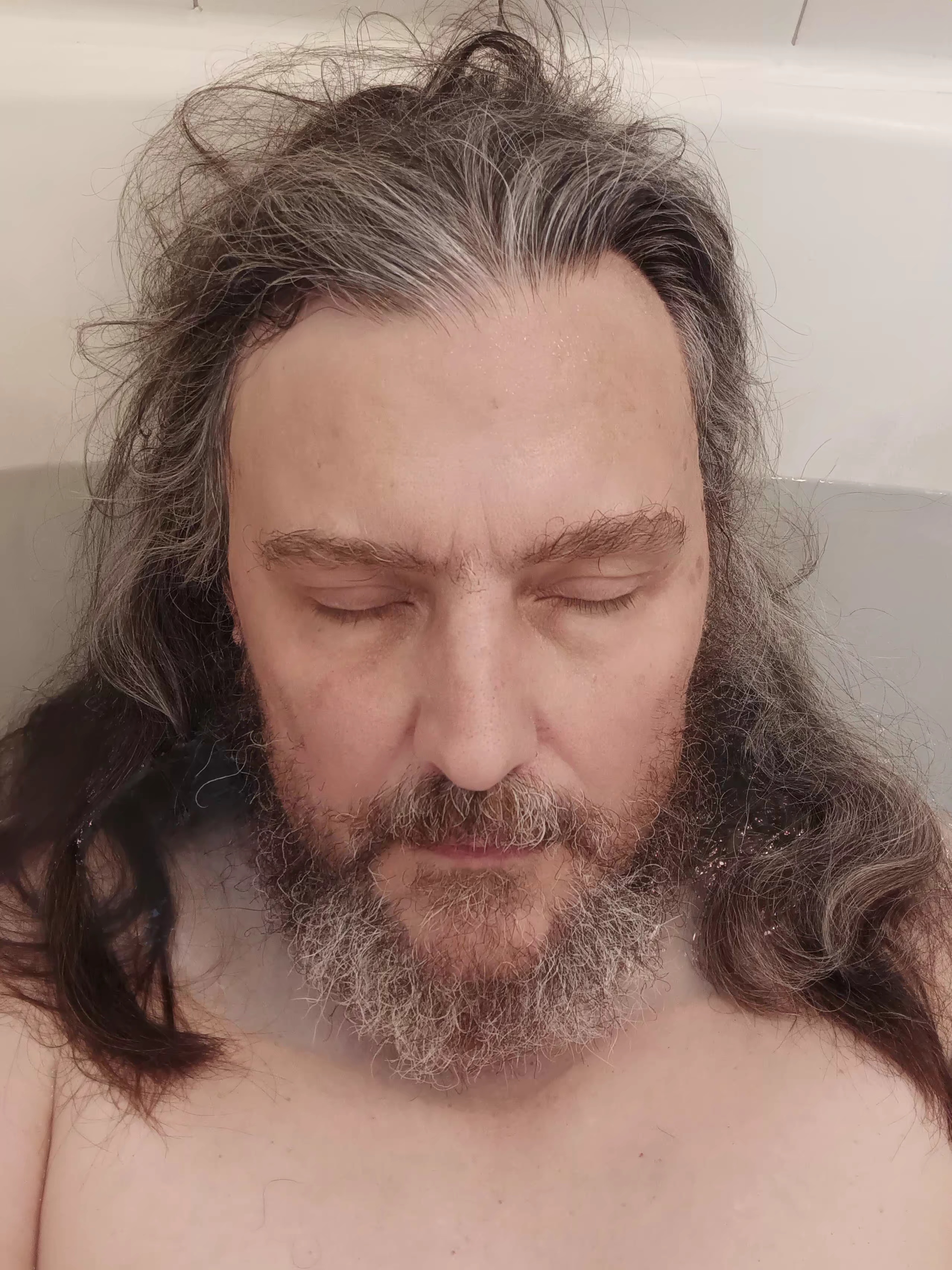
(Image by DWB)

The Rime of the Globalised Mariner. In Six Parts (with bonus track from a chorus of Greek Shippers) by Michael Bloor

First Published in Sociology, 47(1): 30-50, 2013 doi: 10.1177/00380385112448568

(Editor Note: Due to some slop dished out by WP, we have decided to show a better looking version of this fine article, which first appeared on New Years Day–LS)

Part One

(Another Edit note: The parenthetical material in darker font corresponds with the material above it; “call and response” is the theatrical term.)

It is a global Mariner,

And he stoppeth one of three.

‘By thy long grey beard and glittering eye,

Now wherefore stopp’st thou me?

(A globalised Mariner

meeteth three gallants

outside a shopping centre

and detaineth one.)

‘The centre’s doors are opened wide,

And Bourdieu got it right:

Consumption lends distinction.

So get you out my sight.’

(The Consumer protesteth

against detention outside

the shopping mall.)

He holds him with his glittering eye –

No Big Issue 1 sale is sought,

But fifty yards from B&Q

The would-be Consumer’s caught.

(The Consumer is spell-

bound by the mariner and

constrained to hear his tale.)

So spake the doleful mariner,

Transfixing with his e’e,

In fluent, graphic English –

The language of the sea.

(Proficiency in English is a

requirement of a seafaring

career.)

‘I had no wish to work on ships –

Filipinos know it’s hard –

Mouths were many, jobs were scarce,

From birth my life was marr’d.

(The Mariner telleth of early

hardships and how he and

his parents were cheated by

the maritime colleges and

the crewing agents.)

‘From green island homes we travel,

As mariner, nurse, or maid,

And remit 3 to our loved ones

The pittance we get paid.

‘Father scraped up money

For training college fees –

A scam of the local senator,

Whose throat I’d gladly seize.

(Filipino maritime training

institutions are often

controlled by persons with

powerful political

connections.)

‘The college had no equipment,

Just endless, pointless drill,

No qualifications either –

The news made my father ill.

(The academic training

often follows a military

model and is of poor

quality. And it does not

qualify cadets for

certificates of seafarer

competency without

additional practical

experience – ‘sea time’.

Most colleges fail to

arrange ‘sea time’ for their

cadets.)

‘Course passes gained no certificates,

Without some time at sea.

There was no ship to serve on,

But the senator had his fee.

‘Father paid a crewing agent:

Yet another fee required,

But at least I’d get a berth,

And that’s what we desired.

(Many ship operators out-

source crew recruitment

and employment to

specialist crewing agencies

with offices in the major

labour supply countries.

Cadets graduating from

maritime colleges must

pass a basic safety training

course before they can go

to sea. The courses are

usually conducted at

specialist training

institutions with requisite

equipment such as

lifeboats. State regulatory

agencies inspect the

training institutions to

ensure the requisite

equipment is present, but

not that it is used.)

‘The agent sent me to train then

At a dismal-looking place

More fees and little learned,

Sad repetition of my case.

‘A lifeboat stood on davits,

By a creek filled-up with mud.

“For audit purposes only”,

That pristine lifeboat stood.

‘There’s so many schools for training –

Why’d the agent send me there?

The training was quite useless –

Why didn’t that agent care?

‘It seemed he got a “rebate”

(kickback to you and me)

For every trainee sent there,

A percentage of their fee.

(Corrupt crewing agents NOTE WORK FROM PRINT TO FINISH

distort the seafarer training market)

‘They issued my certificates,

But their paper had a price:

My father’s hard-earned money,

Stolen once, then twice.

‘Ever since it’s been the same:

When I come home from sea,

The agent wants another course,

And I must pay the fee’.

Specialist short courses

must be taken to allow

employment in particular

trades, such as tankers.

Usually, the seafarer must

pay the course fee.

[Enter Chorus of Greek Shippers]

‘O woe to us, and to our ships,

But what are we to do?

The wages they are paying now,

Won’t draw a young Greek crew.

‘So we take these global mariners,

Who’re really up for it,

But they can’t begin to work a ship:

Their training’s frankly s**t!

(Ship operators moan that

international standards of

seafarer training are not

being properly enforced.)

‘Someone, somewhere, should sort it out,

We’ve really had enough:

Inspect and close the colleges,

It’s time for getting tough!’

PART II

Consumer groaned to Mariner:

‘So you each believe the same!

But if all think your training’s s**t

Then, truly, who’s to blame?’

‘Our union said, there is a law –

A real law, no invention –

That lays down training standards,

An international convention.

(The Mariner relateth that

there are international

standards on seafarer

training.)

‘Government should enforce it,

End the bribing and the feigning,

Close-down the useless paper-mills

And give us decent training’.

(But these international

standards rely on national

enforcement.)

‘Yes, yes’, the Chorus chorused,

‘Our ships need well-trained crew.’

‘So what went wrong?’ Consumer asked,

But the Mariner hardly knew.

‘There are no simple answers,’

Voice grated, knife on rock,

‘The true path’s no open highway,

Good governance no wind-up clock.’

A gaunt figure stepped among them:

He gave each a piercing look.

His boots were worn, his cloak was stained,

And he bore a calf-bound book.

‘Who art thou?’ they cried in wonder,

‘And what thing’s your burden there?’

‘I’m the Inspector,’ spake the stranger,

‘And the Law’s my burden fair.’

(An Inspector calls.)

The Chorus shrank and muttered,

The Mariner downed his e’e.

‘I’ve heard tell of you,’ he whispered,

‘As have all who sail the sea.

‘You come aboard, unheralded,

You seek out the rusting hulks:

You cow the cruel masters,

Ships’ agents get the sulks.’

Consumer viewed Inspector,

Eyes lit with wild surmise:

‘It’s up to you to punish,

Right wrongs, and nail their lies?’

‘In truth, that is my duty –

The goal for all my kind –

But the journey is a long one,

And the road’s not paved, nor signed.

‘Those who inspect the colleges

In each poor country of the Earth:

They’re government employees

And are not paid their worth.

‘The owner is a man of power,

The inspector – he is not,

The one dines in his castle,

The other in his cot.

‘The inspector has a check-list,

To work through, line by line.

If a lifeboat’s at the college,

Then it gets a tick – that’s fine.

‘We know it can’t be launched:

It’s to be ticked, naught more.

Poor men must heed the letter,

Not the substance, of the law.’

(The Inspector concurreth

with the mere lip-service

maritime colleges pay to

international training

regulations, but believeth

that the local inspectors are

powerless to obtain fuller

compliance.)

The mariner had silent stood,

Hands clenched and visage pale,

Eyeing the Inspector,

As he ground out his tale.

‘I thank you’, cried the mariner,

‘Now I know the bitter worst:

No remedy in law books –

My mates and I are cursed.’

The Greeks had been quite nervous

While yet the Inspector spoke,

But confidently dealt with

The Mariner and such-like folk:

‘Don’t blame the law, nor malice,

Nor trade that’s getting slack,

Global economic forces

Stapped these burdens to your back

‘Colleges could train you better –

With lifeboats working too –

But higher costs would close ‘em down,

Then where’d we find a crew?’

(The ship operators see

poor-quality training as an

economic consequence of

the seafarers’ need for

cheap training.)

The Inspector laughed most harshly,

And turned to face the Greeks:

‘He who looks for truth

Must beware of that he seeks.

‘Good training’s too expensive:

The poor can’t pay the fee.

You state the matter clearly,

And I cannot but agree.

‘Yet I can well remember

When companies paid the fees,

Time-Past – they paid for training,

Invested in their employees.

(The Inspector recalleth that

40 years ago, it was

commonplace for ship

operators to pay for

seafarer training through

cadetships and

apprenticeships.)

‘You complain of training standards,

Cackling like geese

You want action to be taken,

But you don’t pay a penny piece.

‘It seems to me, hypocrisy,

When the poor turn-out their pockets,

To criticize their training,

While adding up your profits.’

PART III

The Chorus blushed and shuffled,

But still they stood their ground.

They’d got their MBAs,

They knew their case was sound:

‘You’re talking of the past,

Dim, distant days of yore,

We don’t train our seafarers –

We don’t employ ‘em any more!’

Consumer quizzed the Chorus:

‘You don’t employ your crew??’ –

‘Our labour’s all outsourced,

‘The late-modern thing to do.

(The Chorus confirmeth the

Mariner’s tale that crewing

agencies, not ship

operators, employ

seafarers. Agencies then

contract with operators to

supply crews with the

requisite qualifications.)

‘If a shipper paid for training,

He’d have an extra cost,

He’d be under-cut by others –

His business would be lost.

‘Pay for training? Better wages??

Remember shipping’s quite anarchic:

We’d love to be more generous

But you cannot buck the market.’

The Inspector gave a mirthless smile:

‘The market’s always cited

As a sovereign power and reason

Why wrongs cannot be righted.

‘But the remedy is simple here:

The flag-State of every nation

Shall charge a levy on each ship,

Paid at each ship’s registration.

(The Inspector proposeth a

training levy to be paid

when each ship is

registered by the flag-State.

See Afterword.)

‘The levy would pay all training costs,

A burden shared without distortion.

It would pay for good inspections too –

No need for doubts or caution.’

The Mariner did slowly nod:

‘The scheme would work – I see –

My last ship flew Mongolia’s flag,

For a three-thousand-dollar fee.’

Although Mongolia is 850

miles from the sea, the

Mongolian People’s

Revolutionary Party

granted a license in 2003,

to a Mr Chong Kov Sen, a

Singaporean businessman,

to operate the Mongolian

Ship Registry. Mr Chong

previously operated the

Cambodia Registry under

license until 2002, when

the license was withdrawn

following international

protests at Cambodia’s

failure to police its ships. In

2008, 73 ships were flying

the Mongolian flag.

‘Mongolia?’ quizzed our Consumer,

‘That’s surely rather queer?’

‘Not really’, saith the Inspector,

‘Some think a proper flag too dear.

‘Each ship is like a piece

Of far-off, sovereign soil –

Its flag denotes allegiance,

Republican or royal.

‘The flag-State has a duty,

Be the country rich or poor,

To check each ship is ship-shape –

As laid down in the law.

‘But flags can be commodities,

And flags can be for rent,

To businessmen and lawyers,

Who’re out on profit bent.

‘When ships are policed badly,

Their seafarers should beware.

Policing ships for profit

Is a mighty strange affair.

‘Some run their business well,

Some run it as a racket,

With only one objective:

To make themselves a packet.

An OECD report states that

‘a significant percentage of

total vessel operating costs

could be saved by sub-

standard operations’

(OECD 1996: 27).

‘Now, compliance is expensive,

So compliance is a sham

When the flag a shipper flies

Really doesn’t give a damn.

‘A shipper heeds his costs,

A shipper looks to save,

But if he flies a cut-price flag,

Consequences can be grave.

‘Ships that fly a proper flag,

And meet their obligations,

Incur much extra cost

To comply with regulations.

(Thomas Gresham, a

sixteenth-century

Chancellor of the

Exchequer, found it was

impossible to improve the

quality of the English

coinage, by simply issuing

good quality coins. People

hoarded the good coinage.

So it was necessary to also

withdraw the clipped and

debased coins from

circulation. Hence

Gresham’s Law: ‘Bad

money drives out good’.)

‘If they wanted well-found ships,

And skilled, contented crews,

They should have thought to ask us,

Or given us some clues.

‘Truth is: they don’t want “good,”

Or freight rates getting steep.

We skimp, they save –

Truth is: they’re wanting “cheap.”

The Inspector sighed in turn,

‘Some charterers do care,

Oil majors first and foremost,

Others – rather rare.

The Oil Companies

International Marine Forum

(OCIMF) has set up and

funded its own private

inspectorate, SIRE, to

ensure the seaworthiness of

tankers under charter.

Those tankers deemed

satisfactory on inspection

can expect more business

and better terms from the

oil majors, eager to avoid

the bad publicity of marine

pollution incidents.)

‘Oil majors don’t like bad headlines

When tankers hit the rocks

And oil pollutes the beaches

Because the ships are crocks.

‘The public doesn’t like to see

Seabirds black with oil;

Alas, for all the tanker crews,

The public doesn’t care at all.

‘So the tankers get inspected

With much resource and care,

But the crews of all the rest

Make do with me…and prayer.’

PART IV

The Mariner then spoke up:

‘Christian, Buddhist, Hindu, Turk,

Many pray who sail the seas,

But their prayers concern their work.

‘We do not fear a foundering –

Hull pierced, stove in, or rent.

Such a thing may happen,

But it’s a very rare event.

‘Pirates may seize the ship,

And hold us on foreign soil,

But what we fear most is different:

It’s the endless, grinding toil.

‘Each and every ship we join,

Seems there’s fewer crew,

An officer gone, a rating gone,

But there’s still their jobs to do.

(Increasingly, ship operators

have been seeking to save

crewing costs by reducing

the number of watch-

keeping officers. Where

second officers have been

dispensed with, then

watches must alternate

between the master and the

first officer (mate),

although each of them has

many other duties to

perform. An OECD

(2001a) report instances a

saving of $37,000 pa by

under-manning a 20-year-

old 30,000 dwt bulk carrier

by two crew.)

‘The master now must take a watch,

Though there’s paperwork aplenty.

So many crew have disappeared,

The vessel’s almost empty.

‘The master’s nodding on the bridge,

His tired eyes are red.

He’s still to call Head Office,

Before he gets to bed.

‘The mate then takes a watch,

Though it’s two days since he slept –

Problems with the cargo –

But his watch must still be kept

‘The master’s nodding on the bridge,

His tired eyes are red.

He’s still to call Head Office,

Before he gets to bed.

‘The mate then takes a watch,

Though it’s two days since he slept –

Problems with the cargo –

But his watch must be kept

‘Turnabout, the two must watch,

There is no other way,

Six hours on, six off,

Twelve hours in every day.

‘In sickness and in health,

Each watch they duly take,

Dog-tired, red-eyed, grey-faced,

Four months, four months, without a break.

‘No gentle couch our cabin:

The ship is pitching in the waves,

There’s engine noise, vibration,

Yet we sleep the sleep of babes.

‘Too soon, too soon we’re wakened,

We scarcely catch our breath.

An ignoble thing, this tiredness –

As if we slowly bleed to death.’

Part V

As ever when the Mariner spoke,

The Greeks did swell with pride:

‘There is no law that’s broken there,

There’s nothing for us to hide.’

‘You surely lie,’ Consumer cried,

‘I know little of the sea,

But to have a master standing watch –

That’s folly, plain to me.’

The grim inspector then did speak:

‘In truth, they break no law.

The law itself is here at fault –

Therein we find the flaw.

‘The law on Minimum Manning

Lays down for every ship

The crew that must be carried

On each and every trip.

‘What is the minimum manning?

This is what we’re taught:

It’s the smallest competent crew

To bring a stricken vessel safe to port.

(In fact the maximum

number of daily hours of

work for watch-keepers is

specified by the IMO as 14

hours, and the maximum

number of weekly hours is

91.)

‘To make that stricken vessel safe,

Huge effort they’ll expend,

Yet must they slave thus daily?

Til their contract’s at an end?’

Consumer scratched his head:

‘If some members of the crew

Exceed twelve hours each day,

Surely that’s illegal too?’

‘We falsify our working hours’,

Replied the old seadog,

‘To keep the owners happy,

Each day, we flog the log.’

(Falsification of working

hours is so widespread in

the industry that it has

entered everyday slang as

‘flogging the log.’)

‘Then change the minimum manning law –

No more idle chatter –

Require crews to be larger,

It seems a simple matter.’

(Consumer doth not

understand why the flag-

States at IMO do not

change the international

legislation to provide

adequate crewing numbers,

allowing shorter hours.)

The mariner sighed and shrugged.

The Inspector took-up the tale:

‘Flag-States must vote the change,

Or else the measure fails.

‘Flag-States that exist for profit,

And take the operators’ gold,

They can’t increase the crewing costs –

They’ve reputations to uphold.

‘The flag with the greatest tonnage

Flies o’er the Panama Isthmus,

When Panama votes for change,

Then turkeys’ll vote for Christmas.’

Part VI

[All in chorus: …]

‘So come all you kind consumers,

Who the honey’d wine have sipped,

Take pity on the mariner,

Beware how your goods are shipped.

(It is suggested that public

concern for seafarers’

welfare might act in the

same way as public concern

about marine pollution and

be transmitted down the

supply chain from

charterers to ship operators.

Operators who could

‘brand’ their vessels as well

crewed could then

command premium freight

rates.)

‘The crews are outsourced workers,

A study in dejection –

Casualised, long hours, poor training –

And the law is no protection.

‘If charterers thought the public cared

How seafarers are mistreated,

They’d pass the message down the line:

“Our consumers are quite heated.

“It’s bad for our public image,

Like seabirds and pollution,

So get your act together,

And find a true solution.

“We’ll pay your higher freight rates,

If you’ll deploy more crew.

Or we’ll contract your opposition –

See if they know what to do.”

‘So the shippers get the higher rates,

Increase the crews and cut the hours,

Strike the flag of Panama,

And so, at last, they smell of flowers.

‘One day it really just might happen,

A fairy tale come true,

It’s even very possible,

They’d employ and train the crew!’

For an ‘Afterword’ describing in detail the political economy of the global shipping industry, issues of seafarer training, industry regulation and enforcement, please refer to the original publication in the journal ‘Sociology’.

Michael Bloor

On the Algorithm by The Drifter

(All images by The Drifter)

Instead of only blaming the inventors, propagators and perpetrators of these products, we should turn the blame around once in a while and place it squarely on the individual consumer/s of said products as well. No one is placing a gun against anyone’s head in this matter. Take it from one who once had a gun placed against his head on a Chicago sidewalk. And a switchblade placed right below his eye in a Kansas City tavern. And a frying pan swung (hard) in the direction of his head in the kitchen. (The author of this opinion piece is good at ducking, fleeing, and flying (out the back door), as well as staring people down – or talking them out of it when necessary.)

Ruthless billionaire businessmen ye shall always have with you. In 2026 USA, one has the option to ignore them, or at least not to utilize their products beyond what’s necessary, selective, or right, depending on the situation.

They have figured out a way to feed the people exactly what the people wish to eat. And the people go to the hand of the master and lap up the usual b.s. because it is the usual b.s. they long and crave for. If universal wisdom, truth, love and beauty were popular and profitable, the business people would sell that instead.

There are some people who are not in control of their minds and thus have gone out of their minds by feeding their minds on nothing but The Algorithm.

As for the rest of us, we have the option to opt out and choose better materials at any time.

It is a matter of cultivating your one and only soul. If you let someone else feed your soul with nothing but junk, you will end up with a nothing, junk soul created by someone else, which will mean that you have abdicated your personality, the only real possession you possess in this vale of tears. This egregious and pathetic non-condition will not serve you, or others, well when the shit hits the fan, as it’s sure to do again and again in this world that is both spiritual battleground and mortal coil.

The Algorithm is not a gun against anyone’s head. You can choose NOT TO CLICK ON IT and not even to look at it at all, for that matter. Any addict who’s ever gotten over anything can tell you that you don’t have to do it if you don’t want to. Nietzsche said, “There are so many things in this world I never want to know.” He knew a little and ignored the rest. He also said, “Whatever doesn’t kill me makes me stronger,” right before going permanently insane.

A great picture is infinitely more valuable than a bad book (and can be read almost in the same way as reading a good book (and as the book of nature can also be read)).

Sincerely,

The Drifter

Nine Things Boo Be Do that Freak Me Out

(All images by the Drifter)

Number nine, number nine, number nine, number nine…” – The Beatles

When I say “freak me out,” I mean in a good way.

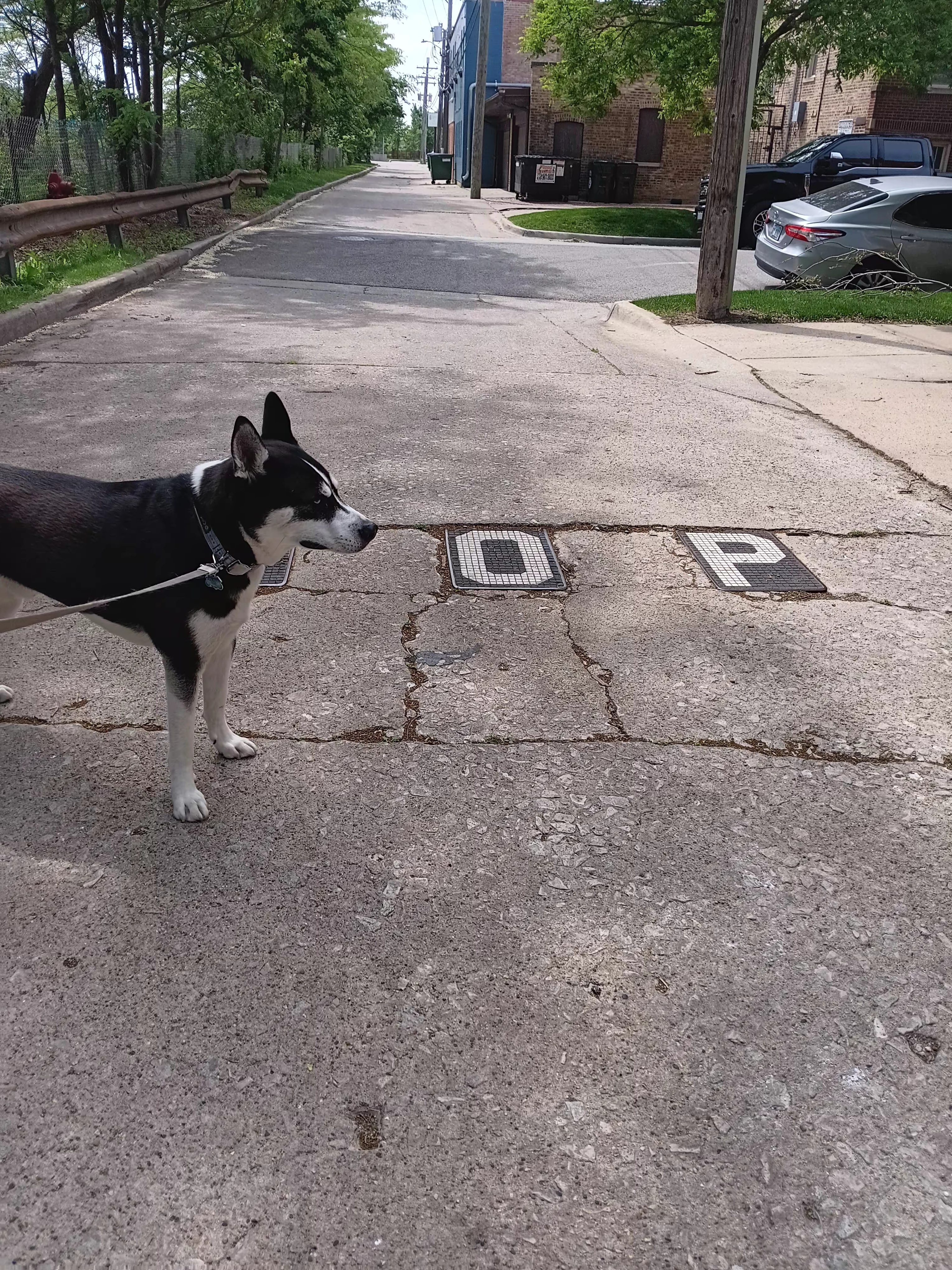
(To the elite few of you who want to review who Boo is, see photos.)

ONE: Sometimes constantly watches me from across the room of the book-strewn apartment as if to make sure I’m all right (until he dozes off, which happens just as frequently).

TWO: Catches wild squirrels in his mouth between his fangs, doesn’t chomp down upon them, drops them down onto the ground and sets them free, then watches them flee (run away) without going after them.

THREE: Leaps into my lap when he gets scared.

FOUR: Hides behind me when he gets scared if I’m standing up.

FIVE: Puts himself between me and whoever it is when someone is approaching us at night along the sidewalks or in the alleyways of the Chicagoland area we roam through (or wherever we roam through). If it’s more than one person approaching, becomes even more fearlessly vigilant.

SIX: Follow verbal commands when they, paradoxically, are not even spoken aloud by me. (In other words: READ MY MIND.)

SEVEN: Refuse to follow commands just as often, and act like he thinks it’s funny, and in his own way, I do believe he thinks it’s funny.

EIGHT: Run so fast that he literally morphs into a black-and-white blur that looks like it’s flying across the ground. Fastest dog I’ve ever seen and I’ve seen many.

NINE: Stare into the distance while intuiting the Spirit World.

(Leading one to the astonishing conclusion that if dogs could talk, we wouldn’t even be able to believe what they would tell us…)

(Bonus point: can climb fences and trees when he wants to bad enough…)

The Drifter and Boo

Al Through the Looking Glass by Geraint Jonathan

Miami sunshine put Big Al’s garb to shame. It blazed yellow, much like Al, but, unlike Al, it was the source of life on the planet. Al was human, as he himself would have been the first to admit. “There’s many things I am,” he said, “but a seething ball of molten fucking gasses ain’t one of them!” Miami’s finest laughed. Al was known for the size of his heart, and often spoke about it. It sometimes made for confused but lively exchanges with those more fortunate than himself. In ‘matters of the heart’ there was, after all, Al’s deep love of opera and there was also that which lay in the middle of the chest cavity between two lungs. Monogrammed silk might be said to cover both in Al’s case. As was his wont, Al made much of the confusion, hoping thereby to lighten matters that might otherwise furrow the brows of the young. If nothing else, the yellow of Al’s Miami experience would be a crucial factor in forming much of what he later came to call his “disposition”. For whatever his foibles, this much is certain: Al sought to shine on all, whether they wanted shining on or not. He would be the man dressed as the sun: a vision in yellow serge, with matching hat, silk tie and shirt, just the kind of solar presence a windy city on earth might require. That was Al all over. It was the opera in him.

Two Quotations that Can Save the Day The Drifter

(All images by The Drifter)

“Happy are you when men insult you, and persecute you, and tell all kinds of evil lies against you because you are my followers. Be glad and happy, because a great reward is kept for you in heaven. This is how men persecuted the prophets who lived before you.”

This week The Drifter will write little in order to let two quotations carry the day (four if you count the photos but the D will only write directly about the two quotations included in the text, one above, one below.)

When outrage and despair at the state of the world begin to get you down, to gnaw at, or devour, your mind, heart, and/or soul, these two quotations can bring tranquility and peace in their wake.

But that’s only if you let them work on you. And by work on you, I mean that you have to let these quotations hit you hard. And in order for that to happen, requirement number one is that you must have an open mind, and heart. Secondly, you must be willing to work at it. You have to let the quotations find you where you really are. It used to be called studying. Now when we say “studying” we usually only mean rote learning, i.e. going to “school” and memorizing the dubious “facts” they attempt to jam down your throat. I have two twins who graduated from high school last year, and I myself have taught for a total of at least twenty-three years at many different kinds of colleges and universities all across the rough-and-tumble Midwest, also including a three-year stint at a Catholic elementary school called Saint Leonard Parish School in Berwyn, Illinois, USA, with a ninety-nine percent Mexican student population (Leonard is the patron saint of prisoners, addicts, horses, and depressed people, which is perfect for me, and I also used to listen to Leonard Cohen on my way to and from work every day) (Leonard is also the patron saint of a woman with child or children, i.e. preggo), and I can say with an utter certainty that institutionalized education in the USA no longer encourages critical thinking and imaginative exploration in the way it once did (if it ever did). SELF EDUCATION is just as utterly crucial as it ever was, y’all. Everything is available; now you gotta use it.

The first quote is from Jesus’ Sermon on the Mount, as recorded by Matthew, the Evangelist. “Evangelist” means someone who brings good news to those who desperately need it. Good news that is not easy to swallow, or follow, either, but is also NOT AN ILLUSION. As Jim Morrison said, you need to break on through to the other side before this News will make you leap out of your seat and begin dancing (metaphorically at least).

The second quotation is an entire sonnet by the English radical poet, Percy Bysshe Shelley, who was a kind of Jim Morrison before Jim Morrison (although much less famous than his friend Lord Byron while they lived). Shelley was born into a cush life and he could have stayed there forever had he wanted to, or had he been born that way. Instead, he threw sand in the face of his whole society almost immediately upon opening his eyes and he fought tooth and nail for the downtrodden and the outcast his entire life, and against hypocrisy (he could smell hypocrisy while still in the cradle) – and he died young (29) because he was worn out young in the struggle. Shelley called for and helped invent the modern form of nonviolent resistance. He inspired Henry David Thoreau, who inspired Leo Tolstoy, who inspired Mahatma Gandhi, who inspired Martin Luther King, Jr., who inspired the recently deceased Reverend Jesse Jackson.

The sonnet is printed here in paragraph form in order to defamiliarize it. It works just as well as a prose paragraph as it does in verse.

It was written just a little over two hundred years ago.

The Drifter will draw out what he believes to be the deepest message for our age after this sonnet which sounds so completely familiar and close to what’s going on in our world now that it should (rightly) give you the chills, or at least goosebumps:

“An old, mad, blind, despised, and dying King; / Princes, the dregs of their dull race, who flow / Through public scorn – mud from a muddy spring; / Rulers who neither see nor feel nor know, / But leechlike to their fainting country cling / Till they drop, blind in blood, without a blow. / A people starved and stabbed in the untilled field; / An army, whom liberticide and prey / Makes as a two-edged sword to all who wield; / Golden and sanguine laws which tempt and slay; / Religion Christless, Godless – a book sealed; / A senate, Time’s worst Statute, unrepealed; / Are graves from which a glorious Phantom may / Burst, to illumine our tempestuous day.”

The age of waiting for someone else to do it for you is over. Make yourself be the Glorious Phantom bursting into the True Light, like Shelley did, however persecuted and unfamous he was (and he was both of those things). Everyone has a daimon, or form of genius, inside them. Some choose to cultivate it and will die first before not cultivating it. These are the ones who know the best advice is: DO NOT LET “THEM” GET YOU DOWN (it’s exactly what “they” want). The world has always been this way, and it always will be this way, too (more or less, and more, and less). Even nuclear war or environmental catastrophe, which might wipe out an entire (now global) civilization, is nothing new, since entire civilizations have been wiped out virtually overnight thousands, and maybe even millions, of times – and there has always been the ever-present threat of a dinosaur-destroying-like meteor peeking its head over the horizon at any time, like the worst uninvited guest you could ever imagine (the Native Americans knew this.) “AI”?!? The ancient Egyptians both predicted, and simulated, it, and the cave people in their caves waving their torches around on the cave painting walls while intoning messages to the gods and cutting themselves so they bled profusely while devouring mouthfuls of magic mushrooms had a virtual reality that would knock your socks off if you were wearing any, which they weren’t. Yes, the world has always been this way.

And that means there are always better days waiting somewhere up around the bend. But not in the usual nausea-inducing, Hallmark Greeting Card kind of way.

We always live life for our Future Self (somehow), but we MAKE our future self today. Never stop striving forward with calmness – never (not even when on the threshold of death, or maybe especially not then; Martin Luther, the greatest radical of all time in the modern Western world, believed that everything could change in an instant in that moment).

((Maybe creating is so important to us because the God who made us is also a Creator.))

The Drifter

Why Are We On This Little Rock by Jordan Eve Morral

My thoughts aren’t original or groundbreaking. I know that. But maybe I’m here to remind you to think more deeply about the mundane stuff. Or that which we consider to be mundane. Like sleep. Isn’t it crazy that, for eight hours a day, everyday, humans enter into a state that (basically) makes them dead to the world? Eight ritual hours of nonexistence. Or television consumption. Eyes glued to a screen, watching other people live their lives but doing nothing themselves. And the various needs of the body that a person must obey, or else. If they don’t, the result could be death. No exaggeration. Hunger and dehydration–and a million other things–are real, people. Or the mere fact that humans live in houses and drive cars and hold fancy jobs and arrange the arugula and chicken on their sandwich to look pretty. Is there no such thing as a feral person anymore? Why has everything become so structured? That can’t be human nature, can it? And now most of a person’s life is stored on the internet for the world and all eternity to see. It must seem hypocritical of me, typing this from the comfort of my heated home, but I can’t change how things are, how the world functions in this day and age. The biggest difference my lonely, little self can make is challenging the masses’ way of thinking. Probably nothing noticeable will take place, but maybe, just maybe, people will begin valuing themselves for different reasons. They won’t see their worth in the lofty education they have received or all the connections they have made. They’ll find their meaning in the fact that they exist in a wide world with a consciousness so vast, a person’s whole life could be spent watching a river flow and thinking of all the beauty that has come before. It seems so surreal to think of all that has happened and will happen on this one tiny rock floating through space. We are so tiny, the universe so vast. The most we should expect of ourselves is equal appreciation of divine and earthly pleasures. We aren’t made to follow rules or conform to norms that should exist in the first place. We are made to simply be.

Jordan Eve Morral

Everyone is Living Life For the First Time by Jordan Eve Morral

For a long time, I’ve been telling myself that “everyone is living life for the first time.”

To me, the thought justifies my uncertainty, deepens my understanding of others, and reminds me that I should not fear the future or the decisions I must make for myself, by myself.

Remembering that the majority of the world’s population is well under 50 years of age–and still living for the first time despite their accumulated experiences–awakens my own confidence and feelings of abundance. It helps me recognize the potential that is left unused by nearly every person that has ever lived. It is a recollection that shows me that I should have no fear of judgement or fear of pursuing something that is not seen as acceptable or a societal norm. Like, literally, no one knows what they’re doing. They may pretend to have their life under control, or they may think they know the key to existence, but really, they’re just going through life in a way that has been dictated to them since childhood. But, they, like you and me, can unlearn their childhood conditioning and pursue LITERALLY ANYTHING because no one has the right to tell them not to. It’s their first and only life, and they must live it the way they want.

And the same goes for you. So, please, for the sake of everything fleeting and beautiful, read this blog post, and then do something wonderfully unconventional for yourself.

Why fear judgement? It is pointless and holding you back.

Even if people had a valid reason for judging your actions, choices, behaviors–which they never will, by the way–they can never truly judge you in relation to your experiences, upbringing, current situation, etc., so you must not let their opinions bother you. A lot easier said than done, I know, trust me. But there is also the fact that they are likely dissatisfied with their own lives and will die never having pursued anything that truly brought them feelings of joy or freedom. So really, you can’t feel bad for yourself and any negative things being said about you. You can only feel bad for the unhappy human who comforts themself by speaking poorly of another person.

Okay, another scenario. Maybe no one is even noticing what you are doing in your little corner of the world. While this is probable, you likely feel self-conscious and begin to convince yourself that your every move is being watched anyways. Completely untrue; people have their own things going on and do not spend their every moment analyzing you. However, if this were the case, why should that bother you? All it means is that you are brave enough to do something different than the masses. They watch you because they are intrigued and maybe even jealous of your open individuality.

If you are doing something that has never been done before–or something that comes with a negative stigma–it is helpful to think of yourself as a pioneer in whatever domain you are pursuing. There have been pioneers in every major religion, for example, and now those religions have millions of followers. But to get that point of popularity, there had to be some people who were mocked, outcasted, and even martyred before the others could see, accept, and then openly welcome these new ideas. Fortunately for us, most of society has advanced in such a way that we won’t be sacrificing our lives when we chase unconventionality.

No one really knows what they’re doing.

In case you haven’t noticed, every single person around you is pretending they know what they are doing. They try to make it seem like they have figured out how to fulfill their life’s purpose and that they have no doubts whatsoever about the process of getting there. But, really, they have not the faintest clue what’s going on… And that’s okay.

Everyone has uncertainties, even on a day-to-day basis. Should I quit my job? Am I with the right person? Is this how I want to spend the rest of my youth? The rest of my life? You get the gist. The future spans in so many directions, but the average person plays it safe and follows in the footsteps of their parents. If not that, they watch their peers and get in line. No choices are their own. It’s sad, really, that no one knows how to think for themselves any more. These days,“free-thinkers” refers to a minority, and that just isn’t right.

And, when we do have inspirations and epiphanies and messages from the divine, it’s embarrassing how few of us act on them. We waste so much time doubting ourselves and not taking advantage of our health and capabilities that we end up doing nothing at all. In instances like these, we need to remember that there is no right way of doing anything. We must tell ourselves to get up, stop rotting, and take action. Explore our passions, show our unconventionalities, and make progress towards something substantial that is not rooted in tradition.

What even are societal norms and why do people follow them?

There are too many ways to answer this question, but, ultimately, the average human is a coward. And I don’t mean this as an insult. Simply put, we all have a fight-or-flight instinct. And, naturally, most of us choose to flee from the unfamiliar. In moments of stress, fighting seems to be the less safe option and no risk ever worth it.

So, if all we ever do is run back to our comfort zones, of course little progress is made in the way of discovering new territories. We revert back to the ways of our ancestors. Or more commonly, the approval of our family and friends. Yes, the people closest to us may be the ones keeping us stagnant. It’s nothing they do or say, exactly. Rather, it is what we are afraid of them doing or saying if we choose to pursue something outside of the realm of ordinary and acceptable. However, once we recognize this truth, it becomes easier to fight this mindset and break free of the voices holding us back. You are not here to be understood but to understand yourself.

Don’t forget to watch the clouds and talk to the trees.

So, this is the part where you have all these grand ideas in your head. You visualize yourself emerging from the safety of an underground bunker and into the light of every glorious thing you have ever wanted. Good for you. Now, you must chase these things, show yourself as a new person, and break free of every convention you have ever believed or hid behind. It will be hard, at first, but once you truly understand that there is not a single human who is better than you and there is not a single person in your life who has the right to judge you, you will be free.

We have endless possibilities to break the rules, challenge stigma, and enter into our highest states of being. But, with this, we must never forget where we’ve come from. While there is no one who will ever be better than, you will also never be better than them. They may be further behind you in figuring out they have the freedom to decide their own lives without outside influences, but they are human too. Ground yourself in cloud watching and tree talking. All of us are made up of the same soil we stand on. For that very reason, we must develop understanding for others but also live our brief lives on our own terms.

Jordan Eve Morral

An Imagined Final Conversation at Polhoegda, near Oslo, 1930 by Michael Bloor

On June 17th 1896, a bizarre encounter occurred in Franz Josef Land, in the Arctic wastes. Fridtjof Nansen (1861-1930), the Norwegian scientist and arctic explorer, met Major Frederick Jackson (1860-1938), the leader of a British arctic expedition. Their meeting was an incredible piece of luck: Nansen and his companion, Johansen, had left their ship, the Fram, more than a year previously to try and reach the pole, and were presumed – by Major Jackson and the general public – to have died. They had, in fact, survived an arctic winter on walrus blubber and polar bear meat, but would surely have perished eventually had it not been for that chance meeting. Nansen later wrote that both gentlemen raised their hats and said ‘How do you do?’ Nansen and Jackson each went on to lead extraordinary lives.

Continue reading