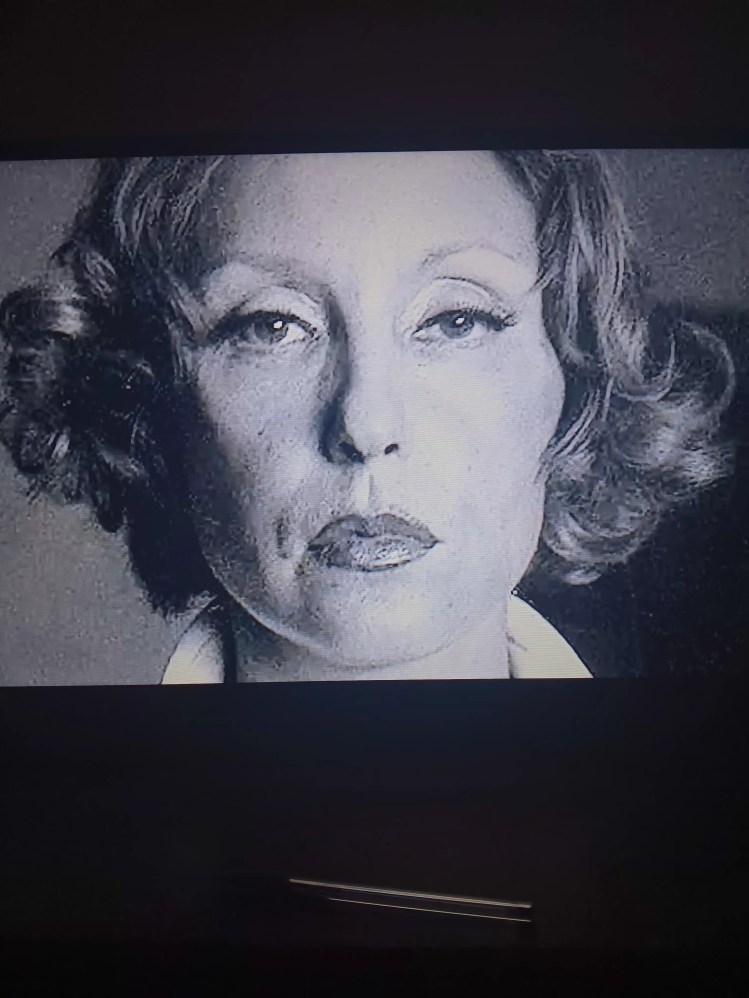
(The images by Dale Barrigar)

“The Dream Songs have given me more pleasure than any other poems I have ever read.” – Nick Cave
The American poet John Berryman (1914 – 1972), author of The Dream Songs, once famously said that he wished to be given cancer because it would test him.
In the context of the full quotation, one can tell that he was probably being metaphorical and even ironic.
But he was also not kidding. Because that’s the kind of guy he was.
Berryman, who was a severe, chain-smoking alcoholic with a bad case of Bipolar Disorder (known as Manic Depression while he lived), was a badass.
Too many people in our global society today, as in far, far, far too many millions or even billions of people, are far too soft. They are far too soft, too enormously large, too enormously corpulent, gigantic, obese, overflowing, slow, flaccid, slow-moving, slow-thinking, spreading, steady, useless, entitled people.
If they were all attacked by a single samurai warrior they would be toast.
Not all heavy, or even enormously fat, people are lazy, despite all the stereotyping that goes on. John Belushi, John Candy, Chris Farley, Harold Bloom, Marlon Brando, Elvis Presley, Orson Welles, Madame Blavatsky, Shakespeare’s Falstaff, all were or became enormously fat folks.
And they had energy; they had life; they had spark; they had liveliness; they had chutzpa; they had attitude; they possessed what one needs to be and become (a process that never stops) who one is.
But too many enormously overweight people have let themselves go, are addicted to poison food and sugary beverages, and they don’t move enough, and what’s more, they don’t want to move – ever. Or barely.
John Berryman leapt to his death from a bridge over the Mississippi River in Minnesota at the age of 57 years. He was massively, manically depressed, totally intoxicated, utterly drunk, woefully strung out, completely burned out, and totally done when he did so.
Hart Crane, the American poet (born on the SAME DAY as Hemingway, July 21, 1899, exactly one-hundred-and-twenty-seven years and two days ago from today) leapt from a ship into the Gulf of Mexico at the age of thirty-two and was never heard from again.
Right before he did so, he happily shouted out to a bunch of travelers, “Goodbye everybody!” They all knew who he was and some of them weren’t even surprised.
He too, at the time of his death, was manically depressed, intoxicated, drunk, strung out, burned out, and done. He went out with a bang, not a whimper – like Berryman, Hemingway, Sylvia Plath, Hunter S. Thompson, Vincent Van Gogh, Kurt Cobain, Chris Cornell, Anthony Bourdain, and many other artists, near-artists, and sensitive souls in the world’s history. Having been suicidal myself in the past, I know it’s almost always what should really be called a kind of accident. (And I believe that God catches these people when they fall for the final time, NOT sends them to hell.)
Berryman’s famous magnum opus The Dream Songs helped establish and create what was and is called “confessional poetry,” which is both a good and a bad name for what it tries to describe.
Berryman’s book is oftentimes awfully overwritten. Frequently, one can tell that Berryman was, without doubt, blasted out of his mind when he wrote this stuff, like William Faulkner when William Faulkner wrote much of his (later) stuff. Gabriel Garcia Marquez once pointed out (from personal experience) that it was really good to write while you were drinking because it freed the mind and inspired the writer – but only up to a certain point. Once a person is too blasted on anything (whether it be benzos, weed, booze, cocaine, all of the above, or whatever), the writing is sure to suffer, and sometimes it will take a dive straight into the toilet, depending on how blasted the writer is.
Sometimes, when Berryman wrote, he was far too blasted, on booze and pills; and it’s obvious.
But the highly flawed Dream Songs is still a landmark in twentieth century American poetry. It’s one of those often-unreadable books that everyone should have on a shelf. See Dream Song #107 for a wonderful poem about a drunk writer’s encounter with the wonderful animal called the raccoon, which deeply characterizes not just the raccoons but the writer.
And Berryman (though he could very, very often be seen just lying around, at least half the time) was not a lazy, soft, snarky, sarcastic, useless, entitled person.
He was a badass!
Crucial End NOTE: The term “badass,” like the word “cool,” both originated in their current form/s within the African American jazz culture of the 1940s. Those folks were badass/es; and they were totally cool.
John Berryman, like Hart Crane before him, was hugely influenced by jazz and blues. Berryman’s book The Dream Songs could not, and would not, have been written without his love of jazz and blues, which inspired the form/s, the spirit/s, and the meaning/s of his poems, as he himself so often admitted and said, and preached and talked about.
Dale Barrigar