They say Sappho may have been a kind of prostitute, at least some of the time. They say the same thing about Mary Magdalen. I can believe it, although I can’t say that I know it. If they were prostitutes, I know they did it with the same flair for originality with which they did everything else. ’Nuff said on that topic.
Because I don’t know if Sappho was a prostitute; but I do know that she said this:
“It is the Muses //
Who have caused me /
to be honored: they /
taught me their craft.”
Survival is the first art. You can’t create art when you’re dead, at least not here. Many artists have not created any real art because they have died inside. They have let the world kill them; or they have handed the world the sword it needed to do the deed. Survival is the first art, the hardest art, the longest art, and the last art of all. Without it, you simply cannot get anything done.
Learning the craft is the second art. Reading and writing must be mixed with equal parts real experience or it ain’t worth (and it won’t ever be worth) shit.
The third art is doing it. You find out that you thought you were doing it all along but you were not doing it all along, and far from it. You were doing what can be called “getting ready to do it.” Which is just as crucial, because you can’t do it eventually without the proper preparation.
Staying alive; learning how to; and doing it right when the right time arrives.
Never question The Muses, even in those moments when you know (somehow) they’re full of it. They are holy, and that’s all you need to know to keep you going, even if you enter the phase of “afterglow,” which is the fourth phase (if it ever comes) in which you can’t exactly do it any more but now you can bask in it. Many who think they are “going” are really just stuck down in the herd muck; running very successfully on the hamster wheel, as it were and is. It takes balance to stay on the hamster wheel, but it isn’t going anywhere. And that is nothing against hamsters; it is only to point out that they aren’t lionesses and lions. And it is absurd to pretend that they are. Even in a fake mane – he’s still a hamster. Even at the highest rungs. Even in the White House (or anywhere else they tell you is important, like the end of the hall where your boss resides).
END NOTE: Endless thank you/s to Mary Barnard (1909 – 2001), who made the translation of Sappho used in this commentary. Her translations possess an Emily Dickinson-like intimacy and idiosyncrasy which must also be contained, in a different way, in the fragments of Sappho.
The MOVEMENT in all sections of the poem is always to something new, from something that is fully defined. Progression, development, fulfillment, all in eighteen words.
The “dance” can be likened to what Nietzsche said about his hero Zarathustra, that his walk was a dance, that his walk was so lively that it recalled a dance and could be likened to a dance and that he danced that dance and walked that walk whether he was in town or out of it, once he had become himself, that is.
“Gentle Gaiety, Revelry, Radiance,” recalls Charles Baudelaire’s command to “Always be drunk! On wine, poetry, virtue, or what you will, but be drunk!” The wine itself isn’t important; the drunkenness is, an injunction which has inspired many august souls from Rimbaud to Dylan Thomas to William S. Burroughs and Bob Dylan. The wine itself (or the drugs, or the love) is never more than a means to an end.
And the end is THE MUSES, who are the ones with lovely hair.
Sappho and her cohorts all believed in the literal existence of “The Muses,” that is, they believed them to be gods, i.e. transcendent forces worthy of worship, eminently and ultimately worthy of worship, and therefore worthy of dying for, too, if that’s what it took.
They were only humans like us but because of what they believed and how they lived it, they may have been (among) the best of us.
END NOTE: Endless thank you/s to Mary Barnard (1909 – 2001), who made the translation of Sappho used in this commentary. Her translations possess an Emily Dickinson-like intimacy and idiosyncrasy which must also be contained, in a different way, in the fragments of Sappho.
(Note: Whether he be DWB, Dale Williams Barrigar, Dr. Dale Williams Barrigar or never seen at the same time as the Drifter, we are pleased to show work by Dale Barrigar!)
Hello! The Tao Te Ching says this:
“Greatness entails transcendence. /
Transcendence entails going-far. /
Going-far entails return.”
“Greatness” here is a you-choose type of situation.
Whether it be in dispensing the milk of human kindness, creating art that will outlive your own time, becoming the most passionate football or Taylor Swift fan who ever looked out over fields or stage, or any other area of endeavor, greatness is up to the one who wishes to become great, entirely. When the definition of “great” is in the right ballpark, then the wishing-to-become-great becomes already-in-itself an aspect of greatness. Not all of us, and probably not even most of us, will truly be able to reach our so-called goal/s here in this life. That is as it has been, as it should be, and as it ever shall be, too.
The important thing is to have a goal that is NOT an end-point destination. The important thing is to want greatness, and to live like it. And to not let them tell you otherwise. Or if they do tell you otherwise (and they will), not to believe them. Giving someone a silent stare and then turning around and walking away is the greatest rebuff I can ever imagine.
“Transcendence” here means to rise above your worst self here in this world (and all that entails). If you’re looking to get to heaven in the afterlife, it should console you to know that all the major religions say (in one way or another) that the way to get to heaven in the afterlife is to transcend your worst self here, in this life. It’s akin to what the great psychologist Carl Jung meant in a mostly secular sense when he talked about confronting, and mastering, your own dark side. And for Jung, such behavior also led to modern spiritual enlightenment.
“Going-far” can be seen in the phrase “going the distance,” which means finishing the fight, finishing the journey, NOT BEING A QUITTER. No Quitters Allowed. And there is nothing to quit from when you realize that your goal is the way you live your life every day, NOT a specific destination like winning a prize, making a million bucks, becoming “famous,” or any of the other ephemeral and illusory trappings that are pushed so hard by our Consumer/ist Society, where the Almighty Dollar is the one and only real religion. It simply isn’t true, at all, that only the rich and famous are worth anything.
What it means to “return” is up to you to decide. And the decision, once made, should never be final.
The word entail = that it has to be there, that it cannot not be there, and that if it is not there, the whole thing falls apart. And at that point, mere anarchy is loosed upon the world – your world, that is. Your own private world, which is where it all begins, and ends, now, yesterday, tomorrow, and forever. Never let The Algorithm tell you otherwise!
END NOTE: Thank you to Charles Muller for his wonderful translation of the Tao Te Ching (2005).
“So shall I live, supposing thou art true…” – William Shakespeare
Himself (or he) and a few of his drunken writer friends left the bars and ventured out in the daytime, over to the sprawling apartment complex on the edge of town known as The Woodpile.
It was known as The Woodpile because it looked like a gigantic, sprawling, castle-sized, small-medieval-city-sized pile of wood with corridors, stairs, doorways, windows, alleyways everywhere and it housed a wide assortment of souls, from the folks who used to be known as Welfare Mothers to poor struggling students from the university to Welfare Mothers who were poor struggling students at the university to shady guys who sold many kinds of drugs, including ganja, aka weed, which was the reason himself and his few drunken writer friends had decided to venture over there and visit The Woodpile. Later they would branch out into more hardcore pharmaceuticals which is also part of this story but at this point they limited themselves to marijuana and the ever-present cigarettes and alcohol, which were always and forever the main attraction. The drugs were always a side avenue, a mode of further exploration, but never the center of the rodeo, at least back then. None of it was ever about escaping, and all of it was always about seeking; or, it was only about escaping if the escape entailed seeking. If you were only going to leave him a single thing out on the trail it would’ve been the cigarettes he would’ve chosen (and coffee) because of the way he believed they affected the writing mind, that is, enhanced it. Eventually he would quit because he didn’t want to go out gasping for breath if he could help it and he got sick and tired of emptying ashtrays and chasing down the supply – but that day would be a long time in coming and nothing in this world is ever permanent.
The Woodpile also had a pool and she was there at the pool and one of his friends knew her because she was the girlfriend of another friend. They found themselves then at the pool and she laid there all calm in her chair in her bikini with her sunglasses on, her toenails and fingernails painted bright red, and looked up at all four of the men.
The other three were standing there trying to talk to her but it was him, the only one of the group who was ignoring her, that she focused on. He could tell she was staring at him from behind her sunglasses. At one point, she silenced the rest of them with a wave of her hand with the cigarette in her fingers and her drink in the other hand, and said, “What, doesn’t he have anything to say?”
He didn’t, and they got their weed and left The Woodpile and he didn’t see her again until a few weeks later at a Vietnamese restaurant. It was the same group of drunken-writer-friend people with a few new folks thrown in and she was there with her boyfriend, sitting right beside her boyfriend at the large table, and ignoring her boyfriend and focusing on him (the main character of this story) again. This time, she was also wearing her sunglasses, even though they were inside the low-light restaurant. And she wore her sunglasses throughout the entire meal which also included (of course, of course) a ton of drinking, unto the point of sloppiness, spillage, and even someone/s falling down.
And then the third time he saw her was a few weeks later on the steps of the university library. Once again she had the sunglasses on, but this time it was just the two of them.
“Do you have anything to say for yourself now?” she asked him.
He didn’t but he gave her a look that told her he was interested in who she was and right after he gave her that confirming look he realized she already knew he was interested, and then he realized that he’d already known she knew it a long time ago.
He was a graduate student in the creative writing program, twenty-seven years old, but he didn’t really see himself as an official student in the program (even though he was one); instead he saw himself more as someone who was there to overturn, and/or upset, everyone’s apple cart (if he could). (And because he didn’t know where else to go perhaps.)
She was a twenty-two-year-old graduate student in psychology who would later tell him that her main goal was to sell out, write a book, and make it onto the Oprah show. And he never knew whether she’d been joking about that or whether she’d been serious. Probably both, which is why I don’t ask her, it often occurred to him, although he was never sure about that as he was never sure about many, many myriads of things with her.
The year was 1997 which means, among other things, that it was a time when people still went to bars to talk to each other and swap stories, not just scroll on the phone and stare at generic, advertising-laden, too-colorful, corporate sports being loudly broadcast on massive screens covering every single wall in the place.
He was at that point in his young marriage where he knew it was over and his wife knew it was over and it was SO over that he wasn’t even sure his wife wasn’t cheating on him, and some of him didn’t even care too much. In the not-so-distant future he would discover that she was indeed cheating on him but by that time it didn’t matter quite so much either since he, by that time, was now cheating on her as well.
The fourth time he “ran into” the girl in the sunglasses (he always thought of her as a girl somehow, even though he knew very well she was a woman too) was at the bar called Harry’s Uptown which was a place where university drunks hung out, along with other assorted riffraff and ne’er-do-wells of the I-love-the-booze-too-much-and-I-love-it-more-than-a-comfortable-homelife-with-the-wife-and-kids-or-husband-and-kids variety.
He had become restless lately, very restless, and he spent most of his time at night driving around shady areas of the town and out into the Great Plains that surrounded the town drinking and driving.
He did most of his drinking in that fashion lately, and it was rare for him to go into a bar in the last few weeks, very rare. Then he walked into the dark bar and she was sitting there at the bar, by herself, wearing the sunglasses.
As he walked in, she looked up at him and stared straight at him with the sunglasses on, even though it was past ten o’clock at night, and even though the bar was a dark one.
Despite himself, he was terrified, which is not to say freaked out, and his impulse was to turn around, walk out, run for his car and get the hell away.
But his stronger impulse was not to leave and he walked in, went around to the opposite side of the bar, sat down, ordered a beer and a shot, and lit up a cig’, pulling the ashtray over toward himself.
She was sitting directly across from him on the other side of the bar, a half-empty beer and an all-the-way empty shot glass in front of her, a burning cigarette between her fingers. And she was wearing the sunglasses and she was staring at him.
Then she gathered her things together, and with a burning cigarette and a half-full beer bottle in one hand and her purse and some other items in her other hand, she came around the side of the bar and sat down right next to him.
She smelled so good he almost fell off his bar stool. The combination of whatever it was that made her smell so good swept over him like something only a powerful goddess could conjure. And he thought of her as some sort of powerful goddess starting right then.
That was the exact moment when she took off the sunglasses.
Her eyes amazed him even more than her powerful, positive odor like a wind from across foreign seas.
Deeply dark and brown, and almost black, with long lashes, and myriad lights and shades in them, he suddenly saw that she was a seer, she was a seer who could read the souls of humans in the sense that it would be very hard to pull the wool over her eyes in any kind of meaningful way, at least for most people, that is.
Her hair was long, dark brown, sometimes black.
Her skin was an odd combination of olive-colored and exceedingly pale. It was like her skin color was two colors at once, light olive-colored and pale, deeply pale, so pale that you wondered why it was so pale while also feeling as if it bowled you over in its smooth, perfect olive paleness.
She had a way of holding the burning cigarette between her fingers that was unlike the way he’d ever seen anyone else do it. And she never stopped smoking, not even while in the shower. There was an ashtray on the bathroom sink next to the shower.
Looking at her eyes from behind the shades for the first time, there was an utterly uncanny Already-Know-You feeling that he’d never felt with anyone before, although he would feel it a few times again with other people in the future he didn’t know about yet.
Before very long, it became necessary for them to hide from the world, for a very wide assortment of reasons.
One of them was his wife, whose boyfriend was also looking for them so he could tell his girlfriend (the main character’s wife) that he’d seen them together.
Another reason was her boyfriend, who she wanted to cut it off with and had mostly done so except she hadn’t quite been able to bring him the news yet in a way that was fully convincing for him and so we better avoid it at all costs.
Another reason was a famous writer who was a visiting lecturer at the university this semester and who’d seen the two of them together, and also gotten drunk together with the two of them and several other writers more than once. This famous writer was a slime ball con artist who wanted her and he (the main character of this story) did not trust him one iota and was able to imagine all kinds of horrible things he might do.
A fourth reason was the girlfriend of one of the drunken-writer friends who knew he (the main character) was married and who also had a crush on him. In a drunken phone call one night when his wife was out again and with Bob Dylan’s Desire on the tape deck in the background, she threatened to tell his wife the whole story (and his wife did not know the whole story, at least not yet and, it would turn out in the long run, ever. The main character remains as wily as Huck Finn – because he has had to).
Another reason was the entire Psychology Department and the entire English Department at the university. It was a big small town or a small big town and a lot of people knew people who knew other people who knew people who said things about things that had absolutely nothing to do with them at all. Both of them, meaning him and her, were paranoid to begin with and this situation that had gotten completely out of control made both of them super-uneasy. It had gotten out of control because they’d fallen in love, genuinely, deeply, and for real.
And so it became necessary to hide out in a shady motel on the edge of town much of the time.
The year, as stated previously, was 1997 so shady motels were affordable, as were diner restaurants, cigarettes, and alcohol, four key, and indeed essential (at the time) items.
The shadiness of hiding out in a shady motel somehow led directly to other forms of shadiness, the shadiest of all being Sigmund Freud’s favorite drug of all time (except nicotine): COCAINE. (At one point SF almost believed it could almost be a cure-all for everything; and he took it for many years as a cure-all for all of his own things.)
One of their all-time favorite pastimes together in the shady motel was to read the works of Sigmund Freud out loud to each other and then discuss (while smoking and drinking, of course). Later they graduated to Carl Jung. And sometimes threw in philosophers like Nietzsche (Zarathustra) and Kierkegaard (Fear and Trembling). And sometimes pulled out the Gideon Bible from the nightstand. They did not consider cocaine and the Bible to be mutually exclusive. Rather they were seen as sublime enhancers of one another. The coke made the book glow and the book gave everything a reason. And this synchronicity matched their exalted relationship.
She knew a guy and so it was always her who went and got the coke. Also, that was the way things often got done in his world, he told himself. He was a helpless passive observer and it took other people of more competence and perspicuity to do the things he couldn’t manage on his own. He barely knew what a bank account was and he didn’t remember where the coke dealer lived. He handed her a handful of money, took a hit of his cig’ and she took care of it while taking a hit off her own.
So she was the coke-getting person. But one night, after she went out to get more, she didn’t come back.
He’d saved a few snorts wrapped in a little piece of paper and he had the typed pages of a story he was working on to hang out with so he wasn’t jonesing much but after an hour had passed and she still hadn’t returned, he started to get nervous, folded up the pages of the story, and put them away. He always had a pen in his pocket, shirt or pants.
The year was 1997 and so, of course, ordinary people did not carry phones upon their persons at all times.
Back then, when someone disappeared, they disappeared plain and simple, and then they either resurfaced of their own accord (the usual mode) or they did not.
And after two hours now, she had not.
He walked out into the parking lot of the motel and then across a vast ditch in the night. The smell of the night air was so fresh all it did was remind him of her. The motel was literally on the edge of the town and he walked up a rise in the dark night and over a small hill and then he stopped on top of another hill and looked out over the utterly vast, oceanic spaces of the Great Plains in one direction and the Flint Hills in the other as they plunged on under the black sun forever or as long as the Planet lasts. At one point this place was a gigantic sea with sharks as large as whales chilling their bones. Now there were antelope, deer, hawks, golden eagles, rattlesnakes, coyotes, cattle out there in abundance and he felt almost as if he could feel the spirits of the animals everywhere flowing through him. The town only existed in the robust form it did because of Boeing Aircraft and oil and Wyatt Earp had once been the sheriff here, before he switched sides and became a gangster again. If she didn’t come back soon he didn’t know what he would do but he was starting to feel very, very, very, very, very desperate, and uneasy, now. He had continued to wear his wedding ring through this whole thing and while she never said a word about it, he sometimes caught her glaring in that direction.
She came back about an hour later. She was so wasted, so high and drunk, and wearing the sunglasses, that he was at a total loss, especially when it turned out she didn’t have the drugs, either, and couldn’t exactly explain why, despite all her trying. She was literally mumbling-incoherent now and before too long her babbling about nothing turned into less than nothing and she passed out in the motel bed, so crashed out that he kept checking her breathing just to make sure. She was breathing all right. And he could also smell it on her. If she hadn’t had sex with someone else while she was gone, he wasn’t standing in a motel room with her right now staring down at her sleeping while chugging another beer and opening his fourth pack of Marlboro Lights for that day (they always bought them by the carton on the Indian reservation before they hit the motel).
But in the morning with her smiling at him, he wasn’t so sure about the sex-and-cheating thing. And he kept telling himself that it wasn’t really cheating when you weren’t even officially together anyway. And he kept rehearsing Percy Bysshe Shelley’s two-hundred-year-old ideas about Free Love within his own mind. Even if she’d been with someone else, what did he really care? But he did care. He didn’t want to care, but despite himself, or his self, he very much did care. Yet: don’t be such a square, he lectured himself, borrowing the worn-out terminology.
Seven or so years later he met up with their old drunken-writer friend Von Achenbach on Halsted Street in Greektown, Chicago in order to catch up, swap tales, relive old times, drink beers (and whisky) and chain down cigarettes.
Von had always known her pretty well and he now claimed with confidence that he had known the coke dealer too.
And he said that he had inside information. Which he was only imparting because he cared about the truth.
Because, Von said, she had been having an affair, or “a thing,” with the coke dealer both before and during, and also after, the thing she and he (the main character of this story) had had between them.
By that time he (the main character of this story) lived in Chicago and she (the girl in the dark glasses) lived in Miami. He was a poverty-stricken, “unknown” writer struggling to get by and she was already the acting director of the psych department at a well-known hospital down there, even though she herself was at least half crazy much of the time, like anyone in this civilization who is sane. And we must know that these few sane ones are few but do endure among us, even if we never see them.
He never asked her what the truth was and he never decided whether he really did or did not want to know the truth.
Clinching dirty white handlebar tape. Hot magnolia breeze in my teeth. Peddling the yellow ten-speed, pumping, swerving, up a hill. Freewheeling down the other-side—the buzzing click-click-click—everything left behind for a while.
CHRIS ANANIAS
Do they even make ten-speeds now? I should have a little black transistor radio gray-taped to the handlebars with “Three Dog Night,” singing “Shambala” serenading the curious cows with their long eyelashes blinking over soft eyes, asking, “What is this life?”
CHRIS ANANIAS
The silver ripples in the distance. The undulating road swells, stretching in the summer fumes. I race toward the mirage, popping tar, but I can never catch it. What is this silver blur? Is this Shangrila?
I stop where the mirage was at the same distance it is now up ahead. For no reason I swerve right—right off the rocky berm. The fast whip of tall weeds cut into my bare ankles. Too much speed—a header. The flash of a creek. The yellow Schwinn lies on its side, yawning, getting off its rubber dogs for a minute.
CHRIS ANANIAS
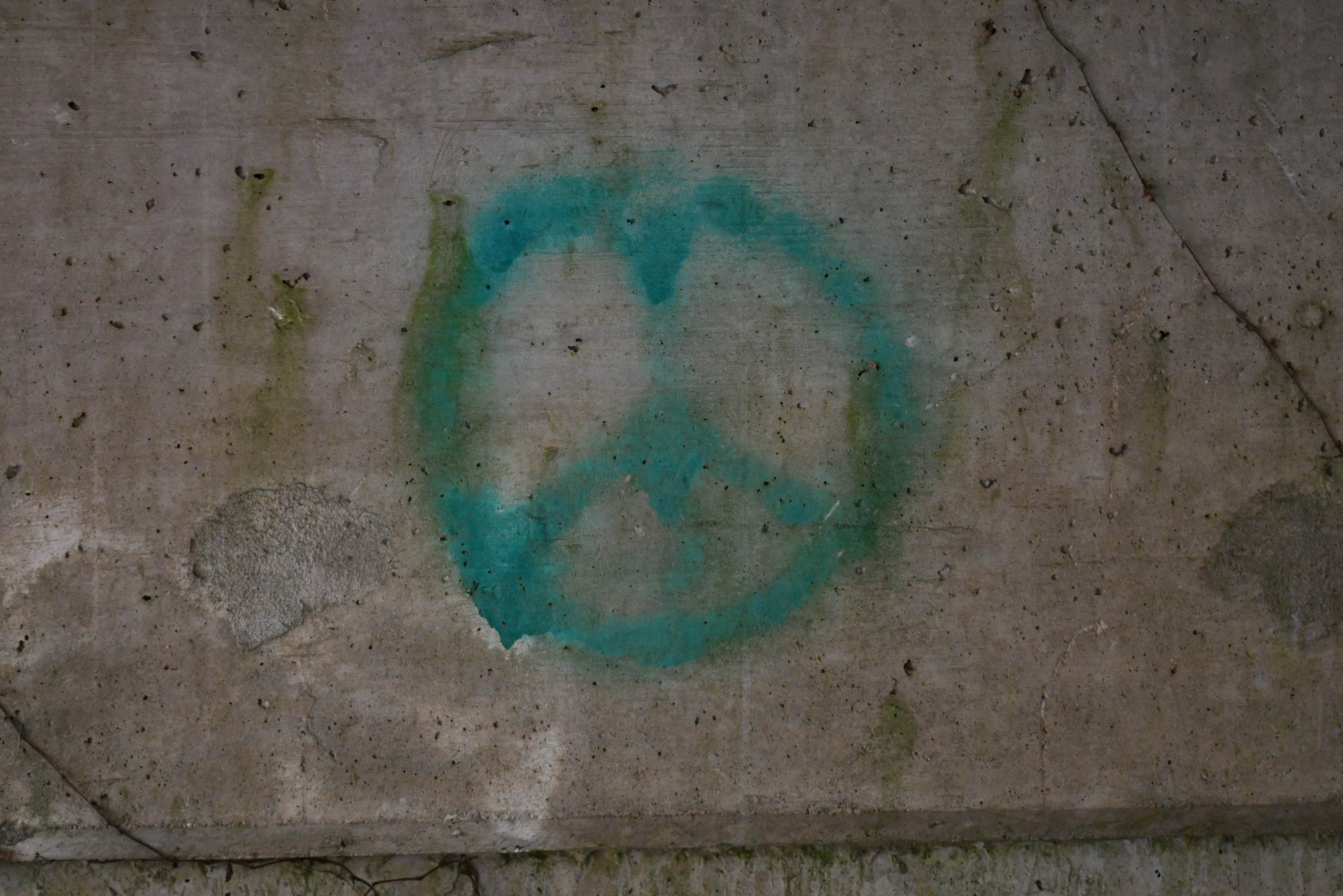
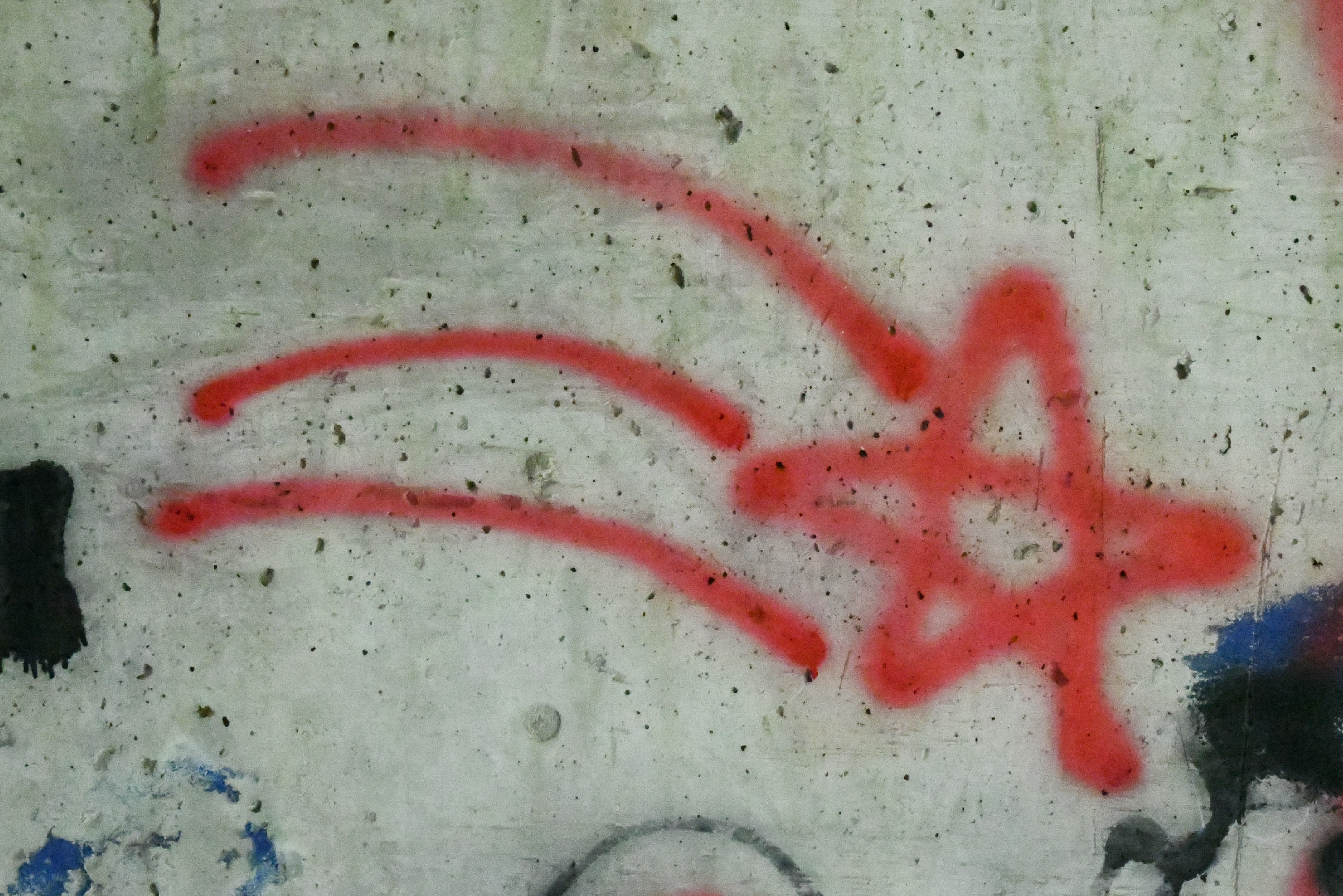
The stench of slick gray mud sucks at my ragged Dockers. I step, unbeknownst, through a spider web—frantic swipes—it’s in my hair! Then I see under the bridge.










 Saragun Springs