
The Drifter: One Holy Reason to Love

One Holy Reason to Love

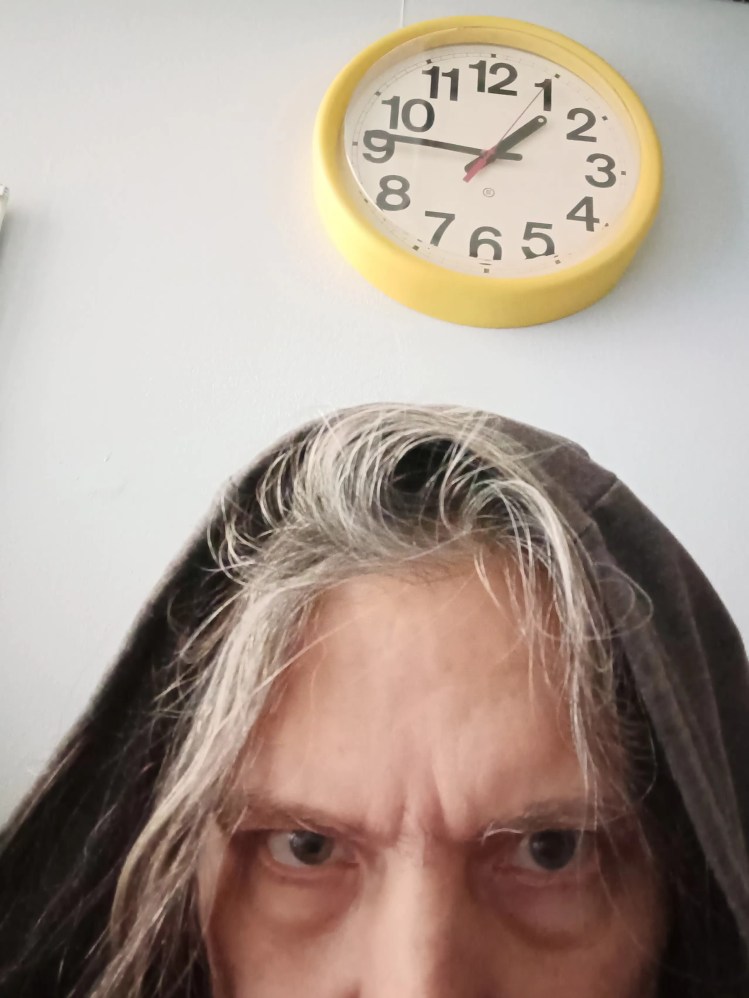
(Image provided by The Drifter)

“Kerouac could write everything because he never forgot

anything.” – Bob Dylan

“I saw you this morning…in my secret life.” – Leonard Cohen

Scholars of literature always call Edgar Allan Poe the first writer in America who ever tried to make a living using nothing other than his own pen. And that is very far from true, very, very far from true.

Poe never tried to make a living in America using nothing other than his own pen. He always knew he would need another job, whether that was in the U.S. Army or as a low-wage wage slave working for other peoples’ publications where much of what he did as a “job” had absolutely nothing to do with his own creative writing, on the surface at least.

What Poe did try to do, and what he can be called “the first” at doing in many ways in America, was to try and live a truly literary life at every level, no matter what else he also needed to do in the meantime.

Every demeaning task, every humbling action, every humiliating circumstance in his life, and there were many millions of all the above, Poe tried to convert into something sacred that could be seen as serving the literary life he always made himself live for his own pride, even when it seemed impossible.

Poe never let himself forget he was a writer. He elevated it above everything else, above politics, above religion, above family, even; or rather he made it so much a part of his life that everything else, politics, religion, family, all grew out of his starting point, which was his commitment to writing as an art.

This profound innovation, which is more relevant now than it was 200 years ago when Poe made it, has had an endless series of influences on all the arts, not just writing, all over the globe, not just in the USA.

It probably caught fire in France first, when Charles Baudelaire, the first true poet of the modern city, took up the call that Poe had issued to the writers of the world.

Baudelaire identified so strongly with Poe that it’s said he would pray to Poe nightly, as if Poe were a saint. When we consider Charles Baudelaire’s Catholic background, this doesn’t seem nearly so crazy as it might appear at first glance to many of us.

In the religion Baudelaire was raised in, praying to saints was not only not frowned upon, it was encouraged. Baudelaire’s move, which was to make the Art-for-art’s-sake Edgar Allan Poe into his own private literary saint, was really only moving the material he was given at birth an inch or two to the right or left. It was the higher ideal of the truthful and imaginative writing life that Baudelaire was really placing on the pedestal, in the manner of his hero, and saint, Edgar Allan Poe.

Baudelaire wrote in the shadow of Victor Hugo, a writer as massive, deep and wide as Charles Dickens, but it is now Baudelaire, in his Paris Spleen, Flowers of Evil, and Artificial Paradises (hashish, laudanum, absinthe, and literature), who generally seems more modern to most poetry lovers.

Hugo the realist, as great as ever still, was of his own time. Baudelaire, following in the footsteps of Edgar Allan Poe, was for the future. Like Poe, he foresaw, and even lived in, the age when humans would become ghosts of themselves (for good and ill), the time when the new rule would be (and is): turn your own life into an art, or die, mentally, emotionally, spiritually, and even literally.

The life-as-art, art-as-life, consequences-be-damned credo and way of living was elevated perhaps even higher by Vincent Van Gogh, especially in his self portraits, or in Sherlock Holmes and Irene Adler, whose laser-like, scientific focus on artful truth-telling rises straight from the beautiful and terrifying mists of Poe’s profound innovation, where the responsibility for everything is placed squarely on your own doorstep, even, or especially, if you are a starving artist.

Here are four ways any and all of us can instantly start turning our lives into an art and an art form almost immediately. If you’re already doing these things, and I have no doubt that some of you are: then bravo for you. Keep it up, and spread the word!

ONE: Texting

Do not become the mental slave of your own (what I like to call) texting device. Never send a text that has been written for you by a robot, AI or other computer; and never send an emoji that has not been specifically selected by you to be extremely pertinent to the exact circumstances at hand.

If use emojis you must, feel free to do so: but be creative. Go deeper. Look for the ones that say what you really mean to say. And be sure you know what it is that you really mean to say. If you don’t really mean to say it, don’t just say it, blindly. This is you putting yourself out there into the world, and this is the inevitable way people communicate now, at this moment in history, for a million different reasons.

Texting is too easy to do, but it doesn’t have to be. Take the time to say what you really mean: or don’t say it at all. And when you choose silence, choose it for a very definite reason; know what that reason is; know why you are choosing to exercise your own silence; don’t just ghost people because you are bored – or lazy.

If the time has come for you to be quiet, know why you are doing it.

TWO: Emails

Be creative when you compose emails. Even be creative when composing emails if it’s in a situation where you are not supposed to be creative, or maybe especially then. If being creative will get you frowned upon and called onto the carpet, be as creative as you can possibly be, even unto the point of being shown the door by the robot-humans in charge eventually. Don’t dumb down your own language too much in order to be “safe” or in order to please your masters, and make sure your own individual personality-stamp goes out with every single communication you ever send. Even if you’re just telling someone you need them to do something for you by Tuesday. Or maybe especially then.

THREE: The “Comments” Section

Be very, very, very selective about what kinds of “Comments” sections you choose to engage with. And when you do find a good one and have chosen to engage with it, go all the way. Doing anything in life in a half-assed way is nothing more than a half-assed way of doing things. Make sure you’re not just shouting into the void by repeating the exact same things a million other people are also saying.

Choose wisely, and be selective, and make a full commitment; let your opinions shine forth only if they are genuine, original, dyed-in-the-wool personal opinions based on the reality of the world, not just group-speak mind-control thought-police regurgitations of the exact same thing everyone else is also saying ad infinitum.

Another way of putting it is this: be original. Always be original. If you can’t be original here, it’s OK: choose silence, and be original in a different venue where you feel like you’re on more solid ground.

Regarding size of audience, Jesus himself said this: “Where two or three are gathered together in my name, there am I in the middle of them.”

There was a reason why he emphasized the tiny numbers two or three, just as he limited his personal disciples to another tiny number, twelve. Jesus was the strongest advocate for individuality this Planet has ever known, which is why he is, by far, the most famous person who has ever lived, or ever will live. And he spent a lot more time walking away from the churches and marketplaces of his day than he did walking into them.

FOUR: Pictures of You

Do not use the camera on your phone to celebrate the American Religion, CONSUMERISM. Do not use the camera on your phone to advertise the dead animals or the vegan delights you are about to sink your teeth into (everyone needs to eat and digest) unless you can really make it artistic. Also, do not use your camera as a way to provide just another screen between you and the reality of the world. Instead, use the camera on your phone for the following three reasons.

One: To try and capture moments of beauty which are beautiful, or to create beauty by making something beautiful which people don’t usually think of as “beautiful.”

Two: To relate yourself to the real world around you by showing yourself and others “It” from new, original, and different perspectives. (This is called “Imagination.”)

Three: Use the camera on your phone as a form of SELF exploration.

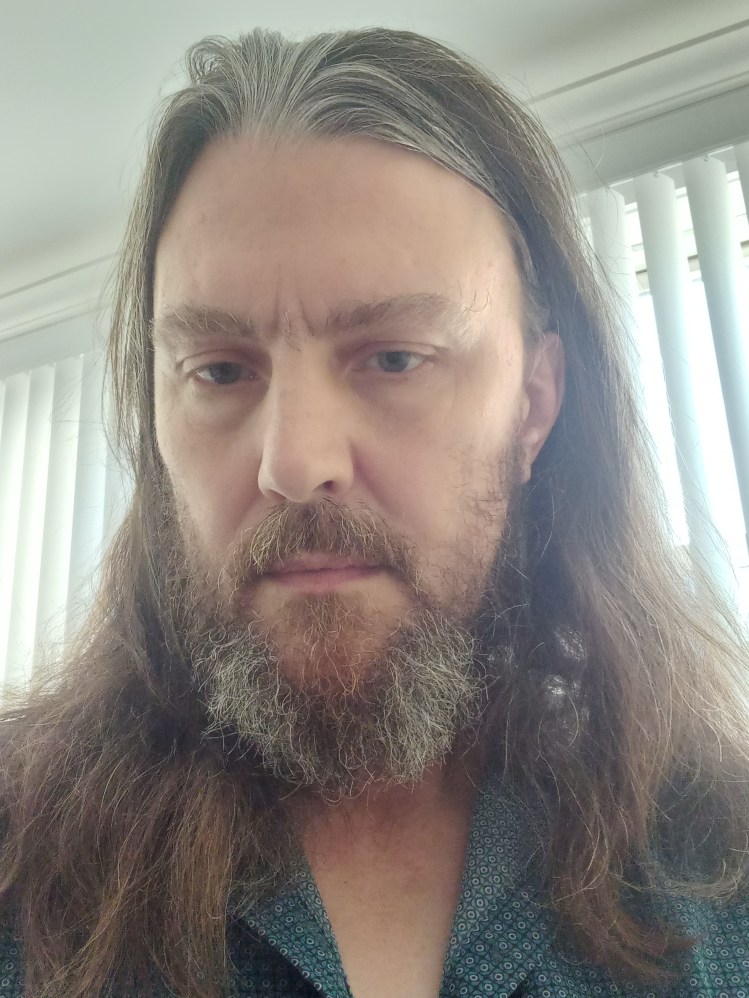
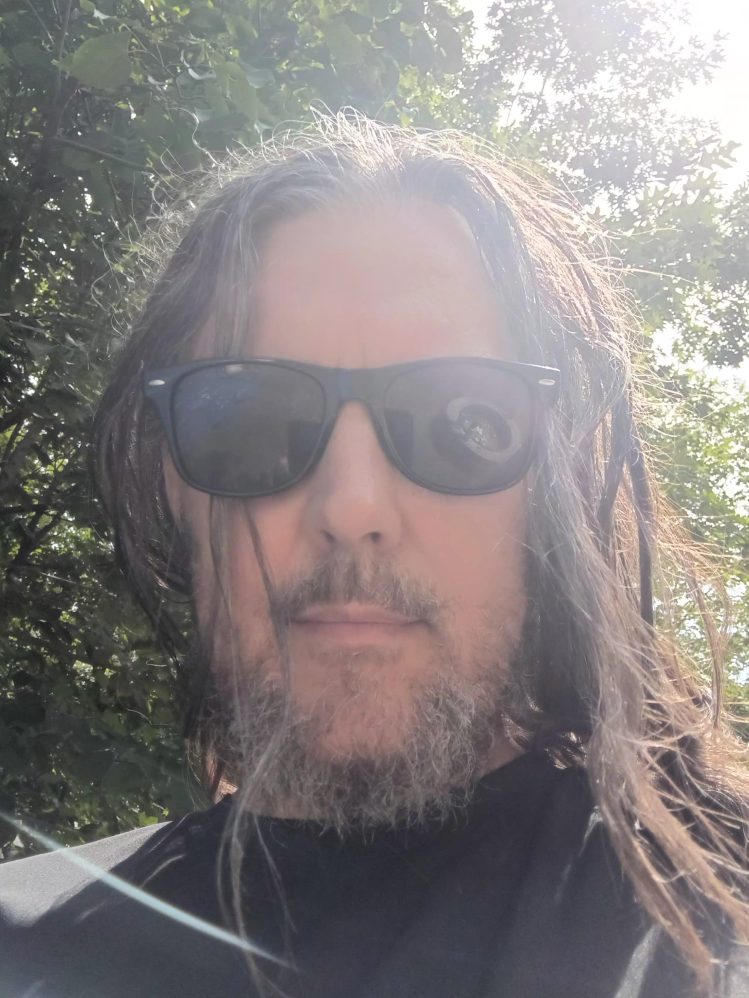
Do not take selfies. Make self portraits. Even if the only one who ever studies them is you, this will make you an endlessly deeper and more original person in everything else you do and do not do (what we DO NOT do is just as important as what we do), IF you do this in the right way, which is to do it the way Socrates said to use the mirror: Look for yourself, and study the endless changes which are “you,” with fascination. (This is something Shakespeare did in his Sonnets.)

Most people are only terrified of death when they never really live/d first. Always start with yourself first. Move outward from there.

A NOTE on reading from The Drifter: What you take into yourself is just as important as what you put out into the world, and what you put out into the world will, inevitably, be massively influenced by whatever you have spent your time taking into yourself.

Watching a truly great movie is a much more artistic experience than reading a truly bad book.

But the act of personally reading good things will strengthen the mind (and hence the personality) in a more powerful way than anything else on Planet Earth. This has been true for thousands of years, and will remain true now until “the end” (whenever it comes).

Alexander the Great’s most prized personal possession was his copy of The Iliad. Abraham Lincoln spent more time reading Shakespeare and the Bible than he did studying war plans or political suggestions. Martin Luther King, Jr., was always reading good things. He never would’ve been able to write or think so well otherwise: and he knew it.

The poet William Blake was not joking when he said he wrote mostly for “children and angels.” Personally, my conception of Heaven also includes forms of reading. If I’m wrong about this, it’s highly doubtful I will be aware of it; so I’m going with this for now. (It’s also probably true that by “angels” Blake meant both literal angels, and saintly humans.)

If one fills one’s mind with trash, nothing but trash, and more trash, eventually (or sooner) the mind itself will become a trash dump. Right about then is when real and deep ignorance, cynicism, scorn for the good of the world, and nihilism begin to set in. (Many of these people are walking around and looking like respectable members of society, too; even as we speak.)

Post Cards From the Drifter: The Crowd and the Protest

(Top image: Elina in Chicago 14 June; Second image: Tressa With Emma Lazurus Poem. Both supplied by the Drifter)

The Crowd and the Protest

“The shepherd enters through the gate.” – John, Chapter Ten

ONE

Sadly, the question might easily arise as to WHY anyone in their right mind would bother to fight for, or defend, the so-called “American Dream” any more, in this Year of Our Lord 2025.

The Gonzo journalist and prose master Dr. Hunter S. Thompson, in his prophetic mode, rightly proclaimed the American Dream dead and buried over fifty years ago, not too long after Tricky Dick got finished with his sad, partially unconscious, and certainly pathetic attempts to clownishly crown himself and end American democracy forever.

It seems to me that the American Dream has now become the most destructive lie and delusion the human race ever invented for itself, a vast, mass mental and spiritual health crisis and pandemic that has spread globally everywhere from here to India and all places in between, and has destroyed the human and humane spirits of, literally, billions of people all across the globe (although not everyone).

Because the so-called “American Dream” is nothing now in its very essence and core except a pixie dust mental disorder, a vast, sometimes-seemingly-all-consuming, LSD-like, schizophrenic delusion that is not based on Fantasy (the bad kind), but IS Fantasy the bad kind itself at every level.

Romance Fantasies, House Fantasies, Computer Fantasies, Car Fantasies, Shopping Fantasies, Political Fantasies, Property Fantasies, Robot Fantasies, Rocket Fantasies, Gambling Fantasies, Lottery Fantasies, Vacation Fantasies, Hero Fantasies, College Fantasies, Economic Fantasies, Flower Fantasies, Music Fantasies, Dancing Fantasies, Fame Fantasies, Job Fantasies, Retirement Fantasies, Revenge Fantasies, Drinking Fantasies, Drug Fantasies, Food Fantasies, Screen Fantasies, Sex, Power, and Money Fantasies have burned and buried the real minds and hearts of so many people walking, standing, sitting, or lying down on the globe right now that it’s really chilling and yes, even horrifying, when one thinks on it for more than two seconds before going back to casually scrolling one’s phone as the world burns.

So why fight for the American Dream? Because there’s another side to everything in this world: what the great Chinese poet, philosopher, drinker, and drifter Li Po called the Yin and the Yang.

Harold Bloom, the great American writer, voice and citizen, said many times that an American never feels free unless she or he is alone. And when an American is alone, they do always feel free (even if sometimes terrified, too).

That liberating essence, or core, of American democracy still exists, even though Sojourner Truth, Crazy Horse, Frederick Douglass, Thomas Jefferson, Daniel Boone, and John Wayne are gone (“The mountains have been my church,” said Wayne in his final movie). It means everything to the human mind, heart, spirit and soul all over the globe, is America’s one great contribution.

And that is why I will fight for it, in my own way, and in the spiritual warrior sense of the word fight. I, and many others.

TWO

We came up out of the subway tunnel and were instantly swallowed by the Chicago crowd. I was with my teenaged kids and a few of their friends. I could see the Picasso statue in the distance over the heads of the crowd. It was there, the statue the great Picasso gave to the city of Chicago for free, the one that looks like a horse’s head from a certain angle, a woman’s head with long hair from another angle, something else you had never really imagined before and can’t name, from another angle.

I’d spent a lot of time in the past sitting around in downtown Chicago and studying that huge metal statue. Now I was packed into the middle of so many hot, pressing, human bodies suddenly that I couldn’t even move, not right, left, front, backward or center. One of my daughters had been swallowed and pushed along by the crowd. We were all worse than sardines in cans right now. Suddenly I realized that if I had another stroke like I’d had last year, I would be in a very bad spot because there were angry, shouting, pressing, hot-blooded, hot-breathed, neck-veins-bulging, stinking, sometimes-perfumed, protesting people pressing all around me and there would be no medical assistance happening out here. I turned around again trying to find the stairs from where we’d come up from the subway so we could go back down, but it was already too late. We’d been sucked into the vast black hole of the hot, pressing crowd, literally even before we knew what was happening.

We kept talking to each other in the middle of the crowd as we tried to inch our way out of it. I instructed all these teenagers I was with to follow me, and trusted (no choice) that my other wildly intelligent daughter (they both are) would be able to fend for herself, but no one in the crowd was moving, they were all just standing there pressing upon one another (no room for anyone to even sit down, not that you would want to here), holding up signs, screaming slogans and chants, breathing their hot breath on the backs of one another’s necks, and I could feel the outraged intensity of every single one of their souls (it felt like) pressing down on my own personality, which was very quickly becoming nothing less than outraged at their outrage. Trying to keep it under control, trying to keep it under control…

There were very many angry and shady-looking people pressing in the crowd, folks trying to pull suitcases or carrying awkward-looking backpacks, all of the above large enough to carry explosives of course, folks dressed all in black with hands hidden in pockets large enough to carry pistols, folks hunched over with hoods over their heads and masks on their faces and sunglasses covering their eyes.

It was a vast ocean of bodies pressing over me and I realized I was about to panic perhaps because I was now having a bona fide LSD flashback right here in the middle of the crowd, actually triggered by the crowd, in fact. But I had to keep it together in order to lead my daughters and their friends to safety.

It had been my idea to come down here, after all. My kids and their friends instantly agreed. Then I remembered that I had been inspired by them during the George Floyd protests when it had been their idea to go to the protests before it had been mine. We were trying to inch our way along to escape from the crowd. Some people, obviously many people, do not get too claustrophobic in such conditions, because a lot of these protesters actually seemed to be enjoying themselves. But myself, my daughters, and our friends were not some of the non-claustrophobic ones. The kids call it “tweaking” these days. It’s when you’re losing your grip on things, feeling like you’re having an acid flashback, panicking or almost panicking, freaking out, in other words. I was now, officially, and internally, tweaking at every single level I could or couldn’t think of. I was able to hold it together for only two reasons.

One: in order to try and help my daughters and their friends (and myself) get out of this.

Two: I knew if I really started freaking out, it would be like throwing a flaming torch on top of a keg of gun powder.

I knew now, in my blood, how easy it is, and how fast it can happen, that people get trampled to death in a crowd like this.

THE CROWD is so terrifying and horrifying to some of us because it means a complete and total loss of individuality, and control, at every level.

The only place you can maintain your own self-control in conditions like this is within your own mind, and under these kinds of conditions, that is very hard to do, especially when an acid flashback, or whatever it was, is making every single nerve end in your body and brain feel like it’s on fire right out of the blue.

Thoughts of Buddha helped save me this time. His chubby ghost (to me he was chubby) appeared out of nowhere and wafted in front of my mind. It was his kind of mind control I turned to in these desperate circumstances. I was having an acid flashback in the extreme but the purposely recalled thoughts of the strength of Buddha’s mind helped me regain, and keep control of, my own mind. I turned around and all the kids I was with had vanished in the crowd, we had been separated, I couldn’t turn around, and I couldn’t find them. I kept on trying to worm and inch my way out of the crowd, trusting their safety to God, because it was the only thing I could do now.

THREE

During the worst moments of being suddenly caught unawares in the middle of THE CROWD like that, it felt like nothing short of being buried alive in the middle of the most vivid Edgar Allan Poe buried alive short story you’ve ever read, except you’re not reading the story at a safe distance, you are the character in the story who’s actually buried alive, worse than in a dream. For me, to suddenly have millions of anonymous bodies pressing all over mine without warning is one of the worst living nightmares I can possibly imagine. (I’m fond of keeping my distance, which is an essence of being a drifter.)

There are other nightmares just as bad, like maybe being stalked by a great white shark while out swimming in the ocean and you know he’s there but are still a mile away from shore. Only being buried alive for real could possibly be worse.

Losing contact with my kids in the crowd like that was even worse than the buried-alive feeling.

FOUR

It took me ninety (90) minutes to inch and worm my way out of the crowd. Ninety minutes that felt like nine months jammed down into a Siberian prison holding cell (because of the acid flashback/s).

When I finally broke free, onto famous State Street in Chicago, I looked up and there was the Van Gogh-like Muddy Waters mural on the side of the building I’d seen many times before. I had lost track of where I was in the downtown area, and had only been following my instincts to get out. And I got out. And I was free. And there was Muddy, one of my great and lifelong heroes, Muddy Waters, staring down at me. And we were both free.

I had to wait around for another thirty (30) minutes before my kids also broke free from the crowd.

But fifteen (15) minutes before that, I received the first text from them telling me they were OK.

FIVE

There is no doubt that I’ll continue to protest personality-crushing authoritarianism wherever it exists, whether that is at the “highest” business and political levels, or within the classroom or the workplace, or on the street corner, or within myself, or anywhere.

Next time, however, I shall be much more careful about how I approach THE CROWD. A word to the wise: The Crowd is bad. In the worst sense of the Word.

ADDENDUM from The Drifter

There are a million different ways to protest, of course, and attending a so-called “Protest” is certainly not the only way, although, as the American Civil Rights Movement showed, it is sometimes a necessary way. The famous “three and a half percent” rule, proved by social science, says you only need that amount of a nation’s population to resist and overthrow the lockdown of true authoritarianism, the kind where the jack-booted thugs are standing around armed on all street corners with their faces hidden and the little old lady you thought was your friendly neighbor just reported you to the secret police for something you didn’t do.

The following poem by Walt Whitman outlines another way to protest, just as profound, or more profound, than the other way.

Poets to come! orators, singers, musicians to come!

Not today is to justify me and answer what I am for;

But you, a new brood, native, athletic, continental,

Greater than before known,

Arouse! For you must justify me…

I am a man who, sauntering along without fully stopping,

Turns a casual look upon you and then

Averts his face,

Leaving it to you

To prove and define it,

Expecting the main things

From you.

“The Drifter” is drifting off for now in order to steady his nerves via a combination of medical, psychological, and spiritual advances. This world we currently inhabit will make you nervous if you’re alive; do what you need to; pursue the right kind of excess and eschew the wrong kind as much as possible.

“The Drifter” doesn’t know yet what the column will be about next Sunday in this “Postcards from the Drifter” Sunday series; what he does know is that he will be here.

Saragun Springs, Latest Triumph

(Dale Williams Barrigar has big news to deliver. I for one am looking forward to hearing from the Drifter–Leila–The image provided by DWB)

Thirty-eight Years

I have wanted to write a weekly column ever since I first heard of Charles Bukowski and his Notes of a Dirty Old Man thirty-eight years ago in 1987.

I first heard of Bukowski himself through Roger Ebert’s television review of the 1987 film Barfly, for which Bukowski typed (his word) the script. And congrats to Mickey Rourke and Faye Dunaway for having done a wonderful, memorable job in the lead roles. (Buk supposedly didn’t like Mickey as Buk but I think that’s because he wouldn’t have liked anyone as himself or his alter-ego-persona.)

I lived in Chicago at the time and was aware that Roger was sitting somewhere else in Chicago and he was talking about this raw, experimental, underground writer I’d never heard of. God bless you too, Roger Ebert, for all the things you taught me through the television back in those days. I never agreed with everything you said, but I learned volumes, and you were always an inspirational figure and your ghost shall haunt my new weekly column in a number of ways, on one level especially because I still live in Chicago, your home turf, and you are inescapable in that way.

After I heard about Bukowski from Ebert, I ran out the next day to my local bookstore. In those days, many of us did that a lot. I lived within easy walking distance, literally, of at least half a dozen bookstores back then.

I bought all the books by Buk which they had, and devoured (almost literally) them all before I saw the movie. One of the books was Notes of a Dirty Old Man.

My column, at least for a while, shall have this title: Postcards from the Drifter. This column, while influenced by Buk, will not include regular graphic descriptions of sex, one reason being that I’ve been celibate for over a decade. I subscribe to the famous quote by Carl Jung: “When the body is silent, the soul speaks.” I don’t know if this condition will last for the rest of my life or not, but for now it seems to work out wonderfully for me.

SO my column shall not have lots of graphic physical sex descriptions like Buk did. BUT it WILL have lots of personal revelations, and confessions, like the kind I just made in the above paragraph.

I’m a drifter because I never sit still, metaphorically and symbolically, and sometimes literally. But any good drifter needs to have a solid center. You can’t just shift your personality for the latest political winds so you can make lots more money when you’re already loaded. To be a good drifter means to have a solid center that will keep you grounded while you’re drifting.

My center is THE ARTS. I’ve been obsessed with the arts since kindergarten when I decided I wanted to be a painter, and was influenced by all the religious art around me at the Lutheran school I attended in Michigan. Before that, I had also been obsessed with The Arts, I just didn’t know it.

So my weekly Sunday column will focus on two things: personal confessions of a universal nature that will be useful for the few, and reflections and deep recommendations on the arts that will include thoughts and other ideas about writers, painters, musicians, filmmakers, actors and actresses, and other artists, like those who are artists of life itself.

I don’t seek now, and have never sought, vast quantities of drone readers, casual and/or transactional. Instead, I seek the few who can understand me in this dehumanized and dehumanizing world.

My first column will be about the stroke I suffered last year at the age of 57, what caused it (as far as I know) and how I was able to almost miraculously recover from it so fast (at least some of the doctors have told me it was almost miraculous). This column will also include a description of a knife incident that left me bedridden in my youth for a while, and a true description of leaving the body (not dying, just leaving the body) during surgery.

This column could never have happened without Irene Leila Allison. Everything I write now, including all of the above, is written for her first. This will continue to be true from now until my dying day. This is because I’ve never found another artist (except for my kids) who gets me in the way she does. She is my inspiration; and then it’s meant to move on outward from there, to all of her readers on this wonderful and inspiring site called SARAGUN SPRINGS.

I hope you can join us starting soon for these weekly columns called POSTCARDS FROM THE DRIFTER. It promises to be highly interesting if nothing else.

Sincerely,

The Drifter