The American poet Ted Berrigan (1934 – 1983) said (wrote), “I don’t feel / a necessity for being a mature person in this world. I mean / all the grown-ups in this world, they’re just playing house, all / poets know that.”
Among other questions this beautifully plain-spoken quotation raises, it raises the question of what, or who, a (real) poet is.
A guy who (sometimes) calls himself “The Drifter” (because he synthesized Samuel Johnson’s “The Rambler” and “The Idler”) came up with an answer for this.
He broke it down into three simple parts (or things) – or requirements.
One: a modern poet cannot be, cannot be, CANNOT BE, a cheerleader for The System, not matter what system you mean.
The modern poet MUST BE, must be, must be, an outsider; in one form or another.
Wallace Stevens was a married insurance executive with a kid (and a house) and he still managed to live as one of the most profound lone wolves North America has ever seen. And when it comes to lone wolves, America is second to none.
Secondly, the poet must have an original vision. Many poets have been literally blind, starting with the very first known and named modern poet (in the West) of all, Homer.
Their inner visions were so intense and so original that they lost their outer sight.
That is what the Homeric myth of outer blindness and inner seeing really means.
Next, the poet must be able to say what they see.
Not to a billion-plus people all at once. Once it gets to that level (or even a million) poetry has turned into propaganda. Donald Trump used to be able to give some wickedly effective “poetry” readings about immigrants being snakes. But these readings were propaganda in the form of (simplistic) poetry; they were not “real” poetry.
The poet must be able to say what they see that no one else sees.
BEING A POET HAS ABSOLUTELY NOTHING TO DO WITH USING FANCY WORDS OR “PRETTY” VOCABULARY (although almost all good poets have a wickedly large vocabulary).
Real poetry is about ELEVATED LANGUAGE and the circumstances that rightfully call for elevated language; and that does not mean elevated language is pretty.
Elevated Language is often harsh; very plainspoken; savagely angry; obscene; heartbreaking; hilarious; haunting.
Elevated Language is always intense, but very-much oftentimes, intensity comes in a whisper.
Much or most of the best poetry is AWKWARD, at least until you get used to it. (Awkward, NOT “pretty.”)
And its intensity is often calm, quiet, whispering, mumbling, clipped, pungent, brief, startling, something on the wind over the waters: memorable.
Marlon Brando mumbling on screen in some of his best roles is kind of like poetry. He can do it so well you don’t even know he’s faking it: maybe because he wasn’t (quite) faking it (he was bringing it up from a real place inside himself).
An outsider with an original vision who can communicate that vision to at least one other person in words because the right words make you think and feel more deeply, privately (not publicly): that’s what a real poet is and what real poetry (and who a real poet) is.
My psychiatrist (who is employed at a very well-known and well-respected hospital and medical establishment in the city of Chicago) calls the time we are living in right now The Psychedelic Renaissance.
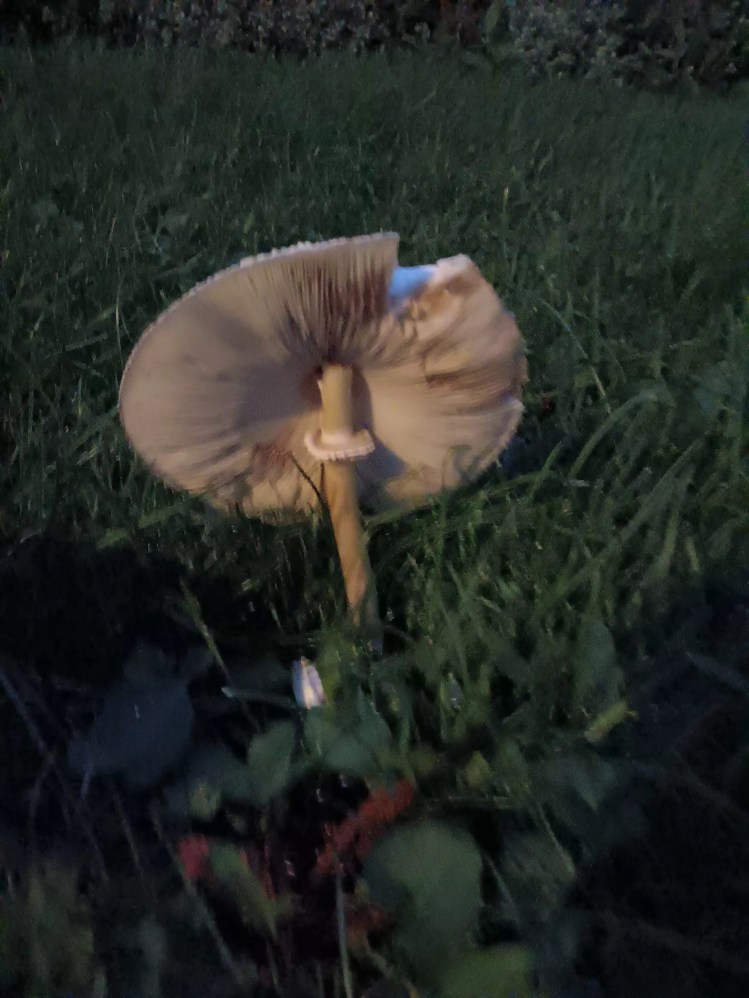
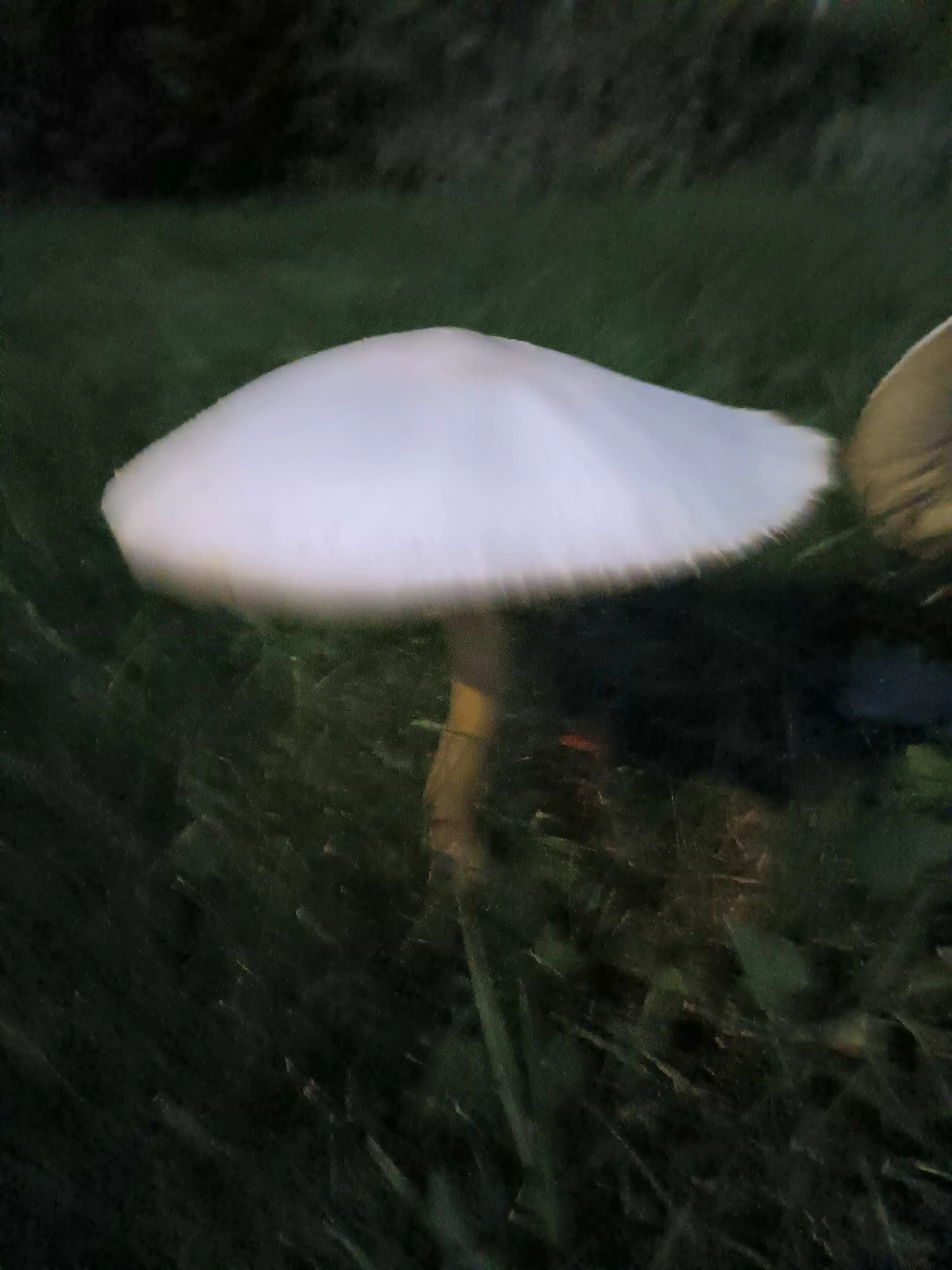
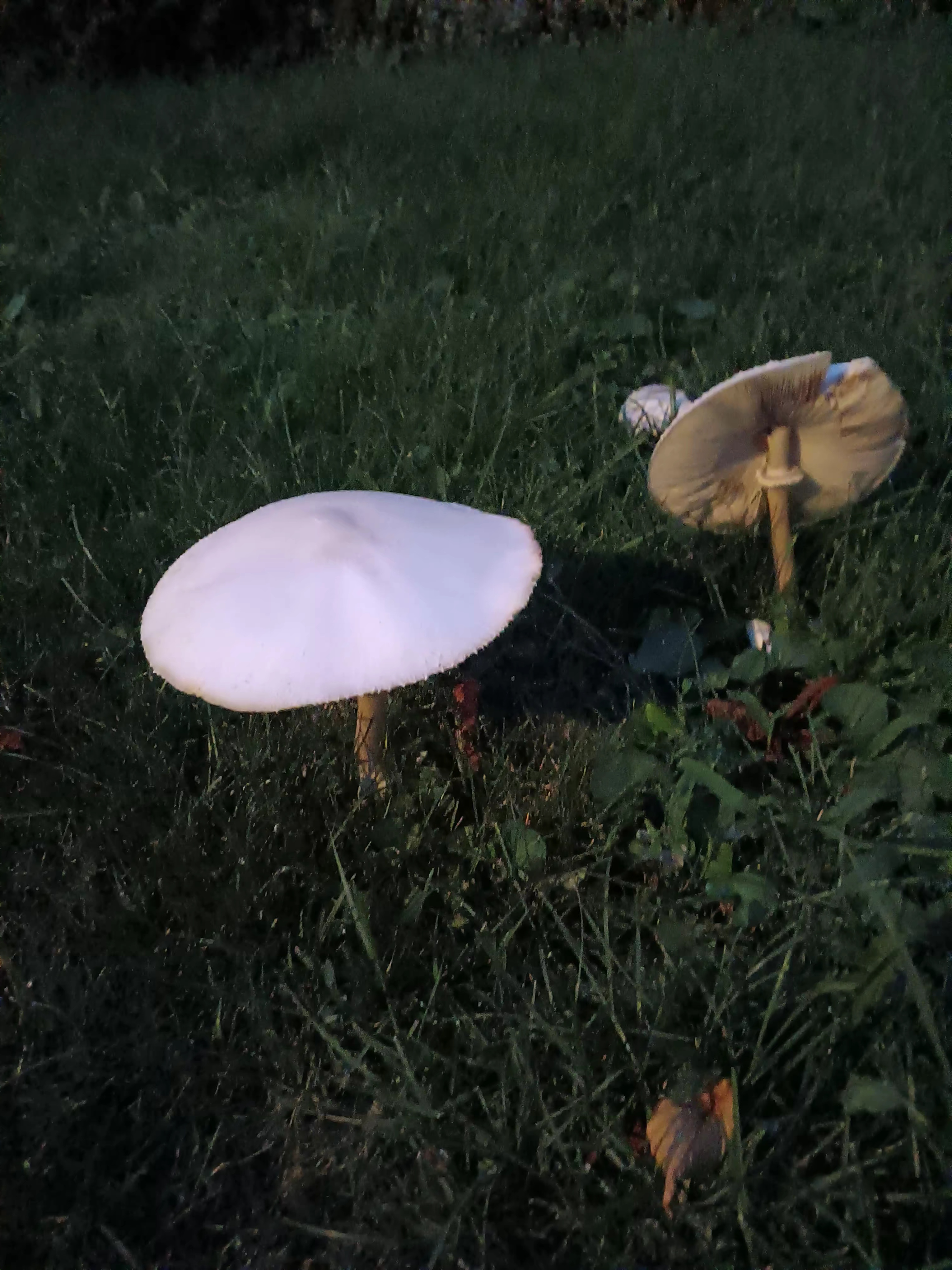
He calls this time that name because of all the research that is currently being done on what are known as “Magic Mushrooms” on the street. Magic Mushies, or psilocybin, are being researched right now as an effective treatment for a wide array of modern issues, including, but not limited to: treatment-resistant depression; Obsessive-Compulsive Disorder; adult ADHD; and Substance Use Disorder.
To those not in the know, it may sound ironic, and even ridiculous, to give someone who has been addicted to alcohol or opioids Magic Mushrooms instead; but, trust me, the difference between these substances is profound, and one important name for this kind of treatment is: “HARM REDUCTION.” I.e., taking a few Magic Mushes now and then might be beneficial, and is not deadly in the way a full-blown addiction to alcohol and/or opioids is deadly.
HOWEVER: lest anyone think that Magic Mushrooms are perfectly harmless and you can take as much as you want whenever you want, I offer a few examples (taken straight from life, and experience) to make you think again.
If you take too many Magic Mushes all at once, accidentally or on purpose, you can really, really get yourself into some big trouble. Number one, it raises your heart rate and can trigger strokes or heart attacks.
Number two: it can make you paranoid. It can make you very, very, very, very paranoid. It can make you so paranoid, if the dose is large enough, that you become, temporarily, psychotic, which means, totally out of touch with reality.
Taken every day in large doses over, say, a two- or three- or four-week period, a person can slowly, steadily start to become separated from “reality” in a very, very serious way, as in believing you are being watched by the police when you are not being watched by the police, or thinking that your neighbor is out to get ya.
(I am not saying I know these things from personal experience; but I know these things from personal experience.)
Magic Mushrooms have their street terminology, like all drugs. One term is: “hero dose.” It means taking a massive dose and going on a long, strange journey, or trip. Another term is: “micro dose.” It means taking a small, controlled dose, kind of like having a single cup of coffee instead of nine or ten cups of coffee, or a few puffs on a cigarette instead of the whole pack. A third term is really beautiful: “afterglow.” This is what happens when the hero dose or the micro dose starts wearing off, but is still “there.” This phase of the experience is, very often, the very best phase of all. And sometimes it lasts for days (on and off). Literally.
I have seen a grown man sitting on a couch weeping like a little baby and asking the people around him to call his mother because he “wanted his mommy,” even though mommy had been dead for twenty years. This man was not me (I only witnessed this) but damn and wow, did it make an impression.
I have also seen a teenager hiding her head in a bucket for over six hours while believing that “THEY” were at the front door and about to “get her,” because she took a massive “hero dose” accidentally and then freaked out so bad she literally went insane for a while.
Again, it wasn’t me that happened to but I witnessed it, up close and personal, and damn and wow, did it make an impression.
Magic Mushrooms are A DRUG. They are a much safer drug than ALCOHOL, the most dangerous drug of all, along with crystal meth, fentanyl, cocaine, etc. etc. They are a much safer drug than “the hard stuff.”
But if you think you can take as much as you want without losing your shit, you are wrong.
END NOTE/s: They also affect your balance and coordination and can make you fall down.
Never drive on these things unless you are Paul Newman!
The Editors of Saragun Springs (L and D, Seattle and Chicago, USA) share a mutual passion for William Shakespeare. We revere him for the same reason/s that almost everyone who likes him likes him: he’s the greatest single writer in the English language and everything that has been written in English since him has been massively influenced BY HIM, even if that particular writer is not familiar at all (on a personal level) with his work/s.
I could go on and on about Good Will, but I can’t say it any better than Ralph Waldo Emerson did almost two hundred years ago. The following 305-word quote (at the end of this little essay) is NOT a cut-and-paste. This quotation was typed out by hand, from memory, by me; and I checked the text afterward because I knew there would be a few mistakes (there were quite a few mistakes, which I have since corrected).
Anyone who reads, rereads, and studies, this quotation will have their mind stretched in the right kind of way, even if they’ve never heard of Shakespeare.
I was not able to type this thing from memory because I have a photographic memory. I have it memorized because of two things: repetition and concentration (I’ve read it a lot and I always concentrate deeply when I do: it is a form of meditation, and prayer).
Shakespeare cannot compete with the world’s best-selling and most well-known book (BY FAR), the Bible, when it comes to characters: and not even close; and he himself knew this very well.
Adam and Eve, The Serpent (Satan), Yahweh, Cain and Abel, Moses, Noah, David and Goliath, Solomon, Samson, Job, Jonah, Jesus, Mary, John the Baptist, Mary Magdalen, Peter, Judas, Herod, Pontius Pilate, the Good Samaritan and the Prodigal Son are now and will always be more well-known, globally, than any of Shakespeare’s characters.
(The Bible is the world’s greatest story collection, and I am speaking here of The Bible as literature. I also believe, personally, that the individual authors of the Bible were divinely inspired, very much so, each in their own very individual, very particular, very different ways.)
Some of Shakespeare’s most famous personages are: Hamlet, Falstaff, Cleopatra, Julius Caesar, and Romeo and Juliet (he did not actually invent any of them, which is also true of most of the Bible’s main characters and their authors, just as it is true of Rabelais and Gargantua, Goethe and Faust, Lord Byron and Don Juan, etc. etc. etc….).
I once heard two little kids running around on the sidewalk talking about Romeo and Juliet in Arabic.
I believe R and J are WS’s two most famous characters.
But even they cannot even come close to competing with Jesus and Mary (as characters; I also happen to believe, personally, that each of these were also holy; but my definition of “holy” does not match “the world’s” definition of holy, unless it is the Russian definition of such).
But Shakespeare added something new to the presentation of character that every single writer who has written in English since then, has been influenced by (to say nothing of his influence in other languages as well, like German, where he is, if anything, even better known than in English).
Now that I’ve blathered on for over 600 words, I leave you with the Ralph Waldo Emerson quotation. I would say, pay close attention to the title of this little article and the way it appears in the following quotation. Emerson wrote this quotation when the world thought Shakespeare was just a cheap entertainer. Emerson was among the first to see deeper on this issue (not the first, but among the first, which amounts to the same thing; because there are no “original” ideas):
“Some able and appreciating critics think no criticism on Shakespeare valuable that does not rest purely on the dramatic merit; that he is falsely judged as poet and philosopher. I think as highly as these critics of his dramatic merit, but still think it secondary. He was a full man, who liked to talk; a brain exhaling thoughts and images, which, seeking vent, found the drama next at hand…He is like some saint whose history is to be rendered into all languages, into verse and prose, into songs and pictures, and cut up into proverbs; so that the occasion which gave the saint’s meaning the form of a conversation, or of a prayer, or of a code of laws, is immaterial compared with the universality of its application. So it fares with the wise Shakespeare and his book of life. He wrote the airs for all our modern music: he wrote the text of modern life; the text of manners: he drew the man of England and Europe; the father of the man in America; he drew the man, and described the day, and what is done in it: he read the hearts of men and women, their probity, and their second thought and wiles; the wiles of innocence, and the transitions by which virtues and vices slide into their contraries: he could divide the mother’s part from the father’s part in the face of the child, or draw the fine demarcations of freedom and of fate: he knew the laws of repression which make the police of nature; and all the sweets and all the terrors of human lot lay in his mind as truly but as softly as the landscape lies on the eye. And the importance of this wisdom of life sinks the form, as of Drama or Epic, out of notice.”
“I’m so tired because I’ve been driving for almost eleven hours straight in a row with hardly a break at all,” he told himself out loud while continuing to drive his small car down the abandoned-looking highway in the middle of nowhere in the middle of Michigan’s Upper Peninsula.
All of Michigan’s Upper Peninsula is the “middle of nowhere.” There is really nowhere, he told himself, in Michigan’s Upper Peninsula that is not the middle of nowhere. And, after all, that is why you have traveled here, Sir (for some reason he called himself Sir inside his head although it was not a term he usually applied to himself; but she (who was now gone) had sometimes used to call him Sir; sometimes tenderly; sometimes satirically; and now that he was alone and far from her he was carrying on the tradition).
You are here, Sir, because it is the middle of nowhere. That and HEMINGWAY.
“Big Two-Hearted River” is one of the greatest American short stories ever written. It is set in Michigan’s Upper Peninsula. In the story, Nick Adams, Hemingway’s alter ego, travels to Michigan’s Upper Peninsula to get away from civilization because his body, mind, heart, and soul have been damaged by his service in WW1.
Hemingway himself got blown up over there. Over two hundred pieces of shrapnel in the legs at the age of eighteen while working as an ambulance driver for the American Red Cross. Anyone who thinks Hemingway loved war is wrong. Sometimes he thought it was necessary. That is a very different thing, and a very questionable belief. But Hemingway was not a war monger. He also worshiped the animals he killed in the way Native Americans did and some still do. He once wrote, of an animal, “It is not a sin to kill him if you love him.” Crazy Horse said the same thing. Such a statement has a different weight when it’s said with utter, deadly seriousness. Everyone who eats meat is a killer even if they don’t actually do the killing themselves. Too many animals have been killed and we are in the most massive age of extinction the world has ever known (except for the dinosaurs) and all of it should stop. Should stop, not will. But Hemingway was born when McKinley was president. It was a different era…
These are the kind of thoughts he kept having as he drove down the road, chain-smoking Marlboro Light cigarettes and chain-drinking black truck stop coffee. Later he would have a small stroke and develop stage one emphysema before he was sixty because of such habits as these (and the drinking in the bars (which were so loaded and thick with second-hand (and first-hand) smoke that it was like sitting in the middle of a cloud of beautiful poison for years), and the drugs, and the depression, which he called The Triple D’s) (and tonight alone in the cheap motel outside of Sault Ste. Marie, this shit would give him a panic attack; that and not having eaten any food (almost) in two days); but right now he was thirty-three years old and strokes and emphysema were the last thing on his mind; and he would never regret a single thing, which is, after all, what badass Nietzsche really meant by the thought-experiment concept of Eternal Return…
He took a drag of his cig’ and a healthy slug of the lukewarm coffee.
He had one hand on the steering wheel and the burning cigarette was in his other hand between his cigarette-stained fingers as he slumped there, exhausted and alert, behind the wheel.
The abandoned-looking road here was literally crowded with pine trees right up to the edge of the road, making a darkness, but sun fell down, between the trees, all over the road, making the road a bright yellow ribbon (follow the yellow brick road) of possibility for a few moments at least.
He drove with his knees and lit another cigarette with the smoking butt of the last one. Then he poured more black coffee from the thermos into the cup between his legs, and in doing so, he spilled a bunch of the coffee all over his crotch and felt the warm wetness all over his shorts (it was summertime) and all over his…
He laughed and called himself “Sir” again, almost hearing her voice out loud as he did so. She had also sometimes called him “Bear,” because his last name sounded like it had the word “bear” in it (even though it was spelled differently).
So he called himself Bear, there, alone, in the car, while driving, smoking, meditating, and drinking coffee, and just as he called himself “Bear” (like she had done), he looked up to see a bear standing in the middle of the road right in front of him. And it was a WHITE BEAR!
He slowed down fast then slammed on the brakes so he didn’t hit it because it wasn’t moving, at all.
It just stood there on all four gargantuan paws in the middle of the empty road (there had been no other cars for a very long time) staring at him.
And how the fuck was there a white bear in the middle of the road in the middle of Michigan’s Upper Peninsula!?
He knew that black bears lived here. Not only did they live here, many places in Michigan’s U.P. have more bears than people in them, by far.
He’d studied polar bears in books and documentaries, and at the zoo, and he’d seen wild grizzly bears from a Jeep in Alaska (the guide had said they weren’t too close). He knew enough about bears to know that this wasn’t, surely, a polar bear, a grizzly bear, or a panda bear who had escaped from a zoo (or something). He also knew that not all black bears are black; some are brown, or cinnamon-colored, etc. etc.
But this bear was utterly WHITE, as white as freshly fallen snow, as white as Snow White, as white as Moby Dick, as white as the whitest hair on the oldest person who ever lived (there was probably someone somewhere in the world who’d once lived to be 130), as white as heaven, as white as you can think of, or imagine. (He also knew that albino creatures have pink eyes and noses, and he could clearly see that this white bear’s eyes and nose were dark – very dark.)
And within that split instant of time that stretched itself out like a pink light beam shooting out to the edge of the universe (and then beyond) he knew that this might get him killed, mauled, sent to the hospital, whatever, as he opened the door of his stopped car and stepped out into the road not too far away from the white bear who was standing there in the middle of the road, looking at him.
And he and the bear stood there and stared at each other as the sun fell down into, and upon, the brightly yellowed road between them.
Then the bear stood up, massively, on its hind legs and sniffed the air in his direction.
Then it dropped back down onto all fours, and with its head lowered, it stared, and stared, and stared, at him.
They were about forty feet away from each other and black bears can run faster than horses.
And as they stared at each other, the man (the young man) felt the power of the bear SURGE through him – marking him for life.
And then the bear swung around and ran away into the trees.
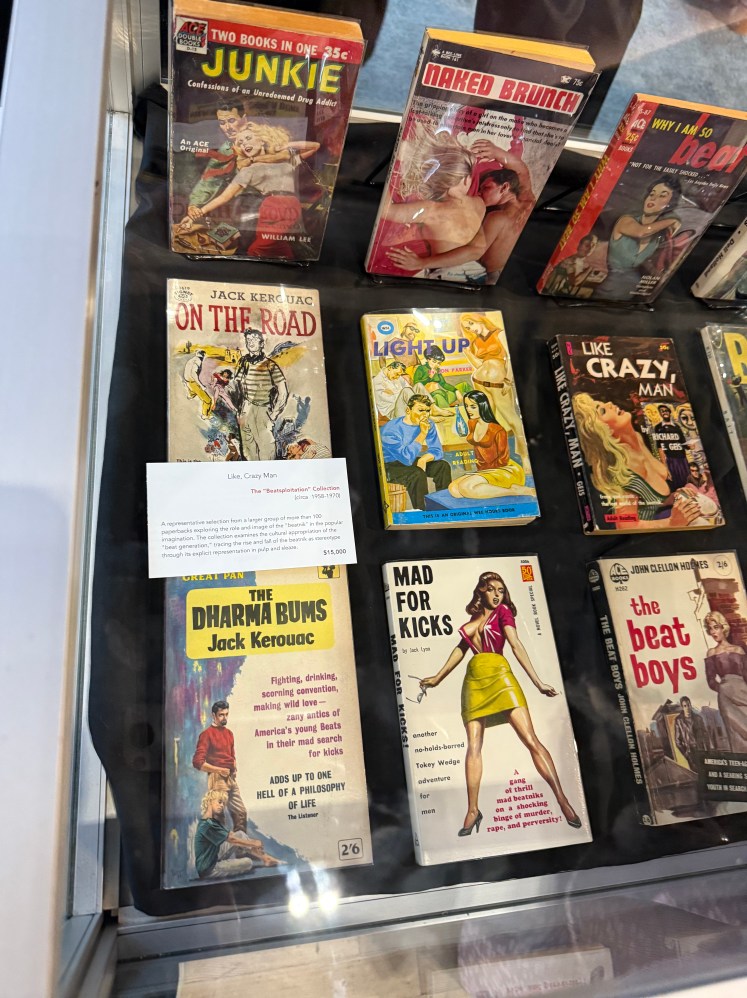
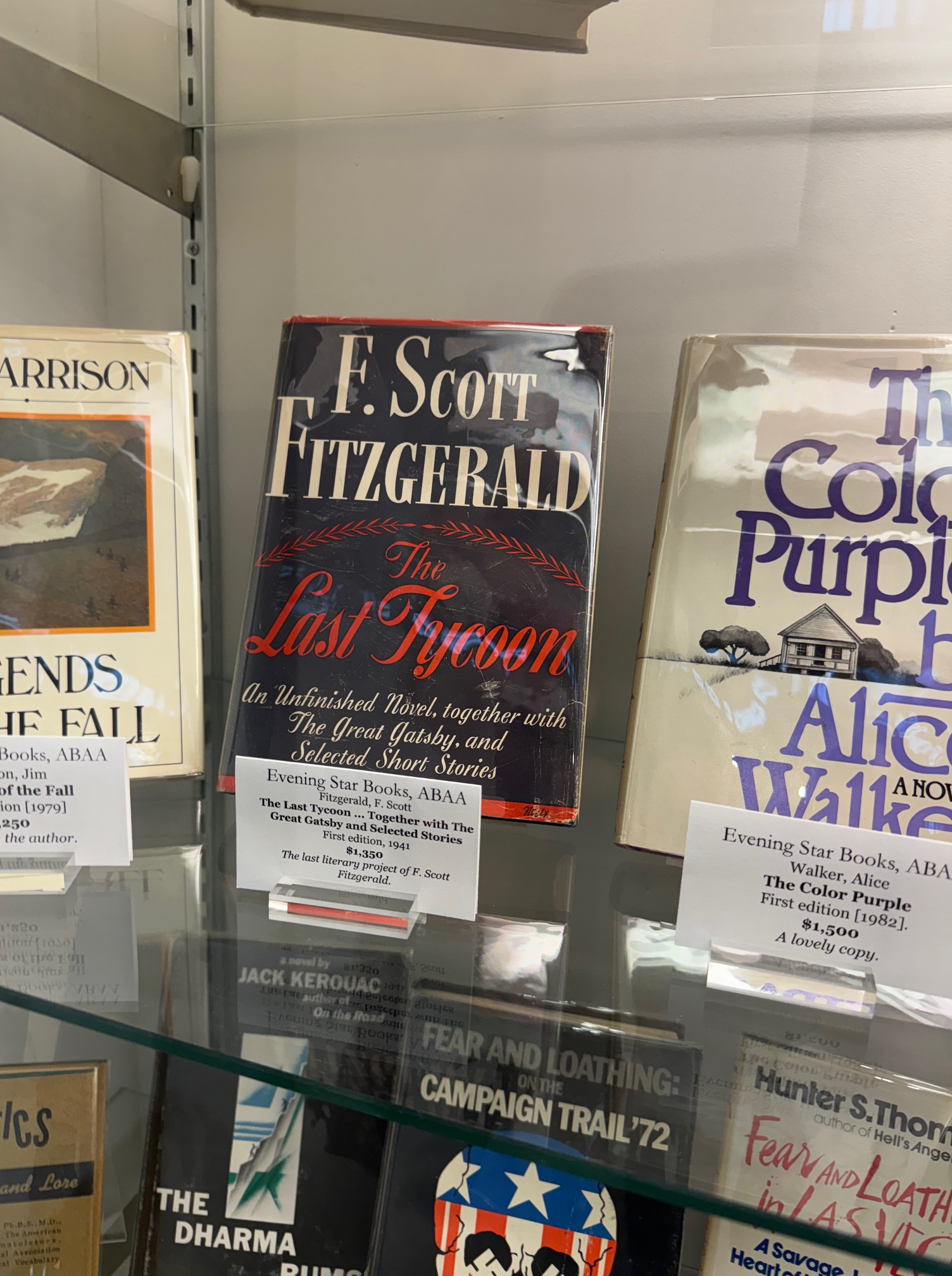
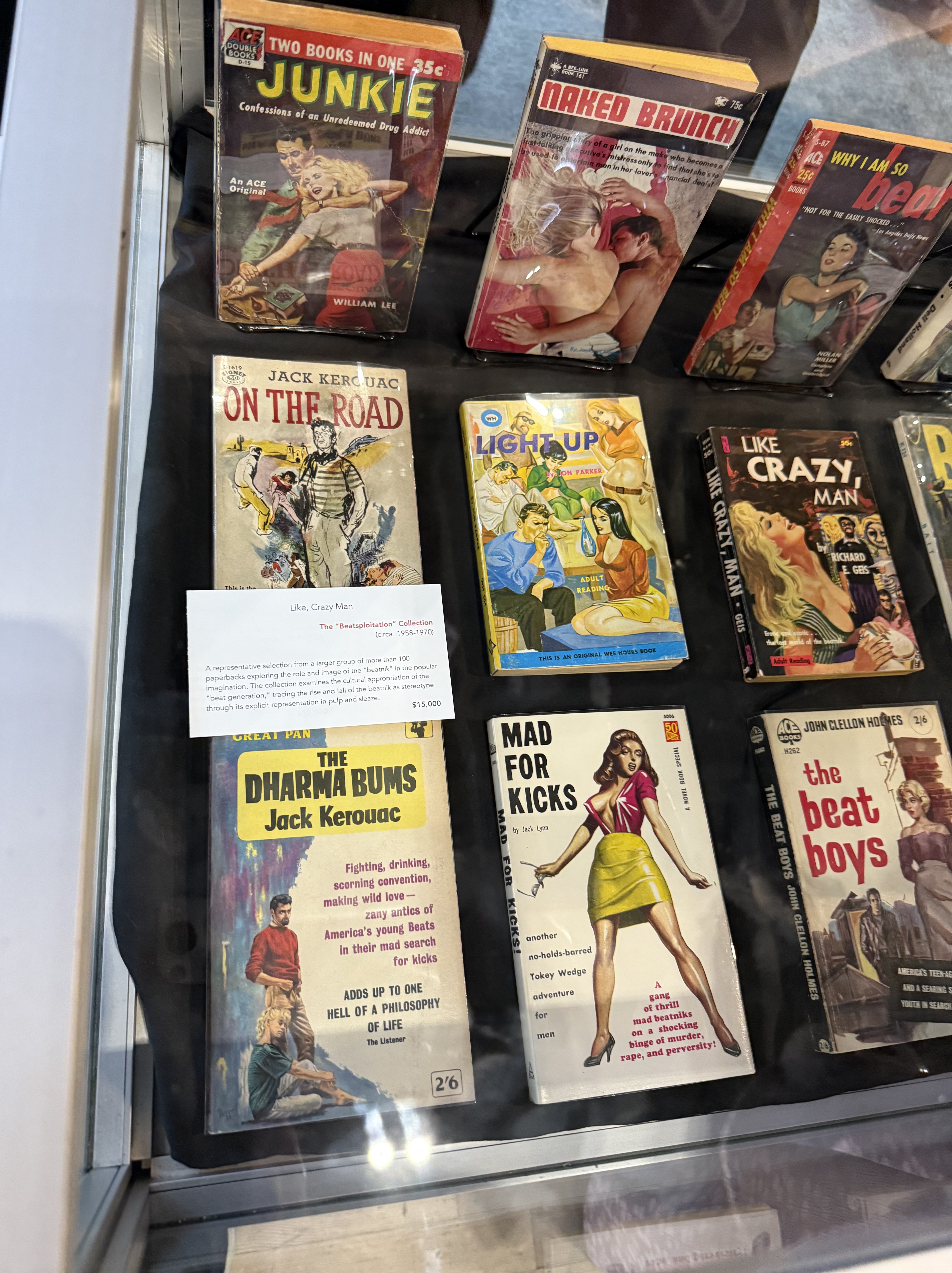
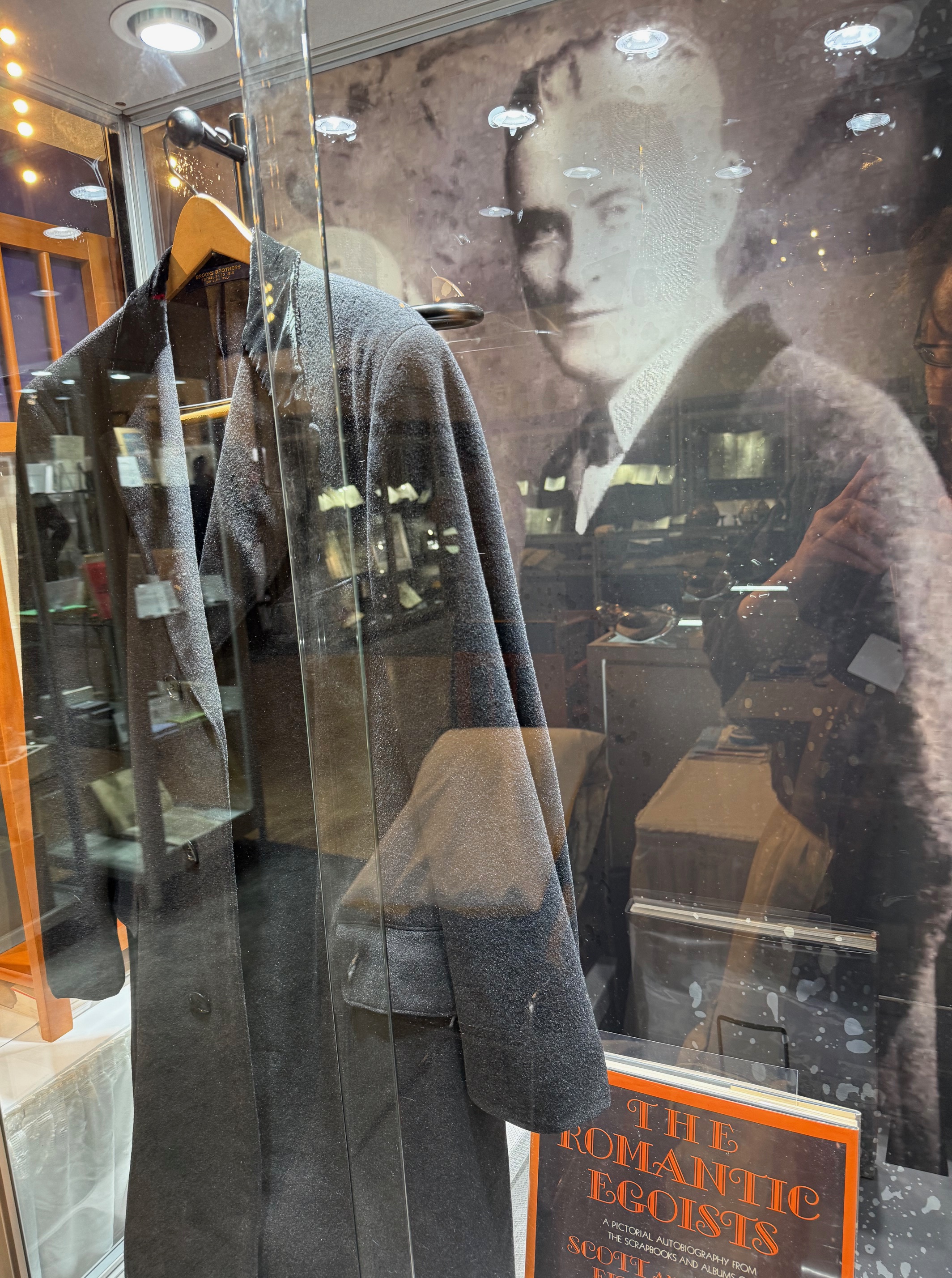
The Antiquarian book fair recently came to Manhattan for it’s annual visit and it didn’t disappoint as Hemingway, Fitzgerald and Kerouac were joined by Salvador Dali and Jim Morrison in a potpourri of rare books and fascinating ephemera. Among the items on display was a smoking jacket worn by F. Scott Fitzgerald, a first edition of On the Road by Jack Kerouac and some pulp novels inspired by the Beat Generation. In addition, there was an illustrated version of Edgar Allen Poe’s, The Raven illustrated by the artist Edouard Manet, original copies of the Strand Magazine featuring Sherlock Holmes stories by Sir Arthur Conan Doyle and a rare photo of Jim Morrison —used for the cover of the Absolutely Live Doors album that the lead singer didn’t love —as much as the record label —because it obscured the faces of his bandmates.
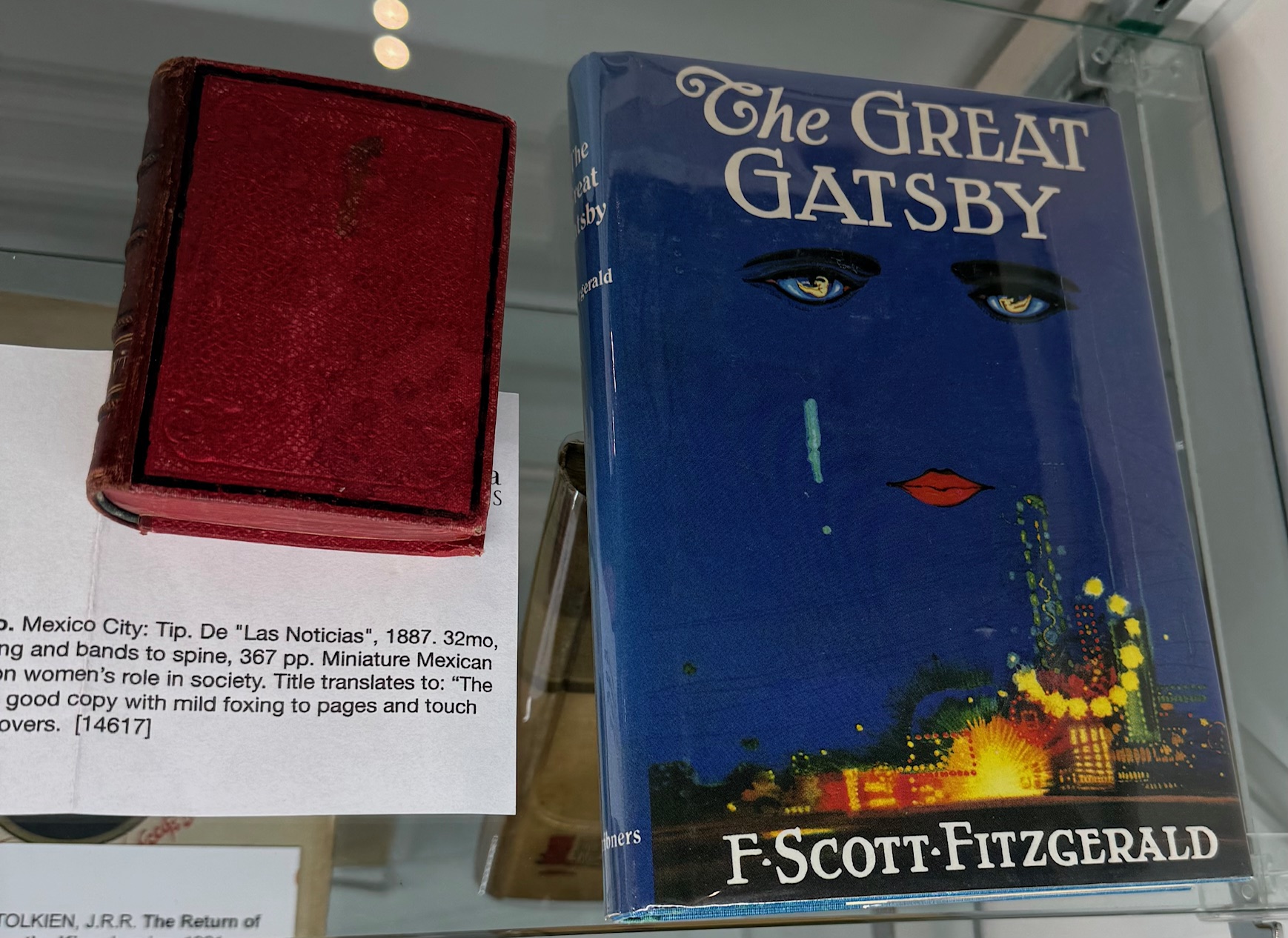
Fans of the popular TV show Pawn Stars visiting the book fair were delighted to be able to chat with leading rare books expert Rebecca Romney, the beautiful and brilliant bookseller who reminded us that the Great Gatsby, with it’s tales of fabulous estates and parties had just turned 100 years old recently. The book, in part, inspired our own publisher, Chase Backer, a visionary bon vivant in his own right, to create 25A magazine to celebrate the fabulous mansions and estates of the area.
AK: Rebecca, why is the Great Gatsby still so popular?
RR: The Great Gatsby came out in 1925 and in fact it wasn’t a big hit for Fitzgerald …he was better known for his earlier novels and Gatsby only did OK… and by the time of his death it was not his best known work and he thought he was going to die with it unnoticed and it was one of the books that came back into the popular circulation in the post-war period and now we look back at it in 2026 and we just had it’s centenary- 100 years —and it’s one of the American classics …you never know which book is going to become a classic at the time.
AK: Why is Gatsby such a classic?
RR: I think it is a great way to engage with the idea of the American Dream and its complexities…the hopes and the failures that are built into it. I think that people respond to it because it is a very human investigation of a concept that a lot of us wrestle with in this country, so it makes sense that it is part of so many high school’s curricula —and when that happens it becomes part of our shared cultural experience —our vocabulary.
AK: What about Hemingway and F. Scott Fitzgerald—were they friends or frenemies?
RR: They were certainly friends but there was competition there and one of the best ways to read about that is actually Hemingway’s own book called A Moveable Feast. That’s where you really get his side —it’s Hemingway not to the benefit of Fitzgerald. If you are interested in that rivalry and want to get a sense of it —read A Moveable Feast.
AK: I’ve seen an original copy of On the Road by Jack Kerouac in another booth— but you have a whole Beat Generation section here too.
RR: We are showing how that Beat movement translated into pop culture through mass-market paperbacks -so you take the Beats who were sort of the rebel generation after WW2 …the movement before the hippies…and instead of Naked Lunch by William S Burroughs you have “Naked Brunch” so, you can see how a literary movement is digested into popular culture and comes out the other end that comes out as cheap paperbacks that people could buy at drugstores. This collection is called the “ Beatsploitation “
collection.
AK: That’s so funny! Catch us up on you— we all love watching you in the TV show Pawn Stars talking about rare books
RR: Well, the New York Fair is the big event of the year —everyone comes and shows up and there’s a lot of energy here. When we are not at the fair we are back at the shop, Type Punch Matrix, where we do catalogs and we are always looking to do collections. I do videos now. I try to do a little education in the rare books space. A lot of people think these are just expensive books that are too fragile to touch but it’s also these mass market paperbacks where you can see a book as a time capsule of that moment in history …all of that is part of the rare books world.
AK: most popular rare book you have dealt with?
RR: a first edition of Pride & Prejudice by Jane Austen always sells quickly
AK: Are you still doing Pawn Stars?
RR: I was just in Las Vegas shooting new episodes.





 Saragun Springs