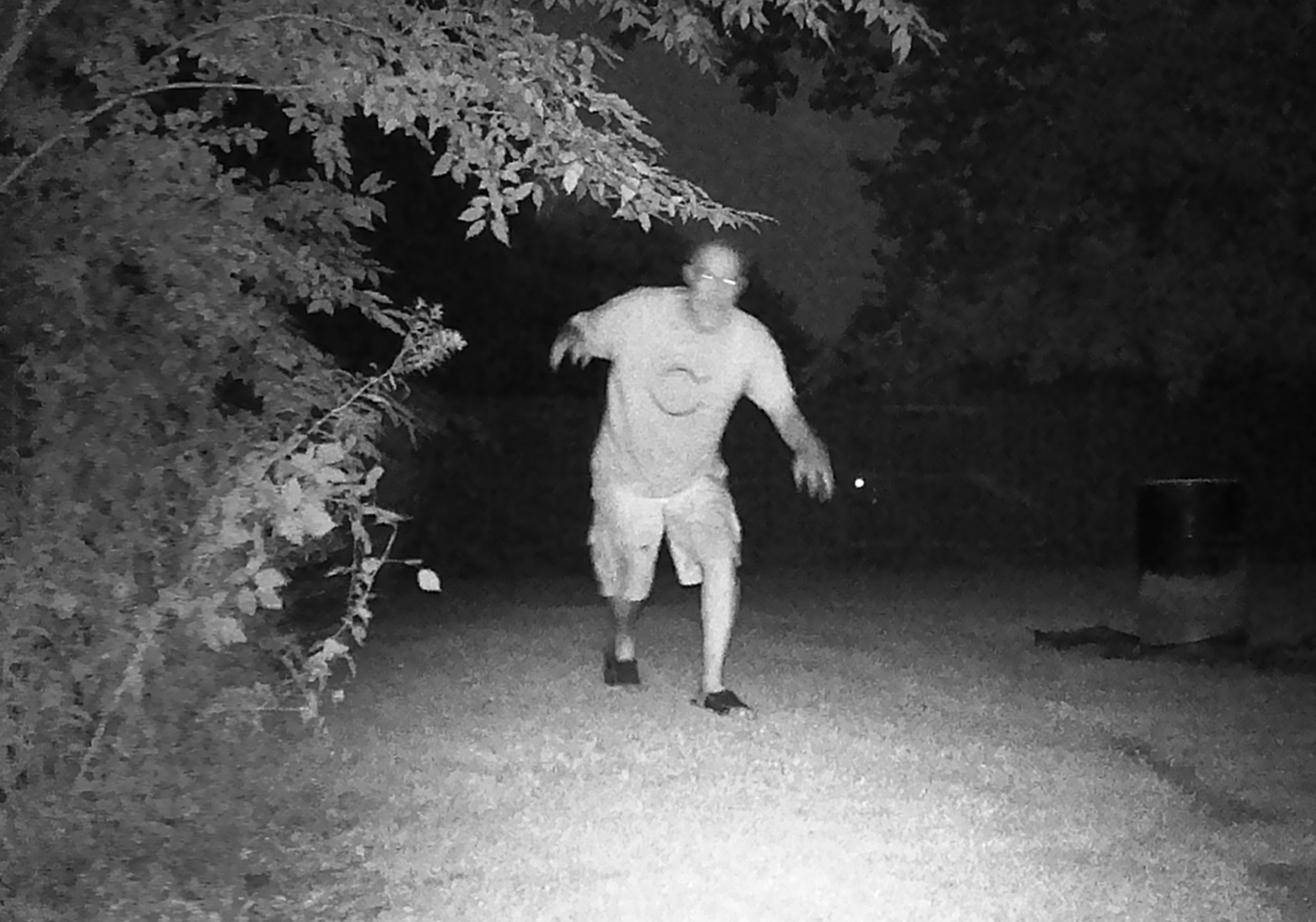
Who’s in our yard?
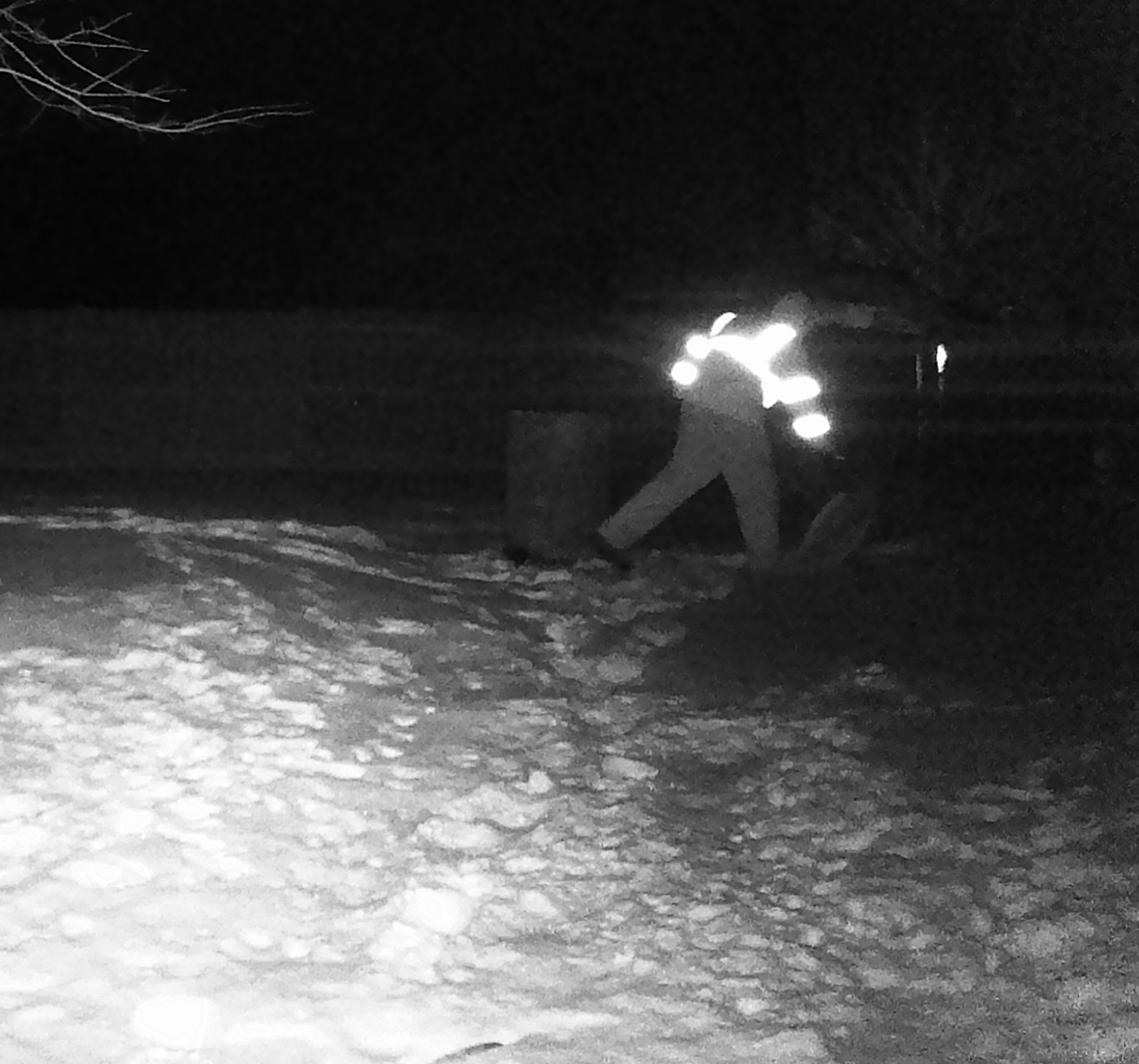
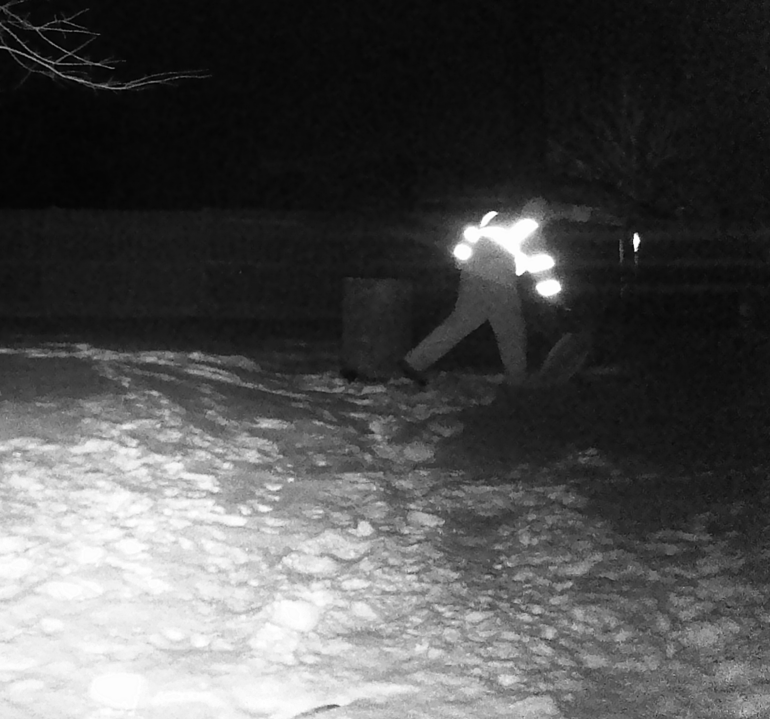
“Spaceman!”
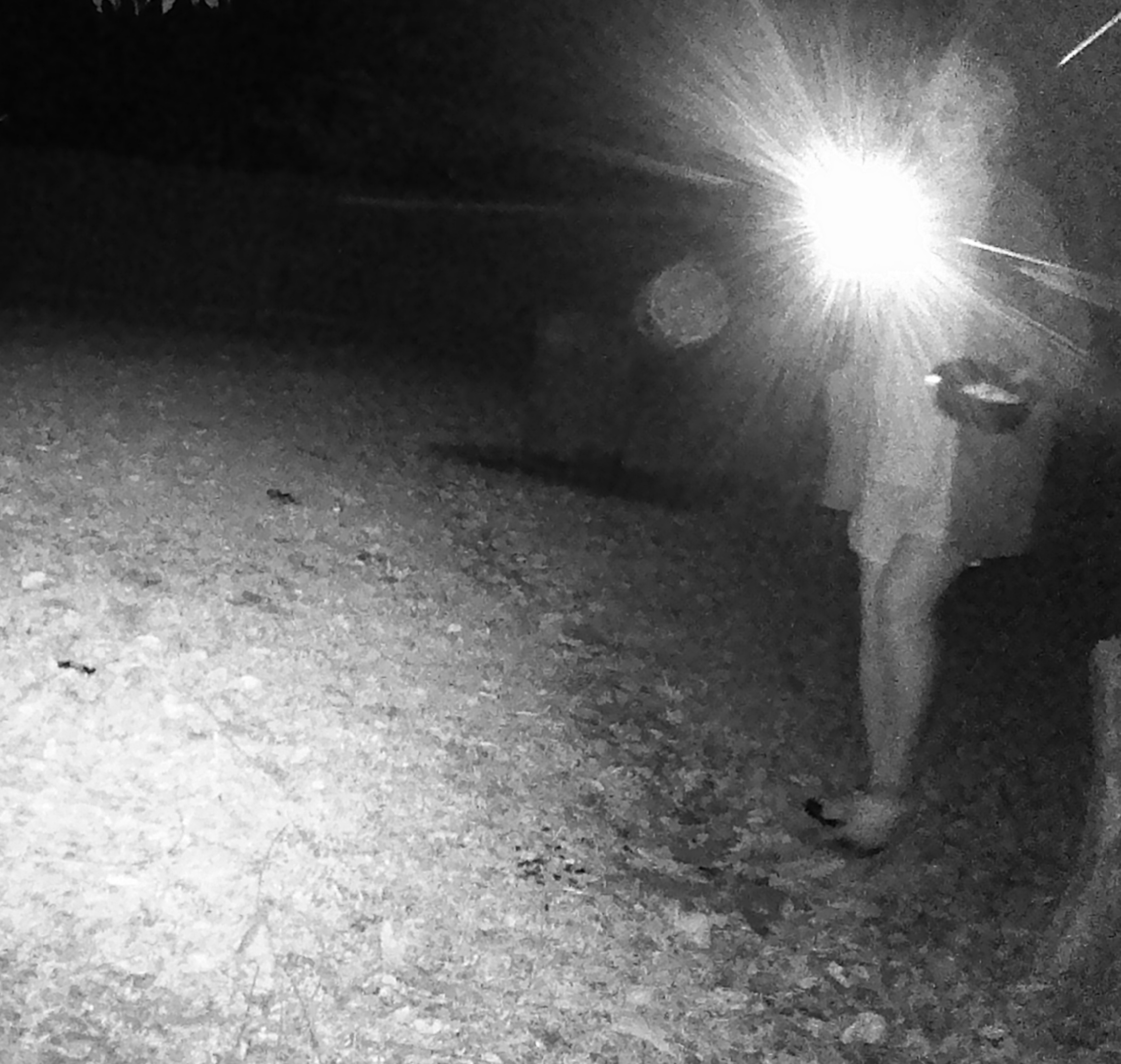
“The Light Bringer!”

“We’re watching you.”

“This is my best side.”
Christopher J Ananias (text and images)
Who’s in our yard?
“Spaceman!”
“The Light Bringer!”
“We’re watching you.”
“This is my best side.”
Christopher J Ananias (text and images)

in her pyjamas
out in all weathers
hardly the way to go is it
whatever she was she isn’t that now
look at her
if ever hair needed cutting
there’s hair could do with it
seems all it takes is promise of bad weather
she’s ready for the hills
almost paces
animal like
old as she is
you have to tell her
naughty-night-to-be-out-in
the look she gives you then
none like it
and I’ve been given looks you wouldn’t believe
or maybe you would
come to think of it
(Image by Leila)
Michelangelo Merisi da Caravaggio,
a troublemaker who gloried in sadistic
violence, especially in his paintings,
was the Prince of Darkness of Baroque,
the pioneer of the style dubbed tenebrism.
Together with his realistic portrayals
of the subjects who populate his canvases,
“the terrible naturalism that attracted
and ravished human sight”, as Scannelli put it,
they are the distinctive features of his work.
His painting, The Crucifixion of St. Peter,
commissioned by Monsignor Tiberio Cerasi,
is an archetype of Caravaggio’s tenebrism
and how he exults in depicting brutality.
The distribution of the four individuals
conjures the shape of St. Andrew’s cross.
A beam of light traverses the canvas
from the top left of the frame
to the bottom righthand corner
illuminating St. Peter’s torso, left arm,
and hand nailed to the crosspiece,
every muscle and sinew of the martyr
tensed. A blend of pain and terror cross
the face of the Saint. High to the left,
the only executioner to escape anonymity
embraces Peter’s shins and the upright
of the cross to help a second executioner
whose woollen jacket is rucked up
by the rope he’s using to haul the cross
upside down as it is placed in the hole,
dug by the third executioner’s shovel.
Petra, the rock in the foreground,
evokes Peter’s name, the rock
upon which the Christian Church
is unified, emphasised further
by the shadowy rocky landscape
in the background darkness.
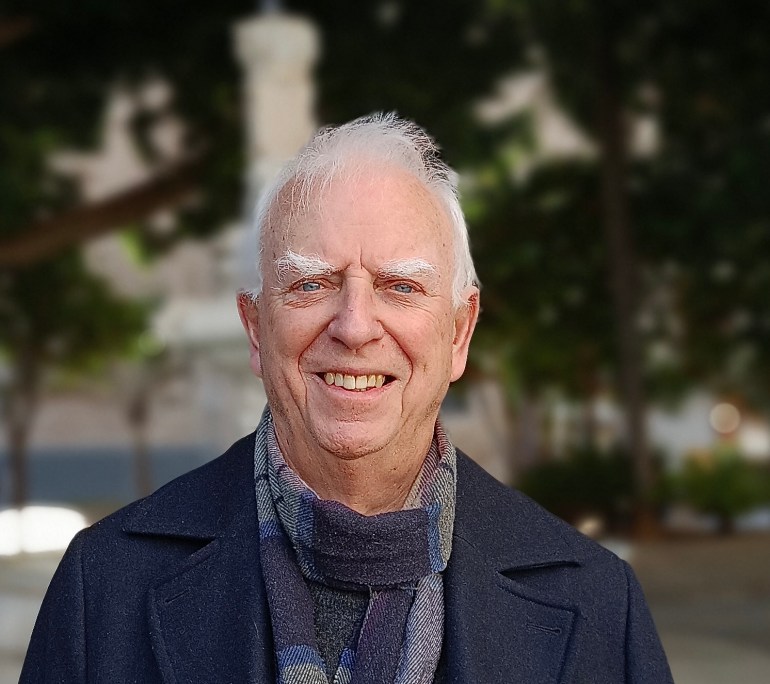
(Image is of the author; would be strange if another fellow, now wouldn’t it?)
Spring and summer blossoms populated
our family tree that stood so straight and tall.
Then the blossoms gradually faded into fall
bringing the fruit that we so eagerly awaited.
When our winter hesitated and finally never
came, apparently because of climate change,
our blossoms bloomed and flourished once again.
An Indian summer in which to bask forever.
(Image is of the esteemed poet)

(All images by the Drifter)

“Number nine, number nine, number nine, number nine…” – The Beatles

When I say “freak me out,” I mean in a good way.
(To the elite few of you who want to review who Boo is, see photos.)

ONE: Sometimes constantly watches me from across the room of the book-strewn apartment as if to make sure I’m all right (until he dozes off, which happens just as frequently).
TWO: Catches wild squirrels in his mouth between his fangs, doesn’t chomp down upon them, drops them down onto the ground and sets them free, then watches them flee (run away) without going after them.
THREE: Leaps into my lap when he gets scared.
FOUR: Hides behind me when he gets scared if I’m standing up.
FIVE: Puts himself between me and whoever it is when someone is approaching us at night along the sidewalks or in the alleyways of the Chicagoland area we roam through (or wherever we roam through). If it’s more than one person approaching, becomes even more fearlessly vigilant.
SIX: Follow verbal commands when they, paradoxically, are not even spoken aloud by me. (In other words: READ MY MIND.)
SEVEN: Refuse to follow commands just as often, and act like he thinks it’s funny, and in his own way, I do believe he thinks it’s funny.
EIGHT: Run so fast that he literally morphs into a black-and-white blur that looks like it’s flying across the ground. Fastest dog I’ve ever seen and I’ve seen many.
NINE: Stare into the distance while intuiting the Spirit World.
(Leading one to the astonishing conclusion that if dogs could talk, we wouldn’t even be able to believe what they would tell us…)
(Bonus point: can climb fences and trees when he wants to bad enough…)
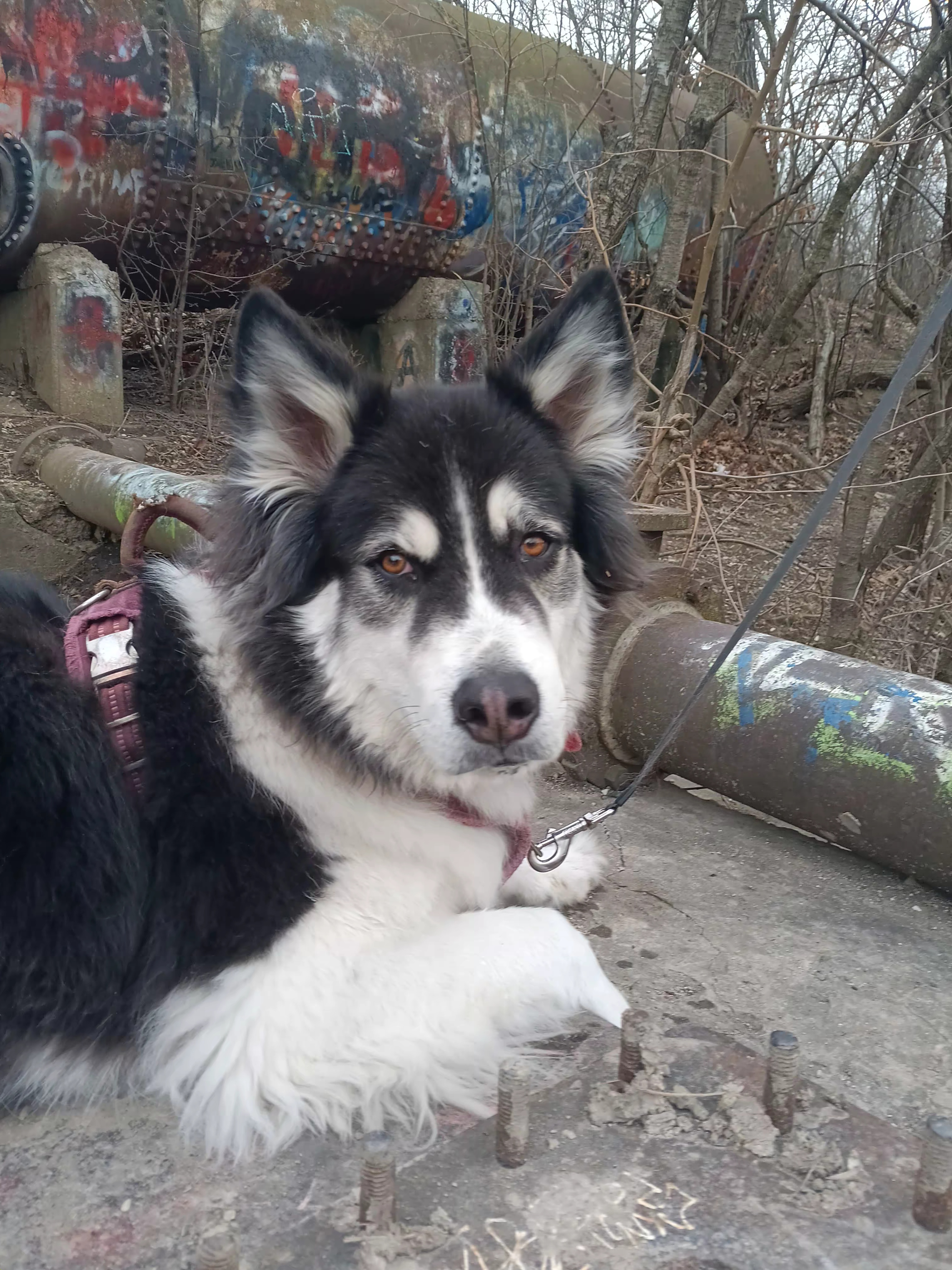
The Drifter and Boo
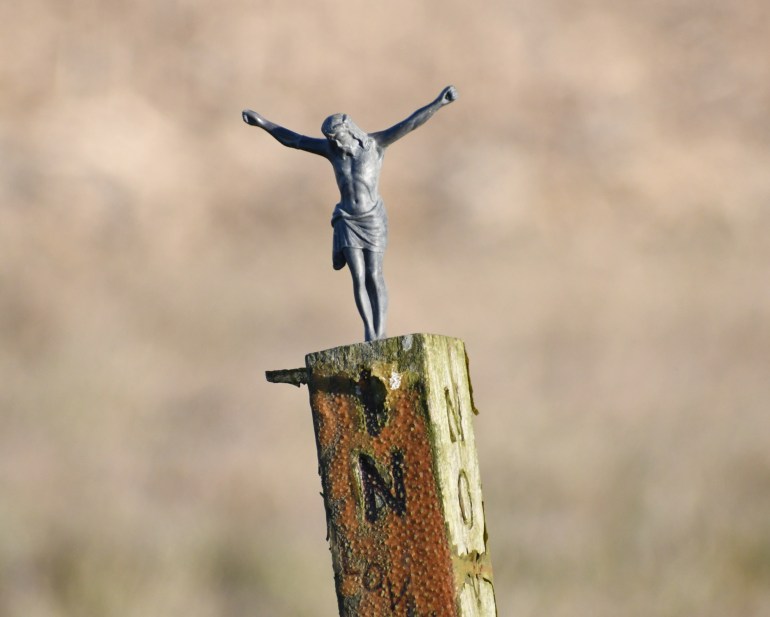
It’s true that your Jesus came back. His bar mitzvah coincided with the end of the First World War. As eldest scion of second generation Nazarene immigrants, he no doubt had his work cut out for him in the heartlands of a newly ruined Germany.
As you’d expect it was his talk brought the grief, the trouble. Said he had such news as would overturn the world and so forth. In short, words best whispered, or better yet, left unsaid. Those who rejoiced to hear them would soon lose their ears. And soon enough he and his raggletaggle crew were among the ten thousand others on the slow train east.
He did everything he could, your Jesus. But it was no good. Some clocked him as a collaborator – owing to that enemylove spiel of his. The bread not in his belly started to show on his face; but still he shared what few scraps he could procure, making himself no friends by doing so.
As for his ‘fate’: it came without warning, during morning roll-call: he was hanged along with two others before the work detail set off. His executioner was a man known as ‘Ape’ – a sobriquet supposedly derived from his reputation for “going ape” when beating people to death. ‘Ape’ himself was promoted to captain shortly before the end of the war. He disappeared soon after.
Geraint Jonathan
(Image by Christopher J Ananias)
is a virtuoso display of dynamic brushwork.
In his visceral need to capture the moment,
his depiction has anticipated impressionism.
The speed at which he applied the paint
has infused the canvas with ominous terror.
The left side of the canvas is bathed in light
from a box lantern at the feet of the faceless,
hooded, firing squad of Murat, on the right:
evil is being perpetrated under cover of darkness
by the French incarnations of Death.
The Spanish victims, each a non-combatant,
standing beside three slaughtered patriots
whose bodies lie bloodied in the dirt,
show a mixture of fear, resignation and defiance.
One of them, a monk, his hands clenched in prayer,
seems to be hoping to receive clemency.
The man in the white shirt throws his arms
out wide, challenging the soldiers to shoot him
as more civilians are herded up the slope
to meet their deaths like cattle in an abattoir:
the horrors of war laid bare by an artist in despair.
Tony Dawson, 12 February 2026

don’t you dare say marl
nothing deserves it
likewise heft or skirl
avoid them as you would
verdant
& if it’s evening keep it that way
don’t go with gloam
anymore than you would darkfall
darkfall being
like gloam
down there with
verdant
the sky can never again be azure
anymore than the stars above can twinkle
though sooner by far the stars above twinkle
than a sky ever again be azure
& if deny yourself mulch you must
then do so
mulch having about it the very vetch & sedge
& graunch to convey the earthy
itself a proposition of dubious provenance
wouldn’t you say
mulch?
it’s not down there with verdant
but it’s close
there’s a leatheriness survives i suppose
a compact sogginess
wet as mulch is
generally
Geraint Jonathan
(Wonderful images by CJA)
Miami sunshine put Big Al’s garb to shame. It blazed yellow, much like Al, but, unlike Al, it was the source of life on the planet. Al was human, as he himself would have been the first to admit. “There’s many things I am,” he said, “but a seething ball of molten fucking gasses ain’t one of them!” Miami’s finest laughed. Al was known for the size of his heart, and often spoke about it. It sometimes made for confused but lively exchanges with those more fortunate than himself. In ‘matters of the heart’ there was, after all, Al’s deep love of opera and there was also that which lay in the middle of the chest cavity between two lungs. Monogrammed silk might be said to cover both in Al’s case. As was his wont, Al made much of the confusion, hoping thereby to lighten matters that might otherwise furrow the brows of the young. If nothing else, the yellow of Al’s Miami experience would be a crucial factor in forming much of what he later came to call his “disposition”. For whatever his foibles, this much is certain: Al sought to shine on all, whether they wanted shining on or not. He would be the man dressed as the sun: a vision in yellow serge, with matching hat, silk tie and shirt, just the kind of solar presence a windy city on earth might require. That was Al all over. It was the opera in him.
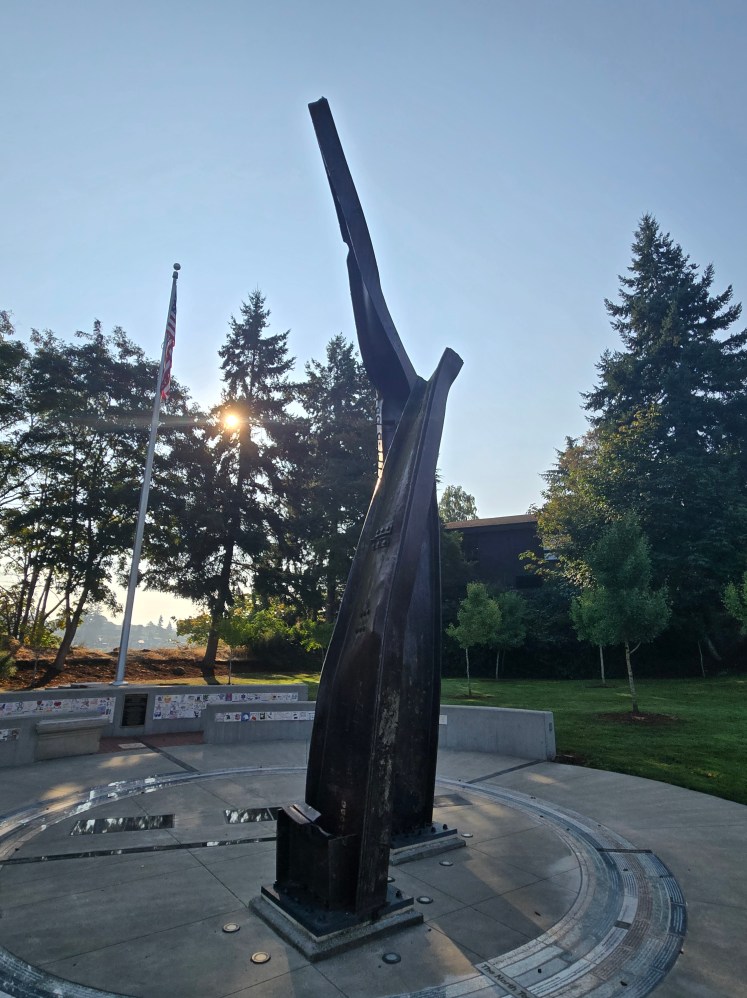
His fractured kaleidoscope
of a childhood obsessed him
with symmetry. He’s transfixed
with how it glistens
in snowflakes, sparkles
in diamonds, graces
the wings of butterflies
he pins to savor
up close. He forces
snips for his girlfriend’s
lazy eye, insists his wife
arrange the furniture
just so, and requires symmetry
during sex. He balances
his desire with an equal
measure of deceit.
When he overhears
his wife’s phone whisperings,
she laughs
How do you like your fucking symmetry now?
For the first time he knows how it tastes.
(end)
 Saragun Springs