“The love of money is the root of all evil.” – Paul the Apostle
“A good column makes you want to argue with it.” – Charlie Rose
“Yes!” – Norman Mailer
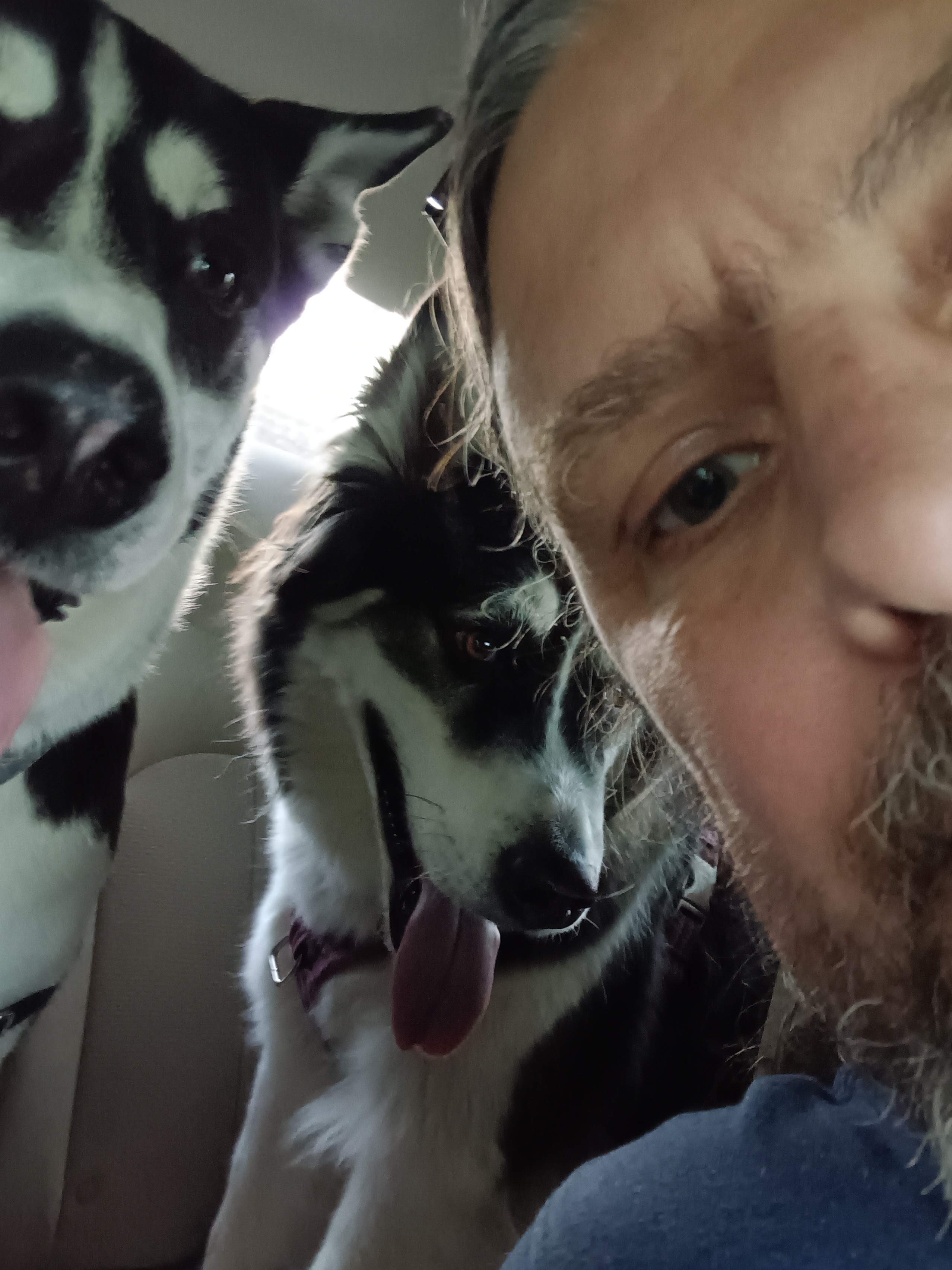
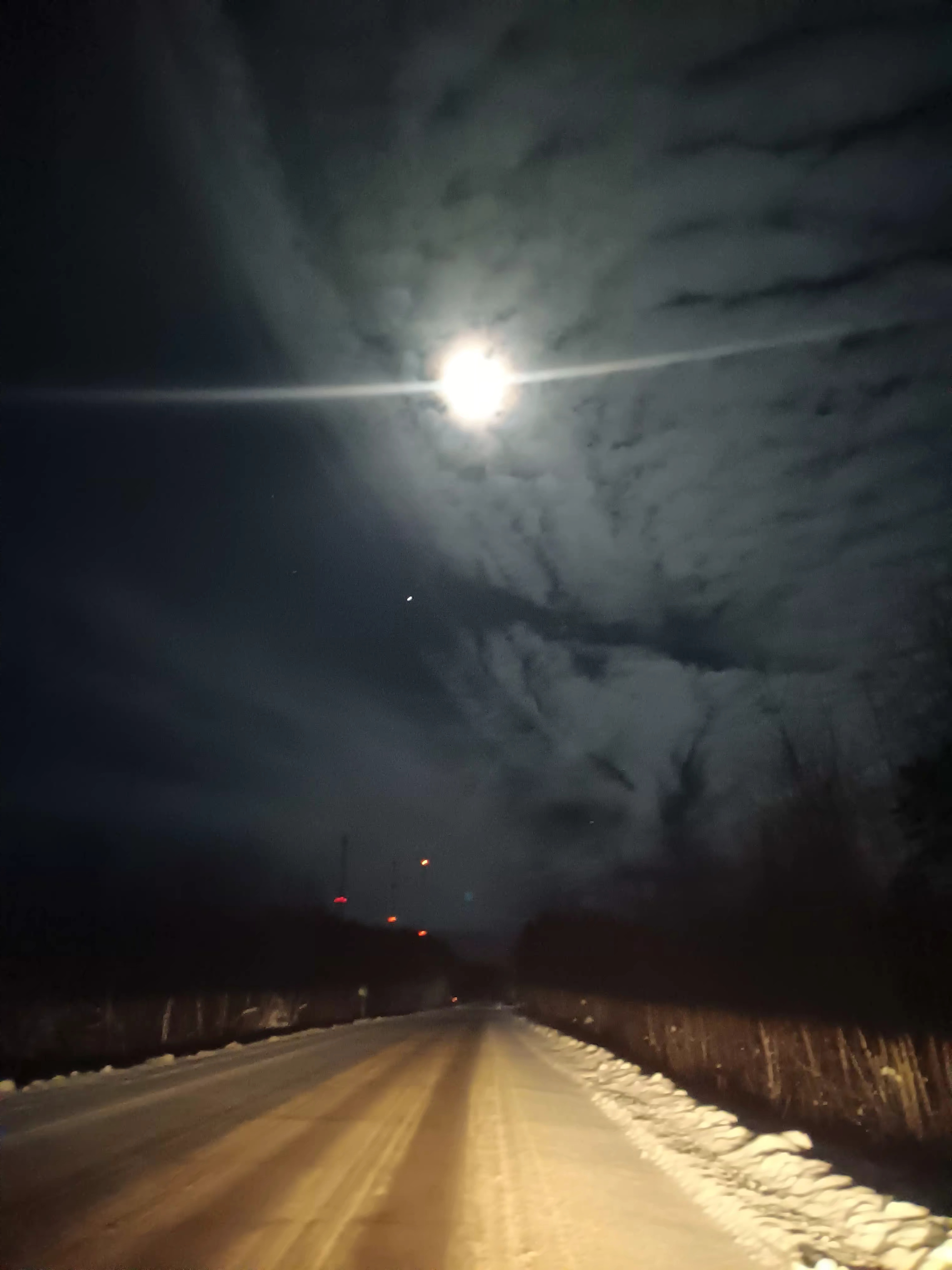
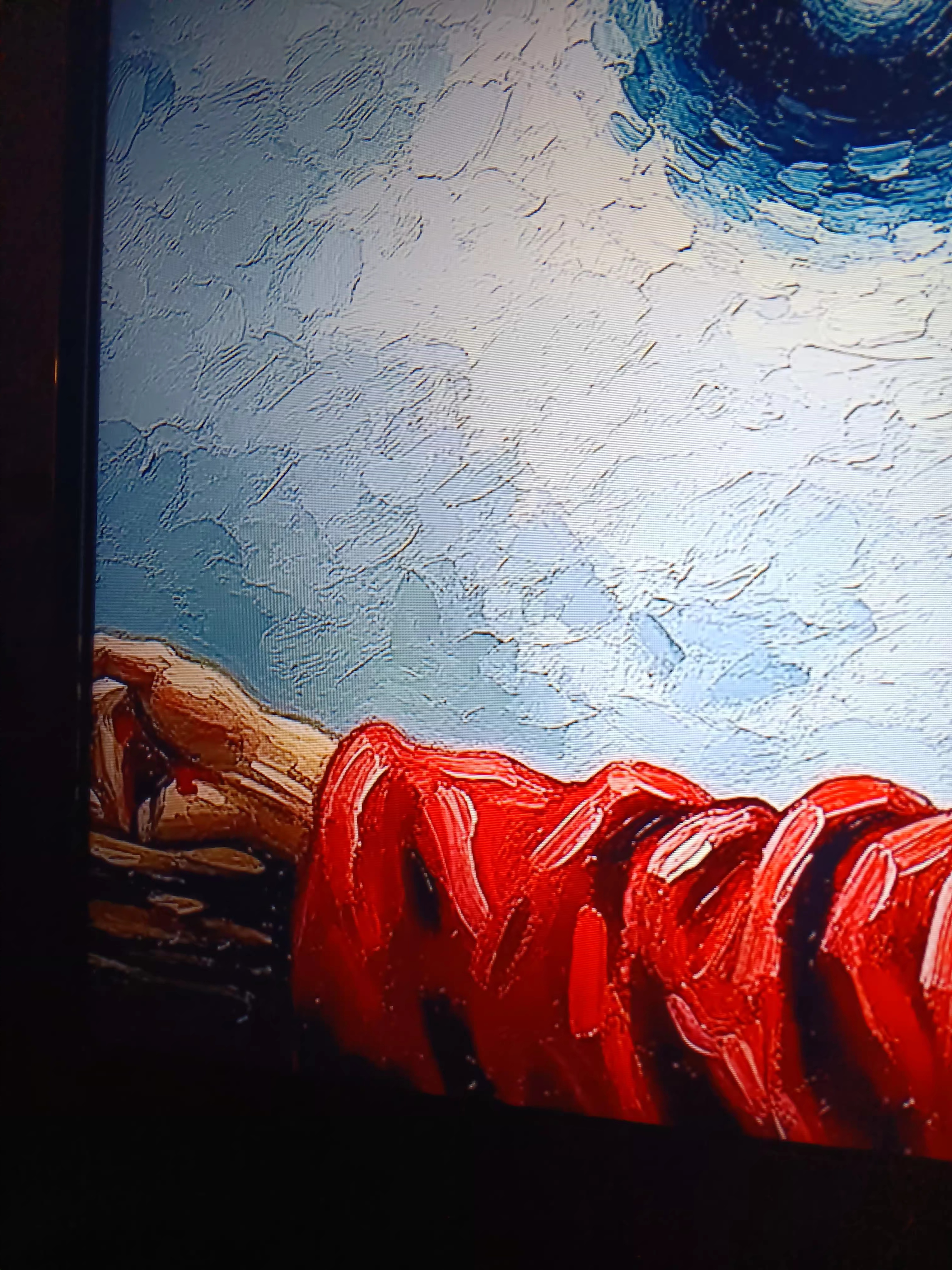
(All images provided by the Drifter)
The idea and outline for this column arrived in what I can only call a night vision as I lay in bed half dreaming and half waking or in some other similar liminal state. Each little section of this essay/column appeared fully formed in my mind as if it were being placed there by the gentle hand of someone not myself who had suddenly appeared in the room (where I was alone), someone far outside of me who had arrived from another side of an unseen universe on an errand only to bring this little thing my way. After this messenger’s job was done, after all the pieces had been indicated and almost as if “written down” in my mind, the being who’d brought the goods vanished into air, into thin air, as utterly silently as s/he had come. When I awoke, I did nothing else but write down what I was told to write down. Following is the result. (It’s the message of this piece, and not the quality of the writing in this piece, which is the most important thing. And any quality the writing has, has been created by the pressure of the message. The being also told me how to write this first paragraph…)
…
There’s something called “kick-in time.” It’s the amount of time it takes for a work of art to truly reach the honest reader, viewer, or hearer after one’s first contact with it. Different things kick in differently for different people. The greatest works of art, like Shakespeare’s best plays, kick in repeatedly over decades throughout one’s life and never stop kicking in every time they are returned to. Other things kick in and stay with you for a while and later they begin to fade away. Some pieces of art, like Leonardo’s Mona Lisa, do not kick in immediately. Almost everyone on the Planet who sees the Mona Lisa for the first time as a young person CANNOT TELL, at all, what the hell is so great about it. It looks so unassuming, so ordinary, so “normal,” so utterly boring even, that very few young people understand this painting (reproductions of it) when they see it at first. They’re told it’s great and they might even believe that on some level since the authorities are ordering them to believe it, but they have absolutely no idea WHY that is so. Yes indeed. It takes many, many years for the Mona Lisa to “kick in.” After that, it will keep on kicking in for the rest of your life, once you understand it, every time you return to it (vast stretches of time away from it are also key to fully grasping some of its mysteries).
…
I was nineteen years of age the first time my favorite poet (other than Emily Dickinson) kicked in for the first time. I’d been trying to read his various works for at least five years by that point. I had already read and understood much of Melville’s novel MOBY DICK by that point, and while I knew Whitman was great, and was utterly fascinated by the photographs of him for some reason (as with those of Abraham Lincoln and Frederick Douglass), none of his writing had quite kicked in with me yet.
Suddenly “Song of Myself” swept me away in such an uncanny way that I literally felt like I was lifted out of my body while reading the poem. I was literally stunned by the time I finished. Forty years later, this memory is still one of the most vivid memories I have from all life, and it was one of the most profound experiences I’ve ever experienced.
This long, self-published poem by Whitman has repeatedly been called the single greatest American poem of all time, and it’s hard to think of another poem that could even come close to knocking it off that pedestal, not even “The Wasteland.” Ralph Waldo Emerson, whom Harold Bloom called “the mind of America” because of Waldo’s profound impact on American thought, life, writing, politics, and religion, said of Whitman’s poem that it was “the greatest piece of wit and wisdom America has yet produced.” Emerson was including everything, including items by Thomas Jefferson and Ben Franklin. No one has surpassed Whitman since then (in poetry), and it’s hard to see how anyone ever will.
About a year later, while I was reading “Crossing Brooklyn Ferry,” I found these lines:
“Closer yet I approach you, / What thought you have of me now, I had as much of you, I laid in my stores in advance – I considered long and seriously of you before you were born. / Who was to know what should come home to me? / Who knows but I am enjoying this? / Who knows, for all the distance, but I am as good as looking at you now, for all you cannot see me? / …Great or small, you furnish your parts toward the soul.”
Twenty-five years later, I read those lines aloud at my mother’s funeral.
…
Whitman is capable of entering anywhere in “Song of Myself.” From a speck of sand to the farthest star, from the lowliest peasant, pauper or slave to the highest queen and king or the rest of the “nobility,” and everyone in between, from the most orgiastic experiences (including orgasm, masturbation and every kind of sex you can think of) to the most horrible death throes, from the most serene feelings of peace to the most turbulent out-pourings of distress or violence, the most beautiful physical form and the most deformed (which he makes seem beautiful), everything and anything, all that is, was or ever will be (seemingly) human and non-, old Walt easily, clearly, grippingly catalogues it all, somehow, in 1,333 lines broken into 52 short sections.
The term FREE VERSE does not just mean that he eschews rhyme and meter. It means he is FREE to do anything in his poem. Thomas Wentworth Higginson, Emily Dickinson’s friend, said of Walt’s poem, “It is not a great shame that he wrote it – only that he didn’t burn it afterward.” Higginson was one of the more liberal readers of his time. Another famous writer of the time actually threw his copy of the poem into the fire. To say that Whitman had a “bad reputation” (kind of like the Charles Bukowski of his day) is understatement.
Whitman’s ultimate theme is UNITY. Everything is connected. The most up-to-date physics in the beginning of the twenty-first century have only confirmed the insights old Walt had (surging through his body and brain) a hundred and seventy years ago.
In his prose book DEMOCRATIC VISTAS Walt also predicted that the love of money above all else (not money itself) would be the downfall of America.
…
Minnesota poet, scholar, editor, translator, prose writer, pacifist, activist, and shaman/teacher Robert Bly was someone whose genius could compete with Walt Whitman’s, even if he couldn’t beat him.
Bly thought the following lines were the most beautiful lines in American Literature:
“I wish I could translate the hints about the dead young men and women, / And the hints about old men and mothers, and the offspring taken soon out of their laps. / What do you think has become of the young and old men? And what do you think has become of the women and children? /
They are alive and well somewhere, / The smallest sprout shows there is really no death, / And if ever there was it led forward life, and does not wait at the end to arrest it, / And ceased the moment life appeared. /
All goes onward and outward, nothing collapses, / And to die is different from what anyone supposed, and luckier.”
…
Gripping DRIFTER PHOTO NOTES, MUSICAL NOTES, HISTORICAL NOTES, and More (What the Core of the Message Is):
Walt the Wanderer was also a New York bar hound in the middle part of the journey.
One of these four photos shows one of the Drifter’s old watering holes in Al Capone’s old hometown of Cicero. Still joyously serving customers after all these years, now with bars on the windows.
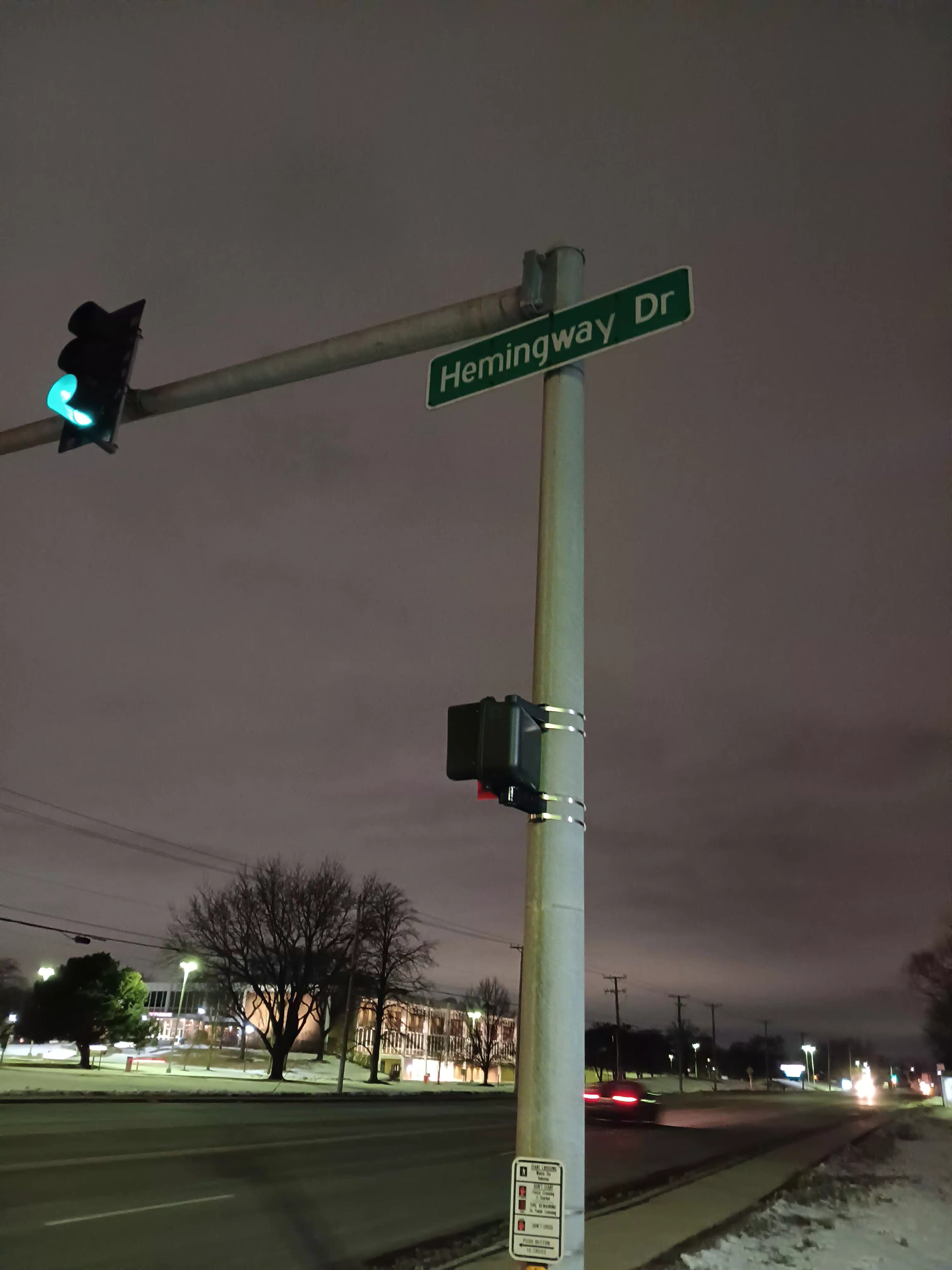
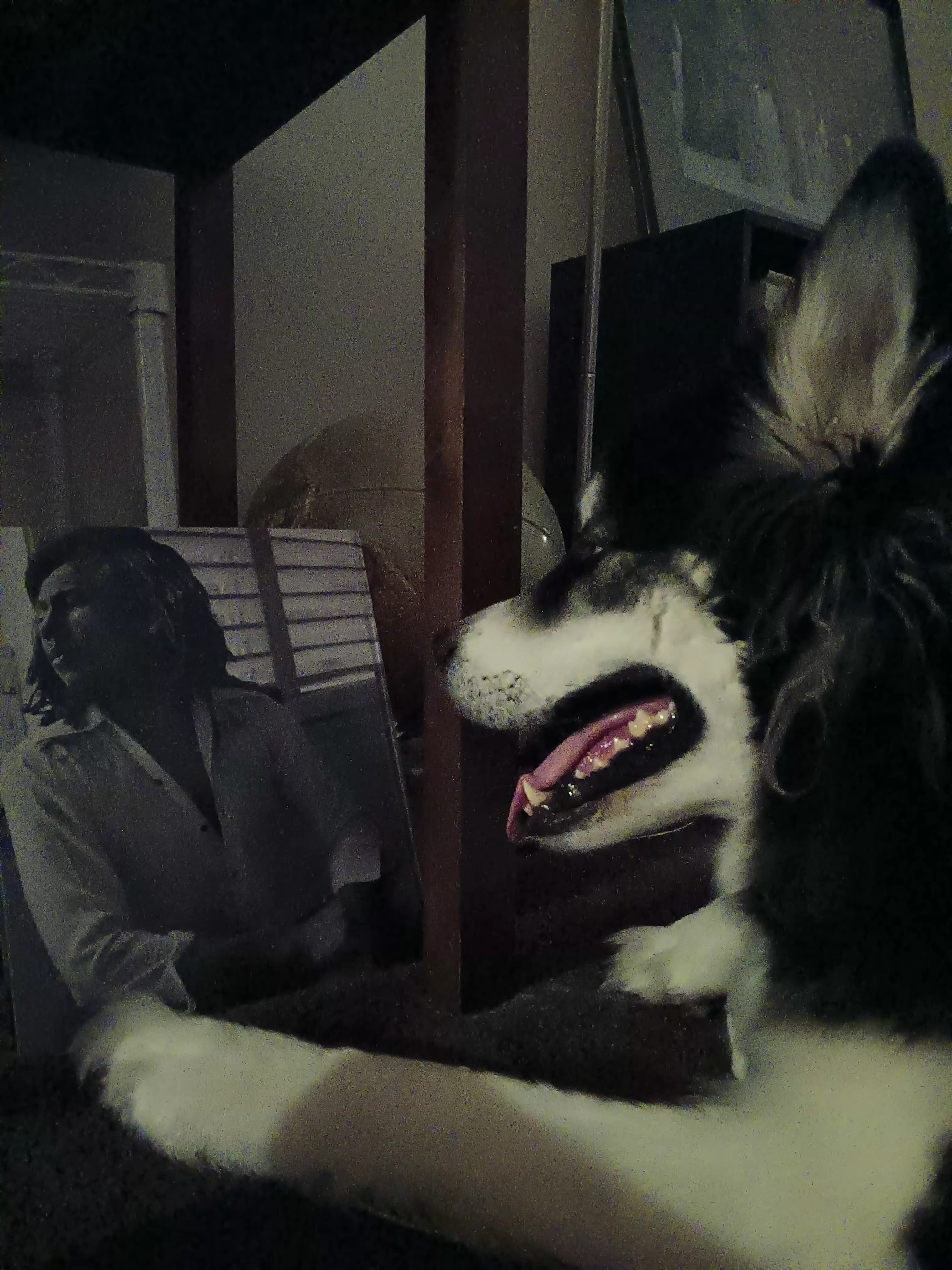
The street photo is on the campus of the Drifter’s kids’ current college, Triton. They also attended Hem’s high school. The mascot of that school is the Siberian Husky. The yearbook cover for the Drifter’s kids’ senior year showed a Siberian Husky wearing a stocking cap and asking, “Where’s Hemmie?”
Harold Bloom has an utterly brilliant essay in which he proves that Whitman’s line, “I am the man, I suffered, I was there” (about the Civil War and all life) is the source not just for Hemingway’s writing style but for his whole life.
(The essay is so brilliant that Bloom wrote it again across decades at least ten times (changing little)).
Whitman had a stroke at the age of 53, never married, and lived from 1819 until 1892, almost all of it except for a few months in the New York area and then Washington, D.C. during the Civil War. Like Lincoln, his hero, he never traveled abroad.
He was a volunteer nurse during the Civil War. He worked, for free, in Washington, D.C. with both Union and Confederate soldiers. He did things like hold the soldiers while they were dying and sit by their bedsides trying to give as much aid and comfort as possible while they struggled to get through the most hideous wounds imaginable. He also helped them write letters home, and he wrote the letters home to the families after his patients had passed on. Most of the people dying or missing limbs (or recognizable faces) were 25 years old or less, often much less.
Hemingway was never a soldier. He was an ambulance driver who got blown up at the age of eighteen (200 shrapnel wounds in the legs) while saving someone else’s life by dragging them out of the line of fire.
Bob Dylan’s eight-minute-long song “’Cross the Green Mountain” is Walt Whitman on the Civil War brought to music. No one will ever be able to do it better, but all American musicians should try something with Whitman, whether Civil War-related or not.
Lana Del Rey has succeeded in capturing a different aspect of Walt in her song, “I Sing the Body Electric” (title and chorus by Walt, brilliant lyrics by Lana). (“Elvis is my daddy, Marilyn’s my mother, Jesus is my bestest friend…”)
FINALE Note (For Now); or, the Crux of the Message:
President Obama recently gave the best advice I can think of in a crisis, Whitmanic advice: “Don’t sit around waiting for someone to come and save you.” Jesus said the same: “The kingdom is within you.” The essential advice is: “SAVE YOURSELF (look inside).” Beyond that, exactly what saving yourself means will be very different for every single human on the Planet (and it might drastically effect what happens after we are no longer on this Planet in physical form).
Dostoevsky and Bonhoeffer both proved that saving yourself can be done even in front of a firing squad – even when imprisoned by the Nazis.
“Nero can kill me but he can’t harm me.” – anonymous Stoic philosopher
“The great enemy of clear language is insincerity.” – George Orwell
“All bad poetry is sincere.” – Oscar Wilde
“During times of universal deceit, telling the truth is a revolutionary act.”
– George Orwell
What is art? asked Leo Tolstoy of himself and his readers in the late nineteenth century.
He had many answers – because he was possibly the most comprehensive writer since Shakespeare (or one of them) and there are many answers.
One of the answers which Vladimir Nabokov, author of Lolita, provided was this: “divine play.”
Vlad said art equals “divine play” because nowhere else and at no other time does the human subject get closer to the divine than when creating art.
And the second part of the equation is equally crucial.
If it were real, we wouldn’t be able to digest it and allow our imaginations to work upon it in the same way (thereby helping us create our own identities among many other practical tasks, like helping us decide what to do when we realize that “the mass of men lead lives of quiet desperation” and soon it might be you, too).
If we were really watching Hamlet slaughter everybody and be slaughtered in turn, our reactions would be quite a bit different at almost every level to say the least, starting with physiology.
The Danish philosopher Soren Kierkegaard thought art was “indirect communication.”
If you just stand there spewing out (or hurling out) all your preconceived and received (and stale) opinions, this is propaganda and obnoxious behavior, but it isn’t art.
Jesus said, “It isn’t what goes into your mouth but what comes out of it that makes you sinful,” and how I wish this quotation were read aloud from endless pulpits every single Sunday in the USA, from Maine to Timbuktu.
It seems pretty clear that there are three categories of art.
The gigantic bottom.
The vast middle.
And the higher realm/s (and levels of the high/er, from the bottom of the higher to its very top).
The bottom revels in sensationalism, titillation, distraction, the same old same-old yet again (and again). (“Entertainment” and art are not the same thing.)
The higher kind lasts much longer, sometimes many, many centuries, because it goes deeper as well as higher – the mind, the heart, the body, the soul of the human are there in higher kinds of art in ways that they simply are not in the gigantic bottom or even the vast middle.
The gigantic bottom is more popular in the moment, just as the higher kinds of art are far, far more lasting and durable, and therefore much more popular, in the long term.
Shakespeare said, “So long lives this and this gives life to thee,” while one of Shakespeare’s American heirs said, “There are many here among us who feel that life is but a joke.” (During Shakespeare’s day, the population of London, largest city in the world, was around 200,000. The population of Des Moines, Iowa, USA, today, in 2026, is around 200,000. The world has changed.)
Bob Marley, the Jamaican Shakespeare, said, “How long shall they kill our prophets, while we stand aside and look? / Some say it’s just a part of it – we’ve got to fulfill the Book.”
I was almost shocked one time when I heard a Catholic priest say quite clearly to a church full of restless elementary school children, “The story of Jonah and the whale isn’t a real story. No one has ever been swallowed whole by a whale then vomited out upon the shore fully intact three days later. It isn’t a real story. But the truth it tells is real.” (He then went on to use the word symbolic and explain what it meant.)
The anonymous Jewish author who wrote the thousand-word story of Jonah and the Whale also didn’t think the story was “real.” He, or she, too, knew that the story’s truths were internal, representative, real only in the sense that they tell it like it is, so to speak (the outward facts are not what the issue is when it comes to art).
…
The book of Genesis in the Bible contains not one, but two, creation stories, almost completely contradictory in many of their aspects, just as the gospels of Matthew and Luke contain two different accounts of where Jesus came from.
Neither of these facts either prove nor disprove anything having to do with the existence or non-existence of a Supreme Being, a Creator God, an Unseen Power that lives well beyond, or inside, us, or both.
I have heard many people who claim to be agnostics give fevered atheistic (and veiled capitalistic, materialistic) explanations for why they are agnostic, apparently not understanding the difference between agnosticism and atheism, especially in American academia, where such arguments are the dominant mode of thought and have become utterly stale and unoriginal. People parrot these kinds of things because they think not doing so will make them look bad.
Some of us turn to God when we can no longer stand the pain (or the meaninglessness).
Art is the thing that helps put us in deeper touch with the mystery or reminds us when we forget.
The mystical branches of Islam believe people need to be reminded, not converted.
ART, not organized religion, is my religion because the first religion was art and art was the first religion.
People and people-like creatures were being nailed to crosses (symbolically) for millions of years before Jesus came along.
No wonder they called him “The Word.”
GRIPPING END NOTE: Art is also amazing because of its dual nature: alone while not alone or with others while solitary amounts to the best of both worlds combined and makes Art relevant forever!
ANOTHER GRIPPING END NOTE from The Drifter on Genre, AI, and a few other issues: The Drifter considers this piece of writing to be a comic philosophical essay on the meaning of, or reason/s for, human art. It contains elements of the personal essay through the lens of Gonzo journalism.
Since it contains personal HUMAN thoughts, feelings, actions, and reactions, AI could neither write nor read and understand this.
The comic philosophical essay is nothing new under the sun, also practiced by Kierkegaard, Nietzsche, Plato, Henry David Thoreau, and Philip K. Dick among many others.
The Drifter is thoroughly versed in the lives and writings of all five philosophers named. So much so that they appear as living beings in his dreams. This little treatise could not have been penned (and most of the rough draft was penned before it was typed, a practice I recommend to all beginning or aspiring writers, since if you aren’t willing to make the effort it won’t be worth anything) without them. In other words, it builds upon them.
I have made crucial, life-altering decisions based on the info I thought these five philosophers were giving me. Art is about tutelary spirits, connections through time, both past and future; AND your own original voice interacting with all of the above in the present.
As Thomas Paine wrote pamphlets and William Blake was an engraver and Bukowski and the Samizdat writers in Russia made mimeos, so do we all use the tools we find at hand. Nothing less; and nothing more.
It isn’t supposed to be easy.
FINAL THOUGHT (For Now): Instead of mechanical plot devices, stock characters, and unchallenging themes, Shakespeare and Cervantes, those mysterious twins, gave the world natural plots, realistic characters, and challenging themes.
I generally don’t believe in hell until I think of someone like J. Edgar Hoover and what he did to Dr. Martin Luther King, Jr.
Perhaps one of the most egregious things he did was send King a letter right before Martin was scheduled to leave for Norway to accept his Nobel Peace Prize.
It was an anonymous letter.
It started by stating that the letter-writer would not address King by the titles of Mr., Dr., Reverend, or any other honorary title because Dr. King didn’t deserve the respect.
J. Edgar pretended to be a black man who was writing the letter.
And in the letter he projected on Dr. King a whole host of perversions and sexual excesses that are clearly the fantasies of none other than J. Edgar Hoover himself, having absolutely nothing to do with what King himself had ever done.
The letter repeatedly calls King “a beast,” which is not a term a black man would likely have used to describe another black man, even if he hated him.
Hoover also sent the letter to King’s wife.
When Coretta opened the letter (which was of course accusing Martin of adultery of various kinds) in front of Martin then handed it to him, Martin looked at it and immediately said, “This is from Hoover.”
The letter also threatened to expose Dr. King to the world for being a sexual pervert even though King hadn’t done any of the things he was accused of doing in the letter.
Martin outsmarted Hoover at almost every turn, which was probably one of the many reasons Hoover hated King so much.
But the pressure got to Martin.
Being followed around, being wiretapped all the time, and now being sent this hideous composition from the madman could not have helped but make Martin feel paranoid, pursued, unjustly accused (of course), hated (for no reason), hounded by the devil. By the devil himself.
Hoover was a repressed, hateful and hate-filled man who also worked hard to kick Charlie Chaplin out of the USA, and finally succeeded in getting Charlie kicked out of the country.
Hoover justified all these horrors to himself by claiming that he was protecting the United States from ne’er-do-wells, radicals, revolutionaries.
He was not protecting the United States. He was helping to damage and ruin it in some ways like no one had ever done before.
He clung to power for 48 years.
Once Martin started to try to end the war and bring all poor people together in solidarity no matter the color of their skin, Hoover and all the others like him had had enough.
Last time I checked, the King family did not believe that James Earl Ray acted alone.
I do not believe it either.
(Neither did James Earl Ray himself, who repeatedly stated that he did not act alone.)
If there is a hell (and I’m not necessarily saying there is one), J. Edgar Hoover is in it.
…
John Meacham, the brilliant historian and biographer, recently told Charlie Rose in an interview that the reason Abraham Lincoln was great was because, at the critical moments, old Honest Abe always chose to do the right thing. Even when it was at great cost to himself.
Martin Luther King, Jr., did not choose greatness. He had it thrust upon him at the young age of 25. No one else could do what he did, because no one else had his talents to do it.
He had greatness thrust upon him.
But he always answered the call.
…
In his Nobel Peace Prize lecture in Oslo on December 11, 1964, Dr. King said: “Violence is impractical because it is a descending spiral ending in destruction for all. It is immoral because it seeks to humiliate the opponent rather than win his understanding. It seeks to annihilate rather than convert. Violence is immoral because it thrives on hatred rather than love. It destroys community and makes brotherhood impossible. It leaves society in monologue rather than dialogue. Violence ends up defeating itself. It creates bitterness in the survivors, and brutality in the destroyers.”
He also said, at another time, “We must accept finite disappointment, but never lose infinite hope.”
He also said, “If a man hasn’t discovered something that he will die for, he isn’t fit to live.”
…
I guess I don’t believe in hell, or definitely not the kind of hell where God officially sentences you to be burned alive forever, tortured in flames for the rest of all eternity. If I believed that kind of thing, I would probably spend even more time than I already do having various kinds of panic attacks.
But I’m not so sure there isn’t a hell where He makes you SEE, finally see, really see, just what it was you did and were doing during your tenure here on Planet Earth.
“She is gone / But she was here / And her presence is still heavy in the air. / Oh what a taste / Of human love / But now she’s gone / And it don’t matter any more.” – Willie Nelson
David Lynch passed away exactly one year ago today as the Drifter writes this (January 16, 2026).
He was a man who combined two strains of the American artistic spirit within himself.
He could create a dreamlike sense of horror within his works that reaches straight back to none other than our wonderful world-genius Edgar Allan Poe.
And he also had another side to his personality that reaches back to our other artistic founding father, Ralph Waldo Emerson.
Emerson was an American Transcendentalist, and Lynch was a Transcendental Meditation teacher who spent the last twenty years of his life directly trying to bring peace to the world more than making movies. There is, except perhaps on the surface, very little difference between Transcendental Meditation and American Transcendentalism. And even on the surface, there is not that much difference.
Lynch was also a Hemingwayesque figure who could write dialogue like Ernest Hemingway. (Roger Ebert was for the most part drastically unfair to Lynch throughout Lynch’s career, but he got this part exactly right.)
And Lynch even looked a bit Hemingwayesque, especially in the film of him where he is painting – we can remember that Hemingway loved painting and always said that Van Gogh and Cezanne were two of his biggest, deepest, and longest-lasting influences, bar none.
David Lynch was born in Montana and lived in Idaho for some of his formative years. Hemingway died in Idaho and spent much time hiking and hunting in Montana.
David Lynch once said, “Big things become smaller when you talk about them – unless you’re a poet.” I could cry for gratitude when I ponder this quote. He meant that words destroy things that can’t be said or that are too big for words, and he also meant that poets have a special place in the human pantheon where they can get closer to the source than anyone else.
He did not consider himself a poet, and he was not a poet, and that’s another thing that makes me love this quote so much. All artists should love all the arts, no matter what their specific focus/es happen to be. They should also become aware (by degrees) of what they both can, and cannot, do. This is a life-long process. Roger Waters said he only discovered that he was able to write prose in his late 70s.
…
The Drifter had forgotten Lynch’s death date somehow when he recently became obsessed with Lynch’s film Mulholland Drive again over the holiday season.
I watched the film end to end at least three times and I watched certain parts of it, like the scene with The Cowboy and Adam Kesher or the scene where Rebekah Del Rio sings Roy Orbison’s “Crying” in Spanish while Betty and Camilla hold each other and weep, dozens of times (not quite literally). Rebekah died last year, just like Lynch, and she died two weeks after singing the song “Llorando” (“Crying”) at a Philosophical Research Society screening of the film.
Many critics have said that Mulholland Drive is the greatest film of the twenty-first century and it is also surely one of the greatest films ever made, even a candidate for THE greatest film ever made. Eternal Sunshine of the Spotless Mind is the only film I can think of that competes with it in the twenty-first century, and even there Mulholland Drive clearly triumphs, as much as I love and adore Eternal Sunshine. (Mulholland Drive is a faultless work of art and Eternal Sunshine is a truly great work of art with many faults to it.)
…
The friendship between Betty and Camilla is much more endearing and powerful than their erotic relationship, even though their erotic relationship is the most realistic and powerful depiction of an erotic relationship I have ever seen on screen. This fact alone makes this film so great there’s almost nothing more to say about it on that level. The paradox of art here bends the mind and changes the heart forever.
The Cowboy is a supernatural character. When angels appear in this mortal sphere, they often do so in a stern, or even a terrifying, guise (see the Bible, which has countless examples of this).
The terrifying homeless man turns into Jesus at the end of the film.
Diane Selwyn exists in ALL OF US.
This movie is about Hollywood, but it is not just about Hollywood. It is about the youth of every person and how youth fades and attitudes and beliefs change as this happens. We either adjust our great expectations, or we die a spiritual death we never recover from.
The crime-of-passion murder in this story is LITERAL in this story; and it is SYMBOLIC in the larger scheme of things (in many, many ways).
When someone breaks your heart and leaves you or forces you to leave them due to their possessive, controlling, jealous, and unhinged behavior, you either kill them off in your mind (NOT literally!) or you die yourself, literally or not. But you think you’ve symbolically killed them off, when you haven’t, really… (Listen to the lyrics of Roy Orbison’s song, “Crying.”)
…
Renee Good reminds me of a David Lynch character like Betty Elms.
Her last known words were, “It’s OK, dude, I’m not mad at you,” spoken with a deeply friendly and smiling sincerity that anyone with half a heart can understand if they’ve seen the video taken by the very man who murdered her seconds later.
I just don’t understand how anyone could have shot this person in the face, right after looking into her face.
She had a beautiful face.
…
We live in a time when the whole system appears to be breaking down. The current president is merely a symptom of that, not a cause, although he is surely hurrying it along, too. (We all need to remain aware, AND stop giving him so much attention.) A healthy society would never have let such a mentally challenged person of obvious bad faith ascend to the position of its “supreme leader” – not in a million years.
No one person is able to change this, or stop it.
There will be light at the end of the tunnel (as there was in Germany).
We don’t know how long the tunnel will be.
…
Drifter Notation Upon the Definition of SARGUN: The word “Sargun” (Sanskrit roots) looks very much like the word “Saragun.”
It’s a literary synchronicity.
If you don’t already know what the word, and name, Sargun means, and even if you do, you should look up the definition. And think about it! (And then think about the literary-synchronicity-connection to the word, and name, Saragun.)
And a repeat of the header for downloads that fail to show it
(All wonderful images provided by Dr. Dale W. Barragar)
By Dr. Dale W. Barrigar
Herman Melville had his whale obsession; Hemingway had his bulls; Faulkner his bear; Jack London his dogs; Flannery O’Connor her peacocks; Poe his raven; Leila Allison has her Daisy Kloverleaf, and I have my dogs, Boo, Bandit, and The Colonel.
(Not that I’m comparing any of us; I’m simply pointing out the similarities.)
I’m aware that many people think I’m crazy because I have three dogs. Those who think this think this for a variety of reasons. All I can say is: maybe I am crazy. My dogs don’t seem to think I am (most of the time, which is the best one can hope for) and in a world like this world (this denatured society), that’s good enough for me.
My mind (not my brain) seems to be made up of one third critical connection-making faculties, one third visionary tendencies, and one third of something I will never be able to fathom, no matter how hard I try.
It’s worth considering what you think your own mind is composed of, if you have one and haven’t already done so. And to remember that it’s as much a part of nature as nature is; it IS nature.
I find great beauty in the motion of animals. It isn’t just Siberian Huskies and pit bulls play-fighting which fascinates me. The running of deer, the flying of birds, the climbing of squirrels, the swimming of octopuses, and any other kind of animal motion you care to name also does it, insects included.
For me, “beauty” means something ephemeral (or seemingly ephemeral) that has something eternal (or seemingly eternal) about it. This is the yin and yang, what Walt Whitman meant when he said, “Do I contradict myself? Very well then, I contradict myself.” (Everything that’s good has a bad version of it, and everything that’s bad has a good version.)
It remains to be seen if there really is any death. If there is, we won’t know it. In that sense, there is no death. Others die, but we do not (until we do). At least half of those who “die” never see it coming. In that sense, can they really be said to have died? One second they were here; the next second not so much. We are tormented by this; but they might be the lucky ones.
Trying to live forever will always be a fool’s game; and how could you ever think this world needs that much of you? Bow your head and move on. (But when it’s time, only when it’s time.)
Nature is the key, but what nature really is cannot be known by us (yet), least of all by what is called “modern science.” Modern science doesn’t deal with the Unseen (or the untestable), and the Unseen is obviously what animates nature.
And meanwhile, the bird still flies, the whales still ply the oceans, and “man’s best friend,” last time I checked, is still just as loyal as she, he or it has ever been. (Whether they put their pronouns in their bios is a matter of extreme indifference to me.)
NOTATION of Importance: Join “The Idiot” who calls himself “The Drifter” tomorrow for a celebration of the genius-turned-saint David Lynch two days after his one-year anniversary of passing from this mortal-coil world.
(The reference to Dostoevsky’s novel THE IDIOT is also an homage to Mr. Lynch, who called Dostoevsky and Kafka two of his favorite authors.
Many people have called The Drifter “an idiot” in the ordinary American sense of the term, for a wide variety of reasons, including (but not limited to) his utter incompetence at many practical tasks which a lot of people find quite easy to accomplish.
He here uses the term in reference to the way Dostoevsky used the term (in Russian) in his wonderful, sporadically beautiful novel, THE IDIOT.
(And there are many who would call him an idiot for doing so (without reading either him or the novel), which is fine).)
Dog Action One Dog Action Two Dog Action Three Dog Action Four Dog Action Five–Boo So Nice We Show Him Twice!
Don’t read on unless you want to understand why some people commit multiple murders. In order to understand, we will have to go into the grisly details. Steel yourself or turn away and pretend it isn’t true.
Everything in this essay is absolutely true nonfiction, 1,000%.
…
It was not too long after the Civil War, in the remote mountains of eastern Kentucky, USA.
A woman murdered her husband, by poisoning him.
Then she preserved his body, and kept him sitting in a chair, fully dressed, in a locked room, eyelids closed. (They had a taxidermy business, well-known in the area.)
Then she murdered two other men, both of whom asked too many questions.
She preserved both and also kept them in the locked room, sitting in chairs with their clothes on.
She convinced her 17-year-old son that he was no longer himself, that he had literally become his own father.
And she became pregnant with her own son. She believed that both the new baby and her 17-year-old son really were her dead husband returned to her – even though she was the one who’d murdered him in the first place.
Her other son, a 14-year-old, was also made to believe that he played a special role in all of this.
But he never really bought into any of it, although he was loyal to her and played his role to the hilt, probably in the same manner as the 17-year-old sometimes.
The sheriff discovered these horrors, by sneaking in through the window where the three preserved bodies were kept, pistol in hand.
The woman and her two sons caught him in the act.
The 17-year-old tried to attack him and the sheriff shot him dead on the spot in terrified self-defense.
The mother and the 14-year-old now went peacefully as he handcuffed them and took them away to the nearest town, which was three hours distant down the mountain trails.
Of course, he brought the baby with them as well.
The baby was sent away to another state, for adoption or to the orphanage.
The mother and her 14-year-old son were given their date with the hangman.
The answer of the town was more murder. Four people are dead because of you. Now you die too.
Hundreds came out to see it, just like people always did back then. Hangings were social occasions, among other things.
The boy apologized, wept, begged forgiveness.
The mother remained firm.
She never thought she had done anything wrong at all.
She was a true believer until the end.
The sheriff never got over it.
…
I don’t want to cast stones at this woman and say how evil she was.
Everyone knows that her behavior was “evil.” (Not everyone, in fact. There are many just as mad as she was among us even now – or especially now.)
…
I don’t want to cast stones at this woman.
I want to know why she did it.
…
The Drifter has compiled a list of eleven reasons why she did it.
Only when ALL of these reasons are combined and considered, separately and at once, can any kind of rational, scientific explanation be made for her actions. (The entire essay is just under 1,200 words in length.)
But if you add all eleven of these up, put them together in different combinations, and think about them deeply, her motivations do indeed become exceedingly clear.
…
She was an artist. Her house was filled with bizarre art which visitors described as looking both overly civilized and demonically primitive at the same time.
Some visitors ignored it.
Others were unnerved by it, and described it as “unnatural,” although they didn’t know why.
…
Rural isolation. The family lived three hours away from the nearest town, an hour away from the nearest village, and almost as far away from their nearest neighbor, as well. They went days, and sometimes weeks, and sometimes in the winter, months, without seeing other people, except themselves.
…
Preservation and butchering of animals. The family ran a well-known taxidermy business. And they also ran a farm, where they daily killed most of the animals they used for meat. Such closeness to death inures the subject to death on more than one level.
…
DEATH ITSELF. We live in a universe of death, and it does weird things to people.
…
Religious mania. One of this woman’s responses to living in a universe of death was to become fanatically religious, so that she no longer believed in death. After someone was dead, they weren’t dead. At least not in her mind.
(And on the other hand, almost no one didn’t believe in the afterlife back then. Even Darwin himself was only ambivalent, not a hardcore unbeliever. Because believing in evolution doesn’t mean you don’t believe in a Creator God. His timeline is, to say the least, different than ours.)
…
Childhood trauma. There is a high likelihood that she was the victim of massive trauma during childhood. God knows what was done to her, by whom, or where and when, when she was an innocent child.
…
Genetics. She was almost surely born with a mind predisposed to go insane.
…
The patriarchy. She was forced to follow her husband’s orders to a large extent. And if she didn’t follow those orders, and keep her mouth shut about it, too, physical beatings and other punishments (like involuntary confinement) would not have been at all uncommon.
…
Love AND hatred. She clearly hated the man or she wouldn’t have poisoned him. And she clearly loved him since she couldn’t get rid of him. Her last words on the gallows were, “Now I’m going to where my husband is.”
…
The will. Her will and her willpower made her want to rule her own world and to elude capture.
…
America. She lived in a time right after the bloodiest war in human history up to that point, where modern warfare came into its own, where the South had been ravaged and destroyed, and also the American world of outsiders, gun fighters, outlaws, desperadoes. And a world that had seen the Native Americans decimated. But where your own family (if you were white) could also be decimated by angry Native Americans. And a world of slavery (although the area in which she lived didn’t have slavery), a world of the most brutal slavery humankind has ever invented. And also a world where the individual was very much encouraged to do whatever you wanted (if you were white at the time), an idea that was technically made for men by men, but that surely influenced the women, too.
…
When we add up all these reasons, we might even ask ourselves why it was that everyone didn’t go insane.
…
Digression Coda: In America THE GUN means “no one can tell me what to do.” It’s one reason why people who’ve been bullied and beaten down turn to the gun. Until we can convince the average populace that their true freedom really lies in other means, we’re gonna have a gun problem.
This photographic series of five celebrates creativity in our time. “Our time” means right now, because these days, things move so fast that we will be in another era by the middle of next year, most likely. It’s no wonder the world’s head is spinning.
Retreat and rejection of the madness is part of what’s required for creativity now. And that is part of the message of the first photograph.
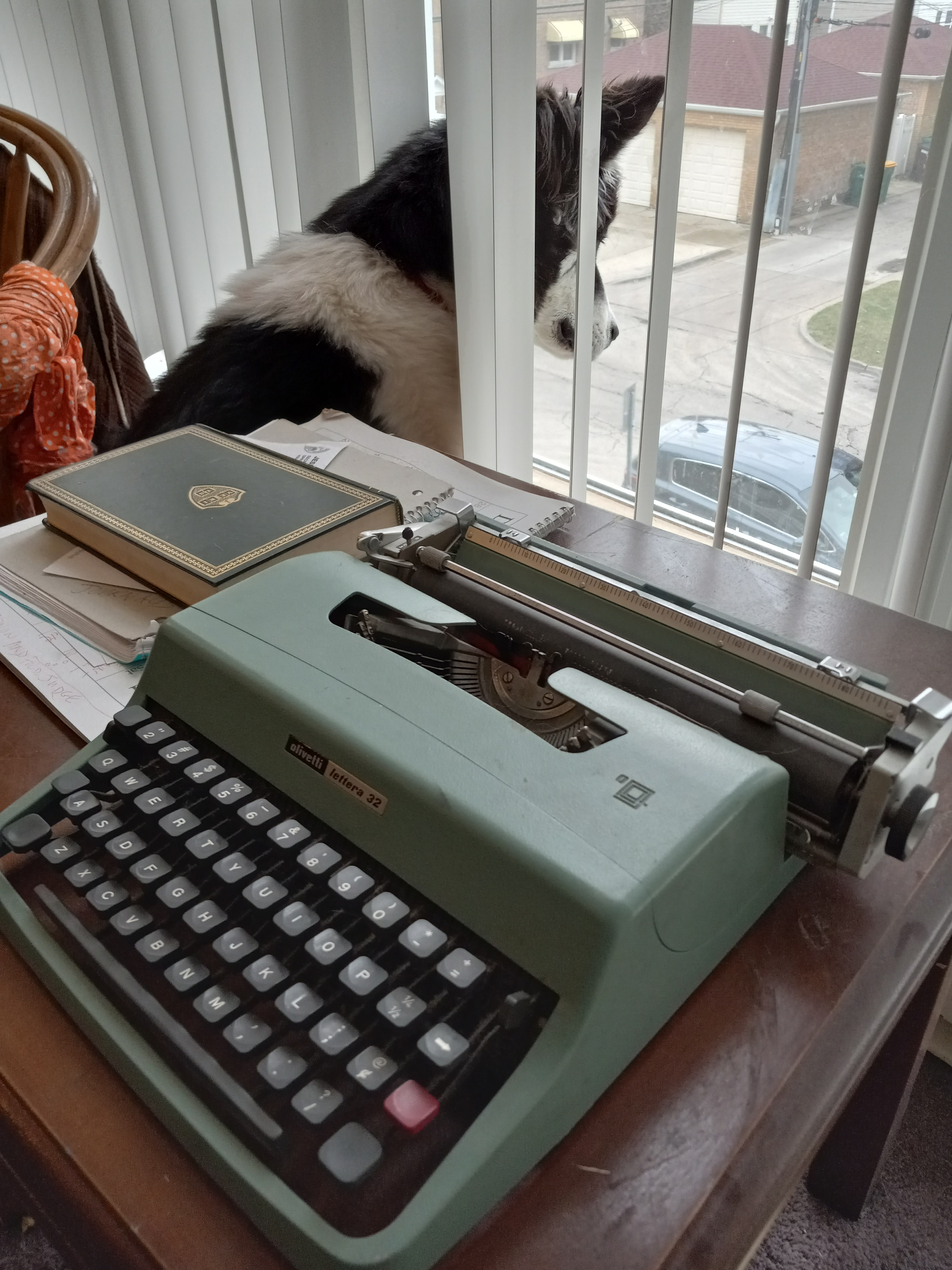
People used to type vast tomes on typewriters. Cormac McCarthy was one such individual. Even though he was hyper-aware of the latest developments in physics and other highly developed sciences, McCarthy continued to use a typewriter until the end (2023). The model of typewriter he used for his entire life is the exact same model shown in the picture. Someone gave this thing to me, believing it was an outdated piece of junk, but also knowing I would like it for some reason. The person had no idea about Cormac. The typewriter sits there by the window as a talisman now, even though I don’t appreciate Cormac’s work in the way I once did (but I still appreciate him).
T.S. Eliot said, “Good artists borrow. Great artists steal.” The same is true for the animal kingdom. The guy in this picture would have come over and said hi to me up close and personal if I’d hung around for much longer.
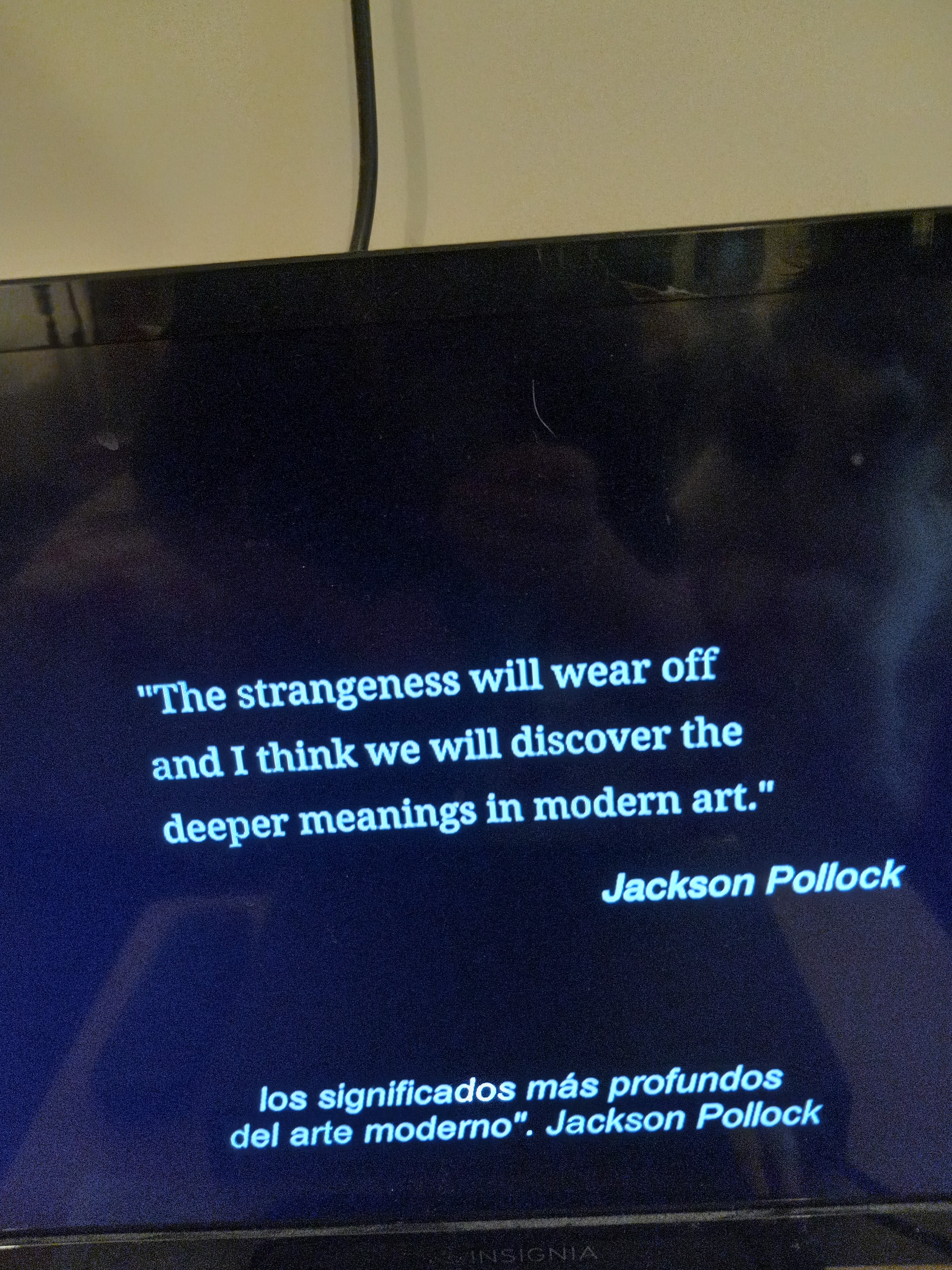
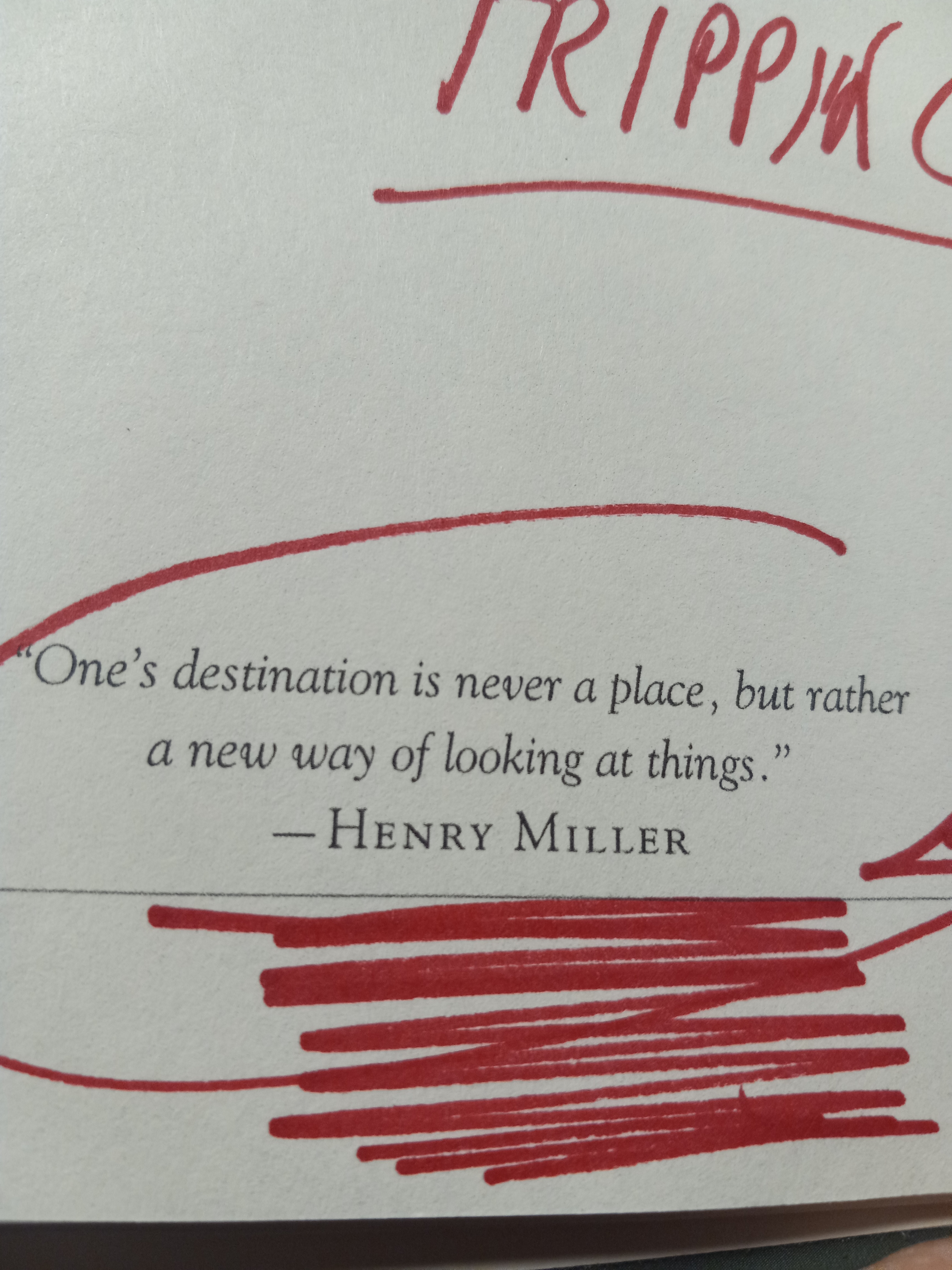
The last two pictures are visual representations of quotations which encapsulate the essence of creativity now. They should be (in order to be gotten the most out of) lived with, in the manner of Zen koans. Also, there is a reason they each appear in the visual format they appear in instead of only the words. The viewer is meant to guess and speculate what the reasons are (which is part of the fun).
The difference between propaganda and art is that one is simplistic and obvious and appeals to our baser instincts, while one is elusive and mysterious and appeals to the better angels of our nature, even when it’s brutal and disorienting at first, like much of Pollock’s work.
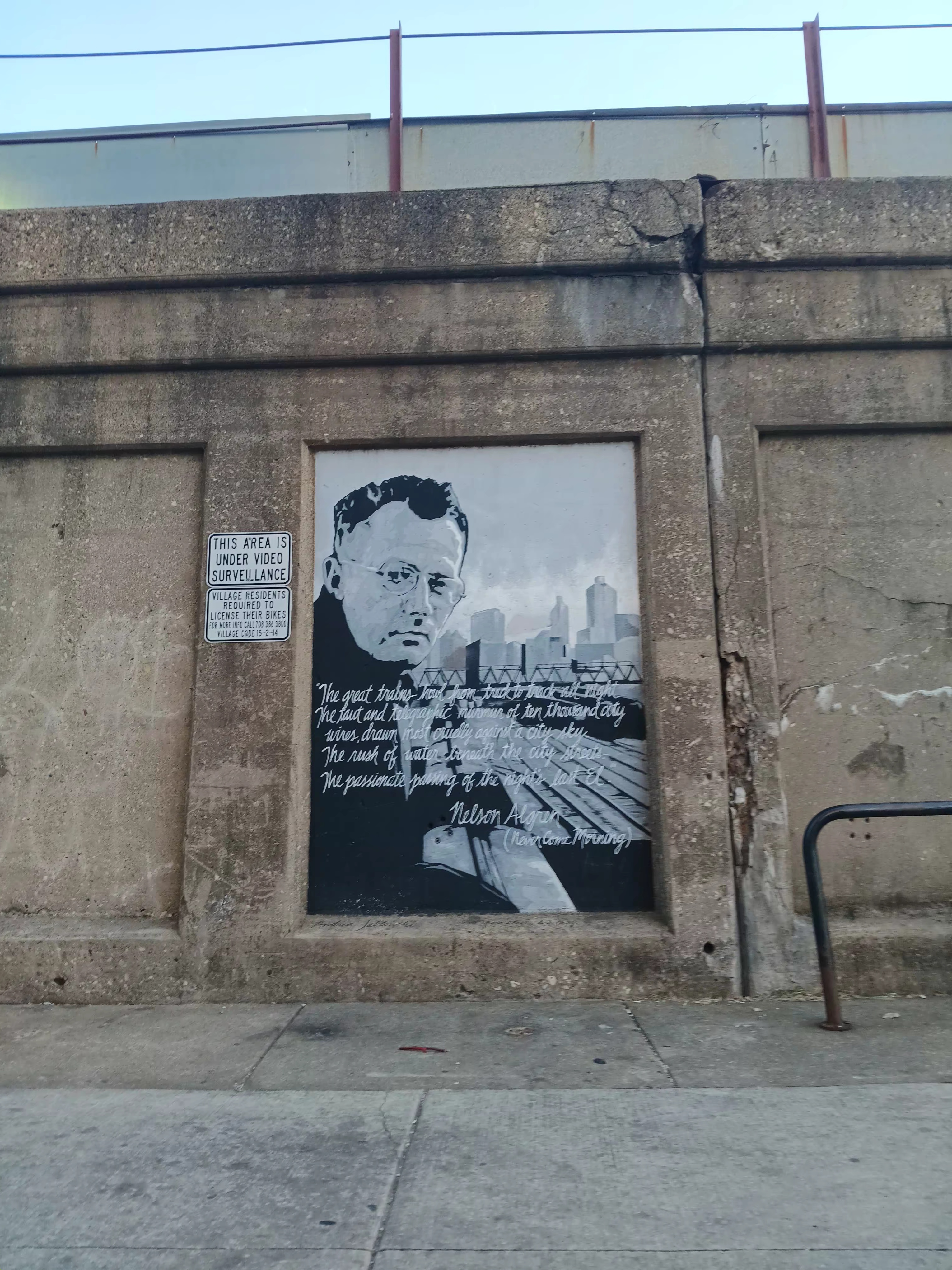
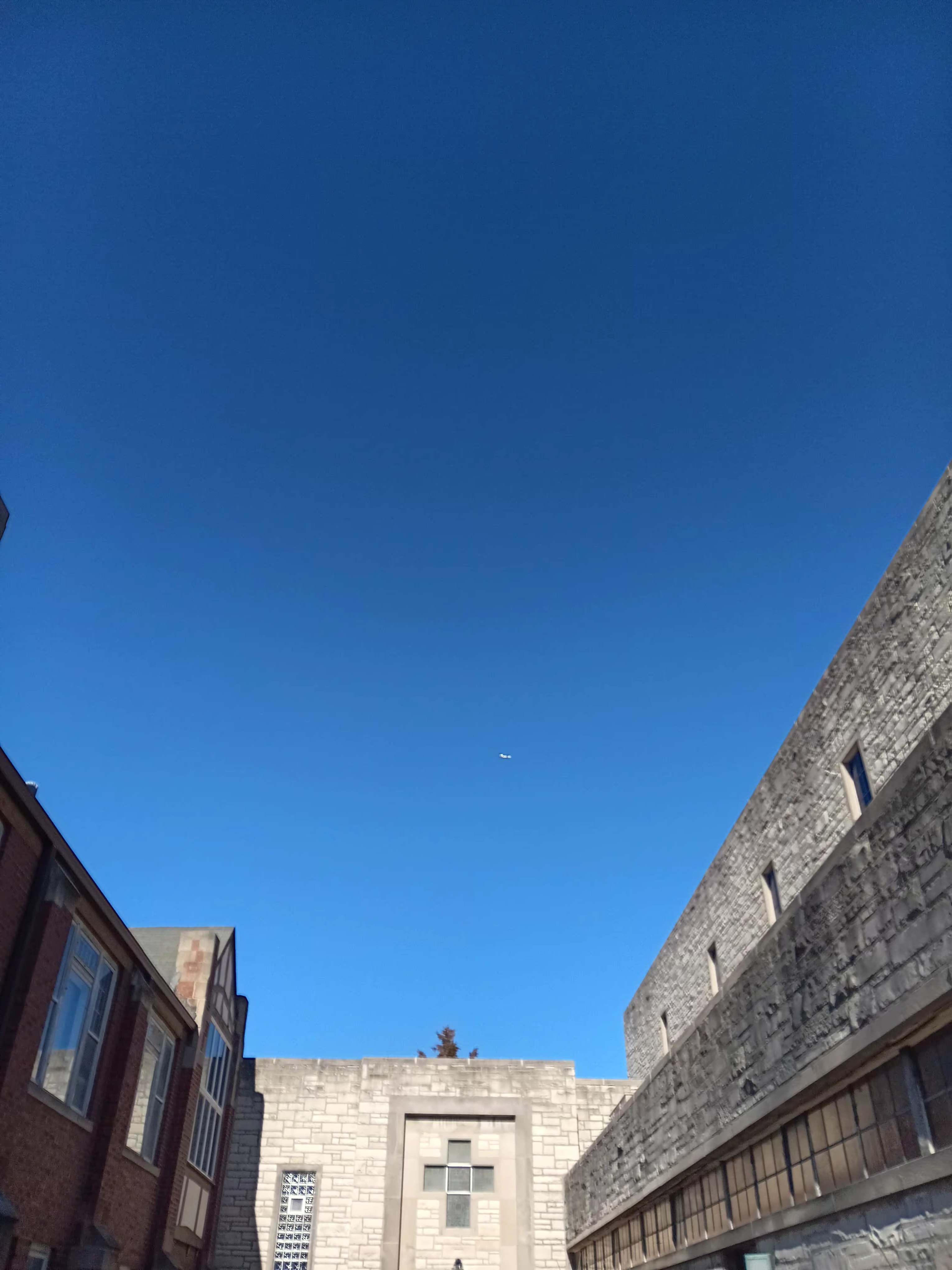
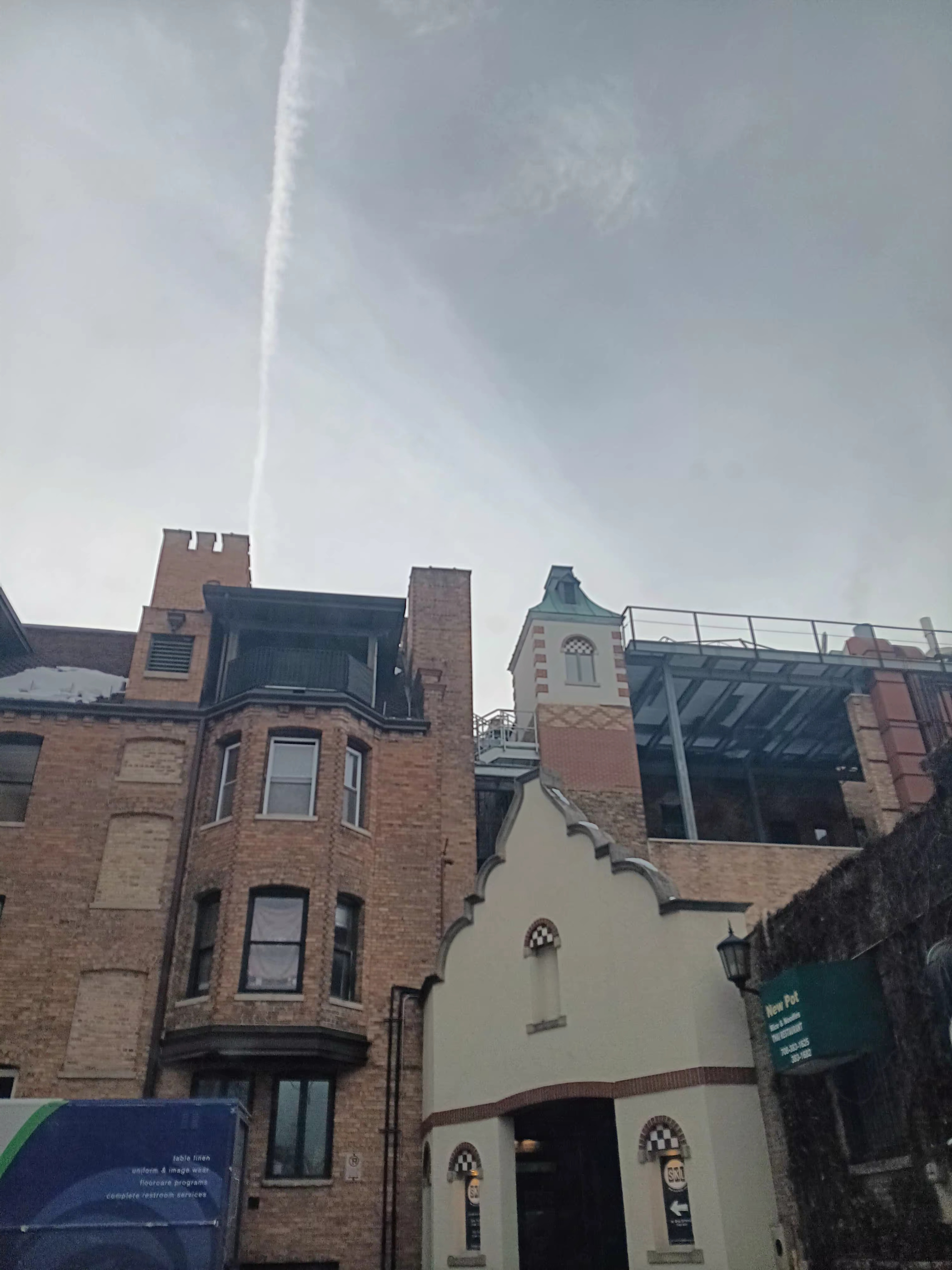
Ernest Hemingway’s spirit casts a shadow over Oak Park, Illinois, USA. Along with Frank Lloyd Wright, Hemingway is the town’s most famous citizen. Even those who’ve never read a line of Hemingway’s work, which includes the vast majority of the citizenry (I would guess), are aware of who Hemingway was, what he is famous for, how he lived his life, and how he was from Oak Park. Frank Lloyd Wright is America’s greatest architect, bar none, an architect so great that he fascinates people who don’t care about other architects, like yours truly. Hemingway is an author who can be set on the shelf beside Mark Twain and Edgar Allan Poe. Indeed, if one had to pick the top three most famous American writers of all time worldwide, Hemingway is in the running for third place along with Emily Dickinson, Henry David Thoreau, Herman Melville, and perhaps a few other candidates. And he is famous for all the right reasons (for the most part). Hemingway never returned to Oak Park after his father committed suicide there with a pistol. His spirit, and his shadow, never left it. The village, the fire escape, the train tracks, and the alleyway are all elements which feed into his fiction, which is why they are captured here in a Walker Evans-style of spontaneous photography.