Leonard Cohen on the Phone by Dale Williams Barrigar

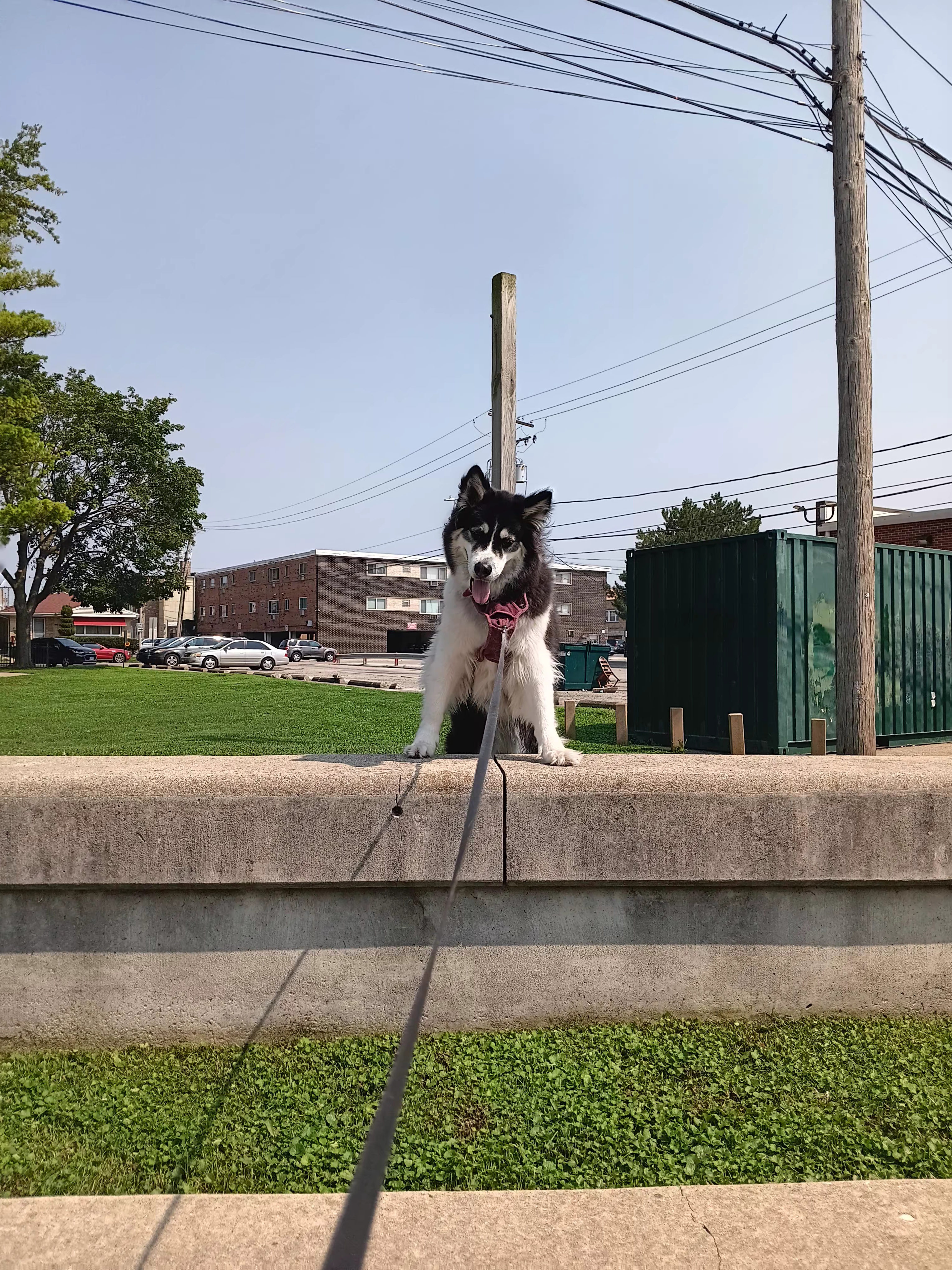
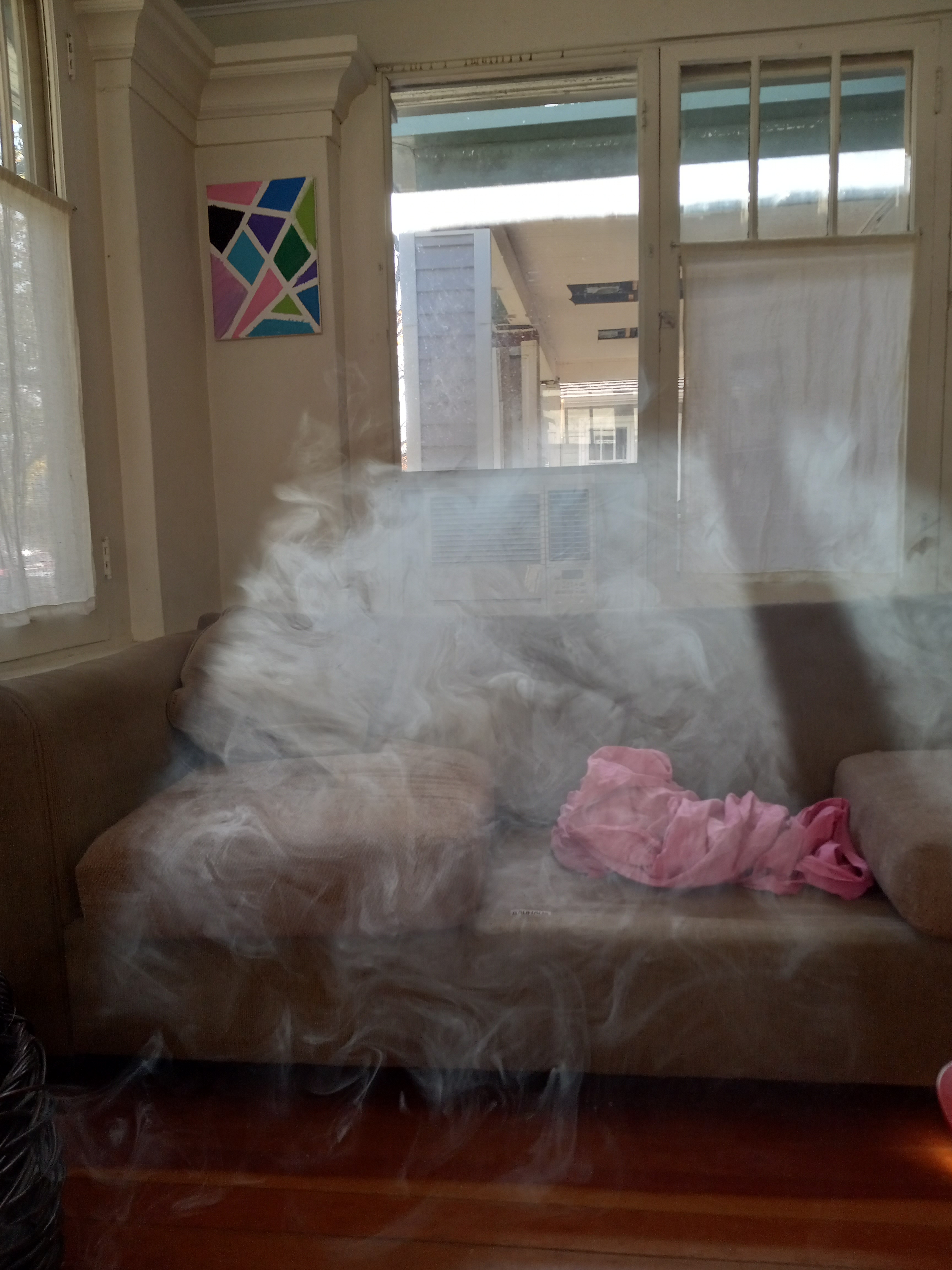
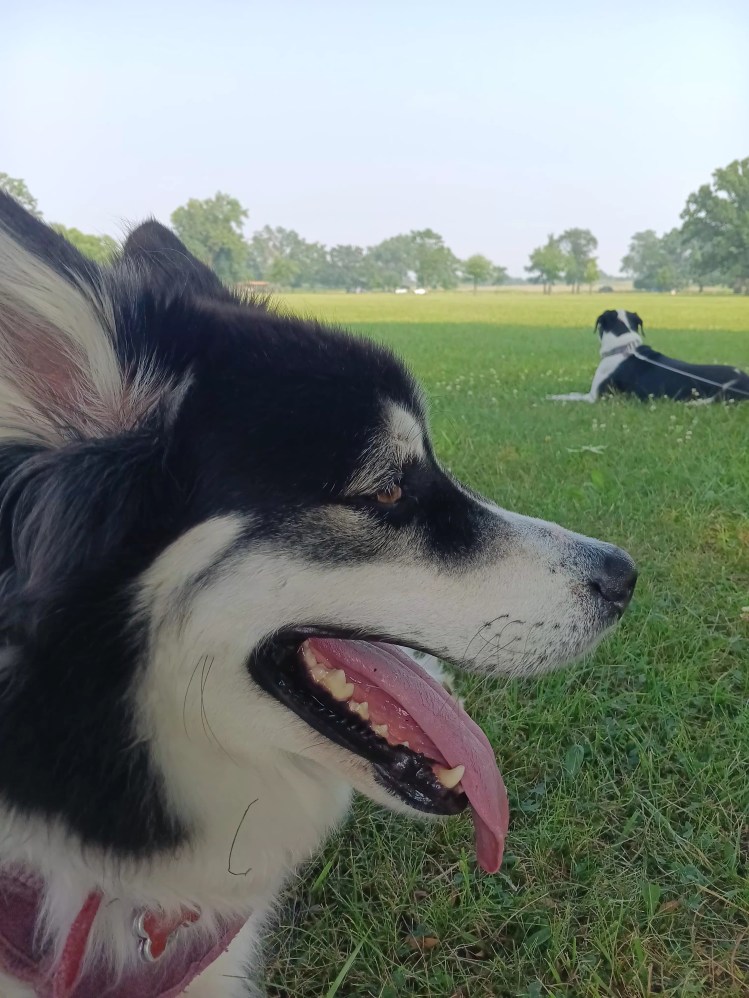
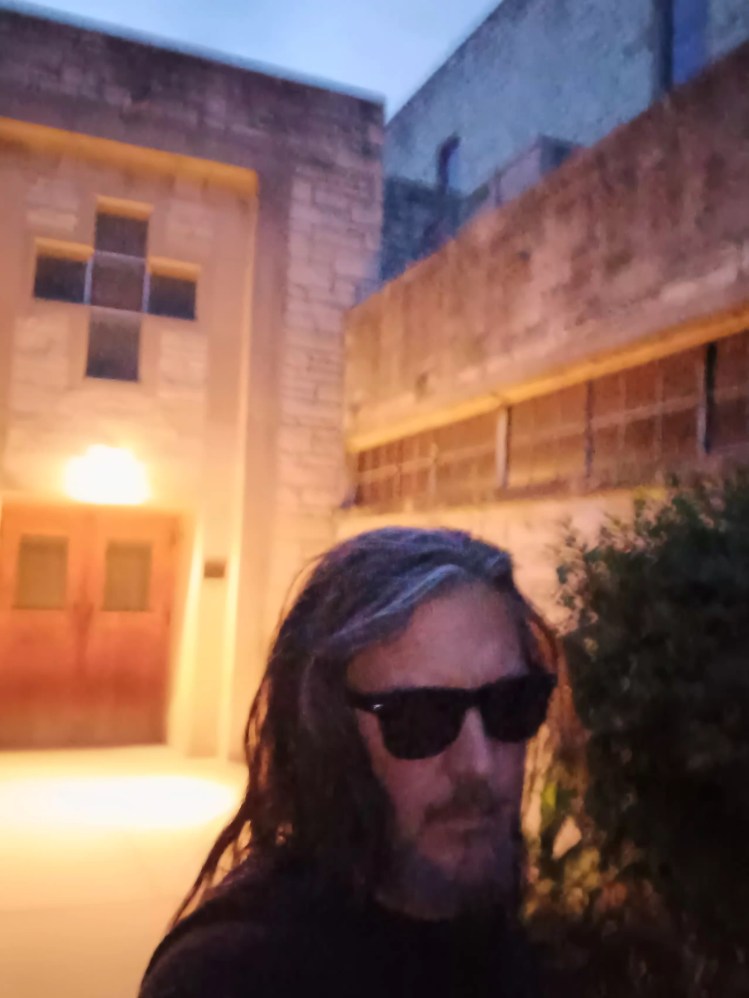
(Image of Berwyn, Illinois, U.S.A. provided by DWB)

“Show me the place where the word became a man.”

– Leonard Cohen, “Show Me the Place”

Poetry can create

and does create

urban

affection, the tiny,

brief

reaching

out

to one’s fellow

humans

that us city

folks (the vast

majority

of the planet

now) need to

indulge in so we

can remain

connected

to one another,

our fellow

humanity,

in a real way,

however strange or

however much

a stranger. Whenever

people compliment

one of my beautiful

animals (Siberian Huskies

or pit bulls), I take it

personally

and return

the favor.

Walking across

the parking lot,

I resolved

that I

would continue

to do so. And I turned

the Leonard Cohen

song way up

on my phone

and placed it

near my ear

one more

time

for now.

Dr. Dale Williams Barrigar is a poet whose own poetry transformed his own life: suddenly, and then gradually. It’s good enough for him.

Porcupine Spirit by Dale Williams Barrigar

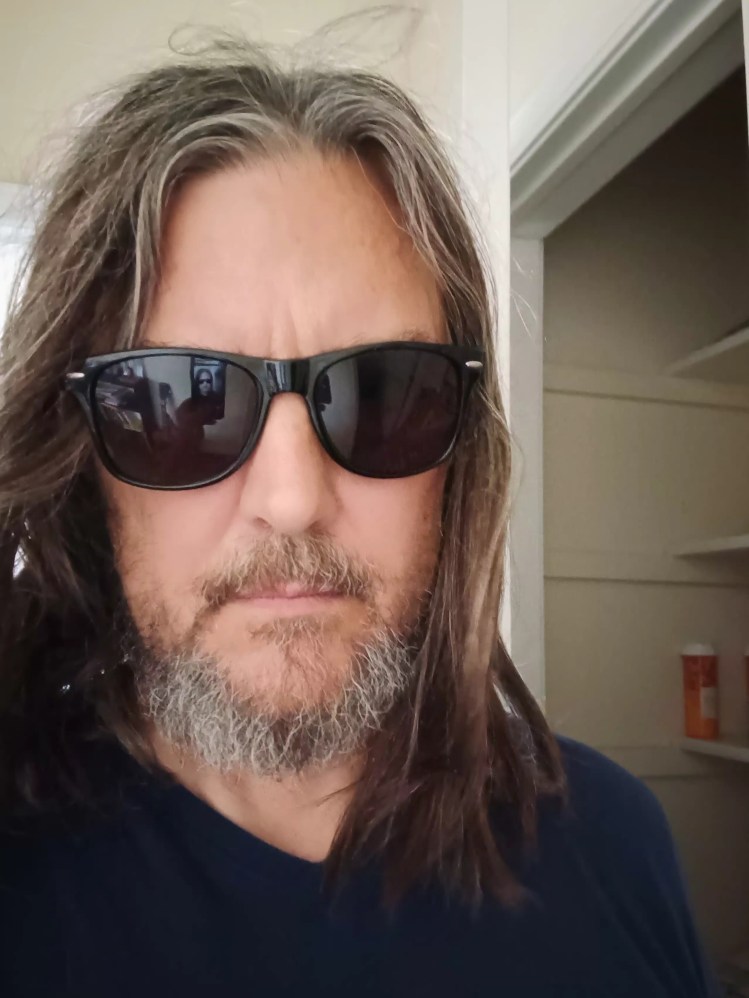
(Image of DWB provided by DWB)

Porcupine Spirit

For Montmorency County, Michigan,

USA

In a cedar swamp

one time, I saw

a gigantic

porcupine

standing up

on his hind legs

like a miniature

human. He was three

feet tall, and looked

like something out of

Star Wars with his incredible,

innumerable

quills

sticking out every which

way and his arms dangling

in front of him as he

stood there, his small face

unafraid of me and his whole

self refusing to move

off the path

which he

was blocking.

And indeed

he continued

to block the path

and watch me walk

away after I

gingerly

stepped

around him.

The forests up here

allow for many

moments like these –

vast, indigenous,

Germanic, huge,

mysterious, with little

to no

human habitations

for gigantic wild

stretches and nothing but

dirt roads. If you want

to be independent

on foot and wander

in a pine wilderness

like Johnny Appleseed

with a wolf,

you can choose

any direction

to do that

here

in the middle

of a place

that makes you

free.

Dr. Dale Williams Barrigar is a poet whose own poetry transformed his own life: suddenly, and then gradually. It’s good enough for him.

For the First Time by Dale Williams Barrigar

(image provided by DWB)

Through it all,

and during it all,

the vast collection

of poetry

he’d created

in the last

ten years

had turned into

a monster

like Grendel

that was now devouring

my life. William Carlos

Williams said:

since the imagination is

nothing, nothing

comes

of it. This lesson

was weighing

heavily. But Jack

Spicer

also said: the poet gets

messages

for her or his life right

from the act

of writing poetry. This

makes poetry

worth doing daily

in its own right,

regardless

of any outward

consequences, or

non-consequences,

that can be

immediately seen. I remembered

I was a person born

with a humble sense

of mystic vision

(since day one). Since day

one

I’d felt

the correspondences

in the world

and had

a certain sense that we

are all here

for a reason, or for

many reasons

and meanings, which we

can feel (sometimes), but not

clearly

see

or say (most of the time).

An ambiguous

mystical

seeing, since

the dawning

of consciousness:

the first memory:

opening the eyes

outside of her body

for the first time.

Dr. Dale Williams Barrigar is a poet whose own poetry transformed his own life: suddenly, and then gradually. It’s good enough for him.

Elephant by Dale Williams Barrigar

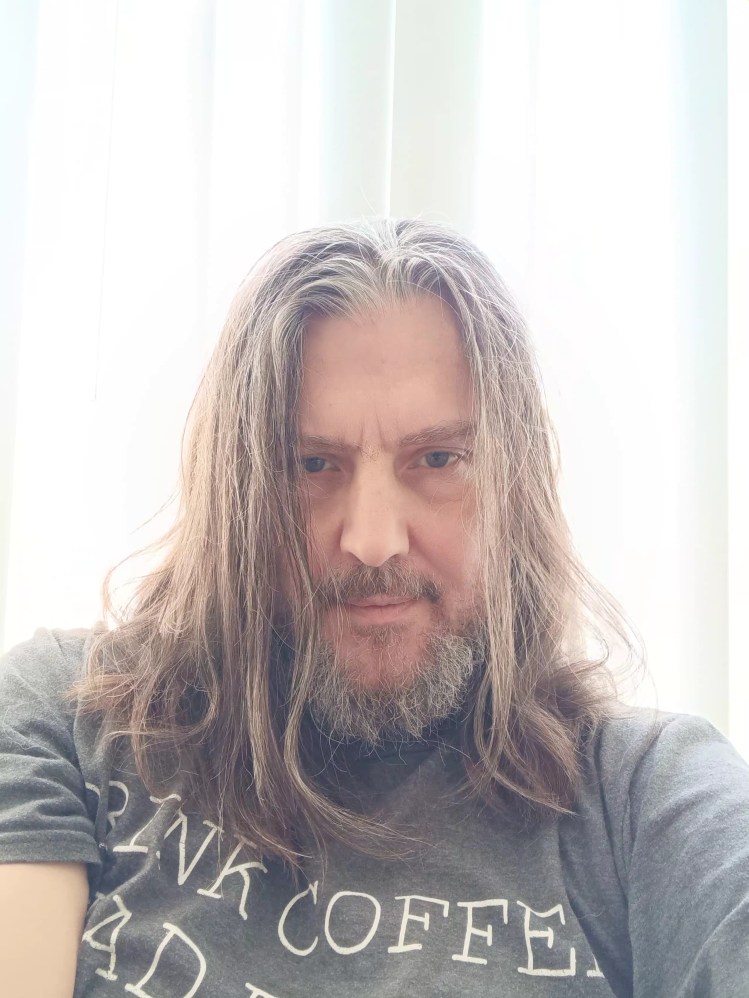
(Image provided by DWB)

“A poet is a time mechanic.” – Jack Spicer

The poem sat

in the corner

staring at

his eyes

and heart

with the eyes

of a cat

and the body

of a lone

wolf.

Then it changed,

the poem, into

a dolphin,

trout,

gorilla,

shark,

monkey,

wild boar.

A horse,

then a camel.

A hawk,

peacock,

osprey,

owl,

sparrow,

eagle,

crow,

dove,

pigeon,

thrush,

another nightingale,

and now

an elephant.

It is undoubtedly the

(invisible)

elephant within

the room.

I can neither leave it

there

alone

nor take it with me;

the door

isn’t big enough.

Yet, I’m

in charge

of this elephant.

However, nobody

is really in charge

of this unseen

animal,

who is, truly, a creature

never really seen.

Its intelligence

and will-power

are incredible,

like a real

elephant.

But it remains

invisible, like my blue

butterfly, the one that

travels with me

everywhere,

hovering over

my shoulder.

And so

I toil, struggle, wrestle,

labor, study, save, caress,

create, rest, and renew,

daily. Daily life is

a struggle with It,

capital I, but I

struggling with the power

and the breath

in this way

am truly

my own reward,

every day and

every way.

William Carlos Williams

and Jack Spicer, the great

Jack Spicer,

were right.

A poet

is a mechanic

of time.

Dr. Dale Williams Barrigar is a poet whose own poetry transformed his own life: suddenly, and then gradually. It’s good enough for him.

Saragun Springs Proudly Presents: The Last of the Mohicans Still Exists by the Drifter

(Images “Last Mohican” and “Water Boo” provided by by Drifter)

Water Boo

“The most manifest sign of wisdom is a constant happiness.”

– Montaigne

In Russia there was a television program about an enigmatic drifter named Fenimore who visited a summer camp to tell the children tall tales: about Native Americans, but also about extraterrestrials visiting Planet Earth.

The unusual name, Fenimore, was so well-known in Russia that even children recognized it.

Fenimore was the middle name of James Fenimore Cooper, an early American novelist, creator of The Last of the Mohicans, who was so well known in Russia that “everyone” knew who he was (and he was especially well known by his unusual middle name).

Cooper is less well known in Russia now than he was a few decades ago. But he’s still far better known in Russia than he ever was in his native land of the USA. And at one point, he was very well known in his native land, one of the best-known writers in America.

The Mohicans believed that the purest and best creature on Planet Earth, among all the uncountable creatures here, was the white dog. For the Mohicans, a dog of purely white fur ruled over all other creatures because of its beauty, goodness, loyalty, and spiritual intelligence.

Modern city folk would be horrified by what the Mohicans did with the white dog in turn, because they believed it was the purest creature created by the Great Spirit: they sacrificed it.

What modern people don’t realize is that: one: the animal was sacrificed quickly and without pain; and two: the Mohicans believed the animal was instantly passing over into a world exactly like this one, except without the pain, as soon as it died.

The Mohicans believed the white dog was leaving this world of pain and going to another world exactly like this one except far more perfect than this one ever has been or ever will be.

This is a challenging paradox, even a contradiction: that there could be a world exactly like this one, except without the pain.

No more physical hardship, no more fear, no more boredom, no more sense of betrayal. No more endless feelings of injustice, no more nonstop struggle for existence and survival (mental, physical, and spiritual), no more loneliness, isolation and alienation, no more feeling of being abandoned by the Creator of the universe.

But the beauty we see, hear, feel, smell and taste here will still exist.

The sun on your head, the wind in your hair, the ground beneath your feet, the green, breathing beauty of the plants all around you would still nurture your soul, except more so.

The grizzly bear will still be there, but he will no longer tear your head off and devour you; instead he will roll around with you peacefully and playfully in the grass.

The fear of death, the one multi-pronged, many-leveled, myriad-layered primal emotion that perhaps generates all other emotions here in this world, even our sense of beauty, or especially our sense of beauty, will be gone there. But the sense of beauty will still exist. It will simply be increased, heightened to a level we can’t even imagine yet, here on Planet Earth.

I went camping this week with my kids and dogs, at Warren Dunes State Park in Michigan, ninety miles from where we live outside Chicago.

It’s only ninety miles away from Chicago around the bottom of Lake Michigan, but it feels like a different world where the raccoons outnumber the people ten to one.

There are a lot of raccoons in Chicago and environs but they still feel vastly outnumbered. Not so in the Dunes.

In the Dunes, I felt closer (or closer in a different way) to the sun, the wind, the ground, the green, the blue of the vast freshwater sea and the sky above it, the yellow sand, the raccoons, fish, and birds, and so was reminded of my own Native American heritage.

I have never had my blood tested. But as a child I was told over and over that I am part Native American. So for me, in spirit, no matter what the genetic testing would or wouldn’t say, I am indeed part Native American. Nothing could take that away from me now, not even science.

And since I’m also a lover of Russian literature, including a few of the great Russians who were nature lovers, like Tolstoy, Chekhov, and Turgenev, I have a love for the Russian love of Native Americans, the Russian love of nature, and the Russian love of James Fenimore Cooper.

Drifting along on an empty trail walk among wooded dune hills with my two Siberian Huskies and one pit bull, I was feeling the feeling of free discovery that can still be found, somewhere, in all fifty states of the USA, if you look in the right way and in the right places.

And I realized that the Indians really are still alive inside me, because I worship their worship of, and their belief in, the white dog.

And their dream of a heaven that is like home.

10 Questions Dale

(Header image provided by the Drifter)

Good morning Readers

Today we are debuting a new feature that yet has a name, but is part interview, part word association. I have presented Editor Dale Williams Barrigar with ten words (nine actually, the tenth is his choice). What follows are his replies. We hope that this might catch on and other lists will be given to other people in the future.

Leila

Ten Words

“The Drifter” (aka Dale Williams Barrigar, Doctor of Philosophy) has made these definitions as short as he could, knowing that brevity is the soul of wit.

Any statements he makes about “God” and so forth should be taken with a large grain of salt: because he’s not smart enough to pretend he knows what the Creator of the Universe is really up to – or why.

One: FEAR.

In many ways fear is the basis for everything in this world.

When we climbed down out of the trees, it was partly from fear (with a large mixture of curiosity).

And when we started running away over the ground trying to escape the Sabre-toothed Tiger, it was certainly from fear. (*See below.)

Hemingway called it “grace under pressure,” a paraphrase of which might be “not being a chickenshit.”

How one handles one’s fear/s is such a large part of “who you are” that it’s frightening.

ANXIETY, the much used modern word, is another term for fear.

Jesus nailed to the cross is such a universal image (even for “other people” on the other side of the world who aren’t “Christians”) because it’s based on fear (as well as compassion); and if you don’t know yet that we all get crucified in this life, one way or another, and usually many times, you’ve got a rude awakening in store. (Some of us know this as soon as we know anything.)

Fear of failure can be good, or bad, depending!!

(*The first time we escaped the Sabre-toothed Tiger on foot we realized we could escape, and almost felt free for the first time. And the first time we escaped must’ve had a large mixture of trickery involved, as well, since there’s no way we could’ve beaten the beast on speed alone, with only our feet. Call it: tricking the beast. And it’s just as important now as it ever was; usually, now, for different reasons.)

Two: HOPE.

Whales, wolves, and humans can all sing, but only birds can both sing, and fly. (I mean fly in reality, not in dreams or with mechanical assistance.) Perhaps some day “they” will create a drone that can both sing, and fly; but it will be an at least partially hideous thing; like Frankenstein with wings and tender vocal chords.

Emily Dickinson has forever made me think of a bird whenever I think of the word “hope” (“hope is the thing with feathers…that perches in the soul”) and without hope, the world wouldn’t be worth living in. Period.

Three: ART.

The German philosopher Friedrich Nietzsche (wildly, he always denied he was German and claimed to be Polish instead, which would be, in 2025, like an American denying he was American and claiming to be Mexican, instead, or Bob Dylan claiming to be an orphan cowboy from New Mexico instead of a comfortable Jewish kid from small-town Minnesota) said: “These earnest ones may be informed of my conviction that art is the highest task and the proper metaphysical activity of this life.” Another great German, Arthur Schopenhauer, agreed with him (before Nietzsche said so himself). So did Jim Morrison, one of Nietzsche’s most famous disciples.

We all know who “the earnest ones” are, if we think about it. They take themselves all too seriously, have CONSUMERISM as their religion, and are great at passing judgement on anyone just a little bit different from themselves; they appear in the White House, the halls of Congress, the pulpits of churches, the lecterns of all the colleges and universities, and even, or especially, in the book clubs and writing groups of all small, large, or midsized American cities.

REAL ART IS SOMETHING YOU HAVE TO BE WILLING TO DIE FOR. You don’t have to die for it; but you have to be willing to.

Four: LUCK.

“Luck” is all the good things that happen to us which we don’t deserve that help to turn us into better people – not monetarily richer, more fakely famous, or more “powerful” – but better. Often, with the best luck of all, we don’t even know about it until long after the fact. Maybe this means that we’re always lucky; or at least more lucky than we think we are, most of the time.

Five: FAITH.

Faith is the thing without which, Alfred, Lord Tennyson, said, he wouldn’t be able to eat his dinner. Because without faith, he wouldn’t have an appetite. He would be too full of fear, and it would make him not hungry. When I start losing faith in life, I know I’ve grown too tired again. For me, a lack of faith in life is the biggest sin there is.

It has nothing to do with believing we know just what God is up to. It has everything to do with believing there is always a reason to go on – even when we don’t know what it is. There is always someone watching you and cheering you on – even when you don’t know it. Don’t let them down. (If you don’t have a choice any more it’s a different story.)

Six: FUTURE.

The Future is everything. This is where, without doubt, all the most exciting things happen. Sometimes we forget that the Creator of the Universe has a plan, and it involves US. Our best moments in the present are lived in the future, if we’re doing it correctly. It’s not about escaping the present, it’s about intensifying it.

Like everything else it touches, modern American (hedonistic, nihilistic) CONSUMERISM, the religion of the United States, which has also devoured large chunks of the (human) globe elsewhere, both East and West, bastardizes the concept of the future.

It has nothing to do with what they’re trying to sell us yet again.

It has everything to do with what Art itself (at the highest levels, which are everywhere, even under your sandals) is all about.

Without the future, there is no Art, because as you work at creation, you’re always anticipating one or many moments in the future, near or far. Or you are unaware of what you’re doing, which isn’t art.

Seven: TRUST.

There have been people in this life I’ve trusted the second I met them – and I continued to trust them, even after they left me for dead in the dust.

There has been one person I’ve trusted the moment I started reading her fiction and her online commentary – and still do and always will trust, and even would and do trust with my life’s work: even though I’ve never met her in person. She’s that good of a good writer. And to be a good writer, you have to be good. Not perfect (because none of us are), but good. Zero exceptions.

Trust you to take it seriously is just one form of trust.

Eight: FAMILY.

Not all family members are blood related, though they’ve probably spilled the same kind of blood – of their own, I mean (mostly).

Nine: OBSESSION.

Obsession can lead to a compulsive disorder, or to the perfection of the Mona Lisa, depending on what one does with it.

Sensual/sexual romantic obsession is, by far, best for the artist when it’s sublimated. Leonardo and Michelangelo spent zero time scrolling through dating app’s while remaining obsessed with romantic beauty.

Ten: CREATIVITY.

It’s Everything (all around us), and it’s everything (worth fighting for).

Your life has to be your first art, even when (or especially when) you pour everything else into your art.

And when we do this, we’re imitating (in a good way, and possibly without knowing it) the Creator of the Universe.

Saragun Springs Presents: The Drifter

(Header image “Mary” by the Drifter and “Drifter” by the Drifter)

Thinkings Upon Hermione, Shakespeare’s Queen; Or

A Phantom of Delight

“She was a phantom of delight / When first she gleamed

upon my sight; / A lovely apparition, sent / To be a moment’s

ornament…” – William Wordsworth

This week The Drifter offers thoughts upon one of Shakespeare’s heroines in honor of Leila Allison, a poet who keeps a large picture of Shakespeare in a prominent spot in her workspace, and sometimes can feel The Bard’s eyes following her around the room as she creates.

Such a fact is not paranoia nor hubris; it is a full-on engagement with The Bard that is a rare thing these days, despite The Bard’s continuing presence seemingly everywhere. Despite the fact that he is “everywhere” as the Western World’s preeminent writer, there are few creative writers these days who have the courage, the ability, or the dedication to engage with The Bard in the way Leila Allison has, and does.

The following reflections concern one of Shakespeare’s lesser known major characters (overshadowed by Cleopatra and Juliet, among others) who would have won her author immortal literary fame of a certain species all on her own, even if Will had never written a line about Juliet, or Cleopatra.

Now bring on the Queen.

Specifically, Queen Hermione.

Shakespeare’s Hermione is a beautiful queen, and a beauty

queen, filled with virtue (overflowing goodness), steady and true (and pregnant).

But her goodness makes her vulnerable to other, less good, people.

She becomes a total victim of her husband’s crazed jealousy.

She does him a favor. Talks his friend into staying over, like he asked her to.

Next, because he got his wish, the king gets paranoid.

He starts thinking the two of them (best friend and wife) must be up to

something together, if the friend agreed that fast.

The king’s paranoia undergoes the snowball effect.

Her odor and her very beauty begin to scream inside him; soon he even starts believing that his friend is the father of his own child; which may be as twisted as it gets on that level.

This king’s self-centered, power-hungry delusions (believing things that

aren’t true) lead him to the basest cruelty.

To wanting to crush whoever won’t do what he says. And so he does all kinds of nasty things to Queen Hermione. Up to and including putting her in chains, throwing her in prison, killing her son, and taking away her daughter right after she’s born. The Queen dies from grief.

But at the end of the play, William Shakespeare gives his good queen her due, as if he couldn’t let her go just yet.

Some of her fans and followers have constructed a statue of her. She rises from this statue of herself, in front of everyone: resurrected, which means brought back from the dead.

Brought back to life.

This is how she said goodbye to the King when he sent her to prison:

Adieu, my Lord:

I never wished to see you sorry; now

I trust I shall.

Anyone who can remain that calm when falsely accused and sent to prison for it has got style in Bukowski’s sense of the term; and can stand out; is one of the best.

We all get falsely accused at times (maybe not sent to prison for it; maybe so).

Someone like Queen Hermione can show you how to act when “they”

are coming down on you.

This is one thing Jesus meant when he said to turn the other cheek.

When they’ve got you, whether you did it or not, your best bet is to play it cool.

Both inside yourself AND with them.

Shakespeare is also saying there are resurrections that happen to us WHILE WE ARE STILL ALIVE, IN THIS WORLD, LIVING OUR NORMAL LIFE.

We get reborn every single day (we have another chance tomorrow) or even every second that ticks by in some cases.

(Sometimes time speeds up; other times, it goes way more slowly…but who here has ever seen it stop…)

And the gentle Bard surely seems to be implying there will likely be another,

very different, resurrection at the end of our own earthly lives.

Crucial END NOTE from The Drifter: This bare bones retelling of Queen Hermione’s life was written from memory; as such, The Drifter takes no responsibility for any minor (and likely meaningless) little things he may have gotten wrong in briefly recounting this narrative.

The Drifter first read THE WINTER’S TALE, by The Bard, well over thirty years ago, when he was a student at Columbia College Chicago, in a class conducted by the great Shakespeare scholar Peter Christensen.

Thirty years later almost to the day, The Drifter espied Professor Christensen, an old man now, sitting alone in a coffee shop in a northside Chicago neighborhood not far from the lake, intensely engaged in the reading of Shakespeare’s Sonnets. (The Drifter waited around until he could see what the book was, without ever approaching the professor.)

Since The Drifter read the play over thirty years ago (twice) and hasn’t looked at it since, he takes no responsibility for the tiny meaningless things he may have gotten wrong, but he does thank Professor Christensen, for reading The Sonnets alone in a coffee shop as an old man; and for his dramatic readings from Shakespeare’s HAMLET, THE MERCHANT OF VENICE and THE WINTER’S TALE well over thirty years ago, in a seventh-story, industrial-looking classroom on Columbia College Chicago’s downtown campus.

I don’t know if you are still here with us; but I remember looking out the high windows, watching the blues of Lake Michigan, and listening to your voice bringing Shakespeare alive.

Sunday With The Drifter: Three Dogs

For Mary Ann; good luck with your surgery!

(image provided by the Drifter)

It was during the darkest, deepest heart of the covid pandemic in the early part of the 2020s. My daughter and I were driving along on Roosevelt Road just outside Chicago, USA. I was in the front seat behind the wheel and she was sitting in the back seat on the other side of our modest automobile (Lou Reed was singing from the speakers). It was wintertime, so the sun had sunk very early, too early, it seemed; the darkness around us was the coldness of a northern Illinois winter post-holiday season, with the wind battering the car.

That was when she told me that herself, my other daughter (her twin), and my ex-wife (their mother) had recently met nine brand-new puppies.

The dogs had been discovered in an alley somewhere in Texas, with their mother, and shipped north to Chicago by the rescue agency. The woman who was fostering these animals had run into my daughters and ex on the street. Somehow they got to talking and she told my daughters about her new rescue project, which was to foster these nine new dogs and their mother.

The nine new pups were half Siberian Husky and half pit bull, with the Husky side of the appearance and personalities being much more prominent, for some reason, than the pit bull side, even though their mother looked like a one-hundred-percent pit bull.

Their mother’s name was Margaux. She was one year old. All of her fur was of the purest, cleanest white imaginable, and she had bold, bright, brilliant, very blue eyes.

As soon as I saw her she reminded me of my dog, Cowboy, who had passed on four years before. Cowboy was about twice Margaux’s size, brown and white with brown eyes (he was born with blue eyes that later turned brown), but there was something about the two dogs that seemed uncannily familiar.

When I met Margaux she immediately walked over to me and started nuzzling my leg, asking for petting. It was as if we already knew one another. And I felt like we really did know one another. The second I saw her I knew I would be adopting at least one of her puppies.

The nine puppies were like watching 101 Dalmatians. They had a habit of all rolling in a pile all at once, wrestling with one another. They would tussle, toss, nip, bounce, yip, zip, wag, fang, bite at each other, flounce, jounce, jump, prance, dance, charge into each other, fall down, dart around, jump into your lap if you were sitting on the floor among them, look up at you, stretch, flop onto their backs, stick their tails in the air, shake themselves off, scratch their ears with their back paws, howl, yowl, laugh, smile, grin, pant, bounce around some more, crash into each other some more, flop around, jump up, run, walk, jog, teeter, totter, fall, spread, splay, spoon each other, roll over, box each other with their paws like cats, leap, jounce, bounce, and jostle all over the floor while you sat in the middle of them. And this was all during the first five minutes.

One of these little dogs was the biggest of them all. When the other pups would sleep in piles on top of each other, he would always go off into a corner of the room to sleep by himself, mostly half sleeping while watching the rest of them from a distance from the corners of his amazingly alert eyes. He had the longest fur, the most human expressions and was the pushiest, biggest, happiest, strongest, most intelligent dog of them all. He was the pup who started challenging his mother for dominance, in a friendly way, while all the other pups were still following her lead.

And he often had his sidekick with him. This other pup was “lean and mean” in a good way. His one shockingly blue eye and his other startlingly brown eye were prophetic and symbolic of his inherently split (not to say schizoid!) disposition. As a full-grown dog, he would be able to nail a squirrel and even a rabbit, much less an opossum, with a deadly accuracy, skill and ease that would stun the viewer of such an event (we always try to stop him but are not always able). And yet, he is one of the sweetest and most gentle dogs, otherwise, you could ever care to meet, someone who is even afraid of little children, when he isn’t trying to guard them, which he usually is whenever they’re around.

The reason we didn’t adopt Margaux, their mother, along with these two pups was waiting at home. Her name is Bandit, a pit bull with the greatest sense of humor of any dog you ever saw, and the strongest jaws you can probably imagine.

Bandit stepped in out of the blue when Cowboy, my beloved pit bull, passed on over the Rainbow Bridge (where he is waiting for us; I am sure of it). Bandit helped save my life by her presence during one of the toughest periods of my life I’ve ever gone through (I’ll skip the details about that for now). She tends to get a bit aggressive with other female pit bulls, especially when they’re on her own territory, so we had to let Margaux go. I heard Margaux is now living with a friendly family on a farm somewhere in Iowa where she has lots of room to run and play with other dogs. I hope so.

We named the leader Boo, after Bucephalus (Alexander the Great’s favorite horse), and the Sancho Panza dog we named The Colonel, after Elvis’s pal (and manager).

Bandit, Boo, and Colonel are all black and white, with almost exactly the same markings, almost like a miracle.

Life with these three animals in it is infinitely enhanced, endlessly better than it could ever be otherwise without them. It’s probably fair enough to say that I would die for any of these animals if I had to (like I would jump in front of a car to try and save them, if it ever came to that). They would do the same for me and my kids, and I know this for a fact because I’ve seen them try to do it when they thought we were in danger.

A few years ago I heard a story in the local news about a teenaged boy who ran back into his burning-down house to try and save his dog who was trapped inside. He wasn’t able to make it back out and both himself and his animal met their end together in the flames, and mostly the smoke. Their bodies were found side by side. The news reporter talked about it like it was the most tragic thing that ever could have happened, a bad decision made by a naïve child.

My heart goes out to the boy’s family in every way you can possibly imagine, but that news reporter was deadly wrong. Only the good die young. If there is a heaven (and I’m almost certain there is, I don’t even know why), that boy and his dog are in it. And they are together: forever now.

THE DRIFTER sometimes calls himself Dale Williams Barrigar, MFA, PhD.

Saragun Springs Presents The Drifter

(Image provided by the Drifter)

Seven Virtues of Studying the Great

“Goodness can be found sometimes in the middle of hell.”

– Charles Bukowski

This Sunday in honor of the American holiday weekend, The Drifter is offering a brief take on a vast topic. These are the opinions of The Drifter and perhaps are not set in stone; but at the same time, none of these suggestions originated with The Drifter himself. They drifted into his mind and through his keyboard via many other figures of the past who are smarter than The Drifter.

Thus, all who read this should know that The Drifter does take responsibility for this, but at the same time he’s doing nothing other than channeling the wisdom of the ages in the form of a brand-new vessel. Very little (or none) of this can be argued with in any rational way. All of it will peak your interest if you are interested in the creative arts AND/OR in the creative living of life (or both).

Now to the list. Seven is chosen because seven is a chosen number. There is a second list at the end which helps explain what The Drifter means by “the great.” Skip down to there if you wish to and come back to this afterward.

Seven virtues of studying the great:

One: You will learn how to do what you need to.

Two: You will come to understand how much it takes.

Three: Your own pain will be eased even as you come to a greater understanding of the eternal truth that “pain is the name of the game.”

Four: You will see how fun the game can be through the eyes of others who are related to you because they are also humans.

Five: When your enthusiasm wanes because of your energy levels (until it comes back again) you can lean on them.

Six: Not studying anyone will very surely and very shortly turn you into a kind of (unhealthy) human vegetable and one should always study the great first because they deserve it. They deserve it because they tried harder than the vast majority of the population (even while “not trying” like Buk said to).

Seven: What could be more worthy of our human study here on Planet Earth than the human and all it entails? (which in my case involves Siberian Husky and Pit Bull spirit dogs; look around you for your own spirit things because they are there).

List Number Two.

The following list is an example of what The Drifter means by “the great.”

In honor of the future-classic, cutting-edge short stories of Irene Leila Allison, the list is comprised of twenty American short story writers.

These are all Americans because I’m writing this on THE FOURTH OF JULY, 2025, A.D., and because I happen to be an American myself, straight from the heart of the heart of the country, as William Gass called it.

All of these short story writers are what is sometimes referred to as “passed on.” At other times referred to as “no longer among the living.”

These people still live. IF nowhere else (which I doubt) than among the literary immortals in the spirit world of the American pantheon.

Washington Irving.

Edgar Allan Poe.

O. Henry.

Shirley Jackson.

Eudora Welty.

Richard Wright.

Ralph Ellison.

Katherine Anne Porter.

Kate Chopin.

Flannery O’Connor.

Langston Hughes.

N. Scott Momaday.

Ernest Hemingway.

William Faulkner.

F. Scott Fitzgerald.

John Cheever.

Raymond Carver.

Barry Hannah.

Larry Brown.

William Gay.

“The Drifter” will return next Sunday with seven more philosophical reflections on the Arts or one more narrative exploration of an artist’s life based on personal experience. Thanks for putting up with this.

Solitude Equals Freedom by Dale Williams Barrigar

(image provided by DWB)

Solitude Equals Freedom

Harold Bloom, my spiritual mentor (if I had to choose, at gun point, just one, other than Jesus), rightly opined, over and over and over again (in the good way), that an American never feels free unless she or he is alone. Daniel Boone, Davy Crockett, and Johnny Appleseed all agreed with him; as did Chief Joseph, Crazy Horse, and Geronimo.

The following poem, about my beloved Christina, is the result of that unnerving, wonderful, and true formulation.

Fleeing with the Geese

“Sometimes she is a child within mine arms…” – Dante Gabriel Rossetti

Tedium alternating with

Ecstatic balloonings which

Collapse

So suddenly

Equals this

Teenaged life

(for a few more months)

Of mine…

But then again

There comes

A sudden feeling, seeing

These geese exploding with power in their

Winged

Freeness

Like Bucephalus

The young war horse

Terrified

Of his own

Shadow in Plutarch

Until

Alexander

Understands

Him and now he’s

Becoming fearless

Over cottonwood

Trees

And power lines

Of the Ragged Prairie

Land

In the ghosts

Of the geese.

The UFO

Filled with marvelous mystery

Monsters

Is

Coming down

Now

And the

Mastodon Bone Museum

Is unleashing its feverish

Dancing

Creatures

And there’s

One bar

Open

On the edge

Of the

Railroad tracks in this

Dying American town!

And I’ll

Be back

On the highways and

Byways tomorrow,

She intoned,

At the end

Of the

Summer,

In 1991, to

Her Homeric

Soul,

Her heart

Humming,

Her hair blown

So wild

And so free,

Shaking the dust

Off her feet, in

America

ALONE.

Dale Williams Barrigar is an American artist who loves to be alone.