“And it would take a time machine
To fulfill all of my fantasies
’Cause a hidden dream can be embarrassing
And the only thing that’s sacred ’til the end.”
– Conor Oberst
“…and the number of the beast is 666.” – John
“Everybody must get stoned.” – Bob Dylan
As insane as it sounds at first (but it will not sound insane after first blush), there are a million writers (and more) who hate Tolstoy’s guts.
They sit there staring at that behemoth of a novel, War and Peace, which is two thirds as long as the Bible and Shakespeare’s complete works, and every single episodic, philosophic, dramatic word of which is brilliant, a novel whose teeming amounts of characters (both humans and animals, and even furniture, rooms, machines, weather, rocks, plants, planets) are as alive as the greatest characters in Shakespeare, and they (these writers) sit there staring at this MONUMENT of writing, and the writing life, and they hate its guts.
They hate it because they are violating the Tenth Commandment, and coveting the achievement and talent of War and Peace’s author.
But don’t worry. Tolstoy himself HATED SHAKESPEARE’S GUTS. He wrote many thousands of ridiculous words about why Shakespeare is so pathetic. Indeed, it is a literary marvel to think that a writer of Tolstoy’s talents and intelligence was unable, completely unable, to appreciate Shakespeare. Dickens and Dostoevsky, for example, considered Shakespeare to be a kind of god, literally. Dickens named all of his magazines after Shakespeare, and he sometimes wondered if he himself was Shakespeare, in his manic explosions. Tolstoy hated Shakespeare because Tolstoy envied (and coveted) Shakespeare’s talent and unmatchable achievement.
And there are many artists who can’t stand Michelangelo. They look at his statues, which have presented the human form in a more beautiful artistic way than probably anything else on Planet Earth (see his statues of Mary, Jesus, David, and Moses for starters; looking at pictures of these is more than good enough), and they look at that most gigantic of all gigantic paintings, the Sistine Chapel ceiling, and they can’t believe just one man did it all. They forget that he had ZERO social life (zero = 0!) as an adult, that he never did ANYTHING but work on his art, that he crippled himself by working so hard at his art, that most people who knew him hated his guts because he wouldn’t even say hi to them because he didn’t have time to get involved in pointless conversations that didn’t involve his art, and that he did all this and more (like rarely bathe, eat or sleep, and when he did sleep, he slept in his clothes, and when he did eat, he ate while he was working) all because he never did anything else but WORK ON HIS ART AND THEN WORK ON HIS ART SOME MORE. In his downtime, he fervently read Dante and the Bible with an intensity that fed straight back into his art. Everything for him was ART, and ONLY ART. He could NEVER have done the nearly-superhuman things he did if this wasn’t the case. He lived to be 88 in an age when that was like 110 now because he was always too busy working on his art to die, literally. (In certain ways (but only in certain ways), perhaps not even Shakespeare can match him.)
If you want to be your own kind of Michelangelo, you can’t spend ANY time just lounging around feelin’ good, except what you need to keep you going again as soon as you can – as soon as possible. (But proper rest is essential in order to survive and thrive, too.)
And there are many musicians who hate Bob Dylan and his music and lyrics. Many writers (especially in academia) started hating his guts even more than they already did AFTER he won the Nobel Prize for Literature.
They look at those hundreds and hundreds of songs (close to a thousand when you count unreleased/later-released material), so many of which are both literary AND musical masterpieces, they look at the forty studio albums all of which are at least partly great (and therefore great), they look at the uncountable numbers of demos, bootlegs, and live recordings, and videos, that are just as good as anything on the studio albums, and they want to throw rotten eggs and rotten fruit at Dylan.
ALL writers, artists, and musicians have these kinds of feelings sometimes. Because if you didn’t have them, you wouldn’t be spurred on to compete, which means create.
Contemplating a transcendent work (Tolstoy, Shakespeare, Michelangelo, Melville, Dickens, Dickinson, Van Gogh, Dylan, and Rimbaud, always Rimbaud), and absorbing it, and returning to it, is not always a matter of abject worship, or utter hatred, either, for the real artist (and only for the real artist, not the pretenders).
Sometimes you sit there trying to figure out what you can possibly do that’s better than this, or that can be in the same room with this without having to hang its head and exit in utter shame and infamy.
The boundaries of human writing are still being pushed forward (especially in the personal essay, the short story, and new forms of the novel and poetry).
As the Machines continue to take over more, and more (for now, until humanity wins, or goes down in flames trying), including many writing jobs, the importance of truly creative HUMAN WRITING gains ground every single second that ticks by.
As long as there are humans, there will be RARE humans who look for this. In ways we can’t scientifically pinpoint (which is the beauty of it all), they are (and will be) very, VERY, very much helping to keep the flame (of the human spirit) alive (more than anyone else, YES, more than anyone else, whether they be politician, technologist, or scientist, etc.). It has nothing to do with making a splash now. (It is too pure.) It has nothing to do with whether you “believe” in what everyone else calls “God.” It has all to do with making something individualistically and universally, relatably HUMAN that will survive its own time (and it will look strange at first, maybe even like hieroglyphics, “before” its time; OR it will not be ahead of its time). No less, and no more.
When you live for something larger than yourself (no matter what the actual results are, in truth), you stop caring about what the rest of them call “dying.” (Also, since we all go, does it really matter when?)
Final Note: ALL great writing is AUTOBIOGRAPHICAL, ESPECIALLY Shakespeare, the greatest user of sources who ever existed (after Jesus).
Dale the Drifter (images provided by the Drifter; song selected by The Drifter)
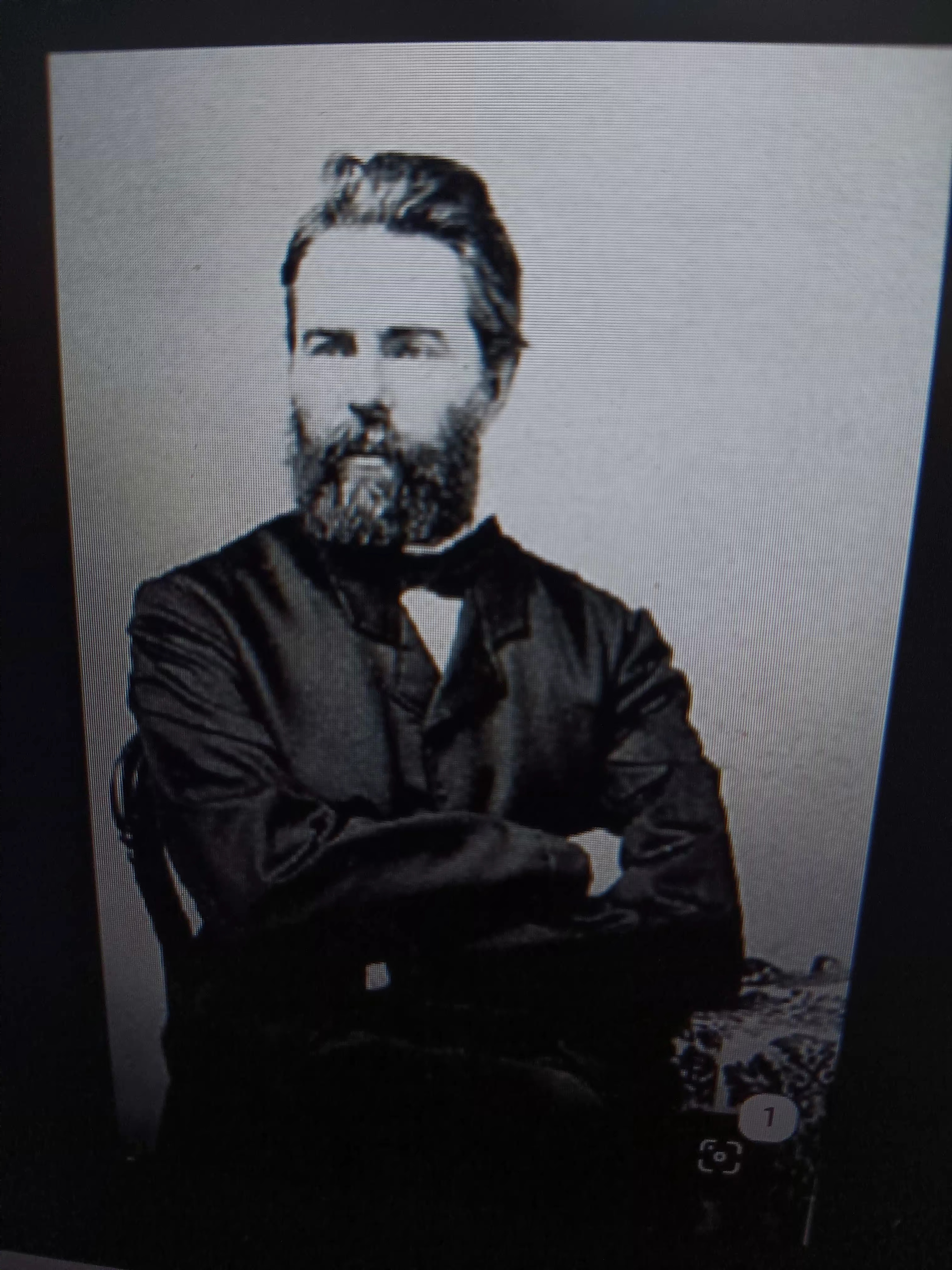


Hello Dale the Drifter
Envy for me is a self hate in which a person feels inferior –which should surprise because that person still “is” and should not consider him/herself as dead, unable to change. Grasping envy and converting it to hate will kill a person. Now, a little person like me has never looked at the perfect sentences written by people like Jackson and Hemingway and thought “well, that’s it, I can never do that.” I am glad I can recognize genius when I see it and I’m dumb enough not to forbid myself from taking a shot at doing the same or better (not that I have, but I might).
War and Peace is around here some place. For me it is not a linear novel, but a collection. I’ve read a good piece of it and I’ve been all over the thing. He’d have a hell of a time getting it published by a publisher today–but that does not detract from its greatness.
Excellent post and song selection!
Leila
LikeLike
Leila
Les Miserables by Hugo is another novel that is not really a “novel” by today’s standards and would never be published today, both because of its form and maybe even more so its radical ideas. Hugo spent 17 years writing it and many more before that thinking about it.
The conventional novel that issues from the conventional publishing world in NYC right now is dead. There are probably exceptions I’m unaware of, but I’d like to see them. Those who are lauded as the conventional novelists now, like Jonathan Franzen and Zadie Smith, are poor, conventional writers, in my opinion (and BORING, their greatest sin). Poor in the sense of good writing and rich in the sense of dollars in their pockets.
But I know of another novelist I can’t wait to read in 2027! Like Hugo and Tolstoy her novels will be serialized…
Dale
LikeLiked by 1 person
Hi Drifter
In this writer’s journey… at first it’s reading and still reading. Then the awkward attempts to lay down the words. Studying the Carvers and Chekhovs, but there’s only one of each, but still…If only.
The story takes hold–something remembered from King or Bradbury. At first, a deep admiration and wonder of the lyrical. Then it changes–maybe I can do this too? Then the sharp edges of envy slices off a piece here and there.
This essay is so apt, and it’s great to know that while you’re silently or openly worshipping and starting to hate the success of your heroes–Your not alone! Even the greats like Count Tolstoy had his own bright bastard to admire–to love and hate. To be or not to be.
It is wonderful how you delve into the psyche of writers and crystallize these thoughts on art.
Great vision of Michangelo in his raving and beautiful quest for art. Like he himself had become a work of art.
Yes at this time of the sleek grammatically correct machine, we need errors, more human errors.
Awesome essay!
Christopher
LikeLiked by 1 person
Hi Christopher
Yes, it’s a mystery why some humans would choose to wall themselves off from all the other members of their species so often only to enter into a deep, trance-like world that is called writing and that “thinks” about humanity in a deeper way than any other art. That duality of ANY good or even decent human writer has always been part of the mystery and the mistakes that come with it are a huge part of it. After a certain point, too, the great writer no longer avoids their own mistakes, they CULTIVATE them and sloppily break the rules ON PURPOSE. But always while under control and for the best of reasons.
Great image of Michelangelo turning himself into a work of art! Kind of like Van Gogh coming back from the fields splattered with paint, when he literally had become a walking abstract expressionist artwork without even meaning to.
Thanks for all your brilliant engagement with my essays that are not written for everyone, but only for those who have a truly deep interest in this. This kind of material doesn’t make the evening news but it keeps the flame alive more than the evening news does.
D
LikeLiked by 1 person
Dale,
Another very interesting essay. I had no idea that Tolstoy hated Shakespeare. Oddly enough, the translator in her notes in the introduction to my penguin (2 volume) copy of War & Peace, quotes William Morris [yes, him again] as saying, after reading War & Peace, that Hamlet should’ve been a Russian, not a Dane. The reason being that both Will and Count Leo were fatalists.
It’s a while since I re-read it, you may have interested me enough to re-read it again. Though this time I would skip the very long-winded Prince Andrei dying scenes. I realise that C19 readers were addicted to drawn-out deathbed scenes, but I’m not.
For me, Tolstoy’s great achievement, the more impressive because he himself had seen a lot of military action in the Caucasas (sp?), was his depiction of the horror and futility of war. Tolstoy made pacifism intellectually respectable. I love the passages where young Nikolai Rostov, previously so eager to win fame and glory, experiences both the terror of near-death, and (to his surprise) the equally terrified behaviour of a frenchman he accidentally captures.
bw
mick
LikeLiked by 1 person
Hi Mick
Excellent breakdown of W & P. It has massive flaws aplenty, and it can be hard to get through straight through from cover to cover for sure because some of it is a little outdated. But amazingly little given how “old” it is.
My favorite thing about the novel is probably Pierre Bezukhov. He has got to be one of the deepest, most realistic, most sympathetic fictional protagonists ever created, bar none. In the top five for fiction.
Thanks!
Dale
LikeLiked by 2 people
Thanks Dale. I’m with you 100% on Pierre, he’s a brilliant complex character than appears to be messing up, but in fact keeps on growing. I really like his spectator attendance at the Battle of Borodino, but I’m also fond of his quirky investigations into Freemasonry (still very much alive and kicking in small Scottish towns).
bw
MIck
LikeLiked by 1 person
Interesting and insightful. “The boundaries of human writing are still being pushed forward…” In my case it’s, evolving more and more toward microfiction. I seldom write pieces more than 400 words anymore. Dale, what did you think about Bob Dylan getting a Nobel Prize for writing?
LikeLiked by 1 person
Hi David
Yes, I think more and more good writers (including me) are moving more and more toward the shorter forms, because of the age we live in. Edgar Allan Poe was ahead of the game on this in very many ways.
At the same time, The Prodigal Son and The Good Samaritan are NOTHING if not microfictions. And these two have got to be two of the top ten most famous stories in the Western World. Maybe even the two most famous stories. Almost everyone has still heard of these, including young ones.
The truth is, I am and always have been highly ambivalent about Dylan getting the Nobel Prize.
Because, the truth is that most of his lyrics are NOT poems. They are SONG LYRICS with poetic aspects.
On the other hand, he has a fair amount of lyrics that can stand alone as poems, without the music.
So in the end, I support him getting the Prize (not without ever-returning ambivalence).
Thank you!
Dale
PS I think the amount of song lyrics he has that really, truly can stand completely alone as poems is twenty or less.
And the Prize is supposed to be for Literature, not music!
LikeLiked by 1 person
Hi, Dale, you expressed my ambivalence about Dylan and the Nobel better than I could myself!
LikeLike
This is my favorite line of yours I’ve read so far: “In this age of machines, the importance of truly creative human writing gains ground every single second that ticks by.”
IWe are gifted with the means to share our own and read the works of others around the globe, even in different languages, through the beauty of the internet. Also, our shit can live on forever. Imagine all the stuff that got lost in the Dark Ages, or in the thousands of years before recorded writing. It wasn’t that there weren’t creative people. It was just that the beauty they created was lost forever.
Beautiful, amazing things are destroyed forever, every day, by jealousy and war, and by people who want to tell other people how to live or not live their lives. Write your words. Share them. Be human.
LikeLike
Thanks again for writing, both your own work and your commentary here on the Springs.
(I attempted to respond a few times earlier in the week and it kept getting bounced back at me.)
LikeLiked by 2 people
Of course, bud. WP is acting a little strange; it always makes me nervous because of the amount of time I’ve put in on here.
LikeLike