(The images by Dale Barrigar)
“The Dream Songs have given me more pleasure than any other poems I have ever read.” – Nick Cave
The American poet John Berryman (1914 – 1972), author of The Dream Songs, once famously said that he wished to be given cancer because it would test him.
In the context of the full quotation, one can tell that he was probably being metaphorical and even ironic.
But he was also not kidding. Because that’s the kind of guy he was.
Berryman, who was a severe, chain-smoking alcoholic with a bad case of Bipolar Disorder (known as Manic Depression while he lived), was a badass.
Too many people in our global society today, as in far, far, far too many millions or even billions of people, are far too soft. They are far too soft, too enormously large, too enormously corpulent, gigantic, obese, overflowing, slow, flaccid, slow-moving, slow-thinking, spreading, steady, useless, entitled people.
If they were all attacked by a single samurai warrior they would be toast.
Not all heavy, or even enormously fat, people are lazy, despite all the stereotyping that goes on. John Belushi, John Candy, Chris Farley, Harold Bloom, Marlon Brando, Elvis Presley, Orson Welles, Madame Blavatsky, Shakespeare’s Falstaff, all were or became enormously fat folks.
And they had energy; they had life; they had spark; they had liveliness; they had chutzpa; they had attitude; they possessed what one needs to be and become (a process that never stops) who one is.
But too many enormously overweight people have let themselves go, are addicted to poison food and sugary beverages, and they don’t move enough, and what’s more, they don’t want to move – ever. Or barely.
John Berryman leapt to his death from a bridge over the Mississippi River in Minnesota at the age of 57 years. He was massively, manically depressed, totally intoxicated, utterly drunk, woefully strung out, completely burned out, and totally done when he did so.
Hart Crane, the American poet (born on the SAME DAY as Hemingway, July 21, 1899, exactly one-hundred-and-twenty-seven years and two days ago from today) leapt from a ship into the Gulf of Mexico at the age of thirty-two and was never heard from again.
Right before he did so, he happily shouted out to a bunch of travelers, “Goodbye everybody!” They all knew who he was and some of them weren’t even surprised.
He too, at the time of his death, was manically depressed, intoxicated, drunk, strung out, burned out, and done. He went out with a bang, not a whimper – like Berryman, Hemingway, Sylvia Plath, Hunter S. Thompson, Vincent Van Gogh, Kurt Cobain, Chris Cornell, Anthony Bourdain, and many other artists, near-artists, and sensitive souls in the world’s history. Having been suicidal myself in the past, I know it’s almost always what should really be called a kind of accident. (And I believe that God catches these people when they fall for the final time, NOT sends them to hell.)
Berryman’s famous magnum opus The Dream Songs helped establish and create what was and is called “confessional poetry,” which is both a good and a bad name for what it tries to describe.
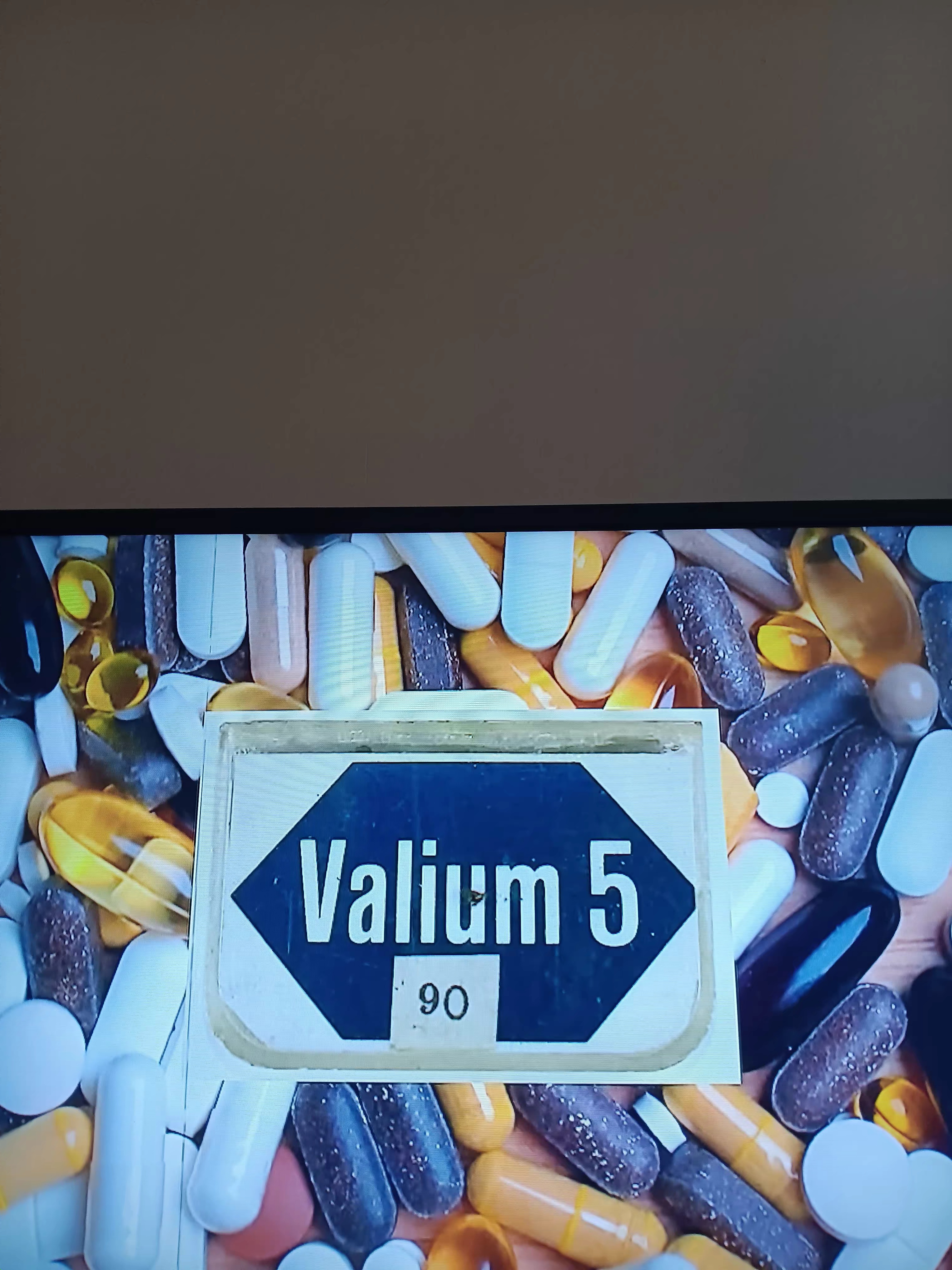
Berryman’s book is oftentimes awfully overwritten. Frequently, one can tell that Berryman was, without doubt, blasted out of his mind when he wrote this stuff, like William Faulkner when William Faulkner wrote much of his (later) stuff. Gabriel Garcia Marquez once pointed out (from personal experience) that it was really good to write while you were drinking because it freed the mind and inspired the writer – but only up to a certain point. Once a person is too blasted on anything (whether it be benzos, weed, booze, cocaine, all of the above, or whatever), the writing is sure to suffer, and sometimes it will take a dive straight into the toilet, depending on how blasted the writer is.
Sometimes, when Berryman wrote, he was far too blasted, on booze and pills; and it’s obvious.
But the highly flawed Dream Songs is still a landmark in twentieth century American poetry. It’s one of those often-unreadable books that everyone should have on a shelf. See Dream Song #107 for a wonderful poem about a drunk writer’s encounter with the wonderful animal called the raccoon, which deeply characterizes not just the raccoons but the writer.
And Berryman (though he could very, very often be seen just lying around, at least half the time) was not a lazy, soft, snarky, sarcastic, useless, entitled person.
He was a badass!
Crucial End NOTE: The term “badass,” like the word “cool,” both originated in their current form/s within the African American jazz culture of the 1940s. Those folks were badass/es; and they were totally cool.
John Berryman, like Hart Crane before him, was hugely influenced by jazz and blues. Berryman’s book The Dream Songs could not, and would not, have been written without his love of jazz and blues, which inspired the form/s, the spirit/s, and the meaning/s of his poems, as he himself so often admitted and said, and preached and talked about.
Dale Barrigar


Dale
We (mostly in the West) are a society that looks like the human polyps in Wall-ee (strange it was so popular with the people it was aimed at).
Suicide is popular in my family. Both grandmothers and my father pulled the trick, and there were other events. Sometimes it feels like it is always night and Death is always there with you, like the Seventh Seal.
Like drugs I don’t endorse it (for most anyway, the polyps), but we shouldn’t fear it. For some it is the logical conclusion. The tragedies are the young people who are goaded into it by social media. Actually, that is murder.
Berryman sounds as though he was tightly wound and leapt at the end of his spin. I think Bourdain is another person forced into the noose by his odious ex-lover. Just the act of marrying Courtney Love proves Cobain’s suicidal nature. And then you have Belushi (though not suicidal) who gorged on life until the inevitable detonation.
Excellent stuff
Leila
LikeLike
Leila
I will never, ever be able to tell you just how much I appreciate your complex intelligence; your deep understanding of irony; and the fact that you NEVER, ever write in long, windy strings of pompous, boring cliches.
There are way too many moralistic bores in this society who enjoy hearing themselves sound off way too much. And moralistic does not equal moral.
And though they think they know what irony is, the deeper forms of literary irony actually fly right over his head every single time.
Dale
LikeLiked by 1 person
Dale, you are right: some people are natural born badasses. In opposition to them, stand the “…obese, overflowing, slow…slow-thinking, useless…people?” A harsh indictment. The badasses, presumably, are successful in at least one thing they attempt: poetry, songwriting, more often than not some creative endeavor. I think this view is short-sighted, and here’s why.
Despite what Jefferson wrote and MLK believed, all (men) are not created equal. For every accomplished academic (like you) there are 10,000 who don’t achieve academically, not because they won’t crack a book, but because they weren’t endowed with the requisite gray matter. An analogy can be drawn with athletics: for every marathoner there are many thousands who can’t run a mile. This owes not to “obesity or laziness or a sense of entitlement,” but to the fact that not everyone is born with athleticism.
Opportunity also does not exist equally for everyone. Some are born into poverty or neglect or abuse and, not being one of the <1%, can’t summon the reserves to achieve. Because the reserves are not there. Many (academics) have a high IQ, but for society to achieve an average intelligent quotient, a sizeable number must be intellectually lacking. They’re not all lazy–although some are–they just ain’t got it upstairs. Granted, there are those with a sense of entitlement, who would rather cavil that put forth effort–these I call the tight-asses.
Achievers are badasses, but not all of them. Would you call Donald Trump a badass? I wouldn’t. As former TX. Gov. Ann Richards said about Pres. George H.W. Bush, “…he was born on third base and thought he hit a triple.” What does NOT make you a badass is screwing your fellow man, but you never said it did. What does NOT make you a badass is unregulated appetites leading to soul-crushing addiction. I don’t think we should romanticize addiction. Nor should we consider it a prelude to achievement, deep thought or talent. It is what it is: a chemical imbalance. For every genius addict there are a thousand mainstream users.
Nor should we rationalize suicide as a natural conclusion to a hard life. For every misspent piece of humanity who jumps off a bridge or runs in front of a moving train or terminally ODs on fentanyl–like my brother did 9 months ago–there are many more in whose hearts he or she leaves a hole. What IS a badass? A single mother who works three jobs to feed her family. An impoverished man who volunteers at an animal rescue center. Parents who love their children even when the kids don’t deserve it. There are so many badasses, Dale. Precious few of them win even a thanks, much less critical acclaim.
LikeLike
An excellent essay and mini bio. You have a real talent for these, Dale. I don’t think I’ve ever read Berryman, unless in an anthology years ago, so I enjoyed learning more about him. Having said that, I prefer these days to pass on getting inside the work and minds of suicidal types. There’s plenty of darkness without adding to it.
LikeLike
Hi David
I appreciate your position, and your graceful, non-trolling, non-moralistic way of stating it. Having said that, I’m not sure there’s any more darkness in the world now than there was during World War 1, the Great Depression, World War 2, or the ’60s, when black protestors were being fire-hosed in the streets and lynched in Mississippi and other places by the white majority. And in Illinois, we had some of the worst racial violence anywhere in the country, especially in Chicago.
For me, staying away from people who committed suicide would involve staying away from Sylvia Plath, Virginia Woolf, Ernest Hemingway, Hunter S. Thompson, Vincent Van Gogh, Kurt Cobain, Chris Cornell, and far too many other wonderful artists to mention here. The ancient Romans and the Japanese believe/d suicide was sometimes a matter of honor, not a failing; I’m not saying they were correct in that belief by any means, but it does add extra layers of complexity to the situation.
The artists I listed above were not always dark and depressed, gloom-and-doom sorts of people. On the contrary, for huge portions of their lives they were some of the most life-loving, joyful, charismatic people who’ve ever walked the planet. They were often troubled, but they were often happy too – often “too” happy, even.
So, for me, when dealing with artists and writers, which is a major focus of this site, the topic of suicide is unavoidable. Not that it should be hammered on all the time; but I also don’t think it should always be swept under the carpet. I think opening up the discussion can only be a good thing, and I appreciate your good-faith efforts to contribute to that discussion.
Another reason I wrote this essay was to try and explain WHY artists and writers sometimes commit suicide, thereby clearing their names, but NOT offering them as examples of the right way to die.
Dale
LikeLiked by 1 person
To quote myself:
“Having been suicidal myself in the past, I know it’s almost always what should really be called a kind of accident.”
I think honest, authentic explorations (and admissions) of this sort, especially on a site which is often about writers and artists, are moral.
I can also say that having been through the fire now, I doubt very highly that suicide will be the mode of my death.
DB
LikeLiked by 1 person
Hi DWB
I hear what you are saying about these corpulent types. I felt a chuckle rising, reading your description of these gluttonous softies. Who would be right at home in the mythic vomitorium. One Samurai wiping them out–without a doubt!
I remember the ominous Sydney Greenstreet in “The Maltese Falcon,” and on the musical side, the all encompassing greatness of Mama Cass. Man she had the moves in her white boots.
I used to think suicide was a ticket to the furnace, but I’ve never read it in the Bible. It seems more of a Catholic sin.
This really flowed, and had powerful almost scary moments–envisioning the suicides.
CJA
LikeLike
Thank you CJA!
SO glad you understand the (well-earned) satirical and ironic nature of my descriptions. And, I knew you would “get it” because you are such an excellent, wide-awake, and aware reader.
Also glad you understand that the descriptions of suicide here are meant to be harrowing on a certain level, and maybe even religious in another way. I don’t feel like God is a person (or a being) who would send someone to hell permanently. Like Swedenborg, I believe some people probably choose hell through their own love of evil; or something like that. And then once they get there, they can wallow in evil forever just like they did on Planet Earth.
“The Maltese Falcon” is such a great film! I must’ve seen that thing at least twenty times.
It’s strange how America’s greatest director, greatest actor, greatest singer, and greatest literary critic all became enormously corpulent (Welles, Brando, Presley, Bloom). They were, all of them, Falstaffian figures.
And then there’s Pavarotti. He sang with Lou Reed a few times and worked as an elementary school teacher at one point!
God bless!
DB
LikeLike
….the photographs that go with this text are also meant to be ironic in a literary/artistic sort of way….(See “A Modest Proposal” by Swift….)
LikeLike