Saragun Verse: Ode to Foul Waters

i

The Spring is the thing in Saragun

It creeps up from the nether-nether land

Located below the meanest sin

Where you can fry Peter without a pan

ii

It smells of charnel houses and sulfurized souls

Mouldy shoes, dollar store cologne

Lovers lies and quitters’ scorn

And the still rooms of the should ne’er been born

iii

And yet it is the best of devices

A sucking abyss for idiot crisis

And it leaves our air cleanly grown

Fresh to the lung not previously blown

iv

Yes the Spring is the thing in Saragun

It takes out the trash and dung

It’s a happy exit for the aggressively putrid

We wave bye bye to anti-Cupid

Saragun Verse: Moonfog Returns

i

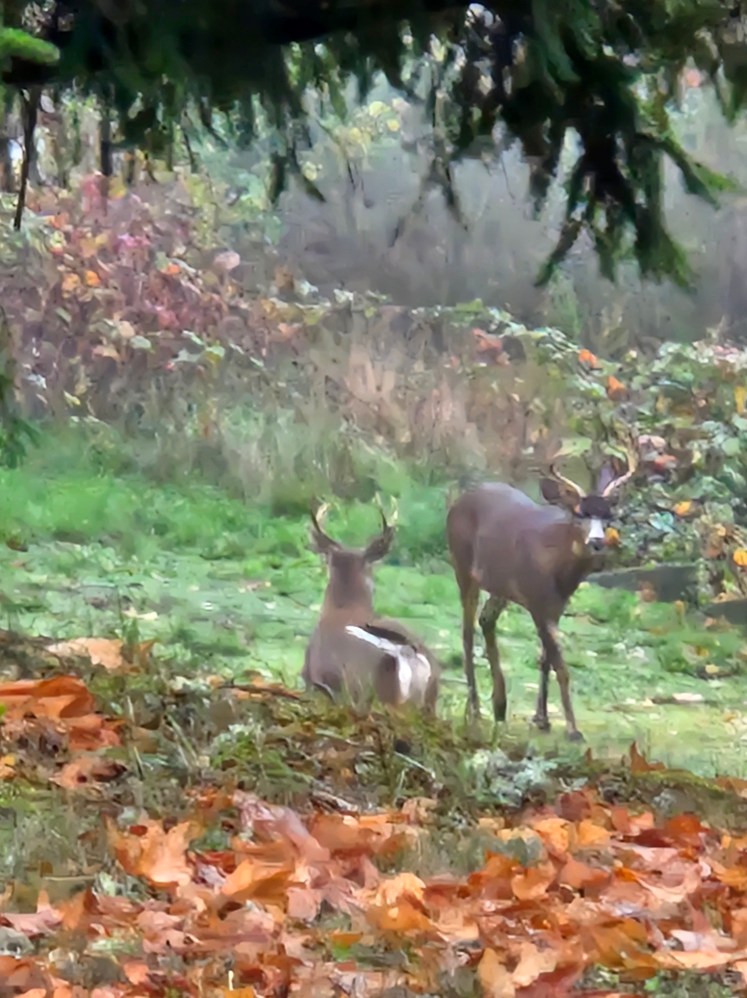
Moonfog Madrone nods in the lush field

In vegetable dreams seldom revealed

Little goes against Moonfog’s serenity

Save humankind the greedy enemy

ii

Little colored flags and a for sale sign

Once entered the doze of Moonfog’s calm mind

He cast an enchantment into below

Where the little fey gods flicker and glow

iii

“Bring forth a shake to unkind human steps

Those that never feel the earth is kept

By Forces more elemental than gold

Little gods I say do as you are told!”

iv

The flags and for sale sign went away

For when humans touched the field it swayed

Some said nature, others, the will of God

Moonfog cared not, for he was on the nod

Leonard Cohen on the Phone by Dale Williams Barrigar

(Image of Berwyn, Illinois, U.S.A. provided by DWB)

“Show me the place where the word became a man.”

– Leonard Cohen, “Show Me the Place”

Poetry can create

and does create

urban

affection, the tiny,

brief

reaching

out

to one’s fellow

humans

that us city

folks (the vast

majority

of the planet

now) need to

indulge in so we

can remain

connected

to one another,

our fellow

humanity,

in a real way,

however strange or

however much

a stranger. Whenever

people compliment

one of my beautiful

animals (Siberian Huskies

or pit bulls), I take it

personally

and return

the favor.

Walking across

the parking lot,

I resolved

that I

would continue

to do so. And I turned

the Leonard Cohen

song way up

on my phone

and placed it

near my ear

one more

time

for now.

Dr. Dale Williams Barrigar is a poet whose own poetry transformed his own life: suddenly, and then gradually. It’s good enough for him.

Porcupine Spirit by Dale Williams Barrigar

(Image of DWB provided by DWB)

Porcupine Spirit

For Montmorency County, Michigan,

USA

In a cedar swamp

one time, I saw

a gigantic

porcupine

standing up

on his hind legs

like a miniature

human. He was three

feet tall, and looked

like something out of

Star Wars with his incredible,

innumerable

quills

sticking out every which

way and his arms dangling

in front of him as he

stood there, his small face

unafraid of me and his whole

self refusing to move

off the path

which he

was blocking.

And indeed

he continued

to block the path

and watch me walk

away after I

gingerly

stepped

around him.

The forests up here

allow for many

moments like these –

vast, indigenous,

Germanic, huge,

mysterious, with little

to no

human habitations

for gigantic wild

stretches and nothing but

dirt roads. If you want

to be independent

on foot and wander

in a pine wilderness

like Johnny Appleseed

with a wolf,

you can choose

any direction

to do that

here

in the middle

of a place

that makes you

free.

Dr. Dale Williams Barrigar is a poet whose own poetry transformed his own life: suddenly, and then gradually. It’s good enough for him.

For the First Time by Dale Williams Barrigar

(image provided by DWB)

Through it all,

and during it all,

the vast collection

of poetry

he’d created

in the last

ten years

had turned into

a monster

like Grendel

that was now devouring

my life. William Carlos

Williams said:

since the imagination is

nothing, nothing

comes

of it. This lesson

was weighing

heavily. But Jack

Spicer

also said: the poet gets

messages

for her or his life right

from the act

of writing poetry. This

makes poetry

worth doing daily

in its own right,

regardless

of any outward

consequences, or

non-consequences,

that can be

immediately seen. I remembered

I was a person born

with a humble sense

of mystic vision

(since day one). Since day

one

I’d felt

the correspondences

in the world

and had

a certain sense that we

are all here

for a reason, or for

many reasons

and meanings, which we

can feel (sometimes), but not

clearly

see

or say (most of the time).

An ambiguous

mystical

seeing, since

the dawning

of consciousness:

the first memory:

opening the eyes

outside of her body

for the first time.

Dr. Dale Williams Barrigar is a poet whose own poetry transformed his own life: suddenly, and then gradually. It’s good enough for him.

A Life of Drama by Dale Barrigar Williams

A Life of Drama

His book

had become

its own living entity

unto itself. Every time

he thought it was

finished, and these times

were many, something else

was sure to change

again within a week

or so.

Among many other

gifts,

this book

had delivered

him

a life of drama.

This life

we live

is filled with

involuntary immediacy,

as Lou Salome

pointed out.

Now, with this book

in his life, every unexpected

arrival was a bigger

shock. Each departure

had a greater

reverberation. Words

between people

lasted longer

inside the mind.

Tiny details

took on looming,

symbolic

significance.

Every squirrel

he passed as he was walking

his pit bulls, then later his

Siberian Huskies, along the sidewalk;

every song playing

in the grocery store or from

a passing car;

every cloud;

every wind that blew

or door that slammed

shut;

every woman

laughing

down the street

and every man turning

the corner so you’ll never

see him again; was loaded with

spiritual significance.

The unseen

correspondences

that make up the real

layers and levels of

existence

had become

both

more meaningful, and

less important.

Everything

was important

beyond belief; and

nothing was, because

everything changes

and gets redeemed.

The religion of poetry, and he

suddenly

realized

it was a religion

that had become his,

left nothing

and everything

to chance.

Dr. Dale Williams Barrigar is a poet whose own poetry transformed his own life: suddenly, and then gradually. It’s good enough for him.

Elephant by Dale Williams Barrigar

(Image provided by DWB)

“A poet is a time mechanic.” – Jack Spicer

The poem sat

in the corner

staring at

his eyes

and heart

with the eyes

of a cat

and the body

of a lone

wolf.

Then it changed,

the poem, into

a dolphin,

trout,

gorilla,

shark,

monkey,

wild boar.

A horse,

then a camel.

A hawk,

peacock,

osprey,

owl,

sparrow,

eagle,

crow,

dove,

pigeon,

thrush,

another nightingale,

and now

an elephant.

It is undoubtedly the

(invisible)

elephant within

the room.

I can neither leave it

there

alone

nor take it with me;

the door

isn’t big enough.

Yet, I’m

in charge

of this elephant.

However, nobody

is really in charge

of this unseen

animal,

who is, truly, a creature

never really seen.

Its intelligence

and will-power

are incredible,

like a real

elephant.

But it remains

invisible, like my blue

butterfly, the one that

travels with me

everywhere,

hovering over

my shoulder.

And so

I toil, struggle, wrestle,

labor, study, save, caress,

create, rest, and renew,

daily. Daily life is

a struggle with It,

capital I, but I

struggling with the power

and the breath

in this way

am truly

my own reward,

every day and

every way.

William Carlos Williams

and Jack Spicer, the great

Jack Spicer,

were right.

A poet

is a mechanic

of time.

Dr. Dale Williams Barrigar is a poet whose own poetry transformed his own life: suddenly, and then gradually. It’s good enough for him.

Deliberately: Dale Williams Barrigar

(Note: through Saturday, DWB will entertain us with his Christina Poems. I think you will find them as wonderful as I and The Moving Hoof do-Leila)

(Image provided by DWB)

Deliberately

One thing I can say for sure about the following poem below, everything in it is on purpose, including the line lengths and the capital letters. I lived with the character in this poem, named Christina, who appeared to me in a daydream, for a long time until one day in a field by a river in the wilds of northern Michigan most of the lines suddenly occurred to me.

The year was 2014 and I didn’t even own a cell phone yet – on purpose. My paper and pens were all back in the car, a couple of miles away somewhere down the trail.

So I walked back down the trail humming these lines in my head so they wouldn’t disappear, or rather the lines were as if humming themselves in my head, and they stayed there, they didn’t go away, they didn’t vanish into thin air by the time I’d made it to the car – that was how I knew this poem deserved to get written down.

The list of poets who influenced this poem is long, but a few of the key names include Wallace Stevens, William Carlos Williams, T.S. Eliot, Langston Hughes, Robert Frost, Jim Harrison, and Charles Bukowski. I’ll stop there for now because 7 is a magic number. There are four more poems about Christina.

And I would like to say to her here: “Christina. I still see you in my dreams.”

Road Warrior Christina

“I’m a road warrior for the Lords of Karma.”

– Hunter S. Thompson

“My life is like a broken bowl.”

– Christina Rossetti

Christina, at nineteen

In 1991, A.D.,

Was a lone,

Young-hearted

Poet

Who didn’t know

It,

But her fast, moving

Feet showed it, also her

Wild, red-brown,

Messy-long, cut-by-her-ex-boyfriend

Hair, not her boyfriend exactly but her

Boy

Friend, one of

The few.

And now she was

Traveling

Solo,

Traveling far, in her

Battered little car,

Dusty

Sandals

On her feet,

Cut-off jeans shorts,

Baggy T-shirts, sometimes

Black lipstick on,

Red polish on

Her toenails, and her

Heart, and her

Art, they were

Partially

Guided by

Geronimo’s kind

Native star in her

Driving blood

Commemorative:

Her hair, her

Heart, her

Art.

Geronimo, medicine man

Of the Christ

Without end, she wrote,

While driving

On the highway,

On the back

Of an envelope

With a red,

Red pen.

(To be continued…)

Dale Williams Barrigar is an American wanderer who sometimes calls himself The Drifter.

The Character Here by Dale Barrigar Williams

(Druid Girl Image, provided by DWB)

The Character Here

The main character in the following lyric cry goes barefoot most of the time, wears animal skins when he wears anything, carries a spear, wears an amulet around his neck that protects from evil spirits which he knows often, but not always, come from other people, and has never shaved, although he has cut off his beard and hair when they get too long so they don’t get in his way; he also takes magic mushrooms, walks for days on a regular basis, hangs around the fire a lot, also spends a lot of time alone, sees visions, makes cave paintings he never looks at again, or sometimes returns to as if to an old friend for days on end; and in this poem, is inventing, or elaborating, human language, while also simultaneously developing the gift of human mercy which Jesus himself, and his mother Mary, would bring to perfection many thousands of years into the future from where this character is perching in this poem – right now.

Alone at Blue Rocks on the Shoreline

Prehistoric Man/kind perches on the cusp of a decision, and speaks.

The rocks here at shoreline are blue.

Blue like the water and sky.

Blue like the blue bird and the big ice.

And they rise half as high as the ice, as the big ice.

The rocks here under this sunset tree are red.

Red like her hair, and the sacrificial hare in the sun, in the trap, twitching.

(LET IT GO.)

Your costume only becomes you

and your uniform once you

wholly own it somehow

after long tries

and once you wholly own it you’ll

uniformly know and your uniform

costume will simply become a way

of knowing and a way of knowing more

about what you already know you know

but aren’t always so sure about, in this land

of the wooly mammoth having you for breakfast

on his horns

and the saber-toothed tiger around

every

bushy

turn.

So the hare, let it go, LET IT GO.

The hare released.

Look at him go!

He flies because I

have chosen

not to sacrifice.

Dr. Dale Williams Barrigar is an impoverished poet-scholar from the Midwestern USA who learned much of what he knows about primordial humankind by reading and pondering the works of Sigmund Freud, Carl Jung, William Butler Yeats, William Wordsworth, William Blake and William Shakespeare, as well as lots of intuition, imagination, and experience thrown into the balance. Experience alone is never enough, and neither is reading; they have to be combined.

Transformed by Dale Williams Barrigar

(Leopold Bloom at U., original drawing by DWB)

Transformed

Moments of transformation have been the stuff of literature ever since there was literature, and even before there was what we call literature, only the raw materials of literature (language, experience, and imagination) being shared around the campfire, and probably, at a deep, internal, and shared level, even before there were campfires.

This small offering with three titles (below) is my contribution to the language and literature of transformation, not that I haven’t tried it before and won’t try it again, too.

But here I think I managed to capture it pretty good.

I don’t know where the Muse comes from for any of us. But I do know that muses do exist, with both capital and small M’s; and I do know too that poetry itself is the original art, the biggest art, the most common art, the rarest art, the simplest art, the deepest art, the widest-ranging art, the hardest art, the easiest art, the most neglected art, the longest-lasting art, the poorest-paying art, the purest art (in its purest forms), and the most relatable art, for everyone, of all.

Everyone’s last words are poetry. So are their first ones. Harold Bloom rightly called Jesus the poetry of America. Miguel de Cervantes used to stalk through the streets of whatever city he lived in at the time, searching for words, looking for poetry.

In the last few decades of his life, Pablo Picasso started pumping out a LOT of poetry, and went so far as to go around telling everyone he knew that he wasn’t really a painter, he was a poet, and that thousands of years from now, no one would even remember his paintings and drawings – but they would remember his poetry.

I have absolutely no idea whether that is true or not.

All I know is that Pablo was a genius on the level of Einstein, or probably higher – and he said it.

Everyone else can turn into a machine if they want to.

I’m gonna remain human.

Signed,

The Drifter

Poetry The Teacher, Or:

New Knowledge, Or:

The Invisible Blue Butterfly Forever

I was walking

around in their house

trying to clean

my pipe

with a broken coat hanger

when it happened

and I literally

dropped my pipe and

the coat hanger and

stopped in my tracks, yes,

as if I’d seen

a ghost. Next, I felt

nailed to the spot, as if

my feet had been

nailed into the floor

and my hands

had been

nailed into the air

but almost without

physical pain, I was

looking, staring into

the distance with

wild and rapt

eyes. I was, as so

often lately, alone,

but I was also not

alone as the hosts, the

ghosts of all the poets

who’d ever come before

me were humming

through my blood

and before my eyes –

only for

an instant.

When I say

all the poets,” I also

intend the oral poets

who’d written in air,

for our ears, hearts,

and souls,

for thousands

and thousands

or more

years before

“literacy” began –

the anonymous ones

who weren’t anonymous

at the time, not to

themselves

anyway

and what else

matters

in the end

or even the

beginning or

the middle,

really,

truly.

A life-changing

instant; a one-of-a-kind

moment. I had no

idea

in this spot of time

where that

had come from;

way too sudden.

One instant this,

the next instant

something else

entirely, forever, no matter

what; like a mermaid’s snap

of her magic fingers or a giant

monster of beauty

shaking a rag doll

in sadness and gladness.

Instantaneously

turning

from caterpillar into blue,

if invisible,

butterfly. Without even

knowing

you’d been

a caterpillar in

the first place!

The invisible blue

butterfly now, no matter how

impossible

it sounded.

I took up

the pen

which had as if

magically appeared there

for me

and the paper

and slowly wrote down

the first

Word.

The Drifter ((otherwise known as Dale Williams Barrigar)) drifts from here to there while always maintaining a center that is always centered upon The Arts, with the oldest of Arts at the center – usually.