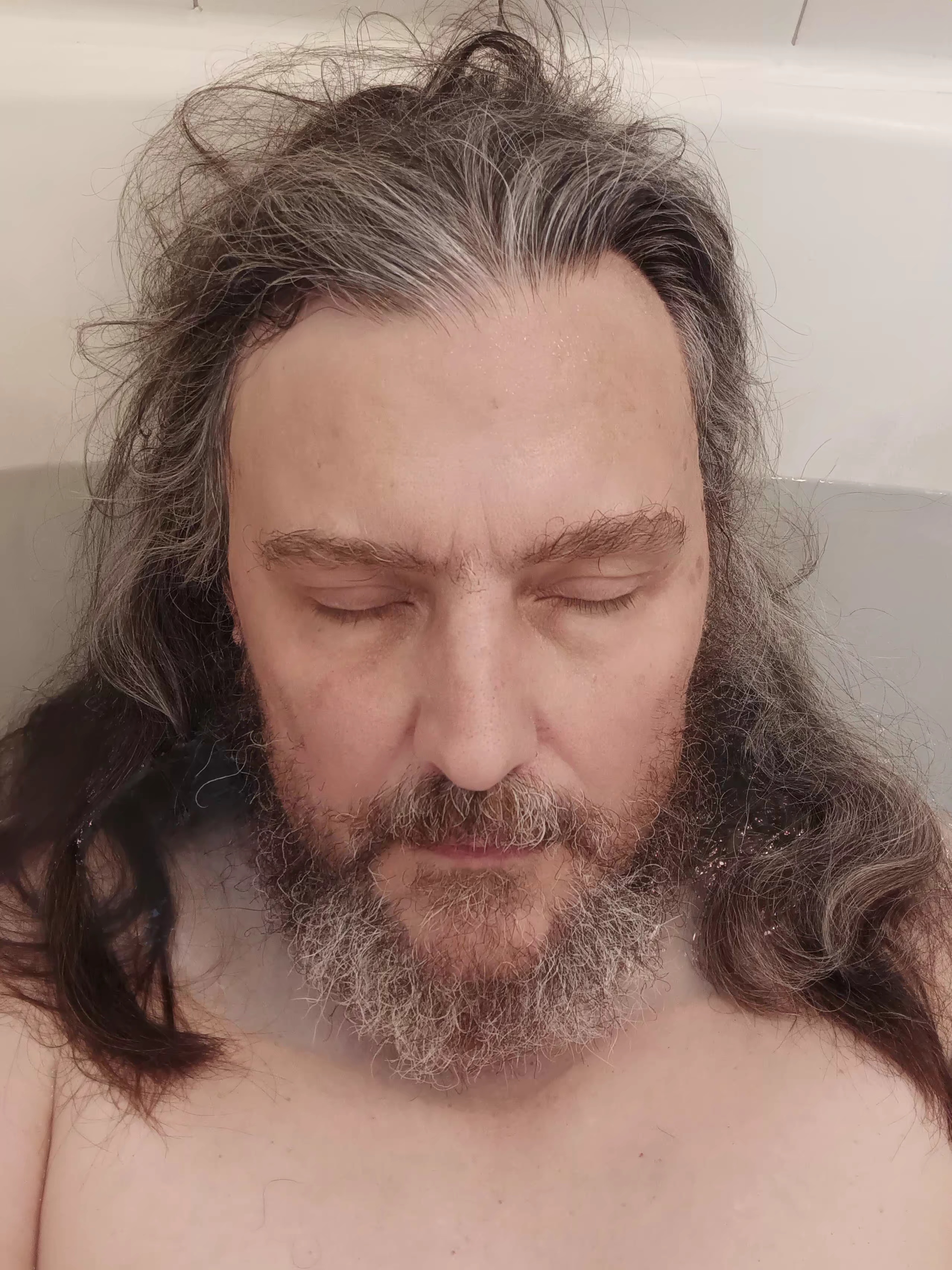
(Images by Dale Barrigar)
The American poet Ted Berrigan (1934 – 1983) said (wrote), “I don’t feel / a necessity for being a mature person in this world. I mean / all the grown-ups in this world, they’re just playing house, all / poets know that.”
Among other questions this beautifully plain-spoken quotation raises, it raises the question of what, or who, a (real) poet is.
A guy who (sometimes) calls himself “The Drifter” (because he synthesized Samuel Johnson’s “The Rambler” and “The Idler”) came up with an answer for this.
He broke it down into three simple parts (or things) – or requirements.
One: a modern poet cannot be, cannot be, CANNOT BE, a cheerleader for The System, not matter what system you mean.
The modern poet MUST BE, must be, must be, an outsider; in one form or another.
Wallace Stevens was a married insurance executive with a kid (and a house) and he still managed to live as one of the most profound lone wolves North America has ever seen. And when it comes to lone wolves, America is second to none.
Secondly, the poet must have an original vision. Many poets have been literally blind, starting with the very first known and named modern poet (in the West) of all, Homer.
Their inner visions were so intense and so original that they lost their outer sight.
That is what the Homeric myth of outer blindness and inner seeing really means.
Next, the poet must be able to say what they see.
Not to a billion-plus people all at once. Once it gets to that level (or even a million) poetry has turned into propaganda. Donald Trump used to be able to give some wickedly effective “poetry” readings about immigrants being snakes. But these readings were propaganda in the form of (simplistic) poetry; they were not “real” poetry.
The poet must be able to say what they see that no one else sees.
BEING A POET HAS ABSOLUTELY NOTHING TO DO WITH USING FANCY WORDS OR “PRETTY” VOCABULARY (although almost all good poets have a wickedly large vocabulary).
Real poetry is about ELEVATED LANGUAGE and the circumstances that rightfully call for elevated language; and that does not mean elevated language is pretty.
Elevated Language is often harsh; very plainspoken; savagely angry; obscene; heartbreaking; hilarious; haunting.
Elevated Language is always intense, but very-much oftentimes, intensity comes in a whisper.
Much or most of the best poetry is AWKWARD, at least until you get used to it. (Awkward, NOT “pretty.”)
And its intensity is often calm, quiet, whispering, mumbling, clipped, pungent, brief, startling, something on the wind over the waters: memorable.
Marlon Brando mumbling on screen in some of his best roles is kind of like poetry. He can do it so well you don’t even know he’s faking it: maybe because he wasn’t (quite) faking it (he was bringing it up from a real place inside himself).
An outsider with an original vision who can communicate that vision to at least one other person in words because the right words make you think and feel more deeply, privately (not publicly): that’s what a real poet is and what real poetry (and who a real poet) is.
Dale Barrigar
 Saragun Springs
Got to agree with you, Dale. While I’d prefer every poet to be a rebel over-turning the tables in the temple, the plain facts are that there are plenty of very fine poets who are nothing of the kind. Tennyson was a pillar of the Establishment and Eliot’s fussy Anglo-Catholicism kept him politically and socially silent. For every William Morris, there’s a WB Yeats sailing quietly to Byzantium. They come in all shapes and sizes, colours and guises. Some of ’em even start off as rebels (Wordsworth, Auden) and end up regretting their youth as mis-spent. It’s their language that sets ’em apart.
bw
mick
LikeLike
Hi Mick
Yes, as Samuel Taylor Coleridge said when asked what poetry is: “the best words in the best order.”
I do admire Tennyson for remaining pretty much a lone wolf even though he was the national poet (although he definitely wrote some dreadful poetry as the national poet); and I do admire Eliot for including so much Buddhism and Hinduism in his works.
As he said at the very end of “The Wasteland,” “Shantih, Shantih, Shantih,” not “the peace which passeth understanding.” In 1922, almost no one in the Western World knew what the hell he meant.
Thanks, Mick, I always enjoy hearing your thoughts.
Dale
LikeLike
Hi Dale,
I know what you mean when you suggest that a poet is more than a vacuous explosion of flowery language and overdone sentiments. One of my favorite Small Press poets is J.J. Campbell, who has been widely published over the past 30 years. His poetry is brief, stark and absorbing. He can be found in each issue of Synchronized Chaos magazine. He didn’t even pay me for this ad. Take care.
LikeLike
Thanks, Bill.
I always enjoy hearing about poets I haven’t heard of before. (IF they are “real” poets, that is. The market is glutted with academic poets who are experts in flowery, meaningless (not to say pointless) verbiage.)
If he’s a Small Press poet he probably didn’t pay you cuz he happens to be broke at the moment, without even a savings account. I’ll bet his ex-wife has spent decades constantly hurling bombs at him for that.
I’ll check out his work for sure!
Dale
PS
David Henson told me about a great poet named William Wantling (1933 – 1974), from Bloomington, Illinois. He was a heroin addict and a college professor at Illinois State University (at the same time). A great human.
PPS
Not sure I know of any “real” poets who are NOT Small Press poets, at least these days (Robert Frost and Carl Sandburg being long gone.) If I’m wrong and you know of someone, bring me the news!
LikeLike
Dale
After the passing of first togas then Elizabethan collar times, Poets were filed away in the tweed jacket cliches often and early. But they can be anyone. Heavy featured Bukowski barely looked like a human being, but he was completely poet inside (strange case of a person whose features were gentled by age–sort of poetry’s version of Ron Perlman). Many of them look like tax accountants. Brando’s best friend, diminutive Wally Cox, was described as having the heart of an ax murderer. In all phases it is not the cover.
I think that might be on purpose. A natural defense. But when word gets out all the crazy people come a flying. Bukowski had the best stories of crazy women and Chianski wanna-bees, but I would love to read Will’s thoughts about the nuts who hung around the Globe old London who wanted to play Macbeth. I bet that was special.
Sometimes, however, a person looks like what s/he is. You look like a writer. Can’t say why, but you do. And you are a writer. Maybe it is in the eyes, can’t really say.
Leila
LikeLike
LA
Thanks for saying that I look like a writer. That’s one of the biggest compliments I’ve ever received.
But I can say, for sure, and without any doubt whatsoever, not even one iota, that what is seen is also in the eyes of the Seer, or the person who is seeing.
There are many, many, many, many, and many people who think I look like a madman, a derelict, or a ne’er-do-well, not anything so respectable as a writer. I often see these people glaring at me, some even with disgust, as I make my rounds. And I’m not just being paranoid. (I do have an issue with paranoia, but only sometimes.) On the other hand, all the derelicts, ne’er-do-wells and mad-people like me well enough! And there are more of us than “them,” at least around here. There are also lots of people who look at the two Siberians and one pit with disgust or almost-disgust. Although lots more seem to fall in love with them instantly, and even want to run up and pet them and hang out with them, adults included. Humanity is such a mixed bag!
I remember that Bukowski wrote at the end of his life about a picture of himself. He said, “Now I’m almost handsome.” A heartbreaking line to come from a man like him just before the end. The emoji here should have a tear dripping from its eye.
DB
LikeLike
Ha!
You know how people get when we feel out numbered. I cannot imagine anyone having hard thoughts about Boo and Bernie–but Colonel, well I think he likes to stride the nerves of others.
I keep meaning to say it, but always forget. You do not look like someone near sixty. You are like my brother (who is 69), some guys get this permanent look to them that doesn’t change much and doesn’t suggest an age except some vague notion of forty-something.
Leila
LikeLike
Thank you, Leila!
You are much nicer to me than the world-in-general has ever been!
Dale
LikeLiked by 1 person
Rightly or wrongly, I kept thinking of Emily Dickinson as I read this. Her work remains as fresh as ever today. I know spoken word art is “a thing” these days. I’m glad they gave it its own genre because, for me, it’s not poetry.
LikeLike
David
Absolutely. In my (quite limited, admittedly) experience of it, most “spoken word art” is much closer to performance “art” bullshit (probably with a few exceptions I remain blissfully unaware of).
There are also scads and reams of horribly dull (deadly dull) academic poetry readings that go on. I used to have to sit through some of them. Made me want to take a long walk off a short pier, or more likely just run at top speed out of the room where IT was happening. In those situations, everyone declaims their material in a voice they think is profound (but is really saying: nothing). Embarrassing!
Hurray for EMILY D.! She absolutely influenced this little screed of mine, as in, I thought of her while writing it, especially the part about “seems awkward at first” and elevated language for circumstances that justify it.
Dale
LikeLike
Hi DWB
The outsider, inner sight, outer blindness. Out of sight! As the hippies used to say and may still! Anyone who wants to tackle poetry should read this.
I really like how you define elevated language. I chased the purple prose for a time (before I knew what that meant). Mark Twain said, “Don’t use a five-dollar word when a fifty-cent word will do.” Reading has to be the foundation for all good writing.
When I think of elevated language I think of Emily Dickinson, but there are times when I’m also looking up some of her words. Just like you said these people have vast vocabularies.
One of the killers “In Cold Blood,” tried to use some word on Truman Capote and he dismissed him, like Capote knew every word in the English language maybe he did?
When Brando played the Godfather, he did have a sort of mumbling quality that was so very interesting.
Excellent!
CJA
LikeLike