Beyond the Scientific Method by Dr. Dale Williams Barrigar PhD

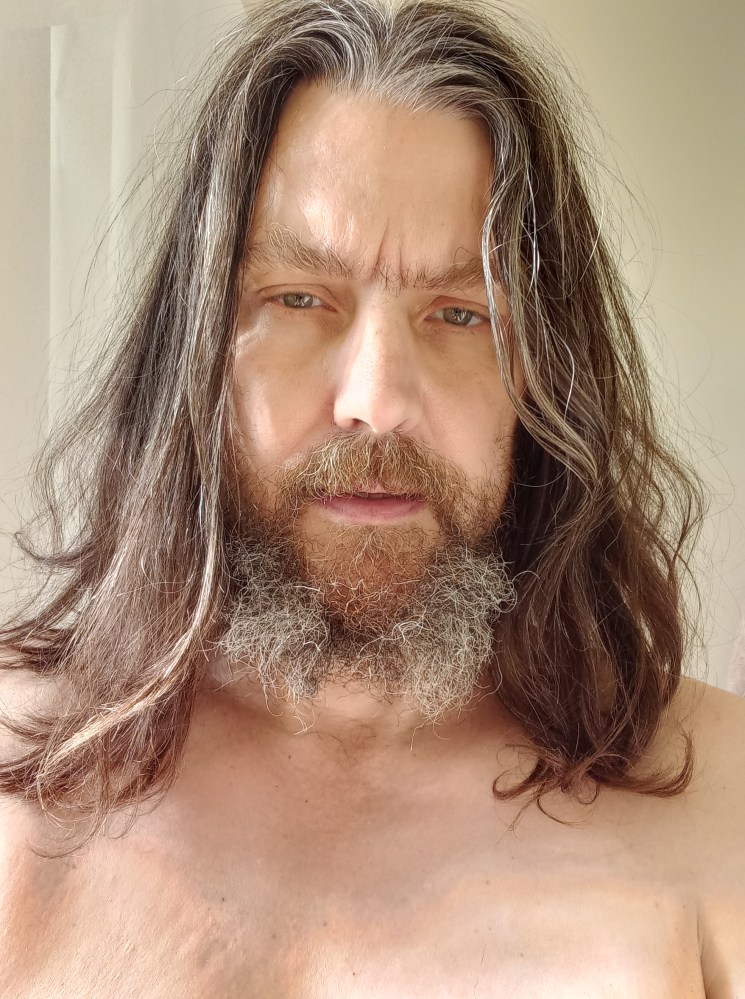
(images provided by DWB)

“God is nowhere. God is now here.” – Philip K. Dick

The Omega Point is a theory conceived of and developed by the French mystical Jesuit and scientist Pierre Teilhard de Chardin meant to explain evolution and the end of time to the human world.

You know you’re in good company when you’re in the middle and roundly attacked by both sides.

In Teilhard de Chardin’s case, “both sides” meant the Western secular scientists over here, and the Catholic church over there.

Those are big enemies to face down.

This particular French mystical Jesuit and scientist (not as rare a creature as it might sound) did it for the love of truth.

May we all be so blessed.

The end of time is a wild concept, to say the least.

It’s when everything stops happening.

Nothing moves. Nothing develops. Anywhere. At all.

Also, nothing ages. Nothing dies.

I will offer, next, a further interpretation of the Omega Point.

I cannot pretend to understand this.

I can only claim to be massively fascinated by it and to believe that it may well have so much truth to it that it is the truth.

Teilhard de Chardin basically predicted the internet at least fifty years before it actually happened when he said that humans were moving toward a higher consciousness with technology, a global web of human consciousness that was a natural part of evolution.

He claimed that this would raise human consciousness to higher levels, and eventually, much higher levels.

That hasn’t happened yet; but it doesn’t mean that it never will.

The Omega Point is the end of all time, and it is what the Universe itself (and all the Universes around ours) are moving toward.

It’s the time and the point when all things merge together and stop moving.

“No time” means no pain.

And every single consciousness that has ever existed – everything that has ever lived – all animals, all plants, all humans, all stars, all celestial bodies, all everything – will become one, while simultaneously maintaining their separate knowledge and separate consciousnesses.

In other words, we will all be together, in a good way.

Suffering will end.

And we will know all of it and everything, even the Ultimate Reason why.

All of the above is what we call, in English, GOD.

According to the theory.

Until then, we can all continue to hum along with the country singer Chris Stapleton when he sings, so sweetly, from his song “Broken Halos,” “Don’t go looking for the reasons / Don’t go asking Jesus why / We’re not meant to know the answers / They belong to the by and by. / They belong to the by and by.”

(“I am the Alpha and the Omega.” – Jesus Christ)

Saragun Springs Presents a Halloween Photo Gallery by Dr. Dale Williams Barrigar and Legion

(Co-Editor note: It is that time of year again, perhaps the best. “Seems odd that we should celebrate the macabre” is one of the dumbest lines I think I have ever heard. “Behold the beyond” is probably closer to the spirit and Spirits of this time of year. That, and the happy fact that Co-Editor DWB will be taking the controls for the rest of this fine month!–LA)

(All images provided by DWB and the unseen)

October Eve in SaragunSprings or Saragun Springs

Let us bid fair September a fond farewell till next year and examine the upcoming month of October. Aside from being the month in which most people finally clean their AC filters and begin wearing tees beneath the Hawaiian shirts that we are loath to eschew due to our hitting the mini candies (available since August) more often than the gym, it is also the time of year in which darkness reigns supreme. At no other time of the rolling annum does darkness cast a wider spectrum. ‘Tis found in, and between, the Kitty Kat costumes worn by chocolate crazed three-year-olds and the brutal doings of Robb Zombie’s Firefly “fambly” (although some of us note little difference between the two mentioned classes). It is always a matter of taste, and whether you get your sugar from an endless binge of Three Musketeers or off constant jugs of hobo muscatel, do remember, constancy is key in October.

The month in the Springs will be the same as it has except on Halloween we will be making a Big Announcement regarding the future of this site, an announcement that will become official on New Years Day, which we hope will not be the same day that Hell is closed due to over capacity.

The word “we” means two things in SaragunSprings. In the human, earth-business sense it refers to the two Co-Editors, Dr Dale Williams Barrigar PhD and, myself, Irene Leila Allison, who has used ph paper in the past but to no memorable result and certainly to no degree worth mentioning beyond this post.

The second meaning of we includes the great many Fictional Characters (FC’s) of in and about the realm, chiefly Renfield, Dame Daisy Kloverleaf and so forth. Funny thing about the FC’s is I do not know if they resulted from insanity (on my part) or if they have come to rescue me from madness. Sadly, since it is neither illegal nor advisable to go mad in the United States, the question is likely to go unanswered long after the data is tallied. We is a flexible concept and we hope to see it expand after Halloween.

(And there now comes to mind a third “we”–the monochrome Dog Pack: Boo, Colonel and Bandit along with their various whispering attendants.)

This month, as before, throughout the summer, will feature guest writers, beginning with two from David Henson who makes his site debut day after tomorrow and on Friday. Then we will be blessed by the continuing wise observations of The Drifter every Sunday. And there are the usual thisses and thats we use to fill the empty spaces. But in months to come, Dale (and/or The Drifter) will be doing these little monthly roundups as much or even more so than I (even though he is learning that right now).

Oh yes, the open invitation to readers to send poetry and such to saragunsprings.com is still open, but after October things will be much tougher for good reasons to be divulged on Halloween (this is what we writerly types call “fanning the flames” of obscure repetition in hopes of starting a rumor, then, maybe, we hope, a frenzy). So if you are seeking an audience of several dozen lookers for no more effort than it takes to give away money on the street, now would be a good time to accept the offer.

As you may have noticed I am toying with calling Saragun Springs SaragunSprings. For some reason that second one has attracted my eye.  No, that’s a lie. You see every time  I type Saragun my keypad changes it to Sargun. I keep resetting it but it always creeps back. Still, let’s just say both are correct and wait and see which one finally gets over.

Ever obscurely yours,

Leila

As If She Really Were There by Dale Williams Barrigar

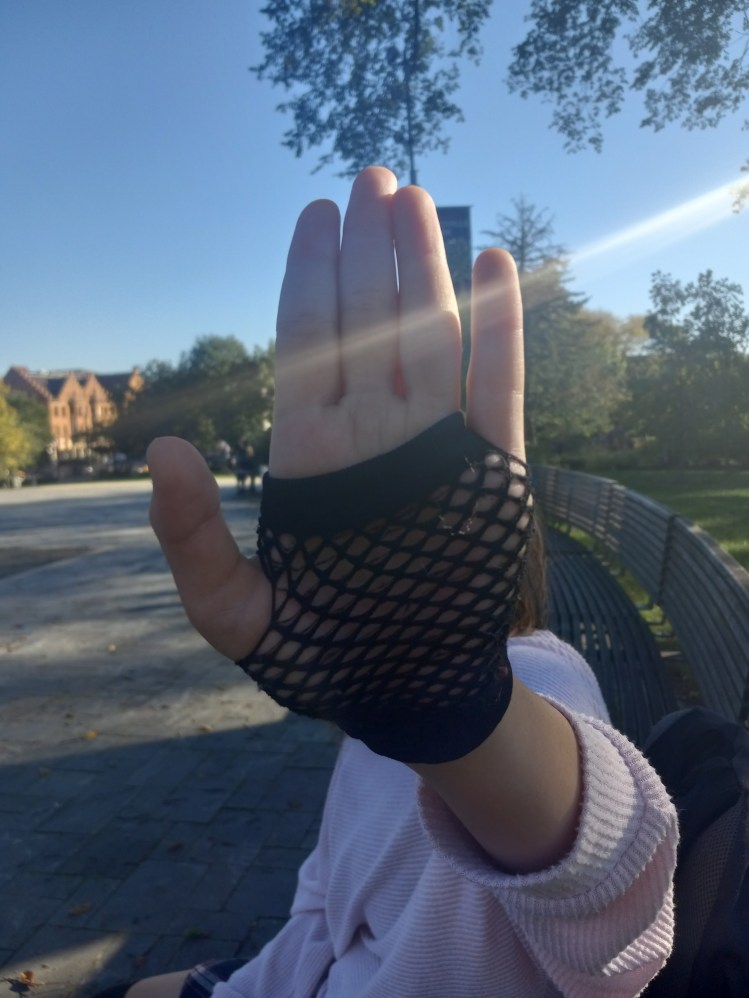
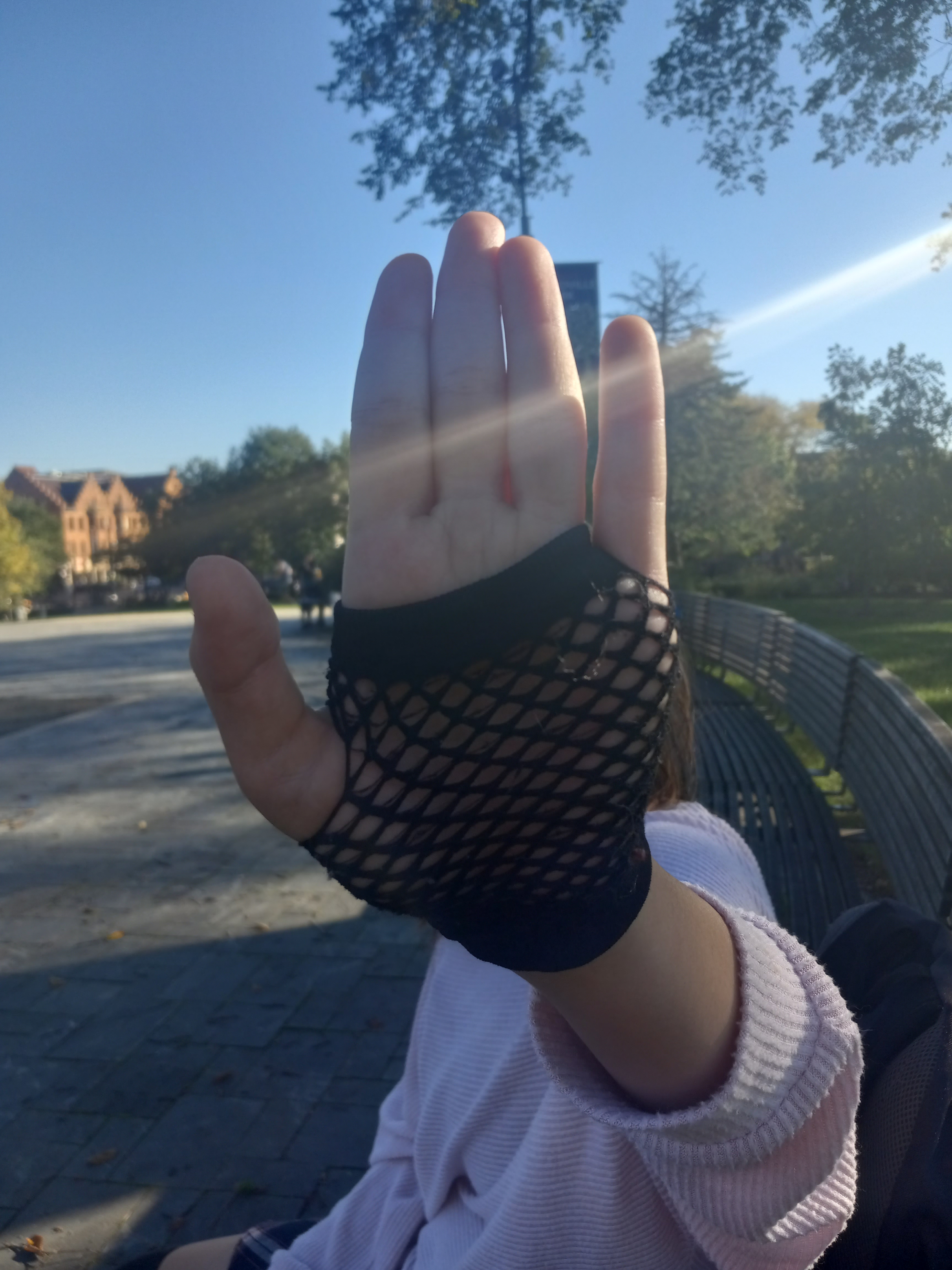
(The image of Happy Hounds provided by DWB and the hand of a Mystery Twin)

(Co-Ed note: The weeks vanish so quickly, but we can fill them with words as they pass as tithing baskets! Return tomorrow for the always fragrant, flagrant, virtuous, violet, hectic, heroic, melancholy, merciful, and more so and more so thoughts of our beloved The Drifter!–LA)

As If She Were Really There

(For the virgin queen, from a dream)

Fingers around the wheel of life,

I roll it as her long-nailed

fingers’ ghosts

handcuff my wrists

gentle and fair.

The True Way, or The Drug List by Dr. Dale Williams Barrigar

(Cool images provided by DWB)

(Co-Ed note–We once again proudly present another high quality and brilliant “fictional essay” by Co-Editor Dr. Dale Williams Barrigar. This is extra special because it makes its world debut, right about…now!–LA)

“Whatever doesn’t kill you makes you stronger.” – Hemingway

DISCLAIMER: The advice in this essay isn’t for everyone.

It’s up to the Reader to decide whether you’re one of those this was meant for, directly, indirectly, or not at all.

Part One.

In private notes that were discovered and released after his death, the great psychologist Carl Jung pointed out that there are two ways of consuming drugs, i.e. (in this case) illegal substances, or alcohol (a hardcore drug if there ever was one).

The first way involves bombing out your mind, becoming numb, killing your spirit, getting wasted, forgetting about life, escaping your responsibilities as a human among humans and other living things, and so forth.

This is the mode that gets all the press in the modern US, even with (or especially with) two revered comedians such as Mr. Cheech and Mr. Chong.

But the second way, much less popular and much less talked about and much less believed in, too, is much different.

And the second way can be called the true way.

The second way is the way of the shaman, the way of the mystical monk or nun, the way of the spiritual seeker.

The second way was and is the way which can be symbolized by seven representative American writers (at their best, only at their best), none of whom died shockingly young from drugs or anything else, except Kerouac (at 47): William S. Burroughs, Allen Ginsberg, Jack Kerouac, Ken Kesey, Charles Bukowski, Hunter S. Thompson, and Bob Dylan (among many other heroes).

The first way involves deadening yourself – putting yourself to sleep.

The second, much less popular way, involves a search for enlightenment, the seeking after an awakening, the belief in greater human possibilities of the imagination, the longing for unity, the knowledge that deliberately changing your consciousness (temporarily) (and being out on the edge) can lead to a change for the better in Consciousness – permanently; when done right (only when done right).

In this formulation, for example, and which I can very much attest to personally, the use of marijuana can make you feel two ways.

One: tuned out, drugged out, apathetic, tired and with the munchies.

Two: Awakened, heightened, more alive, more ambitious, more energized, more open, more adventurous, more bold, more spiritually attuned at every level, hungry for more life and not just mere food.

This essay is about pursuing the use of drugs for the second mode.

It should surprise none of us that in America, Land of the Vulgar, the first, bad way of using weed (and other substances) is the one that gets all the press.

After all, we’re also the ones who proudly elect the worst (or best) snake oil salesman in history to be our supreme leader.

But there is, as Carl Jung pointed out, another way, a way Jung secretly called (knowing it would be released later) “sacred pharmacology.”

A way that, despite its sacredness, or because of it, can very much get you in big trouble or even “ruin your career” (which is one massive reason why Jung never released his research on drug use while he lived; he saw what had happened to Freud and cocaine and had the same rational self-protective instincts of a Galileo, or anyone in their right mind).

Part Two.

In another essay, as a sequel to this one, I will list and briefly discuss the first time I ever tried every drug I’ve ever done and where I was when that happened and who I was with (if I was with anyone), starting with coffee and ending with magic mushrooms, sometimes known as psilocybin, which are being widely tested now by Western science for their medicinal properties. (They can also have properties that feel the very opposite of medicinal, depending on your mood, take it from humble yours truly, and still known today among the youth of America as “a bad trip.”) Warning: discussions of hard drugs like crack cocaine, cocaine, LSD and certain opioids (no needles) will be included in this future essay.

Needles will not be included because I’ve never used needles. I’ve never used needles because all my experiments have been deliberate, and even careful, if it’s possible to use something like LSD or crack cocaine in a careful way (and, at least partly, it is possible, say I).

I won’t talk about alcohol in this list, which is the drug I have the most lifelong experience/s with, by far. (This topic is and will be further covered in greater detail in other essays.)

I also won’t talk about (for the most part) prescription drugs like Depakote and other bipolar medications which have been a big part of my life since 2015, since they aren’t generally what are known as “recreational” drugs (although there can be some serious cross-over here with things like Gabapentin and benzodiazepines).

And the term recreational, for me, is a big part of the problem.

When I use drugs, it is never for recreation at all, just as I never take vacations.

Whenever I travel anywhere, even if it’s just down to the corner again, I think of it as a small journey that’s part of the long journey of life itself – not a vacation.

I’m 58 now (born in 1967, three months before the Summer of Love).

I’ve done so many drugs in my life that I’m sure I’ll be forgetting a few of them, despite the list I’ve made ahead of time by hand before I type it whenever that happens.

This essay doesn’t talk much about ADDICTION, either, which is a separate topic, and one of the possibilities when you play with fire.

But, again, it’s possible to play with fire in a careful way and it’s possible to play with fire in a reckless way that isn’t careful at all.

There is nothing in this world that isn’t dangerous, even traveling down to the corner, even taking a shower, even boiling water for tea (or especially all of the above).

You avoid the danger as much as you can but NEVER to the point where your life is paralyzed (or even well-nigh nonexistent) with fear.

Because we are given life by the Universe (for me it’s God) in order to live life and not living life (in a genuine and authentic way where you actually try, or Don’t Try, as Bukowski said, which amounts to the same thing) is the greatest sin of all.

Sometimes quality is more important than quantity, too.

What good is it if you live to be a hundred and ten and were one of the most boring people to ever walk the Planet, even (or especially) to yourself?

If you already have visionary or artistic tendencies (often but not always the same thing), taking drugs sometimes, in the right way, can enhance your visions, especially in the middle of this sickeningly over-civilized, overly-tame, overly-sheltered, overly-comfortable (for far too many of us) world we’ve created.

Drugs actually aren’t The Way but they can be a ticket to the way just like Dr. Hunter S. Thompson claimed they could be.

He was right about Nixon, he was right about the death of the American Dream, and he’s right about this, too.

Enhanced visions lead to spiritual expansions and augmented consciousnesses (plural) within yourself, and greater imagination, memory, and intelligence, too – not just the munchies.

And the dizziness of having your worldview turned upside down in an instant can be liberating, especially when it happens frequently.

The effect/s are cumulative, for the most part; and it’s a process, a road, a path, a way, not a destination: and getting stuck in a rut is to be avoided whenever you can.

Part Three.

I started attending Wheaton Central High School in Wheaton, Illinois, USA, almost exactly five months after John Belushi, the great comedian and actor, died.

It was Belushi’s high school and it sometimes seemed like his name and even his picture were everywhere in the halls.

And we were lost suburban teenagers of the Ronnie Raygun 1980s who looked to Belushi as a hero not because he was funny or because he died of a drug overdose (with needles) at the Christological age of 33, but because he was a rebellious spirit at his core.

As one of the Blues Brothers, at least half the time he wasn’t funny at all (very much on purpose), but he was never not a rebel.

It was as if we were trying to resurrect the rebel spirit of the 1960s without even knowing we were doing so, and experimentation with drugs and alcohol were a huge part of all that.

Living with a purpose (if undefined so far), driving hard until you were out on the edge (and then hopefully reining yourself in), and making an impression on all the conformist dolts crowding our world (no matter their age or status otherwise) were all the name of the game.

It takes a Houdini-like delicacy and balance, the strength and fortitude of Hercules, the wisdom of Athena, the fearlessness of Achilles and the alertness of Odysseus.

And we learned that if you try hard enough without trying you can turn yourself into none other than a Chosen One.

Hemingway Begins, Hemingway Continues by Dr. Dale Williams Barrigar

(We continue with repeats of material first published by Dr. Williams Barrigar Williams on Literally Stories UK. I told my Co-Editor that he really should do a Book of Boo, who knows where a camera is better than Madonna. Both excellent images provided by DWB–LA)

by Dr. Dale Williams Barrigar

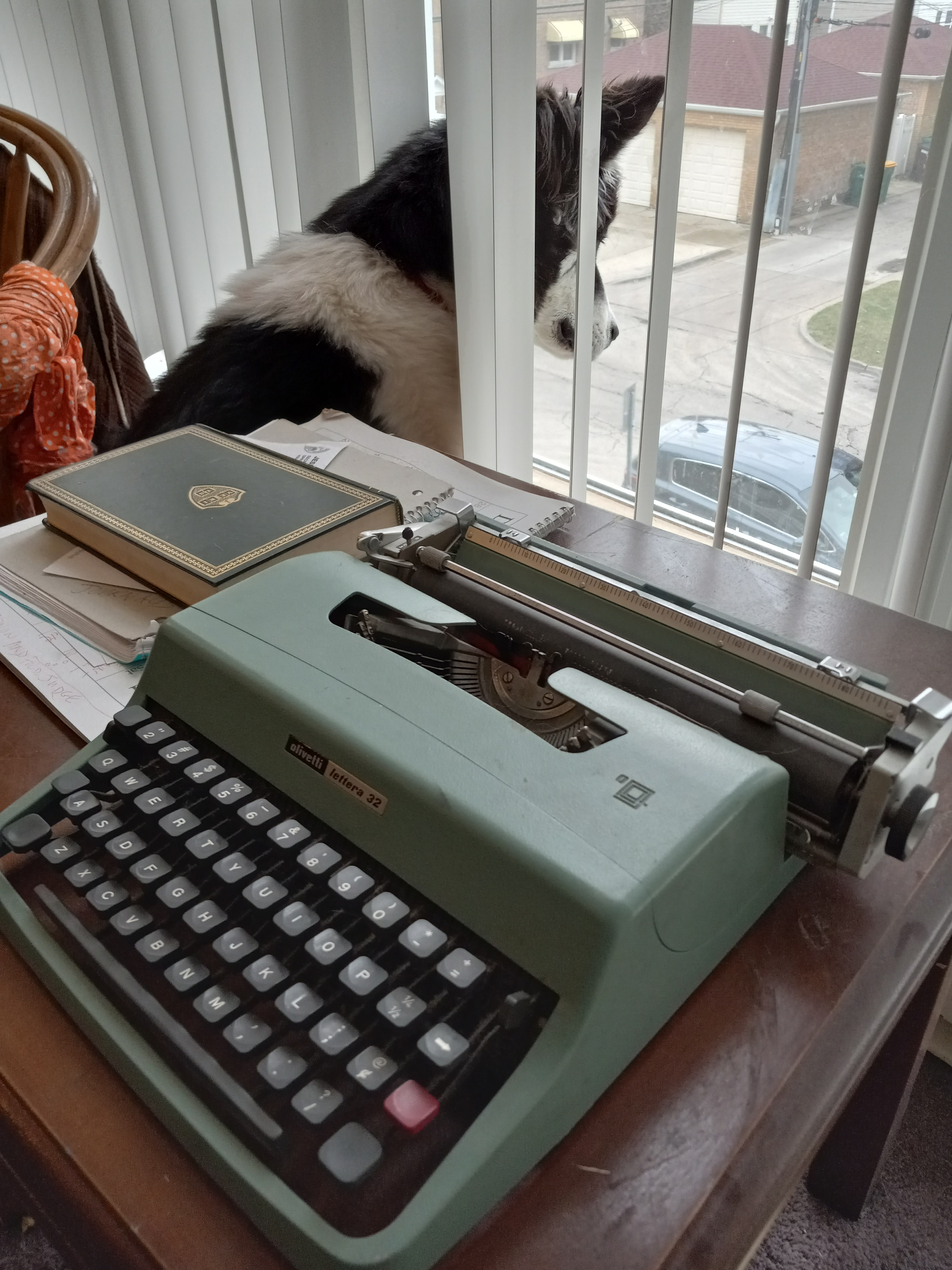
Imagine spending three or four years creating dozens of short stories by hand. No computers, so you do everything with your other tools: pencils, pens, piles of paper: and the typewriter.

For rough drafts, you mostly use pencils. When the pencil gets worn down, you have to sharpen it.

When you write through them all and your entire supply gets worn down, you need to sharpen them all.

Usually you spend your time standing up as you’re writing, although sometimes you write while lying in bed.

And the paper piles up: letter after letter, word after word, phrase after phrase, sentence after sentence, paragraph after paragraph: story after story, as you make them, all by hand.

You get blisters on your fingers and your wrist aches from the effort.

You write for years, and you create much juvenile work, work you know is juvenilia, giving you that truly uneasy, hard-to-appease feeling.

But you also feel yourself getting better. And you begin to create a few things that almost look like masterpieces eventually, and then suddenly. At least when compared to the rest of your work.

Then your wife loses everything on a train. For some reason, you kept it all in the same suitcase, plus the typed copies, and entrusted it to her. Someone stole the suitcase. Or, your wife just lost it.

Your new best friend tells you not to worry. You can now rewrite only the best stories, AND: only the ones you remember. The tragedy with the suitcase was not a tragedy at all. It was a blessing. Whatever you don’t remember was not WORTH remembering, your friend tells you. Whatever you do remember will be written much better the second time around.

The writer was Ernest, the wife was Hadley, and the friend was Ezra Pound.

Ernest Hemingway’s first book, “Three Stories & Ten Poems,” was published in Paris in 1923 in an edition of 300 copies, and was the result of the true story above. While much of the work in this book is still considered juvenilia, this is advanced juvenilia of a very interesting kind.

The poems are mostly not worth much these days. Two of them can be said to be much better than that. But the stories, while perhaps not as advanced as much of his later work, are three of Hemingway’s most memorable pieces. Because he wrote them when he was so young (early twenties, in the early 1920s), and because he later became Ernest Hemingway.

“Up in Michigan,” the first story, upends many cliches about Hemingway, because it’s told, very sympathetically, and believably, from a woman’s point of view. It’s a story of young love gone horribly wrong, as young love will do. It describes an awkward, perhaps brutal, sexual encounter between two people. At times, the prose is almost as good as Joyce in “Dubliners.”

“Out of Season,” the next piece, is a husband-and-wife story which began Hemingway’s famous “iceberg technique,” when he deliberately truncated the end, thereby making the whole much more ambiguous and believable. In this piece, you can truly feel the future Nobel Prize winner beginning to come into his own as he reinvents the beginnings and endings of stories.

The third story, “My Old Man,” is a very curious case. While this piece is clearly juvenilia in most of its aspects, it’s also good enough, and well-developed enough, to have inspired two films so far, one a full-length feature from Hollywood, and one a tv movie starring the great and under-appreciated Warren Oates.

The two poems that are worth reading these days are “Along with Youth” and “Roosevelt.” The first poem, set in northern Michigan, captures the passing of youth in a wistful, sad and true manner. The next piece is about Teddy Roosevelt, the great adventurer, who much influenced the young Hemingway.

Its ending is prophetic: “And all the legends that he started in his life / Live on and prosper, / Unhampered now by his existence.”

Wallace Stevens and Ernest Hemingway once shared a bout of angry fisticuffs on the docks of nighttime Key West, Florida. Hemingway, twenty years younger, knocked the large and formidable Stevens down. Both were wildly drunk. Stevens later admitted that he started the fight, and Hemingway finished it.

And Stevens, one of America’s greatest poets, a true heir of both Emily Dickinson and Walt Whitman, also later proclaimed Hemingway one of America’s greatest poets in prose. Stevens had (drunk) wanted to fight Hemingway because of how good he was. (William Carlos Williams delivered Hemingway’s first baby and claimed the big tough guy went weak in the knees as he rushed from the room.)

Hemingway kept William Shakespeare’s complete works and the King James Bible on his nightstand. He called A Farewell to Arms “my Romeo and Juliet,” and the language in The Old Man and the Sea is biblical. When we look through “Three Stories & Ten Poems,” we can enjoy seeing a young writer begin to create a style that influenced everyone afterward, as American literary critic Harold Bloom and many others have pointed out, even if they’ve never read Hemingway. Hemingway took the stripped-back, colloquial American writing style and retooled it for the twentieth century and beyond in a manner that was infused with both The Bible and Good Will.

The clean line, the spoken word, the obsession with brevity and the vivid, telling detail had been there before in American writing, but Ernie was the one who captured the modernist moment and made it universal by adding the heavyweights into the mix.

In France, Albert Camus’ The Stranger had been influenced by James M. Cain’s The Postman Always Rings Twice and other hardboiled American crime novels – which in turn had been influenced by Hemingway.

Roughing It by Dr. Dale Williams Barrigar

(Co-Ed note. Both images provided by DWB –Oh, to have Boo’s energy! Today we revisit Dale’s piece about America’s Shakespeare, the great Mr. Clemens/Twain, which was first published by Literally Stories UK. Sam had the same level of education as the Bard, but he’s is not detracted by his own legion of fatuous Baconites.–LA)

“Twain is America’s Shakespeare.”

– Leila Allison (2nd Co-Ed note–see, what did I just tell you!)

From the ages of twelve until sixteen, I was raised on the banks of the Mississippi River.

I first got truly intoxicated via alcohol on the banks of the river. (Alcohol would later become a major passion, until I had to give it up.)

I first tasted cigarettes on the banks of the river. (Same.)

I first tasted the sacred ganja (weed), too, on the banks of the Mississippi River. (Also a major passion, not given up so far as of this writing, except in the smoking form; medical edibles are stronger and more long-lasting anyway…)

I first held the hand of a girl on the banks of the river.

I knew a boy who was raped, robbed, and murdered by two other boys, who I also knew, brothers, who people called “white trash,” his body dumped into the river.

I was first shot at on the banks of the river (the one and only time so far, although a few people have threatened to do so since then, both those with guns and those without, women and men) which is a long and involved story all unto itself.

We lived a couple of miles inland. My friends and I would go down to the river whenever we could, which was frequently. Exactly like Huck Finn and Tom Sawyer (which I didn’t know at the time), my friends and I would sneak out of our parents’ houses at night, sometimes out of the window exactly like Huck, to go roaming around our small-town world under cover of dark, in the night, the fabulous night, when the ghosts, the angels, the wild animals, and the beautiful mermaids swimming in the foamy river waves come out, or you wonder if you’ve seen them at least.

We sometimes passed the Lincoln-Douglas Debate statue on our way down to the miles-wide river. One time, some friends of mine climbed all over the statue, which I didn’t do, not because I wasn’t a climber, I was a climber, of trees, cliffs, bridges, public buildings, water towers, fences, and sometimes up and down the outside walls of my parents’ house when getting in and out of the window at night without them knowing.

I didn’t climb on the Lincoln statue because I respected Honest Abe, and what he stood for, too much. I’d first learned about him back in Michigan from Mrs. and Mr. Murphy, our next-door neighbors, who had three framed photos alongside one another on their mantle above the fireplace in the early 1970s: Lincoln, John. F. Kennedy, and Martin Luther King, Jr.

When we moved to Illinois, I was instantly aware that we were entering the Land of Lincoln because of them. His leftover presence or memory bathed the whole land for me in a sort of immortal or legendary aura, or glow. He was the reason I would join the Blue Devil high school wrestling team here in Illinois, because I knew Old Honest Abe himself had been a wrestler, an individual who took on the bad guys even then (in my mind they were the bad guys).

One of my earliest memories is of crossing the river, in a car, on a bridge. We still lived in Michigan then and were on a family trip to the West. Dad was driving, and mom was pointing out the window, explaining why the river was so legendary.

The deep country in that part of Illinois surrounding America’s largest river is a mythological land that is yet or again unknown to many, but one day may become much more central to America again (despite its being in the center), because of all the fresh water it contains.

Hilly, extremely rural, filled with cliffs, ridges, forests, prairies, cornfields, eagles, deer, wild cats, wild dogs, and hogs, a place where you can easily get lost for hours on the back roads and not see another single human soul, a land of tiny, sleepy villages at crossroads with one person sitting in a chair on a porch maybe, mysterious isolated farm houses and barns back by themselves in the hollows, and small family cemeteries on hilltops like something out of “Wuthering Heights,” an area where the people almost seem to speak with a deep southern accent, a remote, vast region bordering the unconquerable river that few tourists or outsiders ever venture to or stop at, but where you can sometimes see travelers like hobos wandering up and down the lanes or waiting with their bottles and bags to jump a train, this part of Illinois still has an aura about it that conjures up an American past straight out of a Mark Twain story, large-haired, large-eye-browed, large-mustachioed, cigar-chomping, corncob-pipe-holding, whiskey-swilling, covered-in-newspaper-ink, laughing uproariously, raging Mark Twain.

While we visited Hannibal, Missouri, Twain’s home town, many times, like everyone else in the area, I never read Mark Twain’s stories, essays or novels when we lived along the river. In a fit of homesickness not long after we moved to Chicago when I was sixteen, I picked up “Huckleberry Finn” on a lonely summer afternoon and was suddenly transported back to the river country, where my best friend had been black, just like Huck and Jim. Their escape down the river forever after would stand for the longing for, and movement toward, freedom in my mind.

William Dean Howells called Samuel Langhorne Clemens, aka Twain, “the Lincoln of our literature.” Lincoln, Twain and THE LAND equaled THE RIVER in my mind, the strong brown god, as T.S. Eliot from Saint Louis, Missouri, called it, and the river itself equaled freedom, the cardinal virtue in the U.S. of A.’s finest idealist notions of itself. ILLINOIS, the middle of the country and the middle of nowhere, is America itself, boiled down.

As another great and legendary, iconic Middle American, Robert Zimmerman, aka Bob Dylan, has it about his youth in Minnesota: “Songs, to me, were more important than just light entertainment. They were my preceptor and guide into some altered consciousness of reality, some different republic, some liberated republic.”

“FREEDOM!” as Mel Gibson’s version of William Wallace, eternal Scottish rebel, a hero to both Twain and Lincoln, hollers out with his last echoing breath at the end of “Braveheart,” a great and overblown film, defying both the king and the mob, and even something else, like death itself.

Americans are good at escaping, or they used to be, just like me and my friends used to escape the comfort of our homes to go roaming where the edge of the world could be found. As Huck says at the end of his book, which he wrote himself, “I reckon I got to light out for the Territory ahead of the rest…” Now we inhabit the territory of The Mind, and lighting out means keeping your brain (and spirit) as free as possible from the disease of modern life, even (or especially) when they’re coming to get you.

Twain himself had become a kind of early conscientious objector, when he defected from the Confederate army after his very first taste of real violence, which he documents in “The Private History of a Campaign that Failed,” and “Roughing It.”

“I knew more about retreating than the man that invented retreating,” he says about his decision to bow out of the army, avoid the carnage he now knew was coming for sure, and soon, and flee to the West.

“In this country, on Saturday, everyone was struck dumb, and saw at first only deep below deep, as he meditated on the ghastly blow,” Ralph Waldo Emerson wrote in the immediate aftermath of Lincoln’s assassination.

The paradoxical actions and reactions regarding freedom of Mark Twain and Abraham Lincoln, one running for his life, then writing about it, as an example to all of us about how you can escape the system if you try; the other refusing guard and accepting the death he knew was coming for him like it had come for so many (and which comes to all of us late or soon), and which had been shown to him in a dream…are both embodied in trips they took down The River. Lincoln saw slaves on the auction block after a raft trip down The River to New Orleans, and told a friend, “If I ever get a chance to hit slavery, I’ll hit it hard.” Fifty years later, Twain went back into the past and wrote a story about a small “white trash” white boy and a good-hearted, good-looking, and wise, black man becoming the best of friends, all by themselves, at the bottom of society, on a raft trip down The River.

“The brown god / is almost forgotten / by the dwellers in cities,” as T.S. Eliot knew; but “the river is within us…”

Visiting Bill Burroughs by Dr. Dale Williams Barrigar

(Ed. Note–actually, Co-Editor note. Both images provided by DWB as we enter day two of some of his fine past works. This originally appeared in Literally Stories UK. It is good to keep things alive in this hectic globe of online publishing, a world covered by multiple layers of ether. The only way that this format can develop a history is to quickly acknowledge and keep a light trained on its past. LA)

It was a time when creative writing programs in the midwestern United States still contained edgy idealists, at least some of them. I don’t know what the writing programs here are like now.

A good creative writing class is, of course, always a bit of a performance. This is true for both the teacher, and the students. Everyone plays their role on an alternating basis.

As a teacher, some time around 2010, I began to notice a shift in my audience.

In another never-ending department meeting, the “head” called the shift “corporate.”

She said it was destined to only get worse.

The shift involved incessant cell phone usage, but also something else that was wordless and indefinable. I didn’t last long in such a climate. Pretty soon they had my head on a platter.

But back in the ’90s, I’d been a student, not a teacher.

I left Chicago for graduate school in Kansas with my now-ex-wife not long after the suicide of Kurt Cobain. His death was announced while I was watching MTV, drinking beer, smoking cigarettes, and reading in the middle of the night. It meant more than a lot to me, because he was almost exactly my age and I was a huge fan. I’m an even bigger fan now, almost exactly thirty years later.

There were practical reasons for choosing Wichita, Kansas, as my destination. But another huge reason was the fact that William S. Burroughs also lived in Kansas, a couple of hours up the road, in Lawrence, an old abolitionist town and still an artistic and liberal enclave with a university. I believed Norman Mailer when he wrote that William S. Burroughs was, truly, a genius of the English language and the written word, somewhat in the manner of Dr. Jonathan Swift.

The writing program at Wichita State University involved taking half creative writing, and half literature classes. So I spent my time studying Chaucer, Shakespeare, Dickens, and Dr. Johnson and Boswell, as well as delivering pizzas to pay the bills and writing endless short stories, prose poems, and book reviews for the local paper that kept pouring out of me and were both inspiring (to myself) and completely in the realm of juvenilia.

But I felt myself getting better at writing every day. And I knew William S. Burroughs was just up the road, a literary giant, a continual, tantalizing presence and inspiration. My intention ever since moving to Kansas had been to visit him, even if only for a few minutes. But I always put it off and kept dreaming about it, aways planning to go and never taking off.

I’d already been on numerous literary pilgrimages throughout the United States. My focus had been on visiting the place and the spirit of the person, instead of the actual author, because most of them were dead. A list can be found at the end of this tale, for those interested in desert island lists. (I’ve been on even more literary pilgrimages since then, including Canada for Leonard Cohen and Mexico for Gabriel Garcia Marquez.)

My three years as a graduate writing/literature student at Wichita State University were almost up. My writing had improved (even if it was still juvenilia), and I’d moved on from delivering pizzas to teaching classes in the department. But I still hadn’t visited William S. Burroughs up the highway a couple of hours in Lawrence. Then the moment came.

I was sitting in a favorite dive bar in a poor side of town on the other side of the tracks with two of my favorite folks in the world. Cocktails we regularly shared together in those days included cocaine, LSD, opioids (no needles), hash, plus two to four packs of Marlboros a day per person, all in the spirit of John Lennon, Rimbaud, Coleridge, Thomas de Quincy, and Burroughs, but tonight we were only drinking: whiskey, beer, tequila (and tobacco smoking). All three of us were taking turns playing the audience at our bar table and “writing in air,” as James Agee called it.

One of my friends suddenly suggested that we get in his car right now and visit Old Bill. Merle Haggard, Willie Nelson and Janis Joplin were playing on the juke box because we kept feeding the coins in for them. We talked about it for about ten minutes, then purchased supplies: pints of Jack Daniel’s and packs of cig’s for the road from the barman behind the bar. That kind of take-out was legal, and not even frowned upon, in the Kansas of those days.

The three of us were in my friend’s Mustang headed to Lawrence. These were two of the closest people to me in my life. One of them I was even closer to, because I was madly in love with her, as well as being a best friend. Our driver had done significant time in prison due to shooting a rival in the leg and other issues, years in the past. He was also a true genius of the underground, someone who could recite entire long passages from “On the Road,” “Howl,” “Song of Myself” and William Blake at will and from memory and would do so frequently in the bars of Wichita. If he wasn’t getting it right, he was making it up, which was even more impressive.

My favorite William S. Burroughs short story is “The Junky’s Christmas.” In this piece, Burroughs, the great sinner, is transformed into a kind of grizzled yet benevolent grandfatherly figure who narrates a tale about a down-and-out junkie who gives away his last shot to a lost soul on Christmas day before being astounded into heaven, as Melville wrote of stoics when they die at the end of his very, very long poem Clarel, a work that perhaps fifty people, or less, have ever read end to end. And that means fifty people ever in the history of humanity, not just who are alive now. If anyone is alive now who’s read this entire poem, I wish to hear from you.

We asked around in the college bars of Lawrence. They told us where Burroughs’ house was. We continued drinking in the bars into late, late in the night, celebrating Old Bill in his home town. We didn’t finally head out to Burroughs’ place until after the bars had closed down.

We found his house, but he wasn’t home, or was sleeping, or wouldn’t answer the door; and who could blame him; we knew he was elderly, so we didn’t try long, but we were on hallowed ground, if only for a few moments.

On the way back to Wichita, the car ran out of gas on a stretch of the Flint Hills Highway that didn’t have any towns, exits, or gas stations on it for a length of seventy miles. A state trooper drove my friend thirty miles down the road and back again to pick up gas while my other friend and I waited in the car and watched the sun come up over the great, tall-grass prairie hills. The state trooper never mentioned the drinking. There were still antelope on the hills in those days and may they remain there forever. We watched a herd of them running by and beyond us into the distance. This sight was true beauty, as only wild animals in the middle of nowhere can be.

William S. Burroughs died on the day I finished graduate school in Kansas. The next day, I moved back to Chicago to enter the Program for Writers at the University of Illinois Chicago, which had been co-founded by Paul Carroll, one of the editor/writers who first published Burroughs and was almost prosecuted by the U.S. government for doing so. Allen Ginsberg had passed on four months before. This synchronicity meant nothing, absolutely nothing, to anyone on this planet except me. And I think it was better that way because it wasn’t something I could’ve shared at the time in the right way, even though I tried.

Old Bill had told and written many stories in his life, in many different forms, and his life itself was a great American story, not without tragedy, of course. Burroughs, who could be more than a tad prickly, always insisted that the purpose of his famous cut-up technique was not artistic, but spiritual, mystical, and magical. The cut-ups brought him messages he needed to know about life, not facts but mysteries.

He didn’t believe in what we call “death,” or “accidents,” especially after the death of his wife, Joan, who had also been his best friend, probably even more than she was his wife.

Robert Browning said, speaking of the afterlife, “Never say of me that I am dead.” I never met William Burroughs in person, but that was never the point.

Postscript.

Alabama: Barry Hannah; Alaska: Jack London; California: John Steinbeck, Henry Miller, and Gary Snyder; Colorado: Hunter S. Thompson; Florida: Zora Neale Hurston, Wallace Stevens and Ernest Hemingway; Georgia: Flannery O’Connor, Harry Crews and Carson McCullers; Idaho: Ernest Hemingway; Illinois: Abraham Lincoln, Saul Bellow, Carl Sandburg, Richard Wright, Ernest Hemingway, and Gwendolyn Brooks, who I met in Chicago and who I plan to write about soon; Iowa: Flannery O’Connor and Denis Johnson; Louisiana: William Faulkner (New Orleans); Massachusetts: Emily Dickinson, Nathaniel Hawthorne, Ralph Waldo Emerson, Henry David Thoreau, Herman Melville; Michigan: Ernest Hemingway, Jim Harrison and Robert Hayden.

Minnesota: Bob Dylan, Sam Shepard, F. Scott Fitzgerald and Louise Erdrich; Mississippi: William Faulkner, Richard Wright, Larry Brown, and Eudora Welty; Missouri: Mark Twain; Montana: James Welch and Thomas McGuane; Nebraska: Willa Cather and Malcom X; New Hampshire: Robert Frost; New Jersey: William Carlos Williams and Walt Whitman; New Mexico: D.H. Lawrence; New York: Herman Melville, Walt Whitman and Norman Mailer; North Carolina: Thomas Wolfe; Ohio: Sherwood Anderson; Oklahoma: Ralph Ellison and Woody Guthrie; Oregon: Ken Kesey; South Dakota: Black Elk; Tennessee: James Agee, Cormac McCarthy, and Martin Luther King, Jr.; Virginia: Thomas Jefferson; Washington: Raymond Carver; Wisconsin: Aldo Leopold, John Muir and Lorine Niedecker.

The Old Guitarist by Dale Williams Barrigar

(This was previously published by Literally Stories UK; both images were provided by the author. ‘Tis our pleasure this week to revisit works by our esteemed Co-Editor Dr. Dale Williams Barrigar)

I saw a little man riding a child’s bicycle in Berwyn, Illinois, outside Chicago, on the sidewalk, along Roosevelt Road.

He was carrying a guitar; this was the first thing that caught my attention.

The guitar was strapped over his back. But it was also slung down partly across the side of his body so he could cuddle it with one arm while he steered the bike with the other and pedaled the small pedals with his small legs.

This was a busy neighborhood, but anyone paying attention would surely notice that there was something special between this little old man and his guitar. He held it like it was an animal or a person. He held it delicately while he rode his bike down the sidewalk; he kept it close to him; and he held it with love.

It looked like a small classical guitar covered in road miles. The body of the guitar was red around the edges fading into orange with flower patterns on the pickguard. The strap that held it to his body was an old red one.

The neighborhood was busy, with cars steadily moving in both directions along Roosevelt Road. The famous music venue, Fitzgerald’s, was across the street and both sides of the road were lined with old brick apartment buildings and new corner smoke shops; tattoo parlors; bars; Italian ice and Italian beef restaurants; a bank; a gas station; and Euclid Square Park in the distance.

But the little old man with his guitar was riding the opposite way. Soon on Roosevelt Road, he’d be pedaling into urban devastation, a city’s almost-peopleless wasteland, unless he turned around.

He was small and he was old.

And it occurred to me that he looked much older than he probably was while also seeming much younger in the way he moved, an uncanny doubling.

His long, gray-brown, wiry hair fell all over his shoulders and half way down his back. His small bearded face was wise, wizened, and lean, with deeply sunken cheeks. He was small and old and covered in road miles like the bike and his guitar.

This little, homeless-looking man was not someone you would mess with because of his overwhelming presence no one was noticing.

And he held his guitar like a knight holds his lance; like a warrior carries his club; like a conductor wielding his baton; like a dog walker his leash; like a priest and his chalice.

He had a shocking presence as he steadily pedaled with his guitar down the sidewalk: if you were paying attention. He looked like he was going somewhere, or maybe just anywhere. He wore an old blue button-down shirt over an old white T shirt and he had blue shorts on that went past his knees.

His foot gear had once been white tennis shoes and he had rope bracelets covering both wrists. His skin was dark brown and wrinkled, permanently tanned by sun, wind and sky.

His nose was large and his hands were long, and his eyes were fiery, dark, black-circled, peering intensely and intently from under calm, or calmly troubled, brows. The backpack on his back spilled over from its pockets with plastic water bottles, handkerchiefs, bits of clothing, paper, pens, and other things.

And the little man disappeared into one of the city’s worst neighborhoods, pedaling on his child’s bicycle: carrying his guitar like a lifeline.

A few weeks later that summer, I saw him again. I was taking a stroll around Euclid Square Park with my Siberian Husky, Boo. Euclid Square is a large grassy green space surrounded by houses and trees and Roosevelt Road along one side behind another row of trees. He was sitting directly in the middle of the large, grassy field that was the center of the park. His bike lay in the grass not far away.

And he was sitting cross-legged in the grass in the middle of the park, playing his guitar.

I was too far away to hear well in the wind, but it was fascinating to watch this virtuoso working over his guitar from the corners of your eyes.

He played fast, he played slow, he rocked back and forth, and then he rolled, he rolled half forward as his hands kept flying all over the guitar.

I couldn’t hear it much, but he looked beautiful playing, like a wild man, like a magician: like an escape artist.

Soon I noticed that a friendly-looking old lady had become fascinated with his playing too. The smiling old woman was approaching him on foot across the grass. I saw her reach him, and I saw her bend down, and try to hand him some money, at least a few dollars because she had more than one bill in both of her hands.

But by now he had stopped playing. He had rolled into a little ball over his guitar which he was holding upside down. The man wouldn’t play any more, and he kept his head down, but he reached up and took the money from the old woman. She smiled and was happy and turned away to rejoin her party on the other side of the park.

As she walked away, I looked at the old guitarist.

He flung the money away from him, out across the grass. Both he and I watched the wind blow the bills away across the grass.

Then he looked around to make sure no one could hear him.

And he started playing again.

Notation: Picasso’s “The Old Guitarist” is in the Art Institute of Chicago.