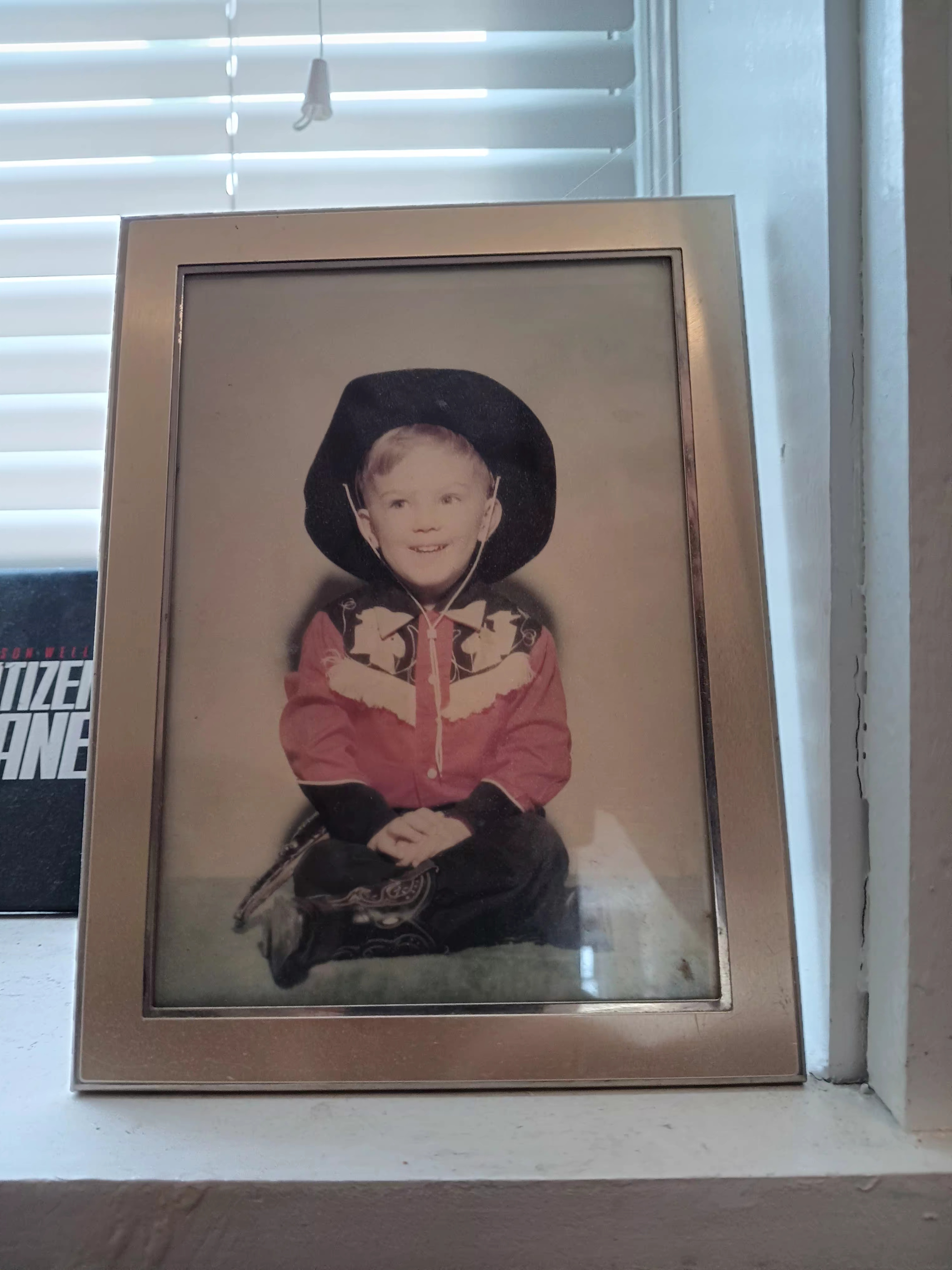
When he was five years old, his mother got down on his level, as she often did. But this time, she told him something different, something he’d never heard before.
She told him he was going to spend the summer with his Grandmother.
And that she herself, his mother, would come to visit him a lot, with his father; but they also wouldn’t be seeing him for a while.
And she immediately informed him, before he panicked, that this was a good thing – NOT a bad thing, and certainly not a punishment of any kind.
She reassured him about how much both she and his father loved him (and he already knew that very well, since they had showered him with love and attention since day one).
Then she told him that he was going to stay with his grandmother for the summer because his grandmother had things to teach him that only she, his grandmother, could teach him.
He couldn’t wait to get going.
…
He wasn’t scared or nervous at all as his mother drove him north from their very modest Detroit suburb to the thumb area of Michigan, where his grandmother lived in a trailer park on the edge of a small town.
It was a town that was made up mostly of German American and French American people who almost all claimed Indian blood of some kind, usually Chippewa or Iroquois. All the small merchants of the town were former farmers who served all the many farmers who lived spread way out all around the town. It was, and is, some of the most fertile land not just in the USA, but in the world. The town was (and is) fifteen miles away from Lake Huron, one of the Great Lakes.
His grandmother was what can only be called a kind of German mystic, although no one called her that.
But they all came to her when they needed something.
Not when they needed money, because she didn’t have any of that.
But when they needed consolation, needed healing, needed advice, needed a friend, needed someone to listen to them without passing judgement, they came to her.
His mother dropped him off in front of his grandmother’s trailer with his little suitcase. She didn’t make sure he was safely inside or anything. She just picked him up, hugged him, kissed him, said goodbye, then gently put him down and shoved him toward the door of the trailer, where his grandmother was waiting inside.
And then she drove away.
…
At first he and his grandmother didn’t do anything special.
And he almost never got bored, because whenever he started getting too bored, he retreated, and entered a world that no one else around him could see. They thought he was in a trance, but he knew he was somewhere special.
It was a world of the imagination, filled with wild characters, wonderful animals, amazing adventures, the ability to literally fly wherever and whenever he wanted, and also to turn invisible and roam around, wherever and whenever he wanted to.
And they watched a lot of TV.
And she sometimes told him stories about the family, in her quiet voice, what it was like on the ship coming over from Germany, accidents or good things that had happened to people on the farm, wild and crazy things the farm animals had done, stories about weather and storms and harvests, stories about sickness and healing.
And sometimes she read to him, especially about Peter Pan and Winnie the Pooh, and even more often than that, from the Bible, stories about Adam and Eve, Cain and Abel, Noah and the Ark and the animals and the rainbow, Moses, David and Goliath, Joseph and the coat of many colors, Job and the Whirlwind, Jeremiah and the well, Jonah and the whale, Jesus and his mother, Mary, and the adventures of Paul while he was spreading the Gospel, like Johnny Appleseed in America, who she also told him all about, many times. There was only one picture on the walls of the trailer, and it was a picture of Jesus’ face. He wasn’t being crucified in the picture. In the picture, he was quietly smiling upward with mysterious eyes and a weird kind of halo light falling down behind his head onto his shoulders out of the clear blue sky.
And then one day they started planting things.
Some of the things were flowers, and other things were other, small, green plants.
And she showed him how to plant, how to dig in the soil, how to treat the plants tenderly, how to place them where they now belonged, how to put the dirt back on top, how to pack it all down snugly, but not too snugly, how to water the earth.
And they planted things all in and around the trailer park on the edge of the town.
Then one day when he was sitting on the couch looking at a Bible picture book with all the grown men with their long hair and beards, and the beautiful women in their flowing robes with their flowing, long, beautiful hair, he smelled something wonderful. It was a loaf of bread she was baking.
A little later she showed him the loaf of bread under a kitchen towel. His mouth watered and it looked wonderful.
She told him they needed to go take the bread to a man she wanted him to meet.
…
She drove slowly, cautiously, patiently, calmly, and fearlessly.
She had strong, gnarled hands, a simple bracelet on one wrist, and her long, graying, pretty hair was pulled back with a simple blue ribbon around it.
They drove for a long time.
They didn’t talk, and they were completely comfortable around one another not talking.
They both enjoyed just going, the wheels flying over the road, the farm fields all around them always with trees in the distance.
The man they were going to meet was called Old Joe.
That wasn’t his name, but it was what they called him.
Old Joe was a local legend.
He was such a local legend that stories about him had appeared in the local newspaper a few times, and even on the local TV news station one time.
He lived way out in the middle of nowhere, alone, in a shack, in the middle of a huge, vast field with trees and a river in the distance, and a few huge trees that loomed over and sheltered his shack with their leaf-filled arms.
Except he didn’t live alone.
As the boy’s grandmother pulled the car over to the side of the road by the field where the shack was way over there, she pointed, and he saw that there was a whole, huge pack of gigantic dogs lounging around on the ground around the shack.
She told him that there were at least twelve dogs.
And then he saw the goats.
The little goats were all leaping and jumping and playing and shivering with joy in the tall grass of the field. They were bumping into each other and munching and chomping on grass and little scrub trees in the field. A goat shot away from the rest of them and one of the dogs leapt up and shot after the goat and circled around it, bringing it back, and they looked like they were playing a game on the way back.
His grandmother and himself got out of the car, and started walking across the field toward the shack and the dogs and the goats on a little trail. They held hands as they went and his grandmother held the loaf of bread under her other arm, wrapped in the towel.
The dogs all came over in a pack wagging their huge tails and greeting them. The goats kept to themselves but seemed to start jumping around even more, almost like they were excited by the visitors.
But Old Joe was nowhere around.
They sat down in a couple of old, broken-down chairs that were sitting outside the shack and they waited for him in the warm sunlight as they petted the shaggy dogs and talked to the shaggy, friendly, wagging-tail dogs, and laughed and waved at the goats, some of whom started approaching them and looking at them with curious eyes before bounding away again.
And before very long they saw a man approaching them across the field from the direction of the river.
He walked slowly and steadily and when he was about half way toward where they were he raised his hand and waved at them one simple time.
When the man got to where they were, the boy was shocked, and almost terrified for a few seconds, but then just fascinated.
Old Joe wore a beat-up old black hat that came down very low almost covering his eyes. His eyes beneath the brim of the hat were the darkest, most intense eyes the boy had ever seen. The man’s nose was large and he had a gigantic mustache covering his mouth and a huge, dark, graying, tangled beard that came down to the middle of his chest. He wore a suit of old, black, tattered clothes that was dusty and filled with patches. He had old, battered boots on his feet.
And he never said a word, not even hello.
He just came over to the boy’s grandmother who handed him the loaf of bread. As Old Joe went over to take the bread into the shack, a bird swooped down out of one of the trees over the shack and landed on his shoulder. It rode his shoulder into the shack, and when Old Joe came back out of the shack, the bird flew back up into the tree again and landed in the leafy green branches.
Old Joe pulled over another old, broken-down chair from over behind the shack, and then he sat down right next to the boy. Old Joe leaned forward with his elbows on his knees and just sat there, very close to the boy, while his grandmother continued to pet the dogs and talk to them. Old Joe never said a word. Not one word.
Pretty soon the boy’s grandmother and Old Joe just looked at each other. They both had tiny, small smiles in and around their eyes. No one ever said a word.
Then the boy’s grandmother said it was time to get going. Old Joe just sat there, elbows on knees. The dogs surrounded him, like they were protecting him.
The boy and his grandmother held hands again as they walked back to the car on the little trail through the beautiful, glowing green field that was now popping with harmless grasshoppers hopping all around them.
As they drove away, she told him that Old Joe was her brother; his great-uncle.
…
There was one more thing from that summer that the boy would never forget.
He didn’t remember his grandfather, who’d died right before (right before) he was born.
She told him that his grandfather visited her almost every night (but not every night), just for a few moments.
She would know when he was about to appear because she could suddenly feel it; and then he would sit gently on the other side of her bed, the bed they had shared together, only for a few, dreamlike moments that only seemed half-real.
And he came to tell her that, though it was hard to believe, everything was (even when it wasn’t) okay: now, yesterday, tomorrow, forever, and always.
“I’m so tired because I’ve been driving for almost eleven hours straight in a row with hardly a break at all,” he told himself out loud while continuing to drive his small car down the abandoned-looking highway in the middle of nowhere in the middle of Michigan’s Upper Peninsula.
All of Michigan’s Upper Peninsula is the “middle of nowhere.” There is really nowhere, he told himself, in Michigan’s Upper Peninsula that is not the middle of nowhere. And, after all, that is why you have traveled here, Sir (for some reason he called himself Sir inside his head although it was not a term he usually applied to himself; but she (who was now gone) had sometimes used to call him Sir; sometimes tenderly; sometimes satirically; and now that he was alone and far from her he was carrying on the tradition).
You are here, Sir, because it is the middle of nowhere. That and HEMINGWAY.
“Big Two-Hearted River” is one of the greatest American short stories ever written. It is set in Michigan’s Upper Peninsula. In the story, Nick Adams, Hemingway’s alter ego, travels to Michigan’s Upper Peninsula to get away from civilization because his body, mind, heart, and soul have been damaged by his service in WW1.
Hemingway himself got blown up over there. Over two hundred pieces of shrapnel in the legs at the age of eighteen while working as an ambulance driver for the American Red Cross. Anyone who thinks Hemingway loved war is wrong. Sometimes he thought it was necessary. That is a very different thing, and a very questionable belief. But Hemingway was not a war monger. He also worshiped the animals he killed in the way Native Americans did and some still do. He once wrote, of an animal, “It is not a sin to kill him if you love him.” Crazy Horse said the same thing. Such a statement has a different weight when it’s said with utter, deadly seriousness. Everyone who eats meat is a killer even if they don’t actually do the killing themselves. Too many animals have been killed and we are in the most massive age of extinction the world has ever known (except for the dinosaurs) and all of it should stop. Should stop, not will. But Hemingway was born when McKinley was president. It was a different era…
These are the kind of thoughts he kept having as he drove down the road, chain-smoking Marlboro Light cigarettes and chain-drinking black truck stop coffee. Later he would have a small stroke and develop stage one emphysema before he was sixty because of such habits as these (and the drinking in the bars (which were so loaded and thick with second-hand (and first-hand) smoke that it was like sitting in the middle of a cloud of beautiful poison for years), and the drugs, and the depression, which he called The Triple D’s) (and tonight alone in the cheap motel outside of Sault Ste. Marie, this shit would give him a panic attack; that and not having eaten any food (almost) in two days); but right now he was thirty-three years old and strokes and emphysema were the last thing on his mind; and he would never regret a single thing, which is, after all, what badass Nietzsche really meant by the thought-experiment concept of Eternal Return…
He took a drag of his cig’ and a healthy slug of the lukewarm coffee.
He had one hand on the steering wheel and the burning cigarette was in his other hand between his cigarette-stained fingers as he slumped there, exhausted and alert, behind the wheel.
The abandoned-looking road here was literally crowded with pine trees right up to the edge of the road, making a darkness, but sun fell down, between the trees, all over the road, making the road a bright yellow ribbon (follow the yellow brick road) of possibility for a few moments at least.
He drove with his knees and lit another cigarette with the smoking butt of the last one. Then he poured more black coffee from the thermos into the cup between his legs, and in doing so, he spilled a bunch of the coffee all over his crotch and felt the warm wetness all over his shorts (it was summertime) and all over his…
He laughed and called himself “Sir” again, almost hearing her voice out loud as he did so. She had also sometimes called him “Bear,” because his last name sounded like it had the word “bear” in it (even though it was spelled differently).
So he called himself Bear, there, alone, in the car, while driving, smoking, meditating, and drinking coffee, and just as he called himself “Bear” (like she had done), he looked up to see a bear standing in the middle of the road right in front of him. And it was a WHITE BEAR!
He slowed down fast then slammed on the brakes so he didn’t hit it because it wasn’t moving, at all.
It just stood there on all four gargantuan paws in the middle of the empty road (there had been no other cars for a very long time) staring at him.
And how the fuck was there a white bear in the middle of the road in the middle of Michigan’s Upper Peninsula!?
He knew that black bears lived here. Not only did they live here, many places in Michigan’s U.P. have more bears than people in them, by far.
He’d studied polar bears in books and documentaries, and at the zoo, and he’d seen wild grizzly bears from a Jeep in Alaska (the guide had said they weren’t too close). He knew enough about bears to know that this wasn’t, surely, a polar bear, a grizzly bear, or a panda bear who had escaped from a zoo (or something). He also knew that not all black bears are black; some are brown, or cinnamon-colored, etc. etc.
But this bear was utterly WHITE, as white as freshly fallen snow, as white as Snow White, as white as Moby Dick, as white as the whitest hair on the oldest person who ever lived (there was probably someone somewhere in the world who’d once lived to be 130), as white as heaven, as white as you can think of, or imagine. (He also knew that albino creatures have pink eyes and noses, and he could clearly see that this white bear’s eyes and nose were dark – very dark.)
And within that split instant of time that stretched itself out like a pink light beam shooting out to the edge of the universe (and then beyond) he knew that this might get him killed, mauled, sent to the hospital, whatever, as he opened the door of his stopped car and stepped out into the road not too far away from the white bear who was standing there in the middle of the road, looking at him.
And he and the bear stood there and stared at each other as the sun fell down into, and upon, the brightly yellowed road between them.
Then the bear stood up, massively, on its hind legs and sniffed the air in his direction.
Then it dropped back down onto all fours, and with its head lowered, it stared, and stared, and stared, at him.
They were about forty feet away from each other and black bears can run faster than horses.
And as they stared at each other, the man (the young man) felt the power of the bear SURGE through him – marking him for life.
And then the bear swung around and ran away into the trees.
In the good old days, this street had been rowdy, ragged, loud, edgy, marginal. For at least two miles in length, one bar and liquor store and cheap restaurant after another on both sides of the street had sat beside each other inviting in any intrepid soul with a few bucks in their pocket and the desire to get partially drunk or completely drunk. The music here had been raw, Chicago blues bands or punk duos or some combination of blues and punk or imitation-grunge or garage rock moved on over from the garage into the bar. It wasn’t always the greatest music (by far), but it was usually heartfelt and it had soul.
“The good old days” in this context meant the late 1980s, the 1990s, and shading into the very early 2000s. After that a shift started to occur that happened gradually, then suddenly.
Now this street was too clean. The restaurants were too expensive. The dive bars had been replaced by workout centers, hair salons, specialty shops, and boutique stores. The music was utterly perfect and utterly soulless. The people here now were the kind of people who walk at the same pace always, never speeding up and never slowing down. Lots of them were nice enough on the surface but as a group, as a race of humans, they were miserable to be around. And “race of humans” here meant people with enough money to hang around and enjoy this atmosphere. It didn’t matter what color you were any more. All that mattered was whether you had the money.
He didn’t hang out on this street any more, and he even avoided driving down it for the most part, except when he wanted to relive old memories by taking a journey back into the past where he could imagine it the way it used to be and remember. A few of the bars still had the same names, even though they weren’t the same kind of places any more, at all.
It was the Fourth of July weekend in the Year of Our Lord 2018. He was here to visit some old friends, and he’d come over here because he’d been becoming so isolated from “the world” lately that it was starting to scare him a little bit, sometimes, perhaps (or deeply). He hadn’t seen most of these people he was about to see in fifteen or twenty years.
And he couldn’t believe, which literally meant that he could not believe, just what it was he saw.
They all looked so old! Even though they were, most of them, no older than he was!
He quickly realized it wasn’t so much in the gray (or graying) hair, the wrinkles, the extra pounds. After all, he himself had all of those things as well. No, not at all, it wasn’t in the surface details where their age sat. It was more in their eyes, in their postures, in their attitudes. People who’d once seemed like lively carefree souls to him now seemed like closed-off, uptight, unimaginative bores.
And as he sat in the bar with them (there were about seven or eight of them) trying to be social at some level, he quickly realized that these folks, who now had become truly strangers to him, were all dominated and dwarfed by a quadruple threat, which was made up of: the large screen, the small screen, the dollar bill, and the beer mug.
There were five or so men and two or three women, and they were all doing the same things in sequences and orders, almost like metronomes: staring at the baseball game on the large screens that dominated all walls of the squeaky-clean establishment, scrolling on their phones, discussing the low stakes gambling they were all involved in, women too, and slowly, steadily consuming their alcohol.
He wasn’t drinking because he was an alcoholic who couldn’t drink. After a single sip of alcohol in any form, all bets would literally have been off. He would’ve followed that up with two or three more beers in quick succession, then gone straight to the hard liquor. He would’ve drank for days and days until he passed out and later woke up not knowing where he was and with the most frightening hangover that it literally would’ve made him consider putting a bullet in his brain just to end the pain, not because he really wanted to leave here. He’d quit drinking because of the suicidal tendencies it had started to create in him; and other reasons. His brain chemistry had been so warped by the constant alcohol at that point that he couldn’t even write any more. He hadn’t had a drink in seventeen years.
So he wasn’t drinking. And he realized now how drugged they all were. It wasn’t even difficult to be in their presence and not socialize with them, since they were all so obsessed with the double screens, the baseball betting, and the slow, steady consumption of their soul-killing alcohol that you could sit there in their midst and quite easily not even be noticed (almost).
He was just about to bail out, call it good, shake off the depression this had all caused, say, “See you in another twenty years!” (once he’d gotten away from them, that is) and go do something else when he saw HER.
He didn’t know who she was and he knew he’d never met her before because he would’ve remembered for sure.
She didn’t look old like the rest of them.
She had the same wrinkles and the same extra pounds (except quite a bit less so of both perhaps).
She was a blonde, what used to be called a bleach blonde. She looked, almost, like Marilyn M. if Marilyn M. had grown up to be fifty or so years old. She smiled like M.M.
She had a lively walk like M.M.
Her eyes were ALIVE like M.M.’s.
They sparkled with HUMOR like M.M.’s.
She looked around her like she knew what was going on but also didn’t care – like M.M. She had a rebel soul like M.M. (or so he imagined).
And she was lost and vulnerable like M.M., too (again, or so he was imagining).
And she walked right up to him, asked him what his name was, and sat down right next to him! And when he found out that her name was Marilee, his belief that there are no coincidences was reinforced again for the trillionth time (he was a trillionaire in his belief that there are no coincidences).
It turned out that she was the cousin of one of the beer-guzzling sports drones.
And he discovered rather quickly that it was difficult to strike up an interesting conversation with a stranger in this stultifying atmosphere: this clean, safe, comforting (to them), conforming atmosphere. (He realized that these were the kind of peeps who would’ve been hanging out in the Roman Colosseum back in the day.)
But she kept glancing at him from the corners of her long, lovely, long-lashed, sleepy-wide-awake, dark green eyes with blue eye shadow on.
She smelled like a beautiful dream and looked like a beauty queen.
He hadn’t “been with anyone” in years, both on purpose and not on purpose.
Just sitting next to her basically lifted him up into the clouds – in a very good way.
It made him not care at all about the lives of all these soulless bores. Let them rot in their own open coffins for all he cared. What did he care? He didn’t care!
There was still someone like this, like her, in the world!
He looked at her again.
She was already looking straight back at him.
…
But there were some things he needed to go take care of. He was, after all, the kind of person who frequently had “things he needed to go take care of.” Even the few people who knew him best didn’t know what those things were most of the time. They laughed at him a lot, and thought he was an enigma even more so. He frequently said to them, “I have some things I need to go take care of.”
“What things do you need to go take care of!?” they would shout at him.
But he didn’t like explaining himself.
He understood why Leonardo da Vinci wrote backwards so no one could read his writings; and why Vincent Van Gogh ended up spending most of his time alone in the fields, sometimes even sleeping there. (VVG was a much happier man than they portray him as in all the movies; although he definitely had his down days as well.)
And today, alas, he really did have some things he needed to go take care of.
The first thing was his sixteen-year-old twin daughters, who’d suddenly phoned him out of the blue with a minor emergency while he was sitting there next to his new Marilyn Monroe friend wondering how to strike up a conversation with her in this stultifying environment.
His kids’ friends’ baby was sick (both of the parents were eighteen) and nobody had any money and they needed him to give them a ride to Urgent Care.
He’d also decided that he couldn’t go through this totally “sober.” It turned out that she was drinking quite a bit faster and quite a bit more than the rest of the party, not to mention stepping outside to have a quick ciggie pretty frequently. She wasn’t drinking like a full-blown alkie (like him), at least so far, but definitely like an expert boozer. He would need some “medications” if he were going to pull this off right.
That fact meant that he needed to make a little trip to go see a friend he had.
He’d already heard them all saying that they would be here for a while, that they would maybe move to another bar, but they were definitely planning on staying on this street tonight for the duration, because it was a holiday weekend, because it was summer, and because some of them hadn’t seen each other in a while, etc.
He even asked her if she was planning on hanging out for a while.
He told her that he had a couple of things he needed to go take care of.
She stared at him with her bright, lively, intelligent, knowing, a-little-buzzed, green eyes and he could tell she was almost about to ask him what things he needed to go take care of. Next, he could also tell that she wouldn’t ask him, since they’d just met. A good sign!
He figured he could go take care of both the things he needed to take care of within ninety minutes or so and get right back here.
And he told her so.
She looked straight at him and said, “Never fear. I’ll be here when you get back, sir.”
…
He was not a person who always walked at the exact same pace, never slowing down, and never speeding up. Instead, he was a person who changed his pace all the time, sometimes walking super-slowly and stopping to smell every single figurative rose he happened upon, other times walking so fast he looked like he was in a joyful hurry to get somewhere even though he wasn’t going anywhere special, he was just going.
He walked super-fast to his small car, unlocked her, hopped in, called his friend with the “medications” to make sure he’d be there in about an hour, and took off to pick up his kids, their friends, and the baby.
Just as he was rounding his first corner off the street that he had hated before and was now planning on returning to soon (as soon as he finished the two crucial missions he was on) because maybe after all it wasn’t so bad if she was here, a woman who was doing something on her phone pulled her car out in front of a woman who was driving her car down the street like a maniac. The maniac driver slammed on the brakes, and leapt out of her car with her purse, as the woman who’d pulled out in front of her stuck her hand out the window and gave her antagonist the middle finger. The woman flipping the bird was unable to move her car forward because of the traffic, and the woman with the purse now pulled a pistol out of the purse, ran up to the other woman’s car window, and stuck the pistol in her face. The terrified driver turned her face away then ducked down into the car, and the woman with the pistol screamed, “Stay out of my way you stupid fucking Mexican bitch!” Then she hit the top of the car with her pistol butt and got back into her own vehicle, traffic started moving again and everybody drove away.
The incident would come back on him later in a nightmare, but right now he was in too much of a hurry to sit for long with the witnessing of this minor trauma. His two kids and their two friends and their baby were waiting for him. The parents of the baby were also sick and within three or four days both himself and his two kids would all come down with the same brutal, wicked, nasty, ten-or-eleven-day-long summertime cold, but for now he drove the kids to Urgent Care, made sure everything was OK as they signed in at the clinic, made sure a nurse looked at the baby before he left to make sure nothing was an emergency, handed the kids half the money he had in his pocket, and darted out the door back into his car.
As he was driving across town to go meet the man he planned on getting the “medications” from, he played the song “Soul” by Van Morrison over and over again, from Van’s great album Keep It Simple (Van’s thirty-third album released in 2008), and he (the main character of this story), quite literally, calmly wept behind his sunglasses as he was driving. He wept because the song was so beautiful and for no other reason. He played the song LOUD over and over before he switched to the title track and calmly wept along with that too, behind his dark glasses. It was a happy weeping, a cathartic weeping, a joyful weeping, a crying for beauty, and a tear-stained face because beauty still existed, very much so, in the world, in this world.
Himself and his brother called the man he was going to meet Alley Man behind his back because the alley was where the man hung out, and they called him the name he called himself to his face, even though they knew his real name was Mohammed.
As the main character of this story approached Alley Man who was standing there in the alley he instantly knew something was wrong because he, Alley Man, had lost about fifty pounds since the last time the main character had seen him, which hadn’t been that long ago.
The two of them stepped into Alley Man’s garage to make the transaction and then the main character of this very true tale asked Alley Man how he was doing.
Alley Man, who was about the same age as the main character, raised his shirt and showed the main character a huge, massive, red, bulging, sore-looking, worm-like-looking bright scar across the middle of his chest in the shape of a cross.
After a heart attack recently, Alley Man had had triple bypass surgery to save his life, and while they were in there, they discovered the malignant tumor on his lung, which they also removed while they were in there (taking half a lung with it), so that the surgery lasted all day and on into the evening.
Alley Man removed the lit cigarette from his mouth and said nothing could kill him, praise God.
They high-fived and fist-bumped each other and the main character told Alley Man to take care of himself.
As he was almost about to get back into his car, the main character ran into Alley Man’s brother-in-law, who was a man who was four and a half feet tall and had one eye.
This man’s wife was always hiding his shoes so he wouldn’t go roaming around the alleys all day and all night, but it never stopped him.
The man with one eye was wearing ragged pants, a ragged shirt, and nothing but ragged socks on his feet because his wife had hidden his shoes again. He came up to the main character, holding a beer can in one hand and an unlit cigarette stub in the other. He had another cig’ behind his ear.
He asked the main character if he had any spare change. The main character handed him a dollar. The man with one eye asked him did he have any more, brother. The main character shook his head no, gently, and told the man whose name he didn’t remember to take care of himself. The one-eyed man looked at him closely, looked at him some more, then wandered away in his ragged socks sipping from his beer can.
Alley Man had said they often found his brother-in-law sleeping in the alley. He was a street person with a place to lay his head if he wanted to, but he didn’t want to (except sometimes). God knows what had made him that way and maybe it was God himself; or herself; or itself.
In the car, the main character took about a third of the “medications” he’d purchased from Alley Man. As he sat there in a traffic jam listening to Van Morrison (the song “Behind the Ritual,” from Keep It Simple, over and over again) he felt the warm, mild, steady, liquid, consoling, BUZZING, humming, reassuring glow from the medicine seeping into his brain, his heart, and his whole system, changing everything for the better, at least for now.
He knew the “medications” would last for at least a few hours and he knew the afterglow from the “medications” would last for at least a few hours more beyond that and he knew he had more when that ran out. It was good enough for now, and now, he reminded himself, is what matters.
But the traffic jam was a bad one and it held him up for a long, long time. By the time he returned to the street that gives its generic name to the title of this story, all the beer-screen-sports-and-dollar drones were still in their usual positions, exactly as if they hadn’t moved one iota in all that time. But SHE (Marilee) was gone.
Instead of ninety minutes his little trip had taken him two and a half hours, probably even closer to three, because of weekend holiday traffic and because he’d pulled over at one point to sit and enjoy the buzz of the “medications” while meditating a little bit.
He asked some folks from the group if they knew where she’d gone and they told him she was still somewhere on this street probably – most likely somewhere in another bar. Then they quickly turned away, back to their screens and beer mugs, offering no more information.
He looked for her all up and down the street, peering into all the establishments, entering some, just glancing into others.
Just as he was about to give up and was thinking about going back to ask someone in the herd whether he could get her phone number perhaps (and he was stressing very much about that because of his intense social anxiety), he looked up and she was standing there on the formerly attractively ragged and now too-clean street corner staring at him.
She ran to him and almost collapsed into his arms.
By now, the sun was going down, and it threw a warm, beautiful, sunset glow over the whole summertime street. She smelled better than anything ever and her warm, soft, collapsing body (along with the “medications” he was on) literally transported him immediately unto another world – a better one.
She asked him if he had a car and they went to his car and she got into the back seat so he got into the back seat beside her, after rolling the windows down so they could feel the wonderful summer eve coming in.
She verbally unloaded on him then, as if they’d known each other since childhood.
She told him all about her accident last year when she’d shattered her ankle in a bicycle-riding accident, how long it had taken to heal, how she hadn’t been able to work during that time, etc. etc. etc.
She told him about her new life in Florida (his heart had sunk more than a little when she’d told him she lived in Orlando, 1,200 miles away from where they were right now in Chicago, but he filed that info away to deal with later and kept on listening) and how hard it had been, how things had not exactly gone as planned down there so far, and that was an understatement, etc. etc. etc.
She told him about her son, who was in his twenties and was addicted to opioids (no comment).
Her son lived in an apartment above a bar on “the street” and that was where she was staying while she was in town.
Then they started making out, out of the blue, there in the back seat of the car with the windows open.
They held hands, and kissed, and hugged (nothing else) in the back seat of the car as if they were teenagers. It was dreamy, beautiful, wonderful, warm, close, intimate, intimidating, great, awesome, amazing, totally unbelievably personal and proof that life was still okay despite the fact that this society itself had landed in the toilet a long time ago and would soon be flushing itself away into who knew what, for sure.
She said she had to go now and asked if he’d walk her over to her son’s apartment and asked if he’d meet for lunch tomorrow at one PM at a restaurant on the street. Yes! to both.
As he was walking alone back to his car after dropping her off, a guy from the sports-drone crowd called his name and hustled over to him on the sidewalk. He asked the main character to hold out his hand and when the main character did so to humor the man, the man placed a wad of cash in his palm. And he told the main character, grinning, that it was three hundred dollars. Someone had placed a bet in his name, and they were all honest after all, so congratulations!
He thanked the fellow heartily (the main character was on a very un-fixed income for a wide variety of reasons that shan’t be gone into now), drove over to where his kids lived with their mother, and gave them the money.
The next day, she didn’t show up at the restaurant for lunch.
He waited at the restaurant, and in the vicinity of the restaurant on the street, for at least three hours (and probably more). While waiting, he texted her exactly three times (they’d exchanged phone numbers the night before).
SILENCIO.
He texted her (very briefly) exactly once a day for the next three days in a row, then quit.
A week or so later, he couldn’t help himself, and he looked her up on the internet, just to make sure she wasn’t dead.
She’d very recently (within the last twenty-four hours) posted a picture of herself sitting on Daytona Beach snuggling arm-in-arm with another guy. They were both in their bathing suits and they both had huge, frozen smiles on their faces (almost like grimaces) and were showing plenty of perfectly whitened teeth for the camera.
He popped a few more pills (cold medications and Alley Man refills) and put on the Van Morrison song “And the Healing Has Begun” from the album Into the Music (1979); and turned it up LOUD:
She was “just a friend” but she was a very good friend and he’d made this commitment to help so he wasn’t going to back out of it now, even though if he’d been able to find a way he would’ve backed out of it now if at all possible.
But she had to be out of her old apartment by tomorrow morning latest and right now it was already nine or so PM of a mid-summer’s eve in the Year of Our Lord 2000 in the city of Chicago, Illinois, USA.
Her boyfriend was in Thailand for three months and the main character of this story was also taking care of the boyfriend’s apartment for the summer.
The main thing that duty entailed was being the caretaker for a seven and a half foot long, yellow python named Snake Eyes.
Yes, the snake was literally seven and a half feet long. He lived in a huge plywood cage the front of which was covered with chicken wire so you could sit there and look in at the snake and the snake could look out, which is what the main character and the snake were both doing right now.
The main character had initially planned on staying at his friend’s (her boyfriend’s) apartment for the summer while taking care of the snake, until he realized how small the apartment was and how large the snake was.
The apartment was a dumpy run-down studio on the third floor in an especially ragged corner of the Wicker Park neighborhood (before Wicker Park was gentrified) and so, when one slept here on the futon, one was actually sleeping in the exact same room as a seven and a half foot long and yellow constrictor snake whose cage was locked but whom the hero of the story kept dreaming about as he slept on the futon in the tiny rundown studio apartment.
For example, he dreamed that the snake grew hands which were tiny enough to reach through the chicken wire and unlock the cage. Next, the seven and a half foot long and yellow snake opened the cage without a single sound and quietly slithered over to where the main character was peacefully sleeping on the futon. Next, the giant constrictor pounced on the main character’s chest just to wake him up to see the terror in his eyes right before he pressed the main character down and wrapped all of his impossible-to-resist, supernatural power around the main character’s throat and began to squeeze…
Such dreams had haunted the main character every single time he’d tried to sleep in this dumpy apartment with Snake Eyes in the same room.
So he’d had to patch together other sleeping arrangements for the summer, which ended up being a combination of staying part-time with his aging parents, part-time with his brother, part-time with his estranged wife (but not so estranged that she wouldn’t let him stay at her place some of the time), and part-time with his friend who is the other main character (other than Snake Eyes) of this story, who he was supposed to be helping move right now.
She was over there in the Pilsen neighborhood (before it got gentrified) waiting for him right now.
There wouldn’t be much furniture but there would be a lot of boxes and the main character had a very small car.
He felt sorry, very, very sorry, for Snake Eyes who had to stay in his cage for three months.
When Snake Eyes’ owner was in town, he took the snake out of the cage every day or two at the very least and he even wrapped the snake around his shoulders and body and went wandering around the scruffy neighborhood with Snake Eyes, letting neighborhood kids come up and visit the snake and letting the snake get fresh air and see the world a little bit.
The main character wasn’t sure if snakes liked to be visited or not but he was pretty sure the snake must’ve at least appreciated being taken out of the cage and taken for a ride around the neighborhood on the shoulders of his owner.
But this was Chicago so in the wintertime the owner of Snake Eyes just let Snake Eyes out to explore the tiny apartment every day or two.
The owner of Snake Eyes fed Snake Eyes live mice for breakfast, lunch, and dinner (which didn’t happen every day) as well as frozen chicken legs.
The main character of this story was too sensitive to the plight of the mouse to feed Snake Eyes live mice, but he knew the snake enjoyed toying with the mouse before he ate it so he did feel sorry that all the snake was getting for three months were frozen chicken legs.
…
The phone rang again and he got up from where he was sitting on the floor in front of the snake’s cage, looking at the snake, feeling sorry for it and drinking another beer. Just as the main character wasn’t sure whether the snake actually enjoyed being visited by neighborhood kids, so he wasn’t sure whether the snake actually enjoyed it when he sat there communing with the snake, looking into its eyes and talking to it a little bit, saying things like, “I’m sure you’d rather be in the jungle than here but we are all stronger at the broken places if we only know it.” It was a lame attempt to console the snake even though he didn’t know how much the snake actually cared, but the snake’s owner had told him he could take the snake out of the cage if he wanted to and didn’t have to if he did not want to. He’d said the cage was large enough for the snake to be okay for three months as long as he was fed properly. “Just make sure he gets fed properly and he’ll be okay until I get back – but feel free to take him out whenever you want to.” He smiled.
The main character walked over to where the phone was still ringing, and he set his beer down next to the window, lit a cigarette, and picked up the phone.
It was another friend of his who lived in Florida. They’d almost gotten married at one point except that he already was (even though he didn’t live with his wife full time), but now she was down in Florida with another guy so why is she calling me? But there wasn’t a reason, except that her boyfriend was out right now and she missed him, i.e. the main character of this story. He sat down to have a brief conversation with her before heading out the door to go help his other friend move all of her precious stuff to the new apartment.
But the conversation turned out to be a longer one than he had initially planned on. Talking on the phone with anyone, anyone at all, made him nervous, so he began to drink and smoke even faster than he already had been. She was going on and on now about how she missed him and couldn’t stand her Florida boyfriend and at some point, without his even realizing it was doing so, the conversation took a fresh turn. It took a fresh turn into a new territory that can only be described as a kind of phone sex where, again, she did almost all the talking and he played along in other ways. This part of the phone conversation was not something he’d planned on, even more so than the conversation itself, and by the time it was all over he looked up with a startled surprise to see that at least another hour, and maybe more, had passed by.
As soon as the conversation was over he hung up the phone then picked it up again and dialed the number of his other friend, the one who was waiting for him to help her move her stuff because she had to be out of her old apartment tonight and her boyfriend was in Thailand. The main character thought to himself: if he were here there would be three of us moving her crap instead of just two but that a’hole has a way of leaving me holding the bag, doesn’t he. He glanced at Snake Eyes, who right at that moment struck the chicken wire of the cage with his yellow-and-white, hard-as-a-rock head with such force that the chicken wire bulged out a little. It was a habit he had. This snake could be as scary as a great white shark almost. The difference was that he wasn’t always that scary.
She was not happy about having to sit around waiting while she was so stressed about getting all her stuff out of her old apartment. The landlord had made threats earlier in the week and she didn’t have a car so there was nothing she could do on her own, since the new apartment was three miles down the road from the old one and all the boxes were heavy. It took him about ten minutes on the phone to get her calmed down but she finally did calm down.
He finished his beer, grabbed a fresh pack of cig’s from the carton, reached into the freezer for the flask of vodka, popped it into his back pocket, made sure he had his wallet and keys, said goodbye to Snake Eyes (“I’ll be back to see you later”), locked the locks on the door, and ran down the three flights of stairs, so fast that he almost felt like he was flying.
Then he burst out into one of the most beautiful mid-summer eves he’d ever been in, or that was what it felt like. He was a moody individual and often, very often, the moods were made up almost entirely of profound JOY for a reason, or reasons, that he himself didn’t even understand.
He walked so fast to his car that it was much faster than some people can run. She (the car) started up right away without any problems and as he turned the radio on he heard to his utter JOY that the radio station the radio was already on was playing “Let It Bleed” by the Rolling Stones, Chicago’s favorite band.
He turned the volume up LOUD and headed across town.
…
His joy, which had already cooled off a little as he approached her place, cooled off even more when he saw her sitting there in the summer’s late evening on the steps of her ex-apartment building smoking a cigarette, because he could already tell from here how upset she was. As he approached her on foot on the sidewalk she looked over at him and he gave her a big smile trying to somehow wordlessly apologize for his after-all-not-that-unusual lateness, and she turned her head away from him toward the other direction down the sidewalk and took a hard drag of her cigarette. As it turned out, she was in a foul mood because, while she was waiting for him, she’d gone to the drugstore for a pack of cigarettes. As she waited in line to buy the cig’s, a huge, naked man had entered the store dripping with sweat and holding a pistol in his hand. Without further ado, the man had jumped up onto the counter next to the cash register wearing nothing but tennis shoes, waved the pistol around at the half dozen people there in the front of the store and informed them all that they were about to die now. As it turned out, when another man in the store came around the corner of the aisle and yelled at the man to shut the hell up, get down off the counter and put the pistol down, the man did exactly as he was told to. The main character of this story’s friend had heard the man telling them all that he was sorry, he was just high and had lost his head for a moment, as she hightailed it out of the store without a new pack of cigarettes.
The main character of this story couldn’t believe, and by that I mean that he literally could not believe, how many boxes she had all packed up and ranged up and down the stairs behind her when she unlocked the triple locks of her soon-to-be-ex-apartment and showed him.
It was only the main character’s desire to get to the bar before the sun came up that made the work go so fast. They knew of several bars both in the city and outside it which stayed open 24-7 but he’d recently realized that when he stayed up all night drinking and swapping yarns on into the morning hour, as the sun rose his spirits sank so very low that nearly suicidal depressions were starting to descend upon him at that time, a thing that had never happened before until recently, when he was in his early thirties. As a younger man, he’d stayed up well past the dawn on many and many an occasion with no ill effects, but such was the case no longer. Last year, a good friend had put a loaded pistol to his head when the cocaine ran out at sunrise and pulled the trigger in another town. Somehow he didn’t die, but he would never walk or talk again most likely. When the main character visited him, his friend had scrawled on a piece of paper that he didn’t mind, at all, not talking or being a member of the rat race any more; and the main character had (almost) understood that very well.
So the work of moving a million boxes off the stairs and three miles across town in his small car went off rather quickly in the scheme of things because of his desire to get to the bar before that lucky ol’ sun started rising. Using all of the car’s trunk and back seat and moving fast like a maniac in between swigs of vodka is what did the trick. They were only pulled over by the cops once and the main character was able to instantly sober up and talk his way out of it just as he’d been able to do every single time he’d ever been pulled over while intoxicated, sometimes he himself didn’t even know why or how. As he placed the last box on the top of the last pile of boxes in her brand-new one-room studio apartment, she stepped over and gave him a huge kiss on the cheek. Wow and whoa, that had never happened before.
They made it to the bar by perhaps two in the morning which, for this bar, was not really all that late at all. The bar was filled with men dressed as women and women dressed as men and other so-called “hipster”-like figures who all looked around themselves out of their cool eyes as if they were snakes trapped in a cage that they loved. The main character and his great, beautiful friend found themselves a spot at the bar and ordered tequila. At some point he noticed that she now was wearing a bright red, silky scarf drawn tightly around her beautiful throat. He realized then, again, for the millionth time just how beautiful she was, with her long, thick, flowing, black-as-night hair and her gigantic, long-lashed, oval-shaped dark eyes that sometimes seemed to see everything and the very, very, very short polka-dotted skirt she was wearing. To this day he doesn’t know how it happened but suddenly he realized that she and he were holding hands underneath the bar, and then on top of the bar. Her boyfriend, who was in Thailand for the summer, had several friends who were in this bar right now.
Somehow, without either of them knowing quite how exactly, they very soon found themselves back in her new apartment rolling around on the floor amongst the boxes, pressing each other, devouring each other’s mouths with kisses, hugging, holding, feeling, touching in all the privates places you can possibly imagine – almost. It wasn’t full-on sex exactly but it was enough to qualify as “cheating” almost certainly, at least in the minds of some people, like the guy in Thailand who was, after all anyway, probably returning the favor over there in Thailand right now.
She fell asleep right in the middle of another kiss and that was when the main character looked up at the windows to see the gray light of dawn starting to peek in.
He hurried away, and as he stepped out into the street that just kept on growing lighter he realized that there was something he still needed to do, that if he didn’t do this thing, he would somehow not be fulfilling his duty to the Universe.
So now he was back in the other apartment, sitting on the floor with a fresh beer beside him, staring at Snake Eyes right in the eyes as the seven and a half foot long yellow python stared straight back at him.
The main character undid the lock of the cage and raised the chicken wire.
He gently leaned the whole top half of his body into the dark cage toward the snake who just turned his head away.
He had held the snake once before when his friend was in town, but right now he simply could not believe how heavy Snake Eyes was as he pulled the snake from the cage and somehow, with the snake’s help, got it up and wrapped it around his shoulders – and around his neck.
He felt the snake’s massive body tighten a little around his neck.
But only a little.
And he took the snake for a long, long walk around the block and out into the park and back so he could breathe the fresh air and feel the warmth of the morning summer sun in all its beauty.
As he did so, he was absolutely positive that Snake Eyes was enjoying himself.
They made it back to the apartment and the main character of this story passed out drunk on his friend’s futon with Snake Eyes curled up right next to him, believe it or not.
And he had a dream.
In the dream, he dreamed that Snake Eyes and he were in the Garden of Eden rolling dice with the Devil, and they had rolled double sixes, and they had won the pot. The Devil disappeared – that is, he vanished in front of their eyes – permanently.
No more failure, no more humiliation, no more confusion, no more self-hatred, no more temptation, no more being put down – no more coming out on the losing end. In a town full of losers, they were pulling out of there to win.
“I’ve been in trouble ever since I set my suitcase down.” – Bob Dylan
They were sitting on the steps of William Faulkner’s grand old mansion, just the two of them. No one else was around.
William Faulkner himself definitely wasn’t around, at least not in the flesh, since he’d passed out of this mortal coil about twenty-eight years earlier. The mansion, Rowan Oak, was now owned and operated by the University of Mississippi, not too far away.
If you don’t know who William Faulkner is, it’s okay. For the purposes of this story, all one needs to know is that he lived in and wrote about the U.S. South across the first half of the twentieth century and beyond, and he won the Nobel Prize in Literature in 1949/’50 for doing so, AND HE RICHLY DESERVED that prize and any other prizes you can think of.
Local wags who knew Faulkner in Faulkner’s own day had dubbed him Count No ’Count. It meant Count No-Account and it was intended as a slur against Faulkner because he generally ignored everyone else in the town both before, and after, he became “famous.”
There were some people in the town that he liked.
But he was a sensitive soul (you would have to be in order to produce all the great writing which he produced, up to and including getting yourself awarded the Nobel Prize in Literature four years before Hemingway himself did, which really pissed off Hemmie even though he rarely admitted it, although he did admit it sometimes, especially when he was in his cups).
Faulkner was a sensitive soul, and he had discovered that most people, one way or another, insulted his writing, even when they were trying to compliment it.
And that is a hard fate to bear. Even for the guy who wrote “The Bear,” one of the greatest novellas in English of all time.
In France right now, William Faulkner is as popular as France’s own Marcel Proust and as Edgar Allan Poe is. Even in the South, on his own home turf, Faulkner’s fame cannot come anywhere near to touching what he has achieved in a separate nation far across the seas.
Although I’ve never been there in person and never will be there in person, most likely, I still say (because of Faulkner, and Poe) long live France! (Sometimes I feel like I must’ve lived there in a former life, and now I’m just an exile; both of my grandfathers were French Canadians recently transplanted to the USA.)
…
The main character in this story was twenty-two years old at the time this story takes place; and the other main character was twenty-three.
It, or they, were a he and a she, or a her and a him, and though they both thought they were completely “grown up” at the time (of course), neither one of them had any idea how young they still were.
The year was 1990. No one on the Planet, and by that I mean no one on the Planet at all, had any idea how much the world was about to change in the next few decades.
But only young people of any era would’ve ever done what these two did next.
They went around to the back side of Faulkner’s house, broke in through a window, and climbed into the old mansion that still had most of the original furnishings in it from decades and decades ago when Faulkner and his family had lived here together.
The act of breaking into a decaying plantation mansion that had once been an utter ruin which Faulkner purchased for five hundred bucks in the 1920s and then refurbished, over decades, all by himself, did something to the young man and the young woman who are this story’s heroes.
Before they knew what was what they were rolling around all over the floor in Faulkner’s former dining room and then they rolled under the dining room table together, there on the thick carpet, luxuriously glued to one another, making out.
Back then they still loved “making out,” which meant kissing, hugging, holding, and exploring each other for hours on end without even going “all the way” sometimes.
When they burst forth from Faulkner’s house again a few hours later, both of them were so full of health and life and youth and happiness that they literally were glowing (people had told them more than once in the bars that they literally had a visible aura) with strength, joy, confidence, fearlessness, and a full-on open-hearted appetite for whatever the world had in store for them.
…
Which is not to say that they were always perfectly happy with one another, at all.
For instance, she had been far from perfectly happy with him a few days ago when he almost drove the car straight off a dock into the ocean and killed both of them. Accidentally.
They had driven all the way down to Mississippi from Chicago because they wanted to see William Faulkner’s famous haunted mansion. But once they got to Oxford, Mississippi, they realized that the ocean itself was only a few hundred more miles away, after all.
So without discussing it for more than five minutes, they made the impulsive decision to skip over Faulkner’s famous haunted mansion for now, drive down to the ocean and check it out, then swing around and head back to the mansion tomorrow or whenever.
In 1990, everything they needed for this road trip was inexpensive and affordable, including gasoline for the small, fuel-efficient car they were driving, diner food, cheap motels, cigarettes, music tapes purchased at truck stops for the cassette player and, of course, alcohol.
But he’d been driving too much at this point. She had helped out with the driving periodically, but he did ninety percent of it. And he had been driving for so many hours now without a real break, that he suddenly realized he couldn’t even figure out how many hours it had been. She was sleeping in the passenger seat. He rubbed his bleary eyes and lit another cigarette and continued to drive. He took a swig of the cold, stale coffee he had at his side and stubbed the cig’ out in the ashtray, accidentally burning his index finger. As he was doing so, he looked up to notice that THE OCEAN WAS RIGHT THERE IN FRONT OF THEM AND THEY WERE ABOUT TO DRIVE OFF AN INDUSTRIAL DOCK STRAIGHT INTO IT, meaning the dark, pounding waves of the ocean. He had been circling around trying to find a better road and he’d known they were in the ocean’s vicinity because he could smell it but there were no towns around and it was blackest-night cloud-dark and he was a Northerner who’d never even been to Mississippi or any other Deep South state except Georgia and Florida for that matter.
He SLAMMED on the brakes and the car stopped with its nose right over a thirty-foot drop straight down into the black ocean water, the salt waves nailing the sides of the drop and spraying up over the hood of the car.
She was jerked forward and stopped by both the seatbelt but first his arm which flung out rightward to protect her. Yes: his arm was faster than the seatbelt.
After she almost murdered him about seventy different ways, she finally snuggled into his shoulder and let him continue driving on into the night in the other direction.
…
On the way back north to Faulkner’s haunted mansion the next day, they took another detour and went through the Delta so they could see the place where Muddy Waters and all the other Delta blues greats like Mississippi John Hurt and hundreds or thousands of others are from. And they saw that the Delta now looks much like the Delta did then, and that every time two roads cross one really does think of Robert Johnson who made a deal with the devil at the crossroads so he could play so good. Homeric Mississippi is, by far, the poorest state in the Union and it is also, far and away, the place (if you had to choose one place) which has produced American music itself. Not only Muddy Waters but also Elvis Presley are from Mississippi. Without Muddy and Elvis, no rock and roll as we know it, without rock and roll as we know it no Beatles, without the Beatles no ’60s, without the ’60s no world as we know it now. Mississippi is the underdog, the lowliest one, the slave state of slave states, the most insulted and injured of all the states, the one place that looks more like Africa than any other state, too. And from here has come the one and only art form America ever truly invented other than the cinema and the short story (Poe again), rock and roll, of which rap and hip hop are only developments, extensions. As so often in life, it turns out the lowliest one is in many ways the greatest one of all, by far.
They rolled out of the Delta and back into Oxford, Mississippi, just as the sun was going down. Their mission now was to locate another cheap motel but first they spent a few hours that turned into a few more hours drinking, smoking, and telling tales to each other and others in the bars with the jukebox always being fed.
All the cheap motels seemed to have NO VACANCY signs a-glowing as they went out looking for a place to bed down for the night. It was past midnight by now, and she was worried he’d do something stupid like almost drive off the edge of the world into the abyss of night and chaos again. As they drove out toward the edge of town, both of them noticed a large, bright, white hotel lit up like something out of The Great Gatsby and with the bright-red VACANCY sign on.
They both walked into the lobby and literally were blown back in their tracks, stunned and terrified, when they saw what it was they saw, standing there in the lobby.
The four things they saw standing there in the lobby at first seemed like four creatures straight out of the Book of Revelation come to life out of nowhere. They almost looked like they could move, and like they were about to move, to pounce, that is.
It was four African lions, two males and two females, stuffed and kept in huge, massive, glinting glass cases.
The lions’ unexpected presence here made them so uncanny that both the main characters in this story suddenly felt like they’d entered Neverland and Wonderland simultaneously with their spirits jerked around into the sixth dimension.
Their paws were beyond massive. Their legs were so powerful it chilled your soul. Their bodies were so lean, huge and muscular that it was unbelievable. Their incredibly long tails stuck straight out behind them. The manes of the men were more impressive than anything humans have ever built and the faces of the ladies were so serious and serene that it was like being doused in holy water thrown in your face and eyes just looking at them.
The young man and the young woman who are the main characters of this story were crushed by the utter horror of the tragedy of these four lions killed and stuffed and stuck in glittering cases in the lobby of this Mississippi-Gatsby hotel. At the same time, the beauty of these creatures, even in death, even in this condition, was so profound that it was like entering a green primeval forest filled with sunlight to be in their presence, maybe even the Garden of Eden. And then they realized that the lions were in heaven. And then they knew that the four lions were angels.
The boy and girl, because they both had been transformed back into their even more youthful selves right now, both went around and around and around the four lions, again and again and again: studying the lions, talking to the lions, being terrified of the lions, being in awe of the lions, consoling the lions, asking forgiveness of the lions, reaching out as if to pet the lions, laughing with them, thanking them, praising them, then standing there silently holding hands and staring at the four lions. The sleepy desk clerk had disappeared somewhere when he realized these two were in their own little world and he didn’t care.
But then the desk clerk re-emerged and the two of them grew up again and were twenty-two and twenty-three again as they got a room, floated up three flights of stairs, floated down the hallway, found their white room, unlocked the white door, floated into the white room, and peacefully attacked each other. She fell down onto the gigantic bed with all the pillows behind her head while stripping off her shirt and he fell down gently into her arms after peeling off his own shirt and the waves came and the private magic started all over again, a private magic that cannot be described and will not be described and could never be described and shall never, ever be described and that would result in the birth of healthy, glowing twins when she was thirty-nine years old sixteen years later at which time the private magic, that kind of magic anyway, disappeared from the earth forever, gradually and then suddenly.
Let me repeat that: it disappeared from the earth (from their world) forever. Amor fati, Nietzsche’s great concept, means (in English) love of fate and one real thing it means is that we must love it when good things go away from us as much as we loved it when good things arrived, whether we like it or not. All goes onward and outward, nothing collapses, and to die is different from what anyone supposed, said Walt Whitman. And luckier.
There are very many kinds of death in this world and one of those kinds is the death of your former self, and former selves, uncountable; but the ghosts of the past still live on in Mississippi.
“So shall I live, supposing thou art true…” – William Shakespeare
Himself (or he) and a few of his drunken writer friends left the bars and ventured out in the daytime, over to the sprawling apartment complex on the edge of town known as The Woodpile.
It was known as The Woodpile because it looked like a gigantic, sprawling, castle-sized, small-medieval-city-sized pile of wood with corridors, stairs, doorways, windows, alleyways everywhere and it housed a wide assortment of souls, from the folks who used to be known as Welfare Mothers to poor struggling students from the university to Welfare Mothers who were poor struggling students at the university to shady guys who sold many kinds of drugs, including ganja, aka weed, which was the reason himself and his few drunken writer friends had decided to venture over there and visit The Woodpile. Later they would branch out into more hardcore pharmaceuticals which is also part of this story but at this point they limited themselves to marijuana and the ever-present cigarettes and alcohol, which were always and forever the main attraction. The drugs were always a side avenue, a mode of further exploration, but never the center of the rodeo, at least back then. None of it was ever about escaping, and all of it was always about seeking; or, it was only about escaping if the escape entailed seeking. If you were only going to leave him a single thing out on the trail it would’ve been the cigarettes he would’ve chosen (and coffee) because of the way he believed they affected the writing mind, that is, enhanced it. Eventually he would quit because he didn’t want to go out gasping for breath if he could help it and he got sick and tired of emptying ashtrays and chasing down the supply – but that day would be a long time in coming and nothing in this world is ever permanent.
The Woodpile also had a pool and she was there at the pool and one of his friends knew her because she was the girlfriend of another friend. They found themselves then at the pool and she laid there all calm in her chair in her bikini with her sunglasses on, her toenails and fingernails painted bright red, and looked up at all four of the men.
The other three were standing there trying to talk to her but it was him, the only one of the group who was ignoring her, that she focused on. He could tell she was staring at him from behind her sunglasses. At one point, she silenced the rest of them with a wave of her hand with the cigarette in her fingers and her drink in the other hand, and said, “What, doesn’t he have anything to say?”
He didn’t, and they got their weed and left The Woodpile and he didn’t see her again until a few weeks later at a Vietnamese restaurant. It was the same group of drunken-writer-friend people with a few new folks thrown in and she was there with her boyfriend, sitting right beside her boyfriend at the large table, and ignoring her boyfriend and focusing on him (the main character of this story) again. This time, she was also wearing her sunglasses, even though they were inside the low-light restaurant. And she wore her sunglasses throughout the entire meal which also included (of course, of course) a ton of drinking, unto the point of sloppiness, spillage, and even someone/s falling down.
And then the third time he saw her was a few weeks later on the steps of the university library. Once again she had the sunglasses on, but this time it was just the two of them.
“Do you have anything to say for yourself now?” she asked him.
He didn’t but he gave her a look that told her he was interested in who she was and right after he gave her that confirming look he realized she already knew he was interested, and then he realized that he’d already known she knew it a long time ago.
He was a graduate student in the creative writing program, twenty-seven years old, but he didn’t really see himself as an official student in the program (even though he was one); instead he saw himself more as someone who was there to overturn, and/or upset, everyone’s apple cart (if he could). (And because he didn’t know where else to go perhaps.)
She was a twenty-two-year-old graduate student in psychology who would later tell him that her main goal was to sell out, write a book, and make it onto the Oprah show. And he never knew whether she’d been joking about that or whether she’d been serious. Probably both, which is why I don’t ask her, it often occurred to him, although he was never sure about that as he was never sure about many, many myriads of things with her.
The year was 1997 which means, among other things, that it was a time when people still went to bars to talk to each other and swap stories, not just scroll on the phone and stare at generic, advertising-laden, too-colorful, corporate sports being loudly broadcast on massive screens covering every single wall in the place.
He was at that point in his young marriage where he knew it was over and his wife knew it was over and it was SO over that he wasn’t even sure his wife wasn’t cheating on him, and some of him didn’t even care too much. In the not-so-distant future he would discover that she was indeed cheating on him but by that time it didn’t matter quite so much either since he, by that time, was now cheating on her as well.
The fourth time he “ran into” the girl in the sunglasses (he always thought of her as a girl somehow, even though he knew very well she was a woman too) was at the bar called Harry’s Uptown which was a place where university drunks hung out, along with other assorted riffraff and ne’er-do-wells of the I-love-the-booze-too-much-and-I-love-it-more-than-a-comfortable-homelife-with-the-wife-and-kids-or-husband-and-kids variety.
He had become restless lately, very restless, and he spent most of his time at night driving around shady areas of the town and out into the Great Plains that surrounded the town drinking and driving.
He did most of his drinking in that fashion lately, and it was rare for him to go into a bar in the last few weeks, very rare. Then he walked into the dark bar and she was sitting there at the bar, by herself, wearing the sunglasses.
As he walked in, she looked up at him and stared straight at him with the sunglasses on, even though it was past ten o’clock at night, and even though the bar was a dark one.
Despite himself, he was terrified, which is not to say freaked out, and his impulse was to turn around, walk out, run for his car and get the hell away.
But his stronger impulse was not to leave and he walked in, went around to the opposite side of the bar, sat down, ordered a beer and a shot, and lit up a cig’, pulling the ashtray over toward himself.
She was sitting directly across from him on the other side of the bar, a half-empty beer and an all-the-way empty shot glass in front of her, a burning cigarette between her fingers. And she was wearing the sunglasses and she was staring at him.
Then she gathered her things together, and with a burning cigarette and a half-full beer bottle in one hand and her purse and some other items in her other hand, she came around the side of the bar and sat down right next to him.
She smelled so good he almost fell off his bar stool. The combination of whatever it was that made her smell so good swept over him like something only a powerful goddess could conjure. And he thought of her as some sort of powerful goddess starting right then.
That was the exact moment when she took off the sunglasses.
Her eyes amazed him even more than her powerful, positive odor like a wind from across foreign seas.
Deeply dark and brown, and almost black, with long lashes, and myriad lights and shades in them, he suddenly saw that she was a seer, she was a seer who could read the souls of humans in the sense that it would be very hard to pull the wool over her eyes in any kind of meaningful way, at least for most people, that is.
Her hair was long, dark brown, sometimes black.
Her skin was an odd combination of olive-colored and exceedingly pale. It was like her skin color was two colors at once, light olive-colored and pale, deeply pale, so pale that you wondered why it was so pale while also feeling as if it bowled you over in its smooth, perfect olive paleness.
She had a way of holding the burning cigarette between her fingers that was unlike the way he’d ever seen anyone else do it. And she never stopped smoking, not even while in the shower. There was an ashtray on the bathroom sink next to the shower.
Looking at her eyes from behind the shades for the first time, there was an utterly uncanny Already-Know-You feeling that he’d never felt with anyone before, although he would feel it a few times again with other people in the future he didn’t know about yet.
Before very long, it became necessary for them to hide from the world, for a very wide assortment of reasons.
One of them was his wife, whose boyfriend was also looking for them so he could tell his girlfriend (the main character’s wife) that he’d seen them together.
Another reason was her boyfriend, who she wanted to cut it off with and had mostly done so except she hadn’t quite been able to bring him the news yet in a way that was fully convincing for him and so we better avoid it at all costs.
Another reason was a famous writer who was a visiting lecturer at the university this semester and who’d seen the two of them together, and also gotten drunk together with the two of them and several other writers more than once. This famous writer was a slime ball con artist who wanted her and he (the main character of this story) did not trust him one iota and was able to imagine all kinds of horrible things he might do.
A fourth reason was the girlfriend of one of the drunken-writer friends who knew he (the main character) was married and who also had a crush on him. In a drunken phone call one night when his wife was out again and with Bob Dylan’s Desire on the tape deck in the background, she threatened to tell his wife the whole story (and his wife did not know the whole story, at least not yet and, it would turn out in the long run, ever. The main character remains as wily as Huck Finn – because he has had to).
Another reason was the entire Psychology Department and the entire English Department at the university. It was a big small town or a small big town and a lot of people knew people who knew other people who knew people who said things about things that had absolutely nothing to do with them at all. Both of them, meaning him and her, were paranoid to begin with and this situation that had gotten completely out of control made both of them super-uneasy. It had gotten out of control because they’d fallen in love, genuinely, deeply, and for real.
And so it became necessary to hide out in a shady motel on the edge of town much of the time.
The year, as stated previously, was 1997 so shady motels were affordable, as were diner restaurants, cigarettes, and alcohol, four key, and indeed essential (at the time) items.
The shadiness of hiding out in a shady motel somehow led directly to other forms of shadiness, the shadiest of all being Sigmund Freud’s favorite drug of all time (except nicotine): COCAINE. (At one point SF almost believed it could almost be a cure-all for everything; and he took it for many years as a cure-all for all of his own things.)
One of their all-time favorite pastimes together in the shady motel was to read the works of Sigmund Freud out loud to each other and then discuss (while smoking and drinking, of course). Later they graduated to Carl Jung. And sometimes threw in philosophers like Nietzsche (Zarathustra) and Kierkegaard (Fear and Trembling). And sometimes pulled out the Gideon Bible from the nightstand. They did not consider cocaine and the Bible to be mutually exclusive. Rather they were seen as sublime enhancers of one another. The coke made the book glow and the book gave everything a reason. And this synchronicity matched their exalted relationship.
She knew a guy and so it was always her who went and got the coke. Also, that was the way things often got done in his world, he told himself. He was a helpless passive observer and it took other people of more competence and perspicuity to do the things he couldn’t manage on his own. He barely knew what a bank account was and he didn’t remember where the coke dealer lived. He handed her a handful of money, took a hit of his cig’ and she took care of it while taking a hit off her own.
So she was the coke-getting person. But one night, after she went out to get more, she didn’t come back.
He’d saved a few snorts wrapped in a little piece of paper and he had the typed pages of a story he was working on to hang out with so he wasn’t jonesing much but after an hour had passed and she still hadn’t returned, he started to get nervous, folded up the pages of the story, and put them away. He always had a pen in his pocket, shirt or pants.
The year was 1997 and so, of course, ordinary people did not carry phones upon their persons at all times.
Back then, when someone disappeared, they disappeared plain and simple, and then they either resurfaced of their own accord (the usual mode) or they did not.
And after two hours now, she had not.
He walked out into the parking lot of the motel and then across a vast ditch in the night. The smell of the night air was so fresh all it did was remind him of her. The motel was literally on the edge of the town and he walked up a rise in the dark night and over a small hill and then he stopped on top of another hill and looked out over the utterly vast, oceanic spaces of the Great Plains in one direction and the Flint Hills in the other as they plunged on under the black sun forever or as long as the Planet lasts. At one point this place was a gigantic sea with sharks as large as whales chilling their bones. Now there were antelope, deer, hawks, golden eagles, rattlesnakes, coyotes, cattle out there in abundance and he felt almost as if he could feel the spirits of the animals everywhere flowing through him. The town only existed in the robust form it did because of Boeing Aircraft and oil and Wyatt Earp had once been the sheriff here, before he switched sides and became a gangster again. If she didn’t come back soon he didn’t know what he would do but he was starting to feel very, very, very, very, very desperate, and uneasy, now. He had continued to wear his wedding ring through this whole thing and while she never said a word about it, he sometimes caught her glaring in that direction.
She came back about an hour later. She was so wasted, so high and drunk, and wearing the sunglasses, that he was at a total loss, especially when it turned out she didn’t have the drugs, either, and couldn’t exactly explain why, despite all her trying. She was literally mumbling-incoherent now and before too long her babbling about nothing turned into less than nothing and she passed out in the motel bed, so crashed out that he kept checking her breathing just to make sure. She was breathing all right. And he could also smell it on her. If she hadn’t had sex with someone else while she was gone, he wasn’t standing in a motel room with her right now staring down at her sleeping while chugging another beer and opening his fourth pack of Marlboro Lights for that day (they always bought them by the carton on the Indian reservation before they hit the motel).
But in the morning with her smiling at him, he wasn’t so sure about the sex-and-cheating thing. And he kept telling himself that it wasn’t really cheating when you weren’t even officially together anyway. And he kept rehearsing Percy Bysshe Shelley’s two-hundred-year-old ideas about Free Love within his own mind. Even if she’d been with someone else, what did he really care? But he did care. He didn’t want to care, but despite himself, or his self, he very much did care. Yet: don’t be such a square, he lectured himself, borrowing the worn-out terminology.
Seven or so years later he met up with their old drunken-writer friend Von Achenbach on Halsted Street in Greektown, Chicago in order to catch up, swap tales, relive old times, drink beers (and whisky) and chain down cigarettes.
Von had always known her pretty well and he now claimed with confidence that he had known the coke dealer too.
And he said that he had inside information. Which he was only imparting because he cared about the truth.
Because, Von said, she had been having an affair, or “a thing,” with the coke dealer both before and during, and also after, the thing she and he (the main character of this story) had had between them.
By that time he (the main character of this story) lived in Chicago and she (the girl in the dark glasses) lived in Miami. He was a poverty-stricken, “unknown” writer struggling to get by and she was already the acting director of the psych department at a well-known hospital down there, even though she herself was at least half crazy much of the time, like anyone in this civilization who is sane. And we must know that these few sane ones are few but do endure among us, even if we never see them.
He never asked her what the truth was and he never decided whether he really did or did not want to know the truth.
“They sat together in the park / As the evening sky grew dark…”
– Bob Dylan
…When they met for the first time in a bar in Chicago she pulled out a switchblade knife, flicked it open, and rammed the tip of the blade down into the wooden table between them, right down between his fingers that were resting on the table, just like they do in the movies.
He stared into her eyes and she stared into his eyes and he realized at that moment that she hadn’t completely missed with the knife as he looked down and saw the bright red blood puddling on the wood before he felt the liquid warmth oozing around his drunk fingers.
But that was okay, he was just recently turned thirty years old and she was twenty-three, and such things would never have stopped either of them back in those days. Stopped them from drinking and staying out all night, that is. He grabbed a bunch of tissue from the bathroom and wrapped it around the nicked finger and they kept on drinking and talking in the bars until the bars shut down and then they went to the lakeshore where they huddled in their coats under a tree on a bench sharing a pint of Jack and another pack of cigarettes and watching the sun come up over the gigantic, steaming water. I didn’t know (and I also knew) I was looking for her and now I’ve gone and found my soul mate, he thought. Things will never be the same.
She looked like Morticia Addams (from the television show) at twenty-three. Her long, black, dark, smooth, silky, wavy, beautiful, gorgeous, stunning, amazing, curling, sweet-smelling, living, breathing, shining, flowing, glowing hair fell well below her shoulders and down her back and her big, bright, wild, long-lashed, unusual green eyes were so big and green they almost looked unnatural somehow, like some ancient visionary witch who could see through walls and around corners and into the innards of the workings of trees and people and so forth. Her green eyes made him feel like life itself is simply supernatural. She was a goth girl in 1999, pierced and tattooed (and shaved, he would later find out) in all the right places but not too much, either. Not too much, and not too little.
She spent most of that first night telling him about all the crimes she’d been involved in. Date rapes and gang rapes (most of those had happened to her, but not all), thefts, drug deals, assaults on authority, insults to authority, pranks and law-breaking practical jokes of all sorts. Whether she was displaying herself as the victim or showing herself to be the creator of victims (who deserved it, she said), the tales she told him about herself that first night were both totally outlandish and utterly convincing. He knew instinctively that there was something fishy going on with all of this but it was only a few months later that he would suddenly realize that 99% of this stuff was what Hemingway called “total bullshit.” She knew that he was more than a bit of a criminal at heart himself and she knew that he’d feel sorry for her about the gang rapes and the date rapes, so it never occurred to her that she should stop herself and confine herself to the straight facts, he later realized. She was busy creating a character for him, that first night; she might as well have been on stage (but a very intimate stage, like the most intense closet drama ever invented, where much of the talking was done in inimitable whispers in the hidden corners of dark bars, just the two of us), and just like an audience member is highly unlikely to jump up onto the stage and interrupt the performance of an actress, no matter how convincing or unconvincing her performance is, he was unlikely to call any of her wild tales into question that first night. Although he did say things like, “No shit?” and “You’re kidding me,” and “That is hard to believe” over and over again.
When he showed a little bit of doubt, all it did was spur her on to fresh versions of new crazy tales meant to convince him that she was not the person she really was, or rather that she was a person who enjoyed breaking the rules much more than she had ever actually enjoyed breaking the rules or would in the future.
And so they fell in love and spent every single minute together (almost, or it felt like it) for about three weeks in between Thanksgiving and Christmas, 1999.
The end came, or rather the end of the first stage in their relationship came, one night a few days before Christmas when they were in an Irish Bar in Lincoln Park right across from the park and the lake. Snow was falling outside and when he came back from the bathroom she was sitting right next to (too close to, much too close to) a gigantic goon who she’d earlier told him was a former boyfriend. The guy was probably twenty-five years old, built like a heavyweight boxer and with a very mean look in his eye whenever anyone else got near her. The alcohol took over for everyone and the three of them started drinking together, knocking back shots of Jack one after another as if it were some sort of contest, and even though she was much smaller physically than both of the men, she kept up with them for a while until she suddenly disappeared, into the bathroom it turned out. When she returned, she was pale, very pale, even paler than usual, as in ghostly white, and even deathly white, and she had a small, apologetic smile on her lips (and almost like she already knew what was going to happen soon). Then it was his turn to disappear into the bathroom although he wasn’t throwing up because he almost never did no matter how much he drank. When he turned around, there was a guy he’d never seen before standing there holding her switchblade knife out at him, the exact same knife or at least the same kind of knife with the blade pointed right at his lower stomach about three or four feet away from him.
This stranger then informed him that she was with the other guy again now, that they had gotten back together now and the best thing for him (the main character in this story) to do now would be to get the hell out of here as fast as he could before six or seven of them ganged up on him, dragged him into the back alley, and all used their switchblades on him at once.
The main character of this story went back out into the bar looking for her but she was gone and he soon realized that the guy with the knife in the bathroom hadn’t been joking, or not much. There were at least three or four other gang members ranged around the bar and they were all quietly drinking and waiting for the signal to do the deed, and the deed was this: drag him into the alley and go to work on him with their knives, four or five against one, just like he’d been warned was the case. He could tell, he could very much feel, by their presence who these people were and that none of this was a joke, at all; they were gang members in a gang town that had been a gang town since day one and still was. (See the End Note at the end of this very true story.) If he didn’t leave, and leave now, he would get himself killed or at the very least sent straight to the hospital, left for dead or half-dead in a Lincoln Park alley near the dumpsters behind a dive bar.
Later that night, or earlier that day, anyway it was around six in the morning, as he was lying in his tiny apartment on the futon finally about to drift off to sleep after a very tormented and drunken few hours lying there thinking about her, his telephone rang. It was in the days of the fabled answering machine. He refused to answer the phone; but he did listen to what she said into the answering machine.
She accused him of abandoning her and she informed him that she had become the victim of an unwanted act of sodomy which had been perpetrated upon her in her apartment by the ex-boyfriend who she’d disappeared with and taken back to her apartment. There was something about the way she said it all that told him that this time she wasn’t lying about any of it. And she told him it was his fault and he realized that she was right, as absurd as it all sounded, she was definitely correct: it was his fault. It was his fault! It was all his fault. And this was like The Wall of Pink Floyd.
She said, “It’s all your fault because…because…because you disappointed me.”
End Note: Of Chicago’s 200-plus neighborhoods, 100 of them (or more) are run by gangs; the rest are run gang-style by people who wear conventional business suits and parade around as if they aren’t in a gang. Because there are many ways to stab someone in the back, and not all of them involve knives. Someone is doing it to you this very second, you can be sure (if you are good) (one way or another).
The Drifter and All Images by The Drifter
And…
Hail to the Drifter
Last year, during the run of normal conversation about the upcoming opening of this site, it was decided that the Drifter should hold court every Sunday. He has quickly become a tradition to the degree that I was gobsmacked catatonic to learn that he has been shaking the dust off his boots for an entire year.
In the world of writing, getting creative things done in an orderly manner is as likely as the Wildebeest outwitting the Lionesses. Some things cannot happen because they run contrary to the governing Will of the universe. In the U.S.A. this was compared to the likelihood of the Chicago Cubs winning a World Series, but when that happened ten years ago, those who turned to St. Jude for succor gained an extra kick in their steps and shone less sadness in their smiles. But since it has been ten years, some of the old lachrymose expressions have slowly returned to faces that look more natural that way. But such a fate will never befall the Drifter (said to be of or near Chicago), who, frankly, tells it like it is and does not need a well pitched game or left handed hitting to get himself across.
Hail to the Drifter, may he find solace on the long and dusty road as another year begins.
“The prettiest girl / in all the world / is in a little Spanish town / but I left her / for a Bonnie lass / and I told her / I’d see her around / but that Bonnie lass / and her heart of glass / could not hold a candle / to bumming around…”
– Tom Waits
…His eyes popped open and his brain popped awake and he realized she wasn’t in the bed beside him which was the reason his eyes had popped open. He knew what time it was even though he didn’t know how he knew that but when he looked at the digital clock on her bedside table he saw he was correct: 4:37 AM. And we went to bed past 1:30 AM. His impulse now was to gather his things together as quickly as possible and leave as fast as possible, out the window if necessary.
But he hauled himself out of bed and walked around the corner into the small kitchen of her studio apartment where he knew she was. He looked out the window at the brown rooftops of Chicago where they spread outward to the blue lake stretching away into the distance in the growing light and then he noticed that she had Sherwood Anderson’s short story collection Winesburg, Ohio beside her on the table. She’d already told him more than once the book was disturbing to her and now here she was reading it again.
When he asked her what was wrong, she said, “I can’t stop thinking about those things you told me.”
He knew what things she meant, but he also knew the things he’d said had now been completely twisted around in her mind so that they no longer bore any resemblance to the things he’d actually told her.
The tension in the room was now so high he felt like the ice he was walking on might break through at any second and he was just trying to keep his balance as best he could so the ice wouldn’t break.
As he walked back into the other room she followed him and asked him what he thought about it all.
He was five feet eleven inches tall and weighed one hundred and ninety pounds, most of it muscle. In the worst of circumstances, Mike Tyson himself would not have scared him at all (think about David and Goliath) and he knew his own hands were lethal weapons if he wasn’t careful, which was one reason he was always watching himself.
She was five feet two inches tall and weighed a hundred and ten pounds. But she had a right hook on her that could take down a heavyweight prize fighter when aimed right, and especially when it was a sucker punch like the one she reached up and gave him right now.
He realized she’d hit him in the ear when the lights popped on again with his ear ringing like a dinner bell and he found himself staring down at her who then reached up again and grabbed him by the long brown hair on both sides of his head.
She then yanked back with all her might and sent both of them flying across the small room toward the couch, her flying beneath him while yanking his hair and him flying above her trying to not fall down on top of her but somehow they made it to the couch via flying through the air, she fell into the cushions and pulled him down on top of her by the hair like she wanted him to kiss her, which she did. Instead, she spit in his face, but not full on, only more like a gesture.
And in that moment her face was as beautiful, fresh, youthful (they were both forty-six but right now she looked sixteen) and lively as he’d ever seen it before (except one time) and even though her eyes were also truly murderous right now and he knew that she would really have killed him in that instant if she’d somehow been able to. He sometimes wondered whether she’d ever actually murdered anyone back in the dark depths of her mysterious past and he was never absolutely sure that the answer was no. It would be like her to do it and to get away with it, too.
He wanted to throttle her, that is, choke her to death – but only for an instant.
Before he knew what hit him he had his clothes on and he was down in the street heading on two feet for his automobile at high speed with the key in his hand like the pacifist he was. She was hanging out the window shouting at him, “And don’t come back this time either you son of a bitch!”
When he turned around and looked at her hanging half-way out of the window with her beautiful long red hair dangling down like a grown-up Rapunzel confined to her tower, she looked at him, their eyes met, she relented, and then she smiled at him sadly, then waved goodbye at him sadly before she turned away inside (heartbreakingly) and closed the window.
“Now Lord God let my poor voice be heard.” – Bob Dylan
You get burned, or nailed down, when you’re being good.
Jesus on the cross has many messages for the human race and that is one of them.
There are many people among us who once had the ability to see things differently (more truly) but now, through repetition and conditioning, that ability they once had has been destroyed.
And they are unhappy, very unhappy, because of their false belief in a false dream. (The American Dream.) (I speak here of America only and I think I don’t know if this has yet become a globally universal condition. I critique the American Dream and offer my opinions upon it because I love America. America made me (for good and ill, sometimes very ill) and to hate it would be to hate myself (which sometimes happens). The American Dream is either dead or dying depending upon who you ask these days but probably not to the majority. Whether it can be resuscitated in a more realistic and positive fashion in the future by new generations remains to be seen. S/he who abandons all hope becomes dead inside, and often a selfish raving dark-hearted half-lunatic as well.)
It was a dream they swallowed, so to speak (to revitalize the fishing metaphor in a new context), hook, line, and sinker.
There are many here among us who have forgotten their youth.
And having forgotten their own youth/s, they see nothing but horribleness when they look at the youth of those around them – everyone here who is now young.
The generation gap is a human problem which AI, instant communication, the selfie, and listing your pronouns has done nothing to solve.
Too many people among us think there will still come a day when everything will be perfectly perfect, and that makes them wonder (very much) why the present moment isn’t already perfect.
(Because according to “The Dream,” it’s supposed to be perfect. Reference: all the melodrama in television, movies, books, articles, advertising, and other mediums which reinforce this notion daily, hourly, and sometimes minutely or every-single-second-ly.)
This tension, between the expectation and the reality, creates the so-called bitter taste in the mouth (another reinvented metaphor because of the context and the awareness that I’m using what you’ve heard before; Shakespeare and Dylan do this stuff all the time so who can blame me? I can’t think of anything else that says it better and I’m not gonna spend all day trying).
Sarcasm and passive aggression often become the norm when someone feels that their (false) dreams have been dumped on (defecated upon, in other words).
(And sometimes the passive aggression lurches into just plain aggression without warning.)
No amount of mowing the lawn, scrubbing the floors, cleaning the windows, dusting the doodads, having a date night, ordering from Amazon, or going on vacation can fix this. (“Fulfillment Centers,” indeed.)
There are too many expectations but there should be no expectations, kind of like in the Stones’ great song “No Expectations:” because there is nothing to expect.
If something good happens something else bad will happen to weigh it in the balance and when the bad comes, brighter days are ahead, almost for sure, IF you can hang on that long. Hang on, hang on!
Rumi was born in what was once the Persian Empire (present-day Afghanistan) 818 years ago.
He said, “Goodbyes are only for those who love with their eyes. Because for those who love with their heart and soul, there is no such thing as separation.”
And that’s how you can love someone you’ve never met.
And once you can believe that, everything else becomes golden.
(Separately, there is the problem of physical pain, for which the “grin-and-bear-it” method is the best medicine. Marcus Aurelius said that even if you’re being torn to pieces by a wild animal you should keep your composure, because it will inevitably be over soon, among other reasons; don’t sweat it! (or try not to). Prayer also helps; and cursing God or asking why is talking to God which makes it prayer (see the Book of Job including THE WHIRLWIND) and He has a sense of humor (I’m sure of it) and understands; just remember to say you’re sorry afterward; when we finally see his face we ain’t gonna be able to believe it!)
HAPPY BIRTHDAY WALT WHITMAN!
Walt Whitman is a brother, and even a twin, to Rumi if anyone ever was.
Old Walt was born 207 years ago today in a little village on Long Island, USA.
This essay into the unknown is in honor of him, since much of what it says was taught to me (The Drifter) by him (and the other American Transcendentalists).
“Old father, old artificer, hold me now and ever in good stead,” as Stephen Dedalus said.
“Say one more stupid thing to me before the last nail is driven in.”
– Bob Dylan
“Your best friends are my worst enemies – Angelina.” – Bob Dylan
Happy Birthday, Bob!
May you live as long as Willie Nelson is now and on and beyond (and same to you too, Willie; you two are kindred spirits).
But when Bob Dylan ever does pass on (not die), I will instantaneously think of what Bob himself said about himself after Elvis moved on: “After Elvis died, I didn’t talk for a week.”
I will not (probably) be silent that long, but my heart will break (in a certain way). And I will know (deep down) that times have changed.
I’ve seen Bob play live an uncountable number of times across five decades: in the ’80s, the ’90s, the ‘00s, the ’10s, the ‘20s.
I’ve seen him drunk (I mean me, although it was obvious that he was too at least a few times), I’ve seen him sober, I’ve seen him on drugs, I’ve seen him not on drugs, and I’ve seen him with my (now ex-) wife when she was preggo with the twins.
After the show she said: “It looked like you were studying him the whole time.”
That’s because I was studying him the whole time.
I’ve been studying the man (on and off) since I was thirteen years old.
I’ve seen him in Iowa, I’ve seen him in Missouri, I’ve seen him in Wisconsin, I’ve seen him in Kansas, and I’ve seen him in Illinois, many times, both in Chicago and at other locations.
(Side note: many folks don’t know that Iowa is our (the USA’s) Number One Agricultural State, which is true; it isn’t California. Reminder: Robert Zimmerman was born and bred in Minnesota.)
I’ve seen him with Tom Petty, I’ve seen him with the Grateful Dead, I’ve seen him with his own bands, I’ve seen him at the first Farm Aid in 1985, and I’ve seen him (and heard him) in my mind all the time, especially when all you beautiful ladies said goodbye.
(I never say “hi” and I never say “bye” to the beautiful ladies. They say hi and they say bye when the time comes: I’m still here; just don’t get too close any more; I don’t know why!)
(True beauty emanates from the inside outward and resides mostly in the eyes. Plastic beauty can be beautiful on the outside, but when you peer into the dead or predatory eyes, it chills the effect more than a little.)
The last time I saw Bob live he was with Willie and Mellencamp on the Outlaw tour, here in Illinois, two years ago.
He hid behind his piano wearing a hoodie the whole time and really pissed off a lot of the audience because he’d turned all his well-known songs into some sort of seemingly incoherent (but only seemingly) jazz.
Boos even started to go up here and there in the crowd.
I almost went over and told one guy to shut his fucking mouth.
I was ready to tear his head off if he didn’t listen to me.
But I restrained myself.
It was like some puny little fool in a football jersey standing there hurling rotten eggs at Mount Rushmore (even tho’ the dude was six feet three).
Because that’s what Dylan is: he’s as big as Mount Rushmore.
And maybe bigger. (Even tho’ he’s only five feet seven – or less.)
They say that when Dylan and Cash used to hang out together, they didn’t even talk.
As the great American fiction writer Barry Hannah (RIP Barry; your two greatest works are the short story “Water Liars” and the short novel Ray) once said: “I don’t need to meet Bob Dyan. He’s already shaken my hand.”
END NOTE:
For an answer to a full-scale nuclear war (which is becoming more likely by the hour, however unlikely that sounds), listen to “Let Me Die in My Footsteps” by Dylan, 1962. (And read the Bible and the Tao Te Ching.)
(Faulkner rightly said: “All it can do is kill us.”)
ONGOING NOTE: For a great song about public heroes dying, see and hear Waylon and Willie’s song “Heroes” (2:46) off their 1982 album WWII. Not to be confused with “My Heroes Have Always Been Cowboys” – which is also true.