Ludwig Wittgenstein is buried in the Ascension Parish Burial Ground, in Cambridge, UK, not far from where I live. His grave attracts its share of that tiny subcategory of gravestone tourists who happen to be interested in philosophy. I’ve visited his grave on several occasions over the years.
The austerity of Wittgenstein’s gravestone (an unadorned, epitaphless slab flush with the lawn, bearing the simple inscription: LUDWIG WITTGENSTEIN 1889 – 1951) has always seemed to me a fitting token of the austerity of his thought.
Sometimes visitors place little tributes on the stone: flowers, a handful of coins, a pinecone, or even cupcakes. The most frequent tributes, however, are tiny toy ladders.
In the second-to-last paragraph of the Tractatus Logico-Philosophicus, Wittgenstein’s first book, he writes:
‘My propositions are elucidatory in this way: he who understands me finally recognizes them as senseless, when he has climbed out through them, on them, over them. He must so to speak throw away the ladder, after he has climbed up on it. He must surmount these propositions.’
Hence the miniature ladders on his grave.
He then concludes, rather haughtily:
‘Whereof one cannot speak, thereof one must be silent.’
This admonition possesses the irrevocability – and silence – of a tomb, as if it were possible to say all there is to say, to exhaust the totality of the sayable.
On one of my visits to Wittgenstein’s grave, I saw one of these ladders, a straight ladder propped against the urn-shaped flowerpot that sits at the head of the gravestone. And only on seeing it, did I realise that I’d always thought the ladder Wittgenstein writes about to be not a single straight ladder but a self-supporting double-sided A-frame ladder, that is, a trestle ladder. Why? Perhaps because I thought that with a trestle ladder, I could cross over senselessness in an orderly (a sensible) way: I’d climb one side of the ladder believing that Wittgenstein’s propositions have meaning, and then, having at last recognised their senselessness, I’d climb down safely, and much the wiser, on the other side. There you go. Job done. That way, sense and nonsense would remain neatly separated and there’d be no risky cross-contamination.
But as I now reread what Wittgenstein wrote, I realise that he doesn’t say to climb down the ladder. No, you must throw away the ladder––so to speak. Yes, so to speak. But that’s precisely the problem: what does it mean to speak so? Where do you end up once you’ve climbed out through, on and over Wittgenstein’s senseless propositions? Would you be standing on a thoroughly elucidated, stable platform? But how could a platform resting on senseless foundations be stable?
The more I think about it, the colder my feet get about throwing away that ladder. And perhaps a trestle ladder is not such a bad idea after all.
But by 1945, more than 20 years after the publication of the Tractatus, Wittgenstein had completed the final manuscript of his last book, Philosophical Investigations, in which he rejects his earlier grand claims about senselessness and his haughty admonition to be silent.
Now Wittgenstein says that our making sense of the world involves what he calls language games, and that although we can’t form a perfect picture of how the world is, we can stitch together a makeshift patchwork of family resemblances of the world we experience. It’s impossible to say all there is to say, not because our languages are somehow inadequate, but because language games are open-ended: their rules can change, the game board can shapeshift, and you can always play one more game. Even though I hardly understand what Wittgenstein is getting at here, the expressions ‘language game’ and ‘family resemblance’ suggest an altogether homier and more human-scaled world than that of the Tractatus.
And the miniature ladders that sometimes appear on Wittgenstein’s grave seem to me to embody this change of mind that he sought to justify in the Philosophical Investigations. It’s as if these little playful tributes were saying that we can only climb diminutive ladders of senselessness, piecemeal senselessness in a vast plateau of meaningfulness (mostly?) of our own making––so to speak.
Dino Alfier
 Saragun Springs
Dino
A person has to be wary of smart philosophers, living and dead. Especially the dead ones because they can still retort but never admit defeat.
Very compelling article and not since Jacob have ladders been of such keen interest. We live in either safer or more cowardly times in which ladder climbers must have a spotter or the company will write them up, then down.
Leila
LikeLike
Thank you, Leila.
I guess climbing tiny toy ladders with big human bodies entails its own specific risks (certainly to the ladders, at any rate). Where does one find the levity commensurate to this delicate game?
Dino
LikeLiked by 1 person
Dino
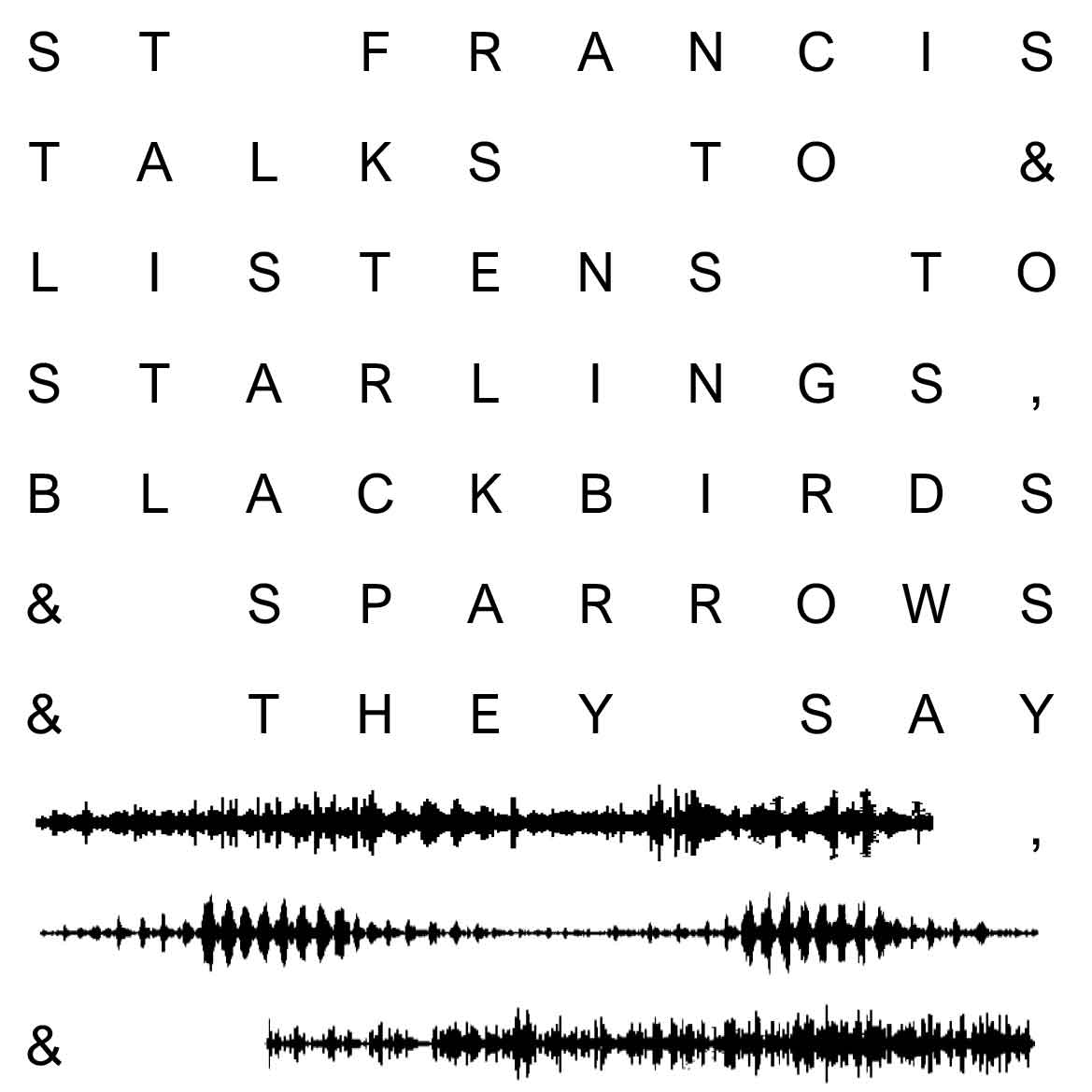
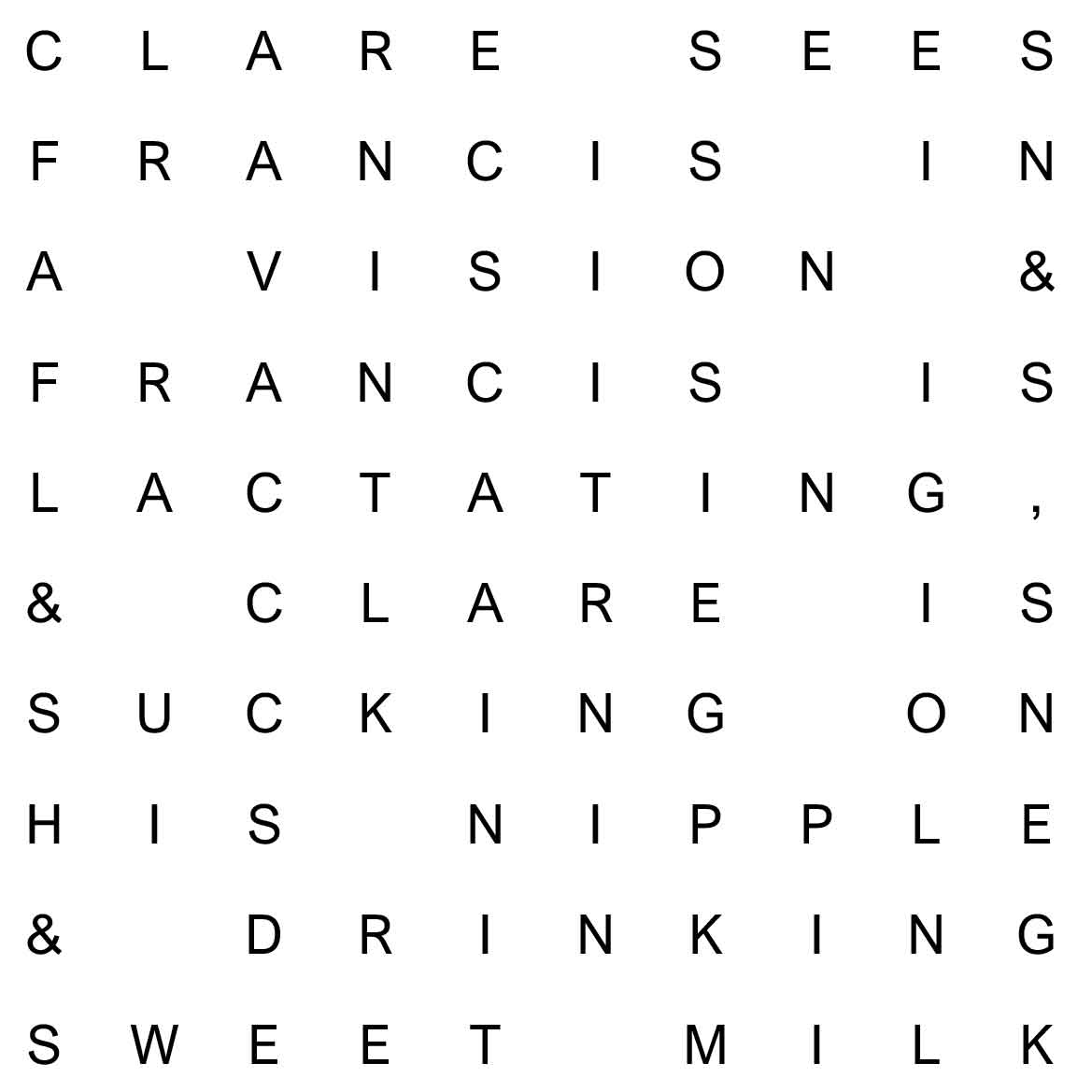
I forgot to congratulate you on the clever images!
Leila
LikeLike
Thank you, Leila.
Dino
LikeLike
Dino
The first thing “the world” never understood about both Francis and Wittgenstein was how vastly wealthy individuals could give away all their $ and live extremely simple, austere lives (cheap, basic food, cheap, limited clothes, limited travel, tiny living quarters, no servants, etc. etc.), known to the Church as voluntary poverty.
That alone made them look like madmen to society, and madmen are also seen as outlaws, even when they come from rich backgrounds. The first reason they gave away their wealth was because the opulence and hypocrisy sickened them (“Opulence is the end,” said Lana Del Rey). The second reason they gave away all their wealth was because they truly believed it was a moral crime for some people to have so much when others had so little.
Francis lived with lepers and Wittgenstein volunteered to serve (and did serve) as a common soldier in the trenches. He was against war, and he was even more against the lower classes fighting the wars while the rich stayed home in safety. During that time, Wittgenstein carried two books, the New Testament and Tolstoy’s almost-secular (but not quite) explanation of the New Testament.
Francis had a truly joyful intensity that made them call him a holy fool. Wittgenstein possessed a furious energy that made them wonder if he was possessed by a demon, i.e. (in modern parlance) insane.
They were both great (and ultimately solitary) humanists above and beyond anything else. I applaud your choice of subject matter and the “simple” way you’ve written about something so complex is admirable.
Dale
LikeLike
Thank you, Dale, for the parallel between St Francis’ and Wittgenstein’s renunciations, which hadn’t occurred to me. Even at a purely literary level, both St Francis and Wittgenstein renounced, it seems to me, the flashier styles that, given their station, was easily available to them and that perhaps was demanded of them. Though to speak of renunciation here seems a misnomer, given the richness of their thought and lives.
Although Wittgenstein coined the phrase ‘language-game’, I must say that I don’t associate him with the idea of playfulness. Quite the opposite, I tend to think of him as a rather forbidding person. But, who knows, perhaps there’s a sense in which he was a Philosophers’ Fool.
Dino
LikeLike