Sappho says this:
“Now, while we dance //
Come here to us, /
gentle Gaiety, /
Revelry, Radiance, //
and you, Muses /
with lovely hair”
The MOVEMENT in all sections of the poem is always to something new, from something that is fully defined. Progression, development, fulfillment, all in eighteen words.
The “dance” can be likened to what Nietzsche said about his hero Zarathustra, that his walk was a dance, that his walk was so lively that it recalled a dance and could be likened to a dance and that he danced that dance and walked that walk whether he was in town or out of it, once he had become himself, that is.
“Gentle Gaiety, Revelry, Radiance,” recalls Charles Baudelaire’s command to “Always be drunk! On wine, poetry, virtue, or what you will, but be drunk!” The wine itself isn’t important; the drunkenness is, an injunction which has inspired many august souls from Rimbaud to Dylan Thomas to William S. Burroughs and Bob Dylan. The wine itself (or the drugs, or the love) is never more than a means to an end.
And the end is THE MUSES, who are the ones with lovely hair.
Sappho and her cohorts all believed in the literal existence of “The Muses,” that is, they believed them to be gods, i.e. transcendent forces worthy of worship, eminently and ultimately worthy of worship, and therefore worthy of dying for, too, if that’s what it took.
They were only humans like us but because of what they believed and how they lived it, they may have been (among) the best of us.
END NOTE: Endless thank you/s to Mary Barnard (1909 – 2001), who made the translation of Sappho used in this commentary. Her translations possess an Emily Dickinson-like intimacy and idiosyncrasy which must also be contained, in a different way, in the fragments of Sappho.
Dale Barrigar


Dale
It is better to be constantly giddy in fantasy than felled by the Awful Truth. Since life is temporary it can be considered a fantasy except during its micro flash buried in billions of years of senseless time.
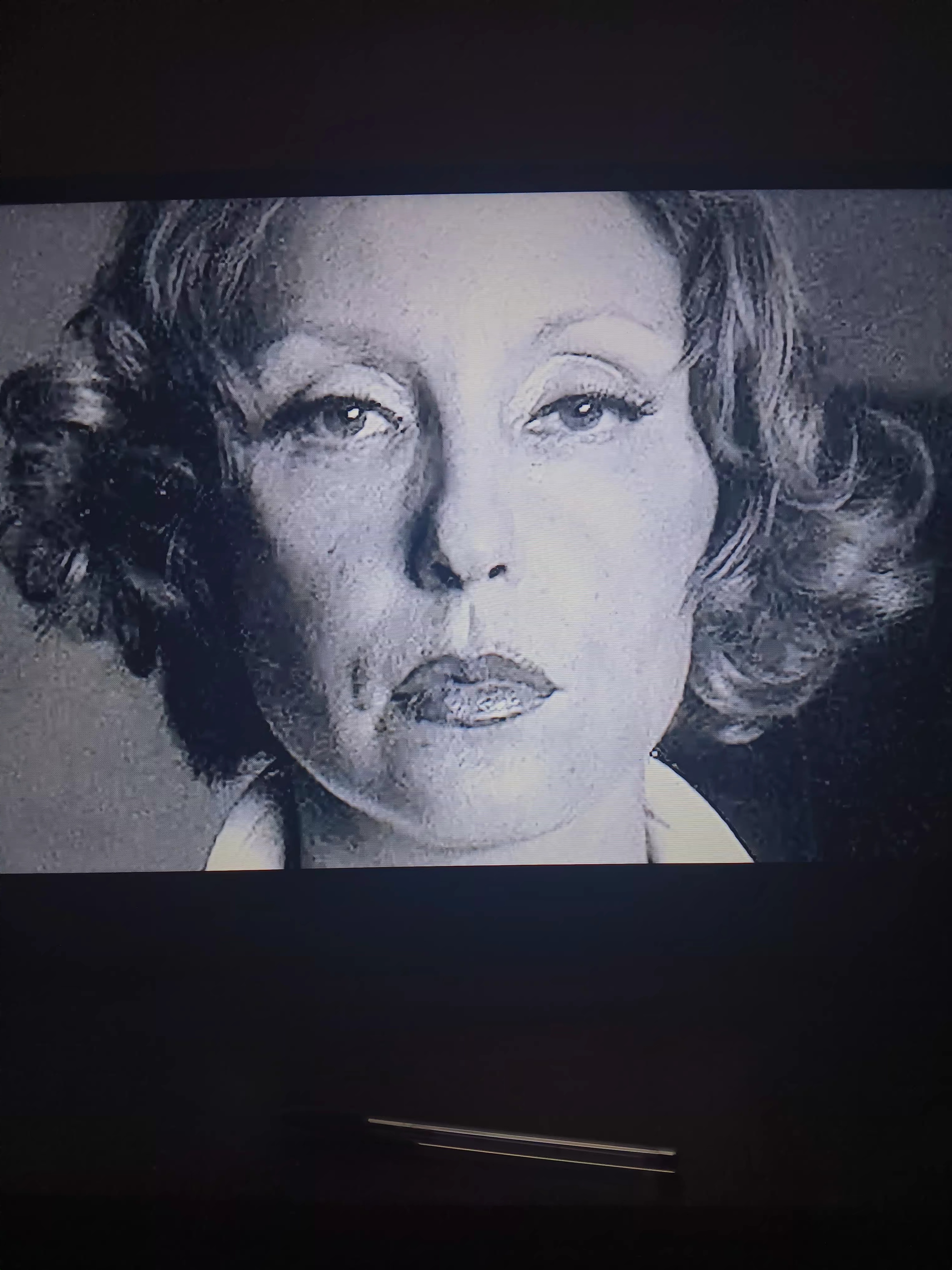
The lady has a wonderful face. And I well remember Jig and her please please please please please please please request. She too preferred the dream to the Awful Truth.
You excel at creating thoughts,
Leila
LikeLike
Hi Leila
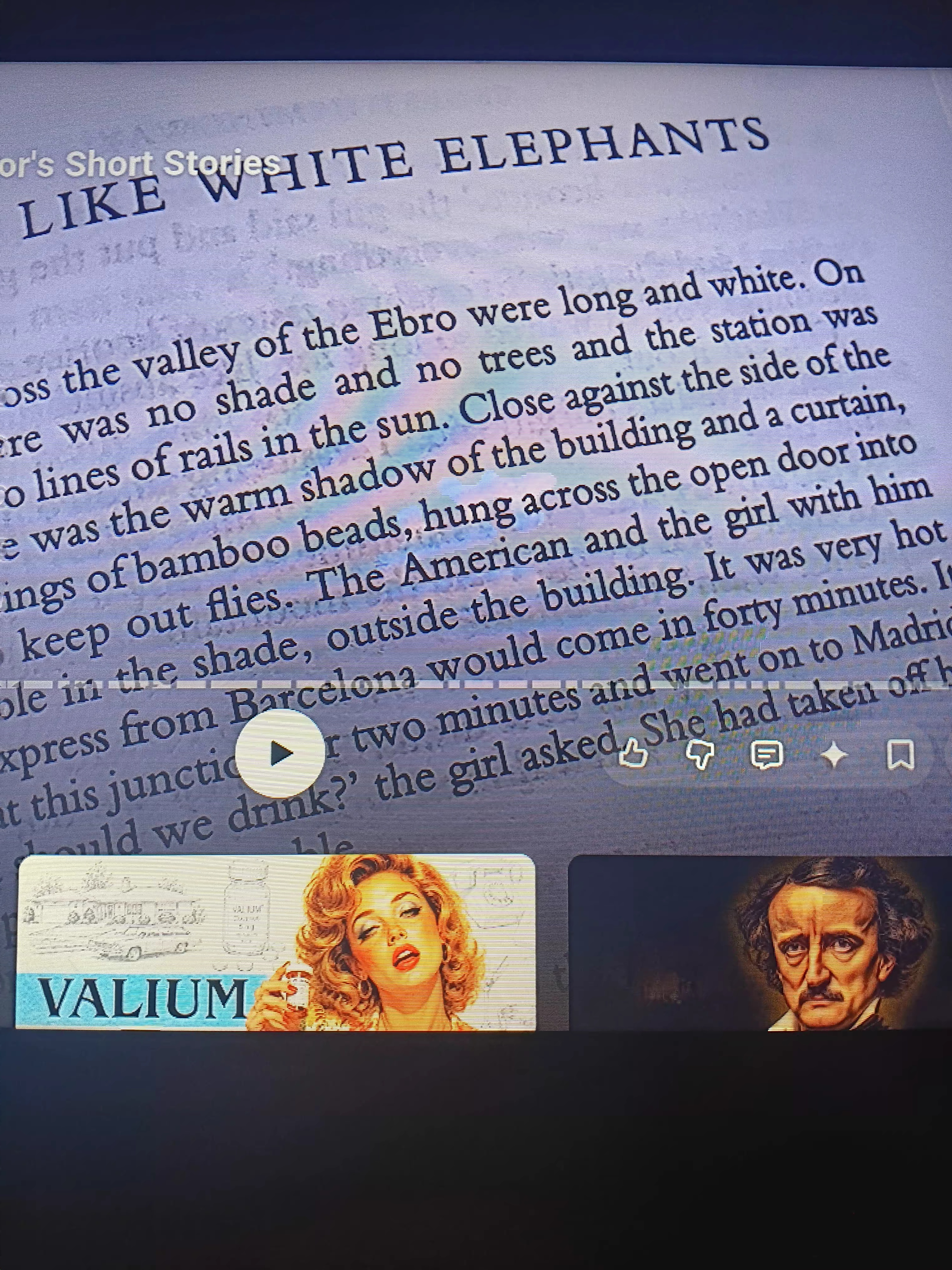
The Hemingway pic here is a bona fide William S. Burroughs cut-up photograph created with a modern-day phone which both resurrects the Burroughs cut-up method (also used by David Bowie and others) AND turns the modern-day phone into a literary device.
I have hated so much what the “smart phone” has done to the human soul that I wasn’t able to rest until I figured out a method to metamorphose the phone into a literary device. I stayed up countless nights in the laboratory laboring on this with Dr. Victor Frankenstein as my guiding light.
Every single tiny little thing in this picture can be “read” – every single TINY little thing including “she had taken off”…
Thank you!
DB
LikeLiked by 1 person
DWB
What an enlightenment those eighteen words!
This is my first introduction to Sappho. (That I know of.)
Here’s a line from “The Horla,” by Guy de Maupassant: “in that furious and terrible sea of fogs and squalls which is called MADNESS.”
Not quite the same thing but people can get drunk on many things, but I think Sappho meant it to heighten the senses.
Great topic!
CJA
LikeLiked by 1 person
CJA
Great quote from GdM! The Horla is chilling! Think I saw him running around on the roofs of the apartment buildings around here…
Sappho could write lyrics as good as Leonard Cohen or Lou Reed, I do believe. And her personality remains as mysterious as Shakespeare’s.
Mary Barnard started translating Sappho at the insistence of none other than Ezra Pound; then she fell in love and went on to translate all of Sappho’s known works, utterly brilliantly!
The woman in the picture here is the truly great Jewish-Brazilian short story writer Clarice Lispector. She is meant to conjure both Mary and Sappho and Emily Dickinson.
More Sappho tomorrow right here in Saragun Springs!
DWB
LikeLiked by 1 person