Complainings by the Drifter

“If we live good lives, the times are also good. As we are, such are the times.”

– Saint Augustine

“The Drifter” wishes to complain this week.

Out of respect for potential hyper-sensitive readers, he shall limit himself to three brief topics.

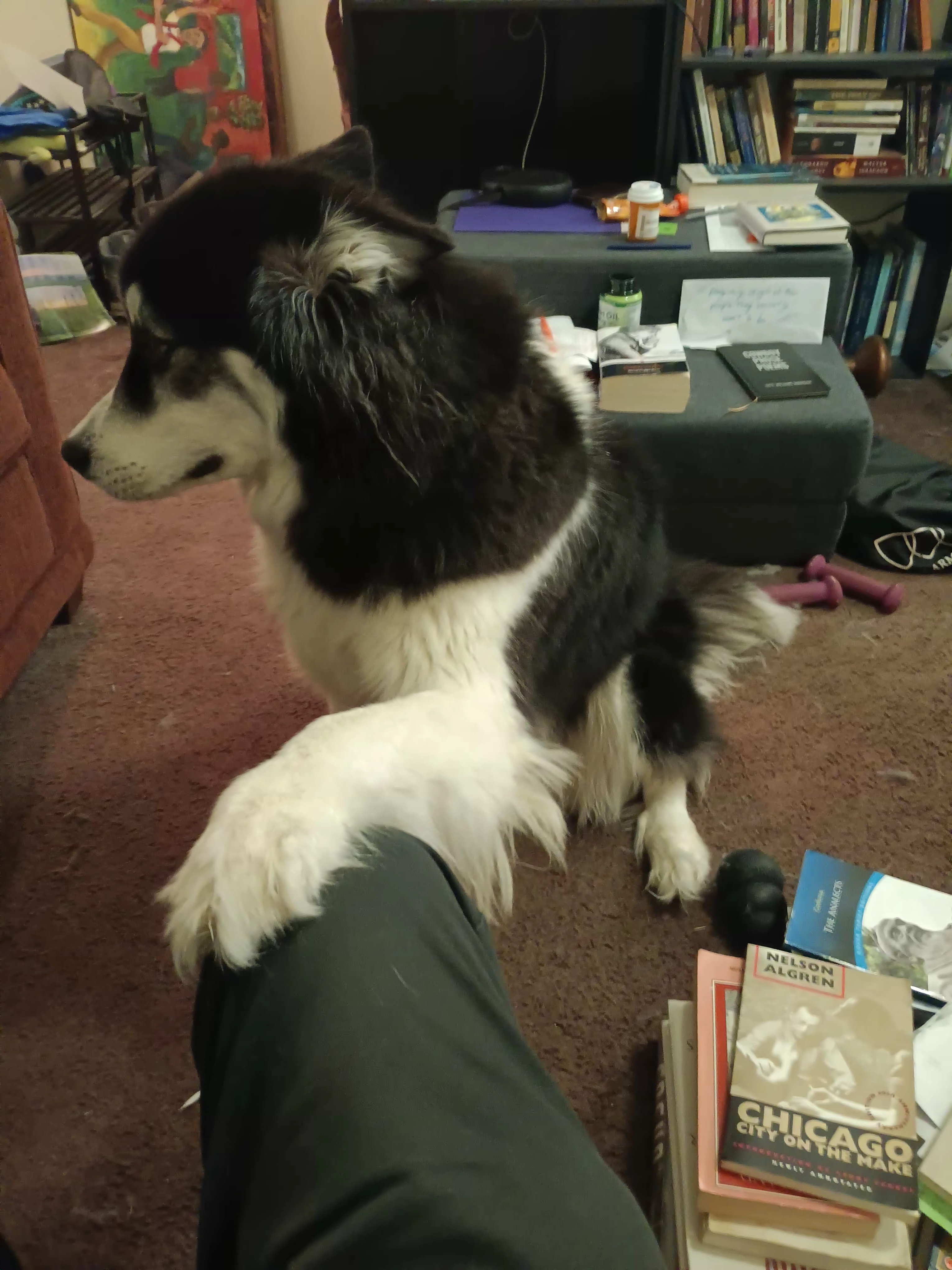
His two kids and his three dogs can fairly attest to the fact that complaining is one of his fave hobbies.

Some folks call it “letting off steam,” so a gasket doesn’t blow.

They say Henry Miller was still complaining about his mother on his death bed, when he was 89, even though she had died 75 years earlier, when he was 14.

And yet, Miller always called himself the happiest man alive.

The other day on NPR I heard some clown (a well-known, well-paid clown) say that the “tech bros” are the “cool kids on the block,” and I almost chucked up the lunch I hadn’t eaten.

(The seven cups of coffee that were in my stomach began to swirl around. It’s usually half-caf since I had a stroke a year and seven months ago. FYI, zero side effects from the stroke and I’ve also given up any and all smoking of anything. But I still enjoy second-hand smoke whenever I can find it, like walking through the halls of my Chicagoland apartment building any time of day or night.)

The term “tech bros” is itself an absurd and ridiculous thing (even though, or especially because, “everybody” seems to be saying it now).

And yet, to say that these folks are “cool” is even more ridiculous, when one thinks of where the term was born.

MILES DAVIS was, and is, cool.

His album, Birth of the Cool, came out in 1957, the same year as On the Road.

Miles Davis was so cool that even Bob Dylan said he was the coolest.

Jack Kerouac was cool.

Charlie Parker was cool.

Shirley Jackson was cool.

N. Scott Momaday was cool.

I saw him live one time in Chicago, reading some of his things and giving a talk. I met him for two minutes afterward and it was more than enough for me to assuredly confirm that N. Scott’s coolness was at Miles Davis levels.

The “tech bros” are highfalutin, ruthless industrial capitalists (to the extreme in a world (seemingly) without accountability for the rich).

But they are not cool.

The NPR guy himself is “slick,” but not cool, as in: a bullshit artist. (Which is why Hemmie said the most important thing an artist of the real needs is a good BS-Detector.)

In the nineteenth century, the German philosopher Fred Nietzsche wrote, “The public permission to choose between five main political opinions insinuates itself into the favor of the numerous class who would fain appear independent and individual, and who like to fight for their one-sided opinions. After all, however, it is a matter of indifference whether one opinion is imposed upon the herd, or five opinions are permitted to it. He or she who diverges from the five public opinions and goes apart, has always the whole herd against him.”

In the USA, we ain’t even got five. We have two. And one side is controlled by the generic corporate capitalists. And the other side is also controlled by the generic corporate capitalists, which is why they failed to enforce accountability when they had power, i.e. 2021 to early 2025, which is why we’re in the situation we’re in now, at the end of 2025. How in the hell can this be called “freedom” any longer?

Dr. Cornel West, if you’re reading this, PLEASE keep doing what you’re doing. Your admin skills may be lacking like some of them say, but you’ve got more soul than the entire US Congress put together. And SOUL is what is needed now.

(After Nietzsche lost his mind, he sent a letter to someone saying that he was traveling around Germany executing all the antisemites. He saw IT coming even then, and even though he was (according to “them”) insane.)

The last thing the Drifter wishes to complain about today is all the people who are in a hurry to get nowhere. They will run over innocent children or old ladies on the street without looking backward just so they can get home faster to sit on their fat asses doing nothing (fat asses are fine if you’re doing something). If you have done this or are doing this, please slow down and give it another thought, if you ever have thoughts. Also, Henry David Thoreau said, “When in doubt, slow down.” I can also recommend Leonard Cohen’s song “Slow” to all the folks who are in a hurry to marry themselves off to someone else. Living alone ain’t a sin. It makes you an outlier in our society, but some of the best people have been outliers.

Jesus, Buddha, Shams of Tabriz and Joan of Arc would be four examples.

THE DRIFTER’S SONG RECOMMENDATION FOR THIS WEEK (December something ’25):

The Drifter recommends the song “Still Think About You” by A Boogie wit da Hoodie, from his 2016 mix tape titled ARTIST (his real first name is Artist).

This song is rap as ART, and the piano in it will break your heart, as will the lyrics and the content of the song. The word on the street is that his girlfriend got preggo with another man, and left him, inspiring this beautiful, intense tune.

Boogie also worked as a pizza delivery person at one point. The Drifter sympathizes; he did the same thing (in the 1990s).

THANKS to Tressa and Elena and their friends for the knowledge of this song.

Signed, Dale Williams Barrigar, MFA, PhD

Whatever happened to solidarity by Michael Bloor

(Note–Not everything this month before we go public is a rerun; and today we bring you a fresh one by our friend, Michael Bloor–LA)

Andy and Davie were on their usual walk, along the banks of the Allanwater as far as the wooden footbridge, and then back again. They were discussing Scotland’s nail-biting victory last week over the Danes, sending the Scots to the World Cup Finals for the first time since 1998. Andy was English and had little interest in football, but he’d been deeply impressed by the tremendous, spontaneous upwelling of joy across the entire Scottish nation that the game had caused. Davie was trying to explain that it wasn’t just about the result, but the circumstances – the manner of the win. Three of the four goals were truly things of beauty. The match took place at Glasgow’s Hampden Park in front of a delirious home crowd, screened live and free-to-view in every home and every pub. It followed years and years of failure to qualify – some of the present team being unborn at the time Scotland had last qualified.

Andy nodded good-humouredly, but Davie could tell that he hadn’t yet got his point across. He tried again:

‘I was ten when I first started going to the football. In ‘The Boys Enclosure’ (admission: 9 pence – 5p. in new money). It was always packed solid, but you were always among friends, you roared, you booed, you sang, and when they scored you all swept forward like a mighty wave. Like I said, I was ten, and for the first time I felt a part of a whole. That was what Scotland felt when that lovely fourth goal hit the net in the last minute of extra time: it felt that we were part of a whole. It was a feeling of solidarity.’

‘OK, yeah, I’ve got it now, Davie. Solidarity: maybe I didn’t recognise it ’til you said it. Solidarity eh? I thought that had disappeared back in 1985.’

‘1985?? Ah, you mean Polmaise?’

[Polmaise Colliery, or the remains of it, lay just nine miles away. All through the year-long miners’ strike in 1984-85, the Polmaise miners never posted pickets at the mine gates to try to deter fellow miners from returning to work: they didn’t need to. They knew that Polmaise miners were all, to a man, solidly behind the strike. Polmaise was famous: they’d previously struck for 10 whole months back in 1938; they’d already been out on strike for a fortnight in 1984, before the national miners’ strike was declared. When the national strike was broken, a whole year later, and the union voted for a return to work, Polmaise, alone, stayed out for a further week.]

‘Yeah, I mean Polmaise. That was solidarity, Davie. I was there, you know, with the whole village at the gates to applaud the lads coming off the last shift, when the Thatcher government closed the pit two years later.’

‘Good for you, Andy. I understand: that was solidarity. So, instead, what would you call our nation of leaping hearts when the ref blew the final whistle at Hampden Park the other night?’

‘Maybe Communion? A transcendent thing, shared and remembered. ‘

‘Ah, like Archie Gemmill’s solo goal against the Dutch in the World Cup Finals in Argentina in 1978?’

‘Ha, if you like.’

‘OK, I’ll settle for communion over solidarity. By the way, do you know what William McIlvanney, your favourite Scots author, did when he got the publisher’s advance for his first novel?’

‘Beats me, Davie.’

‘He jacked in his teaching job in Kilmarnock and headed off to watch Scotland and Archie Gemmill in the 1978 World Cup Finals in Argentina.’

Andy smiled, but he was absorbed in watching a Dipper fossicking in the Allanwater shallows over at the opposite bank. Part of the attraction of Dippers is that, like Puffins, they are both comical in appearance and surprisingly successful in their daily tasks. Dippers are about the same size as a thrush, but black and definitely portly in appearance, with a big white bib under their chin. They are called ‘Dippers’ because they constantly bow and nod their heads up and down, like manic Victorian butlers. Yet these clown-like birds are surprisingly swift underwater swimmers and efficient finders of caddisfly larvae on the bottoms of rivers, lochs and burns.

Davie followed Andy’s gaze. ‘That Dipper looks perfectly happy on his own over there. Maybe we don’t really need communion with others?’

‘Ah, but he’s in communion with Nature.’

A Saragun Springs Rerun: The Great Book of Angharad by Michael Bloor

(Introduced by Puck the Squirrel, in the image, a resident of Evergreen Park, Bremerton, WA, USA)

This week it is our pleasure to rerun stories by contributors to our site this past year.

We are going public in January, and, yes, this rerun thing is a naked attempt to fill the days until the new business begins, without first creating new work.

We are all about the TRUTH in the Springs.

But that does not mean a lack of quality. This is a fine work by Mick, and since many more eyes are trained toward the site than before, it, and the items that follow deserve a second go.

This also allows me to break in the link feature, which we hope you will hit now…

The Great Book of Angharad

The Broom Closet by The Drifter

The worst punishment I ever received at that place was being locked in a broom closet, in the dark, for three hours.

The school was Our Shepherd Lutheran Elementary located in a suburb of Detroit. The time was the mid-1970s.

I was in third grade when she locked me in the broom closet.

I say “she” because it was her who did it – my third grade teacher, Ms. Caul, who actually wasn’t that bad most of the time and who I even thought of as a friend some of the time.

But this time we knocked heads.

She wanted me to go up to the front of the class and join the other five kids who were serenading the rest of the class who were sitting at their desks.

She requested that I join the singing, that I head up front and begin to bust out in passionate song, singing hymns to the rest of the class as if I were some sort of transported hymn-singer, which I wasn’t. And far from it.

I was the kind of kid who wasn’t too good at joining, or singing (except when I was alone).

I had been sitting there at my desk looking at the happy hymn singers and thinking how pathetic and sad they were when she requested that I leave the security of my desk, head up front, and join them.

When I said no, she told me again to get out of my desk and march to the front of the room, pronto, buster.

When I said no again, she started walking down the aisle toward me, and she was here (which was there) before I even knew what hit me.

She was hovering over me, helicoptering above me, pointing at the front of the room and demanding that I take my place with the singing group.

I crossed my arms, turned my head away, and said no again.

Now she grabbed me by the arm, yanked me out of the chair, and dragged me to the front of the room.

Then she swung me around and slammed me (accidentally) into the kid at the end of the hymn-singing line.

Next she informed me that I would now be singing, not with the group, but as a soloist.

I had refused to sing in the group and it astonished me that she believed I would now consent to busting out in a solo for these fools.

I set my jaw shut tight, crossed my arms, and stared out at my classmates in their desks, all of whom seemed more horrified than I felt.

She began yelling, telling me to sing.

The truth was, I could not have sung at that point even if it had meant my life.

That was when she yanked me out of the room by the arm and marched me straight down the hall to the broom closet. For some reason, the light switch for the broom closet was on the outside of the little room, in the hall.

She threw the door open and with a great shove she fairly hurled me into the tiny room filled with brooms, mops, buckets, and cleaning supplies.

Then she slammed the door shut tight, locked it from outside, and turned the light off from outside.

I was alone in the broom closet, locked in, in the dark.

Like I said, I was in third grade, so that means I was either 8 or 9 years old.

I state my age as a reason for why I spent my time silently weeping in there, in rage and terror.

I felt like I’d been locked in a dungeon and, indeed, to this day I almost feel like I know what it’s like to be locked in a dungeon because of my refusal to join the singing fools.

Some people enjoy being cheerleaders for the system.

Some people see absolutely nothing wrong with groupthink, following the herd, living the life of a passive approver of the ways things get done around here, no matter how they get done, as long as the group gets what it wants and the majority rule, in a societal system that wants slaves for its great devouring jaws, and not even IT knows why, except that’s the way it goes.

“Consistency is the hobgoblin of little minds,” said Ralph Waldo Emerson, and, “Nothing is at last sacred but the integrity of your own mind.”

The three hours might only have been thirty minutes.

When she let me out, she said, “I’m sorry Dale, but you had it coming to you and I hope you’ve learned your lesson this time.”

Tell Only the Good Parts and Leave the Rest by Leila Allison

(First published in 2015)

It’s three feet farther to hell for people who jump off Torqwamni Bridge. The City of Charleston has recently installed an eighteen-inch extension to the span’s rail. In my opinion, the city has wasted its money. The Torqwamni goes up to a fatal height almost immediately, and at its middle it stands better than ten stories above the churning and hungry Port Washington Narrows. Only Serious People go over that bridge; less than serious types, those who need just a little attention to feel better inside, never go to Torqwamni Bridge to perform on the off-chance that they might fall off. No, I don’t see a foot-and-a-half—in both directions—getting in the way of a well prepared and dedicated serious person.

Such ran through my mind as I drove Gram to yet another doctor’s appointment. At the age of twenty, I was getting awfully familiar with doctors’ clinics and the technologies designed to prevent, for as long as possible, what I had once heard described as an “end of life event.” Nobody speaks frankly about anything at doctors’ clinics after the insurance is settled. In a decrepit and mournful sort of way, visiting any of Gram’s phalanx of medicos was like going to Neverland; but instead of recapturing the spirit of youth, we found Tinkerbell in bifocals and Peter Pan attached to a colostomy bag.

It was a typical Pacific Northwest March morning. The bipolar weather changed its mood every ten minutes or so. Wind driven slaps of rain, hail, and perhaps, locusts, would suddenly stop and give over to sunshine so cheery that I was certain that it had to be up to something. Sure enough, the lovely light soon faltered and the whole evil process began again from the top.

“Reena?” Gram said, not at all sounding like the mindless old woman who had earlier killed a half hour whining like a two-year-old because she couldn’t find the hideous “rose” blouse she that she already had on.

“Hmmm?” At that time I was struggling with the wind as to hold my lane on the bridge.

“Tell me we’re goin to VIP’s for bloody Marys; tell me we’re goin for butts—Tell me anything but Group Death.”

I thought you were dead,” danced on the tip of my tongue. But as I looked over at Gram, I saw the woman I had known and loved for life. It broke my heart knowing that her soul was still in there; trapped like a miner given up for dead; unrescuable; a flickering flame eating the last of the oxygen.

Gram and my late Grandpa Henry had raised me after my mother, their daughter, had abandoned me in my infancy. They were in their late middle-years at the time, and both were hard working sorts who never let the drudgery of their menial jobs get in the way of having fun. This fun included booze. So what? They had loved me and had gone out of their way to see to my happiness.

Not long after Grandpa Henry had died from a mercifully swift heart attack, Gram had suffered the first in a series of small strokes. For five snarly and prideful years, Gram had fought back while keeping her dignity. Even though death had meant to take her one piece at a time, Gram had kept her sense of humor. I remember the morning when Gram had to weigh herself to see if she had accrued fluid due to her failing kidneys. “Christ, I’m getting fat,” she had mumbled through a Winston. Upon seeing that she had lost three pounds, Gram winked and said: “Probably cancer.”

But even the best of us have only so much good dying in our souls. And on the afternoon Gram had to endure another stroke that wouldn’t kill her, by itself, she knew that the game was up. “Reena, honey,” Gram had whispered as the ambulance took its customary route to our house across the street from the Ivy Green Cemetery, “I’m so sorry about this…There’s still time…Time to get the Demerol…”

Dear God, how it used to be: The laughter; the living and dying for the Seattle Mariners; the childlike looking forward to payday; ashtrays which resembled beaver dams; last night loganberry flip glasses left on the “occasional” table; watching Thin Man marathons on TCM over popcorn. Those, and more, yes, were the backdrop of my happy childhood. But, at twenty, the roles of adult and child had been swapped around. This was a poor trade because I couldn’t provide Gram with happy memories; that part of her life was over. Gram wasn’t going to get better because the ravages of time and choice had ensured that there was no level of better for Gram to get back to. Still, within it all, I had learned something of value: The worst universe possible is a godless void in which a sentient chemical accident know as humankind is the sole inhabitant. Yet here, even here, especially here, if an otherwise meaningless being does right by a fellow meaningless being minus the promise of heaven or the threat of hell, as my grandparents had done for me, life has a meaning, and it should be wailed for upon its diminishing, more so than upon its passing.

I had time to think all this because whatever appropriately snarky remark I had shot back at Gram after her “Group Death” comment had landed on a mind that changed even more rapidly than the weather.

“Hmmm?” Gram replied vacantly, very much sounding like the mindless old woman who had whined about the rose blouse.

“Nothing…Nothing at all.”

How I hate doctors’ clinics: decor that is offensive because it is designed to be the opposite; pushcart muzak around only to stave off silence; fellow wranglers tending their charges; Everest College-types behind counters secretly texting their boy friends. But, mostly, its the walkers I hate most. There’s something about a cane that allows its user to retain his or her independence; walkers are cribs on wheels. You can smack someone with your cane if that someone offends you. All you can do in a walker is shuffle forward, head down, as though you now weigh more on Earth than you would on Jupiter.

Sometime during my brief life, civility, actual and feigned, has been, as Gram would’ve said, before the loss of her mind, “shitcanned.” Once upon a time strangers used to speak to other strangers by formal address until they were given permission to do otherwise. Perhaps I’m proof that even a twenty-year-old girl can have a lot of humbugging fogy in her; still, there’s nothing more irritating than have someone unknown to you call you by your first name as though you are a dog or a toddler.

“Has Elizabeth fasted?” The Everest College-type asked me upon check-in.

“How should I know what Elizabeth is up to?” I said cheerfully. “She could be off waxing her tramp-stamp, for all I know. Mrs. Allison, Mrs. Elsbeth Allison has fasted.”

Surprise! My little remark pissed the Everest College-type off something awful. Unless I was horribly mistaken, the evil light that shone through her previously bored expression communicated her desire to watch me starve slowly in a sealed room.

“Have a seat,” the E.C.-type said through clenched teeth. “The nurse will be with you.”

“Why thank you, um, Misty,” I said after I made a big show of reading her name badge. “I’m sure it won’t take too long for that to happen—even though it will give you and I less time together.”

Dante would lose his mind if he could see that humankind hasn’t taken The Inferno as a cautionary tale, but has used it as a blueprint from which to devise smaller hells on Earth.

Call this an overreaction, if you must, but I have spied concentric circles of increasing misery inside every doctors’ clinic I’ve ever been to. The first circle has to be the waiting room; which is guarded (as you already know) disinterested E.C.-types who wear pastel scrubs and too much makeup. The second circle involves a mute tech who points at an old timey scale better suited for weighing livestock than humorous human beings. The Nurse (who is likely the brains of the outfit) inhabits the third circle. Every The Nurse is an intimidating and omniscient person who has learned her (never his) skills from repeated watchings of One Flew Over the Cuckoo’s Nest and/or Godzilla.

The fourth circle is excruciating. This si where you cool your heels in a cruddy cubicle waiting for the doctor to come talk at you as if you have the IQ of a pineapple. Old Gram (the person whom I knew and loved, not her insufficient doppleganger) used to go to special pains to make herself unendurable for the doctor whenever she felt she had waited too long: “There’s dustbunnies ‘neath that table—Hope y’all wipe better than that.” That sort of unendurable.

I heard muffled chatter, hard by. I imagined the doctor reading (probably for the first time) the results of Gram’s last blood draw (she’d have another on the way out; think circle five). I imagined him being able to give names to each of her few remaining red cells as though they were a box of kittens. I imagined nothing good. Instead, I loaded my mind with unendurable remarks enough for two.

Dr. Zale made his entrance. Though I had been taking Gram to see this particular physician for over a year, I always got the impression that every time Dr. Zale saw Gram was like the first time. To be fair, Gram 2.0 has never been all that memorable. If she and Dr. Zale had known each other a bit longer, as little as three or four months, he would have brought a whip and a chair.

Dr. Zale, however, remembered me. Not by name, but by sight. It did my heart good to have his confident I Am The Scientist, You Are The Zombie demeanor slink off and get replaced with an “Oh, no, not her again,” expression—which, to be frank, I get a lot of.

He smiled weakly. “How are we, this morning?”

“I suppose that depends on what the test results have to say,” I said.

Dr. Zale shrugged and held his weak smile and went over to where Gram was seated, but he never took his eyes off Yours Truly. “How are you today, Mrs. Allison?” he asked, still looking me in the eye.

For our miserable year or so together, I had been struggling to develop an actual opinion about Dr. Zale. His use of Gram as a prop to deliver sarcasm my way ended the struggle.

Something along the line of “Listen, fuckstick, eyes on to whom you’re speaking,” had entered my mouth like a shell slammed into the chamber of a shotgun. And I would have said it too, if a voice hadn’t called out from below the insurmountable slag that over-topped it.

“It’s three feet further to hell for folks who’d jump off the bridge, Dr. Zale,” Gram said. “On the drive over this mornin’, I noticed that the dumbass city put an extension on the Torqwamni’s rail.”

I could actually feel my eyes dilate, and a weird tingling erupted in both my hands and thighs. I sat down heavily on a nearby stool, and I wondered if I was not too young to suffer a stroke of my own.

Dr. Zale became nonplussed; he had never heard Gram speak before, save for yes and no and general gibberish.

Gram looked at me. Though her pallor remained that of old paper, the lightning blue I had always remembered being in her eyes was fully charged. A wicked, lovely, vicious, warm grin had broken out in her face. “We think a lot alike, don’t we Reena baby?”

“Ye-yes, Gram, we sure do,” I replied. I wanted that moment to last forever. But, already, the befuddled fog again gathered between reality and the survivor.