
The Genre of Silence in the USA
“Born down in a dead man’s town.” – THE BOSS

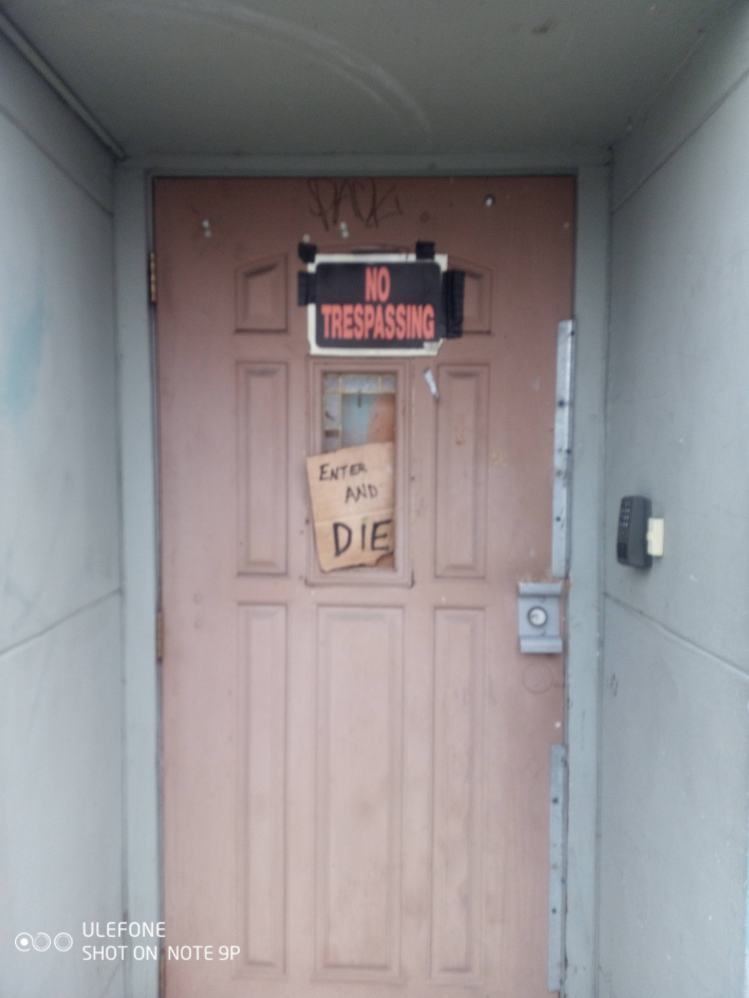
(“Two Siberians” Images provided by the Drifter)
In the Moscow of 1939, ten years after Stalin had become dictator, LOUD KNOCKS on the door in the middle of the night were almost never a good sign – especially if you were a writer, and especially if you were a writer who was accused of “low productivity” because you refused to write works that followed the party line.
It usually wasn’t your friends coming ’round with a case of wine after the bars closed, looking for a place to continue the party.
More likely, it was four somber and silent NKVD, or Russian secret police, agents, arriving to take you where you surely didn’t want to go, unless you enjoyed brutal torture and an eventual complete “disappearance” from the world.
This time the writer was Isaac Babel, a Jewish short story writer from Odessa, Ukraine (it was Russia at that time), and his former friend Joseph was really mad at him for all his low productivity.
Babel called it “a new genre –the genre of silence,” which he had been developing and perfecting – because he was a real, true and deep, artist who just couldn’t bring himself to write the kind of drivel Jospeh Stalin told him to.
The four agents escorted Babel and his common-law wife Antonina to the car (wife number one was in Paris).
No one spoke as they rode toward the prison. Babel laughed a few times. Yes – he laughed, out loud.
The irony was that Russia had never ignored its writers and sent them to die in the gutter, like they do in America.
On the contrary, it was a land that worshiped its writers.
Writers in Russia were beyond what rock stars or movie stars were or are in modern America.
Writers were not just considered “writers” – the best of them were considered to be saints, sages, and spiritual leaders, as well as celebrities.
But now their fame could get them into an awful lot of trouble.
Terminal trouble, indeed.
At one point on the ride to the prison, Babel blurted out to Antonina, “I want you to take care of our child.”
She said, “I don’t know what will happen to me.”
It was the only time one of the agents spoke. Staring straight ahead, he said to her, “We have absolutely nothing against you.”
When they arrived at the prison Babel didn’t look back.
He said to her, “We’ll see each other again,” and was escorted into the prison.
And he disappeared for fifty years.
***
It was only in the 1990s that anyone found out exactly what had happened to Isaac Babel – one of Russia’s greatest writers of all time, a short story writer on a par with Chekhov, Guy de Maupassant of France, and O. Henry of America (who spent his last days poor, broke, in debt, drunk, and possibly on drugs, in a cheap hotel (“turn up the lights”), but at least free, or sort of free, in America), whose collections Red Calvary and Odessa Tales explore the worlds of the Soviet Army and Jewish gangsters respectively and later influenced such literary classics as the American Denis Johnson’s immortal short story collection, Jesus’ Son.
He was tortured for three days until he signed a false confession, stating that he was a terrorist.
Eight months later, after a false trial that lasted twenty minutes and for which the verdict had already been decided, he was executed by firing squad at 1:30 in the morning.
Then thrown into a mass grave.
***
All of the above is the kind of thing that ends up happening when a single, evil, foolish madman is allowed to run the world.
You would think we’d learned our lesson by now.
Such are the wages of ignorance.
***
There are many forms of Resistance.
Mr. William Shakespeare was very careful to make sure he didn’t get his head chopped off like Sir Walter Raleigh did in 1618, or terminally stabbed in the eye in a staged bar fight like his friend Christopher Marlowe had been in 1593.
***
I, The Drifter, have written this on the Jewish Day of Atonement in 2025. I ask forgiveness for my sins.
GOD BLESS THE WORLD.
Historical End Note: Joseph McCarthy left Guthrie alone in the 1950s because Woody was poor.
(Advice to Resisters from The Drifter: When you need to, hide out in an Underground that you light up yourself like Ralph Ellison’s Invisible Man.)







 Saragun Springs