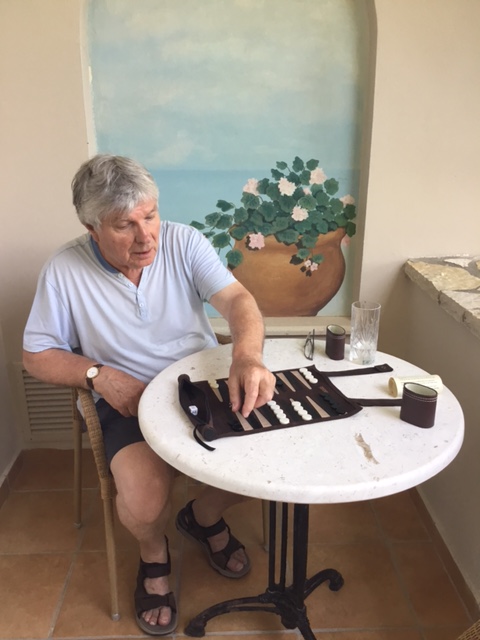
Today we take another trip through our gallery of images. These have been provided by our esteemed Co-Editor, Dale Williams Barrigar, who has a wonderfully crooked eye!–Leila

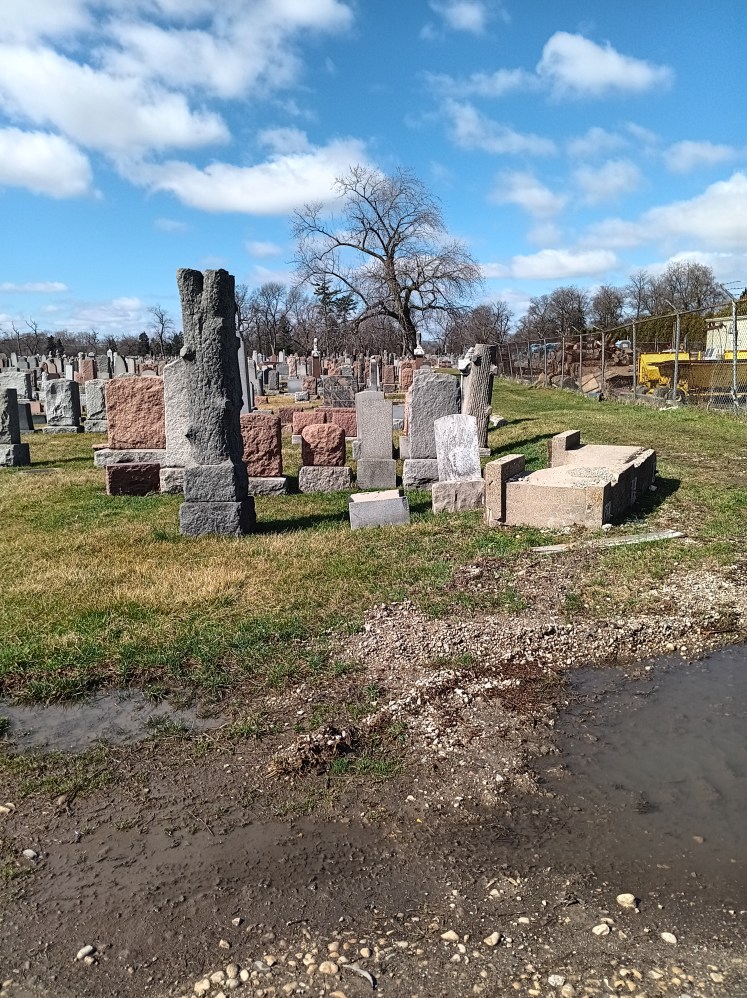
Today we take another trip through our gallery of images. These have been provided by our esteemed Co-Editor, Dale Williams Barrigar, who has a wonderfully crooked eye!–Leila
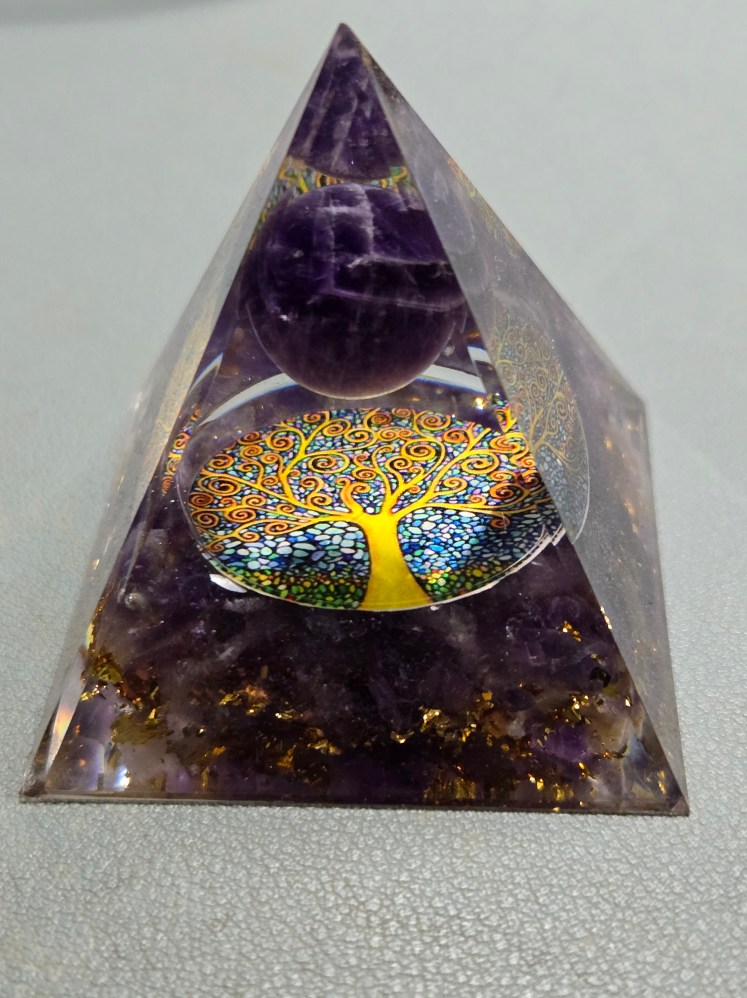
(Today is the second appearance by the wonderful Mr. H, and we hope to show more of his work soon–LA)
Loud Socks
The sensation isn’t pain exactly, but flashes yellow as Nurse Flanigan flushes my ear then works some kind of instrument deep inside it. She says the wax plug is thick and hard and goes at it again. It’s as if she’s using a firehose and sword when they’re so close to my ear drum.
“There we go, Mr. James,” she says finally and holds the culprit on a tissue. Looks like a roach. I half expect it to scurry up her arm. “Can you hear better?” she says.
“What?” I reply loudly, then chuckle away the look of panic from her face. Not sure if my humor landed softly or crashed and burned. She brandishes the firehose and Excalibur and steps ominously to my other ear.
“This one’s even worse,” she says and has at it till the sensation progresses to red. I tell her I need a break.
We sit in silence awkward as a first date. The paper sheet on the examining table crackles as I shift my weight. I read the poster on how to save someone from choking. Finally she mentions her son is starting college and asks if I have children. Three. Grandkids? Six, I say, then tell her I’m ready to resume before she asks for names or ages.
After a few fierce minutes, she ta-da’s the piece of my brain she’s removed. I knew she was too deep. She looks at me and mouths something silently. I mock shock.
“Got you back,” she says, and we both grin. Then she warns I might be tender. She nods toward my feet. “Do those hurt your ears?” I see my pants have hiked up revealing my yellow-green-and orange-striped socks. “They’re so loud,” she laughs.
She can take a joke as well as dish out her own. Nice. She says if I have my ears cleansed more often, it won’t be so unpleasant. I suggest monthly, but she thinks yearly would be sufficient. I ask for her card as a reminder and make a mental note to come back in six months. Maybe sooner.
#
I announce to the kids I’m home, write Loud Socks on the back of Nurse Flanigan’s card and put it in the silverware drawer with the others. One of my girls, Tabby, jumps off the counter and rubs against my legs. I pause a moment then check on Clementine. She’s nursing her litter of six on the pile of dirty clothes in my closet. She looks at me and mews softly. If serenity had a sound, that would be it. No sign of Mr. Jinx. Probably prowling the basement.
For lunch, I fix my specialty, a baloney sandwich with mustard, chips on the side. After a nap, I’m already feeling antsy for my next date and spread my cards from the silverware drawer on the counter:
— Shamala Jackson, MD, Surprising Eyes. Maybe tell her my acid reflux has gotten worse?
— Dana Thompson, Podiatrist, Silence is Golden. If I quit soaking my foot, my corn might come back, but I can’t wait that long.
— Patricia Reese, PT, Mona Lisa Hands. It’s always easy to fake a backache, but she seemed suspicious last time. I’m afraid she might contact Suzanne Barnes, PsyD, Dangerous.
I look through a dozen or so cards unable to make up my mind about whom to date next when my oldest kid, Tom, jumps onto the counter and drops a mouse next to Janice Keene, DDS, I love Lucy. I tell my boy it’s a good choice but too soon for my six-month checkup, and it’s hard to fake a cavity. I could chip another tooth, but that’s bright red painful.
I continue flipping through cards unable to make up my mind about whom to be with next when a roach scrambles across the counter. I squash the bug, roll it between my finger and thumb and tilt my head…then call Nurse Flanigan and tell her she missed a bit. I’m looking forward to my second date with Loud Socks.
(end)
David Henson lives in Peoria, IL with his wife and their dog, who loves to take them for walks in the woods. He enjoys playing classical and boogie woogie piano. His work has appeared in Ascent, Lullwater Review, Pikestaff, 7×20, and 365 Tomorrows, among others, including years worth of work on Literally Stories UK.

(Today and tomorrow we are pleased to run works by David Henson, a fine person and writer, whose biography appears at the end of the story. We are always pleased to welcome guests and we hope the readers feel the same–LA)
2 + 2 = Goldfish
When it first happened, I thought I was getting dementia even though I was only … What comes after 34? Nothing does anymore, I guess.
Scientists and philosophers used to debate whether humans discovered or created mathematics. I never understood why anyone could believe the latter considering birds, dinosaurs and all life that preceded humans couldn’t have evolved without math.
Nowadays everyone agrees humans discovered math. But a number of years ago—I can’t say how many because nowadays things don’t work that way—some rogue scientists took things further. Mathematics, they reasoned, begat the laws of nature from which everything else sprang. Math was a creator. Math, they said, was alive.
“Pish posh and bullshit” said other scientists and theologians. After an initial splash, the rogue theory sunk into the mud and muck at the bottom of the pond of prevailing wisdom and was largely forgotten. Until strange things began happening to everyone.
In my case it had been an ordinary day. I was checking out at a grocery store. After paying in cash, I tried to calculate in my mind how much change I had coming. Couldn’t do it. I noticed the cashier staring at the register.
“It’s not telling me how much you’re due.” She read the receipt dangling from the register. “It says Mississippi for subtotal, tax of purple, and grand total of antlers.” She whacked the register.
I opened the calculator app on my phone. “How much did I give you?”
The cashier stared at the bills in her hand and held them up for me.
My mind blanked. I fought through the confusion and tapped 2 + 2 on my phone. The display showed a goldfish emoji. I tried several other calculations and got nonsense answers every time. I told the cashier to keep the change, bagged my goods and left.
Driving home, my car started sputtering and clanking. The gauge showed the tank was half-full, but thinking it could be broken, I stopped for a fill-up. As I pumped, the dials spun at random.
People everywhere were having similar experiences. Folks came to realize the rogue scientists were right. Mathematics was alive. But it had died.
People tried to resurrect math. Groups, more like cults if you ask me, worshipped the various branches of mathematics — geometry, trigonometry, calculus … even lowly arithmetic.
The arts got in on the act, too. Although the day the math died, music did, too, poets were inspired. “I think that I shall never see / a heaven lovely as the number seven.”
Despite all the prayers and praise, humanity couldn’t roll the stone from mathematics’ tomb. Cash registers and computers lost their coherence. The stock market either crashed or set an all-time high; we couldn’t tell the difference.
But even though the mortar was gone, the laws of nature didn’t come tumbling down. The changes were gradual and irregular. The speed of light diminished by a fraction then increased by a whit. On average, it remained the same. The planet’s orbit drifted outward. But the physics that determine nuclear fusion were jumbled so our sun generated more warmth, and our world didn’t become a snowball. Offsetting changes in the physics of gravity kept humanity’s feet planted firmly on the ground.
Over the years, people have adapted to our altered reality. We’ve become an agrarian society because machines, which depend on math, went kaput. Folks play ball for fun and exercise, but there are no winners or losers because there’s no score. Clocks don’t work. Most people use the position of the sun. I’ve found my stomach is pretty reliable. Turns out, I prefer time without numbers.
We trade based on barter. When I offer my neighbor a few eggs for ears of sweet corn, we don’t base the transaction on numbers. We agree on what looks fair.
All things considered, life without mathematics isn’t bad. The calamities that should have befallen us when math died didn’t occur. Does that mean the universe itself is alive and going out of its way to preserve us? That’s for smarter people than me to debate. I’m just happy my Leghorns are good layers.
(end)
David Henson lives in Peoria, IL with his wife and their dog, who loves to take them for walks in the woods. He enjoys playing classical and boogie woogie piano. His work has appeared in Ascent, Lullwater Review, Pikestaff, 7×20, and 365 Tomorrows, among others, including years worth of work on Literally Stories UK.

i
I ask why I silently passed me by
At the head of the stair in my mind
Was I afraid to assay my soul
Or just too stingy to say hello
ii
Soft drugs and slurring thugs I may combine
Into a false god whose shit’s divine
But it is a fixed game of bitch and snipe
Only the true know which end to wipe
iii
Cosmic buzzwords do not reveal
Blabber-bobble orange heads only conceal
Little flat bubbles of pointless victory stall
And fail to rise high above the stink of it all
iv
And yet it was I who passed me by
In silence at top of the stair in my mind
I’m ashamed of the false god that I preserve
Because I get what I deserve
(Note–trying out a new spelling: SaragunSprings, ‘tis a new thing–LA)
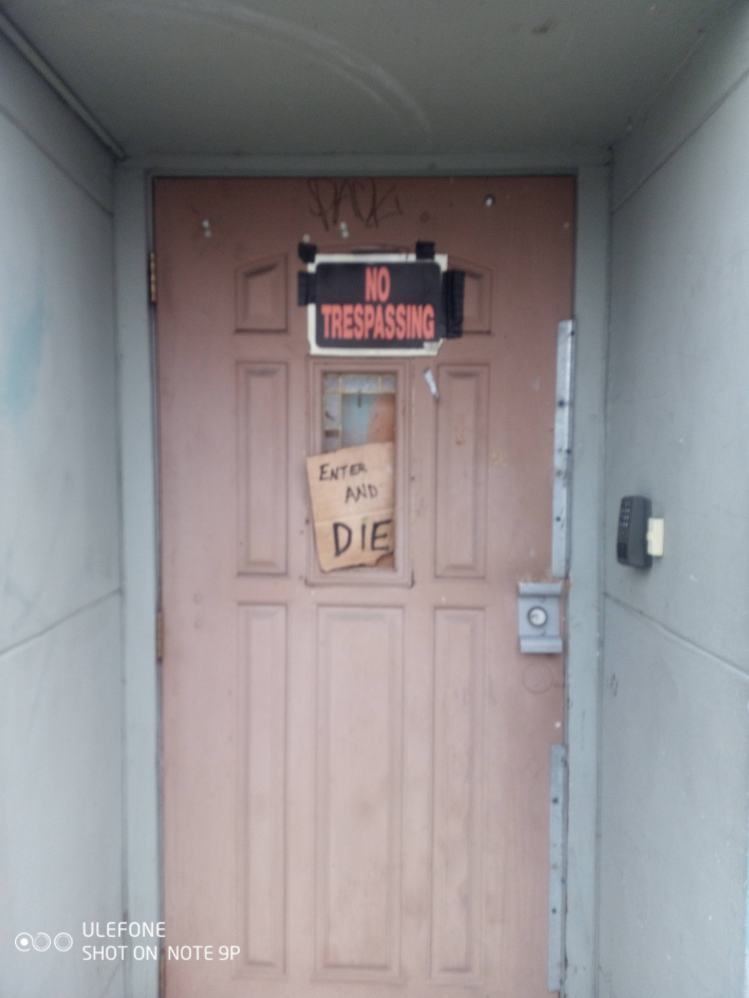
Let us bid fair September a fond farewell till next year and examine the upcoming month of October. Aside from being the month in which most people finally clean their AC filters and begin wearing tees beneath the Hawaiian shirts that we are loath to eschew due to our hitting the mini candies (available since August) more often than the gym, it is also the time of year in which darkness reigns supreme. At no other time of the rolling annum does darkness cast a wider spectrum. ‘Tis found in, and between, the Kitty Kat costumes worn by chocolate crazed three-year-olds and the brutal doings of Robb Zombie’s Firefly “fambly” (although some of us note little difference between the two mentioned classes). It is always a matter of taste, and whether you get your sugar from an endless binge of Three Musketeers or off constant jugs of hobo muscatel, do remember, constancy is key in October.
The month in the Springs will be the same as it has except on Halloween we will be making a Big Announcement regarding the future of this site, an announcement that will become official on New Years Day, which we hope will not be the same day that Hell is closed due to over capacity.
The word “we” means two things in SaragunSprings. In the human, earth-business sense it refers to the two Co-Editors, Dr Dale Williams Barrigar PhD and, myself, Irene Leila Allison, who has used ph paper in the past but to no memorable result and certainly to no degree worth mentioning beyond this post.
The second meaning of we includes the great many Fictional Characters (FC’s) of in and about the realm, chiefly Renfield, Dame Daisy Kloverleaf and so forth. Funny thing about the FC’s is I do not know if they resulted from insanity (on my part) or if they have come to rescue me from madness. Sadly, since it is neither illegal nor advisable to go mad in the United States, the question is likely to go unanswered long after the data is tallied. We is a flexible concept and we hope to see it expand after Halloween.
(And there now comes to mind a third “we”–the monochrome Dog Pack: Boo, Colonel and Bandit along with their various whispering attendants.)
This month, as before, throughout the summer, will feature guest writers, beginning with two from David Henson who makes his site debut day after tomorrow and on Friday. Then we will be blessed by the continuing wise observations of The Drifter every Sunday. And there are the usual thisses and thats we use to fill the empty spaces. But in months to come, Dale (and/or The Drifter) will be doing these little monthly roundups as much or even more so than I (even though he is learning that right now).
Oh yes, the open invitation to readers to send poetry and such to saragunsprings.com is still open, but after October things will be much tougher for good reasons to be divulged on Halloween (this is what we writerly types call “fanning the flames” of obscure repetition in hopes of starting a rumor, then, maybe, we hope, a frenzy). So if you are seeking an audience of several dozen lookers for no more effort than it takes to give away money on the street, now would be a good time to accept the offer.
As you may have noticed I am toying with calling Saragun Springs SaragunSprings. For some reason that second one has attracted my eye. No, that’s a lie. You see every time I type Saragun my keypad changes it to Sargun. I keep resetting it but it always creeps back. Still, let’s just say both are correct and wait and see which one finally gets over.
Ever obscurely yours,
Leila

i
It was the year of the Octopus bong
Stairway to Heaven was our favorite song
And when the past spoke of tomorrow it said
Never let the promising future go to your head
ii
We vowed to love till death’s last breath
But we were too young to hedge the bet
When forever came calling in ’93
No one wanted to write a new CD
iii
Statues of heroes missing their noses
Played out Sphinxes whom the future exposed
As blowhards who ruled for gold and by prick
Even those fey foals named Elizabeth
iv
It’s always the year of the powerchord
On which generations still light bowls
Forward not straight we go merrily along
Some wondering why Stairway is the greatest song

(Wonderful images provided by the Drifter and Drifter Boo)
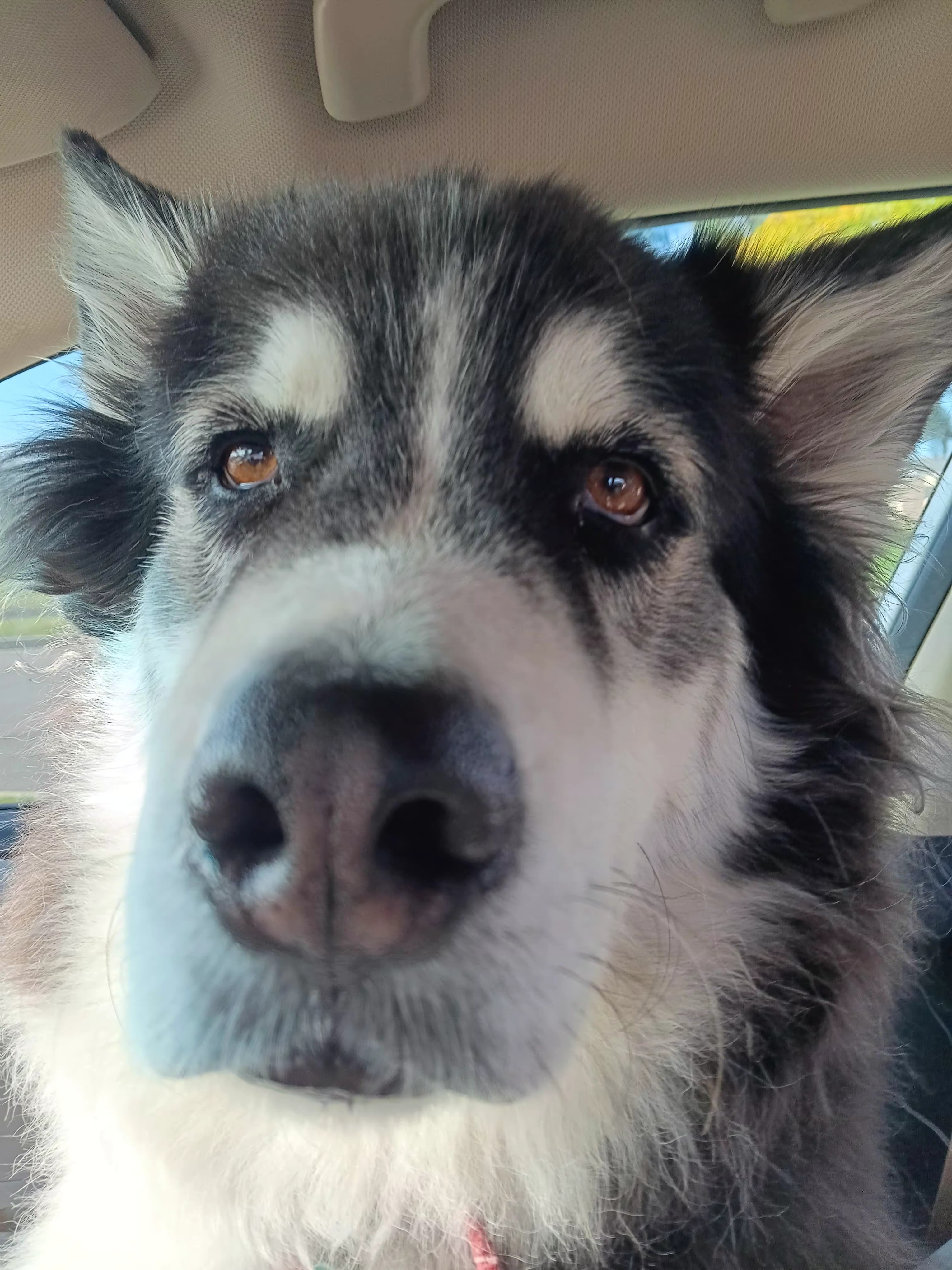
What Would Abraham Lincoln Do Now?
September 27, 2025
In “the year of our Lord” 1909, Count Leo Tolstoy was one of the most famous humans on Planet Earth, by far.
He was a person who had survived into the twentieth century in a very vital way from another era, a man who had been born into the age of serfdom (or Russian slavery) in his own land and seen it fall (around the same time American slavery fell), a man who was as well-known then as Gandhi and Martin Luther King, Jr., would later become (and a man who had already corresponded with Gandhi, famously), a man who was known for educating, and attempting to free, the serfs on his own land before the national reforms came along, a man who had started a globally-known peace movement called Tolstoyism based on the real and true teachings of Jesus Christ taken directly from the Gospels, and a man who, if the world had listened to him back then, could have solved ALL of the world’s current problems today via the solutions he was offering at the time, a man so well-known and so accomplished that he deserved not just the Noble Prize in Literature (see the list at the end of this essay) but also the Nobel Peace Prize, like very few others in history (except, perhaps, figures like Bob Dylan, John Lennon, Bob Marley and Martin Luther King, Jr., all of whom could have been awarded the Literature prize as well as the Peace prize based on their work in both fields).
1909 was also the centenary of Abraham Lincoln’s birth. A reporter came to ask Tolstoy to write something about Lincoln for this event. He found the great, long-bearded, long-haired, physically frail and elderly man and writer too sick to rise from bed or pick up a pen for long, but somehow still able to think and talk just as clearly as ever.
Tolstoy surprised the world, just a little bit, by what he told the reporter that day, when he called Lincoln the greatest national hero and national leader of all time, a man who would, in a couple of centuries, make all other national heroes and leaders look like nothing compared to him. “Of all the great national heroes and statesmen of history Lincoln is the only real giant,” Tolstoy said.
Tolstoy listed “depth of feeling, greatness of character, and a certain moral power” as the qualities that made Lincoln so much greater than the other heroes and leaders. Tolstoy said, “His genius is still too strong and too powerful for the common understanding, just as the sun is too hot when its light beams directly on us.” He said that Lincoln’s “supremacy expresses itself altogether in his peculiar moral power and in the greatness of his character.” He said that Lincoln, “wanted to be great through his smallness.”
Tolstoy said of Lincoln: “He was what Beethoven was in music, Dante in poetry, Raphael in painting, and Christ in the philosophy of life. He aspired to be divine – and he was.”
***
America is on the verge of its next civil war, or is already in the beginnings of it.
Because this new civil war won’t be a “Civil War” with capital letters like the last one was.
It will be (for the most part) a much more insidious and secret affair, many or most of the battles playing themselves out within the battlefield of the human heart.
There won’t be huge lines of gray and blue soldiers blowing each other to smithereens across a river until kingdom come like the first time.
But there will be, and already is, great hatred involved, great contempt for one’s fellow human beings, great nastiness and moral decrepitude even among the youth of America, a great bitterness and a great belittling of each other, utter small-mindedness and small-heartedness on both sides as we stare each other down and hate each other’s guts and hope someone else will come along and do our sporadic killing for us, and then applaud when they do so while we execute them in return, smiling bitterly all the while and cursing the world in our hearts while taking responsibility for none of it.
So it’s worth asking, at this great and terrible point in American history, “What would Abraham Lincoln do if he were here now?”
After a lifetime (on and off) of studying Lincoln, both his life and his writings, from his home ground in Illinois, I believe I know the answer to this question. And I can break it down into three key points, very briefly.
Read on to find out.
***
ONE: He would rise above the fray. He would not take sides. He would try to look at the truthful aspects of both opposite points of view and leave all the lies and bad “information” lying in the dust. He would see it from everyone’s level, no matter who they are.
HE WOULDN’T BECOME PETTY WHEN THE GOING GETS TOUGH. AND HE WOULDN’T START THROWING STONES AT HIS NEIGHBOR, NO MATTER WHO THAT NEIGHBOR IS, OR WHERE THEY CAME FROM.
NO EXCEPTIONS.
TWO: He would resist the totalitarian impulse, which crushes genuine humanity, at all levels, but he would resist it within himself first.
He wouldn’t let himself be seduced by the urge to crush, or even think less of, those who are weaker than or “different” from himself.
As Kahlil Gibran said in The Prophet, “And if it is a despot you would dethrone, see first that his throne erected within you is destroyed.”
THREE:
HE WOULD LOVE. The tragic irony here is that anyone who can understand this third point is already doing it.
And the final tragic irony of this column is that Lincoln is no longer a hero for either side.
The Drifter on Tolstoy’s short works: Tolstoy is the author of two short stories and one small autobiographical nonfiction book that deserve to be studied by anyone on the Planet who wants to turn themselves into a better person during these horrible times.
“The Death of Ivan Ilyich” is about a man who discovers he’s held the wrong materialistic, selfish, Scrooge-like values his entire life, right before he dies. Ironically, it’s his illness and his approaching end that make him see the light and saves him (just in time).
“Master and Man” is one of the most life-affirming stories about self-sacrifice ever written. No spoiler alerts. But the horse in this story is more alive than the humans in almost everyone else’s fiction.
“A Confession” is an autobiographical nonfiction tale that influenced Mahatma Gandhi and Martin Luther King, Jr., as they developed and extended nonviolent resistance, just as Tolstoy himself had been influenced by Percy Bysshe Shelley and Henry David Thoreau before him.
Tolstoy suffered from Depression, the modern variety. This book shows you what it’s like if you’ve never been in it; and how to get out of it if you have.
(first published in Potato Soup Journal, July 5th, 2021)
(Ed Note–We hope you have enjoyed Michael’s return this week. We always do ourselves!–LA)
At first when I died, it was rather predictable. Beginning with that out-of-body-experience thing: I’m hovering, up near the ceiling, in the local Accident & Emergency Department, looking down on a rather battered and splattered me, plus an attendant nurse and junior doctor. Then it’s the dark-tunnel thingy, with a wee pin-prick of light that’s starting to get bigger and brighter, and bigger and brighter.
And then…. Pop! I’m in a largish, empty room with white walls. Now it starts to get different…
The white door opens and Leonard Cohen comes in. He consults his clipboard: ‘Hello, erm, Malcolm Barnstable? Welcome to the First Circle; I’m your guide. My name’s Cohen, Leonard Cohen. According to my records here, you were run over by a herd of dairy cows. We don’t get many of those.’
It took me a second or two to gather my wits. ‘Got you now: it’s Dante’s First Circle of Hell, for all those nice pagans. And you’re the stand-in guide for Virgil, as a fellow poet?’
‘That’s pretty much it, Malcolm. Call me Leonard, why dontcha? Virgil’s still knocking about. But, with the numbers coming in these days, he’s needing a helping hand. So Percy and I now do the English speakers.
‘Percy?’
‘Yeah, Percy Shelley. “My name is Ozymandias, King of Kings,” and all that.’
‘I see. Er, you’re not wearing laurel leaves on your brow?’
‘Nope, no leaves. They were offered, but I prefer the fedora – it’s kind of a trademark. But Percy wears the old laurel leaves. He said it was either that or some seaweed. You’re stuck with me because you’re down in the records as “agnostic.” If you’d been signed up as “atheist,” you’d ‘ve got Percy. You want your tour just now? Or would you like a spot of nectar first?’
I settled for the nectar, which I could definitely develop a taste for. As tactfully as I could, I asked about Leonard’s co-habitation of the Agnostic First Circle.
‘Yeah, yeah, I know. It’s true that, strictly speaking, I’m a Jewish Zen Buddhist, but that’s a pretty small constituency. And you might say that agnosticism is a central tenet of Zen Buddhist practice. Though if you had the inclination, I could nit-pick that one with you. After all, you’ll find you have plenty of time here for long discussions of abstract…’
And then: Woah! Oooff! Ouch! Suddenly, I’m back in Accident & Emergency.
Biography:
Michael Bloor lives in Dunblane, Scotland, where he has discovered the exhilaration of short fiction, with more than a hundred pieces published in Literally Stories, Everyday Fiction, The Copperfield Review, Litro Online, Firewords, The Drabble, The Cabinet of Heed, Moonpark Review and elsewhere (see https://michaelbloor.com).
(first published in The Fiction Pool, September 9th 2017)
‘Hello. You have eight messages. First message, received Friday, May 20th at 6.30 pm…’
‘You dirty nonce! Messin’ with kids’ lives. I know where you live, you shit! I’ll be round to see you wi’ a pair o’ garden shears. Guess what for?’
‘Second message, received Friday, May 20th at 7.10 pm…’
‘Hello love. Where are you? Don’t tell me you’ve forgot again. I think those sleeping pills are making you a bit dopey. The meat’s spoiling. Lucky we both like it well done! Hoping to see you soon. I mean VERY soon. Lots of love, Lucy.’
‘Third message, received Friday, May 20th at 8.45 pm…’
‘Andy, it’s me. Your meal’s in the bin. Again. We can’t go on like this. I mean it.’
‘Fourth message, received Friday, May 20th at 11.52 pm…’
‘Still not pickin’ up, you nonce? We wuz discussin’ you in the pub. Someone suggested some petrol through the letter box. But I say: why spoil a perfeckly good ‘ouse? So we’ll still be bringin’ the garden shears. Thought you’d like to know.’
‘Fifth message, received Saturday, May 21st at 9.30 am…’
‘Andy, it’s Jonathan here. So sorry to call you on the weekend. But I wanted you to know that we had a school governors’ meeting last night. You’ll understand that I had to make the governors aware of the allegations against you. They agreed with me that we have only one possible course of action. I’m afraid that, in view of the seriousness of the allegations, you’ll be on gardening leave for the present. So please don’t show up on Monday. If you need to get in touch, it’s best that you do it through the Foundation’s solicitors. Sorry about that, but I’m sure you understand that the school’s good name has to be my first concern.’
‘Sixth message, received Saturday, May 21st at 7.20 pm…’
‘Well, I did think you’d at least have the decency to ring and apologise. I think, under the circumstances, we should cancel that holiday in France: you’ll probably forget to come to the airport.’
‘Seventh message, received Sunday, May 22nd at 2.15 pm…’
‘Andy, it’s Lucy. Are you alright? Came past and saw the curtains drawn. When you get this, please call back to let me know you’re OK.’
‘Eighth message, received Monday, May 23rd at 10.00 am…’
‘Mr Robertson, this is Detective Constable Brailsford here. I’m ringing on behalf of Detective Chief Inspector Williams. We wanted you to know that, following investigation, we believe the allegations that have been made against you are unfounded. The child who made the allegations has withdrawn them – they appear to have been malicious in intent. Off the record, I’d like to say that both my boys were previously pupils at the school and hold you in high regard. I’m sorry for the trouble that has been caused, but you’ll understand that, in the present climate, every such allegation or complaint has to be thoroughly investigated. If you’d like any further information, please feel free to ring me back.
‘You have no further messages.’
Biography:
Michael Bloor lives in Dunblane, Scotland, where he has discovered the exhilaration of short fiction, with more than a hundred pieces published in Literally Stories, Everyday Fiction, The Copperfield Review, Litro Online, Firewords, The Drabble, The Cabinet of Heed, Moonpark Review and elsewhere (see https://michaelbloor.com).
(first published in Potato Soup Journal, February 2nd 2022)
In the town chess club, the final of the annual Earl’s Cup competition was about to start, the finalists being Willie Anderson, the holder, and a new member, Archie Drummond. The club was a friendly, welcoming place, but there was a surprising coolness between Willie and the new member. Although Archie Drummond was indeed a new club member, he wasn’t new to the town, having been born and raised here before going away to spend his working life (profitably) in Hong Kong. Apparently, as young men, Willie and Archie had fallen out over a girl: there had been a memorable stramash in the Gents toilet at the old Mecca Ballroom. Forty-odd years on, one gathered that the ballroom bout was regarded by both parties as inconclusive.
Willie was setting the electric clock, with each player to make thirty moves in an hour, plus twenty minutes each to finish. Archie was studying the inscription on the solid silver cup, the oldest chess trophy in Scotland, presented to the club in memory of the Earl’s eldest son, Captain Albert Abercrombie-Smith, club champion 1876 & 1877, slain by Zulus at the Battle of Isandlwana, 1878. Silently, Willie showed the set clock to Archie for his inspection and was rewarded with a grunt of agreement. The traditional hand-shake at the beginning of the game was perfunctory in the extreme.
Other games were being played in the clubroom that night. But, as they ended one-by-one, the players clustered around the black-and-white battlefield where Willie and Archie were joined in silent struggle. The pawns clashed and fell, the knights leapt forward and fell back, the bishops obliquely threatened, the castles took up their defensive positions, and the overbearing queens stalked the board. The clock ran on, the moves became more urgent and the competition entered the endgame: the kings emerged from behind their defensive ramparts and began a dancing duel. A couple of stray pieces fell here and there, but to no clear advantage. With less than a minute left on his clock, Archie managed to force his last remaining pawn to the back rank, converting it to a queen. Unsportingly, Willie played on, hoping to avoid mate long enough for Archie to lose on time. Archie mated him with just three seconds left on his clock. The audience, hushed until that point, now erupted with exclamations, congratulations and rival theories of how alternative endings could have been contrived. In the hubbub, the customary concluding handshake was somehow omitted.
After a short delay, the club president presented Archie with the cup and a photo was taken for the website. Willie had left the room, but his prostate often required sudden temporary absences. The night was concluded and we all streamed out of the club. Archie Drummond bore off his cup in his BMW, like a Russian Prince in a horse-drawn midnight sleigh. Willie Anderson watched the tail-lights dwindle down the Kirkgate: ‘Weel, weel, he’s carried awa’ the cup, but I carried awa’ Dorothy, bless her.’
Biography:
Michael Bloor lives in Dunblane, Scotland, where he has discovered the exhilaration of short fiction, with more than a hundred pieces published in Literally Stories, Everyday Fiction, The Copperfield Review, Litro Online, Firewords, The Drabble, The Cabinet of Heed, Moonpark Review and elsewhere (see https://michaelbloor.com).
 Saragun Springs