When did they say they’ll deliver? It’ll come via Whamo, Everoo or Yuffle. Lucklily We’re members of the mega store where you can have it all.
It should be next day delivery, I’ve got gold membership.
Yeah they should do, they’re usually good at bringing stuff.
We’re just waiting to find out what our delivery slot will be.
Great, It’s going to be between 10 and 1 pm.
You see we’re waiting for our new baby to be delivered. It’s as easy as having your clothes or packages from far away sent to you.
We’ve ordered it off Babies 4U. We’ve read the reviews.
It’s brilliant not having to carry a baby around for months and feeling sick and getting all cravings and not having to go into labour and hours of pain to deliver a baby in hospital. There’s no need for scans. There’s no having to go to ante natal classes, or waiting for your waters to break, no midnight calls for an ambulance.
Now you can just wait in the comfort of your home, or not. Some go away for the day to work or on a visit, as long as there is someone in the house to sign for the package.
They used to say it was the storks who brought babies. Now we know it’s the drones.
The drones deliver everything. They’re always flying around her next door. Her house is like a hive. There are many drones buzzing around delivering her daily dozen pairs of shoes.
At Babies 4U you can just go for the basic model, but most people upgrade to a non crying, non throwing up, non teething trouble, non terrible two’s model. And definitely no colic.
If you’re not happy you can always send it back the service does return too.
Gary’s mums not happy, she says babies should be conceived, carried and delivered naturally, parents should learn to take the rough with the smooth,
Good job the drones do pick ups as well. Gary’s mum is due to be picked up in a few weeks for recycling. There’ll be four drones on that job. It’s comforting to know all her organs will go to a good home.
We’ve already ordered a nice headstone for Gary’s mum. It’ll arrive a few days after she’s been taken away. Of course it’ll take dozens of drones to fly that thing in.
We ordered the baby six months ago. Everything is so quick and convenient, none of that messing around, you can just get on with your life. It only takes a few seconds to order.
We plan to call it Gill. With this order we get 20% off our usual monthly grocery bill with some scented candles and a free phone thrown in.
They’re all fitted with tracking devices and are chipped with anti delinquency devices. Babies 4U provide sixteen years warranty and they are guaranteed to get 10 A* grade GCSE’s.
We don’t have to worry about how they will turn out because everyone who orders a child from Baby 4U knows exactly how they will turn out – perfect. Which is nice.
We just need to order more food, clothing and wipes for the new edition, good job we’ve got several cleaning robots to take care of the messes.
If things go smoothly we’ll order another one in three months as we’ll be wanting a Jack to go with Gill. We plan to get a third one ordered because we’ll be able to get a free Damante dinner set delivered.
Mitzie Kerfuffle was blowing up Blake Schnellenberg’s iPhone with more nonsense. She was a tornado of trouble. A monkey’s claw that had worked her way into Blake’s life. An erstwhile confidante, co-worker, and subordinate at Sharkpool Weekly, a financial newsletter and quarterly. Mitzie had no sense of boundaries and propriety. She simply extruded her way into areas that were not in her purview. If Blake didn’t know better he would think Mitzie was intentionally mimicking his own responsibilities at Sharkpool, while ignoring her own lesser responsibilities, in an attempt to undermine or replace him as the Chief. Mitzie had no facility with numbers, no education in the area, she couldn’t write or sell or do much of anything really (the owner hired her because she was nice to him one night as the hostess of a fancy restaurant he had frequented and she mentioned to him that she always wanted to be a writer), yet she was always complaining about another co-worker named Montgomery. Apparently, she and Montgomery had a short thing and it ended quite badly. Mitzie was heartbroken. Montgomery handled the social media for Sharkpool. Blake answered the phone.
“Blake,… Montgomery, I hate to even say his name, is ruining Sharkpool’s good name. Did you see his last post? It makes no sense. He wrote GNP…what the fuck is that Blake? He should be fired immediately from Sharkpool, he is killing our brand, can we please set up a conference call to go over the problems with social media with the owner?”
” Mitzie, GNP means Gross National Product. It’s an accepted economic term.”
“Blake our audience doesn’t know from GNP.”
“Actually, they do Mitzie. Listen, I’m about to step into a sales meeting. Talk later.”
“Ok, God bless.”
The sales meetings, in general, usually went alright but advertisers always wanted to know about “actual” magazine distribution which had been practically abandoned over a year ago due to high printing and fulfillment expenses. These days, Sharkpool was focusing more and more on the digital space. Impressions, amplification, true reach. The major task was trying to get wealthy advertisers to pay an exorbitant fee for being featured on the cover.
Pinnng!!!
[text: Blake- did you see what “what’s his name” did now? There is a typo in his last FB post it reads “ROI” Obviously, a typo–does this kid even know how to type?]
[text: Mitzie, please, I’m still in a meeting and I think by ROI, he probably meant “Return on Investment”]
[text: Oh I’m so sorry Blake, God bless you! Just trying to do the best I can for Sharkpool– I hardly get paid any money and I work my ass off, my little precious BooBoo Kitty isn’t doing well and Bob the owner doesn’t even respond to my texts and emails anymore]
[text: Mitzie- please stop contacting the owner directly, if you have an issue please bring it to me and I will handle it that’s my job as the Chief of Sharkpool. Okay?]
[text: Got it. Have a blessed day.]
[text: tahnsk]
[text: just letting you know that this asshole is ruining everything we are all working so hard on– he is a total embarrassment]
[text: ok, I’ll call you after my meeting]
[text: Thank god for you…I mean it!!!]
[text: kk]
The “sales” meeting that Schnellenberg was referring to was actually a face-to-face meeting with the owner of Sharkpool, Bob Beauregarde, who quietly slid into the conference room, while Blake was absorbed with his iPhone.
Pinnng!!!
[text: Successful Payment of T-Mobile Bill: $70… 0987]
[text: Chase Bank: Low Balance Alert $36: ending in 0987]
Pinnng!!!
[text: I need to work late tomorrow so you need to pick up Betty Sue after school and make sure she does her chemistry homework]
[text: ok will do]
Pinnng!!!
[text: Blake, can we set up a conference call with the owner later today? This kid is destroying Sharkpool with his bad grammar- maybe I could take over social media for him I couldn’t do much worse]
Pinnng!!!
[text: ok you will pick up Betty Sue or ok you will oversee the chemistry homework or both?]
[text: both]
[text: she got a c+ on the last test you need to help her with that covalent stuff and moles]
[text: I don’t know anything about chemistry]
[text: stop being lazy. Google it or look at the study guide you need to start doing your part]
[text: ok will do]
[text: you say that but meanwhile her last homework assignment, while she was with you, was incomplete]
[text: I’m in a sales meeting right now but I will check the study guide]
[text: whatever, I’m tired of having to stay on you about this… it should be a priority]
“(Cough, cough) Blake, do you need to step outside for a minute to deal with whomever you are texting?”
“Oh, no sir Mr. Beauregarde, Sir, I apologize…I didn’t know you were in the room.”
“That’s ok young man, who do we have lined up as Sharkpool’s cover star for the next quarter. I hope it is someone good and someone with deep pockets.”
“Yes sir! I’ve been in talks with Morty McMint of Trask Publishing and Sidney Schindlebergstein of Rolf Real Estate.”
“Will they pay for the cover?”
“Not sure yet, Mr. Beauregarde, I just sent them the recent newsletter and rate card with a request to set up a meeting.”
“Have you looked at the date on the calendar, Blake?”
“Yes sir.”
“We need to lock one of them in for a cover pronto or I’m going to start having to make some changes around here.”
“Yes sir, I understand completely”
Pinnng!!!
[text: Blake, I was thinking that maybe I could write a profile piece on Sidney Schindlebergstein, I went to a party at Hudson Yards and met the bartender at Vessel who said Sidney sometimes comes to his bar–good idea? I was thinking of emailing Mr. Schindlebergstein today- you are always telling me to focus on sales… good idea? ]
When Beauregarde started leafing through the latest issue of Sharkpool magazine that was on the table, Schnellenberg quickly and discreetly texted Mitzie back.
[text: Mitzie, can’t talk, plz hold off]
Beauregarde was unhappy about something, his eyebrows furrowed.
“What’s the matter sir, is there something in the new issue you don’t approve of?”
“I just don’t like it when a writer throws in an abbreviation like ROI…just seems lazy to me…just write Return on Investment…I hate lazy writing.”
“Yes sir, we’ll correct that before we get it to the printers.”
“I know you will, Blake,” Beauregarde continued to flip through the dummy of the book. The physical manifestation of a magazine is called “the book” for some reason. Beauregarde, who owned 20 other small publications, looked like he was chewing on a lemon.
Pinnng!!!
[text: another idea I had was Morty McMint of Trask Publishing… I heard you mention his name on the phone the other day…I think he would make a great person for me to write a profile piece about because I’m an aspiring reporter and he’s done so much in publishing…good idea?]
Schnellenberg snuck a peek at the owner who was reading through the book shaking his head and circling parts of the magazine with a big red sharpie. Not good.]
[text: Mitzie, again, plz hold off. call u later-B]
[text: Is everything ok Blake? Any update about a meeting with Bob about firing that asshole Montgomery? Madone! I hate him so fucking much- and not because of what he did to me but what he is doing to all of us. I can’t take it anymore. I think of his smirk it drives me insane.]
[text: can’t talk]
Beauregarde slid the dummy with his corrections back to Blake. “Ok let me know when you’ve locked in the next cover and tell the art director that I want to see more graphs and charts. I don’t know how many times I have to say that.”
“Yes sir. On it sir.”
“Alright, good job” and with that Beauregarde nodded toward Blake and made his way toward the door. “By the way how’s that waitress Minnie doing as a Sharkpool production assistant?”
“Great sir. Breath of fresh air.”
“Please explain to Minnie that I’m very busy and if I get one more crazy text or email from her, I’m going to fire the whole lot of you. Understand?”
“Yes, sir. Perfectly.”
“Good.” Beauregarde left the conference room.
Pinnng!!!
[text: Blake, are you still in your meeting I have a problem and I can’t wait.]
[text: five minutes, Mitzie, please]
[text: fuckhead just posted a story on social media and he used another term nobody ever uses “NASDAQ” …he needs to GO!!!! He is driving me crazy and he keeps making up terms and abbreviations that are just wrong.]
[text: Mitzie, NASDAQ is a known term for the National Association of Securities Dealers Automated Quotations]
[text: then why doesn’t he just write it out like that –so everybody knows what the fuck he is posting about… this kid is a total asshole, Blake I fucking hate him and he needs to be fired.]
[text: 5 minutes, please]
[text: kk ]
Blake reached into his pocket and frantically fished out his small bottle of Zantac. No water around so he coughed up some phlegm and forced the little pale, red, diamond-shaped pill down his throat. Then he dialed Mitzie’s number.
“Heyyyyyy…how’s it going Blakie?”
“Just had a meeting with Mr. Beauregarde.”
“Your sales meeting was with Bob?”
“Yes, the meeting was with Mr. Beauregarde.”
“Why isn’t Bob responding to my emails about improving our social media?”
“Well, Mitzie–Bob did mention to me that he has been getting your emails.”
“Oh good.”
“Actually, not so good. Bob does not want you emailing him directly anymore.”
“Why not?”
“I’m not sure Mitzie. Maybe because he is responsible for 20 different magazines, maybe because he’s very busy, and maybe because it is not proper protocol for aspiring writers for a magazine to be texting the owner.”
“That’s strange. I’m just trying to help.”
“I’m sure Mr. Beauregarde realizes that Mitzie but it’s MY job to deal with any problems with Sharkpool. That’s why I’m the Editor in Chief.”
“I mean I don’t even get paid enough to be working here. It’s a joke, Blake. My little precious BooBoo Kitty has a serious infection that’s going to cost a thousand dollars because my insurance doesn’t cover it…and then that asshole Montgomery just posts whatever he wants and doesn’t even know what the fuck he is writing about. Clearly, Bob is completely clueless and doesn’t give a fuck about Sharkpool.”
“You are going to get all of us fired Mitzie–if you don’t stop texting my boss. He said as much today.”
“Bob said that?”
“Yes, Mr. Beauregarde said exactly that. Mitzie I appreciate your enthusiasm and passion and good ideas but please stay in your lane. “
“Madone! Blake on my little precious BooBoo Kitty’s life– I didn’t mean to get us in trouble with Bob.”
“Mitzie, please. Just no more texts or emails to Bob. Ok?…promise me.”
“You got it, Blake. God bless you. I can’t believe how amazing you are. I am so blessed…what did you think about my ideas with Morty McMint and Sidney Schindlebergstein. “
“I don’t know if you have good instincts or you overheard my phone conversations but I have already been targeting both of them to pony up major bucks to appear on the cover.”
“If we land them can I interview them and write the cover article?”
“You can definitely help me with it.”
“You are such an amazing person, Blake I love you so much I am so blessed to know you. I thank God every day. If it wasn’t for that piece of shit rat in the social media department who needs to be exterminated I would be ecstatic. I can’t believe I’m a magazine writer. It’s a dream come true. I’m so appreciative.”
“Ok, great. Have a good day. I got to run.”
“Ok bless you. God is great.”
“Yup. Talk to you later.”
Blake hung up. And waited. 10…9…8…
Pinnnnng!
[text: You are the best. Do you think it’s ok if I text Bob to thank him for my upcoming interviews with Morty McMint and Sidney Schindlebergstein?]
[text: definitely not ok. Please do NOT do that. I’ll call you later to explain in full detail why that is not a good idea.]
[text: okay, Blakie- you are the best. God bless you.]
[text: kk]
Blake Schnellenberg had to admire Mitzie Kerfuffle a little bit. Almost as much as he feared her ability to fuck up everything he worked so hard for. Mitzie had an uncanny knack for finding a loose thread and pulling it. Bad news. Tonight she was drunk as usual and the conversation with Blake would devolve further and further.
What Blake wanted to tell her was Mitzie, don’t ever fuck with ME ever again. Blake could feel Mitzie’s pain deep inside because he knew what that felt like. To feel alone and scared and pissed off and hopeless and helpless and wanting to dig out of that hole, that quicksand with every fiber. The problem with Mitzie is she was fearless. Mitzie unscrewed the top of the bottle.
Glug glug glug. Her chest spasmed involuntarily as she grimaced at the awful taste of the cheap vodka that kicked like a mule and filled her belly with fire. Pushing 45. That door was almost closed. She looked at the mirror and then took the empty bottle and chucked it at the wall. It was time to do what she had been doing every waking minute for months. Check-in on Montgomery’s social media posts. her teeth gnashed as she saw his latest blog post. An article on internet dating.
With fury, she typed out “HOW DARE YOU ADVICE (sic) OTHERS ON DATING YOU COMPLETE PIECE OF SHIT! WHY DONT YOU TELL EVERYONE HOW YOU SUCKED ON MY LOWER LIP LIKE IT WAS A PUSSY AND PROMISED TO GIVE IT TO ME REAL GOOD…WHAT A ROMEO! “ Then she erased it and went to her FB page and wrote: To quote the immortal Leonard Cohen-“ Halle-fucking- Elijah!” I am reborn…then she texted Blake…he was always nice.
Pinnnnng!
[Text: Blakie, I’ve been at SharkPool for more than 3 months do you think I should talk to Bob about getting a raise and change in title?]
[Text: IDK Mitzie, It took me a couple of years to get the top spot and I had to pay my dues and then some…dealing with a family situation right now…sorry…maybe we could talk later in the week?]
[Text: I’m not saying you got the job handed to you Blake–I just feel like Bob doesn’t take me seriously and I’ve got a lot of ideas…should I just text him?]
[Text: Definitely NOT. Mr. Beauregarde already told me he is tired of getting texts and emails from you all the time and he made that clear in no uncertain terms…He threatened to fire all of us if you keep texting him all the time. It’s late at night Mitzie. He has a family]
[Text: What are you fucking afraid of Bob? Is that why you kiss Montgomery’s weasley ass all the time.]
[Text: Mitzie, I’m dealing with family stuff right now but trust me when I tell you this-if you cross the line with me again with another disrespectful text- I will handle your problems with SharkPool myself. I don’t need to get drawn into your bad drama with Montgomery and I certainly don’t want to work with anyone who disrespects me or is disloyal]
[Text: I hate that little prick Montgomery so much, Blake he promised me things, and then…and then… showed his true colors…all yellow –a total coward… I’m going to quit this lousy newsletter too…God bless you Blake you are the only good person in the bunch and also Ethel, she’s a sweetheart too…]
[Text: and another thing Mitzie I’m not afraid of Mr. Beauregarde, I just respect protocols and boundaries…I wish you would too.]
[Text: Fuck that Blake–If I see that little motherfucker Montgomery at the water-cooler I’m going to kick him in the balls and scratch out his eyes…do you think I was raised to be treated like a whore who gets fucked and thrown away like a piece of garbage? I have more self-pride than that. I was the leader of my girl scout troop and voted most likely to star in a reality show by my high school class. I don’t give a fuck about protocols –I want to get paid and I want Montgomery fired.]
[Text: I can’t do this right now Mitzie–like I said it’s late at night and I am dealing with bigger problems than your lover’s quarrel…and as far as I know, there are absolutely no grounds to fire Montgomery. If there is anybody who deserves to be let go because of improper behavior, frankly, it’s you Mitzie…I can’t keep warning you–NO more bothering Mr. Beauregarde!]
[Text: Blake that little prick Montgomery tried to fuck me in the backdoor…can you believe that shit? Did he think I was some sort of prostitute? I’m a good girl. I don’t do that for anybody but my husband when I find him …[sobbing emoji] that kid’s a total skeevy perv. He should be fired for trying to rape me, Blake…He wanted to sodomize me [eggplant emoji, peach emoji] who does that on a second date?]
[Text: Jeez, I’m sorry Mitzie…I know you are upset…maybe just calm down, wash your face with cold water, take a walk or something…it’s not good to get so worked up.]
[Text: we are in my bed and he flips me over on my hands and knees like a dog, Blake…and then all of a sudden I feel his finger in my asshole..he put some KY on it thank G-d for that but I seriously think he wants to do me in the shitter…who does that Blake? I wanted to give this kid babies and make him meatloaf and potatoes, my family recipe, and have a nice life together…he fucked it all up and now when I see his smarmy little smile all I can think of is how I want to bash him in his mother-fucking face, Blake…he’s no better than a fucking Harvey Weinstein in my book, Blake]
[Text: Ok, listen Mitzie, Let’s talk tomorrow when you aren’t so upset…from what you are describing and this is definitely not my business and definitely not anything that I should be dragged into…your relationship with Montgomery –sounds like it started off as a consensual situation and then took a bad turn…you are both adults and you both…]
[Text: My ass, Blake…that little weasel tried to FUCK my ass with his tiny little prick…Madone! I almost shit the bed when he touched me down there…Blake would you ever do that to a proper lady?]
[Text: Mitzie: I’m sorry I’m going to have to go…I’m not comfortable with you discussing your personal life like this with me–it puts me in a very awkward position. I’m sympathetic to you and I think you have a number of terrific qualities but I’m not the person to speak to about this sort of stuff.]
[Text; That’s fine Blake–I’ll just call Bob and tell him his social media “expert”, golden boy Montgomery tried to stick his tiny pecker in his top reporter’s bunghole…would you like that, Blake, since you are always so busy?]
[Text: Mitzie, don’t threaten me, and if you do that Mr. Beauregarde will fire the whole lot of us. He said exactly that to me regarding your crazy texts]
[Text: My texts are crazy? I’m not the one sticking a finger up somebody else’s brown starfish, Blake, that’s where I make doody…I think Bob would love to know his Social Media Golden Boy is a frickin pervert.]
[Text: Mitzie, If you want to go ahead and get everybody fired including yourself- Go right ahead…I gotta go.]
[Text: You’re right Blakie, I had too much to drink and I feel like hurling…God bless you, Blake, you are one of the good ones I am so blessed to have you in my life-If only I could punch that weasley motherfucker in the face I would be fine.]
[Text: OK …feel better…maybe take a shower and drink some water…sounds like you are having a rough night.]
[Text: I love you so much Blake you are like my guardian angel]
[Text: no problem, Mitzie get some sleep and feel better]
[Text: Kissy Face emoji]
[Text: Thumbs up emoji]
Blake turned off his phone, walked to the kitchen, popped the top on a cold beer, and sat at the kitchen table shaking his head.
Blake was pretty sure that he had not heard the last of the matter.
The next day after work, Blake stopped by his local branch–not that he wanted to. Financial disaster had wormed its way into Blake’s consciousness. There was no money left and nowhere to turn. A new client’s check for a freelance writing gig must have been stopped by the bank. Held for release under mysterious circumstances. That freelance writing money was to solve problems and create breathing room. It was to be the miracle “Hail Mary” that Blake was counting on. But the bank he had banked with had invested $11 Billion dollars on new technology after paying Uncle Sam $13 Billion dollars for its part in the subprime bubble burst that cost 100 million Americans their homes and jobs while pushing the U.S. economy into a recession that heaped misery on the middle class –including Blake who was still trying to recover.
“Mr. Schnellenberg we provide our customers with various tools to avoid these possible occurrences…you have an app on your phone that you could have used to see that you had a deficient balance in the account.”
“Usually, I get a low balance alert, Mr. Palumbo…I never got it and then all of a sudden, over the course of 24 hours, I had used the card on minor purchases…somehow, I got charged $500 in overdraft fees…15 separate $35 fees in a row…first time this has ever happened.”
” Mr. Schnellenberg … you could have gone online..”
“Mr. Palumbo, I had absolutely no idea that the account was overdrawn and would accrue 15 overdraft fees almost instantaneously in a row amounting to $500…I’ve been a loyal customer with this bank for over 25 years…”
” Mr. Schnellenberg…this is not the first time you have been charged for insufficient funds.”
” Mr. Palumbo, I’m asking for help here…this seems to be almost a predatory scheme by a Trillion dollar company to generate money on a technical oversight…”
” Mr. Schnellenberg…I’ve been with the bank for 20 years and as the branch manager I reviewed your record which is not a good one…one more misstep or baseless accusation and I will tell you to find another bank.”
” Mr. Palumbo, we don’t know each other–first time I’ve seen you in this branch that I have been coming to for a quarter-century and I’m sure this is just a case of two people getting off on the wrong foot…but I will tell you that my family has been banking here for probably fifty years and that typically If I am threatened in such a manner I handle a miscommunication like this by going directly to that person’s supervisor…”
Back and forth it went…both the banker and Schnellenberg were red-faced, intense, and had hands that were shaking. Ultimately an uneasy compromise was reached and half the charges were erased…still the $250 burned and stung and Blake was nowhere closer to getting the bank to release the $5000 check he had been waiting on. That money would buy breathing room. It was salvation and it seemed as though fate was conspiring against Blake and his meeting with the bank went as bad as possible. This was Friday and it was white knuckle time. The nitty had hit the gritty. So, of course, what better time than for Mitzie Kefuffle to be blowing up Blake’s iPhone with new nonsense about her never-ending feud with Sharkpool Social Media director Montgomery Morgenstern.
Pinnnggg!
TEXT: [ Blake…this little prick did it again…I gave him a feature article I wrote on the Japanese Yen and how it reminds me of the philosophy of Ying & Yang in that it sounds similar and it’s all about karmic retribution and that because of Pearl Harbor and the evil of that attack that the Yen has hit a monthly low which I read in the Wall Street Journey…and this little fugazi mother-fucker totally ignored my article. ]
TEXT: [ Mitzie, it’s the Wall Street Journal, not Journey and I have too much other stuff going on right now to get in the middle of more Montgomery drama…btw you do know that you need to run these story ideas through me and Ethel, right? We’ve discussed Sharkpool protocol a couple of times now]
TEXT: [ Blake with all due respect, everybody knows it’s the Wall Street Journey and that little fucker Montgomery is lucky I didn’t call the police when he tried to stick his weasely little worm up my behind…who does that? Total pervs do that …that’s who…If my family knew he tried to pump his tiny salami up my poop-chute he would have found his twerpy little body twisted like a pretzel on the streets of Canarsie.]
TEXT: [ Mitzie, Google it. Wall Street Journal. I gotta go.]
TEXT: [I’m fed up with this shit Blake. I’m going straight to Bob about what I perceive as a lack of respect]
TEXT: [Knock yourself out, Mitzie. I’m out of pocket for the remainder of the day which is Sunday, by the way…good luck.]
TEXT: [ I want Montgomery shit-canned and I want Bob to pay me what he promised. I charged a full wardrobe of reporter’s outfits and shoes on my one credit card and I need to be reimbursed.]
TEXT: [ Did Mr. Beauregarde authorize that?]
TEXT: [ As a matter of fact, I saw Bob last night at a charity event my friend Peregrine Marsatz III invited me to. Bob was there with a new floozie, drunk as hell and making out in front of everybody…he saw me on the dance floor and asked me why I looked so familiar…I told him I was his lead financial reporter and he laughed and said if that was the case I should dress like a lead reporter …I was so pissed off I went home humiliated and maxed out my credit card on a high-priced fashion site. $1500. He needs to pay me and cover that expense or I am hiring a lawyer and suing him for mental cruelty.
TEXT: [ Oy…I don’t know Mitzie…I wasn’t there…but it doesn’t seem like he authorized you to make a $1500 purchase. Can you return the clothes?]
TEXT: [ Blake I need you to have my back here.]
TEXT: [ If Mr. Beauregarde said that to you on the dance floor I agree that on the surface that wasn’t nice–but maybe he was just giving you advice?]
TEXT: [Blake why are you always taking sides against me? Do you realize that Montgomery tried to stick his tiny pencil up my Hershey highway? Gross! Except for you and Ethel, I am done with this fucking shit show BS financial paper. I’m going to go find a job at the Journey. I bet they pay their reporters a hell of a lot more than Sharkpool.]
TEXT: [OK- I got to go…talk later in the week. Wall Street Journal, not Journey. Google it]
Blake plugged his phone into the wall charger then went to the basement to swap out the laundry. On his return, he surveyed the empty fridge and decided to make some iced tea with a tea bag and water and ice. Filling.
He knew without looking there would be a message on his phone.
Pinnng!
TEXT: [Call me back. Bob Beauregarde]
Oh shit.
(On phone) “Hello Mr. Beauregarde, I got your text is everything ok, sir.”
“No Blake, I just got a call from a Mitzie Kerfuffle, who I presume is that waitress we offered a PA job to, claiming that I owed her $1500 dollars. Do you know anything about this Blake?”
“Yes, sir…she texted me earlier today claiming you authorized her to dress like a reporter when you saw each other at a charity event Mr. Beauregarde.”
“Now listen here Blake, I’ve had enough of this crazy waitress. She’s like a bad penny. Fire her today or don’t report to work on Monday. Do you understand?
“Yes, sir.”
“Good.” [click]
The publisher hung up.
Pinnnng!
TEXT: [ Hey Blakie, just got off the phone with my cousin’s daughter’s friend’s attorney and she says given the #metoo revolution going on that I have a good shot to sue Sharkpool for sex discrimination and harassment… that shit-stain Montgomery is going down down down and so is Bob Beauregarde if he doesn’t reimburse me $2500 and apologize and promote me to Senior Financial Editor.]
TEXT:[Mitzie… I’m sorry but you’re fired… you were warned multiple times not to harass Mr. Beauregarde. He called me just now and told me to fire you because of your latest phone call today.]
TEXT: [That mother-fucking prick. Poison my eyes! Madone! You’re kidding right Blakie? You’re pulling a gag on me right because I’m always such a pain in the ass, right. I’m sorry Blake sometimes I have too much wine cause I’m stressed about BooBoo kitty and that piece of shit Montgomery always trying to fuck me in the ass. You’re kidding, Blake, right? Please tell me you’re kidding. I told everyone from the neighborhood I’m a reporter. I can’t go back to waitressing…I promised myself that I was better than that..please Blake…you’re kidding right?]
(Calling her on phone) “Mitzie?..”
(Sobbing) “Blake please don’t fire me this job is all I have…”
“I’m sorry Mitzie …Maybe you could call Mr. Beauregarde and…”
“Fuck that, Blake…my fucking lawyer is going to call Bob and handle this matter…”
“Ok Mitzie, good luck.”
“Goodbye, Blake.”
Blake put the phone down on his kitchen counter and poured himself a glass of water. It was another shit-show of a week and the one thing he knew as well as he knew anything was that…
Pinnnng!
…his iPhone was going to ping with a new series of frantic messages from Mitzie.
The next night, after the Sharkpool magazine party at the New York Athletic Club, Blake Schnellenberg made small talk with a lawyer waiting in line for his coat.
“Lawyer, huh… hope you are one of the good ones, I’m sure you are… ”
Blake laughed generously. The lawyer, who was managing partner of his firm, smiled and chatted more with Blake and a group of others and then as Blake was leaving he offered Blake his card and said to Blake, “I don’t know what it is Blake, but you have a very winning quality about you. Confident and likable.”
“Thanks (looking down at the business card) Preston… these days I will take all the compliments I can get.”
” I mean it … you just have this indefinable quality…a kind soul.”
“Thanks, Preston that’s very kind and thoughtful…you guys have a great rest of the evening.”
Blake was a good person but that didn’t count for much to the IRS, his landlord, or his ex-wife…to them he was a loser and a deadbeat.
The next morning he was walking to face his past. Past Fifth Avenue handymen who were spraying down the sidewalk in front of the gates to mansions and fancy apartments. The wet streets could not be avoided and the water found its way into Blake Schnellenberg’s socks through the holes in his shoes. Blake thought of the mahogany desks and Persian rugs and tumblers filled with scotch. This was how the rich kids in high school entertained like a scene out of a Whit Stillman movie. This was 12th grade over 35 years ago …
I need a job
I need a job
I need a job
I need a job
Being Editor in Chief of Sharkpool Magazine was just not paying the bills. Blake walked dutifully toward the synagogue about a mile away across the street from Central Park with screeching buses and early morning pedestrians.
I need a job
I need a job
I need a job
Maybe if he said it out loud enough on his way to the funeral service he would have the guts to repeat it when the time was right not that there is ever a time.
“My father worked for your grandfather during the war selling piece goods.”
“What are piece goods?”
“Bolts of fabric. My father was such a good salesman that your grandfather had to pay him in piece goods instead of money.”
This was the extent of the conversation with Blake’s friend’s dad. “Oh my God” was what his other old friend from high school said with a quick hug and then on to the other mourners. Blake nodded to no one in particular and walked out – dreading the shiva. Where he would reminisce while eating a pastrami sandwich.
I need a job
I need a job
I need a job
He couldn’t ask. He pussied out. The conversation about yachts and luxury cars left Blake feeling depressed. Instead, he retired to a diner shortly thereafter. One cup of coffee and unlimited refills. What a deal! Frank Sinatra crooned a silky ballad that wasn’t familiar but comforting nonetheless. The bagel was toasted and the joint was jumping with tots running around with little dolls and New York’s finest eating breakfast among citizens on a cold, breezy-rainy morning. And this was life and hope was a small seed inside of Blake as he watched the steam atop his coffee and felt the tears roll down his face.
She says the city’s strange
She says the weather’s cold
Earlier that morning after pissing he felt the pull of the toilet flush trying to pull him all the way down forever. Now, listening to Sinatra, his mind exploded in fireworks of possibility he felt almost giddy. It was hope. Perhaps It was a sign from a chandelier making noise in the temple from his father and from a couple of new business leads on his phone and a couple of small signs that all was not lost and it never truly is.
Hope.
Maybe becoming a teacher is not such a bad idea. The dead man had it right. If you love what you do it is never “work” and if you are having fun. the money will come. Always be closing. Blake looked back at his life suddenly and realized it wasn’t bad at all. He had done things. Good things. Had been modestly successful and had acted honorably and that as long as he was alive and willing to take on new risk and challenge that he could still escape the quicksand. Little things. They mattered. People. Relationships. Time to be proactive Blake!
Then his iPhone made a familiar sound.
Pinnnng!
TEXT: [ Blake! How come you stopped answering my texts? Madone! Get yourself out of that shit show of a magazine!!!,”wrote Mitzie Kerfuffle who had posted on FB that [I’ve left Sharkpool Magazine because there was nothing there for me] “Blake, since my official resignation announcement on FB I have been deluged by people who have told me that Bob Beautegarde is a snake a crook a liar a thief and a philanderer – which means he will fuck anything or anyone in a skirt #metoo.]
Blake was about to turn off his phone … he was tired of all the Mitzie nonsense.
TEXT: [Blake you are a thousand times better than this I pray for you. I am so glad I quit that piece of shit Sharkpool – you need to wake the fuck up as I did. I’m woke! So much happier but I still see that that weasel-motherfucking piece of shit would be rapist pervert cocksucker Montgomery is still embarrassing your magazine with his douchebag social media posts- when are you going to wake up Blake… he’s bad news and so is Sharkpool.]
Blake read the text and replied…
TEXT:[good luck Mitzie…wishing you every success and happiness.]
There was no need to take the bait or remind Mitzie that she was actually fired for inappropriate behavior…she knew that –but she decided to deal with that by re-writing the ending a little. She was a piece of work. Blake wished her well and hoped not to keep getting any news texts or emails from her. She was exhausting. The guy in the diner had an affected and exaggerated way of speaking on the phone that was annoying and off-putting. In the past, Blake would get on his own phone and be just as loud and annoying to illustrate how uncivil it is to speak loudly in a diner where people are drinking coffee and trying to sort their life out and arrange their priorities. This passive-aggressive approach was pretty childish and ineffective Blake decided as he walked out the door and complimented the fruit stand guy on his wonderful-looking bananas. The fruit-stand owner ripped a banana (4 for a dollar) from the bunch and handed it to Blake.
“Here you go, my friend”
“Thank you…how much do I owe you?”
“No charge my friend”
Blake, nodded appreciatively. He kept walking. It was a new day and Blake had even made a new friend.
Sharkpool Weekly had been much quieter with the departure of disruptor-slash-psychotic stalker Mitzie Kerfuffle. Editor in Chief Blake Schnellenberg was quite appreciative of that fact. The only problem was that before Mitzie was shit-canned for harassing Publisher Bob Beauregard and Social Media Director Montgomery, she left a little present for Blake akin to leaving a floater in the corporate commode upon her exit. Mitzie sent an angry email to advertiser Morty McMint telling him that Sharkpool Weekly was being run by a bunch of sexist degenerates and that his $100K fully-integrated ad buy would be better spent on sponsoring her new podcast, Random Thoughts with Mitzie , a show dedicated to social justice, the perfect black cocktail dress and puppies.
“Blake – Mr. Beauregarde on line one and he sounds super pissed,” chirped the new secretary Violet with all the sympathy of an iced cube.
(on phone) “Yes. Mr. Beauregarde.”
“Schnellenberg, I thought we were done with that crazy waitress, now McMint’s lawyer is calling me up asking me if we have an internal ethics problem or pending litigation at Sharkpool. You better get on the phone with McMint’s lawyer immediately and explain the situation. If we lose this advertiser, you better find me a new one quick or find yourself a new job, Blake. Understand?
“Yes sir. Got it. I’m on it.”
After a bit of phone tag, Blake got the lawyer on the phone and shared with him the bizarre tale of Mitzie Kerfuffle, the one-woman disaster who had been making Blake’s job and life miserable for months. The lawyer laughed throughout the call as Blake recalled in vivid detail the outrageous behavior and conspiracy theories of Mitzie, until the end, when he politely informed Blake, “Well, it sounds like you certainly had your hands full with that one Blake, Don’t envy you in the least but I’m going to have to advise my client to sit this one out at least for now until the dust settles a bit. But I’m sure you’ve got a list a mile long of other CEOs who are clamoring to be featured on Sharkpool’s cover. Anyway, Happy New Year, I’ve got to take this other call.” (Click)
Lawyers. No wonder I hate them thought Blake.
And like that, Sharkpool’s Editor in Chief was back to square one with his job in the balance if he could not find another advertiser and quick! He quickly swapped in another cover option for the McMint cover with a story about a friend of the publisher. Smart. Beauregard won’t say no to that idea. To buy some time and then Blake called Mr. Beauregard with the good news that he had saved McMint as an advertiser but that the lawyer suggested they wait a month or two and that Beauregard’s friend was going to replace McMint on the next cover. The maneuver worked mostly because Beauregard was on the other line with one of his numerous illicit paramours and he didn’t have any time to yell at Blake before he was to meet the young woman in question at a suite at the Waldorf for a little R&R.
Pinnnng…
Blake’s iPhone was pinnnging with undoubtedly a new fire to put out…
TEXT: [Hey man…It’s me, Montreaux…]
TEXT: [Hey Montreaux, what’s up?]
Blake shook his head. Montreaux was always such an annoying schnorrer. Of course, he had somehow become a good friend of none other than Mitzie K. Two cuckoo birds of a feather.
TEXT: [I’m just following up on that request a month ago for that hard copy back issue of Sharkpool that mentions my company in one of the articles. I think we even purchased an ad that was a quarter-inch in the back of the magazine ]
TEXT: [Yeah, yeah…I did some computer forensics and saw that we sent you a PDF of the article and the digital version of the issue is still on the docking site and getting your company SEO…in fact, the article popped up on the second page of Google five years later]
TEXT:[Yeah, man that’s all great but I was kind of hoping to get my hands on a hard copy…I have a weekly video podcast with thousands of followers and it would be really cool to be able to hold up that magazine and promote Sharkpool…kind of the way Pat Kiernan on NY1 reads through the newspaper on his morning newscast]
TEXT:[Yeah, he’s terrific — maybe you could show the magazine cover to your viewers by holding up an iPad with a graphic of the cover from the docking site?]
TEXT:[Yeah,true Blake but it would be so much cooler if I had the actual magazine]
TEXT:[Totally got that but it was 5 years ago and we have not been able to locate that specific issue in our back files]
TEXT:[oh, that’d be a bummer, dude]
TEXT:[Yeah, we looked but not super-confident it’s going to turn up]
TEXT:[Well, thanks for keeping up the search…please let me know when it turns up]
TEXT:[I’ll definitely be in touch as soon as it’s found …if and when it’s ever found…got to run]
TEXT:[You are the best, really appreciate that…oh yeah, while I’ve still got you …I remember you mentioned a while back that you were planning on doing something with Morty McMint]
TEXT:[Uh, yeah?], Blake texted back definitely not digging the new direction this correspondence was going.
TEXT:[Well, man I would really appreciate it if you could reach out to Morty and tell him about my pesticide business in case the offices of his various businesses get bedbugs this summer…I think we could solve a lot of problems for him]
TEXT:[Yeah, remind me again …um… when did I talk to you about Morty McMint? and then regrettably I really have to jump]
TEXT:[A couple of months ago and I mentioned how cool it was and how much I loved his movie production company and you directed me to his website …Since you actually know him I thought maybe you could make an introduction for me or give him a head’s up that I’ll be calling to say hello and offer him an amazing deal]
TEXT:[Hey Montreaux. so tell me again why you want to speak with Morty?]
TEXT:[I recall you mentioning that he was going to be on your cover and that you thought maybe I should approach a conglomerate like McMint Associated Enterprises one day when I wanted to scale up my business. Something along those lines]
TEXT:[ I said that, huh?]
TEXT:[I think you mentioned that he owns a lot of fast-food restaurants and that would be a perfect client account for Bug-Killers R US]
TEXT:[Listen Montreaux, yes a couple of months ago I did mention a possible idea …but you got to understand that Morty McMint runs a Fortune 1000 company…he oversees A-List companies. I suggested you go to his website and do due diligence… my further advice to you is to email him your business pitch that you are offering great service and you think he is a business genius and you would greatly value a 5-minute phone call on small business advice on how to better connect with companies like his, that way if he does agree to a very quick information interview call and most likely tells you his companies aren’t a good fit– maybe he can still refer you to one of his other industry colleagues. Good luck! Let me know how it goes– happy to look at your email before you send it…about to step in a meeting], (an imaginary meeting between Blake and the devil, begging to the devil to take his soul for the small gift of ending this interminable conversation with this annoying shmegegge.)
TEXT:[Awesome, thanks, Blake! Maybe you could just give Morty a heads up that I’m going to email him about Bug-Killers R US, in case it ends up in his spam folder or something]
TEXT:[That’s ok, Montreux – you got this! You don’t really need me to contact Morty ahead of time for you and here’s why…you have a winning personality and you are super-talented and very persistent. I have total confidence in your ability to make this happen with Morty on your own steam — on the merits of your work, entrepreneurship, and ability to sell and hustle. I don’t want to steal the accomplishment from you by asking Morty to speak with you as a favor— it might actually make it feel more like an obligation than an opportunity. Which could work against you. But I am rooting for you and will tell you that Morty is reported to be super-busy, has a great business sense and is the definition of a CEO, and has worked with and constructed billion-dollar deals with various businesses…Your ask needs to be well thought out as to the potential benefit of having one of his companies or a colleague’s company get involved with Bug-Killers R US – in other words, a very well presented elegant bottom-line explanation as to potential financial upside. Feel free to bcc me on your email and if you don’t have success after multiple attempts I will definitely reconsider whether or not to intercede on your behalf to help you more directly. But like I said… you got this!…oops phone is on 1%…be well!!!…gotta recharge!]
Phew!!! Blake wiped the sweat off his face as he realized that this was an omen warning him that he had better find a replacement for Morty McMint as the Sharkpool cover quicker than a cockroach or he might get exterminated himself… by Bob Beauregarde.
Pinnnnggg…
“Oh fuck, not this asshole again,” Blake exclaimed as he saw a new message from a free-lance photographer Shindrag Papoosian who was hired by Sharkpool to shoot the interior spread of Ms. Renny Vandersloop, the good “friend” of Bob Beauregarde who would now be replacing Morty McMint as the upcoming cover for Sharkpool, to but Blake some time, while Blake looked for a new advertiser to replace McMint. “WTF” was how the text Papoosian started…
TEXT:[WTF–I just saw the mock-up of my Vandersloop photos Schnellfuck and if you don’t want a lawsuit you better do your job and fix this mess. I wasn’t called the next Scavullo by having incompetent art directors chop up my art…]
Blake laughed to himself. He had to give Shindrag credit for his chutzpah, deluded as he was. Blake was pretty sure that Scavullo was not currently working as a towel boy at a Russian Schvitz in Far Rockaway like Papoosian who was famous for a hot minute in the ’80s for his photos of dog excrement as art. Since then it had all been downhill. Somehow he had befriended Vandersloop at a party in the East Village and convinced her that she looked like Mona Lisa and that he was the only real artist in the world to photograph her. Little did Blake know that when he had acceded to Vandersloop’s request to pick her cover photographer that she would pick a talentless psychopath who made the serial killer in Silence of The Lambs appear perfectly normal.
[…Schnellfuck…if these cropped photos are not fixed and retouched at your personal expense immediately I will kick your Jew ass all over Hymietown. Got that fucker? I’m tired of being exploited by you motherfuckers who rip off my talent, pay me an embarrassing day wage and complain when I invoice you for a simple sushi lunch for my crew.]
Blake texted back.
TEXT:[ No need to bring religion into this Shindrag…your Vandersloop photos were fine but our AD knows what she is doing. that’s why all the major magazines have used her over the years because she knows what the fuck she is doing…Also, you knew the budget for this shoot and you blew past it by 1000 bucks without getting my authorization]
TEXT:[Motherfucker I will stab you in the fucking neck and beat your ass you pussy if you don’t do your job and correct this disaster…I want my name BOLD and on the cover, my interior shots to be uncropped and full pages and I demand to be reimbursed for all transportation extra lighting equipment rental, the cost for insurance, there wasn’t even bottles of Fiji water at the studio for my team as I had politely requested. A total embarrassment Schnellfuck…you are a horrible human being and so is your asshole publisher…I’ll fucking kill you both if you fuck me.]
TEXT:[Shindrag, I’m going to refer this correspondence to our attorneys to handle going forward, don’t text me again]
TEXT:[SCHNELLFUCK – I don’t play that way motherfucker..you’ll see me when you least expect it, you unprofessional piece of shit]
TEXT:[Oh that’s right Shindrag, I hear you know quite a bit about pieces of shit…at least you did in the day…take it easy…our lawyers will be in touch]
TEXT:[FUCK YOU!!!]
Blake smiled and started rifling through his desk for take-out menus, all that talk of Sushi made him hungry! It wasn’t long after he ordered from First Wok, that his phone started up again…
Pinnnng!
Sidney Schindlebergstein of Rolf Real Estate. He threatened to destroy Blake and the magazine. To call the lawyers in and bring utter ruin to all involved. It was an anger that stirred deep in the man. He could not help his violent outbursts and conspiracy theories and Blake was sure Sharkpool’s publisher Bob Beautegarde was partially to blame for dragging Blake right into the crosshairs but this is what the business had become – war all the time. Waged on multiple battlefields simultaneously and the Lexapro and Wellbutrin combo helped somewhat but Sidney Schindlebergstein’s reputation for being litigious and looney was well earned. He applied a scorched earth approach that left many in the business world avoiding him like a plop of horse manure on a busy city street. Best to avoid that one. Sidestep him. Ignore him.
Blake also got pinged right after the Sidney Schindlebergstein call by Marvella Moople the micromanager in a heated exchange that was fraught with latent threats of “ending the working relationship,” and Blake was not taking the bait. For some reason when Marvella threatened Blake, instead of caving and equivocating, Blake pushed back with similar dissatisfaction and ennui. The type of pushback that would end most business relationships but for some reason that was perfectly fine. The end was near. The world was in trouble all over and if this was the last fight of the last chapter it was time to push all the chips in and bluff his way through. Sometimes there is nothing left to do but swing away and hope for the best. Maybe a little bit of luck. It seemed to work this time as Marvella the micromanager hung up on Blake in disgust only to re-approach him an hour later with a cheerier disposition.
Maybe not giving a fuck anymore was the best course of action for Blake.
He had just blasted Hadley Wanamaker III via text when he kept bitching about a missed advertisement. Blake fired off a volley of vitriol so bitterly infused with facts and rebuttals that Wanamaker was simply dumbfounded and went straight over Blake’s head to complain to Bob Beauregarde
The thing was, Blake didn’t give a shit anymore. What was said had to be said and was meant to be said for a long while and Wanamaker needed to hear it. Hear it from Blake and never forget it. Never forget who Blake was and who Wanamaker was and that was all that it was and all that was left and all that mattered anymore. Setting the record straight and settling old accounts. Yeah. Blake was done. Done with the years of relying on tact and noblesse oblige and gentlemanly talk. It was bare-knuckle “go fuck yourself, asshole” time, even if when Blake would say that, it came out of his mouth sounding more like, “well then… it was great working with you …and take care.” The message was still “go fuck yourself “ but it just always sounded nicer when Blake said it calmly —as the acid roiled in his stomach.
His best friend Fraunces had often said to Blake that work was like getting punched in the face every day. Blake like that description quite a bit because it was right. Dead right. As Blake looked at the latest crazy text from Rance Verboten, Blake scanned it with admiration, and then he saw the 7-minute long phone message recording from Rance undoubtedly about new favors Blake was supposed to put at the front of his to-do list— it was now Rance’s preference instead of leaving three-page long texts that he dictated into his phone, to now leave long-winded voice messages that rambled and rambled …did Rance really think that Blake would actually take 7 whole minutes to listen to a circuitous blubber-blabber of “can you please do this, and then this, and then this, and then this, and then that, and then this, and then that, and then some more of this? “ Did Rance really think Blake was going to dig down into that granular minutiae? Blake texted Rance.
TEXT: [Typically for an editorial submission we receive high-res files of images, text, and caption credit information — not a pre-baked advertorial with fonts that are inconsistent with the magazine’s look and aesthetic for editorial content. The AD is responsible for the overall look and flow of the magazine. But ultimately it is my responsibility to make sure our advertisers and contributors are happy – not an enviable task at times.]
Rance replied with an obnoxious three-page long text that Blake scanned briefly and deleted.
Blake was done he was ready to clock out he was ready to walk away from all the takers and talkers, fakers, and fuckheads.
Blake was done he was done he was done he was finally done.
Blake decided to check out FB for a quick diversion. Montreaux the bug guy was boasting about his recent appearance on this hot new podcast called, Random Thoughts with Mitzie, a show dedicated to social justice, the perfect black cocktail dress, and puppies. Montreaux was humble-bragging about what an honor it was to discuss the most humane ways there are to dispose of cockroaches. That the host, a great humanitarian and animal advocate, Mitzie Kerfuffle was not only the next Walter Cronkite of podcasts but worthy of Sainthood for her love of all animals no matter how misunderstood or tiny.
Pinnng!
TEXT: [call me] was the text from Dr. Emile Prockerstuffer, the free-lance writing gig client who had hired Blake two months earlier to copy-edit and put together a book proposal for the philosophy professor’s memoirs with the working title, “Never say Kant” or “Go F*ck Off”
(on the phone) “Hello Dr. Emile, how are you today?”
“Blake, in case you are wondering where your scheduled payment for your substandard work on my book proposal is, it is nowhere, just like the proposal itself. I showed our proposal to a work colleague who is quite a renowned author and he described your book proposal as sheep dung. As of now, you are officially released from our agreement with my thanks but really there is nothing I can use from your work. So, of course, I cannot pay you the five thousand dollars. I am extremely disappointed, of course, but I’m sure you understand I cannot in good conscience pay you for such substandard work”
“Dr. Emile, with all due respect, that proposal was formatted, written and extrapolated from other successful book proposals for popular philosophy books. Books that were all published in the past five years.
“Sheep dung is sheep dung young man.”
“Dr. Emile, I’m sorry your colleague did not like the proposal but a number of my associates in the world of book publishing looked at the proposal and thought it was cogent, well-assembled and intriguing”
“That’s all well and good, Mr. Schnellenberg, but perhaps I should have asked an undergraduate to cobble together the book proposal, then perhaps I wouldn’t have wasted my time.”
“Dr. Emile, I spent 80 hours on that book proposal, countless meetings and re-writes. I took you on as a client, at a major discount, to do a favor for a friend who said you were a genius…and you are an interesting man and the book has great potential to find a proper audience when published, but I don’t work for free and I am owed a five thousand dollar payment, on your word.”
“Blake, my personal philosophy as you know by now, is to tell people who I think are full of shit to go fuck themselves…so regrettably, I must tell you the same, go fuck yourself, respectfully.”
Something inside Blake snapped.
“No, Dr. Emile, go fuck yourself, respectfully. I know who I am and what my worth is and the quality of my work”
“What did you say?”
“I said go fuck yourself Dr. Emile…did I stutter?”
“Well, I’ve never had anyone speak back to me with such impertinence and total lack of professionalism. Good day to you!”
“Oh, one more thing, Dr. Emile, I expect my five thousand dollar payment by the end of the week.”
“Young man, I don’t owe you a penny. Sue the University for all I care…or perhaps I should have my attorney contact you about your fraudulent practices”
“You gave me your word that you would pay me five thousand dollars for past services rendered. Does your word mean nothing? Have you no honor? You got great service and a great proposal. If you don’t want to honor our agreement you dishonor me but most of all you dishonor yourself, Dr. Emile.”
“I don’t owe you anything. Sue the University if you like. Good luck with that …you pissant fraud”
“You are a bold-faced liar and we both know it.”
“You are a pissant fraud, good bye and good luck”
“You are a scam artist who reneges on payment”
“you never delivered anything of value”
“You are an out of control narcissist, a drunk and a piker”
“Goodbye, Blake”
“Goodbye Emile you complete piece of shit.”
“Go fuck off Blake.”
“You’ve showed your true face and who you really are- good luck living with it.”
“I’m great…you showed your false face by not being able to accomplish what you promised.”
“You have some admirable qualities Dr. Emile but at the core of it you are a lying piece of shit.”
“You are a loser piece of shit and liar.”
“Pay what you owe or you are just a lying piker piece of shit.”
“That’s a laugh…you stole my valuable time and you wear bad suits.”
“(laugh) That’s the first honest and funny thing you’ve ever said- I never said I was a snazzy dresser, just a great, hard-working writer and a good person. The last person who mistook my kindness for weakness ended up facing legal censure and disbarment.”
“Go away or sue the University. I’m done with you…you pissant fraud.”
“Mail the check and then I can forget I ever met you.”
“If you continue to harass me I will file a complaint.”
“Please do file a complaint so I can expose what a total liar and piece of shit you are Emile.”
“Expect to hear from my lawyer, Blake.”
“I look forward to that, Emile.”
(Click) Dr. Prockerstuffer had hung up the phone.
Blake shook his head and smiled and exhaled. Finally the elevator. Finally the end of a week from hell. Blake stepped into the elevator with one thing in mind. A scotch and soda at McCauley’s Saloon, or maybe three.
“Hey Schnellenberg, how’s it going in the C-suite these days?” asked a middle-aged, bald man in a blue jumpsuit with the name Todd stitched in red in the front, pulling a metal cart full of packages.
“Oh hey, Schmertzie, good to see you…how’s it going in the mailroom?”
“Same day different assholes.”
“Yeah, I know what you mean.”
“Well, at least it’s Friday.”
“You said it,” replied Blake eager for the elevator to hit the bottom floor and for the weekend to begin.
“Oh shit, Blake…forgot to tell you–I just dropped a package off with the old man on the top floor.”
“Beauregarde?”
“Yeah, that miserly old fuck.”
“What about him?”
“I heard him talking with that new secretary Milano, who he’s fucking, the one with the great ass.”
“Yes, she’s got a world-class keester for sure.”
“Anyways the old prick was yelling at her to find YOU right away and send you up to his office immediately…something about that this was the last straw, and get the lawyers on the phone and a goddamn lawsuit and some motherfucking crazy waitress.”
The elevator hit the ground floor and the mailroom attendant said his goodbye as Blake stabbed the button to send the elevator hurtling upward to the Tower floor and his final act at Sharkpool that seemed preordained.
“Well, goodnight Mr. Schnellenberg, nice knowing ya and fuck ’em if they can’t take a joke.”
Blake had to smile at that last bit of advice. “Yeah you too. Goodnight, Mr. Schmertz.”
Freddy the Syrian Hamster by Sam Kandej
Syrian hamsters can live up to three years. ONLY three years. Just imagine: you adopt a baby hamster when he’s two or three months old in 2026, and then he’s a senior in 2028. I don’t want to talk about his death, as this story is NOT a sad one.
I adopted Freddy when he was three months old. My younger brother had bought him from a local pet store for only a pound, but he soon lost interest in poor Freddy as if a hamster were a lifeless toy. “I’ll take care of Freddy from now on. I won’t let you mistreat him, dummy.” I slammed my bedroom door hard enough to be heard by everyone in the house.
Freddy was not my first pet. Before him, I had a nice rabbit named Alice. We let her live with her own species in a city park after six months of living with us. She was chewing everything, and we couldn’t afford to fix the damage.
Before Alice, we had a miniature turtle. He was small and cute—perfectly pocket-sized. We decided to do him a favor and release him back into the wild. A nice, still pond was the plan. But my dumb 12-year-old brother chucked him straight into a fast-moving river.
“Whyyy?” I screamed.
My brother just stared at the churning water, looking confused. “Don’t turtles live in water? I saw it in a documentary.”
“They’re big turtles. Big!” I could already picture our tiny turtle being swept away forever. “Our turtle WAS miniature. YOU killed Lucky.”
One night at around two in the morning, I felt a tiny hand on my shoulder. I turned and saw Freddy standing right behind me. “Hey! You forgot to feed me tonight? Are you going to punish me for making noise at night? Or is it because your girl dumped you?”
“Freddy? Are you speaking? Why is your voice so loud for a small figure like you?”
Freddy turned red and shouted at me, “Are ya going to feed me, or should I cook something myself?”
“Can you also cook?” I asked, ready to believe everything.
“Of course I can’t. But I’m sure I could if I wanted to. I’m way smarter than you, halfwit!” He spoke rudely, staring right into my eyes.
I wasn’t sure if this was a dream or what, but to be honest, I was enjoying it. A talking, unruly hamster is certainly a necessity in everyone’s home. “What would you like to eat, Freddy?” I asked, unwilling to leave my bed.
“Let’s start with nuts first. I also want my scrambled egg ready in half an hour.”
“Or?” I asked, raising my eyebrow.
“Or you’ll face the consequences.”
“Freddy, don’t threaten me! I’m way older than you.”
“You’re just a dummy! Now get your small ass moving. I want some nuts right now, right here. Can you understand English, or do you want me to say it in Spanish and German, too?”
I felt both shocked and impressed. Shocked because my cute Freddy had turned into a scary thug, and impressed because he could speak three languages. I once tried to learn German but gave up after two months.
I gave Freddy some nuts, scrambled egg, and sunflower seeds that night. Freddy let me go back to sleep at 5:30 after giving me a long lecture on the importance of feeding pets moderately and frequently. I listened very carefully because I didn’t want to piss him off.
Freddy was only ten centimeters tall but had a dominant, strong-willed character. I couldn’t say no to him. Every night, he kept me awake ordering different stuff to eat and drink. Sometimes I would sit and eat something with him. Fruits and nuts were our favorites.
With Freddy’s help and determination, I learned to speak Spanish fluently in eight months. Freddy was indeed a very good teacher, but sometimes he would smack me hard to make sure I took my lessons seriously.
On New Year’s Eve, Freddy let me know he’d decided to make his biggest dream come true—visiting some Asian countries. I really didn’t want him to go, but he wasn’t my captive. Unfortunately, we cannot lock our loved ones in a cage.
Uh, Freddy, I miss you! It’s been a year since you left us to see the world.
Freddy has sent postcards from China, South Korea, Japan, and Thailand. He writes to me about his adventures and the girls he’s met in recent months. Two days ago, in an email, he mentioned that he might decide to stay in Southeast Asia for good. And I wrote back that I just want him to be happy wherever he is.
Now that Freddy is not home, I feel lonely and isolated once again. Sometimes I miss him so much that I stay up the entire night eating Freddy’s favorite snacks. I wish him all the best and a very long, healthy life.
Same Kandej
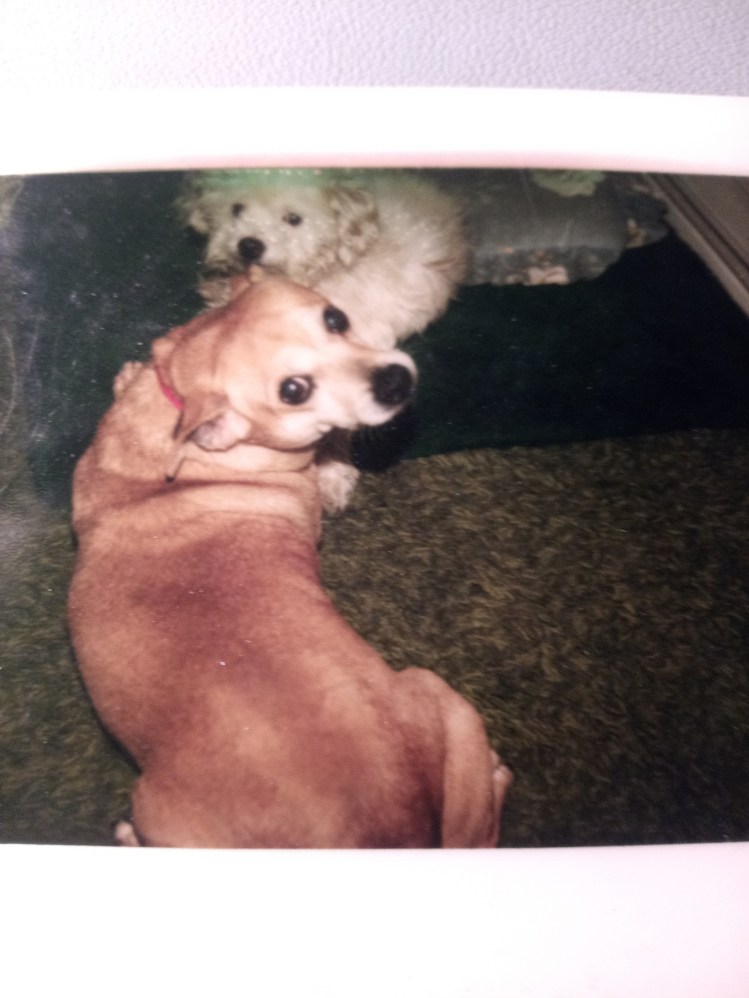
(The images are of Fang (the brown fellow) and Rags, circa 1972, plotting as always. They were lovely boys who were together for seventeen years; I am sure they would have approved of Freddy the Syrian Hamster–Leila)
(We are pleased to run the work of Sam Kandej or Iran for today and tomorrow. He is a special person indeed–the Eds.)
The Burial of Angel by Sam Kandej
I’ll never forget June 3, 2026–the day Angel’s body was found on the main road. Apparently, she was hit by a car or something, but there were no witnesses. By noon, word had spread, and everyone in the village knew that our beloved three-month-old kitten was no longer among us.
“I can’t believe it. Angel was playing in front of my shop around ten. She was so happy, chasing butterflies here and there. I can’t believe her gorgeous brown eyes are closed forever,” Mr. Thomson told me when I asked him whether we should dump the poor thing or do something more respectful.
“Normally, they dump dead cats, but Angel wasn’t just any cat. She became everyone’s sweetheart in a very short time. I don’t feel good about dumping her. How about burying her somewhere near the woods?” Mr. Thomson suggested.
I immediately agreed and left the shop to let anyone who might have been interested know about the burial that afternoon. Almost all the elderly villagers said yes, perhaps because they had nothing else to do or perhaps because they themselves were getting close to death. Natasha, a seven-year-old girl who had played with Angel several times, showed up with her mother, too. In total, including me, there were thirteen people standing silently around our lifeless Angel.
“We should say something, shouldn’t we?” Natasha said to her mom.
“What, dear? What should we say?”
“Something nice. I saw that in Harry Potter. When Aragog died, Professor Slughorn said something that I don’t remember now.”
Natasha’s mom looked around, and her eyes met mine. Without a word, she indicated that it was my responsibility to say something.
Something nice?
I looked at the sky first. It was starting to drizzle. I remembered the day I lost my five-year-old daughter and my lovely spouse in that damn accident. The image of my little Summer laughing while chasing butterflies made my heart ache.
“I do believe in God and life after death for humans. I’m a religious man. You all know that. But I don’t believe animals will have an afterlife. For them, this world is all there is,” I started my eulogy. “You know, I believe God created us to torture us. It seems that He enjoys it. Why should an innocent…”
“What the hell are you talking about? Have you lost your mind?” Mrs. Smith, an eighty-four-year-old woman whom everyone called Aunt Smith, shouted at me.
I felt raindrops on my hand and then on my nose. It was getting colder, and I was shivering slightly.
“Where was God when my Summer perished? Where was God when this poor kitten was hit by an irresponsible driver? Where is God when a child dies of cancer?”
I looked around. Everyone’s mouths were open in shock, especially Natasha’s mom. Only Mr. Walker was nodding in agreement since he was an atheist.
“Listen, we all know you have suffered, but…” Mrs. Smith tried to calm me.
“But what? Am I insulting God? Am I a jerk now? Just tell me, please. Why does life have to be this hard? Why does it have to be this heartbreaking?”
I could no longer stop it. My eyes filled with tears, and the harder I tried to hold them back, the less possible it seemed. The rain helped wash them away, but I couldn’t hide them. I felt ashamed of myself, knowing that Natasha was standing there, watching me fall apart.
“Let’s bury the cat,” Mr. Thomson urged everyone to wrap up the funeral.
“Let me do it. Please. For God’s sake.” I was crying as I walked toward Angel. I hugged her. Kissed her once, twice, three times. Hugged her tightly for a minute or two. I hadn’t been brave enough to go to my own daughter’s funeral. I stayed at home, unable to face the darkness.
I put Angel in her small grave, patted her gently, and said goodbye.
In the next seat to Alan on the plane, his fellow-passenger sighed as he replaced his plastic knife and fork in the cardboard food box, he turned to Alan and said, ‘That meal was the worst thing I’ve ever tasted.’ Four hours into the flight, they were the first words he’d spoken.
Alan felt obliged to reply. He thought about it and said, ‘I reckon that meal was only the second-worst thing I’ve ever tasted. The very worst taste was when I accidentally brushed my teeth with a tube of my wife’s hair removal cream.’
His fellow-passenger stared at Alan for a moment and let out a great belly laugh. He turned out to be a guy called Niels, a Dane who worked for Maersk, the shipping company. In turn, Alan explained that he was retired and on the Vancouver flight to visit his sister there, who hadn’t been well. Niels, like a lot of big guys, was tactful in his enquiries: he didn’t ask about the sister’s diagnosis or prognosis, merely observing that it would be a treat for her to spend some time with her brother again. Instead, Niels mentioned that he himself was planning to retire soon: how was Alan enjoying his retirement?
Alan talked about his allotment and also about some family genealogical research he’d been doing. He mentioned that he’d been fascinated by one of his mother’s ancestors, Thomas Bridges, a nineteenth-century missionary to one of the native tribes in the island of Tierra del Fuego, at the southernmost tip of South America. Rev. Bridges had laboured long and hard there to produce a dictionary* of the Yamana language, containing more than 30,000 Yamana words…
Niels was shocked: ‘Wow, that’s a big achievement.’ He smiled: ‘That’s some relative you’ve turned up.’
Alan was playing, distractedly, with the airline plastic fork. ‘Well, the thing is: I’m not so sure about the achievement. You see, over the years Thomas Bridges was there, the native population was decimated, almost entirely wiped out – a smallpox epidemic, a land war with incoming settlers, the local seals that the tribe depended on for food were almost all slaughtered by visiting whaler crews. The last native Yamana speaker died in 2022. The site of his old mission station is now the main departure port for Antarctic cruise ships.’
Niels nodded his understanding. But Alan wasn’t finished: ‘Did you know that in a single day, January 15th, 1965, Bob Dylan recorded the final versions of Maggie’s Farm, On the Road Again, It’s Alright Ma, Gates of Eden, Mr Tambourine Man, and It’s All Over Now Baby Blue? In a single day.’
It was a telling comparison. Niels intuited that his fellow passenger was distressed that his ancestor’s huge labours over the decades may have been utterly futile. Niels was a compassionate guy, and they still had a long way to travel together before they reached Vancouver. He spoke hesitantly:
‘Dylan’s music, like all art, is a form of play – yeah? It involves so many aspects of living – novelty, risk-taking, beauty. But your ancestor’s dictionary wasn’t art, it was a scientific endeavour. It involved concentration, judgement, rigour. Maybe it’s a mistake to compare Mr Tambourine Man and the dictionary? They were both very worthy achievements, very different aspects of living. We should celebrate them both.’
He caught the stewardess’s eye and ordered a couple of whiskies. They toasted each other and looked out the window. The plane was flying up the west coast of Greenland, and something out there was attracting other passengers – something utterly divorced from human endeavour. A Greenland glacier was calving as it edged into the ocean. Several new-launched icebergs were lying offshore. Things of strange beauty, tinged with pink from the low sun as they started their journeys of flotation and slow dissolution.
*Yahgan Dictionary Language of the Yawane people of Tierra del Fuego ms. of Rev. Thomas Bridges (later annotations by Rev. John Williams) dated 1865, text published on line by Patagonia Bookshelf 2004-2013.
When the world is a dark pit, and you find yourself locked up with lunatics. Sometimes, a person needs a slice of sunshine. So that’s what this series of photos will try to capture, but alas, it’s hard to catch a sunbeam.
Then again, I don’t need my baseball glove or butterfly net. Not when I have this magical weight around my neck. It’s left the dark room behind, this is true, but I have my own just in case.
I try to explain this alchemy, as if to a five-year-old or my giant German shepherd dog, to these folks on the ward, but they just cock their heads. I talk about apertures, f-stops, and blinking eyeballs.
No respondo, Ernesto just gazes away from me and talks to people who aren’t there. All of their heads turn, and I finally have an audience.
I’m free again, on Antabuse, so I’m back with the camera therapy of nature and sunshine. The technology that I couldn’t explain to them—resting in my hands. Like a thousand picture books.
The shutter is eager to slide over its mechanical eye, snapping pictures of the sun and everything under it, but you have to be careful taking so many pictures of God.
(Ed. Note: Although this one is by far the shortest of the four Simon published with us this week (one more tomorrow). The observation and its grand dry wit says much more than what has been writ on forests of murdered trees since the invention of the press-Leila)