Farewell January, Hello February: Or, Meet the New Boss, yadda yadda yadda. And Happy Birthday Klaus Nomi, You Are Missed

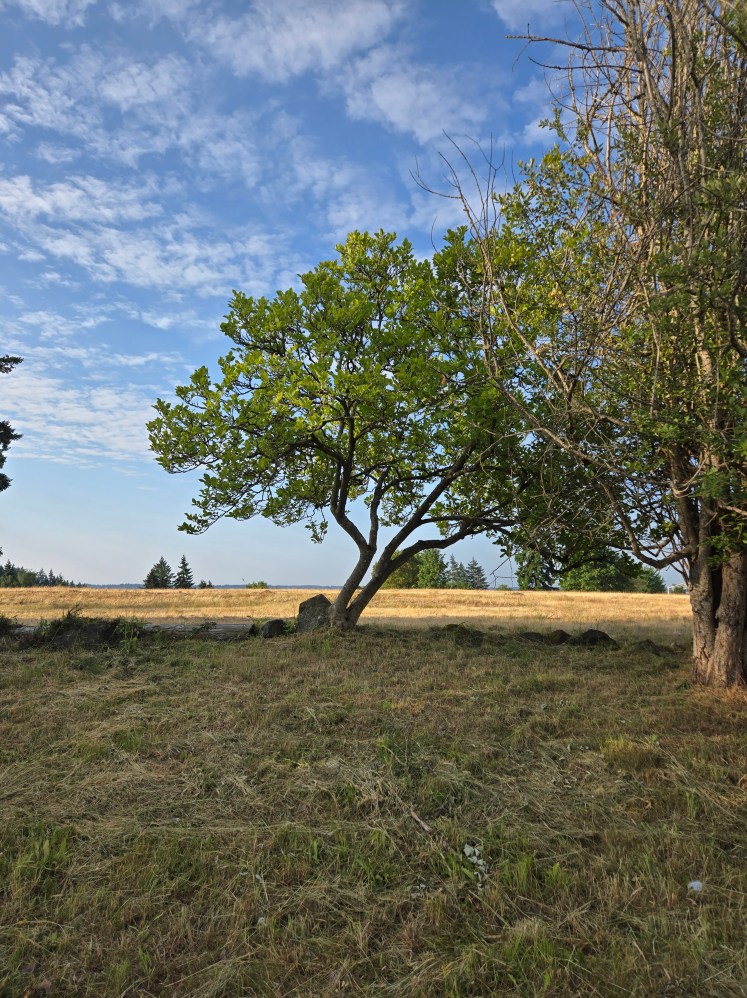
(The image is a wish for an early spring taken by Leila. It is a Pacific Madrone tree, they lean and reach and do all sorts of odd things)

Greetings one and all. Today marks the end of the first complete month of Saragun Springs as a public site. Although there can be month anniversaries for public toilets, if so desired, I prefer thinking we are way above such a pay grade and are not a place for deviants to cottage at.

We are increasing our presence in listings but such things require patience and time. One thing is for certain, there will be no stress during times when submissions are low. I have over two hundred files I can present and Dale is also well stocked. I would rather not write day to day, but I will if I must.

Why? You may ask. Good question. No real answer except for the arrogant Murican standby “That’s how I roll.” The only guarantee I can give the reader is the promise that something will zap into this site the same time every night and day in this round time machine we inhabit.

But mainly I am still naive enough to believe that hard work aimed at helping is rewarded. So I guess that’s as good a why I can offer.

I also want to make every post interesting in some way. Of course the weight falls on the guest writer of the day or my esteemed Co-Editor Dr. Dale Williams Barrigar (who already deftly commands Sundays) for that on most days–yet today it is my turn to entertain.

‘T is not sin to raid YouTube for memorable entertainment. And today I believe I am about to present a person who has never been completely in the limelight, yet deserves much better than what he got.

I have chosen the aid of a great artist who almost broke through and would have if AIDS hadn’t murdered him in 1983. A fellow who would have turned 83 earlier this month, but was, tragically an early victim of the AIDS.

His name was Klaus Nomi, an operatic/punk/pop singer who had a great streak of art and absurdity, which he delivered with world class talent. I first saw him in a music documentary that came out shortly before his death at the age of thirty-nine. I was twenty-three and not yet mature enough to recognize his wit and reacted in a “What the hell is that?” way that I regret–but also am pleased to understand that I grew out of that ugsome “phase” if not a tad later than I should have.

Before I present Mr Nomi, who will sing two songs, I encourage one and all to submit to us. And I also encourage one and all to remember that their names will be attached to it in big black letters. A cautionary thing just in case anyone feels that Saragun Springs will absorb any more than our fair share of heat.

And, now, The Great Klaus Nomi

Leila

And….
Forest Voices by John Davis

No reason the crescent moon

can’t scrape off pond scum

and see its face put on make-up

for its date with coyote,

wander hillsides before howling begins.

No reason at all.

No reason silence can’t

stand on its toes, sing

love songs to the cove that’s

so deep so alone by the shore

so ready for love.

No reason at all.

No reason that wind can’t

find a lover when daylight

has held its breath all night

waiting in a white dress

for a gentleman caller.

No reason at all.

No reason rain can’t explain

its sobriety to the river

that drinks all night never

leaves the party or stops dancing

but craves touch.

No reason at all.

No reason tree can’t lean

against the cold, stretch its limbs

around the ground that wants

to be held when stars

bend their light like violins.

No reason at all.

John Davis

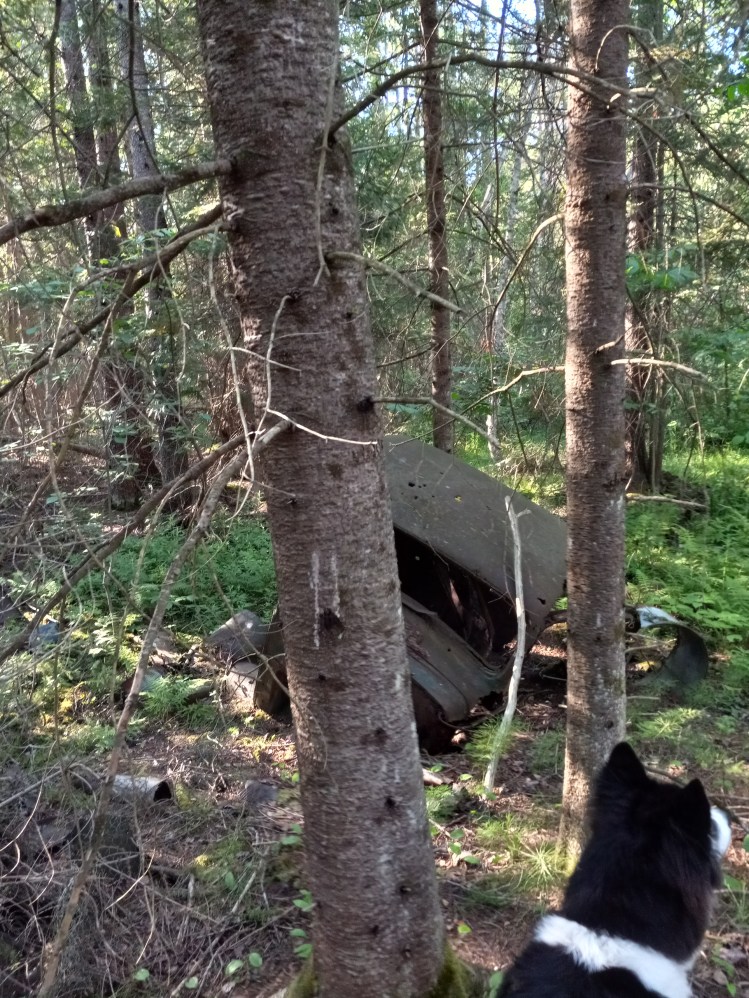
(Image by DWB)

Blonde Noir by DC Diamondopolous

Kit Covington sat on the sofa in her Pacific Palisades mansion with a cigarette lodged in the side of her mouth. A cloud of smoke floated around her head. She adjusted the oxygen tube in her nose, then brushed ash from her dog Muffin’s champagne-colored curls. The miniature poodle dozing in Kit’s lap startled when the camera crew from The Great Morning Talk Show banged equipment into Kit’s antique furniture.

Continue reading

Sandra Again by Corey Mesler

Sandra never said she

loved me, not even the

night she sat on my lap

and we kissed so long

the room grew warm,

nor the night we lay

together and watched

an old western on TV.

When she died she was

my first death. I turned

out to be someone she

might have loved. This

is what I tell myself any

time her ghost appears,

wearing the daisy chain

Sandra forged in life.

Corey Mesler

(Image of a pretty tree in Silverdale, Washington)

Snow at Twilight by Nick Young

He tried to move as little as possible, shifting only enough to wrench free his right hand which the fall had left partially pinned underneath his backside. The pain in his left leg was excruciating, sending blinding white light pulsing behind his tightly closed eyes. The leg was grotesquely twisted and broken. He knew without looking that the fracture was compound and he could feel he was losing blood.

Opening his eyes and turning his head slowly he saw the sky above, darkening, the angle of the sun slanting very near to the horizon. There was perhaps an hour of light remaining. He wondered if that much life was left to him.

It began to snow, a sifting of fat listless flakes. Through the haze of pain his memory flashed on a snow globe his mother had long prized—tiny Currier and Ives Christmas carolers gathered beneath a street lamp, silent mouths open wide amid the swirling blizzard. He winced and let out a low moan, one that carried as much despair as agony.

The unyielding granite wall of the fissure pressed hard against the left side of his face. It was a cold reminder that in a heartbeat his life had pivoted irrevocably. Such an event was no longer either an abstraction or a fiction’s plot device  It was an errant step on a mountain trail he had traversed before, a small patch of friable rock. His footing lost, down he plunged, thirty feet  until trapped by the narrowing vee of the crack. And as he struggled to raise his right hand—almost surely broken—to brush the falling snowflakes away, he silently cursed his folly.

It was to have been a late-afternoon hike, just above the tree line for twilight pictures of the rising late-October moon, then down and home. He was no back country tenderfoot: he had made the trek before, more than once; but this time he allowed his judgment to be clouded by hubris. He would forego anything he did not deem vital. For such a short trip, this time he would take only a bottle of water, a handful of trail mix and a camera. Nothing more. The cell phone that could have been his salvation he had locked in the glove compartment of his Jeep a mile down the mountainside. There would be no rescue—there could be no rescue. His wife would not grow worried until well after sunset and it would be hours more before a search party found him. By then he would be gone, bled out or frozen.

So now, with each throbbing stab from his shattered leg, he could see before him with great clarity what most men are not privy to—the imminent coda of his life. In the crepuscular light he marked the snow’s quickening descent. He thought of his parents, relieved that neither of them was alive. His mother, especially, would have had her heart broken to know her son had died so young and in such circumstances, mortally injured and alone on a mountainside.

He was her first-born and she had idolized him as the pride of the family—from his glory days as a star athlete and student in high school through law school at Yale, marriage to a beautiful, intelligent woman, two great kids embarking on their own lives in the world, partner in a fine law firm, the respect of his peers. At the age of fifty, he’d had the world knocked.

All thrown away.

As his life ebbed with the light of the day he was brought through the pain to take stock of himself. Yes, there were his many successes, what the righteous among his parents’ church-going friends would term “blessings,” but he knew there was deep within him a singular, poisonous moment that he could neither erase nor atone for, a sin that ate at his core during his darkest hours of self-doubt and loathing. And he knew that he would soon leave this world with the stain still on his soul.

It was a beautiful, mild day in early September, one that brought a respite from the summer’s oppressiveness. He always remembered that clearly—the sunshine, the gentle breeze stirring through the branches of the big willows that flanked the family farmhouse. He was eleven years old, just home from school and ready to ride his bike up the road to the next farm to play baseball with the neighbor boys. His father was in the fields, his mother at the kitchen sink preparing the evening meal when he spotted the dog slowly trotting up the long gravel lane leading to the house. He’d never seen the animal before. It appeared to him to be a border collie, with mangy dark-brown fur, its head hung down and tongue out. As it angled off the driveway and up toward the front of the house, he leaned his bicycle against the wall of the garage and quickly followed.

His mother had also seen the dog and by the time he reached the porch, she was at front door trying to shoo it away.

But it wouldn’t go. It backed up a step or two with each wave and shout, then moved closer again. He could see by the dog’s matted, dusty coat that it was not someone’s indoor pet. His mother had brought with her a broom, opening the door enough to try to push the dog back and send it on its way. But it would not leave, instead sitting back on its skinny haunches and looking at his mother with pleading eyes. It was clear it was hungry—for a bit of food and a small measure of human kindness.

He called out to his mother to give him the broom, and when she handed it to him, he began to swat at the dog in an attempt to force it off the porch. Still, it would not go, bearing up under his swings, by circling around and beginning to whimper. For a reason he never fathomed, his mother found this amusing, chiding him to stop harassing the poor animal while snickering at the same time. This caused to well up within him a delight and he renewed his blows, turning the broom and using the handle to beat the dog. The poor creature’s distress, its pitiful yelps, only fueled his mother’s mirth and his inchoate fury. At length, after landing several hard blows, the dog retreated, ran off the porch and back down the driveway.

He handed the broom to his mother, who made a small show of her displeasure with him, but her insincerity was thinly veiled and he quietly reveled in the satisfaction his act—and her response—had given him.

The dog did not return,and through his youth he gave the episode no thought. But as he grew into manhood, it returned, shadowing his dark days, rising up to haunt his dreams.

Now, as cold and pain gripped him, he saw the creature again—hungry and tired and lonely, asking so little yet receiving only brutishness.

Why had he succumbed so readily to cruelty? Why?

Clouds had drifted over the moon as it edged past the lip of the crevice, casting down a dull ivory glow. The snow was falling heavily. No longer did he bother to brush it from his face but closed his eyes and wept.

Nick Young

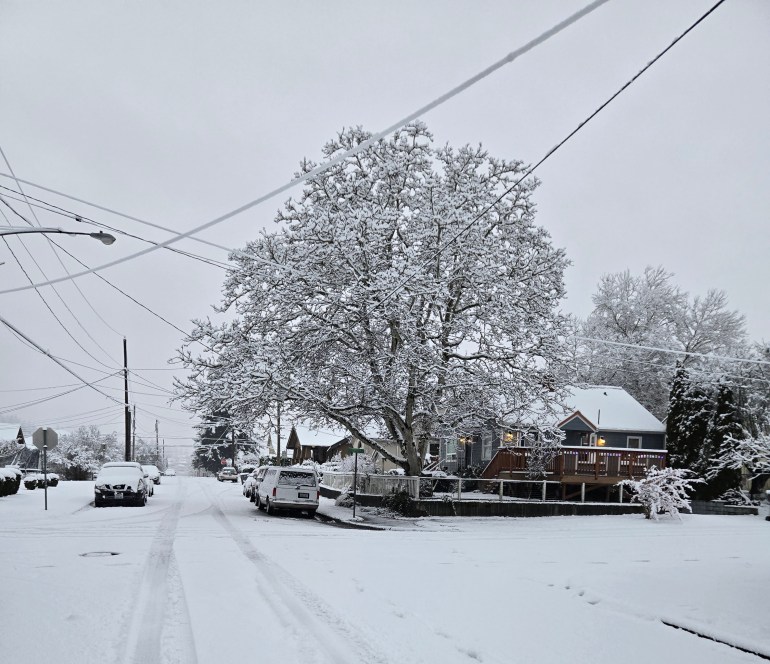
(Image by Leila)

Domestickery by Geraint Jonathan

I did not, of course, get round to building the table, any more than I got round to fixing the faucet on the kitchen tap. The wood was ordered, paid for, but remained in a heap in the corner of what Libby laughingly called my “workshop”. The faucet, on the other hand, proved resistant to every effort I made, and there was no lack of effort. But drip on is what the tap did, and continued to do for the duration. A dishrag or sponge sufficed to cushion the sound but this in itself proved remedy enough to acquire the trappings of parable. So Libby saw it. The table, after all, would have been just that, another table, one to replace the table we already had; or an extra table. Not so the tap. The tap was something else entirely. A leaking faucet, no matter how silenced by dishrag or sponge the drip of water, tells a story all its own, a fathomable one, muted, terrifying in its lack of promise. There was every getting away from it; two ways about everything. That Libby laughed on saying a word like “workshop” is testament to her endurance, and much else besides.

Geraint Jonathan

Is There a Hell by The Drifter

(All images provided by the Drifter)

Is there a hell?

I generally don’t believe in hell until I think of someone like J. Edgar Hoover and what he did to Dr. Martin Luther King, Jr.

Perhaps one of the most egregious things he did was send King a letter right before Martin was scheduled to leave for Norway to accept his Nobel Peace Prize.

It was an anonymous letter.

It started by stating that the letter-writer would not address King by the titles of Mr., Dr., Reverend, or any other honorary title because Dr. King didn’t deserve the respect.

J. Edgar pretended to be a black man who was writing the letter.

And in the letter he projected on Dr. King a whole host of perversions and sexual excesses that are clearly the fantasies of none other than J. Edgar Hoover himself, having absolutely nothing to do with what King himself had ever done.

The letter repeatedly calls King “a beast,” which is not a term a black man would likely have used to describe another black man, even if he hated him.

Hoover also sent the letter to King’s wife.

When Coretta opened the letter (which was of course accusing Martin of adultery of various kinds) in front of Martin then handed it to him, Martin looked at it and immediately said, “This is from Hoover.”

The letter also threatened to expose Dr. King to the world for being a sexual pervert even though King hadn’t done any of the things he was accused of doing in the letter.

Martin outsmarted Hoover at almost every turn, which was probably one of the many reasons Hoover hated King so much.

But the pressure got to Martin.

Being followed around, being wiretapped all the time, and now being sent this hideous composition from the madman could not have helped but make Martin feel paranoid, pursued, unjustly accused (of course), hated (for no reason), hounded by the devil. By the devil himself.

Hoover was a repressed, hateful and hate-filled man who also worked hard to kick Charlie Chaplin out of the USA, and finally succeeded in getting Charlie kicked out of the country.

Hoover justified all these horrors to himself by claiming that he was protecting the United States from ne’er-do-wells, radicals, revolutionaries.

He was not protecting the United States. He was helping to damage and ruin it in some ways like no one had ever done before.

He clung to power for 48 years.

Once Martin started to try to end the war and bring all poor people together in solidarity no matter the color of their skin, Hoover and all the others like him had had enough.

Last time I checked, the King family did not believe that James Earl Ray acted alone.

I do not believe it either.

(Neither did James Earl Ray himself, who repeatedly stated that he did not act alone.)

If there is a hell (and I’m not necessarily saying there is one), J. Edgar Hoover is in it.

John Meacham, the brilliant historian and biographer, recently told Charlie Rose in an interview that the reason Abraham Lincoln was great was because, at the critical moments, old Honest Abe always chose to do the right thing. Even when it was at great cost to himself.

Martin Luther King, Jr., did not choose greatness. He had it thrust upon him at the young age of 25. No one else could do what he did, because no one else had his talents to do it.

He had greatness thrust upon him.

But he always answered the call.

In his Nobel Peace Prize lecture in Oslo on December 11, 1964, Dr. King said: “Violence is impractical because it is a descending spiral ending in destruction for all. It is immoral because it seeks to humiliate the opponent rather than win his understanding. It seeks to annihilate rather than convert. Violence is immoral because it thrives on hatred rather than love. It destroys community and makes brotherhood impossible. It leaves society in monologue rather than dialogue. Violence ends up defeating itself. It creates bitterness in the survivors, and brutality in the destroyers.”

He also said, at another time, “We must accept finite disappointment, but never lose infinite hope.”

He also said, “If a man hasn’t discovered something that he will die for, he isn’t fit to live.”

I guess I don’t believe in hell, or definitely not the kind of hell where God officially sentences you to be burned alive forever, tortured in flames for the rest of all eternity. If I believed that kind of thing, I would probably spend even more time than I already do having various kinds of panic attacks.

But I’m not so sure there isn’t a hell where He makes you SEE, finally see, really see, just what it was you did and were doing during your tenure here on Planet Earth.

Maybe He makes you see and finally care.

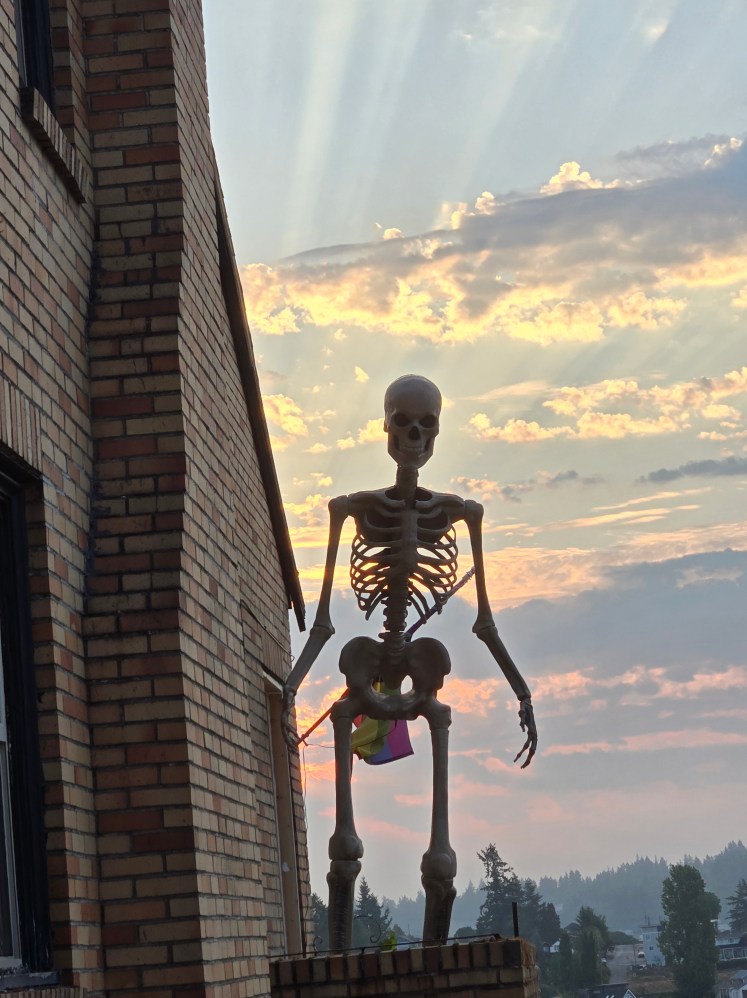
(A Rather Demonic Drifter!)

The Drifter

Alice in the Undyrwold by Geraint Jonathan

(Editor’s note: Geraint is one of the truly intelligent and productively enigmatic writers at work today. Further proof of that statement comes your way now–Leila)

According to Alice there are more things in Leavenworth than are dreamt of in your winsome motley of osophies and ologies, not to mention the sundry little isms such ologies and osophies spawn. Saying which, Alice departed, leaving me to deal with what was known in the circles I was going round and round in as “everything”. The everything in this instance comprised all that remained of Alice’s recent descent into the Undyrwold – from which she had emerged not only unscathed but triumphant. Her unfurrowed brow was a wonder to behold. Indeed she radiated the rare calm of one who has seen the very dregs of h.sap up close and lived to half-smile at the memory. She had conversed with some of the world’s worst criminals – let alone worst conversationalists. She had gazed on Dead Persons’ Tree in Slabtown’s Crowbar district and spoken with those whose names were on said Tree. Persons or persons unknown were known to her personally. Indeed the roll-call of miscreants encountered might suggest that a Very Large Rock had been moved, leaving all that lived under it free to crawl out into what passed for light.

Geraint Jonathan

(Image is of Miss Izzy who divides her time being lovely and driving me out of my mind with annoyances; such being definitive of the Feline species–Leila)

Menopausal Male Bombshell by Michael Bloor

Alan had won second prize in a writers’ magazine poetry competition for his ‘Ballad of the Menopausal Male.’ The postman had just delivered the prize, a copy of The Chambers Thesaurus (5th edition).

As Alan hefted the thesaurus in his hand, he recalled that, in what used to be termed The Dark Ages, poets were feted and richly cosseted in the courts of Kings and Great Lords. When Gunnlaug the Worm-Tongue* (‘worm’ as in snake), the great Icelandic skald (= poet) was presented to the English king, Ethelred the Unready, Gunnlaug chanted four lines in praise of the king and was rewarded with a gold-thread-embroided, fur-lined cloak and was invited to spend the entire winter at the royal court.

Continue reading

Life with Angie by DC Diamondopolous

My sister Angie gives me outrageous material for my standup comedy. She’s a bona fide nut case, a paranoid schizophrenic, bipolar, manic depressive—you name it—Angie fits every disorder that isn’t wired to reality.

The voices inside her head tell her to run from anyone trying to help her—except me. I take my sister’s sorry existence, find the humor in it—in the loonies of my own mind—and make people laugh. Do I feel guilty? I’m half Jewish, half Catholic. Humor is my way of coping. Hell, I’m a female stand-up comic, and there’s no higher hurdle in show business.

Continue reading