I was never a long distance runner, but as a youth I thought that I was a good sprinter. Probably right about the former, wrong about the latter. Either way I never went more than a few miles under my own power until later in life. Sharon and I didn’t get much exercise in either Atlanta, or Louisville, our first two stops after living in Oregon and my short stay in Kansas.
When we lived in Denver from 1973-75 I did some longer hikes with significant elevation gains at altitude. We climbed an easy, uninteresting 14er (at least fourteen thousand feet high) mountain. Despite its reputation as a skier’s paradise, I only cross country skied once. Because of the short summers, there wasn’t weather for hiking. We did most of our exercise indoors at a gym, and I pumped iron.
Our next stop was Los Angeles. We would have a smoothie and walk to local Rancho Park with friend Rick. We got in some walking on the great area beaches. Non-sequitur – Brian Wilson, chronicler of beaches just died.
After our move to Marin County in the Bay Area, we walked more. Sharon walked to the ferry terminal to get to San Francisco during the later part of our stay there. There were lots of attractive walks in Marin and the East Bay. We could see Mt. Tam out our window and we took hikes on it.
Back in the Portland area I got more serious. A friend suggested that I do the Portland Marathon. I ended up finishing (mostly walk, some run) four. My best time was around 5’ 25” on my third, but in the fourth I lost interest and didn’t do another. I did some half marathons and shorter runs around the same time.
After we’d been in the Portland area for two months we joined Lake Oswego Hiking, and that has been our main outdoor exercise subsequently. Our hikes are mostly two to ten miles plus. There may be elevation gain up to three thousand feet, and some tricky trails. We go to the Mount Hood area, down the Willamette Valley, the Coast, Central Oregon, and Southern Washington. At one time we took buses for special hikes farther away. Two of our trips were around mountains in several trips. We went around Mt. St. Helens on the Loowit Trail and observed the results of the eruption. We could see areas of flattened trees and areas of regrowth. The route around Mt. Hood on the Timberline Trail showed places where the old trail had failed.
Outside of LO Hiking, I “climbed” the post eruption St. Helens a couple of times over snow. The snow cover avoids the boulders that would complicate the climb – it’s more hike than climb. I was surprised at the top – it isn’t a crater, a whole half of the mountain is gone. Looking from a safe place one could see a new peak emerging at the bottom.
Mt. Hood is about fifty-five miles away from our home. Several experienced climbers have died on the mountain, so I wouldn’t try to climb to the top, but I have gone to the top of Illumination Rock at about nine thousand feet a couple of times. It got its name years ago by having a fireworks display visible in Portland.
I’m glad of the many walking and running activities I did years ago, but now that I’m an octogenarian, four miles is the new seven miles, and I’ve cut back a lot.
I hope that the physical part of my life is a counterbalance to my intellectual side writing (suppressed giggle).
I want to thank Doug Hawley for accepting the open invitation to Saragun Springs. I would go to a lengthy introduction, but through his words, I feel, Doug does a great job introducing himself. There is a fine line between being a wise curmudgeon and a pain in the ass, and I find that Doug keeps (mostly) on the correct side of that divide. Of course you would not be reading this if I thought otherwise. We welcome you to his world beginning today and on through Friday.
Leila
Mr. Writer
Fran Leibowitz wrote an honest book in 1981 which told it as it is. Homosexuals are well over represented in the arts, not that there is anything wrong with that. They earned it with talent. That isn’t the point I want to make, but it does illustrate her honesty. Another thing she said (I may be paraphrasing, it’s been a long time) is that there is only one “ize” and that is fertilize. That’s a little overboard, but I hate to see “weaponize”. Does it mean “use as a weapon”, then say so. There are a couple of worse ones: “incentivize’ and “medicalize”. It is to ralph.
It really hurts when I see some variation on “Baseball is where (could be when) there are nine players on a field”, particularly by someone who is supposed to be a writer, or even literate. Ask anyone “Is baseball a location or a time?” Even many politicians know the right answer.
A couple of words are being changed for no good reason. Past tense of cast has been cast, but now I’m seeing casted. Google backs the old man on that one. “mike” has been the short form of microphone for years, now “mic”. Because the object is pronounced mike-ro-phone, I object. The pro audio industry backs me up according to Google.
As a certified fogey, I object to the verbing of nouns, and the nouning of verbs. I may be given a task, but I will never be tasked with. No one may approach me with a “big ask”. I might be amenable to a request. I could go on, but I’m sure you’ve seen enough.
A rogue’s gallery of clichés (being introduced by a cliché) which have become intolerable:
“Walk it back” for lied or mistaken
“Optics” for appearance
“Receipts” for proof or evidence
“At the end of the day” I welcome Morpheus, I don’t come to a conclusion
When I was an actuary, one of my jobs was to write insurance policies. The job was mostly assembling boiler plate, but our government overlords were concerned about readability for the poorly educated. In order to pass that hurdle one had to get a high Flesch score. Despite the name, it wasn’t the least bit sexy. Short sentences got high scores, sentences with clauses got low scores. Something like “Then” “he” “left” would get a winning number. I don’t know if Flesch affected books, but I think it is the reason newspapers started to break up sentences into choppy parts to prove readability. In order to reach the lowest level we get writing that keeps stopping at the wrong place. Clauses are evil; starting a sentence with a conjunction is divine according to the rule makers. I still believe that a period is a red light, not a green light, and will write for an educated reader.
Some people, perhaps someone from Literally Stories may disagree, but I hold out for “issue” meaning something debatable, not a sore back or a grammar error Using “issue” for mistake, error, or problem looks like weak tea to me. Call it what it is: Broken arm, not an arm issue.
As the president of the Society To Preserve Affect And Effect, I’d like to destroy the ubiquity of “impact”. An asteroid hits the earth, sure that’s an impact. I get sick from the flu, that’s the effect of a virus. Someone steals my license plate that affects me. “Impactful” is the evil child of impact.
“Community” and “actually” are two words which are frequently unnecessary, and in the case of “community” misleading. I live in Lake Grove which is a community. Scientists, Polish people, the disabled, and so many more that are labeled community show no characteristics of “community”. “Scientist” is a profession, “Polish” is a national group, and the “disabled” share a status. There is no difference between “scientists” and “scientific community” that I know. Community has become a pointless writing twitch and actually has been redundant for a long time, but still used. Compare “He went to school” and “Actually he went to school”. They say the same thing.
Periodically I see the advice: “Develop a brand.” I believe brands are for cereals and live stock. A writer with a brand is predictable and not that creative. It may sell books, but it stifles creativity.
Brevity is good. I don’t know if Stephen King included that in his book on writing, but if he did he’s not following his advice. I like to write with the economy of Hemingway. No metaphors, similes, or description of the furniture unless relevant.
As an uneducated writer, I ignore these two writing rules. Eschew adverbs, and show, don’t tell. It may happen, but I doubt that a reader who comes to “she drank thirstily from the faucet” concludes that he is reading a poorly written story, even if a lit professor objects. “Show don’t tell” works in graphic novels, but many people still read the Bible with all of its “tell not show”, and telling is an efficient way to provide information.
I know I’m fighting a losing battle, but it allows me to keep my curmudgeon badge.
(Top image: Elina in Chicago 14 June; Second image: Tressa With Emma Lazurus Poem. Both supplied by the Drifter)
The Crowd and the Protest
“The shepherd enters through the gate.” – John, Chapter Ten
ONE
Sadly, the question might easily arise as to WHY anyone in their right mind would bother to fight for, or defend, the so-called “American Dream” any more, in this Year of Our Lord 2025.
The Gonzo journalist and prose master Dr. Hunter S. Thompson, in his prophetic mode, rightly proclaimed the American Dream dead and buried over fifty years ago, not too long after Tricky Dick got finished with his sad, partially unconscious, and certainly pathetic attempts to clownishly crown himself and end American democracy forever.
It seems to me that the American Dream has now become the most destructive lie and delusion the human race ever invented for itself, a vast, mass mental and spiritual health crisis and pandemic that has spread globally everywhere from here to India and all places in between, and has destroyed the human and humane spirits of, literally, billions of people all across the globe (although not everyone).
Because the so-called “American Dream” is nothing now in its very essence and core except a pixie dust mental disorder, a vast, sometimes-seemingly-all-consuming, LSD-like, schizophrenic delusion that is not based on Fantasy (the bad kind), but IS Fantasy the bad kind itself at every level.
Romance Fantasies, House Fantasies, Computer Fantasies, Car Fantasies, Shopping Fantasies, Political Fantasies, Property Fantasies, Robot Fantasies, Rocket Fantasies, Gambling Fantasies, Lottery Fantasies, Vacation Fantasies, Hero Fantasies, College Fantasies, Economic Fantasies, Flower Fantasies, Music Fantasies, Dancing Fantasies, Fame Fantasies, Job Fantasies, Retirement Fantasies, Revenge Fantasies, Drinking Fantasies, Drug Fantasies, Food Fantasies, Screen Fantasies, Sex, Power, and Money Fantasies have burned and buried the real minds and hearts of so many people walking, standing, sitting, or lying down on the globe right now that it’s really chilling and yes, even horrifying, when one thinks on it for more than two seconds before going back to casually scrolling one’s phone as the world burns.
So why fight for the American Dream? Because there’s another side to everything in this world: what the great Chinese poet, philosopher, drinker, and drifter Li Po called the Yin and the Yang.
Harold Bloom, the great American writer, voice and citizen, said many times that an American never feels free unless she or he is alone. And when an American is alone, they do always feel free (even if sometimes terrified, too).
That liberating essence, or core, of American democracy still exists, even though Sojourner Truth, Crazy Horse, Frederick Douglass, Thomas Jefferson, Daniel Boone, and John Wayne are gone (“The mountains have been my church,” said Wayne in his final movie). It means everything to the human mind, heart, spirit and soul all over the globe, is America’s one great contribution.
And that is why I will fight for it, in my own way, and in the spiritual warrior sense of the word fight. I, and many others.
TWO
We came up out of the subway tunnel and were instantly swallowed by the Chicago crowd. I was with my teenaged kids and a few of their friends. I could see the Picasso statue in the distance over the heads of the crowd. It was there, the statue the great Picasso gave to the city of Chicago for free, the one that looks like a horse’s head from a certain angle, a woman’s head with long hair from another angle, something else you had never really imagined before and can’t name, from another angle.
I’d spent a lot of time in the past sitting around in downtown Chicago and studying that huge metal statue. Now I was packed into the middle of so many hot, pressing, human bodies suddenly that I couldn’t even move, not right, left, front, backward or center. One of my daughters had been swallowed and pushed along by the crowd. We were all worse than sardines in cans right now. Suddenly I realized that if I had another stroke like I’d had last year, I would be in a very bad spot because there were angry, shouting, pressing, hot-blooded, hot-breathed, neck-veins-bulging, stinking, sometimes-perfumed, protesting people pressing all around me and there would be no medical assistance happening out here. I turned around again trying to find the stairs from where we’d come up from the subway so we could go back down, but it was already too late. We’d been sucked into the vast black hole of the hot, pressing crowd, literally even before we knew what was happening.
We kept talking to each other in the middle of the crowd as we tried to inch our way out of it. I instructed all these teenagers I was with to follow me, and trusted (no choice) that my other wildly intelligent daughter (they both are) would be able to fend for herself, but no one in the crowd was moving, they were all just standing there pressing upon one another (no room for anyone to even sit down, not that you would want to here), holding up signs, screaming slogans and chants, breathing their hot breath on the backs of one another’s necks, and I could feel the outraged intensity of every single one of their souls (it felt like) pressing down on my own personality, which was very quickly becoming nothing less than outraged at their outrage. Trying to keep it under control, trying to keep it under control…
There were very many angry and shady-looking people pressing in the crowd, folks trying to pull suitcases or carrying awkward-looking backpacks, all of the above large enough to carry explosives of course, folks dressed all in black with hands hidden in pockets large enough to carry pistols, folks hunched over with hoods over their heads and masks on their faces and sunglasses covering their eyes.
It was a vast ocean of bodies pressing over me and I realized I was about to panic perhaps because I was now having a bona fide LSD flashback right here in the middle of the crowd, actually triggered by the crowd, in fact. But I had to keep it together in order to lead my daughters and their friends to safety.
It had been my idea to come down here, after all. My kids and their friends instantly agreed. Then I remembered that I had been inspired by them during the George Floyd protests when it had been their idea to go to the protests before it had been mine. We were trying to inch our way along to escape from the crowd. Some people, obviously many people, do not get too claustrophobic in such conditions, because a lot of these protesters actually seemed to be enjoying themselves. But myself, my daughters, and our friends were not some of the non-claustrophobic ones. The kids call it “tweaking” these days. It’s when you’re losing your grip on things, feeling like you’re having an acid flashback, panicking or almost panicking, freaking out, in other words. I was now, officially, and internally, tweaking at every single level I could or couldn’t think of. I was able to hold it together for only two reasons.
One: in order to try and help my daughters and their friends (and myself) get out of this.
Two: I knew if I really started freaking out, it would be like throwing a flaming torch on top of a keg of gun powder.
I knew now, in my blood, how easy it is, and how fast it can happen, that people get trampled to death in a crowd like this.
THE CROWD is so terrifying and horrifying to some of us because it means a complete and total loss of individuality, and control, at every level.
The only place you can maintain your own self-control in conditions like this is within your own mind, and under these kinds of conditions, that is very hard to do, especially when an acid flashback, or whatever it was, is making every single nerve end in your body and brain feel like it’s on fire right out of the blue.
Thoughts of Buddha helped save me this time. His chubby ghost (to me he was chubby) appeared out of nowhere and wafted in front of my mind. It was his kind of mind control I turned to in these desperate circumstances. I was having an acid flashback in the extreme but the purposely recalled thoughts of the strength of Buddha’s mind helped me regain, and keep control of, my own mind. I turned around and all the kids I was with had vanished in the crowd, we had been separated, I couldn’t turn around, and I couldn’t find them. I kept on trying to worm and inch my way out of the crowd, trusting their safety to God, because it was the only thing I could do now.
THREE
During the worst moments of being suddenly caught unawares in the middle of THE CROWD like that, it felt like nothing short of being buried alive in the middle of the most vivid Edgar Allan Poe buried alive short story you’ve ever read, except you’re not reading the story at a safe distance, you are the character in the story who’s actually buried alive, worse than in a dream. For me, to suddenly have millions of anonymous bodies pressing all over mine without warning is one of the worst living nightmares I can possibly imagine. (I’m fond of keeping my distance, which is an essence of being a drifter.)
There are other nightmares just as bad, like maybe being stalked by a great white shark while out swimming in the ocean and you know he’s there but are still a mile away from shore. Only being buried alive for real could possibly be worse.
Losing contact with my kids in the crowd like that was even worse than the buried-alive feeling.
FOUR
It took me ninety (90) minutes to inch and worm my way out of the crowd. Ninety minutes that felt like nine months jammed down into a Siberian prison holding cell (because of the acid flashback/s).
When I finally broke free, onto famous State Street in Chicago, I looked up and there was the Van Gogh-like Muddy Waters mural on the side of the building I’d seen many times before. I had lost track of where I was in the downtown area, and had only been following my instincts to get out. And I got out. And I was free. And there was Muddy, one of my great and lifelong heroes, Muddy Waters, staring down at me. And we were both free.
I had to wait around for another thirty (30) minutes before my kids also broke free from the crowd.
But fifteen (15) minutes before that, I received the first text from them telling me they were OK.
FIVE
There is no doubt that I’ll continue to protest personality-crushing authoritarianism wherever it exists, whether that is at the “highest” business and political levels, or within the classroom or the workplace, or on the street corner, or within myself, or anywhere.
Next time, however, I shall be much more careful about how I approach THE CROWD. A word to the wise: The Crowd is bad. In the worst sense of the Word.
ADDENDUM from The Drifter
There are a million different ways to protest, of course, and attending a so-called “Protest” is certainly not the only way, although, as the American Civil Rights Movement showed, it is sometimes a necessary way. The famous “three and a half percent” rule, proved by social science, says you only need that amount of a nation’s population to resist and overthrow the lockdown of true authoritarianism, the kind where the jack-booted thugs are standing around armed on all street corners with their faces hidden and the little old lady you thought was your friendly neighbor just reported you to the secret police for something you didn’t do.
The following poem by Walt Whitman outlines another way to protest, just as profound, or more profound, than the other way.
Poets to come! orators, singers, musicians to come!
Not today is to justify me and answer what I am for;
But you, a new brood, native, athletic, continental,
Greater than before known,
Arouse! For you must justify me…
I am a man who, sauntering along without fully stopping,
Turns a casual look upon you and then
Averts his face,
Leaving it to you
To prove and define it,
Expecting the main things
From you.
“The Drifter” is drifting off for now in order to steady his nerves via a combination of medical, psychological, and spiritual advances. This world we currently inhabit will make you nervous if you’re alive; do what you need to; pursue the right kind of excess and eschew the wrong kind as much as possible.
“The Drifter” doesn’t know yet what the column will be about next Sunday in this “Postcards from the Drifter” Sunday series; what he does know is that he will be here.
The main character in the following lyric cry goes barefoot most of the time, wears animal skins when he wears anything, carries a spear, wears an amulet around his neck that protects from evil spirits which he knows often, but not always, come from other people, and has never shaved, although he has cut off his beard and hair when they get too long so they don’t get in his way; he also takes magic mushrooms, walks for days on a regular basis, hangs around the fire a lot, also spends a lot of time alone, sees visions, makes cave paintings he never looks at again, or sometimes returns to as if to an old friend for days on end; and in this poem, is inventing, or elaborating, human language, while also simultaneously developing the gift of human mercy which Jesus himself, and his mother Mary, would bring to perfection many thousands of years into the future from where this character is perching in this poem – right now.
Alone at Blue Rocks on the Shoreline
Prehistoric Man/kind perches on the cusp of a decision, and speaks.
The rocks here at shoreline are blue.
Blue like the water and sky.
Blue like the blue bird and the big ice.
And they rise half as high as the ice, as the big ice.
The rocks here under this sunset tree are red.
Red like her hair, and the sacrificial hare in the sun, in the trap, twitching.
(LET IT GO.)
Your costume only becomes you
and your uniform once you
wholly own it somehow
after long tries
and once you wholly own it you’ll
uniformly know and your uniform
costume will simply become a way
of knowing and a way of knowing more
about what you already know you know
but aren’t always so sure about, in this land
of the wooly mammoth having you for breakfast
on his horns
and the saber-toothed tiger around
every
bushy
turn.
So the hare, let it go, LET IT GO.
The hare released.
Look at him go!
He flies because I
have chosen
not to sacrifice.
Dr. Dale Williams Barrigar is an impoverished poet-scholar from the Midwestern USA who learned much of what he knows about primordial humankind by reading and pondering the works of Sigmund Freud, Carl Jung, William Butler Yeats, William Wordsworth, William Blake and William Shakespeare, as well as lots of intuition, imagination, and experience thrown into the balance. Experience alone is never enough, and neither is reading; they have to be combined.
(Note–Daisy has acquired a Penname. As you have guessed it is “The Moving Hoof.” She is now, as she just informed me, Dame Daisy Cloverleaf-Kloverleaf, the Goatess of GOAT and The Moving Hoof. A gallon of vodka weighs more than The Moving Hoof yet it contains only half as many delusions–LA)
(Note–Maybe there is a cosmic force after all. Too many odd little coincidences in life to explain away, as I see it. Today would be my late mother’s 87th birthday. The publication of this was not planned that way and if it had been a Sunday this would not have happened. The mother in this story is much more than based on her–Leila)
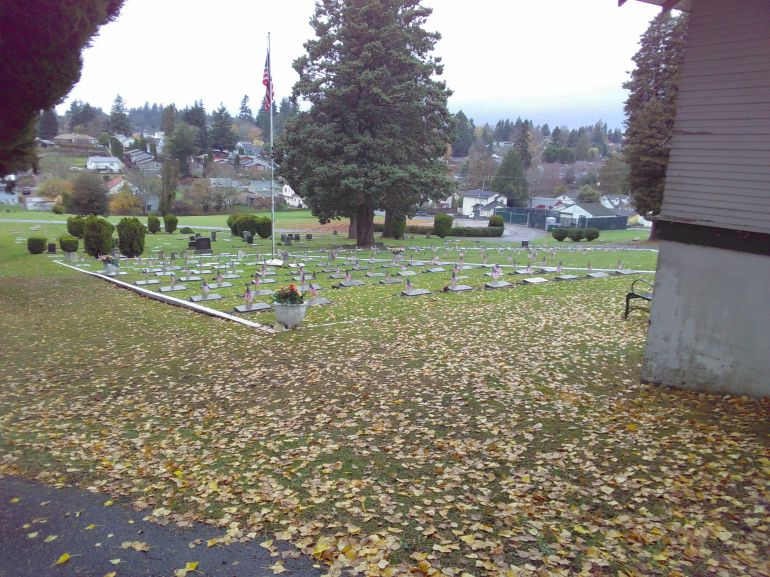
It was the day after Tess’s last attendance at Good News that we visited our father’s grave at New Town Cemetery. Anna-Lou had told her where to find it; frankly, until then I never thought about him having a grave. New Town was a bit of a walk from the apartment, the center of our little childhood universe, on what many locals facetiously called “Hereafter Hill.”
Dearest Hester,
Can’t walk on water without you–
Miss you bunches–
Jesus H. Christ
I had “autographed” those words in the Bible the Presbyterians had given Tess upon her brief conversion. For about a little over a month after attending Good News, Tess had been as good a Christian as you could hope to find–yet not in the by rote sort of way. I think she understood the message of the man; the ideal; even allowed for the show biz. She later told me that she could have loved him if it wasn’t for all the impossible stuff attributed to him. The Sermon on the Mount was enough, having him cure lepers and raise the dead placed simple yet complete compassion out of human reach.
Mrs. Graydon gave Tess a sash to wear to Good News as well as one of the cheap little Bibles they had by the gross.
Tess filled the sash with badges earned from memorizing psalms and such. She even got up at an unholy hour on Sunday to ride in a van that took her to service and Sunday School.
“Don’t forget your spazzy sash, molecule,” I’d grumble from under my pillow, not feeling at all blessed because we shared a room.
“Har dee har, Sar-duh.”
For that brief time I had to conduct the Fort Oxenfree business. But I knew that it wouldn’t last; I knew that there were too many people like Mrs. Graydon between Tess and the Lord for Him to exist in the Dreampurple sense. In a way it was a shame, because Tess had it in her to be holy; she knew that the actual heart of religion didn’t involve not saying fuck or getting sniffy about smoking cigarettes. God, if there is such a thing, and Dreampurple, which actually existed in Tess, had the appreciation of beautiful pain in common. But there were fatal differences: mainly, God kept secrets.
“What happened to Jesus?” I asked as we made our way uphill to the main gate, for we had left without a prayer and there was also that I don’t think so to get to the bottom of.
“Mrs. Graydon says suicides go to hell.”
“She ain’t God, besides, she says that about the Jews too.”
“Yeah,” Tess said.
Despite my own conflicting feelings, I found myself wanting Tess to hold onto church. We were still young enough not to have been touched by poverty in any lasting way. But that would come. Faith at least tried to help. Still, that’s something I used to believe. Tess could have been born a Kennedy and the dope with its dreampurple promise would have found her. It’s hard not to listen to the words of dark things, those that claim the birthright of fate, those that whether they be truth or lies are the only words you hear. Conditioning and ignorance, I suppose. But I already knew the score.
(Note–I am certain that this will be the first of a great many enlightening Sunday columns for Dale in the Springs. He has the talent and determination; therefore the sky is the limit!–Leila)
The Other Side
“Study yourself frequently in the mirror, without vanity.
It is a profound self-portrait.” – Socrates
“…Before I am old / I shall have written him one / Poem maybe as cold / And passionate as the dawn.” – William Butler Yeats
“The bird that flies in front of you is not for no reason.”
– Chingachgook
In September of 2024, I saw the 91-year-old Willie Nelson walk out onto a stage somewhere outside Chicago and wave at the large crowd in the seats and spread out farther back all over the green, sprawling hills of this midsized stadium.
You could see Willie pretty clearly from where I was on the hills with my family, and you could see him even more clearly on the screens that were elevated above the stage like they are everywhere now.
Great waves of goodhearted cheers and applause went up from the crowd in spontaneous honor of iconic Willie. My guess is that Willie always receives that kind of welcome, except not quite so enthusiastic and dramatic as now – because it was well known in Willie Land that Willie had almost passed out of this mortal sphere – again – recently.
And yet now here he was – again – standing on the edge of the stage holding Trigger (his guitar) and waving with great strength, resilience, friendliness, and Willie-style openness at this hugely appreciative – even tearful in some cases as I looked around – Illinois crowd.
Four months earlier, my humble self had also come very close to biting the dust of this mortal world, not for the first time, so the reappearance of Willie this way held a certain magic for me, especially since he is a lifelong hero of mine.
At the age of 57, in May of 2024, after a sleepless night previously, then staying up all day (no naps), arguing for several hours with everyone around me about all sorts of things (we’re all a bit bipolar or more), and then after lots of excessive celebratory activities with my kids on my ex-wife’s birthday, I suddenly found myself sitting in a chair alone a bit before midnight, completely unable to speak. (I had been thinking about calling out to one of my kids about something even though we’d already been talking to each other all day long.)
Not only was I unable to speak.
I was even unable to think of a single word, at any level of my mind, no matter how hard I awkwardly tried, and kept on desperately trying – and this was after a lifetime of words, words, words, and the Word, obsessive, nonstop reading and writing, life as an English teacher in college, and the ability to speak so rapidly and for so long, at times, that I’d been known to talk nonstop for 24 hours, or more, to a lucky few (and generous) souls (who must’ve spent a lot of time tuning me out, as well, during those interminable, adrenaline-fueled, sometimes chemical-fueled, half-mad monologues about anything and everything under the sun).
(It was like the tale of the apostle Paul talking all night long, until one of his listeners fell asleep, and then fell out of the window. Paul was able to pull it off and save the young man’s life only because of the faith of everyone around him.)
I couldn’t think of even a single word.
And suddenly I very much, and very deeply, realized the fact that – I couldn’t think of even a single word!
My mind was a blank vaster and whiter, and more elusive, than Moby Dick.
My daughters walked into the room together (twins).
I tried to rise from the chair.
I collapsed and hit the deck very hard – but when I heard the fear in their voices, something helped me bounce right back up again.
Amid the confusion, terror, and total horror, worse than what Mr. Kurtz talked about perhaps, of not being able to find the words, something had buoyed me up – when I heard my daughters’ sweet voices in fear and dread for me.
After an ambulance ride with some chill kids who looked like they were about sixteen years of age doing everything they could to help me out, I found myself in the emergency room staring into a screen hanging above me, where the distorted face of a concerned doctor with technological eyes like Lex Luthor, and pale, dark, glistening skin, was weirdly informing me (his mouth seemed to be going every which way), in his echoing, distorted voice, through the screen, that I was in the middle of having a stroke.
That was the moment when I realized it felt like the White-Light Fingertip of God Himself had reached out earlier, out of nowhere (or out of air – out of thin, thin air) and TOUCHED ME on the brain (or in the brain) in a very biblical way.
I knew now that this was some kind of wake-up call.
Twenty-three years before, in September of 2001, two weeks after the terror attacks on the Twin Towers, I’d fallen on a switchblade knife while doing tricks with it in the yard in the middle of the night after a long day (and night) of drinking.
I’d almost killed myself with a switchblade (and not on purpose). The feeling of being stabbed (perhaps especially by yourself) is almost impossible to describe.
The horrific irony there was that two weeks before the Towers were brought down, I’d been doing nothing other than standing on top of one of them with a close writer friend from Brooklyn and looking down, in awe, at the skyline of Manhattan.
September 11, 2001, means many things to all of us, and different things to every one of us, whether we were alive at the time or not.
To me, 9/11 will forever be tied up with that bizarre, drunken, fateful incident, in which I fell on the switchblade knife in a drunken, manic, and exhausted glee, and almost killed myself without meaning to; and the time two weeks before the Towers were brought down, when I had stood, literally, on top of one of them.
(Falling on the knife like the Towers had fallen.)
(Stabbed in the side like Him.)
When I arrived at the hospital after the knife accident and took the rag away from the wound in my side to show the nurse, great gouts of blood literally SPAT and SHOT out of my body and SPLATTERED all over the wall – straight out of the worst horror movie ever made, so much so that the nurse immediately ran from the room in terror to go get a doctor – and somehow I survived.
And not only did I survive the stroke as well; but I also began somehow to THRIVE, very quickly after it ended.
When the stroke came, I’d just been starting to emerge from a wicked, vicious, six-months-long melancholia, one of the worst in my life in a life of long, horrible, periodic depressions.
After I had the stroke, after I “woke up” in the hospital, I realized that the depression was gone – it had vanished; had lifted; had disappeared, like the morning mist suddenly going away off the face of a beautiful lake.
One moment you look and it’s there – then when you turn around again, it’s just gone.
I had a lot of bad habits before the stroke which contributed to it (none of which shall be gone into here for various reasons).
But it also turned out that I had something going on with an artery in the right side of my neck, a small but very significant abnormality that had caused the stroke, something so rare that only less than three hundred, three hundred, cases, have ever been documented.
It required an endless-seeming series of tests to discover the problem, then surgery to take care of it.
In the middle of the surgery, I left my body.
I didn’t die – but I, quite literally, left my body and wandered around the surgery room (my spirit did), watching the surgeons, doctors, and nurses perform their work, but mostly watching myself, lying there on the table.
I was studying myself very closely while hovering in and among the people who were working on me.
And I realized that there were and are two me’s, one of whom resides solely in this body made of dust, this mortal coil – and one of whom does not.
That brings me back to Willie. I don’t recall all the circumstances off the top of my head, but I do know that he’s almost died before many times.
And I do know that this summer, so far anyway (which is way more than enough), he’s back out on tour – at the age of ninety-two.
Every moment we breathe on this side of the Grim Reaper’s scythe is another chance at living our lives to the fullest, maybe for the last time here.
One thing I know for certain – we will all find out what happens to us, even if that is only peaceful sleeping (which I doubt) – on the other side.
Sign-off: “The Drifter” is bowing out for now, off to walk his sidekicks and assistants, two Siberian Huskies and one Pit Bull whose names shall remain anonymous in this place (for now), in a local forest preserve outside Chicago along the Des Plaines River, where Hemingway used to hunt as a kid, and John Wayne Gacy used to dump bodies; an area filled with deer, coyotes, foxes, birds of prey, snakes, river otters, and lots of other wild creatures, including more than a few of the humans who hang out there.
“The Drifter” shall re-emerge next Sunday with a plunge into his personal relationship with the life and work of Bob Marley, as well as wild tales from his honeymoon with his ex-wife all over the island of Jamaica in the Year of Our Lord, 1994 (thirty-one years ago at the age of 27).
The title of next week’s column is (unless it gets changed) “Jamaican Flashbacks Extraordinaire.”
I waited outside the church for Tess, I knew she wouldn’t leave early since it was now up to her to protect Mom’s credit at Graydon’s. Everywhere we ever walked seemed to be a mile from home and though there were shortcuts they always came with an extra hill to climb. Too many weirdos afoot to let Tess walk home alone.
There was a little store across the street. “Don’s Market” was the only business on Anoka Avenue. It was run by a Korean couple who didn’t bother to change the name when they bought the store and adjoining house from old Don, who went to Arizona to die. We never lifted from little stores because they were the proprietors’ livelihoods. This was not altruism, for unless you had the bad luck of landing a real asshole, a supermarket clerk would only chase you only so far– until the fact that they’d get paid anyway kicked in. And no supermarket was rumored to have a loaded shotgun stashed below the cash register. Mom and Pop outfits tended to equate five finger discounts with felonious behavior. So, extremely aware that I was being watched, I bought two cans of coke with honest cash earned via school porn sales. I crammed the cokes into my front pockets, crossed the street back to the Presbyterian church and climbed a maple tree that stood in the far corner of the parking lot, which gave me a view of the church’s front door. It was quiet and hot, and I could hear the cracking of Scotch broom pods that only my ears were particularly attuned to.
Coke cans in one’s pants pockets interfere with skillful tree climbing. But I’d reached the nook where the trunk split in twain about ten, fifteen feet up or so without much difficulty. Good News Club was scheduled for an hour. I didn’t have a watch but I figured that there might be forty-five minutes of tree-sitting in my immediate future. I extracted the cokes and placed the one I bought for Tess in a small notch in one of the main branches, tapped the top of mine and pulled the tab, which I automatically placed in my pants pocket for Tess’s art projects. I’d once heard that tapping the top of a can prevents carbonated eruptions–which, of course, is bullshit–but like removing a cigarette from a freshly opened pack and putting it back in upside down for luck (as long as it’s smoked last) it’s something I still catch myself doing to this very day, here on the down side of life.
From my vantage point I saw Dumbo and his mother leave the nearby Catholic church. Dumbo’s Mom, Mrs Holman, was a patient widow of somewhere between fifty-five and sixty–Dumbo was around thirty, but as it goes with people afflicted with his condition, his face wasn’t marked by time. They passed on the walk and did not see me.
A lot of the kids in the neighborhood used to tease Dumbo. Called names. Threw rocks. They did it because they were scared of what he was. I never did, but I didn’t do anything to stop it, either. Tess would. She’d stand up to the others and tell them that Dumbo can’t help being the way he is. No one dared to flip Tess shit because I was her sister, so they laid off when she was around–which, in a sense, meant that I had helped to improve his situation.
I climbed higher in the tree, leaving my soda next to Tess’s. I gained another ten feet because I could; I was skinny yet as powerful as a boa constrictor. When I was alone I didn’t stay in one spot long because it gave the inexplicable sadness that had recently begun its lifelong chase a chance to find me.
There was a pack of Old Gold and a box of matches in the rolled cuff of my right sock. Concealed by my pants, I kept the pack on the inside of my ankle to prevent smashing it. I’d started smoking at nine but didn’t become completely addicted until I was in high school. Mom was a Winston chainer, but I didn’t boost hers unless I had no other choice. Our organic disdain for each other extended to the brand we smoked. The world took place in a nicotine haze. There was no such thing as smelling it on you.
One of the things about Mom I envied was her ability to bring a match off any surface. She could strike one anywhere like Clint Eastwood in a spaghetti western. Said she learned it at Catholic school. She also learned how to roll a cigarette with one hand, deal cards from the bottom of the deck, palm tips off tables and how to change raisins to wine. Not like she told us any of it besides the match part, but Mom sometimes got loose with her tongue while sipping loganberry flips and yakking on the horn with Nora. She was also under the odd impression if she lowered her voice in a confidential manner while on the phone that we wouldn’t make a special effort to listen. We got a lot of information that way.
I was getting good at bringing a match myself. Though hitting one off a dry tree bark was hardly a trick. I lit my smoke and took a long look at the Catholic church I had seen Mrs. Holman and Dumbo exit. It stood at the end of Anoka and had that impressive look you see in mental institutions and prisons.
Although there were a bunch of Christian churches atop Holy Hill on Anoka, It was easy to see who had the most money. The Presbyterian church was an old building, kept clean by volunteers and its white paint job was regularly maintained. But it had no grounds to speak of and there was a definite sag to the building that I also noted in the Baptist Church that most of the colored people attended. It too was extremely clean, but there were cracks in the concrete foundation and their bell tower was missing a few shingles. Not so with the Catholics. Closely followed by Mormons on the east side of town, the Catholics had the cushiest operation going.
They had two blocks all to themselves, and unlike the others did not rent the property. One block was shared by the rectory house, which looked like a mansion to us, and the school, whose students ran from kindergarten age to 8th grade, and yet every kid had to dress in the same uniform. And there were nuns and priests all about in flowing garments that gave the whole place a magical aura present at no place else in Charleston. They had actual grounds covered with green grass, hedges and rose bushes, all maintained by a paid staff of gardeners.
The immense brick church was across the street. I glanced at the cross atop the bell tower and immediately understood to the last atom of my being that there was nowhere near enough happiness on earth for everyone; nor a just afterworld that ends pain and evens the score–unless nothingness counts as fair. And no matter what gods we might suck up to, Tess and I were born to live lives just as third rate as Mom’s. Just more hole in the wall people living hole in the wall lives.




 Saragun Springs