Self Doubt by Dale Williams Barrigar

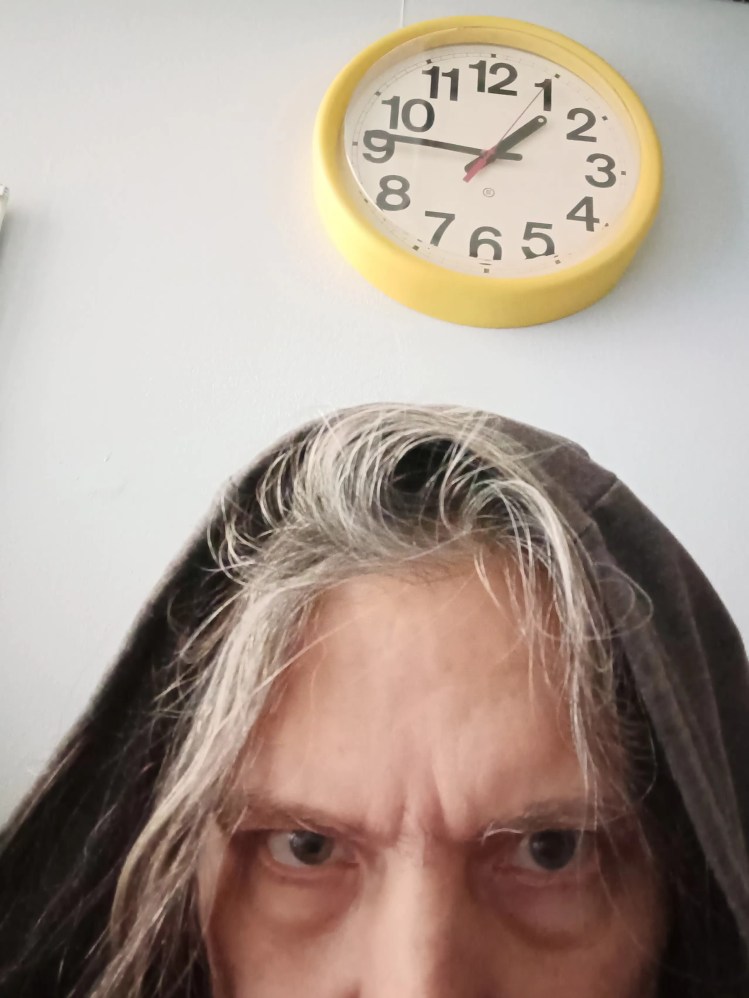
(image provided by DWB)

Self Doubt

If you don’t question yourself from time to time, or even frequently, even the things you love best, it can rightly be said of you by anyone who wishes to – that you’re an idiot. Not the saintly idiot variety that Dostoevsky so convincingly portrays in his fascinating novel The Idiot; but the kind whose personality is lacking in somehow massive ways; the kind with blinders on who thinks they know it all and has got it right about everything in this endlessly confusing, mysterious world.

None other than Socrates himself, probably the second or third smartest human who ever lived (if such things can be calculated that way, which they cannot, necessarily), after Jesus, and along with Buddha (and a few others who can match them), repeatedly pointed out that the smartest among the smart know first what it is that they don’t know.

I’ve seen too many bored and boring, gossiping, chattering, small-talking busybodies in this world who think they know it all so that I have to agree with him.

Dr. Kay Redfield Jamison, in her riveting, genius book Touched with Fire: Manic-Depressive Illness and the Artistic Temperament (devour it immediately if you haven’t already; the chapter on Lord Byron alone will blow you away if you’re awake) describes how the depressive side of the artist leads to the necessary self-critical moods that lead to artistic shaping of the highest variety. So: it’s all worth it: for the artist, anyway.

Christina, in the following poem, is lost in a low mood, a very, very low mood.

In the final poem of this series (scheduled to appear tomorrow), she gets out of it alive.

Alone

“…the better fortitude / Of patience and heroic martyrdom / Unsung.”

– John Milton

Gas gauge

Nearing empty

Now

And earlier

She pulled over and wrote

In kind, gentle

Violent

Desperation.

All the mileage and the empty

Credit cards. Maps, colors and lines,

Colors and lines, blurring

What’s left

Of my mind.

Roadside diners. Coffee cups. Rest stops.

Gas stations. More coffee stops. Pep pills, a downer from

Back home in Chicago. Throbbing Bob

Marley music. Bob Dylan – Street Legal. Hiding

Rasta baggies from charming

State troopers. And I’m lonely now

And I’m

Alone…

And she realized,

I’ve eaten almost nothing

But nut-containing candy

Bars washed down with water

Or tea three whole days!

In search of

These things

I don’t even know

About.

I’ve got

Blisters on my fingers from

Too many pencils and papers,

Eyes weary, and bleary, from

Reading, looking, seeing or driving

And I’ve been on the road now

I don’t know

How many days

And how many

Ways.

The end

Will come when

It will come

(Or should I hurry

It)

But it’s

Giving me the

Creeps now

(And my skin

Is crawling like

With mean, nasty

Bugs)

And I’m

Wondering

Seriously

If all this aloneness

Can be

Good for

My soul.

Dr. Dale W. Barrigar has suffered so many crushing, brutal depressions that he’s often considered throwing in the towel and leaping off the Mackinac Bridge, in honor of John Berryman and Hart Crane, but he’s always resisted – and always will resist (unless somebody pushes him). For Barrigar, daily doses of Depakote and various other sedatives and mood stabilizers (plus a few other things) do wonders for steadying the nerves, and do nothing to dampen his creativity even in the slightest. He looks forward to the day when, like Leonard Cohen, he ages so much that he can throw the pills away. Until then – you do what you need to do, whatever it is. This life will end soon enough for all of us – don’t take that leap, it will all get at least a little better tomorrow – he promises you.

In the Car by Dale Williams Barrigar

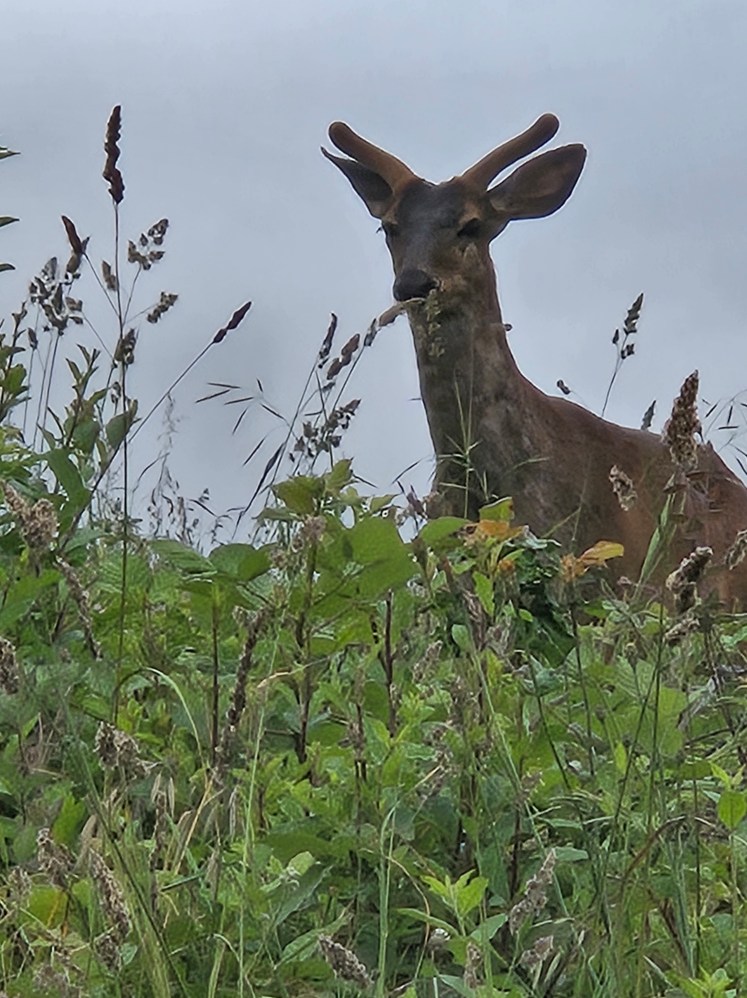
(image provided by DWB)

In the Car

People used to think I lived in my car, because I carried so many items around with me in it, items that shall be (and are) elaborated in the following poem. Truth was, I did sometimes live in the car, but mainly only the times when I got kicked out of other places, and also all those times when I was on the road in America.

People used to think I only went on the road in America because of my passion for Jack Kerouac. And it was true that I did go on the road because of my passion for Jack (Kerouac and Daniel’s); but there were many other artists who often superseded Kerouac in my mind and imagination as my inspirations: for years, Jim Harrison, the great poet, essayist, and fiction writer Jim Harrison of Michigan and Montana, was my primary inspiration, and the list is long of other American drifters who also inspired me for years. Many of them were musicians.

And while a passionate fan of music and musicians, and while I can pluck the guitar and plink on the piano and blow the harmonica and drum the drums a little bit when the moment is right, I’ve never been a musician, because I’m not a performer in that way. I’m a performer in other ways, but not that one.

The following poem is about a nineteen-year-old girl, because I used to be a nineteen-year-old boy with a (not-very-obvious-usually) feminine side (everyone has both masculine and feminine sides, as Sigmund Freud both pointed out, and proved), and also because I now have daughters who are both eighteen at the moment.

Sketch Books

“A wayfarer by barren ways and chill…” – Dante Gabriel Rossetti

And I’m still looking

At the ghost,

She wrote,

That isn’t even there

Beside me any more,

After all, since childhood

When it had been.

My

Haunt-eyed closet ghost; so later will I label those

The Haunt-eyed Ghost of Warrior Traveling the Sky

Sketch Books

As she tossed the sketch books

Into the trunk of the car

With the rest of the papers

And notebooks.

The battered traveling library

Was spilling

Over into the back

Seat. Books

Are everywhere, and under

And next to

My pillows

From home.

Two sleeping bags.

Long, heavy watchman’s

Flashlight

From Grandfather.

For night time reading

And protection. And

I’m living in my car,

On the road

In Arizona,

New Mexico, Utah, Colorado, Wyoming,

Montana, Idaho, Washington…don’t know

if I’ll ever go

Home!

D.W.B., sometimes referred to as The Drifter by none other than himself, has always had a penchant for moving from one place to another in a kind of restless, and sometimes listless, fashion, since this helps him to refrain from getting bored. He doesn’t take fancy vacations, or any vacations for that matter, but he does maunder from here to there on a daily basis – whistling in his soul.

Artist of the Western Plains by Dale Williams Barrigar

Mystery Writer

Mystery surrounds us, we live now in an eternal mystery, mystery here is endless, mystery is our meat and drink, the air we breathe, the ether we swim in – and yet it’s so easy to forget this simple fact, so terribly, horribly easy to forget it and become bored with it all. And perhaps that is the greatest sin of all.

REAL ART is not about scoring points with your teacher, setting yourself up with a fancy career, making lots of money, building yourself a comfy nest egg in academia with all your like-minded friends, nor even (predominantly) about getting yourself legitimately famous, now or later.

It’s about connecting, or reconnecting, ourselves with THE MYSTERY.

When we walk in mystery, we’re never bored. James Joyce’s epiphanies, William Wordsworth’s “spots of time,” the revelations in The Book of Revelations are all about reminding us that the world is not about “getting and spending,” as Wordsworth put it.

They asked him to tell them the ultimate truth. Buddha showed up with a single flower, said nothing, and sat there holding it out toward them for a long, long time – before he vanished in front of their eyes.

Artist of the Western Plains

“I can conceive that this is the essence, of which all other poetry is the dilution.”

– Virginia Woolf

Alone she was

Most of the time,

Hiking and sketching

With many-colored

Pencils and pens

On empty

Western deserts

And plains, under cold

Battlefield hillsides,

Searching for

Something

Spiritual.

Maybe a single, bent

Evergreen tree, three feet

Tall

And dark, on the ridge

Top.

Fully living.

Fully alive!

All alone. All by

Itself, but also with

Its friends:

The ground,

The wind,

The elk

Shadows in

The distance.

Dale Williams Barrigar, MFA, PhD, is a visual artist and poet from the midwestern USA who likes to spend lots of time contemplating the real relations between true religion and art-making. To the busybody world at large, it can sometimes sadly appear as if he’s doing nothing but lounging on the couch or in the grass with a vacant look in his eyes. Not so!

Deliberately: Dale Williams Barrigar

(Note: through Saturday, DWB will entertain us with his Christina Poems. I think you will find them as wonderful as I and The Moving Hoof do-Leila)

(Image provided by DWB)

Deliberately

One thing I can say for sure about the following poem below, everything in it is on purpose, including the line lengths and the capital letters. I lived with the character in this poem, named Christina, who appeared to me in a daydream, for a long time until one day in a field by a river in the wilds of northern Michigan most of the lines suddenly occurred to me.

The year was 2014 and I didn’t even own a cell phone yet – on purpose. My paper and pens were all back in the car, a couple of miles away somewhere down the trail.

So I walked back down the trail humming these lines in my head so they wouldn’t disappear, or rather the lines were as if humming themselves in my head, and they stayed there, they didn’t go away, they didn’t vanish into thin air by the time I’d made it to the car – that was how I knew this poem deserved to get written down.

The list of poets who influenced this poem is long, but a few of the key names include Wallace Stevens, William Carlos Williams, T.S. Eliot, Langston Hughes, Robert Frost, Jim Harrison, and Charles Bukowski. I’ll stop there for now because 7 is a magic number. There are four more poems about Christina.

And I would like to say to her here: “Christina. I still see you in my dreams.”

Road Warrior Christina

“I’m a road warrior for the Lords of Karma.”

– Hunter S. Thompson

“My life is like a broken bowl.”

– Christina Rossetti

Christina, at nineteen

In 1991, A.D.,

Was a lone,

Young-hearted

Poet

Who didn’t know

It,

But her fast, moving

Feet showed it, also her

Wild, red-brown,

Messy-long, cut-by-her-ex-boyfriend

Hair, not her boyfriend exactly but her

Boy

Friend, one of

The few.

And now she was

Traveling

Solo,

Traveling far, in her

Battered little car,

Dusty

Sandals

On her feet,

Cut-off jeans shorts,

Baggy T-shirts, sometimes

Black lipstick on,

Red polish on

Her toenails, and her

Heart, and her

Art, they were

Partially

Guided by

Geronimo’s kind

Native star in her

Driving blood

Commemorative:

Her hair, her

Heart, her

Art.

Geronimo, medicine man

Of the Christ

Without end, she wrote,

While driving

On the highway,

On the back

Of an envelope

With a red,

Red pen.

(To be continued…)

Dale Williams Barrigar is an American wanderer who sometimes calls himself The Drifter.

July in Saragun Springs

This year is speeding along and here we are approaching the start of summer. I want to thank Dough Hawley for his work last month. His essays were wonderful and drew many views. And I also want to thank Dale Williams Barrigar, aka The Drifter (also a full Editor of this site); his weekly Sunday column has been a revelation as well as an obvious labor of love.

To begin the month, we will be running the “Christina Poems” by Dale–the first of five begins tomorrow and will run through Saturday. There will be various odds and ends by Yours Truly as the month steams forward (hopefully figuratively and not literally).

I spent half of June battling covid, which has further delayed progress on “You Remembered Everything.” I have it written, but I want it to be better. But I will publish the second book of Sarah and Tess called “Music” this month along with a long short (oxymoron?) called “Suicide Spoon,” which was written for and published by Hotch Potch Literature and Arts earlier this year. That was different for me because I stopped cold submitting last year. I want to thank Marco Etheridge for his labors in that project.

Once again, we extend an invitation for any of you to publish items (within reason) on the third week of this month–an ongoing theme which will end soon. Just send what you have to saragunsprings@gmail.com (previous month publishers are always welcome. The week is open, but we can divide the days between a few if needed).

As Dame Daisy says “Summerly summer rollingly rolls on.”

Leila

The Drifter: One Holy Reason to Love

One Holy Reason to Love

(Image provided by The Drifter)

“Kerouac could write everything because he never forgot

anything.” – Bob Dylan

“I saw you this morning…in my secret life.” – Leonard Cohen

Scholars of literature always call Edgar Allan Poe the first writer in America who ever tried to make a living using nothing other than his own pen. And that is very far from true, very, very far from true.

Poe never tried to make a living in America using nothing other than his own pen. He always knew he would need another job, whether that was in the U.S. Army or as a low-wage wage slave working for other peoples’ publications where much of what he did as a “job” had absolutely nothing to do with his own creative writing, on the surface at least.

What Poe did try to do, and what he can be called “the first” at doing in many ways in America, was to try and live a truly literary life at every level, no matter what else he also needed to do in the meantime.

Every demeaning task, every humbling action, every humiliating circumstance in his life, and there were many millions of all the above, Poe tried to convert into something sacred that could be seen as serving the literary life he always made himself live for his own pride, even when it seemed impossible.

Poe never let himself forget he was a writer. He elevated it above everything else, above politics, above religion, above family, even; or rather he made it so much a part of his life that everything else, politics, religion, family, all grew out of his starting point, which was his commitment to writing as an art.

This profound innovation, which is more relevant now than it was 200 years ago when Poe made it, has had an endless series of influences on all the arts, not just writing, all over the globe, not just in the USA.

It probably caught fire in France first, when Charles Baudelaire, the first true poet of the modern city, took up the call that Poe had issued to the writers of the world.

Baudelaire identified so strongly with Poe that it’s said he would pray to Poe nightly, as if Poe were a saint. When we consider Charles Baudelaire’s Catholic background, this doesn’t seem nearly so crazy as it might appear at first glance to many of us.

In the religion Baudelaire was raised in, praying to saints was not only not frowned upon, it was encouraged. Baudelaire’s move, which was to make the Art-for-art’s-sake Edgar Allan Poe into his own private literary saint, was really only moving the material he was given at birth an inch or two to the right or left. It was the higher ideal of the truthful and imaginative writing life that Baudelaire was really placing on the pedestal, in the manner of his hero, and saint, Edgar Allan Poe.

Baudelaire wrote in the shadow of Victor Hugo, a writer as massive, deep and wide as Charles Dickens, but it is now Baudelaire, in his Paris Spleen, Flowers of Evil, and Artificial Paradises (hashish, laudanum, absinthe, and literature), who generally seems more modern to most poetry lovers.

Hugo the realist, as great as ever still, was of his own time. Baudelaire, following in the footsteps of Edgar Allan Poe, was for the future. Like Poe, he foresaw, and even lived in, the age when humans would become ghosts of themselves (for good and ill), the time when the new rule would be (and is): turn your own life into an art, or die, mentally, emotionally, spiritually, and even literally.

The life-as-art, art-as-life, consequences-be-damned credo and way of living was elevated perhaps even higher by Vincent Van Gogh, especially in his self portraits, or in Sherlock Holmes and Irene Adler, whose laser-like, scientific focus on artful truth-telling rises straight from the beautiful and terrifying mists of Poe’s profound innovation, where the responsibility for everything is placed squarely on your own doorstep, even, or especially, if you are a starving artist.

Here are four ways any and all of us can instantly start turning our lives into an art and an art form almost immediately. If you’re already doing these things, and I have no doubt that some of you are: then bravo for you. Keep it up, and spread the word!

ONE: Texting

Do not become the mental slave of your own (what I like to call) texting device. Never send a text that has been written for you by a robot, AI or other computer; and never send an emoji that has not been specifically selected by you to be extremely pertinent to the exact circumstances at hand.

If use emojis you must, feel free to do so: but be creative. Go deeper. Look for the ones that say what you really mean to say. And be sure you know what it is that you really mean to say. If you don’t really mean to say it, don’t just say it, blindly. This is you putting yourself out there into the world, and this is the inevitable way people communicate now, at this moment in history, for a million different reasons.

Texting is too easy to do, but it doesn’t have to be. Take the time to say what you really mean: or don’t say it at all. And when you choose silence, choose it for a very definite reason; know what that reason is; know why you are choosing to exercise your own silence; don’t just ghost people because you are bored – or lazy.

If the time has come for you to be quiet, know why you are doing it.

TWO: Emails

Be creative when you compose emails. Even be creative when composing emails if it’s in a situation where you are not supposed to be creative, or maybe especially then. If being creative will get you frowned upon and called onto the carpet, be as creative as you can possibly be, even unto the point of being shown the door by the robot-humans in charge eventually. Don’t dumb down your own language too much in order to be “safe” or in order to please your masters, and make sure your own individual personality-stamp goes out with every single communication you ever send. Even if you’re just telling someone you need them to do something for you by Tuesday. Or maybe especially then.

THREE: The “Comments” Section

Be very, very, very selective about what kinds of “Comments” sections you choose to engage with. And when you do find a good one and have chosen to engage with it, go all the way. Doing anything in life in a half-assed way is nothing more than a half-assed way of doing things. Make sure you’re not just shouting into the void by repeating the exact same things a million other people are also saying.

Choose wisely, and be selective, and make a full commitment; let your opinions shine forth only if they are genuine, original, dyed-in-the-wool personal opinions based on the reality of the world, not just group-speak mind-control thought-police regurgitations of the exact same thing everyone else is also saying ad infinitum.

Another way of putting it is this: be original. Always be original. If you can’t be original here, it’s OK: choose silence, and be original in a different venue where you feel like you’re on more solid ground.

Regarding size of audience, Jesus himself said this: “Where two or three are gathered together in my name, there am I in the middle of them.”

There was a reason why he emphasized the tiny numbers two or three, just as he limited his personal disciples to another tiny number, twelve. Jesus was the strongest advocate for individuality this Planet has ever known, which is why he is, by far, the most famous person who has ever lived, or ever will live. And he spent a lot more time walking away from the churches and marketplaces of his day than he did walking into them.

FOUR: Pictures of You

Do not use the camera on your phone to celebrate the American Religion, CONSUMERISM. Do not use the camera on your phone to advertise the dead animals or the vegan delights you are about to sink your teeth into (everyone needs to eat and digest) unless you can really make it artistic. Also, do not use your camera as a way to provide just another screen between you and the reality of the world. Instead, use the camera on your phone for the following three reasons.

One: To try and capture moments of beauty which are beautiful, or to create beauty by making something beautiful which people don’t usually think of as “beautiful.”

Two: To relate yourself to the real world around you by showing yourself and others “It” from new, original, and different perspectives. (This is called “Imagination.”)

Three: Use the camera on your phone as a form of SELF exploration.

Do not take selfies. Make self portraits. Even if the only one who ever studies them is you, this will make you an endlessly deeper and more original person in everything else you do and do not do (what we DO NOT do is just as important as what we do), IF you do this in the right way, which is to do it the way Socrates said to use the mirror: Look for yourself, and study the endless changes which are “you,” with fascination. (This is something Shakespeare did in his Sonnets.)

Most people are only terrified of death when they never really live/d first. Always start with yourself first. Move outward from there.

A NOTE on reading from The Drifter: What you take into yourself is just as important as what you put out into the world, and what you put out into the world will, inevitably, be massively influenced by whatever you have spent your time taking into yourself.

Watching a truly great movie is a much more artistic experience than reading a truly bad book.

But the act of personally reading good things will strengthen the mind (and hence the personality) in a more powerful way than anything else on Planet Earth. This has been true for thousands of years, and will remain true now until “the end” (whenever it comes).

Alexander the Great’s most prized personal possession was his copy of The Iliad. Abraham Lincoln spent more time reading Shakespeare and the Bible than he did studying war plans or political suggestions. Martin Luther King, Jr., was always reading good things. He never would’ve been able to write or think so well otherwise: and he knew it.

The poet William Blake was not joking when he said he wrote mostly for “children and angels.” Personally, my conception of Heaven also includes forms of reading. If I’m wrong about this, it’s highly doubtful I will be aware of it; so I’m going with this for now. (It’s also probably true that by “angels” Blake meant both literal angels, and saintly humans.)

If one fills one’s mind with trash, nothing but trash, and more trash, eventually (or sooner) the mind itself will become a trash dump. Right about then is when real and deep ignorance, cynicism, scorn for the good of the world, and nihilism begin to set in. (Many of these people are walking around and looking like respectable members of society, too; even as we speak.)

Saragun Verse: Moonfog Madrone and The Sun

i

Moonfog Madrone stared at the Sun.

And the Sun gazed upon he.

“Tell me star, away so far,

What can you do for me?”

ii

And the Sun said: “I can boil the rivers and blast the land;

I can melt the peaks and glass the sand.”

Moofog laughed, “I’ve seen it before and will again.

No my friend, what’s in it for me?”

iii

And the Sun said: “Whatever god made you won’t allow you to die;

You go on forever and will even outlast me, I expect.

The perfect candidate to mock eternity:

An arrogance never to know the mercy of death.”

iv

The Sun fell below the distant range

And Moonfog laughed throughout the night

“He’s a poor old fool cursed to rule,

A toss of rocks for his own spite.”

Furry Companions by Doug Hawley

Furry Companions

I’m sort of named after my dad’s favorite dog Duke. My mother thought Doug was a close, but more reasonable name. Now my male main characters are frequently named Duke. Our family had an early dog name Cocoa who died too soon. After that it’s been all cats. We got to witness the miracle of birth up close, and the sad act of a mother cat carrying her dead kitten after birth. Worse, since we had outdoor cats and lived on a busy street, many of them were hit and killed. I buried one in the backyard. I don’t remember the individuals much, but I know one was a calico called Sophie Hergenmergen.. Most if not all were female.

Much later live in editor Sharon’s sister had a cat named Frodo (not a fan of the name) she couldn’t keep, so we got our first of a long line of cats. Based on his ears and fangs, I converted him to Batface. He was one fine cat, with one big failing. While ball bearing he got into fights with other cats he turned tail, which was bitten, and spent time getting patched up at the vet. He may not have been much of fighter or a lover, so we got him fixed. We got him in Denver, and he traveled with us to Los Angeles and the Bay Area. He was an outdoor cat and would visit with the people that walked past the places where we lived. He was a cool cat. He decided to go live with other people for a while, but we retrieved him. We had this act which had him lying on his back on my arm held out level with my shoulder. While in California I woke up one morning to two Batfaces. On closer inspection I found out his doppelganger was a skinnier lookalike that had broken in. In the summer in Colorado, we’d let a moth in and trap it in a small room. When we let him in, he’d go in and get it, then come out with it in his mouth like and electric bowtie. He was a relaxed dude and friendly with people. In his last home, we started to keep him in the house, but I slipped up and let him out one night. He came back a couple of days later, beaten up. After I left town on business, I got the phone call that he had died. Couldn’t help but cry.

He was such a good cat, he was replaced by two – Pooch a gray tabby, and Boots who was mostly black, but had white feet and tie. After Pooch came home from the vet where she was neutered, he tried to mount her. After that she dominated him. If he was in a lap, she could kick him out if she wanted the lap. She also would meow us goodbye. I could trade “goodbye” to her “meow” for quite a while until she got tired of it. Both of them were indoor cats after losing Batface to his outdoor adventure. Boots had a heart problem and fell off our credenza dead one morning. Pooch lived to be twenty and a half and made moves with us until the place where we live now in Lake Oswego Oregon.

We were introduced to Orville (named after Orville Redenbacher of popcorn fame) because of his reddish/orange back. Orville would run ahead of us while we were walking and then fall on his back. I wonder about that cat behavior – isn’t it dangerous for the cat? Legend has it that he had roamed the neighborhood for years, and left his first home when it got a dog. This went on for a while, and then his people died. Because we had indoor cats that weren’t looking for another cat, he became our outdoor cat. We weren’t too surprised when he moved across the street. We were sorry to see him fade away in their yard.

Harriett, the hairy pet, lost her person and we were persuaded to take her in. She was one calm cookie. Other cats when carried up stairs always freaked, but she was cool. She was not very active, but good company. When she slept beside me, she would face the opposite direction. Was it my breath? She only lasted a couple of years.

We got Kitzhaber, formerly Honey, a little like we got Harriett. His person had dementia and couldn’t keep him. I had been calling him Kitz at a time our governor was John Kitzhaber, a bad governor. I decided Kitz would also be a bad governor so I called him Kitzhaber. Kitz liked editor better, but we got along sometimes. He was forced to be an indoor cat, something he tried to escape, and did at least a couple of times. He broke out of an upstairs window, rolled off the roof, and beat it. Later he was captured across the street in a raccoon trap. He spent a lot of time in editor’s lap. We got him to exercise some with a laser pen. A couple of years ago, he started to fade from a bad heart. We both have heart murmurs so we could bond over that. He also started leaving us dark torpedo shaped gifts outside his litter box. Before we had him put to sleep, I picked him up for the last time and he died. I think we won’t have another.

Conservative? by Doug Hawley

Conservative?

A recent president of the United States has been mislabeled a conservative. It could be because he claims to be a Republican which is supposed to be the conservative party.

I’ve heard that he ran as a Republican despite having been a registered Democrat because he knew he wouldn’t win as a Democrat in the unlikely event of him being so nominated. He is only loyal to himself.

Conservatives are states’ rights believers, but he will send in unwanted federal troops or nationalize state’s guard (Oregon, California) when he feels like it.

Conservatives stand for fiscal responsibility. He intends to produce many more trillions in deficit as he did the last time around.

Radical changes are not conservative. He has recklessly cut programs and workers with very little planning or thought. Other presidents have pruned government, but with care.

Tariff wars are not only against the conservative idea of buying where things are cheapest, but could easily cause a recession.

He is about as radical socially as any president has been:

Three wives so far. Plenty of adultery.

Paid big money for sex with a well known adult actress. She has dissed his male parts.

He has gold furniture where he lived. Definitely not conservative.

His current wife did damage to the White House grounds.

His association with Jeffrey Epstein and the “Grab them by the pussy” tape show someone who is not conservative or normal.

Stupidity, narcissism, and rage tweeting are not conservative characteristics, but they define him.

It’s a Mystery to Me by Doug Hawley

It’s a Mystery to me

Real Ones

Dashiell Hammett is famous for The Maltese Falcon and the Thin Man Series. Not remembered today, but Red Harvest is an example of something different from him. It happens in Poisonville / Personville (fictionalized Butte Montana) where crime ran rampant in the street. Most crime stories and mysteries have involved a single bad guy or a small gang. Hammett was a leftist, but worked for the Pinkertons which were sometimes involved in strike breaking, which was an obvious conflict. Later in life he was jailed for his beliefs.

It was not a major story, but he wrote something which involved a suspect who was obviously guilty. Unlike most stories of the time, he was guilty. That was the twist.

He led an odd life. He was a Catholic who remained married to his only wife despite spending little time with her, partially due to his tuberculosis. He is known for helping the career of Lillian Hellman. Despite his tuberculosis, he served in both WWI and WWII.

The Maltese Falcon was filmed twice; the best known starred Humphrey Bogart. It was parodied in The Black Bird, a 1975 movie with George Segal. The Thin Man 1934 movie was followed by five sequels.

Hammett introduced his never named short pudgy Continental Op in early stories, the famous Sam Spade with the satanic face in The Maltese Falcon, and of course Nick and Nora in the Thin Man (Nick was not the thin man, it was the corpse).

P D. James (Dame Phyllis) like Hammett knew what she was doing. Her husband was an invalid and she worked in civil service to support the family and she understood courts. I had the good fortune to attend one of her book readings. She had two lead characters, Inspector Adam Dalgliesh and Cordelia Gray. Perhaps due to her background, like Ross MacDonald, her stories were more about the consequences of murder than finding the guilty party. She had a series featuring Dalgliesh on and a production of Death Comes To Pemberley on PBS. She was criticized for only featuring murders among prominent people. Her response was something like common crime is not interesting.

She had one variation from her crime stories which may have been based on the decline in sperm in western society. The Children Of Men posited that men no longer produced sperm. The elderly were encouraged to commit state sanctioned suicide because they were a burden without the young. JD Vance and others would have loved the plot. The race was on for a rumored pregnancy which might save the world. The unfortunate movie version concentrated on violence.

The Santa Teresa Ones

Ross MacDonald was born Kenneth Millar in Canada. His private detective Lew Archer is based in Santa Teresa (thinly disguised Santa Barbara California where MacDonald lived). His wife Margaret Millar was also a mystery writer. Lew Archer was his private detective, who was named Harper in The Moving Target, and The Drowning Pool starring Paul Newman. Newman thought the character’s name should start with an H after his success with Hud.

MacDonald’s stories were more mainstream literature than most mystery writers, and he wanted to do scholarly studies, but not much came of it. Like Dame Phyllis, his stories were not hard boiled but reached back to events in the past that erupted in the present.

MacDonald suffered criticism from John D. MacDonald, also a crime novelist, because a Ross story had a color in the title which was a John D. signature, and his name similarity. His life had its share of tragedies. His daughter died young, and MacDonald slipped into dementia later in life, which was doubly sad because of his gift with words. He never got a chance to write scholarly pieces.

Sue Grafton also lived in Santa Barbara, but her character Kinsey Millhone followed Ross MacDonald and was located in Santa Teresa. Millhone has a lot of mundane tasks like keeping her old VW going, eating at a local restaurant, and paperwork, but gets beat up and has sexual encounters like her male book PI brethren. Her series went through the alphabet “A is For Alibi” to “Y is for Yesterday”. Her disappointed fans never got to Z because she died after Y and forbad anyone to continue the series.

The Twisted Ones

Patricia Highsmith is known for “Strangers On A Train” and the Ripliad, her series about an immoral murderer Tom Ripley. She was an aggressive Lesbian, but tried conversion therapy, and didn’t seem to care for anyone. I may not be reading her books correctly, but they seem to have things happen without obvious emotion or motivation. The movie “Strangers On A Train” had a standard happy ending, whereas the book ended in a double murder. Her first work was in comics. She wrote many animal stories which she may have liked better than people. Much of her life was spent in Europe and she tried to smuggle snails under her blouse between countries. Late breaking coincidence – local burger stand has a Ripliad beer.

Jim Thompson was interested in abnormal psychology and may have been depressed. In early life he failed at employment in the oil industry. It may not connected to his writing, but he was an alcoholic and a leftist as was Hammett. His hard early life in Nebraska shows up in his books which were violent and featured people with no redeeming features (compare with Patricia Highsmith). He has been more popular after most of his books were written. I’ve seen and / or read:

The Killer Inside Me – Several killed at what was supposed to be a celebration

After Dark My Sweet – A femme fatale and murder

The Grifters – Twisted mother and son frauds

The Getaway – Starts off as a standard crime novel, ends in fantasy land south of the border.

Raymond Chandler

He was a drinker, lived in Nebraska for a while, and worked in the oil industry. Sound familiar? His protagonist was Phillip Marlowe. He would say “Marlowe, like the poet”. He learned about writing mysteries by reading them. He would patch together a novel from pieces of his short stories, which made the stories hard to follow. They had loose ends and might not clear up who did what. Women were usually the murderers.

His personal life was strange – despite his books, he was a prude who didn’t get married until late and then to a much older widow. He had criticized Ross MacDonald which probably caused MacDonald to write a character who married his mother, an implied criticism of Chandler.

He will always be remembered for “The Big Sleep”. “Farewell My Lovely”, “The Lady In The Lake”, and “The Long Goodbye” were all made into movies.

Note – This is patched together from books and movies from the authors, biographies of them, and other sources. Because the Men In Black have corrupted my memory, feel free to correct any of my error and comment or add to the narrative. I didn’t include pioneers in the field like Poe and Conan Doyle, or the newer writers – newer to me is the last forty years. This will be put into my blog, and it will be expanded and corrected as time permits.