(Ed. Note: We are always overjoyed to publish this fine poet. His work has inspired Birds to dance–LA)
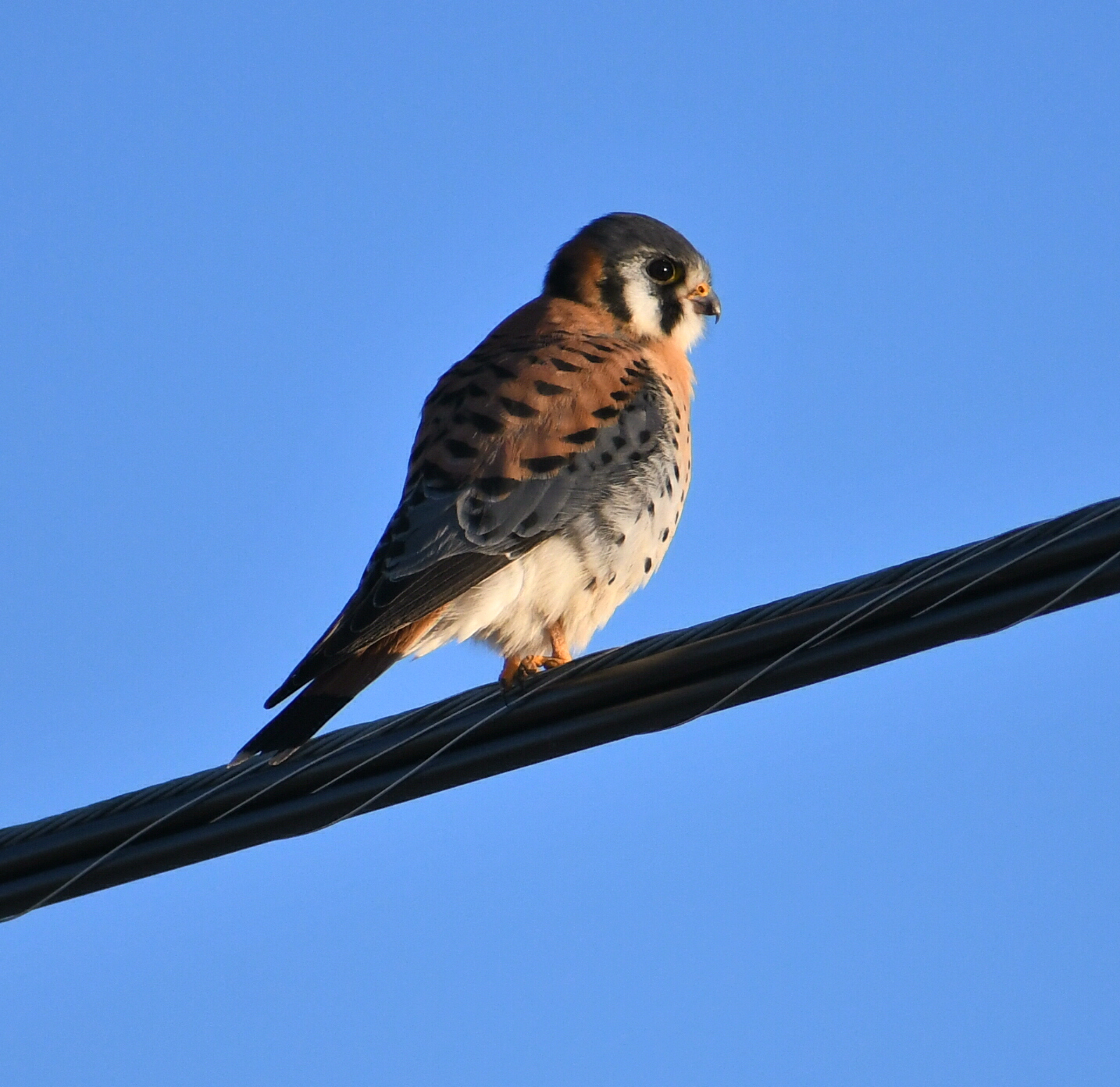
Let The Sparrows Dance
If I could see how far the night has gone
or how deep you carry your body,
when it can no longer stand in the wind,
head high, shoulder high and straight;
how much price you’re willing to pay,
when your heart has broken into lumps,
shedding blood streaming from bones;
if I could see in the cold mirror of the sky
what troubled tomorrow holds for you
or if tomorrow is the cold calamity
that spills the blood of the innocent,
whose end is the needle in my eye;
if I could toss my cards on the ground,
or watch out for a poignant prophecy
into the cruel colours of your night
where vultures straddle the sunlit day,
and the contoured cry of your afternoon;
if I could ask questions like a grieving child
but receive answers like a silent adult;
if growing up means reaching the salty stars
where your destiny lies like love’s landscape
or a droll drawing by a mystery artist;
if all I could do is to search the gliding globe
for a glimpse of peace packed in a sun,
like pleasant mysteries worn like an armband
threaded with the wonders of our blood heart;
when your eyes are yellow, your heart is red,
let the sparrows sing, and the seagulls dance,
let the dead lie unburied till resurrection day
that April may turn into the kindest month.
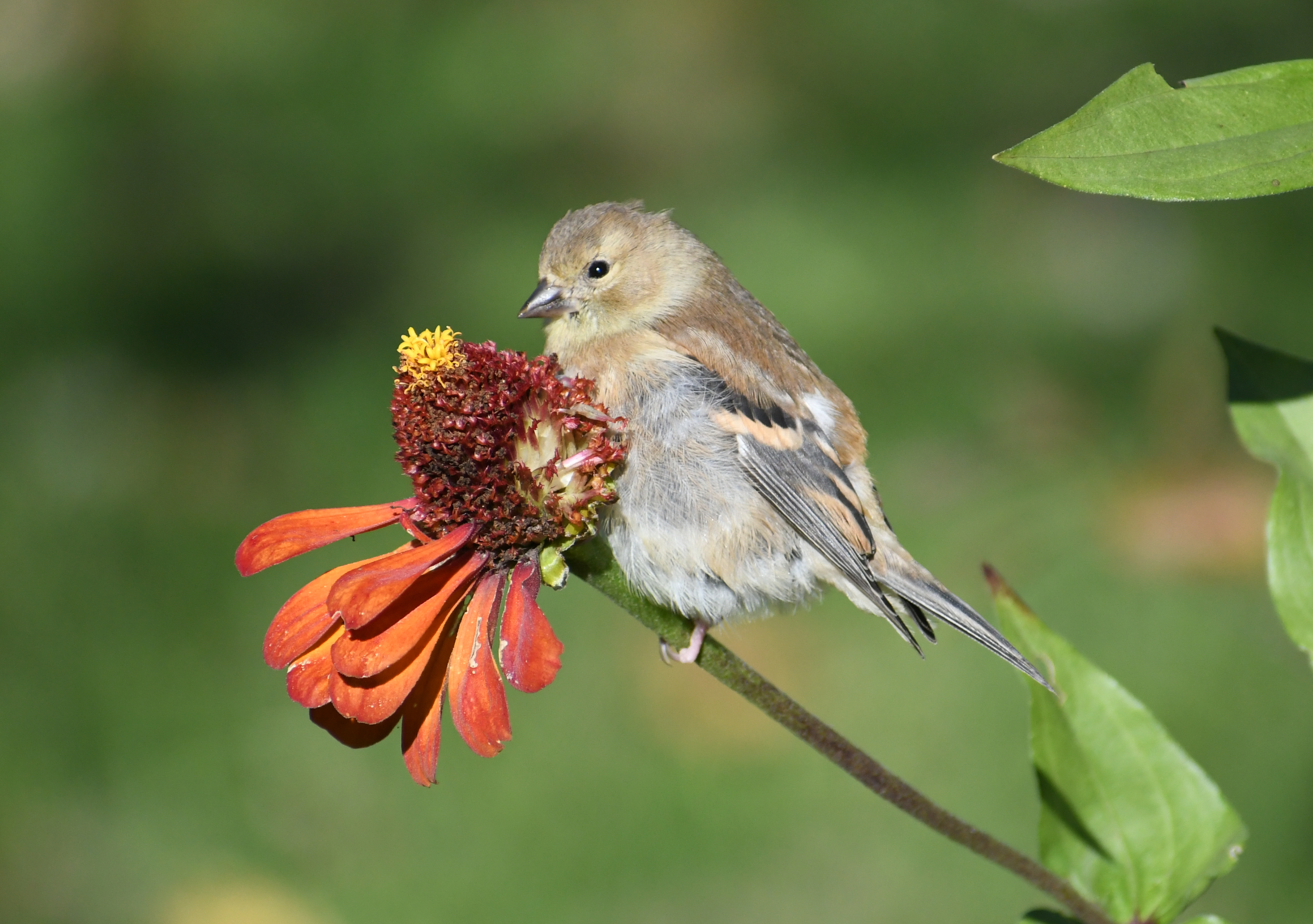
My Elder Sister Became the Evening Hen
When my elder sister turned thirteen,
she decided to leave a legacy behind
having realised that she must blend in her youth
the delight of growing up and staying a child.
Though she had not known the nature of the memory
which she would have posterity stow away for her,
she knew that she must be the revelation we sought
when truth seemed far from our eyes and ears.
Early in the morning she woke up with us,
walked to her window and gazed out;
her long yawn was an echo to the sun
to rise when she rose and dim when she dimmed,
or when sleep cradled her large eyelashes,
which weighed like the Forgotten Stones.
While we were busy breaking melons at dawn,
my elder sister painted her face and lips,
stood before our local stream and danced.
Those who went to the stream in the morning
saw her gazing with deep intent into the water,
her eyes the glow of light, sparkling and titillating,
with the smiles of a woman at peace with her world
though that world tilted its orbit towards her head.
In the evening, she went to the market square,
shook hands with the market women from our village,
telling them that tomorrow there would be no rain,
though it was the dry season when flowers folded.
The women laughed with their wares on their heads,
that my sister was a hen with a broken voice,
whom my mother tried to build up and failed,
and she must now build herself through little grace.
Many years later, the women remembered her
as the child of my mother with seeds in her teeth,
dying for those who escaped the hawk like dolphins,
and cradled the fields like a river without ending
when others ate lumps of chocolates and sweets.
My Country’s Tongue
Even if I multiply myself by seventy times,
I would not be able to serve my country.
My country has over a million gods
that trips us from behind like a slab
and a billion faces of history and lore;
each god is the patron of each tongue,
passed through silence to past generations;
it has blood, it has water, deposits of sand,
and the people are the dunes of its shrines,
where the hungry gods await sacrifices.
My country speaks the language of truth,
though I don’t know how many little lies
can come together to form a formidable truth,
but they have experts in all aspects of wisdom,
including the fogs of the brain that hide lies.
So long they include key words for emphasis,
like money, dole, dosh, dollar, pound,
naira, Euro, buck, cowries and so on,
they will arrive with crimson on their faces
and their children will begin to see visions.
In those days, when the truth was a ruse
for those in Hell to relocate to Heaven,
fathers girded their loins, mothers their hairs,
to fight the bloodiest war of blame.
But truth has reloaded its guns with sticks,
shooting has no more the stab of killing,
than the tense sacred scratches of a child
against the steel structures of a duplex.
And those who die have no sense of panic
but find themselves in graceless graves.
My Father Imagined Himself Dying
Even before he died inside our mud hut,
my Father had imagined himself dying,
death coming to him in the sound of many waters,
like the rushing of a meadow, the wilting of grass.
He didn’t think of dying as a poor man,
his body falling into a dirty ditch,
or his children dumping him in a hospital,
ravaged by an incurable disease
or an illness too expensive to cure,
while we pretended to run around for money,
half waiting for news of his untimely death.
His obituary would have read,
Our father, grandfather, husband,
uncle and brother died after a brief illness.
My Father didn’t imagine himself dying like this.
He dreamed of dying a wealthy man,
killed by lengthy disasters like cancer,
diabetes, pneumonia, COVID or even car accidents.
To die in a car accident meant he must have a car,
unlike his old rickety black bicycle,
which he rode on that day from Port Harcourt to Aba.
My father imagined himself rushing to Save A Life,
the best technological hospital in Nigeria
where we would stick our hands into our pockets,
his limousine parked outside the hospital,
driven by me, a rascal or a prodigal of a son
whose wife dressed in a pyjamas to work,
painted from head to toe like a flower,
looking more grieved than the bereaved.
The doctor’s Jeep would park in the lobby
while he was explaining to my father
how far advanced his illness has gone,
and how rushing him to the best hospital abroad
would be like purchasing a white elephant
or how I would try to fly him abroad
and the best physicians in America or England
would pounce on him like a strange chicken,
each trying to gauge out a part of his body
for imminent research on the survival of species.
My Father had never imagined himself dying poor,
his wife and children sitting by his bedside,
wondering how miserable life handled them
and which gully would hide them now
after he had joined his ranks of poor ancestors.
My Father imagined his ancestors biting their nails,
the remnants of the mosquitoes’ feast,
with empty bodies and shadows that sprawl
because they had seen what poverty did to a man
whose ancestors did not prepare well for living.
He had never hoped to shout to us from his deathbed,
In the year that King Uzziah died, I saw the Lord,
where the train of His robe filled the temple!
Love During the Days of Attraction
Since love is not the climate of the supernatural,
but the gift that mortals would not enjoy forever,
I have constructed my love into a black pyramid,
where the bodies of my ancestors lie in rest,
when my heart is like clouds of glory coming down.
My ancestors stored their love in the leaves of grass,
within the blades of wild plants and trees,
in the gourds of palm wine and palm tongues,
through which the spirits of the time returned,
to the place where their bodies lay in death.
Their love was not the supermoon with a glow,
brighter than the blaze of the sun or sea crystals,
nor was it a broken sky spitting out embers,
scattered over the forests or a burning bush.
Their love was a museum within our hearts,
for the storage of all that decayed in the ground,
whatever time must build another day,
seeing that nothing gold would stay forever,
but things that lacked lustre and flourishing.
Ours is blooming without frills and attraction
without sour eyes popping out at intervals,
but in the silence of every second, rises to the sky,
like emptiness yielding smoke whirling to Heaven,
not looking for witnesses, because it’s its own witness,
the blocks that are the house, the pillars of the beam,
the thing that has no feather but swifter than the eagle,
like grasshoppers or locusts burning for beauty.
Like the love of my ancestors, there is no bluish band
streaming the edges of our love to lure passing birds
to halt their fruitful flight to stand and stare
where the heart beats faster than flapping wings,
or where feet foraged without poise and presence,
but in silence lives with quiet glory and gong,
what attraction would neither foster nor flatter?
These are the days of attraction and distraction,
the times of make-believe, the seasons of seeing,
when truth lies in the waves of falsehoods,
and beauty is nothing but the withering of the sun.
My father said that the sun beats a man standing,
before it descends on a man hiding under a bushel.
Love dies in the squashed and lifeless bodies of ants,
and the grave is the best place to stand and grieve,
not in the heart that lives and breathes, in the soul
of all things unseen and unknown, not in the faith
of those who have no attraction but believe in it.
All poems by Jonathan Chibuike Akah
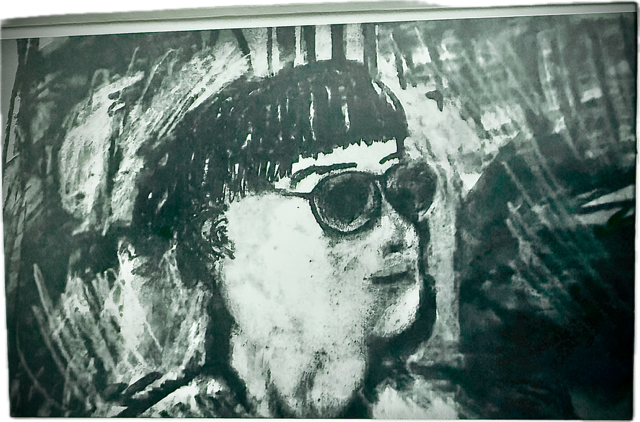
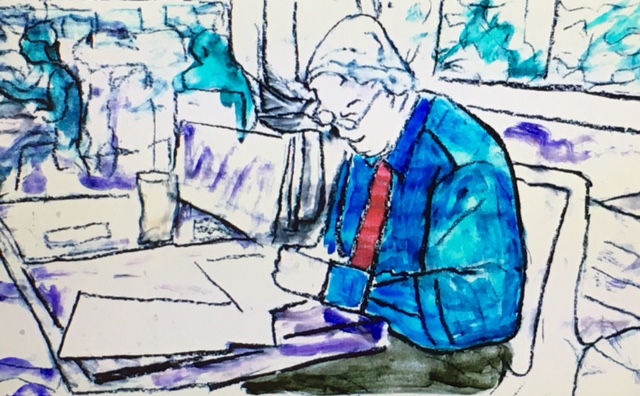
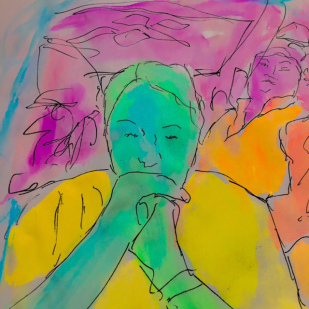
Images by by Christopher J Anaias