The Drifter

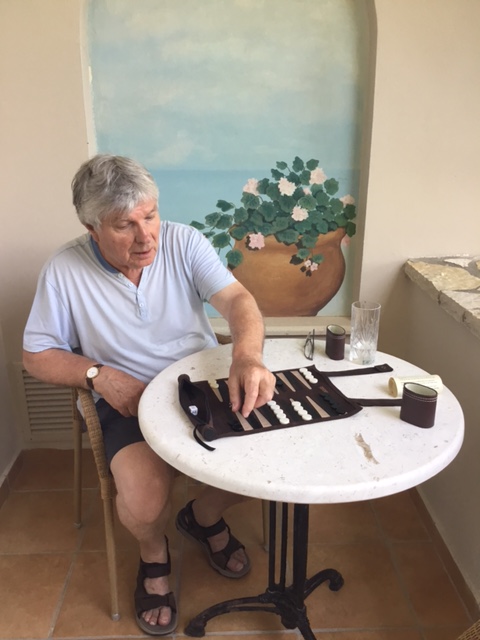
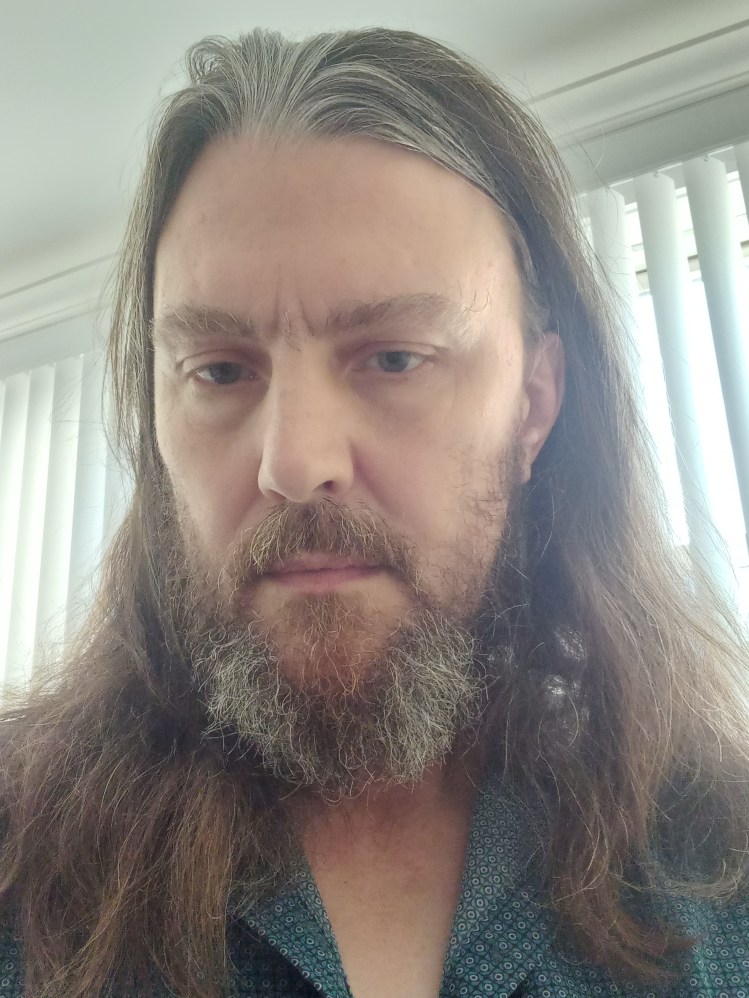
(both images provided by The Drifter)

Give Us This Day

“The bar was our altar.” – Caitlin Thomas

“There’s a slow, slow train coming – up around the bend.” – Bob Dylan

“This whole world’s gotta buy you a drink, man / Gotta take you to the edge and watch you throw it up / Every morning, I could give a damn what you did last night / Just tell me how far to kick this can…”

– Conor Oberst, “No One Changes”

“Christ’s religion is essentially poetry – poetry glorified.”

– Elizabth Barret Browning
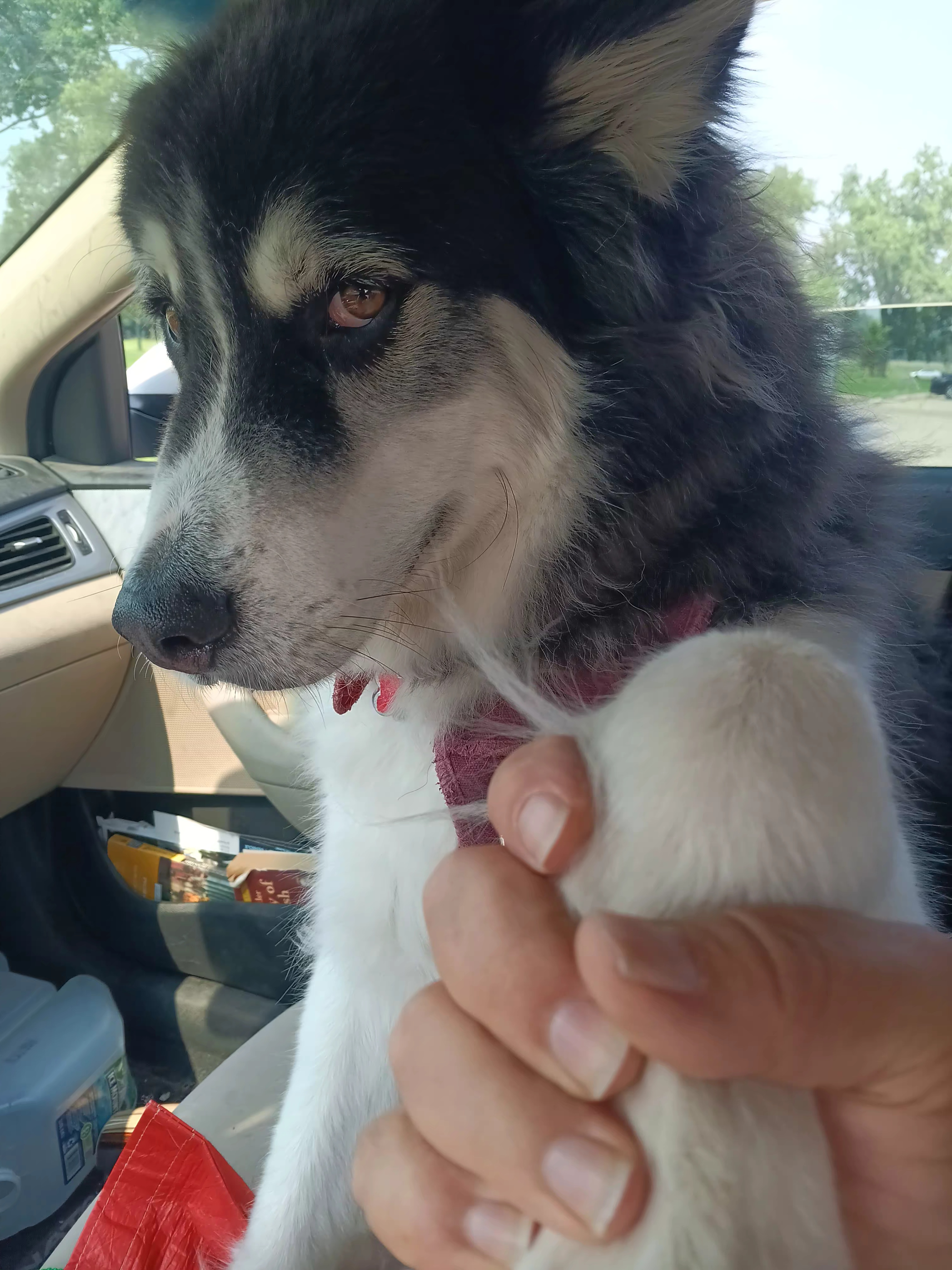
The Drifter (myself) took his last drink of alcohol almost exactly twenty years ago from today: on August 5, 2005. (I write this on August 1, 2025.)

The story of my drinking, its history, its reasons and motivations, its progression, its hilarity, its adventures (many, many, and many more, including good company, bad company, and dangerous company), and the eventual fall into total addiction in my mid-30s (drinking hard liquor sometimes combined with red or white wine all day every day and never drawing a sober breath, plus other related problems like catastrophic depressions, weight loss, liver problems, heart problems, heart palpitations, malnutrition, emergency-room accidents, vicious, pain-filled, suicidal hang-overs, crushingly embarrassing behavior and psychological humiliations, near-death occurrences and much more, none of which were improved by also smoking two to four packs of Marlboro Lights per day along with the liquor) will be gone into in more detail in the near future in another column.

Because alcohol is a subject I still love to talk about, even though I haven’t had a single sip in almost twenty years.

For today, in honor of my drinking and in honor of all drinkers, addicted and not, and in honor of the one thing that has kept me sober perhaps more than any other, I will briefly explain what I think the Lord’s Prayer means.

This column is not for so-called “Christians Only.” Nor is it only for alcoholics who are looking to quit drinking. Nor is it only for ex-alcoholics who have already done so.

It is for writers and writer-friendly peoples everywhere, especially since writers are known to be, as a group, prone to drinking alcohol more so than the general population (which is a lot, especially in America, land of the binge drinker); and also for anyone interested in surviving this life (as long as possible) and living a good one while you’re here.

Because the Lord’s Prayer can even be said and studied by atheists vastly to their own enhancement at almost every single human level we can possibly imagine.

I do not presume (very far from it) to have the final answer/s about these words, unlike many of the pastors, priests, and ministers (so-called) afoot in America these days (not all, but many).

These are simply my (brief) reflections, today, on a prayer (a poem) that has saved my life.

I never could’ve gotten myself sober without this.

This column is also meant to defamiliarize the Lord’s Prayer in a personal way, so it can be renewed in at least a few of us.

(Disclaimer: This piece may sound a tiny little bit like a sermon in certain places (in the manner of John Donne) but it’s Sunday, after all…)

*

Our Father who art in Heaven: hallowed be thy name.

Thy Kingdom come.

Thy will be done, on earth as it is in Heaven.

Give us this day our daily bread.

And forgive us our trespasses, as we forgive those who trespass against us.

And lead us not into temptation.

But deliver us from evil.

For thine is the Kingdom, and the Power, and the Glory: forever and ever.

Amen.

*

In the first part of this poem, which is the first sentence, Yeshua (hereafter called Jesus in this work) was asking humans to do something.

He was asking them to acknowledge the eternal existence of something greater than themselves.

In so doing, not only the Creator of the Universe is worshiped. Humanity itself, including the speaker of the prayer, is worshiped.

He is our Father, after all. And He is in Heaven. By hallowing (making holy) his name, we make holy everything there is, including all the pain, all the death, all the suffering, all the murder, all the disease, all the killing, all the death, death, death, death.

We let it go (like saying “So it goes”), and give it back to Him. Jesus believed he was waiting to receive it. Walt Whitman later said, “All goes onward and outward; nothing collapses; and to die is different from what anyone supposes; and luckier.

In the second sentence of this poem, which is only three words long, Jesus asks for The Kingdom to come.

It’s key to remember, or point out, that elsewhere he said, many times, “The Kingdom is inside you,” when talking to a few of his small bands of disciples and followers on the lakeshore or in the hills. (The Book of Acts says there were “about a hundred and twenty” believers after his death; the first person to see him after he died was Mary Magdalene.)

When he says “Thy Kingdom come,” he means after death, yes. But he also means, and maybe more importantly, right now, and right here, while we are alive on the earth. And it isn’t outside you, it’s never outside you, it’s right in your guts, in your brain, and in your heart, like it was in Mary Magdalene’s. Or it should be.

In the third sentence of this poem, Jesus acknowledges that we are not in charge of ourselves and we do not necessarily create our own circumstances.

This sentence is about what we call in the modern world “acceptance.” Buddha and Muhammad had similar messages. We may be born blind or we may be born with a disease that will kill us before we reach the age of twenty. Such people are more beautiful, not less beautiful, than the rest of us.

In sentence four, it’s crucial to meditate on (think about) what he means when he says “this day” and “our daily bread.”

We are not supposed to hoard possessions or money like Scrooge, and we are not meant to live on the earth forever. If we have enough today it is enough; tomorrow, as he says elsewhere, has enough worries of its own. Worrying about the future is a sin, because it diminishes the present.

“Our daily bread” does not just mean food, although it also does mean food.

It also means whatever we need for today, like strength, endurance, imagination, courage, stick-to-itiveness, a purpose, a reason for being.

It’s also meaningful to isolate the phrase “give us this day.”

For sentence five, we need to define “trespass.” Trespass means SIN.

Too many modern people these days get salty when you tell them they are sinners. And too many people of the cloth (pastors, ministers, priests, etc.) have NO IDEA what sin really means, these days.

It is not the old-fashioned thing. This world is rampant with sin. The people in the White House in the USA are great examples of this.

Greed and not caring are sins. Getting drunk or “cheating” on your spouse are personal choices (maybe bad choices, but not necessarily “sins”). (And maybe the spouse being cheated on is too greedy of your own personal time; and maybe you getting drunk is sacrificing yourself for your own artistic inspiration; everything depends upon the context.)

Jesus also emphasizes what a profound, life-changing, freeing personal event it is when you forgive someone. Forgiveness is for the other person, but it is for you first. Also, we can’t expect mercy and compassion when we don’t give unto others.

Send out mercy and compassion and you’ll soon find it will come right back at you (“instant karma”).

An example would be giving an authentic smile (not a sales person’s smile) to someone on the street, instead of ignoring them. And they smile back, in a surprised and genuine way.

For sentence six one needs to define “temptation” and “lead us.”

In this sentence of the poem, is Jesus intimating that it is God Himself who leads us into temptation? If so, doesn’t that make God a bad person? And why would he want to tempt us into something that isn’t good? Did Eve eat the apple first because she was smarter and more adventurous than Adam, or because she was more underhanded? Does temptation mean a temptation to despair, which is nihilism and a lack of faith in life, which lead to greed and not caring because you have nothing better to do or focus on?

At this point in the prayer-poem, it’s time to really realize that part of one’s job in all this is thinking, and thinking deeply, and long and hard, over years, about what it all means.

And it is NOT something one shares with others, at least not in any overt kind of way (until, maybe, much later) but the thinking itself changes who you are, and it changes you for the better.

No exceptions.

Number Seven is the penultimate sentence of this poem-prayer, and it is not Number Seven for no reason, either. (Seven = Heaven.)

The last sentence was tacked on by Martin Luther (a personal hero of mine, and a person well worth reading about, whom Harold Bloom once called the most “important” person in the West since Jesus himself, although Martin also wasn’t perfect, like all of us) much later, and it deserves to stay where it is.

It’s very, very, very similar to what the Buddhists mean when they talk about attachment – being too attached to the things that are only of this world, which equals suffering for yourself, which equals suffering for others, which equals suffering in the world.

We should attach ourselves, instead, to the things that can’t be stolen by the thieves, or corroded by the rust. Instead of being outraged by what the thieves stole from you (whether it be the “white collar” thieves or the “regular” ones), attach your mind, heart, and soul to what they can’t get at. (Any other reaction is, again: sin.)

It’s up to us to decide what those things are for us – like Jacob wrestling with the angel.

“AMEN” means Let it be.

DRIFTING END NOTE: An example of a drinking adventure I had was the time I traveled to the White Horse Tavern in New York City which is the last bar Dylan Thomas ever drank in and where he consumed the oceanic quantities of liquor that helped kill him.

I went to the White Horse Tavern specifically to get spectacularly drunk in the manner of Dylan Thomas, in order to celebrate the roistering poet spirit of Thomas in a way that was living the life, not just writing about it. (And back then I was much better at living the life than I was at writing about it, although I was working and practicing at both, every single day of my life.)

And I managed to accomplish my goal. I did in fact get spectacularly drunk in honor of Dylan Thomas. My guess is that I drank at least six pints of dark beer backed up with at least one or two shots of whiskey per beer – plus nonstop Marlboro smoking – all on an empty stomach. (I never ate when I drank since drink was my food; not even a single mouthful.)

I had to be led out of the bar and back to my friend’s apartment by my drinking companions who were also spectacularly drunk (but a little less so than I, at least on that particular occasion).

I was a bit cautious that night because I didn’t wish to jinx myself and end up dead like Dylan Thomas.

(I will eventually of course, just like we all will: but not yet for any of us).
August in Saragun Springs

Today is 2 August 2025. I usually open the month on the first but I wanted co-Editor Dale Williams Barrigar’s fifth poem in this week’s series to do that because A.) It is brilliant; B.) This is not.

Still, here at Saragun Springs we strive to publish every possible day. And this month, while still in progress scheduling-wise, will be no different. It is far easier to accomplish when you do not feel pressure. The Universe has been doing its thing for something along the line of fourteen billion years before this post and will not make any special note of it now or after. It keeps things in perspective.

Every Sunday the Drifter will appear, and this month we will be displaying excellent photography by Christopher Ananias. He also has a story scheduled. And we will be publishing bits by other friends, residents of the Springs and whatever we find that isn’t nailed down. As always, it will be a lot like walking through a Curiosity Shoppe.

Come back tomorrow for the Weekly Drifter column, which, in my own and the general opinion, is a tremendous success.

Leila

Leonard Cohen on the Phone by Dale Williams Barrigar

(Image of Berwyn, Illinois, U.S.A. provided by DWB)

“Show me the place where the word became a man.”

– Leonard Cohen, “Show Me the Place”

Poetry can create

and does create

urban

affection, the tiny,

brief

reaching

out

to one’s fellow

humans

that us city

folks (the vast

majority

of the planet

now) need to

indulge in so we

can remain

connected

to one another,

our fellow

humanity,

in a real way,

however strange or

however much

a stranger. Whenever

people compliment

one of my beautiful

animals (Siberian Huskies

or pit bulls), I take it

personally

and return

the favor.

Walking across

the parking lot,

I resolved

that I

would continue

to do so. And I turned

the Leonard Cohen

song way up

on my phone

and placed it

near my ear

one more

time

for now.

Dr. Dale Williams Barrigar is a poet whose own poetry transformed his own life: suddenly, and then gradually. It’s good enough for him.

Porcupine Spirit by Dale Williams Barrigar

(Image of DWB provided by DWB)

Porcupine Spirit

For Montmorency County, Michigan,

USA

In a cedar swamp

one time, I saw

a gigantic

porcupine

standing up

on his hind legs

like a miniature

human. He was three

feet tall, and looked

like something out of

Star Wars with his incredible,

innumerable

quills

sticking out every which

way and his arms dangling

in front of him as he

stood there, his small face

unafraid of me and his whole

self refusing to move

off the path

which he

was blocking.

And indeed

he continued

to block the path

and watch me walk

away after I

gingerly

stepped

around him.

The forests up here

allow for many

moments like these –

vast, indigenous,

Germanic, huge,

mysterious, with little

to no

human habitations

for gigantic wild

stretches and nothing but

dirt roads. If you want

to be independent

on foot and wander

in a pine wilderness

like Johnny Appleseed

with a wolf,

you can choose

any direction

to do that

here

in the middle

of a place

that makes you

free.

Dr. Dale Williams Barrigar is a poet whose own poetry transformed his own life: suddenly, and then gradually. It’s good enough for him.

For the First Time by Dale Williams Barrigar

(image provided by DWB)

Through it all,

and during it all,

the vast collection

of poetry

he’d created

in the last

ten years

had turned into

a monster

like Grendel

that was now devouring

my life. William Carlos

Williams said:

since the imagination is

nothing, nothing

comes

of it. This lesson

was weighing

heavily. But Jack

Spicer

also said: the poet gets

messages

for her or his life right

from the act

of writing poetry. This

makes poetry

worth doing daily

in its own right,

regardless

of any outward

consequences, or

non-consequences,

that can be

immediately seen. I remembered

I was a person born

with a humble sense

of mystic vision

(since day one). Since day

one

I’d felt

the correspondences

in the world

and had

a certain sense that we

are all here

for a reason, or for

many reasons

and meanings, which we

can feel (sometimes), but not

clearly

see

or say (most of the time).

An ambiguous

mystical

seeing, since

the dawning

of consciousness:

the first memory:

opening the eyes

outside of her body

for the first time.

Dr. Dale Williams Barrigar is a poet whose own poetry transformed his own life: suddenly, and then gradually. It’s good enough for him.

A Life of Drama by Dale Barrigar Williams

A Life of Drama

His book

had become

its own living entity

unto itself. Every time

he thought it was

finished, and these times

were many, something else

was sure to change

again within a week

or so.

Among many other

gifts,

this book

had delivered

him

a life of drama.

This life

we live

is filled with

involuntary immediacy,

as Lou Salome

pointed out.

Now, with this book

in his life, every unexpected

arrival was a bigger

shock. Each departure

had a greater

reverberation. Words

between people

lasted longer

inside the mind.

Tiny details

took on looming,

symbolic

significance.

Every squirrel

he passed as he was walking

his pit bulls, then later his

Siberian Huskies, along the sidewalk;

every song playing

in the grocery store or from

a passing car;

every cloud;

every wind that blew

or door that slammed

shut;

every woman

laughing

down the street

and every man turning

the corner so you’ll never

see him again; was loaded with

spiritual significance.

The unseen

correspondences

that make up the real

layers and levels of

existence

had become

both

more meaningful, and

less important.

Everything

was important

beyond belief; and

nothing was, because

everything changes

and gets redeemed.

The religion of poetry, and he

suddenly

realized

it was a religion

that had become his,

left nothing

and everything

to chance.

Dr. Dale Williams Barrigar is a poet whose own poetry transformed his own life: suddenly, and then gradually. It’s good enough for him.

Elephant by Dale Williams Barrigar

(Image provided by DWB)

“A poet is a time mechanic.” – Jack Spicer

The poem sat

in the corner

staring at

his eyes

and heart

with the eyes

of a cat

and the body

of a lone

wolf.

Then it changed,

the poem, into

a dolphin,

trout,

gorilla,

shark,

monkey,

wild boar.

A horse,

then a camel.

A hawk,

peacock,

osprey,

owl,

sparrow,

eagle,

crow,

dove,

pigeon,

thrush,

another nightingale,

and now

an elephant.

It is undoubtedly the

(invisible)

elephant within

the room.

I can neither leave it

there

alone

nor take it with me;

the door

isn’t big enough.

Yet, I’m

in charge

of this elephant.

However, nobody

is really in charge

of this unseen

animal,

who is, truly, a creature

never really seen.

Its intelligence

and will-power

are incredible,

like a real

elephant.

But it remains

invisible, like my blue

butterfly, the one that

travels with me

everywhere,

hovering over

my shoulder.

And so

I toil, struggle, wrestle,

labor, study, save, caress,

create, rest, and renew,

daily. Daily life is

a struggle with It,

capital I, but I

struggling with the power

and the breath

in this way

am truly

my own reward,

every day and

every way.

William Carlos Williams

and Jack Spicer, the great

Jack Spicer,

were right.

A poet

is a mechanic

of time.

Dr. Dale Williams Barrigar is a poet whose own poetry transformed his own life: suddenly, and then gradually. It’s good enough for him.

10 Questions Dale

(Header image provided by the Drifter)

Good morning Readers

Today we are debuting a new feature that yet has a name, but is part interview, part word association. I have presented Editor Dale Williams Barrigar with ten words (nine actually, the tenth is his choice). What follows are his replies. We hope that this might catch on and other lists will be given to other people in the future.

Leila

Ten Words

“The Drifter” (aka Dale Williams Barrigar, Doctor of Philosophy) has made these definitions as short as he could, knowing that brevity is the soul of wit.

Any statements he makes about “God” and so forth should be taken with a large grain of salt: because he’s not smart enough to pretend he knows what the Creator of the Universe is really up to – or why.

One: FEAR.

In many ways fear is the basis for everything in this world.

When we climbed down out of the trees, it was partly from fear (with a large mixture of curiosity).

And when we started running away over the ground trying to escape the Sabre-toothed Tiger, it was certainly from fear. (*See below.)

Hemingway called it “grace under pressure,” a paraphrase of which might be “not being a chickenshit.”

How one handles one’s fear/s is such a large part of “who you are” that it’s frightening.

ANXIETY, the much used modern word, is another term for fear.

Jesus nailed to the cross is such a universal image (even for “other people” on the other side of the world who aren’t “Christians”) because it’s based on fear (as well as compassion); and if you don’t know yet that we all get crucified in this life, one way or another, and usually many times, you’ve got a rude awakening in store. (Some of us know this as soon as we know anything.)

Fear of failure can be good, or bad, depending!!

(*The first time we escaped the Sabre-toothed Tiger on foot we realized we could escape, and almost felt free for the first time. And the first time we escaped must’ve had a large mixture of trickery involved, as well, since there’s no way we could’ve beaten the beast on speed alone, with only our feet. Call it: tricking the beast. And it’s just as important now as it ever was; usually, now, for different reasons.)

Two: HOPE.

Whales, wolves, and humans can all sing, but only birds can both sing, and fly. (I mean fly in reality, not in dreams or with mechanical assistance.) Perhaps some day “they” will create a drone that can both sing, and fly; but it will be an at least partially hideous thing; like Frankenstein with wings and tender vocal chords.

Emily Dickinson has forever made me think of a bird whenever I think of the word “hope” (“hope is the thing with feathers…that perches in the soul”) and without hope, the world wouldn’t be worth living in. Period.

Three: ART.

The German philosopher Friedrich Nietzsche (wildly, he always denied he was German and claimed to be Polish instead, which would be, in 2025, like an American denying he was American and claiming to be Mexican, instead, or Bob Dylan claiming to be an orphan cowboy from New Mexico instead of a comfortable Jewish kid from small-town Minnesota) said: “These earnest ones may be informed of my conviction that art is the highest task and the proper metaphysical activity of this life.” Another great German, Arthur Schopenhauer, agreed with him (before Nietzsche said so himself). So did Jim Morrison, one of Nietzsche’s most famous disciples.

We all know who “the earnest ones” are, if we think about it. They take themselves all too seriously, have CONSUMERISM as their religion, and are great at passing judgement on anyone just a little bit different from themselves; they appear in the White House, the halls of Congress, the pulpits of churches, the lecterns of all the colleges and universities, and even, or especially, in the book clubs and writing groups of all small, large, or midsized American cities.

REAL ART IS SOMETHING YOU HAVE TO BE WILLING TO DIE FOR. You don’t have to die for it; but you have to be willing to.

Four: LUCK.

“Luck” is all the good things that happen to us which we don’t deserve that help to turn us into better people – not monetarily richer, more fakely famous, or more “powerful” – but better. Often, with the best luck of all, we don’t even know about it until long after the fact. Maybe this means that we’re always lucky; or at least more lucky than we think we are, most of the time.

Five: FAITH.

Faith is the thing without which, Alfred, Lord Tennyson, said, he wouldn’t be able to eat his dinner. Because without faith, he wouldn’t have an appetite. He would be too full of fear, and it would make him not hungry. When I start losing faith in life, I know I’ve grown too tired again. For me, a lack of faith in life is the biggest sin there is.

It has nothing to do with believing we know just what God is up to. It has everything to do with believing there is always a reason to go on – even when we don’t know what it is. There is always someone watching you and cheering you on – even when you don’t know it. Don’t let them down. (If you don’t have a choice any more it’s a different story.)

Six: FUTURE.

The Future is everything. This is where, without doubt, all the most exciting things happen. Sometimes we forget that the Creator of the Universe has a plan, and it involves US. Our best moments in the present are lived in the future, if we’re doing it correctly. It’s not about escaping the present, it’s about intensifying it.

Like everything else it touches, modern American (hedonistic, nihilistic) CONSUMERISM, the religion of the United States, which has also devoured large chunks of the (human) globe elsewhere, both East and West, bastardizes the concept of the future.

It has nothing to do with what they’re trying to sell us yet again.

It has everything to do with what Art itself (at the highest levels, which are everywhere, even under your sandals) is all about.

Without the future, there is no Art, because as you work at creation, you’re always anticipating one or many moments in the future, near or far. Or you are unaware of what you’re doing, which isn’t art.

Seven: TRUST.

There have been people in this life I’ve trusted the second I met them – and I continued to trust them, even after they left me for dead in the dust.

There has been one person I’ve trusted the moment I started reading her fiction and her online commentary – and still do and always will trust, and even would and do trust with my life’s work: even though I’ve never met her in person. She’s that good of a good writer. And to be a good writer, you have to be good. Not perfect (because none of us are), but good. Zero exceptions.

Trust you to take it seriously is just one form of trust.

Eight: FAMILY.

Not all family members are blood related, though they’ve probably spilled the same kind of blood – of their own, I mean (mostly).

Nine: OBSESSION.

Obsession can lead to a compulsive disorder, or to the perfection of the Mona Lisa, depending on what one does with it.

Sensual/sexual romantic obsession is, by far, best for the artist when it’s sublimated. Leonardo and Michelangelo spent zero time scrolling through dating app’s while remaining obsessed with romantic beauty.

Ten: CREATIVITY.

It’s Everything (all around us), and it’s everything (worth fighting for).

Your life has to be your first art, even when (or especially when) you pour everything else into your art.

And when we do this, we’re imitating (in a good way, and possibly without knowing it) the Creator of the Universe.

And Now For the Good News….by Michael Bloor

(We conclude this week’s run of tales by Michael Bloor on what happens to be his birthday. Anyone who has been reading knows why we hope to publish more of his work in the future. Happy Birthday Mick!)

Davie Millar paused in the middle of the Faery Bridge, leant on the rail and stared down at the Blackwater. Like a few other things in the town, the Faery Bridge was misnamed. When it was built, it was first called the Ferro-Concrete Bridge, but ferro-concrete had been an unfamiliar concept in the town a hundred years ago.

It was the autumn, and the total official number of UK Covid deaths (including Davie’s granny) had exceeded the Hiroshima bomb fatalities. But that wasn’t why Davie was so woeful: he was sorrowing because he was on his way to meet Big Andy McBride, the town loan shark. Big Andy was barred by the betting companies (Davie could guess why), so it was natural for Big Andy to ask Davie to put a bet on for him. Fifty quid at 25 to 1. Davie, of course, hadn’t been in a position to refuse. Big Andy’s piggy-pink eyes had narrowed slightly as he handed over the fifty quid. ‘Dinna mess wi’ me now, Davie. The last guy that did that wis left tryin’ to pick-up his broken teeth wi’ a broken arm.’

‘Nae worries, Mr McBride.’

It was Davie that was worried. Last night, he’d had just enough cash to take Melanie to the Bond film, but when she’d wanted a (ridiculously big) bag of popcorn, he’d had to break into Big Andy’s winnings. And once that terrifying Rubicon had been crossed, it had seemed a minor matter to blow quite a lot more of Big Andy’s winnings on a couple of rounds of drinks at the King of Prussia and a taxi home. Considering the risk that the events of last night were now posing to Davie’s life and limb, Melanie had proved disappointingly lukewarm. He had to face up to the likelihood that, compared to Seb, the lead guitarist in the regular band at the Abercrombie Hotel, Davie was running a poor second in Melanie’s affections..

Watching a couple of ducks fossicking about in the Blackwater shallows, half a dozen lame excuses of the dog-ate-my-homework variety ran through Davie’s head. He sighed, turned away from the rail and headed across the bridge towards the old mill. His granny had worked at the mill til it closed, like some much else, in the 1980s. Now the building had been converted into bijou flats. The closure and conversion had happened before he was born and he suddenly realised that he had no idea what the mill had produced before it produced Edinburgh commuters. All he could recall being told was that it used to produce a lot of dust, which had eventually killed his grandad. The recollection didn’t improve his mood.

His pace slowed as he headed up the hill to the council houses. He was surprised to see an ambulance parked beside Big Andy’s BMW. He stopped fifty yards away and watched as two ambulance men manoeuvred a stretcher into the back of their vehicle. Davie turned to a nearby neighbour: ‘Is that Big Andy on the stretcher?’

‘Aye, Covid. Serve the bugger right: never wears a bloody mask in the Co-op.’

As the ambulance lights dwindled in the distance, Davie turned back towards the Blackwater. By the time he’d returned to the Faery Bridge, he’d realised that the remainder of Big Andy’s winnings would be more than enough to buy that elderly Alfa Romeo saloon on the forecourt at Macrae’s Car Sales (the unique noise from the Alfa Romeo engine block was one of the sweetest sounds on Earth). Apparently, when Seb The Guitarist needed a car, he had to borrow his mummy’s Ford Fiesta.

And he could maybe make a few quid delivering for the Chinese take-away. The two ducks were now battling gamely upstream.

Biography:

Michael Bloor lives in Dunblane, Scotland, where he has discovered the exhilaration of short fiction, with more than a hundred pieces published in Literally Stories, Everyday Fiction, The Copperfield Review, Litro Online, Firewords, The Drabble, The Cabinet of Heed, Moonpark Review and elsewhere (see https://michaelbloor.com).

The Unsung Freedom Fighter by Michael Bloor

It was a shock when old Andy Baranov died. Sudden deaths are always a shock: it was a car crash – brake failure on the steep, winding descent of the Braeport, near his house in Dunblane. As well as a good neighbour, he was my favourite opponent at the chess club. Although over-the-board chatter is frowned upon, the club is a friendly place and we had become firm friends, continuing to play at each other’s houses during the summer months, when the chess club was closed. Naturally, I went to his funeral at the crematorium.

Gordon, the chess club president, was also at the crematorium; we sat together. Gordon was surprised that the service wasn’t at the Orthodox Church. I explained that, although Andy was the grandson of Russian refugees from the Bolshevik Revolution, the family weren’t members of the Orthodox Church. They had fled the revolution because they were social democrats, opponents of both the bolsheviks and the church-and-state czarist regime…

Gordon muttered, ‘OK, gimme the history lesson later.’

The service was pretty grim. Afterwards, Gordon and I felt obliged to accept the family’s invitation to the Drummond Arms for afternoon tea. I have a weak bladder (age-related) and was fiddling with my half-empty tea cup, wondering when I could decently leave, when Andy’s daughter, Sophie, came up to have a word. Gordon and I were giving her our condolences, but she cut us short. Addressing me, she said, ‘It’s Frank, isn’t it? I was hoping to catch you here, I have to travel back to London tonight. Dad wanted you to have this…’

She fished a book out of her capacious shoulder bag, handed it over, and moved on. The book was Harry Golombek’s account of the World Chess Championship, between V. Smyslov and M. M. Botvinnik held in Moscow in 1957*. Gordon and I stared at the book, rather underwhelmed. A hardback, with its original, but torn, paper cover. I turned a page or two: Andy hadn’t written anything on the inside of the front cover. The book recorded all those 1957 world championship games in the old descriptive notation. A simpler algebraic notation had been universally adopted in 1981: for example, a pawn move to the fourth square on the king file changed from ‘P-K4’ to the simpler ‘e4.’ Only a few old-timers like me were still familiar with the old notation. So the book had little intrinsic interest or value. Gordon shrugged and muttered, ‘Well, at least it’s a memento of Andy.’ I nodded, slipped the book in my jacket pocket and asked Gordon if he thought we might leave.

When I got home, I changed out of my suit because I was planning to go down to the allotments and and sow some peas. As I was hanging up my suit in the wardrobe, the jacket slipped off the hanger and fell on the floor. When I picked it up, Andy’s book (already forgotten) fell out of the pocket and landed, spread open, on the bedroom floor. I picked it up and noticed what I perhaps should have noticed before, namely that a folded piece of paper had been sellotaped to the inside of the spilled paper cover. I separated the folded paper from the cover and spread it out. It read as follows:

Dear Frank,

I write this in haste. If you receive this book from my daughter, it will be because I have died suddenly, possibly violently.

I know you are a supporter of Russian freedom (even though you are a misguided follower of Kropotkin, rather than Kerensky). I have left a memory stick, hidden in an old spectacle case, at the back of the chess club cupboard at the kirk hall. Please take the memory stick and catch the 10.10 to Glasgow from Dunblane on May 1st. Board the second carriage at the door nearest the engine and take the second seat on the left. Push the memory stick into the seat upholstery. Leave the train at Stirling. A friend will recover the stick and pass it on to those who can make most use of it. Please do this in the cause of Russian freedom and as a token of our long friendship.

With every good wish,

Andrei Baranov

Shit!

I was shivering, and not just because I was in my socks and underpants. ‘… a supporter of Russian freedom… a misguided follower of Kropotkin’?? As an undergraduate botany student sixty years ago, I’d read Kropotkin’s book, ‘Mutual Aid,’ a Pelican paperback, a scholarly corrective to the popular view of Darwinist evolutionary theory: Kroptokin had pointed out that evolution was not just a competitive struggle of all against all, there were plenty of examples of the importance for survival of co-operation both within and between species. I’d enthused about the book to Andy one night in the pub, after the club had closed. And I’d then been surprised when Andy told me that Kropotkin had been an anarchist revolutionary who’d escaped from the Fortress of St Peter and St Paul in Czarist St Petersburg, and had written ‘Mutual Aid’ in exile in a London suburb.

I didn’t think that having read Kroptkin’s book made me an anarchist. Similarly, I wasn’t a fan of President Putin (who is?), but to describe me as a devotee of Russian freedom was quite a stretch.

Why me, Andy? Why the hell pick on me?? OK, Andy and I were the only key-holders to the chess club cupboard. But as a 75 year-old retired botany lecturer, I was hardly a match for the Russian security services.

I struggled to think clearly. I poured out and drank the last of the bottle of Highland Park, left over from my birthday. Then I realised I was still in my underpants and put some more clothes on. May 1st was tomorrow. Logically, the first thing to do was to find the memory stick. When I stepped out the front door, I couldn’t help looking cautiously up and down the street. As I walked off to the kirk hall, a builder’s van suddenly pulled away from no.22. I spun around like a whirling dervish, but it simply drove past me, down to the Perth road. Truth to tell, I then went back home to change clothes, as I’d wet myself.

Pulling on another pair of jeans, I wondered if I shouldn’t try and pass this whole thing over to Andy’s daughter, Sophie. But she would be already on the train back to London, I didn’t have any contact details for her, and I knew from chats with Andy that his only child didn’t share his interest in family history and politics. The obvious people to deal with this were the British security services (not that popular opinion viewed them as a match for the Russian security services), but I imagined I could only contact them via the local police. And I knew I’d have a better case once I’d found the memory stick. I set out again for the kirk hall.

I got there just after five o’clock. The door was locked. I pressed the bell – no response. I pressed the bell again, for several seconds. A large, elderly lady appeared and wanted to know my business. I explained I needed to retrieve something from the chess club cupboard. As I said it, I could see that I ought to have dreamed up a story which implied an urgent and important errand. Did I mean the cupboard in the large meeting room? Yes, I did. The Kirk Presbytery were currently meeting in there to discuss the accounts: I would need to come back later. This was said in a tone that brooked no dissent. I went round the corner for a pint in The King of Prussia.

Fortified by the pint, another whisky, and a plausible cover story, I returned to the kirk hall half an hour later. I rang the bell and I rang it again. Then I realised there were no lights on. Damn it, of course, they’d all gone home. Befuddled, I stood for a minute outside the kirk hall.

A helmeted and black-leathered motor-cyclist rode slowly down the street, stopped and parked the bike twenty yards away, and started fiddling with some straps. I panicked and walked quickly away. I thought about heading for the police station, despite lacking the memory stick. But home was nearer. And in my panicky, befuddled state, home seemed safer.

Jeez, what a pig’s breakfast I was making of everything. I set the alarm, though I was sure I wouldn’t sleep a wink. But of course, as an exhausted 75 year-old, I slept like a baby til I woke up bursting for a pee, had a pee, and then slept like a baby again.

I was at the kirk hall at eight o’clock the next morning – I thought there might be a cleaner there. But the door wasn’t unlocked til just after nine, by the beadle. I explained I needed something from the chess club cupboard. He followed me to the meeting room, but seemed satisfied once I produced my key to the cupboard. There was a lot of stuff in there – chess sets, chess boards, chess clocks, score sheets, old minute books, old photos – but I found the spectacle case eventually. I put everything back, locked up, shouted my thanks to the beadle, and headed for the station.

Dunblane is a terminus for Glasgow commuter services. So the 10.10 train was empty when it drew up at the platform. I was the first person into the second carriage and bagged the second seat on the left. Four other people entered the carriage and I found myself scrutinising them as they entered and walked past me. I discounted a mother with a toddler, and an elderly lady with a walking stick, but I fancied that a powerfully built middle-aged man with a shaved head gave me an apprising look as he walked past. I was uncomfortable that he was sitting behind me, where I couldn’t see him, but I didn’t dare quit the designated seat.

As the train drew out of the station, I laid my raincoat beside me and, under the cover of the coat, pushed the memory stick into the gap in the upholstery. The ticket-collector arrived; he didn’t even look at me or my raincoat, just at my ticket. Then I got a shock: I’d completely forgotten the train stopped at Bridge of Allan before it got to Stirling. Several girl students came into the carriage and one of them came and sat opposite me. I felt sick, my mouth was dry and I couldn’t swallow.

She ignored me and sat swiping her phone.

The train pulled into Stirling station, where there were a score or more passengers waiting to board. I got up, picked up my raincoat, and noted that the memory stick was invisible, nestled in the gap in the upholstery. The shaved-headed guy also got off the train. I didn’t linger at the station for a return train to Dunblane, I headed straight for the taxi rank – an extravagance, but I would’ve given half my pension pot for a quick getaway. To my shame, halfway home, I had to ask the taxi driver to stop so that I could pee into a hedge.

A year’s gone by. I haven’t been on a bloody train since.

*H. Golombek, ‘World Chess Championship 1957,’ London: Macgibbon & Kee, 1957.

Biography:

Michael Bloor lives in Dunblane, Scotland, where he has discovered the exhilaration of short fiction, with more than a hundred pieces published in Literally Stories, Everyday Fiction, The Copperfield Review, Litro Online, Firewords, The Drabble, The Cabinet of Heed, Moonpark Review and elsewhere (see https://michaelbloor.com).