“Goodness can be found sometimes in the middle of hell.”
– Charles Bukowski
This Sunday in honor of the American holiday weekend, The Drifter is offering a brief take on a vast topic. These are the opinions of The Drifter and perhaps are not set in stone; but at the same time, none of these suggestions originated with The Drifter himself. They drifted into his mind and through his keyboard via many other figures of the past who are smarter than The Drifter.
Thus, all who read this should know that The Drifter does take responsibility for this, but at the same time he’s doing nothing other than channeling the wisdom of the ages in the form of a brand-new vessel. Very little (or none) of this can be argued with in any rational way. All of it will peak your interest if you are interested in the creative arts AND/OR in the creative living of life (or both).
Now to the list. Seven is chosen because seven is a chosen number. There is a second list at the end which helps explain what The Drifter means by “the great.” Skip down to there if you wish to and come back to this afterward.
Seven virtues of studying the great:
One: You will learn how to do what you need to.
Two: You will come to understand how much it takes.
Three: Your own pain will be eased even as you come to a greater understanding of the eternal truth that “pain is the name of the game.”
Four: You will see how fun the game can be through the eyes of others who are related to you because they are also humans.
Five: When your enthusiasm wanes because of your energy levels (until it comes back again) you can lean on them.
Six: Not studying anyone will very surely and very shortly turn you into a kind of (unhealthy) human vegetable and one should always study the great first because they deserve it. They deserve it because they tried harder than the vast majority of the population (even while “not trying” like Buk said to).
Seven: What could be more worthy of our human study here on Planet Earth than the human and all it entails? (which in my case involves Siberian Husky and Pit Bull spirit dogs; look around you for your own spirit things because they are there).
List Number Two.
The following list is an example of what The Drifter means by “the great.”
In honor of the future-classic, cutting-edge short stories of Irene Leila Allison, the list is comprised of twenty American short story writers.
These are all Americans because I’m writing this on THE FOURTH OF JULY, 2025, A.D., and because I happen to be an American myself, straight from the heart of the heart of the country, as William Gass called it.
All of these short story writers are what is sometimes referred to as “passed on.” At other times referred to as “no longer among the living.”
These people still live. IF nowhere else (which I doubt) than among the literary immortals in the spirit world of the American pantheon.
Washington Irving.
Edgar Allan Poe.
O. Henry.
Shirley Jackson.
Eudora Welty.
Richard Wright.
Ralph Ellison.
Katherine Anne Porter.
Kate Chopin.
Flannery O’Connor.
Langston Hughes.
N. Scott Momaday.
Ernest Hemingway.
William Faulkner.
F. Scott Fitzgerald.
John Cheever.
Raymond Carver.
Barry Hannah.
Larry Brown.
William Gay.
“The Drifter” will return next Sunday with seven more philosophical reflections on the Arts or one more narrative exploration of an artist’s life based on personal experience. Thanks for putting up with this.
Harold Bloom, my spiritual mentor (if I had to choose, at gun point, just one, other than Jesus), rightly opined, over and over and over again (in the good way), that an American never feels free unless she or he is alone. Daniel Boone, Davy Crockett, and Johnny Appleseed all agreed with him; as did Chief Joseph, Crazy Horse, and Geronimo.
The following poem, about my beloved Christina, is the result of that unnerving, wonderful, and true formulation.
Fleeing with the Geese
“Sometimes she is a child within mine arms…” – Dante Gabriel Rossetti
Tedium alternating with
Ecstatic balloonings which
Collapse
So suddenly
Equals this
Teenaged life
(for a few more months)
Of mine…
But then again
There comes
A sudden feeling, seeing
These geese exploding with power in their
Winged
Freeness
Like Bucephalus
The young war horse
Terrified
Of his own
Shadow in Plutarch
Until
Alexander
Understands
Him and now he’s
Becoming fearless
Over cottonwood
Trees
And power lines
Of the Ragged Prairie
Land
In the ghosts
Of the geese.
The UFO
Filled with marvelous mystery
Monsters
Is
Coming down
Now
And the
Mastodon Bone Museum
Is unleashing its feverish
Dancing
Creatures
And there’s
One bar
Open
On the edge
Of the
Railroad tracks in this
Dying American town!
And I’ll
Be back
On the highways and
Byways tomorrow,
She intoned,
Atthe end
Of the
Summer,
In 1991, to
Her Homeric
Soul,
Her heart
Humming,
Her hair blown
So wild
And so free,
Shaking the dust
Off her feet, in
America
ALONE.
Dale Williams Barrigar is an American artist who loves to be alone.
If you don’t question yourself from time to time, or even frequently, even the things you love best, it can rightly be said of you by anyone who wishes to – that you’re an idiot. Not the saintly idiot variety that Dostoevsky so convincingly portrays in his fascinating novel The Idiot; but the kind whose personality is lacking in somehow massive ways; the kind with blinders on who thinks they know it all and has got it right about everything in this endlessly confusing, mysterious world.
None other than Socrates himself, probably the second or third smartest human who ever lived (if such things can be calculated that way, which they cannot, necessarily), after Jesus, and along with Buddha (and a few others who can match them), repeatedly pointed out that the smartest among the smart know first what it is that they don’t know.
I’ve seen too many bored and boring, gossiping, chattering, small-talking busybodies in this world who think they know it all so that I have to agree with him.
Dr. Kay Redfield Jamison, in her riveting, genius book Touched with Fire: Manic-Depressive Illness and the Artistic Temperament (devour it immediately if you haven’t already; the chapter on Lord Byron alone will blow you away if you’re awake) describes how the depressive side of the artist leads to the necessary self-critical moods that lead to artistic shaping of the highest variety. So: it’s all worth it: for the artist, anyway.
Christina, in the following poem, is lost in a low mood, a very, very low mood.
In the final poem of this series (scheduled to appear tomorrow), she gets out of it alive.
Alone
“…the better fortitude / Of patience and heroic martyrdom / Unsung.”
– John Milton
Gas gauge
Nearing empty
Now
And earlier
She pulled over and wrote
In kind, gentle
Violent
Desperation.
All the mileage and the empty
Credit cards. Maps, colors and lines,
Colors and lines, blurring
What’s left
Of my mind.
Roadside diners. Coffee cups. Rest stops.
Gas stations. More coffee stops. Pep pills, a downer from
Back home in Chicago. Throbbing Bob
Marley music. Bob Dylan – Street Legal. Hiding
Rasta baggies from charming
State troopers. And I’m lonely now
And I’m
Alone…
And she realized,
I’ve eaten almost nothing
But nut-containing candy
Bars washed down with water
Or tea three whole days!
In search of
These things
I don’t even know
About.
I’ve got
Blisters on my fingers from
Too many pencils and papers,
Eyes weary, and bleary, from
Reading, looking, seeing or driving
And I’ve been on the road now
I don’t know
How many days
And how many
Ways.
The end
Will come when
It will come
(Or should I hurry
It)
But it’s
Giving me the
Creeps now
(And my skin
Is crawling like
With mean, nasty
Bugs)
And I’m
Wondering
Seriously
If all this aloneness
Can be
Good for
My soul.
Dr. Dale W. Barrigar has suffered so many crushing, brutal depressions that he’s often considered throwing in the towel and leaping off the Mackinac Bridge, in honor of John Berryman and Hart Crane, but he’s always resisted – and always will resist (unless somebody pushes him). For Barrigar, daily doses of Depakote and various other sedatives and mood stabilizers (plus a few other things) do wonders for steadying the nerves, and do nothing to dampen his creativity even in the slightest. He looks forward to the day when, like Leonard Cohen, he ages so much that he can throw the pills away. Until then – you do what you need to do, whatever it is. This life will end soon enough for all of us – don’t take that leap, it will all get at least a little better tomorrow – he promises you.
People used to think I lived in my car, because I carried so many items around with me in it, items that shall be (and are) elaborated in the following poem. Truth was, I did sometimes live in the car, but mainly only the times when I got kicked out of other places, and also all those times when I was on the road in America.
People used to think I only went on the road in America because of my passion for Jack Kerouac. And it was true that I did go on the road because of my passion for Jack (Kerouac and Daniel’s); but there were many other artists who often superseded Kerouac in my mind and imagination as my inspirations: for years, Jim Harrison, the great poet, essayist, and fiction writer Jim Harrison of Michigan and Montana, was my primary inspiration, and the list is long of other American drifters who also inspired me for years. Many of them were musicians.
And while a passionate fan of music and musicians, and while I can pluck the guitar and plink on the piano and blow the harmonica and drum the drums a little bit when the moment is right, I’ve never been a musician, because I’m not a performer in that way. I’m a performer in other ways, but not that one.
The following poem is about a nineteen-year-old girl, because I used to be a nineteen-year-old boy with a (not-very-obvious-usually) feminine side (everyone has both masculine and feminine sides, as Sigmund Freud both pointed out, and proved), and also because I now have daughters who are both eighteen at the moment.
Sketch Books
“A wayfarer by barren ways and chill…” – Dante Gabriel Rossetti
And I’m still looking
At the ghost,
She wrote,
That isn’t even there
Beside me any more,
After all, since childhood
When it had been.
My
Haunt-eyed closet ghost; so later will I label those
The Haunt-eyed Ghostof Warrior Traveling the Sky
Sketch Books
As she tossed the sketch books
Into the trunk of the car
With the rest of the papers
And notebooks.
The battered traveling library
Was spilling
Over into the back
Seat. Books
Are everywhere, and under
And next to
My pillows
From home.
Two sleeping bags.
Long, heavy watchman’s
Flashlight
From Grandfather.
For night time reading
And protection. And
I’m living in my car,
On the road
In Arizona,
New Mexico, Utah, Colorado, Wyoming,
Montana, Idaho, Washington…don’t know
if I’ll ever go
Home!
D.W.B., sometimes referred to as The Drifter by none other than himself, has always had a penchant for moving from one place to another in a kind of restless, and sometimes listless, fashion, since this helps him to refrain from getting bored. He doesn’t take fancy vacations, or any vacations for that matter, but he does maunder from here to there on a daily basis – whistling in his soul.
Mystery surrounds us, we live now in an eternal mystery, mystery here is endless, mystery is our meat and drink, the air we breathe, the ether we swim in – and yet it’s so easy to forget this simple fact, so terribly, horribly easy to forget it and become bored with it all. And perhaps that is the greatest sin of all.
REAL ART is not about scoring points with your teacher, setting yourself up with a fancy career, making lots of money, building yourself a comfy nest egg in academia with all your like-minded friends, nor even (predominantly) about getting yourself legitimately famous, now or later.
It’s about connecting, or reconnecting, ourselves with THE MYSTERY.
When we walk in mystery, we’re never bored. James Joyce’s epiphanies, William Wordsworth’s “spots of time,” the revelations in The Book of Revelations are all about reminding us that the world is not about “getting and spending,” as Wordsworth put it.
They asked him to tell them the ultimate truth. Buddha showed up with a single flower, said nothing, and sat there holding it out toward them for a long, long time – before he vanished in front of their eyes.
Artist of the Western Plains
“I can conceive that this is the essence, of which all other poetry is the dilution.”
– Virginia Woolf
Alone she was
Most of the time,
Hiking and sketching
With many-colored
Pencils and pens
On empty
Western deserts
And plains, under cold
Battlefield hillsides,
Searching for
Something
Spiritual.
Maybe a single, bent
Evergreen tree, three feet
Tall
And dark, on the ridge
Top.
Fully living.
Fully alive!
All alone. All by
Itself, but also with
Its friends:
The ground,
The wind,
The elk
Shadows in
The distance.
Dale Williams Barrigar, MFA, PhD, is a visual artist and poet from the midwestern USA who likes to spend lots of time contemplating the real relations between true religion and art-making. To the busybody world at large, it can sometimes sadly appear as if he’s doing nothing but lounging on the couch or in the grass with a vacant look in his eyes. Not so!
(Note: through Saturday, DWB will entertain us with his Christina Poems. I think you will find them as wonderful as I and The Moving Hoof do-Leila)
(Image provided by DWB)
Deliberately
One thing I can say for sure about the following poem below, everything in it is on purpose, including the line lengths and the capital letters. I lived with the character in this poem, named Christina, who appeared to me in a daydream, for a long time until one day in a field by a river in the wilds of northern Michigan most of the lines suddenly occurred to me.
The year was 2014 and I didn’t even own a cell phone yet – on purpose. My paper and pens were all back in the car, a couple of miles away somewhere down the trail.
So I walked back down the trail humming these lines in my head so they wouldn’t disappear, or rather the lines were as if humming themselves in my head, and they stayed there, they didn’t go away, they didn’t vanish into thin air by the time I’d made it to the car – that was how I knew this poem deserved to get written down.
The list of poets who influenced this poem is long, but a few of the key names include Wallace Stevens, William Carlos Williams, T.S. Eliot, Langston Hughes, Robert Frost, Jim Harrison, and Charles Bukowski. I’ll stop there for now because 7 is a magic number. There are four more poems about Christina.
And I would like to say to her here: “Christina. I still see you in my dreams.”
Road Warrior Christina
“I’m a road warrior for the Lords of Karma.”
– Hunter S. Thompson
“My life is like a broken bowl.”
– Christina Rossetti
Christina, at nineteen
In 1991, A.D.,
Was a lone,
Young-hearted
Poet
Who didn’t know
It,
But her fast, moving
Feet showed it, also her
Wild, red-brown,
Messy-long, cut-by-her-ex-boyfriend
Hair, not her boyfriend exactly but her
Boy
Friend, one of
The few.
And now she was
Traveling
Solo,
Traveling far, in her
Battered little car,
Dusty
Sandals
On her feet,
Cut-off jeans shorts,
Baggy T-shirts, sometimes
Black lipstick on,
Red polish on
Her toenails, and her
Heart, and her
Art, they were
Partially
Guided by
Geronimo’s kind
Native star in her
Driving blood
Commemorative:
Her hair, her
Heart, her
Art.
Geronimo, medicine man
Of the Christ
Without end, she wrote,
While driving
On the highway,
On the back
Of an envelope
With a red,
Red pen.
(To be continued…)
Dale Williams Barrigar is an American wanderer who sometimes calls himself The Drifter.
“Kerouac could write everything because he never forgot
anything.” – Bob Dylan
“I saw you this morning…in my secret life.” – Leonard Cohen
Scholars of literature always call Edgar Allan Poe the first writer in America who ever tried to make a living using nothing other than his own pen. And that is very far from true, very, very far from true.
Poe never tried to make a living in America using nothing other than his own pen. He always knew he would need another job, whether that was in the U.S. Army or as a low-wage wage slave working for other peoples’ publications where much of what he did as a “job” had absolutely nothing to do with his own creative writing, on the surface at least.
What Poe did try to do, and what he can be called “the first” at doing in many ways in America, was to try and live a truly literary life at every level, no matter what else he also needed to do in the meantime.
Every demeaning task, every humbling action, every humiliating circumstance in his life, and there were many millions of all the above, Poe tried to convert into something sacred that could be seen as serving the literary life he always made himself live for his own pride, even when it seemed impossible.
Poe never let himself forget he was a writer. He elevated it above everything else, above politics, above religion, above family, even; or rather he made it so much a part of his life that everything else, politics, religion, family, all grew out of his starting point, which was his commitment to writing as an art.
This profound innovation, which is more relevant now than it was 200 years ago when Poe made it, has had an endless series of influences on all the arts, not just writing, all over the globe, not just in the USA.
It probably caught fire in France first, when Charles Baudelaire, the first true poet of the modern city, took up the call that Poe had issued to the writers of the world.
Baudelaire identified so strongly with Poe that it’s said he would pray to Poe nightly, as if Poe were a saint. When we consider Charles Baudelaire’s Catholic background, this doesn’t seem nearly so crazy as it might appear at first glance to many of us.
In the religion Baudelaire was raised in, praying to saints was not only not frowned upon, it was encouraged. Baudelaire’s move, which was to make the Art-for-art’s-sake Edgar Allan Poe into his own private literary saint, was really only moving the material he was given at birth an inch or two to the right or left. It was the higher ideal of the truthful and imaginative writing life that Baudelaire was really placing on the pedestal, in the manner of his hero, and saint, Edgar Allan Poe.
Baudelaire wrote in the shadow of Victor Hugo, a writer as massive, deep and wide as Charles Dickens, but it is now Baudelaire, in his Paris Spleen, Flowers of Evil, and Artificial Paradises (hashish, laudanum, absinthe, and literature), who generally seems more modern to most poetry lovers.
Hugo the realist, as great as ever still, was of his own time. Baudelaire, following in the footsteps of Edgar Allan Poe, was for the future. Like Poe, he foresaw, and even lived in, the age when humans would become ghosts of themselves (for good and ill), the time when the new rule would be (and is): turn your own life into an art, or die, mentally, emotionally, spiritually, and even literally.
The life-as-art, art-as-life, consequences-be-damned credo and way of living was elevated perhaps even higher by Vincent Van Gogh, especially in his self portraits, or in Sherlock Holmes and Irene Adler, whose laser-like, scientific focus on artful truth-telling rises straight from the beautiful and terrifying mists of Poe’s profound innovation, where the responsibility for everything is placed squarely on your own doorstep, even, or especially, if you are a starving artist.
Here are four ways any and all of us can instantly start turning our lives into an art and an art form almost immediately. If you’re already doing these things, and I have no doubt that some of you are: then bravo for you. Keep it up, and spread the word!
ONE: Texting
Do not become the mental slave of your own (what I like to call) texting device. Never send a text that has been written for you by a robot, AI or other computer; and never send an emoji that has not been specifically selected by you to be extremely pertinent to the exact circumstances at hand.
If use emojis you must, feel free to do so: but be creative. Go deeper. Look for the ones that say what you really mean to say. And be sure you know what it is that you really mean to say. If you don’t really mean to say it, don’t just say it, blindly. This is you putting yourself out there into the world, and this is the inevitable way people communicate now, at this moment in history, for a million different reasons.
Texting is too easy to do, but it doesn’t have to be. Take the time to say what you really mean: or don’t say it at all. And when you choose silence, choose it for a very definite reason; know what that reason is; know why you are choosing to exercise your own silence; don’t just ghost people because you are bored – or lazy.
If the time has come for you to be quiet, know why you are doing it.
TWO: Emails
Be creative when you compose emails. Even be creative when composing emails if it’s in a situation where you are not supposed to be creative, or maybe especially then. If being creative will get you frowned upon and called onto the carpet, be as creative as you can possibly be, even unto the point of being shown the door by the robot-humans in charge eventually. Don’t dumb down your own language too much in order to be “safe” or in order to please your masters, and make sure your own individual personality-stamp goes out with every single communication you ever send. Even if you’re just telling someone you need them to do something for you by Tuesday. Or maybe especially then.
THREE: The “Comments” Section
Be very, very, very selective about what kinds of “Comments” sections you choose to engage with. And when you do find a good one and have chosen to engage with it, go all the way. Doing anything in life in a half-assed way is nothing more than a half-assed way of doing things. Make sure you’re not just shouting into the void by repeating the exact same things a million other people are also saying.
Choose wisely, and be selective, and make a full commitment; let your opinions shine forth only if they are genuine, original, dyed-in-the-wool personal opinions based on the reality of the world, not just group-speak mind-control thought-police regurgitations of the exact same thing everyone else is also saying ad infinitum.
Another way of putting it is this: be original. Always be original. If you can’t be original here, it’s OK: choose silence, and be original in a different venue where you feel like you’re on more solid ground.
Regarding size of audience, Jesus himself said this: “Where two or three are gathered together in my name, there am I in the middle of them.”
There was a reason why he emphasized the tiny numbers two or three, just as he limited his personal disciples to another tiny number, twelve. Jesus was the strongest advocate for individuality this Planet has ever known, which is why he is, by far, the most famous person who has ever lived, or ever will live. And he spent a lot more time walking away from the churches and marketplaces of his day than he did walking into them.
FOUR: Pictures of You
Do not use the camera on your phone to celebrate the American Religion, CONSUMERISM. Do not use the camera on your phone to advertise the dead animals or the vegan delights you are about to sink your teeth into (everyone needs to eat and digest) unless you can really make it artistic. Also, do not use your camera as a way to provide just another screen between you and the reality of the world. Instead, use the camera on your phone for the following three reasons.
One: To try and capture moments of beauty which are beautiful, or to create beauty by making something beautiful which people don’t usually think of as “beautiful.”
Two: To relate yourself to the real world around you by showing yourself and others “It” from new, original, and different perspectives. (This is called “Imagination.”)
Three: Use the camera on your phone as a form of SELF exploration.
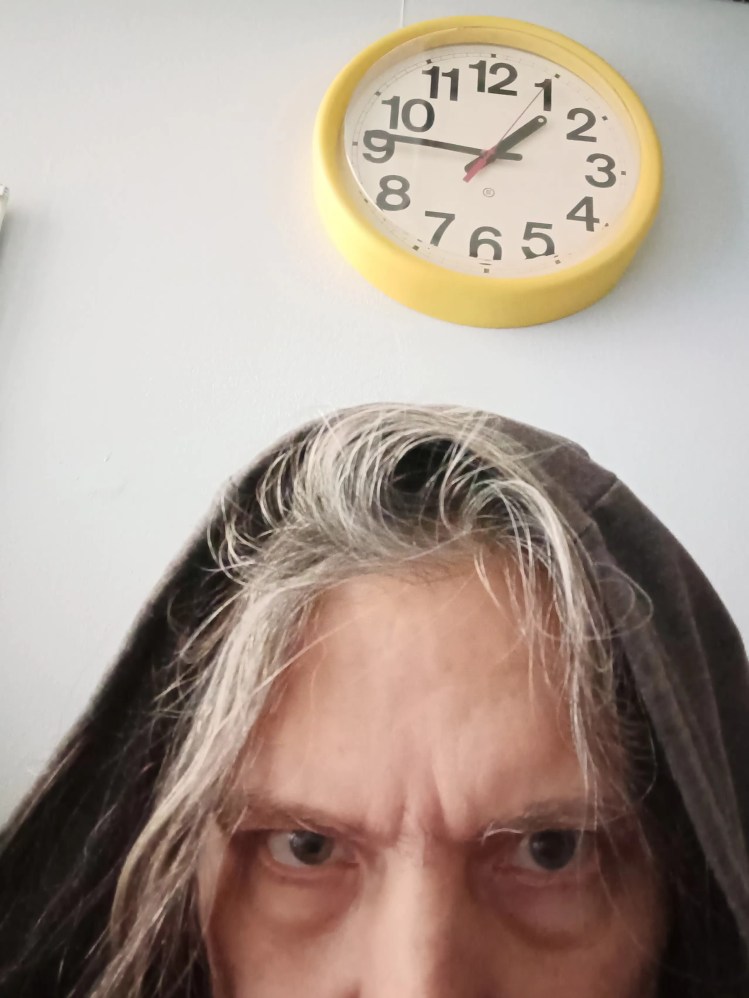
Do not take selfies. Make self portraits. Even if the only one who ever studies them is you, this will make you an endlessly deeper and more original person in everything else you do and do not do (what we DO NOT do is just as important as what we do), IF you do this in the right way, which is to do it the way Socrates said to use the mirror: Look for yourself, and study the endless changes which are “you,” with fascination. (This is something Shakespeare did in his Sonnets.)
Most people are only terrified of death when they never really live/d first. Always start with yourself first. Move outward from there.
A NOTE on reading from The Drifter: What you take into yourself is just as important as what you put out into the world, and what you put out into the world will, inevitably, be massively influenced by whatever you have spent your time taking into yourself.
Watching a truly great movie is a much more artistic experience than reading a truly bad book.
But the act of personally reading good things will strengthen the mind (and hence the personality) in a more powerful way than anything else on Planet Earth. This has been true for thousands of years, and will remain true now until “the end” (whenever it comes).
Alexander the Great’s most prized personal possession was his copy of The Iliad. Abraham Lincoln spent more time reading Shakespeare and the Bible than he did studying war plans or political suggestions. Martin Luther King, Jr., was always reading good things. He never would’ve been able to write or think so well otherwise: and he knew it.
The poet William Blake was not joking when he said he wrote mostly for “children and angels.” Personally, my conception of Heaven also includes forms of reading. If I’m wrong about this, it’s highly doubtful I will be aware of it; so I’m going with this for now. (It’s also probably true that by “angels” Blake meant both literal angels, and saintly humans.)
If one fills one’s mind with trash, nothing but trash, and more trash, eventually (or sooner) the mind itself will become a trash dump. Right about then is when real and deep ignorance, cynicism, scorn for the good of the world, and nihilism begin to set in. (Many of these people are walking around and looking like respectable members of society, too; even as we speak.)
(Top image: Elina in Chicago 14 June; Second image: Tressa With Emma Lazurus Poem. Both supplied by the Drifter)
The Crowd and the Protest
“The shepherd enters through the gate.” – John, Chapter Ten
ONE
Sadly, the question might easily arise as to WHY anyone in their right mind would bother to fight for, or defend, the so-called “American Dream” any more, in this Year of Our Lord 2025.
The Gonzo journalist and prose master Dr. Hunter S. Thompson, in his prophetic mode, rightly proclaimed the American Dream dead and buried over fifty years ago, not too long after Tricky Dick got finished with his sad, partially unconscious, and certainly pathetic attempts to clownishly crown himself and end American democracy forever.
It seems to me that the American Dream has now become the most destructive lie and delusion the human race ever invented for itself, a vast, mass mental and spiritual health crisis and pandemic that has spread globally everywhere from here to India and all places in between, and has destroyed the human and humane spirits of, literally, billions of people all across the globe (although not everyone).
Because the so-called “American Dream” is nothing now in its very essence and core except a pixie dust mental disorder, a vast, sometimes-seemingly-all-consuming, LSD-like, schizophrenic delusion that is not based on Fantasy (the bad kind), but IS Fantasy the bad kind itself at every level.
Romance Fantasies, House Fantasies, Computer Fantasies, Car Fantasies, Shopping Fantasies, Political Fantasies, Property Fantasies, Robot Fantasies, Rocket Fantasies, Gambling Fantasies, Lottery Fantasies, Vacation Fantasies, Hero Fantasies, College Fantasies, Economic Fantasies, Flower Fantasies, Music Fantasies, Dancing Fantasies, Fame Fantasies, Job Fantasies, Retirement Fantasies, Revenge Fantasies, Drinking Fantasies, Drug Fantasies, Food Fantasies, Screen Fantasies, Sex, Power, and Money Fantasies have burned and buried the real minds and hearts of so many people walking, standing, sitting, or lying down on the globe right now that it’s really chilling and yes, even horrifying, when one thinks on it for more than two seconds before going back to casually scrolling one’s phone as the world burns.
So why fight for the American Dream? Because there’s another side to everything in this world: what the great Chinese poet, philosopher, drinker, and drifter Li Po called the Yin and the Yang.
Harold Bloom, the great American writer, voice and citizen, said many times that an American never feels free unless she or he is alone. And when an American is alone, they do always feel free (even if sometimes terrified, too).
That liberating essence, or core, of American democracy still exists, even though Sojourner Truth, Crazy Horse, Frederick Douglass, Thomas Jefferson, Daniel Boone, and John Wayne are gone (“The mountains have been my church,” said Wayne in his final movie). It means everything to the human mind, heart, spirit and soul all over the globe, is America’s one great contribution.
And that is why I will fight for it, in my own way, and in the spiritual warrior sense of the word fight. I, and many others.
TWO
We came up out of the subway tunnel and were instantly swallowed by the Chicago crowd. I was with my teenaged kids and a few of their friends. I could see the Picasso statue in the distance over the heads of the crowd. It was there, the statue the great Picasso gave to the city of Chicago for free, the one that looks like a horse’s head from a certain angle, a woman’s head with long hair from another angle, something else you had never really imagined before and can’t name, from another angle.
I’d spent a lot of time in the past sitting around in downtown Chicago and studying that huge metal statue. Now I was packed into the middle of so many hot, pressing, human bodies suddenly that I couldn’t even move, not right, left, front, backward or center. One of my daughters had been swallowed and pushed along by the crowd. We were all worse than sardines in cans right now. Suddenly I realized that if I had another stroke like I’d had last year, I would be in a very bad spot because there were angry, shouting, pressing, hot-blooded, hot-breathed, neck-veins-bulging, stinking, sometimes-perfumed, protesting people pressing all around me and there would be no medical assistance happening out here. I turned around again trying to find the stairs from where we’d come up from the subway so we could go back down, but it was already too late. We’d been sucked into the vast black hole of the hot, pressing crowd, literally even before we knew what was happening.
We kept talking to each other in the middle of the crowd as we tried to inch our way out of it. I instructed all these teenagers I was with to follow me, and trusted (no choice) that my other wildly intelligent daughter (they both are) would be able to fend for herself, but no one in the crowd was moving, they were all just standing there pressing upon one another (no room for anyone to even sit down, not that you would want to here), holding up signs, screaming slogans and chants, breathing their hot breath on the backs of one another’s necks, and I could feel the outraged intensity of every single one of their souls (it felt like) pressing down on my own personality, which was very quickly becoming nothing less than outraged at their outrage. Trying to keep it under control, trying to keep it under control…
There were very many angry and shady-looking people pressing in the crowd, folks trying to pull suitcases or carrying awkward-looking backpacks, all of the above large enough to carry explosives of course, folks dressed all in black with hands hidden in pockets large enough to carry pistols, folks hunched over with hoods over their heads and masks on their faces and sunglasses covering their eyes.
It was a vast ocean of bodies pressing over me and I realized I was about to panic perhaps because I was now having a bona fide LSD flashback right here in the middle of the crowd, actually triggered by the crowd, in fact. But I had to keep it together in order to lead my daughters and their friends to safety.
It had been my idea to come down here, after all. My kids and their friends instantly agreed. Then I remembered that I had been inspired by them during the George Floyd protests when it had been their idea to go to the protests before it had been mine. We were trying to inch our way along to escape from the crowd. Some people, obviously many people, do not get too claustrophobic in such conditions, because a lot of these protesters actually seemed to be enjoying themselves. But myself, my daughters, and our friends were not some of the non-claustrophobic ones. The kids call it “tweaking” these days. It’s when you’re losing your grip on things, feeling like you’re having an acid flashback, panicking or almost panicking, freaking out, in other words. I was now, officially, and internally, tweaking at every single level I could or couldn’t think of. I was able to hold it together for only two reasons.
One: in order to try and help my daughters and their friends (and myself) get out of this.
Two: I knew if I really started freaking out, it would be like throwing a flaming torch on top of a keg of gun powder.
I knew now, in my blood, how easy it is, and how fast it can happen, that people get trampled to death in a crowd like this.
THE CROWD is so terrifying and horrifying to some of us because it means a complete and total loss of individuality, and control, at every level.
The only place you can maintain your own self-control in conditions like this is within your own mind, and under these kinds of conditions, that is very hard to do, especially when an acid flashback, or whatever it was, is making every single nerve end in your body and brain feel like it’s on fire right out of the blue.
Thoughts of Buddha helped save me this time. His chubby ghost (to me he was chubby) appeared out of nowhere and wafted in front of my mind. It was his kind of mind control I turned to in these desperate circumstances. I was having an acid flashback in the extreme but the purposely recalled thoughts of the strength of Buddha’s mind helped me regain, and keep control of, my own mind. I turned around and all the kids I was with had vanished in the crowd, we had been separated, I couldn’t turn around, and I couldn’t find them. I kept on trying to worm and inch my way out of the crowd, trusting their safety to God, because it was the only thing I could do now.
THREE
During the worst moments of being suddenly caught unawares in the middle of THE CROWD like that, it felt like nothing short of being buried alive in the middle of the most vivid Edgar Allan Poe buried alive short story you’ve ever read, except you’re not reading the story at a safe distance, you are the character in the story who’s actually buried alive, worse than in a dream. For me, to suddenly have millions of anonymous bodies pressing all over mine without warning is one of the worst living nightmares I can possibly imagine. (I’m fond of keeping my distance, which is an essence of being a drifter.)
There are other nightmares just as bad, like maybe being stalked by a great white shark while out swimming in the ocean and you know he’s there but are still a mile away from shore. Only being buried alive for real could possibly be worse.
Losing contact with my kids in the crowd like that was even worse than the buried-alive feeling.
FOUR
It took me ninety (90) minutes to inch and worm my way out of the crowd. Ninety minutes that felt like nine months jammed down into a Siberian prison holding cell (because of the acid flashback/s).
When I finally broke free, onto famous State Street in Chicago, I looked up and there was the Van Gogh-like Muddy Waters mural on the side of the building I’d seen many times before. I had lost track of where I was in the downtown area, and had only been following my instincts to get out. And I got out. And I was free. And there was Muddy, one of my great and lifelong heroes, Muddy Waters, staring down at me. And we were both free.
I had to wait around for another thirty (30) minutes before my kids also broke free from the crowd.
But fifteen (15) minutes before that, I received the first text from them telling me they were OK.
FIVE
There is no doubt that I’ll continue to protest personality-crushing authoritarianism wherever it exists, whether that is at the “highest” business and political levels, or within the classroom or the workplace, or on the street corner, or within myself, or anywhere.
Next time, however, I shall be much more careful about how I approach THE CROWD. A word to the wise: The Crowd is bad. In the worst sense of the Word.
ADDENDUM from The Drifter
There are a million different ways to protest, of course, and attending a so-called “Protest” is certainly not the only way, although, as the American Civil Rights Movement showed, it is sometimes a necessary way. The famous “three and a half percent” rule, proved by social science, says you only need that amount of a nation’s population to resist and overthrow the lockdown of true authoritarianism, the kind where the jack-booted thugs are standing around armed on all street corners with their faces hidden and the little old lady you thought was your friendly neighbor just reported you to the secret police for something you didn’t do.
The following poem by Walt Whitman outlines another way to protest, just as profound, or more profound, than the other way.
Poets to come! orators, singers, musicians to come!
Not today is to justify me and answer what I am for;
But you, a new brood, native, athletic, continental,
Greater than before known,
Arouse! For you must justify me…
I am a man who, sauntering along without fully stopping,
Turns a casual look upon you and then
Averts his face,
Leaving it to you
To prove and define it,
Expecting the main things
From you.
“The Drifter” is drifting off for now in order to steady his nerves via a combination of medical, psychological, and spiritual advances. This world we currently inhabit will make you nervous if you’re alive; do what you need to; pursue the right kind of excess and eschew the wrong kind as much as possible.
“The Drifter” doesn’t know yet what the column will be about next Sunday in this “Postcards from the Drifter” Sunday series; what he does know is that he will be here.
The main character in the following lyric cry goes barefoot most of the time, wears animal skins when he wears anything, carries a spear, wears an amulet around his neck that protects from evil spirits which he knows often, but not always, come from other people, and has never shaved, although he has cut off his beard and hair when they get too long so they don’t get in his way; he also takes magic mushrooms, walks for days on a regular basis, hangs around the fire a lot, also spends a lot of time alone, sees visions, makes cave paintings he never looks at again, or sometimes returns to as if to an old friend for days on end; and in this poem, is inventing, or elaborating, human language, while also simultaneously developing the gift of human mercy which Jesus himself, and his mother Mary, would bring to perfection many thousands of years into the future from where this character is perching in this poem – right now.
Alone at Blue Rocks on the Shoreline
Prehistoric Man/kind perches on the cusp of a decision, and speaks.
The rocks here at shoreline are blue.
Blue like the water and sky.
Blue like the blue bird and the big ice.
And they rise half as high as the ice, as the big ice.
The rocks here under this sunset tree are red.
Red like her hair, and the sacrificial hare in the sun, in the trap, twitching.
(LET IT GO.)
Your costume only becomes you
and your uniform once you
wholly own it somehow
after long tries
and once you wholly own it you’ll
uniformly know and your uniform
costume will simply become a way
of knowing and a way of knowing more
about what you already know you know
but aren’t always so sure about, in this land
of the wooly mammoth having you for breakfast
on his horns
and the saber-toothed tiger around
every
bushy
turn.
So the hare, let it go, LET IT GO.
The hare released.
Look at him go!
He flies because I
have chosen
not to sacrifice.
Dr. Dale Williams Barrigar is an impoverished poet-scholar from the Midwestern USA who learned much of what he knows about primordial humankind by reading and pondering the works of Sigmund Freud, Carl Jung, William Butler Yeats, William Wordsworth, William Blake and William Shakespeare, as well as lots of intuition, imagination, and experience thrown into the balance. Experience alone is never enough, and neither is reading; they have to be combined.
(Note–I am certain that this will be the first of a great many enlightening Sunday columns for Dale in the Springs. He has the talent and determination; therefore the sky is the limit!–Leila)
The Other Side
“Study yourself frequently in the mirror, without vanity.
It is a profound self-portrait.” – Socrates
“…Before I am old / I shall have written him one / Poem maybe as cold / And passionate as the dawn.” – William Butler Yeats
“The bird that flies in front of you is not for no reason.”
– Chingachgook
In September of 2024, I saw the 91-year-old Willie Nelson walk out onto a stage somewhere outside Chicago and wave at the large crowd in the seats and spread out farther back all over the green, sprawling hills of this midsized stadium.
You could see Willie pretty clearly from where I was on the hills with my family, and you could see him even more clearly on the screens that were elevated above the stage like they are everywhere now.
Great waves of goodhearted cheers and applause went up from the crowd in spontaneous honor of iconic Willie. My guess is that Willie always receives that kind of welcome, except not quite so enthusiastic and dramatic as now – because it was well known in Willie Land that Willie had almost passed out of this mortal sphere – again – recently.
And yet now here he was – again – standing on the edge of the stage holding Trigger (his guitar) and waving with great strength, resilience, friendliness, and Willie-style openness at this hugely appreciative – even tearful in some cases as I looked around – Illinois crowd.
Four months earlier, my humble self had also come very close to biting the dust of this mortal world, not for the first time, so the reappearance of Willie this way held a certain magic for me, especially since he is a lifelong hero of mine.
At the age of 57, in May of 2024, after a sleepless night previously, then staying up all day (no naps), arguing for several hours with everyone around me about all sorts of things (we’re all a bit bipolar or more), and then after lots of excessive celebratory activities with my kids on my ex-wife’s birthday, I suddenly found myself sitting in a chair alone a bit before midnight, completely unable to speak. (I had been thinking about calling out to one of my kids about something even though we’d already been talking to each other all day long.)
Not only was I unable to speak.
I was even unable to think of a single word, at any level of my mind, no matter how hard I awkwardly tried, and kept on desperately trying – and this was after a lifetime of words, words, words, and the Word, obsessive, nonstop reading and writing, life as an English teacher in college, and the ability to speak so rapidly and for so long, at times, that I’d been known to talk nonstop for 24 hours, or more, to a lucky few (and generous) souls (who must’ve spent a lot of time tuning me out, as well, during those interminable, adrenaline-fueled, sometimes chemical-fueled, half-mad monologues about anything and everything under the sun).
(It was like the tale of the apostle Paul talking all night long, until one of his listeners fell asleep, and then fell out of the window. Paul was able to pull it off and save the young man’s life only because of the faith of everyone around him.)
I couldn’t think of even a single word.
And suddenly I very much, and very deeply, realized the fact that – I couldn’t think of even a single word!
My mind was a blank vaster and whiter, and more elusive, than Moby Dick.
My daughters walked into the room together (twins).
I tried to rise from the chair.
I collapsed and hit the deck very hard – but when I heard the fear in their voices, something helped me bounce right back up again.
Amid the confusion, terror, and total horror, worse than what Mr. Kurtz talked about perhaps, of not being able to find the words, something had buoyed me up – when I heard my daughters’ sweet voices in fear and dread for me.
After an ambulance ride with some chill kids who looked like they were about sixteen years of age doing everything they could to help me out, I found myself in the emergency room staring into a screen hanging above me, where the distorted face of a concerned doctor with technological eyes like Lex Luthor, and pale, dark, glistening skin, was weirdly informing me (his mouth seemed to be going every which way), in his echoing, distorted voice, through the screen, that I was in the middle of having a stroke.
That was the moment when I realized it felt like the White-Light Fingertip of God Himself had reached out earlier, out of nowhere (or out of air – out of thin, thin air) and TOUCHED ME on the brain (or in the brain) in a very biblical way.
I knew now that this was some kind of wake-up call.
Twenty-three years before, in September of 2001, two weeks after the terror attacks on the Twin Towers, I’d fallen on a switchblade knife while doing tricks with it in the yard in the middle of the night after a long day (and night) of drinking.
I’d almost killed myself with a switchblade (and not on purpose). The feeling of being stabbed (perhaps especially by yourself) is almost impossible to describe.
The horrific irony there was that two weeks before the Towers were brought down, I’d been doing nothing other than standing on top of one of them with a close writer friend from Brooklyn and looking down, in awe, at the skyline of Manhattan.
September 11, 2001, means many things to all of us, and different things to every one of us, whether we were alive at the time or not.
To me, 9/11 will forever be tied up with that bizarre, drunken, fateful incident, in which I fell on the switchblade knife in a drunken, manic, and exhausted glee, and almost killed myself without meaning to; and the time two weeks before the Towers were brought down, when I had stood, literally, on top of one of them.
(Falling on the knife like the Towers had fallen.)
(Stabbed in the side like Him.)
When I arrived at the hospital after the knife accident and took the rag away from the wound in my side to show the nurse, great gouts of blood literally SPAT and SHOT out of my body and SPLATTERED all over the wall – straight out of the worst horror movie ever made, so much so that the nurse immediately ran from the room in terror to go get a doctor – and somehow I survived.
And not only did I survive the stroke as well; but I also began somehow to THRIVE, very quickly after it ended.
When the stroke came, I’d just been starting to emerge from a wicked, vicious, six-months-long melancholia, one of the worst in my life in a life of long, horrible, periodic depressions.
After I had the stroke, after I “woke up” in the hospital, I realized that the depression was gone – it had vanished; had lifted; had disappeared, like the morning mist suddenly going away off the face of a beautiful lake.
One moment you look and it’s there – then when you turn around again, it’s just gone.
I had a lot of bad habits before the stroke which contributed to it (none of which shall be gone into here for various reasons).
But it also turned out that I had something going on with an artery in the right side of my neck, a small but very significant abnormality that had caused the stroke, something so rare that only less than three hundred, three hundred, cases, have ever been documented.
It required an endless-seeming series of tests to discover the problem, then surgery to take care of it.
In the middle of the surgery, I left my body.
I didn’t die – but I, quite literally, left my body and wandered around the surgery room (my spirit did), watching the surgeons, doctors, and nurses perform their work, but mostly watching myself, lying there on the table.
I was studying myself very closely while hovering in and among the people who were working on me.
And I realized that there were and are two me’s, one of whom resides solely in this body made of dust, this mortal coil – and one of whom does not.
That brings me back to Willie. I don’t recall all the circumstances off the top of my head, but I do know that he’s almost died before many times.
And I do know that this summer, so far anyway (which is way more than enough), he’s back out on tour – at the age of ninety-two.
Every moment we breathe on this side of the Grim Reaper’s scythe is another chance at living our lives to the fullest, maybe for the last time here.
One thing I know for certain – we will all find out what happens to us, even if that is only peaceful sleeping (which I doubt) – on the other side.
Sign-off: “The Drifter” is bowing out for now, off to walk his sidekicks and assistants, two Siberian Huskies and one Pit Bull whose names shall remain anonymous in this place (for now), in a local forest preserve outside Chicago along the Des Plaines River, where Hemingway used to hunt as a kid, and John Wayne Gacy used to dump bodies; an area filled with deer, coyotes, foxes, birds of prey, snakes, river otters, and lots of other wild creatures, including more than a few of the humans who hang out there.
“The Drifter” shall re-emerge next Sunday with a plunge into his personal relationship with the life and work of Bob Marley, as well as wild tales from his honeymoon with his ex-wife all over the island of Jamaica in the Year of Our Lord, 1994 (thirty-one years ago at the age of 27).
The title of next week’s column is (unless it gets changed) “Jamaican Flashbacks Extraordinaire.”






 Saragun Springs