Blind Faith’s eponymous new album was spinning on the turntable; Steve Winwood’s haunting vocals on “Can’t Find My Way Home,” was set off to great advantage by Clapton’s 12-string. The music floated evocatively throughout the party room, where a thick, inert blanket of marijuana smoke hung near the ceiling. All the cool people were there, as was sexy Beth–the life of every party–and every purveyor of every controlled substance then known to the local subculture. Everyone seemed mellow, clutching either a beer or a joint. Professor Bob sat in a quilt-covered rocking chair, warming himself before the fire as he sifted through a huge woven bamboo tray of marijuana leaves and stems and buds. He smiled. He was happily in his element. I hadn’t consorted with this crowd for months and wasn’t sure why I was even here.
Continue readingSaragun Springs

Ophelia Invisible by The Drifter
“Who is now reading this?” – Walt Whitman

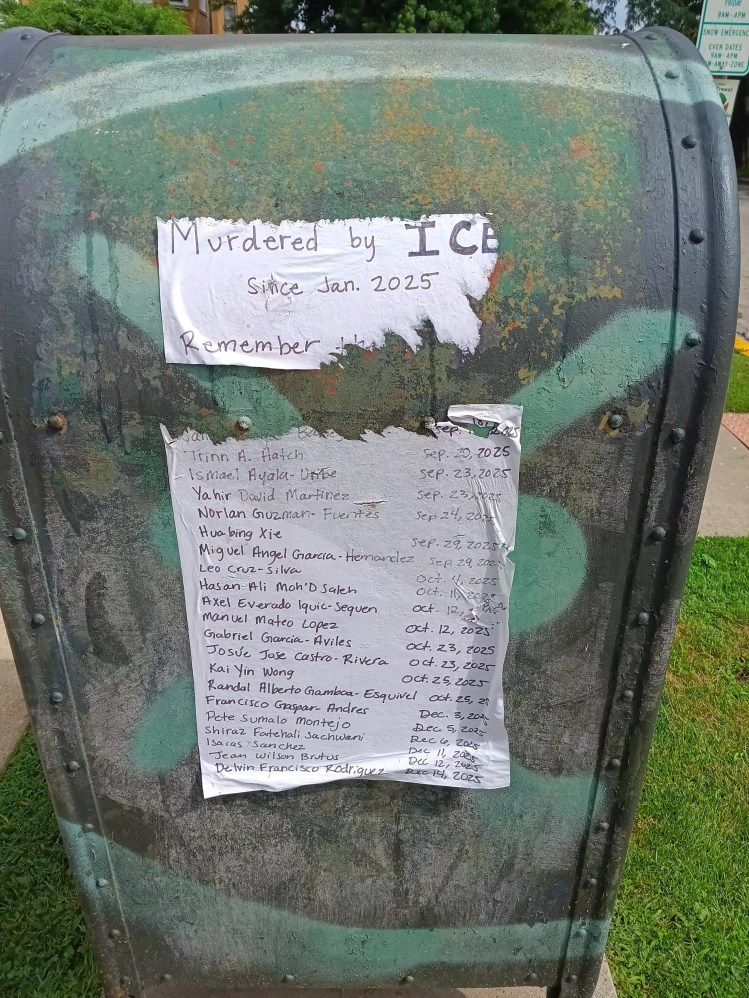
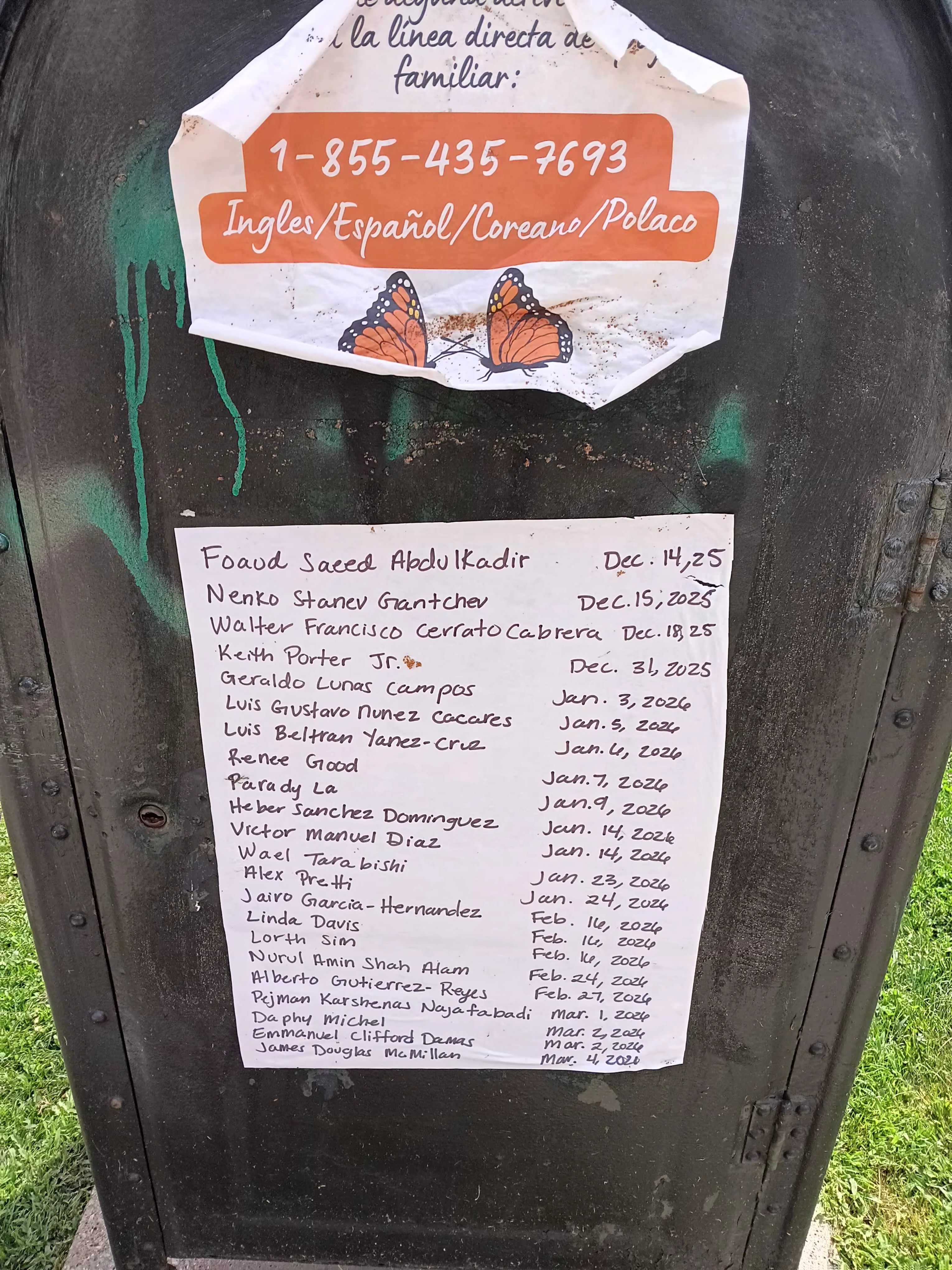
It was just one block away from my apartment, on the corner; but I suddenly felt like I’d traveled thousands of miles, or gone to a different level of something that was on a whole other level.
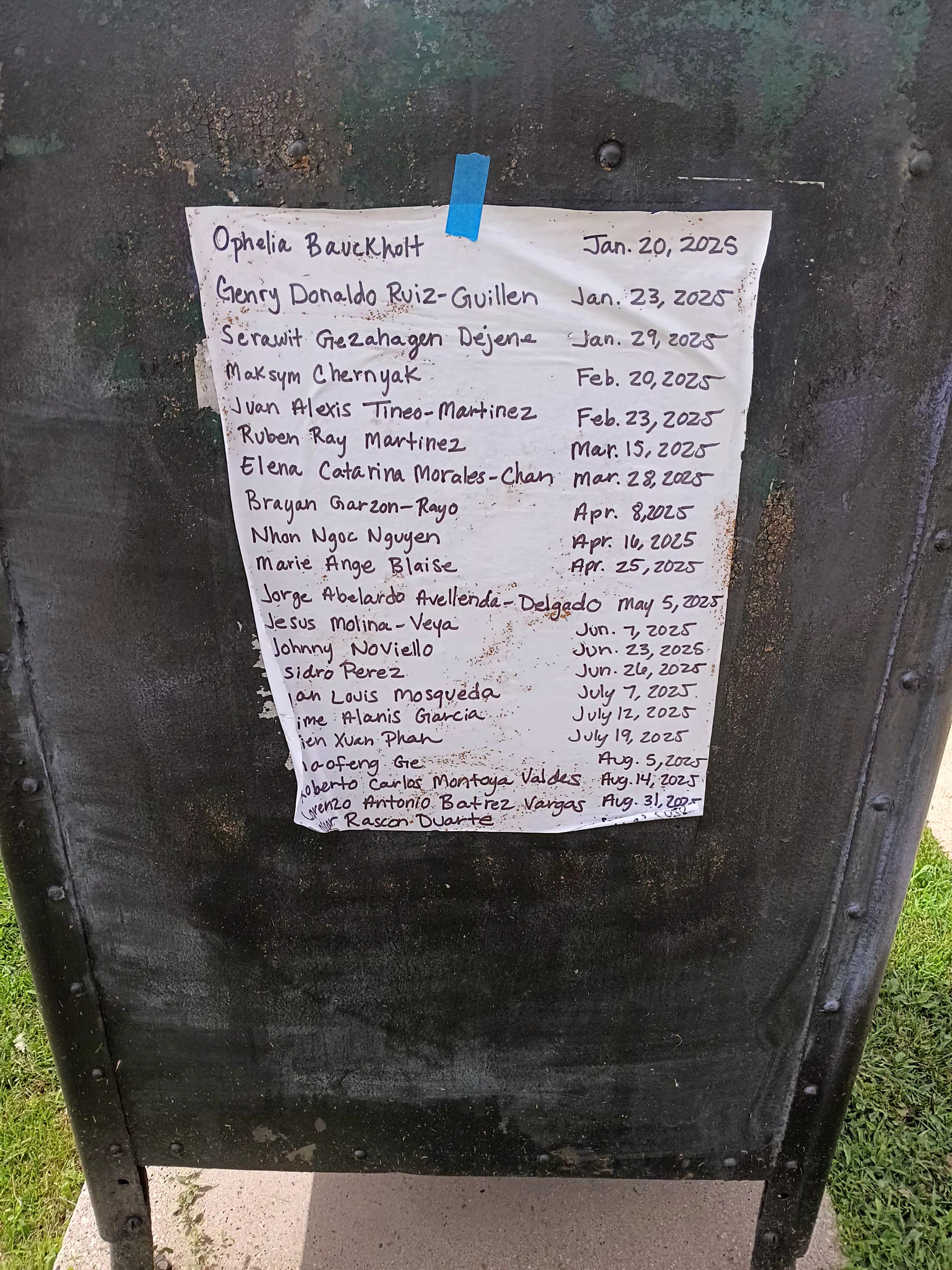
The utter humbleness of it all was what struck me most. Whoever did this took the time, with, obviously, very limited resources.
It was the early AM of a midsummer morning just outside Chicago at the time when the birds are going insane in the good way, having a party before settling down into the branches above us and hiding out for the rest of the day.
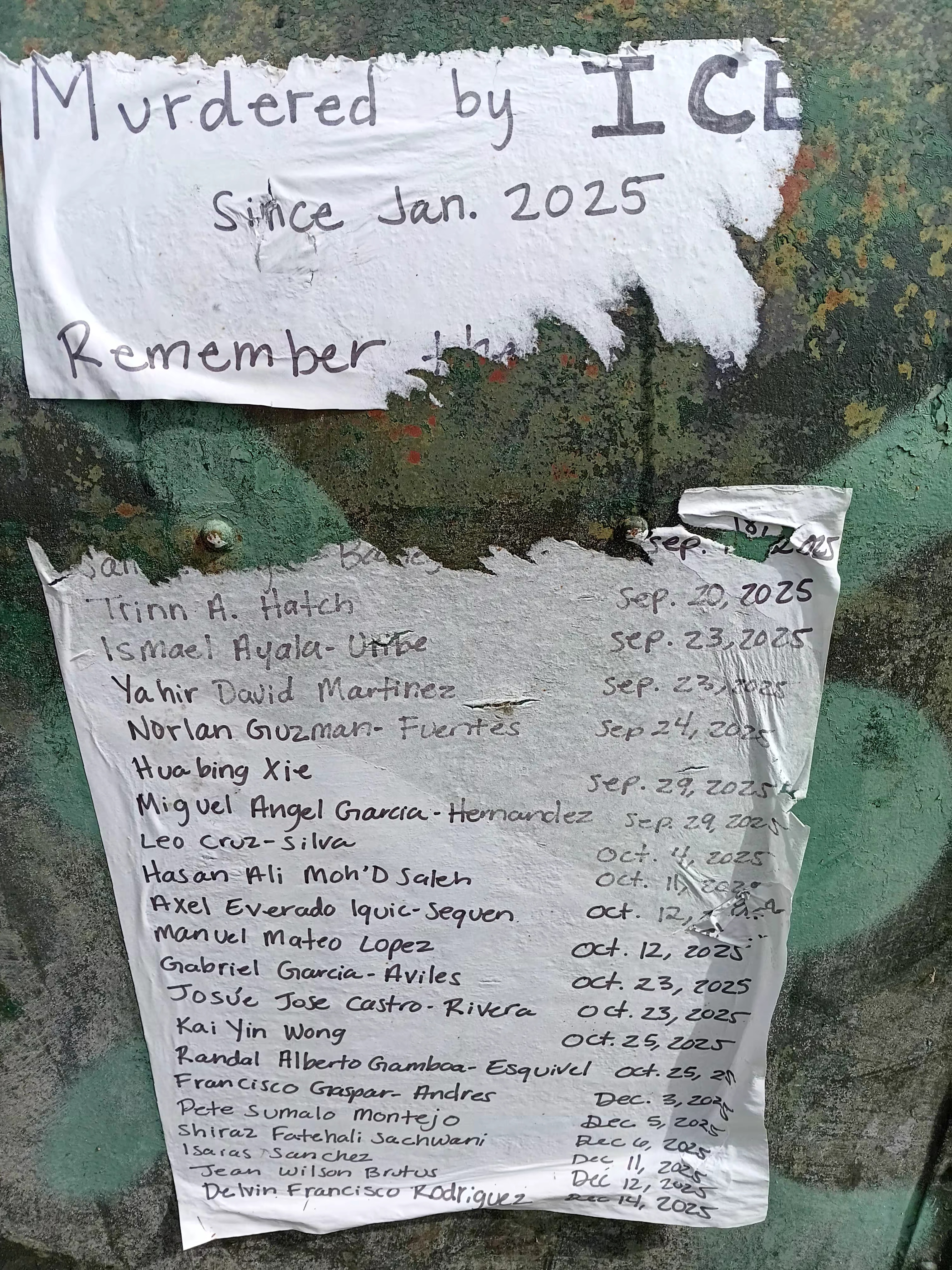
Then, suddenly, they were there, these simple signs that were honoring the dead.
And I saw that at the top of one of the lists of names, the name was Ophelia.
First it made me think of the Taylor Swift video (not just the song), “The Fate of Ophelia.”
Next it made me think of Good Will’s, and Hamlet’s, Ophelia (the lover of both for sure).
Then I noticed that, within the same list, there was (is) someone with the same first name as one of my daughters.
And THAT made me think of invisible connection/s that spread throughout the world (and what is called the universe).
And then I thought of how Ophelia is invisible to me.
The Drifter (All Images by The Drifter)

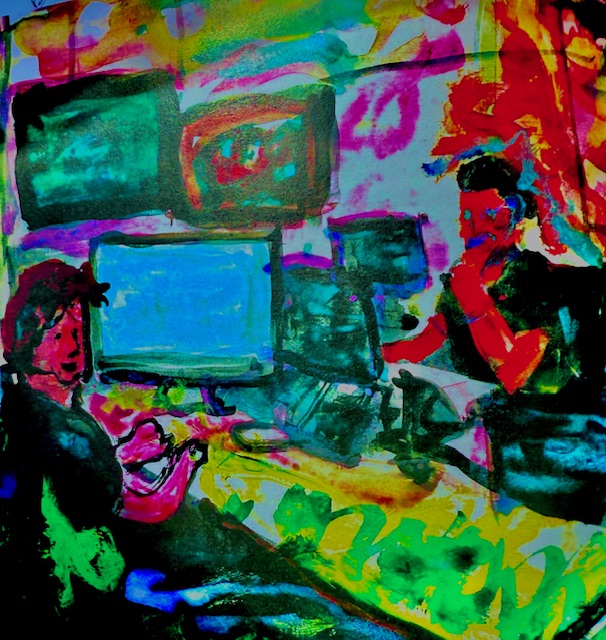
The New Show by Adam Kluger With Art by Dreck

“Excuse me
Excuse me
Excuse me!!!”
Gavin Tolkin was standing on a chair now as he tried to get the room’s attention.
“Hey Everybody – please shut the fuck up!”
A display of dominance was required from the show’s new show runner. The network was suddenly in the business of creating an episodic BTS docuseries on the NY newsroom. The brainchild of some bean counter at the big building on Madison Avenue— and Tolkin’s name was on the memo as the new sr executive producer of the whole magilla gorilla.
Tolkin guessed that some schmuck in corporate must have finally stumbled across an episode of TMZ and hatched a brilliant new idea on how to make money without spending money.
The crowd of employees started to stir in the newsroom around the tables of the writers pit. Tolkin needed a clear surface to lay out the new bible. He brandished it like Moses hoisting the 10 commandments and yelled again at the top of his lungs.
“My most esteemed and respected colleagues I need your kind support right now, please grab all your shit off the tables and find another place for it — we need this space to work on the new show—now!!!”
Tolkin felt the power the resentment and jealousy swirl around him as co-workers filed out of the room silently—aside from some random grumbling— with their folders, files and coffee mugs.
His number two, Headly Montague admired his boss’s balls or what do the Jews call it?
Chutzpah.
Tolkin’s name was on the memo and the show bible as the new show’s sr executive boss— so he better fuckin bring it like that every day or the whole operation would be untenable, unmanageable and everybody in the newsroom would probably lose their fucking jobs.
“How soon do those corporate idiots want this supposed television show on the air?“
“45 days big T”
“We’ll just see about that.”
“Hey Chief, ” a young intern named Rosamela interrupted, “someone to see you…The Fox?”
The Fox was a rising star at the network.
A young hitler-youth wannabe in his early 30’s who was quickly climbing the ranks to the top of the mushroom.
Always staring or smiling— the Fox was always assessing weaknesses in the smaller fish at the bureau and then whispering to a mystery suit who was always next to him. He was a prep school bully and if you went up against him you would lose and be fired. That was his power.
“Gavin”
“Fred”
“Just down here on directives from corporate to make sure the new project gets off the ground with the least amount of fuckups.”
“Just getting settled —Day 1 – we should be good in plenty of time to make the deadline.”
“That’s reassuring Gavin —because I was the one who chose your name out of a hat to run this new “concept.” So try not to screw the pooch on this one —like you did with that airline show.
“Thanks, Fred”
“Don’t thank me yet.”
“Right.”
-Break-
“T… all assembled in the main break room”
“Great. Head on in Headly and I’ll be right there”
(Urinal Flush the hands being washed momentarily in sink)
“Gavin?”
(Plop ker-plop, kerplop)
“Fred?
“Yeah, listen I’m thinking that the B-block needs to be shortened to include enough time
(Plop ker-plop, kerplop) …for a station ID break, mmkay?”
“uh… yeah, sure. No problem will make that change to the rundown as soon as I get to the break-room.”
“Great.” (Plop ker-plop, kerplop) I’ll look forward to getting the revised rundown later today.”
“I’m on it.” See you later (sound of bathroom door opening)
Tolkin had to admire the total un-self consciousness of the junior executive who couldn’t give a shit about taking a shit while they talked business in the men’s room. It was Fred’s little way of letting Gavin know where he stood in the network’s pecking order and that shit always rolls down hill.
“Alright, Shelley please take a note that we are taking the anchor wrap out of the end of the B Block and now bumping out with a beauty shot of the bridge with a music sting . That should shorten the B block”
“What’s the matter Bonehead? Are you getting tired of my end of segment ad-libs and timeless witticisms.”
“Of course not Chick. Your pre-commercial teases and patter are solid gold, Big Daddy… but the network needs a little more time to make the donuts.”
“That’s what this cockamamie show is gonna be Bonehead— a giant donut— if you keep cutting into my spontaneous moments of comic genius.”
(Appreciative laughter throughout the break-room)
“Duly noted, Chick… now listen everybody, the only way this show is going to have any chance to work is if we have our shit sewn tight. We need to each do our part to stay on top of all the small details and deadlines. We can’t have misspelled fonts, teleprompter issues, stage managers who are looking at their newspaper instead of cueing the guests on time. We need to operate like a team… like a well oiled-machine. Like a “REAL” TV show. Remember the cameras and audience will be watching everything we do in real time…Any questions?”
“Yeah, Bonehead. Who died and made you the king… I thought your main credentials were fetching me my pumpkin spice latte?”
“Still is, Chick, two sugars, right?”
(Laughter) (Door opens)
“How’s it going— everybody on page with the new format?”
“Hey Fred. All good. Chick was just leading us in the morning prayer before we go through the work bible page by page.”
“Great. I’ll let you all get at it. I’ve got a big budget meeting to attend to. See most of you folks later I’m sure. (Exits room)
“All right let’s start at page one. New flying logo, new theme song, with highlight montage dissolving into Chick at central anchor desk with a box on his left— no, I mean “screen left” — with new show title with a live crawl on bottom of the screen with clock and the bug…Go Chick.
“Good morning everybody on this beautiful Monday in New York City as we welcome you to a new behind the scenes look into the goings on at a real New York television station … kind of like TMZ … but not nearly as fun or cool”
(Laughter)
“No ad-libs just yet please Chick—let’s just try to get through the first read through”
“ jawohl Herr Bonehead or should we call you Pope Bonehead the First? Or better yet Senior Executive Coffee Boy…
(Laughter)
—Break—
“Hey Henry—what’s shaking at the top of the mushroom”
“Hey Gavin— nothing good, I’m afraid”
“How’dya mean?”
“Just got out of the annual budget meeting —what a bloodbath.”
“ They can’t disband the news unit —can they? That’s the network’s bread and butter isn’t it?“
“ All bets are off since the merger, belt tightening across the board was the operative word of the day —every unit is fair game as far as I can tell.”
“How bad is it gonna be?”
“ It’s not going to be pretty.”
“ or cinematic?”
“Line from the Sopranos?”
“Yep.”
“Apropos”
“How so?”
“ Someone or some unit is gonna get whacked every week from now on—til the end of the fiscal year.”
“Not good.”
“Oh hey— how’s the new TMZ inspired show coming along?”
“Oh just peachy — a cross between a pig fuck and a barrel of monkeys.”
“ Well put — at least they picked the right guy to put in charge.”
“Thanks, Henry”
“You bet kid. Keep your head up.”
—Break—
“Hey Chick —how’s it going?”
“Bonehead! Can’t you see I’m busy conversing with our most beautiful young fashion intern, Rondela er um Romela!!”
(Intern giggles and walks away)
“ Sorry, Chick just going for a coffee run wanted to know if you cared to join me?”
“What? You don’t know my standard order by now?”
“It’s not that — thought we could do a walk and talk — just wondering if you heard anything more about today’s bloody budget meeting?”
“Not a word — what? you worried we’re all getting shit-canned? That would be a blessing to get me off this stupid fucking TMZ ripoff show —Listen up Bonehead —
When you’re a comic genius —one show or gig gets cancelled —and lickety-split my LA agent Morty Seidelbaum is on the phone with five more TV offers already lined up for me to choose from — at least he used to do that —a couple years ago— haven’t heard much from him recently —for a couple years now. Don’t sweat it Bonehead if we all get whacked I’ll hire you to walk my pet shitzu, Marmalade—
“Thanks, Chick”
“ stop worrying and wipe that stupid look off your face… oh, that’s right … you can’t.”
“Hardy har har…see you at the bar in a little bit.”
“Cheers…you stupid Bonehead …now you got ME worrying!”
“Chick — YOU are the golden goose —they would never ever get rid of YOU— you also have a huge fan base — in Japan”
“ Domo arigato Mr. Roboto— too bad you fucked up that Japanese Airline show Bonehead —
“Yeah don’t remind me — and it wasn’t my fault if you remember.
“Ah-so… that’s what they called you after the terrible reviews came in— Mr. Ah-so —shit for brains producer—very bad!”
The two old friends/co-workers smiled, nodded and bowed to each other —and then headed in opposite directions.
##
Adam Kluger (Art by Dreck)
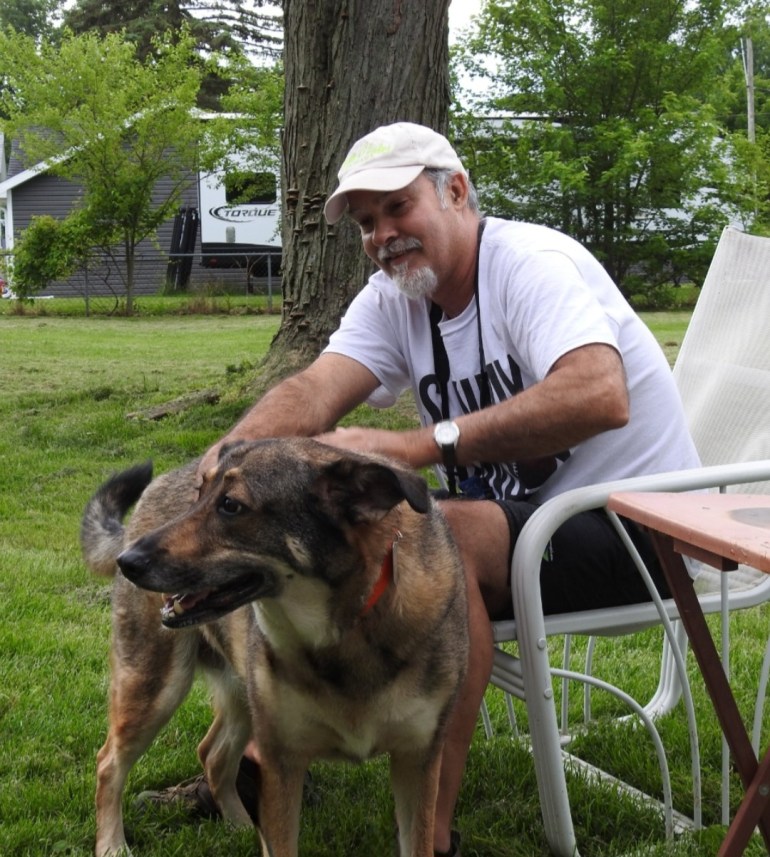
Bugs in the Planetarium by Christopher J Anaias
I live in a planetarium. I don’t have a story or a past. Suddenly, I’m here, hatched from an egg. I didn’t ask to be in the world, but here I am. We watch from a hole in the ceiling. A nest that is full of my kind. Stars and planets whirl around us in the planetarium. It’s pretty fascinating and I’m luckier than most. Then I get bumped and fall into the black void, right by Saturn. I land on a seat cushion and scuttle along the floor to the green EXIT sign.
I walk down the hard surface. It is an aggregate of stones and oil. Later I learned this is a blacktop street. The lights of the street remind me of the planets, except they are in a row. The summer air is warm, and I continue, with a little giddy-up of excitement in my six legs.
A large animal goes clipping by me. I hide in a paper cup. The wind catches it and I spin around and around, down the street. My sticky feet hold on to the cup and I watch the world as if I’m in a laundromat dryer.
The cup lands in a mud puddle. I look from the top of my paper boat. Antennae peeking out like rabbit ears on a TV. The shores are distant lands, and I have no choice but to ride this out. I suspect after falling from the stars on the ceiling in the planetarium, my body is light and could float, maybe I could even walk on water? I also learned a tremendous thing. I can fly. I didn’t even know I had wings until I lit off the edge of the cup and I am looking down over the glimmering puddle. The joy of this moment astounds me, soaring under the stars. I land on the white slickness of a candy bar wrapper, like a buggy space shuttle. It has smears of brown and it is so sweet! I have found my calling—chocolate!
I eat my fill, and sleep overcomes me, and I dream of flying. It’s magical, soaring in the dark sky. Unbeknownst to me, the wind actually has me flying on the wrapper. I wake up and, unlike my old view of the planetarium’s black space and red planets, sunlight glares into my eyes. I am inside a roof’s eaves-trough.
I eat another trace of chocolate off my foot, licking all six of them. The candy bar wrapper is jumping across a lawn. I see from the roof’s perch, a tall, monstrous figure. It is so repulsive that I feel disgust shimmer down my attractive brown shell to my legs. It has a bulbous head, giant blue eyes like one of the planets, maybe earth, but so ungodly ugly. A log of fire is between its red lips. Its enormous claws are stringing dripping rags, which obviously fit its gruesome body, onto a long green cable.
The hideous sight causes my wings to flutter, and I am in flight. A window is open and I buzz through it and land on a kitchen counter-top. I run from one end to the other. I am quick, a real track star. Opaque, hard granules are scattered by a towering black coffee cup. I lick one—so sweet—perhaps the essence of all sweetness. SUGAR!
The monstrosity comes through the door and doesn’t see me. I am large and very handsome, but I crouch under the toaster. The beast lumbers around the kitchen. A wet rag glides by me and the sugar is gone. It moves the toaster, but I saw this coming and cling to the underside. I feel the weight of a tin world shifting as the wet rag swipes at the rising toaster, and it clangs down. Bread crumbs cover me.
I watch her from secret holes and sometimes hide in plain sight on top of the curio cabinet. I stay stock-still, not even twitching my antennae. They are getting very long. A strange tide-pool of desire is rising inside my loins. I have a terrible urge to procreate.
One evening, I scuttle out to the Jacuzzi and find a mate under a tarp. She is in heat and lets me mount her.
Now my lady and I both watch the hideous smoking monster from the top of the curio cabinet. It is loaded with ceramic dogs, salt & pepper shakers from Wisconsin, and even a sparkling glass doorknob, which reminded me of a star flashing at the planetarium. Once our babies are hatched, we should all go back to the planetarium. I miss seeing the worlds’ spinning, but my lady refuses. She is a country roach and cares nothing about worlds aligning and the Milky Way Galaxy.
In this world, she is laying eggs under the dripping kitchen sink. Already the little ones are crawling everywhere, like an alien invasion!
Christopher J. Ananias
(Photo of CJA and a Dear Friend)
The Refrigerator by Adam Kluger

” Pam, I can’t believe you were able to get me an appointment so quickly”
“Why’s that?”
“This time of year…”
“a personal reference goes a long way.”
“Apparently.”
“It is actually a great time to do it with all the publicity surrounding similar types of surgeries–the price went down significantly.”
“I can’t wait…I’m been wanting to pull the trigger for years.”
“What was the final straw?”
“Oh you know better than anyone…it was just an ever-growing laundry list.”
“Amen sister.”
A gentle knock was barely perceptible on the kitchen door.
“Dear?”
“Yes, Marvin”
“Would you and your guest be more comfortable in the living room while I start preparations for dinner?”
“No! Actually, we’re still finishing our wine…but do come in I wanted to talk to you…I’m very unhappy.”
The middle-aged man timidly inched his way into the kitchen nodding to his wife and her guest.
“Yes, dearest?”
“Don’t sweet talk me–look at these counters…I see cookie crumbs all over. I certainly didn’t put them there.”
“But, but…”
“Don’t you but me..and don’t backtalk me in front of my friend…” Suddenly, Marvin’s wife filled her empty wine glass with cold water from the sink and then threw the cold water violently into her husband’s face.
“There! Maybe that will wake you up to what I expect from now on…. you did not stack the plates in the dishwasher the way I like it. When I tell you to do something a certain way in the kitchen I expect you to follow instructions. Or are you trying to get me angry.”
“Yes dear, I mean NO dear, Marvin replied with water dripping off his emotionless face.”
“And remember…the refrigerator is organized a specific way. Don’t start putting food on the second shelf. That’s only for water. How many times do I have to tell you that.”
“I’m sorry, honey.”
“And don’t think I didn’t see that one of my yogurts was missing. Those are mine. You have your own food. Leave my food alone. You’re fat enough as is. You don’t need to be eating yogurt. You should be working out more anyway.”
“You’re right.”
“I know I’m right…I’m like a broken record player. Why don’t you go clean up my shoe closet for the next hour until we’re done here. That ought to help you break a sweat.”
“Yep, I’m on it.”
“Wait!”
“Yes, dear?”
“This dish rag is all wet….were you planning on leaving it here in the kitchen? Yeah, I’m sure you were. It’s goes in the clothes hamper with the other dirty laundry you should be washing…right NOW….you can get to the closet after”
As Marvin quickly left the kitchen, Pam’s friend was pantomiming an enthusiastic applause with her hands. On her face was a huge smile.
“Pammie, you’ve got that one almost totally housebroken.”
“I can’t take all the credit, they do offer tremendous after-treatment consultations at the clinic if you ever need them.”
“Seems like you have everything well in hand here…can’t wait to get Fred in the operating room.”
“Timing’s great, Nan…I’m here too if you ever have any questions.”
“I’ve got one question actually…It’s kind of personal.”
“Go ahead, shoot.”
“What do they do with them–you know, after the operation I mean?”
“Oh those useless things…I keep Marvin’s in a jar in the cabinet above the fridge.”
“You do NOT!”
“You BET I do… that lazy prick sometimes needs a good reminder of who’s the boss now.”
“Great wine by the way”
“Isn’t it? Sheila recommended it. I really love a good Chardonnay.”
“Who doesn’t?”
Adam Kluger (Art by Dreck)

A Coalfield Legacy: An Essay by Michael Bloor
I’ve lived most of my life on the periphery of coalfields. As a child, I could see the twin spoil-heaps of Swadlincote, in the South Derbyshire Coalfield, from my parents bedroom window. When my daughter was a child, she went to nursery school just down the road in Coalburn (there’s a clue in the name) in the Scottish South Lanarkshire Coalfield. When we left Coalburn we moved to just outside Abergavenny, on the edge of the South Wales Coalfield. For the last twenty-odd years, I’ve lived just a few miles from the site of the Polmaise Colliery in Stirlingshire.
The Polmaise miners were famously militant: they struck for ten months in 1938; after Mrs Thatcher broke the 1984-85 national strike, they were the last miners to return to work, a week after every other pit. There’s little sign of the mine today; it closed a year after the strike ended. Stirling Council now has a refuse disposal and recycling centre at Lower Polmaise. Coal had been mined around Coalburn since the 1840s, the last pit closed in 1968. In 1988, a huge opencast mine was opened, alleged to be the largest hole in Europe. It closed in 1997. Europe’s largest battery storage facility is currently being built there, to store excess power from Scotland’s wind farms. At its peak in the early 1920s, The South Wales Coalfield had employed 250,000 men; numbers shrank through the twentieth century and the last deep mine to operate was The Tower Colliery in the Cynon Valley. In 1994, 239 Tower miners pooled their redundancy money to buy the pit and run it as a workers’ co-operative, which they did successfully until their coal reserves were exhausted in 2008. The old Swadlincote spoil-heap in South Derbyshire is now a dry ski slope.
From my comfortable seat on the periphery, I’ve watched a whole industry vanish. But many of the mining villages are still there. Not all of them, some were just timber cabins, but by the mid-1950s miners and their families were living in decent houses, funded out of the public purse, and replacing the shoddy houses previously built by the mine-owners for their workforces. Those mining villages remain special places. Take Coalburn for example: the village’s Miners Welfare Institute remains the centre of village social life and is the only pub in the village; there’s an annual village gala; there are two marching bands – a pipe band, and a silver [brass] band; there’s a thriving horticultural society, with an annual show; an historical society; pigeon-racing is a popular sport. There is a strong sense of community that is almost certainly an inheritance from the workforce solidarity of the village’s industrial past.
I was reminded of the role and importance of workforce solidarity in the mining industry when I saw the news of the deaths of 82 Chinese miners at the Liushenyu coal mine on May 23rd this year. The deaths had been caused by a build-up of carbon monoxide, which can kill by asphyxiation or explosion. The mine had a previously been criticised for its poor safety record.
Of course, that Chinese tragedy is part of a wider story, an auld song. Scotland’s worst coalmining disaster was back in 1877, ‘The Blantyre Calamity’, when 207 miners lost their lives in an explosion and fire caused by a build-up of firedamp (methane). A subsequent inquiry uncovered a list of poor safety management practices: inadequate ventilation, inadequate safety lamps (not the standard locked Davy safety lamps), and shot-firing by untrained workers. The attitude of the mine-owners can be intuited by the eviction of 34 widows from their ‘tied’ cottages just six months after the explosion. Disasters such as these drew a response from the workforce: they were a stimulus to worker solidarity. One of the Blantyre miners who gave evidence to inquiry was Andrew McAnulty who went on to be President of the Lanarkshire Miners Union. In the course of his career as a miner he suffered a scorched right arm with shrivelled sinews, he lost the sight in one eye and had injuries to his feet.
In the UK, the miners’ federated union successfully urged Parliament to pass a law in 1911 to allow miners to choose their own safety inspectors with the right to go anywhere in the mine to ensure that safety regulations were enforced. A similar measure had already had an impact in the French mines, and the introduction of the Workmen Inspectors, as they became known, definitely had a big impact on UK mine safety, especially in guarding against gas build-ups and deaths from roof falls.
Likewise, political pressure by the mining unions and Members of Parliament for mining constituencies led the Government to ask the UK Medical Research Council to conduct chest X-ray screening of miners, research which led in turn to pneumoconiosis, caused by coal dust, to be recognised as an occupational disease, allowing the sufferers to seek compensation. The mine-owners had previously opposed pithead medical examinations.
Workforce inspectors are also found in the shipping industry, another industry with a spotty safety record. The International Transportworkers Federation, an international union, has ITF inspectors who conduct unannounced inspections on berthed ships to detect violations in international shipping regulations on health and safety.
The UK coalfields, that have been a sort of backcloth to my whole life, no longer yield up coal to burn in the living-room grate. There are no more UK coal-mining disasters, though other industrial safety failures continue to cost lives – witness the 167 deaths in the Piper Alpha North Sea oilrig explosion in 1988. But the Coalburn Silver Marching Band is still there as a small reminder that human solidarity is a great resource for the common good.
Michael Bloor
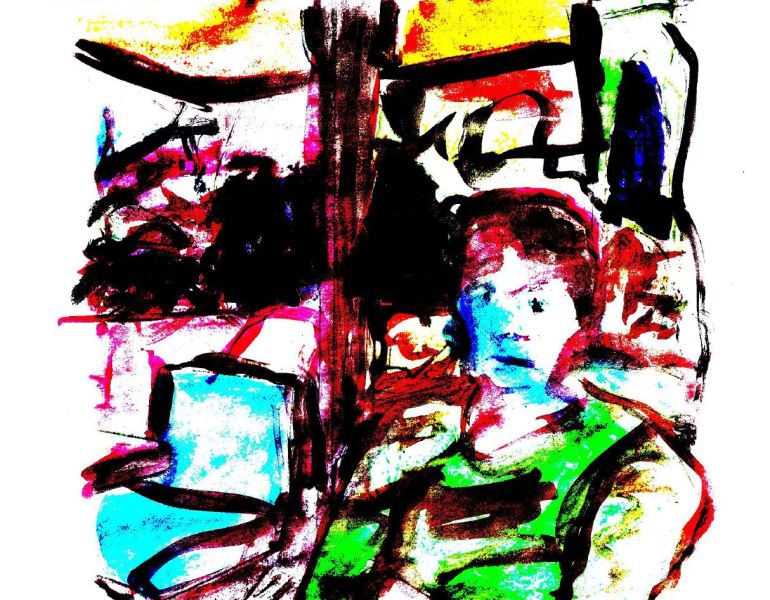
The Turtle by Adam Kluger With Artwork by Dreck
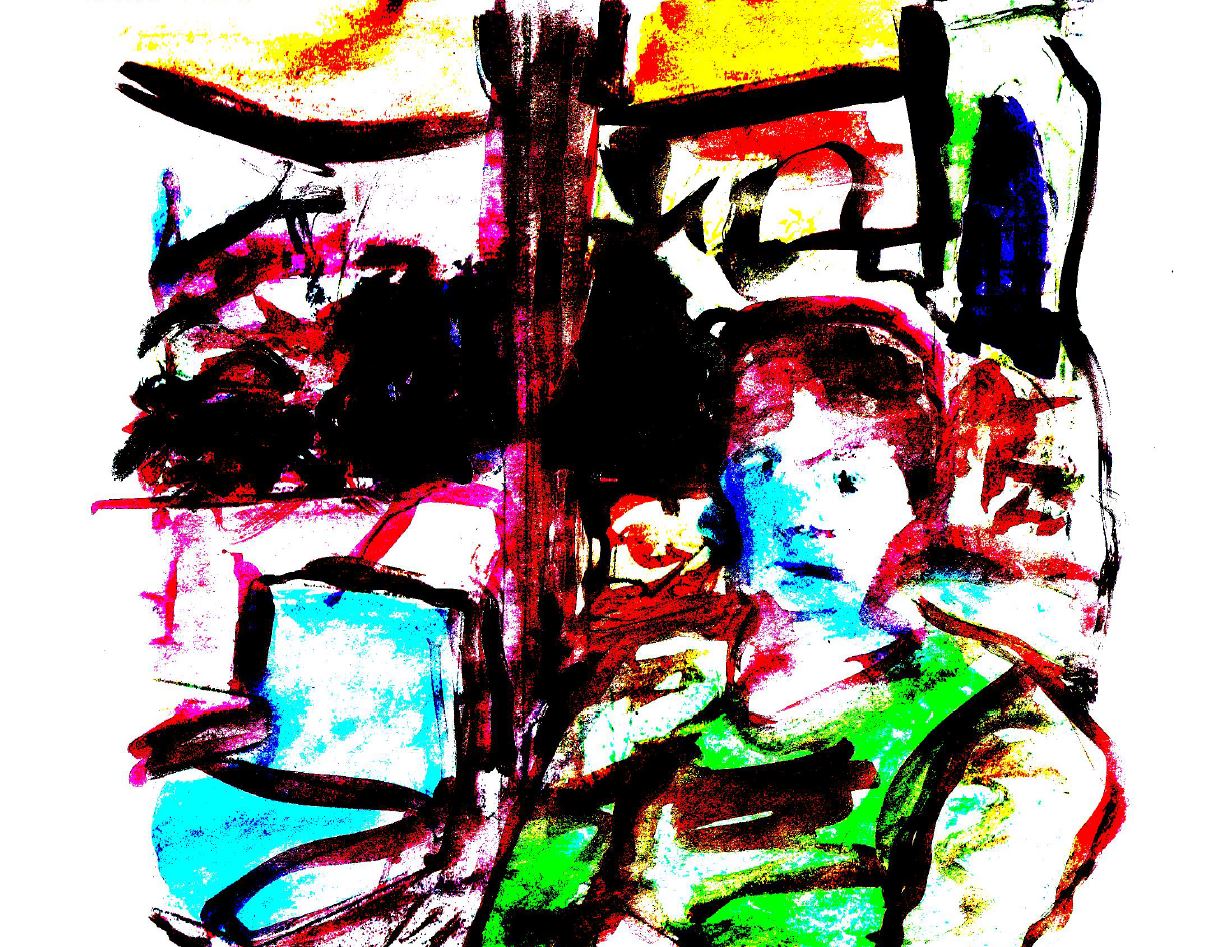
Jacob Shellstein was a soft-spoken New York Dermatologist who enjoyed collecting stamps, studying birds, reading Revolutionary War books and treating his patients.
When his wife had just about enough of their normal existence without the luxurious perks her other Upper East Side friends seemed to enjoy and flaunt in her face daily, she served Jacob with papers charging him with being “withdrawn, cruel and unusual,” and she took custody of their teenage daughter Annabelle, and moved in with that hedge fund manager Juan Carlo Esposito-Caron whom she had been having an affair with for years now.
Dr. Jacob, not one to get overly emotional, became even more withdrawn. As his practice started to dwindle and his finances suddenly dissipated after a contentious settlement (not that the good Dr. Jacob ever had any intentions to contest a thing), he looked through the mail on the kitchen counter of his new “bachelor” pad and saw a missive from an organization he knew well, “Doctors without Borders.” The telegram was from an old colleague he also knew quite well, Dr. Felicia Winstrom, she was in Guatemala handling a leprosy outbreak and she desperately needed her old mentor’s help.
Dr. Jacob was on a plane to Guatemala the next morning.
Felicia and Jacob had been more than just colleagues. He had wanted to marry her at one time but the timing had never worked out. Their love affair and shared passion for helping others made them perfect potential life partners. Dr. Jacob read about George Washington’s theory of enlightened procrastination on the small prop-plane as it circled over the Green Mountain Range and Jungles of Guatemala.
Felicia was just coming out of a tent when she spotted Jacob–she went to him, put her arms around him, pulled down her surgical mask and kissed him passionately with tears running down her eyes.
“You came, you came…my dearest love…I knew you would …I knew you would”
Felicia collapsed in Jacob’s arms, clearly sleep-deprived and overwrought. Jacob carried her to her small hut, laid her on her bed and let her sleep.
After speaking in Spanish with a couple local doctors and nurses Jacob got a better grasp of the nature of the outbreak –and knew from the description of the symptoms, exactly which type of leprosy it was, the warning signs to look for, and the utmost importance of keeping certain acutely infected patients away from the general population. Upon receiving those instructions, the nurses rounded up the patients with those particular symptoms.
Dr. Jacob explained to Felicia when she awoke that time was not on their side and that it was absolutely essential to try out a new, relatively untested, infectious disease treatment on at least one of the patients to see if it might reverse the awful symptoms.
The local doctors found a willing volunteer, a 10 year old boy whose face was starting to bubble like a gourd. Upon administering a large and painful hypodermic with a strong steroid and drug that had recently been FDA approved, the young patient’s symptoms started to go into remittance within 48 hours. The look of joy and relief on the boy’s face and the local doctors was matched only by the love in Felicia’s eyes for Dr. Jacob.
The rest of the acutely infected patients were quickly administered shots and all seemed to be under control except for one minor incident where an old villager, who did not appreciate the size and pain of the needle, and perhaps the nonchalance of Dr. Jacob, jumped up screaming from the table and bit his arm. Dr. Jacob calmed the old woman down, finished administering the shot, checked his arm and quickly wiped the area on his arm with a alcohol swab, bandaged it and continued on with the hundred or so remaining villagers.
The next morning, Felicia kissed Jacob on the cheek and was quickly off in a helicopter to another village area in the Ticataxa Region after having received a telegram regarding another outbreak. She couldn’t say no. The letter to Jacob included a photograph, a poem and a promise– that when the time was right they would find each other once more–and never be parted again.
Jacob felt relieved and was happy for the first time in what seemed like years.
When Dr. Jacob got back to New York he immediately started to feel funny.
He went into his office and gave himself a full physical. What he saw caused grave concern. He administered the hypodermic with the anti-infectious disease serum and waited 48 hours.
No improvement.
The symptoms were getting worse.
Of course, it must have occurred when that old woman bit me–but why did her leprosy symptoms go away–could I somehow be resistant to the cure?
He looked in the mirror and was shocked by his appearance.
His face looked almost reptilian.
Dr. Jacob was horrified, panicked and confused but knew exactly what he must do.
He needed to quarantine himself immediately. He packed a couple bags full of supplies, put on latex medical gloves sanitized the area, placed a hand-written quarantine sign on his outer door and waited for dark.
He drove upstate at night to his small, broken-down cottage in Millbrook where he kept a small laboratory and research center and often studied birds and nature. The area was beautiful for nature lovers with the nearby Innesfree Gardens and various farms, but of no interest whatsoever to his ex-wife. “Let him have his little nature shack she told her attorney, it’s not worth anything.”
Jacob called a trusted colleague and told him what had occurred and that he couldn’t risk starting a leprosy outbreak by infecting an ill-equipped hospital staff and that the best solution was either to find a cure in his laboratory–quickly– or kill himself by tying himself to a chair and lighting the shack on fire. There was no other way as he saw it.
His good friend could not believe the situation was so dire. Dr. Jacob assured him it was so.
“Paul, remember my old Medical School nickname?
“The Turtle?”
“That’s exactly what I look like now.”
“Jacob, …no…”
“I’ve got to go…no time.”
Jacob Shellstein was awarded the affectionate moniker of “The Turtle” early on by his adoring Columbia Medical School classmates because of his last name, his tortoise shell glasses, his methodical nature in the lab, his withdrawn personality outside the lab and because of his preternatural intelligence– if ever a man was the embodiment of a wise old turtle it was indeed Jacob. He graduated the top of his class and became a leading global specialist on infectious diseases. His charitable, pro bono medical work around the globe over the years had positively impacted thousands of lives.
Jacob carried the two large red plastic containers of gasoline up from the basement and plopped them down on the carpet next to the rocking chair in the study. He took a favorite old book on George Washington and placed it on the chair and then he went back into the lab.
He biopsied his leprous flesh and tested it for hours under the microscope. He poured through old books and scanned the internet looking for any similar cases of patients with similar reptilian-looking skin.
He thought he found one possibility about 20 hours in but it was a false lead–so he kept plugging away.
He listened to Gershin’s Rhapsody in Blue as tears ran down is turtle-like face, He loved the song and it made him think of his beloved daughter Annabelle Blue–who he might never see again.
His good friend Paul called and asked if Jacob wanted or needed anything.
Jacob joked– “a cure would be nice.”
“Absolutely, said Paul, awkwardly–let’s pray for that–what about a Blonde Russian Hooker? he joked in a thick Russian accent –a call-back to an old medical school joke about what would be a good solution to any problem? Jacob laughed and replied, “No Paul, she would probably just say, “I von’t fuck turtles!”
“Hang in there buddy–if anyone can figure this out, you can.”
Jacob smiled and then suddenly a light bulb went off. Joking about hookers suddenly made him think of a whole new group of unapproved FDA rejected HIV drugs (Interferon6QP & Glaxiclaplonase) that had shown great promise in tests on mice in combating certain infectious diseases when used in combination–but the potential side effects were still totally unknown if used on humans. Jacob probably still had the recently mailed samples in his medical kit –never used– he glanced into his study at the two containers of gasoline–and then quickly rifled through the kit. After preparing the hypodermic he said a short prayer. He quickly wrote a last will and testament with instructions to leave everything he owned to Annabelle Blue along with a brief note to her and he emailed it to Paul. Then he phoned Paul and left a message on his voicemail and told him that one bullet, or a torch thrown through the study window from a safe distance of at least 10 feet –would ignite the gas containers and set the house on fire and protect everyone from this new strain of untreatable leprosy and that NYPD/ Hazmat– if they have not already– should simply light his old apartment on fire as well-to be safe.
Jacob Solomon Shellstein, or the grotesque creature he had suddenly become, then took the large hypodermic needle and jammed it in his arm. the image of George Washington flitted quickly through his mind as he gasped in excruciating pain, closed his eyes, and then everything …just…went….black.
Two years later at a solemn dedication ceremony at City Hall, the Mayor of the City was heard saying, “…Today we remember the heroic spirit of a New York doctor whose courageous actions and selfless decisions protected the lives of thousands of our fellow New Yorkers…”
Later that day a family walking by Belvedere Castle in Central Park stopped at a little area before the Delacorte theatre.
“Now, what’s this big surprise?”
“Oh, I don’t know, Annie and I thought you might like this little part here Darling–it’s called…”
“I know exactly what it’s called Felicia, you minx…it’s Turtle Pond–home to red-eared turtles, loons, frogs, ducks and soon one very beautiful, retired and very pregnant wife of mine.
“Oh, Jacob… I’m so indescribably happy.”
The three of them hugged and soon there would be four.
Adam Kluger and Artwork by Dreck

The Mentor by Adam Kluger (Art by Dreck)

Brickhead wasn’t stupid he was just a little bit slower than the other guys.
I guess it was my job to bring him up to speed on how things at the office ran. Over drinks was the best way to get that shit taken care of.
Anyway, Brickhead wasn’t a bad guy. He was just young and from the Midwest or the country or some place somewhere where they had chickens and roosters and cows and hens and I really didn’t give a fuck about any of that.
It wasn’t my job to care.
It was my job to train the new recruits so they knew how things were supposed to go and to get things taken care of without making any mistakes.
That was the most important thing of all. No mistakes ever.
This bar I took them all to was called Mr. O’s—a favorite little shit hole because it was always empty, the bartender minded his own fucking business and he never charged me for drinks- why? I don’t know– but that was just fine with me.
The juke had a pretty good selection too —The Doors, The Stones, U2, The Who, The Police,Fucking ACDC, Good shit.
They even threw me free chicken wings –a big ol’ greasy bucket.
Yeah, man– Mr. O’s is the shit.
Ok so get this– Brickhead– who is nothing more than a little fucking shit-eating cowboy– he says to me –with this serious look on his face—-“So when do I get to handle some real action, already.”
Can you believe this fuckin guy–the balls on this fuckin retard.
I look at him and I’m about to slap this mutt silly but just then, Charlie the bartender, trots up with a couple free beers and a buckets of wings…and I just laugh to myself–I eat a couple wings and down my beer.
Then I grab this mother-fucking prick by his fucking neck with my right hand and I start to squeeze– and he looks at me–all surprised–but now I got his attention real good–I start squeezing harder and harder –and his face starts to turn redder and redder–like a real brick-head– now I got his full attention, his eyes start tearing up, he looks all confused and then I whisper–“when I say we talk about business–that’s when we talk about business…do you got me?…nod if you understand…” I helped the kid nod.
Then I slowly eased up on the vise.
Same routine for over a dozen new recruits.
What can I say? They gotta learn from the get go ’bout protocols.
Anyways for some reason schoolin’ this young prick made me think about all the other important stuff I had learned over the years about all sorts of shit.
Like, it’s always better to over-tip than under-tip. Just is. Red-heads are all crazy. They just are. Always mute commercials–that’s why there’s a mute button. Never answer a phone call from a phone number if you don’t recognize the number on caller ID. Police lie like a rug–just as much as criminals. Potato chips go great with ketchup. Always double down when you can. Don’t order take out sushi. Never write down shit or text or email important stuff only use payphones. Women never look fat…not if you wanna get laid.
Don’t ever bet on the Jets.
Always expect traffic.
Don’t trust nobody.
Adam Kluger (Art by Dreck)

When They Start Writing About You by The Drifter
“You know something is happening here/ But you don’t know what it is /
Do you, Mr. Jones?” – Bob Dylan
Last week, one of my adoring fans wrote a story about me, then sent it to me. He informed me, directly, that this story was not just inspired by me, it was (and is) about me. In other words, I am one of two main characters in the tale. My last name, in real life, is Barrigar, and my credentials are MFA, PhD, which I sometimes use, since I earned them.
This author changed my name, in his tale about me, to Bannister, MFA, PhD.
In the opening scene of this story, I am presented as a drug addict who bursts into a woman’s room, beats her into submission, and steals all her money so he can buy drugs. While I admit to having been forced into borrowing money from a few lovely, generous, and wealthy ladies in the deep past (mostly for food), the scene of physical violence that was (and is) portrayed in this story about me is so far from anything I would ever do in life (or have ever done in life) that its effect upon me, the reader of the tale that is directly about me, was (and remains) disturbing.
(I have never struck anyone in my entire life, even when struck first, although I have had to take a few people out in other ways, like tripping them or throwing them down onto the ground before swooping away like a ghost and disappearing around the corner. The message is, and has always been, Don’t tread on me.)
Next, in this story about me of which I speak, I am portrayed as if I were some sort of Ivy League, bicoastal elite because I spent over twenty years teaching (in various forms) in academia.
But I was a college dropout until I was twenty-five years old. I’ve lived in the Midwest (Michigan, Illinois, and Kansas) for 97% of my life. I attended humble state universities (the University of Illinois, Wichita State University, and the University of Illinois at Chicago). I took out an enormous (and even ungodly) amount of loans to finance my own education. I worked as a pizza delivery driver for a large portion of my twenty-somethings, and was mugged more than once while doing so. At one point I was teaching at three different colleges in the city of Chicago and spent four or more hours, four or five days a week, commuting, by car, train, and feet. And I only stayed in academia so long because I couldn’t find a job that would pay me for writing (even though I also do come from a family of teachers, so a lot of the work felt fairly natural in that sense; and on the other hand, I was often teaching so much to keep my head above water that I had no time for my own writing, postponing my development as a writer without any doubt whatsoever at all).
Finally, in the story about me, I am simplified, distorted, turned into an unrecognizable cartoon villain, and presented entirely as someone I am not, even though it’s obvious that the writer of this tale about me (which, again, he himself directly said is about me in no uncertain terms) has read a lot of my autobiographical writings to write something about me that almost, in just a few places, weirdly resembles who I almost am (but only almost, and only in a very few places).
The story about me is very poorly written and obviously tossed off in a fit of rage and pique after I verbally warred with this person online about the nasty things he was saying about my writing, and also about the writing and art of other people, on the independent literary site I am an editor for. And yes, when the vitriol and hard feelings become intense enough, it is a form of psychological warfare; and I will continue to defend my own work and the work of other artists we choose to publish on this blog until my dying day or until the site closes its doors. I consider it very much a part of the wider war against philistinism and closed-mindedness in this nation and world.
It is a weird thing to know that someone out there hates you so much that he or she is willing to sit there for hours writing a story about you that obviously shows some sort of weird obsession with you even though it also makes its disdain for you as clear as it could possibly be, and then sends it straight to you the next day, even after a cool-down period. (This sort of thing also happened to me a few times back in the old days, when I was a member of writing workshops, etc.)
None of us can understand any of the others of us in this world, not even when we think we do (or especially not when we think we do).
But sometimes, when the writer has done her or his work after long hours (and years, or decades) of patient toil and joyful, painful labor, that writer is able to start producing material that transcends the self, at least some of the time.
Almost no writers ever get to this point, and definitely almost all best-selling writers these days never get to this point. Just cast your eyes over all the best-seller lists these days, and see how all the material is: all the same, all the same, all the same (all the same, with only the names changed). Formulaic writing is not transcendent writing; and one could also say that it’s not even “writing” at all, in the sense I mean here.
After decades of toil, often-unrelenting pressure, danger, and more toil, you finally find your voice in prose. And then someone who doesn’t understand you, or your project, at all, casually happens by and pisses all over it; like a dog trying to mark a territory that was never meant for him at all.
END NOTE: Thank you to Bob Dylan for the song “Ballad of a Thin Man” which gives the epigraph to this (all-too-true) essay. There is nothing new under the sun.
In the title, “thin” means, among other things, of no real substance, insignificant, pointless; Dylan is brilliant at reinventing words (not using them in a sloppy, imprecise way).
END NOTE: The great poet Matthew Arnold first used the term “philistinism” in the nineteenth century, to describe a middle- or upper-class hatred of high culture, which is consequently a hatred of artists and art: due to the love of comfort, possessions, and money, to the exclusion of all else (hello, Mr. El Presidente and billions more).
The Drifter


Summer Photo Gallery by Christopher J Ananias

As I scanned the SD card, a theme emerged. First it was birds in flight, then I sort of got taken by the vivid colors of summer. I thought about Paul Simon’s “Kodachrome.”

I don’t have any Kodachrome, but I do have a Nikon camera… It takes a nice photograph. I always get fascinated by foxtail weeds. They are quite photogenic. Morning glories steal the show when the soybeans dry and summer slips into fall, but we’re not there yet. Let’s not rush into anything.

So while we’re not there yet. I took some pictures of flowers. Flower Power, and why not? I can’t claim that era, but I can enjoy the flowers. Get a little dream going in the hammock.


Christopher J Ananias

