(Note–I wanted his Judgeship to appear five times this week, but he refuses to show more than once. Not much you can threaten a ghost with, so, well, so be it–LA)
Greetings dolts!
Today we will explore the pervicacity of the ever resilient, yet meek Shadowghost. Before we do, however, I have a feeling that I should explain that pervicacity means stubborn and does not have anything to do with perversion. I believe that the modern world would do well with a vocabulary sheet. “Awesome”; “iconic”; “brand”–and for the sake of all that is intelligent, “ginormous” are not all one needs to describe the world. Moreover one should know the difference between effect and affect and venial and venal, that and which as well as who and whom. Whilst applying my trade I feel more like a red pencil than a Quillemender!
Versatur Circa Quid!
Shadowghosts are of the First Order of Spirits. They date back to the original ghosts who came about shortly after the first people died, many are eons of longevity. Shadowghosts are the original visual phantom; they lurked the cave walls and stone houses of yore and were often interpreted as being gods instead of the ghost of Grandpa, who departed doltdom for something much finer.
Versatur Circa Quid!
A several thousand year history combined with the standard for being a Shadowghost set not much higher than that for the Footfallfollower has resulted in a staggering amount of their kind. Any realm that hosts Shadowghosts has a supernumerary population of the Spirit because there are so terribly many of them. In the dolt idiom supernumerary means “a needless shitload.” Think of the situation in your pubs and ale houses in which males outnumber females ten to one, yet each fellow has drunk himself into an unsteady optimism, and you have something similar to the Shadowghost problem, which upon further reflection, is awfully similar to the dolt infestation.
Versatur Circa Quid!
To locate a Shadowghost requires a wall. Any small shadow (usually an orb) that passes on the wall without cause is likely a Shadowghost. The Spirit is highly territorial and will not share a wall with another Shadowghost, which is somewhat idiotic because multiple moving shadows would have a greater haunt value. This is where, my learned self believes, their meekness comes in. Shadowghosts are notoriously shy and that does not mix with possessiveness. No Shadow would dare to intrude on another, yet they claim a peculiar fierce bravado.
Still, they are stubborn about their name. There have been movements to remove the “G-word” from Spirit titles. The Shadowghosts have been very Bartleby on this, constantly stating “We would rather not.” For many “ghost” more than infers an article inferior to the original, which, of course is a matter of interpretation. As far as I am concerned it matters not, yet I do prefer the wonderful Quillemender moniker over “Gallghost”–”gall” meant iron gall ink, which has fallen into the historical scrapyard. It was a clunky name that failed to capture the majesty of my Spirit class.
Versatur Circa Quid!
If you locate a Shadowghost there is nothing to fear–in fact the tired axiom about him being more afraid of you holds truth. Still, it is kind to feign fright and avoid the room as much as possible. It gives them hope.
(Images provided by The Drifter, and, I would like to think, Boo)
“I am an American, Chicago-born…” – Saul Bellow
Somewhere around the year 2017 A.D., when I was around fifty years of age, something happened to me that was so dramatic and traumatic it caused me to collapse that very day into a severe nervous breakdown right in the middle of the really bad nervous breakdown I was already having.
When I look back on those times now, sometimes I wonder how I even survived at all. And yet I did survive. And, lately, I even appear to be thriving.
The gas station involved in this story is what is known around here as a super-shady place.
Not as in shaded with lots of trees. There are no plants there at all, except the weeds sticking up through the cracks in the pavement.
Shady as in lots of shady people hanging around.
“Shady people” means folks who look like they just crawled out from the bottom of the barrel to look around at the world and get themselves some.
The people involved are of all colors, shapes, sizes, genders, sexual preferences, political persuasions and so forth.
The one thing they all seem to have in common is their shadiness.
“Disreputable” is a more fancy term for the same thing.
Turns out I looked a bit disreputable myself that day, at least to some folks, although I wasn’t quite aware of it in the way I maybe should have been.
This gas station is still there, on Roosevelt Road in the far West Side of Chicago, on the other side of Cicero (Al Capone’s hometown) and Oak Park (hometown of holy Hemingway and the great Frank Lloyd Wright) and right near Berwyn (humble home of yours truly).
The gas station sells gasoline and also other items. Like lots of hard liquor, cheap beer and hobo wine, sickening food loaded with horrible chemicals, countless amounts of smokable things, various sex toys and safe sex items like condoms randomly displayed in wide array all over the place, and, I was soon to learn, other things as well. It also has a “rest room” around the corner I’ve never had the courage to approach.
I wasn’t at this gas station because it was shady.
I was there because shady places generally don’t bother me too much (and even fascinate me when I’m in the right mood), and I was mostly there because I live in the area and I needed gasoline, and I didn’t have much money and this was the cheapest gasoline around.
At the time I was the proud owner of an ancient black mini-van, a vehicle that felt to me like a family member almost, I was that fond of her.
So I was standing there filling her with gas so I could continue drifting around town in that inimitable way I have.
(I haven’t been on an airplane in over twenty years and, for the record, flying on an airplane in any fashion is much worse for global warming than any kind of driving is: much, much worse. The driving I do is required for my artistic profession (and disposition), but I do limit it too, as much as possible, taking days off from driving and walking instead much of the time, etc. As well, I usually drive slowly, which also burns much less fossil fuel. This is to the future.)
I was there putting gas in my beloved black mini-van.
A shady-looking person suddenly walked right up to me – out of nowhere, as the saying goes.
Out of nowhere, suddenly, fast, and rapidly, too.
He was so shady-looking that I have to say he was a very scary-looking guy, who was also much bigger than me (even though I’m almost five feet eleven inches tall and weigh a hundred and ninety pounds).
I’ve been jumped before several different times in my life under various circumstances, and this guy made me nervous, bouncing up into my face like that.
But then I saw he was only asking for a small hand-out.
I had a few coins in my pocket, maybe a dollar’s worth, so I dug around, located these, and handed them to him because I now realized he looked hungry, very hungry.
My desert island book, other than The Bible, is The Imitation of Christ by the shady German monk Thomas a Kempis. And I remembered Jesus’ tale of The Good Samaritan. And that was why I handed him the money; even though I knew it wasn’t doing much, it was something.
At the time, you could buy an entire hamburger at McDonald’s for that amount of change, and this fellow was clearly hungry like he said he was.
If he were to spend the pittance on liquor or drugs instead, I figured he needed those as well. Looking as rough as he did, he probably needed more than one thing to help him make it through another day.
According to my private religion, turning my back on him would’ve been a sin.
He seemed happy to get the money even though it was such a small amount, almost overjoyed, actually.
But as he walked away I seemed to notice a strange glint in his one good eye and a weird twitch at the corner of his bleeding lip. He limped badly, was of indeterminate race, and was dressed in rags.
And I thought the matter had ended there.
The next thing I knew I was slammed up against the back of my van from behind so hard it would turn out that the bridge of my nose was broken, a scar that still shows on my face.
And I was slammed up against the back of my van so hard from behind that everything went black for a second and it took my breath away.
Until I came to again and realized with instantaneous horror, terror, and nightmare fear that my arms were pinned up against the back of the van by two gigantic, horrifically strong men, one on each arm on either side of me and neither of them in a good mood.
And I was literally pinned there, like the Christ, in the crucifixion position, standing with both of my arms pinned down straight out at my sides.
It turns out the two gigantic men were undercover police.
They had been watching me from their undercover vehicle the whole time, wondering what I was doing around here.
When they saw me hand the man the dollar in coins, they thought they saw him hand me something back.
When they rifled through my pockets, they found out that wasn’t the case.
But when they slammed me up against the back of the van like that, they thought I’d been purchasing crack cocaine, meth, opioids, whatever, from the man.
When they realized I hadn’t been doing so at all, and that I’d only been handing the fellow a dime, as the saying goes, they began to apologize so profusely that I almost instantly forgave them, even though I was still extremely angry at them and sometimes still get angry at them to this day, when I drive by that gas station.
They told me there were many, many gang bangers frequenting that area who carried assault rifles and machine guns in the trunks of their cars, pistols on their own persons, switchblade knives in their pockets, clubs beneath the seats of their low-riding vehicles, and so forth.
That was why they felt compelled to attack me from behind and slam me up against the van in the crucifixion position.
They were both well over six feet tall and huge as far as muscles go, each of them outdoing me by several sizes in that regard (gym rats, they call them). One of them was probably six feet four.
But they were sorry about what happened when they found out I was just out going about my regular, legal business.
And as they let me go on my merry way, they apologized again, slapped me on the back, and told me to have a nice day.
END NOTE: The Drifter continues to drift through some of the most dangerous neighborhoods in Chicago: fearlessly.
He does it because he’s an American and this is America.
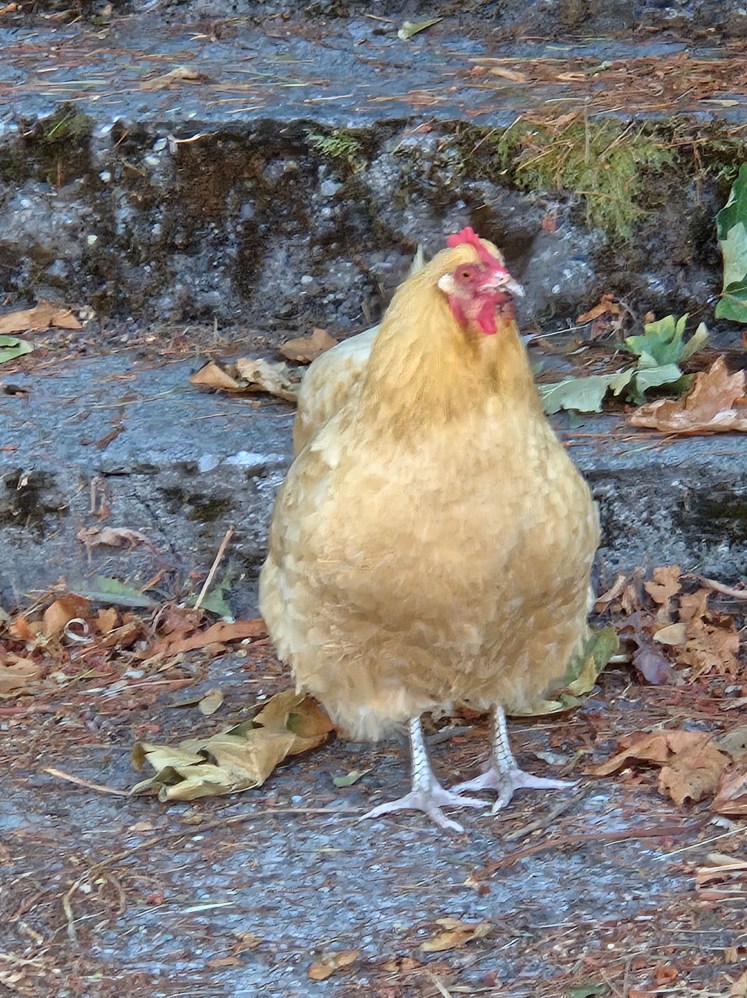
(Ed note–Instead of escalating the poetry bombs, the two sides agreed to meet in my office for peace talks–LA–oh, the image has nothing to do with anything; just one hell of a big Chicken I met on the street)
Keith Richards has a face that can hold a three day rain. My brain was every inch as craggy due to a conspicuous hangover. Fortunately, a judicious amount of soft narcotics and energy drinks not only take off the edge, they can make things rosy…
I was typing the above passage when one of the four billigits intruded on my muse. They were in my office for peace talks with Daisy, who had yet to show.
“Are you about through?” he asked, all shitty, snippy, snitty and snotty-like. Dunno which one he was–they all look alike and the boys stopped wearing their name-tags long ago.
I looked away from my screen and glowered at him. I was not feeling rosy enough to prevent me from suggesting he attempt a physically impossible task when, ten minutes late, Daisy Kloverleaf finally trotted into my office. I knew she had been around for ages, but it is a necessary part of her personality to make others wait.
“You’re late, Moving Hoof,” one of the other billigits said. Also shitty, snippy, snitty and snotty-like.
“I got as many hoofs as you four have a-holes,” said Daisy, making her feelings astonishingly clear. Something in her voice told me she was in her “Dorothy Dickinson” personality. Daisy has many mental faces. Lucky for her that one is a psychiatrist, so she is able to treat herself. Anyway, Dorothy Dickinson is a combination of Dorothy Parker and Emily D. I could go on about a symbiotic synthesis of cynical, wisecracking urban verse and keen natural observations, but smart-ass poetess works just as well.
“Now, now,” I said. “Let’s not ruin the goodwill I feel ready to spring from this meeting.” I actually managed to say it without vomiting.
“Goodwill?” said a billigit. “Daisy just threatened to sodomize us with her hooves.”
“Hmmm, interesting delusion,” I said. “Which one are you?”
“Flounder,” he sneered, like a thirteen-year-old having a bad day.
“Better turn that attitude frown upside down Master Flounder or I’ll let Daisy give you that colonoscopy.”
Things were off to a bad start. But since this was meant to only be a short little production I asked the sides what would make them happy. After listening in glowering silence to violent fantasies, the parties finally suggested something they’re going to have to live with.
“I will never stop usingly using adverbs,” said Daisy.
“We will never stop complaining about it,” said the second billigit from the left.
“Sounds goodly good to me,” I said. I considered clapping the table with the gold gilt gavel on my desk. It was presented to my Great to the fourth grandfather Judge Jasper P. Montague, but that would wake him and he does not go well with hangovers.
Daisy trotted out of the room beaming the smile of triumph.
The billigits were stunned. Their little faces were quite angry.
“Daisy out ranks you guys,” I said. “Anyway, she did not injure or debase you, Daisy was just being her little bad Daisy self. Shit rollingly rolls downhill, boys. Deal with it.”
They flew out of my office quite shittilly, snippilly, snittilly and snottilly.
I sighed, “Leadership is a lonely hangover,” and fetched a jar of the blue pills.
(Ed note–Dame Daisy is well known for her little “beefs” with members of the realm. These poetic dust ups, even with her nemesis the Lambs, are usually over fairly quickly. They mostly stem from opinions about the Moving Hoof’s beloved adverbs; hence the missive of the day. Her use of small case letters is indeed sarcastic.–LA)
by dame daisy kloverleaf
i
the billigits are everywhere
flying phoney little squares
too wholesome too cute sez I this moving hoof
too Osmondy with their big grinning tooths
ii
dear billigits where have we errly erred
we were once as close as under and wear
but time its sad selfly self hath decreed
that you be pithy and I adverby
iii
oh what vilely vile little scorners
who skimp on fairness and so close borders
i seethly seeth over their obloquy
the finks have for we the adverbally
iv
your kind knows oh so little compassion
we see you as pains in the assassin
the hemingway song of your boozely wit
speaks only of dying by killing shit
(Second Ed note–To date the billies have yet to reply; but I’m sure one is coming–LA)
This week I examine the dipsomaniacal phantom known as the Tippleganger (aka, “Tips” for stumbling tongues). Until a dubious Feline named Rebecca Nurse “accidentally” toppled my gold gilt gavel on my pate from a luggage compartment in a train, which resulted in my infinite transformation, I’d never experienced ill health in my ninety-two years. I attribute that to my round the clock consumption of applejack (for medicinal purposes, mind you), two quarts a day from infancy on. I was born in 1810 (the last of twenty seven–the only to make adulthood), and the water in my home village of Hanged Crone contained so many amoebas that they were visible. My mother understood that applejack neither “moved” nor immediately killed you upon consumption. Therefore the Miracle of Me occurred, perhaps twenty-six instances later than it could have. (We did not know about microbiology, so, the elders–also jack imbibers–figured, naturally, that the moving slime was due to witchery and hanged the unpopular segment of the population.)
Versatur Circa Quid!
Tipplegangers specialize in entering the alcohol weakened minds of the flagrantly fatuous for the purpose of the creation of Big Ideas that lead to “interesting” actions, acts whose attractions vanish upon completion. Tipplegangers prize what they call a heeding. The more heedings a Tip can accumulate the higher in esteem he is amongst his own kind. And yes Virginia, that is sexist language!
Versatur Circa Quid!
Tipplegangers are usually pleased by their results, but really, where is the art equal to that of a phantom such as, say, a Quillemender? What degree of difficulty is accomplished when you convince a backwoods oaf, three days into “corn squeezins,” to strip naked and run inside a church on Sunday morn’ and shout “I’m here for the gang bang, Mister Jesus”? Nae, my underlings, that is poorman’s haunting and not up to the Quillish standard.
Versatur Circa Quid!
“The mayor has announced that Saturday will be the first annual peasant shoot!”
There, my subordinates is subtle Quillemending; only the deletion of an H was needed to cause all kinds of turmoil. In my learned opinion (aka, factual) there is little subtlety in convincing a beer soaked dolt that singing “Endless Love” at three A.M. in the yard of the girl who placed a restraining order* on him earlier in the day is an excellent idea. He actually believed that life was an 80’s movie. And although I keep up on modern times, I plainly understand that people are just as idiotic now as they were then. Regardless, thanks to the dullard’s low tolerance for fermentation, that grave was already dug, the Tip simply rolled the corpse into it and claimed a heeding.
(*Whilst I sat on the bench, the only “restraining orders” involved stocks, rope and chains.)
Versatur Circa Quid!
In summary, the next time you wake and immediately regret posting items such as wondering how Siamese Twins choose which one cleans their shared anus after defecation on your company’s workboard overnight, or similar gems likely to end your employment, rest assured you have heeded a Tippleganger. If a perfectly clean, soberly written, but poorly proofed missive is emended to read equally offensive, you have been blessed by the touch of the Quillemender. Perhaps the difference will not impress the HR department, but you will know.
(Image is of PDQ Peety, preparing for the fall the same way he meets every season–blasted)
Happy Labor Day to the USA (my first since retirement)
As always we in the Springs aim to fill every day of the month with poetry, stories, art and the weekly Sunday column by our beloved co-Editor The Drifter (and the odd imitations of such contributed by The Saragun Gazette). This week is full, but we have plenty of room to share things written by others who have contributed previously or who are new.
At first it was a week offered, but we can also do single days as well. And as autumn draws nearer with its omnipresent scent of pumpkin spice, as Christmas creeps into retail establishments the same way gold is edging maple leaves (but greeted by different degrees of patience and pleasure), the Springs is planning to become just as inescapable as death. So with that cheery thought in mind, welcome to September, one and all.
“Galileo looked into the night / and learned the truth was an old lie /
And he sighed, knowing his fate: / If I write that again Someone will
tell the Vatican” – Irene Leila Allison
“The most beautiful thing we can experience is the mysterious. It is
the source of all true art and science.” – Albert Einstein
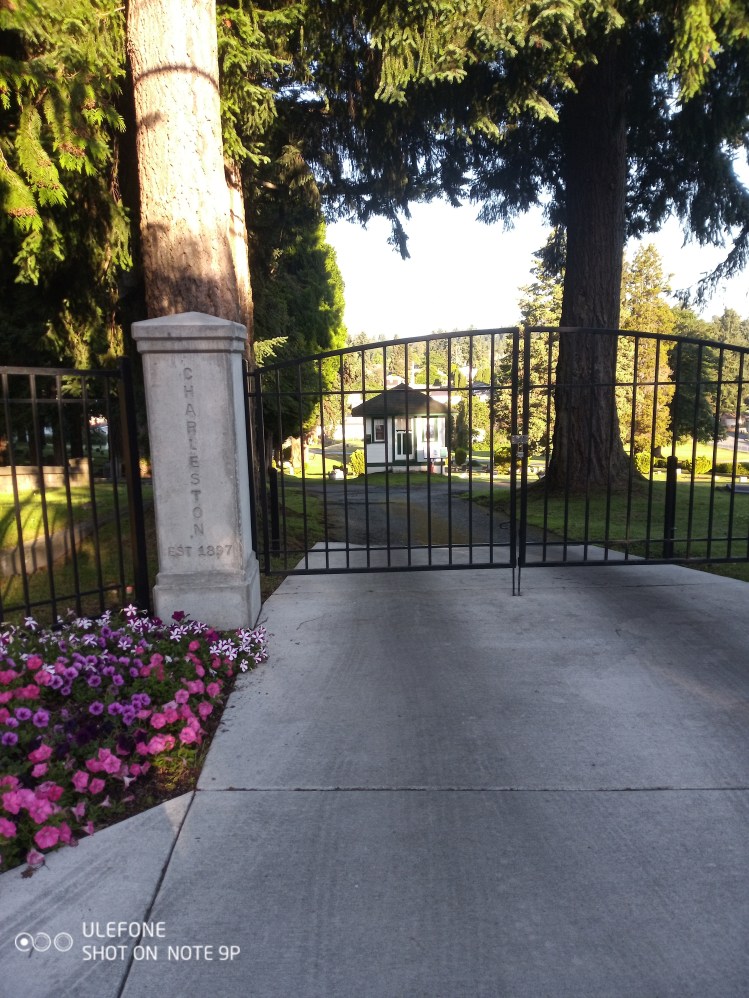
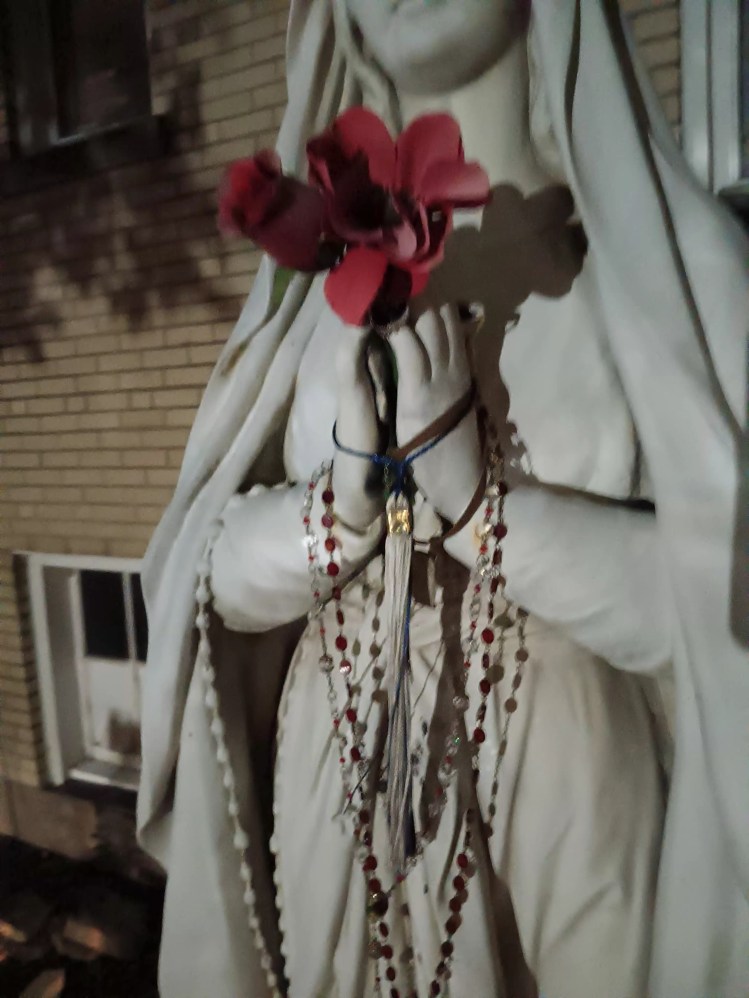
(Wonderful images provided by The Drifter)
INTRO NOTE, or Here We Go Again:
From The Drifter: The idea for this essay came as a flash of inspiration like a lightbulb going on in a tired brain, while driving around (drifting) on the West Side of Chicago during a dreary, weary day after reading Leila Allison’s enlivening poem “Tell the Pope to Buy a Telescope,” available on Saragun Springs; first date of publication Tuesday, August 26, 2025.
I.e. it was a weary, dreary day until reading the poem then being inspired by the poem to write this essay about it.
The Drifter suddenly pulled over near a vacant lot on the West Side, nodded to the old fellows smoking their bud around a trash can watering hole under a tree, then committed most of this essay to paper via a short-hand note-taking method in a language invented by none other than himself, readable by only himself, with colored pens on repurposed paper like old bills and advertising circulars.
It was like Leonardo da Vinci furiously working at his desks (he had more than one) in the middle of the night, long hair crazy-wild and fingernails long, dirty, and broken like Bob Dylan’s from digging up corpses for dissection and anatomical drawings the night before.
All that remained to do was draw it all together and translate it, somehow, into fairly readable standard English prose.
The results can be perused below; now or later or much later.
One of the first questions to ask when reading a poem (or anything) is, “What did the writer need to know in order to write this?”
Harold Bloom said that the main purpose for reading fine (and great, which is a cut above fine) imaginative literature was and is in order to augment one’s own consciousness.
Another word for “consciousness” here is PERSONALITY.
Another word/s for “augment” here is make it better.
And the answer to the question, “What did the writer need to know in order to write this?” these days is, all too often, “Nothing;” or, “Not much.”
Ralph Waldo Emerson, author of “The Shot Heard ’Round the World,” and whom Bloom called the Mind of America because of Waldo’s influence, both positive and negative, on all other subsequent American thinkers, whether they know it or not, said that a poem was “a meter-making argument.”
What Emerson meant by this (or one thing anyway) is that the “argument,” or reason-for-being, of a poem is what elevates its language, what calls for the poem to be written as a poem instead of in prose.
The “argument” here is NOT polemical, political, a run-of-the-mill opinion, or a straight-up “idea” like how to conquer the moon or invent a better way of doing something practical.
Poetry’s impracticability is another one of its essential features. If it was only about doing things it wouldn’t be poetry, or not poetry (which is thinking) at its highest levels.
Philip Larkin called the modern short poem, which is the most common form of poem now, “a single emotional spear-point.”
An emotional spear-point has to have a deep reason for being, or it can’t be itself.
PART TWO
Here are just a few of the things Irene Leila Allison needed to know in order to write her poem “Tell the Pope to Buy a Telescope,” according to this writer (The Drifter, aka Dale Williams Barrigar, MFA, PhD).
One: What it was like to be none other than Galileo.
Two: What the power dynamics were like in society during Galileo’s time. (He was born the same year as Shakespeare and lived 26 years longer than The Bard, to the age of 77, which would be more akin to 97 today.)
Three: What it is like to challenge authority with the pen (or the keyboard) in any age. (For this to happen, you need to challenge it with your mind and your life first.)
Four: What the power dynamics are like in society in any age.
Five: The subversive nature of true creativity (or creativity at its deepest levels) in any age, including Galileo’s, and our own.
Six: The price to be paid for being subversive in any age, whether it be in writing or in any mode, like any form of resistance, which is available and morally required (in different forms, depending on the person) of everybody. (Jesus himself was nothing if not a rebellious spirit, at least when it came to the goings-on in this earthly realm.)
This list could go on but the Drifter will stop with a round half dozen in order to give the reader time to think about this.
…
…
The seventh thing (7 = heaven) Leila Allison needed to know in order to write this poem was how to fit all of the above into the space of just over one hundred words.
Return to the half dozen items listed above, and then ponder knowing all that, and then ponder the magic of powerfully, clearly, and beautifully expressing all of the above in a third of the words Lincoln used for his Gettysburg Address.
Not a single syllable is wasted in Ms. Allison’s poem, much less a single word.
Words are reinvented in this poem, used so they can be understood by the reader but also torn out of their “normal” context and made new again.
Here is just one example.
Describing Galileo making his amazing discoveries that changed the entire human world while under house arrest, Ms. Allison says, “the spheres (and spears) remained.”
In five words, she’s boiled down one of the most profound humans and human projects of all time into a space that is tiny in terms of its actual size, and as gigantic as the entire universe itself in terms of its implications.
This is what true poetry is, saying so much in five words or less that entire pages, or even books, of prose could be written upon it and still not capture its essence.
And doing it all while being beautiful.
At this point, I urge any and all readers of this to seek out Ms. Allison’s poem “Tell the Pope to Buy a Telescope.”
The title sounds like it could have been come up with by James Thurber, Lewis Carroll, or Dr. Seuss (he was one of the most important American poets of all time, which is neither a joke nor an exaggeration), a sign of the light hands of the poet.
Because children, too, should be told about people like Galileo; and the intelligent child in all of us is what keeps us alive.
And after truly studying, and absorbing, this poem, you will know more about Galileo, the world, and the universe than, literally, entire book-length works about him or his times can tell you.












 Saragun Springs