
“Excuse me
Excuse me
Excuse me!!!”
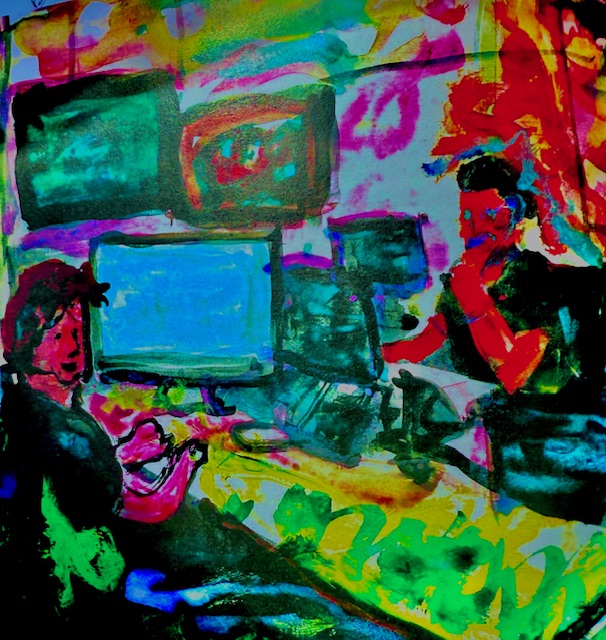
Gavin Tolkin was standing on a chair now as he tried to get the room’s attention.
“Hey Everybody – please shut the fuck up!”
A display of dominance was required from the show’s new show runner. The network was suddenly in the business of creating an episodic BTS docuseries on the NY newsroom. The brainchild of some bean counter at the big building on Madison Avenue— and Tolkin’s name was on the memo as the new sr executive producer of the whole magilla gorilla.
Tolkin guessed that some schmuck in corporate must have finally stumbled across an episode of TMZ and hatched a brilliant new idea on how to make money without spending money.
The crowd of employees started to stir in the newsroom around the tables of the writers pit. Tolkin needed a clear surface to lay out the new bible. He brandished it like Moses hoisting the 10 commandments and yelled again at the top of his lungs.
“My most esteemed and respected colleagues I need your kind support right now, please grab all your shit off the tables and find another place for it — we need this space to work on the new show—now!!!”
Tolkin felt the power the resentment and jealousy swirl around him as co-workers filed out of the room silently—aside from some random grumbling— with their folders, files and coffee mugs.
His number two, Headly Montague admired his boss’s balls or what do the Jews call it?
Chutzpah.
Tolkin’s name was on the memo and the show bible as the new show’s sr executive boss— so he better fuckin bring it like that every day or the whole operation would be untenable, unmanageable and everybody in the newsroom would probably lose their fucking jobs.
“How soon do those corporate idiots want this supposed television show on the air?“
“45 days big T”
“We’ll just see about that.”
“Hey Chief, ” a young intern named Rosamela interrupted, “someone to see you…The Fox?”
The Fox was a rising star at the network.
A young hitler-youth wannabe in his early 30’s who was quickly climbing the ranks to the top of the mushroom.
Always staring or smiling— the Fox was always assessing weaknesses in the smaller fish at the bureau and then whispering to a mystery suit who was always next to him. He was a prep school bully and if you went up against him you would lose and be fired. That was his power.
“Gavin”
“Fred”
“Just down here on directives from corporate to make sure the new project gets off the ground with the least amount of fuckups.”
“Just getting settled —Day 1 – we should be good in plenty of time to make the deadline.”
“That’s reassuring Gavin —because I was the one who chose your name out of a hat to run this new “concept.” So try not to screw the pooch on this one —like you did with that airline show.
“Thanks, Fred”
“Don’t thank me yet.”
“Right.”
-Break-
“T… all assembled in the main break room”
“Great. Head on in Headly and I’ll be right there”
(Urinal Flush the hands being washed momentarily in sink)
“Gavin?”
(Plop ker-plop, kerplop)
“Fred?
“Yeah, listen I’m thinking that the B-block needs to be shortened to include enough time
(Plop ker-plop, kerplop) …for a station ID break, mmkay?”
“uh… yeah, sure. No problem will make that change to the rundown as soon as I get to the break-room.”
“Great.” (Plop ker-plop, kerplop) I’ll look forward to getting the revised rundown later today.”
“I’m on it.” See you later (sound of bathroom door opening)
Tolkin had to admire the total un-self consciousness of the junior executive who couldn’t give a shit about taking a shit while they talked business in the men’s room. It was Fred’s little way of letting Gavin know where he stood in the network’s pecking order and that shit always rolls down hill.
“Alright, Shelley please take a note that we are taking the anchor wrap out of the end of the B Block and now bumping out with a beauty shot of the bridge with a music sting . That should shorten the B block”
“What’s the matter Bonehead? Are you getting tired of my end of segment ad-libs and timeless witticisms.”
“Of course not Chick. Your pre-commercial teases and patter are solid gold, Big Daddy… but the network needs a little more time to make the donuts.”
“That’s what this cockamamie show is gonna be Bonehead— a giant donut— if you keep cutting into my spontaneous moments of comic genius.”
(Appreciative laughter throughout the break-room)
“Duly noted, Chick… now listen everybody, the only way this show is going to have any chance to work is if we have our shit sewn tight. We need to each do our part to stay on top of all the small details and deadlines. We can’t have misspelled fonts, teleprompter issues, stage managers who are looking at their newspaper instead of cueing the guests on time. We need to operate like a team… like a well oiled-machine. Like a “REAL” TV show. Remember the cameras and audience will be watching everything we do in real time…Any questions?”
“Yeah, Bonehead. Who died and made you the king… I thought your main credentials were fetching me my pumpkin spice latte?”
“Still is, Chick, two sugars, right?”
(Laughter) (Door opens)
“How’s it going— everybody on page with the new format?”
“Hey Fred. All good. Chick was just leading us in the morning prayer before we go through the work bible page by page.”
“Great. I’ll let you all get at it. I’ve got a big budget meeting to attend to. See most of you folks later I’m sure. (Exits room)
“All right let’s start at page one. New flying logo, new theme song, with highlight montage dissolving into Chick at central anchor desk with a box on his left— no, I mean “screen left” — with new show title with a live crawl on bottom of the screen with clock and the bug…Go Chick.
“Good morning everybody on this beautiful Monday in New York City as we welcome you to a new behind the scenes look into the goings on at a real New York television station … kind of like TMZ … but not nearly as fun or cool”
(Laughter)
“No ad-libs just yet please Chick—let’s just try to get through the first read through”
“ jawohl Herr Bonehead or should we call you Pope Bonehead the First? Or better yet Senior Executive Coffee Boy…
(Laughter)
—Break—
“Hey Henry—what’s shaking at the top of the mushroom”
“Hey Gavin— nothing good, I’m afraid”
“How’dya mean?”
“Just got out of the annual budget meeting —what a bloodbath.”
“ They can’t disband the news unit —can they? That’s the network’s bread and butter isn’t it?“
“ All bets are off since the merger, belt tightening across the board was the operative word of the day —every unit is fair game as far as I can tell.”
“How bad is it gonna be?”
“ It’s not going to be pretty.”
“ or cinematic?”
“Line from the Sopranos?”
“Yep.”
“Apropos”
“How so?”
“ Someone or some unit is gonna get whacked every week from now on—til the end of the fiscal year.”
“Not good.”
“Oh hey— how’s the new TMZ inspired show coming along?”
“Oh just peachy — a cross between a pig fuck and a barrel of monkeys.”
“ Well put — at least they picked the right guy to put in charge.”
“Thanks, Henry”
“You bet kid. Keep your head up.”
—Break—
“Hey Chick —how’s it going?”
“Bonehead! Can’t you see I’m busy conversing with our most beautiful young fashion intern, Rondela er um Romela!!”
(Intern giggles and walks away)
“ Sorry, Chick just going for a coffee run wanted to know if you cared to join me?”
“What? You don’t know my standard order by now?”
“It’s not that — thought we could do a walk and talk — just wondering if you heard anything more about today’s bloody budget meeting?”
“Not a word — what? you worried we’re all getting shit-canned? That would be a blessing to get me off this stupid fucking TMZ ripoff show —Listen up Bonehead —
When you’re a comic genius —one show or gig gets cancelled —and lickety-split my LA agent Morty Seidelbaum is on the phone with five more TV offers already lined up for me to choose from — at least he used to do that —a couple years ago— haven’t heard much from him recently —for a couple years now. Don’t sweat it Bonehead if we all get whacked I’ll hire you to walk my pet shitzu, Marmalade—
“Thanks, Chick”
“ stop worrying and wipe that stupid look off your face… oh, that’s right … you can’t.”
“Hardy har har…see you at the bar in a little bit.”
“Cheers…you stupid Bonehead …now you got ME worrying!”
“Chick — YOU are the golden goose —they would never ever get rid of YOU— you also have a huge fan base — in Japan”
“ Domo arigato Mr. Roboto— too bad you fucked up that Japanese Airline show Bonehead —
“Yeah don’t remind me — and it wasn’t my fault if you remember.
“Ah-so… that’s what they called you after the terrible reviews came in— Mr. Ah-so —shit for brains producer—very bad!”
The two old friends/co-workers smiled, nodded and bowed to each other —and then headed in opposite directions.
##
Adam Kluger (Art by Dreck)