Menopausal Male Bombshell by Michael Bloor

Alan had won second prize in a writers’ magazine poetry competition for his ‘Ballad of the Menopausal Male.’ The postman had just delivered the prize, a copy of The Chambers Thesaurus (5th edition).

As Alan hefted the thesaurus in his hand, he recalled that, in what used to be termed The Dark Ages, poets were feted and richly cosseted in the courts of Kings and Great Lords. When Gunnlaug the Worm-Tongue* (‘worm’ as in snake), the great Icelandic skald (= poet) was presented to the English king, Ethelred the Unready, Gunnlaug chanted four lines in praise of the king and was rewarded with a gold-thread-embroided, fur-lined cloak and was invited to spend the entire winter at the royal court.

Continue reading

A One Act Play: Culture Clash by Gary Beck

(The image is of Mr. Beck)

(Editor’s note–Gary is the first playwright to submit to us and his high caliber work is certainly a welcome change of pace. We are open to all arts that can be transferred into this slightly less than perfect yet still appreciated forum. If any errors are made–or, actually, when such occurs, please do not hesitate to let us know. Really it is all about the work, but the little vexations, those irksome thisses and thats will always subjected to correction whenever possible–Leila)

Scene: The outdoor dining area of an East Village, New York City restaurant.

Enter three men in their late 20’s. They sit at a table.

Characters: Greg – White,

Reggie – Black

Edgardo – Hispanic

Jennifer – White

Nina – Hispanic

Greg: I don’t mind losing. I just can’t stand the way they knock me around.

Edgardo: Aw. Stop complaining, Greg. If you tried a little harder, we wouldn’t

get beat so bad.

Reggie: That’s easy for you to say. You were an athlete in college. Greg and I 

are techno-wizards. We shouldn’t even be playing basketball.

Greg: That’s for sure. I don’t know why we let you talk us into this.

Edgardo: You know why.  It gets us out of the IT department twice a week, with

a nice dinner paid for by the company, and a week’s paid

vacation at the end of the tournament.

Greg: Alright. We know that.  But why basketball? You should have 

picked a company sports league where at least we’d have a chance. We

 go home with aches and bruises every time.

Edgardo: Mira. They don’t have badminton or lawn croquet, my feeble friends.

All you gotta do is learn to get out of their way when they have the ball.

When you have the ball, just run past them and shoot as quick as you can.

Reggie: You better tell it to them. That asshole from legal kept hitting me with

his elbow whenever he was near me. Even when the play was over. I 

think I have a cracked rib.

Edgardo: Don’t be such a wuss, Reggie.

Greg: Is he a wuss because he doesn’t like being hurt?

Edgardo: They hurt me too.

Reggie: It doesn’t seem to bother you as much as it does us.

Edgardo: It hurts me. I just don’t make as much of a fuss about it.

Greg: Why can’t we have a video game league?

Reggie: Yeah. We could really kick ass.

Edgardo: That’s exactly why nobody else wants it. They know they wouldn’t

stand a chance.

Reggie: We don’t have a chance in basketball. Is that fair?

Edgardo: We entered for a reason. You seem to be forgetting that. Listen. I’m a

reasonable guy. You know what’s at stake. If you want to stop it’s okay with me. (Reggie and Greg reluctantly shake their heads no.)

Greg: We’ll finish, Edgardo. We’re just tired of all their name-calling. That fat,

hairy slob of a lawyer kept elbowing me and calling me a faggot. I keep

trying to trip him, but he always avoids it, then elbows me hard.

Reggie: He did that to me too, except he called me a black faggot. He doesn’t wear

a shirt and got his sweat all over me. We shouldn’t have to take that shit.

Edgardo: Hey, guys. There are only two games left. Let’s be cool and get through

them. If you don’t want to do it next year, we won’t.

Greg: I don’t know if I can take two more games.

Edgardo: Don’t be a girlie-man, Greg. We don’t have to play against the Neanderthal

lawyer again. The last two games are with accounting and sales. The 

accountants won’t be too physical. You guys can handle them.

Greg: Maybe. But those salesmen are animals. They must smoke crack, or take

something that makes them so aggressive.

Edgardo: Enough for tonight. Let’s relax and change the subject.

Greg: Hey.  Look at those two girls coming this way.

Reggie: They’re great looking chicks.

Edgardo: Don’t get your hopes up. They’re probably N.Y.U. dykes.

Greg: You’re crazy.  They’re beautiful.

Edgardo: That doesn’t mean anything these days. They could be lipstick lezzies.

Greg: What’s that?

Edgardo: That’s when both girls are feminine.

Reggie: What are N.Y.U. dykes?

Edgardo: The school has a reputation because so many lesbians go there lately.

Reggie: How do you know all that?

Edgardo: If you take your head out of your Blackberry once in a while you’d know

what was going on…. I’m going to talk to them. (Enter Jennifer and Nina.)

Hey, girls. What’s happening? (They ignore him and start to walk by. He

leans over and stops them.) What’s the matter? Are you too good to talk to us?

Jennifer: We’re not interested.

Edgardo: We just want to talk. Don’t you like men?

Nina: As a matter of fact, we don’t. Now fuck off.

Edgardo: No need to cop an attitude. I was just being friendly.

Nina: Save it for your asshole buddies.

Edgardo: You got some mouth on you. Didn’t your momma ever teach you any

manners?

Nina: Not as far as pigs are concerned.

Edgardo: There’s no need to be so insulting.

Jennifer: Then next time don’t stop us, asshole.

Edgardo: You’re beginning to piss me off.

Reggie: Take it easy, Edgardo. Let them go.

Nina: That’s right, Edgardo. Listen to your sissy friend.

Reggie: Why are you insulting me? I didn’t say anything to you. I just tried to 

cool things.

Nina: You’re with him, aren’t you? Pigs always hang together.

Greg: (To Nina.) Don’t you think you’re over reacting? We’re not looking for

trouble. We just wanted to talk to a couple of good looking girls.

Jennifer: Well we are a couple, but we don’t like low-life male come-ons.

Reggie: How are we supposed to know? It’s not as if you’re wearing a sign that

says women only.

Jennifer: Then you should keep your mouth where you keep your brains, right 

between your legs.

Edgardo: It’s a waste of time trying to be polite to them. Keep moving, bitches.

Nina: Who the fuck do you think you’re talking to?

Edgardo: A couple of dumb dykes. The same way they talked to us.

Jennifer: Forget it, Nina. It’s not worth hassling with them. Let’s go.

Nina: And just take their shit?

Edgardo: (To Nina) Listen to your wife.

Nina: (To Jennifer) I should kick his ass. (Edgardo laughs)

Reggie: (To Nina.) Your friend is right. Let’s forget it.

Nina: The dominant black man isn’t so tough now.

Greg: He’s trying to apologize before things get out of hand.

Nina: (Pointing to Edgardo.) Let him apologize.

Edgardo: For what? Trying to talk to a girl who turned out to be a guy in drag?

Nina: One more insult and I’ll punch you in the mouth.

Edgardo: Beat it, butch, before you get hurt.

Jennifer: (She tries to lead Nina away.) Come on, Nina. We don’t need this.

Nina: The fuck we don’t. (She throws a punch at Edgardo, who ducks,

then mocks her.)

Edgardo: Is that all you got, little boy? Try again.

Jennifer: (She grabs Nina’s arm, who shrugs her off.) Don’t, Nina. Let’s go. (Nina moves closer to Edgardo and swings again. This time he blocks the punch, spins her around and boots her in the ass.)

Edgardo: Now take off. Next time I won’t be such a gentleman. (Jennifer tries to pull her away, but Nina yanks free and lunges toward Edgardo. She picks up a butter knife from the table and tries to stab him. He moves aside and she hits Reggie, who yells loudly.)

Reggie: Ow! My arm! She stabbed me. Yow. That hurts.

Jennifer: Let’s get out of here! (The girls run off. Reggie is moaning and holding

his arm.)

Edgardo: Should I chase them?

Greg: What for? To make a citizen’s arrest for assault?  Let’s help Reggie.  (Edgardo and Greg inspect the injury.)

Edgardo: It didn’t even break the skin. She was right to call you a sissy.

Reggie: Well it hurts. And I didn’t even do anything. It’s all your fault.

Edgardo: All I did was say hello How was I to know they’d be vicious, fighting

dykes?

Greg: Maybe if you didn’t call them offensive names nothing would have  

happened.

Edgardo: That nasty little bitch started it.

Reggie: And I got hurt…. I don’t think I have to go to the emergency room, but

I’ll probably miss the next game.

Edgardo: Don’t use this as an excuse. You’ll be alright by then.

Reggie: Maybe. But promise me no more confrontations when we go out. This

could have become a nightmare.

Greg: Yeah. What if she really cut Reggie?

Edgardo: I get it. Don’t worry. I’ll be cool.

Reggie: I hope so. We were lucky today. Another time things could spin out of control and someone might get killed. It’s happening all over these days.

Greg: Yeah. People are getting shot for just looking at someone. And it’s not as 

if they’re giving them the evil eye, or something. It’s just sick violence.

Edgardo: Alright. I get the message. That’s enough. Let’s call it a day. (Exit.)

Gary Beck
Christmas To-Do List, Nick Botkin Edition by Yashar Seyedbagheri

(Editor note–We like to welcome Yash to the Springs. He holds the record for most stories published in one year at what I like to think of as , if not sister, but our cousin publication of Literally Stories UK. One read will tell you why he is so successful–Leila)

The to-do list stares at me, letters running across the page, like railroad tracks of responsibility.

Pick up sisters’ favorite wines. Nan likes Sauvignon Blanc. Colette worships Merlot; Nan is not drinking any fucking Merlot (sorry, Paul Giamatti, I know I plagiarized Sideways, but original words are stuck in my throat).

Continue reading

The Rime of the Globalised Mariner. In Six Parts (with bonus tracks from a chorus of Greek shippers) by Michael Bloor

(Today we officially open the site, which has been open for ages, with something quite different and particularly well done by Michael Bloor)

First Published in Sociology, 47(1): 30-50, 2013 doi: 10.1177/00380385112448568

PART I

It is a global Mariner,

And he stoppeth one of three.

‘By thy long grey beard and glittering eye,

Now wherefore stopp’st thou me?

‘The centre’s doors are opened wide,

And Bourdieu got it right:

Consumption lends distinction.

So get you out my sight.’

He holds him with his glittering eye –

No Big Issue1 sale is sought,

But fifty yards from B&Q

The would-be Consumer’s caught.

So spake the doleful mariner,

Transfixing with his e’e,

In fluent, graphic English –

The language of the sea.

‘I had no wish to work on ships –

Filipinos know it’s hard –

Mouths were many, jobs were scarce,

From birth my life was marr’d.

‘From green island homes we travel,

As mariner, nurse, or maid,

And remit3 to our loved ones

The pittance we get paid.

‘Father scraped up money

For training college fees –

A scam of the local senator,

Whose throat I’d gladly seize.

‘The college had no equipment,

Just endless, pointless drill,

No qualifications either –

The news made my father ill.

‘Course passes gained no certificates,

Without some time at sea.

There was no ship to serve on,

But the senator had his fee.

‘Father paid a crewing agent:

Yet another fee required,

But at least I’d get a berth,

And that’s what we desired.

‘The agent sent me to train then

At a dismal-looking place

More fees and little learned,

Sad repetition of my case.

‘A lifeboat stood on davits,

By a creek filled-up with mud.

“For audit purposes only”,

That pristine lifeboat stood.

‘There’s so many schools for training –

Why’d the agent send me there?

The training was quite useless –

Why didn’t that agent care?

‘It seemed he got a “rebate”

(kickback to you and me)

For every trainee sent there,

A percentage of their fee.

‘They issued my certificates,

But their paper had a price:

My father’s hard-earned money,

Stolen once, then twice.

‘Ever since it’s been the same:

When I come home from sea,

The agent wants another course,

And I must pay the fee’.

[Enter Chorus of Greek Shippers]

‘O woe to us, and to our ships,

But what are we to do?

The wages they are paying now,

Won’t draw a young Greek crew.

‘So we take these global mariners,

Who’re really up for it,

But they can’t begin to work a ship:

Their training’s frankly s**t!

‘Someone, somewhere, should sort it out,

We’ve really had enough:

Inspect and close the colleges,

It’s time for getting tough!’

A globalised Mariner meeteth three gallants outside a shopping centre and detaineth one.

The Consumer protesteth against detention outside the shopping mall.

The Consumer is spell-bound by the mariner and constrained to hear his tale.

Proficiency in English is a requirement of a seafaring career.

The Mariner telleth of early hardships and how he and his parents were cheated by the maritime colleges and the crewing agents.

Filipino maritime training institutions are often controlled by persons with powerful political connections.

The academic training often follows a military model and is of poor quality. And it does not qualify cadets for certificates of seafarer competency without additional practical experience – ‘sea time’. Most colleges fail to arrange ‘sea time’ for their cadets.

Many ship operators out-source crew recruitment and employment to specialist crewing agencies with offices in the major labour supply countries. Cadets graduating from maritime colleges must pass a basic safety training course before they can go to sea. The courses are usually conducted at specialist training institutions with requisite equipment such as lifeboats. State regulatory agencies inspect the training institutions to ensure the requisite equipment is present, but not that it is used.

Corrupt crewing agents distort the seafarer training market

Specialist short courses must be taken to allow employment in particular trades, such as tankers. Usually, the seafarer must pay the course fee.

Ship operators moan that international standards of seafarer training are not being properly enforced.

PART II

Consumer groaned to Mariner:

‘So you each believe the same!

But if all think your training’s s**t

Then, truly, who’s to blame?’

‘Our union said, there is a law –

A real law, no invention –

That lays down training standards,

An international convention.

‘Government should enforce it,

End the bribing and the feigning,

Close-down the useless paper-mills

And give us decent training’.

‘Yes, yes’, the Chorus chorused,

‘Our ships need well-trained crew.’

‘So what went wrong?’ Consumer asked,

But the Mariner hardly knew.

‘There are no simple answers,’

Voice grated, knife on rock,

‘The true path’s no open highway,

Good governance no wind-up clock.’

A gaunt figure stepped among them:

He gave each a piercing look.

His boots were worn, his cloak was stained,

And he bore a calf-bound book.

‘Who art thou?’ they cried in wonder,

‘And what thing’s your burden there?’

‘I’m the Inspector,’ spake the stranger,

‘And the Law’s my burden fair.’

The Chorus shrank and muttered,

The Mariner downed his e’e.

‘I’ve heard tell of you,’ he whispered,

‘As have all who sail the sea.

‘You come aboard, unheralded,

You seek out the rusting hulks:

You cow the cruel masters,

Ships’ agents get the sulks.’

Consumer viewed Inspector,

Eyes lit with wild surmise:

‘It’s up to you to punish,

Right wrongs, and nail their lies?’

‘In truth, that is my duty –

The goal for all my kind –

But the journey is a long one,

And the road’s not paved, nor signed.

‘Those who inspect the colleges

In each poor country of the Earth:

They’re government employees

And are not paid their worth.

‘The owner is a man of power,

The inspector – he is not,

The one dines in his castle,

The other in his cot.

‘The inspector has a check-list,

To work through, line by line.

If a lifeboat’s at the college,

Then it gets a tick – that’s fine.

‘We know it can’t be launched:

It’s to be ticked, naught more.

Poor men must heed the letter,

Not the substance, of the law.’

The mariner had silent stood,

Hands clenched and visage pale,

Eyeing the Inspector,

As he ground out his tale.

‘I thank you’, cried the mariner,

‘Now I know the bitter worst:

No remedy in law books –

My mates and I are cursed.’

The Greeks had been quite nervous

While yet the Inspector spoke,

But confidently dealt with

The Mariner and such-like folk:

‘Don’t blame the law, nor malice,

Nor trade that’s getting slack,

Global economic forces

Strapped these burdens to your back.

‘Colleges could train you better –

With lifeboats working too –

But higher costs would close ‘em down,

Then where’d we find a crew?’

The Inspector laughed most harshly,

And turned to face the Greeks:

‘He who looks for truth

Must beware of that he seeks.

‘Good training’s too expensive:

The poor can’t pay the fee.

You state the matter clearly,

And I cannot but agree.

‘Yet I can well remember

When companies paid the fees,

Time-Past – they paid for training,

Invested in their employees.

‘You complain of training standards,

Cackling like geese

You want action to be taken,

But you don’t pay a penny piece.

‘It seems to me, hypocrisy,

When the poor turn-out their pockets,

To criticize their training,

While adding up your profits.’

The Mariner relateth that there are international standards on seafarer training.

But these international standards rely on national enforcement.

An Inspector calls.

The Inspector concurreth with the mere lip-service maritime colleges pay to international training regulations, but believeth that the local inspectors are powerless to obtain fuller compliance.

The ship operators see poor-quality training as an economic consequence of the seafarers’ need for cheap training.

The Inspector recalleth that 40 years ago, it was commonplace for ship operators to pay for seafarer training through cadetships and apprenticeships.

Part III

The Chorus blushed and shuffled,

But still they stood their ground.

They’d got their MBAs,

They knew their case was sound:

‘You’re talking of the past,

Dim, distant days of yore,

We don’t train our seafarers –

We don’t employ ‘em any more!’

Consumer quizzed the Chorus:

‘You don’t employ your crew??’ –

‘Our labour’s all outsourced,

‘The late-modern thing to do.

‘If a shipper paid for training,

He’d have an extra cost,

He’d be under-cut by others –

His business would be lost.

‘Pay for training? Better wages??

Remember shipping’s quite anarchic:

We’d love to be more generous

But you cannot buck the market.’

The Inspector gave a mirthless smile:

‘The market’s always cited

As a sovereign power and reason

Why wrongs cannot be righted.

‘But the remedy is simple here:

The flag-State of every nation

Shall charge a levy on each ship,

Paid at each ship’s registration.

‘The levy would pay all training costs,

A burden shared without distortion.

It would pay for good inspections too –

No need for doubts or caution.’

The Mariner did slowly nod:

‘The scheme would work – I see –

My last ship flew Mongolia’s flag,

For a three-thousand-dollar fee.’

‘Mongolia?’ quizzed our Consumer,

‘That’s surely rather queer?’

‘Not really’, saith the Inspector,

‘Some think a proper flag too dear.

‘Each ship is like a piece

Of far-off, sovereign soil –

Its flag denotes allegiance,

Republican or royal.

‘The flag-State has a duty,

Be the country rich or poor,

To check each ship is ship-shape –

As laid down in the law.

‘But flags can be commodities,

And flags can be for rent,

To businessmen and lawyers,

Who’re out on profit bent.

‘When ships are policed badly,

Their seafarers should beware.

Policing ships for profit

Is a mighty strange affair.

‘Some run their business well,

Some run it as a racket,

With only one objective:

To make themselves a packet.

‘Now, compliance is expensive,

So compliance is a sham

When the flag a shipper flies

Really doesn’t give a damn.

‘A shipper heeds his costs,

A shipper looks to save,

But if he flies a cut-price flag,

Consequences can be grave.

‘Ships that fly a proper flag,

And meet their obligations,

Incur much extra cost

To comply with regulations.

‘They’re under-cut, bankrupted, bust,

When complying as they should.

There’s an iron law all must obey:

Bad ships drive out the good.’

The Chorus sighed and scuffed their feet:

‘What the Inspector says is true,

But the fault is not all ours –

Ship charterers are guilty too.

‘If they wanted well-found ships,

And skilled, contented crews,

They should have thought to ask us,

Or given us some clues.

‘Truth is: they don’t want “good,”

Or freight rates getting steep.

We skimp, they save –

Truth is: they’re wanting “cheap.”

The Inspector sighed in turn,

‘Some charterers do care,

Oil majors first and foremost,

Others – rather rare.

‘Inspectors board all tankers –

For days, they sniff around –

Ensuring chartered ships

Are those that pass as sound

‘Oil majors don’t like bad headlines

When tankers hit the rocks

And oil pollutes the beaches

Because the ships are crocks.

‘The public doesn’t like to see

Seabirds black with oil;

Alas, for all the tanker crews,

The public doesn’t care at all.

‘So the tankers get inspected

With much resource and care,

But the crews of all the rest

Make do with me…and prayer.’

The Chorus confirmeth the Mariner’s tale that crewing agencies, not ship operators, employ seafarers. Agencies then contract with operators to supply crews with the requisite qualifications.

The Inspector proposeth a training levy to be paid when each ship is registered by the flag-State. See Afterword.

Although Mongolia is 850 miles from the sea, the Mongolian People’s Revolutionary Party granted a license in 2003, to a Mr Chong Kov Sen, a Singaporean businessman, to operate the Mongolian Ship Registry. Mr Chong previously operated the Cambodia Registry under license until 2002, when the license was withdrawn following international protests at Cambodia’s failure to police its ships. In 2008, 73 ships were flying the Mongolian flag.

An OECD report states that ‘a significant percentage of total vessel operating costs could be saved by sub-standard operations’ (OECD 1996: 27).

Thomas Gresham, a sixteenth-century Chancellor of the Exchequer, found it was impossible to improve the quality of the English coinage, by simply issuing good quality coins. People hoarded the good coinage. So it was necessary to also withdraw the clipped and debased coins from circulation. Hence Gresham’s Law: ‘Bad money drives out good’.

The Oil Companies International Marine Forum (OCIMF) has set up and funded its own private inspectorate, SIRE, to ensure the seaworthiness of tankers under charter. Those tankers deemed satisfactory on inspection can expect more business and better terms from the oil majors, eager to avoid the bad publicity of marine pollution incidents.

PART IV

The Mariner then spoke up:

‘Christian, Buddhist, Hindu, Turk,

Many pray who sail the seas,

But their prayers concern their work.

‘We do not fear a foundering –

Hull pierced, stove in, or rent.

Such a thing may happen,

But it’s a very rare event.

‘Pirates may seize the ship,

And hold us on foreign soil,

But what we fear most is different:

It’s the endless, grinding toil.

‘Each and every ship we join,

Seems there’s fewer crew,

An officer gone, a rating gone,

But there’s still their jobs to do.

‘The master now must take a watch,

Though there’s paperwork aplenty.

So many crew have disappeared,

The vessel’s almost empty.

‘The master’s nodding on the bridge,

His tired eyes are red.

He’s still to call Head Office,

Before he gets to bed.

‘The mate then takes a watch,

Though it’s two days since he slept –

Problems with the cargo –

But his watch must still be kept.

‘Turnabout, the two must watch,

There is no other way,

Six hours on, six off,

Twelve hours in every day.

‘In sickness and in health,

Each watch they duly take,

Dog-tired, red-eyed, grey-faced,

Four months, four months, without a break.

‘No gentle couch our cabin:

The ship is pitching in the waves,

There’s engine noise, vibration,

Yet we sleep the sleep of babes.

‘Too soon, too soon we’re wakened,

We scarcely catch our breath.

An ignoble thing, this tiredness –

As if we slowly bleed to death.’

Increasingly, ship operators have been seeking to save crewing costs by reducing the number of watch-keeping officers. Where second officers have been dispensed with, then watches must alternate between the master and the first officer (mate), although each of them has many other duties to perform. An OECD (2001a) report instances a saving of $37,000 pa by under-manning a 20-year-old 30,000 dwt bulk carrier by two crew.

PART V

As ever when the Mariner spoke,

The Greeks did swell with pride:

‘There is no law that’s broken there,

There’s nothing for us to hide.’

‘You surely lie,’ Consumer cried,

‘I know little of the sea,

But to have a master standing watch –

That’s folly, plain to me.’

The grim inspector then did speak:

‘In truth, they break no law.

The law itself is here at fault –

Therein we find the flaw.

‘The law on Minimum Manning

Lays down for every ship

The crew that must be carried

On each and every trip.

‘What is the minimum manning?

This is what we’re taught:

It’s the smallest competent crew

To bring a stricken vessel safe to port.

‘To make that stricken vessel safe,

Huge effort they’ll expend,

Yet must they slave thus daily?

Til their contract’s at an end?’

Consumer scratched his head:

‘If some members of the crew

Exceed twelve hours each day,

Surely that’s illegal too?’

‘We falsify our working hours’,

Replied the old seadog,

‘To keep the owners happy,

Each day, we flog the log.’

‘Then change the minimum manning law –

No more idle chatter –

Require crews to be larger,

It seems a simple matter.’

The mariner sighed and shrugged.

The Inspector took-up the tale:

‘Flag-States must vote the change,

Or else the measure fails.

‘Flag-States that exist for profit,

And take the operators’ gold,

They can’t increase the crewing costs –

They’ve reputations to uphold.

‘The flag with the greatest tonnage

Flies o’er the Panama Isthmus,

When Panama votes for change,

Then turkeys’ll vote for Christmas.’

In fact the maximum number of daily hours of work for watch-keepers is specified by the IMO as 14 hours, and the maximum number of weekly hours is 91.

Falsification of working hours is so widespread in the industry that it has entered everyday slang as ‘flogging the log.’

Consumer doth not understand why the flag-States at IMO do not change the international legislation to provide adequate crewing numbers, allowing shorter hours.

Part VI

[All in chorus: …]

‘So come all you kind consumers,

Who the honey’d wine have sipped,

Take pity on the mariner,

Beware how your goods are shipped.

‘The crews are outsourced workers,

A study in dejection –

Casualised, long hours, poor training –

And the law is no protection.

‘If charterers thought the public cared

How seafarers are mistreated,

They’d pass the message down the line:

“Our consumers are quite heated.

“It’s bad for our public image,

Like seabirds and pollution,

So get your act together,

And find a true solution.

“We’ll pay your higher freight rates,

If you’ll deploy more crew.

Or we’ll contract your opposition –

See if they know what to do.”

‘So the shippers get the higher rates,

Increase the crews and cut the hours,

Strike the flag of Panama,

And so, at last, they smell of flowers.

‘One day it really just might happen,

A fairy tale come true,

It’s even very possible,

They’d employ and train the crew!’

It is suggested that public concern for seafarers’ welfare might act in the same way as public concern about marine pollution and be transmitted down the supply chain from charterers to ship operators. Operators who could ‘brand’ their vessels as well crewed could then command premium freight rates.

For an ‘Afterword’ describing in detail the political economy of the global shipping industry, issues of seafarer training, industry regulation and enforcement, please refer to the original publication in the journal ‘Sociology’.

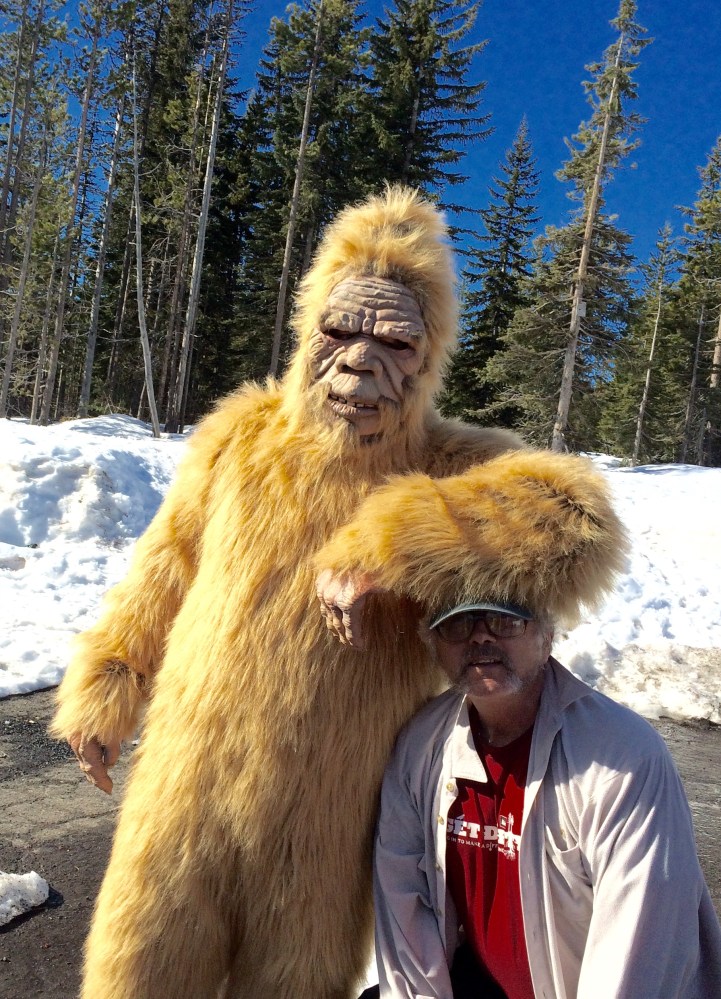
Michael Boor (he of the image)

Farewell Old Year and Happy New Year From Saragun Springs: Six Limericks by Geraint Johanthan

Ed. Note: Nothing is better to read for entertainment value than the mighty limerick. And today we close out 2025 (a somewhat quiet, dweebish year that appears happy not to have secured a place of infamy) with six limericks, in two sets of three, by Geraint Jonathan.

No rest for the wicked, the wiccan or the wickered. We will return tomorrow…Leila

3 Limericks from Wales, by Geraint Jonathan

(For John Bilsborough R.I.P)

There was a fine man from Caersws

Who went for a bath in his boots

He splashed for a while

But his feet remained dry

And his wardrobe full of moth-eaten suits.

There was a man by the name of Harris

Who dreamed of dying in a garret in Paris

But getting to France

He’d no fucking chance

Being skint and with it embarrassed.

There was an old man of Kidwelly

Who’s spent his life watching the telly

And so it was b’there

His eyes became square

As did, most curiously, his belly.

3 Limericks from the North by Geraint Jonathan

There was a young man new to Morecambe

Who loved the sea air it was awesome

But talk of monsters

Seen out in the waters

While untrue he still swore that he saw some.

There was an old man from Carlisle

Who bore his teeth in the shape of a smile

Among further adventures

He misplaced his dentures

And his gums did the work for a while.

There was a fine fellow of Kendal

Who was thought to be quite sentimental

I don’t know about that

He said but did add

It’s less of the senti, more the mental.

nobody number one, by Geraint Jonathan

(And as promised last week, here’s the third poem this month by brilliant Geraint Jonathan-Leila)

he was supernobody

a provincial jack

big on words

loaded with them

styled himself half-life

spun a tired line in self-deprecation

& all the while no self there

played phantom

(with a nod to phantoms everywhere)

on the offchance

phantoms don’t play themselves

in the popular imagination

being too absent abstracted

altogether too phantomlike

the world seemed

& those in it seemed unaware of it

seemed unaware of it that is

supernobodies can spot these things

the faces in a face

the suffering animal’s laughter

the engendering of toads in a petty dispute

being nobody helps

(makes anyone possible)

& with a wife & three kids 80 miles north

there was nothing for it but robes & wigs

& swords & the art of being somebody else

the word-load heavy but the money good

nobody par excellence

one shakescene of a country

disguised as himself

provincial jack

big on words

The Odyssey of Ellison by Doug Hawley and Bill Tope

(Ed note-Gotta live dangerously. Here we go with another fresh one during this month of reruns. Enjoy-Leila)

Looking Back

Ellison stood in her lavish garden, staring across the expanse of hydrangea, bougainvillea and sundry other plants, at her husband of 20 years. He was standing over the BBQ grill, his usual place during the summer months. He wasn’t pretty, she thought. Nor was he tall nor particular fit, but he fit her well enough. She smiled.

Feeling himself under scrutiny, Dewey glanced back at his wife. Dewey thought, not for the first time, how lucky he had been to lock onto such a foxy lady as Ellison. Even now, more than two decades after they met, she was a sight for sore eyes. What was that smile about, he wondered. But then, Ellison often seemed to be lost within herself, tickled by what she saw. He turned back to the pork steaks.

The next thing Dewey knew, Ellison was at his side, doing provocative things to his backside.

“Hey, sailor,” she whispered.

Dewey grinned. “Can I interest you in some…grilled meat?” he said, then thought, wow, what an original line. “You wanna pork steak, Babe?”

“Um,” she murmured. “I’d prefer a wiener.”

“I’ll need to put some on,” said Dewey.

“I’ll take care of it,” she told him, and led him into the house.

Later, after they’d done unspeakable things to the other, they lay atop the mattress, talking.

“Are you happy with me, Ellison?” asked Dewey. “With us, I mean? Is there anything we’re missing?”

“Well, I’d prefer $10 million in our IRAs, but no, I’m happy enough. You?”

Dewey could have played it cool, but he decided to come clean. “Baby, I’m over the moon happy with you. In fact, happy doesn’t even touch the way I feel.”

“Aw,” said Ellison, leaning in for a kiss.

“Really,” he said. “You gave me two beautiful kids,” meaning Vin and Sugar, who were in their first year of college, half way across the country.”

“Well,” she said, “I do have a case of empty nest syndrome, you know? Seems the kids were always under foot, but now that they’re gone, I miss the hell out of them.”

They lay in silence for some time before Dewey said, “Do you wanna have another kid?”

Ellison said nothing.

Dewey shrugged, felt a little rejection, but decided to put the issue off until later. Then he heard Ellison’s soft snoring and realized she had not dismissed the idea after all. He smiled and thought back to where it all started…

Get Her Number, First

Dewey Mercer looked up at the new barista in his favorite Starbucks and noted with appreciation her slender hips, her cute face and the gorgeous auburn hair spilling down her back and shoulders. He had noticed her the last two times he’d been here, but had been too afraid to approach her. He wanted to ask her out; what to do? He thought for a second; his older brothers, Huey and Louie, always told him, “Either dazzle them with brilliance or baffle them with bullshit, man.” Nodding to himself, Dewey stared into her pale green eyes and stalked forward and stood before the pretty young woman. She looked to be about his age — 19. She glanced up, smiled, and asked, “Yes, how can I help you?”

Dewey’s mind spun. Brilliance or bullshit? he wondered wildly, momentarily at a loss. Then he gave it to her with both barrels: “The Double Ristretto Venti Half-Soy Nonfat Decaf Organic Chocolate Brownie Iced Vanilla Double-Shot Gingerbread Frappuccino Extra Hot With Foam Whipped Cream Upside Down double blended, One Sweet’N Low and One Nutrasweet, and Ice.” He gasped for breath.

She stared at him blankly for a moment, then blinked. “Would you like a cookie with that?” she asked. He shook his head no and she went about the process of preparing his Frankenstein drink. Dewey scowled; that hadn’t gone well; she took it in her stride and now he was on the hook for an expensive libation. After some minutes, the cute barista set the drink atop the counter and said, “$149.99 please.” It was Dewey’s turn to stare blankly and blink.

“Put it on my card,” he muttered, pushing his debit card forward. His Visa, of course, was stretched beyond its limit. She told him so. He hung his head. Now there was a crowd growing at the busy coffee shop. Deprived of their caffeine, they were turning ugly.

“C’mon, move the line,” someone behind Dewey groused.

“He ordered some freakin’ bogus drink and now can’t pay for it,” hissed another.

“Deadbeat!” seethed a third.

Feeling belabored and outnumbered, Dewey went for broke. “Could I…uh…have your number?”

She surprised him and smiled. “Are you asking me out?”

He smiled too. “Uh huh. I’m Dewey,” he said.

“I’m Ellison,” she confessed.

“I know, I read it on your name tag.” They both tittered.

“C’mon, get a room!” someone in line barked. “I want my latte!”

Ellison scratched out her number on a paper napkin and handed it over.

“I’ll call you, Ellison,” he promised, shoving the napkin in his pocket and turning away. That went well, he thought, smiling.

First Date

They met at Clarke’s Pub. Ellison’s expression indicating she was slumming. Dewey understood and asked “I can see you aren’t overwhelmed by where I took you. Why did you agree to this date?” He took a big drink of his beer.

“You aren’t good looking, you clearly don’t have money, so the only reason I could think of that you were so confident was that you were a great lover or stoned.”

Dewey turned red and blew beer out of his nose.

Ellison said “Maybe I said that wrong. Is it that you’ve got something great in your pants?”

Dewey had no more beer to expel out his nose, so he gathered his thoughts and said “Yes, I do have great taste in pants. I have ten pairs of great pants.”

Dewey and Ellison stared at each other and then broke out laughing. This time Ellison blew beer out her nose.

Coda

Dewey stood at the foot of the hospital bed, regarding the science experiment that was his wife. Tubes and wires and monitors and all the surreal accoutrements of hospice were onerous in their intensity.

Ellison’s oncologist entered the private room and walked up to the bed, tablet in hand. He had done his due diligence, thought Dewey, and even now, at the end, was playing his part. Finally he looked at Dewey.

“Is it the end, Doctor?” he asked, his voice coarse and scratchy.

“Ellison’s living will compels us to forgo heroic measures,” he replied.

Dewey nodded. “She didn’t want to lie on display, dying with no hope.”

“As of yesterday, we discontinued the meds, aside from the morphine. We still give her water, of course, and do what we can to make her comfortable, but the late stage medicines, the Belzutifan and the Welireg and the others, were withdrawn. It’s up to God now, Mr. Mercer.”

Dewey nodded. He cast his thoughts back two weeks, to just before Ellison entered hospice, to the last cogent conversation he’d had with his wife of 60 years.

. . . . .

“I want you to meet someone new, Dewey,” she said.

Dewey frowned. “Ellison, I’m 80 years old. I’m not interested in dating.”

“You know you’ll go crazy if you have to live in that big house by yourself,” said Ellison. “I…I don’t want you to be lonely, is all.”

Dewey heard her softly sobbing and quickly sat by her side on the bed. “You’ll be with my always, Ellison; I’ll never be alone.”

Ellison, obviously in pain, looked at her husband with a little smile and said, “You always knew what to say. You were never pretty, but you had a way with words. I want to sleep, Baby,” she said, and crawled under the covers.

. . . . .

As the heart monitor signaled Ellison’s flatlining, Dewey gave a start. The room was suddenly flooded with hospital workers. As Dewey stared helplessly at his wife’s corpse, a strong hand folded fingers over his bicep and a voice said,

“C’mon, Dad, let’s go home.” Dewey recognized his son’s voice and went with him from the room. Since his diagnosis of dementia, Dewey’s son, Vin, had bought a home on the same block as he and kept close tabs on his father.

That first night, alone in his strangely empty bed, Dewey thought back to his favorite Starbuck’s and the monster drink he’d ordered in order to score points with the woman he loved with all his heart for the next half century and more.

Ellison was hovering over the drink and contemplating Dewey’s rejected credit card. She asked him with a crooked half smile, “Do you want a cookie with that?”

Doug Hawley and Bill Tope

(Image provided by Mr. Hawley. He is assumed to be the shorter fellow)

A Word from the Grinch (Filling in for The Drifter)

The Drifter is out of town. The Grinch agreed to fill in:

One reason I can’t stand most mainstream novels written in the USA today is that they are almost all (universally) LOADED (as if drunken) with BAD dialogue, dialogue so bad, so stilted, so wooden, so FAKE, and so obviously expository that reading pages upon pages of it is something I just don’t have time for any more, if I ever did have time for it.

The effect is like Amber Heard on the witness stand.

(The same is true for all AI fiction.)

Another reason I can’t stand reading most mainstream novels written in the USA today is that they are all LOADED (as if drunken) with action that is clearly stolen, unintentionally, from the latest, truly bad Netflix television series.

If I have to watch bad TV I would rather be sleeping.

The third reason that I can’t stand reading most mainstream novels written in the USA today is because they all, both subconsciously and unconsciously, enforce the herd mentality and non-thinking of a blatantly consumerist, post-Christian society.

“Post-Christian” here means lacking the morals of the real Jesus, even as a pretense any longer.

My fourth and final reason (for today) for why I cannot read most mainstream novels written in the USA today is because their middle-class, commercial nature makes them prone to all of the above in an extreme way.

In conclusion, I will stay in my mountain cave with my dog.

This place is stocked with medicinal substances, lamps, and the truly good books.

(I don’t want your things, and for that reason I shan’t be climbing down your chimneys.)

Whatever happened to solidarity by Michael Bloor

(Note–Not everything this month before we go public is a rerun; and today we bring you a fresh one by our friend, Michael Bloor–LA)

Andy and Davie were on their usual walk, along the banks of the Allanwater as far as the wooden footbridge, and then back again. They were discussing Scotland’s nail-biting victory last week over the Danes, sending the Scots to the World Cup Finals for the first time since 1998. Andy was English and had little interest in football, but he’d been deeply impressed by the tremendous, spontaneous upwelling of joy across the entire Scottish nation that the game had caused. Davie was trying to explain that it wasn’t just about the result, but the circumstances – the manner of the win. Three of the four goals were truly things of beauty. The match took place at Glasgow’s Hampden Park in front of a delirious home crowd, screened live and free-to-view in every home and every pub. It followed years and years of failure to qualify – some of the present team being unborn at the time Scotland had last qualified.

Andy nodded good-humouredly, but Davie could tell that he hadn’t yet got his point across. He tried again:

‘I was ten when I first started going to the football. In ‘The Boys Enclosure’ (admission: 9 pence – 5p. in new money). It was always packed solid, but you were always among friends, you roared, you booed, you sang, and when they scored you all swept forward like a mighty wave. Like I said, I was ten, and for the first time I felt a part of a whole. That was what Scotland felt when that lovely fourth goal hit the net in the last minute of extra time: it felt that we were part of a whole. It was a feeling of solidarity.’

‘OK, yeah, I’ve got it now, Davie. Solidarity: maybe I didn’t recognise it ’til you said it. Solidarity eh? I thought that had disappeared back in 1985.’

‘1985?? Ah, you mean Polmaise?’

[Polmaise Colliery, or the remains of it, lay just nine miles away. All through the year-long miners’ strike in 1984-85, the Polmaise miners never posted pickets at the mine gates to try to deter fellow miners from returning to work: they didn’t need to. They knew that Polmaise miners were all, to a man, solidly behind the strike. Polmaise was famous: they’d previously struck for 10 whole months back in 1938; they’d already been out on strike for a fortnight in 1984, before the national miners’ strike was declared. When the national strike was broken, a whole year later, and the union voted for a return to work, Polmaise, alone, stayed out for a further week.]

‘Yeah, I mean Polmaise. That was solidarity, Davie. I was there, you know, with the whole village at the gates to applaud the lads coming off the last shift, when the Thatcher government closed the pit two years later.’

‘Good for you, Andy. I understand: that was solidarity. So, instead, what would you call our nation of leaping hearts when the ref blew the final whistle at Hampden Park the other night?’

‘Maybe Communion? A transcendent thing, shared and remembered. ‘

‘Ah, like Archie Gemmill’s solo goal against the Dutch in the World Cup Finals in Argentina in 1978?’

‘Ha, if you like.’

‘OK, I’ll settle for communion over solidarity. By the way, do you know what William McIlvanney, your favourite Scots author, did when he got the publisher’s advance for his first novel?’

‘Beats me, Davie.’

‘He jacked in his teaching job in Kilmarnock and headed off to watch Scotland and Archie Gemmill in the 1978 World Cup Finals in Argentina.’

Andy smiled, but he was absorbed in watching a Dipper fossicking in the Allanwater shallows over at the opposite bank. Part of the attraction of Dippers is that, like Puffins, they are both comical in appearance and surprisingly successful in their daily tasks. Dippers are about the same size as a thrush, but black and definitely portly in appearance, with a big white bib under their chin. They are called ‘Dippers’ because they constantly bow and nod their heads up and down, like manic Victorian butlers. Yet these clown-like birds are surprisingly swift underwater swimmers and efficient finders of caddisfly larvae on the bottoms of rivers, lochs and burns.

Davie followed Andy’s gaze. ‘That Dipper looks perfectly happy on his own over there. Maybe we don’t really need communion with others?’

‘Ah, but he’s in communion with Nature.’