ThisWeek the Springs presents a six part epic poem featuring the billigits as the knights of orgone (for persons unfamiliar with the orange flying fellows about a foot and a half tall, they eschew capital letters and most punctuation marks).
Orgone energy is called a pseudo science that often involves rain making. The great Kate Bush wrote a song about it and starred in a video with the equally great Donald Sutherland about, amazingly, forty years ago.
In the poem our Apprentice Witch to the Great HeXopatha Eira Lysbyrd performs as Eira Borgia (she chose the name for reasons she hasn’t shared). Still a Witch in the poem, Eira (perhaps a bit of a pill) has been let down by love and summons the four knights of orgone (the billigits) to find her a trustworthy soulmate.
On earth Orgone boxes attract and store Orgone energy fields. In Saragun Springs a telephone booth (pictured above) holds the Orgone of the realm in which, along with occasional rainmaking, is under the short but effective arms of the billigits.
Eira believes the billies and the magic phone booth will find her love or at least get her a date with someone she won’t change into a Toad, as was the case with the guy who jilted her in the poem.
For those of you already confused, please relax and remember that most epic poem writers do not try to explain the content of their masterpieces. Moreover, poetry does not have to make sense. It gives smart people a riddle to solve.
Leila
Now we begin the journey…..
i
Silence your lips and snarls begone
Hear this tale of heroes orgone
Energy booth warriors foretold in myth
Who stand no insult sprayed by lisp
ii
Four billigit soldiers in orgone armor
Flew forth in antique square honor
“i say four dynamic red mars are we
i, myself, and of course you three”
iii
They knew not the cause of the tussle
Except inside every castle is the same cold hustle
“Tenderness of heart started the Buddha on his journey to awakening.”
– an anonymous sage from his mountain cave
Benevolent-hearted Reader,
(Parenthetical opening salvo: Beware. A column has a right to be an essay and an essay has a right to be a meandering thing (like the mind of the writer), going from point to point for 1,100 words seemingly almost without direct connections. In this case, the Reader can assume that this essay has a destination like a river reaching the sea; and all the parts along the way needed to be there even if for sometimes mysterious (or veiled, hidden) reasons.)
For three decades, ever since I first heard it, one of my favorite quotations about writing, and life, comes from the US writer Harry Crews: “Walking the wire is everything. The rest is just waiting.”
It’s been so long since I first heard the quote that I don’t even know if I have it exactly any more. I do feel that I know the spirit of it.
For pondering purposes, life can be broken down into two aspects, or halves.
One is where we feel “on;” where we’re “in the zone;” where we feel life intensely, and beautifully; where all the connections are understood and there is relevance and meaning aplenty, even an overflowing of this for some of us. This is the higher side of life.
The other side of life is the low side. This is where the meaning and faith disappear. It’s where the doubts come in, and the serious questioning starts to happen. This is when the drudgery returns. Call it a test of faith. Think of the ancient Jews wandering in the desert for forty years – and never giving in – although they were driven to despair and various kinds of starvation many times.
The first half of life is Jesus giving the Sermon on the Mount, where he couldn’t make a mistake even if he tried to.
The second half is him in the Garden of Gethsemane. As all his friends sleep comfortably, he knows very clearly what will happen tomorrow. “Let this cup be taken from my lips.” But the cup of blood was not taken from his lips. He had to drink it all the way, and then some. Even him – the one and only son of God.
Edgar Allan Poe said that he wanted to write a very short book that would say it all. The title would be MY HEART LAID BARE. He never wrote the book because he didn’t have it in him while he yet lived, and he was dead after. Charles Baudelaire, the Frenchman who became Edgar Allan Poe’s most brilliant and universal disciple, said he wished to write the same book with the same title. He did write it and left it unfinished (because he died, in his mother’s arms).
Nietzsche, the German philosopher, wrote, “Of all writing, I love only that which is written in blood.”
Nietzsche also said that the true artist needs to combine both Dionysus and Apollo within her or himself. This is the part that Jim Morrison knew best about Nietzsche (he surely would have learned more had he lived longer).
Dionysus stands for nature, wildness, energy, anarchy, the wind, the waves, pushing the boundaries, breaking the limits, being wild and free, having agency and vast willingness to break the rules.
Apollo stands for Reason (that term has many meanings, including a-reason-for-being, motive), order, focus, unity of purpose, control, form, shaping, sculpting, selecting, leaving out, knowing what to bring in.
If an artist can’t channel the Dionysus aspect of their personality, their work will be dry, boring, tame, cheerless, conventional.
And if they can’t channel the spirit of Apollo at the same time, the work will not be Art; it will be a formless mess, a pile of something lying lifelessly on the floor of the hapless would-be artist.
It’s like the tightrope walker of Harry Crews, doing something utterly wild that calls for the utmost in self-discipline.
And the poem appended to the end of this essay is my example of all this.
The term “troubadour” in this poem both does and does not mean that which it usually means in the literal sense. Since both of the main characters in this poem are and think of themselves as troubadours the definition/s of the term throw light over the whole work.
The first eight words of this poem summarize a period of years, as does the entire poem.
The phrase “ragged at the unemployment office” in the poem stands for a single moment and an entire way of being that is both chosen and forced upon one at the same time, as does the action “frowned and fled fast.” It’s this kind of reach and doubleness in the speech of this poem which give this poem whatever value it has.
The phrase “she, she, she” means her continuous changing.
Her monologue, in this poem, is the single most important thing she ever said. This verse/stanza changes its meaning every single time one reads it, as it should.
This poem, “Oklahoma Homeless 2015,” is the entire story of a relationship, beginning, middle, and end.
The casual nature of the narration in the poem (if it is casual) arises from its after-the-fact nature (which is called here: distance, or an escape from an overload of desperate-hearted emotion).
This kind of poem is best read aloud (even if that means silently in the mind) very, very, very, very SLOWLY. (Ideally many times, over years, after the first few readings, and thinkings.)
A writer, an artist, a poet, can say whatever they want to about their own work. They are entitled to at least that much in this world of painfully little rewards.
There have been famous cases where a writer belittled their own masterpiece and readers believed them for decades, only to discover later that the writer had been wrong about their own work all along (or had been being too humble probably in the aftermath of another high).
I say that this poem is my “Tangled Up in Blue.”
It is written in blood; it is my heart laid bare; and it is a place where Dionysus and Apollo come to a beautiful truce, holding hands and complimenting each other.
…
Oklahoma Homeless 2015
We were two troubadours for quite some
Time and i, i was ragged at the unemploy-
Ment office again when i
Frowned and fled fast
And she, she, she was a piano player in
Kansas fading on the line, a cowgirl
We rise, she said, if at all, only slowly,
And lonely, and only
One at a time…
Later we were cruise ship stowaways.
And always two troubadours,
Night and Day.
…
END NOTE: The Drifter wishes to here thank Irene Leila Allison for rescuing this ten-year-old poem by the writer who called himself Dale Williams Barrigar from dusty obscurity.
(The image is the remnant of a Good Idea of yore; we aim to be around for awhile as well)
In Citizen Kane the mythical Philadelphia Inquirer (founded by callow Charlie with his inheritance) published a high minded Declaration of Principles which were quite inspiring until Joseph Cotton mailed them to Kane’s fireplace. So it goes with the objects of thirty-plus word sentences, but, mostly, it is the thought that counts.
So in the spirit of aiming high and hitting, well, something, Saragun Springs will become an official publication in two months. Co-Editor Dr Dale Barrigar Williams and I have decided that even though there is much in the way of writing in the world, little of it is meant and most of it appears to be founded in avarice instead of honesty. Therefore terms such as “good” and “bad” are found only in the scorched souls of the failed angels and have zero meaning in the Human Spirit. Sincerity is the dream even if one struggles to spell it or any other word correctly.
I will continue to be an Editor with Literally Stories UK unless they fire me. I once founded a band named Saragun and was voted out of it seven years later, so one must remain philosophical. The Springs acceptance rates will not be very high, but one should take heart in such a thing. You see, we will run nothing unless it is up to the standard of art.
In days to come submission guidelines will be made available and I will be going from virtual door to pretend door to get us listed on duotrope and other such high places of information.
We will run various features Monday through Saturday. Short stories, poetry, photography, essays, plays, novel excerpts and such creative things that can possibly be published will fill those days while Sundays still belong to The Drifter.
How different we will be greatly depends on the contributors. Since there is no money to be made in this adventure, the effort and response will be the hire and salary. But these things do matter, the rest swings from a rope.
Leila Allison, Co-Editor of Saragun Springs
And now a few words from Co-Editor DWB
SARAGUN SPRINGS is totally unlike any other literary magazine or site being published in the world today. Whoever doesn’t believe me hasn’t read or looked at any of it yet.
At the same time, it exists within the long tradition of American independent literary publishing. From Laugh Literary and Man the Humping Guns, put out by Charles Bukowski and Neeli Cherkovski as part of the Mimeo Revolution in the 1960s, to The Stylus of Edgar Allan Poe, which Poe called, at the very end of his life, “my one great literary purpose,” independent magazines and independent publishing have been the backbone of American Literature from the beginning.
Now, in the very near future, SARAGUN SPRINGS is throwing open its doors to global submissions in English.
The goal is to create a new and lasting forum for the best literature and photography being created in the world today.
We invite, and ask, you to send us the best of your work (or things that are among the best) for our consideration.
Writers’ Guidelines available on December 3.
First Issue will be posted on January 3, 2025: the birthday of Founding Editor, Irene – Leila – Allison.
Don’t let them tell you that the fine arts are dead in America.
We are here to prove them wrong. And we want you to join us.
“I live like a poet and I’ll die like a poet.” – Bob Dylan
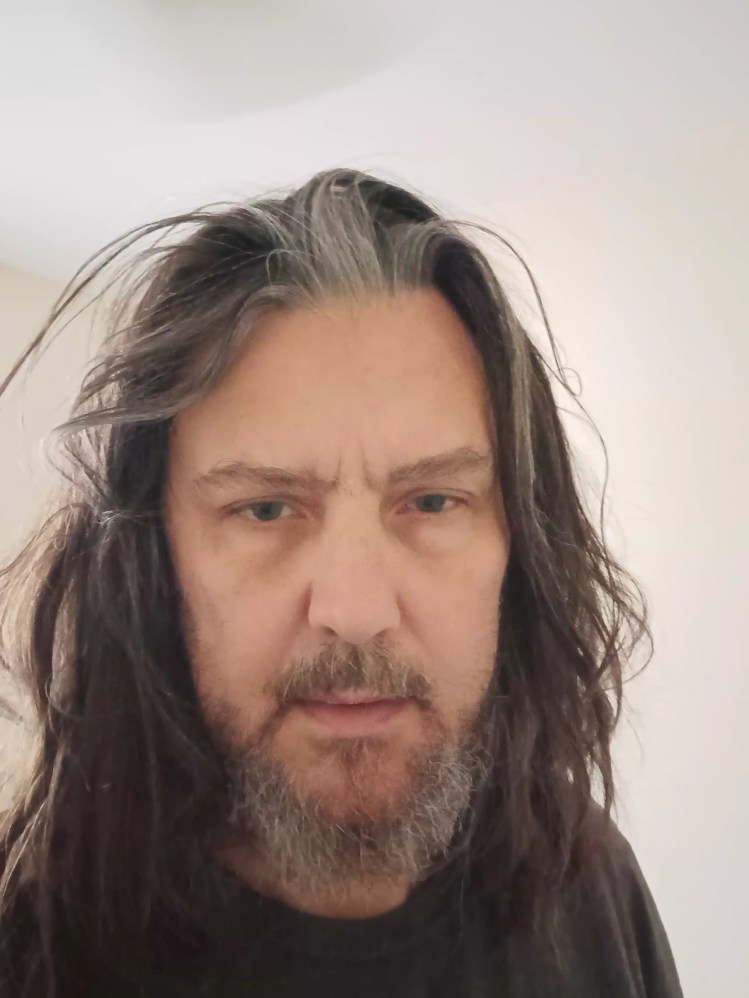
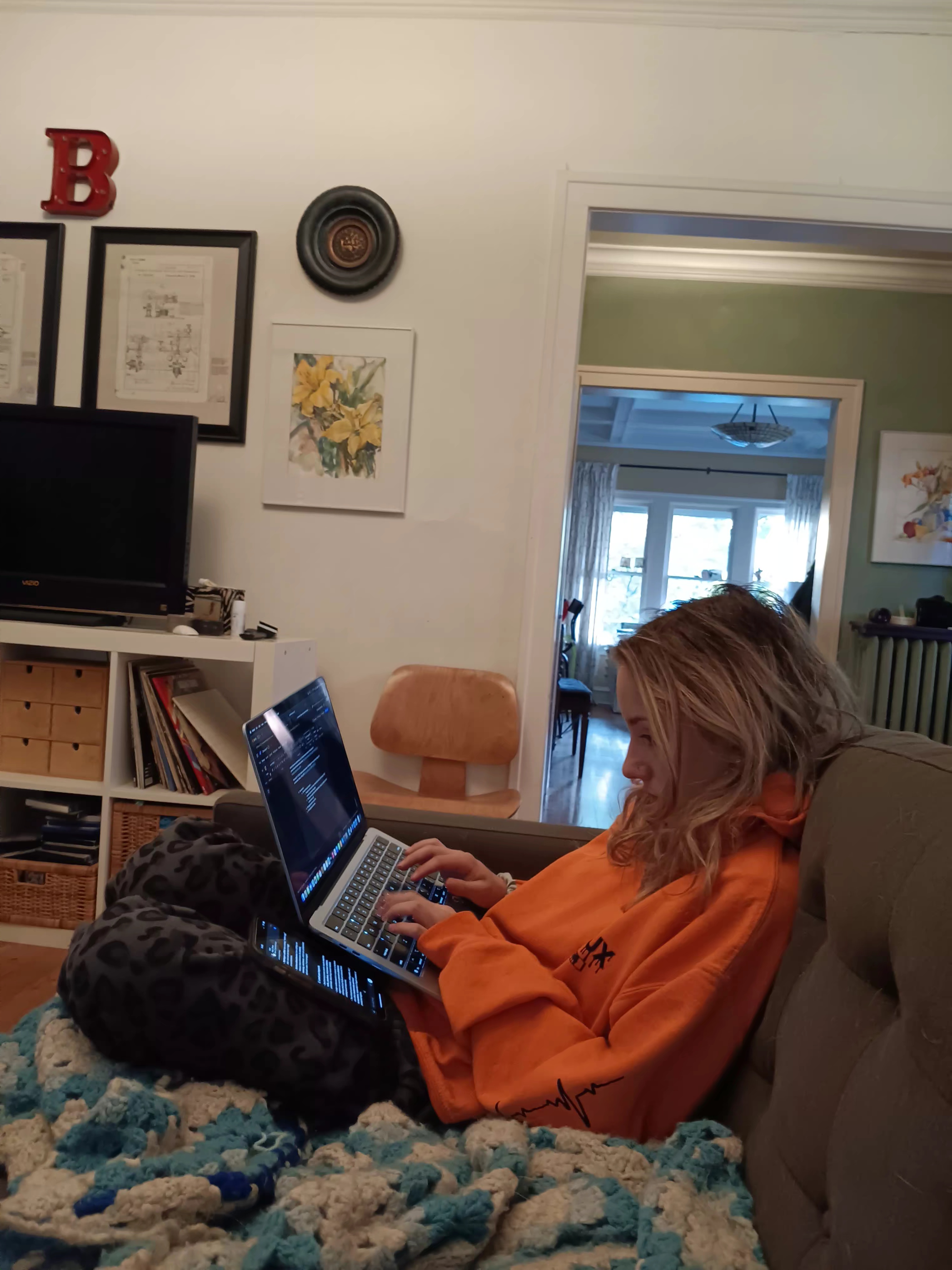
The person in these pictures is a poet in action.
She’s a poet and she does know it, but she does not show it, at least not in any overt kind of way (or hardly ever).
She’s 18 now, recently graduated from high school (she went to Hemingway’s high school), and she tried the poet clubs and poet readings at the school.
But she couldn’t really stand any of them.
Because she is horrified by any sort of insincerity. She can even feel it approaching before it’s there. For her, insincerity is akin to the proverbial fingernails screeching across a chalkboard. For her, most formal poetry readings and poet gatherings and poet clubs, and so forth, have the same sincerity value as Amber Heard’s testimony at the Johnny Depp trial which she, like her father, could not stand watching because of how blatantly insincere, false, and totally FAKE it obviously was.
(We were watching the trial because we’re Johnny Depp fans, big ones. And even though I couldn’t stand watching Amber make a fool of herself, or maybe because I couldn’t stand watching her make a fool of herself, she reminds me very much (physically included) of someone I once knew (and dated, and almost married), a stage actress and theater professor from Chicago, Illinois, which has more theater than any other place in the country except NYC).
To be a professional academic poet in the USA of today, one has to give professional poetry readings, and attend professional poet gatherings, and join poetry clubs, 99.999% of which have about as much sincerity as the testimony of Amber Heard at the Johnny Depp trial.
Hemingway, as a famous writer, was terrified of formal public speaking, so much so that he rarely, or never, did it.
Bukowski, Hemingway’s most famous direct heir, gave the greatest poetry readings of any poet in American history.
He could hold an audience of hundreds in the palm of his hand for hours. Almost literally.
And yet he hated doing it – hated it unto the death; because he said it made him feel like a fake, a freak, and a fraud.
The person in these pictures is a poet, but she almost never shows it, not in any overt way. (Although if you’re a sensitive human who’s a good judge of character and an artist, or artistically inclined, you may be able to tell it from a single glance.)
“You’ll find it when you stop looking.” – D.W. Barrigar
At 18, she doesn’t quite know it yet, but the way she walks, the way she talks, the way she thinks, and the way she acts all indicate one thing: writer.
Just who and what a writer is now is undergoing great flux and change, great challenges and readjustments. It’s been happening very dramatically since around the year 2000. We live in a period of rapid and sudden uncertainty, and we, of course, don’t know how things will pan out.
Edgar Allan Poe, it’s often said, was the first American writer who actually tried to make a living from his pen and nothing but his pen.
He failed miserably, had to work mostly as an editor instead, and died in the gutter because of it.
Before that, it wasn’t as if America didn’t have writers. Most people wrote and read letters, for instance, every day. (If they were “illiterate,” they dictated their letters and had letters from others read aloud to them from someone around them who could read and write.) It was simply the case that making a living as a creative writer was fairly unheard of. There were zero copyright laws at that time, among other reasons, many other reasons.
Geoffrey Chaucer, of England, author of the Canterbury Tales, is considered the first actual, individual author in the English language, in the modern sense. (Rome and other societies had their own versions much earlier than that.)
And making a living as a writer, as nothing more than a writer, never crossed Chaucer’s mind.
He had a million other jobs instead, while also completing the most lasting work in the English language outside of Shakespeare. And we all know how Shakespeare supported himself.
So even if she never publishes a word, and even as she also does other things, too, this is a writer in action – not tomorrow, not in a few years or decades, now.
America thinks everything is about money.
The best-seller mentality has poisoned the well of the minds of so many writers that many, or even most, of them have stopped writing seriously even as they still dream of writing.
I taught in the writing schools of the Midwestern USA for over twenty years, first as a graduate student, later as a professor and lecturer.
It gradually dawned on me that there was a mindset that was killing the creativity of many of my students.
Too many of them believed that if they didn’t become rich and famous writers overnight, then they weren’t writers at all.
And they quit doing it. They stopped writing. Because they thought the lack of instant “success” meant they weren’t good enough. So they bowed out, with embarrassed smiles on their faces. It was sad to see, sad that so many had (and still do) fallen for the lie. The big lie.
Writing, creative writing, is something you do if you’re called to it. Any outward success, or lack of so-called outward success, is never going to stop you if you’re a real writer.
We are all writers today, in many ways, inventing personas for ourselves, using words to text and email each other all the time every single day.
Jesus was a writer, even though he never wrote a word, except one known time, with his finger in the sand.
But who told more lasting, wide-ranging stories than he did? Short stories, usually very, very short stories, so powerful they turned him into the most famous human being who’s ever lived or ever will live – bar none. It was his words that did everything, including bringing back the dead. (“Lazarus, come out!”) And that makes him a writer. He was never paid a pittance for it, not even a single cent, ever, not even one time.
(He was never directly paid, but he was given free food, lodging, and wine from his audiences and hearers.)
The person in these pictures is a writer in action, even if she doesn’t quite know it yet, even if she never “publishes” a word.
“Nothin’ ain’t worth nothin’, but it’s free,” wrote Kris Kristofferson.
“God is nowhere. God is now here.” – Philip K. Dick
The Omega Point is a theory conceived of and developed by the French mystical Jesuit and scientist Pierre Teilhard de Chardin meant to explain evolution and the end of time to the human world.
You know you’re in good company when you’re in the middle and roundly attacked by both sides.
In Teilhard de Chardin’s case, “both sides” meant the Western secular scientists over here, and the Catholic church over there.
Those are big enemies to face down.
This particular French mystical Jesuit and scientist (not as rare a creature as it might sound) did it for the love of truth.
May we all be so blessed.
The end of time is a wild concept, to say the least.
It’s when everything stops happening.
Nothing moves. Nothing develops. Anywhere. At all.
Also, nothing ages. Nothing dies.
I will offer, next, a further interpretation of the Omega Point.
I cannot pretend to understand this.
I can only claim to be massively fascinated by it and to believe that it may well have so much truth to it that it is the truth.
Teilhard de Chardin basically predicted the internet at least fifty years before it actually happened when he said that humans were moving toward a higher consciousness with technology, a global web of human consciousness that was a natural part of evolution.
He claimed that this would raise human consciousness to higher levels, and eventually, much higher levels.
That hasn’t happened yet; but it doesn’t mean that it never will.
The Omega Point is the end of all time, and it is what the Universe itself (and all the Universes around ours) are moving toward.
It’s the time and the point when all things merge together and stop moving.
“No time” means no pain.
And every single consciousness that has ever existed – everything that has ever lived – all animals, all plants, all humans, all stars, all celestial bodies, all everything – will become one, while simultaneously maintaining their separate knowledge and separate consciousnesses.
In other words, we will all be together, in a good way.
Suffering will end.
And we will know all of it and everything, even the Ultimate Reason why.
All of the above is what we call, in English, GOD.
According to the theory.
Until then, we can all continue to hum along with the country singer Chris Stapleton when he sings, so sweetly, from his song “Broken Halos,” “Don’t go looking for the reasons / Don’t go asking Jesus why / We’re not meant to know the answers / They belong to the by and by. / They belong to the by and by.”
“Then I turned to see the voice that was speaking to me.” – John, Revelation
“There’s a man goin’ ’round takin’ names / And he decides who to free and who to blame.” – Johnny Cash, “The Man Comes Around”
In the old days, you could hear the barbarians arriving at the gate out of nowhere.
And it might not have meant the whole world, but it meant that your world, was about to end: completely, and thoroughly: forever; which was tantamount, back then, to the whole world ending.
It’s happened thousands, or even millions, of times before, here on Planet Earth, to humans. The end comes. And it comes hard. And it comes fast. And it comes for good. That’s it: kaput! Lights out; the world you knew and thought would last beyond you is suddenly gone.
People always knew it could happen at any time. Even though we have nukes now and are capable of blowing up virtually the whole world, we could never be sure, under those circumstances, that the nukes got everybody.
It’s actually almost impossible that the nukes will get everybody, if there’s a nuclear war.
There will probably be at least some random groups of people, in the southern hemisphere among the mountains and jungles, for example, who survive.
Even if some celestial body, hurled by the hand of God, crashes into Planet Earth and wipes out all humans; even then; we would never know, individually, that the world was, for sure, over everywhere, for everybody.
Even if it were true, we wouldn’t know it.
The end will come.
We can be sure of that.
The threats we are facing now are legion, and so horrifying, if you stare them in the face, that it seems like the book of Revelation, which was one of Dr. Hunter S. Thompson’s favorite literary works.
The book of Revelation was written as a warning; and to give aid and comfort to the good people, the few good people, who live, who live now, who have lived before, and who will always live: until the end.
Charles Bukowski wrote this: “Goodness can be found sometimes in the middle of hell.”
Buk considered the society he was inhabiting at the time to be HELL.
It’s worth considering what he and others like him would think about our own day.
Would they suddenly think everything was great back in the time/s in which they lived which they thought were hell at the time? Would they suddenly think it was great then, and horrible now?
Buk also wrote this (probably drunk): “Slavery was never abolished, it was widened to include everyone.”
On this Sunday, October 26, 2025, the underground internet persona “The Drifter” asks caring Readers to consider the following passage from the book of Revelation, one of Hunter S. Thompson’s favorite literary works, in a metaphorical way.
And in a symbolic way.
Not in a literal way. It was never meant to be taken literally.
The metaphorical truth it tells is the truth.
“And the beast was captured. And with it the false prophet who in its presence had done the signs by which he deceived those who had received the mark of the beast and those who worshiped its image. These two were thrown alive into the lake of fire that burns with sulfur. And the rest were slain by the sword that came from the mouth of him who was sitting on the horse. And the birds were gorged with their [the evil people’s] flesh.”







 Saragun Springs