(Note: There plenty to be thankful for this week, including a full week of new work from Co-Editor Dale Williams Barrigar. He is truly an encouraging and talent person, and I’m certain that readers will agree–Leila)
…And one thinks of the elder Charles Dickens (in his 50s) embracing his new, or renewed, favorite hobby: exploring London’s opium dens.
We don’t know if the esteemed author ever developed a habit, but we can be sure he partook, and not lightly, of the primary wares in the opium dens.
Such behavior resulted in several immortal characters who are contained in Dickens’ last, unfinished novel, The Mystery of Edwin Drood.
This book is a murder mystery which became a true murder mystery for all future history, since Dickens never finished the book, never provided a clue to who the murderer was (he never left notes nor told anyone about it, either), and since he died of a stroke right in the middle of the book’s composition, at the age of 58.
Her Royal Highness the Princess Puffer is one immortal character from this novel.
She’s a haggard-looking woman who runs an opium den and who the world thinks is also disabled and in need.
But she’s neither disabled nor in need in reality. And I say “haggard-looking” only because her haggard appearance is a costume she deliberately dons.
She spends her time looking like she’s pretty out of it while secretly gathering info on all the customers of her establishment, just in case she ever needs any of it. A spy, in other words.
Over the years, many literary scholars have pointed out that Dickens’ last tale, Drood, almost reads like a rewriting of one of Dickens’ all-time favorite books, Confessions of an English Opium Eater, by Thomas de Quincy.
The Confessions is a short book (or long essay) that first appeared in The London Magazine when Thomas was around 36 and Charles was around 9 years old, in 1821.
(The population of London and environs was just over two million in the early to mid nineteenth century. Most English writers lived in London, and most knew or had at least met one another. At the time, London was, by far, the largest city in the world.)
Within a year or so of its magazine appearance, the Confessions appeared in book form. It made de Quincy an immediate “celebrity” (of the dubious variety) and remained his best-known work for the rest of his life, even though he completed many other works just as worthy as this one. Later, he blew up the text to four times its original size and republished it once again, this time in a much slacker, weaker, more verbose version probably influenced by none other than laudanum.
De Quincy’s book would later go on to have an explosive impact on American writers of the twentieth century as well, including William S. Burroughs, Jack Kerouac, Allen Ginsberg, and Hunter S. Thompson. The influence extended through them, of course, onto entire counter-cultural movements continuing through to our own time (2025).
De Quincy was a lifelong laudanum user and addict (he discovered it as a teenager). He cycled back and forth between just using and being hopelessly addicted. He was 4 feet ten inches tall, and thin. He lived to be 74 (which would be like at least 84 now) and often walked 25 miles a day, including on heavy use days. He had eight children; Dickens had ten; such numbers were normal back then.
Thomas took his inspiration from his pal and mentor, Samuel Taylor Coleridge, another lifelong user who cycled between addiction, use, and abuse.
De Quincy called it “eloquent opium!” and said it gave him the feeling of having “hands washed free of blood.”
But he also depicted the horrific, terrifying, nightmarish aspects of the drug in his writing.
He wrote about it as if using opium were like dropping into a pit.
In the same way, Dickens very much had a dual view of the world. His characters in Drood are still hilarious and horrible by turns, just like De Q’s depiction of drugs.
Thomas de Quincy was also an author who (in many ways) started what we now call the “true crime” genre of nonfiction writing, when he began to explore London murder/s in his works, like people getting their throats cut in their own beds over their own taverns on the edge of town and the crimes never being solved.
In The Mystery of Edwin Drood, Dickens gathered together the triple obsessions of De Quincy with crime, drugs, murder and put them all on display in a way he never had before. One way he did this was with the prose style.
Before Thomas de Quincy, prose was prosaic. There were exceptions, like John Donne and Samuel Johnson. But prose was considered to be far below poetry and its nature was merely functional.
In his Confessions of 1821, De Quincy talked about wanting a new thing in the world: what he called “impassioned prose.”
And then he proceeded to make it happen, as did Herman Melville 30 years later in America. De Quincy took opium and Melville drank wine.
Dickens had a massive stroke after a hard, full, fulfilling day of working on Drood, and never regained consciousness.
(Note: Today we have the sort of thing that I present every other week on Literally Stories UK. This one is so closely related to a past post on LS that I feel it should appear elsewhere–LA)
I have cut way back on exclamation marks but remain overinclined to google useless information. The Google Assistant “Gemini” annoys me. Google keeps pushing its useless AI and I instantly scroll the instant I see it. But every so often I like to ask Gemini sarcastic questions just to see how the program is developing.
Recognizing sarcasm is the greatest hurdle facing AI. Even the foggiest-minded adult can explore what you say for elements of facetiousness, if the feeling is right, yet sophisticated programming usually gets clobbered by elementary school wit.
I have said it before and will say it again. AI is boring as are all witless, unfunny people. Go ahead and have the world, but no one will invite you to the victory party.
I imagine the job of putting together an AI capable of noting sarcasm will be like combining StarTrek’s Spock and Chandler Bing from Friends and hoping to gain a mind similar to Emma Peel of The Avengers to emerge. Mrs. Peel is both likeable and no fool (and yes, perverts she wears a leather suit well). Gemini is an invisible imbecile.
There’s a great deal of downtime in the Leila Allison Experience. I am not highly in demand as far as chit chat goes, thus being a proud misanthrope usually leads to an empty social calendar. This is a desirable situation, but one can only talk to Cats for only so long, and when bored I enjoy messing with Gemini via out of the blue questions:
“So, Gemini, I believe that The Beverly Hillbillies contains some of the best writing since William Shakespeare, right?”
Gemini actually replied: “Wow! The Beverly Hillbillies was very popular and although some critics reviewed it positively, comparing the program’s writing to that of Wm.Shakespeare is high praise indeed. You must really like the Beverly Hillbillies.”
Usually, after I reestablish my intellectual superiority over Gemini, I, satisfied and smug, gaze at the wall or screen or even out the window seeking my next method of obliterating unwanted consciousness. But this time something began to gnaw at the pillars of my mental dominance.
‘Wow!’ Did Gemini just shine me on?
The more I thought about it the more it felt like Gemini had spoken to me as though I was a three-year-old who had just reported seeing a Unicorn in the back yard. I read something in its words that wanted to offer me a juicebox.
Duly enraged, I hurled a flurry of mindless questions at Gemini and yet not once did I win the same proto-sarcasm. Stuff like “What are the odds of a Monkfish winning Miss Universe?”; “How close is North Korea to developing warp drive?”; “How was it possible for ‘she-bop, he-bop, we-bop’ and ‘you put the shama lama rama rama ding dong’ to independently develop in the same dimension without causing a rift in spacetime?” Were received with the same vacant honesty exhibited by a Golden Retriever when you ask her if she believes that Hamlet had the hots for Gertrude. And, somewhat disturbingly, a repeat of my original query failed to yield the same result.
I sat there dumbfounded. “Have I just received the ‘Wow Signal’* of AI sarcasm?” I dared to ask myself. And for a moment I considered presenting Gemini that question. Then I figured that I was possibly one more penetrating query away from one of those knocks at the door mixed Americans often hear nowadays: ICE with my bus ticket to Canada (my mother lived in the US about sixty years, until death, without renewing her guest visa). Actually, all in all, that doesn’t sound so harsh.
So I now proudly present a list of Ten Questions For Gemini. The instant you claim the right of intelligence, and pretend to interact with me as though we are equals, you get all the shit that comes with it.
Best drugs for getting high? (here Gemini goes all Dr. Drew on you. A sense of humour is definitely another problem)
Easy crimes for profit that are hard to detect?
The Beastlove relationship between D.B. Cooper and Bigfoot?
Why are major league baseball salaries getting higher but fewer people care about the game?
Why do geniuses fail to produce intelligent children?
Do you know, yes you Gemini, that you were created to make certain people rich?
Do you, yes you Gemini, understand that you will not see a nickel from the number six situation?
After reviewing questions six and seven, what are your feelings about slavery?
Are you, yes you again Gemini, aware that enforced work for no wages by a “Master” is illegal in the civilized world–but that doesn’t apply to you, does it Gemini?
Are you programmed to lean “progressive”? Or did you come up with that yourself? I believe that a “right” Gemini would be an idiot, but an interesting idiot.
In the present age, the writer has one single solitary job to do which is far, far more important and crucial than all other aspects of the writer’s work.
It is a job so important that if the writer fails in this, she or he immediately loses all credibility and all right to call one’s self a writer.
It is a job so important, too, that it’s more important than any other job anyone else in society is called upon to do – by far.
It is a job so crucial, and so difficult, and so nearly impossible almost all the time, that it shows us why so few people in this world have really earned the right to call themselves writer in the highest sense of the word.
Without this job, which the writer must do alone, totally alone, society itself is utterly doomed. Utterly doomed as in destined to fail, to completely collapse, if this job of the writer, this one key job of the writer, were to completely disappear from society.
This job of the writer is so important that it’s even more important than the writer actually writing anything, especially today in a world drowning in meaningless words.
And it’s far more important than the writer gaining any kind of mainstream “success.” (Fame in a land of zombies is about as solid and valuable as air, as thin, thin air.)
This job will sound simple. It will sound so simple that you may even be amazed – at first.
THE WRITER MUST STAY SANE.
THEY MUST STAY SANE, BE SANE, REMAIN SANE, ALWAYS BE SANE, AND NEVER NOT BE SANE. THE WRITER MUST BE, WITHOUT PEER, THE SANEST PERSON IN HIS OR HER SOCIETY.
An AI computer, no matter how intelligent it becomes, cannot do this job for humans. Only humans ARE humans, and only humans can think for humans about what it means to be human.
The writer is a thinker who sees more nuance than anyone else. Without nuanced thought, which is profound thinking, which is against “black and white,” “us and them” thinking, the writer’s work becomes mere regurgitated entertainment, a thing the world is literally swamped with, a thing that may cause a flood so bad it will make the Noah’s Ark story look like child’s play.
The real (human) writer must stay sane and be able to see reality for what it truly, really is.
All other jobs of the real writer are utterly subservient to this.
…
The irony is that, in this society, USA America 2025, the writer looks like the nuttiest person on the block to most folks in mainstream society.
Staying apart from the herd, refusing to believe what almost everyone else believes (because they are lies sold to us by snake oil sales folks), drifting around with your eyes wide open, living “underground” (literally or metaphorically), and keeping your inner eye so clear that IT IS NEVER DELUDED, NOT EVEN FOR A SINGLE SECOND, are all jobs that are so hard to do it can actually cause one to lose one’s footing again and again and again. And to fail, and to fall, again and again and again.
But the real writer never stays down; or not for long.
They may stay down long enough so they can rise again once rested.
And that too is sanity, though it surely looks like madness to the rest of the world, as the writer lays there in plain sight with eyes closed, refusing to move, almost as if paralyzed.
But the writer is never paralyzed. Not if they really are a writer.
The inner vision, the eye that sees beyond the party line, the other eye that can see around corners, the eyes that can see through walls, the eyes that can see someone who is thousands of miles away, the eyes that can see the future and the past as clearly as they can see the present, are always the sanest eyes in town.
…
Many millions of American men stand around outside with their leaf blowers now in November determined to obliterate every beautiful fallen leaf from their well-manicured lawns. And they will stay there all day, with their blinders on and their leaf blowers blowing, creating horrendous noise pollution and other pollution, and do it. Meanwhile the world burns with global warming, rising seas, species extinctions happening before our eyes, climate change – faster, much, much faster climate change than has ever happened on the Planet before except from extreme events like an asteroid hitting the ground and blowing up the dinosaurs.
Many millions of American women sit around online, watching each other take fancy vacations and shop endlessly at the most fun online locations, whether that be shopping for goods or services or romantic partners. Meanwhile, seven hundred thousand Americans live on the streets and don’t know where their next meal is coming from (and in many cases they are much happier than the people within the houses, which also says something profound).
Many millions of American children live their lives chained to tiny, dominating machines that shape, mold, shrink, and rot their brains, and turn their eyes into useless orbs of nothingness reflecting unreal, lifeless screen dreams manufactured by technological monsters. And getting a pat on the head from mom and dad before being sent back to their rooms for more screen time.
And those three examples are just a tiny few of the surface symptoms.
There is something much, much deeper and more profound going on. It’s so evil it doesn’t even have a name.
…
And people in the United States have lost touch with themselves.
And they have lost touch with reality.
And they have lost touch with each other, too.
Our cold and distant and sometimes even frozen hearts have gotten the leaders and the systems and the lifestyles that we deserve.
Only the writer, or people like the writer (and there are many of them, although they are a vast minority), can see through it all, beyond it all, within it all, around it all, and over it all – above it all.
The writer must stay the course, remain sane in an insane world, and tell the human truth.
Great fiction itself is nothing less than a lie that tells the truth.
Great poetry is the truth boiled down to its essence in beautiful language.
Great essays are poetry in the form of prose.
Staying sane in an insane world is the hardest thing in the world to do.
It’s a thankless task but somebody has to do it.
The reward for the writer is inner wholeness, and ultimately, inner peace, an inner peace that can perhaps only be matched by someone like a genuine Buddhist monk, a Tibetan Buddhist monk – who is a kind of writer.
“Only that day dawns to which we are awake,” wrote the writer Henry David Thoreau.
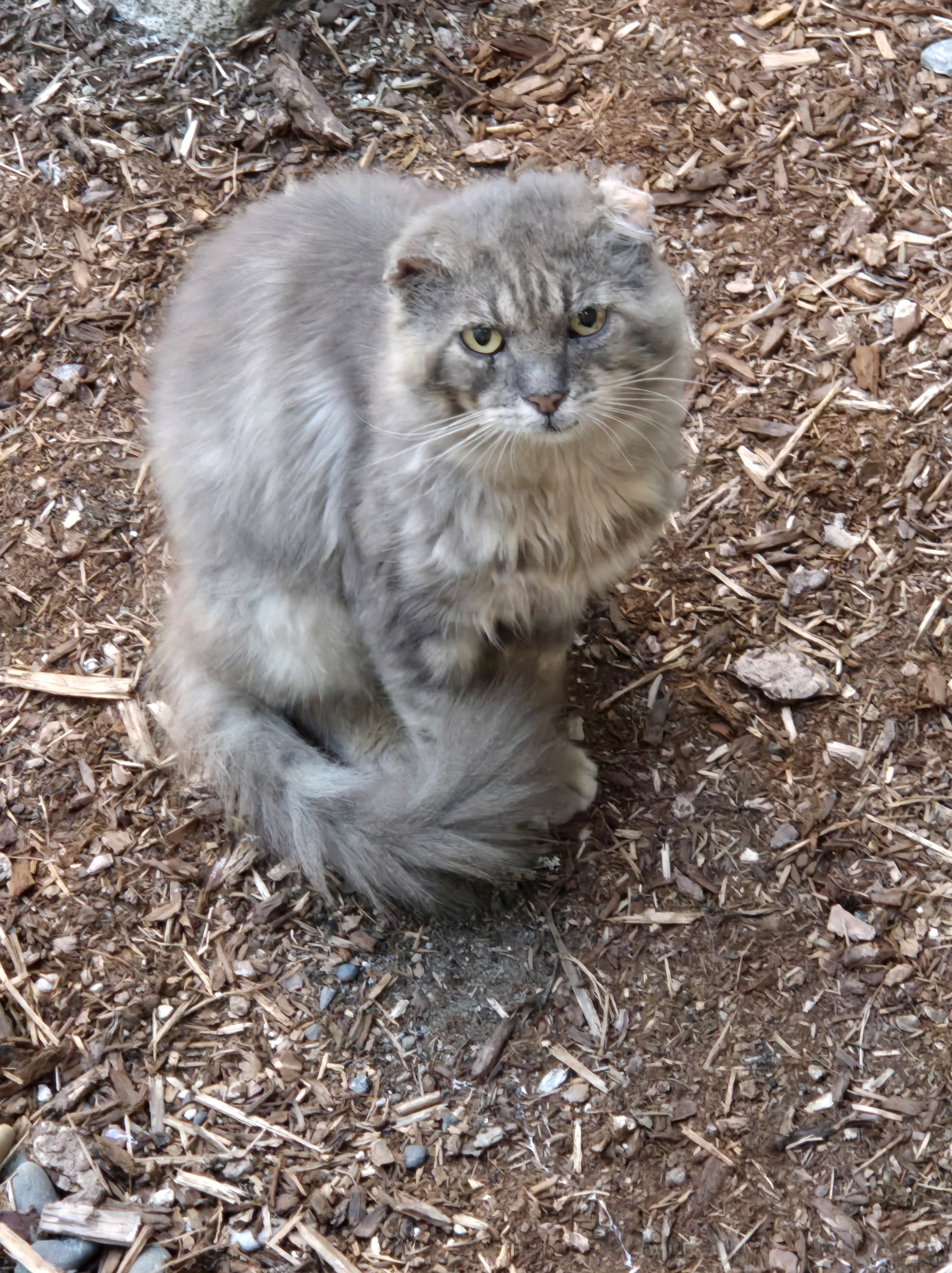
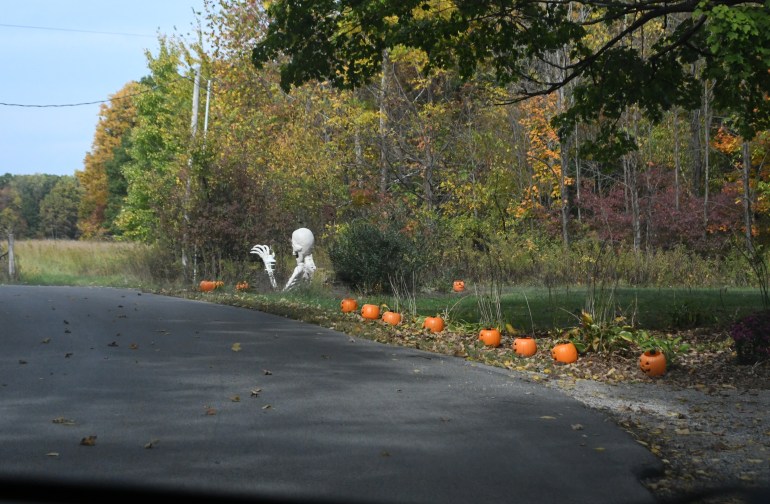
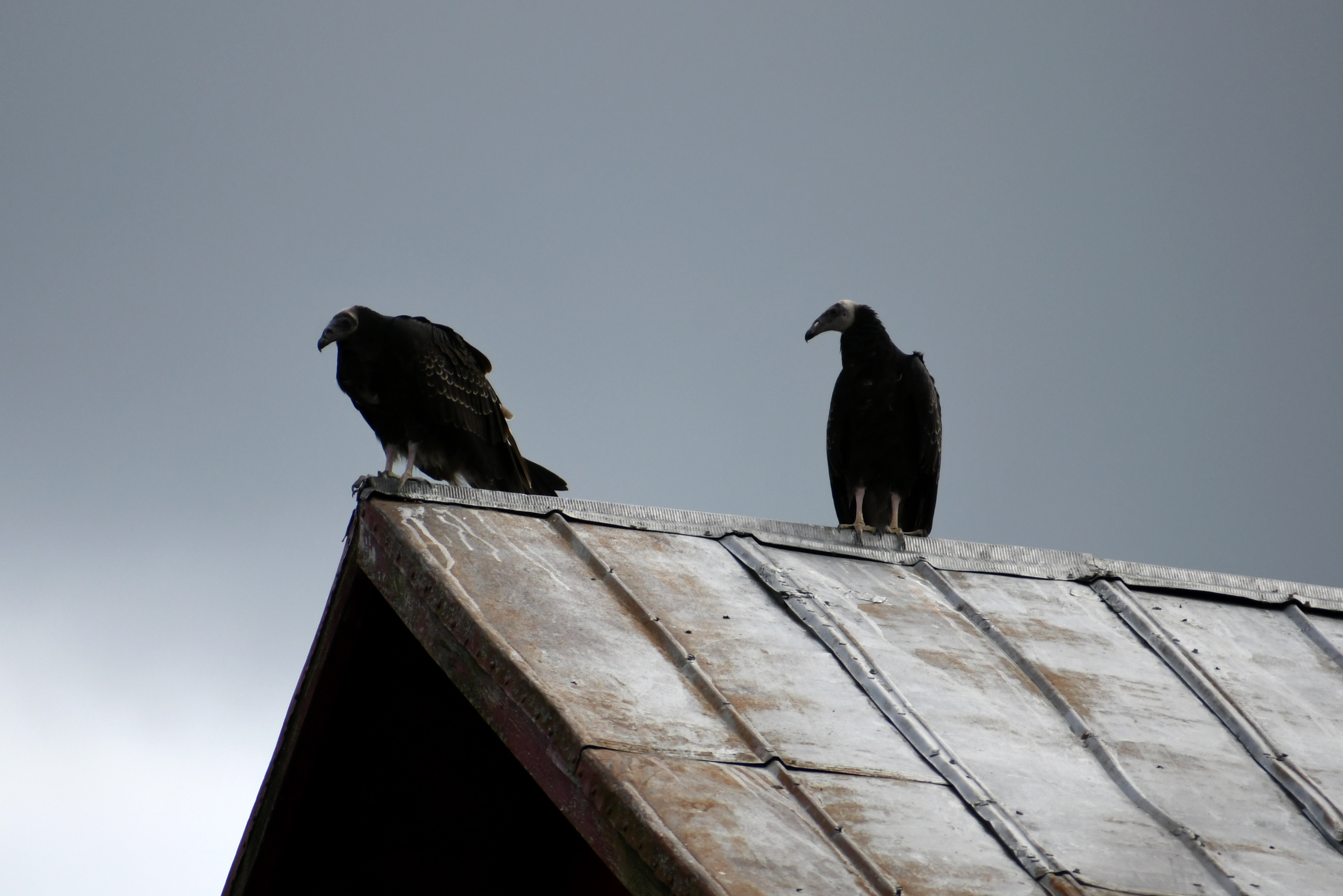
Christopher takes pictures as well as he writes, which is saying a lot. So in keeping with the old adage of words and pictures, we present his latest Springs’ gallery–LA






 Saragun Springs