The Poems of the Saragun Civil War by Dame Daisy and Various Lambs
Introduction
The Poems of the Saragun Civil War between Goats and Lambs are presented this week. Everyday we will feature a poem by the Pygmy Goatess Dame Daisy Kloverleaf that she sent the Lambs of the Lambystan community in Saragun Springs and the reply poem from the Lambs, ostensibly written by their leader, but it appears that it was a team effort. This was perhaps the only Civil War in history that never escalated to violence. To paraphrase Sandberg, “We held a war but everyone went to lunch.” But, to quoth Daisy. “It was hotly hot by word.”
Leila
The First Pair of War Poems
“Haggisly” by Dame Daisy Kloverleaf
i
Little Lambs O little Lambs, thou annoy
Goatly measures of pride with silly ploys
It is so clear that you don’t give a damb
About becoming humble Ewes and Rams
ii
The cold hearted dastardly deedly deeds
That invade the garden of my sweet ease
Will not by I be soonly forgotten
Each of you is an apple quite rotten
iii
By the hot beat of my hooves I proclaim
This meadow will never be samely same
Until you recant calling me sour feta
Soonerly soon than laterly latuh
“Our Reply” by Shaytan Shotten, Viceroy of Lambystan
“There’s a slow, slow train coming – up around the bend.” – Bob Dylan
“This whole world’s gotta buy you a drink, man / Gotta take you to the edge and watch you throw it up / Every morning, I could give a damn what you did last night / Just tell me how far to kick this can…”
– Conor Oberst, “No One Changes”
“Christ’s religion is essentially poetry – poetry glorified.”
– Elizabth Barret Browning
The Drifter (myself) took his last drink of alcohol almost exactly twenty years ago from today: on August 5, 2005. (I write this on August 1, 2025.)
The story of my drinking, its history, its reasons and motivations, its progression, its hilarity, its adventures (many, many, and many more, including good company, bad company, and dangerous company), and the eventual fall into total addiction in my mid-30s (drinking hard liquor sometimes combined with red or white wine all day every day and never drawing a sober breath, plus other related problems like catastrophic depressions, weight loss, liver problems, heart problems, heart palpitations, malnutrition, emergency-room accidents, vicious, pain-filled, suicidal hang-overs, crushingly embarrassing behavior and psychological humiliations, near-death occurrences and much more, none of which were improved by also smoking two to four packs of Marlboro Lights per day along with the liquor) will be gone into in more detail in the near future in another column.
Because alcohol is a subject I still love to talk about, even though I haven’t had a single sip in almost twenty years.
For today, in honor of my drinking and in honor of all drinkers, addicted and not, and in honor of the one thing that has kept me sober perhaps more than any other, I will briefly explain what I think the Lord’s Prayer means.
This column is not for so-called “Christians Only.” Nor is it only for alcoholics who are looking to quit drinking. Nor is it only for ex-alcoholics who have already done so.
It is for writers and writer-friendly peoples everywhere, especially since writers are known to be, as a group, prone to drinking alcohol more so than the general population (which is a lot, especially in America, land of the binge drinker); and also for anyone interested in surviving this life (as long as possible) and living a good one while you’re here.
Because the Lord’s Prayer can even be said and studied by atheists vastly to their own enhancement at almost every single human level we can possibly imagine.
I do not presume (very far from it) to have the final answer/s about these words, unlike many of the pastors, priests, and ministers (so-called) afoot in America these days (not all, but many).
These are simply my (brief) reflections, today, on a prayer (a poem) that has saved my life.
I never could’ve gotten myself sober without this.
This column is also meant to defamiliarize the Lord’s Prayer in a personal way, so it can be renewed in at least a few of us.
(Disclaimer: This piece may sound a tiny little bit like a sermon in certain places (in the manner of John Donne) but it’s Sunday, after all…)
*
Our Father who art in Heaven: hallowed be thy name.
Thy Kingdom come.
Thy will be done, on earth as it is in Heaven.
Give us this day our daily bread.
And forgive us our trespasses, as we forgive those who trespass against us.
And lead us not into temptation.
But deliver us from evil.
For thine is the Kingdom, and the Power, and the Glory: forever and ever.
Amen.
*
In the first part of this poem, which is the first sentence, Yeshua (hereafter called Jesus in this work) was asking humans to do something.
He was asking them to acknowledge the eternal existence of something greater than themselves.
In so doing, not only the Creator of the Universe is worshiped. Humanity itself, including the speaker of the prayer, is worshiped.
He is our Father, after all. And He is in Heaven. By hallowing (making holy) his name, we make holy everything there is, including all the pain, all the death, all the suffering, all the murder, all the disease, all the killing, all the death, death, death, death.
We let it go (like saying “So it goes”), and give it back to Him. Jesus believed he was waiting to receive it. Walt Whitman later said, “All goes onward and outward; nothing collapses; and to die is different from what anyone supposes; and luckier.”
In the second sentence of this poem, which is only three words long, Jesus asks for The Kingdom to come.
It’s key to remember, or point out, that elsewhere he said, many times, “The Kingdom is inside you,” when talking to a few of his small bands of disciples and followers on the lakeshore or in the hills. (The Book of Acts says there were “about a hundred and twenty” believers after his death; the first person to see him after he died was Mary Magdalene.)
When he says “Thy Kingdom come,” he means after death, yes. But he also means, and maybe more importantly, right now, and right here, while we are alive on the earth. And it isn’t outside you, it’s never outside you, it’s right in your guts, in your brain, and in your heart, like it was in Mary Magdalene’s. Or it should be.
In the third sentence of this poem, Jesus acknowledges that we are not in charge of ourselves and we do not necessarily create our own circumstances.
This sentence is about what we call in the modern world “acceptance.” Buddha and Muhammad had similar messages. We may be born blind or we may be born with a disease that will kill us before we reach the age of twenty. Such people are more beautiful, not less beautiful, than the rest of us.
In sentence four, it’s crucial to meditate on (think about) what he means when he says “this day” and “our daily bread.”
We are not supposed to hoard possessions or money like Scrooge, and we are not meant to live on the earth forever. If we have enough today it is enough; tomorrow, as he says elsewhere, has enough worries of its own. Worrying about the future is a sin, because it diminishes the present.
“Our daily bread” does not just mean food, although it also does mean food.
It also means whatever we need for today, like strength, endurance, imagination, courage, stick-to-itiveness, a purpose, a reason for being.
It’s also meaningful to isolate the phrase “give us this day.”
For sentence five, we need to define “trespass.” Trespass means SIN.
Too many modern people these days get salty when you tell them they are sinners. And too many people of the cloth (pastors, ministers, priests, etc.) have NO IDEA what sin really means, these days.
It is not the old-fashioned thing. This world is rampant with sin. The people in the White House in the USA are great examples of this.
Greed and not caring are sins. Getting drunk or “cheating” on your spouse are personal choices (maybe bad choices, but not necessarily “sins”). (And maybe the spouse being cheated on is too greedy of your own personal time; and maybe you getting drunk is sacrificing yourself for your own artistic inspiration; everything depends upon the context.)
Jesus also emphasizes what a profound, life-changing, freeing personal event it is when you forgive someone. Forgiveness is for the other person, but it is for you first. Also, we can’t expect mercy and compassion when we don’t give unto others.
Send out mercy and compassion and you’ll soon find it will come right back at you (“instant karma”).
An example would be giving an authentic smile (not a sales person’s smile) to someone on the street, instead of ignoring them. And they smile back, in a surprised and genuine way.
For sentence six one needs to define “temptation” and “lead us.”
In this sentence of the poem, is Jesus intimating that it is God Himself who leads us into temptation? If so, doesn’t that make God a bad person? And why would he want to tempt us into something that isn’t good? Did Eve eat the apple first because she was smarter and more adventurous than Adam, or because she was more underhanded? Does temptation mean a temptation to despair, which is nihilism and a lack of faith in life, which lead to greed and not caring because you have nothing better to do or focus on?
At this point in the prayer-poem, it’s time to really realize that part of one’s job in all this is thinking, and thinking deeply, and long and hard, over years, about what it all means.
And it is NOT something one shares with others, at least not in any overt kind of way (until, maybe, much later) but the thinking itself changes who you are, and it changes you for the better.
No exceptions.
Number Seven is the penultimate sentence of this poem-prayer, and it is not Number Seven for no reason, either. (Seven = Heaven.)
The last sentence was tacked on by Martin Luther (a personal hero of mine, and a person well worth reading about, whom Harold Bloom once called the most “important” person in the West since Jesus himself, although Martin also wasn’t perfect, like all of us) much later, and it deserves to stay where it is.
It’s very, very, very similar to what the Buddhists mean when they talk about attachment – being too attached to the things that are only of this world, which equals suffering for yourself, which equals suffering for others, which equals suffering in the world.
We should attach ourselves, instead, to the things that can’t be stolen by the thieves, or corroded by the rust. Instead of being outraged by what the thieves stole from you (whether it be the “white collar” thieves or the “regular” ones), attach your mind, heart, and soul to what they can’t get at. (Any other reaction is, again: sin.)
It’s up to us to decide what those things are for us – like Jacob wrestling with the angel.
“AMEN” means Let it be.
DRIFTING END NOTE: An example of a drinking adventure I had was the time I traveled to the White Horse Tavern in New York City which is the last bar Dylan Thomas ever drank in and where he consumed the oceanic quantities of liquor that helped kill him.
I went to the White Horse Tavern specifically to get spectacularly drunk in the manner of Dylan Thomas, in order to celebrate the roistering poet spirit of Thomas in a way that was living the life, not just writing about it. (And back then I was much better at living the life than I was at writing about it, although I was working and practicing at both, every single day of my life.)
And I managed to accomplish my goal. I did in fact get spectacularly drunk in honor of Dylan Thomas. My guess is that I drank at least six pints of dark beer backed up with at least one or two shots of whiskey per beer – plus nonstop Marlboro smoking – all on an empty stomach. (I never ate when I drank since drink was my food; not even a single mouthful.)
I had to be led out of the bar and back to my friend’s apartment by my drinking companions who were also spectacularly drunk (but a little less so than I, at least on that particular occasion).
I was a bit cautious that night because I didn’t wish to jinx myself and end up dead like Dylan Thomas.
(I will eventually of course, just like we all will: but not yet for any of us).
Today is 2 August 2025. I usually open the month on the first but I wanted co-Editor Dale Williams Barrigar’s fifth poem in this week’s series to do that because A.) It is brilliant; B.) This is not.
Still, here at Saragun Springs we strive to publish every possible day. And this month, while still in progress scheduling-wise, will be no different. It is far easier to accomplish when you do not feel pressure. The Universe has been doing its thing for something along the line of fourteen billion years before this post and will not make any special note of it now or after. It keeps things in perspective.
Every Sunday the Drifter will appear, and this month we will be displaying excellent photography by Christopher Ananias. He also has a story scheduled. And we will be publishing bits by other friends, residents of the Springs and whatever we find that isn’t nailed down. As always, it will be a lot like walking through a Curiosity Shoppe.
Come back tomorrow for the Weekly Drifter column, which, in my own and the general opinion, is a tremendous success.
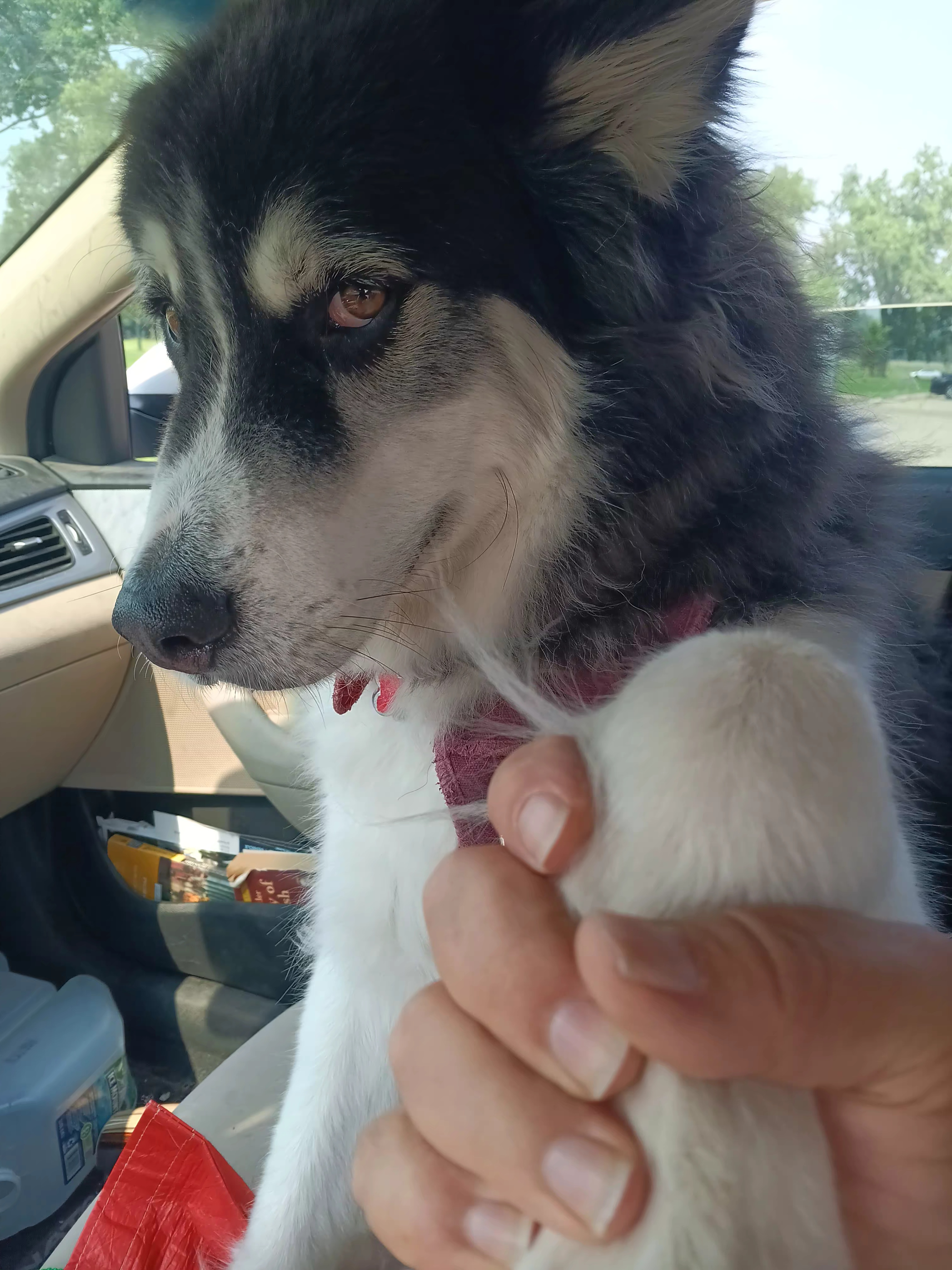
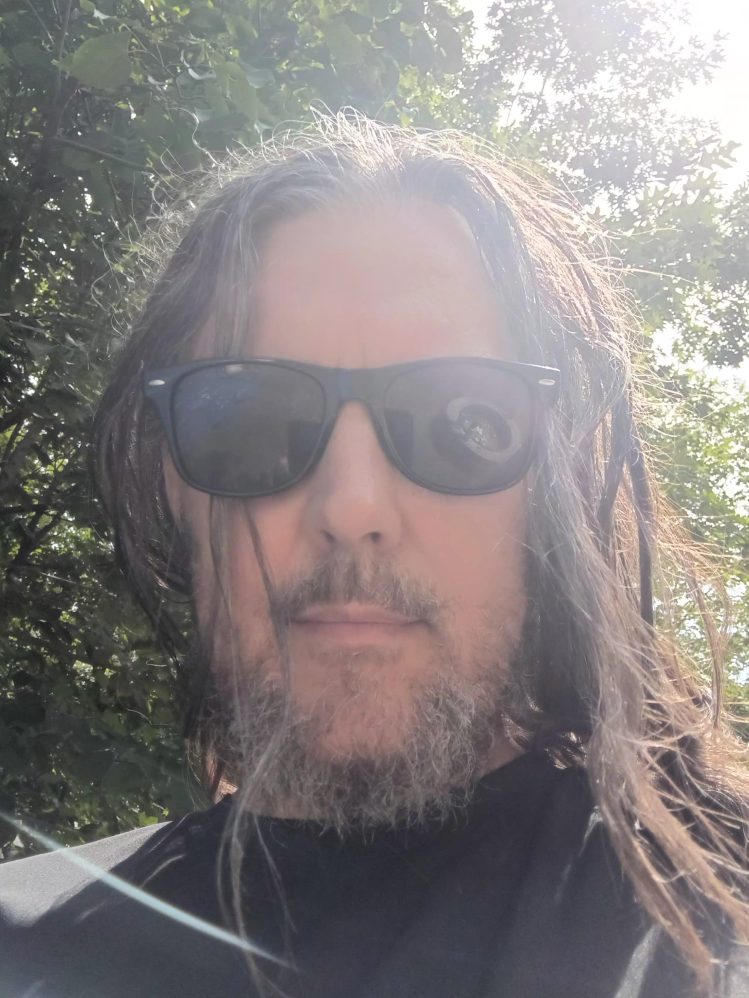
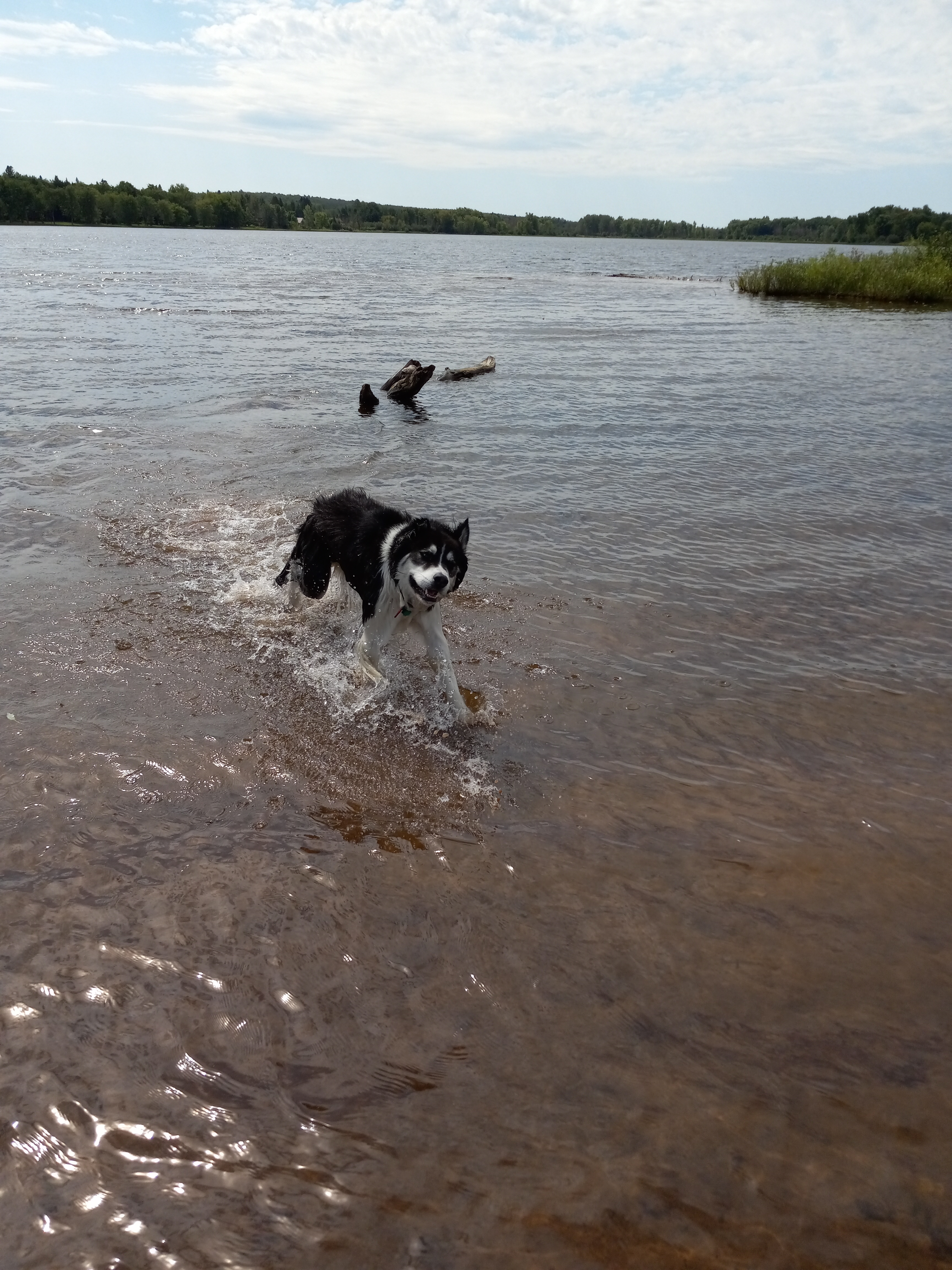
(Images “Last Mohican” and “Water Boo” provided by by Drifter)
Water Boo
“The most manifest sign of wisdom is a constant happiness.”
– Montaigne
In Russia there was a television program about an enigmatic drifter named Fenimore who visited a summer camp to tell the children tall tales: about Native Americans, but also about extraterrestrials visiting Planet Earth.
The unusual name, Fenimore, was so well-known in Russia that even children recognized it.
Fenimore was the middle name of James Fenimore Cooper, an early American novelist, creator of The Last of the Mohicans, who was so well known in Russia that “everyone” knew who he was (and he was especially well known by his unusual middle name).
Cooper is less well known in Russia now than he was a few decades ago. But he’s still far better known in Russia than he ever was in his native land of the USA. And at one point, he was very well known in his native land, one of the best-known writers in America.
The Mohicans believed that the purest and best creature on Planet Earth, among all the uncountable creatures here, was the white dog. For the Mohicans, a dog of purely white fur ruled over all other creatures because of its beauty, goodness, loyalty, and spiritual intelligence.
Modern city folk would be horrified by what the Mohicans did with the white dog in turn, because they believed it was the purest creature created by the Great Spirit: they sacrificed it.
What modern people don’t realize is that: one: the animal was sacrificed quickly and without pain; and two: the Mohicans believed the animal was instantly passing over into a world exactly like this one, except without the pain, as soon as it died.
The Mohicans believed the white dog was leaving this world of pain and going to another world exactly like this one except far more perfect than this one ever has been or ever will be.
This is a challenging paradox, even a contradiction: that there could be a world exactly like this one, except without the pain.
No more physical hardship, no more fear, no more boredom, no more sense of betrayal. No more endless feelings of injustice, no more nonstop struggle for existence and survival (mental, physical, and spiritual), no more loneliness, isolation and alienation, no more feeling of being abandoned by the Creator of the universe.
But the beauty we see, hear, feel, smell and taste here will still exist.
The sun on your head, the wind in your hair, the ground beneath your feet, the green, breathing beauty of the plants all around you would still nurture your soul, except more so.
The grizzly bear will still be there, but he will no longer tear your head off and devour you; instead he will roll around with you peacefully and playfully in the grass.
The fear of death, the one multi-pronged, many-leveled, myriad-layered primal emotion that perhaps generates all other emotions here in this world, even our sense of beauty, or especially our sense of beauty, will be gone there. But the sense of beauty will still exist. It will simply be increased, heightened to a level we can’t even imagine yet, here on Planet Earth.
I went camping this week with my kids and dogs, at Warren Dunes State Park in Michigan, ninety miles from where we live outside Chicago.
It’s only ninety miles away from Chicago around the bottom of Lake Michigan, but it feels like a different world where the raccoons outnumber the people ten to one.
There are a lot of raccoons in Chicago and environs but they still feel vastly outnumbered. Not so in the Dunes.
In the Dunes, I felt closer (or closer in a different way) to the sun, the wind, the ground, the green, the blue of the vast freshwater sea and the sky above it, the yellow sand, the raccoons, fish, and birds, and so was reminded of my own Native American heritage.
I have never had my blood tested. But as a child I was told over and over that I am part Native American. So for me, in spirit, no matter what the genetic testing would or wouldn’t say, I am indeed part Native American. Nothing could take that away from me now, not even science.
And since I’m also a lover of Russian literature, including a few of the great Russians who were nature lovers, like Tolstoy, Chekhov, and Turgenev, I have a love for the Russian love of Native Americans, the Russian love of nature, and the Russian love of James Fenimore Cooper.
Drifting along on an empty trail walk among wooded dune hills with my two Siberian Huskies and one pit bull, I was feeling the feeling of free discovery that can still be found, somewhere, in all fifty states of the USA, if you look in the right way and in the right places.
And I realized that the Indians really are still alive inside me, because I worship their worship of, and their belief in, the white dog.
Today we are debuting a new feature that yet has a name, but is part interview, part word association. I have presented Editor Dale Williams Barrigar with ten words (nine actually, the tenth is his choice). What follows are his replies. We hope that this might catch on and other lists will be given to other people in the future.
Leila
Ten Words
“The Drifter” (aka Dale Williams Barrigar, Doctor of Philosophy) has made these definitions as short as he could, knowing that brevity is the soul of wit.
Any statements he makes about “God” and so forth should be taken with a large grain of salt: because he’s not smart enough to pretend he knows what the Creator of the Universe is really up to – or why.
One: FEAR.
In many ways fear is the basis for everything in this world.
When we climbed down out of the trees, it was partly from fear (with a large mixture of curiosity).
And when we started running away over the ground trying to escape the Sabre-toothed Tiger, it was certainly from fear. (*See below.)
Hemingway called it “grace under pressure,” a paraphrase of which might be “not being a chickenshit.”
How one handles one’s fear/s is such a large part of “who you are” that it’s frightening.
ANXIETY, the much used modern word, is another term for fear.
Jesus nailed to the cross is such a universal image (even for “other people” on the other side of the world who aren’t “Christians”) because it’s based on fear (as well as compassion); and if you don’t know yet that we all get crucified in this life, one way or another, and usually many times, you’ve got a rude awakening in store. (Some of us know this as soon as we know anything.)
Fear of failure can be good, or bad, depending!!
(*The first time we escaped the Sabre-toothed Tiger on foot we realized we could escape, and almost felt free for the first time. And the first time we escaped must’ve had a large mixture of trickery involved, as well, since there’s no way we could’ve beaten the beast on speed alone, with only our feet. Call it: tricking the beast. And it’s just as important now as it ever was; usually, now, for different reasons.)
Two: HOPE.
Whales, wolves, and humans can all sing, but only birds can both sing, and fly. (I mean fly in reality, not in dreams or with mechanical assistance.) Perhaps some day “they” will create a drone that can both sing, and fly; but it will be an at least partially hideous thing; like Frankenstein with wings and tender vocal chords.
Emily Dickinson has forever made me think of a bird whenever I think of the word “hope” (“hope is the thing with feathers…that perches in the soul”) and without hope, the world wouldn’t be worth living in. Period.
Three: ART.
The German philosopher Friedrich Nietzsche (wildly, he always denied he was German and claimed to be Polish instead, which would be, in 2025, like an American denying he was American and claiming to be Mexican, instead, or Bob Dylan claiming to be an orphan cowboy from New Mexico instead of a comfortable Jewish kid from small-town Minnesota) said: “These earnest ones may be informed of my conviction that art is the highest task and the proper metaphysical activity of this life.” Another great German, Arthur Schopenhauer, agreed with him (before Nietzsche said so himself). So did Jim Morrison, one of Nietzsche’s most famous disciples.
We all know who “the earnest ones” are, if we think about it. They take themselves all too seriously, have CONSUMERISM as their religion, and are great at passing judgement on anyone just a little bit different from themselves; they appear in the White House, the halls of Congress, the pulpits of churches, the lecterns of all the colleges and universities, and even, or especially, in the book clubs and writing groups of all small, large, or midsized American cities.
REAL ART IS SOMETHING YOU HAVE TO BE WILLING TO DIE FOR. You don’t have to die for it; but you have to be willing to.
Four: LUCK.
“Luck” is all the good things that happen to us which we don’t deserve that help to turn us into better people – not monetarily richer, more fakely famous, or more “powerful” – but better. Often, with the best luck of all, we don’t even know about it until long after the fact. Maybe this means that we’re always lucky; or at least more lucky than we think we are, most of the time.
Five: FAITH.
Faith is the thing without which, Alfred, Lord Tennyson, said, he wouldn’t be able to eat his dinner. Because without faith, he wouldn’t have an appetite. He would be too full of fear, and it would make him not hungry. When I start losing faith in life, I know I’ve grown too tired again. For me, a lack of faith in life is the biggest sin there is.
It has nothing to do with believing we know just what God is up to. It has everything to do with believing there is always a reason to go on – even when we don’t know what it is. There is always someone watching you and cheering you on – even when you don’t know it. Don’t let them down. (If you don’t have a choice any more it’s a different story.)
Six: FUTURE.
The Future is everything. This is where, without doubt, all the most exciting things happen. Sometimes we forget that the Creator of the Universe has a plan, and it involves US. Our best moments in the present are lived in the future, if we’re doing it correctly. It’s not about escaping the present, it’s about intensifying it.
Like everything else it touches, modern American (hedonistic, nihilistic) CONSUMERISM, the religion of the United States, which has also devoured large chunks of the (human) globe elsewhere, both East and West, bastardizes the concept of the future.
It has nothing to do with what they’re trying to sell us yet again.
It has everything to do with what Art itself (at the highest levels, which are everywhere, even under your sandals) is all about.
Without the future, there is no Art, because as you work at creation, you’re always anticipating one or many moments in the future, near or far. Or you are unaware of what you’re doing, which isn’t art.
Seven: TRUST.
There have been people in this life I’ve trusted the second I met them – and I continued to trust them, even after they left me for dead in the dust.
There has been one person I’ve trusted the moment I started reading her fiction and her online commentary – and still do and always will trust, and even would and do trust with my life’s work: even though I’ve never met her in person. She’s that good of a good writer. And to be a good writer, you have to be good. Not perfect (because none of us are), but good. Zero exceptions.
Trust you to take it seriously is just one form of trust.
Eight: FAMILY.
Not all family members are blood related, though they’ve probably spilled the same kind of blood – of their own, I mean (mostly).
Nine: OBSESSION.
Obsession can lead to a compulsive disorder, or to the perfection of the Mona Lisa, depending on what one does with it.
Sensual/sexual romantic obsession is, by far, best for the artist when it’s sublimated. Leonardo and Michelangelo spent zero time scrolling through dating app’s while remaining obsessed with romantic beauty.
Ten: CREATIVITY.
It’s Everything (all around us), and it’s everything (worth fighting for).
Your life has to be your first art, even when (or especially when) you pour everything else into your art.
And when we do this, we’re imitating (in a good way, and possibly without knowing it) the Creator of the Universe.



 Saragun Springs