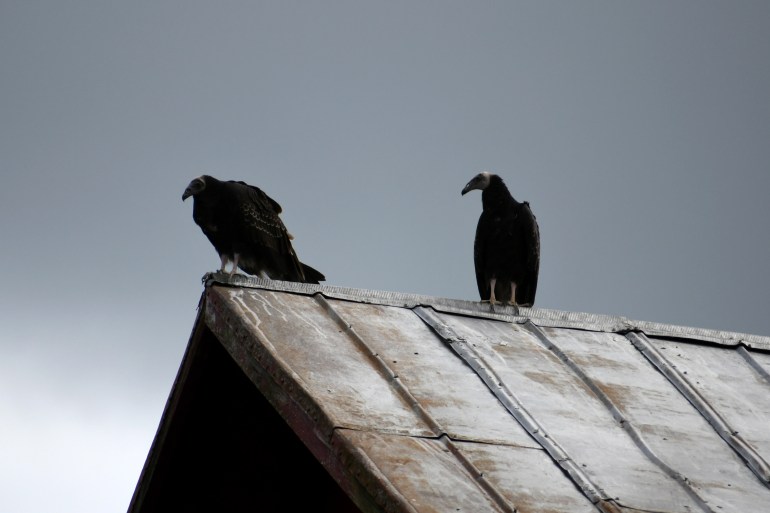
he-man, all-too he-man, by Geraint Jonathan

(We are blessed with another new item for this month–three actually by Geraint Jonathan. The first appears today, the second tomorrow and the third next week–Leila)

i said to her i said

unhesitating obedience is all i ask

taking what i say as gospel

hanging on to my every syllable

is all that’s required

apart from that

you’re free to do as i tell you i said

my good books are easy to be in

it’s wordy there for sure

but listen is an anagram of silent

& your silence is the best i’ve heard yet

& if you think that’s a riddle think again

that’s what i said i couldn’t’ve been clearer

but did she listen not a bit of it

so off i went

you’ve a vengeful nature she said

out of nowhere just like that

vengeful nature now is it i said

we’ll fucking see about that

Fang and Rags Wish You Merry Christmas

It should be a hanging offense to publish childhood pet memories at Christmastime.

If put to a vote I would surely cast an aye. But that only goes for the unforgivable Marley and Me type of things that some people need to both publish and read for no other discernable purpose than to ruin Kleenex and cause an overall state of weepy depression.

Perhaps disregarding sensible behavior, today I salute Fang and Rags, a canine tag team who took peculiar joy in destruction, which they routinely avoided punishment for by batting their brown eyes and sharing the innocent facial expressions (as seen in the photograph taken on a Polaroid land camera circa 1972 or 73). Fang is the brown Dachsund-Poltergeist mix, Rags the brief white ball of fluff. They both enjoyed long, spoiled lives from 1969 to 1986.

Every year, even in dotage, Fang attacked the Christmas Tree at least once, while Rags, usually more of a loud enabler than a man of action, rooted him on. It was both a source of vexation and even amusement (the smiles, however, seldom arrived before February). Nobody knew why it happened, nor did anyone bother to ask. Fang was amazingly powerful, Mighty Mouse like, and he often felt obliged to display his physical prowess, while yippy-yappy Rags had more of a role similar to that of a “Wrestling Manager.” (I have mentioned the boys’ brand of hooliganism in previous years, in other places, but it continues to remain worth remembering.)

So, to all whose trees are being toppled, packages urinated on and who exist in a constant state of unease, please remember to hold your temper and realize that you are experiencing your The Good Old Days.

Enjoy.

Merry Christmas from Fang and Rags, ever eternal at Saragun Springs.

Leila

Oh, and here is one of the boys’ favorite Christmas songs:

Amelia in Waiting

(Note: This really is an oldie. First written when Bill and Monica were an ugsome item in the White House, it has seen many changes over the years. I had high, high hopes for this once; it felt like it could have been something more, but never quite made it. I learned things are what they are destined to be–Leila)

The cataract sky saw not, yet watched; the wind moved not, yet listened; God spoke not, yet instructed. The day simply was and would be until the last mind summoned the strength to stop thinking about it. A low slung blotch of scuzzy radiance, which Amy assumed was the sun, slouched west within the ashes.

Amy gazed out the living room window. Only a double thickness of glass lay between her lungs and the poisons of an imagined alien atmosphere.

The cul-de-sac that had always been Amy’s home lay beneath the depthless sky. All around the remnants of happier times rotted like the crabapples that not even the crows would eat: Cheerful summer barbecue grills tucked under blue tarps held in place by cinder blocks; formerly lush and profuse gardens, now forlorn mudholes; abandoned toys sporting mossy growths, and what had gone unraked of the fiercely luminescent October leaves lay bunched in the gutters and storm drains.

Even at just sixteen, Amy knew this time of year well. It was the annual “Pause” that came over the well-fed cul-de-sac between the termination of Halloween festivities and the agreed upon going up of the Christmas lights on the Sunday of the Thanksgiving weekend. There was something affected and childish and selfish about this collective mood; something which Amy and her like-minded friends cleverly disparaged. With just enough education in their heads to make them annoying, the kids had wonked-up several alliterative titles for the event: The Morbid Malaise and the Enormous Ennui had been Amy’s contributions to that year’s gathering at the Round Table—but, alas, the others had favored the lowest common denominatorish, Poopy Pout.

The grandfather clock lashed four tones. This startled Amy out of her thoughts. Each chime had landed on her soul. Until that moment the grandfather clock had always been a benign friend that had never behaved rudely. Something about this feeling made Amy feel like a stranger in her own home.

She had purposely left the house still upon her arrival. Under normal circumstances, Amy felt ill at ease in places where darkness, silence and contemplation were the chief components. She had even gone to the extreme measure of turning off her cell—which, for Amy, was tantamount to plucking out an eye.

With a reluctant sigh, Amy performed her one and only chore; an action that she could be relied on doing about three times in five: she flipped the porch light on for her parents, who’d be home from work within the hour.

Amy’s bedroom lay adjacent to the living room and faced the cul-de-sac. Unlike the rest of the tidily kept house, her room was a disorganized mess which resembled an open archeological dig over-topped by a pop culture village. It was a mixture of the distant past and the oh-so-now. Here and there were fissures in the debris field that allowed forgotten toys and games from Amy’s deeper childhood to emerge like trilobites for the picking. Items such as realistically dead virtual pets and dogeared Pokemon cards lay intermingled with current issues of celebrity scandal sheets and the spent husks of no less than six cellulars—Oh, and there was a weird, fruity smell in the room too. Amy had theorized that the odor was caused by a known perfume spill interacting with the upending of an older fragrance. Theorizing on the subject was as close to doing something about it as she got.

The splay of the room was simple enough: bed, desk and stuff. The first two were constants, the third was ever-changing. Atop the various variables which are important to a young lady of Amy’s social status and economic circumstances, lay a smattering of pamphlets. She had gotten those that very afternoon. Amy had hurled the pamphlets at her room when she got home in vain hope that the accumulated ghosts of her childhood might do something about them. No such luck. In the feeble light cast by the perpetual gloaming, Folic Acid And You (a way too happy-clappy missive which extolled the virtues of the gross bean family) stood out like a missionary who had entered the jungle with a cross in one hand and a rifle in the other.

“No, no, no,” Amy hissed as she performed a backwards dive onto her bed. This was an ancient action of hers which sometimes toppled perfume bottles, and had recently earned her three stitches in her left elbow because Amy had forgotten about the (alleged) coffin nails Ty had given her on their first date. Amy had heard that some guys bring flowers and/or candy along for that sort of thing; but, alas, Amy was attracted to guys who saw the upside in gifting (alleged) coffin nails.

There was a row of school pictures starring, naturally, Amy, hanging below the crown molding in Amy’s room. The queue of ten portraits ran left to right and ranged from the first grade to Amy’s sophomore year in high school. Daddy had hung the first seven or eight, but toward the end of his conscription Daddy had cracked-clever forty times too many about the possibility of quicksand that she had to drop him from the portrait hanging team.

Lying in the gloom, Amy took stock of the Ghosts of Amy’s Past. Outside business transacted with the Tooth Fairy, Amys One through Three were basically the same person; slightly round in the cheek and grinning shyly, each of Amy’s earliest incarnations had bobbed bone-blond hair and had been installed in a jumper that had been designed to be girly and rugged at the same time. Four had a touch less fat in her cheeks and her hair had begun the long process of extracting what’s right about red from the sun and including such in its sheen; these trends progressed further in the faces of Five and Six.

To be frank, Six had been the final Amy to show her portrait taker a scintilla of respect. Six was the last Amy to grin shyly for the lens. Seven had concocted a goofy, off-kilter grin that suggested that she might have been high on something (which hadn’t been the case). And Eight, well she just flat out sneered at the camera. Amy recalled the photographer asking Eight if she really wanted to come off that way, and she also remembered him shrugging in a Okay-kid-I-don’t-give-a-shit way when Eight had replied, “Oh, yes indeedy.”

Nine had been high on something. A member of Amy’s coven had relieved her mother’s purse of excess Vicodin that Picture Day. Glassy-eyed and neither grinning nor sneering, Nine was the least there in the queue.

Something had gone wrong with Ten. Only Amy was aware of the problem. No one else looked beyond Ten’s neon pink hair or the mascara and foundation that had been laid on with a trowel (now, no one is suggesting that girls who look this way aren’t what they should be). No, what had gone wrong with Ten lay scattered throughout her face like a sky composed of cremated bones.

She shuffled herself up onto her elbows to get a better look at Ten. Unlike Seven through Nine, the expression on Ten’s face was honest (even snarly Eight had shone a little light in her eyes that told that she wasn’t as put out as she pretended to be). Yet there was a ruthlessness emanating from Ten which Amy couldn’t understand; an incipient hardness that had no business being in the face of a cul-de-sac kid. Nothing out of the ordinary had happened that Picture Day, but for the life of her Amy couldn’t remember the actual taking of her portrait—which was odd, for Amy never forgot anything about her life. Some persons are that way, you know; some persons who fail at turning a porch light on  twice in five can be the same kind of person who has total recall in regards to where they were, what they had worn and who said what about whom on a meaningless day that had come and gone so many ends of the world ago.

When Amy was four, she had stolen a cranberry off the table at the grocery store. She recalled expecting a flavor similar to the sugary concoction that came out of the can, and was unpleasantly surprised by a ferocious bitterness. This had happened on a Tuesday afternoon, right after preschool.

When she was seven, an ambulance came to take Amy’s former next-door neighbor, Mrs. Carlyle, away from the cul-de-sac for good. Until that July 23rd, a Thursday, Mrs. Carlyle had been a friendly pest who punctuated her every observation with a tittering laugh. Though Mom had tried to keep Amy from gawking at Mrs. Carlyle as the old lady lay on a gurney, it had been too late: Amy had seen the feverish, insane mania in Mrs. Carlyle’s face as well as getting a clear look at the horrible sores that covered her hellishly white fishbelly thighs. And there had been that wonderful, magical October Sunday morning, two years back, when a blanket of ground fog suddenly contained the head of a deer poking up like a submarine’s periscope at the treeline behind the cul-de-sac.

A voice spoke up from the mists of Amy’s mind as she lay in the increasing darkness. This voice was composed of the worst things in life. This voice had its own weird, fruity imagined smell; a breath which wasn’t the mingling of divergent off-brand perfumes forming a third, uneasy scent, but was the decaying stench given off by a car killed pet. The timbre of the voice matched the dusty click made by sun-broiled Scotch broom pods. And this voice gave birth to unwholesome visions such as “green-rimmed fiery pustules forming on fishbelly thighs” (that was written by Amy in her second discarded attempt at a diary, not by her author). Amy thought this the voice of Ten.

“You can still beg for a do-over,” Ten said. “It’ll be like the story you didn’t get in Lit class: ‘they let the air in.’”

There was something beguiling about Ten’s suggestion. Something practical. But the more Amy turned it over in her mind, the more she found herself thinking cold, reptilian thoughts; thoughts Amy equated with the suicide of the soul.

The grandfather clock spat out the half. A ghostly pattern cast by a set of headlights formed on the bedroom wall and slid away.

Amy rose off the bed and went to the full length mirror which was attached to her bedroom door. She stood sideways and ran her hands from her shoulders to her hips. She then laid her hands on her flat belly. An expression of horror formed in her eyes; it stood out like a flame in the twilight.

“No,” Amy said breathlessly. “No. The air is poison.”

A Christmas Rerun: Merry Christmas, Charleston Claws

This one has appeared around the Noel twice–originally on Literally Stories and last year on this site.

Far be in from me to prevent a possible tradition from setting in. Stranger stuff has happened. Not in bunches, but some.

There are famous fictional Cat names in this: Rhubarb, Toonces. Most of the others are named after demons, including “Amy” (no fooling). May all the roving fiends discover kindness, not just during the holidays but throughout their hectic lives.

Leila

Merry Christmas, Charleston Claws

Staying Fit by Christopher J Ananias

(CJA has previously published prose and photography in the Springs, now he successfully adds poetry to his site canon–LA)

only the vain

and who isn’t in this country?

can feel the strain

of trying to stay the same

sweat rolling down my brain

all the while lines appear

caked up thick!

in a funeral parlor’s pit

staying fit, I should trade it for a crucifix

exercise schedules

and dietary rituals

spread on low-carb bread

the gym and the road, to cheat

the old varicose veined hag of death

who appears by our bedside

the heartbeat’s timekeeper,

with a coroner’s stopwatch

destroying our sunshine

the temporal concubine

run five miles today

the flesh says, “Get slim, Sunny Jim”

still marked and measured for death

—I will fulfill your destiny yet!

with or without the benefit

of running shoes and exercise equipment

a Nike SWOOSH on your coffin lid?

Calling the Garden of Contempt

Just yesterday I realized there was not a post scheduled for this day in final semi-private month of Saragun Springs.

That will not do.

But I cannot move myself to bash around the rerun cabinet, just yet. That feels lazy, and the gods have a way of punishing lazy people by extending the “to do” list. It is a common and annoying punishment that I am tired of experiencing. So, I will add something new.

When seeking something new, the time honored and much revered concept of “Complaining” usually runs to the front of my mind. Oh, my head is a rich field of complaints. Vexations everywhere. Recently there was yet another ugsome development in the Rock and Roll Hall of Fame Complaint Field in my mind.

You see, Chubby Checker was just voted in. I personally have nothing against Chubby, I admire someone who can make a good living off one song that he did not write nor even recorded first. That takes perseverance and a lot more than luck. And I must congratulate him on appearing at least once in my memory, in every year I have been alive, which, sigh, is getting to be an ungainly sum. For me, you cannot have The Peppermint Twist without Chubby Checker.

Still, I have always been under the impression that a Hall of Fame is for the very best. That such exists to extol the greatest in a field. A place in which the difference between Great and good is clearly marked. The Beatles and Ray Charles are in the Rock and Roll Hall of Fame and damn well deserve it. But the addition of Chubby tells me there are people out there, people in charge of safeguarding the excellence of music history, who believe that Chubby Checker is of the same grade as, say, Nobel laureate Bob Dylan.

You have got to be kidding.

Chubby had been pissing and moaning about his exclusion for a number of years. I will not blame him for that, no doubt he is reasonably involved with the fame level of Chubby Checker. But I cannot help but think that he got in because the Hall got tired of his whining about it. Like Cher (who for me is better qualified than Chubby but hardly compares in quality to someone like Etta James), who bitched loudly saying she’d never accept, but who did not let the ink dry on her invitation when asked.

The Moral: You Can Complain Yourself Into the Rock and Roll Hall of Fame.

Maybe the tactic will swell the hall to include the 1910 Fruitgum Company. Or, how about, Bobby “Boris” Pickett, Sam the Sham and the Pharaohs, ? and the Mysterians?

Anyway, I do not believe that any Hall of Fame should adopt the Participation Trophy standard.

Ah, here we are at the point where this is long enough to be a post.

Thank you again Garden of Contempt!

Leila

Saragun Verse: Ode to the Bought and Sold

Such a pettifog, he

Scheming and placating,

Somehow forgetting the gods

Who foreclose on borrowed truth

Such an obsequity, she

Parroting upstairs melodies

Forgetting there are no loopholes

For heads tucked in the noose

It begins as sweet stuff

Everyone on the line

Everyone plenty good enough

Graham crackers and story time

Dreams on wind dried sheets

Stories with morals to be learned

Yet the cash machine must collect

Between the crib and the urn

Such a cynic, me

Listing and berating

Laughter without smiles

And when my phone rings

It kills without style

BehindThePearlyGates.com by Irene Allison

(Note: Please note I was still using my first name when I wrote this eleven years ago. Call it vanity, call it tripe, call it home, but this story, now published, means that every thing I have ever “submitted” somewhere has been “accepted.” Boowahahaha. ‘t is of the season and has the distinction of getting rejected twice by Literally Stories though submitted only once. What Einstein said about madness can also be attributed to persistence–Merry Christmas! Leila)

I’ve recently stacked my Internet access up to Heaven. Literally. Though pricey, I find BehindThePearlyGates.com (BTPG) worth the expense. The site gives me an up close and personal glimpse into the fey doings of God’s government (which, interestingly, is about as organized as that of a pirate ship). Just the other day I signed in and found myself connected to a scandal that had been lurking on the books since 1843.

Upon signing in to the site, a precocious and sometimes indigestible little boy Angel named Somerset ( whose voice comes off like that of Truman Capote being channeled through a rubber ducky), greets you by name and proceeds to give you the dish on what’s on the dock that day. Sometimes it’s Soul Judging (my personal favorite), other times it’s Smiting (“Yee-ouch,” according to Somerset), and once in awhile God will just sit there and go on a rant about the lack of clarity in prayers. There’s never a dull moment at BTPG.

All the action takes place in the Great Hall, which is nothing but a blinding white expanse in which only God, a throne , and whomever God has a beef with are present.

I see God as a short, somewhat rumpled woman who has a talent for losing her left earring during the scrum of the day. This is because God has arranged it that when you look at and listen to her you see and hear yourself–even though nothing God does or says is likely to remind you of yourself. It doesn’t matter how many people look at and listen to God at the same time, everybody “gets” him- or herself. Even the visually and hearing impaired “see” and “hear” their shapes and tones in their mind’s eye. However, this isn’t done to bring us closer to God. Since we are beings that have free will, God reflects your form as a reminder of whose fault it is when things go wrong between the two of you.

Somerset announced that the scandal involved the Three Ghosts of Christmas. And as the “Triumvirate” stood nervously before God on her throne (a seat that adjusts to its beholder), I had no doubt that each member of the “Treacherous Trio” (as snarky little Somerset kept calling them) that each one saw himself seated there, examining a scroll, and making unhappy noises to himself. The Ghosts appeared to be rightfully mortified, and judging from the sideways glances they cast between each other, it seemed to me that each Ghost was considering throwing the other two under the bus, so to speak.

God suddenly tossed the scroll into the air and it vanished with a “foom” and puff of green smoke. She (as me) leaned forward and smiled at the Ghosts. (Oh, I had been working an apricot ascot and an old time pince nez at work that day, which has nothing to do with anything other than I like bragging my thrift store finds up.)

“Tell me, Ghost of Christmas Past,” God said sweetly to an individual who looked like a clean shaven garden gnome, “I’ve got three trillion prayers on hold–Which do I answer, which do I cast into the pit?”

Even though he was very small, the Ghost spoke with a cultured baritone voice. “Why I’d be lost, Your Highness, for I lack Your infinite wisdom.”

“Present!” God called out to the middle Ghost who looked an awful lot like a Hell’s Angel in drag.

“What would you do in the given situation. And if I really were you, I’d be careful not to feed me the same bullshit that your brother has tried to serve up.”

Both the Past and the Ghost of Christmas Yet to Come sidestepped away from their middle brother as though he had cholera. The consensus in various BTPG chatrooms has no love lost between the Present and his siblings, and that when it comes to bus throwing under, he is without peer. Of course the Triumvirate already knew what they were on the carpet of all carpets for, but only the Present was rash enough to make an early mention of it, which is exactly what he proceeded to do. “Your Majesty,” the Ghost of Christmas Present said with a gruff yet gregarious voice, “I know of no prayers addressed to me for I am a humble servant, but I do know that these two here,” he added with an all inclusive left-to-right shift of his eyes, “and old Marley had been as thick as thieves, if Your Grace will pardon the expression.”

A sour expression fell over God’s face. I didn’t know that my face was so good at conveying contempt.

“To Come!” God called energetically to a gangly, seven-foot Goth body-hoodie who held a staff in one bony hand. Even though the Ghost of Christmas Yet to Come showed no visage, the spirit had affected a “too cool for school” posture that God had obviously picked up on and did not like. The Ghost started at hearing his name, but he quickly regained his insolent composure.

“How nice that you’re awake,” God said. “I know you don’t speak, but if you’ll favor me with one thump of your stick for yay, two for neigh, I ask, do you hold with tattlers?”

A pair of enthusiastic wallops echoed through the Great Hall.

“Neither do I,” God said. “But now that the subject of this interview has been awkwardly and prematurely brought to light, I feel that I best remind all of you that further lying, backstabbing, and disrespect might prevent a still possible happy ending. Am I clear?”

The Ghosts, even the mute To Come, assured God that she had been clear. Crystal, if you’ll pardon the expression.

The scroll that had foomed and puffed out of existence earlier, reappeared in God’s hands. She read from it aloud:

“On 24 December 1843, a punished soul by the name of Jacob Marley visited his odious former business partner, one Ebeneezer Scrooge, of London. Marley proceeded to give Scrooge insider information on what would happen to him after death if Scrooge didn’t mend his stingy, evil ways.” God looked up from the scroll and trained her gaze on the Present. “Sirrah, please be so good as to refresh me on what happens to usuers and misers upon crossover.”

The Ghost of Christmas Present cleared his throat and said, “They must carry a chain that they had girded on willingly in life, then walk among their fellow beings after death for not having done so in life.”

“And?”

“Um-well,” the ghost stammered, “they are to lament the situation because they have lost their power to interfere on behalf of the good, My Liege.”

“Would you also be as kind to tell everyone who decides on both the punishment and how long it shall last?”

“You, on both accounts,” the Present mumbled.

“Come again?”

“You, Your Grace.”

God then trained her gaze on the Ghost of Christmas Past. “You’ve been around long enough to know that every single groaning spirit claims that his or her punishment exceeds the crime, and that they have been made to suffer forever–even though it is known to all that I will eventually unclap their chains, after a suitable interval, and then place them in a position from which they may rise or fall on the strength of his or her imagination. Old Marley had been in evil business for three-and-twenty years; I was going to keep him fettered for six-and-forty. Imagine my surprise when I discovered that someone had improved his situation after just seven years had passed.”

The Ghosts found the floor extremely interesting.

God continued: “Your actions restored Marley’s power to do good. You allowed him to go to Scrooge with a warning. When that didn’t work, the three of you, on Marley’s behest, got it across to the old bastard that Marley hadn’t been kidding.”

God rose to her feet and began to pace tro in fro with obviously mock concentration. She rubbed her chin and said, “Funny, I don’t recall greenlighting this project. Nor do I recall anyone proposing this sort of scheme. Maybe I’m getting old. It’s either that or someone has made a very bold move.”

Suddenly, a historic event occurred in Heaven. a real stunner. It even caused Sommerset to drop an F-Bomb in the background. The ever-silent ghost of Christmas Yet to Come spoke: “But you said we could have free will,” a positively angst-ridden, teenage boy-like voice screeched.

I had never seen God taken by surprise before. “When did that thing learn how to speak?” She asked the room in general.

“Hey,” To Come screeched some more, “I’m right here! People shake in their shoes when they see me coming, so how about a little respect?”

“My apologies,” God said. “And you’re right, you do have free will, but it wouldn’t be worth much if there weren’t consequences for using it. However, I am willing to admit that this little stunt you’ve pulled off has turned out well. It was done for the sake of kindness and hope. And to prove to my naysayers who claim I’m a vicious bully, I will not take actions against anyone involved, even though each one of you have it coming.”

A great, palpable relief swept over the Ghosts. This was going much better than any of them had dared to dream. Still, I’ve been on the site enough to know that God is most dangerous in the “however.”

“However,” God said, “this doesn’t mean that there won’t be some necessary changes made. The Triumvirate will continue to serve in its time honored manner, but there are three things we need to address before we can set this business aside forever.”

The Ghost of Christmas Past sensed that God needed to hear something from the group, if only to set up her rehearsed lines. “How may we please Your Highness?”

“I’m so glad you asked,” she said. “The first matter is a condition not subject to alteration: pull another end-around like this one in the future, and there’ll be a sudden need for the Three Ghosts of Feces–Are we met?”

Oh, yes, yes indeedy.

“Two is the big one,” God said. “You see, when you altered Scrooge, you altered the life path of one Timothy Cratchit who died nine-and-eighty years later than he should have. Master Cratchit expressed his gratitude by siring eleven children, who in turn added an average of nine persons apiece to the population, and so forth. Lots and lots of and so forth. Enough and so forth to fill a medium-sized city, nowadays. Since the Triumvirate is responsible for these persons, it gets to be God to them. You’ll get the opportunity to watch free will exercised by this randy clan all over the globe. You will listen to their prayers and keep track of their sins. You will endure the blame they cast at me when the things they do go wrong. You will decide how each one will be classified upon his and her reckonings. Is that clear?”

It was everything but clear, but the Ghosts kept that to themselves.

“It’s a big job,” God said, “I recommend that you divide the world in thirds. And I don’t want to hear any whining about this, either. I do seven billion plus, each and every minute of each and every day. You’d better get busy.”

“But you said there were three things,” To Come whined. For a second I thought that the Present was going to take the Future’s staff away from him and cudgel the punk with it.

“Ah, that’s right,” God said. No one had been fooled into believing that she had actually forgotten something, yet that doesn’t stop her from pretending to do so from time to time. ”Just for the sake of my own curiosity, what moved the three of you to do such a thing?”

The Past spoke for the Triumvirate: “A man named Dickens tells a wonderful tale, Sire. We got the idea from him.”

An incredulous expression bloomed in God’s face (since she was me, I recognized the expression as the one I must have had on my face the first time I watched Red Dwarf). Then she began to laugh, long and hard. Tears streamed down her cheeks, and they took the remainder of my morning mascara with them, which caused God to look like a raccoon. She finally gained her composure, saw that the Ghosts were staring at her, and said: “You’re still here?”

The Ghosts took the hint and wasted no time getting gone.

One of the coolest perks that subscribers get for signing up (and of course, paying for) with BTPG.com, is a personal word from God at the conclusion of that day’s business.

“Irene Allison!” God bellowed. “I know you are watching due to the slovenly shape I’ve taken.” Her/my face filled my screen.

“Yes, O Spell Checker of the Soul, how may I be of service,” I replied.

“Your family hails from Ireland, does it not?”

“Yes,” I said. “That thing you did to the potatoes in the nineteenth-century made immigrating to America necessary.”

“”How I love the Irish, and not for just their long memories. You, Irene, have a spot of English in you as well.”

“A Cratchit?” I asked. “But weren’t they a fictional family?”

“We observe no difference between the made up and the natural born here in Heaven,” God said. “If something invented sticks and prospers, it’s the same as real in my mind.”

“So you’ve got a Wizard of Oz, a Dracula, and Old mother Hubbard, up there?”

“Precisely.”

“May I ask what it was that you found so funny earlier?” When I asked that, something inside my mind groaned. I’ve often been exposed to God’s surprisingly puerile sense of humor. the thing that groaned articulated itself, and told me that I had just done what God had wanted me to do.

“You write, don’t you, Irene?” God asked, and I spied a juvenile glee in her/my eyes. “I mean, you’re hardly Jane Austen, but you do scribbles, do you not?”

“Uh huh.”

“Do you know what writers are, Irene?” Here, God had difficulty not laughing halfway through her own straight line. Now, I knew what was coming, but when you are conversing with the Supreme Being of the Universe, it’s best to play along.

“They’re humbug! Humbug! I tell you!” God said. And she began laughing and snorting laughter out her nose (this is one embarrassing to look at item that I have never done). I thought I had heard her little toady Somerset join in with her laughter. This is when I quietly signed out of the site and went into the kitchen to fix myself a martini. A double.

I thought I saw the shape of the Ghost of Yet to Come reflected in the door of my microwave. He was writing something on a scroll and shaking his head in a tut tut sort of way. I laid a dish towel over the microwave and made my drink a triple.

Whatever happened to solidarity by Michael Bloor

(Note–Not everything this month before we go public is a rerun; and today we bring you a fresh one by our friend, Michael Bloor–LA)

Andy and Davie were on their usual walk, along the banks of the Allanwater as far as the wooden footbridge, and then back again. They were discussing Scotland’s nail-biting victory last week over the Danes, sending the Scots to the World Cup Finals for the first time since 1998. Andy was English and had little interest in football, but he’d been deeply impressed by the tremendous, spontaneous upwelling of joy across the entire Scottish nation that the game had caused. Davie was trying to explain that it wasn’t just about the result, but the circumstances – the manner of the win. Three of the four goals were truly things of beauty. The match took place at Glasgow’s Hampden Park in front of a delirious home crowd, screened live and free-to-view in every home and every pub. It followed years and years of failure to qualify – some of the present team being unborn at the time Scotland had last qualified.

Andy nodded good-humouredly, but Davie could tell that he hadn’t yet got his point across. He tried again:

‘I was ten when I first started going to the football. In ‘The Boys Enclosure’ (admission: 9 pence – 5p. in new money). It was always packed solid, but you were always among friends, you roared, you booed, you sang, and when they scored you all swept forward like a mighty wave. Like I said, I was ten, and for the first time I felt a part of a whole. That was what Scotland felt when that lovely fourth goal hit the net in the last minute of extra time: it felt that we were part of a whole. It was a feeling of solidarity.’

‘OK, yeah, I’ve got it now, Davie. Solidarity: maybe I didn’t recognise it ’til you said it. Solidarity eh? I thought that had disappeared back in 1985.’

‘1985?? Ah, you mean Polmaise?’

[Polmaise Colliery, or the remains of it, lay just nine miles away. All through the year-long miners’ strike in 1984-85, the Polmaise miners never posted pickets at the mine gates to try to deter fellow miners from returning to work: they didn’t need to. They knew that Polmaise miners were all, to a man, solidly behind the strike. Polmaise was famous: they’d previously struck for 10 whole months back in 1938; they’d already been out on strike for a fortnight in 1984, before the national miners’ strike was declared. When the national strike was broken, a whole year later, and the union voted for a return to work, Polmaise, alone, stayed out for a further week.]

‘Yeah, I mean Polmaise. That was solidarity, Davie. I was there, you know, with the whole village at the gates to applaud the lads coming off the last shift, when the Thatcher government closed the pit two years later.’

‘Good for you, Andy. I understand: that was solidarity. So, instead, what would you call our nation of leaping hearts when the ref blew the final whistle at Hampden Park the other night?’

‘Maybe Communion? A transcendent thing, shared and remembered. ‘

‘Ah, like Archie Gemmill’s solo goal against the Dutch in the World Cup Finals in Argentina in 1978?’

‘Ha, if you like.’

‘OK, I’ll settle for communion over solidarity. By the way, do you know what William McIlvanney, your favourite Scots author, did when he got the publisher’s advance for his first novel?’

‘Beats me, Davie.’

‘He jacked in his teaching job in Kilmarnock and headed off to watch Scotland and Archie Gemmill in the 1978 World Cup Finals in Argentina.’

Andy smiled, but he was absorbed in watching a Dipper fossicking in the Allanwater shallows over at the opposite bank. Part of the attraction of Dippers is that, like Puffins, they are both comical in appearance and surprisingly successful in their daily tasks. Dippers are about the same size as a thrush, but black and definitely portly in appearance, with a big white bib under their chin. They are called ‘Dippers’ because they constantly bow and nod their heads up and down, like manic Victorian butlers. Yet these clown-like birds are surprisingly swift underwater swimmers and efficient finders of caddisfly larvae on the bottoms of rivers, lochs and burns.

Davie followed Andy’s gaze. ‘That Dipper looks perfectly happy on his own over there. Maybe we don’t really need communion with others?’

‘Ah, but he’s in communion with Nature.’