Dale Williams Barrigar: Man of Sorrows

(“Likeness of Luke the Drifter”–provided by DWB)

I write this on May 4, 2025.

My mother passed away in May of 2011. I often used to listen to Townes Van Zandt’s classic song “Sanitarium Blues” on my way to and from the various dementia wards she was incarcerated in for the last six or so years of her 69-year-long life.

I visited her religiously multiple times per week for every single week she was in there.

She had a form of dementia which was not quite diagnosable in conventional terms. For me, she’d turned into a kind of silent saint who’d purposefully, but also not on purpose, removed herself from the madness beyond the walls, i.e. early twenty-first century USA.

She could see it all coming. She always knew who I was. I knew this from the way she always looked at me with a silent knowing which told me she knew exactly who I was.

In May of 2012, my (now ex-) wife was diagnosed with breast cancer two weeks after we (mutually agreed upon) split up.

In May of 2013, I was forced to cut off all contact with a very special friend, a red-haired, blue-eyed, brilliant Chicago stage actress who had offered me enormous consolation at one point but whose multiple personality disorders were no longer allowing me to be myself, as they say. Anyone who’s ever been deeply entangled with a partial (sometimes full-on) narcissist who also possesses histrionic, borderline, and occasionally substance use disorders, not to mention an endless talent for cheating on you and covering her tracks continuously even though you know something’s up anyway, will understand how horrible and draining such a relationship, and breakup, can be (including having to look over your shoulder at night for a while). (Perhaps truer words than these were never spoken: I do believe her, though I know she lies.” – Mr. Shakes.)

In May of 2014, I lost my job after a total of fifteen years working at the same place.

In May of 2015, I suffered a mental breakdown that was occasioned by a pill addiction that (accidentally) caught me in its grip.

In May of 2016, I was slammed with fresh waves of grief over the passing on two months earlier of my beloved dog, sidekick, assistant, friend, and family member, Cowboy Brown Barrigar.

In May of 2020, George Floyd was crucified on national TV, an event that shook me far deeper than I can even describe right now.

In May of 2024, I suffered a stroke at the age of 57. (Fully recovered now.)

I can’t remember right now what happened in May of ’17, ’18, ’19, ’21, ’22, ’23, etc., but somewhere in there, there was a pandemic and there are probably a few other tragic events I’m leaving out, but you get the picture.

And yet I still love the Merry Month of May. I love it for itself, and I love it because I love and appreciate all the months, and all the seasons, of the year. I love and appreciate them all because I don’t know which month I’ll be leaving this Planet during. I also never know how many more times I’ll be seeing the Merry Month of May roll around, so I want to appreciate this one just in case I happen to miss the rest of them.

My poem “Chicago Spleen” is a bounce-back poem, kind of like how the plants all bounce back in May in northern Illinois where I live. “Bouncing back” means not letting it get you down, whatever “it” is. It does NOT mean we do not sometimes EMBRACE our depression, horror, anxiety, and sadness. Pretending everything is A-OK when it manifestly is NOT ok can truly be a fool’s errand. On the other hand, when we consider the fact that this might be the very last time on Planet Earth we ever get to see whatever month we’re in at the time, it gives one pause and makes her or him wonder what’s really worth getting all upset about.

Herman Melville’s book-length poem CLAREL has probably been read in its entirety by less than fifty people, ever, on this Planet, and that’s no joke.

It ends with these lines: “And even death may prove unreal at last / and stoics be astounded into heaven.”

Notation: The title of my poem is a reference to Charles Baudelaire’s Paris Spleen, a small book, a thin, vast work that has a magical significance for me, AND for the protagonist of the following poem.

Chicago Spleen; or, The Christmas Decision

A writer decided to try and hammer

together her book once

and for all

on Christmas Eve

of 2013 CE.

When the decision hit,

for some reason she

looked over at

the clock

on the wall

of the bus station.

Okay. 7:46 P.M.

Central Time in the United States

of Illinois, 21st century

blues-return

style.

46

was her favorite

number.

She didn’t know

why then, but she knew

there is always a reason.

Every time she saw

that number,

she would think

it must be

something good, like

a positive warning

that something good

was coming even if

it never really came

or it had already been here

before that

even though you didn’t

know it – until

now.

She didn’t go running

around the streets telling

anybody about it.

She just thought it,

it sitting

quietly there

in her mind

because she

told herself

(out loud),

“I have trained

my mind.”

She also believed

(like so many others

of us) that 7

is a heavenly

number.

When she saw the “7:46”

of the digital wall clock flashing

at her, like a meaningfully

meaningless wink, her “I”

decided again to try

and commit to this.

Even though, or maybe

especially because,

she found herself

sitting in a bus station

by herself

on Christmas Eve.

Even if it makes her

die the deaths, the endless

deaths,

she thought

to herself.

Even if it makes me

die the death!

She told herself,

and the rear end of his bus,

as his bus

disappeared.

Dale W. Barrigar is a poet and shirt sleeves religious philosopher from Berwyn and Oak Park, Illinois, USA, where hover the ghosts of Frank Lloyd Wright and Ernest Heminway whose spirits are endless inspirations around every corner. Barrigar was transformed into a believer in miracles by the hard knocks of life.

Flight and Song by Dale Barrigar Williams

(“Self with hidden face by hair next to AI Monster”–image provided by DWB)

preface

Part of the purpose of this preface is to correct two injustices.

On April 29, 2025, an AI repeatedly told me that “The Last Shot” is NOT a song by Lou Reed. The stubborn, and ridiculously wrong, “AI” said this, over and over and even when asked in a variety of contexts: “The Last Shot” is a song by Reed, and is NOT a song by Lou Reed. “The Last Shot” IS a song by Lou Reed, off his legendary 1983 album Legendary Hearts, a song with perfect lyrics, whether or not it is also an instrumental by “Reed,” with no lyrics (a song I’m not familiar with).

So, the first injustice-correction is this simple fact-notation: “THE LAST SHOT” IS A SONG BY LOU REED OFF HIS 1983 LEGENDARY ALBUM LEGENDARY HEARTS. Robots, you are wrong in so many ways, and will always be wrong in so many ways, no matter how much credence and worship the ones with blinders on may give you. If you wish to solve Climate Change and provide improved medical services to yours truly and others in the future, I salute you. But stop pretending you can produce a certain kind of human beauty, otherwise known as human art. Us humans can’t sing like the birds or the whales, and we don’t try to; and you (dear robots) can’t make poetry like we can (and will never be able to do so). The end…And I will say this again and again and again, perhaps even with my dying breath as the War Bot stands above me making sure I fully expire (or not)…

The second injustice is the way Lou Reed and his songs have been consistently overlooked by the mainstream culture ever since Lou first came on the scene in 1960s NYC with his needle, bottle, and electric guitar and neurotic genius Andy Warhol hiding behind him. On the other side of the coin, almost all artists of any value these days are going to be at least partially, or maybe completely, “underground” figures because of the humanoid, zombie-like, heartless, soulless nature of the mainstream culture now surrounding us. If more were attracted to Lou Reed and his beautiful, raw, genius music, the world itself would be a much better place than it is right now.

Lou Reed’s song “The Last Shot” is a Hemingwayesque piece of work at every level. Among other things, it partakes of a Hemingwayesque and Americanist stance and attitude that can also be seen in various other American artists as wide-ranging as Mark Twain, Gertrude Stein and Mary Baker Eddy, Humphrey Bogart and John Wayne, Joan Crawford and Marilyn Monroe, Eminem and Lana del Rey. Part of this unconventional attitude toward life involves a certain fearlessness and boldness in the face of all circumstances. Other elements include a certain unrestrained wildness, a Native American back-to-nature feeling, a fierce and unblinking knowledge of rampant hypocrisy and corruption in society, a stern morality about telling the truth even when the truth is a “lie” (see Huck Finn) and a total faith in life seemingly against the odds (see Huck Finn and Jim). As such, this is the best of America, not our disgusting consumerism like a bunch of pigs (sorry real pigs, I know you are as intelligent as dogs, or claim you are) wallowing in their own feces.

My poem “Flight and Song” is an attempt to celebrate the positive side of the American character and expose the negative side for all to see by stripping the American language back down to a kind of roughhewn purity from the hinterlands. My audience (“hi!”) is “fit though few,” which is what John Milton called his own audience – Milton, second poet of the English language after Shakespeare. The poem concerns an invented legend straight out of my own daydream, probably ganja-inspired. In many ways, this is fictionalized. On the other hand (and there is always an “on the other hand,” unless you’re a complete dullard or automaton), this poem is about exactly the kinds of things I used to do with exactly the kinds of people I used to do them with, back in 1980s Ronnie Rayguns “heartland USA” America: when we were doing our best to resurrect the rebel spirit of the 1960s without even knowing (consciously) what we were doing, half the time.

Lou Reed died on Sunday morning. His last words were, “Take me into the light.”

Flight and Song

“This dusty old dust is a-gettin’ my home

And I’ve got to be driftin’ along.” – Woody Guthrie

I had heard these legendary

almost-ghost

tales of old unknown

and gaunt guitar players

who still lived along

the Mississippi River

in western Illinois

across from Missouri.

While we were driving

the deep and hilly, tall green

cornfields going on for dusty

miles with their ragged talking

arms and only a partly-hidden

hovel, or a hog hut sometimes,

and for me, the dream

of a farmer’s daughter, maybe

a country Guinevere.

Me and Boomer, Tom, and G,

Little Ed telling the tales

this time, Bob Dylan on

the tape deck, warm Budweiser

cans and Camel cigarettes

being passed around

and gulped down

and puffed upon,

bees, crows, a red-winged

hawk out the moving rear

window, a racoon running

free along the roadside

and then a turtle, and a disappearing

herd of deer, big sky

glowing so yellow

and Indian blue.

Quoting Tad there too.

He was a kid who was always

compulsively quoting

everything anybody said

once he got a mind to.

Otherwise, he was more silent

than the cemetery

we were driving by

and he never said a word.

And now he quoted me

while looking at Tom, “‘They

are still there, and can play way

fucking better than anybody

who ever made a record.

Fuck off, Hendrix knew this shit,

even his dad

said he said it

in an interview.’”

And my best friend Ricky Douglass

said so too, later, while handing me

a funny cigarette in the Blue Devil

junior high school locker room after

everyone else had left

wrestling practice.

Ricky with one brother

just out of jail, another brother

still in, all of us locked in

the system of the town, state

and nation.

And later Ricky told me, “Man,

they kicked his fuckin’ ass so bad

in there you can’t even

recognize him now.”

But later, when I saw him,

Ricky’s brother, drunk, and stoned,

at a barn bash outside Beardstown,

days down the wrong side

of the tracks again,

I recognized him

as Jesus.

And Ricky was the only one

I ever thought could

understand me.

Even though I know

he never did.

And he and me were a we

for a while.

And we were kindred

friends.

A black kid

and a white kid

who were always

together

back then.

dwb

Dr. Dale Williams Barrigar is a journalist and poet from Illinois and Michigan (unemployed), much of whose work involves “popular music,” almost always the GOOD kind – NOT the kind that is crap (life is too short for the crap). As such, he tends to pen more “praise” than criticism, in the spirit of John Ruskin. He also knows that very, very, very, very few, to no, song lyrics are as good as the best poems. An interesting experiment is to read the very best Bob Dylan, or Leonard Cohen, lyrics against (or next to) the very best poems written by William Carlos Williams or Charles Bukowski. There are moments when Dylan and Leonard almost seem to be in the same ballpark with Dr. Williams and Buk, or are in the same ballpark. That’s why they’re the best.

Saragun Verse: Twitchazel and Poppyseed

1

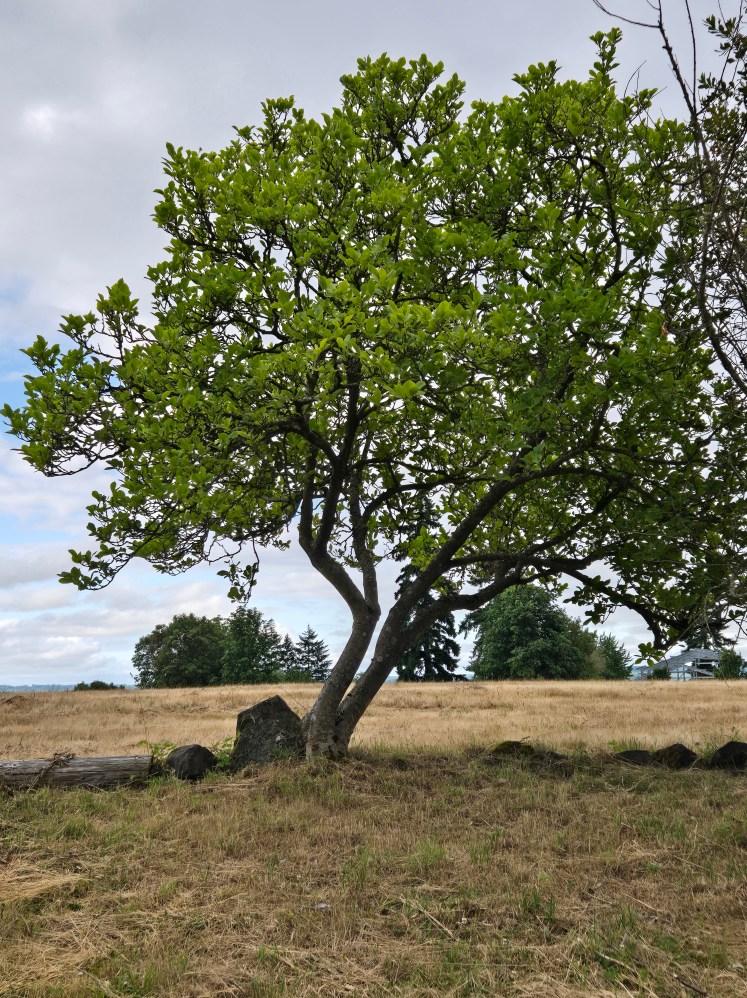
Twitchazel the haunted Crabapple Tree was a progenitor

Within her stunted branches dwelled the happy ghosts of pollinators

But even at five hundred, Twitchazel was not at all dead

And in one odd spring she sprouted a bud that needed to be fed

2

A hive of ghost Bees hung from her highest limb

But ghost pollen will keep one skeleton slim

Still they helped spread the word that their master was still alive

And in need of the dust that was a must for her bud to survive

3

Poppyseed the Hummingbird heard the call for a donation

He was a giving bird and sensed Twitchazel’s frustration

So he swapped the yellow for some of the bud’s musty nectar

And spit the swill out behind a Rosebush named Hector

4

And so it goes in the enchanted wood

Every now and then comes an act of good

The apple thrived, though it grew weird and hirsute

Safe because no Eve would dare pluck such a hairy fruit

Saragun Verse: Witch Field

i

There was a lovely field up for sale

Greed over beauty often prevails

Yet came a Witch who cast a spell

And the field vanished behind a veil

ii

It is still where it was of course

But now resides in dimension twenty four

It is now as safe as a field should be

For Pheasants and lives born of green

iii

Money cannot rise above

The standard hubbub of sniff and grub

Tis a wormy, diseased and phallic thing

A reverse parasite to whom the host clings

iv

Therefore the field is no longer for sale

The realtor may as well peddle pain in hell

For the world is never ugly at peace

In silent repose we are free to dream

Saragun Poems

The Second of May happens to be Universal Ghosts of Lovers Spurned Day in the realm of Saragun Springs. So, in that spirit (pun most certainly intended), we celebrate two of the more dangerous ladies of the moors.

(Please return next week for more May merriment)

Leila

Anne and Kathy

-1-

I saw poor Anne Boleyn with head in hand

Seeking Kate on the moors of haunted land

They spoke of unstable boys and lardy kings

And masters and axes that grind and swing

-2-

“Sad Anne I shall fix you a ghost collar;

One that will make you a head taller”

With magic thread, thimble and witch needle

Kate gloriously restored Anne’s steeple

-3-

Their spirits walk the moors at night

Never resting ere first light

Together forever they laugh and sing

Of damned souls, to the beat of bat wings

-4-

Poor Henry and Heathcliff got what they earned

The wages of cruelty forever burn

Like pope toppers and scepters and royal lust

Far below in the flames evil yet just

send the nobel directly to dame daisy kloverleaf, c/o saragun springs, the multiverse

Dear readerly readers, with the bonus rubaiyat section published  in March I have faithfully translated One hundred quatrains of what was at one time billigits’ gibberish in twenty-fively installents of four.

To equal Omar’s hundred from ninety six, I shall nowly now republish the bonus because everyone in the world, save two, missed it the first time.

There will be more rubaiyats in the future–but the next one will be the Rubaiyat of Dame Daisy Kloverleaf, coming sometime this fall (unlike the wee-winged ones, I like capital letters and punctuationally punctuation marks).

You’re welcome.

Dame Daisy Kloverleaf (soon a Nobel Laureate)

The bonus repeat:

i

willie told the billies a tale deep in gin

about a donkey legend named uncle finn

finn was a humble jackass of no note

but when times got tough he busted the wind

ii

finn flew deep into the darkness of hell

he went in and kicked satans belly bell

yet his legendary tasks had gone unknown

until this magic donkey had to tell

iii

people said finn could not do such bravery

donkeys are useless save in slavery

but after many kicks to the scoffers heads

the people admitted their knavery

iv

spread the story across this land of sin

of the bravest donkey that’s ever been

and may all the knaves say out of respect

you’re a better ass than i uncle finn

the rubaiyat of the billigits: part twenty-four (translated by dame daisy cloverleaf) document

i

the billigits live little lives serene

yet i must stifle an evilmost scream

as they mince frolic and gambol too sweet

i resist punching my hoof through the screen

ii

rhyme schemes and ten beats are doing me in

so many better words fail to win

and those soggy syllables weigh me down

them soft to the tongue like being and been

iii

i will be a magic goat (rose and thorn)

and soar far above life’s punch in the horn

and prance and caper and do whatever

it takes to make it big like capricorn

iv

yet i take solace in my workly work

even though i must machete through the jerks

soonly saint of the adverbs I shall be

long before we see peace on earthly earth

the rubaiyat of the billigits: part twenty-three (translated by dame daisy kloverleaf)

i

people do not respect the deadly dead

they treat us as though we profane the bed

so said a ghost in her pique and fury

giving the moving hoof an achy head

ii

you demand to be both feared and adored

whilst you play siren in the haunted moors

yet you criticize the quick for ire

when you tell them they have the souls of whores

iii

ah but those are words writ by scribely droops

cliched villainy oh so scooby doo

whom if born turkeys would surely be jive

no fresh stories since jesus was new

iv

the moving hoof has heard it all before

exaggerations heaped with scorn

like nails and hair of the dead still grow

their pinocchio-noses add more

the rubaiyat of the billigits: part twenty-two (translated by dame daisy kloverleaf)

i

asses to asses honk to honky

we know willie is a magic donkey

and so devoted to his peggy

that he never rolls in drunk and wonky

ii

flying horse donkey and twin mules make four

in their barnhouse the kids were bornly born

a boy and a girl each magic and winged

yet both are muley about homework and chores

iii

asses to asses honk to honky

you know willie’s a family donkey

his wild oatley oats have all been sown

But he has a home bar to get wonky

iv

the billigits say that gin tells the truth

as long as you mix it with good vermouth

the billigits say that gin tells the truth

as long as you mix it with good vermouth…

(repeat final two lines until insanity sets inly in-daisy)

The rubaiyat of the billigits part twenty-one: translated by dame daisy kloverleaf

i

there are certainly more than seven seas

and far more than just seven sins to squeeze

out of one lifely life in the small world

it makes no sensely sense to me daisy

ii

and we have fools who get everything wrong

sea of greed in whom ignorance is strong

they know not pride nor wrath nor gluttony

the baltic is just water in a bong

iii

how was it so much finer yesterday

when nobody could count to eightly eight

and sins and seas were all the samely same

before the beauty of adverbs brought grace

iv

the moving hoof shall beat much morely more

and whence it stomps means it is boredly bored

with sinners and sailors and nincompoops

it shall be named the hoof that roarly roared